



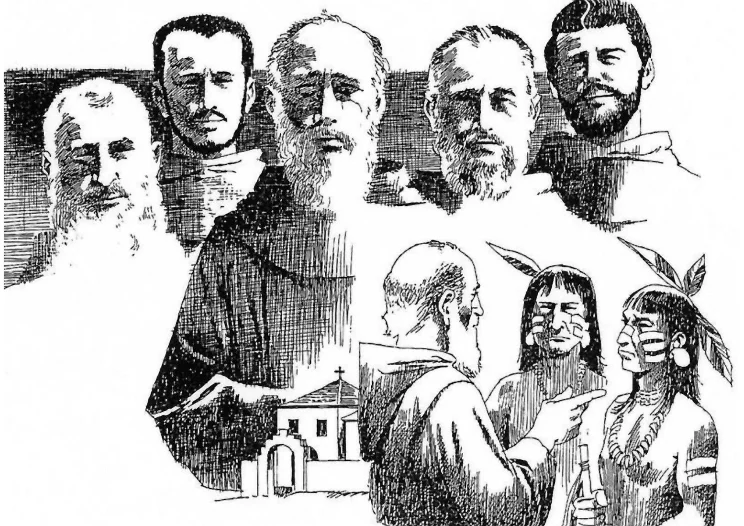
On October 31 (Halloween), Cardinal Frank Leo of Toronto will be beatifying, by delegation of Pope Leo XIV, a five missionaries martyred in September 1597 in Spanish Florida (1513-1821).
Six Franciscans were attacked by Indians. Pedro de Corpa, Blas Rodríguez, Miguel de Añón, Antonio Badajoz and Francisco de Veráscola died. in odium fidei.
Fray Pedro had not allowed Prince Juanillo, one of the Christian Guale Indians, to take a second wife. Juanillo gathered non-Christian henchmen and proceeded to kill five of the six. The sixth, Fray Francisco de Avila, after being detained and tortured for nine months, finally escaped. He later refused to testify at the trial of the accused Indians by the Hispanic authorities so that they would not be condemned.
Future Blesseds Peter and Anthony
Pedro de Corpa and Antonio de Badajoz arrived at the missions in northern Florida in 1587. The former was born near Madrid, while Antonio was from Extremadura and the only one of the martyrs who was a brother but not a priest. Pedro was killed in the village of Tolomato, near the present-day city of Darien.
As Fray Antonio knew Guale (local indigenous language), he was sent to mission on the island of Santa Catalina with Father Miguel de Añón, originally from a noble family of Zaragoza. It is on this island where the most important archaeological remains of any Catholic mission have been found, and the remains of the oldest Christian church in all of present-day U.S. territory. Due to climatic circumstances it is possible that erosion will destroy, in the course of this century, this sacred place, where half a thousand Indians are buried.
Future Blesseds Blas, Miguel and Francisco
Blas Rodriguez arrived in La Florida in 1590 and settled in the mission of Tupiqui, near the present town of Eulonia. Blas was born in the province of Cáceres, near the monastery of Yuste, where Charles V had ended his days 49 years before Blas' martyrdom.
The friars Miguel de Añón and Francisco de Veráscola arrived in 1595. The first was of noble origin, apparently. But more is known about Francisco. His Basque compatriots remember him well, in the town of Gordejuela or Gordexola (near Bilbao), where he was born on February 13, 1564. He was killed when he arrived at his mission, near present-day Darien, from the city of St. Augustine, with gifts for the natives. He was tall, strong, good sportsman, and would have been killed in the Judas manner, in a treacherous way.
“Martyrs of marriage”.”
As noted, when Fray Pedro tells Juanillo that polygamy would disallow him to be a tribal chief, a position to which he aspired, he organizes a rebellion. Fray Pedro, the leader of the Franciscans, was bludgeoned on Sunday, September 14, the Exaltation of the Holy Cross, when he was on his way to the church to say Mass. His head, like that of John the Baptist, was cut off and displayed. The rebels began to look for the other Franciscans.
Friar Blas died in Tupiquí on September 16, after telling his captors that he did not fear death. The two martyrs of the Island of San Catalina fell on September 17, feast of St. Catherine. stigmata of San Francisco. The local chief warned them, encouraging them to escape, but they decided to celebrate Mass and stay, awaiting their fate.
Fray Antonio, the Basque, died soon after. Apparently, these Franciscans had integrated very well with the Indians. With their lives and deaths they disprove the black legend that the Spaniards were cruel, bloodthirsty, despots and greedy. They are martyrs for defending the dignity of women and the sanctity of marriage. This is exactly what the other Franciscans of La Florida declared to King Philip III in 1612 (translated from English, in turn translated from seventeenth Spanish):
«In the early days we suffered great hardships, as well as death threats. On several occasions they tried to kill us; in fact, in the province of Guale they killed five friars and captured others. Although they did not kill them because of doctrine, it is certain that they killed them because of the Law of God that we taught them and because of our moral precepts... Specifically, they killed them because we did not allow any married Christian to have more than one wife. It was for that very reason, and for no other, that John the Baptist was beheaded, for he had rebuked Herod precisely for that very reason».
Beatified 429 years later
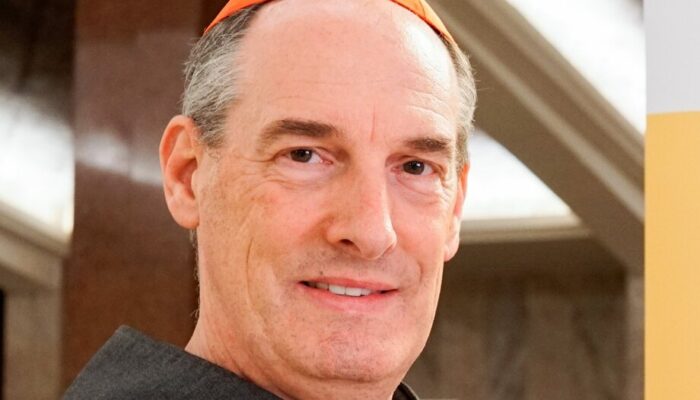
Cardinal Leo, 54, born in Montreal, will preside over the beatification ceremony. He was appointed archbishop of Toronto, Canada's largest diocese with two million Catholics, and created a cardinal by Francis in 2024.
Unfortunately it will not be possible to venerate their relics, as no relics of any of these martyrs have been found.
This beatification will be “of great significance for the faithful of the Diocese of Savannah and the Archdiocese of Atlanta,” said Bishop Stephen Parkes of Savannah.
The promoters of the cause for the beatification of the Georgian martyrs produced a video in 2022 in which they tell their story.




 Español
  English
  Italiano