




The first universal catechism of the Catholic Church, also called «catechism of parish priests», was approved in 1566 by the Congregation of the Council of Trent and promulgated by St. Pius V (1504-1572). Finally, it was published in a bilingual Spanish-Latin edition in 1782, of which a copy is preserved in the Prado Museum in Madrid and in the National Library of Spain; it has also been republished several times by the publishing house Magisterio Español since 1972.
The original of the text that was sent to the Roman press was discovered in 1985, in the Vatican Archives, by Professor Pedro Rodriguez, professor at the University of Navarra. He was able to verify in situ the theory of Alfredo García Suárez, also a professor at that university, who affirmed that the catechism of parish priests was based, as a template, on the catechism of Bartolomé de Carranza (1503-1576) and that of Domingo de Soto (1494-1560). Both were Dominicans and prominent members of the School of Salamanca, whose fifth centenary we are celebrating in this year 2026.
Sins against honor and fame
It is very interesting that, in dealing with sins against the truth - that is, the eighth commandment of the law of God («thou shalt not bear false witness or lie») - the Catechism of St. Pius V dwells specifically on the importance of honor and fame. For a good number of pages, he affirms that these goods are almost as important for people «as the value of their own life» (part III, chap. VIII).
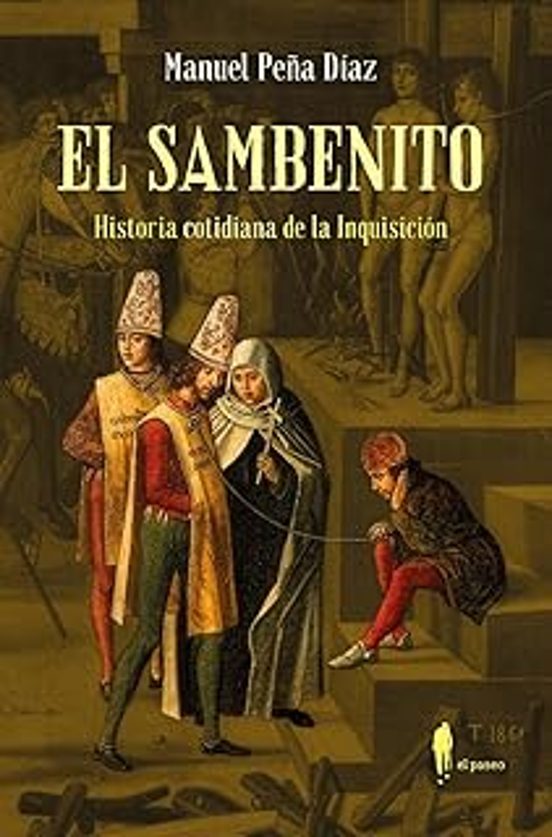
Indeed, Professor Manuel Peña Díaz, Professor of Modern History at the University of Cordoba, has signed a magnificent work about the «sambenitos» and other medicinal penalties. These were used to heal the sin of heresy committed by Christians who, once repentant, had to pay the penalty due. Certainly, the great fear of the Inquisition was the relapse of the defendant, since this would require greater punishments according to the mentality of the time. Therefore, the sambenitos sought to encourage the horror of sin and the fear of the worst punishment: the fear of looking bad in front of family, friends or enemies (p. 234).
Logically, the great evil of the Inquisition was not the numerous trials that were carried out, but the inquisitorial mentality that was formed in society, according to which everyone could judge their neighbors or enemies by their ideas and set themselves up as judges. In turn, the Inquisition produced the perverse error of trying to convince others of our ideas instead of simply exposing them.
Sambenitos
Forcing acquitted convicts - after acknowledging their sin or being reconciled with a penalty of levi o of vehementi- to wear a «sambenito» (a sign with the symbol of their fault: blasphemy, etc.), provoked a reaction against all the Christian people (p. 236). There are many files consulted by Professor Peña Díaz, which is to be welcomed, as it has opened new lines of research to explore these archives and help us to know how the court of the Supreme Inquisition and the suffragan courts that were distributed throughout the dependent kingdoms of the Crown of Castile functioned.
It is very interesting to see how the words of the catechism influenced daily life. As Professor Peña Díaz demonstrates, it was the parish priests themselves who eliminated the sambenitos from the parishes and encouraged relatives to forget that dark page of the family, among other pastoral measures (p. 237). For example, in Seville, according to data from the court archives, there should have been more than 7,000 sambenitos banners on display in the mid-sixteenth century; the reality is that the parish priests themselves, the interested parties and their families made them disappear (p. 239).
In fact, let us recall the strong reaction of the Holy See to the Statutes of cleanliness of blood adopted in the Chapter of the Cathedral of Toledo, which had influenced other bishoprics, ministries and major colleges. These statutes went against the morals and doctrine of the Catholic Church, which has always sought the union of the Christian people. On the other hand, when the Catholic Monarchs asked Sixtus IV to establish the Inquisition, they did so seeking the unity of the kingdoms under a single monarchy and common laws; prolonging the statutes of blood only provoked division.
False allegations
In addition, those inquisitors and bishops who managed the Judaizing problem between 1478 and 1511 discovered for themselves the envy and rivalries that provoked false denunciations. For this reason, false denunciations or criticism of families for having had a heretic in their midst were punished. As Peña Díaz rightly reminds us, it is one thing for someone to be condemned and «relaxed to the secular arm» and another, very different, for someone to be unjustly denounced by a malevolent enemy.
It was urgent to put a stop to the insults, slander and envy that often flared up in towns and neighborhoods, and which were resolved through accusations before the high court. Hence the importance of knowing how to forgive, forget and trust one's neighbors. Ultimately, the mandate of charity prevailed over that of justice (p. 33).
The sambenito. Everyday history of the Inquisition




 Español
  English
  Italiano