



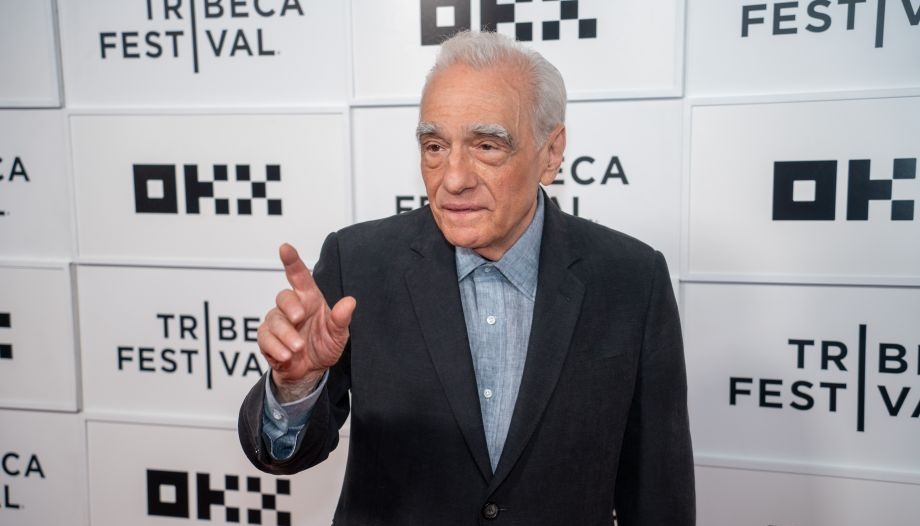
When Martin Scorsese was a child, he assisted Father Francis Principe—an important figure in his life—at Mass. After the blessing, little Martin would wonder, “Why can life go on as usual after what just happened? Why haven’t the Body and Blood of Christ moved the world?”.
He recounts this in a conversation with Antonio Spadaro, a priest and essayist, in Conversations About Faith (ESPASA, 2015). There is much discussion of the filmography of the director of *Raging Bull* (1980); perhaps even more extensively about “Silence” (2016), “Killers of the Flower Moon” (2023), and, at times, about “The Last Temptation of Christ” (1988). Scorsese devotes a few lines to the Dardenne brothers because “they make films of spiritual suspense” about people who “seem neither good nor bad—they’re just people”; and he gives the priest—months before Pope Leo XIV himself recommended it to everyone—a copy of “The Practice of the Presence of God” by Brother Lorenzo: “When I was little, I used to ask myself, ”What’s the point of praying? What does it mean to pray for something? Why is it done within the four walls of a church?“ Brother Lorenzo provided the answers. His whole life is prayer.‘.
There is one thing that interests Spadaro—as it does anyone interested in stories—and that is the theme of freedom: the depth of the stories depends on how freedom is understood from an anthropological perspective. They have this conversation in the context of the writer Marilynne Robinson, until the priest asks directly: Do you believe in a character’s predestination? “Obviously, as creators of works of fiction, we know what our characters are going to do. But when it comes to finding the right way to tell these stories, it’s important to keep in mind the mystery of humanity. Why do they do ‘that’ instead of ‘the other thing’? Human freedom is undoubtedly important in my films; otherwise, we wouldn’t be talking about redemption. When Father Principe told us, ‘You don’t have to live like this,’ he was actually telling us that there was another spiritual path that would not only take us out of the neighborhood but would also open our hearts and minds. He was teaching us that we had the freedom to choose.”.






 Español
  English
  Italiano