


 Vatican City State, Past and Present
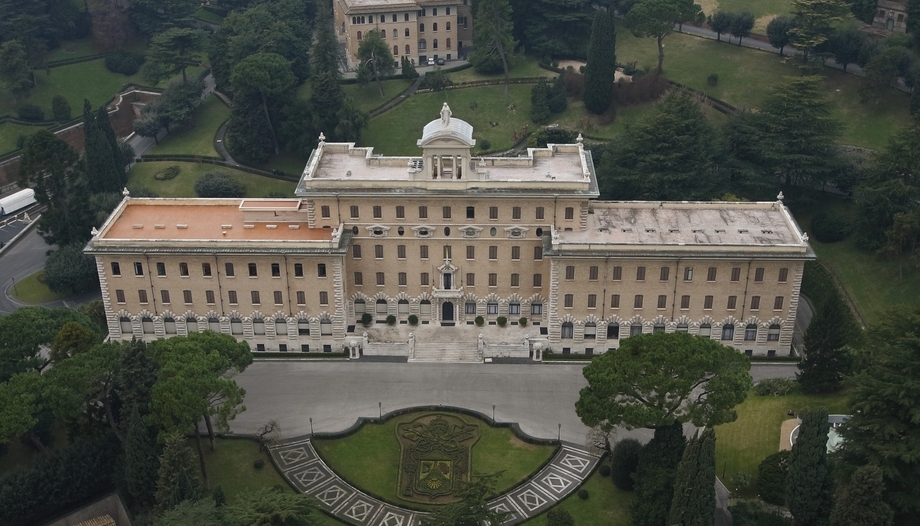
The Holy See Press Office announced this morning the new Basic Law of the Vatican City State.
In an explanatory note, the Governorate of Vatican City states that this renewal was necessary due to «new governance requirements and some significant regulatory changes that have taken place in recent years.».
With this enactment, Leo XIV repeals the most recent Fundamental Law, signed by Pope Francis on May 13, 2023, and introduces greater technical and organizational precision through the restructuring of the executive branch.
The new law explicitly defines the leadership and delegation authority of the President of the Government, outlines the structure of the judicial branch, and adds flexibility to the legislative branch by providing for the exceptional delegation of legislative authority by the Pope and the optional participation of advisors.
Legislative Work
With regard to legislative work, the new law states that «the legislative function, except in cases where the Supreme Pontiff intends to reserve it for himself or, exceptionally, delegate it to another body, is exercised by the Pontifical Commission for the Vatican City State.» The 2023 law merely provided for the possibility that it could be exercised by the Pope or by the Pontifical Commission for the Vatican City State.
With regard to participation in the meetings of the Pontifical Commission, the new text clarifies that the Deputy Secretary participates «if appointed» and allows the President of the Pontifical Commission to also invite the General Counsel. The previous law provided for the Secretary and Deputy Secretary to serve as advisors.
In addition, there is a change regarding the interpretation of laws by the President of the Pontifical Commission, who may now «submit a request to the Panel for an opinion on a legal matter that does not require an authentic interpretation,» whereas under the previous law, such a request had to originate from an institution of the Holy See.
Obvious change in executive function
The executive branch’s responsibilities have changed the most under the 2023 law, as the new text fundamentally reworks the division of responsibilities among the President of the Provincial Government, the Secretary General, and the Deputy Secretary General.
In this regard, the new law adds an entire article dedicated to defining that the President ensures the governance of the State, establishes administrative and personnel guidelines, and introduces the possibility of delegating executive functions to the Secretary-General or Deputy Secretary-General.
Article XIV also defines the selection of the Secretary General, who is appointed by the Supreme Pontiff upon the recommendation of the President for a term of five years. It further states that the Secretary General is responsible for the safekeeping and affixing of the official state seal, and that he acts under the direction of the President.
The new law also addresses the possibility of creating the position of Deputy Secretary, making it clear that this is not a strictly mandatory position.
Judiciary
With regard to judicial functions, the new law clearly specifies the judicial bodies that exercise judicial authority in the Vatican City State: the Tribunal, the Court of Appeals, the Court of Cassation, and the Office of the Prosecutor (for investigation and prosecution), referring directly to the Law on the Judiciary for their legal status.
In this regard, it differs drastically from the wording of the previous law, which referred, in vague terms, to «bodies established under the judicial system and other bodies to which the law confers jurisdiction over specific matters.».






 Español
  English
  Italiano