


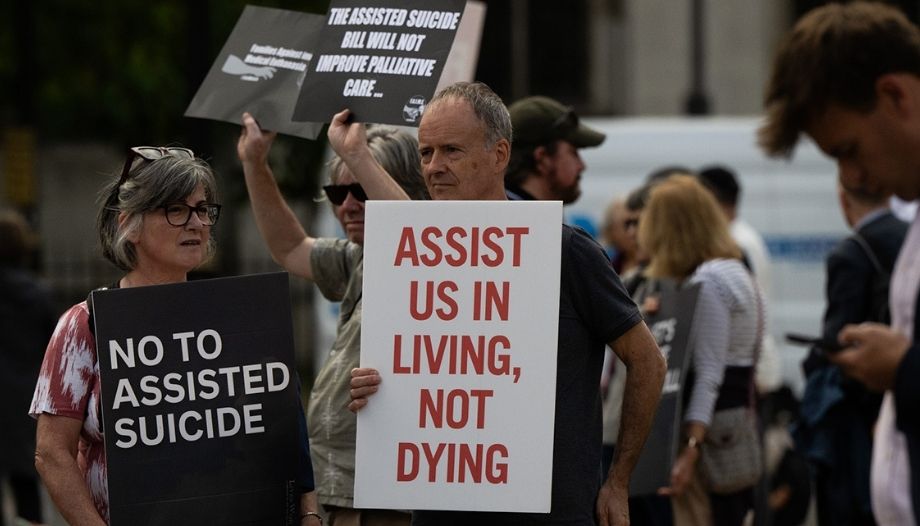
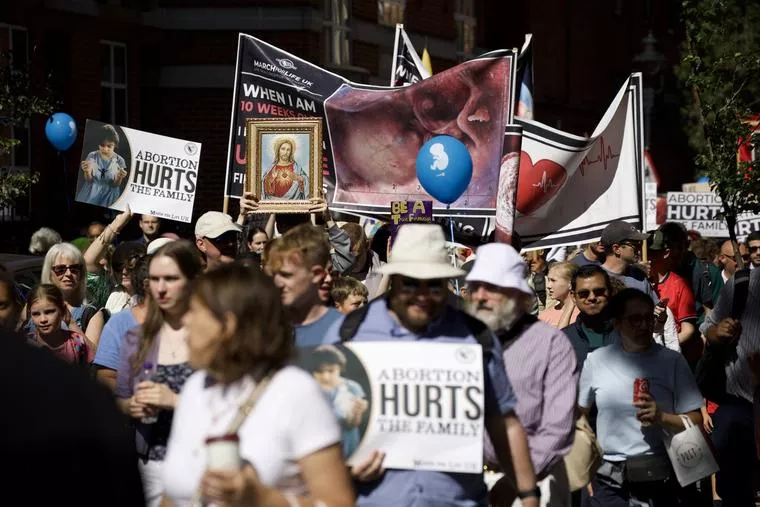
The March of Pro-Life Advocates in England on September 5, alongside intense counter-protests by abortion advocates, and just a few days later, Parliament’s rejection of the assisted suicide bill—technically, a bill concerning terminally ill adults (end-of-life care)—have shown that issues related to life are becoming a major, even central, topic in British public life.
This is what participants said at the annual march organized by the Pro-Life group March for Life UK, who received a message of encouragement and a blessing from Pope Leo XIV.
In addition, fifteen bishops joined the protesters in a show of support for the unborn, while a group of counter-protesters disrupted the opening Mass and had to be removed, according to Edward Pentinof National Catholic Register.
Noisy, masked protesters
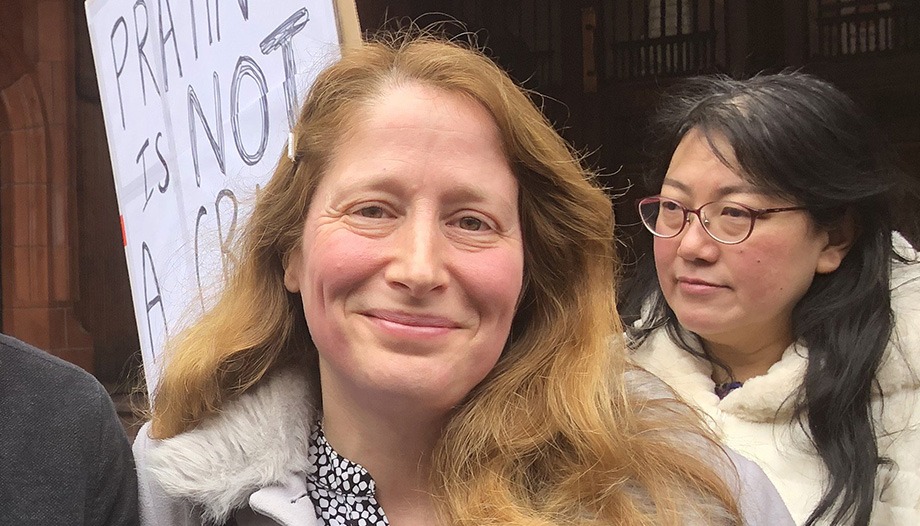
The march's co-director, Isabel Vaughan-Spruce, noted “more opposition” than at previous marches, including the disruption of the inaugural Mass at Westminster Cathedral.
The protesters, most of whom were masked, remained at the rally for much of the time, deliberately making noise to drown out the voices of the pro-life speakers, the same media outlet reported.
The London Metropolitan Police was criticized for allowing them to protest so close to the March for Life venue and to gather in Parliament Square, directly across from it, where they caused further disturbances.
Protests, “not necessarily a bad thing,” according to Vaughan-Spruce
Vaughan-Spruce did not view the protests as “necessarily a bad thing,» according to the Register. In his view, they are “a sign that abortion is becoming an increasingly relevant public issue.”.
“For far too long, there has been an extraordinary complacency surrounding abortion in Great Britain,” he said. “It has been treated as something that simply had to be accepted. But that seems to be changing.”.
Regarding the large turnout, Vaughan-Spruce, who has been praying outside abortion clinics for years and is currently facing legal proceedings, stated that the march showed that “people are culturally accepting” the pro-life stance and ”finding the courage to challenge the culture of silence that has surrounded abortion for so long.”.
Parliament Rejects the Assisted Suicide Bill
A few days later, on September 11, Parliament rejected the bill on assisted suicide in its second reading by a vote of 270 in favor and 286 against—a majority of 16 votes, as has been reported.
Statements by the Archbishop of Liverpool
Archbishop John Sherrington, Archbishop of Liverpool and the bishop responsible for matters related to life at the Catholic Bishops' Conference of England and Wales, has stated his gratitude to those who wrote to their representatives to prevent the passage of the bill on terminally ill adults (end-of-life care make progress in Parliament.
Archbishop Sherrington also expressed his gratitude to organizations advocating for the rights of people with disabilities, as well as to legal and health care professionals, for speaking out collectively in defense of “the dignity and sanctity of all life.”.
A Compassionate Society: Supporting People in Difficult Circumstances
"Throughout this debate, we have argued that our response to those facing serious illnesses, disabilities, or the challenges of old age must be based on solidarity, care, and respect," Archbishop Sherrington said.
“The true measure of a compassionate society lies in its willingness to support people in difficult circumstances, rather than encouraging them to end their lives.”.
Sherrington also praised family members, friends, caregivers, and healthcare professionals, who demonstrate “extraordinary generosity every day by standing by and supporting those who are suffering.”.
"Their dedication reminds us of the value of human relationships and our shared responsibility to care for one another, especially during life's most vulnerable moments," he emphasized.
Greater access to palliative care
In his view—and he has held this position for years—“We remain convinced that the most effective way to address suffering at the end of life is through greater access to a palliative care and at the end of a life well-lived. Ensuring that such care is available to everyone who needs it can help people experience comfort, dignity, and support in their final days.”.
May all who are sick and frail find comfort in the support of their loved ones and in the love of God, which transcends all suffering. “I ask the Catholic community,” the archbishop concluded, “to continue praying for our lawmakers, so that they may ensure our laws always defend the dignity of human life.”.
Protests in Cologne and Berlin (Germany)
In Germany, on September 19, two events will take place simultaneously in Berlin and Cologne, each Marches for Life, to which the pro-life movement has offered its support.
Organized by the Federal Association for the Right to Life, the marches enjoy broad support from the churches. On the Catholic side, Bishop Dr. Rudolf Voderholzer (Regensburg), Auxiliary Bishop Dr. Josef Graf (Regensburg), and Bishop Emeritus Gregor Maria Hanke OSB (Eichstätt)—who, together with Pastor Albrecht Weißbach, will preside over the blessing ceremony for the trip—will travel to Berlin.
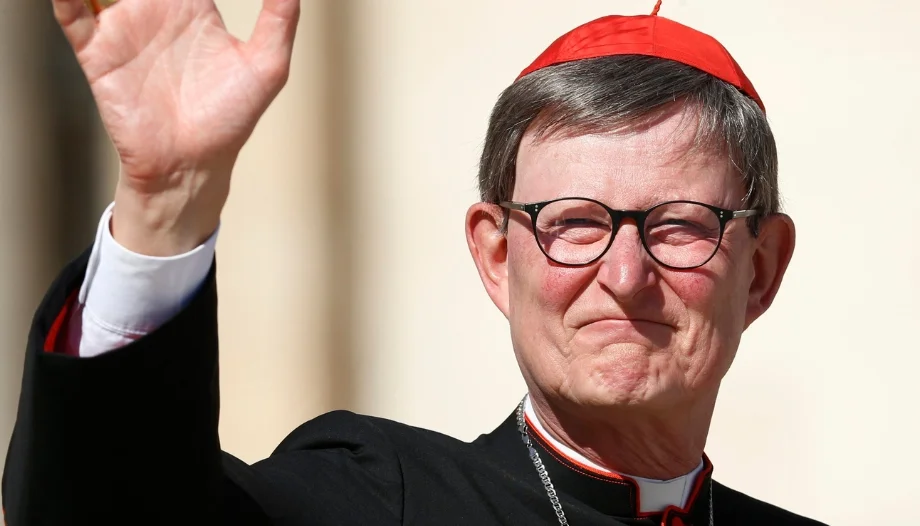
Other cardinals, such as Cardinal Rainer Maria Woelki, Archbishop of Cologne, have sent messages of support for the demonstrations in the two cities, to defend the dignity of human life from conception and address issues such as abortion, assisted suicide, surrogacy, and non-invasive prenatal testing (NIPT).
Cardinal Woelki of Cologne: Culture of Life
Cardinal Rainer Maria Woelki, Archbishop of Cologne, has written:
“The Federal Association for the Right to Life advocates for a culture of life, care, and concrete assistance. Its goal is not to judge women and families in need, but to offer them hope and support. Its goal is also not to marginalize people who are at the end of their lives or make them feel like a burden, but to offer them dignity, compassion, and care until their last breath.”.
“All of you who are participating today in the 2026 March for Life,” he continues, Cardinal Woelki, “They give a face to this cause. Their presence is a public statement against indifference and in favor of a society in which all people are welcome. May this march send a powerful message to our cities, to our political leaders and society, to our communities, and, above all, to our own hearts: I thank the Federal Federation for the Right to Life for its steadfast work and all of you for your courageous commitment. May God bless you and your service for life.”.
Various Poses
In recent days, some leaders from other Christian churches and various groups have taken a stance on the Marches.
For example, Augoustinos of Germany, an Orthodox metropolitan, has expressed the support of German Orthodox Christians for the two marches. And Friedhelm Holthuis, president of the Federation of Free Pentecostal Churches, has also sent a message of support.
However, the group Pro-Choice-Bündnis Köln has called for a demonstration on September 19 against the Marsch für das Leben (March for Life), describing it as a movement opposed to the right to abortion and reproductive self-determination.
In Berlin, the LAG Säkulare Grüne (the secular wing of the Greens) has also called for participation in the demonstration for “sexual self-determination,” which will take place alongside the pro-life march.






 Español
  English
  Italiano