


Astrology, tarot, the mindfulness And other New Age spiritual practices have gained ground among young people, who seek answers to a thirst for transcendence that they don't always find in their surroundings. What lies behind this phenomenon, and what risks does it pose for the Christian faith?
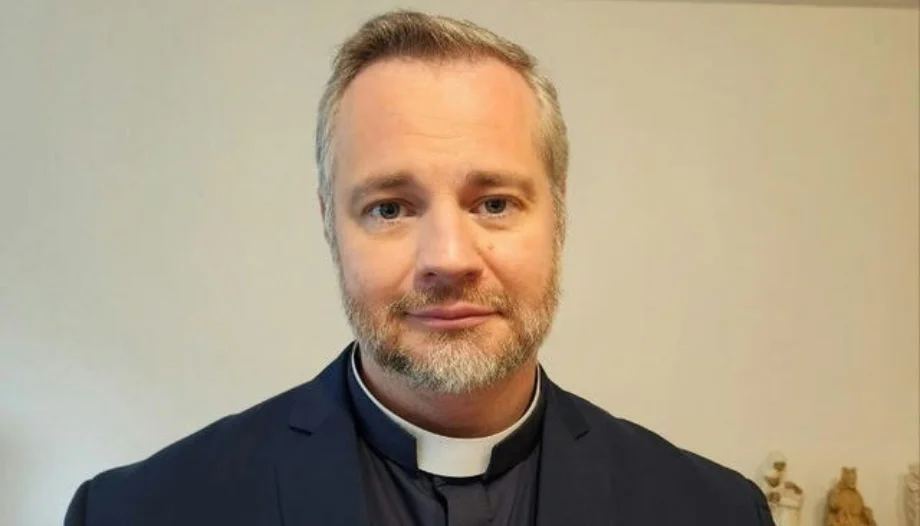
Jesús María Silva Castignani, priest, writer and digital evangelist known as @elpadrejesus, He addresses these issues in his latest book, You will be like gods. Roots, errors, and dangers of the New Age. A parish priest in Madrid and author of more than fifteen books, Silva has spent years accompanying young people and reflecting on the challenges of evangelization in today's culture.
In this interview, he explains why these spiritualities are attractive, warns of their consequences, and points out how the Church can respond to the spiritual search of new generations.
Why is the New Age movement especially appealing to younger generations?
–Because it responds to a thirst that is completely real. Young people are hungry for transcendence, for mystery, for meaning. They live in a culture that has given them everything but that: material comfort, endless entertainment, identity on demand. And yet they feel that something is missing, that there is something more, that the flat world they have been offered doesn't lead anywhere important.
The New Age arrives at that moment and tells them: «Yes, there is something more, and you can touch it, feel it, experience it right now, without committing to anything, without having to believe in a God who asks things of you.» It's a perfectly calibrated offer for a generation raised on the market and consumerism. Spirituality as a product of free choice, without dogma, without institution, without obedience. It doesn't surprise me that it works.
Are we Catholics being attractive enough to young people? What's going wrong?
–Several things. The first is that we have very often presented the Gospel as a moral code rather than as a living person. A young person who comes to faith seeking Christ and finds a list of prohibitions, little else.
The second reason is that we haven't taken seriously the thirst for genuine spiritual experience. The New Age offers experiences, sensations, something that can be «felt.» The Christian proposal has something infinitely superior: contemplative prayer, the sacraments, Eucharistic adoration, the saints, the personal encounter with Christ. But these things must be learned, lived, and passed on from person to person. And there we have a huge gap in transmission.
The third, and perhaps most important, point is that we have confused evangelizing with not bothering people. And the Gospel bothers people, it always has, and when it stops bothering people it's because we've watered down its content to suit the tastes of the moment.
After so many years accompanying young people, have you noticed a change in how they approach spirituality?
–Yes, very clear. When I started working with young people, most of them arrived with some residue of Christian formation, and the problem was the consistency of their lives, the contrast between what they believed and how they lived.
Today, many arrive who have no Christian role models but who have a very intense, though completely disoriented, spiritual search. They have tried tarot, the mindfulness, Through astrology, crystals, or some kind of Eastern meditation, they have real spiritual experiences, in some cases, that they can't quite put into any frame of reference. They arrive hungrier, in a sense, but also more confused. And that demands a completely different kind of pastoral care than the one I received.
Can New Age practices like the mindfulness «Contaminate» Christians themselves in their way of praying?
"It's one of the topics I address most carefully in the book, because the answer is nuanced and it's important to avoid both alarmism and naivety." mindfulness In its clinical version, as a mindfulness-based stress management technique, it produces real effects on the nervous system that are independent of any worldview. That must be acknowledged.
The problem starts when the mindfulness It is presented as a spiritual path, as a meditation of emptying oneself in which the goal is to dissolve the self in silence, eliminating thoughts instead of directing them towards God.
Christian prayer is fundamentally relational: there is a Thou to whom I address myself, a person who listens to me and answers me. mindfulness In its spiritualized version, it is precisely the opposite: the self that is self-sufficient in its own depth. This can indeed distort prayer if one is not clear about the difference.
I have seen religious communities where the mindfulness It gradually entered the scene as a «complement,» and over the years Eucharistic adoration and lectio divina had disappeared. It's not an instantaneous process; it's gradual, and that's why it's harder to detect.
What are the most significant dangers posed by the New Age?
–I identify them in the book, basically, in five. The first is syncretism that dissolves faith: little by little, beliefs incompatible with the Gospel are mixed together until nothing recognizable as Christian remains.
The second is the illusion of being god: «you will be like gods» is literally the first temptation of Genesis, and the New Age repeats it with other language.
The third is the gateway to occultism and, in more serious cases, to spiritual oppression. Not everyone who practices yoga ends up in a spirit-invocation session, but the path has an internal logic and there is a gradual progression.
The fourth is psychological damage: spiritual narcissism that generates increasing self-centeredness, an inability to form genuine relationships with others. And the fifth is moral relativism: if there is no personal God who reveals the truth, there is no objective truth to respect, and this has very direct consequences for moral life.
Astrology is very common among young people. Checking your horoscope seems harmless. So what's the problem?
–The first problem is theological: attributing influence to the stars on destiny or human personality is a form of determinism that contradicts the freedom and dignity of the person, which the Catechism expressly points out as something that must be rejected.
The second problem is more practical and perhaps more urgent: astrology serves as a gateway. No one enters the occult overnight. It begins with horoscopes «for fun,» then with birth charts «to get to know oneself better,» then with tarot «as a tool for reflection,» and the path has a logic that leads further than one initially thought.
The third problem, and the one I see most often in pastoral work, is that astrology shapes young people's understanding that their identity is determined by something external to them. «I am this way because I'm a Scorpio.» That's the exact opposite of Christian anthropology, which says that identity comes from being a child of God, that you are called by name, that you are unique and free. Astrology puts the person in a box. Christ takes them out of any box.
You define yourself as a digital evangelist and use artificial intelligence in your pastoral work. How can new technologies help without replacing what is essential?
–Technologies are tools, and like all tools, their value depends on who uses them and what they're used for. Artificial intelligence helps me manage correspondence, prepare materials, and publish content more consistently. But faith is transmitted from person to person, through relationships, accompaniment, and the sacraments.
No algorithm is going to baptize anyone, no podcast is going to hear anyone's confession, no TikTok video is going to grant anyone absolution. Social media allows me to reach people who would never set foot in a church, who would never make an appointment with a priest, who are searching for something and suddenly stumble upon content that asks them a question they weren't expecting. And that is a gift. But the function of that content is always the same: to lead them to a personal encounter with Christ, not to replace it.
What would you say are the keys to evangelization in today's world?
–The first and most important: to bear witness that the encounter with Christ transforms concrete life. Not theories, not speeches. Lives.
The second: start from thirst. People don't come to hear answers to questions they haven't yet asked. You have to connect with what they're already searching for, with the pain they already have, with the emptiness they already feel. The New Age does this very well, and we Christians should learn from it.
The third: being able to engage with the culture without becoming the culture. Using social media without being used by it. Speaking the language of our time without surrendering to its worldview. It is the most difficult balance to maintain and the most necessary.
And the fourth, which has been the hardest for me to learn: patience. Real conversions don't happen in a three-minute video. They happen over a long process, with real people accompanying you, with crises, doubts, and setbacks. The digital evangelist may be the first link in that chain, but they need to know that they are neither the only one nor the most important.





 Español
 English
 Italiano
 Français
 Deutsch
 Polski