



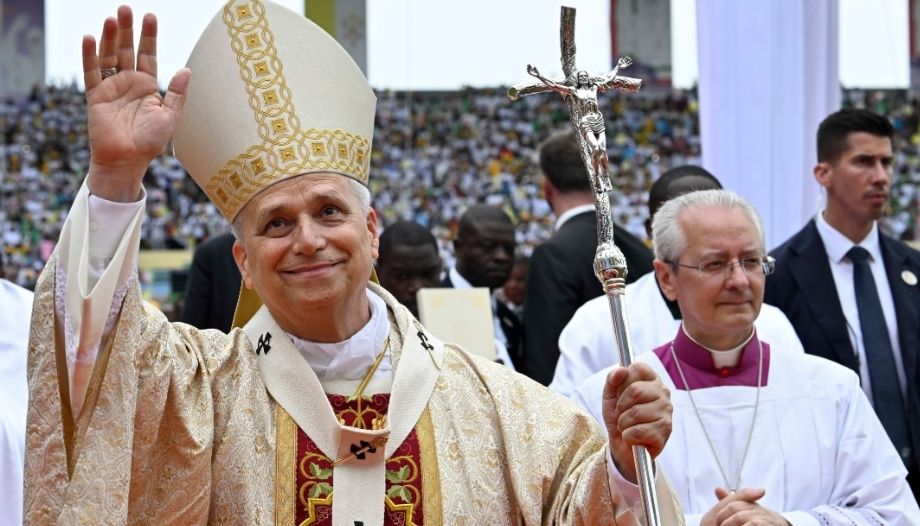
As we continue our journey through the Easter season, today's Gospel presents the words of Jesus, who compares himself to a shepherd and then to the gate of the sheepfold (cf. Jn 10:1-10), the Pope began his brief address before the Regina coeli. It is the Sunday of the Good Shepherd.
Jesus contrasts the shepherd with the thief. In fact, he affirms: “Truly I tell you, anyone who does not enter the sheepfold by the gate but jumps in by another way is a thief and a robber”. And further on, even more clearly: “The thief comes only to steal and kill and destroy. But I have come that the sheep may have life, and have it more abundantly”.
The “thieves” can take on many faces
We are invited to reflect and, above all, “to watch over our hearts and our lives,” said the Vicar of Christ, “because those who enter them can multiply joy or, like a thief, can steal it from us,” said the Pope.
And thieves can take on many faces:
- are those who, despite appearances, restrict our freedom or do not respect our dignity;
- are beliefs and prejudices that prevent us from having a clear vision of others and of life;
- are misconceptions that can lead us to make negative decisions;
- are superficial or consumerist lifestyles that empty us internally and drive us to live always outside of ourselves.
- let us not forget either those “thieves” who, by plundering the earth's resources, waging bloody wars or nurturing evil in any form, do nothing more than rob us all of the possibility of a future of peace and serenity”.
“Who do we want to guide our lives?
In concluding, the Successor of Peter suggested that we can ask ourselves: “Who do we want to guide our lives? Who are the “thieves” who have tried to enter our interior? Have they succeeded, or have we been able to reject them?
“Today the Gospel invites us to trust in the Lord: he does not come to rob us of anything; on the contrary, he is the Good Shepherd, who multiplies life and offers it to us in abundance,” he concluded. May the Virgin Mary always accompany us on our journey and intercede for us and for the whole world.
Before giving the blessing, the Pontiff recalled the 40th anniversary of the tragic accident at Chernobyl, and urged that at all levels of decision-making, “discernment and responsibility should always prevail, so that every use of atomic energy may be at the service of life and peace.”.
“Three secrets” of the Pope to the ordinands.
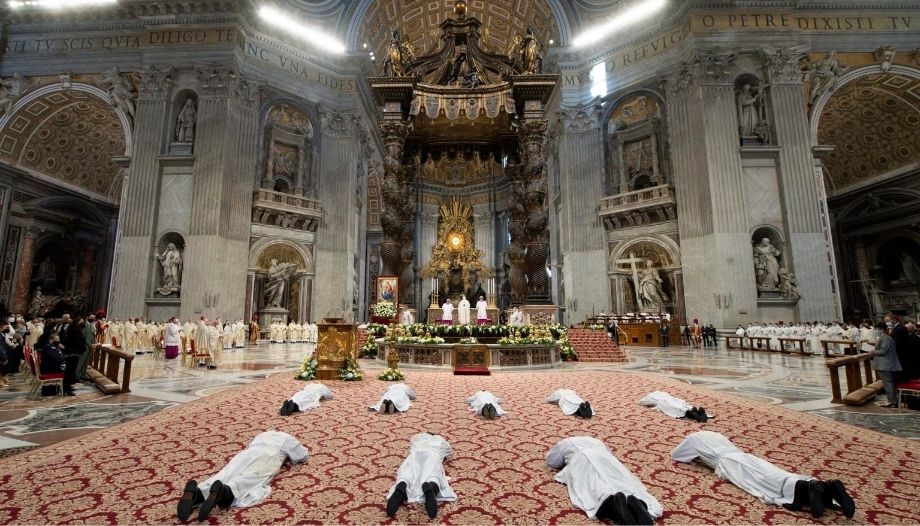
At the priestly ordinations of Roman seminarians, Pope Leo XIV said that “in the availability of the young men whom the Church today asks to be ordained priests, we note much generosity and enthusiasm”.
At the homily, has offered “three secrets” for consideration.
1) “This is a first secret in the life of the priest..
The deeper your union with Christ, most radical is their belonging to the common humanity. There is no opposition, no competition between heaven and earth; in Jesus they are united forever”.
Like the love of spouses, he continued, “the love that inspires celibacy for the Kingdom of God must always be nurtured and renewed, because every true affection matures and becomes fruitful with time. They are called to a specific, delicate and difficult way of loving and, even more, to a way of letting themselves be loved in freedom”.
2) A second secret of the priest: reality should not frighten us.
He who calls us is the Lord of life. May the ministry entrusted to you, dear brothers and sisters, communicate the peace of those who, even in the midst of danger, know why they feel safe.
In the Gospel we have just proclaimed (Jn 10:1-10) Jesus‘ reference to figures and gestures of aggression is surprising: between him and those he loves, strangers break in, thieves and robbers who exceed the limits; they do not come, Jesus says, ’but to steal, kill and destroy' and, above all, they have a voice different from his own, unrecognizable, the Pontiff stressed.
“What they announce and celebrate will protect them.”
“Today, the need for security makes people aggressive, encloses the communities within themselves, instigates the search for enemies and scapegoats (...) What they announce and celebrate will protect them even in difficult situations and times”.
“The communities to which you will be sent are places where the Risen One is already present, where many have already followed him in an exemplary way,” says the Pope.
3) Third secret. “By initiating others into the faith, they will rekindle their own faith.”.
The Pastor of the universal Church also reflected on what people lack, “a place where to experience that together is better, that together is beautiful, that it is possible to live together. Facilitating encounters, helping to bring together those who otherwise would never meet and bringing opposites closer together is intimately linked to the celebration of the Eucharist and Reconciliation. I am the door,‘ Jesus says.
“Dear ordinands, feel yourselves part of this suffering humanity that awaits life in abundance. By initiating others into the faith, you will rekindle your own faith. Go out and encounter culture, people, life.” “Sometimes it will seem to you that you do not have the maps; but the Good Shepherd possesses them, and you must listen to his voice, so familiar to you,” the Pope concluded.




 Español
  English
  Italiano