


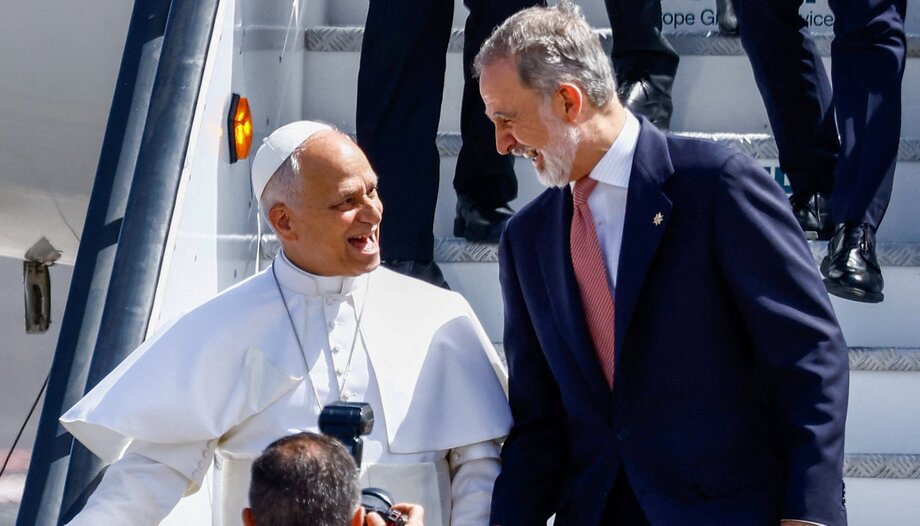
 What do the people of Madrid think of the arrival of Pope Leo XIV in Spain?What is the religious situation in Spain and what are the tasks for the new evangelization?Pope Leo XIV's trip to Spain in 10 figures
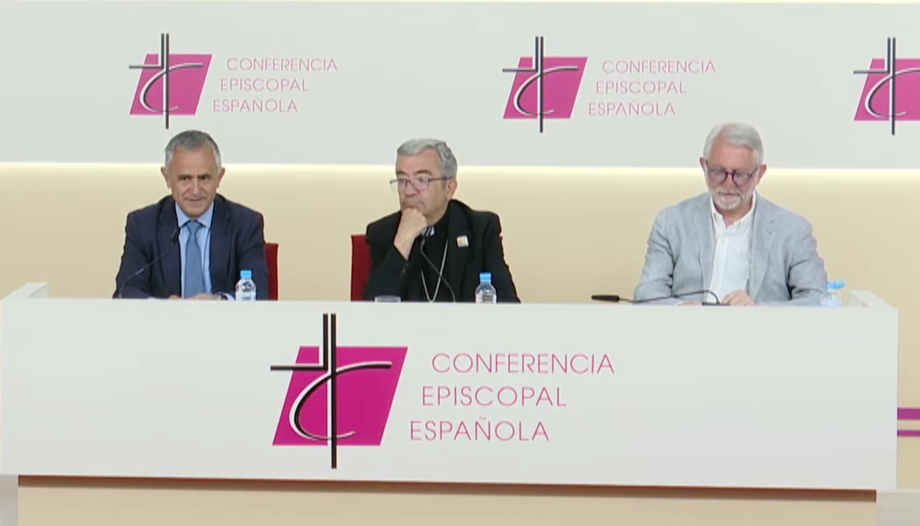
On Tuesday, June 16, they appeared at the headquarters of the Spanish Episcopal Conference Monsignor Luis Argüello, president of the institution; Yago de la Cierva, national coordinator of the His Holiness's trip; and Fernando Giménez Barriocanal, deputy national coordinator. The three speakers offered different assessments of the apostolic visit to Spain, but all agreed that the Holy Father’s visit to the country was a success.
At the start of the press conference, Monsignor Argüello thanked Pope Leo XIV for his visit to Spain and extended his gratitude to “the entire Spanish Church” for its involvement in organizing and participating in the papal trip. Similarly, the president of the Episcopal Conference admitted that “the visit has overwhelmed us” both in terms of expectations and the impact of the trip.
Thanksgiving
However, the archbishop drew two conclusions from the apostolic visit: “Both the Pope and the people of God have invited us to look to the Cross,” demonstrating that “there is a Catholic response to the complexities of Spain.”.
Argüello emphasized that the Holy Father’s speeches have brought a message of hope to all Spaniards. The fact that society—beyond the Catholic community—has embraced them is proof that the Gospel has something to say to everyone today, especially within the framework of the Church’s social teaching.
Nevertheless, the Spanish archbishop has urged people “not to stop the journey at the excitement, but rather to live out thanksgiving as a genuine act,” allowing the Pope’s words to truly take root in our hearts and inspire the entire Church to a genuine mission of evangelization.
Next stop: Santiago de Compostela
For its part, Yago de la Cierva He also wanted to thank everyone who helped organize the trip, highlighting the work done by the state government.
In addition, the national coordinator expressed his hope to see Pope Leo XIV in Santiago de Compostela next year, on the occasion of the Holy Year of Santiago de Compostela.
An impact worth millions
Finally, Fernando Giménez Barriocanal emphasized that, from June 6 to 12, “we encountered a Pope who allowed us to lift our gaze toward the Cross.” A gaze that, in economic terms, cost approximately 26 million euros, but had an impact of around 150 million. However, the exact figure will be confirmed by an audit.
Regarding funding, the national deputy coordinator explained that “of every 100 euros, 45 come from donors,” including companies such as Telefónica, Iberia, Endesa, El Corte Inglés, Sabadell, and Mapfre. About 30% of the funds come from the Church’s own resources, 20% from public administrations, and 5% from collections made to finance the apostolic visit.
Giménez Barriocanal also wished to apologize, on behalf of the entire organization, for the communication and coordination issues that many journalists and participants reported during the Pope’s visit.
All those present at the press conference agreed that this experience is an opportunity to learn from what was done well and what could be improved. However, there was also unanimous agreement in describing Pope Benedict XVI’s visit to Spain as a success and as a clear boost to both the Church and society as a whole, highlighting moments such as the Holy Father’s address to the Congress of Deputies or his meeting with immigrants in the Canary Islands.





 Español
  English
  Italiano