



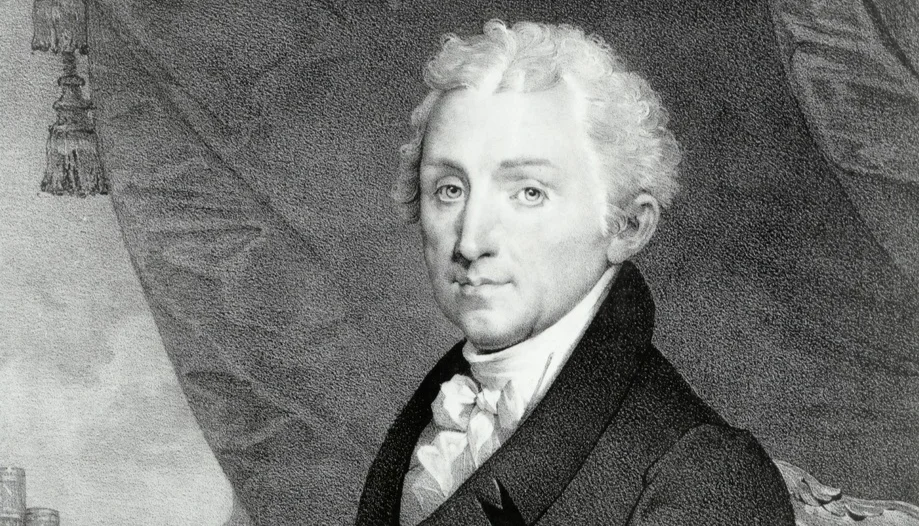
 David Hume's "Inquiry Concerning Human Understanding"."The Discourse on Method by René Descartes."John Locke's "Essay Concerning Human Understanding".
A longer version of this article can be found here.
Chronology
1755 A General History of Nature and a Theory of the Heavens.
1770. Professor of logic and metaphysics at the University of Königsberg.
1781: Critique of pure reason
1788: Critique of practical reason
He was born, lived, and died in Königsberg (1724–1804). Educated in a Pietist form of evangelicalism that he never abandoned, and later in the rationalism of Leibniz and Wolff, he explained in 1755 the formation of the solar system from a nebula, and described the Milky Way as a galaxy, a concept to which he gave its name. Reading Hume’s critique of causality around 1770 led him to defend it as a mental a priori in his Critique of Pure Reason and to uphold the reality of God and human freedom in their Critique of Practical Reason.
A) Exhibition: “I Awoke from the Dogmatic Dream”
Reading Hume awakened Kant from his dogmatic slumber. David Hume’s attack on causality and the other categories foreshadowed dire consequences for metaphysics and the experimental sciences that study the causes of phenomena. Realizing that without causality it is impossible to know, Immanuel saw the light that would lift him out of his intellectual despondency.
The Copernican Revolution in Philosophy
Could it be that causality and other categories are nothing more than the conditions of possibility for our knowledge—our very capacity to know—both in sensory knowledge—the formation of our intuitions-, as in the intellectual-training of concepts-, as in reason, where we form our ideas?
To answer this, he embarks on his study of judgments, in order to determine how they are possible within the framework of mechanics—formulated just a century earlier by Isaac Newton—which enjoys such universal recognition that no one dares to doubt the truth of its propositions. The next question must be whether that same certainty and universality is possible in metaphysics (it is thus an attempt to mimic the scientific method).
He will classify judgments, depending on whether they derive their truth from experience or precede it, into hindsight (iron expands when heated) or preconceived judgments (1327 + 2935 = 4262, because I know that the two numbers add up to the third one, even before I’ve actually counted them; or the fact that two lines parallel to a third line are parallel to each other, because that’s something I know even before I see them).
And it will also classify the trials into synthetics, if they offer genuinely new insights, or analytical, if its truth is contained in the concepts that such a judgment relates, and simply emerges when they are analyzed. To say that iron expands with heat is a synthetic judgment, since it cannot be deduced from an analysis of the concept of iron; and so is the previous judgment regarding a sum, since the number being added is not deduced from the definitions of the addends; and so is the aforementioned judgment regarding the three parallel lines, for the same reason; And the consideration that concludes both classifications is that, for there to be true science—science of universal validity—there must be judgments within it that are both synthetic—so that they advance knowledge—and a priori, for if they depend on our particular experiences, they do not have universal validity.
Thus, there is universally valid science—as is the case with mechanics, a recent discovery—and then there is a priori synthetic judgments. And since there is new truth in them—for they are synthetic—the natural question is: from where do these judgments derive their truth, since it is neither from their own terms nor from experience, given that they precede it? There can be only one answer: they derive it from our own faculty of cognition. The truth of these synthetic a priori judgments was already within it. This must be the case in sensory knowledge, in intellectual knowledge, and in our reason. Kant thus knows, from this consideration, that there must be a priori forms in our sensibility, in our understanding, and in our reason, and the object of the work he thus introduces will consist in investigating each of these three faculties of ours to discover their a priori forms within them.
What we thought was real was just in our minds
Since all knowledge begins with the senses, Kant begins by analyzing, in his transcendental aesthetics, our ability to form sensory intuitions (αισθητικη = pertaining to the sensible). Let the reader imagine the living room of their home, and strip it in their imagination, progressively—one by one—of each piece of furniture, then of its ceiling, walls, and floor, and finally try to strip it of its space as well—ah, this last step is no longer possible; the reader can no longer imagine it! Therefore, the space of your living room was not in that room but in your own faculty of knowing; that is why you could not strip away the space in your imagination—because it was within it! Space is part of all our sensible intuitions—none exists without a place—because it is in reality an a priori form, a pure intuition of our sensibility. A similar argument can be made regarding time: we perceive everything in a specific place and time because space and time are a priori forms of our sensibility: they are pure intuitions. All other intuitions are formed from the impressions that reach us from the external world, as they are organized by our sensibility according to a certain location and a sequence of before and after, so that external reality, the “thing-in-itself” as Kant calls it—the thing stripped of all space and time—remains unknown to us, which is why he also calls it Ignotum X (just as, in mathematics, x is usually used to denote an unknown variable).
We now turn to our understanding—which Kant examines in his transcendental analysis—that is, our ability to categorize the intuitions formed by our senses until they become concepts: not merely a voice, not merely the tone of skin and hair, or a pleasing form, but a person—a man or a woman standing before me—with whom I interact. Here, too, there are a priori forms of understanding, that is to say concepts categories, also known as. His classification of these categories corresponds more or less to the classical predicates—substances and accidents—and their subdivisions, with the highly significant relationship of causality appearing among them. It is here, then—in our faculty of forming concepts—and not in external reality, that Kant locates the causal relationship, a relationship that is key both for philosophical ontology and for the foundation of the experimental sciences.
We finally turn to reason, where we form our ideas about the world around us, about ourselves, and our ideas about God. This is, therefore, the proper domain of philosophy and, more generally, of our thinking. Here, too, Kant finds a priori forms, or pure ideas of reason. These are ideas that are the condition of possibility for its activity, for without them we cannot reason; reason itself loses its impetus: the first is the preconceived idea that there must be unity and simplicity in the reality that surrounds us. This conviction, even if unexpressed, is what leads us to seek relationships, connections between facts—everything we call reasoning. It is this idea of order and unity in reality outside of me that Kant calls The World, just as the ancient philosophers called the ordered world the Cosmos.
It is also a preconceived notion of reason that all my experiences are unified within me—they are my sensations—these are my thoughts—and it is this unity that I refer to whenever I speak of the Self, of myself. And it is, ultimately, a pure idea of reason—the idea of a God who, according to the philosophy of Descartes, which was predominant at the time he was writing, guarantees the validity of that unity of the World with me which we call truth—the truth of my knowledge of it. I, the World, God -unity within me, unity outside of me, and the guarantor of the unity of both—are the three perennial themes of philosophy that now appear here, in the philosophy of Immanuel Kant, as the pure ideas of reason, that is, as the presuppositions that make all our other ideas possible, the presuppositions that make our reasoning possible and stimulate it.
Science and Philosophy
And this is when Kant achieves his goal of unraveling the root of truth in the sciences. Why is mathematics possible? Because it studies the a priori forms of our sensibility, space and time (here he includes not only geometry but also arithmetic, since the iteration—the origin of numbers—is a temporal intuition). Since these a priori forms of sensibility—space and time—are the same for all of us, as we all possess the same faculty of sensory cognition, their study has universal validity. That is the reason for the universal validity of mathematics.
Let us continue: Why are the experimental sciences possible—that is, the study of phenomena in terms of their causes? Again, because they study a priori forms of the understanding, since the a priori form is causality. Newtonian mechanics thus derives the truth of its synthetic a priori judgments from our own faculty of cognition, and that is why it enjoys such enviable universality, for, once again, a priori forms are the same for all of us.
And finally, is it possible to know—in the sense of universally valid knowledge—metaphysics, that reasoning of ours about the world, about ourselves, and about God? The answer, in principle, is yes, although with a very important but: It is possible, yes, since these are also a priori forms—and therefore universal forms—that exist within our reason. But he immediately warns us that metaphysics can only subsist as a court of the reason that keeps it from venturing into what Kant calls the transcendental illusion: to treat as if they were external realities what are in fact merely ideas of our reason: I, the World, God.
B) Review: David vs. Goliath
Well, it is only natural for a mathematician to critique the most famous of modern philosophers. But, like the young man from Bethlehem, I will not be intimidated by this giant of thought since, after all, Kant only wanted to do with philosophy what we do with mathematics and the mathematized sciences, of which we now have a much more mature understanding than was available at the time Immanuel Kant was writing
The glaring contradiction in Kant
All of this has been done to save causality and other categories from Hume’s shipwreck. But was it really necessary, or was the shipwreck merely imaginary? Kant and other philosophers of his time were convinced by David Hume’s attacks on causality, but they are not convincing now, since his assumptions have been largely superseded by scientific progress (but, unfortunately, we cannot now turn back the clock, since Hume’s work has already played its role in deconstructing philosophy): let us recall that Hume asserted that no necessary connection—that is, causal relationship—could ever be found between the act of eating bread or other food and the renewal of our strength. This could be said and believed in his time, but no one today, with even a minimal scientific background, would maintain it, since we have come to understand, down to the last detail, the chemical reactions by which this occurs— in fact, almost the reverse of the Krebs cycle of chlorophyll function, the one through which solar energy is captured and stored as chemical bond energy.
The second criticism is a classic one, and it was raised by Kant’s own followers (Friedrich Jacobi, Schopenhauer, Fichte) as a dangerous crack in the magnificent Kantian edifice: If causality is not something real, something that exists outside of me, but merely a category of my own cognition, how is it possible that the ignotum X—external reality—“causes” certain impressions in me, those that I organize according to space and time, thereby giving rise to my knowledge? The difficulty is not resolved by a simple change of wording, by omitting the expression “causes impressions” and saying, instead, “produces impressions.” In fact, it is more than a crack: the entire edifice collapses at its foundation like a giant with feet of clay—or, even worse, with feet that are pure mental representation, without any external counterpart.
But the building is magnificent, and the followers will not renounce it, but rather that external reality—formless and strange to me—which Kant has called Ignotum X, the thing itself. In the next article, we will examine Schopenhauer's solution to The World as Representation and Will : to regard the world also as a representation (and then—à la Kant—to restore it as will), so that there is nothing contradictory about causality being a representation that links the external world with its sensible image within me, since the world itself is also a representation (there would be a contradiction if a nail painted on the wall —Kantian causality—were to hold up a real chain —external reality—but there is none in a painted nail on the wall holding up a chain also painted on the wall; that is, there is no contradiction if causality and the world are both representations).
But the most radical solution will be provided by Georg Hegel, following Fichte: to cast aside the troublesome Ignotum X, the external reality, and retain only a universe of ideas: this is German idealism or panlogism. As we move further and further away from being, reality will ultimately be lost entirely. Panlogism. Everything is an idea.
To hell with synthetic a priori judgments
And after this—borrowed—blow, David draws his sword and cuts off the head. It is well known that science is built on an experimental foundation of laws such as “iron expands with heat,” based on experience. When we say that, we are asserting that iron has expanded with heat in all the experiments we have conducted, which is an a posteriori judgment, and of course a synthetic one, but it is not a synthetic a priori judgment; and we also say that this will always be the case, but this is no longer a judgment—something that can be true or false—but a prediction: something that may or may not come to pass. Therefore, on the experimental foundation of science—the formulation of experimental laws—no synthetic a priori judgments are produced.
Scientific theory follows the experimental foundation, in which certain postulates are established from which to deduce those laws that had been discovered experimentally, as well as many others. But postulates are not judgments, since they are not asserted, but rather “postulated”—that is, it is “requested” that they be accepted in order to allow for deductions from them. Everything that is then deduced will be an analytic judgment, since it is deduced from (or by analysis of) that definition of the scientific concepts under study, which are the postulates (the object is everything that satisfies the postulates). They are not, therefore, synthetic a priori judgments. Where, then, are the famous synthetic a priori judgments of science, if they are found neither in its experimental basis nor in the theoretical development from the postulates of the theory? They simply are not there.
When, in establishing the experimental basis, we said that iron expands when heated, we were merely making an a posteriori judgment based on experience. And when we restate this in scientific theory—in solid-state theory—deduced from the principles of quantum mechanics through analysis of its molecular structure, we are then making an analytical judgment, since we deduce it by analyzing the definition of iron: its atomic number 26. It is never synthetic a priori. It is also an analytical judgment to say that 2+5=7, since it is deduced from Peano’s axioms of arithmetic, and from the definition therein of 2, 5, 7, and addition, and the same holds for any other sum. And it is an analytical judgment that two lines parallel to a third are parallel to each other, since this is deduced in Proposition 30 of Euclid’s book from the postulates of Euclidean geometry and the notion of parallelism given therein (or, in modern mathematics, from the Zermelo-Fraenkel axioms plus the axiom of choice, on which set theory—that is, all of mathematics—is based).
If synthetic a priori judgments do not even exist in science, why should we demand them of metaphysics? And if such judgments do not exist, why should we assume in our knowledge a priori forms that justify the truth of such judgments?
Complutense University of Madrid. SCS-Spain.






 Español
  English
  Italiano