


 Monsignor Viola, Archpriest of St. Peter's Basilica, and Cardinal Tagle, DeanEnjoying the architecture of St. Peter's Basilica from home400 years of San Pedro
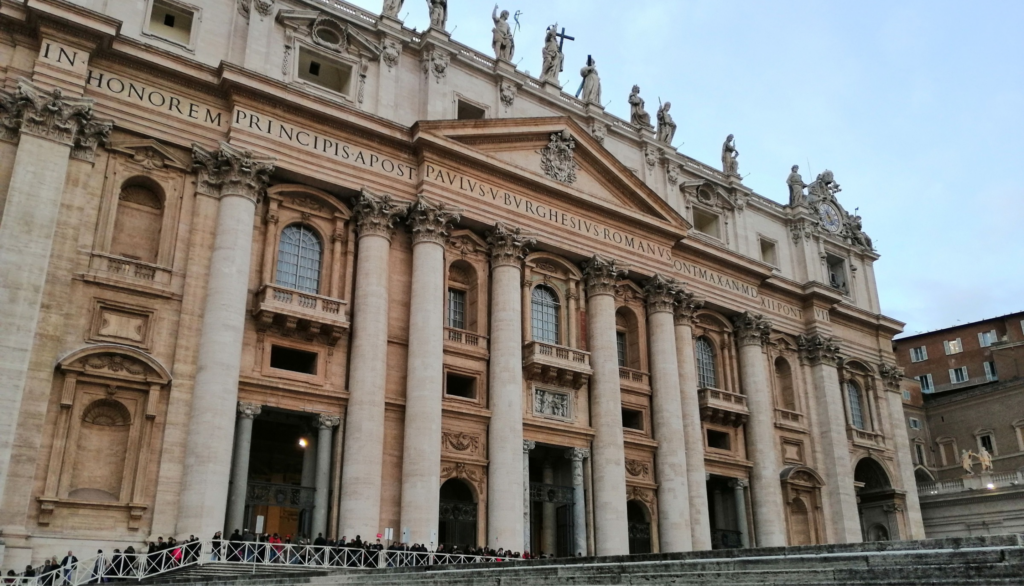
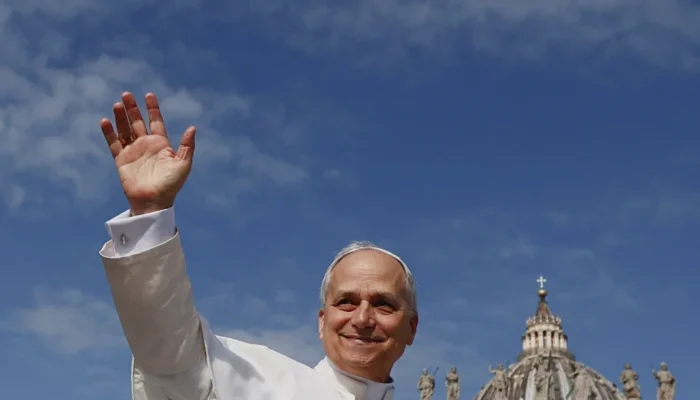
Four centuries later, the St. Peter's Basilica The Basilica was filled again this Wednesday to commemorate the day Urban VIII dedicated it, November 18, 1626. Before the altar where the remains of that Pope rest, next to the Chair of the Apostle, the Pontiff presided over a solemn Eucharist that was intended, above all, as a question addressed to each of the faithful: “What have we experienced upon entering the Basilica?”
A humble grave beneath a majestic temple
In his homily, Leo XIV acknowledged that visiting the basilica “always stirs emotion,” due to the sacredness of the faith, the power of its history, and the beauty of its art. But he reminded the congregation that all of this “rests upon a humble tomb”: that of the Fisherman of Galilee, Simon, son of Jonah. The answer to why this place has become the heart of Catholicism, he explained, lies in the Gospel of Matthew and in Peter’s confession: “You are the Messiah, the Son of the living God.” A truth that, together with the Roman martyrs, nourished the Vatican Hill and bore fruits of holiness for centuries.
The Pope reviewed the history of the building, from the first basilica erected by Constantine to the Renaissance project in which Bramante, Raphael, and Michelangelo participated. He also wanted to remember all those who contributed to the work “with their abilities, their labor, and their resources,” because «the house we inhabit is truly a work of the Church.».
The Pope expressed his gratitude to Cardinal Mauro Gambetti, who has been Archpriest and President of the Fabric of St. Peter, and welcomed his successor, Monsignor Vittorio Viola.
Faith as friendship with Christ
The central theme of the message was the personal relationship with Jesus. The Pope quoted Francis and Benedict XVI to emphasize that Peter's mission is linked to “a selfless love, a love of friendship,” and that life “is a relationship with the one who is the source of life.”.
In this sense he interpreted the basilica as a sign of the “sacred space of conscience”, where faith matures until, if necessary, martyrdom.
The Eucharist, the greatest masterpiece
At the end, the Holy Father made a call to hope. The Eucharist, he said, is «the greatest masterpiece one can contemplate,» whether in St. Peter’s or in the smallest church in the world. Before it, “the powers of the abyss will not prevail”: war does not triumph while peace is proclaimed, nor misery while charity is borne witness, nor error while the truth is taught.
In conclusion, he invited everyone to look at the portals, arches, and windows of the Basilica, open to the square and the world, with a universal invitation: “Come, enter, enjoy!” Or, in a word, “Believe!” He even interpreted the line running along the floor of the central nave, marked with the measurements of the world’s great churches, as a reminder of Catholic hospitality and “a sign of hope for the whole world.”.




 Español
 English
 Italiano
 Français
 Deutsch
 Polski