


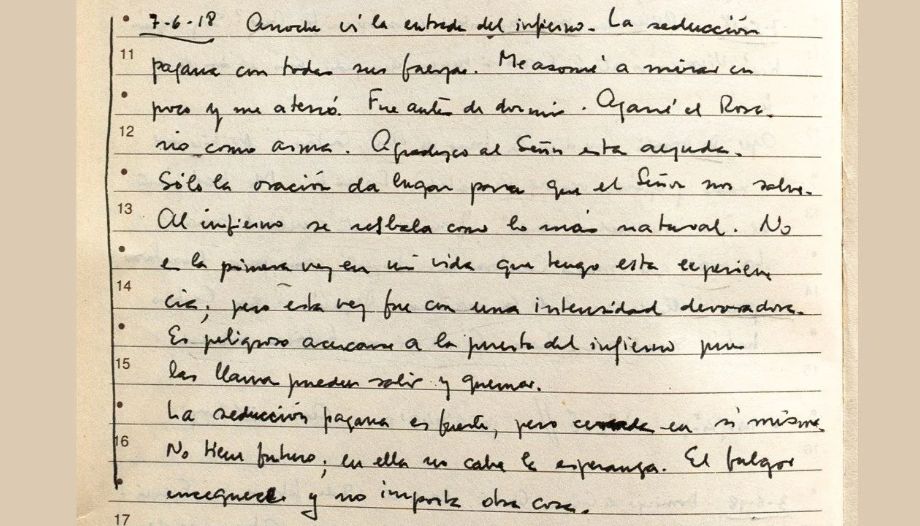
Among the things that have most impacted the Argentine Cardinal Víctor Manuel Fernández, prefect of the Dicastery for the Doctrine of the Faith, from Pope Francis's agenda are two paragraphs that the cardinal quotes in a interview granted to Andrea Tornielli in the official Vatican agency.
It is about the vision of the entrance to hell, the love that the Lord had for him, and a spiritual crisis between 2021 and 2022, which he overcame “with total trust in the Lord,” the cardinal prefect points out.
The quote from Pope Francis’ The Prefect emphasizes this: “Last night I saw the entrance to hell. Pagan seduction in all its power. It terrified me… Pagan seduction is strong, but there is no room for hope in it” (June 7, 2018).
Reflections over 32 years
We are looking at a 160-page book that will be presented in Milan on Saturday the 28th, and which is being published simultaneously in 94 countries around the world. LEV It is published in Italian; Penguin Random House US and Penguin Random House UK in English; Albin Michel in French; Penguin Random House Grupo Editorial in Spanish, and Penguin Random House Grupo Editorial Portugal in Portuguese.
For 32 years, from 1992 until a few months before his death, Francis kept a diary in which, with his peculiar handwriting, he wrote down various reflections on his spiritual life and on some important events for him, explains a statement from the Dicastery for Communication.
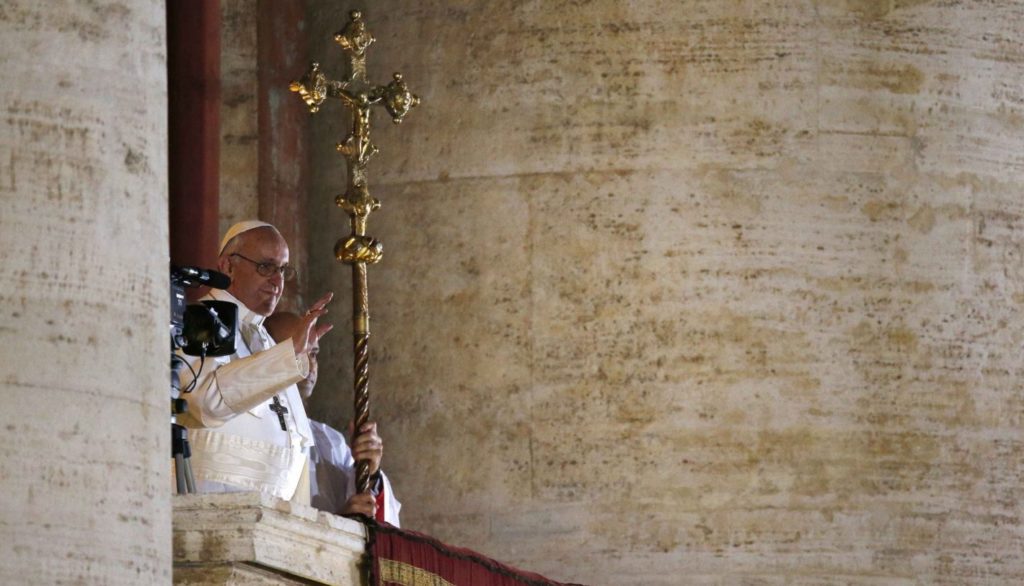
In these pages, “a life journey unfolds, culminating in a total surrender to God amidst periods of great spiritual trials, inner tensions, mystical experiences, and genuine moments of crisis, also experienced as pontiff. “Mercy is my true story,” Pope Bergoglio wrote on June 20, 1994: “a statement that constitutes the guiding thread of an entire life and has become the program of action of the Pontiff who has guided the Church from 2013 to 2025.””.
Selection of texts by the cardinal
Salvatore Cernuzio write Vatican News reports that “the trust between the two (Pope Francis and Cardinal Fernández) is precisely the reason why these private writings are being made public today.”.
This is how the Argentine cardinal explains it in the prologue, where he recounts the discovery of an “old diary” he saw one afternoon in Santa Marta. “You’ll see,” Francis had told the cardinal. Later, after discussing the matter with Pope Leo XIV, he received his approval for publication. A year later, Fernández completed the work, selecting the texts that could “offer some spiritual edification to the readers.”.





 Español
 English
 Italiano
 Français
 Deutsch
 Polski