


 MerydeMaria, Catholic jewelry by a young entrepreneur: «The Virgin Mary is the undisputed star»
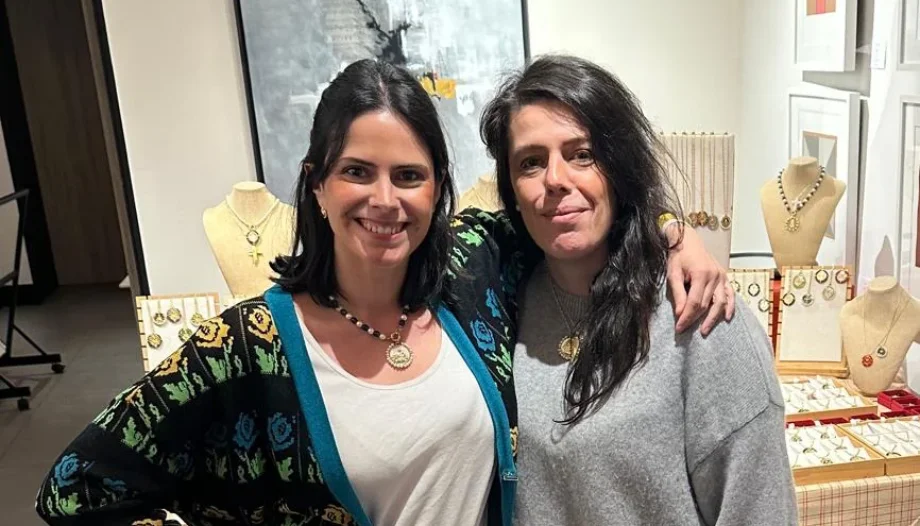
Khartes Madrid started by selling kimonos. Sisters Marian and Bárbara Pérez Muñoz designed the garments and chose a name that, in Greek, refers to maps, because they wanted to bring together styles and fabrics from different places. But the textile world turned out to be “very complicated, very competitive,” and when they looked for another path, they turned their attention back to something they had worn around their necks since they were little: medals.
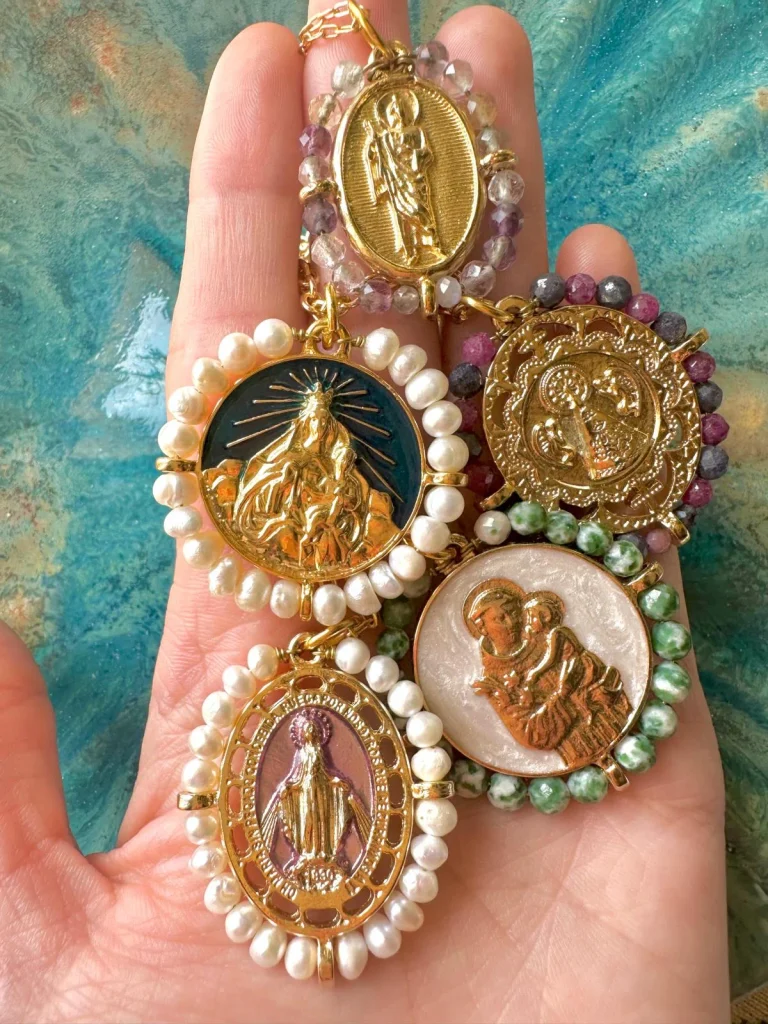
They kept the name, which now fits in a different way: their medals bring together devotions from around the world, from the Virgin of Guadalupe in Mexico to Our Lady of Fatima in Portugal. “We continue to unify different cultures, different devotions,” explains Bárbara, who attended to Omnes with several pieces on the table, allowing for a close-up view of the enamel and stones.
From kimonos to Saint Benedict
For Bárbara, the leap was “a bit providential”: “I never imagined I’d have a record number of medals, but everything happens for a reason.” Her sister has lived abroad for many years – in Colombia, Chile, Mexico, London, and New York – and she was struck by how faith was expressed in those countries, with more color and joy: “In Spain, we are a bit more reserved.”.
This impression was reinforced by a family tradition. Her father and grandparents had received medals as children, and the first thing they received was the scapular of Our Lady of Mount Carmel. They wanted pieces that wouldn't just sit in a drawer until the next baptism or communion: “You can wear them every day, go out to dinner with your friends and wear the medal, go out partying, go to work wearing the medal.”.
They launched it remotely. Marian, who had worked for over twelve years at Google, was in New York; Bárbara, who had a master's degree in fashion design and advertising, was in Madrid. Both were eager to start their own business, and Bárbara emphasizes a long-standing desire to create something more: “She's always wanted to create something more, because the corporate world can be so all-consuming.” They had never considered doing it together, and their parents, “much more traditional,” weren't as convinced. Marian handled the strategy, the launch, and the website, while Bárbara searched for workshops, materials, and types of metal. Their first medal was the Saint Benedict medal; shortly after came the Our Lady of Mount Carmel medal, which is now their most recognizable design.
Churches, sketches and millimeters
The process begins long before the workshop. “Anyone who walks with me knows that if I see a church, we have to go in,” she confesses. There, she takes notes on reliefs, facades, and details of the religious images. Neither of them came from a goldsmithing background, so they also draw inspiration from the antique medals they keep at home as family heirlooms.
With these ideas, they prepare sketches for a modeler. Then comes the casting, polishing, cleaning, plating, and a protective lacquer for greater durability; finally, the enameling of those pieces that require it, and the setting of stones, one by one. This is the most meticulous phase, because no two are alike: “We have to measure each stone down to the millimeter.” The goal is to eliminate any gaps and ensure the piece is “as perfect as possible within the constraints of handcrafted work.”.
Medals haven't always been like they are today. At first, they were silver-plated, but they found gold more appealing and switched to it; they also went “crazier” with enamels, which they've gradually reduced based on customer preferences. Bárbara personally decides on the color combinations after spending a good amount of time with her supplier.
Tradition with a different depth
Updating an image that hasn't changed for centuries has its risks, and Bárbara is clear on the rule: maintain “respect and tradition at the core.” Saint Joseph is depicted with lilies, Saint Anthony with the Child, and Our Lady of the Pillar with her column, and that remains untouched. The difference lies in the details: “We try to respect the traditional image of the Virgin, but focus on each type of openwork. Each medal has a different openwork, a different ornamentation. We respect the image itself, but we change the style of the angels, their shape, their size...”.
That respect comes from home. “We’ve always prayed a lot as a family; in fact, we still do,” she says. When she’s home, her father reminds her to ring the Angelus at midday: “It’s like that typical moment of taking a break from everything for a few seconds, praying the Angelus, and then going back to your routine.”.
That's why she emphasizes a distinction: “For us, the medal isn't an amulet or something you wear because you like it; it has a meaning.” That's why each piece comes with a print that tells the story of its Virgin or saint.
A medal for each exam
The selection of items in the catalog is largely a matter of personal devotion. Saint Jude Thaddeus is one of Barbara's favorite saints, and she tries to attend his procession every October 28th. He is also very dear to her family. Alongside him are other beloved saints in Spain, such as Our Lady of Mount Carmel and Our Lady of the Pillar. They don't follow a fixed pattern: sometimes it's “a little nod,” a feeling that they're missing that particular medal. Customers also make suggestions: they frequently receive requests for Saint Michael the Archangel, Saint Joseph, and Our Lady of Almudena, which they still haven't ordered.
Over time, some of these clients write to them for more than just an order. Before an exam, a competitive exam, or an operation, they ask which saint or devotion might accompany them, and the sisters recommend Our Lady of the Miraculous Medal, Our Lady of Mount Carmel, or Saint Anthony, depending on the situation. Many return afterward to tell them they passed, found a job, or that everything went well. Bárbara attributes this to something simple: “I think that people who have faith, and who believe that each person has their own cross to bear, tend to share their personal situations more with people who we feel have gone through the same thing or who understand us.”.
Some see the medal as a fashion statement, or even a status symbol, rather than an expression of faith. Bárbara doesn't share that view. She wouldn't wear anything that went against her beliefs, but she thinks a medal always adds something: “I believe that wearing a medal brings you closer to what's truly important, even if you don't value it,” she maintains, convinced that the grace of the Holy Spirit is always “around” and that, “whether you want it or not, it reaches you.”.
A distinctive style
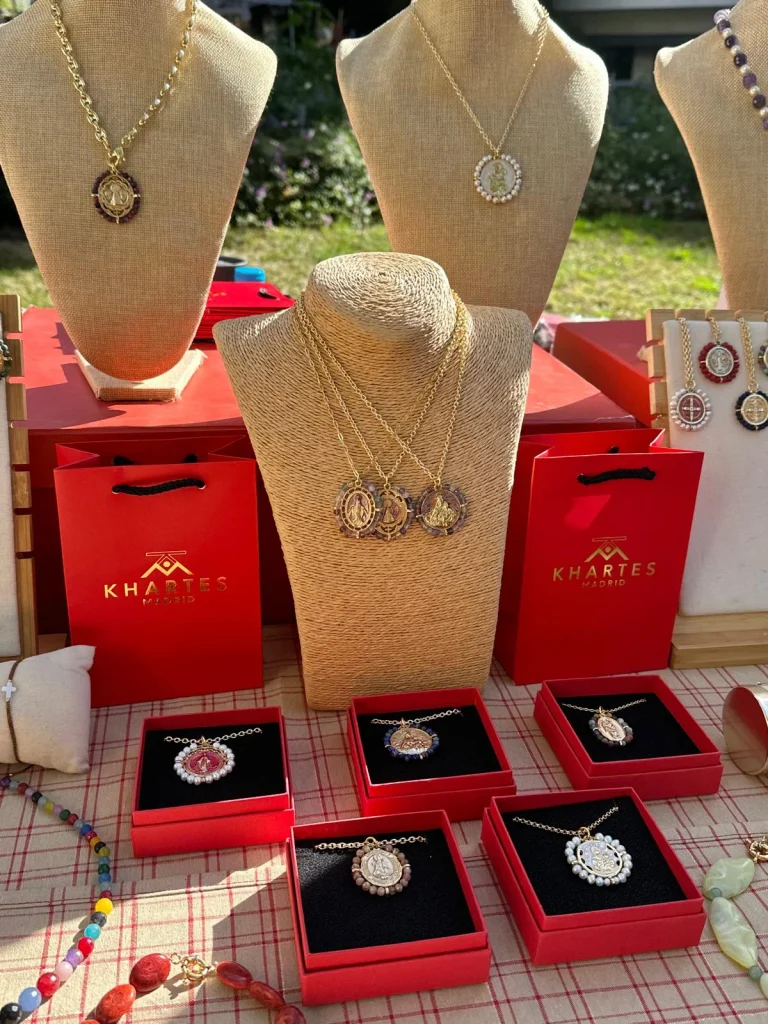
For now, they only sell online, with the occasional pop-up shop for those who prefer to see the medals in person. They aren't planning on a store, but rather a showroom with an office where they can attend to customers at their leisure. At pop-up shops, when many customers gather at once, they can't dedicate as much time to each one as they'd like, and for them, that's what's important: “I want to explain the medal clearly, its meaning, so that the person knows what they're getting and has a positive experience. It's something that, nowadays, when we're always rushing around, constantly running on fumes, we're losing sight of: the human element.”.
The most difficult thing, he admits, hasn't been the competition, which he considers healthy, but rather plagiarism, although he qualifies this: “We are very aware that we didn't invent the medals, which have existed for centuries.” What they have created is their own design, with their “colorful, joyful” way of experiencing faith. “Starting a business in Spain is also very complicated; in the end, you're constantly battling problems,” he adds, but he maintains that the good outweighs the bad.
The next new addition already has a name. Bárbara reveals that it will be a Holy Spirit medal, with a different style than the current ones: it will feature enamel and a small accompanying pendant. She advises those who have never worn a medal to choose one according to their current circumstances, as she does: “It might sound a bit cliché, but I wear one medal or another based on what I'm going through each day.” In difficult times, she turns to Saint Anthony, Our Lady of the Miraculous Medal, or Saint Jude Thaddeus. If there isn't a clear devotion, she recommends Our Lady of Mount Carmel, “our most iconic design,” and the same title as the scapular they received as children.



 Español
 English
 Italiano
 Français
 Deutsch
 Polski