


The relationship between religious consciousness and political reality is, perhaps, the most accurate thermometer for measuring the tension of an era.
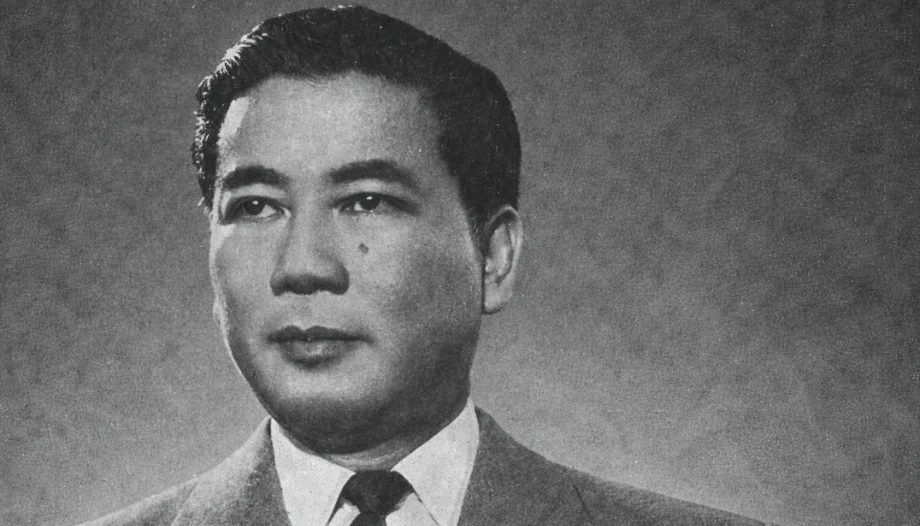
In the turbulent Southeast Asian landscape of the mid-20th century, the figure of Jean-Baptiste Ngo Dinh Diem (Huế, January 3, 1901–Saigon, November 2, 1963), the first president of the Republic of Vietnam, vilified as a dictator or far-right extremist by the communists, emerges not only as a geopolitical actor but also as a case study of the attempt to embody the values of Christian humanism in an environment of fratricidal violence. The excellent biography of his nephew, Cardinal FX Nguyen Van Thuan, written by Andre Nguyen Van Chau, provides important testimony in this regard.
Christian personalism as a political project
Diem was not a calculating politician, but one with a profound spiritual formation. Coming from a family of Catholic mandarins, his worldview was grounded in the belief that human beings possess intrinsic dignity due to their divine origin. Under this premise, he promoted the Can Lao Party (Personalist Labour Party), based on Christian Personalism. Inspired by thinkers like Emmanuel Mounier, he sought a «third way» that rejected both liberal individualism and Marxist collectivism, placing the individual at the center of national reconstruction.
Independence and resistance against foreign powers
One of Diem's most defining traits was his fierce sense of national independence, grounded in his Christian ethics. He tenaciously resisted his people being used as pawns in the power struggles of the great powers.
In the face of France, he refused to be a puppet of decadent colonialism, demanding real independence and refusing to collaborate with governments that did not respect Vietnamese sovereignty.
Despite his dependence on the United States for economic aid, Diem consistently opposed American interference in his country's internal affairs. He resisted the mass deployment of combat troops and the manipulation of his social policies, earning him the enmity of the Kennedy administration. For Diem, Vietnam's dignity was not for sale, not even at the price of military protection.
The spiritual heritage
Despite the shadows cast over his reign and his tragic end in 1963, the seed of his faith was not barren. A prime example of this spiritual legacy is found in his nephew, Cardinal François-Xavier Nguyen Van Thuan.
If Diem represented the Catholic struggle within the structures of power, Van Thuan represented the victory of the spirit over oppression. After spending thirteen years in communist prisons, the Cardinal became a beacon of light with his «Ten Commandments of Hope.». While his uncle attempted to order the city of men through law, the nephew taught that the true politics of a Christian is one of love and forgiveness. His testimony demonstrates that, beyond the successes or failures of a dynasty, faith lived to its fullest extent always finds a way to restore hope.
The life of Ngo Dinh Diem invites us to consider that faith in politics should be a leaven that transforms reality. His resistance to being manipulated by foreign powers and his attempt to apply Christian personalism mark him as a man who, although overwhelmed by circumstances, never renounced the idea that politics must serve the dignity of humankind under the gaze of God.




 Español
 English
 Italiano
 Français
 Deutsch
 Polski