The World

Being Catholic in the United Arab Emirates

In Dubai, more than 200,000 communions are distributed every month, and in Abu Dhabi thousands of faithful fill the church of St. Joseph every week: in the heart of the Muslim world, the Catholic faith not only resists, but flourishes with unexpected strength.

Teresa Aguado Peña-November 10, 2025-Reading time: 5 minutes

The Middle East, the cradle of the three great monotheistic religions, is today deeply marked by the Muslim presence, which dominates cultural, social and political life in countries such as the United Arab Emirates, Qatar and Saudi Arabia. In this context, the Christian presence may seem fragile: most Catholics are expatriates, far from their homeland, with limited public expressions of faith.

However, against all odds, churches such as St. Joseph's Cathedral in Abu Dhabi or St. Mary's in Dubai have become beacons of faith and community life. Masses in multiple languages, prayer groups, catechesis and solidarity activities turn these churches into authentic mosaics of cultures united by the same faith.

The presence of the Catholic Church in the Arabian Peninsula is organized in a unique way due to the cultural diversity and Muslim majority of the region. The United Arab Emirates, Oman and Yemen are part of the Apostolic Vicariate of South Arabia, while Kuwait, Bahrain, Qatar and Saudi Arabia belong to the Apostolic Vicariate of North Arabia. These circumscriptions, erected by the Holy See, make it possible to serve Catholic communities, composed almost entirely of migrants and expatriates, in countries where the Christian faith is a minority.

The Vicariate of South Arabia, based in Abu Dhabi, is entrusted to the Capuchins of the Province of Florence and has as its pastor Monsignor Paolo Martinelli, OFM Cap, appointed by Pope Francis in 2022. For his part, the Holy See's diplomatic presence in the region falls to the Apostolic Nuncio to the Arabian Peninsula, Msgr. Christophe Zakhia El-Kassis, whose headquarters is also in Abu Dhabi. His role is to serve as a link between the local Church and the Vatican and to accompany the communities in respecting religious freedom.

As Bishop Martinelli pointed out to the Vatican media on October 6,“Ours is a Church of migrants. All our faithful come from different countries and cultures, and that makes our vicariate truly universal. Being migrants here makes us missionaries in everyday life: we show our faith in the family, at work and in social relationships, without the need to proselytize.”.

Although Islam is the official religion of the UAE, the government allows freedom of worship for non-Muslim religions, and there are temples and churches (Catholic, Protestant, Orthodox, etc.) and a synagogue. In fact, the government has legalized and recognized non-Islamic worship centers and has actively promoted religious coexistence (establishing a Ministry of Tolerance and promoting the Abu Dhabi Declaration on Human Fraternity). In this context, Dubai and Abu Dhabi have become centers where Catholics can practice their faith openly.

Faith in Abu Dhabi

In Abu Dhabi there are about 9 Catholic churches and it is estimated that Catholics represent between 8 % and 9 % of the population in the United Arab Emirates, although the figures vary due to the changing nature of the expatriate population. Of particular note there is St. Joseph's parish, which has become a true spiritual home for expatriate Catholics living in the heart of a Muslim country. With close to 80,000 parishioners, this multicultural community celebrates Mass in up to fourteen languages, reflecting the diversity of its members, who come mainly from India, the Philippines, Sri Lanka and Spanish-speaking countries. 

Alexander Rodriguez, a lay aviator who helps in the parish coordinating the catechesis of the Hispanic community, recalls how, since his arrival in 2022, he found at St. Joseph's a place of welcome and spiritual growth, where faith is lived intensely through catechesis, volunteering, doctrinal formation and charitable activities.

"The parish is intensely active, the evolution is constant. Every year there are new activities, new communities that are integrated. The last one that I have seen grow a lot is the one in Sri Lanka.”Alexander explains. His own commitment led him to coordinate the Spanish-speaking community, which brings together some 300 people among parishioners, catechists and families. “At the beginning there were only a few of us, but little by little we have been adding altar servers, helpers and more volunteers.”he says enthusiastically. Alexander highlights the charisma of the parish priest, Father Chito, and of Bishop Paolo Martinelli, who, he says, “is a great example of the charisma of the parish priest.“have been able to create a welcoming and friendly atmosphere.".

Living the faith in a Muslim country, he says, has been an experience of freedom and respect. “In 2023, the house of the Abrahamic family in the United Arab Emirates opened its doors to an intra-religious gathering where Catholics, Muslims and Jews held their first ceremonies in the multi-faith center desired by Pope Francis and the Grand Imam of al-Azhar, Ahmed el-Tayeb as a symbol of fraternity between religions. It is a very civilized country, which protects freedom of worship”.”

However, traditions are adapted to the local context. While private practice of other religions is permitted, proselytizing (preaching or trying to convert Muslims) is generally prohibited. In addition, non-Muslim religious practice is generally permitted primarily within the precincts of designated churches or temples. However, public celebration of large events such as an open-air Mass officiated by Pope Francis in 2019 has been permitted. Alexander comments that public processions, so common in Latin America or Spain, are held inside chapels: “Here the faith is lived in a more interior, more private way, but that doesn't make it any less intense. I have never felt that I am limited because I am Catholic.”he says. 

Religiosity in Abu Dhabi, as in the rest of the United Arab Emirates, is lived with intensity, but also with prudence. Although freedom of worship is recognized, the legal system is based on Islamic law (Sharia), which can impact certain aspects such as marriage, inheritance and the penal code. However, reforms have been introduced in recent years to modernize the laws, especially for non-Muslim residents. In addition, there is vigilance to ensure that religion is “not instrumentalized” or used to justify violence, extremism or hatred, condemning the use of God's name for such purposes. In this context, the faithful have learned to express their faith with simplicity, depth and respect for their surroundings.

The only two parishes in Dubai

In Dubai, a city that symbolizes luxury, modernity and multiculturalism, there are only two officially recognized Catholic parishes, both located in areas close to each other and surrounded by mosques, a reflection of the country's dominant religious reality. These are the church of St. Mary and the church of St. Francis of Assisi, authentic spiritual lungs for hundreds of thousands of Catholics living in the city.

St. Mary's, built in 1967 thanks to a donation from the then ruler Sheikh Rashid bin Saeed Al Maktoum, is one of the largest and most active parishes in the world. It serves a community of more than 300,000 faithful from countries such as the Philippines, India, Lebanon, Sri Lanka, South Sudan, Nigeria and Colombia. The church has 15 permanent priests, as well as dozens of catechists and lay volunteers. Masses are celebrated in English, Tagalog, Tamil, Konkani, French, Spanish and other languages, at times beginning before dawn and extending into the night, especially on weekends (which in Dubai are Friday and Saturday).

According to parish estimates, approximately 51,000 communions are distributed each week, bringing the monthly total to some 200,000. This number reflects not only the massive influx, but also the serious experience of faith among the faithful, who often have to organize themselves in advance to be able to attend. One parishioner, who has lived there for three years, recounts that in order to be punctually at Mass he must arrive 40 minutes in advance to be able to park, especially on Sunday afternoons. “The area gets crowded, there is traffic everywhere, and parking is hard to find. But we all assume it as part of our faith experience. It is noticeable that people come here with a hunger for God, with a real faith, without any posturing.".

St. Francis of Assisi Church, located in the Jebel Ali area, was inaugurated in 2001 to serve the growing number of Catholics in the southern part of Dubai. Although smaller than St. Mary's, it also offers intense pastoral activity, with daily Masses in several languages, sacraments, youth groups, retreats and social volunteering. Its construction was made possible thanks to the cession of the land by the local government, in another significant gesture of religious openness.

Books

The 250 years of the United States

The 250th anniversary of the independence of the United States invites us to rediscover the deep imprint of Spain and Salamanca's humanism in the origins of the American nation.

José Carlos Martín de la Hoz-November 10, 2025-Reading time: 4 minutes

July 4, 2026 will mark the 250th anniversary of the independence of the United States and will shed much light on the historical and cultural roots of that event, with many conferences, scientific meetings and papers to be published in these months.

A good example is the recent work of historian and communication specialist Angel Luis Cervera Fantoni, focused on Spain's contribution to the independence of the United States.

Let us remember that very recently Professor Nel deGrasse Tyson (New York 1958), one of the most influential science communicators in the United States, referred to Columbus' voyage and the discovery of America on October 12, 1492 as one of the most important events in history, because with his daring to follow the western route he managed to interconnect two worlds that had been divided: North and South America had been disconnected from the rest of the continents for many centuries.

In fact, through the fundamental fact of the discovery, the American colonization began based on cultural exchange and in the religious and legal sense, since the following discoveries throughout the length and breadth of those territories were aimed at the evangelization of the natives and their culturization.

It is enough to realize that more than 60 % of the inhabitants of New Spain (Mexico) at the time of independence were indigenous people who were baptized and many of them were literate and governed their lands and had their industries. That is to say, the culture and civilization that Spain implanted was not that of Europe, but was completely new: neither Spanish, nor indigenous, but a synthesis of both that was acquiring tonalities and accents according to the different places.

In fact, when the United States gained its independence and, above all, after the Civil War, the process of overcoming racism and slavery began and the new United States began to act as in South America, creating a new culture and civilization in those vast territories.

In fact, just as in the South Spanish was imposed but grammars and dictionaries were written to evangelize those lands and to preserve many local traditions, so too in the United States they stopped the English system of “the best Indian is the dead Indian” to adopt the Spanish system.

Christian humanism and the School of Salamanca

But Spain did something much greater than discovering America and that was to bring there the Christian humanism that was sprouting in Europe from the School of Salamanca and that turned Renaissance humanism into a new humanism that was spreading from Spain to the whole world.

In fact, in 1526, we will now celebrate the five hundredth anniversary of the beginning of the teaching of Francisco de Vitoria in the Faculty of Theology of the University of Salamanca and with that teaching would also begin the friendship and contacts of Vitoria and his disciples with more professors and students of the University and, through academic mobility and books, Vitoria's ideas reached all the universities of the world and from there to all the Christian people.

It is very interesting that the laws of the Spanish Indies influenced the United States and contributed to the creation of the rule of law with the American Constitution. That is, the law protected the individual.

Precisely, the dignity of the human person was the key to understand the School of Salamanca and to understand its fundamental characteristics. If we were to summarize the contributions of the School of Salamanca, we would have its characteristics and we would see that the basis was the dignity of the person.

Vitoria only based his theological, economic and juridical edifice on human anthropology. Therefore, that man has the dignity of a person as the image and likeness of God, even if he was not baptized, subject to rights and obligations, free and capable of owning his land and supporting his family meant that there were no slaves among the Indians: they were all subjects of the crown of Castile.

The legacy of Salamanca's humanism in America and the United States

Precisely, the approval of the fair price, the limitation of taxes, the establishment of precarious loans, the dominion of land and the free market that operated in America and between Europe and America.

The suppression of slavery, admitting black slaves to baptism meant that they had to be treated with delicacy, they could not be put to death, they had the right to buy their freedom.

It is very interesting the establishment of schools, universities, hospitals, hospices, hospital cities, and the whole network of works of mercy, spiritual and material, since the commandment of charity was never taken in the Church as a benefit of inventory.

The ordinations of mestizos, cuarterones, indigenous people began to surpass that of the crilllos, thus the civilization of Peru, Central America, Ecuador or Colombia are especially striking.

All this way of acting would lead to the American constitution and democracy in the North, which received from Europe huge masses of population that were incorporated into the faith, law and culture that have made the United States a great and highly developed nation.

In the juridical world of Vitoria and de Soto, Spain had a title of presence in America: to bring faith, culture and law, but always respecting freedom and the conviction that it could not be imposed except by persuasion. It is important that the 250 years of American independence remember that the principles of the School of Salamanca enlightened Europe and America through Christian humanism. If today we wish to get out of the impasse in which we find ourselves, a good solution would be to recover the humanism of Salamanca and turn it into a new humanism.

Spain in the independence of the United States

AuthorAngel Luis Cervera Fantoni
Editorial: Sekotia
Pages: 456
Year: 2025
Read more
Evangelization

Matina and Gospel Freedom: «our challenge is to be an authentic Gospel choir».»

Singer Matina shares how her encounter with God led her to transform her life and evangelize through Catholic gospel.

Teresa Aguado Peña-November 10, 2025-Reading time: 4 minutes

Matina, Maite Zuazola's stage name, is a singer, composer and musical director from Bilbao who has turned her talent into an instrument of evangelization. Trained since she was a child in classical music and with an extensive career in genres such as jazz, soul or musical theater, she found her true vocation in gospel music: to sing to God and transmit the joy of the Gospel through music.

In 2012 he founded in Madrid the choir Gospel Freedom, a community of voices united by faith and passion for Christian music. Under his direction, the group has grown to become a reference point for Catholic gospel in Spain, performing in churches, festivals, charity events and television programs. Their mission is clear: «to sing to God in Spirit and Truth and, through our songs, to infect souls with the joy of salvation, so much so that their bodies desire to dance and express themselves”.

In this interview, Matina shares her testimony of faith, her journey of conversion and the inspiration from which the project was born. Matina and Gospel Freedom, winner of the Religion in Freedom Christian Music Award this 2025.

Maite, how would you describe the moment or process in which you felt Jesus calling you personally to give Him glory?

-His call was a surprise, and the mission he was entrusting to me. Jesus took me back home, as I had asked him one day. He took me back to The Church and to work from there. My first call was to music when I was 7 years old.  

My paternal grandmother was a school teacher, a music teacher, and a woman of deep faith. One day in her house in Portugalete (Vizcaya), when she was playing the piano, I felt a force that attracted me to that music and I stood next to her while she played. He asked me if I wanted to learn and I said yes. Later I understood that this force was the Holy Spirit.  

My grandmother became my mentor. She taught me solfeggio and took me by the hand to church, and so on for 4 years that I lived with her. This was key. 

But when I left his house, I left the church. I finished my piano career and discovered voice. I worked in the artistic world for years until one day I realized that it was not enough, there was an emptiness inside me that I could not fill. Then I thought I wanted to start a family. I left my life in Madrid and got married. 

My desert began. At that time I cried out to God, because I felt that my marriage, in which I had put all my hopes, even abandoning my musical career to create a family, was not going well. There were hard trials that can only be overcome in a true union. For me, marriage is sacred. 

In the tribulation I began to talk to God. Jesus attracted me. I remembered the gospel music my father listened to... I missed the music. I missed myself. After 10 years, providence brought me back to Madrid, and then I felt I was coming back... In my joy I went to the nearest church with my oldest son, who was 8 years old at the time. During Mass, I received the call. And I came back, back to faith and back to music! It was an incredible time, I was happy in spite of my personal situation. 

Looking back I have seen the whole process. God patiently prepared me and waited for my return. The day would come when everything would come together for the mission, and it did.  

How was the Gospel Choir Libertad born?

-The Gospel choir was born out of conversion. A total inspiration. I proposed it to the parish and the door opened wide. 

Christian music, and in particular gospel music, is perfectly in tune with the joy of being a Christian. I resumed my role as a composer, but now I had no choice but to focus on God's music. It was quite a discovery. Christian music was a necessity that expressed, and continues to express, what my heart carries.

Gospel has African-American and Protestant roots. What moved you to translate that musical spirituality into the Catholic context? What does gospel preserve and what does it transform when sung from the Catholic faith? 

-Gospel music is praise music with a lot of rhythm and quality. Its beautiful melodies, with a brilliant rhythm, are an invitation to live the faith in joy and in the hope of the free salvation offered to us by our Lord Jesus Christ. Praising God in spirit and truth has no denomination.

Catholic praise offers even more than Protestant praise, since it can praise the Eucharist and the Mother of God. In my case I have compositions with these characteristics, such as The Greatest Gift, referring to the Eucharist, Five letters that praises Mary and the Holy gospel, which is a tribute to the Saint of the Mass. Other themes of our latest album are psalms made song as are I trust you based on Psalm 91 and Sing to the Lordr, which is the psalm from Isaiah 12. Our Father to the rhythm of gospel. 

What does it mean to you to evangelize through music? How can gospel be a missionary language for today's society? 

-Evangelizing through music is our mission to carry out the command of our Lord: “Go and proclaim the gospel...” . The Holy Spirit pours out his gifts and charisms for us to put them at our service. It could be said that gospel has a special charisma, for it is a powerful music that pierces. No one remains indifferent after a gospel concert expressed from the heart. This is key. Unfortunately there are many gospel choirs that do not live what they sing, so they do not transmit it either. There are no results if there is no intention. They are not choirs for evangelization. The challenge of Matina and Gospel Freedom is to be an authentic gospel choir. 

How do you integrate prayer and personal spiritual life into your artistic work and choir directing? 

-It is precisely the work of the choir that keeps me in constant prayer. Preparing the songs, taking out the different voices, the harmonies, adapting the lyrics to Spanish or composing new songs are my means to be in constant contact with the Lord. I truly feel it is a privilege to have this wonderful gift that is my direct and immediate connection. 

How do you see the growth of Catholic gospel in Spain and the world? Do you think it can become a powerful evangelizing movement?

-In Spain there are gospel choirs, of course, but not Catholic choirs dedicated to evangelization. Matina and Góspel Libertad are an exception. 

I do believe that it could be a powerful evangelizing movement, as it already happens in other denominations. In Spain it could also do a great job as long as it is carried out with quality, true enthusiasm and real support. Unfortunately there is a great lack of the latter, which makes the work sometimes wearisome and a real struggle.

Read more
The World

Pope: “Work with patience to keep the Church on solid foundations”.”

In many ways, the Catholic Church is always a “work in progress,” where "God is constantly molding its members. These must deepen and work diligently, but patiently,” said Pope Leo XIV at Mass in the Basilica of St. John Lateran in Rome on Nov. 9, the feast of the dedication of the basilica in the fourth century.  

CNS / Omnes-November 9, 2025-Reading time: 4 minutes

- Cindy Wooden, Rome (CNS)

The work under construction is “a beautiful image that speaks of activity, creativity and dedication, as well as hard work.” “And sometimes, of complex problems to be solved,” the Pope said at the Basilica of St. John Lateran in Rome this Nov. 9, the feast of the dedication of the basilica.

The basilica is the cathedral of the Pope as bishop of Rome, and is known as “the mother of all churches”.

Standing on the “cathedra” or episcopal chair, Pope Leo preached about the basilica as “a sign of the living church, built with chosen and precious stones on Christ Jesus, the cornerstone.”.

God chooses “the dirty hands of men” (Benedict XVI)

He also spoke about the feast day when he returned to the Vatican for the Angelus prayer at noon.

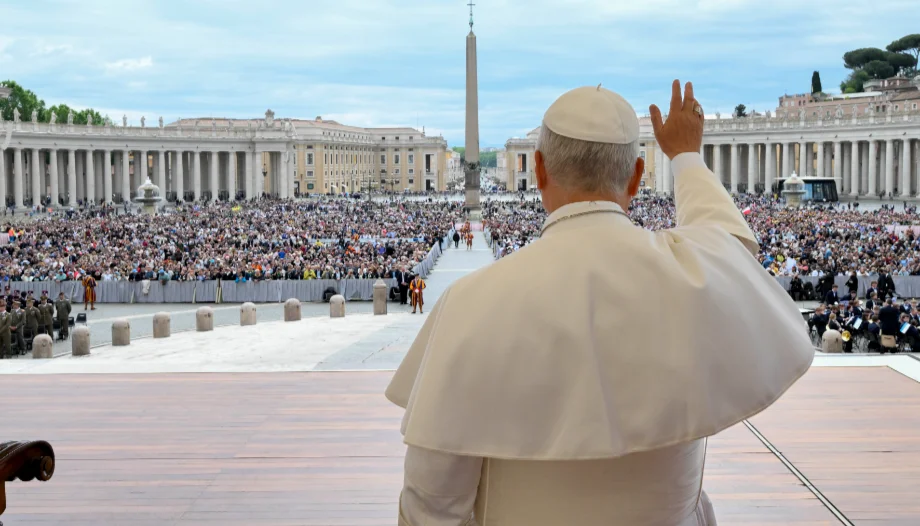
“We are Christ's church, his body, his members called to spread his Gospel of mercy, consolation and peace throughout the world, through that spiritual worship which must shine forth above all else in our witness of life,” he told those gathered to pray with him in St. Peter's Square.

“Too often, the weaknesses and errors of Christians, along with many clichés and prejudices, prevent us from understanding the richness of the mystery of the Church,” he said.

However, the holiness of the Church “does not depend on our merits, but on “the gift of the Lord, never revoked”, who continues to choose “with paradoxical love, the dirty hands of men as the vessel of his presence”. This is how the Pope expressed himself, citing Pope Benedict XVI's 1968 book, ‘Introduction to Christianity’.

Pope Leo XIV greets the crowd gathered in St. Peter's Square at the Vatican for the Angelus prayer on Nov. 9, 2025. (CNS Photo/Vatican Media)

Excavating for solid foundations

In its homily In the basilica, Pope Leo asked the faithful to reflect on the foundations of the church in which they found themselves.

“If the builders had not dug deep enough to find a solid foundation on which to build the rest, the whole building would have collapsed long ago, or would be at risk of collapse at any time,” he said. 

“Fortunately, however, those who came before us laid solid foundations for our cathedral, digging deep with great effort before erecting the walls that house us, and this gives us much more peace of mind.”.

Catholics must also first deepen their inner self.

As members and collaborators of the Church, he said, Catholics today also “must first go deep within and around themselves before they can build impressive structures. We must remove any unstable material that prevents us from reaching the solid rock of Christ.”.

The Church and her members must constantly return to Christ and his Gospel, the Pope said. “Otherwise, we run the risk of overloading a building with heavy structures whose foundations are too weak to support it.”.

Building Christ's church is a work that requires a lot of time, effort and patience, he said.

United with Christ, we are “living stones” for the building of his Church 

Part of that work, the Pope said, is to be humble enough to allow God to work in each member, the “living stones” that make up the Church.

“When Jesus calls us to participate in God's great plan, he transforms us by masterfully molding us according to his plans of salvation,” said Pope Leo XIV. “This involves a difficult path, but we must not be discouraged. On the contrary, we must persevere with confidence in our efforts to grow together.”.

Pope Leo XIV ended his homily by making a special request to the community that celebrates Mass there regularly, but also to all churches and parishes.

On the care of the liturgy at Masses

“The care of the liturgy, especially here in the See of Peter, must be such that it serves as an example for all the people of God,” he noted. “It must comply with established norms, be attentive to the different sensibilities of the participants and follow the principle of wise inculturation.»

He asked that the Masses “remain faithful to the solemn sobriety typical of the Roman tradition, which can do so much good for the souls of those who actively participate in it”.

Prayer for the Philippines and peace building

After the Marian prayer of the Angelus, Leo XIV expressed his “closeness to the people of the Philippines affected by a violent typhoon; I pray for the deceased and their families, for the wounded and the displaced”.

He also expressed his “deep appreciation for all those who, at all levels, are committed to building peace in the various war-torn regions”.

In recent days, “we have prayed for the dead and, among them, unfortunately there are many who have died in the fighting and shelling, even though they are civilians, children, the elderly and the sick. If we really want to honor their memory, let there be a cease-fire and let all efforts be put into negotiations,” he concluded.

The authorCNS / Omnes

Read more
Family

Paula Vega: «We dream of a Church where the vocation to adoption is naturalized».»

Paula Vega, digital missionary and founder of Call meyumi, shares with her husband Dani the journey of faith that has led them to embrace adoption as their “plan A”.

Teresa Aguado Peña-November 9, 2025-Reading time: 4 minutes

Paula Vega is a digital missionary from Malaga and a committed layperson in her diocese, known for her commitment to evangelization in the digital environment. Founder of the project Call meyumi, Paula seeks to share God's love from a close and creative point of view, using digital media as a mission tool. In addition to her work on this platform, she works as a Project Manager in Spain for the series The Chosen, is Community Manager of the Redemptorist Congregation of Spain and Content Creator at Católicos en Red. He studies theology, offers conferences on faith and communication, and has published several books that reflect his spiritual and pastoral experience.

Married since 2023 to her husband Dani, Paula lives her marital vocation with joy and depth. Together, they have embarked on a path of openness to life that has led them to embrace adoption as their “plan A”. On World Adoption Day, they share their testimony with Omnes in the hope of inspiring other couples to discover this vocation.

Paula, could you tell us how this call for adoption came about?

-God planted that concern in our hearts even before we met. Already as a bride and groom, when we dreamed of our future family, adoption came up in conversations and we always ended up saying: “If it is our way, He will take us there”. In our human logic we thought first of biological children and then of adoption; but God's logic was different. When I was newly married, I was diagnosed with endometriosis and we were warned of possible difficulties in conceiving. We were offered different ways to try biological motherhood, but we chose to be more open to life. We asked ourselves what it really meant to be parents and decided to start adoption as our “plan A” as well.

For many women it is a very difficult cross to accept that they naturally cannot have children. What is your experience.

-In our case, we have never been declared infertile; that is why we remain open to life in all its forms: biological, adoption and also foster care (which we are already discerning). These are paths that we put in God's hands so that he may decide the times and forms.

We feel that our current cross is not the impossibility of becoming parents, but rather the waiting period. If it were up to us, we would have our child here tomorrow, but God's timing is what it is. In the meantime, we face this period with patience and trust.

How do you live and how is the adoption process you are going through?

-We always say that adoption does not start with the first piece of paper, but with the first movement of the heart. Then come the formal steps: an informative talk, a training course (about 20 hours) and the offer. It is not “requesting” a child - because there is no right to be parents - but offering oneself as a family for a specific profile of a child, putting his or her needs at the center.

Then comes suitability: psychological and social interviews, home visits, review of the support network... They are demanding and we think it's good that they are: the most valuable thing is protected, which is the child. Once this phase is over, then comes the waiting period, which varies according to the child's profile or the country where the adoption is being processed.

In practical terms, the paperwork is intense: doctors, certificates, notary's office, child protection service, photos, printouts and copies. The hardest part is the bureaucracy and the uncertainty of deadlines. The most beautiful thing is knowing that each step brings us closer to our child. 

We prepare to receive our child as we would a biological child, but perhaps with more awareness. We pray every day for our little one and for his or her biological family. We are training in attachment, trauma and educational methodologies - books, courses and podcasts - to arrive with a more trained heart and realistic expectations. We are also preparing the house with simplicity; a cozy room, clear routines and space to build attachments. In addition, we talk a lot with our family, friends and parish community to explain more about the adoption process, and the needs or characteristics our child will bring. We prepare with excitement and of course, with the normal fears that any parent would have wondering if we will know how to do it right. 

How have you dealt with the doubts and the wait on this adoption journey?

-The first thing was to welcome them with affection: they are normal and human. We name them, we talk about them among ourselves, we present them in prayer and, little by little, they find their place. We understood that in all parenthood there will always be doubts and expectations; the key is not to let them lead. We tried to look at our path with God's logic and love: to put the child at the center, to remember why we started and to choose - again and again - to trust.

We also give ourselves permission to live the wait in a different way; we do not both feel it in the same way and saying out loud what each one of us needs helps us a lot. We avoid comparing ourselves with the times of others, because we know that God already has that red thread tied and ready, and that requires constant trust and abandonment to his plans. We also try to remain active in our mission, focused on serving God from what we have been given, without becoming obsessed with waiting, because our marriage is already fruitful. 

What would you say to other Christian couples who are concerned about adopting, but don't know where to start?

-Let them begin, even with fear. Put into words the seed that God has placed in your heart, talk about it calmly among yourselves and get close to couples who are already on the road: listening to their lights and shadows is very pacifying. Go to the informative talk and also to the formation course offered by the Child Protection Service: it does not commit you to continue with the process, so you can live it as a discernment that opens your eyes and your heart. And ask yourselves the basic question: What does it mean to me to be a father or mother? Is it reduced to sharing genes or does it have to do with welcoming, caring for and loving a specific person? When that answer is settled, the “where to start” becomes simple.

What hope do you want to convey with your story and what wish do you have for the future of your adoptive family within the Church and society?

-In a Church that raises its voice loudly for the unborn, we would like to hear more and more the cry of those who have already been born and are waiting for a family. There are thousands of children in centers who need a stable and safe home. If we do not speak of the vocation to adoption and fostering, it does not seem to exist; that is why we dream of parishes and communities where this call is naturalized and put on the table, so that couples can know it and discern it. If our story encourages just one couple to open themselves to life in this way, it will have been worthwhile.

Read more
Books

 What is the moral perspective?

In "Ethics is someone else's business"It is proposed that morality should not be divided into a private and a public sphere, as this is insufficient. To understand ethics, it is essential to adopt an intersubjective perspective, where morality is learned and cultivated by proposing and observing exemplary models of behavior.

Rubén Herce-November 8, 2025-Reading time: 2 minutes

Talking about morality usually leads many people to the private sphere, where everyone can have their own rules or standards of conduct. There, he is free to choose the ends that are worth pursuing and the appropriate means to guide his life according to his personal opinion; and from there, it is easy to distinguish this private sphere from the public, where there is also a morality but which has mainly to do with the system of rules by which we govern our coexistence. With rules that are not always written, but which we agree to respect. 

One is easily divided, therefore, between a set of rules to follow or comply with in the public sphere - see codes of ethics in the various professions, civic laws or procedures guaranteeing fair or equitable treatment - and a personal way of behaving when “off duty”. Only in the latter can I really be myself, “take a break” from the rules and follow my own criteria of moral behavior. This is what we might call the subjective morality of the private sphere as opposed to the objective ethics of the public sphere.

Ethics of the third person

In a similar line of thought, there are authors who distinguish between third-person ethics, of a more “juridical” nature, where ethical behavior is discussed from normative and external criteria; and first-person ethics, which respond to the subjective vision that each person has of his or her own acts. In the third-person perspective, facts and events are judged and even some intentionality in behaviors can be objectively judged. If I have followed procedure, then I have acted well; if I do not comply with the laws, I am acting badly. In the first-person perspective, on the other hand, what counts are the intentions and the feelings of goodness or badness with which I have performed the action.

However, there is no self-imposed ethics of facts. Facts, however objective they may seem, need to be interpreted; and this interpretation has to be made by subjects outside the individuals involved in the events. On the other hand, feelings and intentions, however subjective they may seem, are not merely internal but tend to be communicated. Happiness, sadness or anger do not belong to the merely private or subjective. 

Ethics and morality, understood as the objective and subjective poles of our behavior, are not well understood without a third pole, the intersubjective, which is essential to understand the proper perspective of morality. A second-person perspective is needed, and this can be seen in the fact that we admire the behavior of certain people or even propose them as models of moral behavior.

Morality is learned and exercised, above all, in the second person, seeing the behavior of other people and acting in a way that can be a reference for others. However, without leaving aside neither the teaching of ethical norms cultivated by the good deeds of those who preceded us, nor the inner fine-tuning that acts as a compass, to tell me that perhaps I have not behaved so well when I lacked rectitude of intention, even if my external behavior was impeccable. 

Ethics is someone else's business

AuthorRubén Herce
Editorial: Eunsa
Year: 2022
Number of pages: 118
The authorRubén Herce

Professor of Anthropology and Ethics at the University of Navarra.

Evangelization

Maria San Gil and José Masip: «We want to proclaim our faith in all aspects of life».»

The coordinators of the 27th Catholics and Public Life Congress, to be held in Madrid on November 14, 15 and 16, 2025, highlight the courage and sincerity of many young people in relation to the faith today.

Maria José Atienza-November 8, 2025-Reading time: 3 minutes

The Catholics and Public Life Congress is one of the key events for Catholic thought and action in society. This edition, the 27th, will bring together in Madrid, from November 14 to 16, thinkers such as Kevin Roberts, of the Foundation Heritage, scientists such as Enrique Solano, president of the Spanish Society of Catholic Scientists, influencers such as Pep Borrell or activist Loren Saleh, 

In the final stages of the Jubilee Year of Hope, this has been the theme chosen as the focus of the conference in which, as its coordinators, Maria San Gil and Jose Masip, emphasize, “we want to spread and proclaim our faith in all aspects of our life. We want to show that we are a university, that we are Catholics and that we are in public life. 

Soft-spoken Catholics?

The congress, now in its 27th year, has touched on numerous themes in this more than quarter of a century, although reflection on Catholic identity in the various spheres of public life continues to be a hot topic. 

In this sense, Masip emphasizes that “there are ideologies that have prevailed, especially in Europe, in the West, and that have influenced the ‘party’ politician to be afraid to identify with certain positions on very specific issues: the family, life..., but I believe that this gap is being overcome. Catholics must commit themselves in life, in society and, therefore, act and do so in accordance with their principles. Principles are proposed in public life, they are not imposed”.

In addition, the congress coordinator points out, “apart from party politics, there is another politics, another public life that is not strictly speaking politics, such as journalism, life in associations, in movements that transmit and capillarize society much more”. 

The motto of this edition, “You, hope.”, has different readings. The hope placed in action and personal responsibility, the hope of God, which is the end of the life of Christians... First you have to be Catholic, you have to be the hope that you must be, the rest, commit yourself to it and act accordingly.

Young people are responding to God more than ever before

The Catholics and Public Life Congress coincides, this year, with the publication of a trend that seems to be settling in Spain: the return to the religious sphere, to the spiritual life, especially among the youth. 

Commenting on this situation, José Masip stresses that “worse times will come. That's for sure. I am not saying this in an ashen way, it is what the Gospel says. But fortunately, we are now at a time when young people are responding more sincerely to the word of God than in the past”. 

A position shared by María San Gil: “I am Basque. There the secularization has turned what was once a land of vocations into a wasteland. As it happens in Catalonia, for example. I think they are very different realities depending on where you live and how you live it. We want to tend, of course, to what happens in cities like Madrid, where you enter a church and it is normal to find young people. What do we have to do? Sow. But the important thing in this sowing is not the quantity, but the quality,

This year, as in the last edition, there will only be one congress without a “division“ of young people. A clear commitment by Masip to “include young people in everything. They are as responsible for this as the older ones. I always say that the divisions of young people in political parties are for ‘not to bother’, and that can not be. Of course, we have pointed out the need for more young people on the organizing committee. There are, but there could be more. 

A congress with a Eucharistic presence

One of the highlights of this conference will be the eucharistic adoration that will take place during the three days of the Congress. A possibility of prayer that highlights, in the words of Maria San Gil “that the Blessed Sacrament is the center. The theme of presence in public life is clear to us, because the speakers are public figures, very well known, but we wanted to give the importance of God present in the Eucharist”.

Also, in this edition, the Masses will be central points of the program and there will be priests to hear confessions. Something that, as San Gil says, “was born almost naturally, because last year, it was announced in one of the conferences that there was a priest to confess and there was a flood of confessions”. 

The success of the Congress? To continue to do so

27 years after the first Catholics and Public Life Congress, The success of this event is, for its organizers, “the very fact of doing it one more year”. The political, social, cultural and religious circumstances in Spain, since November 1999, have changed a lot, “however, the Catholic Association of Propagandists and CEU continue to support this congress. This is very commendable,” said María San Gil.

“We continue to walk, adds Masip, “when Pope Francis, declared the Year of Hope wrote that ‘the solution to weariness, paradoxically, is not to stop and rest, but rather to set out on the road and become pilgrims of hope’. This is what we seek and do with Catholics and Public Life. 

Evangelization

Quique Mira, what are young people looking for?

Aute's founder, Quique Mira, seeks to bridge the gap between young people and the Church through the digital world and events like Kaleo, an immersive experience where every young person discovers that they are called and loved by God.

Teresa Aguado Peña-November 7, 2025-Reading time: 5 minutes

At the age of 19, Quique Mira's life took an unexpected turn. After devoting many years to the world of nightlife and away from the faith, he met Father Javier, a priest stationed in Barcelona, a priest whose gaze and closeness awakened in him an inner restlessness. “The way he cared for me surprised me a lot,” he recalls. That encounter led him, almost by chance, to a Holy Week course in Madrid, where he had a decisive conversion experience: “I remember being on the floor, crying before a crucifix, realizing that there was something real in that love».

Since then, he began a process of searching for answers and spiritual accompaniment that transformed his life. Three years after that conversion, Quique decided to share his faith experience through social networks, which would later give rise to Aute, a project that seeks to be a bridge between young people and the Church, using digital media to proclaim the Gospel with authenticity and closeness.

Today, together with a team of more than 50 people, he is also promoting Kaleo, Aute's first face-to-face event to be held this Saturday, November 8, where hundreds of young people will live an immersive experience to discover that they are called and loved by God.

How did the idea of creating this project come up and what specific need did you see in today's youth that led you to promote it?

-I started creating content five years ago out of a desire in my heart to announce to young people what had changed my life. I came from a very different environment and after my conversion, I spent three years hidden from public life, networks, etc., falling in love with the faith, falling in love with the Lord, falling in love with the Church.

I began to understand that this had a lot to do with my life and I became more and more immersed in it. After three years I had it very clear in my heart that I had to create content to share my experience of Christ to others. My testimony grew a lot in social networks, I received a bombardment of messages from people saying «I did not know the Lord, I did not know the faith and when I saw your content I received an answer to a problem that was distressing me. I have understood that there is a God who loves me».

Well, brutal. I was in the business world at the time, but I was running a marketing department in Barcelona, a company in Barcelona. And as my account started to grow a lot, there was a point when I was invited to the United States to give a leadership course and that's when, talking to the young people I was giving the course to, I ran into a brutal identity crisis.

I met a young man subdued and bombarded by so many superficial inputs who told me uncle, I don't know who I am and I don't know what I'm doing here and I don't know what the meaning of my life is». I returned to Spain very touched. I told my wife, who was my girlfriend at the time, «Mery, something has to be done».

I felt that I had to put more resources, more structure, more equipment to communicate the Gospel to the young people in a more professional and clearer way, which is what has changed my life. And that was the beginning Aute. Initially it was a tool to share the message of Christ to young people. Then we started to set up the application to connect the youth with the Church. 

In what specific ways Aute brings the word of God closer to young people? 

-We mainly do everything through digital media. Our official Instagram account is where we upload all the content, all the videos, which is a little bit the place where the viewer, where the audience, receives the Gospel.

But then, the idea is that each person who has been touched by the Gospel, download footprint and there, according to your location, you find a place to live the faith. In the end, Aute does not offer a direct path in faith. We are an instrument, a team of 50 people, with this mission of announcing the Gospel and then each young person finds his place in the Church.

What is the key to transmitting the message of Christ through the digital world? 

-Be authentic. I think young people are crying out for authenticity. We are tired of lives that are lies, that tell the half-truth. So much idealism cancels out the truth. When a young person perceives authenticity in someone who shares both his good and bad days, and who speaks from the heart, he recognizes it immediately. What is true is beautiful, and it comes through, and it is attractive.

I believe that the key to evangelizing in the digital world is to be authentic, to say «hey, I am a normal young person, with your same desires, concerns, with my job, with my dating relationship, but at the center of my life is something greater, which is Christ, which is the Lord».

Kaleo's motto is “you have been called by name”, what does that phrase mean to you and how do you expect young people to live it? 

-What the event intends, and a little bit the reason why we thought of it, is an immersive experience in which the young person will feel called by God.

There is an experience where it is said «disconnect and forget about everything that binds you in the world and connect with the Lord». For me that is the fundamental thing. I could not be where I am in my day to day life and doing what I do if it were not because I have been called by the Lord.

In my life I would have never imagined this. I had a job projection, a professional career, other aspirations in life, and since I met the Lord, since I was called there, all my activity, all my relationships, everything has changed. Everything has been transformed for the better, for the better.

We want to transfer that experience in the format of a seven-hour event, with lectures, a time of worship, live music, so that the young people see that they are loved by God and that this has to do with their lives and not just with a few. 

What fruits do you expect from Kaleo? What do you expect to happen after the event? 

-May each one return home with a heart in love and ready to serve the Lord. We hope to receive a young man who is doing, who survives.

Let them go out saying «today I work, tomorrow too, I have my girlfriend, better or worse, but life is exciting and I have a calling to serve with my gifts, to love. I have been created for this, I cannot be satisfied with what the world puts in front of me, with surviving». The whole event is planned with a common thread that proposes to the young man «you are called, you are loved and then you are sent».

The last stage of the event is a presentation of the sending, to say «go back to your reality, go back to your family, go back to your relationship, go back to your work and that really what you have seen here, which is this love of God, you can take it to your home, to your reality».

How do you know when to start talking about God? 

-It is a process. I didn't start talking about God publicly until three years after my conversion. I needed first, in an interior way, to understand what was happening to me, to answer questions, to let myself be accompanied and assimilated.

Then you start to understand your history. Then you look at your old environment and you say «I have to tell my friends with whom I used to go out on Thursdays, Fridays and Saturdays that there is a better life, that it's okay to go out partying but that life is not there, that we can't put life and hope there, which is how I lived until I was 19 years old».

First there has to be a journey of knowing, falling in love and understanding what God's love means in your life and the power it has. And then you find yourself in the need to say «this has not been given to me to keep for myself, but to share it with those around me».

Quique Mira with Aute's team
Read more
Evangelization

Beauty as revelation of the mystery: St. John Paul II and Art

St. John Paul II shows how the way of beauty allows art to reveal the sacred and the artist to assume the mission of interpreting the mystery of creation and divine truth.

Alejandro Pardo-November 7, 2025-Reading time: 9 minutes

It is no exaggeration to say that St. John Paul II's relationship with art was particularly close, to the point of being called “the artist Pope” (just as he was also called “the philosopher Pope”). This is largely due to his particular artistic sensibility, which he showed from a very young age and which he cultivated throughout his life, especially through poetry and drama.

Indeed, from the beginning of his career in the cultivation of the arts and of knowledge, Pope Wojtyła has sought to walk the path of beauty (the via pulchritudinis) as a means by which to arrive at the truth and the good of man. This was confirmed by Cardinal Giovanni Ravasi, president for many years of the Pontifical Council for Culture, referring to the last poetic work of the Polish pontiff, Roman TriptychWhen the Pope wrote these verses, behind him, culturally, not only his personal philosophical and theological itinerary, but also a path of height that he had never abandoned was unfolding: that of art. From poetry to theater, passing through admiration for artistic genius, he had lived uninterruptedly the search for beauty...“

It is often recurrent to turn to the Letter to the Artists (1999) as a primary source of St. John Paul II's thought on art. There is, however, a preceding text of singular importance. It is the spiritual exercises that the then Archbishop of Krakow addressed to a group of Polish artists in the Church of the Holy Cross in Krakow during Holy Week of 1962, published under the title of The Gospel and Art. Both texts are closely related and reveal the consolidation of a thought that has matured over time.

To these are added the speeches that, once in the See of Peter, Pope Wojtyła addressed in meetings with artists and representatives of the world of culture on the occasion of his pastoral trips, and other occasional interventions, such as the VIII. Meeting of Rimini (1987), the Jubilee of Artists (2000) or the speeches to the members of the Pontifical Academies and the Pontifical Council for the Cultural Heritage of the Church, which he himself had created. His main teachings on art and the search for beauty can be drawn from all this magisterium.

Art, transcendent opening to mystery

Following the classical conception, St. John Paul II understands beauty as the radiance of truth and good, particularly of the Supreme Truth and the Ultimate Good, which are identified with God. It is, therefore, as he himself defined it in 1962, a “divine sparkle”, which crystallizes in “a particular knowledge (...) not abstract, purely intellectual, but special”. In this way, he concludes, “beauty is the key to mystery and a call to the transcendent”. This is what he would emphasize in a meeting with artists in Venice (1985): “Art is (...) knowledge translated into strokes, images and sounds, symbols that the mere intellectual conception cannot recognize as projections on the mystery of life, because they are beyond their own limits: openings, therefore, to the depth, to the height, to the ineffable existence, paths that keep man free towards the mystery and that translate the longing that other words cannot express”.

In uniquely beautiful words, he expresses this same idea at the beginning of the Letter to the ArtistsNo one better than you, artists, genius builders of beauty, can intuit something of the pathos with which God, at the dawn of creation, contemplated the work of his hands. An echo of that sentiment has been reflected infinite times in the gaze with which you (...) have admired the work of your inspiration, discovering in it as it were the resonance of that mystery of creation with which God, the sole creator of all things, has wished in a certain way to associate you”. It is therefore a talent for capturing that divine halo we call beauty, to which the artist has access through a special sensitivity, in order to discover the true nature of things. Thus, artistic beauty “as a reflection of the Spirit of God” becomes “a cryptogram of mystery”.

The artist's vocation as a mediator between beauty and the world

If art, as a channel of expression and contemplation of beauty, allows a glimpse into the transcendent mystery, the artist -endowed with this singular sensitivity- becomes a privileged mediator or interpreter; or, following the simile of the cryptogram, a decryptor of such a mystery. Indeed, as Pope Wojtyła explains, “in ‘artistic creation’ man reveals himself more than ever ‘image of God,’” he participates in that “kind of divine flash which is the artistic vocation” through which “he can understand the work of the Creator and, together with it, receive in himself, in his creative fruitfulness, the imprint of gratuitous divine creativity.” It is thus understood that the artist lives “a peculiar relationship with beauty”, so that it can be concluded that “beauty is the vocation to which the Creator calls him with the gift of ‘artistic talent’”. In these ideas lies the high vocation and mission of the artist, called to be an interpreter of the ineffable mystery that surrounds God and his creative work.

St. John Paul II considers this function of mediation exercised by the artist between the earthly world and the transcendent reality to be so sublime - especially if it is a Christian artist - that he compares it to a kind of priesthood: “Both the individual and the community have to interpret the world of art and life, to shed light on the situation of their time, to understand the height and depth of existence. They need art to address that which is beyond the purely useful realm and which, therefore, promotes man. (...) According to a profound thought of Beethoven, the artist is called in some way to a priestly service.” Specifically, the artist/priest becomes a “proclaimer” or “recognizer” of the pulchrum divine and, next to it, of the verum and the bonum of the Being by Essence. 

Here we see the sequence election-vocation-mission, which this holy Pope applies to the case of the artist: God calls artists to a particular mission, which is to recognize and reflect the divine beauty present in the world - and, together with it, the truth and goodness of creation - and for this he gives them a singular talent. “This talent,” he explains, “is a special good, a natural distinction. It is a gift from the Creator. A difficult gift. A gift for which one must pay with one's whole life. A gift that engenders a great responsibility". This mission implies an existential commitment, because the artist feels the responsibility to make it bear fruit. Whoever perceives in himself this kind of divine sparkle that is the artistic vocation," he adds, "at the same time realizes that he has a great responsibility to make it bear fruit. the obligation not to squander this talent, but to develop it in order to put it at the service of others and of all humanity”.

In Pope Wojtyła's opinion, this is not an easy path, because the artist faces two dangers that threaten the right deployment of this talent: on the one hand, the temptation to believe himself superior to God himself, to divinize his own works; on the other, to detach art from its true end, which is to reflect the truth and goodness of creation, that is, to detach artistic creation from the search for the truth about man himself and his happiness. From these considerations we can see the natural relationship between art and holiness - the need for the true artist to aspire to a life of spiritual fulfillment - to be able to create and manifest beauty, and to seek to contribute to the good of the world and of humanity. Beauty,“ concludes St. John Paul II, ”must be combined with goodness and holiness of life, so as to make the luminous face of God, good, admirable and just, shine forth in the world. In fact, his address on the occasion of the Jubilee of Artists in the year 2000 is “an invitation to practice the stupendous ‘art’ of sanctity".

Art, a path of evangelization and salvation

If art is a “revealer of transcendence” or a “cryptogram of mystery,” it carries within itself the capacity to lead to the existence of God. Already in the meditations he preached in 1962 to Polish artists in Krakow, the then Archbishop Wojtyła emphasized the efficacy of the via pulchritudinis to arrive at the knowledge of God. “Yes, indeed, the beauty of all creatures and of the works of nature and of the works of art is only a fragment, something limited, a symptom or a reflection, and there is nowhere its full, absolute version, then we must seek this absolute version of Beauty beyond creatures. Then we are on the path that leads us to the understanding that He exists. That Beauty, which is absolute and total, perfect from every point of view, is just Him”.

In a way, those words of the then Archbishop of Krakow were premonitory of the message that St. Paul VI wanted to address to artists immediately after the conclusion of the Second Vatican Council: “This world in which we live needs beauty in order not to fall into despair. St. John Paul II will echo this conciliar message on various occasions. Thus, for example, taking his cue from the well-known phrase found in a work by Dostoevsky - ”Beauty will save the world!“-, he pointed out before a group of artists in Salzburg (1988): ”In this context, beauty must be interpreted as the reflection of Beauty, of the splendor of God. In the face of the overwhelming reality of the contemporary world, one should really expand this phrase and say, “Goodness, goodness, love will save the world!‘ We Christians express with this the love of God, which in Jesus Christ has manifested itself in its salvific fullness and calls us to emulation.’ He will also allude to this power of art in the Letter to the Artists, in which he expresses his hope for the emergence of “a renewed ‘epiphany’ of beauty for our time,” which will awaken “that arcane longing for God”.

He would return to this “path of beauty” at the end of his pontificate in an address to the members of the Pontifical Academies six months before his death in November 2004, in which he would define the via pulchritudinis “The Pope said, ”as a privileged itinerary for the encounter between the Christian faith and the cultures of our time, and as a valuable instrument for the formation of the younger generations“. And he urged: ”If the witness of Christians is to influence today's society, it must be nourished by beauty so that it becomes an eloquent transparency of the beauty of God's love“. This is the only way to promote ”a new Christian humanism, capable of walking the path of authentic beauty and of pointing it out to everyone as a path of dialogue and peace among peoples". In fact, a couple of years later, the Pontifical Council for Culture would take up this invitation and prepare an extensive document, full of thought-provoking reflections, entitled The “Via Pulchritudinis”, a path of evangelization and dialogue.

At this point, and within this salvific dimension of art, St. John Paul II distinguishes two aspects that constitute two sides of the same coin: the intimate connection that exists between beauty, truth and good; and, consequently, the efficacy of art as a vehicle of catechesis. Regarding the first aspect, in a meeting with artists, he affirmed: “As the ancients teach us, the beautiful, the true and the good are united by an indissoluble bond”. This ontological triad, which deeply permeates all created reality, challenges the talent of the artist, who, thanks to divine inspiration, is capable of capturing and interpreting these signals of transcendence emitted by the created universe in all its splendor. This is his mediating mission, as we have seen: a mediation that reveals the triple divine imprint present in the world and that attracts the human mind and heart through beauty. With beautiful words Pope Wojtyła himself expresses it in his Letter to the Artists, The “authentic inspiration has a certain vibration of that ‘breath’ with which the creative Spirit permeated from the beginning the work of creation”It consists of “a kind of inner illumination, which unites at the same time the tendency to the good and the beautiful, awakening in him the energies of the mind and the heart, and thus making him fit to conceive the idea and give it form in the work of art”.

Herein lies the foundation of the catechetical efficacy of art, to which St. John Paul II has referred on various occasions. Specifically, he uses the expression “catechetical mediation,” which he takes from St. Gregory the Great, and which is based on this capacity that art possesses to reveal those glimpses of God's presence in the world. In fact,“ says this holy Pope in his Letter to the Artists- the Son of God, by becoming man, has introduced into the history of humanity all the evangelical richness of truth and goodnessand with it he has also stated a new dimension of beauty, of which the Gospel message is replete”. Hence, paraphrasing some artists and writers, he has referred to Sacred Scripture as a kind of “immense vocabulary” (P. Claudel) and “iconographic atlas” (M. Chagall) that has served as an inspiration to cultivators of the most diverse arts. In short, artists who recognize in themselves this talent will be able to offer “works of art that will open the eyes, ears and hearts of people in a new way, whether they are believers or seekers.

“In the name of Beauty.”

It can be concluded that Karol Wojtyła/John Paul II has contemplated, practiced and traveled the. via pulchritudinis since his youth, while reflecting on it as well. At the age of just nineteen, he headed one of the letters addressed to his rhapsodic drama teacher, Mieczysław Klotarczyk, in a most eloquent way: “I greet you with the Name of Beauty, which is the profile of God, the cause of Christ and the cause of Poland.” From that moment on, he would cultivate the arts of the word (poetry and theater) all his life, culminating in the publication, at the end of his pontificate, of his poetic legacy Roman Triptych.

It is not surprising that the so-called “poet pope” developed a singular sensitivity towards the artistic and cultural world, and that he even developed his own ontology of art as an opening towards transcendence. Art thus becomes a “cryptogram of mystery”, a form of knowledge, a manifestation of the divine presence in the world. A mystery that the artist is called to unveil through his peculiar vocation. A mystery that is incarnated through the expression of beauty, converted into a path of salvific revelation (via pulchritudinis).

From his place in the Father's House, this holy Pope continues to remind artists of all times: “May your art contribute to the consolidation of an authentic beauty which, almost like a flash of the Spirit of God, transfigures matter, opening souls to a sense of the eternal.

The authorAlejandro Pardo

Priest. Doctor in Audiovisual Communication and Moral Theology. Professor of the Core Curriculum Institute of the University of Navarra.
The World

Msgr. Cesare Pagazzi: “The Vatican Archives and Library are a ‘crossroads of bridges’”.”

Archbishop Giovanni Cesare Pagazzi, head of the Vatican Archives and Library, explains that culture and faith, far from being relics of the past, are living sources of hope and encounter in a world marked by conflict and technological change.

Giovanni Tridente-November 7, 2025-Reading time: 4 minutes

In the heart of the Vatican, the Apostolic Library and the Apostolic Archives (known until 2019 as the Vatican Secret Archives) together form a single cultural breath: two lungs of the memory of the Church and of humanity. The mission of custodian of both institutions today falls to Archbishop Giovanni Cesare Pagazzi, incumbent of Belcastro, appointed by Pope Francis last March 2024 to the dual position of Archivist and Librarian of the Holy Roman Church.

Born in 1965, Pagazzi is a theologian and academic with a long career, having taught Ecclesiology, Christology and Anthropology. In 2022 he was called to serve as secretary of the Dicastery for Culture and Education, before receiving episcopal ordination in November 2023.

In his new assignment, the archbishop now finds himself at the head of two extraordinarily important realities that - as he himself tells in this interview for Omnes - are not only places of conservation, but “bridge crossings”where nations, even those far away or in conflict, are united by a passion for knowledge.

How have these first months of service as Archivist and Librarian of the Holy Roman Church been for you?

-These have been exciting months. I have found myself immersed in the great river of the history of the Church and of humanity, gathered between the banks of the Apostolic Archives and the Apostolic Library. I have the good fortune to work with two teams of the highest professional quality; I am learning a great deal from them.

My predecessor, Monsignor Vincenzo Zani (Titular Archbishop of Volturno), had spoken to me about the great importance of the Archives and Library also from the diplomatic point of view, through the so-called cultural diplomacy. I had not imagined that it would be so important. I did not expect the Library and the Archive to be places where very diverse nations, united by their interest in culture, converge. Some of them, outside this space, are even enemies. The Archive and the Library are a crossroads of bridges.

In a time of conflict, crisis and disorientation, can culture open paths of hope?

--As I was saying, culture can open paths that are still unimaginable in other fields. It is no coincidence that, since ancient times, the Church has been one of the greatest cultural promoters in human history.

Furthermore, Christians believe that the Father, the Son and the Spirit have not acted alone“.“yesterday”But also today, now, in this magnificent and dramatic world. If God is here, acting, why should we despair?

On the other hand, the wisdom books say several times that whoever considers that yesterday was better than today is not a wise person.

How can we train ourselves to recognize these signs also in our present?

-He said: “train us”. We must train ourselves to recognize the signs of hope, even the smallest ones. A kind of physiotherapy is needed, a repeated exercise - not without effort - that restores to us a lost ability: the ability to see the grain in the midst of the weeds, the strength that allows us to admit that even from the enemy we can learn something. Perhaps that is why Christ asks us to love him.

Returning to the Library, it is often perceived as a chest of the past, yet it is the custodian of a heritage that serves to illuminate the present and the future. However, it is the custodian of a heritage that serves to illuminate the present and the future. What then is its living function today?

-Rather than representing a reduced image of the Library and the Archive, define them as “.“chest of the past”is a distorted understanding of the relationship between what we call past, present and future.

Today is unimaginable without the supports and stimuli that come from yesterday. An everyday object, such as a spoon, is inconceivable without primitive metallurgy. A space mission could not be planned without the contribution, still operative, of ancient Egyptian, Indian, Chinese, Greek, Arabic and pre-Columbian mathematics.

The past is contemporary with the present and accompanies it. There is a synchrony between all generations. A sort of “communion of saints”The works and good thoughts of those who preceded us are still active; therefore, we are indebted to them.

Thus, the Library and the Archive are not mere places of custody of the past, but spaces where, in a more evident way, the synchrony of all generations vibrates. A synchrony that can be perceived even when today or tomorrow you use a simple spoon.

Digitization projects and openness to scholars from all over the world make both institutions a laboratory of universal cultural dialogue. Is this also a sign of hope?

-Of course. However, the Library and the Archive are like the heart. It works thanks to two opposite movements: diastole, which expands and opens, and systole, which collects and closes. Never one without the other.

Excessive closure would make the Library and the Archive asphyxiating. An indiscriminate opening would transform them into a market where everyone takes what they want, without understanding that they are living organisms that cannot be mutilated. Otherwise, the document or book found would cease to be part of something living and would become an amputated limb.

What help can the Church offer in a current scenario that oscillates between technological enthusiasm and global fears?

-Above all, we should not be afraid. If the Lord has placed us precisely at this time, it means that he has full hope in our success.

Just as past generations faced the cultural, social, economic and anthropological impact of technological innovations such as electric light, radio, television, automobiles, airplanes and the Internet, it is now up to us to assimilate the so-called artificial intelligence and the new possibilities of the digital environment.

Claiming that artificial intelligence represents a greater challenge than those of the past does not take into account that we had no difficulty at all in “artificial intelligence".“digest them”and that is why we consider them easier.

Are there possibilities for the Gospel not to remain confined to the private sphere, but to become a leaven in the culture?

-The problem probably does not lie in a lesser capacity of Christianity to influence culture, but in the inability to realize how much culture is already indebted to Christianity. Therefore, it lives a kind of inferiority complex that inhibits it.

You have worked extensively on the theology of the family. How does the family continue to be a “family" today?“school of hope"?

-We have learned to look people in the eye, to smile, to walk, to talk, to trust people and things within the home of our origins. Elementary grammar and basic vocabulary, even of the most sophisticated cultural operation, we have learned in the family. What more can be added?

If you had to choose an image or an episode that describes the function of Christian culture for our time, which one would you give us?

-The seed that falls to the ground and dies.

What wish or message would you like to address, from your role, to those who today are engaged in study, teaching or research, even outside the Church?

-Courage is the beginning of everything, including all research. You don't know where it comes from, but it always inaugurates something new that demands fidelity.

So: Courage!

Integral ecology

Natalia Peiro: «How are Christian values to be transmitted without leaving the comfort zone?»

The 9th FOESSA Report shows an increasingly unequal and fragmented Spain, with a shrinking middle class and millions of people in exclusion. Natalia Peiro warns of the rise of individualism and calls for the recovery of the values of care, solidarity and encounter.

Editorial Staff Omnes-November 6, 2025-Reading time: 3 minutes

Spain is undergoing a process of social fragmentation in which the middle class is shrinking and millions of families are falling into the lower strata, leaving Spain with one of the highest rates of inequality in Europe. This is reflected in the IX FOESSA Report on Social Exclusion and Development in Spain, presented by Cáritas and prepared by a team of 140 researchers from 51 universities and study centers.

According to the report, severe exclusion already affects 4.3 million people, 52 % more than in 2007. The main drivers of this fracture are housing and precarious employment: 45 % of those living in rented accommodation are at risk of poverty - the highest figure in the EU - and almost half of the working population suffers from some form of job insecurity.

Other factors aggravate exclusion, such as insufficient education, poor health, social isolation or family background, which multiplies the chances of falling into poverty. Exclusion also hits female-headed households and children particularly hard, with one-third of the most severe cases.

Despite the difficulties that severely excluded households face on a daily basis, three out of four of them activate inclusion strategies, i.e., they seek employment, get training, activate networks and adjust expenses, but they come up against structural barriers, encounter fragmented mechanisms, scarce resources and very little personalization. Activation in these households went from 68 % in 2021 to 77 % in 2024. With these data Raúl Flores insisted on dismantling the myth of the passivity of people in situations of poverty and exclusion: «this idea that they live on social benefits without seeking solutions or taking actions for their inclusion is false. This reality shows that it is not the people who are failing, but the system”.

A fragmented community network

The presentation of the report spoke of an increasingly individualized society: «The rise of individualism is also reflected in a gradual change of values: whereas decades ago equality was prioritized, now personal freedom is often given priority over social equality. And on top of this prevailing individualism rides the persistent myth of meritocracy, the idea of the ‘self-made man’, despite the fact that evidence shows that family origin, inheritance and social capital are decisive». 

Raúl Flores pointed out that this individualism breaks the community network and isolates us: «when the awareness of risk does not generate collective action, but rather withdrawal, hope is shattered, leaving a deep emotional scar.

In the face of this hopelessness, Natalia Peiro is committed to teaching about intergenerational relations, intercultural relations, the family «and that safety net that I believe has often been attacked but that we have not really found anything better. The report shows that the change in the structure of households favors a greater risk of social exclusion. We are committed to Christian values».

Catholics against individualism

“We believe that the future of society also depends on what we do every day. There is a strategy of moral destruction that prevents us from putting ourselves in the place of others. It is very easy to side with your own people, but not with those who think differently or those who have less,” he says.

The secretary general warned of the creation of “fictitious enemies” between generations or groups, and warned of the risk of an “increasingly elitist and segregated” society: “there are many very elitist Catholics who contribute to this situation. every man for himself, because they can be saved. But those who cannot do so cannot be left alone. If we continue down this path, we will end up emptying public systems and moving towards models like those in Latin America, with unequal healthcare and education.”

Peiro insisted that the Church and society must assume their share of responsibility, betting on a coexistence based on mixing, encounter and real solidarity: “It is difficult for us to relate to people in need in a real way, not only helping them but making them part of our lives. The future lies in mixing with people who are different, with life trajectories that displace us, but that enrich us. Encountering those who are having the worst time always gives you a much better perspective on life.”

Despite the worrisome diagnosis, Peiro remains hopeful: “There are many people who continue to promote initiatives for coexistence and help. As long as there are committed people, there is hope. We can change our environment, and from there transform the system.”

Evangelization

From Abortion to Worship: Monica let God do it all

After a youth marked by nightlife, lack of control and an abortion, Moni underwent a radical conversion that transformed her wound into a mission. Today, she prays in front of abortion clinics and accompanies other women in the healing process.

Javier García Herrería-November 6, 2025-Reading time: 5 minutes

Moni is a woman with a lively look. She speaks at full speed, as she is, with that mixture of strength and tenderness that only comes from having been through hell and back. “Human beings get used to everything,” she says. “I covered up many wounds in my life with going out, alcohol and fun, but since there is no wound that the Lord cannot heal, here I am now, full of peace thanks to Him,” she says with the experience of one who has seen it all.

Children and youth

Moni was born in Madrid, in a Catholic family “by custom, not practice”. She was baptized and studied at the Colegio San Ramón y San Antonio, of the Augustinian Sisters, “a Catholic school, where I received communion, but the faith did not take hold of me. I stopped going to Mass after my first communion,” she recalls. “I didn't feel anything. I didn't feel part of that world. She had a twin sister, inseparable in childhood, who always kept the faith, but Moni during adolescence distanced herself completely from the spiritual. 

At 16, Moni met the man who would be her boyfriend for more than a decade. She spent a few years at night and out of control. “I used to take cars drunk. I didn't do drugs because I was afraid. I did a lot of damage to those around me. A lot. I hurt a lot of people,” she says sincerely.

The strength that sustained her was, according to her, pure unconsciousness: “I was never afraid, never insecure. It was bam, bam. Until everything collapsed,” she says.

The wound

He was 22 years old when his life was completely broken. “It was one night after going to a house with four boys after being at a discotheque. I barely remember the details of that night, but the next day - trying to piece together the events - I was aware of what had happened and that I had been abused.”. 

Weeks later, she discovered she was pregnant. “I went to the Dator clinic in Madrid. I had an abortion. And I went straight to work,” explains Moni.

She went on with her life as if nothing had happened. She did not share it with anyone in her family, although soon after came fears she had never had before (of elevators, driving...) and anxiety attacks. I became insecure. My sister would say to me: ‘you look strange, afraid’. I would reply: ‘nothing is wrong with me’. But there was.”

That miscarriage was a crack that remained hidden for years. “I thought I had fixed it. But the body keeps everything.”

Hitting rock bottom

After breaking up with her boyfriend, Moni fell into a void. “When he left me, I thought I was dying. But the Lord always took care of me, always, even though I was logically unaware and lived far away from Him. So I started playing paddle tennis, just to do something.” Paddle tennis was, without knowing it, her first step into the light. “That's where I met normal people,” he says with a chuckle. “People who made evening plans, who valued you. I realized that you could live without night.”

It was also there that he met Jordi, a man who played in his same club. “I loved him. I thought, ‘He's great. But at the time it wasn't the Lord's plan. I didn't know it yet.’.

After a few years of friendship, Jordi divorced, and they started a relationship until in 2015, Moni and Jordi moved in together. “The first year was phenomenal, but then it was fatal. I wanted to be happy at all, and I saw that I could not. What used to fulfill me, no longer made me happy.”.

They had tough arguments. “I'd see him angry, and I'd think, ”I'm hurting again. I'm breaking everything. I've always thought that whatever I touch I break." During those years, Moni remained faithless, but the divine seed was beginning to germinate without her noticing.

The day of his conversion

The search for happiness led Moni to a Cursillo retreat and on January 16, 2020, “I was in front of the Tabernacle. I started crying non-stop. I only heard a voice inside: ‘calm down, calm down’. I didn't understand anything. But I knew that God was real, that He was there.”

It was the beginning of his conversion. “From that day on, the Lord put order in my life. He teaches me that what I used to see as normal is no longer normal. I began to obey him. With love, because I knew he loved me.”.

When she realized that her relationship with Jordi was inconsistent with her faith and could not continue the same, she took the most difficult step: “I told him that I wanted to live as brothers until he got the nullity of his first marriage”. 

It was hard for Jordi, but he accepted it. “Fortunately, the Lord gave him a conversion as strong as mine, and we were able to live like this for four years, until 2024 when they recognized the nullity and we were able to get married. It was very hard and precious at the same time,” explains Moni, “It was as if the Lord was telling me: you see, when you obey, everything is in order. And I learned that there, in obedience”.

Project Rachel 

Although her life had turned around, one wound remained unhealed: the abortion. In March 2024, Moni began Project Rachel, a healing journey for women who have had abortions.

“I went thinking I was already healed, but the Lord wanted something more. I went with fear, reluctantly. I was panicky about digging into past wounds that I thought I had overcome. But from the first session I felt a lot of peace.”.

“Thanks to Project Rachel I have been able to have a relationship with my son. Before it was impossible, but now I have given him a name, she named him Maravillas. “One day I understood that my baby was wonderful, even if he came into the world the way he came. His life is a wonder. That's why he's called that.”.

The last session culminated with a Mass offered by his son. “I wrote him a letter. It said, ‘I know your life is going to be wonderful in Heaven.’ And it is. Since then, I pray to him. I talk to him. I pray to him.”.

Today: from injury to mission

Today, Moni is one of the volunteers who pray in front of abortion clinics, including in front of the Dator clinic where she entered at the age of 22. “The first time I went there, I had a terrible time. It was raining, I was alone. A guy insulted me. I was scared. But I still go. Because I see them and I see myself.”.

“What hurts me the most is the Lord. That we say no to his plan. That we take lives with such ease. It hurts me first and foremost the sin, not the people.” He speaks of the women who go in for abortions with the compassion of one who has been there. “I pray for them and for the boyfriends who accompany them. Poor, also deceived. If they only knew...”.

And he concludes: “There is no greater evil than to take the life of your own child. But there is no wound that the Lord cannot heal”. Her story shows this clearly, especially now that she is six months pregnant. 

Gospel

Celebrating the Bishop of Rome. Dedication of the Lateran Basilica (C)

Joseph Evans comments on the readings for the dedication of the Lateran Basilica (C) for November 9, 2025.

Joseph Evans-November 6, 2025-Reading time: 2 minutes

The union with the Pope is so important that this year the feast of the Dedication of the Lateran Basilica has priority over the normal Sunday. Because Our Lord told us “he who listens to you listens to me”.” (Lk 10:16), and Peter is, in the words of St. Catherine of Siena, the “sweet Christ on earth”, the representative of Our Lord. Let us remember that the Lateran Basilica, and not St. Peter's Basilica, is the Pope's cathedral. The latter is only the Pope's personal church, almost like his chapel, enormous as it is! Thus, the Lateran Basilica represents the seat of the Pope's authority as bishop of Rome. Every cathedral expresses the authority of the bishop and in every diocese we celebrate the anniversary of the dedication of that cathedral as an expression of our unity with the bishop. Today, throughout the Church, we celebrate the dedication of the Lateran Basilica as a sign of our union with the Pope who, although he is a universal pastor, is also the Bishop of Rome.

The basilica is considered “Mother and Head of all the churches of Rome and the world”, which makes even more sense if we remember that it is dedicated to St. John the Baptist and has a huge baptistery, bigger than many cathedrals! Baptism was our birth into Christ and the Church, and John, of course, was the great baptizer who even baptized Christ, though only so that Our Lord would grant his grace to him and to us. Since the Baptism of Christ in the Jordan, by the power Our Lord gave to those waters, divine grace somehow “flows” into all baptismal waters in all places and throughout time. So today's feast speaks to us of our union with the Pope and the Church and how, through Baptism, the Church acts as a mother to give birth to us in Christ.

But today's readings give us a warning. We must never abuse the sacred spaces that God gives us to meet with him. United with Christ, who is the true Temple of God, the true place where God meets with man, we ourselves must be living temples of God (1 Cor 3:16-17). God also uses material buildings so that we can have a physical place to come to as a community, but those buildings must always be houses of prayer and never be reduced to places of barter and trade. Jesus will not tolerate that, as today's Gospel shows. Perhaps we could also use this feast to reflect on whether we really respect our churches and see them not as mere community centers, but as places of prayer and worship to God.

The Vatican

Breath of Leo XIV: Easter is medicine, healing, and hope every day

Believing in Easter on our daily journey means revolutionizing our lives, being transformed in order to transform the world with the power of Christian hope. The Easter proclamation is medicine and healing, the Pope said at the Audience, in which he encouraged “the common vocation to holiness. We are all called to be saints.  

Francisco Otamendi-November 5, 2025-Reading time: 3 minutes

With his reflection on ‘The Resurrection of Christ and the challenges of today's world,’ the Pope offered an injection of optimism and hope at this morning's Audience. Easter is “medicine, healing and gives hope to daily life (Mt 28:18-20)”. 

His entire meditation revolved around this idea, which has a lot to do with the Pope's prayer intention for November: “For the prevention of suicide”, as you can see in the information from CNS here.

The Easter of Jesus is an event that does not belong to a distant past, already sedimented in tradition, the Pontiff began by saying, but is actualized every day. “The Easter message is a sure anchor: love has conquered sin forever, and life triumphs over death,” he encouraged the English-speaking pilgrims. 

Video with the prayer intention of Pope Leo XIV for the month of November 2025: «For the prevention of suicide».

Paschal Mystery, every day in the celebration of the Eucharist

Earlier, his words had been: “The Church teaches us to remember the Resurrection every year on Easter Sunday and every day in the Eucharistic celebration, during which the promise of the Risen Lord is fully realized: ‘Know that I am with you always, to the end of time’ (Mt 28:20).

“For this reason, the Paschal Mystery constitutes the axis of the Christian's life around which all other events revolve,” he said. In his words to the German-speaking faithful and pilgrims, he exhorted them: “Just as Christ entrusted to the Apostles, the Church celebrates in every Holy Mass the true actualization of his death and resurrection. Here Christ's promise is continually fulfilled: ‘I will be with you always, to the close of the age’ (Mt 28:20)”.

“The Pole Star”: from the Way of the Cross to the Via Lucis

In him we have the certainty, the Pontiff stressed, of “always being able to find the pole star towards which to direct our lives of apparent chaos, marked by events that often seem confusing, unacceptable, incomprehensible: evil, in its many facets; suffering, death: events that affect each and every one of us”. 

Meditating on the mystery of the Resurrection, we find an answer to our thirst for meaning. “In the face of our fragile humanity, the Easter proclamation becomes medicine and healing, nourishing hope in the face of the alarming challenges that life places before us every day on a personal and planetary level. From the perspective of Easter, the Way of the Cross is transfigured into the Via Lucis,” he added.

Resurrection: not an idea, not a theory, but an event on which faith is based.

The Pope wanted to point out that “Easter does not eliminate the cross, but overcomes it in the prodigious mourning that has changed human history. Our time too, marked by so many crosses, invokes the dawn of Easter hope”. 

“The Resurrection of Christ is not an idea, a theory, but the Event that is the foundation of faith. He, the Risen One, always reminds us of it through the Holy Spirit, so that we can be his witnesses even where human history sees no light on the horizon”. 

Easter hope does not disappoint, he pointed out shortly after. “To truly believe in Easter through the daily journey means to revolutionize our lives, to be transformed in order to transform the world with the gentle and courageous strength of Christian hope.”. 

St. Benedicta of the Cross and St. Francis of Assisi

In two moments of catechesis, Leo XIV has relied on some saints. 

First of all, he cited a “great philosopher of the 20th century, St. Teresa Benedicta of the Cross - whose secular name was Edith Stein - who delved so deeply into the mystery of the human person, and who reminds us of this dynamism of the constant search for fullness”.

He then recalled that from death ‘nullu homo vivente po skampare’ (no living man can escape), as St. Francis of Assisi sings (cf. Canticle of Brother Sun)”. But “everything changes thanks to that morning when the women who had gone to the tomb to anoint the body of the Lord found it empty”. 

The Easter proclamation is “the most beautiful, joyful and moving news that has ever resounded in the course of history,” he said. “It is the “Gospel” par excellence, which testifies to the victory of love over sin and of life over death.”.

“We are all called to be saints”

Before giving the blessing, in Italian, the Pope urged the international community not to forget Myanmar, and recalled the recent feast of All Saints. He reflected on «the common vocation to holiness. We are all called to be saints. I invite you, therefore, to adhere ever more closely to Christ, following the criteria of authenticity that the Saints have given us as an example”.

Made for the eternal

Shortly before, he had reminded the French-speaking faithful of the message he is repeating these days, in line with the liturgy: “The month of November not only invites us to pray for our deceased, It also reminds us that we are made for the infinite and the eternal: that is, for the blessed life, the only reality that can fulfill the aspirations of our heart.

The authorFrancisco Otamendi

Read more

The abandonment of «Los Domingos».»

Every Christian has his Gethsemane; that moment when he can say, like Christ, “Thy will be done”: abandoning himself to a God who is Father.

November 5, 2025-Reading time: 2 minutes

One of the most striking scenes of Alauda Ruiz de Azúa's impressive film, “Los Domingos”,  is when the protagonist prays, in a church, the prayer of abandonment of Charles de Foucauld. I will say no more, because it is undoubtedly one of the turning points of a film that deserves to be seen more than once. 

The scene is not neutral within the film. It requires positioning: either she is crazy, or here is God.

The scene requires a response, and a life-changing response at that. That of the protagonist and, to a certain extent, that of the spectator.

To say «There is God» is to accept that this God is not us, that there is an «other», a real Other whom we can truly love, and give him our life: the one of blood and sweat, the one of laughter and itchy feet.

“Los Domingos” draws today's society as it is, with its lights and its noise, with its shadows and darkness, with the incomprehension it shows in the face of “silence”, the freely chosen concealment. 

“Los Domingos” thus speaks of filial abandonment. An attitude that we have forgotten even within the Church itself. The film approaches the experience of faith, the relationship with God “like a husband, like a boyfriend”, that is to say, real. And it does so from the outside, but with a delicacy, dignity, respect -and perhaps, a bit of astonishment-, which gives it complete verisimilitude. 

Every Christian has his Gethsemane; that moment in which you can fall asleep and hide the responsibility, draw the sword and attack it in an unconscious and hurtful way, or say, like Christ, “Thy will be done”: abandoning yourself to a God who is a father.

Our society lacks parents and has too many “tips”. We have confused being adults with “having everything under control” or having everything done “as planned”.

Total surrender to God, in a convent, in the lay life, in marriage, is today a revolutionary cry that changes the “Do it!” for “Do me! A cry so loud that it is not heard, but which shakes the cracked and wounded clay foundations of a society that longs to discover the Lord of ”Sundays“. 

Oration of abandonment of Charles de Foucauld

My Father,
I abandon myself to You.

Make of me what you will.

Whatever you make of me I thank you,
I am ready for anything,
I accept everything.
As long as Your will be done in me
and in all your creatures,
I wish for nothing more, my God.

I place my life in Your hands.
I give it to you, my God,
with all the love in my heart,
because I love you,
and because for me to love you is to give myself to you,
to give myself into Your hands without measure,
with infinite confidence,
for You are my Father.

Amen.

The authorMaria José Atienza

Director of Omnes. Degree in Communication, with more than 15 years of experience in Church communication. She has collaborated in media such as COPE or RNE.

Read more
Evangelization

The authority that makes you grow

The number of the November Omnes magazine has a special dossier on articles on the abuse of power and conscience. We offer here one of those articles. 

Diego Blázquez Bernaldo de Quirós-November 5, 2025-Reading time: 6 minutes

When Sister Pilar took over the direction of an educational project on the outskirts of a large city, she inherited a file full of dust and silences. There were decisions signed without minutes, e-mails that “no record” and a custom that everyone called “obedience” but which, in reality, sounded like fear. The provincial superior gave her a single instruction: “Make the house smell like gospel again.”. He did not ask for heroism; he asked for method.

That is the heart of this article: authority in the Church. It is not a pious entelechy or a mere organizational chart. It is an art and a discipline, with clear purposes and precise limits. And when it forgets its purpose - to edify people and safeguard a charism for the good of the many - it becomes a caricature.

Authority, not dominance

The Gospel is simple and severe: “It is not to be so among you.”. Christian authority is born of service and therefore submits to its own end. The law of the Church, so little given to slogans, formulates it with sober beauty: authority is exercised “in the name of the Church” and is intrinsically limited by the good of the people, the charism it serves and the rights of the faithful. This means that no superior can command what is impossible, unlawful or beyond his competence. It also means that obedience is not blind, because the conscience - well formed - never abdicates.

What is remarkable is that when these ideas are taken seriously, the climate changes. Meetings cease to be rituals and become spaces for discernment. Fraternal correction ceases to be a nuisance and becomes an antidote to self-deception. Authority, then, is good news: someone is watching over everyone, so that each one flourishes and the work does not lose its direction.

The border that protects freedom

If there is a point where the course tends to be twisted, it is in the mixing of jurisdictions. Tradition has zealously guarded the distinction between what belongs to the internal sphere - confession, spiritual direction, intimate dialogue with God - and what belongs to the external sphere - actions, behaviors, government decisions. Respecting this boundary is not a juridical mania: it is the protective barrier of inner freedom.

When a superior or a superior asks about “how prayer is going” to decide on an appointment; when a request is made “manifestation of conscience” to evaluate someone; when he becomes a habitual confessor of those he must send, correct or dismiss, he has opened a crack through which, sooner or later, manipulation enters. There is not always bad faith; many times there is confusion. But the damage is the same: the person ceases to distinguish the voice of God from the voice of government. And the basis of all Christian maturity is broken, without noise.

The sound practice is well known and demanding: separate roles, focus on verifiable facts, document reasons and, when necessary, resort to external mediators. “Don't tell me how you discern.” -said a major superior to his managers; “tell me how you work, how you relate, what results you have achieved with your team. Your conscience is yours; my duty is to govern justly.”.

How a house deteriorates... and how it rises again.

Abuse rarely erupts with stridency. It usually comes disguised as efficiency. It all starts with an exception: “So as not to complicate things, I'll sign.”. Then, a custom: “Minutes are superfluous, we are family.”. Later, a language: “If you love God, you will do this.”. And finally, silence: no one asks, no one explains, everyone obeys. Authority becomes monologue. The government, opaque. Conscience, one more piece in the machinery.

The good news is that reconstruction can also be done with small things. Sister Pilar began at the table: a Council that truly advised. Dossiers circulated in good time, uncomfortable questions asked with respect, vows where the norm required it and a written record of why one thing was decided and not the other. The next step was to restore dignity to each area: those who accompanied spiritually no longer gave their opinion on destinations; those who prepared the budget presented clear accounts; those who evaluated did so with published criteria. No one felt watched; many felt cared for.

Suddenly something beautiful happened: the youngest sisters - the ones who are usually “voting with your feet” when they detect incoherence - began to speak out. And the laity, who in educational works know very well the taste of transparency, understood that this house was not afraid of being looked at. It was not a miracle; it was government.

Three convictions that change the tone of the whole thing

-First: the end does not justify the means. There is no growth of charisma if to achieve it, freedom is crushed or spiritual language is used as a lever of power. Say “for the good of the work” while a right is violated is not apostolic zeal; it is disorder.

-Second: participation is not an ornament. Listening does not always oblige, but it almost always improves. The Church has foreseen councils, consents and consultations by millenary wisdom: no one governs himself. And accountability-acts, reports, budgets, proportionate audits-does not bureaucratize; it purifies.

-Third: charity needs form. A “good spirit” is not enough to avoid abuse. Clear norms are needed, time limits on offices, management of conflicts of interest, protocols for dealing with minors or vulnerable adults, formation of superiors in leadership and in practical canon law. Charity, without form, becomes soft on the strong and hard on the weak.

When there is already a wound

What to do when the damage exists and is not hypothetical? The Christian answer has four stages that should not be confused. First, to listen with protection to the person affected, with support external to the government circuit, because trust is not decreed. Second, to stop the damage with prudent measures -cautionary, if necessary- that will save everyone. Third, to investigate the facts externally, without invading conscience or turning the process into an inquisition. Fourth, to do justice with reparation, which includes correcting, sanctioning if necessary, learning and changing structures so as not to repeat.

Communication is part of this justice. A community that keeps silent about the essential and loses the rumor of the truth rots from within. It is not a matter of exhibitionism; it is a matter of not covering up, of calling things by their name, of humbly assuming that the Gospel is not defended with secrecy.

A language that educates

Words make worlds. Sometimes the pathology of power announces itself in the vocabulary. When “obedience” is confused with unlimited availability; when “discernment” means “guess what the superior wants”; when “trust” means “don't ask questions”, the deformation is already installed. 

It would be good to recover exact words: to obey is to seek God's will together, with an awakened conscience; to discern is to confront reasons and signs, not naked wills; to trust is to be able to ask questions, even to disagree, without fear of reprisals.

A church government that takes these distinctions seriously does not impoverish its spiritual life: it enriches it. Only those who are free can offer themselves. Only he who is listened to learns to listen. Only those who are accountable can look straight ahead.

The elegance of simplicity

At the end of a year, Sister Pilar gave a brief report to her provincial. It was not a catalog of victories. They were five humble observations: that the council was functioning, that the minutes told a coherent story, that the budget was understood, that the spiritual accompaniments were safe from the government and that appointments no longer depended on sympathies. “The house -wrote- it smells like gospel again”.”. Not because there were no problems - there were - but because the way to face them was evangelical.

There are houses where, upon entering, one feels that authority is a burden; and houses where it is perceived as a good. The difference is not in the character of the superiors nor in the natural docility of the people. It is in the combination of a sober theology of power with a clear organizational culture: real participation, separation of powers, proportionate controls, written memory, honest language. It does not demand cover sanctity; it demands sustained will and simple habits.

The Church has not improvised these intuitions. For centuries it has learned - sometimes with tears - that the charism flourishes when there are rules that protect freedom, and withers when authority is privatized. If we need an image not to forget it, let it be that of a well-laid table: documents in sight, time to talk, reasons to be pondered, decisions to be signed with peace, and a final gesture of gratitude for those who have contributed their part. Power, there, ceases to frighten. And obedience, there, becomes a beautiful word again.

In the end, the prevention of abuses of power and conscience is neither a course nor a protocol-although both are helpful. It is a form of community life in which each person can say, without rhetoric, “here I grow”.”. And where those who govern can pray, without self-deception, “here I serve”. When this happens, the institution becomes credible, the charism becomes fruitful and the Gospel silently convinces.

The authorDiego Blázquez Bernaldo de Quirós

Consultant to religious congregations and director of Custodec.

Read more
The Vatican

Vatican clarifies Mary's role in Salvation

The Doctrinal Note "Mater Populi fidelis" clarifies the role of the Virgin Mary in salvation and discourages the use of certain titles that generate confusion.

Editorial Staff Omnes-November 4, 2025-Reading time: 2 minutes

The Dicastery for the Doctrine of the Faith has today published the Doctrinal Note Mater Populi fidelis (“Mother of the Faithful People”), a document that addresses in theological depth the meaning and limits of certain Marian titles, such as Corredentora y Mediator, The Virgin Mary's cooperation in the work of salvation is also well understood.

The text, signed by Cardinal Victor Manuel Fernandez, Prefect of the Dicastery, responds to numerous consultations received over the past decades on Marian devotion. Its main purpose is to clarify the place of the Virgin in the mystery of Christ, the only Mediator and Redeemer, and to offer safe criteria in the face of inappropriate interpretations or expressions spread even on social networks.

Mary, Mother and intercessor at the service of the only Redeemer

The Note reaffirms Mary's spiritual motherhood and her unique role in salvation history, but stresses that her cooperation must always be understood as subordinate to Christ. It is always inopportune to use the title of “Mother of God. Corredentora to define Mary's cooperation,” the text indicates, recalling that such a term can obscure the unique mediation of Jesus Christ and «can generate confusion and an imbalance in the harmony of truths of the Christian faith».

Likewise, the document points out that Mary is not a dispenser of divine grace, but an intercessor and model of faith. «Only God can give grace and He does so through the Humanity of Christ, since ‘the fullness of grace of Christ the man He has as the only begotten of the Father,'» reads one of the paragraphs.

With a pastoral and ecumenical approach, the Doctrinal Note seeks to value popular Marian piety, especially that of the poor who “find the tenderness and love of God in the face of Mary,” while at the same time avoiding theological exaggerations that distort the Gospel message.

The document includes an extensive biblical, patristic and magisterial development, and is in line with the Second Vatican Council, which proposes a Marian cult “oriented to the Christological center of the Christian faith, so that ‘while the Mother is honored, the Son is duly known, loved and glorified’. In short, Mary's motherhood is subordinated to the Father's choice, to the work of Christ and to the action of the Holy Spirit».

“More than setting limits, Mater Populi fidelis seeks to accompany and sustain love for Mary and trust in her maternal intercession,” concludes Cardinal Fernandez.

Read more
The World

Trump denounces violence against Christians in Nigeria

Recently Academia Play, a well-known YouTube outreach channel, released a video explaining the context of what is happening in Nigeria and providing data on the number of Christians being massacred.

Javier García Herrería-November 4, 2025-Reading time: 2 minutes

U.S. President Donald Trump has threatened Nigeria with suspension of U.S. aid, and even military intervention, if the Nigerian government does not act quickly to stop attacks on Christian communities.

Trump made the announcement on Oct. 31, stating that he would place Nigeria on a religious freedom watch list. In a post on his social network, Truth Social, Trump wrote: «Christianity faces an existential threat in Nigeria.».

The president blamed radical groups directly and issued a stark warning: «Thousands of Christians are being killed. Radical Islamists are responsible for this slaughter,» he said.

Trump urged action, noting, «When Christians, or any other similar group, are slaughtered as is happening in Nigeria...something must be done!» He also stated that the United States would not stand idle, stating, «America cannot stand by while such atrocities are committed in Nigeria and many other countries,» adding, «We are ready, willing and able to save our great Christian population around the world!».

The rhetoric escalated when Trump directly threatened the Nigerian government. «If the Nigerian government continues to allow the murder of Christians, the United States will immediately suspend all aid and assistance to Nigeria, and may well enter that now disgraced country, ‘guns blazing,’ to completely annihilate the Islamic terrorists who are committing these horrific atrocities,» he said.

The president warned about the nature of the possible military response: «If we attack, it will be swift, brutal and cruel, just as the terrorists attack our beloved Christians! WARNING: THE NIGERIAN GOVERNMENT MUST ACT FAST!» he concluded.

Context of violence in Nigeria

Nigeria, with a population of approximately 237 million, is almost exclusively divided between Muslims and Christians. Violence against Christians has intensified in recent years at the hands of Islamic extremist groups such as Boko Haram; however, Muslim communities have also been severely affected by this violence. Disputes between farmers and herders have also led to violence and displacement.

In response to Trump's statements, Nigeria's President Bola Ahmed Tinubu used the X platform to defend his nation's stance: «Nigeria stands firmly as a democracy governed by constitutional guarantees of religious freedom.».

Tinubu dismissed Trump's characterization, stating, «Since 2023, our administration has maintained an open and active dialogue with Christian and Muslim leaders, and continues to address security challenges affecting citizens of all religions and regions,» adding, «The characterization of Nigeria as a religiously intolerant country does not reflect our national reality, nor does it take into account the government's consistent and sincere efforts to safeguard freedom of religion and belief for all Nigerians.».

An explanatory video

Recently Academia Play, a well-known YouTube outreach channel, released a video explaining the context of what is happening in Nigeria and providing data on the number of Christians being massacred. 

Evangelization

St. Charles Borromeo, Cardinal Archbishop at the age of 27, promoter of Trento

St. Charles Borromeo (1538-1584) was one of the leading figures of the Catholic Reformation and the Council of Trent, and played an important role in its implementation. Austere and pious, he promoted the formation of priests and founded seminaries. He died at the age of 46.

Francisco Otamendi-November 4, 2025-Reading time: 2 minutes

Born in the castle of Arona, near Lake Maggiore, into a noble family of Lombardy, Charles Borromeo showed great piety from a young age, and a penchant for the study of law and theology. After obtaining a doctorate in canon and civil law at the University of Pavia, his uncle, Pope Pius IV, made him a cardinal at the age of 22, entrusting him with important responsibilities in the curia and in the administration of the Church.

As a cardinal, Borromeo played a decisive role in the conclusion and implementation of the Council of Trent (1545-1563). He promoted the formation of the clergy and the Christian education of the people. In 1564 he was appointed archbishop of Milan, a diocese that had not been personally visited by its prelates for nearly eighty years.

In Milan, St. Charles undertook a profound pastoral renewal. He founded the seminary for the formation of priests, personally visited all the parishes of his diocese - even the most remote ones - and reformed customs. He promoted catechesis, sacred music, religious art and charity. During the plague of 1576, he stood out for his heroism. He remained in the city when many fled, and organized processions, prayers and aid for the sick and poor, even at the cost of his own health.

“Souls are conquered on their knees.”

His life was austere and prayerful, with pastoral dedication, according to his biographers. At the same time, according to the Vatican saints' calendar, after the schism provoked by the Lutheran Reformation, the Catholic Church was in a particularly critical period. And the young archbishop was not afraid to defend the Church against the interference of the powerful. 

Borromeo encouraged priests, religious and deacons to experience the power of prayer and penance, transforming their lives on the path of holiness. “Souls,” he often repeated, “are conquered on their knees.” He died on November 3, 1584, at the age of 46, exhausted by work and fasting. He was canonized in 1610 by Pope Paul V. 

The authorFrancisco Otamendi

Evangelization

“It is not the role of the hierarchy to understand how the economy works at a technical level”

In this conversation, economists Philip Booth and André Azevedo discuss some topics on the social doctrine of the Church.

Javier García Herrería-November 4, 2025-Reading time: 5 minutes

With the title “Catholic social thought, market and public policies. Challenges of the 21st centurypolitical economists Philip Booth and André Azevedo Alves have authored the first work in a publishing initiative that aims to recover and update the richness of Catholic social thought in dialogue with the major issues of economics, politics and contemporary public life

In this conversation, Booth and Azevedo reflect on some of the challenges facing Catholic social thought today in a world marked by economic uncertainty and significant cultural changes.

Do the Church and the hierarchy understand how the economy works? 

PHILIP: In a sense, it is not the role of the hierarchy to understand how the economy works at a technical level. The role of the hierarchy is to provide moral and theological guidance, including on economic and social issues. The documents of the hierarchy make judgements that are contingent. Judgements on economic and political issues can change over time for all sorts of reasons.

And I think that if we were to succumb to the temptation to believe that the hierarchy should make judgements about technical aspects of economic life, it would be a form of clericalism. Just because someone is a cleric does not mean that they know everything, while there are other people who have knowledge and authority in those areas. Catholics in public life have to make prudent judgements informed by moral and theological considerations on economic and political issues.

ANDRÉ: I think I would add that not only should people in the hierarchy not necessarily be expected to be experts in economics, but I also think the main concern should be that they do not overreach in their pronouncements on economics.

So I think it is more important than having experts in the hierarchy to have people, especially in positions of power within the Church, who understand the role and limits of what Catholic Social Teaching (CST) is or should be, and who do not overreach in terms of wanting to have very strict positions on issues that may be, and often are, issues on which Catholics can disagree and still be good Catholics. For example, for prudential reasons, one can have different opinions on the application of economic theory to specific policy issues and it is okay to disagree.

Could you give a concrete example?

PHILIP: Gambling taxes are being discussed in the UK at the moment. The idea is to increase them to provide more money for poor families. The Church hierarchy could talk about the moral implications of gambling (the fact that it can be an occasion of sin or be addictive, etc.). But I would not expect them to have special expertise in this area, so they should not pronounce on exactly what taxes to impose.

There are many variables at play. It is very likely that increasing taxes would have worse effects on poor families than on rich families: because poor families would spend proportionally more money on gambling; it would further worsen the position of poor addicts; it could create a black market, with devastating effects when things go wrong, etc. 

There is nothing in the training of clergy that helps them understand whether increasing gambling taxes would help improve human welfare, even if they can understand the morality of gambling perfectly well.

In a context of high public debt and fiscal tensions, how should solidarity between generations and between countries be interpreted in the light of the CST?

PHILIP: This is a very serious problem throughout the Western world. It has been exacerbated by financial crises and COVID, as they have increased public debt. 

For 30 or 40 years, populations have been declining, birth rates are low, and our social security systems have promised that we will all receive pensions and healthcare financed by future generations. This is also a form of debt. We have made promises to the older generation that will have to be financed by future generations of young people.

For decades, many people have denounced the unsustainability of the system and, at the very least, we can now say that there is a significant transfer from the younger generation, which now has to bear higher tax burdens and retire later.

It is an injustice. Francis has also spoken about distributive justice between generations; there is a section in Laudato Si that addresses this. Laudato Si that addresses it.

Are there any countries or politicians who are good models of Catholic Social Teaching?

(Laughter from interviewees...) ANDRÉ: That's an interesting and difficult question. I think I would divide the answer into two parts, one referring to political economy aspects and the other to bioethical issues. It is more in line with Catholic social doctrine if you manage public finances prudently; if you do not excessively increase a country's debt and compromise future generations with it; if you have efficient public services in reality. In short, a prudent, modest, rigorous government, etc.

In this sense, I would say that Milei is more in line with Catholic social doctrine than previous governments in Argentina. Nor does the current Spanish government have satisfactory policies from this perspective, as it does not comply with the general principles of good governance and promote the common good more easily.

And what about issues such as abortion or gender issues?

ANDRÉ: On these issues, I think we are living in interesting times because over the last few decades, governments, both on the left and then on the right, have become very socially progressive. However, it now seems that some ‘untouchable’ positions are being challenged by politicians such as Orbán and Meloni. And this is regardless of whether they are doing so for instrumental reasons or out of a genuine commitment to reversing the progressive agenda. 

There are many open questions, but I believe we are now at a moment of possible change. What happens will depend on all of us, but I believe there has been a change that seemed impossible just 5 or 10 years ago.

PHILIP: I work for the Catholic Bishops' Conference of England and Wales, and life issues fall within the Department of Social Justice because they are considered the pinnacle of social justice issues: without the right to life, other rights are obviously not enforceable. And I know for all sorts of reasons that the debate on gender has definitely changed direction in many countries, something that has been made possible by a kind of alliance between Christians and scientists and feminists who know the difference between a boy and a girl!

I think the same thing could happen one day with abortion. I don't know when, but it could happen one day that people realise that this is a life and not part of the mother's body. In the United Kingdom, this is not on the horizon, but it may happen. When it comes to how politicians behave, I am concerned by populists in countries such as the US. I believe that politicians should, in the best sense of the term “liberal”, debate in a liberal manner, assuming the best of their opponents, rather than trying to traduce their opponents and stop them in ways that are not appropriate. 

What is the Church's approach to economic inequalities and the moral obligations of the rich?

PHILIP: There are inequalities that arise from clearly unjust sources: corruption, bribery, etc. And no Pontiff has spoken out against that more strongly than Pope Francis did. I think that's very important. More difficult is the question of people who are immensely wealthy through legitimate and legal work, for example, developing businesses, being successful in sports or music. 

In ‘Rerum Novarum,’ Pope Leo XIII made very clear the moral obligations of wealthy people, and I think we have to be careful not to think that our obligations to the poor end with just paying our taxes.

We must also bear in mind that, although globalisation has enabled some people to become very rich — some unfairly, but I believe most fairly — inequality in the world as a whole has decreased dramatically, in a way that no one could have imagined in 1970. And in a way that has never happened before in the economic history of the world.

Catholic social thought, market and public policy: Challenges of the 21st century.

Author: Philip Booth and André Azevedo Alves
Editorial: Eunsa
Year: 2025
Number of pages: 300

Read more
Culture

Matera, the place where Mel Gibson filmed «The Passion of the Christ».»

From millenary history and peasant life to cinematic glory: the city of Matera went from being the shame of Italy to a World Heritage Site and symbol of cultural renaissance.

Gerardo Ferrara-November 4, 2025-Reading time: 5 minutes

It is well known that Mel Gibson has begun shooting the sequel to his famous film «The Passion of the Christ» (2004), whose most striking scenes were filmed in Matera, Italy, a city famous for its Sassi and for its architecture and landscapes, which are deeply reminiscent of those of the Middle East. «Resurrection» should be released in 2027 and will also be shot in Italy, especially in Matera.

Being a native of this small region of southern Italy, I can only rejoice: it is a little known region, but very rich in history.

In my birthplace, Policoro (ancient Heraclea), in ancient Magna Graecia, Pyrrhus, king of Epirus, fought against Rome using war elephants. From there comes the famous expression “Pyrrhic victory”: the Greek king won, yes, but with such heavy losses that today the phrase is used to indicate a futile success.

Also on the eastern coast of this region, in Metaponto, Pythagoras taught and founded his famous school. From Venosa, on the other hand, in the northwest, the Latin poet Horace originated. In the Middle Ages, Basilicata was chosen by Frederick II of Swabia to build some of his most famous castles.

A region not very large, yet so prestigious in antiquity, then fell for centuries into national and international oblivion, until Carlo Levi, a Jewish Italian writer confined here by Mussolini, described its peasant reality in «Christ Stopped at Eboli». At that time, Matera, with its Sassi, was visited by Levi, a few years before Palmiro Togliatti, leader of the Italian Communist Party, and above all Alcide De Gasperi, president of the Council, denounced the conditions of extreme poverty and degradation in which the inhabitants of Matera lived, calling them a “national disgrace”.

A millenary history

Matera is located a few dozen kilometers from my hometown. Considered one of the oldest cities in the world still inhabited (the oldest in Europe), it is a place where human history is continuously intertwined with peasant culture and faith. Its famous Sassi, carved into the limestone rock and inhabited since prehistoric times, are today recognized as a unique architectural heritage in the world. Not for nothing did UNESCO proclaim them a World Heritage Site in 1993, and in 2019 Matera was designated European Capital of Culture.

The cave settlements of Matera date back more than 9,000 years: first as natural cavities adapted by man as shelters, then converted over the centuries into real houses, stables and workshops.

In the Middle Ages, the expansion of the city favored the development of an urban grid on several levels: the roofs of the lower houses became streets for the upper ones. Each nucleus had its cistern, its small square and its place of worship. For this reason, in the 1950s, Matera was defined by the famous architect Le Corbusier as an “organic city”: a spontaneous urban model that integrates man and nature and responds perfectly to the needs of the community.

Between East and West

Matera is also a crossroads of cultures. For centuries, southern Italy was under Byzantine rule (the name Basilicata derives from the Greek «basilikos», Byzantine imperial governor), also in the rite, and there is no lack of traces of monasteries and place names typically Greek, even in the devotion to the saints.

This happened especially after the arrival, between the 6th and 11th centuries, of monks fleeing the Byzantine East because of the iconoclastic persecutions. All of southern Italy welcomed numerous communities of Basilians, followers of St. Basil the Great (4th century), bishop of Caesarea and father of Eastern monasticism. They brought the Greek rite, which in Matera left deep traces in the frescoes of various rock churches: the Christ Pantocrator, the «Theotokos», the saints blessing “Greek style”, with two fingers half extended and three bent, symbol of the Trinity; while in other churches the iconography and the blessing are “Latin style”. There are even exceptional cases, such as the cave church of Santa Lucia alle Malve, where figures of saints blessing according to both rites coexist: an anticipated ecumenism.

In the city there are more than 150 cave churches distributed between the Sasso Caveoso (the oldest part of Matera, completely carved into the rock), the Sasso Barisano (the more recent and built-up part) and the Murgia plateau, with its typical limestone landscape of canyons and ravines.

Among the churches not to be missed are Santa Maria de Idris, which dominates the city from above; San Pietro Barisano, the largest; and Santa Lucia alle Malve. These churches were not mere places of worship, but centers of community life and formation: their frescoes were authentic “visual catechisms”.

Daily life in the Sassi

Until the 1950s, the Sassi were inhabited by peasants, artisans and large families who shared small spaces with the animals. It is impressive to enter these caves (now inhabited again or open to tourism) that were kitchens, stables and workshops, with cleverly designed furniture: chests of drawers that turned into cradles, perfectly adapted utensils. It was a difficult life, no doubt, but rich in neighborly ties and a very strong social fabric.

I still remember, in my childhood in the 80's in a small southern town, the women who spent their days knitting at the door of their houses, while we, the children, felt like children of all, playing freely under the watchful eye of any mother or grandmother in the neighborhood, who knew how to reprimand, but also offer a generous piece of bread with oil and tomato for a snack.

We, however, had comfortable houses and did not live, like the former inhabitants of Matera, with the animals and without running water, electricity and basic services.

As a result, Carlo Levi and the politicians of the time generated so much indignation that in 1952 a special law was passed to evacuate the Sassi and move the inhabitants to new, purpose-built popular neighborhoods. Thousands of families were displaced.

For decades, Matera was remembered as “the shame of Italy”. And indeed, those who visited the city still in the 1990s can remember how the Sassi were dilapidated and dangerous. Nothing to do with the current context, in which they have become movie sets and people compete to stay there even for a few days, thanks to an immense work of restoration and enhancement that has transformed them into homes, diffuse hotels and museums.

Matera in the cinema: from the Gospel to the Passion and resurrection of a city

In recent decades, Matera has been chosen by various directors to set historical and religious films. The Italian Pier Paolo Pasolini, for example, shot there in 1964 «The Gospel according to Matthew», a realistic film in which he decided to use common people and peasant faces instead of professional actors. Mel Gibson acted similarly in his works. Even the movie «Nativity» was partially shot in this area.

But the Sassi do not exist in isolation: they are part of the rough and majestic landscape of Basilicata, already described and shown in numerous films, novels and television series around the world. For those who, like me, have left their land in search of new opportunities, returning to Matera and Basilicata means, in addition to a journey into the past and feasts of local cuisine, reliving a history through its stones and understanding that even from them life and hope can be reborn, when all seems lost.

What is not taken from you

They can steal all the jewels and gold in the world. But the moment that enclosed each one of them, remains in our life.

November 4, 2025-Reading time: 2 minutes

Mine were far from being Napoleon's jewels stolen from the Louvre, but mine were stolen the day before and they were the ones that mattered to me. They were my souvenirs. I don't know if Napoleon's will ever be found, as they are difficult to sell. The gold that was stolen from me will be melted down, but the memories that each piece aroused will never be melted down. 

We never go out on Fridays for dinner, the five of us, but that night was special. My oldest daughter was turning eighteen. She had said she wanted to celebrate with us, at an oriental restaurant, the same day as her birthday, and the next day with her friends. At about half past seven we left the house, and returned about two hours later. A cake and a bottle of spumante were waiting for us in the refrigerator. I had the glasses ready, it was toast day. When we arrived home, my husband noticed something strange when we entered our bedroom and said out loud: "What is this big mess? A second later, my son said in a surprised tone that the window was open, while I saw some drawers of a piece of furniture in the living room open. It was clear and my body froze all at once. 

It had been such a short time since the intruders had been inside the house that we still «felt» their presence and felt fear. Feeling that someone has entered your house without your permission to steal leaves you with a tremendous bad feeling. My little daughter started crying and shaking. I told her that nothing was wrong and she answered me: «It's just that you're not afraid because you're older.»

I was afraid to see what the thieves had taken. They emptied a box where the few valuable jewels I had «slept». That box contained, among the jewelry, an old bag in which there were some gold and coral earrings with a matching ring that my grandmother wore when she went to mass on Saturdays and that she had given me a few months before she died at the end of one summer. I think that was the only thing of value she had in her life and I accepted it knowing that she sensed her end. 

Not even the thieves (skilled in distinguishing gold from scrap) suspected that there was a jewel in that old bag inside that box. As I remember, I never took my grandmother's gift out of that rare wrapping.  

Life is a mystery in which we learn every day. I notice that everything is a process of detachment. Each piece of jewelry that the thieves took was a memory of a moment in my life. They could steal all my jewelry, but once again, I am convinced that objects are a materialization of a feeling. That night my grandmother did not allow thieves to take her gift. If it hadn't been in the old bag they would have taken them, but sometimes appearances can be deceiving. The gold and coral earrings were worn by her great-granddaughter at the dinner she had with her friends to celebrate her 18th birthday, the day after. 

The authorMiriam Lafuente

«Wounded» by abortion: an uncomfortable truth society ignores

The documentary Wounded breaks the silence on the denied "post-abortion syndrome" through four moving testimonies, revealing the pain, the guilt and, above all, the possibility of healing through faith.

November 3, 2025-Reading time: 2 minutes

I admit that I did not feel like going to see it. Abortion is an uncomfortable subject, the reality of which is more bearable if it remains hidden. We prefer not to talk about it, not to look at it too much. It is not pleasant to think that last year 106,000 women went to a clinic with fear and uncertainty. It is true that not all of them consider it a traumatic experience. However, it does happen to many other women. And the hardest thing is that they are increasingly silenced and written off, because in our society we don't want to think that there is a “post-abortion syndrome”. 

For this reason, «Wounded» is a documentary that shows an uncomfortable truth and that is precisely why it is worth watching and making it known.

There is a lot of talk about abortion as a woman's right, but what may remain afterwards is never courageously addressed: the pain, the guilt, the silence, the “what would have been if...”. That inner echo that in many women does not disappear. «Wounded» gives voice to that echo, the so-called “post-abortion syndrome” that many try to deny.

And it does so with exquisite tact. «Wounded» is not a weapon against anyone. It does not seek to point fingers, polarize or build trenches. It is pure visual and narrative delicacy. There are no accusations, there are looks. There are no speeches, there are faces. There is no propaganda, there is humanity.

Her four testimonies - three women who had abortions and one man whose partner had an abortion - are moving. They are very well chosen to show a wide variety of situations. 

The hard part is not in the images, but in the words. But, at the same time, there is something profoundly luminous in the whole story: the possibility of healing. The protagonists have found peace and reconciliation thanks to the Christian faith, which runs through the entire documentary like a thread of redemption and hope. 

I left the theater in silence. Not with the weight of sadness, but with an uneasy serenity, like someone who has seen something true and doesn't quite know what to do with that information. I thought that maybe we need to talk more about these things. Or, at least, stop hiding them.

That is why I sincerely recommend it. Worth seeing -especially if you have a friend, family member or acquaintance with whom you have disagreed about abortion, or perhaps whom you suspect carries an unresolved wound inside. Seeing it together can be a starting point for a good conversation.

«Wounded» has many virtues, but it will remain, above all, as a point of light that showed many that post-abortion syndrome exists, and that it is possible to heal it.

The authorJavier García Herrería

Editor of Omnes. Previously, he has been a contributor to various media and a high school philosophy teacher for 18 years.

Read more
Evangelization

St. Martin de Porres (‘Fray Escoba’), Peruvian, first mulatto saint in the Americas

St. Martin de Porres (1579-1639), whom the liturgy celebrates on November 3, is known as the first mulatto saint in America.. He was born in Lima, the son of a Spanish nobleman and a black Panamanian woman, and is revered for his charity and service to the poor and sick, his humility (‘Fray Escoba’) and the miracles attributed to him.  

Francisco Otamendi-November 3, 2025-Reading time: 2 minutes

St. Martin de Porres was born on December 9, 1579 in Lima, the son of a Spanish nobleman and a black Panamanian woman. He entered the Dominican Order in the convent of Santo Domingo in 1594. In 1603, he professed his vows as a lay brother. He worked as a barber, nurse and porter, and is remembered for using the broom as a symbol of service, and is known as ‘Fray Escoba’.

‘Fray Escoba’ stood out for his deep love for his fellow man, caring for the sick of all races and social classes, as well as animals. Miracles such as prodigious healings, bilocation (being in two places at the same time) and the ability to communicate with animals are attributed to him.

He founded a shelter for orphans, and died in Lima on November 3, 1639, leaving a great void in the city for his kindness and service to the needy. He was beatified in 1837 by Pope Gregory XVI and canonized in 1962 by Pope John XXIII. He is considered the patron saint of social justice, as well as the protector of barbers, nurses and public cleaning. His feast is celebrated every November 3.

Charity day and night with everyone 

The Dominican website reports that it was on June 2, 1603 that St. Martin de Porres consecrated himself to God by his religious profession. Fr. Fernando Aragonés will testify: “He exercised himself in charity day and night, curing the sick, giving alms to Spaniards, Indians and blacks, he loved, loved and cured everyone with singular love.” The convent's porter's lodge is a trail of humble soldiers, Indians, mulattos, and blacks; he used to repeat: “There is no greater pleasure than giving to the poor”.

The Roman Martyrology notes that “he learned medicine, which, later, being a religious, he generously practiced in Lima, a city of the Peru, in favor of the poor. Devoted to fasting, penance and prayer, he lived an austere and humble life, but radiant with charity († 1639)”.

The authorFrancisco Otamendi

Books

How faith changed democracy

Émile Perreau-Saussine explores the relationship between Catholicism and democracy from the French Revolution to Vatican II, highlighting religious freedom, the role of the laity and the historical evolution of the Church in modern society.

José Carlos Martín de la Hoz-November 3, 2025-Reading time: 4 minutes

Émile Perreau-Saussine (1972-2010) was successively Professor of Politics and International Studies at the University of Cambridge and at the Institute of Political Studies in Paris (Sciences Po). His premature death was much mourned, as his academic career and his publications augured great advances in the human sciences.

The work we now present, Catholicism and Democracy, aims to be a true synthesis of the history of political thought along the lines of the philosophy of political history in the noblest and broadest sense. At the end of this brief review the reader will understand why we do not offer from the outset a more overflowing conclusion.

Undoubtedly, the approach of this work is absolutely up to date, since the relationship between freedom and democracy and between religion and democracy from the French Revolution to the present day.

Logically, while reading this interesting lesson in history, law and theology, we cannot but thank the author for his clarity of ideas to explain certain moments in history, such as the rupture of the Ancien Régime, the ancient union of the throne and the altar and to take the example of the separation of Church and State from the mutual respect and full acceptance of the principle of religious freedom and the principle of political freedom of ordinary Christians who are those who build, with their fellow citizens, the democratic society of the West.

We are fully aware that the Syllabus of Blessed Pius IX (p. 139) was a clear demonstration of how the social doctrine of the Church requires constant updating, since the inculturation of the Church in every moment of history always requires discovering what is essential and perennial and what is transitory and ephemeral.

Logically, our author, with great agility and simplicity, takes the opportunity to shed light on issues that for centuries were complex and complicated: “this is history and this is how we have told it”.

Freedom, democracy and religion: a historical approach

Just as there was a time when the confessionality of the State seemed fundamental for the Church to have freedom of action and the material means necessary to evangelize the Christian people and to energize it so that it would always be a good son of God and of society, so too came the time of the deconfessionalization of nations as democracy took hold and secularization advanced, and so, as the German saying goes: “the air of the city makes man free”.

Émile Perreau-Saussine, will focus his speech on the study and comparison of Vatican Council I and Vatican II, underlining the importance of the papacy in enlightening consciences and the capital of free action of ordinary Christians who must be, as Vatican II said, the “soul of earthly society”. In addition, our author will focus his research on France and recently: “France has combined political, religious and intellectual lives with an uncommon energy, giving the great events of its history a rare physiognomy” (p. 29).

After navigating problems such as the civil constitution of the clergy, the distrust of the enlightenment and the serious and complex problem of Jansenism, he will deal with Gallicanism: “The affirmation of the autonomy of the temporal did not imply religious secession. France remained in the universal Church and recognized the authority of the universal councils” (p. 68).

We will then focus on the French Revolution and its fundamental consequence: the radical separation of Church and State with which France faced the 20th century and the world wars (p. 176), bringing the faith to the interior of consciences and, at the same time, with an unprecedented deployment of religious orders and congregations in their missionary work, both in towns and cities and in mission territories and in the exercise of corporal and spiritual works of mercy that filled France with institutions that energized the life of the Church and of society.

At the same time, people looked to Rome for guidance for consciences in liberal society, in industrial development and in the social doctrine of the Church. Of course, science, industry and technology developed, but man needed God and the sacraments: “In a world in upheaval, the papacy manifested the permanence of a firm identity. In a world that was searching with difficulty for its organizing principle, the papacy appeared as the apex of a hierarchy, a stable and organized force” (p. 108).

Secularization, secularity and the role of the laity

Émile Perreau-Saussine will begin the second part of his book with a comparison between intolerant secularism and liberal secularism (p. 167). 167), to finish by studying the Second Vatican Council and giving the Christian laity the true weight of the Church in the face of the third millennium of Christianity that we are beginning, not only by the universal call to holiness expressed in the Dogmatic Constitution “Lumen Gentium” (n. 11), but above all by the constitution “Gaudium et spes”, in which he calls on the laity to enlighten the world from within (n.43).Logically, in order to do so, they had to begin by overcoming atheism based on a scientistic rationalism” (p. 175).

It is very interesting that Émile Perreau-Saussine devotes an ample space in his book to study a canon of the 1983 Code of Canon Law, specifically can. 285, § 3, which, by the way, was not in the 1917 Code: “clerics are forbidden to accept those public offices which involve participation in the exercise of civil authority”. In this way it is clear that the action of Catholic clerics in public life should really give way to the laity and avoid all clericalism (p. 233). A little later he will affirm: “The Church became less clerical because it no longer felt the need to oppose the Catholicism of the clergy to lay corruption” (p. 245). Very interesting is our author's defense of the freedom of teaching (p. 253) and even the affirmation: “The State must serve God in its own way: by legislating with justice for the common good” (p. 254).

Catholicism and democracy

Author: Émile Perreau-Saussine
Editorial: Encounter
Pages: 296
Year: 2025
Read more
Spain

God, nature and character education: how Catholic scouting works in Spain

The Scouts of Europe not only offer contact with nature and Christian formation, but are also a school of character formation, something that is urgently needed today.

Javier García Herrería-November 3, 2025-Reading time: 4 minutes

In Spain there are several scout associations, some of them secular, others linked to the Catholic Church. Although in comparison with other countries the scout movement has not had the same strength, some Catholic groups have developed a solid educational proposal. One of these institutions is undoubtedly the Asociación Guías y Scouts de Europa. We spoke with Javier de la Cruz, recently elected Commissioner General in Spain, to learn about his vision, his method and his challenges.

Who they are and what they do 

The group led by Javier de la Cruz belongs to an association constituted as a private association of the faithful. The Spanish Episcopal Conference has a national scope. Abraham Cruz, a priest of the Holy Spirit parish in Madrid, is the association's consiliary for Spain.

Javier explains that the government of the association has “a girl who is the general guide commissioner, while I am responsible for the boys” part". The Scouts of Europe is committed to a differentiated education for boys and girls. Although in Spain Opus Dei is known for being the main promoter of this type of education, this scout group has nothing to do with them. They simply opted for this form of education since its foundation in 1956 and the formula continues to be successful. 

Javier de la Cruz, Commissioner General in Spain of Scouts Europe.

Javier explains that the association in Spain is present in 9 dioceses (Madrid, Catalonia, Toledo, Valencia and Alicante) and has about one thousand members, most of whom are children and adolescents, while about three hundred are adults with different responsibilities.

Activities are organized by age: 8 to 12 years old; 12 to 16 years old; and 17 years old and older. “The little ones have activities two or three times a month, one of them with an overnight camping trip, and an eight-day camp in the summer. In all the activities, the kids are organized with roles and responsibilities,” says Javier.

Indoor activities are usually held in the premises of the parish or school where the association is rooted in each place. 

Education and character formation

In Spain there have been parishes and schools that have had bad experiences with scout groups. And Javier points out the reason, which is none other than having “lost their Christian identity and even having focused on promoting bland leisure, disassociating themselves from scouting and healthy living. As a result, many people may have had the wrong image of what the Scouts are.

“In our scout group we take great care with formation and liturgy to offer participants a positive experience of faith,” Javier emphasizes, but he adds that “right now the Scouts are an excellent response to what young people need. In a world where young people are increasingly caught up in screens, our proposal is in constant contact with nature and we focus on developing good habits and responsibility in young people from the age of 8”.

In a world where freedom is the ability to choose between easy options, “in the scouts we invite children and young people to make commitments, to be helpful, to make decisions, etc.”. In addition, “values linked to contact with nature and community life facilitate the development of virtues,” Javier points out.

Javier points out that effective pedagogy «starts from the person's interest, which is channeled through action and play». Contrary to the traditional school system, in this «education there is active participation, which leads to taking responsibility and making commitments». Javier emphasizes the importance of these commitments, stating that they are «adapted to age and abilities» and essential because «scouting believes that each person has value and talent to transform society».

One of the images in the scout notebook of the younger ones illustrates well the degree of concreteness and the promotion of responsibility from an early age. 

Christian Identity 

From the spiritual point of view, faith is very present in their activities, through the usual Christian prayers, songs and the centrality of the tabernacle and the Eucharist. In the camps there is daily Mass and special emphasis is placed on the care of the liturgy.

Challenges for the coming years

The new leadership team has set goals for the next three years: “We are continuing along the same lines as the previous leaders. In the next three years we want to focus even more on the training of seniors,” explains Javier.

It also points out the need to consolidate some of the 17 groups present in Spain and expand its territorial presence.

Protagonists of our holiness

Walking in the spiritual life is not a solitary journey. This reflection reminds us of the importance of accompaniment and spiritual direction in order to grow in freedom, responsibility and faith. Being protagonists of our holiness implies moving forward together with others, sharing the journey, experiences and guidance, without losing personal initiative in our relationship with God.

November 3, 2025-Reading time: 2 minutes

There is a story of a person who realized that the path of dedication he had begun was not his own. He went to speak to a bishop to tell him, with great sadness, what he considered to be his spiritual failure: a few “lost” months, an uncertain future, doubts about the “validity” of his prayer. That prelate, with a paternal heart, listened to him and, between encouragement and reassuring words, encouraged him to resume his life of relationship with God, but he did not want to be a "lost man", but he wanted to be a "lost man". “never in a solitary manner. Catholic sharpshooters end up being shot down. We always need a community, a parish, a group..., with which to walk”. 

Walking alone in faith is not an option. In the spiritual life “it is better to be accompanied” in order to advance, overcome difficulties and discover the profound sense of filiation and fraternity in the Church. To walk demands a concrete direction, it is not a matter of a wandering wandering, nor of a “testing and trying”. Knowing and assuming one's personal path in the Christian life is not optional and, in this discernment, spiritual accompaniment comes into play. 

What we know today as accompaniment, For a long time it has been known in the Church as “spiritual direction” and has borne great fruits of holiness. It has also suffered from some misinterpretations, which have led to some even abusive situations and from which we continue to suffer its effects in these days. However, the detection of these errors has led to a greater emphasis on the importance of personal freedom and responsibility in the development of one's own path. But this help, let us call it address o accompaniment, The synodality is still necessary and is, in fact, the axis around which synodality pivots, that journey together which is necessary for personal and collective spiritual progress. 

Spiritual accompaniment is a practice that arises from the social, family and community need for faith.

The work of parents, formators, priests and teachers is, perhaps, much more delicate: the conjunction of freedom and counsel, the acceptance of the differences that each one may have in the reception of advice and in the experience of the relationship with Christ. On the other hand, it is necessary to have the humility to accept different points of view and, above all, to exercise one's own responsibility by assuming the leading role in our holiness.

To walk together, but taking each one's steps personally, with the freedom proper to children of God.

Read more
The Vatican

Pope: praying for loved ones, hope to be together again

In visiting cemeteries and praying for their deceased loved ones, Christians do so with the faith that at the end of this life they will be reunited with the Lord. This is what Pope Leo XIV said at the evening Mass on November 2, the Feast of the Faithful Departed, in Rome's largest cemetery, the Verano Cemetery.

CNS / Omnes-November 2, 2025-Reading time: 3 minutes

- Cindy Wooden, Rome (CNS)

Praying for the dead and remembering them is not just remembering a loss, but is a sign of faith that, in the death and resurrection of Jesus, no one will be lost, and that at the end of life they will be together again. This is what Pope Leo XIV expressed to some 2,000 people who gathered on a path between the tombs for Mass in the Verano cemetery, and at the midday Angelus in St. Peter's Square.

“The Lord awaits us, and when we finally meet him at the end of our earthly journey, we will rejoice with him and with our loved ones who have gone before us,” the Pontiff added. “May this promise sustain us, dry our tears and lift our gaze toward hope in the future that never fades,” he said.

Upon arriving at the cemetery, he placed a bouquet of white roses on one of the graves, and at the end of the mass he blessed the graves with holy water before leading the traditional prayer: “Eternal rest grant unto them, O Lord, and let perpetual light shine upon them”.

In the homily: “We continue to carry them in our hearts”.”

The Pope began his homily speaking of the loved ones buried in Verano. And he told those gathered that «we continue to carry them with us in our hearts, and their memory always remains alive within us in the midst of our daily lives.».

“Often,» he noted, “something brings them to mind and we recall experiences we shared with them. Many places, even the fragrance of our homes, speak to us of those we have loved and who have gone before us, keeping their memory alive for us.”.

Looking ahead, towards the goal

For those who believe that Jesus conquered death, the Pope said, “it is not so much a matter of looking back, but rather of looking forward, toward the goal of our journey, toward the safe harbor that God has promised us, toward the eternal banquet that awaits us.”.

“There, together with the Risen Lord and our loved ones, we hope to taste the joy of the eternal banquet,” he said.

Belief in eternal life, said the Pope, “is not an illusion to mitigate the pain of separation from our loved ones, but an illusion to ease the pain of separation from our loved ones," he said. loved ones, It is not mere human optimism. It is, instead, the hope founded on the Resurrection of Jesus, who has conquered death and has opened for us the way to the fullness of life”.

“Charity conquers death,” the Pope said.

At the Angelus: “Our heavenly Father forgets no one”.”

On the same day, the Pope led the Angelus prayer before thousands of pilgrims and faithful gathered in St. Peter's Square. He told them that he would go to the cemetery to celebrate Mass for all the faithful departed.

“In spirit, I will visit the graves of my loved ones”-her mother passed away in 1990 and her father in 1997-“and I will also pray for those who have no one to remember them. But our heavenly Father knows and loves each one of us, and He forgets no one!”.

Eternal life: an ocean of infinite love in which time no longer exists.

Citing Pope Benedict XVI's encyclical on hope, Pope Leo XIV said that “eternal life” can be conceived not as “a succession of time without end. But as being so immersed in an ocean of infinite love in which time, before and after, no longer exists.”.

“That fullness of life and joy in Christ is what we hope for and await with our whole being,” Pope Leo said.

In praying for the dead, he stressed, it is not just a matter of remembering a loss, but a sign of faith that, in the death and resurrection of Jesus, no one will be lost.

Pope Leo prayed in this way: “May the familiar voice of Jesus reach us, and reach everyone, because it is the only one that comes from the future. May he call us by name, prepare a place for us, free us from that sense of helplessness that tempts us to give up on life.”.

Pray for North Darfur (Sudan) and Tanzania.

After praying the Angelus, the Pope said that he follows “with great sorrow the tragic news coming from Sudan, particularly from the city of El Fasher, in martyred North Darfur. Indiscriminate violence against women and children, attacks against defenceless civilians and serious obstacles to humanitarian action are causing unacceptable suffering to a population exhausted after long months of conflict”.

“Let us pray that the Lord welcomes the dead, sustains those who suffer and touches the hearts of those responsible. I reiterate my sincere appeal to the parties involved to declare a cease-fire and urgently open humanitarian corridors. Finally, I call on the international community to intervene decisively and generously, offering assistance and supporting those who are working tirelessly to provide humanitarian assistance.

Let us also pray for Tanzania, added Leo XIV, “where, after the recent political elections, there have been clashes that have caused numerous victims. I urge everyone to avoid all forms of violence and to follow the path of dialogue”.

The authorCNS / Omnes

Read more
Evangelization

What does it mean to reduce time in purgatory?

Canon Law graduate Jenna Marie Cooper, using the question-answer formula, explains why one cannot speak of “time” in purgatory and what the indulgences of “one hundred days” or “one year” used to mean, which did not measure actual duration, but the spiritual value of prayers and good works.

CNS / Omnes-November 2, 2025-Reading time: 3 minutes

By Jenna Marie Cooper, OSV News

P: In a previous column, you said that purgatory was a state outside of time and that we can't talk about how long someone spends in purgatory in terms of years. But then why do you sometimes see old religious holy cards that say a prayer is worth «100 days of indulgence» or something similar?

Purgatory, outside of time

R: Purgatory is, in effect, a state that exists outside of the linear time we experience in our earthly life; therefore, we cannot speak accurately of how long a soul spends in purgatory in literal terms of days, months or years. However, there are other reasons for sometimes using temporal terminology when speaking of purgatory.

God is always ready to forgive our sins if we turn to Him with sincere repentance. However, as we read in the Catechism of the Catholic Church : «It is necessary to understand that sin has a double consequence». Besides the possibility of losing our entrance to heaven, «every sin, even venial, implies an unhealthy attachment to creatures, which must be purified here on earth or after death in the state called Purgatory».

This paragraph of the Catechism goes on to point out that the sufferings of purgatory, which are intended to heal the wounds of the soul that come from a disordered love of created things, are called the «temporal punishment of sin.» The word «temporal» refers to the concept of time, in the sense that purgatory is «limited in time,» unlike the eternal suffering of hell.

There are several ways to, so to speak, «shorten the time» in purgatory. One of them is to strive to break with sin while we are still on earth, which is achieved by cultivating the habit of prayer, practicing penance and performing works of charity, and patiently accepting whatever suffering comes our way.

For our deceased friends and relatives who are already in purgatory and who cannot do these things for themselves, we can hasten their journey to heaven by praying for them. In addition, we can also obtain indulgences for ourselves or for those in purgatory.

Indulgences and help for souls

An indulgence is a special favor, granted by the Church on the occasion of the performance of some act of piety (such as praying a particular prayer or visiting a particular church), which partially or totally remits the temporal punishment due for sins.

The Church can do this because of the «power to bind and loose» that Jesus conferred on her; and also because many saints were holy and virtuous beyond what was necessary for their own salvation. This «extra» holiness of the saints is called the «treasure of grace,» and the Church can apply it to the souls most in need (see paragraphs 1475-1479 of the Catechism).

Plenary indulgence resolves all the necessary purification and frees the soul from purgatory; while partial indulgence relieves the suffering of purgatory incompletely.

When ancient references are found to an indulgence for a specific number of days or years, this indicates that it is a partial indulgence. The mention of earthly periods of time was intended to communicate that the indulgence would have the effect of the amount of patient suffering or good works that a person could endure or perform in that span of time if he were on earth. For example, an indulgence of one hundred days would grant the same grace that a person could obtain by performing the equivalent of one hundred days of good works.

This way of calculating the time of purgatory could be misleading, so Pope St. Paul VI decided to abolish the practice of quantifying indulgences in terms of earthly measures of time in 1967 with the Apostolic Constitution «Indulgentiarum Doctrina». The Church continues to grant partial indulgences, but we now entrust the exact amount of grace to the mysterious providence of God.

The authorCNS / Omnes

Read more

«Sundays.»

In times of polarization, the film “Sundays” shows that true maturity is not in sharing the same ideas, but in being able to look at the other without prejudice and with empathy.

November 2, 2025-Reading time: 3 minutes

The film «Los domingos», by Alauda Ruiz de Azúa has managed to restore my faith. Not the faith in Jesus Christ, which I already had, even if only in a homeopathic dose, but the faith in the human being, because of the exercise of understanding towards those who think differently.

As a believer, I understand perfectly well those who do not believe; but I find it difficult to understand those who, from their atheist or agnostic approach, ridicule those who have faith, whatever their creed may be. 

Putting yourself in the other's place 

Likewise, as the son of immigrants, I can understand those who feel threatened by uncontrolled immigration, but I cannot understand those who build inhuman walls, confine them in ghettos, exploit them or deny them the duty to help as castaways.

As a defender of the value of the human being in all its stages, I understand women who decide to have an abortion for many reasons, but I find it difficult to understand why there are those who oppose helping pregnant women who would not want to have an abortion if they had the necessary support. From the same point of view, I understand those who call for euthanasia, but I cannot understand those who deny the alternative of palliative care.

As a member of a so-called «traditional» family, I understand perfectly well those who opt for different forms of union, but I cannot understand those who strive to discredit and destroy a millenary institution from which most of us come and which continues to function.

As a worker, I understand that there are businessmen whose main interest is to generate more profits, but I cannot understand that there are those who prioritize these over the good of the people who work for them, of the community in which their company is inserted or of the environment.

As a father of children of independent age, I understand that there are homeowners who want to get a good income from renting or selling their homes, but I find it very hard to understand that the authorities can do nothing about the wild speculation.

As a lover of peace, I understand that there are armies to safeguard it, but I cannot understand those who invade other people's territories, threaten the weak or promote the escalation of weapons.

I could spend hours explaining opinions totally contrary to my own that I can understand by putting myself in the other person's place. There are also ideas that seem incomprehensible to me from my current perspective but that, depending on the circumstances, who knows if I could ever consider. It is not relativism, it is knowing the fragile human reality and that you have to put yourself in the other's shoes to understand it. 

The movie

The film «Los domingos», which portrays the family drama caused by the decision of a young girl to go to a convent in whose home faith is lived at a merely sociological level, confronts us with the difference and forces us to step out of the comfortable polarization in which we all, myself first, are placed. 

The best thing about the film is that the director does not wet herself. She defines herself as a non-believer, but in the film there is not a single one of the clichés with which contemporary cinema (especially Spanish cinema) approaches the reality of the Catholic Church. It depicts a Church as any of us who frequent it know it. Normal priests, normal nuns and normal faithful. With their pluses and minuses, of course, but not all of them are pedophiles or repressed or prudish.

In this sense, and thanks to the magnificent interpretations that «Los domingos» gives us, sometimes one has the sensation of watching a documentary. Ruiz de Azúa approaches the ecclesial reality with the humility (a virtue of the truly great) of those who want to know what phenomenon it is that she does not know in depth but that so many others live as a fundamental element of their lives. And she does not give us a moral or, better yet, she gives us the moral of not having a moral, of treating the spectator as an adult so that he/she can solve the problems by him/herself. 

That in our society someone chooses to open dialogue to confrontation; to know the reality of the other to prejudice; the center to the extremes or the truth that transcends us and that we must seek among all of us to the dictates of ideologies is good news for the world. More are needed.

The authorAntonio Moreno

Journalist. Graduate in Communication Sciences and Bachelor in Religious Sciences. He works in the Diocesan Delegation of Media in Malaga. His numerous "threads" on Twitter about faith and daily life have a great popularity.

Read more
The Vatican

Pope names St. John Henry Newman ‘Doctor of the Church’ for the Jubilee of Education’

In the Mass celebrated this November 1, the Feast of All Saints, Pope Leo XIII concluded the Jubilee of the World of Education, and proclaimed St. Newman the 38th Doctor of the Church, including him among the Christian men and women of East and West who have made decisive contributions to theology and spirituality.  

CNS / Omnes-November 1, 2025-Reading time: 5 minutes

- Cindy Wooden, Vatican City (CNS)

The lives of St. John Henry Newman, whom he has named a Doctor of the Church, and of all the saints, teach Christians that “it is possible to live passionately in the midst of the complexity of the present without neglecting the apostolic mandate to ‘shine like stars in the world,’” said Pope Leo XIV at the conclusion of the Jubilee of Education this November 1.

Earlier in the week, Pope Leo XIII had officially recognized St. Newman as co-patron of education along with St. Thomas Aquinas.

St. Newman was born in London on February 21, 1801, was ordained an Anglican priest in 1825, converted to Catholicism in 1845 and was made a cardinal in 1879 by Pope Leo XIII. He died in 1890.

Senior officials of the Anglican Church and of the British government

High dignitaries of the Anglican Church of England and the British government attended the Mass in which he was declared Doctor of the Church. The Anglican delegation was led by Archbishop Stephen Cottrell of York, the current head of the Church of England. The government delegation was led by David Lammy, Deputy Prime Minister of the United Kingdom and Secretary of State for Justice.

In publicly greeting Archbishop Cottrell at the end of the Mass, Pope Leo prayed that St. Newman would “accompany the journey of Christians towards full unity.”.

The banner used during St. Newman's 2019 canonization Mass hung from the central balcony of St. Peter's Basilica during the Mass and his relics were placed on a table near the altar.

Anglican and ecumenical representatives applaud after Pope Leo XIV declared St. John Henry Newman ‘Doctor of the Church,’ during the closing Mass of the educational Jubilee in St. Peter's Square at the Vatican, Nov. 1, 2025. (CNS Photo/Lola Gomez).

Poem “Guide me, kindly light”.”

While St. Newman's theology, philosophy and reflections on university education were cited in the presentation by the Dicastery for the Causes of Saints during the Mass, Pope Leo chose to quote in his homily the British saint's poem, “Guide, Gracious Light,” now a popular hymn.

“In that beautiful prayer” of St. Newman, the Pope said, “we realize that we are far from home, our feet are unsteady, we cannot clearly interpret the road ahead. Yet none of this prevents us from moving forward, since we have found our guide” in Jesus. «Guide me, gracious Light, in the midst of the darkness that surrounds me, guide me you,» the Pope quoted in English as he read his homily in Italian.

Education, offering Kindly Light 

Addressing the teachers, professors and other educators gathered for Mass in St. Peter's Square, Pope Leo XIII said: “The task of education is precisely to offer this Gracious Light to those who might otherwise remain prisoners of the particularly insidious shadows of pessimism and fear”.

The Pope asked educators to “reflect on and point out to others those ‘constellations’ that transmit light and guidance in this present time, darkened by so much injustice and uncertainty.”.

He also encouraged them to “ensure that schools, universities and all educational contexts, even informal or street ones, are always gateways to a civilization of dialogue and peace.”.

To help people discover that “we have a vocation, a mission”.”

Another quote from St. Newman-”God has created me to render him a concrete service; he has entrusted me with a work that he has not entrusted to another”-expresses “the mystery of the dignity of every human person, and also the variety of gifts that God distributes,” the Pope said.

According to him, Catholic educators have an obligation not only to transmit information, but also to help their students discover how much God loves them and how he has a plan for their lives.

“Life shines brightly not because we are rich, beautiful or powerful,” the Pope said. “It shines, instead, when we discover within ourselves the truth that God calls us, that we have a vocation, a mission, that our lives serve something greater than ourselves.”.

“Each person has a role to play.”

“Every creature has a role to play,” he said. “The contribution that each person can make is uniquely valuable, and the task of educational communities is to encourage and value that contribution.”.

“At the heart of the educational journey,” said Pope Leo XIII, “we find not abstract individuals, but real persons, especially those who seem to underperform according to the parameters of economies that exclude or even annihilate them. We are called to form people to shine like stars in all their dignity.”.

“Education helps everyone to become saints. Nothing less.”

Therefore, “we can say that education, from the Christian perspective, helps everyone to become saints. Nothing less,” added the pope, who quoted Benedict XVI on the occasion of his apostolic trip to Great Britain in September 2010.

During the beatification of Cardinal John Henry Newman, «he invited young people to be saints with these words: ‘What God desires more than anything else for each of you is that you become saints. He loves you more than you can imagine and wants the best for you’.

“This is the universal call to holiness that the Second Vatican Council made an essential part of its message (cf. Lumen gentium, chapter V),” the Pontiff stressed. And holiness is proposed to everyone, without exception, as a personal and communitarian path traced out by the Beatitudes!.

I pray that Catholic education will help each of us to discover our vocation to holiness. St. Augustine, whom St. John Henry Newman held in such high esteem, once said that we are schoolmates who have but one teacher, whose school and chair are on earth and in heaven respectively (cf. Sermon 292.1),” the Pope noted.

David Lammy, Deputy Prime Minister of the United Kingdom (center), and Anglican Archbishop Stephen Cottrell of York, attended the Mass of Pope Leo XIV in St. Peter's Square at the Vatican on November 1, 2025 (CNS Photo/Lola Gomez).

British Government: honor and privilege to meet with the Pope

David Lammy, deputy prime minister of the British government, told Catholic News Service that he had the “great honor and privilege” of meeting Pope Leo before the Mass.

As a member of the Anglo-Catholic tradition within the Church of England, he said he believes that “John Henry Newman really encapsulates the deep connections between our countries and between Christian communities, through the Christian community.”.

The proclamation was “a moment of unity and reflection,” Lammy said. “This is not just a religious honor, but a powerful moment of cohesion that demonstrates how addressing our differences can also bring us together.”.

According to him, St. Newman's legacy “reminds us that Britain's religious history is broader than a single tradition. It has been enriched by Catholic thought, courage and contribution.”.

Newman's guidance for “an era of polarization”.”

In addition, Deputy Prime Minister Lammy said, “I think his life and his writings demonstrate how belief and reason together can guide moral leadership, diplomacy, compassion. And I think in an era of polarization, Newman's insistence on moral reflection calls us back to what really matters, which is leadership in the cause of what is right and just, which is a principle that should shape our politics.”.

The authorCNS / Omnes

The Vatican

Teaching is a “great act of love,” Pope tells educators

“Sharing knowledge is not enough to teach: love is needed,” said Pope Leo on October 31 as he met with thousands of teachers, professors and other educators in St. Peter's Square. It is the Jubilee of the world of Education that concludes this November 1.    

CNS / Omnes-November 1, 2025-Reading time: 3 minutes

- Cindy Wooden, Vatican City, CNS

Pope Leo XIV reminded educators of what St. Augustine had said: “Love of God is the first commandment; love of neighbor is the first practice”. And he stressed that teaching “is a great act of love”.

Education is “a path that teachers and students walk together,” Pope Leo added at this World Jubilee of Education event. A Meeting which culminates on November 1, the Feast of All Saints, with the proclamation of St. John Henry Newman as a Doctor of the Church.

The Pontiff affirmed that the human connection of love and care between teacher and student is a fundamental part of the educational process. And that it takes on even greater importance at a time when so many students experience fragility.

St. John Henry Newman, co-patron of Education with St. Thomas Aquinas

A banner with the portrait of St. John Henry Newman, whom the Pope recently named co-patron of the Church of Jesus Christ. Education, hung from the central balcony of St. Peter's Basilica. Many of those in the square planned to return this November 1 to attend Mass with the Pope and witness the proclamation of St. Newman as a “Doctor of the Church”.

St. Augustine: “Do not look outward, turn to yourselves”.”

Educators, “who are often tired and overburdened with bureaucratic tasks, run the real risk of forgetting what St. John Henry Newman summed up in the expression ‘Cor ad cor loquitur’ («the heart speaks to the heart»). And what St. Augustine said: ‘Do not look outward, turn to yourselves, for the truth dwells within you,’” the Vicar of Christ told them.

Pope Leo XIV, who had been a teacher in the Augustinian school, told educators that “today, in our educational contexts, it is worrying to see the growing symptoms of a generalized interior fragility, in all ages”.

“We cannot close our eyes to these silent cries for help,” he said. “On the contrary, we must strive to identify their underlying causes.”.

The Pope warned that “artificial intelligence, in particular, with its technical, cold and standardized knowledge, can further isolate students who are already isolated. Giving them the illusion that they do not need others or, worse, the feeling that they are not worthy of them.”.

The educational process, a human commitment

But teaching “is a human endeavor,” the Pope said. «And the very joy of the educational process is a fully human commitment, a “flame to fuse our souls and out of many make one,” wrote St. Augustine.

Having a nice classroom, a full library and the latest technology does not guarantee that teaching and learning will occur, he said.

“Truth is not spread through sounds, walls and corridors,” the Pope said, “but in the profound encounter between people, without which any educational initiative is doomed to failure.”.

Pope's questions to each one 

As a church and as teachers, he said, “each of us should ask ourselves what commitment we are making to address the most urgent needs. What efforts are we making to build bridges of dialogue and peace, including within teaching communities.”. 

“The skills we are developing to overcome preconceived ideas or narrow views. What openness we are showing in the co-learning processes. And the efforts we are making to address and respond to the needs of the most fragile, poor and excluded.”.

“Sharing knowledge is not enough to teach: love is needed,» Pope Leo stressed.

231,000 Catholic educational institutions in the world

According to the Dicastery for Culture and Education, the Catholic Church administers the largest network of schools and universities in the world. There are more than 231,000 Catholic educational institutions in 171 countries. Nearly 72 million students attend a Catholic school or university.

On the same day, Pope Leo met with members of the Organization of Catholic Universities of Latin America and the Caribbean. He told them: “The objective of Catholic higher education is none other than to seek the integral development of the human person. Forming minds with a critical sense, believing hearts and citizens committed to the common good”.

Creating spaces of encounter between faith and culture

In addition to serving the societies of which they are a part, he said, Catholic universities must create “spaces of encounter between faith and culture to proclaim the Gospel within the university environment.”.

At the end, Leo XIV invited them to make the Augustinian values to which he had referred in his speech (interiority, unity, love and joy), the “cardinal points of your mission to your students. Recalling the words of Jesus: ‘I tell you the truth, whenever you did it to the least of these my brethren, you did it to me’ (Mt 25:40). Brothers and sisters, I thank you for the valuable work you do! I bless you from the bottom of my heart and pray for you”.

The authorCNS / Omnes

Integral ecology

David Rodríguez-Rabadán: “Laguna wants to extend the care of the most fragile”.”

Diseases such as Alzheimer's, Parkinson's, ALS, COPD, cancer, etc., and the total dependence and fragility they create, are a bombshell for society and families. Omnes talked about this with David Rodríguez-Rabadán, CEO of Hospital de Cuidados Laguna, which wants to extend its model of care for the weakest and most fragile.

Francisco Otamendi-November 1, 2025-Reading time: 8 minutes

The Laguna Care Hospital is one of the largest palliative care hospitals in Europe in terms of number of beds, and one of the first in Spain. It is specifically dedicated to the care and attention of elderly people in a situation of special fragility, or suffering from diseases with no hope of cure, and to the support of their families.

The Vianorte-Laguna Foundation, a non-profit organization, promoted the social and healthcare center in 2002. The general director of the Laguna Care Hospital, David Rodríguez-Rabadán, talked to Omnes about the social impact of advanced diseases such as Alzheimer's, Parkinson's, ALS, COPD, cancer, etc., on the hospital and families.

In Laguna, the waiting list is large, and they are thinking of “extending” their “care model”, reveals the general manager, “due to the great demand that exists”.

The concert: spreading the value of life at the end of life

At the moment, the Laguna Care Hospital has organized the benefit concert ‘Journey to the Center of Life’, in favor of Laguna Palliative Care, on November 28, in the Auditorium of Mutua Madrileña, with the help of Musical Thinkers. 

The concert has two equally important motivations, David Rodríguez-Rabadán told Omnes. The first is “to spread the value of life at the end of life. And the second is ”to raise resources to help care for the weakest and most fragile. That is where we started the conversation.

@hospitalcuidadoslaguna.

Why this benefit concert of the Laguna Care Hospital on November 28th?

- They are two motivations, both equally important, at the same level. And when I say this, it is not an appeal. They are really two equally important motivations.

I would almost go so far as to say that the first is to spread the value of life at the end of life. Laguna has become a reference in the care of people for whom many would throw in the towel.

Because we may end up thinking that one life is more useful than others, that one life is worth more than others depending on what your body or mind can do. Or how long a doctor has estimated that you have left to live.

The value of the individual is immeasurable

At Laguna, the raison d'être of Laguna, based on the intrinsic value of the person, which is incalculable, everyone is cared for with all available means so that they may have a quality of life until the natural end of their days.

This commitment to life at the end of life is very beautiful, and it should fill our hearts and heads. To create a crusade of people, to make society in general aware of this wonderful mission, which is to care for the most fragile and for them to continue to feel valued.

It is an informative task that the concert also unites. Those who go to the concert know what they are going to, it is to support Laguna in its mission.

And the second motivation?

- And as a second motivation, there is indeed the attraction of resources, because a patient with these characteristics, as you can imagine, private insurers have no interest whatsoever. And the public hospitals, there is not much to do either, because we are talking about chronic patients, or palliative patients. 

Then, when they come to Laguna, we do not skimp on means to take care of them. This sparing of means requires finding resources -personnel, means, investment- to be able to take good care of them. 

We are a non-profit foundation, and everything that is raised is for the care of the weakest and most fragile.

But the one without the other would not be understood, and the other without the one, either.

@hospitaldecuidadoslaguna.

I guess this connects with the founding idea of Laguna, with its genesis. Are you there from the beginning?

- No. I've been here for six years, and Laguna has been in existence for twenty years now. As a result of the centenary of St. Josemaría in 2002, there was a push to create an institution that would help people to die well, so that no one would feel a burden. To alleviate the burden on the families, to use all the professionalism that exists in chemical and healthcare advances to help those people who seem to be outside the system, so to speak, or who the system is not able to attend to them as they deserve. Because of their pluripathologies, or diseases, or because of the degree of advancement of their diseases.

You talk about care, when it is no longer possible to cure.

- Indeed, Laguna was created twenty-something years ago to care for those who cannot be cured. Laguna was created twenty-something years ago to care for those who cannot be cured. Curing is a wonderful job, but when medicine can no longer cure, then care must be provided. That is why Laguna is called Laguna Care Center, Laguna Care Hospital. 

We can say that palliative care is the palliative care of the last days. The average length of stay at Laguna Hospital is 12 days. That is to say, Laguna is the last home for 200 people that we treat daily on an inpatient basis, right now 103 or 104 people. And we have another 90 in ambulatory home care. What they all have in common is that they are at a very critical stage of their lives, where medicine can no longer cure them, and what we have to do is to take care of them.

That was the genesis of Laguna. During these years, it is true that Laguna has been adapting. As a result, right now we have a very powerful cognitive care unit, complex geriatric patients with great weakness, great frailty, with quite complex clinical pictures, as I have said. And who also have Alzheimer's disease, cognitive impairment, in any of its stages. 

¿How they are affected or impacted by diseases such as Alzheimer's disease?

- It's a bomb in today's society, and it's getting worse, Alzheimer's and cognitive impairment, Parkinson's, and others along these lines. It's also a bombshell for families. As in palliative care, attending to pre-bereavement and bereavement is fundamental, helping the patient and family to accept and make sense of this situation transcends clinical care, and is in Laguna's foundational DNA.

Well, in the Alzheimer's part, which may not have such an immediate end of life, it is an irreversible disease, and the family has a very important emotional imbalance when they have to face a loved one with Alzheimer's disease. Here we have such wonderful stories that leave you with a very heavy heart.

Integrating the family in care

There, Laguna has come to assist fragility and these complex situations, as part of its founding vision. It is true that he was not there at the beginning. We can call it long-term palliative care, prolonged palliative care, technically speaking. It is an attempt to provide quality of life in the clinical conditions of each person, attending to his or her conflictive situation.

And of course, integrating the family in all the care we do. Laguna in this case becomes one more member of the family. Our aspiration is to be one more in the family of each person we treat.

This is nice.

- Yes, it is. 

@hospitaldecuidadoslaguna.

Tell us about coping with cognitive decline. And what they call life history.

- I am going to tell you an anecdote. The other day we had an internal meeting, and the palliative team was talking about the life history of each patient.

We make a little book of each patient, based on what they have been, where they are from, their likes and hobbies. And we use this life history for three things: first, when they have behavioral disorders, we know what they can respond to, for example, to calm them down. If he likes to speak in French, we play him an audio in French, and suddenly he calms down and his aggressive behavior decreases. Or talk about his hometown, or anything in his life that he likes.

Second, because reminiscence (the process of remembering and recounting the past) activates neurons and parts of the brain, and helps that person have conversations, interact, and be happy remembering what he or she likes.

Let's go with the third one.

- And the third is because behind that person, who sometimes does not even know his name, there is a dignity, there is a history, and he continues to be that person who has done everything during his life. Here we have patients who are writers, doctors, a professor of Exact Sciences, who continues to be, and has been that.

The people who take care of them here, in a proactive way, when they address the patients, they don't just address a patient, they address the greatness that person has had in his life, and they enhance all his potential, even though he is now with Alzheimer's and with very limited cognitive abilities. I thought it was very nice to break the rules and look beyond, to fill us with the life of each person.

Earlier you spoke of an average stay of twelve days. Could it be the case that the care could result in a lengthening of the stay, or even a reversal, or a slower deterioration?

- I will answer with data. One can understand life from three dimensions, one is explainable and the other two are not explainable. The explicable one is everything that reason can explain, some clinical treatments, etc. Then there is an affective dimension, falling in love, to give an example, and then a transcendent, spiritual one.

Explainable. I have not seen Laguna's level of professionalism anywhere. As for the other factors. Within the critical conditions of each patient, care translates into quality of life. The relatives of the patients we have are the first to be surprised by the evolution in the sense that you are talking about in the question.

The reality is that between what medicine explains and what that inexplicable, affective dimension explains, complex chronic patients have a quality of life that can only be explained by affection, by feeling cared for. That they are not a hindrance to anyone, that they are cared for because of their value. This does not happen in an isolated case, it is the generality in Laguna.

Can you meet all requests?

- Who was Laguna created for? Let's imagine three circles stepping on each other. The first circle is advanced diseases, such as Parkinson's or Alzheimer's, cancer, ALS, COPD, and so on.

The second circle is dependency, for example, a person who is totally dependent for his or her day-to-day life. 

The third circle is frailty. A patient with pulmonary fibrosis, for example, for whom constipation can be severe.

Laguna was created in the first instance for patients with the confluence of the three factors. And from there we begin to graduate the conjunctions of the three circles, the severity of each patient... We say no to many patients, because the beds are limited. The waiting list is long. Earlier we talked about beds and outpatients or home patients.

@hospitaldecuidasdoslaguna.

Perhaps they have an expansion on the horizon, although it is not the subject of this conversation....

I would not mind saying that we are eager to open another center because of the great demand, and because of our mission to bring this care to everyone, perhaps in the north of Madrid, supporting other initiatives. Laguna is eager to extend our model of care.

One last comment on the Concert.

- I would encourage people to go to the concert for the reasons we have discussed initially. It is going to be wonderful. I would love for there to be a full house, we have already sold half of the tickets, people will enjoy in communion with other attendees, with the public, in something so beautiful, and they will have a great time. In addition, there will be a cocktail.

The Auditorium of Mutua Madrileña (P.º de Eduardo Dato, 20, Madrid, 19.00 h.), is the venue chosen for the Concert of the Laguna Care Hospital. To get tickets and to support, you can click on here

The authorFrancisco Otamendi

Evangelization

Álvaro del Portillo: «What the man of today expects is that the priest speaks to him about God».»

In January 1966, Alberto García Ruiz interviewed Alvaro del Portillo, then secretary of the Conciliar Commission “De Presbyteris,” for the magazine Palabra (no. 5). We publish the interview on the occasion of the 60th anniversary of Omnes.

Alberto García Ruiz-November 1, 2025-Reading time: 7 minutes

It was enough to look at the media of Vatican II to know that one of the personalities who dedicated the best of his efforts to drafting the documents of the Great Assembly was Don Alvaro del Portillo, secretary of the Conciliar Commission in charge of preparing the Decree «De Presbyteris».

John XXIII had appointed Dr. Del Portillo president of the Antepreparatory Commission on the Laity and, later, secretary of the Conciliar Commission on the Discipline of the Clergy, in charge, as I said before, of the schema «De presbyterorum ministerio et vita». Both positions are like a symbol of the life of this illustrious Spanish priest. Don Álvaro del Portillo holds a doctorate in Philosophy and Letters and a doctorate in Civil Engineering. A member of Opus Dei since the beginnings of this Association, he worked intensely as an engineer. Ordained a priest in 1944, he holds a doctorate in Canon Law and has always been in responsible service to the Church, with exemplary effort and fidelity. He resides in Rome and is the Secretary General of Opus Dei.

This is roughly the man I was looking for to explain to the readers of PALABRA the figure of the priest who was outlining the Council. Few points of greater interest - and by such an authoritative person - could indeed be raised in a priestly magazine. The enormous task that weighed on the Commission From Presbyteris - The work day and night made it practically impossible to approach Don Álvaro. I sent him a questionnaire. The Council ended. Three days later I had the answers in my possession.

-As you well know, the definitive vote on the Decree «Presbyterorum Ordinis» and its promulgation by the Holy Father took place on December 7, the eve of the solemn closing of the Ecumenical Council. If before those dates I did not want to accept the interview, it was for reasons that are easy to understand, which basically boil down to one: being the secretary of the same Conciliar Commission that prepared the Decree, it did not seem delicate to me to give my opinion publicly on problems that were still under study. And even less so in the case of a problem - the ministry and life of priests - on which recent literature has placed so much passionate polemical emphasis....

«L'Osservatore Romano», echoing the opinion of the Council Fathers, has described the Decree «Presbyterorum Ordinis» as one of the best and most complete documents of the Second Vatican Council. Do you think that this teaching of the Council will make up the ends of the controversy to which you alluded before?

-I think so. And not only because of the moral force of its authority, since it is a document of the solemn Magisterium, but also because of the doctrinal structure of its content. The different conceptions and particular opinions on the forms in which the life and apostolic task of priests should be manifested today can only be easily reconciled by placing the problem on a plane that is not exclusively disciplinary, nor only pastoral, nor only moral or ascetical. It was precisely the one-sidedness of points of view that led to the diversity of conclusions, sometimes strongly and polemically opposed. The Ecumenical Council, on the other hand, considered and studied the problem in a global way, starting from the theology of the priesthood and then progressively descending to the common pastoral, ascetical and disciplinary consequences that the particular consecration and the specific mission they have received have on the ministry and life of priests.

This is the first time in the history of the Church that a conciliar document has dealt specifically with the presbyterate. What were the reasons that made this advisable?

-In the face of the considerable development of the doctrine on the episcopate and on the common priesthood of the faithful, many priests were rightly asking themselves about the exact value and meaning of their priesthood, of their own apostolic task within the unique mission of the Church. On the other hand, in a world in continuous social and cultural evolution, it was necessary to specify the fundamental terms of the necessary accommodation of the ministry and priestly life. But above all, how could one think of a missionary renewal of the Church that did not have as its main foundation the holiness of life and the pastoral solicitude of its priests?

What do you consider to be the main notes that delineate the theological figure of the presbyter?

-Consecration and mission. The double reality signified in the well-known passage of the Epistle to the Hebrews, chapter five, verse one, where it is said that the priest «ex hominibus assumptus, pro hominibus constituitur”. Chosen from among the members of the Priestly People of God, the priest participates, by a new and special consecration, in the ministerial priesthood of Christ himself. A greater elevation of the creature, a greater intimacy with God in his redemptive work, is inconceivable. Human weakness is taken up, assumed, not only to cooperate with Christ, but to represent him before men, to act in his very name and person. Because, as a consequence of this participation in the ministerial priesthood of Christ, the priest is destined to the mission of evangelizing, sanctifying and governing, in hierarchical communion with the bishops, the People of God. Therein is contained all the mysterious greatness of priestly life: a special consecration (added to the baptismal consecration) that separates man from other men and a mission that destines this same man to the pastoral service of his brothers. Two dimensions - one vertical, of adoration; the other horizontal, of service - of the same life, both consecrated and sent; a life «in dialogue» at the same time with God and with men.

In today's world, given the new social and cultural circumstances to which you alluded earlier, how should priests orient this dialogue with the world and with people? What fundamental characteristics should the missionary and pastoral task of priests - bishops and priests - have in order for it to be truly a ministry, a service?

-I think that the concrete forms will vary with the different environments and cultural levels. But in any case, it is evident that the man in the street - in the university, in the office, in the country - is only willing to listen to the priest, the «priest», who knows how to address him with simplicity of human treatment (as a man, I would say, «within reach») and at the same time with a sincere and profound supernatural sense (as a man of God). Simplicity of human treatment - the eximia humanitas necessary for the conversatio cum hominibus, as it says in the Decree - means, in the first place, the exercise of a series of qualities or basic natural virtues (sincerity, loyalty, love of justice, hardiness, capacity for understanding, respect for the just freedom and autonomy of the laity in temporal matters, etc.). Then, it also means the capacity to esteem and properly value all noble human realities: professional work (like Christ in Nazareth), human love (like Christ in Cana or Naim), friendship (like Christ in Bethany), and so on. It is in this way that people discover in the priest the availability and understanding that facilitates dialogue, and with dialogue, teaching. This is how they become accustomed to consider the priest as a close, familiar, friendly figure, and not as a distant, singular and strange being.

In other words, it is required of us ecclesiastics a way of being - if you will pardon the expression - less clerical than at other times, a less clerical How should we behave in civil society and in dealing with the laity?

-If you write your article with clerical in italics, I answer yes. Less clerical and more priestly. Because those manners and that clerical mentality to which you refer - frequent in not a few clerics of past times - were the fruit of a false concept of power (which put the accent more on coercion than on moral authority) and of a false «supernaturalism», not very supernatural. I think that many of the people who declared themselves or declare themselves «anticlerical», as it is often said, did so in reaction to those manners and to that mentality, which certainly has nothing to do - as the example of many other magnificent priests has never ceased to testify - with a sincerely priestly soul, nor with the true demands of the pastoral ministry. But you see that it is a problem of «mentality», of interior context and, therefore, of intellectual formation, of doctrinal and ascetic deepening. In other words, it is something that cannot be addressed with superficial and external solutions, which, besides being simplistic, would be unfortunately counterproductive. For example, the abolition of the priestly garb (cassock, clergyman or habit), the indiscriminate and foolish admiration of everything «lay», the «temporalization» of the priestly ministry, reducing it to the sole tasks of social or economic assistance, etcetera.

It is precisely for this reason that the Decree. «Presbyterorum Ordinis» insists that the priest's exalted humanitas must always be closely accompanied by a deep supernatural sense of earthly realities, of his own priestly condition and of his own duty of state. Nothing, in fact, would make dialogue with the men and women of our time more difficult than a kind of «naturalistic» attitude on the part of the priest.

For what reasons exactly?

-Because - and this is one of the great moral and cultural values of our time - people today passionately love the authenticity of attitudes, the sincerity of persons, and automatically reject anything that tastes false, fake, false or lacking in responsibility: and a «naturalistic» attitude in the priest would be all this at the same time. But, above all, because what people want, what they expect - even if they often do not know or do not realize that they want and expect it - is that the priest, with his witness of life and with his word, speaks to them about God. And if the priest does not do so, if he does not seek them out, if he does not help them to listen, to discover or understand the religious dimension of their lives, then the priest lets them down, just as a fireman without water, a tavern keeper - forgive the simile - who dispenses milk, or a doctor who does not dare to diagnose and prescribe, would let them down. Today, people certainly demand to be spoken to in a very specific way-positive, vital, adhering to their concrete spiritual and human problems, encouraging and full of that Christian optimism called «Easter spirit»-but they want and expect to be spoken to about God, and to be spoken to openly, because there are already too many things in their social life that hide it. They realize that they need God. Even the most demanding person in the rush of their thousand daily occupations, even the most distant or the one who seems most indifferent: all, in one way or another, with greater or lesser awareness or lucidity, carry this existential problem of God on their shoulders. And the priest -homo fidei, Evangelii minister, educator in fide- has this as the first duty of his ministry: to awaken that light or to enliven it, to bring it to the plane of personal conscience.

In short, sincere humanity in form and a profound supernatural spirit in content. The same Conciliar Decree teaches that the Eucharist is the source and summit of the priestly ministry. And in the Eucharist Christ egregiously manifests at the same time the ineffable proximity to man of the Son of Man and the infinite saving love of the Son of God.

We realize-thinking about the presbyterate, the reaffirmation of ecclesiastical celibacy, the reform of incardination and benefices, etc.-that we have barely had time to outline some of the many questions we wanted to ask Don Alvaro del Portillo, one of the experts who contributed most to the laborious work of the Council.

As they say, there are many other topics that remain unresolved. Who knows if Don Alvaro's kindness will not allow us to resume this dialogue at a later date?

The authorAlberto García Ruiz

Priest, with a degree in Journalism from the University of Navarra, and a Doctorate in Canon Law.

The Church as defender of truth: Newman, Plank, Spaemann and Ratzinger

From Newman to Ratzinger, via Planck and Spaemann, different views show how conscience, science and philosophy find their fullness in faith.

November 1, 2025-Reading time: 4 minutes

In his “Letter to the Duke of Norfolk”, the next Doctor of the Church saint John Henry Newman understands conscience as a light that invites to obedience to the divine Voice that speaks in us and that the good exercise of this conscience consists in the fact of directing itself immediately to conduct, to something that must be done or not done. He also says that Jesus wanted the Gospel to be a recognized and authentic Revelation, public, fixed and permanent. Consequently, he constituted a society of people to be the guarantor of his Revelation. When he was about to leave the earth, he gave the Apostles the task of teaching those who were converted to keep all the things he had taught them. And He manifested to them that He would be with His followers until the end of the world and of history.

Newman adds that this promise of supernatural help did not expire with the disappearance of the Apostles, since Christ said “until the end of the world,” taking for granted that they would have successors and committing himself to be with those successors as he was with the Apostles. Revelation, Newman goes on to say, was given to the Twelve in its entirety and the Church only transmits it. He believes that the Church has the mission to teach faithfully the doctrine that the Apostles left us as an inheritance. By the teaching of the Church he understands not the teaching of this or that bishop but its unanimous voices and the Council is the form that the Church can adopt so that all recognize what she is teaching. In the same way, the Pope must present himself to us in a special way or with a special gesture, so that we understand that he is exercising his teaching office, that is, ex cathedra.

In his work on “The Development of Dogma” he affirms that the supremacy of conscience is the essence of natural religion and that supremacy in the conscience of the Christian is what is revealed to us in the New Testament and confirmed to us by the Church. He considers that the Catholic Church is the only one of all the Churches that dares to claim infallibility, as if a secret instinct and an involuntary suspicion restrained the other confessions.

In his book “Apologia pro vita sua” he says that he is compelled to speak of the infallibility of the Church as a disposition willed by the mercy of the Creator to preserve religion in the world and to restrain that freedom of thought - which is undoubtedly in itself one of our greatest natural gifts - in order to rescue it from its own self-destructive excesses.

In his book “Religious Assent” he states that he who believes in the depositum of Revelation, believes in all the doctrines of that depositum and, since he cannot know them all at once, he knows some doctrines and does not know others... but whether he knows little or much, he intends, if he truly believes in Revelation, to believe all that is to be believed whenever and as soon as it is presented to him.

He says that there is only one religion in the world that tends to satisfy the aspirations and prefigurations of natural faith and devotion, Christianity, and that it alone has a precise message addressed to all mankind.

Plank, Spaemann and Ratzinger

For his part, the German Nobel Prize winner Max Plank, author of quantum theory, said in a conference: «Wherever we look, as far as we look, we do not find anywhere the slightest contradiction between religion and natural science, on the contrary, we find perfect agreement on the decisive points. Religion and natural science do not exclude each other, as some fear or believe today, but complete and condition each other. The most immediate proof of the compatibility of religion and the science of nature, also of that built on critical observation, is offered by the historical fact that precisely the greatest natural scientists of all times, Kepler, Newton, Lebnitz, were men penetrated by deep religiosity».

And that same lecture by Plank ended with the following words: «It is the ever-sustained, never flagging struggle which religion and natural science lead together against unbelief and superstition, and in which the slogan which marks the direction, which marked it in the past and will mark it in the future, says: Towards God!» (“Christ and the Religions of the Earth”, Franz Köning).

It is true that there are intelligent people dedicated to philosophy and science and unbelievers. But I prefer to remember, once again, someone who has been able to reconcile reason and faith: Robert Spaemann.

The German philosopher was once asked whether he, an internationally renowned scientist, really believed that Jesus was born of a virgin and worked miracles, that he rose from the dead and that, with him, one receives eternal life. Such a faith, they told him, is typically childish.

The 83-year-old philosopher replied: “Well, if you like, that's the way it is. By the way, I believe more or less the same as I did when I was a child, only that I have reflected on it more in the meantime. In the end, reflection has always confirmed me in the faith.”. 

To this anecdote Benedict XVI added: «Why should God not be able to give birth to a virgin as well? Why should he not be able to resurrect Christ? Of course, if I myself establish what is allowed to be and what is not, if I and no one else determine the limits of what is possible, then such phenomena must be excluded... God wanted to enter this world. God wanted us not to be limited to sensing it only from afar through physics and mathematics. He wanted to show himself to us...» (“The Light of the World,” a conversation of Benedict XVI with journalist Peter Seewald).

The Vatican

November, month for the dead: How to gain indulgences?

In this month of November, the Church invites us to pray especially for the deceased and to gain plenary indulgences.

Teresa Aguado Peña-November 1, 2025-Reading time: 3 minutes

The Catholic Church dedicates the month of November, in a special way, to prayer for the faithful departed. This time invites believers to offer masses, prayers and works of mercy for the souls in Purgatory.

Throughout the month of November there is the possibility of gaining plenary indulgences for the deceased, as was done during the years of the pandemic. Cardinal Mauro Piacenza, Major Penitentiary, explained that this practice “is a deeply felt form of devotion, which is expressed by participating in Mass and visiting cemeteries,” recalling that the indulgence “is a sign of God's tenderness and of the communion between the pilgrim Church and the purgative Church.”.

How do I obtain a plenary indulgence for the deceased?

According to the Indulgences Manual, The faithful can obtain plenary indulgences - applicable only to the souls in Purgatory - by fulfilling the following conditions:

  1. Visiting a cemetery and praying, even mentally, for the deceased.
  2. Visit a church or oratory on November 2 (Commemoration of All the Faithful Departed) and recite the Our Father and the Credo.
  3. Go to sacramental confession, receive Holy Communion and pray for the Pope's intentions (an Our Father and a Hail Mary are enough).
  4. To be free from all affection for sin, even venial sin.

Those who are unable to leave home for serious or health reasons may also obtain the indulgence by spiritually joining in the prayers of the Church, praying for the deceased before an image of the Lord or of the Virgin Mary.

The Mass, the greatest help for the souls in Purgatory

The Church teaches that the Holy Mass is the most powerful offering that can be made for the deceased, since it is the same sacrifice of Christ renewed in an unbloody manner on the altar.
This is what Pope Benedict XV recalled in his Apostolic Constitution Incruentum Altaris (1915), in which he granted all the priests of the world the faculty to celebrate three Masses on November 2, one for the intention of their choice, another for all the faithful departed and a third for the intentions of the Holy Father.
The Pope stressed that “the sacrifice of the altar has the greatest power to atone for the souls that rest in Christ,” and invited the faithful to attend these Masses with devotion, so that “an immense wave of relief” may reach the souls in Purgatory.

The spiritual meaning of indulgences

The Catechism of the Catholic Church teaches that the indulgence is "the remission before God of the temporal punishment for sins, already forgiven, as far as guilt is concerned, which a faithful person willing and fulfilling certain conditions obtains through the mediation of the Church, which, as the administrator of redemption, distributes and applies with authority the treasure of the satisfactions of Christ and the saints.".

God forgives their sins to those who, after having committed a sin, repent through the sacrament of confession. However, there remains a "pending responsibility" for the consequences that the sin has had for the same person or for others, or even for society in general. This consequence is called "temporal punishment" and is a debt that persists and must be paid either in this life or in Purgatory.

It is then that the Church, the administrator of redemption, can grant indulgences that can fully or partially suppress (depending on whether it is a plenary or partial indulgence) this temporal punishment for sins committed and confessed up to that moment.

During this month, the Church invites the faithful to pray for their deceased loved ones, to participate in the Eucharist, and to offer works of mercy as a sign of love and communion with the Purging Church.
Every indulgence gained is an act of spiritual charity that opens heaven to souls awaiting purification.

Read more
Newsroom

The Board of Social Action of the CARF Foundation organizes the 29th edition of the charity flea market

Through the charity market, the Patronato de Acción Social seeks to raise funds to pay for the scholarships of the seminarians.

Editorial Staff Omnes-October 31, 2025-Reading time: < 1 minute

From November 11 to 15, in the parish halls of San Luis de los Franceses, the Social Action Board The CARF Foundation will hold a charity market to raise funds to help priests.

– Supernatural CARF Foundation encourages and promotes priestly vocations, supporting the formation of seminarians, priests or religious, in Rome or Pamplona: "We work to bring God's smile to every corner of the world through priests and helping in their formation".

Associated with this foundation and for the same purpose, the Patronato de Acción Social coordinates volunteers to sew and embroider the albs or liturgical linens that are given, together with the cases of sacred vessels, to each seminarian who completes his formation and returns to his diocese to be ordained.

The first action of the Patronato is to pray for priestly vocations. "Praying and helping priests motivates many people. In addition, they also pray for us, so, in reality, we win," says its president, Carmen Ortega.

In addition to this work, the flea market is an essential part of the Patronage. To help vocations, various volunteers are mobilized to make knitted clothing, collect donated furniture and decorative items, and organize the necessary arrangements to make all the donations available to the public.

In this edition the 29th biannual flea market will be held from November 11 to 15 from 11 am to 9 pm in the parish halls of San Luis de los franceses (Calle Padilla, 9. 28006 Madrid).

Focus

Pornography comes to ChatGPT

The irruption of artificial intelligence in the sexual sphere reopens the debate on the limits between freedom and public health. While OpenAI prepares access to erotic content on ChatGPT, Spain intensifies its alert on the effects of pornography on society.

Javier García Herrería-October 31, 2025-Reading time: 2 minutes

OpenAI, the company responsible for ChatGPT, has announced that as of December 2025 it will allow access to erotic content for adult users who verify their age. The move, initiated by CEO Sam Altman, is a major shift in the company's moderation policy.

Altman justified the change by pointing out that, so far, ChatGPT had been “quite restrictive” in order to “make sure we were careful about mental health issues.” However, he acknowledged that this caution made it “less palatable and helpful to many users who did not have mental health issues.” The new approach, he said, seeks to “treat adult users as adults.”.

The decision has generated controversy among specialists in technological ethics, therapists and social networks. Critics warn that, under the argument of freedom of choice, it hides a strategy to monetize loneliness and digital hypersexualization, with potential consequences on mental health and the normalization of addictive behaviors.

Some analysts point out that the new features that could be incorporated - customizable avatars, couple simulations, erotic conversations or custom-generated bodies - could mark a turning point in the expansion of digital pornography. The risk, they argue, is not just ease of access, but the creation of virtual environments that replace human contact and foster affective ties with machines.

The campaign of the Ministry of Equality

In Spain, meanwhile, the Ministry of Equality has launched the campaign “For not talking.”, focused on warning about the consequences of pornography consumption. With messages such as “Porn generates unrealistic expectations.”, “contains high violent content”, “eroticizes violence” o “establishes relationship models based on male domination”.”, The initiative seeks to promote sexual education to counteract the influence of pornographic content on the construction of identity and desire.

The contrast is striking: while the Spanish government is trying to discourage pornography consumption and encourage reflection on its effects, one of the world's most influential technology companies is opening the door to a new form of automated and depersonalized erotic consumption. So far, no government has criticized or announced specific measures to assess the ethical and psychological impact of this decision.

The television paradox

Given the general context, the decision of the Spanish public television to take the decision to bring to its prime time the program The Revolt (formerly called The Resistance). For years, the original program described itself as «porn". friendly«, openly defending pornography and including widely broadcast interviews with Spain's leading porn stars. 

The irruption of artificial intelligence in the field of sexuality opens a fundamental debate on the boundaries between individual freedom, technological ethics and public health. In a world where AI is increasingly present, the question remains unavoidable: should we promote pornography, tolerate it or ban it? Is pornography harmless?

Integral ecology

Leire Navaridas: “I had an abortion believing it was freedom, but the wound appears sooner or later”.”

To deny postabortion pain is to deny the reality of thousands of women who suffer in silence, trapped between guilt and a system that calls their wound freedom.

Teresa Aguado Peña-October 31, 2025-Reading time: 7 minutes

Leire Navaridas' experience illustrates the trauma of an abortion. She understood that a pregnant woman is already a mother, and inspired by her own experience and accompaniment, today she works with AMASUVE, an organization that supports women and men affected by the aftermath of abortion, recognizing it as a traumatic event with profound consequences for individuals and their relationships, as well as for society. For Leire, abortion never solves a problem, but unconditional love for a child, even a lost one, can be an engine capable of rebuilding the disorder in a woman's life. Leire will talk about it in the XII St. Josemaría Symposium, which will be held under the slogan «voices of hope» on November 14 and 15. Following the current debate on postabortion syndrome, Leire explains her point of view in this interview.

From your personal experience and from AMASUVE, how would you define what many women go through after an abortion?

-If we understand reality at a deep level, because we approach it without ideological filters, I believe that there would be little room for debate. As soon as we understand that abortion is the violent intervention of a pregnancy by which the child is removed lifeless from the uterus of the pregnant mother, how can we deny that it is a traumatic event, and what mother would not feel deeply damaged after losing a child like this? In my experience the answer is that we all feel traumatized. Another thing is when and how that trauma will be expressed.

In my case, I went for an abortion in 2008 as if I were going to have my nipples waxed. I was pro-abortionist and I believed that motherhood is the worst possible condemnation for a woman who wants to be free, because I also believed that men are sexual predators you can't trust. And the man who got me pregnant was my husband. A wedding that we performed by papers, because a “feminist” like me, could not fall into romanticism and marry for love and commitment. 

What were the key factors that influenced your recovery from postabortion syndrome and the abortion process in general.

-The initial and fundamental steps are two. The first is to accept the reality of being the mother of two dead children -because in my case, as a consequence of the abortion, I also spontaneously lost the next child-, and the second is to connect to the pain that this generates. Here the most common thing is to feel super guilty because we mothers take full responsibility for these violent deaths. Without understanding that we have also been victims of a social, political, industrial and health system that justifies, denies and promotes such violence. Because they dress it up and sell it very well in the concept of rights and freedom. And women who are broken inside, we are easily and quickly poisoned by these ideologies that deny and destroy biology.  

After the controversy over whether or not postabortion syndrome exists and everything that is happening in politics around this issue, how does AMASUVE respond? 

-To deny the damage that an abortion causes to a woman's overall health is as offensive to me as denying that a woman who has been raped is traumatized. To deny the pain of women, which I have witnessed after 7 years of accompanying them through post-abortion trauma, in order to reduce it to a far-right hoax or an invention of the pro-life movements is a sign that the Spanish Government and its Ministries of Health and Equality care much more about maintaining their political and ideological position than about truly knowing the profound reality of a pregnant woman who is condemned to abortion due to manipulation or lack of resources.

If they were really interested in promoting women's health and freedom, they would offer complete and transparent information before referring them to an abortion and, on the other hand, they would invest the 34 million they invest in abortion in support for pregnant women in vulnerable situations. Because it is a deception to think that women go to an abortion clinic free and empowered. It would only be necessary to talk to 10 women who have undergone an abortion to understand that there is no freedom, due to lack of information and sufficient support for not having an abortion when the pregnancy poses a threat to the pregnant mother. On a physical level alone, it is worth noting that many women in Spain are left sterile or without the capacity to bring more children into the world after an induced abortion performed in a clinic.

Psychiatrist Juan Carlos Pascual affirms that most women who undergo what he calls “voluntary termination” of pregnancy do not present after-effects after having an abortion. What do you think?

-Reality is manipulated with language. I cannot resume the pregnancy that I “voluntarily interrupted” in 2008. The violent intervention that takes away a lifeless child is traumatic and ends up manifesting itself over time. In my case it was years of believing that it had been a liberation and that there was no wound. I was fortunate not to be bleeding day after day for months as is the case with many women after an abortion and who cannot deny the damage no matter how much they want to turn the page and bury it in the depths of their being.

Then there is the reality that women are rarely clear about it. I did. But if someone approached the waiting room of an abortion center what they would find would be very nervous women, others crying, some desperate, others coerced by the sexual partners who accompany them to make sure that it ends without a living child, and other types of examples where you see anything but freedom, tranquility or security in the pregnant woman.

And the common thing is that sooner or later, if you have not had physical sequelae, at some point the emotional ones arrive, such as guilt or grief, or psychological ones such as recurrent nightmares, depression or suicidal thoughts. I see it every day in the women I accompany. Another thing is that psychiatrists don't understand that the woman who comes to the emergency room with an anxiety attack does so because of an induced abortion. Because, as a rule, they do not record this information in their records. And the woman may not associate it either, or she may simply be too embarrassed to say that at some point in her life she has undergone an abortion, or more. I estimate the average to be between 1.5 and 3 abortions per woman. 

How do you treat someone who has had an abortion and does not feel bad? Do you have to «convince» her that she has been harmed so that she can heal?

-In my opinion, we cannot place ourselves as a moral authority, nor as a therapeutic authority, in front of someone who does not want to heal. However, we can encourage her and offer her an opportunity to connect with her pain, which comes long before the abortion. In this sense, it is very important to understand that abortion is not the origin of a woman's discomfort, but a consequence, it is the straw that breaks the camel's back in a trajectory that was not right. After an induced abortion we find abandoned, abused or mistreated women. Therefore, one way to open the way to her wounds is to treat her with a lot of affection, love and respect. This can have a much greater impact on her than placing a reality on her that she is not capable of assuming or facing.   

When someone close to us gives us the news that they have had an abortion, what is the modus operandi?

-As one would accompany any mother in a mortuary. With much love, much respect, listening to her, serving her, accompanying her in her pain. Letting her feel with a few words or, sometimes, simply with a look that she is loved and accepted with all that she has gone through. Without judgment or condescension. From there, a bond of affection and trust can be established that allows her to open up to what she carries in her heart. And as she is getting out the pain, adding to it the understanding of what have been the factors that have led her to submit to such a violent act. Surely if you open your intimacy, a lot of loneliness, vulnerability, fear, etc. will appear. 

At a therapeutic and strategic level, it is important not to focus the discourse and the issue on the abortion, which after all is a violent event that has already happened, and to focus on the reality of the present: we are dealing with a mother whose child has been killed before birth. When in a situation like this you empathize and connect with the pain inside her, it is easy for the mother to break down in tears and begin, in a process that takes time and commitment, to free herself from pain and guilt. It is advisable to refer her to specialists, of which there are not many. AMASUVE is a free referral point available worldwide.  

Within the framework of St. Josemaría's symposium, Is there hope in the fight against abortion?

Of course. Human beings, although many think otherwise, are innately called to love. He longs for love and is moved by love. And every act of love always brings its fruits. That is why any act that brings together people attracted by the impulse to promote a Common Good is an act that not only gives hope, but is already building a good in the present. So it is to unite, reinforce and motivate the attendees. In addition to bringing the issue to the forefront.

How can we “ordinary” Christians (or non-Christians) do our bit to help “win the battle”?

-There is a very accessible way to contribute to the cause: spreading messages that convey awareness, support and motivation. And it is also very necessary and within the reach of every adult, to be an example. If I, as a woman, enjoy my femininity and my motherhood, I will be able to influence my son and the children around me to have a reference that being a woman and a mother is wonderful. It makes us shine and enjoy, as long as we have a man by our side supporting our creativity.

And if you are a man, give yourself to making those around you happy, so that the girls around you will have a real record, not a fictional one, that the man loves. This will allow them when they grow up not to give their sexuality to a man who does not make them feel equally valued and special, because they will know that there is a man who respects and loves women. And if they know they are super valuable, they will not settle for less. And the man who loves will celebrate getting his wife pregnant and that will result in a united and happy family. This can transform the human trajectory. 

Read more
Spain

Why has Spain become de-Christianized so quickly?

The rapid de-Christianization of Spain is not only explained by the political transition and the profound changes in lifestyles since the 1960s. The acceptance of contraception also marked a decisive turn in mentality, generating an individualism that weakened the Catholic fabric of society. 

Pablo Perez Lopez-October 31, 2025-Reading time: 4 minutes

In November 2016, I participated in Wroclaw, Wroclaw (Poland), in a congress whose theme was. The value of culture - the culture of value. My intervention was to present the process of secularization experienced by Spain in recent years. I was part of a panel that also included the Irish writer and music critic John Waters and the Dutch psychologist Gerard van der Aardweg. All three of us had in common that we were citizens of countries with a long Catholic tradition that had undergone a process of secularization that was as rapid as it was intense. Understandably, the problem was of concern to Polish Catholics who saw how the end of communism had ushered in a process of de-Christianization in their country, unexpected for some, unwanted for all. I had the impression that our hosts wanted to learn from the experience of others and try to avoid it. They were clearly surprised by the process of social change, especially secularization, experienced by countries like ours.

Democracy and de-Christianization

I found the presentations of my colleagues at the table very interesting, they revealed aspects that I did not know about the history of Catholicism in their countries, and allowed a discussion that I still remember. In my intervention, which was the first, I explained what I thought about the Spanish process, how people tend to think that the de-Christianization was almost a direct consequence of the end of Franco's regime and, therefore, something directly linked to political democratization and the experience of public freedoms. I explained that this interpretation of the facts seemed to me to be a simplification that led to a falsehood. To begin with, comparing the Spanish case with the Italian or French cases was enough to dismiss the idea that the growing de-Christianization of the seventies, accelerated in the eighties, was a consequence of democratization, since it also affected countries in which the civic freedoms of democracies had been experienced for many years. 

In Spain, democratization and secularization coincided in time, overlapped, and in some aspects may have strengthened each other, but one was not the cause of the other, except in certain aspects that affect more the behavior of the Catholic hierarchy than that of the politicians.

The new sexual morality

My thesis was that the decline in the knowledge and practice of the Christian faith responded above all to a change in lifestyles that had accelerated in the late 1960s and 1970s. It was a mutation that first affected the place where people lived: Spaniards emigrated massively to the cities in those years. This move had to do with the work that was being done, which was less and less linked to the primary sector, and led to a growth in family incomes that transformed lifestyles, making them more consumerist and materialistic as well. 

The role played by television, cinema, music and advertising in the cultural change experienced was of an importance that is difficult to exaggerate. But this change in the way of life had an ally, which boosted social change in an impressive way, and this ally was precisely related to religion. The great transformation had been driven by the change of moral horizon brought about by the post-conciliar Catholic crisis. The gale that it brought to the consciences of many people produced an unprecedented change of mentality. The collapse manifested itself in an impressive way in the defections of priests, religious men and women who abandoned their spiritual commitment to give themselves to a new and temporary one. It was not something forced from the outside, but a process lived from within the Church, a sort of implosion.

However, it seemed clear that this affected a minority sector of the population: as important as it was for the Catholic world, it was not enough to explain a social change. There was something else that had led to the transformation of the lives of millions of Spanish Catholics. I argued that this had been the change in sexual morality and the practical acceptance of contraception as a matter of course by Christian married couples, an acceptance contrary to the teachings of Pope Paul VI in his encyclical Humanae Vitae, but spread by not a few clergymen and some bishops as something reasonable and even desirable. 

Contraception

The widespread use of contraceptives seemed to me to be the main cause of the spread of an individualistic mentality that reinforced consumerism in an impressive way and changed people's way of thinking, also in religious matters. It was such an important change in lifestyles that it had a very strong effect on society as a whole within a few years. From my point of view, this was the key to understanding the cascading transformations that followed: the change in the way of life is much more transcendent than a mere political change.

My Dutch colleague, both in his intervention and in the colloquium, underlined his agreement with this thesis. In the 1950s, the Netherlands had been the European country that, in absolute numbers, sent the most missionaries outside its borders. Almost at the same time, in the midst of a doctrinal crisis that affected its episcopate and its theologians, the spread of contraceptive methods almost destroyed the Catholic fabric of Dutch society to the point of annihilation. John Waters, our Irishman, agreed with the thesis, but underlined, in his case, a harmful clericalism that had led in Ireland to fathers abdicating their duties and being almost replaced by clerics in their family responsibilities, with the connivance of mothers, in a process that proved fatal for the family institution.

Historical origins

I came back from Wroclaw convinced that we should better explain to our students the profound change that had taken place in the 1960s and 1970s throughout Europe. Well, not all of it. Catholics on the other side of the Iron Curtain had been spared this process, which put me on the track of the media coverage of Vatican II and the importance of publicity as determining factors in these changes, or lack thereof.

When I went deeper into the question, I discovered that the root of this transformation was in previous years, in the crisis of the beginning of the century in Europe and, especially, in the crisis of the late fifties and early sixties in the United States of America, in its counterculture and in the acceptance of contraception, and also of abortion, as a way of life of their families and, therefore, of their society. That great change landed in Europe in the late sixties, exploded in May '68, spread and brought about the greatest social change of the twentieth century, the separation of marital love and sexuality, which still shapes our time. Much more has happened around it, and its roots go even further than mentioned here, but that is another (exciting) story. 


Content provided by the faculty of the Master's Degree in Christianity and Contemporary Culture of the University of Navarra.

The authorPablo Perez Lopez

Professor of Contemporary History at the University of Navarre.

The Vatican

Pope to visit Summer Cemetery in commemoration of the faithful departed

The so-called "Summer Cemetery" in Rome will be the place where Pope Leo will celebrate Mass for the Faithful Departed on November 2 at 4:00 pm.

Maria José Atienza-October 30, 2025-Reading time: < 1 minute

On Sunday, November 2, the Feast of the Commemoration of All the Faithful Departed, Pope Leo XIV
will preside the Eucharistic celebration at the Campo Verano Monumental Communal Cemetery, popularly known as the «Summer Cemetery».

This celebration, presided by the Bishop of Rome, is usually held in one of the cemeteries that exist in the Italian capital. In recent years, the French Military Cemetery of Rome, the Teutonic Cemetery or the Laurentine Cemetery have hosted this celebration of the Holy Mass.

The following day, the Pope will preside at Holy Mass in suffrage for the late Roman Pontiff Francis and for the cardinals and bishops who have died during the year in the papal chapel of St. Peter's Basilica at 11 a.m.

Evangelization

Saint Marcellus, centurion, and Blessed Ukrainian Zaryckyj, martyrs

The Catholic liturgy celebrates on October 30 St. Marcellus, Roman centurion, venerated martyr by the Catholic and Orthodox Churches, patron saint of Leon (Spain). And the Ukrainian blessed presbyter Alexander Zaryckyj. The Church commemorates St. Marcellus I, Pope, on January 16.    

Francisco Otamendi-October 30, 2025-Reading time: 2 minutes

Saint Marcellus was a centurion who was born and lived in Leon during the second half of the third century. He is venerated as a saint and patron saint of the city of León. The other local saint, Saint Froilán, is the patron saint of the diocese.

While serving as a centurion, he was required to participate in official pagan events. In particular, the celebration of the birthday of Emperor Maximianus Herculeus (or of the emperors under the diarchy) in the year 298. Tradition narrates that Marcellus, seeing that the celebration was contrary to his Christian conscience, stood up, threw down his centurion insignia (belt, sword), and declared: “I serve Jesus Christ, eternal King”.

Family man

He was immediately arrested. According to the Roman Martyrology, he was first tried in Spain on July 21, 298, although his final trial and beheading in Tangier is set for October 29 or 30, 298. The prefect Aurelius Agricolanus passed sentence of death by beheading, considering that Marcellus had abandoned his military post and disowned the imperial cult.

St. Marcellus is presented married to St. Nonia (or Nona) and father of twelve children. Among them Claudius, Lupertius and Victoricus, also martyrs. His relics were transferred to the city of León, in Spain, of which he is patron saint.

Blessed Alexander Zaryckyj, dead in Dolinka

Among other saints, the Ukrainian Blessed Alexander Zaryckyj, born in 1912, is also celebrated today. He was ordained a priest in 1936, served as a parish priest, and in 1948 was arrested by the authorities during World War II. After being arrested and then exiled in Karaganda (Kazakhstan), he was released from prison in 1956 thanks to a general amnesty, and later appointed apostolic administrator of Kazakhstan and Siberia. But in 1962 he was arrested again and died. martyr of faith a year later in the Dolinka concentration camp (Kazakhstan).

The authorFrancisco Otamendi

Read more

Is it so «innocent» to dress up our children on Halloween?

In times where evil masquerades as entertainment, the Christian conscience is called to wake up and choose light over darkness.

October 30, 2025-Reading time: 3 minutes

In a culture that has learned to laugh at evil, Halloween is another symptom of the progressive numbing of moral conscience. What was once feared is now celebrated; what was once considered dark is now celebrated. Under orange lights and innocent masks, the world has learned to play with the terrifying, believing that nothing happens because of «a simple gesture».

Many live October 31 as a harmless tradition. However, before introducing it into our culture, we should ask ourselves: What are we really celebrating? Is what we are celebrating in accordance with what we believe? The Gospel calls us to be “salt of the earth and light of the world”. Participating in celebrations that exalt the opposite, even superficially, does not glorify God. And if something does not glorify God, we should sincerely examine whether it is appropriate to do so.

Trivializing evil: when everything “does not matter”.”

The greatest triumph of the devil, said the poet Baudelaire, is to make us think that he does not exist or that he has no power. Halloween fits perfectly into that deception. Under the guise of fun, the dark and the evil are trivialized, turning into a game what in reality represents evil.

When we laugh at the devil and make him a cause for celebration, we cease to recognize his real presence and his capacity to tempt. Little by little, our conscience becomes numb: what used to shock us, now seems like a joke. This is how evil creeps in - not all at once, but drop by drop - and gains ground.

«It's just a disguise.»

Some will say: “it's just a disguise, it's just decoration”. However, every human act has meaning, even when we don't perceive it. History is full of examples: symbols, words and celebrations shape entire cultures.

That is why it is not the same to disguise oneself as a saint or a demon, as a martyr or a monster. Each sign communicates something, and educates the heart of the one who lives it. What image of life and death is offered to children when the ugly, the violent or the demonic is confused with something that can be celebrated? If we accustom our children to celebrate a day where «the bad guys» reign, we run the risk that they will perceive evil in the wrong way. We must teach them to recognize its seriousness and not to give in to it, even in the guise of fun, because «he who plays with fire, gets burned».

In the face of this, educating in light, hope and holiness is infinitely more fruitful. A child who celebrates the lives of the saints learns that true courage is not in scaring, but in loving; not in provoking fear, but in being a witness of goodness. Thus, we Christians must highlight the beauty of God in the face of the ugliness of sin and the macabre. The devil does not deserve a party. The saints, on the other hand, do. They are the true heroes.

Holywins: when holiness conquers

Thus, the Church proposes a luminous alternative: Holywins, which means “holiness wins”. This initiative was born in Paris in 2002 and is now spreading to parishes and schools all over the world.

Holywins recaptures the true Christian meaning of November 1: honoring all the saints, known and unknown, who are already living in the presence of God. Children are encouraged to dress up as their favorite saints, learn their stories, pray and celebrate eternal life with joy.

In many communities, Holywins includes processions, games, singing, and times of adoration or mass. The children hand out holy cards and testify that true joy is not in fear, but in the love of Christ.

While Halloween glorifies darkness, Holywins exalts light. While Halloween mocks evil, Holywins teaches to overcome it with good. While Halloween trivializes death, Holywins proclaims the victory of eternal life. Because, in the end, there is no possible comparison between horror and holiness. The Christian is not called to «flirt» with evil, but to be a witness to the victory of Christ.

Books

Ubi Sunt? Christian intellectuals

A necessary debate on the role of Christianity in public life is reborn in this collective work coordinated by Ricardo Calleja, which brings together established and new voices to reflect on how Christian ideas can influence and dialogue in an increasingly post-Christian society.

Javier García Herrería-October 30, 2025-Reading time: 2 minutes

In 2020, an article written by Diego Garrocho and published in the press triggered a debate on the role of intellectuals in public life that lasted more than two years. This text served as a catalyst for a conversation that involved multiple thinkers, voices and perspectives. 

Now, this collective work, directed and coordinated by Ricardo Calleja, seeks to reactivate and enrich this relevant discussion. Many of the authors who contributed to the debate, as well as some new faces, write in its pages. 

The discussion remains fully open, raising essential questions: Where are Christian voices in the public sphere today? Where should these voices emerge from? What issues should they address? Does Christianity have something specific and unique to contribute to contemporary public dialogue? Is there a need for a culture war to defend certain values? And, above all, how should these voices and their ideas be presented in the current context?

The chapters are diverse in length, tone and provenance, but all share a clear common thread: a common concern for the role of Christianity in contemporary culture and in shaping public opinion. 

In an increasingly post-Christian global context, where traditional values are challenged and certainties are diluted, this work becomes a space for collective reflection that aims to find ways to make Christian ideas and principles more visible and relevant.

Ricardo Calleja, as editor, provides a well-articulated introduction that frames the context and the main concerns addressed in the book. In addition, he makes his own contributions, enriching the debate with personal analysis and approaches. 

For those who followed the initial polemic originated by Garrocho's article, this book provides a unique opportunity to take stock, to calmly examine the different positions and to form a more rigorous opinion on the matter. 

At the same time, the book has the potential to inspire those readers who have not yet engaged in such debates. In an increasingly secularized world, this presence is not only necessary, but urgent, and the book acts as an invitation to reflect and act.

Ubi Sunt? Christian intellectuals

AuthorRicardo Calleja
EditorialChristianity : Christianity
Number of pages: 321
Read more
Gospel

The existence of purgatory. Feast of the Faithful Departed (C)

Joseph Evans comments on the readings for the Feast of the Faithful Departed (c) corresponding to November 2, 2025.

Joseph Evans-October 30, 2025-Reading time: 2 minutes

In Catholic countries, many people today go to the cemetery to pray for their deceased loved ones. We have the feeling of being in communion with them beyond death. This feeling has also been present in non-Christian cultures throughout the centuries, and different civilizations have expressed their union with the dead in various ways.

But what was only an intuition for pagan peoples has been explicitly revealed to us in the Church. The Old Testament itself already showed awareness of life after death. The Second Book of Maccabees speaks of “atonement for the dead, that they might be freed from sin.” (2 Macc 12:46). And the Book of Wisdom is aware that the destiny of the righteous and sinners after death is not the same. “The life of the righteous is in the hand of God, and no torment shall overtake them (...) They are at peace (...) The wicked, on the other hand, shall be punished for their thoughts, for they despised the righteous and turned away from the Lord.” (Wis 3, 1. 3. 10).

Our Protestant brethren do not usually accept these books, because neither did Luther. This is partly because he did not accept the doctrine of Purgatory, both because of the many abuses associated with this belief in his day (such as the sale of indulgences) and because of his exaggerated sense of faith. He thought that faith in God was all we needed and that it alone was our salvation and purification. 

However, several passages in the New Testament also suggest the reality of Purgatory. St. Paul speaks of a purifying fire. On the “day” of judgment (private at death, public at the end of time), “Each man's work shall be made manifest, the day shall show it; for it shall be revealed by fire. And the fire shall prove the quality of every man's work.” (1 Cor 3:13). If we have built on Christ (only works done for Christ, explicitly or implicitly, will get us to heaven), Paul says, this fire will reveal the quality of the works we have done. He uses the metaphors of the “gold, silver, precious stones, wood, grass, straw.” (v. 12). Works that are mere chaff, of little substance, will be burned. Works of gold will survive the fire.

He concludes: “If the work that one has built endures, he shall receive wages. But if one's work is burned up, he shall suffer punishment; but he shall be saved, though as one who escapes the fire.” (vv. 14-15). Thus, Paul has in mind a saving fire that tests the works we have done, burning the bad and purifying the good to prepare us for Heaven. This is Purgatory and, as 2 Maccabees teaches, our prayers have the power to help free the souls there from sin. This is the reason for today's commemoration and why the Church dedicates this entire month to the souls among whom we hope to find ourselves one day.

The Vatican

Pope invites religions to “act together” and condemns anti-Semitism

In a very large audience, Pope Leo XIV invited religious traditions to “act together” in order to “transmit the spirit of friendship and collaboration among religions to the future generation, the true pillar of dialogue”. It is now the 60th anniversary of the Second Vatican Council's Declaration ‘Nostra Aetate”.  

Editorial Staff Omnes-October 29, 2025-Reading time: 3 minutes

On the 60th anniversary of the declaration ‘Nostra Aetate’ (In Our Time), a declaration of the Second Vatican Council of just two pages, signed by St. Paul VI, Pope Leo XIV has invited all religions to work “together”. 

Sixty years ago, on October 28, 1965, the Second Vatican Council, with the promulgation of the Statement ‘Nostra aetate’, “opened a new horizon of encounter, respect and spiritual hospitality,” the Pontiff said, referring to interreligious dialogue.

“This luminous document teaches us to encounter the followers of other religions not as strangers, but as fellow travelers on the path of truth. To honor differences by affirming our common humanity. And to discern, in every sincere religious quest, a reflection of the one divine Mystery that embraces all creation.”.

Jesus' dialogue with the Samaritan woman

The Pope had begun the reflection of his catechesis, dedicated to interreligious dialogue, with «the dialogue of the Lord Jesus with the Samaritan woman: ‘God is spirit, and those who worship him must worship him in spirit and in truth’”. 

“The essence of authentic interreligious dialogue is people opening up and listening to each other with sincerity. This dialogue is born of God's thirst for the human heart and humanity's thirst for God.»

Spirit of friendship and collaboration

“Dear brothers and sisters, sixty years after Nostra Aetate, let us act together! Let us pass on the spirit of friendship and collaboration among religions to the future generation, because it is the true pillar of dialogue,” the Pope added. 

A message which he has been transmitting to pilgrims of different languages, as he usually does.

Alleviating human suffering and caring for creation

For example, to Spanish-speaking people, he said: “Let us pray to the Lord that all religious traditions may contribute to alleviating human suffering and caring for creation. We know that prayer has the power to transform our attitudes, our thoughts, our words and our actions”.

Shortly after, recalling that «the first orientation of ‘Nostra aetate’ was towards the Jewish world, with which St. John XXIII wanted to re-establish the original relationship,” he addressed the English-speaking pilgrims.

A new world without divisions

“The world needs more than ever the powerful witness of men and women of all religions living together in unity, friendship and cooperation.”.

“In this way, we can work together to achieve the peace, justice and reconciliation that are so urgently needed today. May we therefore never lose hope that a new world without divisions is possible.”.

The Church does not tolerate anti-Semitism and fights it.

In deepening relations with the Jewish people, the Holy Father stressed that the Church, “conscious of the heritage she has in common with the Jews, and moved not by political motives but by evangelical religious charity, deplores hatred, persecution and all manifestations of anti-Semitism of any time and person against the Jews.”. 

Since then, he continued, “all my predecessors have condemned anti-Semitism with clear words. And, therefore, I also confirm that the Church does not tolerate anti-Semitism and fights it, by virtue of the Gospel itself”. 

“Today we can look with gratitude at all that has been achieved in the Jewish-Catholic dialogue in these six decades. This is due not only to human effort, but to the assistance of our God who, according to Christian conviction, is himself dialogue.”. 

There have been misunderstandings and difficulties, but always dialogue.

The Pontiff acknowledged that in this period there have also been “misunderstandings, difficulties and conflicts”, but these have never prevented the continuation of the dialogue. 

“Nor today should we allow political circumstances and the injustices of some to keep us away from friendship, especially since we have achieved so much so far.”.

Hope to the world

In concluding, the Successor of Peter said that “sixty years ago, ‘Nostra Aetate’ brought hope to the world emerging from the Second World War.

Today, we are called to rebuild that hope in our war-torn world and in our degraded natural environment. Let us work together, because if we are united, everything is possible. Let us ensure that nothing divides us,” he reaffirmed.

In German, recitation of the Holy Rosary

To the German-speaking pilgrims, and to a St. Peter's Square and adjacent streets filled with the faithful, the Pope said: “Dear German-speaking pilgrims, at the end of this month dedicated to Our Lady of the Rosary, I invite you to remain faithful to this beautiful prayer to the Mother of God, who is also our Mother: ‘May we, with her divine Son, bless the Virgin Mary’”.

The authorEditorial Staff Omnes

Read more
Education

13 proposals of Leo XIV for Catholic education

The end of educational commercialism? Pope Leo XIV launches a Global Manifesto for the Catholic school to be a "Laboratory of Hope" and to prioritize dignity over efficiency.  

Javier García Herrería-October 29, 2025-Reading time: 3 minutes

The Apostolic Letter «Drawing New Maps of Hope» of Pope Leo XIV, on the occasion of the 60th anniversary of the Conciliar Declaration Gravissimum educationis, reaffirms the proposals of Catholic education. The Holy Father proposes an integral model that opposes commercialism, emphasizing the centrality of the person and the learning of virtues.

Among its main proposals are: ensuring quality and access to the poorest, linking social and environmental justice, promoting the collaboration of the entire «educational constellation», and forming with mind, heart and hands to be «choreographers of hope». This document exhorts institutions to be laboratories of discernment and prophetic witness, always putting the person before the program. To achieve all this, it emphasizes the need for teacher training. 

We quote some of the Pope's proposals contained in the document:

1. Educational charisms are not rigid formulas.

2. Christian education is a choral work: no one educates alone. The educational community is a «we» in which the teacher, the student, the family, the administrative and service personnel, the pastors and the civil society converge to generate life.

3. The question of the relationship between faith and reason is not an optional chapterReligious truth is not only a part but a condition of general knowledge“. These words of St. John Henry Newman - whom, in the context of this Jubilee of the Educational World, I have the great joy of declaring co-patron of the educational mission of the Church along with St. Thomas Aquinas - are the words of St. John Henry Newman.

4. The university and the Catholic school are places where questions are not silenced, and doubt is not forbidden, but accompanied. There, the heart dialogues with the heart, and the method is that of listening that recognizes the other as an asset, not as a threat. 

5. The educational action is that work, as mysterious as it is real, of “.“to make the being blossom... is to take care of the soul”, as we read in Plato's Apology of Socrates (30a-b).

6. Christian formation does not oppose the manual and the theoretical, science and humanism, technique and conscience; instead, it demands that professionalism be imbued with ethics, and that ethics not be an abstract word, but a daily practice. Education does not measure its value only in terms of efficiency: measures it in terms of dignity, justice and the ability to serve the common good. 

7. Educators are called to a responsibility that goes from beyond the employment contractTheir witness is as valuable as their teaching. For this reason, the formation of teachers - scientific, pedagogical, cultural and spiritual - is decisive. 

8. The family continues to be the first place of education. Catholic schools collaborate with parents, not replace them., because “the duty of education, especially religious education, is incumbent upon them before any other person”.”

9. Forgetting our common humanity has generated fractures and violence; and when the earth suffers, the poor suffer more. Catholic education cannot remain silent: it must unite the social justice and environmental justice, promote sobriety and sustainable lifestyles, forming consciences capable of choosing not only what is convenient, but also what is just. Every small gesture - avoiding waste, choosing responsibly, defending the common good - is cultural and moral literacy. 

10. History teaches, moreover, that our institutions welcome students and families who are non-believers or of other religions,but desirous of a truly human education. For this reason, as is already the case, we must continue to promote participatory educational communities, in which lay people, religious, families and students share responsibility for the educational mission together with public and private institutions. 

11. But it requires discernment in instructional design, assessment, platforms, data protection and equitable access. In any case, no algorithm can replace what makes education human: poetry, irony, love, art, imagination, the joy of discovery, and even education in error. as a growth opportunity. 

12. Among the stars that guide the way is the Global Education Pact. We gratefully accept this prophetic inheritance entrusted to us by Pope Francis. It is an invitation to form an alliance and a network to educate in universal fraternity. His seven paths remain our foundation: putting the person at the center; listening to children and young people; promoting the dignity and full participation of women; recognizing the family as the primary educator; being open to welcome and inclusion; renewing the economy and politics at the service of mankind; guarding the common home. 

13. To the seven ways I add three priorities. The first refers to the inner lifeThe first is that young people are looking for depth; they need spaces for silence, discernment, dialogue with their conscience and with God. The second refers to the digital humanWe train in the wise use of technologies and AI, putting the person before the algorithm and harmonizing technical, emotional, social, spiritual and ecological intelligence. The third concerns the unarmed peace and disarming: we educate in non-violent languages, reconciliation, bridges and not walls; «Blessed are the peacemakers» (Mt 5:9) becomes the method and content of learning. 

Education

How does Leo XIV view the contributions of the various Catholic institutions?

The Pope summarizes the Church's contributions to education, showing a continuous and visionary tradition, focused on integral development and social justice.

Javier García Herrería-October 29, 2025-Reading time: 2 minutes

Sixty years after the conciliar declaration Gravissimum educationis, Pope Leo XIV has issued the apostolic letter for «Drawing new maps of hope»The book "The Church's Contribution to Education" provides a historical summary of the church's contributions to education:

In the first centuries, the Desert Fathers they taught wisdom with parables; they rediscovered the way of guardianship of the heart. 

St. Augustine, by grafting biblical wisdom onto the Greco-Roman tradition, understood that the authentic teacher awakens the desire for truth, educates the freedom to read the signs and listen to the inner voice. 

Monasticism has carried on this tradition in the most inaccessible places, where for decades classical works have been studied, commented on and taught, so that without this silent work in the service of culture, many masterpieces would not have reached our days. 

“From the heart of the Church” emerged the leading universities, The company has always been “an incomparable center of creativity and knowledge for the good of mankind”. 

In their classrooms, speculative thinking found in the mediation of the mendicant orders the possibility of structuring itself solidly and reaching the frontiers of science. 

Not a few religious congregations took their first steps in these fields of knowledge, enriching education in a pedagogically innovative and socially visionary way. .

In the Ratio Studiorum, the richness of the scholastic tradition merges with the Ignatian spirituality, adapting a curriculum that is as articulated as it is interdisciplinary and open to experimentation. 

In 17th century Rome, St. Joseph Calasanz opened free schools for the poor, realizing that literacy and numeracy are dignity rather than competition. 

In France, St. John Baptist de La Salle, realizing the injustice caused by the exclusion of the children of workers and peasants from the educational system, he founded the Brothers of the Christian Schools. 

At the beginning of the 19th century, also in France, Saint Marcellin Champagnat dedicated himself “with all his heart, at a time when access to education was still the privilege of a few, to the mission of educating and evangelizing children and young people”. 

Similarly, St. John Bosco, with its “preventive method”, transformed discipline into reasonableness and proximity. 

Courageous women, such as Vicenta María López y Vicuña, Francesca Cabrini, Josefina Bakhita, María Montessori, Katharine Drexel, or Elizabeth Ann Seton, opened paths for girls, migrants and the most disadvantaged. I reiterate what I clearly stated in “Dilexi te”: “The education of the poor, for the Christian faith, is not a favor, but a duty”. This genealogy of concreteness testifies that, in the Church, pedagogy is never disembodied theory, but flesh, passion and history.

The subtle eugenics proposed by our society

Although our society has achieved great technical and scientific progress, its moral and ethical progress remains questionable.

October 29, 2025-Reading time: 2 minutes

When a child is born into a family with an incurable disease, the world stops. Suddenly, the life you imagined becomes a succession of unanswered questions. But there comes a moment when you realize that there is no more humane alternative than to learn to live with it, because, in these cases, life and illness become a single reality.

In so-called “advanced” societies, there are resources to help families: treatment, psychological support, research, etc. And yet, behind this progress, there is something disturbing: a silent trend toward eugenics, an idea disguised as welfare that suggests that only some lives are worth living.

I have experienced it firsthand. The same doctor who carefully cares for my son Álvaro -who suffers from cystic fibrosis, a rare genetic disease- unhesitatingly offered me the possibility of selecting healthy embryos in case I wanted to have more children. He did it with good intentions, as a way of avoiding suffering. But at the heart of this proposal was a brutal idea: that my child should not have been born.

Thanks to medical research, Alvaro can have a full life, play, laugh, grow up like any other child. But that same science that gives him hope also suggests to me that his existence is a mistake that could have been avoided. And that, as a mother, hurts me more than the disease.

Because it goes against something elementary: the conviction that every life is worthwhile in itself, without conditions, without filters, without previous diagnoses to measure it. There is no rational, ethical or affective argument that can justify that a life, because it is imperfect, should be discarded.

Society calls embryo selection “progress,” and it may seem a logical solution. But when they proposed using it, I felt that they were telling me - without saying it - that if we had known earlier, we could have prevented Alvaro. And that is the closest I have ever felt to the moral abyss: to imagine that, in the name of health, we could deny the life of the one we love.

There are diseases that are overcome, and others that are incorporated into life until they become part of one's identity. Alvaro will have a wonderful life, with his brown eyes and with his cystic fibrosis. They are not separate things: they are part of the same story.

Today science has achieved treatments that do not cure, but allow us to live. And that, far from making us gods, should remind us of something essential: life is not discarded, it is accompanied. There is no technology capable of measuring the value of a human being. And there is no argument that can explain to a child that the world would have been better without him.

The authorAlmudena Rivadulla Durán

Married, mother of three children and Doctor of Philosophy.

The World

More than half of the planet has no access to palliative care

October has been a month of troubling data for palliative care. More than half the world lacks access to basic services. And 3.2 million people in the 22 Eastern Mediterranean countries are in need of palliative care, while only 10-20 percent have access to adequate services.  

Francisco Otamendi-October 29, 2025-Reading time: 3 minutes

More than half of the world's countries do not have access to basic palliative care services. This is all the more relevant when you consider that health-related suffering will grow by almost 90 percent between now and 2060 if palliative care is not expanded. The problem will be much greater if no action is taken.

This has been revealed by the World Map of Palliative Care promoted by the Global Palliative Care Observatory ‘Atlantes’ of the Institute for Culture and Society (ICS) of the University of Navarra. The study, led by Drs. Carlos Centeno and Vilma Tripodoro, includes the first global ranking in this field, with information from 201 countries and territories. 
The result shows a worrying map marked by inequality. The countries with the highest levels of socioeconomic development account for the majority of the world's palliative care systems. 

Germany, the Netherlands and Taiwan in the lead

The ranking, unpublished at the time of publication, is headed by Germany, followed by the Netherlands and Taiwan. At the bottom of the table, ten countries share the last position: Antigua and Barbuda, Mali, Mauritania, Nauru, Niger, St. Kitts and Nevis, St. Vincent and the Grenadines, Suriname, Tuvalu and Yemen. 

“This is an unprecedented ranking: for the first time there is a worldwide ranking of palliative care with comparative data. And it is not just a static map. It makes it possible to see which country is at the top, who is making progress and who is lagging behind,” the researchers explain.

Spain, located at the advanced level, ranks 28th, behind Uganda (26th).

This year's theme, universal access to palliative care.

The report was published by the scientific journal ‘Journal of Pain and Symptom Management’, elaborated with a rigorous methodology that follows the parameters of the World Health Organization (WHO), of which ‘Atlantes’ is a collaborating center. 

It was supported by the Worldwide Hospice Palliative Care Alliance (WHPCA). Its launch coincided with the celebration of World Hospice Palliative Care Day (October 11). This year's theme was “Keeping the Promise: universal access to palliative care.

Six dimensions

The world map has assessed 14 indicators that allow palliative care to be analyzed in the light of six dimensions: empowerment of society, health policies, research, education, use of essential medicines and provision of palliative care for adults and children. The result allows countries to be classified into four levels of development: emerging (40%), progressing (28%), established (17%) and advanced (14%).

In general, most countries with a higher human development index (HDI) have the majority of palliative care systems at advanced level 6, and those classified as lower income countries are at the emerging level. However, the cases of Uganda and Thailand, with significant economic constraints, “indicate that political will, local strategies and targeted investment can partially break the structural correlation,” Centeno and Tripodoro note.
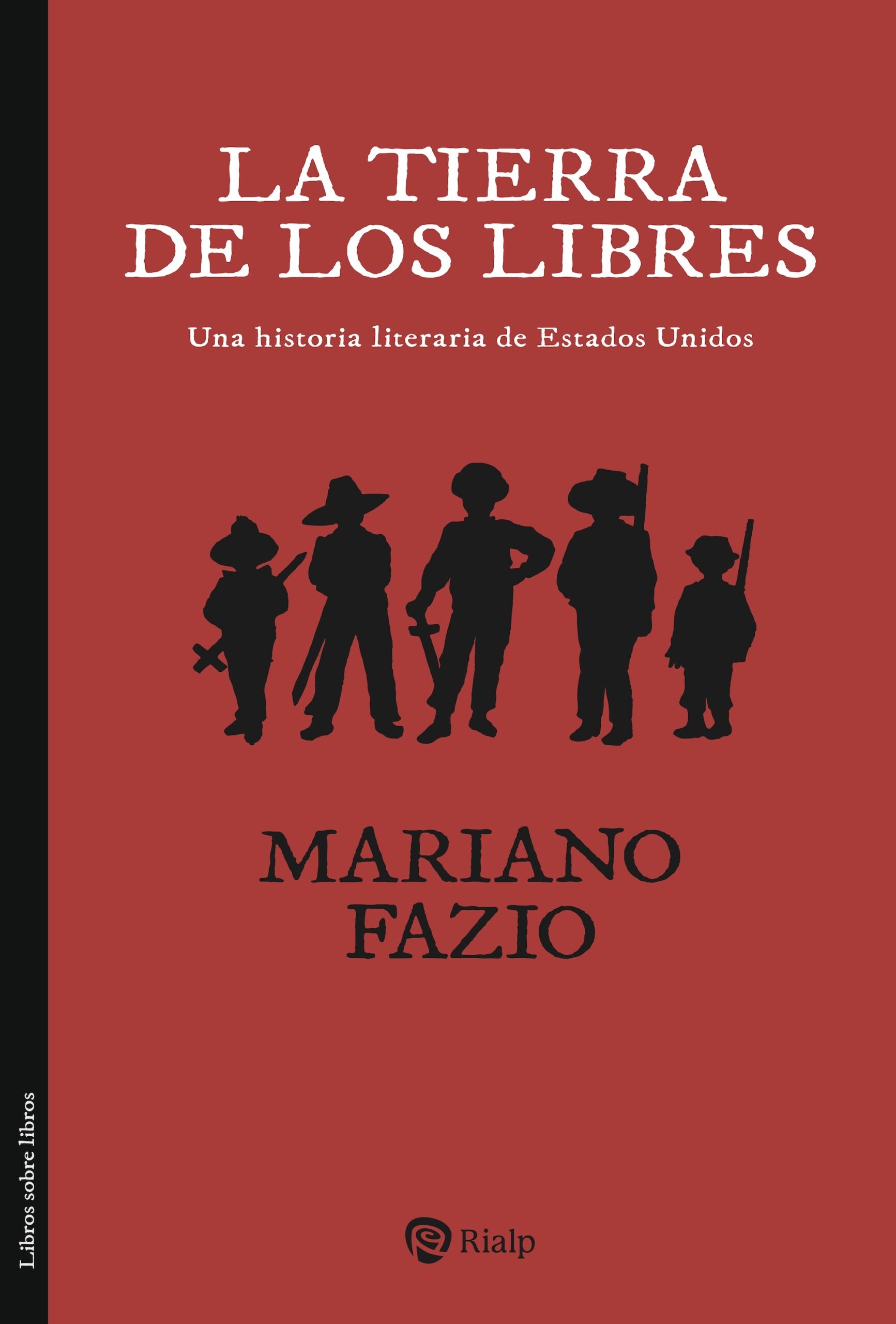
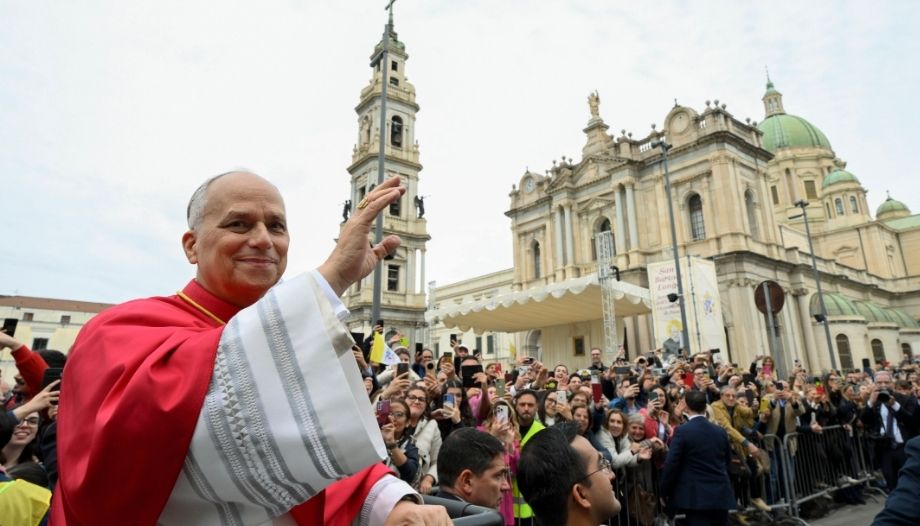
More than 3 million people in the Eastern Mediterranean suffer from
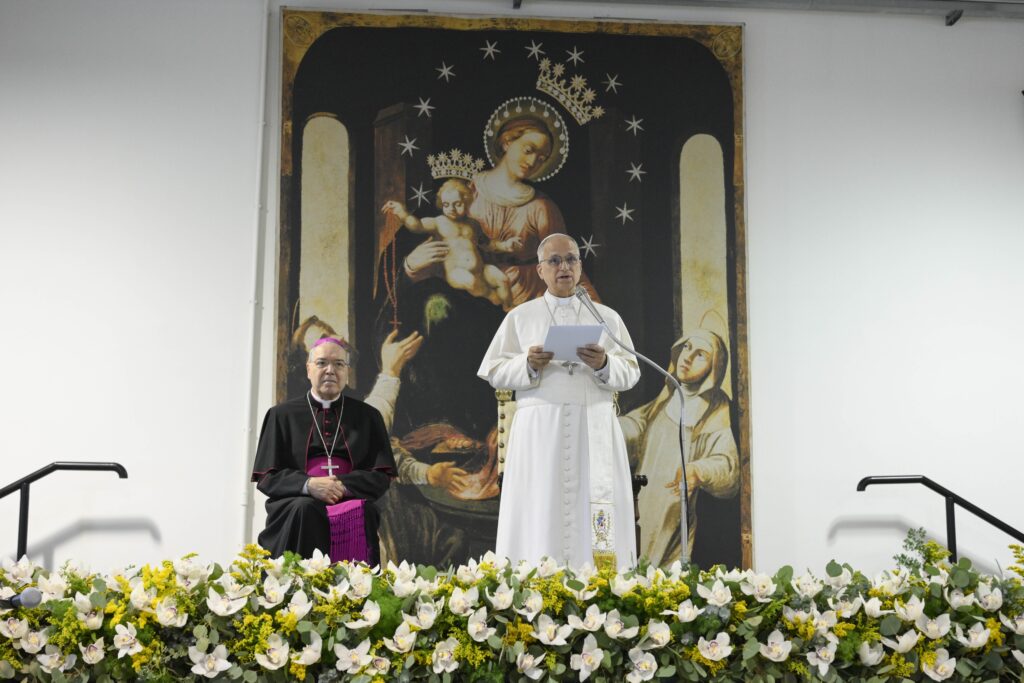
On the other hand, the Atlas of Advances in Palliative Care in Eastern Mediterranean Countries 2025, prepared by Atlantes, has analyzed the 22 countries that comprise the region. From Afghanistan or Bahrain, Egypt, Iran, Iraq, Jordan, Kuwait, Lebanon or Libya, to Morocco, Oman, Pakistan, Qatar, Saudi Arabia, Sudan, Syria, Tunisia, United Arab Emirates or Yemen.

In this vast Eastern Mediterranean region, 3.2 million people experience health-related suffering requiring palliative care each year, including around 300,000 children. 

Main causes of suffering serious

In the so-called Eastern Mediterranean, the main causes of serious health-related suffering are cancer, cerebrovascular diseases, premature births, severe injuries and liver problems. To alleviate these ailments, a total of 258 specialized palliative care services are available in the region. Only in Kuwait and Saudi Arabia are these services offered systematically. 

On average, there are 0.04 services per 100,000 inhabitants, well below international standards. The World Health Organization recommends 2 services per 100,000 inhabitants.

On the other hand, access to essential medicines remains unequal. Seven countries offer essential medicines in urban primary care centers. Of these, only Saudi Arabia, the United Arab Emirates and Tunisia have immediate-release oral morphine available on a regular basis.

The authorFrancisco Otamendi