The father's expectation: "They will respect my son." 27th Sunday in Ordinary Time (Year A)
Vitus Ntube nos comenta las lecturas del Domingo XXVII del tiempo ordinario (A) correspondiente al día 4 de octubre de 2026.
Vitus Ntube-1 de October de 2026-Reading time: 2minutes
The readings for these last three Sundays form a beautiful progression. We have remained in the Lord's vineyard. First, we heard the invitation:“Go, then, to my vineyard”Then came the call to respond with deeds and not just words. Today we discover the purpose of our work: God expects his vineyard to bear fruit.
The Gospel returns to the image presented in the first reading from the prophet Isaiah. The vineyard is the Lord's most beloved possession, planted with care, protected, and lovingly tended. As Isaiah says:“The vineyard of the Lord of the universe is the house of Israel".
Jesus now elaborates on this image in light of salvation history. The vineyard has been given to tenants, responsible for cultivating it and delivering its fruits to its owner. The privilege of working in the vineyard carries with it the responsibility of bearing fruit.
Then comes the most moving moment of the parable:“Finally, he sent his son to them, saying: ‘They will respect my Son.’ These words reveal something very deep in the heart of God. They do not express ignorance or naiveté, as if God did not know what was going to happen. Rather, they reveal the astonishing generosity of divine love. God never ceases to invite and offer new opportunities for conversion. Instead of responding to rebellion with immediate punishment, he responds with the greatest gift he could give: he sends his own beloved Son.
The farmers think that by killing him, they can keep the inheritance. To God's greatest act of love, they respond with humanity's greatest act of violence.
But the vineyard is not only ancient Israel. It is also the Church today and, even more so, each one of us. The question the Gospel leaves us with is not simply whether we are working in the vineyard, but whether our work is bearing fruit. It is not enough to belong to the Church. It is not enough to be engaged in religious activities. God expects the fruits of a transformed life and a holiness that becomes visible in daily life.
Leo XIV sums up his trip to France with one word: "Renaissance"«
“Just as Notre-Dame Cathedral was restored, so too is the Church in France being renewed.” This is especially evident in the enthusiasm of young people and the increase in the number of baptisms, Pope Leo XIV stated at today’s General Audience, summarizing his recently concluded visit to France.
“I have been impressed by the fervor and enthusiasm with which I have been welcomed in France!” exclaimed Pope Leo XIV at the General Audience this Wednesday, the last day of September, in St. Peter’s Square. A visit that “it has been a great gift for me and for God’s people in that country, and I thank the Lord”.
“Just as Notre-Dame Cathedral was restored, the Church in France is also being renewed. This is especially noticeable in the enthusiasm of young people and in the increase in the number of baptisms,” the Holy Father summarized in his address to the English-speaking pilgrims.
“I would like to summarize my experiences in a single great symbol: Notre-Dame Cathedral in Paris. A temple destroyed seven years ago by fire, today is a sign of rebirth. This is an image of the Church built with living stones, that is, of people who love Jesus because they have been loved by Him and wish to proclaim that love to all, “so that the world may have life” (cf. Jn 6:51).
This is “the reconstruction of the Church that only God can carry out,” the Pope stated at the Audience.
The key to reading: “Renaissance”
With these and similar words, the Successor of Peter summarized his visit to France in the Audience. And the key word he has used is "renaissance".
“I would like to gather the thoughts and impressions - still very much alive - of this Pastoral Visit around a single great symbol: the Notre-Dame Cathedral of Paris.
There, on the first day in the afternoon, the Pope recounted, “we celebrated Vespers of the Blessed Virgin Mary, a solemn and at the same time festive liturgy, in which the music, the singing and the beauty of the temple made hearts vibrate, united in prayer.”.
“Notre-Dame, with the drama it has experienced, can symbolically illuminate this entire Apostolic Journey, offering a key to understanding it that I would summarize in one word: rebirth.”.
Thousands of people gather on the Champs-Élysées in Paris ahead of Pope Leo XIV's open-air Mass at the Place de la Concorde, during his four-day apostolic journey to France, on September 26, 2026. (Photo by OSV News/Gonzalo Fuentes, Reuters).
Joy and fervor of the crowd
Whether in the restored splendor of Notre Dame de Paris for the solemn celebration of vespers, during “the unforgettable vigil at the Stade de France with the young people” — ”the new saints of France!” —, throughout the
streets or in front of the immense crowd in Concordia And in the Elysian Fields, the joy and fervor of the people of God—with their numerous catechumens—have been abundantly manifested, Leo XVI emphasized.
“This multitude, capable of silence and contemplation —characteristic of hearts that yearn for truth and love—, represents,” in his opinion, “a great sign of rebirth and hope.”.
“Two diverse and complementary places, almost spiritually united”
The Holy Father continued, mentioning “two completely different places and yet two complementary events, almost spiritually united. What united them? The Church, which is not made of stones or cement, but of people who love Jesus Christ because they have been loved by Him.”.
– In Notre-Dame there were priests and deacons, consecrated persons, and pastoral workers;
– In the stadium (Saint Denis) was the new French generation: new -I would say- not only because of their age, but even more so because of their spirit, because of their freedom of heart and faith.
“Young people who sang, shouted, but who also remained silent, listening. Attentive and moved faces, which manifested hearts longing for truth and love. To them I said with joy—he reiterated at the Audience: ”You are the saints of France!” That Vigil was a great sign of hope,” the Pope said.
Human dignity, the central theme of the meetings
Naturally, the Pope also recalled during his tour that “human dignity As a fundamental criterion for all collaboration in service of the common good, already mentioned before the French authorities and the members of UNESCO, it has also been the central focus of the meetings with the most vulnerable in Paris.
And also in “Lourdes, blessed place where the Virgin Mary offers, in the name of her Son, to all pilgrims who suffer in their body and soul, a message of hope.”.
“Respect for all human life, which deserves to be cared for, supported and comforted”
“There I firmly recalled that all human life, even in the most fragile situations, retains its inviolable dignity and deserves to be cared for, accompanied and relieved,” added Pope Leo, with words often repeated since the meeting with the authorities on the first day in Paris.
Finally, Metz, a symbolic place in the building of peace in Europe alongside the venerable Robert Schuman after the Second World War, was an opportunity to recall the Christian roots of Europe, the Pontiff also stressed, and its commitment to the principles of dialogue and peace between nations and between the various religious traditions.
Lourdes, sanctuary of the civilization of love, encounter with victims of abuse
Lourdes represents for the whole world a sanctuary of the civilization of love, the Holy Father concluded, and “in this context I met some people who were victims of abuse and I asked them to help me express to other victims my will and that of the whole Church to listen and walk with them as they seek healing, recognizing the pain caused in their lives and working for the prevention of abuse.”.
Prayer for abundant and lasting fruits
Finally, Leo XIV recalled in the Roman Audience that “the theme of my Pastoral Visit to France has been 'Pour que le monde ait la vie, That the world may have life (cf. Jn 6:51).‘.
These are the words of Jesus, which summarize his entire mission of salvation and which, “during the Journey, fully expressed the Gospel meaning of each encounter. Now, these words express our prayer, as we ask God that this event of grace may bear abundant and lasting fruit,” he concluded.
According to specialists, fetuses feel pain like adults from the second trimester onwards.
El Dr. Rodrigo Orozco, ginecólogo y especializado en medicina maternofetal, ha manifestado que negar el sufrimiento del feto carece de fundamento científico. El feto siente el dolor a partir del segundo trimestre, y más en el tercero. Y en un aborto hay sufrimiento fetal.
The gynecologist's statements, to the effect that the fetus feels pain like adults from the second trimester onwards, and even more so in the third, have occurred in '‘The Afternoon’'Cope, commenting on recent public statements to the contrary.
“All scientific societies and the main gynecological colleges have demonstrated that from the second trimester onwards, and even more so in the third, the fetus has already developed sufficient brain neuronal complexity to feel pain very similar to us, to adults,” explains Dr. Orozco.
The moment when the fetus begins to feel pain
Dr. Orozco asserts that medical evidence demonstrates that the brain structures for processing this stimulus develop much earlier than is commonly claimed: starting in the second trimester and even more so in the third (you can consult here the difference between an embryo and a fetus).
In an interview published by the Diocese of Malaga, Neurophysiologist Salvador González Barón, emeritus professor of Human Physiology at the University of Málaga, places the first signs of fetal pain perception between weeks 18 and 22 of gestation. However, the specialist cautions that it is difficult to pinpoint the exact moment when this ability begins, due to the complexity of nervous system development.
Fetal distress during abortion
Even in earlier stages, the gynecologist points out that “from the very first stages of pregnancy, of course, the fetus It responds to blows, it responds when an invasive test is performed… it moves, it's bothered, it defends itself. Undoubtedly there are sensations, there is pain, and of course, when an abortion is performed there is fetal suffering. Science proves it.”.
In her opinion, “claims that the fetus does not suffer any pain or suffering during an abortion are completely wrong. There is no evidence to support this.”.
González Barón also points to a difference between the fetal and adult nervous systems. He explains that fetuses and newborns have not yet fully developed the neural mechanisms that allow them to inhibit or modulate pain. Therefore, the neurophysiologist believes that fetal pain could be more intense than that of an adult.
Carlo V. Bellieni, matching criteria
A similar position to that of Dr. Orozco has been defended by the Italian pediatrician and neonatologist Carlo V. Bellieni, from the University of Siena, one of the researchers who has most extensively studied fetal pain. In a article Published in 2019 in Seminars in Fetal & Neonatal Medicine, Bellieni argues that pain is a neuroadaptive phenomenon that appears around the middle of pregnancy, approximately between 20 and 22 weeks of gestation, and that it becomes progressively more evident during the rest of the pregnancy.
Bellieni reiterated this thesis in a May 2026 publication in the Journal of Medical Ethics. According to the Italian specialist, there is considerable evidence that, between 20 and 22 weeks after conception, fetal responses to potentially painful stimuli are similar to those of adults from an electrophysiological, chemical, and behavioral perspective.
“The patient’s word—a kind of ‘unmistakable proof’—would be desirable, but not indispensable when there is strong evidence,” Bellieni writes. Therefore, he believes that analgesia should be used when fetal pain is highly probable.
Other studies
Also significant is a work published in 2025 by Bellieni together with Kanwaljeet JS Anand, Professor of Pediatrics at Stanford Medical School and one of the best-known international researchers in the study of fetal pain.
The authors conducted a systematic review of 17 clinical studies that had directly observed fetal responses to noxious stimuli. Their conclusion is that pain-related responses appear "from mid-gestation onward," although they call for further research to confirm these results and guide clinical practice.
González Barón, however, introduces a nuance that transcends the medical question. Drawing on a reflection by Dr. J. Tudela, he reminds us that human dignity does not depend on the capacity to feel pain. Therefore, he believes that the ethical debate on abortion cannot be reduced to determining whether the fetus suffers during the procedure.
Post-abortion sequelae
Furthermore, Dr. Orozco has pointed out the long-term psychological consequences suffered by many women after an abortion, "a real phenomenon that medicine observes daily," he notes. cope.es. The doctor states that the official absence of the term "post-abortion syndrome" from international psychiatric classifications does not negate the experience of the patients. "Just because it's not included doesn't mean it doesn't exist.".
Leire Navaridas, founder of Amasuve and post-abortion support worker, speaks of the “trauma of abortion”, and has published the book 'An Abortion After', in which she seeks to make visible through her personal story ‘what happens before-during-after an abortion’.
Who was Madeleine Delbrêl, whom the Pope quoted at Notre Dame?
Cuando León XIV apeló a Madeleine Delbrêl el pasado viernes en Notre Dame de París, para llamar a la oración a los obispos, sacerdotes, seminaristas y personas consagradas, pegué un respingo. Acababa de leer un excelente artículo de Gerardo Ferrara en Omnes, precisamente sobre ella.
Francisco Otamendi-September 30, 2026-Reading time: 4minutes
The call from Pope Leo XIV at Notre Dame, on the first day of his visit to France, was no small matter.
The Pope was concluding some advice to the structure of the French Church, and to the lay people present, and in a few minutes we were going to hear that “This cathedral has been reborn so that you may be reborn with her in a new impulse of holiness and daily mission.” And suddenly, the name of Madeleine Delbrêl was heard.
The Pope relied on Madeleine Delbrêl, not a nun, nor a founder nor a theologian, “but a lay woman, artist and activist immersed in difficult realities, who found her mission (already in God) in the street, literally: the street, with its “existential peripheries”” (Ferrara wrote on July 4th), to encourage friendship with the Lord and personal prayer among those present.
Madeleine Delbrêl: “Without prayer, we will not love God with love”
What the Successor of Peter said, almost at the conclusion of his homily at Vespers in Notre Dame, was the following:
“Dear bishops, priests, seminarians, and consecrated persons: to you who have been called to follow Christ, I express my gratitude for your response and your fidelity to the Lord. Never neglect this friendship, so dear to the Lord, which must be cultivated in personal prayer, the essential foundation of every vocation.
As I said Madeleine Delbrêl“Without prayer, we will not love God with love. We may be his servants or his fighters, or even his disciples; but we will be neither loving children of our Father nor friends […] of Jesus Christ” (The Joy of Believing, Santander 1997, p. 213).
“Therefore, nurture your interior life with the Lord in the light of the school of the many saints who have gone before you, always drinking from the fountain of God’s infinite love in silent prayer. Your mission springs above all from this intimate relationship with the Lord, who awaits you there.”.
Plaque on the facade of the birthplace of Madeleine Delbrêl, December 11, 2025, Mussidan, Dordogne, France (@Cip24, Wikimedia commons).
Social worker in a working-class neighborhood on the outskirts
Madeleine Delbrêl was born on October 24, 1904, in Mussidan, France, into a family that we would today describe as “dysfunctional.” Her father, Jules, was a stationmaster—a frustrated intellectual, anticlerical, proud, and temperamental—who frequently changed jobs, forcing the family to move constantly. Her mother, Lucile, was the complete opposite: conformist, conventional, and from a bourgeois family.
This is how Ferrara described Madeleine's family, and then how he approached her. They have all the details there, so we'll only focus on a couple of things here.
The first, who in 1933 moved, along with some colleagues, to Ivry-sur-Seine, in the working-class suburbs of Paris, an industrial neighborhood steeped in class struggle and governed by a communist junta. She studied to become a social worker and was hired by that very same anti-clerical administration, which valued her greatly. Her house on rue Raspail became a haven for the poor, the homeless, and, during the Resistance, for Jews and refugees.
He lived like this, on the outskirts of Ivry, until October 13, 1964, when he died from a sudden cerebral hemorrhage. He was working at his desk. In 2018, the Pope Francis granted him the title of Venerable.
He is not a marginal figure.
Secondly, one consideration. If Pope Leo XIV she quoted her In Notre Dame, it's important to remember that she is not a marginal figure. Madeleine Delbrêl is one of the key figures of 20th-century French Catholicism in the evangelization of a secularized society.
Delbrêl posed a question that remains relevant today: how to be a Christian and evangelize in a society where faith no longer constitutes the dominant cultural environment?
Their response was to live the Gospel within themselves: to work, to relate to others, to share their problems and joys, and to strengthen and purify their own faith, as they were called to be missionaries "here and now".
A text that challenges us: patience, our nerves, the bus…
In conclusion, we've summarized a few lines from Madeleine Delbrêl that Ferrara published almost three months ago. You can reread them. here".
“Sometimes, throughout the day we eagerly await passions, great passions…
Those people will be called heroes—and that makes it worth sacrificing one's life…
Instead, tests of patience lie ahead.
Patience, those crumbs of passion, whose purpose is to slowly kill us for your glory, oh God, to kill us without our glory.
First thing in the morning, they’re already there: our nerves—either too jittery or too sluggish; the crowded bus passing by, the spilled milk, the chimney sweeps arriving, the kids who ruin everything.
“Our trials… the martyrdom that awaits us”
“They are the guests our husband brings home and that friend who, precisely, doesn't come; it's the phone that keeps ringing; they are those we love who no longer love us.
(…) it's wanting to go out when we're locked up,
is staying home when we should be going out;
He's the kind of husband we'd like to lean on
and who becomes the most fragile of all the children;
(…) This is how our trials arrive, in closed ranks or in single file, and they always forget to tell us that they are the martyrdom that awaits us.
Antonio José Cavanilles (Valencia, 1745 – Madrid, 1804) was a Spanish naturalist, botanist, and priest, considered one of the most prominent scientists of the Enlightenment in Spain. His life and work constitute a bridge between the humanist tradition and modern scientific rigor applied to the study of nature.
After completing his studies in his hometown, he earned a doctorate in Theology from the University of Valencia. Ordained a priest, he combined his religious vocation with a growing passion for the natural sciences. In 1777, he traveled to Paris as tutor to the son of the Duke of Infantado. There, he developed an interest in botany, learning the most advanced methods of the time in this science, including Linnaean classification. His first botanical work, Monadelphiae, classis dissertationes decem (1785-1790), Containing a description and classification of all species with mono-oleander flowers, it began its rise to fame in European botanical circles.
After the outbreak of the French Revolution in 1789, he had to return to Spain. His most influential work dates from this period., Icons and Descriptions Plantarum (1791–1801), in which he described hundreds of species, many from America and the Philippines, collected through the scientific expeditions of the Spanish monarchy. This work placed him among the most prestigious European botanists.
In 1791, King Charles IV commissioned him to "travel throughout Spain to examine the plants that grow there," and from there his Observations on the Natural History of the Kingdom of Valencia (Madrid, 1795-1797), where beyond botany, he studied the geographical, social and economic aspects of this land.
In 1801 he was appointed director of the Royal Botanical Garden of Madrid, an institution he revitalized with a strong boost to research and teaching, reinforcing its connection with overseas scientific expeditions.
Beyond botany, Cavanilles showed interest in modernizing production methods and the importance of science to the nation's prosperity. His work reflects both the universalist curiosity of the Enlightenment and the effort to place Spain on the European scientific map.
He died in Madrid in 1804, leaving a legacy that still survives in botanical nomenclature: numerous species bear the epithet cavanillesii in his honor.
The authorGonzalo Colmenarejo
PhD. IMDEA Food.
Member of the Society of Catholic Scientists of Spain.
Ante la crisis de vocaciones, la Iglesia necesita sacerdotes con una sólida formación humana y espiritual, capaces de acompañar a los fieles y de vivir su entrega a Cristo con audacia, humildad y alegría.
We live at breakneck speed. Trapped in a hyper-connected civilization, we walk around with headphones on and our souls exposed, suffocated by a constant murmur that robs us of our inner selves. In the midst of this fragmented and bewildered society, the Church faces a crucial crossroads: the crisis of vocations to the ministerial priesthood. Let us not be mistaken; this is not merely a matter of statistics or parish records. It is the very survival of a living presence that continues to proclaim the Gospel and administer the sacraments to a world that is bleeding.
Following the Pope's recent teachings—since his Apostolic Letter Loyalty that generates future From his Message for the 2026 World Day of Prayer for Vocations, he outlines a roadmap as bold as it is inescapable. The premise resonates with thunderous force, reminding us that there is no future without nurturing all vocations.
Faced with the disorientation of this global showcase saturated with screens and noise, a comforting certainty emerges: God has not closed the curtain nor stopped knocking on the doors of young people. The Lord continues to choose and call those He has chosen, without looking at dazzling resumes or seeking elite technocrats, but rather betting on pure, unconditional love that rewards, shakes, and challenges.
But to prevent that voice from being lost amidst the clamor of today's culture, it is urgent to shake off pastoral lethargy. Patches are useless. What is needed are firm, bold proposals, capable of offering young people an ideal of total commitment and profound meaning. In the age of digital haste, recovering depth requires cultivating silence, Eucharistic adoration, and vibrant listening to the Word. Vocation only takes root where there is living faith, unmasked witness, and unwavering accompaniment.
This seed finds its ultimate expression and its ultimate test in the heart of the diocese. And here arises the crucial question of whether it makes sense to maintain seminaries today. In a society dominated by instant pragmatism, dedicating years to priestly formation may seem like a whim or a pointless delay. A grave error! Papal teaching unequivocally dismantles this notion, stipulating that seminary is an indispensable condition for avoiding shoddy ministerial practices.
When a bishop dedicates himself to his seminary and nurtures it with care, the diocese flourishes in both fruitfulness and numbers. Climbing this formative mountain means learning to be with the Master, grounding one's life in daily dialogue and sculpting an unshakeable human and emotional maturity. The seminary must be a true school of the affections where one learns to love as Jesus loved. Only spiritually sound and emotionally mature men can embrace celibacy with joy and become true bridges to God, fully aware that no one is formed alone and that no pastor exists in isolation.
That strength forged in the seminary is the indispensable armor for entering the trenches of daily ministry. The priesthood is not reserved solely for emergencies or exceptional cases; its ordinary work is to be there to care for the faithful who come to the parishes, enabling each layperson to grow in their interior life through a process of close accompaniment.
To avoid succumbing in the attempt, priests and candidates must astutely sidestep two deadly temptations. The first is the trap of activist efficiency, which measures personal worth by business performance or the volume of projects, forgetting that in the Kingdom of God, being always precedes doing. The second is the trap of defeatist quietism, which leads to cowardly refuge in complaining, laziness, and disillusionment with a secularized society that supposedly no longer understands anything.
The antidote to both of these deviations is to turn our eyes to the Good Shepherd. Contemplating him transfigures our weaknesses and restores our zeal for bringing pastoral charity to the most unexpected corners of the street.
The priesthood is neither an untouchable status nor a self-referential bunker. Authentic faith compels the priest to come down from the mountain, get his sandals dirty in the mud of daily life, and wear himself out for the People of God. This means dedicating his life to serving families on the brink, young people adrift and trapped in precarious circumstances, the invisible elderly, and all those who have lost their way, bringing them the balm of forgiveness and living hope.
This endeavor is not a task for lone wolves. Promoting and safeguarding vocations demands the concerted involvement of all the People of God. It rests on the tripod of constant prayer, led by the Bishop, priests, and laity, and sustained by the invisible lifeblood of cloistered monasteries. It requires families with strong homes who know when to let go of their children's hand when God calls them, alongside fraternal priests who know how to stand strong together to banish the dreaded ministerial loneliness.
The Church today is not looking for administrators of the sacred or diplomats of the faith, but for men of fire: priests who are passionate, humble, and bold. As the Holy Curé of Ars often said, the priesthood is the love of the heart of Jesus.
This is the clear moment to ignite a new Pentecost of vocations, praying to the Lord of the harvest and daring to propose to young people the radical adventure of self-giving. For fidelity to Christ is, yesterday, today, and forever, the only spark capable of bringing forth the future.
The Pope chooses 'attention in the age of clickbait' to communicate in 2027
El tema que el Papa León XIV ha elegido para la 61 Jornada Mundial de las Comunicaciones Sociales, que se celebrará en 2027, es “Una nueva mirada: prestar atención en la era del clickbait”, es decir, en la era del sensacionalismo, de los atrapaclics o de los ciberanzuelos.
Editorial Staff Omnes-29 de September de 2026-Reading time: 2minutes
According to a statement from the Dicastery for Communication, Pope Leo XVI has chosen the theme of “conversion of the gaze, with attention and love” for next year’s 61st World Day of Social Communications.
The attention economy, in its struggle to capture a few moments of attention amid the rapid and endless flow of content, the note points out, “is transforming not only our cognitive abilities, but also the depth of our interpersonal communication.”.
We are therefore called “to a conversion of our gaze: to look anew, attentively and with love.” Only in this way “will we be able to see the world, others, and even ourselves as Christ sees us: called by name and loved,” the text adds. “Our communication changes when our gaze chooses to draw near to others instead of judging them.”.
Lack of genuine attention
The lack of genuine attention, fueled by digital culture, has accustomed us to a routine of immediate reactions, to superficiality in relationships, to the ease with which we label and reject others.
“Attention, on the other hand, is a valuable form of generosity: “attention” comes from “ad-tendere”, to reach out towards the other and towards the truth. Christian communication can rediscover attention as a gift and as a way of seeing, that of Jesus, who saw and was moved,” according to the statement.
Communication affects the whole person
Faced with clickbait (lures or ways of doing things that seek to catch clicks), "we are called to 'pay attention' and rediscover a hygiene of attention.".
The note also emphasizes that “communicating is not about capturing attention, nor is it about selling it, but about safeguarding it as a valuable resource for relationships. To communicate in the age of clickbait, we are called to “pay attention” and rediscover a hygiene of attention (cf. MH, 146).”.
Communication is not just about words, the note concludes. “It affects the whole person, and requires us to look, listen, and feel again in order to respond to the call that Christ addresses to us.”.
Catholics and Public Life vindicates the shared history between America and Spain
La vigésimo octava edición del Congreso Católicos y Vida pública estará centrado en la relación social, política histórica y cultural entre América y España
“America and Spain, the faith that unites us. A round trip” is the title of the 28th edition of the Catholics and Public Life Congress which will be held from November 13 to 15 at the CEU San Pablo University.
A challenging topic, within the historical moment in which we find ourselves and which vindicates figures such as Isabella the Catholic or the work of the School of Salamanca, germ “of international law and of the universal dignity of the human person and which has inspired Pope Leo XIV at various times.
Hispanicity, a point of reference
María San Gil, director of Catholics and Public Life Congress She was in charge of reading the manifesto for Hispanidad, the central theme of this congress, which defends the fact of Hispanidad as a reality that "benefits all of us who speak, think and feel in Spanish on both sides of the Atlantic.".
The manifesto points out how Hispanidad, far from black or golden legends, is based on a "community of affections and interests, forged by history and sustained, for more than five hundred years, by institutions that no international treaty has managed to replicate.".
With this Congress, the organizers turn their attention back to a complicated issue due to the "loss of some of the anchors that have sustained it for centuries" and encourage people to "look with serenity and pride towards a community that does not depend on these fluctuations.".
Thus, prominent figures from both sides of the Atlantic will advocate for “a profound change of attitude” regarding the defense of Hispanicity and its “cultural and moral vindication commensurate with its history” in order to “recognize that faith has been one of the firmest foundations of that civilization.”.
A call for unity, for coming together and for the recovery of a shared history, which joins the impetus of the cause of beatification of Isabella the Catholic, an initiative in which some relevant members of the propagandists participate.
The first Congress under the presidency of José Masip
This 28th edition of the Congress of Catholics and Public Life will be the first under the presidency of José Masip, who succeeded to the position Alfonso Bullón de Mendoza Last July. This was recalled by Pablo Velasco, national secretary of Communication for the ACdP, who highlighted the exponential growth of the Catholic Association of Propagandists under Bullón de Mendoza's leadership. Masip had served, along with María San Gil, as coordinator of the congress in the previous two editions.
A poster that celebrates the meeting
Among the most noteworthy new features of this congress, Velasco highlighted the authorship of the poster, which this year emerged from a proposal to students in the Communication areas of the four universities that CEU has in Spain.
The design by Carlos Figuero, a student of the Digital Art Degree, was the winner, and the young man, who defines himself as a “Catholic artist and lover of history,” explained the key elements of a poster that represents the fraternity between both peoples: “Two schools of fish, of different colors, symbolize both hemispheres. From each school, a fish emerges to meet the other. That is what defines us: the encounter. The fish are inspired by Mayan art and Christian iconography.”.
In recent years, the Catholics and Public Life Congress has established itself as one of the key events for thought and the promotion of Catholic participation in civil and cultural society.
Leo XIV bids farewell to France and Metz, a city of reconciliation and a beacon of hope for Europe and the world
El último día del viaje del Papa León XIV a Francia, en la ciudad de Metz, fue una jornada dedicada al llamado a la paz, a la reconciliación y a la unidad europea.
Gonzalo Meza-29 de September de 2026-Reading time: 4minutes
His first activity in Metz was a meeting with representatives of different religions at the Robert Schuman Congress Center. Religions, he said, are called to build peace and to be guardians of life. Following the example of Robert Schuman, who transformed Europe's old divisions into bridges, the Pope advocated for dialogue that does not dilute one's own identity: "Dialogue does not diminish our identity, but rather expresses it with simplicity and truth, opening itself to the differences of others.".
He also condemned the use of God's name to justify violence: «Invoking God's name to legitimize violence or oppression is a profanation of that name. Nothing that disfigures human dignity can be claimed as a genuine divine inspiration.» The Pope also affirmed that the greatness of a civilization is measured by how it protects the human person, especially the most vulnerable: «The greatness of a civilization is not measured by its material successes, but by the way in which it embraces, protects, and elevates the human person. Religions are guardians of life.».
Europe, between its Christian roots and peace
Later, Leo XIV attended a meeting entitled "At the Roots of Europe, for Peace and Unity." In his address, the pontiff proposed returning to Europe's roots to build peace and unity. Following Robert Schuman, he indicated that Europe is a cultural reality born from the encounter with the other and marked by Christianity: "Europe must be understood as a cultural and historical reality before it is a geographical one." And he emphasized the place of faith in its identity: "One cannot speak of Europe without mentioning Christianity.".
Leo XIV lamented the return of war to the European continent, a new «useless massacre,» in the words of Benedict XV. In response, he called for patient dialogue and boldness in negotiations, with a willingness to compromise to achieve peace: we must «show boldness in negotiations and be prepared to sacrifice some positions for the greater good of peace.» He clarified that this pursuit «must not be confused with naive irenicism.» In this regard, the Pope warned: «We must beware of the illusion of rearmament.» And he quoted his message for this year’s World Day of Peace: «It is no coincidence that the repeated calls to increase military spending and the decisions that this entails are presented by many leaders as justifications of the danger posed to others.».
Metz, land of reconciliation
In the afternoon, the Holy Father presided over Mass for Peace and Justice at St. Stephen's Cathedral, known as the Lantern of the Good Lord, with some two thousand people inside the church and thousands more watching on screens set up in the streets. In his homily, he explained that peace is a house that God gives, but that people must build it together with law, justice, charity, and forgiveness: "Peace, which is a gift from God, demands a response from people in a shared effort." He recalled that Metz, a land of wars, is also a land of reconciliation: "Metz and the Moselle River bear witness to the whole world that reconciliation is possible only when we have the courage to break the chains of resentment.".
For the Pope, the cathedral, with its stained-glass windows by Marc Chagall, is the image of what Europe is called to be: «The future of Europe does not lie in uniformity, but in the harmony of differences, where the wounds of the past become fissures that allow light to filter through.» Therefore, in his farewell, he asked the community of Metz to be, «today more than ever,» a beacon of hope for France, for Europe, and for the world.
After the mass, he went to the Metz-Nancy-Lorena airport, where he was seen off by the President of the Republic, Emmanuel Macron, before departing for Rome.
France discovers a living Church
The trip has left France and Europe with much to reflect on. The Pope placed the dignity and defense of human life, from conception to natural death, at the heart of his visit and speeches, linking it to the call for peace and unity in Europe and the world. For its part, France offered the world a surprise: in a secularized and increasingly de-Christianized country, thousands of young people and adults are discovering Christ in their lives, deciding to follow him, and requesting to join the Church through the path of Christian initiation, which culminates in baptism, confirmation, and the Eucharist. To these are added many baptized individuals who, after years of estrangement, are returning to the faith and the sacraments. A sign that, as the Pope himself said, left him "amazed" and "transcends statistical and sociological analysis."«
Perhaps the image that best encapsulates the visit was the Mass in the Place de la Concorde and on the Champs-Élysées. Nearly 800,000 people attended the ceremony. The Pope was acclaimed by French citizens from all over the country as he traveled in the Popemobile along the iconic Parisian avenue, a source of national pride for the French and the stage for major parades and national celebrations. There, the successor of Peter, Vicar of Christ, was received and cheered. Then, the Place de la Concorde, which during the Revolution was a site of execution by guillotine, was transformed, with the Mass, into a place of encounter, unity, and communion.
Chema and Marta, with a son with a disability: “We went from confronting God, to leaving everything in his hands.”.
La llegada de Jorge, con graves problemas de salud, puso a prueba la fe de Marta y Chema, que aprendieron a confiar en Dios y a vivir con esperanza y naturalidad.
Álvaro Gil Ruiz-29 de September de 2026-Reading time: 4minutes
Marta and Chema are a very ordinary couple, or so they say… Because… Who sticks a chocolate donut on their finger to propose to their girlfriend? Well, Chema does. He tells us in this interview that, to propose to Marta, he went to a bar and did it in this very original way. He calls it the “anti-proposal.” Anecdotes aside, they are indeed very ordinary. Because ordinary things happen to them. Like the unexpected birth of Jorge, one of their four children, who came into the world with several difficulties, which have made him very special, and they take it all in stride, without any drama.
We were able to interview them both and they told us this and much more.
Marta grew up with two brothers and studied at Opus Dei schools, something that, she says, has prepared her to "face whatever God sends us." Chema, the sixth of eleven siblings, learned from a young age the value of hard work and never giving up.
I suppose Jorge's arrival was like the beginning of a journey you were unknowingly preparing for. How do you interpret this event? Do you feel freely prepared for such a complex task? How providential do you see it?
–At 20 weeks pregnant, we had a very important ultrasound. At that time, they told us that something was wrong, that the heart and cerebellum weren't closing properly. We went to other specialists, and it was confirmed. But we were completely uncertain about what that would mean.
Each week that passed, the news was confirmed and worsened. It was a high-risk pregnancy, and the delivery took place in an operating room at La Paz Hospital. I was terrified waiting outside. As soon as he was born, they put him in the incubator and let me see him for two minutes. I took the opportunity to baptize him with a Bezoya water bottle.
He was then taken to the neonatal ICU and began a six-month struggle in the hospital (from June to December) until he was finally discharged. He has since had many hospitalizations and undergone several major surgeries.
At two years old, for example, he had heart surgery, and things became very complicated, requiring four more operations in quick succession. It was one of the most critical moments of his life. Now he's 14, and we continue to fight every day with great effort, but with hope and a positive attitude. .
Marta, how did you experience Jorge's arrival?
“At first, I was stunned and didn’t understand anything. It was a huge shock. I was so excited throughout the pregnancy, and then I was faced with all of this, which left me completely overwhelmed. But day by day and month by month, as the pregnancy progressed, I drew closer to the Lord, and He gave me all the strength to fight and keep going… and when he was born, I saw a precious, tiny baby who needed me, and I thought, ”We have to keep going… let’s fight with all our might,’ and that’s what we did and continue to do, always with a supernatural perspective and trusting in God. He gave him to us this way, and He wants us to treat him as he deserves.”.
At that time we only had a three-year-old son whom we had to "abandon" for six months because we had to be in the hospital.
Some days my father would take Álvaro to La Paz in the afternoons so we could see him. Álvaro didn't understand why he couldn't see his brother and why the baby wasn't coming home, but we explained it to him as best we could. It was hard for him: imagine being three years old and thinking that having a brother meant being without parents for months.
And you, Chema, how did you take it? What did your children think?
“I couldn’t believe this was happening to us. You always think things will work out… but when they keep getting worse and worse, you start to despair. It’s so hard when you see your baby, completely innocent, suffering, and you can’t do anything. I had some very dark moments, when I didn’t understand anything, when I was at odds with God, when I almost lost my faith. Until one day, I put everything in His hands.”.
Marta, how do you manage to support your family? How do you foster independence in all your children?
–Marta: Well, we don't do anything out of the ordinary, but I think our children have gotten used to living with a brother who is "special" and who often has to spend weeks in the hospital, sometimes with high risk, and they treat it as if nothing is wrong, and above all we try to normalize the situation.
For example, Jorge has a limp and wears an orthosis, like a small prosthetic leg, which we call a "peg leg" at home… We treat Jorge like any other child and we push him—within his limitations—but we push him so that his siblings can also see that it's okay…
His sister Rocío (12), for example, is very affectionate and defends and helps him a lot… she treats him as if he were younger and he gets angry and says to her: “I am not a baby, I am older..
His brother Diego (8) makes him laugh a lot, plays with him and does silly things to make Jorge laugh…
Chema: In short, Jorge is a happy child, loved by everyone, with such a pure and beautiful gaze that it touches your soul. It's hard to take care of him, especially on some difficult days. But he has become the main pillar of the family, and he's the one who has taught us the most about love in life.
What advice would you give to all those who are surprised like you but are less prepared at all levels?
–Marta: I advise you to ask the Lord for strength, to surrender yourselves to Him, to pray a lot, and above all, to fight. To fight hard to help your child pull through. The doctors paint a bleak picture, but if you persevere, you can achieve many things… Children are stronger than we can imagine, and they need us to be there to support and help them.
Subscribe to Omnes magazine and enjoy exclusive content for subscribers. You will have access to all Omnes
Bryce Crawford, the young evangelist who brings Jesus to social media
Tiene 22 años, nació en Georgia y predica a Jesucristo en las calles, en universidades, en un podcast y, sobre todo, en las redes sociales. Bryce Crawford se ha convertido en una de las voces evangélicas jóvenes con mayor presencia digital en Estados Unidos, con gira en 2026 incluida.
The unique aspect of Bryce Crawford, the evangelist of Generation Z, as he is being called, lies not in music or entertainment, but in something older: talking about Jesus, reading the Bible, answering questions about faith, and going out to find people who, according to him, need to hear the Gospel again.
Now based in Los Angeles, this young American evangelist and missionary has converted the evangelization Street activism and social media—especially TikTok, Instagram, and YouTube—are the main vehicles for his proclamation of Jesus Christ to new generations, with a total of more than 7 million followers.
Crawford defines himself on his own website as an “evangelist & founder” of Bryce Crawford Ministries. The organization presents him as an “evangelist and missionary based in Los Angeles”, dedicated to sharing the Gospel “online and in person” with anyone who will listen.
Their motto is equally explicit: “Doing whatever it takes to reach the lost and training Christians to do the same”: to do whatever it takes to reach those who are far away and to train Christians to do the same.
This year's 'I love Jesus US Tour'
The first national I Love Jesus US Tour began on February 24, 2026, and ended on March 29, 2026, with the final show in Los Angeles, California. This was confirmed by Liberty University, whose Liberty Worship Collective accompanied Crawford on tour.
During that time, the young Crawford toured the United States with his I Love Jesus US Tour, which visited 22 cities in 18 states and concluded in Los Angeles. The tour combined preaching, prayer, worship music, and conversations about faith, and he was accompanied for much of the journey by students from the Liberty Worship Collective.
And a fact that gives an idea of the phenomenon: more than 35 Liberty University students participated at different times during the tour, forming six teams that took turns.
Conversion into a Waffle House
His personal story is an essential part of his preaching. Crawford grew up in Cartersville, Georgia, in an evangelical environment, attending a Christian academy and a Southern Baptist church. However, during his adolescence, he suffered, according to his own testimony, from severe anxiety, depression, and very negative, even suicidal, thoughts. But his family history later underwent a transformation that he attributes directly to God.
The story he tells places a decisive moment during Christmas 2020, when he entered a Waffle House restaurant intending that to be his last meal.
There he began talking to a man going through a divorce. A comment from this stranger—about the need for a relationship to be reciprocal—led Crawford to a religious reflection that he interprets as a call from Jesus. “I was like, all right, bet,” he later recalled: something like, »Okay, I’ll do it.« Shortly afterward, he began to consider dedicating his life to proclaiming Christ. Religion News Service, In a comprehensive profile published in May 2026, he contrasted this story with his public testimonies.
Young evangelist Bryce Crawford has toured the United States this year with the I Love Jesus USTour, accompanied by students from Liberty University. (@Bryce Crawford Ministries).
God was calling him full-time
After graduating from high school in 2022, he moved to Los Angeles convinced that God was calling him to be a full-time missionary. There, he began preaching on the streets. In May 2023, as he told CBN News, he also had a dream in which Loren Cunningham, founder of Youth With A Mission, appeared. Crawford interpreted that experience as a call to record the evangelistic conversations he was already having with people on the street, to encourage other Christians to be more courageous in their faith. “It’s been nothing short of a miracle,” he said.
In an interview with Rick Rubin, he recounted that for Christmas 2023 he gave his mother her first personal Bible, along with a plan to read it over the course of a year. She read it throughout 2024. Crawford says that his mother became a woman of great faith during those years.
What is Bryce talking about?
It could be said that Bryce Crawford talks primarily about Jesus and how to live as a Christian in the contemporary world. His podcast is presented as an exploration of how to follow Jesus courageously in the modern world. Topics covered in his episodes include salvation, faith, doubt, calling, anxiety, purity, marriage, sin, repentance, holiness, prayer, identity, suffering, forgiveness, grace, culture, social media, and truth.
Conversations also with strangers, with kindness
There seems to be a two-pronged approach, therefore: explaining Christianity and teaching other Christians how to evangelize. He doesn't limit himself to speaking to those who already believe. One of the characteristics of his videos is his conversations with strangers in public spaces. He has gone to places far removed from the typical church setting—including Venice Beach, countercultural festivals, and Pride celebrations—to talk about Jesus.
His method also explains some of his popularity. Instead of simply preaching directly, he tries to converse, listen, and ask questions. The Associated Press noted that his street evangelism seeks to change mindsets through kindness.
Crawford himself explained: “Our tactics have been one-on-one conversations, calmly listening, asking questions because we care about them.”.
Why so many followers?
As mentioned at the beginning, Crawford doesn't need to be a singer or produce music: the raw material is conversations, testimonies, the Bible, and the questions he poses to people who don't necessarily share his faith. And this attracts millions of followers on the aforementioned social media platforms.
The figures provided by their own organization are even higher in terms of views: between January and September 2025, they recorded 63 million views on YouTube, 406 million on Instagram, 647 million on TikTok, and eight million podcast listens.
The context: Evangelicals, the 23% of American adults
Crawford grew up in Georgia, in a family connected to a Southern Baptist church and Christian upbringing. According to the Pew Research Center's latest Religious Landscape Study, conducted in 2023-24, 231% of American adults identify as evangelical Protestant, up from 261% in 2007. Protestants as a whole represent 40% and Catholics 19%.
Evangelical dynamism is not exclusively American. In other countries, such as Brazil, the 2022 census placed them at 26.91% of the population aged ten and over, compared to 21.61% in 2010. In a recent survey, 29% of Brazilian adults identified as Protestant, compared to 46% who identified as Catholic.
Transformation in the way the message is presented
Crawford's case fits into a broader transformation, analysts say. A segment of evangelical Christianity is taking evangelism from the church to the streets and from the streets to mobile phones.
Its novelty lies not so much in the message—Jesus, conversion, the Bible, prayer, and Christian life—as in the way it is presented: youthful language, spontaneous conversations, short videos, podcasts, and an enormous capacity to convert a evangelizing conversation on social media that can circulate millions of times on the Internet.
Pope Leo joins "One million children praying the Rosary"«
El Papa rezará el 1 de octubre con entre 700 y 1.000 niños en los Jardines Vaticanos, en el inicio de una semana mundial de oración promovida por Ayuda a la Iglesia Necesitada.
Pope Leo XIV will join hundreds of children on October 1st to pray the Rosary for peace at the Lourdes Grotto in the Vatican Gardens. The gathering, which will begin at 5:00 PM, will bring together approximately 1,000 children from schools and parishes in Rome.
The event thus begins the World Week of Prayer of the « initiative«One million children praying the Rosary»", promoted for more than twenty years by the pontifical foundation Aid to the Church in Need (ACN). Participants will pray alongside the Holy Father in spiritual union with children, families, and Christian communities from around the world.
A week of prayer for peace
For the first time, the campaign will run for a full week, from October 1st to 7th, the feast of Our Lady of the Rosary. This will allow dioceses, parishes, schools, and families in different countries to choose the day that best suits their circumstances to join this initiative, united in prayer for peace and unity.
The call is already mobilizing children from numerous countries, from indigenous communities in the Bolivian Amazon to parishes in Sudan, Zimbabwe, Mozambique and Sierra Leone.
In Sudan, where war continues to cause immense suffering, Father Franck Mandozi, from the Kosti Pastoral Region, has confirmed the participation of children from various parishes and schools. In an indigenous Tsimane community in the Bolivian Amazon, Sister Patricia Alejandra Botello López has noted that the children are already praying the Rosary in both their native language and Spanish.
Also in Zimbabwe, the parish of St. Christopher, in the Archdiocese of Bulawayo, will gather children on October 4. In Paraguay, Radio Pa'i Puku will promote the initiative and broadcast the Rosary prayed by the children of the parish of St. Eugene de Mazenod.
Inspired by the message of Fatima
The 2026 campaign's motto is the message of Fatima: "In the end, my Immaculate Heart will triumph." In his invitation to participate, Cardinal Kurt Koch, international president of ACN and prefect of the Dicastery for Promoting Christian Unity, presents the Immaculate Heart of Mary as an expression of a life open to the Holy Spirit and the Virgin Mary as a model of faith, love, and prayer.
The initiative began in Venezuela in 2005 and has since spread across five continents. It is inspired by the words attributed to Saint Pio of Pietrelcina: "When a million children pray the Rosary, the world will change.".
ACN also invites parents, teachers, priests, religious, and catechists to pray with children. It is not necessary to pray the entire Rosary: a single decade can be part of this worldwide chain of prayer. The foundation offers materials in several languages and allows participants to register their participation, displaying on a map the locations from which children are joining the initiative.
The campaign is organized in collaboration with the Shrine of Fatima, the Pope's Worldwide Prayer Network, and the World Apostolate of Fatima. This year, World Rosary Day is included for the first time.
How to participate in the initiative?
ACN encourages schools, parishes and families to join "One Million Children Praying the Rosary" with different proposals adapted to each environment.
At school. Students can organize a team, with the help of their teachers, to lead the Rosary and distribute the Hail Marys among the different classes. It is also suggested that they set up an altar in the courtyard or auditorium, with a microphone to facilitate everyone's participation.
In the parish. Children in catechism classes can lead the prayer and invite their family and friends. Another possibility is to make prayer bracelets or rosaries as a group, following the instructions in the ACN materials.
At home. The initiative invites everyone to create a prayer corner with an image of the Virgin Mary and a candle, and to gather family and friends to pray together. Each child and adult can participate by praying a Hail Mary, giving thanks for their family, and asking for prayers for suffering children around the world.
ACN offers prayer materials in several languages to facilitate participation and invites people to register for the campaign so that participants can appear on the world map of this initiative.
The Entry into Jerusalem. Duccio: "Jesus enters Jerusalem"«
Duccio di Buoninsegna representa la llegada de Cristo a Jerusalén como un acontecimiento coral: una ciudad entera que sale a recibirlo entre ramas de olivo, mantos extendidos y miradas de asombro.
Eva Sierra and Antonio de la Torre-28 de September de 2026-Reading time: 6minutes
This panel belongs to a monumental altarpiece known as the Master, Commissioned by the city of Siena for its cathedral between 1308 and 1311, the altarpiece takes its name from the central image: the Virgin and Child enthroned with angels and saints. The front of the altarpiece presents narrative scenes from Christ's childhood, while the reverse, depicting the Entry into Jerusalem, shows the Passion narrative along with scenes from the life of the Virgin.
The vertical depiction of Jesus' entry into Jerusalem shows Christ riding a donkey, recognizable by his halo, blue cloak, and red tunic. These attributes were well known to viewers in the early 14th century. Behind him, two rows of apostles follow closely. This group enters from the left and begins to ascend the path leading to the heavenly Jerusalem. The temple dominates the upper part of the panel, a gleaming white building whose architectural features are contemporary with Duccio's time. The other buildings and the arch are depicted with great detail and realism, except for the representation of space, which is still somewhat clumsy. But this did not pose a problem in the Trecento Italian: these types of works were valued for their narrative power and their ability to depict everyday life intertwined with the lives of saints and sacred figures. The public was perfectly capable of interpreting the message these paintings conveyed.
An expectant crowd
The crowds await Jesus; we see people positioned in every possible spot to catch a glimpse of the Savior. Duccio has taken great care to depict what this Gospel scene would have looked like had it occurred between 1308 and 1311. Each figure is rendered in a very natural way: a man spreads his red cloak on the cobblestones before the donkey's hooves, others busily wave olive branches, and still others have climbed trees and are gathering branches. The people are shown in different sizes to indicate their varying ages and social standing.
In the foreground are smaller figures that appear to be children; then, middle-aged men; and, bringing up the rear, some elderly men with gray beards. The figures are very expressive, each in a distinct pose, and many gesture with their hands as they converse with one another. Some display surprise, doubt, or curiosity. There is a clear sense of anticipation and excitement.
Doors and trees: a symbolic language
The path leads to an arched gate, the main entrance to Jerusalem. In the lower right corner is another, smaller gate. Beside it stand two leafy trees, in stark contrast to the withered tree to Jesus' left. The place on the right is the place of honor, which the blessed will ultimately occupy when they ascend to Heaven. The smaller gate is described in the Gospels as the direct path to salvation. The left is for the damned. Here, on the left, in clear association with the fall of man and the death of Christ, a dead tree stands among other green and leafy trees: the Tree of Knowledge after the Fall, a reminder of Christ's death, since the wood of the cross came from a dead tree. This withered tree is one of eight trees present in the painting. Eight has been, since the earliest days of Christianity, the number associated with the Resurrection (baptismal fonts often have eight-pointed stars, which also appear guiding the Magi to Bethlehem in numerous paintings).
The location of this panel on the reverse of the Master This means that it was not visible to everyone, but mainly to the clergy and educated spectators with important positions, who would have understood all the layers of meaning of this beautiful panel, the work of one of the great artists of the Trecento, the Sienese Duccio di Buoninsegna.
CATECHETICAL COMMENTARY
Throughout Jesus' public life, the proclamation of the Kingdom, as we have seen in previous articles in this series, occupies the central content of his preaching and actions. The culmination of this proclamation occurs when Jesus, having completed his public ministry first in Galilee and then throughout Judea, enters Jerusalem as King—the holy city, the city of David, the city in which, for a thousand years, the people of Israel had placed all their hopes and longings for the coming of the definitive King, the Messiah, and the establishment of the Kingdom of God, a new era in history in which the Lord would reign over the entire world from Jerusalem and through his chosen people: Israel.
This anticipation is reflected in the vibrant reds with which Duccio paints the cloaks that the Hebrew people, especially the children, spread out to carpet the King's path. That red, however, will become the red of Jesus' Passion, who receives his title of Christ (that is, anointed, the king chosen by God as the Messiah of Israel) on the Cross and is established as sovereign of Heaven and Earth in his Resurrection. This is the true destiny Jesus pursues upon entering Jerusalem: to live out in the city of David the Paschal Mystery that will bring the Kingdom of God to earth.
From incarnatus at crucifix
The earthly mysteries of Jesus' life are explained in brief phrases from the Creed: “and was incarnate by the Holy Spirit of the Virgin Mary, and became man; for our sake he was crucified under Pontius Pilate, and suffered and was buried”The creed, therefore, when considering the earthly life of Christ, only mentions the Incarnation and the Passion, with the transition between these two statements of faith occurring precisely at Jesus' entry into Jerusalem. The Incarnation, the mystery by which the Son of God assumes a true human nature, unfolds throughout the mysteries of Christ discussed in the previous articles. The Passion, the redemptive work by which Jesus Christ atones for the sin of humanity and reconciles it with God on the cross, will be addressed in the following articles. Between the two, Jesus' entry into Jerusalem unites his public life, with the disciples and the crowds who accompany him, with what will be the Passion, in which he alone will enter into the redemptive sacrifice of the cross, symbolized in the temple depicted in the painting, the site of the sacrifices of the Old Covenant.
Jesus, therefore, enters Jerusalem prepared to die, for that is why he has freely set out for that city (Lk 9:51). He himself warned the apostles that his triumphal entry as Messiah would not lead to immediate triumph but to suffering, humiliation, and death. He clearly indicates this in the three announcements of his passion and resurrection recorded by the evangelists during his public life (Mk 8:31-33; 9:31-32; 10:32-34).
To make matters worse, the disciples, like Jews in general, were familiar with the tradition that prophets died cruelly in Jerusalem, persecuted and killed by their own people. A contemporary writing, the Lives of the Prophets, He even paused to recount the martyrdom of God's messengers in the holy city and the places where their tombs could be venerated. Jesus himself alludes to this tradition in Luke 13:33. The entire scene of the entry into Jerusalem, therefore, must be seen in this context of martyrdom, which will culminate in the crucifixion.
The King's reception
The atmosphere of suffering and sacrifice is present in this scene, but at the same time it is also filled with the hope and joy of the people welcoming their King, because Jesus also clearly indicated that the Passion he was about to face in the holy city was intended to reunite the people of Israel, as a hen gathers her chicks under her wings (Mt 23:37), even though this would cost him tears because of the rejection by many of Jerusalem's inhabitants. Nevertheless, many of them welcomed him, acclaiming him as the Son of David, that is, as the Messiah, especially the children and the poor, as happened at his first public appearance in Bethlehem (Lk 19:38).
In short, Jesus, who refused to be named King in times of human triumph and success (Jn 6:15), now chooses to be revealed as Messiah in the hour of trial and suffering. As the new David, he enters Jerusalem as king; as the Son of God, he himself chooses the time and place of his royal proclamation. As a meek and humble man, he prefers to enter the city of David not as a conqueror, but riding on a donkey, as the prophecies had foretold (Zechariah 9:9). With equal gentleness and mercy, he will win over his Church, defined as the New Jerusalem, the Bride coming down from Heaven adorned for the Bridegroom (Revelation 21:2).
Upon the Messiah's entry into Jerusalem, the crowds exclaimed "Hosanna" y “Blessed is he who comes in the name of the Lord.”. Both expressions have been incorporated into the Holy of Holies of the Eucharistic Liturgy, as a way of preparing for the coming of Christ in the Eucharist, using the same words with which the Hebrews prepared for Jesus' coming to Jerusalem. The first word Hosanna Of Hebrew origin, it means “Please save us!” or “Save us now.” Over time, it evolved from a cry for help into an acclamation of praise, joy, and recognition of God in the Judeo-Christian tradition. The expression “Blessed” is a literal quote from Psalm 118:16, a psalm that culminated in the Jewish Hallel celebrations, praising God for the redemptive work of the Exodus, the first Passover.
These expressions from the people of Israel complete the scene that links the public life of Jesus Christ with his Passion and Resurrection. Therefore, the entire life and mission of Jesus should awaken praise and gratitude on the lips of the faithful. Hence, these are the words we must read in the mouths of the figures in Duccio's painting to understand this work in all its depth.
The redemption of the heart: learning to love again
Cristo no vino a imponer una moral más estricta, sino a sanar el corazón humano herido por el pecado, otorgándole una libertad nueva para aprender a amar verdaderamente como Dios ama.
Hugo Elvira-28 de September de 2026-Reading time: 4minutes
In the first articles, we saw that the body has meaning, that we are called to love and communion, and how sin inflicted a deep wound on the human heart. This wound affects our relationship with God, with others, and with ourselves. This is why mistrust, fear, and the difficulty in loving as we were created to love arise. With this, the first major cycle of catechesis on the Theology of the Body concludes.
But Saint John Paul II does not dwell on the wound. In fact, he is merely preparing the most important question of all: what can Christ do with a wounded heart? Or, to put it another way, if love hurts because of a wounded heart, is it possible to truly love again? With this question, we enter the second major cycle of catechesis: the redemption of the heart. The Christian answer is as bold as it is real. Christ came to inaugurate a new possibility for the human heart.
Christ enters where the rupture began.
There is a passage in the Gospel that Saint John Paul II considers crucial for understanding the redemption of the heart. Jesus says: “You have heard that it was said, ‘You shall not commit adultery.’ But I tell you that anyone who looks at a woman lustfully has already committed adultery with her in his heart.” (Mt 5, 27-28).
At first glance, these words might seem like an added demand, a more difficult rule, a stricter morality. But Christ is doing something much deeper. He doesn't dwell on actions. He goes to the heart. He goes precisely to the place where the brokenness began. Because the problem was never just what we do. The problem lies in how we see, how we desire, how we love. Christ enters there because that is where he wants to begin the healing.
Much more than a question of sexuality
When we hear talk of purity or redemption of the heart, we often think only of sexuality. But Saint John Paul II is talking about something much greater. He is talking about the human capacity to love. Because a heart can turn another person into a means to its own ends without any sexual context. It can do so in a friendship, in a family relationship, at work, even within the Church. Every time the other person ceases to be accepted for who they are and becomes merely a response to my needs, love is not there, God is not there. Ubi Caritas et amor, Deus ibi est as the Eucharistic hymn says.
The redemption of the heart, therefore, encompasses all human relationships. It is not limited to one aspect of life. Christ wants to transform the whole of life.
The great Christian novelty
Herein lies one of the most dazzling insights of the entire Theology of the Body: the redemption of the heart does not consist simply in avoiding evil. It does not consist solely in controlling impulses. It consists in learning to love better. Even more: in progressively recovering the capacity to love with which humanity originally emerged from God's hands.
Therefore, redemption is not a nostalgic reminder of a lost Paradise. It is a new reality inaugurated by Christ. A concrete possibility that begins in this life and into which we are incorporated from our Baptism, through the action of grace. The goal: to learn that for which our hearts were created from the beginning: to love.
The work of God in us
But how does all this happen? We all know the experience of wanting to love better and discovering that simply intending to do so isn't enough. We want to forgive, but we revert to resentment. We want to give of ourselves, but selfishness resurfaces. We want to love, but we discover that our hearts are still wounded.
Therefore, the redemption of the heart cannot be understood as a simple matter of willpower. Christ did not come merely to show us an ideal. He came to make transformation possible. He does not leave us alone in the face of our wounds. He communicates his grace to us, that is, his own life. And that life begins to accomplish in us something we could not achieve on our own: learning to love as God loves.
Therefore, patience is key. It is a slow process, but if each step is taken out of love for God and others, the heart will be transformed from within. Learn to forgive when everything invites resentment. Learn to stay when everything invites you to flee. Learn to surrender when everything invites you to withdraw into yourself. The redemption of the heart is, therefore, a work of God within us. A work that is often perceived as slow, due to the resistance of concupiscence, but which is real.
A redeemed heart
Perhaps the best way to understand this is to look at some simple examples: a friend who is genuinely happy for the other's success, a son who takes care of his parents when they grow old, a person who forgives an offense that he could have kept for years, a boyfriend who understands that loving is not about rushing through stages, but about learning to give oneself.
However, none of this happens spontaneously. All of this presupposes a new kind of freedom. The freedom to go beyond oneself. The freedom to seek the good of others. The freedom to love. In a single phrase: to live the freedom of the children of God. And this freedom is precisely one of the fruits of redemption.
Why do we keep fighting?
Perhaps someone might ask: if Christ has redeemed our hearts, why do we continue to experience temptations, selfishness, and failings? The answer is simple, though not always easy to accept. Redemption doesn't act like magic that instantly erases our wounds. It acts like grace that begins to heal them.
The existence of this struggle does not prove that redemption has failed. It proves that we are still learning to live it. Like someone learning to walk again after an injury, the redeemed heart needs time to fully recover that for which it was created. And it is precisely there that grace acts. But for grace to act, we need to accept it through an active sacramental life.
To move forward, perhaps the question is no longer: Is it possible to love again? Christ answers yes. The question now is different: Am I allowing Him to heal my heart with the gift of redemption by accepting His grace through the sacraments?
Because when God dwells on that path, love gradually ceases to be seen as a desperate search for something we lack. And it begins to become a reflection of God's own love. That love for which we were created from the beginning. That love that sin obscured, but which Christ came to restore to the human heart.
On Sunday morning, September 27, the pontiff met behind closed doors with the bishops of France in the Saint Bernadette Hall of the Lourdes sanctuary.
The Holy Father asked the prelates for courage, boldness and creativity to evangelize and left them with a single roadmap: "to make Jesus Christ known and loved.".
Based on that foundation, he reviewed the major challenges facing the Church in France at this time: the voice of the Church in public debate, secularism, Catholic education, abuse, vocations, family, and unity.
The Church present in society
Regarding the Church's role in public debate, he affirmed that the Church has contributed to building France and remains part of its culture and identity. Therefore, he said, its voice has a place in public discussion, with prophetic authority, even if it is not always heard or followed.
Referring to French secularism—which he described as a unique system, the product of a turbulent and now calm history—he warned that this balance is gradually being challenged, as in other Western countries.
Therefore, he asked the bishops not to resign themselves and to remain vigilant in defending the freedom of the Church to evangelize, educate and publicly celebrate worship, so that it may visibly exercise charity.
Meeting with victims of abuse
Referring to the sexual abuse of minors committed by members of the clergy or in ecclesial settings, which he described as a painful scourge, he thanked the bishops for the courageous measures they have taken: listening, the search for truth, justice, reparation and a culture of prevention.
He acknowledged that there had been very difficult moments for the Episcopal Conference and called for continued vigilance. On this same topic, in the afternoon, shortly after 5:30 p.m., the Pope met privately at the Episcopal Residence in Lourdes with seven victims of abuse, four men and three women.
The Holy See Press Office reported that the pontiff listened to each one separately, prayed with some of them and, at the end of the meeting, reaffirmed his commitment that this evil will never be repeated.
The Pope in Lourdes: Conversion and Healing
At 11:00 a.m., the Pope presided over Mass in the meadow of the sanctuary, before approximately 150,000 people. In his homily, he spoke of conversion, a central aspect of the message that the Virgin Mary entrusted to Saint Bernadette. Conversion is choosing life—including eternal life—and it brooks no delay: «It is today—not tomorrow—that we must convert.» Because, he explained, «conversion means abandoning the paths of straying in order to follow the Way of Life.».
This demand, he emphasized, also applies to the Church: «This demand for conversion commits the Church itself in its earthly pilgrimage. It must, above all, have the courage to live this conversion.» He added: «To heal the deep wounds, the infidelities, and the painful strayings committed within its midst, we must humbly submit to the purifying gaze of the Lord.».
Lourdes, the place of the sacredness of life
Alluding to the recent French law on assisted dying, the Pope stated: «In the face of current trends that seek to redefine the value of human life in the face of illness, suffering, or old age, the Grotto of Massabielle stands as a sanctuary of Christian hope. Here, no fragility is rejected. […] Lourdes is the blessed place of a profession of faith in the beauty and sacredness of life.».
At the end of the mass he led the Angelus prayer, in which he invited the faithful to pray the Rosary during the month of October for the end of wars.
“It is impossible to consider ending a life as normal.”
In the afternoon, during a meeting with the staff and patients of the Accueil Notre-Dame—a part of the sanctuary dedicated to welcoming and supporting sick pilgrims—he spoke again with greater emphasis about the dignity of human life. The Pope affirmed that the dignity of the person «cannot be measured or debated» and that no human law should undermine the certainty of that dignity.
«It is precisely in the name of this inalienable dignity of the human person that the temptation to take a life under the pretext of false compassion must be firmly rejected,» he said. He added: «It is impossible to consider ending a life normal. What is legal is not necessarily moral.».
He reminded doctors and caregivers that their vocation is "to care for a suffering person, not to eliminate them." He also repeated some words he had spoken last June: "Medicine can never become a servant of programmed death!" And to the sick he said: "You are not a burden; you are the beating heart of our humanity and a precious treasure for the Church.".
In the evening, the Pope led the recitation of the Rosary and the torchlight procession, in which he appeared as just another pilgrim among the pilgrims. The tradition of the candles originated on February 19, 1858, when Bernadette arrived at the grotto with a lit blessed candle. The first Marian torchlight procession was held on August 28, 1872.
The saints changed history, the Pope told young French people
Around 80,000 young people welcomed Leo XIV at the Stade de France, the largest stadium in the country, located in Saint-Denis, ten kilometers from the center of Paris. The evening included a theatrical performance about saints from French history. They paved the way for peace and changed history, the Pope said.
Pope Leo XIV urged 80,000 young people gathered at the Stade de France on September 25 to seek holiness, peace, and a “living relationship with Jesus,” during an evening prayer vigil in Saint Denis, a prelude to the massive Mass in the Place de la Concorde, with more than 800,000 people in Paris.
The joy of the young people at meeting the Pope during this apostolic journey to France was evident at the Prayer Vigil, whose central theme was holiness: from the first witnesses of the Gospel in Gaul to the newly canonized saints.
A theatrical performance about French saints
Their testimonies were presented during the Vigil with a representation of various historical moments related to the lives of the saints, with young actors dressed in costumes from different eras and even with horses.
In reality, that part of the Vigil was a theatrical performance about saints from French history, including Saint Denis, the first bishop of Paris, martyred in the 3rd century. The Pope visibly enjoyed the spectacle as hundreds of young performers, dressed in period costumes, gazed at the sky to the rhythm of the fireworks that lit up the sky above the stadium.
Over there saints paraded such as Saint John Eudes, Saint Francis de Sales, Saint John Vianney, Saint Vincent de Paul, Saint Joan of Arc, Saint Catherine Labouré, Saint Bernadette and Saint Thérèse of Lisieux, to name just a few.
Chloé, Francois…
Some young people from diverse backgrounds addressed Pope Leo, among them the young Chloé, who shared what she does in her parish to help young people from disadvantaged neighborhoods.
“There are so many Boy Scouts here!” exclaimed the Pope after hearing the testimony of another young man, Francois. Pope Leo thanked them, spontaneously addressing them in French. “You are the saints of France!” he told them with a broad smile.
Pope Leo XIV greets a young man, Francois, during the Prayer Vigil with young people at the Stade de France in Saint-Denis, France, on September 25, 2026 (Photo by OSV News/Simone Risoluti, Vatican Media).
Francois, an agronomy student
François Bigot grew up in the Burgundy countryside, studies agronomy at La Salle University, is a scout leader, and participates in university pastoral care at his school. He asked: Holy Father, how can we discern where the Lord is waiting for us to serve and offer our lives?
The Holy Father stated that it was “a great joy for me to see (the young people) so numerous, animated by the desire to put themselves at the service of peace, which makes us grow as men and women, transforming fears into hope and complaints into responsible commitment.”.
“Today this great mission is more urgent than ever,” he added. “As we advance on this path to holiness, it becomes clear that it is not enough to avoid evil: we must choose good. (...) How can we discern well?”
How to discern good? Prayer, service, worship…
First of all, Pope Leo said, remember that the Word of the Lord is always a lamp for our steps (cf. Salt 119,105). “In the light of the Gospel, spiritual formation takes place through prayer and service; worship and action; silence—that silence so rare and so necessary, far from the noise of the media—and proclamation.”.
“The example of the saints”
Then, he continued, “look at the example of the saints: even in persecution, these brothers and sisters of ours opened paths of peace.”.
“Look to those priests passionate about Christ, like Saint Eugene de Mazenod and Saint John Vianney; contemplate the mystical beauty of Saint Thérèse of Lisieux; Blessed Pauline Jaricot, fervent in charity and mission; the courage of the fifty martyrs of the apostolate, in times of the Second World War, who served their brothers and sisters to the point of sacrificing their lives.”.
Leo XIV stated that “the saints changed the course of history, causing many to move from suffering to hope, because they first changed their own hearts, transforming them in the light of faith.
Dear young people, as you discern your vocation, be assured that the Lord does not speak to you in a confusing way, but addresses each one of you by name and invites you to follow him because he loves you.”.
Young people participating in the prayer vigil with Leo XIV at the Stade de France in Saint-Denis, France, on September 25, 2026, as part of the Pope's four-day apostolic journey to France. (Photo by OSV News/Matteo Pernaselci, Vatican Media).
The theatrical performance
The Holy See Press Office had previously explained that the presentation would take the form of a show about French youth through the evocation of the saints of France in 10 scenes.
Each painting would be accompanied by reflections or testimonies from young people today related to the saints evoked.
The first Church (Saints of the origins: Mary Magdalene, Lazarus, Martha, Saturninus, Blandina)
The Revolution of the Cross (Saint Dionysius, Saint Martin)
The vocation of France (Saint Remigius and Saint Clotilde, baptism of Clovis)
The founders (Saint Eloy, Saint Odilia, Saint Bernard, Saint Vincent, Saint Malo, Saint Samson, Saint Brieuc, Saint Tugdual, Saint Pol, Saint Corentin, Saint Paterno)
Humility (Saint Louis)
The value (Saint Joan of Arc)
The great charity (Saint Francis de Sales, Saint Germana de Pibrac, Saint Vincent de Paul, Saint Louise de Marillac, Saint John Baptist de la Salle)
Prayer (Saint John Vianney)
Our Mother (Saint Catherine Labouré and Saint Bernadette, as well as the children of Pontmain, La Salette and L'Isle-Bouchard)
The mission (Martin, Saint Teresa of Lisieux and Saint Charles de Foucault, the martyrs of the apostolate).
—————
This information is based on reports from Caroline de Sury (OSV News), Gonzalo Meza (Omnes) and Vatican News.
The experience of children playing in the park invites us to reflect on how screens can distance us from reality and from the experiences that give meaning to life.
September 27, 2026-Reading time: 3minutes
The other day, I was in the park and I came across a situation that gave me a lot to think about.
Two children were playing with an empty plastic bottle, filling it with sand. They were so engrossed that their parents could talk quietly without interruptions like: I want water, so-and-so won't let me have the ball, Pepito insulted me…
It was getting dark and time to go home. The children didn't want to leave because they were having such a good time. After their refusal, one of the parents played his secret weapon: "Let's go upstairs and watch a movie." Surprisingly, his son replied no.
How can a plastic bottle beat the screen?
We're used to thinking that a screen always wins. It has colors, sounds, stories, characters, games… It can offer us anything instantly. And yet, that child preferred to keep playing with a simple plastic bottle.
Perhaps because that bottle wasn't simply a bottle. It was a possibility of entering into a relationship with reality.
The boy was touching the sand, watching it fall into the bottle, discovering how much he could fill it, emptying it, and refilling it. He was inventing a game from something right in front of him. And, above all, he was having an experience.
This reminds me a lot of what Don Luigi Giussani proposes when he speaks of reality as the starting point for knowledge. For Giussani, the first step in knowing something is realism: not imposing our ideas on reality, but letting reality itself reveal itself. The method for knowing something is determined by the object we want to know.
And this has a lot to do with what's happening to us today with digital technology. I don't mean to say, not at all, that new technologies are bad. On the contrary: they are tools that help us enormously in our daily lives. They allow us to communicate, learn, work, explore new places, and access a vast amount of information.
The problem arises when the screen ceases to be a tool for relating to reality and ends up becoming our reality. Because then something curious can happen: we're looking at many things, but we stop looking at what's right in front of us.
We have access to thousands of experiences, but we can stop experiencing our own lives. And, little by little, we can end up trapped in what we ourselves have chosen to focus on. Reality, however, doesn't work that way.
Reality imposes itself on us. We cannot completely choose what happens. We encounter people we didn't expect, events we hadn't foreseen, something as simple as a park, friends, a bottle full of sand, or the fact that night is falling and it's time to go home.
And it is precisely there that we can discover something about ourselves. Perhaps that was what was happening with those children. They weren't doing anything extraordinary. They were simply playing. But they were completely immersed in what they were experiencing.
And that's why the bottle won. Not because it was more entertaining than a movie, but because that bottle was putting them in touch with something real.
Perhaps the problem is not that screens offer us too much, but that sometimes they offer us so much that we risk forgetting that there is something that cannot appear on any screen: reality itself.
A screen can show us a landscape, but it can't replace being there. It can show us a person, but it can't replace meeting them. It can tell us a story, but it can't live it for us. It can teach us many things, but it can't answer for us the question of what makes life worth living. That's why I spent that afternoon thinking about that plastic bottle. Perhaps the bottle didn't win. Reality won.
Father of six daughters. Speech-Language Pathologist and child of deaf adults (CODA). My personal and professional stories are intertwined in a single calling: to break down communication barriers.
Subscribe to Omnes magazine and enjoy exclusive content for subscribers. You will have access to all Omnes
With one of the most singular poetics of our time—the poetics of the unique—the poet Hugo Mujica maintains a constantly evolving career. At 83, he has received the latest Loewe Poetry Prize for The leaves, the breeze, and the light dance the shadows, a distinction that confirms the depth and clarity of a work based on listening to silence.
We generally follow paths laid out by others. In the case of Hugo Mujica, his life and spiritual journey is reminiscent of that of Thomas Merton: both seem to share a similar yearning for transcendence, and either could have written an autobiography like The mountain of the seven circles, Although Merton was ahead of his time, in Merton's book—a narrative of life and ascent toward the absolute—his inner conversion is presented as a moral and biographical process; in Mujica, however, that movement becomes more radical and stark. In him, the ascent ceases to be a mere inner experience and transforms into a descent toward the core of being, where living from appearances gives way to living from what we truly are.
Distinctive features of his poetry
Hugo Mujica's personal quest translates, first and foremost, into a style of writing characterized by brevity and condensation, in which poems of an almost aphoristic nature predominate—sometimes bordering on the haiku- and in which each word tends towards an essential expression.
Interestingly, this verbal economy coexists with an apparent paradox: the presence of lengthy titles in his books, often linked to nature, such as In a river all the rain, To the stars, the immense or the recent The leaves, the breeze, and the light dance the shadows, where natural elements transcend their descriptive function and acquire a symbolic and emotional value: the river becomes a space for listening and becoming; the rain, acceptance of what we are; and the stars, guidance when the self learns to be silent.
In this framework, language is not oriented toward explaining or describing, but rather toward suggesting, opening a horizon of silence that shifts the reading from the conceptual to the experiential plane. Consequently, Mujica does not construct a discursive argument, but rather a space for listening. Each poem functions as a threshold; that is, it does not transmit a truth, but rather prepares the reader to recognize it.
To this is added another very peculiar feature: he arranges the poems at the bottom of the pages of his books, as if each one acted analogously to hot air, rising to inhabit the upper void.
Poem In the middle of the night
This particular way of approaching poetic creation is clearly manifested in the poem reproduced in this article: In the middle of the night. In it, night and snow transcend their presence as elements of the landscape to become symbols of inner experience. Night frees us from reflections, empties our gaze of the superfluous, and opens access to an essential light; snow and rain, on the other hand, through their transparency, suggest a clarity that does not impose itself, but rather reveals itself.
The final verses —“What the blind man seeks with his cane / is the light, not the path”—summarizing his poetics: poetry offers no instructions or definitive answers, but rather an invitation to perceive reality beyond the obvious: an intuition he had already captured in an early poem: “like / a blind man calling light / to thunder / my saying / what silence names”In this work, he formulated the idea that silence was not equivalent to the absence of words, but rather to their condition of possibility. In this sense, poetry does not consist of saying more, but of saying just enough for reality to appear, since each poem is the place of the unique.
The Impossible Poem
This concept is expressed even more intensely in Confession, initial text of And always afterwards the wind: "The poem, the one I long for, / the one I aspire to, / is the one that can be read aloud without anything being heard…”These verses, through which Mújica expresses his aspiration for a writing that transcends sound and the immediate materiality of words, orienting itself toward experience itself. In this way, the meaningful word does not seek to describe or explain the world, but rather to open a horizon of meaning and possibility. For this reason, language does not seek to conquer reality or impose an interpretation upon it, but to create the conditions for it to reveal itself.
The same intuition reappears, from another perspective, in a poem from his latest book:“All passing is between / two shores: arriving / and departing, / and in between, in our / meanwhile, / this walking among / other blind people / begging for their / glances”In this work, the figure of the blind man ceases to be an individual and becomes a shared image of the human condition. Thus, existence is presented as a passage between birth and death, sustained by the gaze of others. Consequently, fragility is no longer understood as a lack but comes to be seen as a common condition: we move forward tentatively and need connections to orient ourselves.
Poetry as a form of listening
Taken together, Mujica's work proposes a unique form of knowledge: in contrast to the word understood as an instrument of control, his poetry reclaims it as a space for openness and listening. More than offering definitive truths or explaining the world, it invites us to inhabit it with a deeper and more conscious attention. Therein lies, undoubtedly, its most penetrating power: reminding us that understanding does not always mean dominating, but rather learning to listen until something, almost silently, begins to reveal itself to us.
Also in the middle of the night
the snow
it melts white
and the rain
falls
without losing its transparency.
It is she, the night,
the one that frees us from reflections,
the one that expands us
the pupils.
What he's looking for with his cane
The blind man is the light, not the path.
The Pope closes his second day in Paris celebrating life where there was once death.
Leo XIV encourages France to renew its Christian roots at a mass gathering in the Place de la Concorde, where the former guillotine gave way to a celebration of life and communion.
Paris experienced a historic day on the second day of Pope Leo XIV's visit to the French capital, culminating in a massive mass at the Place de la Concorde. In a place where death had occurred, life and communion were celebrated.
In the morning, the Pope visited Casa Bakhita, a center run by the Archdiocese of Paris that welcomes and supports refugees and exiles. There he listened to the testimonies of refugees who had received support from the institution. The Pope told them: «No one is so poor that they have nothing to give; no one is so rich that they have nothing to receive.».
He then went to the Catholic Institute of Paris (ICP) to meet with members of the Provincial Synod Assembly and with catechumens and neophytes. Before this meeting, he went to the Church of Saint-Joseph-des-Carmes, located within the ICP, to pray before the Blessed Sacrament. Later, he greeted members of the university community and then left to walk the "Path of the Martyrs," a path commemorating the priests and bishops killed at that spot on September 2, 1792, during the September Massacres of the French Revolution, and who were beatified in 1926. The Pope paused to pray for a few moments at the place where they were murdered.
Leo XIV, amazed by the newly baptized
Already in his meeting with members of the Provincial Synod Assembly, the Pope expressed his wonder at the number of young adults who, in recent years, have drawn closer to the faith in France of their own volition: «Like you and together with you, I am amazed by the number of people who today approach the threshold of faith and the many adults who ask to receive the sacraments of Christian initiation.» It is a phenomenon that has surprised the Church in France and the Pope himself. At the last Easter, nearly 21,000 adults and teenagers were baptized. «Your experience and your witness, dear catechumens and neophytes, are a tangible sign of the work of God’s grace, which surpasses statistical and sociological analysis,» he told them. But he cautioned that this wonder should not lead to naive complacency. He called for a Church «in a state of initiation,» one that welcomes newcomers with closeness, compassion, and tenderness, and that accompanies them even after baptism to prevent the emptiness that many experience.
Concord Square celebrates life
The final event in Paris was a massive Mass in the Place de la Concorde, which, according to organizers, drew 800,000 people along a three-kilometer stretch, from the Place de la Concorde down the Champs-Élysées to the Arc de Triomphe. Before the Mass, the Pope traveled along the avenue in the popemobile, greeting the faithful and the babies and children brought to him. They were French people who had come from all over the country just for this historic ceremony.
Nearly one hundred bishops concelebrated with the Pope, and some 2,400 priests and deacons participated. The location of the Mass was highly significant: the Place de la Concorde, where the guillotine once stood and more than a thousand people were executed during the Revolution, including King Louis XVI and Queen Marie Antoinette, was today the setting for a celebration of life and communion. The revolutionary guillotine also ended the lives of sixteen Carmelites from Compiègne, executed in 1794 in what is now the Place de la Nation and canonized by Pope Francis in 2024.
«"They are the Church of today"»
In his homily, the Pope said that Christ is the source of living water that quenches the deepest thirst of the human being, not a material thirst, but «a thirst for meaning, for truth, and for fullness.» He warned against the petty idols that «promise the moon and the stars, but leave our hearts empty» and reminded everyone that for God no one is a number, but «a unique and irreplaceable person.» He invited the French people to build a renewed nation from their roots of faith and told young people: «You are the Church of today.».
Leo XIV prays for France before the Virgin of Lourdes
At the end of the ceremony, the Pope went to Orly Airport to fly to Lourdes, the second leg of his apostolic journey. He arrived at seven in the evening. After landing, he went to the bridge that had been renamed in his honor; there he greeted the mayor and signed the guestbook, before finally going to the Grotto of the Apparitions at Massabielle and doing what every pilgrim does when they come to Lourdes: praying in silence, touching the rock, drinking from the spring water, and lighting a candle. Afterward, he prayed to the Virgin Mary, asking for intercession for France, for an end to the violence, and for peace.
«"We beseech you, Our Lady, for France, of which you are Patroness and which you have surrounded with your protection for so many centuries. Obtain for her people the gift of fraternal concord. May she build a harmonious society, free from all violence and hatred, in which every person can work, raise a family, and live out their life to the end in peace and serenity. May the most disadvantaged and the poor always find support. Obtain for France wise and generous leaders, willing to sacrifice themselves, capable of facing challenges, and determined to serve the common good. May they keep the country at peace within the community of nations. May they raise their voices in defense of fundamental human rights and world peace, forever rejecting the logic of war.".
Finally, he placed the Golden Rose at the feet of the image of the Virgin.
To mark the launch of The good spirit, In his critical view of Opus Dei, Hugo Elvira reflects on how painful stories do not have to be a threat because they can help to review ways of caring and learn from them.
September 26, 2026-Reading time: 5minutes
The third and final episode of The good spirit, The new documentary series about Opus Dei leaves a question that doesn't disappear with the credits: how can some people call "family" what others remember as a place of suffering?
The temptation is to resolve this contradiction immediately: to decide that one of the two experiences explains what is really happening inside and that the other is wrong. But having suffered doesn't allow us to tell someone who has found a home that their experience was fictitious; nor does having been happy allow us to explain from the outside the pain of someone who left wounded. A personal experience can be true without becoming the measure of all others.
I am a numerary member of Opus Dei and a theologian. I write in my own name, not on commission or as a spokesperson. I know from the inside a life I love, but I cannot tell anyone what happened in theirs.
That's why I don't want to respond to the series by discussing testimonies that aren't my place to judge. I'm interested in a question that runs through many of the situations narrated there: what does it mean to nurture a vocation so that it can last a lifetime? And, if the purpose was to nurture it, how can we understand someone remembering that nurturing as a wound?
We take care of what we want to last.
No one gets married expecting to get divorced. Those who promise a life together look for ways to nurture that promise: they set aside time to be together, protect their relationship, and learn to navigate crises. When we want something to last, we take care of it so that it can.
With children comes another challenge: it's not enough to love them, you have to learn to care for each one. Parents advise, set limits, ask questions, correct, and when a child makes a decision they consider wrong, they don't usually respond with indifference: "it's your freedom.".
These two experiences help us consider a more concrete question. The series specifically includes testimonies from people who lived celibacy in Opus Dei. I would like to focus on them.
For a numerary, Opus Dei is also the family in which they have chosen to live out their commitment. They want to be faithful to a vocation they have embraced for life; and this family seeks to help them to allow that vocation to flourish and persevere.
When you try to do this with many different people, specific ways of caring for them inevitably emerge: training, customs, norms, and forms of support. Experience creates ways of caring that are then passed on.
And that's where the problem begins: how to find common ways to care for people who are different?
Caring with fidelity in mind
There is something else that conditions these ways of caring: the future for which they were designed.
The formation of a numerary is not organized on the assumption that in a few years they will cease to be one. It is based on the premise that this vocation is for life. The question is not "what will this person need if they leave someday?", but rather "what do they need to live this vocation well throughout their life?"«
That also changes the way we deal with a crisis.
If a brother told me tomorrow that he wanted to leave, I don't think loving him simply means replying, "You're free, go." I would want to know what's wrong, be there for him, and perhaps advise him not to make a final decision in a moment of exhaustion.
It's not very different from what parents might do when a child tells them their marriage is going through a crisis. Respecting their freedom doesn't mean indifferently watching a decision that could change their life.
If a commitment is considered final, a crisis shouldn't be immediately interpreted as its end. It may be precisely the moment when more support is needed. Many training programs seek to foster this perseverance because that is the future they envision.
When care does not produce the expected result
But understanding why these forms of support exist does not mean that they have always provided good care.
Any parent can figure this out. The high standards that help one child can make another feel like they're never good enough. A question one parent perceives as genuine interest can be experienced by another as intrusion.
The parents are the same. Often, so is the intention. The children are not.
Something similar can happen in a spiritual family. Common criteria are needed, but there is no methodology that can guarantee that the same way of caring will produce the same results in everyone.
This does not mean that everything is relative. There are limits that do not depend on individual personality: human dignity, freedom of conscience, truth, and justice. There are objectively wrong actions, even if they stem from the best of intentions.
But there is also a vast area where prudence is needed: getting to know the individual, knowing when to persist and when to remain silent, when a correction helps growth and when someone needs, above all, to be heard. Even accepting that a practice that has helped many may need to be reviewed.
And here a particularly strong temptation arises when we already know the end of a story: to tell it backwards.
If someone stayed and is happy, it's easy to conclude that all the support they received was good. If someone left hurt, it's equally easy to reread every rule, piece of advice, or insistence as a piece of what ultimately harmed them.
But lives are not usually written with the clarity with which we later recount them.
That a particular form of support has caused pain compels us to ask what happened. It may reveal imprudence, a practice that needs to change, or even an injustice that demands recognition and redress.
But it is also important to avoid the opposite approach: concluding that, because a particular form of support produced pain, it necessarily stemmed from a desire to control, or that all the good that others found in it was fictitious.
Human reality often resists such perfectly ordered narratives.
Good intentions don't prove that good care was taken. But a painful outcome also doesn't automatically allow us to reconstruct the intention behind the action.
Both things can be true at the same time: someone could have tried to take care of someone and have taken care of them badly.
That is precisely why there is responsibility: to listen, to learn, to rectify and, when appropriate, to apologize and make amends.
Same house, different stories
We return then to the initial question: how can some people call "family" what others remember as a place of suffering?
Two siblings can grow up under the same roof and have surprisingly different childhoods. That doesn't mean everything is subjective. If there was harm done, it deserves to be acknowledged; if there was an injustice, it must be called what it is. A family also demonstrates its love by what it does when it discovers it was wrong.
But one painful story cannot automatically become the explanation for all others.
My experience of finding a family doesn't prove that someone else couldn't have been hurt by it. Nor does their hurt prove that what I received as affection was actually a form of control that I still haven't been able to recognize.
Perhaps our difficulty lies in wanting to find one story that explains all the others.
Maybe it doesn't exist.
I remain a numerary member and consider my vocation a gift. Precisely for this reason, painful stories need not be seen as a threat. They can help us examine our ways of caring: what we sought to protect, when we helped, when we didn't, and what we can learn from them.
We don't have a perfect method for loving. No family does. We have principles, experience, prudence, and the humility to correct ourselves when we discover we've made a mistake.
Loyalty also needs care. And caring well requires never stopping learning how to do it.
«"By the grace of God," humor and reflections from a mother on the run
Who said that to be a saint you have to be perfect? Matilde Latorre demonstrates, with humor and maturity, that faith does not reside in lives on display, but among tantrums, rebellious washing machines and the daily chaos of the home.
Written by a veteran journalist specializing in religious reporting, By the grace of God, Matilde Latorre's book offers a luminous perspective on how faith is embodied in everyday chaos. The author demystifies Christian perfection, seeking God amidst minor domestic disasters: unruly washing machines, tantrums, and household tensions.
Latorre masterfully blends humor in describing these everyday situations with insightful references to the Church's teachings on holiness in the ordinary. Through agile and empathetic prose, he reminds us that grace doesn't demand lives lived in the spotlight, but rather the courage to embrace imperfection.
Marked by her experiences of loss and her work supporting those in grief, her writing exudes a spiritual maturity that immediately resonates with the reader. It is a work that serves as a balm against modern self-imposed pressure, demonstrating that inner growth doesn't occur apart from routine, but rather at its very heart. A comforting reminder that the greatest joys and sacrifices are found in the simplicity of ordinary days.
From the Élysée Palace to Notre-Dame, Leo XIV opens his visit to Paris focusing on the dignity of human life
Pope Leo XIV is in Paris for a historic visit to the French capital: the first official papal visit to the country in eighteen years. He is the tenth pope in history to visit Paris.
Pope Leo landed at Paris-Orly airport at ten o'clock in the morning, where he was received by President Emmanuel Macron and his wife, Brigitte.
Church bells across France rang for seven minutes as the papal plane landed. After a brief meeting with Macron at the airport, the Pope traveled to the Élysée Palace, the presidential residence, to meet with the French president.
Throughout his journey, the pontiff was greeted by dozens of French people who gathered in the streets as he passed by.
Once at the Élysée Palace, Leo XIV held a private meeting with President Macron and then delivered a speech to the authorities, civil society, and the diplomatic corps. It was an address in fluent French, which did not go unnoticed by the French people.
In that first address, the Pope spoke of what would be the central theme of the entire visit: the dignity of human life. The motto for this trip is "That the world may have life," taken from chapter six of the Gospel of John.
«"A just secularism does not consist of excluding religion."»
Based on this principle, which guides the trip and the speeches, the Pope addressed topics such as the protection of human life, peace, the need for disarmament and secularism, among others, before the president and the authorities.
He called for "learning to welcome life unconditionally and to sustain fragility with tenderness," and reaffirmed, in the country of the Declaration of Human Rights, that "the protection of the right to life constitutes the essential foundation of any other human right.".
Leo XIV condemned genetic manipulation, organ buying and what he called "the offering of a programmed death," referring to the recent French law on assisted dying, which euphemistically refers to euthanasia, approved in July by the National Assembly.
Speaking about the relationship between Church and State, he specified that "a just secularism does not consist of excluding religion from the public sphere or from education.".
In this first speech, Leo XIV also urged an end to the arms race and warned that "the mistaken belief that the possession of nuclear weapons would be a guarantee of security is becoming increasingly widespread." He added that "peace is not a balance of power; it is built every day through dialogue and justice." For this reason, he called on France to remain "a tireless champion of peace and multilateralism.".
Leo XIV also spoke about artificial intelligence and warned, quoting the writer Georges Bernanos, about the risk of a "machine paradise" encroaching on daily life. In response, he said, "it is urgent to train minds in ethical discernment capable of distinguishing what is morally good.".
Leo XIV at UNESCO: "To be human means, first and foremost, to be a son"«
In the afternoon, the Pope arrived at UNESCO headquarters, toured the facilities, and met with its Director-General, Khaled El-Enany. He then watered an olive tree in Tolerance Square and subsequently delivered his second address to representatives of the member states. His speech centered on a key question: what does it mean to be human? He again emphasized the dignity of life: "To be human means, first and foremost, to be a child," he said, and reminded them that "we are all born naked and in need.".
When that truth is forgotten, he warned, life «is no longer understood as a gift, but as a product susceptible to exploitation.» He spoke of a dignity «that remains intact in the most vulnerable circumstances, even until death,» and called for the care of children in their mothers« wombs and in wars, of people with disabilities, of the elderly, of migrants and refugees: »They are the true proof of our claims about respect for human dignity.”.
At UNESCO, he also said that the most terrible of human endeavors is war, "because in it, science itself is placed at the service of an inhuman will to destroy and kill." He denounced a paradox: "While we attribute 'intelligence' to computer systems, we struggle to recognize the inalienable dignity of people," whose lives are ultimately judged by their efficiency.
«"Notre-Dame is much more than a monument"»
Later, the Pope went to the rebuilt Notre-Dame Cathedral to pray the Divine Office, Vespers, together with bishops, priests, deacons, consecrated persons, and seminarians from France. Before beginning the ceremony, he toured the restored cathedral and venerated the Crown of Thorns, which is kept in Notre-Dame. He appeared very impressed as he contemplated the restoration work.
In his homily at Vespers, the Pope presented the reborn cathedral as an image of what the renewal of the Church in France can be. He recalled the fire seven years ago: «In that dramatic hour we understood that Notre-Dame is much more than a monument.» He emphasized that, in the reconstruction, the Church understood its mission with creativity, and offered it as a model of a Church that goes forth, called to proclaim the Gospel.
He also recalled that the cathedral, like all churches, is not just stone, monument or museum, but exists for prayer: "it is not a stone shell meant to be admired: it lives from the sacred mystery that is celebrated in it.".
And, to emphasize that no mission can be sustained without an interior life, he quoted Venerable Madeleine Delbrêl: «Without prayer, we will not love God with love. Perhaps we will be his servants or his fighters, or even his disciples; but we will be neither loving children of our Father nor friends of Jesus Christ.» He concluded with a phrase that sums up the meaning of the visit to the cathedral: «This cathedral has been reborn so that you may be reborn with it in a new impulse toward holiness and daily mission.».
The vigil with 80,000 young people
The Pope's final event on his first day was a prayer vigil with 80,000 young people at the Stade de France in Saint-Denis. The gathering reflects a phenomenon that is currently taking place... Church in France: the growth of the catechumenate, that is, of young people and adults who, after a time of preparation, ask to receive the sacraments of Christian initiation —baptism, confirmation and the Eucharist—, together with the return of many baptized people who had drifted away and are returning to the practice of the faith.
According to data from the French Church, 2025 saw a record of nearly twenty thousand new members joining the Catholic Church, forty-five percent more than the previous year.
On Saturday the 26th, the Pope will go to the Catholic Institute of Paris to meet with the members of the Provincial Synodal Assembly.
The Pope will address the phenomenon of the growing number of adults requesting baptism in France, a topic that this Synodal Assembly will explore further. The bishops will present the Holy Father with the Instrumentum Laboris of the Assembly.
Leo XIV, cheered in Paris, calls for the protection of life, dignity and peace
After 18 years without a Pope visiting the City of Light, Paris welcomed Leo XIV with bells and cheers. Parisians wanted to see and greet him, as their archbishop at Notre Dame had said, and they expressed their affection with warmth and affection. The Pope spoke of protecting life and the dignity of the person, of education, and of promoting peace.
Francisco Otamendi-September 25, 2026-Reading time: 7minutes
The first greeting to the Pope, whose ITA Airways A321 plane landed at Paris/Orly at 9:56 a.m. on Friday, September 25, was the ringing of bells. Bells from French churches rang for seven minutes to celebrate the arrival of Leo XIV on French soil. And some rang again as he approached Notre Dame in the afternoon.
The affection was palpable after every event the Pope attended in Paris. People wanted to be with the Pope, to talk to him, to greet him. Benedict XVI was there in 2008, 18 years ago, and, to put it colloquially, many French people were eager to see a Successor of Peter smile and touch them.
And so it happened at the Élysée Palace, with the president Emmanuel Macron (and his wife) who introduced the Holy Father, almost one by one, to the authorities, members of civil society, and diplomats. Everyone wanted to greet the Pope. This was also the case at the United Nations Educational, Scientific and Cultural Organization (UNESCO), where hardly anyone blinked during his extensive speech of more than 20 minutes, which received prolonged applause.
It could be seen on the journey in the Popemobile to the beautiful and restored Notre Dame Cathedral, where so many people waved banners, cheered and greeted the Pope, far from secular coldness.
Pope Leo XIV greets people as he walks alongside French President Emmanuel Macron and his wife, Brigitte Macron, upon their arrival at Paris Orly International Airport on September 25, 2026, at the start of his apostolic journey to France and his visit to UNESCO (CNS Photo/Lola Gomez).
The Parisians wanted to see the Pope
The Archbishop of Paris, Monsignor Laurent Ulrich, said it shortly before the Pope's homily at Notre Dame Cathedral: 'The Parisians wanted you to come.' And Leo XIV came to see them. Unity.
Don't be fooled by Saint Denis at night. The Youth Vigil only held 80,000 people, aged 17 to 35. No exceptions. Many were unable to get tickets long ago, and are seeing it (as I write these lines) through digital media, television, etc.
Protect all human life
On paper, there were four main events on this first day of Pope Leo XIV's visit to France. And all of them were in Paris: government officials, UNESCO, Notre Dame with the local Church, and the Youth Vigil.
The motto for Leo XIV's visit, proposed to the Pope by Cardinal Jean-Marc Aveline, president of the French Episcopal Conference, is "That the world may have life," an expression inspired by the Gospel of Saint John.
It is not surprising that the Pope addressed this issue during the meeting with President Macron and other officials. In his speech at the Élysée Palace, the Pontiff reminded French leaders of their duty to "protect all human life," condemning "assisted suicide, abortion, and surrogacy," as reported by OSV News.
Foundation of all other human rights
“The protection of the right to life constitutes the indispensable foundation of all other human rights,» said the Pope, who expressed his concern about «trends in society that risk turning science and technology into profit-driven businesses that promote genetic manipulation, surrogacy, the trade in human organs, or the possibility of arranging one’s own death.».
Leo XIV stressed the need to “welcome life unconditionally, to support the vulnerable with love, to accompany each stage of life with respect and mutual trust, and to defend with courage and compassion those who cannot make themselves heard and those who feel ignored or forgotten.”.
Leo XIV greets the crowd at the end of the vespers celebration with bishops, priests, deacons, consecrated religious and seminarians at Notre Dame Cathedral in Paris, on September 25, 2026. The visit to the iconic temple was part of the pope's four-day apostolic journey to France (@OSV News/Remo Casilli, Reuters).
Defense of the Church and “France’s deep Christian roots”
Furthermore, the Successor of Peter highlighted the care of French saints for the disadvantaged. He mentioned, among others, the example of the charitable works of Saint Vincent de Paul in 17th-century Paris and the numerous Catholic institutions that continue that legacy today.
“The Catholic Church in France has shown a constant concern for the well-being of the poor and disadvantaged, and has sought to be the living face of God’s mercy and compassion,” he noted.
Furthermore, Leo XIV emphasized the central importance of the Catholic faith in French culture for many centuries, describing it as “a land with deep Christian roots,” from St. Irenaeus of Lyon in the 2nd century to the baptism of Clovis, King of the Franks, in 496, whose conversion led to France being known as the “Firstborn Daughter of the Church.”.
Pope Leo XIV with the Director-General of UNESCO, Khaled Ahmed El-Enany, on September 25, 2026 (@Vatican Media).
UNESCO: Promoting dignity and peace
In 2027 we will celebrate the 75th anniversary of the Holy See's presence in the UNESCOA presence that arises from the conviction that the future depends, above all, on respect for and promotion of the inalienable dignity of every human being created in the image of God, the Pope declared in the UNESCO, where he was received and accompanied by the general manager, Khaled Ahmed El-Enany.
The Holy See considers this organization “as a privileged interlocutor in the service of the common good, which is the 'social form of dignity' that we all share in an original and equal way (cf. Encyclical Letter Magnifica Humanitas, 59).‘.
Not the domination of Babel, but the peace of Pentecost
In his speech, the Pope stressed that “it is not the domination of Babel, but the peace of Pentecost, that makes this communion between all peoples possible.
Each culture, therefore, reaches its highest wisdom when it seeks peace and the good of all, bearing witness to the true meaning of our humanity.”.
Touchstones of our commitment
The touchstone of the commitment to care for the person and for creation, the Pope affirmed, is “the care we give to the smallest and the poor: children in their mothers” wombs and in the various scenarios of war; people with physical and intellectual disabilities; the elderly; migrants and refugees; and all those whom arrogance excludes for considering them unproductive.”.
“They are the true proof of our claims about respect for human dignity, and their protection and promotion extend to creation as well,” he added. Therefore, “the current ecological crisis is also an anthropological crisis,» he emphasized.
Pilgrims come to greet Leo XIV during his visit to Notre Dame de Paris on September 25, 2026 (@Vatican Media).
Notre Dame, vital center of a civilization
The Pope then traveled in the popemobile to Notre Dame Cathedral to pray Vespers, where he opened his heart again and shared some messages with the Church that journeys in France.
First, the reference to the fact that "seven years have passed since the whole world, holding its breath, watched as the cathedral was devoured by a terrible fire," and to the pain of all.
“Notre-Dame is much more than a monument,” the Pope said. “The participation of everyone in its reconstruction and, today, the splendor of the result, show that in this place beats the heart of a people; that we are at the vital center of a civilization; that here the past and the future embrace and heaven and earth meet.”.
“The Christian community is not a refuge to retreat to.”
At another point in the homily, the Pope asked bishops, priests, deacons, consecrated persons, and seminarians of France: “Let yourselves be inspired by what has happened here! Give priority to Evangelii gaudium, that is, to that missionary conversion to which Pope Francis bore witness from his first Apostolic Exhortation.”.
“As disciples of Christ, you know well that the Christian community is not a refuge to retreat to in order to protect yourselves from your times,” he encouraged everyone.
On the contrary, it offers itself, like the ancient cathedrals, as a space of welcome, respect, revelation, and meaning for all. (…) May it be a living, multifaceted, and approachable Church.”
Furthermore, the Holy Father asked them to “value with confidence the missionary presence of the lay faithful, who are the living vanguard of the Church at the crossroads of daily life.”.
“An authentic love for the liturgy”
Near the end, Leo XIV said: “To you, who celebrate the Eucharist daily, I ask that you ensure that liturgical celebrations are always lived with dignity and decorum, even where smaller communities gather. Be conscious heirs of the Fathers and Saints of the Church who, throughout the centuries, have transmitted to us the profound meaning and beauty of the liturgy, always bearing witness to great humility before the Mystery being celebrated.”.
“I therefore urge all of you, bishops, priests, deacons and consecrated persons, to cultivate an authentic love for the liturgy.”.
At nightfall, as these lines were going to press, the Vigil of the young people with the Pope at the Olympic Stade de France, with nearly 80,000 young people and a few testimonies, such as those of Chloé and Francois, which were answered by the Holy Father.
Fulton J. Sheen, a pioneer of Catholic communication, is now a blessed
Archbishop Fulton J. Sheen, theologian, evangelist, pioneer of Catholic communication and 20th-century preacher, is now Blessed Fulton J. Sheen, following the declaration by Pope Leo XIV made by his delegate, Cardinal Luis Antonio Tagle, at the beatification Mass yesterday in St. Louis (Missouri, United States).
Cardinal Luis Antonio Tagle, pro-prefect of the Dicastery for Evangelization of the Holy See and delegate of Pope Leo XIV, yesterday delivered the Pope's declaration on the holiness of life and witness to Jesus Christ of Archbishop Sheen, at a Mass celebrated on September 24 at The Dome at America's Center, in the presence of thousands of people.
Amid applause from the pilgrims, Cardinal Tagle described Archbishop Sheen as a “son of Illinois, son of the United States of America” and “indeed, a son of the world.”.
An attendance of 50,000 people is estimated.
Hundreds of clergy, including dozens of bishops and cardinals, entered the compound in procession for Mass, while several choirs, accompanied by an orchestra, performed a succession of hymns. The priests' vestments were embroidered with the initials "WYD," Archbishop Sheen's distinctive dedication to Jesus, Mary, and Joseph.
The Diocese of Peoria, Illinois, where Archbishop Sheen is from, had chosen the location to accommodate the large number of pilgrims who came for the beatification and commemorative events. According to organizers, approximately 50,000 people attended.
Pilgrims arrive ahead of the beatification Mass for Venerable Fulton J. Sheen, which took place on September 24, 2026, at The Dome at America's Center in St. Louis. (Photo by OSV News/Bob Roller)
Many worshippers from the United States, Italy, Poland, and Brazil
During a press conference held a few hours before the Mass, Bishop Louis Tylka of Peoria stated that nearly every U.S. state and several other nations were represented by pilgrims. He added that many of the faithful came from Italy, Poland, and Brazil.
Nearly 90 bishops, some 1,000 priests, approximately 1,600 religious men and women, and almost 250 deacons were present, added Bishop Tylka, who was wearing Archbishop Sheen's pectoral cross. Among the concelebrating prelates was Archbishop Gabriele G. Caccia, Apostolic Nuncio to the United States.
A significant relic of Blessed Fulton J. Sheen is displayed alongside his official portrait during the beatification Mass, held on September 24, 2026, at The Dome at America's Center in St. Louis. (Photo by OSV News/Margaret Murray)
Formal Decree of Beatification
The beatification—a papal act affirming that a person's presence in heaven is worthy of belief—officially took place between the Penitential Rite and the Gloria of the liturgy. Bishop Tylka formally requested the beatification of Archbishop Sheen from Cardinal Tagle.
His great-nephew, Paul Cunningham, read a brief biography by Archbishop Sheen, born in El Paso, Illinois, in 1895 and died in New York in 1979. Cardinal Tagle then proclaimed the apostolic letter of Pope Leo XIV, which declared the beatification in Latin. Subsequently, Bishop Tylka read the letter in English, and both texts were received with applause.
With the public proclamation of the papal decree, Archbishop Sheen was formally considered among the “beati” of the Church, a word that comes from Latin and means “blessed”.
James Fulton Engstrom is held in the arms of his parents, Travis and Bonnie Engstrom, on September 7, 2011, at the Spalding Pastoral Center in Peoria, Illinois, as a tribunal began investigating the boy's miraculous healing through the intercession of Archbishop Fulton J. Sheen. Also present are Andrea Ambrosi, postulator of Archbishop Sheen's cause for canonization, and the Bishop of Peoria, Daniel R. Jenky. The baby's miraculous survival at birth spurred Archbishop Sheen's cause for beatification. (Photo by OSV News/Jennifer Willems, The Catholic Post, CNS file.).
The young man James Fultom Engstrom, recipient of the miracle, presents a relic
The resurrection of James Fulton Engstrom After being stillborn in 2010, an event attributed to the intercession of Archbishop Sheen, his death was formally declared the miracle that led to Archbishop Sheen's beatification. James, along with his parents and siblings, presented an important relic of Archbishop Sheen during the liturgy.
Housed in a special case called a reliquary, the relic is the jawbone of Archbishop Sheen, chosen because it represents the archbishop's extraordinary gifts as an orator, teacher, and evangelist.
As part of the beatification, a portrait of Blessed Fulton Sheen, with a halo, was also unveiled. In the image, he holds a piece of chalk, which he used—along with a chalkboard—on his famous Emmy Award-winning television show, “Life Is Worth Living.”.
The image was also presented simultaneously in the Diocese of Peoria, at the Cathedral of St. Mary of the Immaculate Conception.
Cardinal Luis Tagle, pro-prefect of the Dicastery for Evangelization, raises the Book of the Gospels during the beatification Mass of Blessed Fulton J. Sheen, celebrated on September 24, 2026, at The Dome at America's Center in St. Louis. (Photo by OSV News/Margaret Murray).
The prayers of the faithful were offered in various languages, illustrating both the universal character of the Church and the missionary vocation of Blessed Fulton J. Sheen, who was the director in the United States of the Society for the Propagation of the Faith (Pontifical Mission Societies).
In his homily, Cardinal Tagle praised Archbishop Sheen as a “storyteller of Jesus” and a “missionary who delves deep into the hearts of the poor to meet Jesus there.”.
Defense of the poor
The cardinal highlighted the passionate defense of the poor that Bishop Sheen made during the Second Vatican Council, during the 1964 debates on the document. “Ad Gentes”, Regarding the missionary activity of the Church, then Bishop Sheen asked his brother bishops to "affirm" the notion of poverty and the bishops who came from poor and suffering sectors of the Church.
“Just as only a wounded Christ could convert an unbelieving Thomas, only a Church wounded by poverty can convert an unbelieving world,” he said.
"I never tire of telling the Gospel"
Cardinal Tagle praised Archbishop Sheen for establishing genuine connections with the people he met, preached to, and ministered to.
“The evangelizing missionary is blessed by communion with people and nations, especially the poor and vulnerable, and this is a communion in the name of Jesus Christ,” he said.
Cardinal Tagle shared how Archbishop Sheen told a friend, who asked him why he had become a priest, that he had been called to share the Gospel and tell the story of Jesus.
«"I never tire of telling it; I never tire of improving the way I tell it. I love my vocation," Archbishop Sheen said, according to Cardinal Tagle.
Praying for the canonization of Blessed Sheen
In his remarks after Communion, Bishop Tylka urged all those present to pray for the canonization of Archbishop Sheen, leading a joint prayer with that intention.
“It is God who has given the Church the extraordinary testimony of the man whom we can now call Blessed Fulton J. Sheen,” he said.
After thanking the numerous prelates who participated in the Mass, including Archbishop Mitchel T. Rozanski, whose archdiocese hosted the beatification, and representatives from the Archdiocese of New York, the Diocese of Rochester, and the Pontifical Mission Societies, Bishop Tylka noted: “Your presence here today is a beautiful reminder that, while Peoria is incredibly proud to call Fulton Sheen one of its own, he is a gift to the entire Church.”.
“He proclaimed the Gospel fearlessly in challenging cultural times.”
“Fulton Sheen has left us a great legacy,” said Bishop Tylka. “He proclaimed the Gospel fearlessly in challenging cultural times. He supported the Church’s missions around the world. He won tens of thousands of converts and preached to millions. His time of prayer before the Blessed Sacrament was the source of his understanding of the Son of God. He used every gift God gave him for one purpose: to bring people to Christ. And his legacy is now ours.”.
After the mass, attendees were invited to remain in prayer to venerate the relics of Archbishop Sheen.
Fifteen-year-old James Engstrom, a keen weather enthusiast, shows his parents, Travis and Bonnie, the weather forecast at their home in Washington, Illinois, on January 23, 2026. James Engstrom, who was born without a pulse on September 16, 2010, and remained clinically dead for an hour before his heart began to beat, was the subject of a Church-approved miracle that helped advance the cause for the beatification of Venerable Fulton J. Sheen. (Photo by OSV News/Daryl Wilson).
The mother of the miracle baby
Bonnie Engstrom, the mother of the boy whose miraculous recovery after being stillborn in 2010 was recognized as the miracle that prompted the beatification of Archbishop Fulton J. Sheen, said she hoped the beatification Mass on September 24 would be “a foretaste of heaven.”.
In 2011, Monsignor Gray led the investigation into the miracle of James Fulton Engstrom's birth, which the late Pope Francis officially recognized as such in 2019. Even before James's birth, Bonnie and her husband, Travis Engstrom, had placed their son under the protection of Archbishop Sheen and had planned to name him Fulton.
Bonnie Engstrom commented that she appreciated the new Blessed's sense of humor, his intelligence, and "his deep love for Jesus Christ.".
Bishop Robert E. Barron of Winona-Rochester, Minnesota, delivered the homily during vespers for Venerable Fulton J. Sheen on September 23, 2026, at the Cathedral Basilica of St. Louis, on the eve of his beatification. Archbishop Sheen is remembered as one of the most influential and innovative evangelists in American history. (Photo by OSV News/Bob Roller).
Bishop Barron: “He opened the doorto the evangelization of the world.”.
Among other testimonies gathered these days is that of Bishop Robert E. Barron of Winona-Rochester, Minnesota, who shared his reflections on Archbishop Sheen in a homily delivered on September 23 at the Cathedral Basilica of St. Louis, where hundreds of people gathered for vespers the day before the archbishop's beatification.
Bishop Barron, who considered it “one of the greatest privileges of my life to be able to deliver this homily on the eve of the beatification of Fulton Sheen,” said that he “opened the door to the evangelization of the world,” and that he was considered, “by general consensus,” as “the most outstanding English-language preacher of the 20th century.”.
A key figure in the modern history of the Catholic Church
He described Archbishop Sheen as “my role model and inspiration” and as “one of the key figures in the modern history of the Catholic Church,” who emerged amid a mid-20th-century Catholic “renaissance” that included «Graham Greene, Dorothy Day, Jacques Maritain, Henri de Lubac, Thomas Merton, Evelyn Waugh and many others.”
Seminarians watch the entrance of prelates at the start of Vespers in honor of Venerable Fulton J. Sheen, September 23, 2026, at the Cathedral Basilica of St. Louis, on the eve of his beatification. (Photo by OSV News/Bob Roller).
Dedication to the Holy Hour, “his friendship with Jesus Christ”
What made Archbishop Sheen "a blessed and holy man of God" was his friendship with Jesus Christ, Bishop Barron said.
He then added that “nowhere was Fulton Sheen’s rootedness in the grace of Christ more evident than in his virtually lifelong dedication to the Holy Hour "Daily, uninterrupted prayer lasting one hour in the presence of the Blessed Sacrament.".
“Now I enjoy the Holy Hour… in my private chapel every morning before starting my workday,” he said, before concluding by emphasizing that St. Mary “is very present in Fulton Sheen’s spiritual life, from his baptism at St. Mary’s Church to his ordination at the cathedral dedicated to Mary, through his deep devotion to the rosary and, finally, his more than 30 trips to Lourdes to visit, as he himself said, ‘the woman I love’.”.
———————-
- Gina Christian She is a multimedia reporter for OSV News. Follow her on X @GinaJesseReina. Maria Wiering, editor-in-chief of OSV News, contributed to this article.
This article compiles information about the beatification published yesterday and today by OSV News. You can consult them. here.
Neither racism nor chaos: the lesson of Salamanca on migration
The School of Salamanca defended universal dignity and the right to mobility, but linked freedom of movement to the common good and the capacity for integration of receiving societies.
September 25, 2026-Reading time: 6minutes
Modern racism is not a biological atavism, but an intellectual construct that emerged in the late 15th century with the great European voyages of exploration. What began as a «"emotional racism"» before the meeting with the «"other"», It soon transformed into a theoretical system designed to justify colonial rule. In this context, the School of Salamanca emerged not only as a center of theological knowledge but also as the embryo of the doctrine of universal human rights. Today, in the 21st century, when immigration is presented as one of the great challenges facing the West, the teachings of the Salamanca masters offer us the necessary compass to avoid missteps in the debate on human mobility.
The origin of modern racism
To understand the enduring relevance of Salamanca, we must first understand the wall it tore down. For centuries, European intellectuals, from Linnaeus to Kant, maintained the existence of human varieties with distinct temperaments and moral capacities, placing the «"white race"» at the pinnacle of perfection.
In the first quarter of the 20th century, Nazi racial theories provided the ideological basis for the extermination of millions of people during World War II. The National Socialist German Workers' Party (NSDAP) adopted and developed various pseudoscientific racial classifications as part of its ideology to justify the genocide of groups of people it considered racially inferior. The Nazis regarded the supposed Aryan race as a superior master race, while Jews, Africans, people of mixed race, Roma, Slavs, and other ethnic groups were considered subhuman and racially inferior, their members destined for forced labor and extermination. These beliefs arose from a mixture of 19th-century anthropology, scientific racism (based on the theories of Hans F.K. Günther), and antisemitism.
Anti-Semitism in new forms
Incidentally, antisemitism, far from being a phenomenon that disappeared after the defeat of Nazism, has proven to be a protean hatred capable of mutating and persisting today, often camouflaged under new political and ideological narratives. Some argue that this persistence has become evident, for example, in the virulence with which certain sectors of the political left—generally antiracist—have reacted to the Gaza war, where hostility toward Israel frequently transcends legitimate geopolitical criticism to resurrect old Judeophobic prejudices.
As the Marxist worldview divides everything into «"oppressors"» y «"oppressed"» and Jews are often seen as successful or «"whites"» In the Western context, they are sometimes excluded from the usual anti-racist protections or hatred towards them is minimized—camouflaged within anti-imperialist political discourse—because they do not fit the traditional profile of «"victim"» which employs a certain progressive rhetoric. In this context, radical anti-Zionism often functions as a socially acceptable mask that, by systematically demonizing the only Jewish state and applying a double moral standard nonexistent for other conflicts, channels an age-old rejection that denies the legitimacy and the right to security of the Jewish people.
The response of the School of Salamanca
For its part, the School of Salamanca teaches us that freedom of movement is a tool for protecting dignity, not for eroding it. In a 21st century marked by polarization, returning to Francisco de Vitoria and Domingo de Soto means understanding that the duty to welcome is inseparable from the real capacity to integrate. Only through an order based on reason and the universal common good can we overcome racism and transform human mobility into a true «"mission of hope".
The phenomenon of human mobility must be considered one of the most serious issues of our time. This is evidenced by the extraordinary growth in migration flows and the difficulties experienced by most of those involved. Within this dynamic, it will constitute an increasing challenge in the coming decades, to the point that some authors are already referring to the 21st century as the century of migration.
The Catholic Church, while valuing the human rights movement, the efforts of its institutions, and the achievements for all humanity, establishes a critical distance that is recognizable in two fundamental points regarding mobility: the recognition of a right to migration for individuals and their families, not recognized by the 1948 Declaration, and the demand for a set of duties, assumed by individuals, that complement the protections provided. The described scenario of the universal common good, of international structures that safeguard it, and of the existence of a universal community, justifies the proclamation that every person enjoys a global citizenship that enables them to exercise rights and duties that go beyond those recognized in the 1948 Universal Declaration of Human Rights.
The right to migrate
Pope Leo XIV's current exhortation to welcome displaced persons under the motto Migrants, missionaries of hope updates directly the Ius Peregrinandi formulated by the School of Salamanca. When Leo XIV stated that fear of foreigners is a «"sedentarization"» Contrary to the Christian spirit, it recovers the central thesis of Francisco de Vitoria in From India. Vitoria established that it is lawful for any human being to travel and remain in other territories as long as they do not cause harm, defining mobility not as a concession from the State, but as a natural right of communication between peoples that precedes political borders.
Similarly, the continuity that Leo XIV maintains with the encyclical Fratelli Tutti Pope Francis's denunciation of exclusionary nationalism is based on the Salamanca concept of Totus Orbis. When the Catholic Church is currently insisting on the inalienable dignity of the migrant above their legal status, they are applying the Vitoria principle in De Potestate Civili. There, the Dominican theologian defined the entire world as a community governed by the Law of Nations, arguing that there are just laws and universal rights that protect the person against the sovereignty of any ruler, an idea that the Church uses today to combat racism and exclusion.
Freedom of movement and the common good
Finally, updating Vitoria's thinking requires balancing the natural right to movement with the state's duty to preserve the common good. This implies migration management that, without discriminating based on origin (human dignity), imposes rational limits to prevent freedom of movement from degenerating into the dissolution of social order (chaos) or the exploitation of the vulnerable. To achieve this, we must return to the guiding principle that Francisco de Vitoria established in his Relectiones: the clause «"without injury"» (without harm). Vitoria defended the right of communication and commerce (Ius CommunicationisThis allowed Spaniards to travel and reside in the Indies, provided they did not harm the native population or undermine their legitimate sovereignty. The limit of the right to migrate should not be national selfishness, but rather the capacity for integration and sustainability of the receiving society.
If the migration takes place «"with damage"» (collapsing social structures or imposing unsustainable burdens), ceases to be a right protected by the Ius Gentium and it becomes an aggression that the State has the right to repel. The right of one to arrive cannot nullify the right of the receiving community to exist and remain stable. Freedom is not anarchy: the School of Salamanca, a precursor to Human Rights, was profoundly Thomistic. For Saint Thomas Aquinas and his followers, the law must be a «"Ordering of reason to the common good.". Absolute freedom of movement, without control or registration, eliminates the State's ability to regulate society.
Order and protection
If freedom of movement is interpreted as a total absence of borders (chaos), legal certainty and social protection, which are achievements of European law, are destroyed. A society in «"chaos"» It cannot guarantee anyone's dignity (neither the local nor the migrant). Therefore, restricting migration flows is not a denial of the migrant's dignity, but a necessary tool to ensure that this dignity can be effective and protected within a functional legal framework. «"chaos"» It benefits the strong over the weak, violating the principle of protection of the innocent that Vitoria defended.
Human trafficking mafias exist because there is an insurmountable barrier between supply (migrants) and demand (destination), creating a black market. If movement were effective and legal (like a universal visa or the Schengen Area), the business model of «"coyote"» or the «"boat"» It would collapse. Nobody pays a criminal 5,000 euros to cross the sea dangerously if they can legally cross a bridge for 50 euros. But if the gates are opened ("free movement") But integration (work, housing) isn't guaranteed, and the mafias would likely mutate. They would no longer charge for crossing, but rather exploit the migrants' stay (ghettos, prostitution, forced labor). Therefore, eliminating these mafias requires secure legal pathways (order), not a chaotic opening that simply changes when migrants are exploited. It's about destroying the mafia's market through the law, not through its absence.
Pope Ius Peregrinandi Defended by Francisco de Vitoria, it is not an absolute right to chaos, but a peaceful communication oriented towards the common good; therefore, the duty to welcome is inseparable from the real capacity to integrate, since allowing indiscriminate entry and then neglecting and condemning the migrant to marginalization and failure betrays the principle of commutative and distributive justice that underlies the Law of Nations.
Leo XIV will be the first Pope to venerate the “sacred tunic” of Argenteuil
Pope Leo XIV will make history during his visit to France from September 25 to 28, by becoming the first Pope to venerate the Holy Tunic of Argenteuil, a relic long believed to be the seamless tunic worn by Christ during his Passion.
The moment of veneration will take place on the night of Leo XIV's arrival in Paris, Friday, September 25, when he will go to the Stade de France—an emblematic place for the 2024 Olympic Games, located north of Paris, in the city of Saint-Denis— to participate in a Prayer vigil which will be attended by around 80,000 young people between the ages of 17 and 35.
In that ceremony, the Pope will venerate the Holy Tunic of Argenteuil, immediately after praying Vespers with bishops, priests, deacons, consecrated men and women and seminarians in Notre Dame Cathedral, where the Pope is scheduled to pray before the crown of thorns.
The Holy Tunic, from the basilica to the Vigil with the young people
The robe will be moved to the stadium from the basilica of Argenteuil especially for the event, a measure that local authorities have described as “exceptional”, “unprecedented” and “historic”.
“In modern times, the robe has never been officially removed from the basilica,” states the official website of Argenteuil. “This is a significant milestone, as (Pope) Leo XIV will be the first Pope to see it.”.
The Holy Tunic of Argenteuil is displayed on April 18, 2025, Good Friday, in the Basilica of Saint-Denis in Argenteuil, France. (Photo by OSV News/Courtesy of the Diocese of Pontoise).
Revered as Christ's tunic in France for over 1,200 years
– Supernatural Holy Tunic of Argenteuil It has been venerated as the tunic of Christ in France for over 1,200 years. Emperor Charlemagne received it around the year 800 from Empress Irene of Constantinople. He entrusted it to his daughter Theodrada, abbess of Argenteuil Abbey.
During the following centuries, the village of Argenteuil became an important pilgrimage site in France, attracting kings and queens eager to venerate the tunic, including Saint Louis in the 13th century.
During the French Revolution, the parish priest of Argenteuil cut the tunic into pieces to better conceal it and protect it from looting by the revolutionaries. In the 19th century, it was almost completely reconstructed and placed in a special reliquary inside the new Basilica of Saint-Denis in Argenteuil.
In Pontoise, 200,000 pilgrims attended the last public exhibition
From then on, it was exhibited for public veneration every 50 years, until, after its restoration in 2016, it was decided not to wait so long between each exhibition.
In April and May of 2025, the Diocese of Pontoise organized the final special public exhibition for the Jubilee of Hope. The event generated enormous enthusiasm, attracting over 200,000 pilgrims of all ages and backgrounds.
Special reliquary of the Parisian carpenter Gabriel Hostachy
Since July, Gabriel Hostachy, a 39-year-old Parisian carpenter and practicing Catholic, has been working on preparing a special reliquary for the exhibition commemorating the papal presence.
Made of oak and linden wood, with a glass panel that allows you to see the robe, it measures more than 3.6 meters in height and was designed to resist any attempt at theft.
The bloodstains, of the same type as those on the Shroud of Turin
The tunic is made of brown wool. It measures 1.2 meters long and 0.9 meters wide. Recent scientific research results vary, but agree that the fabric is contemporary with Eastern textiles from the early centuries of the Christian era. The bloodstains it bears are of the same type as those on the Shroud of Turin.
Originally seamless, the tunic is often presented as an opportunity to pray for Christian unity, in remembrance of the moment when Christ's garments were divided during his crucifixion, when the soldiers decided not to "tear it," as the Gospel of John recounts:
“Let’s not tear it, but cast lots to see whose it will be,” the soldiers said to one another, “so that what is written in Scripture might be fulfilled: ‘They divided my garments among them, and for my clothing they cast lots.’”.
Bishop Benoît Bertrand of Pontoise, France, prays before the “Holy Tunic of Argenteuil,” alongside representatives of the Eastern Churches, on April 26, 2025, at the Basilica of Saint-Denis in Argenteuil. The tunic is believed to be the seamless garment Christ wore before his Passion. (Photo by OSV News/Courtesy of the Diocese of Pontoise).
Christian unity
Bishop Benoît Bertrand de Pontoise, who officially holds the title of “Guardian of the Holy Tunic», since Argenteuil is in his diocese, attaches great importance to the concern for Christian unity.
In fact, while the last public exhibition of the tunic, Many of the cardinals who had planned to attend were unable to do so, as they were summoned to Rome for the conclave.
The demonstration, “intense prayer” for the Church and the future Pope
The disappointment over the lack of a celebration for the display of the robe in the presence of the most important cardinals turned into "an intense prayer for the Church and for the future Pope," the Bishop of Pontoise told OSV News at the time.
The theme of unity will be central during the vigil at the stadium, which will bring together young people from diverse social backgrounds. A large number of young Catholics from the Diocese of Saint-Denis, known for its working-class neighborhoods with a significant immigrant population, will be present, along with some of their non-Christian friends.
Tickets sold out within minutes
Many young people from Paris and other dioceses will also attend, including some who regularly attend charismatic communities or participate in the Pentecost pilgrimage from Paris to Chartres, which takes place after the Latin Mass.
In August, tickets to attend the vigil with the Pope sold out within minutes of registration opening. Therefore, many young people will watch it via video on Friday evening during events organized by parishes or Catholic schools.
—————–
– Caroline de Sury writes for OSV News from Paris.
This information was originally published by OSV News. You can consult it. here.
""If we want to reverse the trend shown in reports like PISA and give effort, rigor, and critical thinking back the central place they deserve in schools, the first essential step is to remove education from partisan politics and simplify its legal framework.".
Education in Spain is far too much like a perpetual construction project where, every few years, the architect is changed, the foundations are half-demolished, and a building is erected with radically different plans. Since the beginning of our democracy, the education system has endured eight different organic laws in barely forty years. This record of legislative instability turns classrooms into a laboratory for political experimentation and condemns schools, teachers, and families to chronic disorientation.
An indigestible autonomous labyrinth
This state-level disarray is compounded by an even more complex institutional twist. With educational powers fully delegated to the autonomous communities, the landscape is so fragmented that for every regulation passed at the national level, we find seventeen different regional sets of regulations.
This confusing situation leads to serious problems, such as profound curricular asymmetry and the absurdity of university entrance exams. Since the official qualification is awarded by the State, a basic level of uniformity should prevail. However, the requirements of the university entrance exams (EBAU) vary from region to region, potentially reaching the unacceptable extreme where some affluent families send their children to study for their baccalaureate in certain regions in search of higher average grades to gain access to their desired degree program at their preferred university, which would flagrantly violate the principle of equal opportunities.
Added to this is another crucial variable that is often overlooked in public debate: the management of the language of instruction. While considering co-official languages as an undeniable and highly important asset is an undeniable starting point, in practice, their organization in those communities that have them frequently becomes a delicate political puzzle. If they are not managed in a balanced way, this can introduce an additional handicap, directly and measurably affecting such basic skills as reading comprehension, vocabulary, and correct writing in the common language of the state.
The real debate: beyond ideologies
While the political and media debate tends to get bogged down in self-serving issues regarding the ownership of educational centers, the defense of their respective ideologies, and the eternal controversy over whether or not they should be partly funded with public funds, recent data presents us with an infinitely more fundamental reality that we must discuss without hesitation.
Following the results of the PISA 2025 Report, the Spanish Confederation of Education Centers (CECE) has received with deep concern the widespread decline in school performance in Spain, registering historically low levels in Mathematics, Reading and Science.
As the CECE warns, the problem is not simply a matter of socioeconomic gaps, since the decline is widespread and also affects traditionally more privileged environments. As its president, Alfonso Aguiló, points out, academic rigor and support must go hand in hand to help those who are struggling while continuing to raise the learning standards of all students, remembering that we cannot be satisfied with narrowing the gaps if the student body as a whole learns less. The primary urgency of this assessment begins with reading comprehension, the invisible foundation upon which all other future learning rests.
Evaluate before legislating again
Faced with this structural weakness, the temptation for ministries and departments is always the same: to pass a new law or tweak curricula as if an official gazette held a magic wand. In contrast to this sterile legislative activism, the CECE's demand calls for the sensible approach of publicly and rigorously evaluating the impact of implemented policies before enacting new legislation.
This analysis requires an honest sharing of perspectives among the INEE (National Institute for Educational Evaluation), the administrations of the different regions, schools across all networks, families, teachers, and independent experts, truly listening to the voices of those who are in the classroom every day. In Aguiló's own words, the request is not to stop legislation, but rather to understand what has worked, what has failed, and why, before undertaking new reforms, by evaluating policy decisions and not just student performance.
Towards a horizon of stability
Education requires historical patience, depth, and permanence. No system of excellence can be improvised in the four years of a legislative term, nor can it be sustained with uncoordinated regional patches.
Therefore, it is urgent to call for a national agreement that gives educational laws a validity that, in my opinion, should extend for at least twenty years, thus ensuring the complete life cycle of at least one entire generation of students under the same rules. Naturally, advocating for this extended timeframe does not mean establishing an inflexible dogma or abandoning common sense: during that time, it is perfectly possible and desirable to reach consensus on specific adjustments or corrections, but always based on rigorous evaluation and never on partisan whims.
If we want to reverse the trend indicated by reports like PISA and restore effort, rigor, and critical thinking to their rightful place in schools, the first essential step is to remove education from partisan politics and simplify its legal framework. Investing for the long term, with a focus on the common good, is the only way to maturely secure the future of our young people.
It is neither necessary nor good for you to be alone
Celibacy is not a path of individualistic isolation, but a vocation to love and be cared for through a deep network of relationships with God, with oneself, and with others.
It seems that to become a priest, one must be trained to live in solitude. But is this really necessary? Could we train candidates precisely to understand that they are not alone?
Debunking the myth of isolation
It might seem that living celibacy requires having a feeling of loneliness, lack, lack of affection, and hopelessness that is intrinsic to the gift. If the one who is going to live the celibacy, If you believe this false premise, you may design and organize your life with an individualism that will fulfill your prophecy and, indeed, leave you alone.
If we consider that the priesthood is a calling to give oneself to others, shared with people with the same charism, and that it relies on receiving support from others, there should be no more loneliness than the healthy, original solitude, the setting for intimate communication with God, as he explains St. John of the Cross: “In solitude she lived / and in solitude she has already made her nest / and in solitude she guides / alone her beloved / also in solitude, wounded by love.”.
The six pillars of intimacy
It might seem paradoxical that someone who claims to live with an undivided heart would have a heart full of people with whom they share intimacy. But a sign of maturity in living celibacy and chastity is the ability to live and share one's intimacy in different spheres:
–with oneselfThis facilitates reflection on the world and inner life, with unfiltered and undeceived self-awareness, conscious of one's greatness as a child of God and of one's insignificance in the face of the task with only one's own strength. Thus, one is connected to oneself, knows one's particular nature and needs, and makes oneself known accordingly;
–with GodHe opens himself to Him to feel His gaze, to know God's action and gift upon him, to allow himself to be transformed, to incorporate His logic and meaning, and to develop a particular complicity that only he can savor;
-with their spiritual companion: to whom he communicates how he relates to God, how he finds himself in his mission, with transparency and with the hope that the companion is a conscious companion, present in that relationship and not a mere functionary, and aware that God is the only vinedresser, and leaves freedom to both God and the one being accompanied and does not take the name of God in vain by attributing to himself the knowledge of the will of God;
-with his friends: with whom he shares his life, his journey, his desires, dreams, projects, sorrows, etc., and lets them share it with him, and they help and care for each other;
-with other priests: Because of the fundamental fact that he shares with them the experience of God, a spirit, a charism, an ideal, a mission, a filiation, a fraternity, joys, hopes, fears, and personal dreams, and knows, feels, and lives that they are a source of salvation, sustenance in the ordinary journey. With his community, he is in a safe place, where he is secure and finds spiritual support and human edification. There he can strengthen his sense of belonging, soothe loneliness, share personal questions, and live the shared passion for whatever life may bring, where he can regulate his emotions, where he can celebrate, beyond mere cordiality or official affection. He can allow other priests into his life and enter into theirs, recognize their needs, and attend first to those most in need. Fraternity will be lived as service and natural obedience to others, as an offering to others of the gift received;
-with his family: with whom he maintains ties. They are the root of his attachment and share his dreams and projects; he makes them part of his life.
The maturity of letting yourself be loved
Thus, living with a heart full of love is possible, because one always loves in harmony with a third party, who is God; one loves others in God, loves God in them, and allows oneself to be loved by them with God. One loves without possessing and does not allow oneself to be possessed when one is loved.
He will realize that not only is he not alone, but he shouldn't be, because his calling is to love and be loved. He will mature in the need to receive and be transformed; to care for and be cared for; to help and be helped; to serve and be served; to rely on those who love him to cultivate his life's purpose. He will experience God's action in a practical way through the mediation of others who love him, guide him, help him, welcome him, validate him, serve him, and so on.
You will realize that you need others for fulfillment, without it necessarily being in an exclusive relationship, because your celibate state, ontologically speaking, is good as it is, in the image and likeness of God, imitating Christ. Let yourself be loved. It is not good for man to be alone.
Prison Ministry assisted more than 40,000 people in Spain in 2025
At the end of 2025, there were 62,398 people imprisoned in Spain. Of these, more than 40,000 had direct contact with the Church through chaplains, volunteers, parishes, congregations, and other ecclesial entities, according to the Department of Prison Ministry. of the Spanish Episcopal Conference.
Today, September 24th, is the feast day of Our Lady of Mercy, Mother of Captives and Queen of Mercy, patron saint of prisoners and penitentiary institutions. And the area of Prison Pastoral Care of the Spanish Episcopal Conference (CEE), which belongs to the Episcopal Commission for Social Pastoral Care and Human Development, has made public the 2025 Report on Prison Ministry.
Of the 62,398 people imprisoned in Spain in 2025, more than 40,000 were able to be accompanied by the Church last year, through chaplains, volunteers, parishes, congregations and other ecclesial entities.
The memory reflects a presence that, as the Department Director, the Mercedarian José María Carod, points out, develops “often silently, but seeks to accompany, make visible and improve the reality” of people serving a prison sentence.
More than a thousand programs inside and outside prisons
The 2025 report of the Department of Prison Ministry of the CEE includes 1,076 programs developed inside and outside prison centers, with the participation of 1,910 volunteers and 159 chaplains.
It is the activity of the Church developed last year in accompanying both people deprived of liberty, their families and the victims.
Of the 1,076 programs, 936 were carried out inside prisons and 140 outside of them.
A total of 40,289 people were assisted through these actions, while 3,722 people participated or were involved in the various initiatives, reports the CEE.
Within the prison system, 573 religious programs were implemented, encompassing 768 pastoral groups and activities, with 21,270 people participating in religious activities. These were complemented by 341 social programs, 22 legal programs, and various support and assistance initiatives.
3,193 people served in 90 shelters
Outside the prisons, the activity focused primarily on social support and outreach. Prison Ministry operated 90 shelters, providing services to 3,193 people, and also supported 621 individuals through community service programs.
Twenty-seven legal programs were also developed, which benefited 399 people.
A presence sustained by chaplains (159) and volunteers
The report highlights the role of the people who make this presence of the Church in the prison system possible. In 2025, 1,910 lay volunteers and 159 chaplains participated, along with 667 collaborating organizations.
Throughout the year, 804 meetings and training activities were also recorded, aimed at strengthening the preparation and support of those who carry out their service in Prison Ministry.
The report also highlights the need to improve the channels for initial and ongoing training of prison ministry workers, volunteers, and chaplains. “We have found that there is a shortage of personnel. We must clearly define the vocation to serve prisoners,” they note in this summary of the year.
Accompany, listen: “another prison is possible”
Along with the data, the 2025 Report emphasizes a specific way of understanding the Church's presence in prisons: "We want to show that another kind of prison is possible through listening, outreach, humanity, understanding, opportunity, and forgiveness," says José María Carod.
The Prison Ministry Department also expresses its desire to take firm steps in accompanying victims and perpetrators: “To be present in the pain of so many wounded families on both sides. And above all, to achieve such total coordination that it is evangelizing in itself.”.
More than 3.6 million euros contributed
The activity carried out during 2025 had 3.6 million euros contributed by the Prison Ministry: 1.5 million in the chaplaincies and 2.1 million in shelters, according to the overall data of the report.
The figures, taken together, reflect a broad network of presence and support surrounding this reality, and he points out: “We continue without pause. Because the ultimate goal is clear: to support, raise awareness of, and improve the reality—for now still unavoidable—of imprisonment.”.
«"They preferred death": the martyrs of Los Carmes whom Leo XIV will visit
On Saturday, September 26, Leo XIV will visit the Catholic Institute of Paris. Before addressing the Provincial Synod Assembly, he will tour the site where, in 1792, more than one hundred men were murdered for refusing to take an oath contrary to the faith.
Parisians call it "la Catho": the Catholic Institute of Paris (ICP). On Saturday, September 26, it will host Pope Leo XIV, who will meet there with members of the Provincial Synod Assembly, catechumens, and neophytes to listen to and discuss the phenomenon of the exponential increase in adults (mostly young people) requesting baptism in France.
Before the meeting, the Pope will visit the Church of Saint-Joseph-des-Carmes, founded in 1613 by Marie de' Medici and dedicated to Saint Joseph in 1625. He will pray briefly with students, professors, and seminarians. Afterward, he will walk the route of the martyrs of September 2, 1792, to the Georges Bernanos Auditorium.
The Saint-Joseph-des-Carmes church belonged to the old convent where, on September 2, 1792, the martyrs of Carmen, Among them is Saint Salomon Leclercq. The tomb of Blessed Frédéric Ozanam is also in the crypt of this church.
The history of the Carmelite convent
In 1610, three Discalced Carmelite friars arrived in Paris: Thomas of Jesus, Denys de la Mère de Dieu, and Bernard of Saint Joseph. Marie de Medici took the foundation under her protection, and in 1611 the convent on Rue Vaugirard was inaugurated.
Here they fell (Hic ceciderunt)
On August 17, 1792, the Carmelite friars received orders to leave the convent. The church had already been converted into a prison for priests who refused to swear allegiance to the Civil Constitution of the Clergy, approved by the French National Assembly in 1790. There were 160 prisoners.
The guards slept inside the church, and the prisoners were not allowed to celebrate Mass. Even so, they organized their religious life into three groups led by the bishops: while some prayed, others recited the Divine Office, and the rest rested.
On September 2, around four in the afternoon, armed men entered and staged a mock trial. One by one, the clergymen were invited to take the oath they had previously refused. Those who refused were condemned to death. Within about two hours, there were approximately 115 corpses. The following day, the bodies were thrown into a well or taken to the cemetery.
Today, on the staircase of martyrdom, within the garden of the old convent, a plaque commemorates this: Hic ceciderunt, "Here they fell." In the crypt, another inscription summarizes the reason for their death: «"Having preferred death to violating God's holy law, they were massacred."».
From the convent to the university
Following the massacre of 1792, the Carmelite convent was sold as national property. In 1797, it was acquired by the Carmelite nun Camille de Soyécourt, and in 1845, the nuns ceded it to the Archbishop of Paris, Monsignor Denys Affre, who founded the School of Advanced Ecclesiastical Studies there. In 1875, the convent hosted the first courses of the Catholic Institute. In 1919, the Carmelite Seminary opened, welcoming seminarians from various dioceses in France. It operated until 2026, when its seminarians transferred to the new university seminary in Issy-les-Moulineaux, near Paris.
Salomon Leclercq: «Firm in faith»
Among those imprisoned in the 1792 massacre was Salomon Leclercq, secretary to the superior general of the Brothers of the Christian Schools (De La Salle Brothers). Nearly 130 of his letters, written to his family between 1768 and 1792, have been preserved. From a young age, he desired to live solely for God.
The son of a merchant from Boulogne-sur-Mer, he was sent to Paris to learn the trade. The city bewildered him. In 1767 he entered the Brothers' novitiate. He served as a teacher, formator, and administrator, and in 1787 became secretary to the superior general.
In 1791, when the Brothers were forced to leave their homes, he dressed in civilian clothes and stayed behind to guard the headquarters of the general council. On August 15, 1792, he wrote to his sister: «The tribulations we suffer here below are temporary, and the reward we await will be eternal.» That same night, guards entered the house on the rue Neuve and took him to the Carmes convent.
On September 2, 1792, he was executed on the steps of the inner garden of the Carmelite convent for refusing to swear allegiance to the Civil Constitution of the Clergy. Decades later, in 1831, his sister Rosalie gave those letters to the family with a warning: "Keep them safe; they are the letters of a saint.".
On October 1, 1926, a papal decree recognized the martyrdom of 191 victims of September 1792. Pius XI beatified them on October 17 of that year. They had died in four locations in Paris: Les Carmes, the Abbey of Saint-Germain-des-Prés, the Saint-Firmin Seminary, and La Force Prison. On October 16, 2016, Pope Francis canonized Salomon Leclercq.
Frédéric Ozanam: "the path to holiness"«
Frédéric Ozanam was born in Milan on April 23, 1813, and grew up in Lyon. He moved to Paris to study and there became a lawyer, earned a doctorate in law, and taught at the Sorbonne.
In 1833, at the age of 20, he gathered a group of fellow students to help the poor. A Daughter of Charity, Sister Rosalie Rendu, guided them to the families in the Mouffetard neighborhood. From that first Charity Conference was born the Society of Saint Vincent de Paul, which soon spread throughout Europe and the world. Ozanam also promoted the Lenten Conferences at Notre-Dame, to offer young people a religious formation that met their questions.
He married Amélie Soulacroix and had a daughter, Marie. He lived in the neighborhood and often prayed at the Church of Les Carmes, then served by the Dominicans, where he visited his friend Lacordaire. In 1848, he asked the Archbishop of Paris, Monsignor Affre, to go to the barricades to try to calm the fighting; the archbishop was killed there by a stray bullet.
Ozanam died in Marseille on September 8, 1853, at the age of 40. On September 28, his body was laid to rest in the crypt of Les Carmes, where it remains today. John Paul II beatified him at Notre-Dame Cathedral on August 22, 1997, during World Youth Day in Paris.
In one of Ozanam's letters to his friend Louis Janmot, he speaks of the poor: "You are for us the sacred images of the God whom we do not see, and, not knowing how to love Him in any other way, we love Him in you." Pope John Paul II presented him as a precursor of the Church's social doctrine, because he understood that charity should lead to working against injustices, and as a model for teachers and students. At the end of his homily, he addressed him directly: "Frédéric, your path has truly been the path of holiness.".
The former convent now forms part of the ICP's main campus. It has six faculties: Canon Law; Philosophy; Social Sciences, Economics and Law; Literature; Education; and Theology. It has approximately 10,000 students spread across three campuses: Paris, Reims, and Rouen. The ICP awards three canonical degrees: Bachelor's, Licentiate, and Doctorate; it also grants state diplomas in partnership with the University of Strasbourg.
Pope Leo XIV's visit to France from September 25 to 28 comes 18 years after Benedict XVI's trip to Paris and Lourdes (2008). Saint John Paul II traveled to France eight times, including for World Youth Day in 1997, and Francis has visited France three times.
Pope Leo XIV will be the first Pope to visit France since Benedict XVI in 2008, 18 years ago, but also the first American Pope to do so, and the first after a period in which his predecessor, Pope Francis, visited French territory three times without making an official visit to Paris (Strasbourg (2014), Marseille (2023) and Ajaccio, Corsica (2024)).
The young people who met Pope Benedict XVI at Notre-Dame Cathedral in 2008 are now parents themselves, and their children are eagerly awaiting the Pope's visit: the first papal encounter of their lives and the first "in their adult lives" for their parents (Vatican News).
Benedict XVI in 2008
Benedict XVI made his only visit to France from September 12 to 15, 2008, on an apostolic journey focused especially on the 150th anniversary of the apparitions of the Virgin Mary in Lourdes.
He began his visit in Paris, where he was received by President Nicolas Sarkozy at the Élysée Palace, and met with authorities, representatives of the Jewish community, and figures from the cultural world at the Collège des Bernardins. He also celebrated Vespers at Notre-Dame and a large Mass at the Esplanade des Invalides.
General view of Paris, with Notre Dame Cathedral (Photo by OSV News/Christian Hartmann, Reuters).
Faith, reason, culture, and the search for truth
At the Collège des Bernardins, the German Pope delivered one of the most intellectually outstanding speeches of the trip, on the relationships between faith, reason, culture and the search for truth.
The following day he traveled to Lourdes, where he visited sites associated with Saint Bernadette, toured the Grotto of the Apparitions, and participated in the torchlight procession. On September 14, he presided over the Mass commemorating the 150th anniversary of the apparitions and met with the French bishops; the next day he celebrated Mass for the sick before returning to Rome.
XII World Youth Day 1997
Saint John Paul II visited France on eight occasions, and one of the most important was his trip to Paris from August 21 to 24, 1997, on the occasion of the XII World Youth Day.
The Pope met with young people from all over the world in the Champ de Mars and addressed them with a message about their responsibility for the future and about the spiritual values that make a free life possible.
During those days he also visited the cathedral of Évry, addressed a message to the imprisoned youth, presided over the Stations of the Cross and celebrated in Notre-Dame the beatification of Frédéric Ozanam, founder of the Conferences of Saint Vincent de Paul.
World Youth Day in Paris, Longchamp, August 24, 1997 (@Marc Baronnet, Wikimedia commons).
Grand baptismal vigil and Mass at the racetrack
The culminating moment was the great baptismal vigil on August 23 and, the following day, the World Youth Day Mass at the Longchamp racecourse, before a multitude of young people, in which John Paul II commented on the Gospel passage “Teacher, where do you live?” (Jn 1:38), and presented the search for Christ as an answer to the fundamental question about the meaning of life.
A bit of history: 176 years without a papal visit
Saint John Paul II was the first pope to visit France (in 1980) since 1804, meaning 176 years had passed since Pius VII's visit. The Polish pope's eight visits were as follows:
1980: Paris and Lisieux
1983: Lourdes
1986: Lyon, Taizé, Paray-le-Monial, Ars, Annecy
1988: Strasbourg, Metz and Nancy
1996: Reims and other locations
1997: Paris, on the occasion of World Youth Day
2004: Lourdes
Pius VII He was in France in 1804-1805, summoned by Napoleon for the imperial coronation at Notre-Dame de Paris. He arrived in Paris in November 1804 and stayed for several months; he even visited Versailles.
Past papal visits
Before him, historical sources record very ancient papal visits: Stephen II (752): He crossed the Alps to meet Pepin the Short; he was the first pope to enter the territory of the Frankish kingdom. John VIII (878): traveled to the kingdom of the Franks. Leo IX (1049): traveled through French territory. Urban II (1095): He passed through Valence and Le Puy on his way to the Council of Clermont, where he preached the First Crusade.
17 French Popes and 217 Italian Popes
Regarding the Popes, did you know that France is the second country of origin of Popes (17), although far behind Italy (217), according to Vatican sources?
Taking as a criterion the current country in which the birthplace is located, historical lists count 217 popes born in the territory of present-day Italy, compared to 17 born in the territory of present-day France.
Next, at a considerable distance, come Germany with 6; Syria with 5-6 depending on the historical criteria used; Greece with 4, Tunisia with 3, and so on. These figures should be taken with some caution when considering the pontiffs of the Middle Ages, as modern nation-states did not exist then, and some birthplaces belonged to other political entities.
The seven Popes of Avignon, all French
Of the 17 French Popes, seven were from the so-called Avignon Papacy: Clement V, John XXII, Benedict XII, Clement VI, Innocent VI, Urban V, and Gregory XI. All of them were French and occupied the papal seat during the period commonly known as the Avignon Papacy (1309–1377), although Clement V was elected Pope in 1305 and Gregory XI died in Rome in 1378, after having returned from Avignon.
It seems significant that, from Gregory XI to Leo XIV, no Pope born in the territory of present-day France has been re-elected.
Regarding the role that Saint Catherine of Siena (1347-1380) played in the return of the Popes to Rome, you can consult here.
Pope Leo XIV will go to Lourdes
Pope travel The apostolic journey from Leo XIV to France will last four days and five stages: the headquarters of the UNESCO, Paris, Saint-Denis, Lourdes and Metz.
The visit of Pope Leo XIV to Lourdes It will take place after the two by Saint John Paul II, in 1983 and 2004, and that of Benedict XVI in 2008, on the occasion of the 150th anniversary of the apparitions, as has been noted.
A common thread links last Sunday's readings with today's. Both remind us that God's way of thinking and acting is very different from our own. Last Sunday, it was Isaiah who proclaimed; today, through the prophet Ezekiel, the Lord addresses us in an even more direct way: “You insist: ‘'The Lord's ways are not just'’. Listen, O house of Israel: Is my way unjust? Is it not rather your way that is unjust?"
Last Sunday's Gospel spoke of God's generous invitation to everyone:“Go, then, to my vineyard”God does not want anyone to remain spiritually unemployed. Today's Gospel goes a step further. It reminds us that God's call always awaits a free response. God never forces anyone to serve him. Working in his vineyard demands a free and generous "yes," a "yes" expressed not only in words, but above all in deeds.
Jesus illustrates this teaching with the parable of the two sons. The father asks each of them to go and work in the vineyard. The first responds emphatically:“I don't want to”But then he changes his mind and goes. The second one responds respectfully:“I'm coming, sir.”However, it wasn't so. When Jesus asks which of the two fulfilled the Father's will, everyone answers: the first. The lesson is clear: what counts are actions, not words. As the saying goes: "Easier said than done.".
The crucial word in the parable is not simply “went,” but “repented.” The first son changed his mind. He allowed his father’s will to take precedence over his own.
Conversion is always a change of direction toward the right destination. C.S. Lewis expresses this admirably in Mere Christianity: "We all want to progress. But progress means getting closer to where we want to be. If we've taken the wrong path, continuing on won't get us any closer to our goal. If we're on the wrong path, progress means turning around and getting back on the right one; and in that case, the one who turns back first is the one who truly progresses.".
Jesus is the perfect contrast to the second son in the parable. He is the true Son who not only says “yes” to the Father, but takes that “yes” to its ultimate consequences. In Jesus, there is no distance between word and deed. His entire life is a perfect “yes” to the Father.
Swiss March for Life Held Amid Counter-Protests and Water Cannons
About 2,200 pro-life advocates took part in Switzerland's March for Life, which was marked by clashes with counter-protesters and a legal dispute over whether it could be held in downtown Zurich.
Gathering under the banner “Together for Life!”, an estimated 2,200 pro-life advocates assembled in Zurich on September 19 for the annual Swiss March for Life (Marsch fürs Läbe). This year’s gathering placed paternal responsibility at the heart of its message, urging men to step up to their duty in supporting mothers through unplanned pregnancies and protecting the unborn.
The gathering included families with children, young adults, religious leaders, and public figures. Among them was Swiss People’s Party national councilor Nicolas Kolly, a former member of the Pontifical Swiss Guard. During the event, Kolly called on society to “give a voice to those who do not yet have one” and urged fathers to embrace their responsibility to protect and care for their children.
But the march was also met by counter-protesters, turning the annual event into the latest chapter in a dispute over where and under what conditions the March for Life can take place in Zurich.
Counter-Protesters Attempt to Block the March
Shortly after the procession began, approximately 200 masked counter-protesters on bicycles attempted to obstruct the march. Carrying banners reading “My body my choice” and “Burn the patriarchy”, protesters set off firecrackers, overturned trash bins into the roadway, and blocked sections of the route.
Zurich City Police responded by forming a security perimeter around the marchers and issuing dispersal orders. When the obstruction continued, officers deployed two water cannons to clear the roads. Police also checked the identities of several dozen people and ordered suspected offenders to leave the area.
The intervention allowed the procession to continue along its planned route. Organizers reported no injuries among the pro-life participants.
The police response is particularly relevant because security concerns have been at the center of a dispute between the city and the March for Life organizers for several years.
Why the March Takes Place in Oerlikon
For the sixth consecutive year, the March for Life was not permitted to gather in central Zurich. Instead, the event took place in Oerlikon, a commercial and residential district in the northern edge of the city.
The march itself was authorized, but organizers were not given permission to hold the event in Zurich city centre. Municipal authorities have cited concerns about counter-demonstrations and public safety.
The organizers argue that the restrictions have an important consequence beyond simply changing the route. A demonstration in a busy city center can reach people who did not come specifically to attend it. Moving the event to the outskirts, they say, significantly reduces that public visibility.
Beatrice Gall, president of Marsch fürs Läbe, has gone on to explain that location matters because the purpose of the march is also to engage the wider public on abortion, pregnancy support, and family policy.
For the organizers, the events of September 19 therefore raise a question: if police can protect the march when counter-protesters attempt to disrupt it, should the possibility of such disruption determine where the march is allowed to take place?
The “Heckler’s Veto” Argument
The organizers describe the issue as more than a disagreement over permits. Gall has argued that repeatedly moving a peaceful demonstration because of the anticipated behavior of its opponents risks creating what is sometimes called a “heckler’s veto.” In this context, the concern is that opponents could influence whether a demonstration is permitted in a particular location simply by threatening to disrupt it.
The organizers maintain that authorities should instead protect a lawful assembly while taking action against those who violate the law.
They also point to what they see as unequal access to public space. According to the organizers, Zurich regularly hosts cultural events, political rallies, and other large demonstrations in central areas of the city. They argue that the March for Life should be subject to the same general standards.
The issue has now become the subject of a formal legal challenge.
A Six-Year Dispute Moves to Court
The organizers of Marsch fürs Läbe have launched legal proceedings against the city's restrictions and started a public petition calling for a change in the permitting policy.
The petition calls on Zurich Security Director Karin Rykart to restore equal access to central public spaces, apply consistent standards to groups seeking to organize public demonstrations, and uphold the right to peaceful assembly.
The organizers also point to European Court of Human Rights jurisprudence concerning peaceful assemblies. Their position is that authorities have a responsibility to protect peaceful demonstrations, including those that are controversial or likely to attract opposition.
Their legal argument does not deny that public authorities have to consider security. Rather, they question whether the expected reaction of opponents should be sufficient reason to restrict the peaceful gathering itself.
The events in Oerlikon have given the organizers a concrete example for that argument: despite attempts to obstruct the march, police were able to intervene, clear the route, and allow the march to continue.
Taking the Pro-Life Message Beyond the March
Jonas Streule, regional director of ProLife Europe in Switzerland, told Omnes that the public perception of the Swiss pro-life movement can sometimes be shaped by short and confrontational videos on social media. He said his organization's university outreach takes a different approach, focusing on direct conversations with students.
Streule described discussing abortion “face to face, in a loving way,” while still addressing the subject clearly. He said that he rarely encounters students who actively regard abortion as desirable or respond with hostility during these conversations, adding that he has “never once received a bad word” during student outreach.
He recalled two young people who had "crashed" the march and struck up a conversation with members of ProLife Europe. Later, he saw them again, this time among a group of protesters who were "shouting and yelling.".
But the two young men stood apart. Struele noticed that they were “obviously uncomfortable” and “did not take part in the screaming.” Remembering their earlier peaceful conversation, he felt that the encounter with ProLife Europe had made a difference. “I could tell that for those two, learning about us calmed their hearts,” he said. “I’m 100% sure their hearts were changed.”
For Streule, conversations like these are an important way to move beyond online polarization and engage young people directly about abortion, pregnancy, family life, and human dignity.
That approach also explains why organizers place such importance on public demonstrations. They see the march not only as an event for people who already support the pro-life position, but as an opportunity for encounters with the wider public.
What Comes Next
The organizers want the March for Life to return to central Zurich and argue that peaceful assemblies should not lose access to public spaces because opponents threaten disruption. City authorities continue to cite public safety concerns in determining where the event can take place.
The legal proceedings will now address that disagreement. At stake is not only the location of one annual march, but a broader question about how public authorities balance freedom of assembly with public safety when opposing groups meet in the same city.
For Marsch fürs Läbe, the position is clear: the right to peaceful public expression should be protected even when the message is controversial and attracts strong opposition.
Fulton J. Sheen, the 'microphone of God', about to be declared blessed
The Church beatifies Fulton J. Sheen, known as the 'microphone of God,' this Thursday. The Venerable Fulton J. Sheen is remembered as one of the most influential and innovative evangelists in American history. He proclaimed divine truth to millions through radio, print, and television.
The beatification of Archbishop Fulton J. Sheen is here. In his capacity as papal delegate of Pope Leo XIV, the Cardinal Luis A. Tagle will preside over the beatification mass in San Luis, about 270 kilometers southwest, this Thursday, September 24.
At 1:30 p.m. (Central Time), the procession for the Beatification Mass will begin, during which a brief biography of Archbishop Sheen will be read. Cardinal Tagle will also read an apostolic letter from Leo XIV The proclamation, delivered in Latin and repeated in English, declares that Archbishop Sheen now holds the title of "Blessed." His relic will then be presented for veneration and incensing.
Priest from a very young age
Born in El Paso, Illinois (United States) on May 8, 1895, Archbishop Sheen decided at a young age to serve the Church as a priest. Known for his constant interest in books, after his priestly ordination on September 20, 1919, he was assigned to academic ministry in the Diocese of Peoria. A philosopher at heart, Archbishop Sheen stated that his goals for the priesthood were “to know two things: what the world thinks and how to respond to errors in the light of the philosophy of St. Thomas Aquinas.”.
An extraordinary zeal for souls
After studying in Europe, a promising future as a teacher awaited him. However, he had to return home to Peoria to serve as an assistant priest in a poor parish in the city center, a true test of his obedience.
Archbishop Sheen devoted himself entirely to the work, demonstrating extraordinary zeal for souls. As part of his parish ministry, he undertook a door-to-door evangelization campaign.
In less than a year, Archbishop Sheen obtained a professorship at The Catholic University of America in Washington, a position he held for 25 years. He soon became one of the most popular professors on campus, known for his dynamic and stimulating classes. During that time, he wrote more than half of his nearly 70 books.
Archbishop Fulton J. Sheen is remembered as one of the most influential and innovative evangelists in American history. Sheen proclaimed divine truth in a peaceful yet equally inspiring way to millions of people through radio, print, and television. (OSV News file photo).
Eloquence, radio programs
Archbishop Sheen's eloquence was a success, in part, due to his commitment to not using notes. His mastery of the subject was forged through hours of preparation and memorization.
During the 1930s and 1940s, Archbishop Sheen became widely known as the host of 'The Catholic Hour,' a program that aired nationally on NBC radio in New York.
He established himself as an influential voice nationwide: a prophet who proclaimed the truth and spoke out on various topics, particularly the threats posed by communism. For this reason, he was even the subject of an FBI investigation.
Energy to power missions around the world
Following his appointment as director of the Society for the Propagation of the Faith in 1950, Archbishop Sheen had to leave his teaching position and move to New York City. The following year, he was appointed auxiliary bishop of New York and ordained in Rome on June 11, 1951. Archbishop Sheen began his work in support of world missions with great energy, and his innovative efforts enabled him to evangelize simultaneously.
Audiences of 30 million people and winner of an Emmy
On Tuesday nights between 1952 and 1957, Archbishop Sheen shared eternal truths with an estimated audience of 30 million people through his television program, 'Life Is Worth Living'. With apparent ease and captivating eloquence, he helped viewers find meaning in life and guided them toward the divine, always with his famous cape and blackboard.
In addition, Archbishop Sheen earned millions of dollars in advertising, which (along with the profits from his books) directly supported the missions. He dedicated an hour to preparing each of his 30-minute broadcasts. As in the classroom, he refused to use notes; instead, he presented scripts in Italian and French for his televised lessons.
After his first year on television, Archbishop Sheen won an Emmy for Outstanding Television Personality. Upon receiving it, he effusively thanked his writers: Matthew, Mark, Luke, and John.
Archbishop Fulton J. Sheen (OSV News file photo).
Highly sought-after preacher
Archbishop Sheen's writings and preaching were inspired by a vibrant and heroic faith. On his travels around the world visiting missions, he drew huge crowds. He was a highly sought-after preacher; his Good Friday sermons in the packed St. Patrick's Cathedral in New York became especially legendary.
As a shepherd of souls, Archbishop Sheen's selfless ministry was characterized by great faith, hope, and charity. He was a caring pastor to both the richest and the poorest. A unique combination of intelligence, wit, and humor made him an effective evangelist. With clear teaching and common sense, Archbishop Sheen helped people understand life's problems. His work in the media contributed to eradicating widespread anti-Catholicism in the United States.
In everything he said and did, Archbishop Sheen remembered that his work was the Lord's. When Pope Pius XII asked him how many conversions he had helped bring about, Archbishop Sheen replied, "I always fear that if I were to count them, he would think I did them myself, instead of the Lord.".
Eucharistic Holy Hour: “The hour that brightens my day”
Like St. Paul, Archbishop Sheen could not transmit what he had not first received in Christ. Throughout his priesthood, he sought to conform himself more closely to Christ by observing the [unclear] daily. Eucharistic Holy Hour, which she called "the hour that brightens my day".
This practice led him to experience various situations, some even comical, such as when he was forced to jump out of a window after the parish priest of a Chicago church accidentally locked him in. He was also deeply devoted to the Mother of God.
Marked by the Cross
Archbishop Sheen struggled with various temptations and difficulties throughout his life, many stemming from his fame. Among them was the hidden suffering he endured during a decade of hostility from Cardinal Francis Spellman of New York. But in the face of his trials, Archbishop Sheen persevered in virtue. He understood his sufferings in the light of divine providence: “Christianity does not begin with the sunlight, but with defeat. During those days when my life was marked by the Cross, I began to know and love it more.”.
In what would be his final Good Friday sermon, Bishop Sheen acknowledged having experienced great suffering, both physical and otherwise, that should never have happened. However, reflecting on his past, he affirmed that he had not received the punishment he deserved. “God has been forgiving with me. He has not imposed burdens on me that are commensurate with my sins,” he declared.
Cardinal? “I refused to pay the price”
Given his talents and influence, many expected Archbishop Sheen to become a cardinal. After his retirement, when asked why he did not rise in the ecclesiastical hierarchy, he replied, "I refused to pay that price… I felt it would be disloyal to my own principles and, I believe, to Christian practice.".
From 1966 to 1969, Archbishop Sheen was Bishop of Rochester, New York. It was a brief tenure, considered by many to be an exile. Archbishop Sheen had been actively involved in the Second Vatican Council and, as diocesan bishop, worked to implement some of its main themes, including the reform of priestly formation and increased lay participation.
Attentive to the circumstances, his priorities were often based on social conscience. He ministered to the poor, worked to improve race relations, and openly opposed the Vietnam War. But despite Archbishop Sheen's efforts, his brief tenure encountered considerable resistance and, by his own admission, resulted in a significant failure.
Pope John Paul II embraces Archbishop Fulton J. Sheen at St. Patrick's Cathedral in New York. St. John Paul II told him: “You have written and spoken well of the Lord Jesus. You are a faithful son of the Church” (OSV News file photo).
Temptations and sufferings
After his request for early retirement was accepted in 1969, St. Paul VI granted Archbishop Sheen the title of “archbishop.” During his last decade, he continued to preach extensively, conduct spiritual retreats for the renewal of the priesthood throughout the country, and maintain an active presence in the public sphere through regular media appearances.
According to Archbishop Sheen, temptations and the sufferings The trials he faced purified him and intensified his union with Christ. Toward the end of his life, in his autobiography, Archbishop Sheen apologized for his failings, asking himself, "Did I inspire anyone to imitate Christ by carrying their cross each day?".
Two months before his death, Saint John Paul II embraced him during a visit to Saint Patrick's Cathedral in New York and told him: “You have written and spoken well of the Lord Jesus. You are a faithful son of the Church.”.
To cause setbacks
After nearly two years in and out of the hospital following open-heart surgery, Archbishop Sheen died at the age of 85 on December 9, 1979, in New York, in the presence of the Blessed Sacrament. devotees Devotion to him multiplied after his death, and many turned to him for inspiration and intercession. In 2002, his cause for canonization was opened. Archbishop Sheen was declared venerable a decade later.
After several setbacks, on February 9, 2026, Bishop Louis Tylka of Peoria announced that the cause for beatification of the venerated archbishop had been approved and that he was collaborating with the Vatican's Dicastery for the Causes of Saints to finalize the details.
——————
– Michael R. Heinlein is the author of “Glorifying Christ: The Life of Cardinal Francis E. George, OMI.”.
This article was originally published on OSN News. You can consult it here. here.
The Pope calls for living one's vocation by sanctifying work
In his reflection on the Constitution Gaudium et spes, Leo XIV declared today that humanity and God are not rivals. He affirmed that humankind is called to live out its vocation by performing daily work well and finding in it a path to holiness. Furthermore, he made an appeal for the care of migrant children.
Francisco Otamendi-September 23, 2026-Reading time: 3minutes
This Wednesday, the Pope held an audience in St. Peter's Square with several points of focus. Leo XIV mentioned the beatification tomorrow, the 24th, of Archbishop Fulton Sheen, the saint of the day, St. Pio of Pietrelcina, and in particular the 112th World Day of Migrants and Refugees on Sunday the 27th, with an appeal for responsibility, especially towards minors, the most vulnerable.
In this regard, Leo XIV has made “an appeal to the responsibility of all: that each one feels involved in the lives of these young people, who must always be protected and assisted.”.
The example of Fulton Scheen
Regarding the beatification of the venerable Fulton Scheen In St. Louis, Missouri, the Pope prayed that “the example and intercession of this holy bishop, known for his evangelizing work through the media, may inspire many others to find, in the same way, new ways of spreading the message of the Gospel with joyful enthusiasm.”.
Greetings from the Pope
Furthermore, at the end, before thousands of Romans and pilgrims whom he had previously greeted from the popemobile, the Pope addressed himself in a special way to the participants in the refresher course on canon law, organized by the Pontifical University of the Holy Cross; to the Guardia di Finanza (Financial Police) of Predazzo, Gaeta, Orvieto, and Bari; to the Military Academy of Modena; and to the group “Mothers” Prayers.”.
And also to the pilgrims from the Diocese of Rimini, together with Bishop Nicolò Anselmi, gathered here a month after my pastoral visit to your land. “I renew my gratitude for the welcome you extended to me and I encourage you to grow in faith, rooted in listening to the Word of God, so that you may bear witness to all of the love of the Heavenly Father.”.
Humanity should not emancipate itself from God, on the contrary
At the Audience, The Pope has reflected on the third chapter of the Pastoral Constitution Gaudium et spes from the Second Vatican Council, dedicated to human activity in the world. Man, created in the image and likeness of God, thanks to his freedom and intelligence is capable of knowing, progressing and improving the living conditions of society, he recalled.
“Some thinkers, however, began to mistakenly claim that humanity, in order to demonstrate its knowledge, its freedom, and its progress, should emancipate itself from God.”.
But the Second Vatican Council, on the other hand, the Pope has emphasized, “referring to the mystery of the Incarnation, affirms that men, as well as the works of their hands, are not annulled in the encounter with God, but in Him they find their full truth and freedom.”.
A call to do the work well, and to become holy in it
Another consequence of this perspective is that "human beings should not abandon earthly occupations, but are called to live their vocation by doing their daily work well and finding in it a path to sanctification.".
In similar words, when addressing, for example, English and Spanish-speaking pilgrims, he stated: “From this perspective, an important truth emerges: to find God, human beings must not abandon earthly occupations, but can fully live their own vocation by doing their daily work well and sanctifying it.”.
Christians, like everyone else, participate in building the city of men, added Leo XIV, “with their eyes fixed on the end of all things and on the encounter with God, and reminding those with whom they share the adventure of progress, science and life of this ultimate goal.”.
Lively and charity-oriented
The Holy Father has drawn attention to this point regarding the practice of charity.
“Finally, let us remember that for true human progress—that is, progress for the whole person and for all people—technical and scientific progress must be animated and guided by charity. Only in this way can it always be used to defend human dignity and promote the living conditions of all, especially the most disadvantaged,” he noted.
It should be noted that the Pope did not mention his pastoral visit to France this weekend. Nor did he refer to it in his address to French-speaking pilgrims, in which he greeted in particular the group of pilgrims from France, the Sisters of St. Paul of Chartres, and the “Réseau du Cœur” group from Haiti.
The Camino de Santiago (starting in León) brings together seven religions for peace
The Camino de Santiago will once again become, between September 21 and 27, 2026, a meeting place for different religious traditions with the celebration of the II Interreligious Pilgrimage for Peace.
Francisco Otamendi-September 23, 2026-Reading time: 3minutes
Under the motto "A different world is possible," some fifty people—Catholics, Jews, Muslims, Buddhists, Bahá'ís, Hindus, and representatives of other spiritualities—are sharing the journey, prayer, and silence along a 115-kilometer route from León to Santiago de Compostela, reports say. The Search Engine and the Federation Spanish Association of Friends of the Camino de Santiago, with sources from Herald of León.
The initiative symbolically kicked off in León, where on Monday, September 21, participants were scheduled to be welcomed at the Benedictine monastery of Santa María de Carbajal. The following day, the group traveled to Sarria to begin their six-day walk along the French Way to Santiago.
Each stage will be led by one of the participating religious groups, according to the schedule released by the Spanish Federation of Associations of Friends of the Camino de Santiago.
Stages of the interfaith pilgrimage
The stages of the Interreligious Pilgrimage for Peace are as follows:
– September 21: reception of the participants at the Monastery of Santa María de Carbajal de León.
– September 22: Sarria-Portomarín, 22 kilometers. Tuesday's stage is led by the Bahá'í group.
– September 23: Portomarín-Palas de Rei, 25 kilometers. Wednesday's stage is led by the Buddhist group.
– September 24: Palas de Rei-Melide, 14.5 kilometers. Thursday is the turn of the Hindu group.
– September 25: Melide-Arzúa, 14 kilometers. The Jewish team leads Friday's stage.
– September 26: Arzúa-O Pedrouzo, 19 kilometers. Saturday's day is run by the Muslim group.
– September 27: O Pedrouzo-Santiago de Compostela, 20 kilometers. The final stage, on Sunday, will be led by the Christian group.
The journey will conclude precisely on Sunday the 27th in Santiago de Compostela, after seven days of coexistence, dialogue, mutual understanding and reflection.
Spaces for reflection, prayer and fellowship
During the itinerary there will be spaces for celebration, reflection, prayer and fellowship respecting the times of each tradition, with the purpose that the meeting does not end in a week, but rather promotes a lasting process of dialogue between religious communities based in Spain.
The organizers trust that “Ultreia”, the Jacobean expression that encourages continued progress, will symbolically accompany the entire route.
Image of the Apostle James on the main altar of the cathedral of Santiago de Compostela, on August 10, 2023 (@F. Otamendi).
An ancient path of searching
The Camino de Santiago is the network of pilgrimage routes that, since the Middle Ages, leads to the tomb of the apostle James the Greater in the cathedral of Santiago de Compostela. Declared a World Heritage Site and the first European Cultural Route, it has been for centuries a meeting point between peoples and cultures from all over Europe, and today receives hundreds of thousands of people each year from very diverse backgrounds and motivations: religious, cultural, sporting, or simply personal.
It is precisely this ability to welcome pilgrims of different beliefs and concerns that, according to the Archbishop of Santiago de Compostela, Monsignor Francisco José Prieto, defines the essence of the Camino.
Monsignor Prieto: “A message of hope”
The Archbishop of Santiago de Compostela has described The Camino is an open space traversed by both seekers and non-seekers, believers and non-believers, and he emphasized that this diversity is precisely what makes it valuable. In his view, the Camino invites one to consider the ultimate meaning of existence, and for those who have faith, it becomes a privileged opportunity to encounter God at the final destination.
Monsignor Prieto also extended this reading of the Way to a broader level, pointing out that it reflects the idea that Europe—and humanity as a whole—is above all a shared project between people and nations, not just a sum of political or economic strategies.
The archbishop also recalled that this common project can become a message of hope capable of transforming difficulties into a driving force for unity in the face of present-day fears.
A proposal originating from León
The pilgrimage is promoted by DIR León, an interreligious dialogue group, together with the Iberian Commission for Monastic Interreligious Dialogue (DIM-MID) and the Santa María de Carbajal Foundation, according to the Spanish Federation of Associations of Friends of the Ways to Santiago.
Also collaborating are Arco Fórum, the Bahá'í Community of Spain, the Jewish communities Bet Januká of Andalusia and Bet Ha Torá of A Coruña, the NgalSo Community of Spain —integrated into the Buddhist Union of Spain—, members of Amma Spain, practitioners of the Thich Nhat Hanh tradition, the Community of the Ark and Friends of the Desert, among other groups.
With this second edition, its organizers seek to demonstrate that religious differences don't have to divide, but can instead become a bridge to coexistence, as highlighted by El Buscador. Seven days after departing from León, the group will arrive in Santiago de Compostela with a shared message: walking together, despite differences, is a possible way to build peace and social justice.
Jack Valero: "I wanted to listen 'from below' to understand Opus Dei"«
The spokesman for Opus Dei in the United Kingdom brings together 18 stories to show the institution "from below", with its highlights, difficulties and personal experiences.
«These aren’t positive or negative stories. They’re ordinary stories of people trying to do things, who are imperfect, who suffer, who see God enter their lives and respond in this way or that, who enter the Work, who leave the Work.» That’s how Jack Valero explained the purpose of Opus Dei unfiltered, During a dialogue held on September 22nd at Villanueva University with María José Atienza, director of Omnes, the book, published by Almuzara, brings together the stories of 18 people linked to Opus Dei and aims, according to its author, to answer some of the questions that are usually raised about the institution "from below," through the lives of its members.
Valero, spokesperson for Opus Dei in the UK, explained that after 33 years of answering questions about power, money, influence, and the role of women, he had perceived a limitation in always doing so "from a top-down perspective." That's why he decided to share the concrete experiences of very different people. The book features a taxi driver, a businessman, people who have traveled their entire lives, and others who have always stayed in the same place. "There's a bit of everything, a cross-section of what's out there," he noted.
Freedom in Opus Dei
What does Opus Dei seek? Valero answered this question by saying that its purpose is "to help people find God in their ordinary, everyday lives." He explained that it's about helping each person discover that God is present in what they do and "to be a better person in everything you do." A task, he added, that is carried out knowing that people are imperfect and make mistakes.
One of the issues he emphasized most was freedom. Valero believes it is one of the aspects most difficult for those outside Opus Dei to understand. In his experience, members intuitively grasp the possibility of making decisions about their lives: studying one degree or another, living in one place or another, participating in a demonstration or not, supporting one political party or another, or following certain priestly directives. "They understand it and live it accordingly," he stated.
Regarding the testimonies of former members who claim to have experienced a lack of freedom or pressure, Valero acknowledged that these experiences must be examined. "That's not good, but we're going to see where it comes from and what happened," he stated. In his opinion, those who joined Opus Dei did so seeking something good, although some later discovered that this vocation wasn't for them and left the institution. He also emphasized the need to listen to those who have suffered and "change the things that need changing." "If we try to do good and don't listen to those who are already inside, we're doing something wrong," he added.
Auxiliary Numeraries: "I want them to explain what they are."«
Valero wanted to focus particularly on the auxiliary numeraries. He didn't want to explain their vocation himself, but rather preferred that they themselves bear witness to it. That's why he decided to include the stories of Patricia and Nuala in his book. "I want them to explain what they are, how they do it, and why they do it," he stated, even placing their testimonies at the beginning and end of the work. For him, these testimonies have allowed him to understand this reality "from the ground up.".
She also acknowledged that there have been situations that "weren't handled well" and that these must be rectified, with apologies offered when necessary. However, she also insisted that these specific cases should not diminish or obscure the vocation of the auxiliary numeraries: "Because, while 43 people in Argentina felt they were mistreated, there are also 500 others who wrote a letter asking for respect for their vocation, for understanding of what they do and why they do it.".
Listen to those who have suffered
Regarding those who have suffered within Opus Dei or who have felt displaced after leaving, Valero emphasized the importance of listening. He recounted that during his 33 years as director in England, he was particularly attentive to ensuring that those who felt Opus Dei was not their vocation could leave "happy" and grateful for their time there. He acknowledged, however, that his experience is "just a small sample" and that there may be different cases elsewhere.
She also mentioned the listening offices and other mechanisms put in place to address these situations. "Many things have changed; we have listened for many years," she affirmed, although she added that it is necessary "to continue listening.".
Power and money in Opus Dei?
Regarding accusations that Opus Dei seeks political power or influence within the Church, Valero denied the existence of any plan for conquest: «Opus Dei has no plan to improve the world, but it does have a plan to help people and inspire them to change the world.» The institution, he explained, does not tell its members what to do, but rather encourages them to take their Christian vocation seriously and act freely in the world.
Therefore, he believes that attributing to the institution a coordination of political plans stems from a difficulty in accepting the freedom of its members. "If there is no plan, power is irrelevant," he stated. According to Valero, the people who appear in his book do not describe Opus Dei in terms of power, but rather as a family, a means of formation, and a place of support. He says that the word "power" is not even mentioned in the book.
He also explained that each member has their own independent finances. Three-quarters of the members are supernumeraries and support their own families, while the numeraries contribute to the institution what they do not need for their own expenses. Valero noted that the works promoted by members of Opus Dei—universities, schools, residences, or social initiatives—can handle significant sums of money, but he rejected the idea that the institution accumulates that money for itself.
«"I like people to see themselves as they are: imperfect."»
Another element Valero highlighted in the book is precisely the imperfection of its protagonists. "I like that everyone is seen as they are, imperfect, because that's reality," she stated. In contrast to an idealized image of the institution's members, the 18 stories portray diverse individuals with difficulties, flaws, and varied experiences.
As he explained, all 18 people gave different but compatible answers to the question of what Opus Dei means to them. Among the aspects that most caught his attention was their trust in God. He cited the testimony of a woman from the Netherlands who discovered that she didn't have to ask God to come and help her because "God was always there.".
For Valero, one of the pending tasks is learning to communicate this experience better. Catholics, he affirmed, «have a lot to say,» but sometimes they lack the confidence to express it. «It’s not about telling them what to say, but helping them say it better,» he explained. In his opinion, speaking about one’s faith from personal experience can help avoid both imposing one’s beliefs and creating a sense of superiority.
American theologian John C. Cavadini, Ratzinger Prize 2026
The winner of the 2026 Ratzinger Prize, chosen by the Scientific Committee of the Vatican Foundation Joseph Ratzinger - Benedict XVI and approved by Pope Leo XIV, is John C. Cavadini, Professor of Theology at the University of Notre Dame (Indiana). This brings the total number of recipients since 2011 to 32.
Francisco Otamendi-September 22, 2026-Reading time: 4minutes
The Ratzinger Prize returns to the United States. The winner of the 2026 edition is John C. Cavadini, Professor of Theology at the University of Notre Dame (Indiana), where he has also served as Director of the McGrath Institute for Church Life.
The award will be presented by Pope Leo XIV on December 19, 2026, at the Apostolic Palace in the Vatican, the Holy See has announced. According to the Foundation, Cavadini teaches, conducts research, and publishes in the field of patristic theology, with a particular focus on the theology of St. Augustine.
Academic competence and ecclesial service
The president of the Vatican Foundation Joseph Ratzinger – Benedict XVI, Professor Roberto Regoli has declared: “Professor Cavadini is highly regarded for the seriousness of his theological publications, his commitment and zeal in university teaching, his academic competence, his pastoral passion and his lifelong ecclesial service.”.
Cavadini: following the model of Origen of Alexandria
For his part, the professor Cavadini He commented: “I have tried to live my vocation as a theologian following the model of Origen of Alexandria, a third-century theologian, who repeatedly declared that he wanted to be, as a theologian, a vir ecclesiasticus, a man of the Church.”.
“At Notre Dame I have been able to live out my vocation as a man of the Church and, at the same time, as a man of academia,” he added. “I am especially grateful for this award because it recognizes these two aspects of my vocation as a theologian.”.
Joseph Ratzinger (CNS photo from Reuters).
32 award winners so far
The Prize has been awarded annually since 2011. With the 2026 edition, the total number of awardees reaches 32. They are mainly prominent figures in the studies of dogmatic or fundamental Theology, Sacred Scripture, Patrology, Philosophy, Law, Sociology, or in the artistic field, music, architecture and sculpture.
The award-winning personalities come from 18 different countries across five continents: Germany (7), France (4), Spain (3), Italy (3), United States (2), Australia, Brazil, Burkina Faso, Canada, Estonia, Japan, Great Britain, Greece, Ireland, Lebanon, Poland, South Africa and Switzerland.
The award winners are not only Catholic, but also belong to other Christian denominations — one Anglican, one Lutheran and two Orthodox — and one is Jewish.
Ricardo Mutti in 2025
The Ratzinger Prize 2025 was awarded to Maestro Riccardo Mutti, and the ceremony took place on December 12th in the Paul VI Audience Hall at the Vatican City, at the end of the Concert in his honor. in the presence of the Holy Father, on the occasion of Christmas.
“I greet Maestro Riccardo Muti, who today is being awarded the Ratzinger Prize, in recognition of a life entirely devoted to music, a place of discipline and revelation,» said Pope Leo XIV. The Pontiff emphasized that “Pope Benedict XVI liked to recall that “true beauty wounds, opens the heart, expands it,” and in music he sought the voice of God in the universe.”.
Cyril O'Regan and Etsurō Sotoo in 2024
In 2024, the awardees were Professor Cyril O'Regan, Professor of Theology at the University of Notre Dame (United States), and the teacher Etsuro Sotoo, head of sculptors of the Sagrada Familia in Barcelona, the great project of Antoni Gaudi, which Pope Leo XIV visited on his trip to Spain.
In 2023, the award winners were Pablo Blanco, Professor of Theology at the University of Navarra, and specialist in the work of Joseph Ratzinger/Benedict XVI, and the philosopher and theologian Francesc Torralba.
Towards the centenary: three congresses in the United States and Africa
Numerous activities are planned to mark the centenary of the birth of Joseph Ratzinger – Benedict XVI, which will take place on April 16, 2027. He was born on April 16, 1927, in Marktl am Inn (Bavaria, Germany).
In November, three international initiatives are scheduled in which the Foundation is directly involved:
– November 2-4, in the United States, at Saint Mary's University in Minnesota, the international symposium titled: “Beauty will Save Us: Wonder and Hope in the Works of Joseph Ratzinger/Benedict XVI.”.
– November 4-6, Organized by the Diocese of Winona-Rochester and in collaboration with the publishing group “Word on Fire”, it will take place on annual congress “The New Ressourcement», titled: «Joseph Ratzinger and his sources”.
– November 18-21 will take place in Nairobi (Kenya), in collaboration with Tangaza University and Saint Mary's University of Minnesota, the symposium “Constellations of Hope: Africa and the Renewal of the Church in the Vision of Benedict XVI.”.
Counteracting the distortions of humanity today
“The major international congresses of 2026 highlight Africa and the United States: two continents that can contribute equally decisively to counteracting the distortions of humanity today, as Pope Leo XIV reminds us, following in the footsteps of his predecessors,” commented Professor Pierluca Azzaro, Executive Secretary of the Vatican Foundation Joseph Ratzinger – Benedict XVI.
On September 25, Pope Leo XIV will visit UNESCO in Paris, 46 years after the historic intervention of Saint John Paul II, to address the ethical challenges of technology and peacebuilding.
On September 25, 2026, international diplomacy and global ethical reflection will witness a historic event. Pope Leo XIV will begin a pastoral visit to France, one of the most emblematic moments of which will be an official visit and address at UNESCO headquarters in Paris on the very day of his arrival. This visit is in response to the formal invitation extended by the organization's Director-General, Khaled El-Enany, and could be considered a turning point in the relationship between the Holy See and contemporary multilateralism.
The return to Paris after almost half a century
The meeting possesses an undeniable historical symbolism. Leo XIV will become only the second Roman pontiff in history to appear in person at UNESCO headquarters. Forty-six years have passed since Saint John Paul II delivered his memorable speech in that same venue on June 2, 1980. That day, the Polish Pope's address remains etched in the diplomatic and philosophical memory of the 20th century for the lucidity and vehemence with which he tackled the great dilemmas facing humanity on the eve of the new millennium.
In 1980, at the height of the Cold War, John Paul II placed culture at the heart of human destiny. “Man lives a truly human life thanks to culture. (…) Culture is a specific mode of man’s ‘existence’ and ‘being’,”, He affirmed. Faced with the risk that the arms race and the logic of blocs would devour human dignity, the pontiff made an urgent appeal for the mobilization of consciences. He demanded recognition of the “priority of ethics over technology, of the primacy of the person over things, of the superiority of the spirit over matter,”, affirming that world peace and the peaceful future of humanity depend on placing the demands of love, mind, and conscience above the claims of technical or military domination.
From 1980 to 2026: the spirit versus technical power
Nearly half a century later, history seems to be repeating its crossroads, albeit with renewed tools and languages. If in 1980 the challenge lay in the nuclear threat and ideological polarization, today humanity faces the dizzying rise of artificial intelligence, predictive algorithms, and global automation. In this new context, Leo XIV takes up and updates the doctrinal axis that underpinned his predecessor's intervention: the inalienable primacy of the spirit over technical or material power.
This doctrinal continuity was clearly reflected in the encyclical letter Magnificent Humanitas, promulgated by Leo XIV on May 15, 2026. In this document, the Holy Father firmly warns against the dangers of a development model that subordinates the sacred value of the human person to criteria of algorithmic efficiency, economic performance, or technical utility (cf. MH 156, 183, 198). Like John Paul II, Leo XIV reminds us that the true greatness of the human being is not measured by the power of their technological tools or their calculating abilities, but by their moral and spiritual capacity to direct knowledge and science toward the common good, social justice, and reconciliation among nations (cf. MH Chapter V). Ultimately, both papal texts converge on a key lesson: true progress is never merely technical in nature, but eminently ethical, spiritual, and human.
An alliance for the future of humanity
Pope Leo XIV will address an institution that unites the peoples of the world around areas vital to society: education, culture, science, communication, and the preservation of humanity's tangible and intangible heritage. This visit aligns with the cross-cutting themes that the Holy Father has promoted since the beginning of his pontificate, including building peace, safeguarding human dignity, the integral formation of new generations, and ethical responsibility in the face of the rapid advancement of new technologies.
For its part, UNESCO offers an ideal and privileged platform to transmit these fundamental convictions to the international community, overcoming political barriers, cultural divides, and religious differences. In an era characterized by the fragmentation of international consensus and the fragility of mutual trust among states, the Pope's presence constitutes a decisive witness in favor of multilateral dialogue.
Towards a "disarmed and disarming" peace«
This convergence of ideals takes on particular force in the realm of peace and social justice. From his very first words on the day of his election, Pope Leo XIV advocated with conviction for a peace that is "disarmed and disarming," founded on humility and perseverance. This vision demands a decisive renunciation of the logic of military and economic domination, as well as disarming words, behaviors, and consciences in order to rebuild the fabric of trust between individuals and nations.
In this context, the missions of the Holy See and UNESCO are deeply intertwined. Both share the conviction that true peace does not arise from ephemeral political agreements or the balance of terror, but is patiently built over time through the proper education of young people, unwavering respect for cultural diversity, and the uncompromising defense of the dignity of every person. As the Permanent Observer of the Holy See to UNESCO, Archbishop Roberto Campisi, pointed out, this profound convergence translates into a priority focus on the most vulnerable members of global society: children deprived of the fundamental right to education, populations torn apart by armed conflict, migrants and refugees, victims of any form of discrimination or digital marginalization, and those communities whose cultural assets, historical heritage, and ancestral memory are gravely threatened.
The ethical challenge of our time
Looking back on this historic visit after 46 years, Leo XIV's appearance before UNESCO is not only an event of diplomatic significance, but also a direct challenge to the conscience of our time and society. At a time of rapid technological and industrial transformation, it is imperative to maintain a critical and rigorous monitoring of digital and biotechnological advances, always ensuring that technology remains at the service of humankind and never the other way around. The primacy of the person over the machine, of ethics over efficiency, and of the spirit over matter remains the only guarantee for building a truly humane, just, and peaceful future.
Manuel Guillén Pascual, new rector of the Bidasoa International Seminary
He replaces Javier Ruza González, who is moving to Madrid to take on new pastoral duties.
Jesus Diaz Hernandez-September 22, 2026-Reading time: 2minutes
The prefect of the Dicastery for the Clergy, South Korean Cardinal Lazzaro You Heung-Sik, has appointed Father Manuel Guillén Pascual (Jaén, 1975) as the new rector of the Bidasoa International Seminary, replacing Javier Ruza González.
Bidasoa is an international seminary established by the Holy See in Navarre in 1988. The formation and spiritual direction of the seminary are the responsibility of the Prelature of Opus Dei. Over the years, more than 1,200 seminarians from 275 dioceses and 49 countries have studied at Bidasoa. Currently, there are 96 students from 48 dioceses and 23 countries.
Manuel Guillén, the new rector, studied Pharmacy in Granada and moved to Rome, where he was ordained a priest in 2012. He holds a doctorate in Moral Theology, a subject he teaches at the Faculty of Theology of the University of Navarra. In 2011, he published his doctoral thesis in a book. Ethics of biomedical research: transplants, vaccines and embryos.
Arriving in Navarre in 2012, after serving as chaplain in schools and youth training centers, for the last 10 years he has worked at the headquarters of the Opus Dei Delegation in Pamplona – a constituency that includes Navarre, La Rioja, the Basque Country and Soria – with special dedication to the ongoing formation of the clergy and the care of seminarians and candidates for the priesthood.
Manuel Guillén says he faces this stage with enthusiasm and with his sights set on Saint Josemaría Escrivá, founder of the University of Navarra and Opus Dei: “It is a wonderful opportunity to learn from the seminarians and accompany them on their journey. My greatest desire is to do everything in my power to help the seminarians form themselves into those '100% priests' that Saint Josemaría so often asked for: men of faith, with a big heart, approachable, and eager to serve everyone.‘.
Javier Ruza, a priest from Madrid who has been rector of the seminary for the last five years, will move to his hometown, where he will carry out his priestly work in different training centers of the Prelature.
12 pieces of advice from the Pope to the bishops of Latin America
A month and a half before the intense apostolic journey of Leo XIV to Uruguay, Argentina and Peru (November 6-17), the Pope has sent a Letter to the Latin American bishops, with a few practical tips, inspired by the model of the patron saint of bishops and Apostle of the Andes, Saint Toribio de Mogrovejo.
Francisco Otamendi-September 22, 2026-Reading time: 5minutes
In his Letter, the Pope considers it a privilege to have exercised the episcopal ministry in the Peru, and “to know the faith of a people from whom I received much and to better understand what it means to be a pastor.”.
That experience brought him particularly close to Saint Toribio, the second archbishop of Lima, “who also came from afar to a land that he eventually made his own through pastoral charity,” adds Leo XIV. Indeed, Saint Toribio was born on November 16, 1538, in the town of Mayorga (Valladolid).
Now, on the occasion of the third centenary of the canonization of Saint Toribio de Mogrovejo, patron saint of the bishops of Latin America, and considering the qualities with which previous Popes describe him, the Holy Father Leo offers Latin American bishops several pieces of advice for their ministry.
They have been synthesized into 12, integrated into the Letter From the Successor of Peter to the bishops. The paragraphs are verbatim, although shortened.
Holiness, unity
1) Pastoral visit. The holy archbishop arrived in a land whose peoples and cultures he knew little about. To shepherd it, he had to immerse himself in that reality, and so he traveled throughout it.
Let us ensure that the pastoral visit retains all its power: let us personally go to meet our communities, let us listen to our flock. The ministry of a successor of the apostles demands to live with your heart in heaven and your feet on the road.
2) The School of the Cross. The cross reminds him that he must remain with the flock when times get tough, and that protecting the sheep can come at a price for the shepherd himself. Toribio extended that kiss to the suffering flesh of the Lord in his travels and labors, defending the indigenous people, correcting abuses, and remaining close to the poor and those who suffered.
The abandonment of the flock can begin long before a visible flight, when comfort, fear or self-interest outweigh the good of the faithful.
3) The holiness of the pastor cannot be taken for granted. (cf. 1Tm 4,16). Saint Toribio was able to ask for an ecclesial life more faithful to the Gospel because he began by allowing himself to be measured by that same demand. Let us, therefore, take care of our inner life and let us retain the awareness that we are disciples in need of conversion.
Eucharistic adoration, a pastoral priority
4) Love for the Eucharist. The rite then leads the bishop to the Tabernacle, where he kneels and adores. Before beginning his ministry, he pauses in silence before the Blessed Sacrament. Bishops pass away; Christ remains (cf. Hb 13,8).
Therefore, I would like to invite you to to make Eucharistic adoration a pastoral priority. Toribio's love for the Eucharist was manifested in his desire to bring everyone closer to Jesus.
5) Unit. The holy prelate served a vast and diverse Church, striving to keep it united. It is our responsibility, too, to ensure that the diversity of our dioceses finds its unity in Christ. The altar reminds us that communion is at the very heart of our mission.
Transmission of faith
6) To transmit the faith in its entirety. The bishop has received the faith of the Church and is called to “guard the good deposit”, deepen it and make it understandable to those under his care (cf. 2 Tm 1,13-14). Saint Toribio understood this responsibility well.
The reception of the Council of Trent, the provincial councils, the diocesan synods, and his catechetical work bear witness to his desire to transmit the faith in its entirety and make it accessible to those before him. In a time when so many voices claim authority over the consciences of the faithful, it is the bishop's responsibility to offer clear, patient teaching rooted in that communion, to help his people recognize the voice of the one Shepherd.
Fraternity with priests
7) Formation of priests, closeness with them, fraternity. Fatherhood is especially evident in his relationship with the priests, united to him in a unique way in the one priesthood and in the mission entrusted to the particular Church. Toribio He oversaw their training, He was demanding in the admission to orders, visited his priests and maintained ecclesiastical discipline, aware that the life of the clergy has repercussions on that of the people.
Dear brothers, let us be close to our priests. Let us take special care of the seminary and the first years of ministry., Let us foster a true brotherhood And let us ensure that no priest feels he can only approach his bishop when there is a problem to solve. Episcopal fatherhood is recognized many times when a priest knows he can call with confidence at the door of the episcopal house.
8) To proclaim the Good News. Among the many responsibilities that fill our day, we have been sent to proclaim the Good News. Like the Apostles, we are called to persevere «in prayer and in the ministry of the Word» (Ac 6,4).
Saint Toribio made his life a prolonged preaching, and his message was credible because he had allowed the Gospel to shape his existence first. Let no urgency or pastoral task, however necessary, relegate prayer as the prelude to preaching.
The Holy Sacrifice of the Mass
9) Holy Mass. The celebration itself reveals the source of this fruitfulness. In the Holy Mass, Christ's one sacrifice for the salvation of the world is sacramentally made present, while his People are united to the offering of their Lord. From this Holy Sacrifice flows the grace by which the Church lives and through which Christ continues to gather and sanctify her throughout history.
The bishop, like every priest, lends his voice and hands to Christ, the High and eternal Priest, who acts through his ministry. What he celebrates must also extend into his own life, ever more closely united to the Lord's offering, until his entire existence becomes, in Christ, an offering to the Father.
Saint Toribio and other shepherds
11) The figure of Saint Toribio is not alone. The spiritual geography of the Church in Latin America is marked by pastors who made visible this union between the altar and life.
Throughout the centuries and in different regions of the continent, a veritable constellation of bishops has formed whom the Church venerates as saints and blesseds. Alongside the great Archbishop of Lima are Saints Antonio María Claret, Ezequiel Moreno, Rafael Guízar, and Óscar Romero, and Blesseds Juan de Palafox, Jacinto Vera, Mamerto Esquiú, Enrique Angelelli, Jesús Jaramillo, and Eduardo Pironio, among so many other distinguished bishops.
12) Let us entrust ourselves to Our Lady of Guadalupe Our desire to live with renewed fidelity the mission we have received. At the dawn of the evangelization of that beloved continent, She willed that Saint Juan Diego carry Her request to the bishop, and that he be the one to discern and accept what the Lord was accomplishing through a humble messenger.
That encounter remains an invitation for us pastors: to be attentive to the action of God, who often manifests himself in unexpected ways and uses those whom we would least expect.
Through the intercession of the Mother of God, let us ask for the grace to know, serve, and love the Churches entrusted to us, so that, when the time comes to give an account to the Lord of our ministry, we may hear: “Well done, good and faithful servant […] enter into the joy of your Lord” (Mt 25,21).
In a social, and also religious, context marked by the search for impactful experiences and immediate gratification, Omnes publishes «"The Silent Path of the Saints"», work of the priest Ramón Díaz Perfecto.
The publication of this text responds to a clear relevance and interest for the readers of Omnes, by addressing with doctrinal soundness and pastoral sensitivity the distortions that prayer and interior life suffer today —especially among young people— when spiritual maturity is confused with the mere experience of intense emotions or extraordinary phenomena.
The work begins with a fundamental warning: holiness is not achieved through emotional shortcuts or artificial substitutes for piety, but through the "ordinary path" suggested by Church Tradition.
The author explains that authentic transformation in Christ requires a gradual and persevering process that includes recourse to the sacraments, fidelity in daily life, the practice of virtues, and the ability to pray in periods of dryness.
Furthermore, the writing delves into the role of spiritual consolations and extraordinary manifestations—such as private revelations, rest in the spirit, or charismatic gifts—, emphasizing that none of them in themselves equates to holiness or constitutes the ordinary channel of interior progress.
Drawing on Church doctors such as St. John of the Cross, St. Francis de Sales, and St. Thomas Aquinas, the author warns against the "spiritual avarice" that leads one to seek material pleasures or signs above God himself. Charisms and affections are only beneficial when received with detachment, when they lead to charity, and when they respect discernment and ecclesial obedience.
«"The Silent Path of the Saints"» It invites us to rediscover the beauty of evangelical meditation, liturgical sobriety, and the presence of God in the ordinary.
Social dynamics often succumb to the law of the strongest... which almost always coincides with the most disruptive. Their attitude is tolerated or simply deemed "impossible," while the noble students, with sound judgment and composure, are relegated to the "boring" corner.
For decades, we've been sold a perverse caricature: the "bad guy" is bold, magnetic, and self-assured; the "good guy" is a quiet, boring, and predictable pushover. Popular culture and school life feed this fiction daily. The disruptive one laughs loudly, plays cruel jokes, and seems to devour the world. But behind the scenes, the reality is bleak: we witness not strength or fulfillment, but a desperate flight forward.
At The path of Aristotle, The Hellenist Edith Hall rescues the philosopher's surgical observation of the psychological ravages of immorality. Surrounded in Macedonia by bloody intrigues under Philip II, Aristotle saw not powerful leaders, but psychological wrecks. He observed criminals driven to suicide because they were unable to bear the condemnation of their own memory and the solitude of their conscience.
«The wicked seek companions with whom to waste their days and attempt many unpleasant things and try to escape from themselves, because when they are alone, they remember many unpleasant things… but when they are with others they forget them (…) Being full of regrets, they cannot grieve and rejoice at the same time» (Aristotle, Nicomachean Ethics)
Evil is polymorphous; good, serene
There is an essential asymmetry between virtue and moral ruin. Leo Tolstoy captured it when he began Anna Karenina"All happy families are alike; each unhappy family is unhappy in its own way." He drew from Greek philosophy. Aristotle had already declared that good is simple, but evil is unpredictable: "A good man is always like himself; a bad man and a fool are not at all like he was in the morning.".
Those who act wrongly live on an emotional rollercoaster. They enjoy fleeting pleasure for a few minutes—a cowardly laugh, defiance—only to immediately plummet into inner decay. Unable to tolerate the silence of their own conscience, they need to amplify the noise, seek accomplices, and escalate the conflict. They need the crowd to avoid hearing themselves.
The classroom as a microcosm: the law of the loudest
Any educator recognizes this pattern. Social dynamics often succumb to the law of the strongest… which almost always coincides with the most disruptive. Their attitude is tolerated or simply deemed "impossible," while the noble students, with sound judgment and composure, are relegated to the "boring" corner. And yet, they are the only ones who experience, even if it doesn't always seem so, true happiness: the inner peace of those who know what they are doing and don't need stolen applause to sleep soundly.
The pedagogical challenge is to break this paralysis. Goodness is inherently diffusive. Those who want to learn need tools, institutional support, and the conviction to step forward and not cede leadership to the "bad guy" of the moment. It's difficult to overcome the fear of becoming the target of others' anger, but when they do, they discover that their lives improve and that their courage brings benefits to everyone.
Overwhelmed teachers in an unfair system
A good teacher is, above all, one who puts their heart into their work. These situations deeply pain us because they are based on a manifestly unjust system. Of course, we care about all our students! We feel the pain of the wayward "troublemaker" as much as the unfairly labeled "boring student." But this problem strikes at the very heart of teaching.
The "troublemakers" and their families end up consuming almost all the time and energy of the schools. We teachers have been transformed into police officers, administrators, prosecutors, and judges: every disciplinary measure or protocol becomes a bureaucratic labyrinth where a mere procedural error suspends common sense, or where we end up flagged before the Education Inspectorate. We spend our days managing files and putting out fires, when what we are truly trained for—and what we know how to do—is teach.
It's a profound injustice. We have to go to great lengths to carve out a few minutes in the schedule to dedicate to the students who are doing well, those who study, behave, and don't misbehave. They, too, deserve quality time, enthusiasm, and the teacher's attention. We cannot allow the noise of the disruptive students to hijack the education of those who endure in silence.
Forging leaders in the face of tyranny
These hardworking students must be given the tools they need to become true leaders—moral leaders against whom the "troublemakers" can no longer rule the classroom.
We must instill in them the virtues of prudence, fortitude, and temperance, which are the foundation of true justice. Only in this way, armed with courage and conviction, will they strive to draw those who today do not want to or cannot follow the right path.
The reckoning with time
The greatest tragedy of this permissiveness is not only the disruption it causes in the classroom, but also the abandonment of the disruptive student themselves. Few things are more disheartening for an educator than receiving visits years later from former students who have become bitter adults. They return with nostalgia and remorse, confessing how much they lacked firm boundaries, timely correction, and a genuine opportunity to become better people.
It's time to dismantle the myth of the triumphant "bad boy"... and also the resignation towards the "impossible boy." The disruptive student is neither a rebellious hero, nor is their attitude a lost cause beyond our reach: they are a prisoner of their own actions who needs a constant spectacle to avoid seeing their reflection. The true revolution in our classrooms lies in standing up for the good students, empowering their leadership, and remembering that integrity is not boring, but rather the only path to a serene, fulfilling, and transformative life.
7:00 a.m. Departure by plane from Rome/Fiumicino International Airport to Montevideo
4:30 p.m. Arrival at Montevideo-Carrasco “General Cesáreo L. Berisso” International Airport”
OFFICIAL WELCOME
5:30 p.m. WELCOME CEREMONY at “Plaza Independencia”
5:45 p.m. MEETING WITH GOVERNMENT OFFICIALS, CIVIL SOCIETY, AND THE DIPLOMATIC CORPS
6:15 p.m. VISIT WITH THE PRESIDENT OF THE REPUBLIC at the “José Artigas Building”
7:10 p.m. CELEBRATION OF VESPERS WITH THE BISHOPS, PRIESTS, DEACONS, MALE AND FEMALE RELIGIOUS, AND SEMINARIANS at the Metropolitan Cathedral of the Immaculate Conception and Saints Philip and James
Saturday, November 7, 2026
MONTEVIDEO – PAYSANDÚ – MONTEVIDEO
8:25 a.m. Flight from Montevideo-Carrasco International Airport to Paysandú
9:10 a.m. Arrival at the “Brigadier General Aviator Tydeo Larre Borges” International Airport in Paysandú”
10:00 a.m. HOLY MASS at “Parque París Londres.” Homily by the Holy Father
12:45 p.m. Flight from Paysandú International Airport to Montevideo
1:30 p.m. Arrival at Montevideo-Carrasco International Airport
5:00 p.m. ENCOUNTER WITH THE SOCIAL REALITY OF CASAVALLE at the Parish of Our Lady of Guadalupe
6:00 p.m. MEETING WITH THE EDUCATION COMMUNITY at the Catholic University of Uruguay
Sunday, November 8, 2026
MONTEVIDEO – FLORIDA – BUENOS AIRES
10:30 a.m. HOLY MASS in the plaza of the Cathedral Basilica of Florida, National Shrine of Our Lady of the Thirty-Three
3:10 p.m. FAREWELL CEREMONY at the “General Cesáreo L. Berisso” Montevideo-Carrasco Airport”
3:30 p.m. Flight from Montevideo-Carrasco International Airport to Buenos Aires
4:30 p.m. Arrival at Buenos Aires International Airport “Aeroparque Jorge Newbery”
OFFICIAL WELCOME
5:00 p.m. VISIT TO THE “MONUMENT TO GENERAL SAN MARTÍN AND THE ARMIES OF THE INDEPENDENCE” in “Plaza San Martín”
5:20 p.m. WELCOME CEREMONY at the “Casa Rosada”
5:50 p.m. VISIT WITH THE PRESIDENT OF THE REPUBLIC
6:30 p.m. MEETING WITH AUTHORITIES, CIVIL SOCIETY, AND THE DIPLOMATIC CORPS at the “Palacio Libertad, Domingo Faustino Sarmiento Cultural Center”
Monday, November 9, 2026
BUENOS AIRES – CLAYPOLE – BUENOS AIRES
9:15 a.m. VISIT TO THE STAFF AND RESIDENTS OF THE “PEQUEÑO COTTOLENGO DON ORIONE DE CLAYPOLE”
11:30 a.m. HOLY MASS at the “Monumento de los Españoles.” Homily by the Holy Father
16:10 MEETING WITH THE WORLD OF WORK at the Catholic University of Argentina
5:30 p.m. MEETING WITH LEADERS OF CHRISTIAN COMMUNITIES AND RELIGIOUS TRADITIONS at the “Palacio San Martín”
6:45 p.m. CELEBRATION OF VESPERS WITH THE ARGENTINE BISHOPS AND THE SYNODAL TEAMS at the Metropolitan Cathedral of the Holy Trinity
7:45 p.m. Dinner with the bishops at the Archbishop's Residence
Tuesday, November 10, 2026
BUENOS AIRES – CÓRDOBA – BUENOS AIRES
7:30 a.m. Flight from Buenos Aires International Airport to Córdoba
9:00 a.m. Arrival at the “Ambrosio Taravella, Aeronautical Engineer” International Airport in Córdoba”
10:00 a.m. HOLY MASS on the grounds of the Military Aviation School Homily by the Holy Father
3:15 p.m. MEETING WITH THE BISHOPS, PRIESTS, DEACONS, MEN AND WOMEN IN RELIGIOUS ORDERS, SEMINARIANS, AND PASTORAL WORKERS at the Cathedral of Our Lady of the Assumption
4:55 p.m. Flight from Córdoba International Airport to Buenos Aires
6:10 p.m. Arrival at Buenos Aires “Aeroparque Jorge Newbery” International Airport”
8:15 p.m. VIGIL WITH THE YOUTH at the “Monumento de los Españoles”
Wednesday, November 11, 2026
BUENOS AIRES – LUJÁN – LIMA
8:00 a.m. VISIT TO THE BUENOS AIRES FEDERAL PRISON COMPLEX
10:00 a.m. HOLY MASS in the plaza of the Basilica of Our Lady of Luján Homily by the Holy Father
1:30 p.m. FAREWELL CEREMONY at the “Ministro Pistarini” International Airport in Buenos Aires”
2:00 p.m. Flight from Buenos Aires International Airport to Lima
5:30 p.m. Arrival at the “Callao Naval Air Station”
OFFICIAL WELCOME
6:15 p.m. WELCOME CEREMONY at the “Government Palace”
6:45 p.m. VISIT WITH THE PRESIDENT OF THE REPUBLIC
7:45 p.m. MEETING WITH AUTHORITIES, CIVIL SOCIETY, AND THE DIPLOMATIC CORPS at the “Gran Teatro Nacional”
Thursday, November 12, 2026
LIMA
9:30 a.m. MEETING WITH THE BISHOPS OF PERU in the chapel of the Archbishop's Palace in Lima
10:20 MIDDAY PRAYER WITH THE BISHOPS, PRIESTS, MEN AND WOMEN IN RELIGIOUS ORDERS, SEMINARIANS, SYNODAL TEAMS, AND PASTORAL COUNCILS at the Cathedral Basilica of St. John the Apostle and Evangelist
11:30 a.m. MEETING ON THE CHALLENGES AND HOPES FOR THE FUTURE OF THE PERUVIAN PEOPLE in the Cathedral Plaza
6:00 p.m. PRAYER VIGIL WITH YOUTH AND COLLEGE STUDENTS at the Monumental Stadium in Lima
8:00 p.m. Dinner with the bishops at the Apostolic Nunciature
Friday, November 13, 2026
LIMA – CHICLAYO – PIMENTEL – CHICLAYO
7:40 a.m. Flight from the “Callao Naval Air Station” to Chiclayo
9:10 a.m. Arrival at the “Lieutenant Colonel Pedro Ruiz Gallo” Chiclayo Air Base”
10:30 HOLY MASS on the “Pampas de Pimentel” esplanade Homily by the Holy Father
12:40 Private visit to the San Óscar A. Romero Chapel
4:30 p.m. MEETING WITH THE BISHOPS, PRIESTS, MEN AND WOMEN IN RELIGIOUS ORDERS, SEMINARIANS, SYNODAL TEAMS, AND PASTORAL COUNCILS at the Shrine of Our Lady of Peace
17:45 MEETING WITH THE UNIVERSITY WORLD at the Catholic University “Santo Toribio de Mogrovejo”
7:00 PM Dinner with the priests of the Diocese of Chiclayo at the “Santo Toribio de Mogrovejo” School”
Saturday, November 14, 2026
CHICLAYO – SANTA CRUZ DE SUCCHABAMBA – ZAÑA – CHICLAYO
8:00 a.m. CORONATION CEREMONY OF THE IMMACULATE VIRGIN at St. Mary's Cathedral
9:10 a.m. Departure by helicopter from Chiclayo Air Base to Santa Cruz de Succhabamba
9:50 a.m. Arrival at the Santa Cruz de Succhabamba heliport
11:00 a.m. HOLY MASS on the esplanade of Santa Cruz de Succhabamba Homily by the Holy Father
1:15 p.m. Departure by helicopter from the Santa Cruz de Succhabamba heliport to Chiclayo
2:00 p.m. Arrival at the “Lieutenant Colonel Pedro Ruiz Gallo” Chiclayo Air Base”
5:30 p.m. PRAYER GATHERING WITH THE CATHOLIC COMMUNITY TO MARK THE CLOSING OF THE JUBILEE YEAR OF SAINT TORIBIO OF MOGROVEJO at the Shrine of Saint Toribio of Mogrovejo
Sunday, November 15, 2026
CHICLAYO – CUSCO – PUCALLPA – LIMA
7:50 a.m. Flight from Chiclayo Air Base to Cusco
10:00 a.m. Arrival at Cusco “Alejandro Velasco Astete” International Airport”
10:30 MEETING WITH THE FAITHFUL AND REPRESENTATIVES OF POPULAR DEVOTION at the Saqsaywaman National Archaeological Park
11:45 a.m. ANGELUS PRAYER in the plaza of the Cathedral Basilica of the Assumption of the Blessed Virgin Mary
1:05 p.m. Flight from Cusco International Airport to Pucallpa
2:30 p.m. Arrival at Pucallpa International Airport “Captain FAP David Abensur Rengifo”
3:00 p.m. MEETING WITH MISSIONARIES AND REPRESENTATIVES OF THE AMAZONIAN PEOPLES at the “Malecón Puerto Callao”
4:45 p.m. HOLY MASS at the “Ucayali Regional Sports Complex” Homily by the Holy Father
7:05 p.m. Flight from Pucallpa International Airport to Lima
8:20 p.m. Arrival at the “Callao Naval Air Station”
Monday, November 16, 2026
LIMA – CALLAO – LIMA – ROME
8:30 a.m. VISIT TO THE STAFF AND RESIDENTS OF THE SHELTER RUN BY THE SISTERS OF THE HOMELESS ELDERLY
10:30 a.m. HOLY MASS at “Las Palmas Air Base.” Homily by the Holy Father
1:15 p.m. FAREWELL CEREMONY at the “Callao Naval Air Station”
1:45 p.m. Departure by plane from the “Callao Naval Air Station” to Rome
Tuesday, November 17, 2026
ROME
10:25 Arrival at Rome/Fiumicino International Airport
Thousands of People Support Life in Bratislava, Berlin, and Cologne
About 30,000 people from all over Slovakia gathered in Bratislava this Sunday, September 20, for the fifth National March for Life, organized this year under the auspices of the Slovak bishops. There were also marches in Berlin and Cologne.
Along with the Pope’s call for a renewed awareness of the “precious gift of life,” thousands of people gathered in Bratislava this Sunday for the National March for Life, an event that took place in the capital’s Freedom Square.
Pope Leo XIV sent a message to the participants, in which he expressed his hope that the March for Life would be “a time of prayer and witness, awakening a renewed awareness of the precious gift of life, received from God, which must be welcomed and protected at every stage, from conception to its natural end,” the Vatican news agency reported.
Support for the Most Vulnerable and Defenseless
Likewise, the Holy Father encouraged the promotion of a “culture that shows special concern for the most vulnerable and defenseless, thereby contributing to the building of a more fraternal society marked by solidarity.”.
Father Iván Ružička, secretary general of the Slovak Bishops’ Conference, expressed his gratitude for the Pope’s support of the march, in statements to Vatican News. “We have come together to defend the dignity of all human life, from conception to its natural end,” he said.
With Women and Families
Father Ružička added that the march's goals combine the protection of unborn children with helping those facing difficult circumstances.
“Our long-term goal is to protect all human life, especially that of unborn children,” he explained. “At the same time, we want to support women and families who are facing difficult situations. No mother should feel that abortion is her only option.”.
“In our Slovak context, this means, first and foremost, the repeal of the unjust abortion law, which discriminates against unborn children and denies them the right to life,” said Dmitrij Olšovský, spokesperson for the National March for Life, according to the agency news from the Slovak Bishops' Conference,
The specific goal of this year’s march was to draw attention to three provisions of last year’s amendment to the Constitution of the Slovak Republic that have not yet been implemented in legislation: the ban on surrogacy, parental consent for sex education, and provisions regarding biological sex, the statement adds.
Olivia Maurel, pictured here, spokesperson for the Casablanca Declaration, was invited to the 2026 March for Life in Bratislava (DCA, Wikimedia Commons).
Total rejection of surrogacy
The National March for Life has sought, in particular, to draw attention to the need for a total ban on surrogacy. The organizers believe that this practice is incompatible with the dignity of both the child and the woman.
“Surrogacy turns the child into a commodity and the woman’s body into a tool to satisfy another person’s desires. However, a child is not a commodity, and a woman should not be a means to obtain one. We are convinced that surrogacy undermines the dignity of both women and children,” stated Milena Olsovska, spokesperson for the National March for Life.
Enact a total legislative ban on this type of pregnancy
For this reason, the organizers have launched a petition urging members of the National Council of the Slovak Republic to rigorously enshrine the constitutional ban on surrogacy in law. They are calling for a ban on all surrogacy arrangements, not just those involving the exploitation of women.
“The Constitution prohibits surrogacy. For this reason, we welcome the governing coalition’s efforts to address its prohibition in the Penal Code,” said Patrik Daniška, lead coordinator of the National March for Life.
“However, the bill currently before Parliament does not ban surrogacy as such, but only certain forms of it. We urge members of Parliament to pass a total legislative ban on this practice and, in doing so, give practical effect to the constitutional prohibition,” added the coordinator.
Olivia Maurel, Aleš Primc, and Marie-Lys Pellissier, guests
Olivia Maurel, one of the most prominent international advocates for a global ban on surrogacy, was scheduled to speak at the march.
Maurel had already spoken in Slovakia in 2025, including at the National Council of the Slovak Republic. He is attending the march to call for the constitutional ban on surrogacy to be strictly reflected in legislation, particularly in the Penal Code.
Aleš Primc is a Slovenian civic and political leader who organized three successful referendums on the family in 2001, 2012, and 2015.
Marie-Lys Pellissier holds a degree in the philosophy of ethics from the Sorbonne and is the spokesperson for the French movement Marche pour la vie. She is a co-founder of Génération pro-vie and the Académie Lejeune, which trains young people committed to defending life. In 2026, she also campaigned against the legalization of euthanasia and assisted suicide in France.
Also in Berlin and Cologne
On Saturday, the 19th, two Marches for Life took place simultaneously in Berlin and Cologne, with several thousand people participating, just as reported Omnes.
Organized by the Federal Association for the Right to Life, the marches were supported by the churches. On the Catholic side, Bishop Dr. Rudolf Voderholzer (Regensburg), Auxiliary Bishop Dr. Josef Graf (Regensburg), and Bishop Emeritus Gregor Maria Hanke OSB (Eichstätt) attended the march in Berlin.
Support and rejections
Other cardinals, such as Cardinal Rainer Maria Woelki, Archbishop of Cologne, sent messages of support for the demonstrations in the two cities, to defend the dignity of human life from conception and address issues such as abortion, assisted suicide, surrogacy, and non-invasive prenatal testing (NIPT).
Augoustinos of Germany, an Orthodox metropolitan, had also expressed his support. So had Friedhelm Holthuis, president of the Federation of Free Pentecostal Churches.
The Pro-Choice-Bündnis Köln group, in counter-protests, and the LAG Säkulare Grüne (the secular wing of the Green Party) expressed their opposition to the rallies.
How to grow in humility in times of "likes": What Merry del Val can teach us
Merry del Val lived a life of humility while holding one of the Church’s highest positions—a virtue that today stands in contrast to the constant pursuit of recognition and «likes.» Don Álvaro Serrano compiles his writings in *Growing in Humility: 7 Steps with Cardinal Merry del Val*.
At the age of 38, Rafael Merry del Val (1865–1930) became Secretary of State to St. Pius X, one of the most senior positions in the Church. However, he sought a simple, hidden life. Every day he prayed the well-known Litany of Humility, a sentence that reveals his inner struggle.
More than a century later, Father Álvaro Serrano Bayán has unearthed letters, writings, and spiritual advice by Merry del Val and compiled them in «Growing in Humility: 7 Steps with Cardinal Merry del Val» (Mount Carmel), a guide to cultivating this virtue in daily life. The book, with a foreword by Cardinal Pietro Parolin, is the result of years of research and reading the cardinal’s writings.
Serrano, a priest of the Archdiocese of Toledo, an aerospace engineer, and a student of Institutional Communication in Rome, approaches Merry del Val not to write a new biography but to let him speak for himself. In his writings, Serrano reveals a man who is aware of his talents but determined not to make them the center of his life.
In this interview, Álvaro Serrano explains what lies behind the Litany of Humility, how Merry del Val lived out this virtue while holding a position of great responsibility, and what lessons it can teach us today—especially in a society marked by the pursuit of recognition, followers, and «likes.».
What did you discover about Merry del Val that led you to devote seven years to researching, reading, and organizing his writings?
–Merry del Val is known for his litanies of humility. He took some existing litanies, prayed them, and adapted them to his liking.
Having learned about those litanies, I happened to come across a book by Merry del Val in which he discussed them. Some of them particularly caught my attention, and I thought it was very interesting. Merry del Val is a little-known figure, and among those who know him, many are familiar only with his litanies. However, he is a much richer character and has so much more to offer. He is the kind of person who, the more you get to know him, the more you are drawn to him.
From then on, I began reading more and more about Merry del Val: I consulted biographies and his writings, and I came across letters he had written to other people. I read a great deal, and I thought that what I found helpful and interesting might also help others get to know him.
I didn't want to write a biography. In Spain, we have great biographers of Merry del Val—very capable people who have done that work.
That is why I decided to compile what he said. In this way, I avoided venturing into the realm of biography. It is something else entirely: putting Cardinal Merry del Val’s original texts in the reader’s hands.
Was there any text or letter by Merry del Val that particularly changed your understanding of humility?
–One of the things that has struck me the most is that Merry del Val lived a life of humility day in and day out, without ever needing to say, «I am humble.» There’s a quote from St. Augustine that says, «Love, and do what you will.» In a way, that’s how he lived out humility: he did what he had to do and didn’t worry about anything else.
Clearly, he had to deal with a lot of envy. At 38, he was already Secretary of State and, so to speak, one of the most powerful men in the world—at least within the Vatican. However, he didn’t spend his time worrying about what others said about him. He worked, followed his routine, and did what he had to do. He didn’t consider himself more important because of the position he held, nor did he feel the need to prove who he was. If people didn’t greet him, they didn’t; if they did, they did. He did what was appropriate in each situation.
I think that is true self-emptying. It’s not about practicing humility on a case-by-case basis, but about living humbly. Merry del Val made humility a habit, a way of life. That’s why she wasn’t simply someone who practiced humility, but a humble person.
We often think that humility means letting others win, always coming in last, allowing others to take advantage of us, or saying “yes” to everything. But that is not humility. Humility means recognizing that we have gifts, knowing that they come from God, and putting them at the service of others—without feeling that we own them or needing recognition from others.
Where does humility end and false humility begin—the kind that can mask insecurity or even self-contempt?
–With Merry del Val, it’s very clear. When he was Secretary of State, many people turned to him for what they could get out of his position, not for him as a person. However, he distanced himself from all of that.
In the afternoons, he would go to Trastevere to minister to poor people who didn’t even know he was Secretary of State. Therefore, they couldn’t approach him because of his position. He himself would say, «I am Secretary of State, but above all, I am a priest.».
For him, stepping down as secretary of state would not have been a big deal. His life revolved around being a priest, not around holding a position. The priesthood was the core and essence of his life; being secretary of state was merely a circumstantial and temporary matter.
One example of this is that he never sought to remain in power indefinitely nor did he aspire to hold other offices. In fact, there is a telling anecdote: when he was Secretary of State, he kept the same mattress he had used as a seminarian. It was a simple straw mattress that he had brought with him to the Colegio Español and continued to use throughout his life. He did not change his lifestyle simply because he had become Secretary of State.
Merry del Val must have had to work hard to remain humble while holding such an important position in the Vatican…
–Humility is a gift from the Lord, but it’s also something we all have to work on every day. In fact, in the Litany of Humility, we pray: «From the desire to be consulted, deliver me, Lord.» He was Secretary of State, and everyone had to consult him. But he did not draw his strength from the desire to be consulted. Obviously, being consulted isn’t bad; what can be bad is constantly wanting to be the focus of those consultations.
The same is true of the desire to be loved. Being loved is a good thing, but turning that desire into an obsession is bad. Ultimately, it is the disordered desires that we must combat.
That’s why I believe Merry del Val, like everyone else, had to struggle. It’s possible that, as she came to master her virtues and passions, it became easier for her. But her writings show that she had to work on her humility. In the book, we see how he connects humility to abandonment and suffering. His own words are thought-provoking because they show that he, too, had to struggle to live out that humility.
What aspect of Merry del Val do you think is least known, and what would you like readers to discover about him through the book?
–I think a little-known aspect of Merry del Val is that he was an ordinary person. Sometimes we see saints as unattainable figures, as if we could never become like them. However, Merry del Val played the piano—and played it very well—he composed several pieces because he loved music, he went for walks, he did charitable work, and, at the same time, he served as Secretary of State.
He was a priest, and as part of his priesthood, he fulfilled the role the Church had asked of him at that time. I would like the reader to see him as an ordinary priest, a person who, through his life, sought holiness and humility.
I believe that this can help anyone realize that they, too, are called to seek holiness and that humility can be a path to living it out.
Humility is essential because it underpins all the other virtues. It is like the thread that connects the beads of a rosary: all the other virtues depend on it, because without humility, pride and vanity can take root.
What would you recommend to someone who wants to start growing in humility today?
–First, patience. Humility isn't something we decide to have overnight; it's a virtue that requires persistent effort. We have to try again every day, because it isn't something we acquire overnight.
It’s also important not to let scruples get in the way. As I’ve said before, humility doesn’t mean saying “yes” to everything or letting others take advantage of us. We need to understand what humility really is and work on it with patience and perseverance. That way, little by little, we’ll grow in this virtue.
Is it harder to live a humble life in today's society?
–Yes, it may be more difficult today. Just as it can be harder to practice abstinence in a society where food is abundant, or to live a sober life in a society where money is plentiful, a highly self-centered and self-referential society makes humility more difficult.
There is a lot of emphasis on physical appearance, and social media makes us constantly worry about what we post, how many «likes» we get, or how many followers we have. All of that can fuel pride and vanity.
It’s not a bad thing to have followers or get «likes,» but our hearts shouldn’t set their sights on those things. We can use social media to do good, to love, and to make the Lord known. If that results in «likes,» blessed be God, and we are grateful. But our lives shouldn’t be about seeking «likes»—they should be about seeking God.
Growing in Humility: 7 Steps with Cardinal Merry del Val
We can introduce Sese and Cristina as the aunt and uncle of "the Caño family." Yes, that family that went viral on social media for a short video of them singing "Dama y Vagabundo" by the band Bromas Aparte. The video has become a hit thanks to the authenticity of their performance and the joy they show while singing. We're talking about the video that former footballer Gerard Piqué said "this content should be paid content," and which has garnered millions of views. One of the brothers, Javi, also sang in the music video for the Pope's anthem "Lift Up Your Eyes" during his visit to Spain.
But Sese and Cristina have a story that perfectly captures the spirit of their nephews and of all the “Caño” family members—a spirit that far surpasses the aura their nephews project. It all began when Cristina was diagnosed with multiple sclerosis—a disease that appeared suddenly and progressed rapidly in a very short time. That didn’t stop her from marrying her boyfriend, Sese, and eventually having four children with him.
Here at the Omnes newsroom, we had the opportunity to interview this wonderful family and hear—in their own words—this story of selflessness.
Cristina, Sese, how did you two meet? How did you start dating? What did you see in each other?
–We met during the 2001-2002 school year, in a neighborhood library. At that time I was studying in Villanueva and doing an internship at a savings bank, and Cris was finishing high school.
It took two years before we started dating. During that time, we saw each other almost every day, and we became very close friends—the best kind, the kind who share everything and know everything about each other.
A single glance was enough for us to understand each other, but it was just a great friendship since Cristina had a boyfriend, and I was in between relationships, too.
For us, our friendship was the most important thing, but the truth is that something else was gradually growing inside us, and there came a point when we realized that those glances meant more than just a deep friendship—we liked each other! It had already turned into love.
Cristina, tell us a little about yourself…
–I attended school in Senara from age 3 to 18, then earned an advanced certificate in laboratory and clinical analysis at a vocational training center in the neighborhood. After that, I completed a master’s degree in chiromassage. Currently, my husband and children are my top priority. My dream is for our life together to be as happy as possible—by helping them, teaching them, and loving my husband more and better every day. To make that happen, I’m asking to recover a little, so that this happiness can grow stronger each day.
Cristina, when you received the diagnosis of your illness, what were those first moments like? How has it affected you?
–I have a companion on this journey named EM (Multiple Sclerosis). This disease first made itself known when I was 20, with optic neuritis in my left eye. The flare-ups were recurrent at first—one or two a year—but they gradually increased to several a year. In 2008–2009, the disease accelerated, and my other eye and my limbs were affected.
When I got married, I was practically blind, and my right arm and left leg were severely affected. Eleven years ago, I had a lumbar flare-up that left me in a wheelchair. Since then, I've been doing a lot of rehabilitation and I never stop fighting to get back on my feet or at least stay as strong as possible.
Since 2023, I’ve also had another new condition (which kept me in the ICU for 10 months and on the general ward for 3) that affects my diaphragm, called Leeuwenhoke syndrome or diaphragmatic flutter.
What does it consist of?
–There are very rapid and intense random movements in my diaphragm, which cause me a lot of pain and prevent me from speaking and breathing normally. I need BiPAP (ventilatory support to help me breathe in and out) and oxygen (with or without oxygen depending on the severity of the attack) at the same time. It has left me with many lasting effects; I've lost the ability to swallow. Therefore, I have to eat through a PEG tube (a feeding tube that goes directly into my stomach) because I can't do it on my own.
At first, Sese wasn’t quite sure what the disease was all about; she’d heard of multiple sclerosis because the guy who ran a bar in the neighborhood had it, and he walked with a cane. I, on the other hand, was much more aware of what was happening to me because I’d studied it, but I didn’t want her to find out just how serious it was all at once….
The news hit me like a bucket of cold water; I even went so far as to ask Sese to leave me because I didn’t want her to be unhappy because of me or to suffer the consequences that I knew the illness would bring… and she responded by taking me to Paris to ask for my hand in marriage.
And you, Sese, what did you study, and where? What do you do for a living?
–I studied high school and enrolled in business administration at a private university. I completed the first year and then transferred to a public university to study business administration. I ended up dropping out of university, although I did take some courses that led to a professional certificate.
I currently run a small direct-sales business where we give live demonstrations of the world’s best air cleaning and purification system. I make the sales calls myself and train others so they can do the same. I really enjoy this job because I believe in my product, and it allows me to meet and connect with many people. That gives me the opportunity to leave my own small mark and bring theirs into many homes. I like feeling that I’m contributing in some way to improving people’s lives, and when our customers feel the same way, it’s very rewarding.
Cristina, Sese, how many children do you have? How long did it take for the first one to arrive? How did you come to make such a generous decision to have four children?
–Despite all the predictions and recommendations against having children, it was what we wanted most, and we were clear that if God willed it, we were going to be parents.
After a severe flare-up, we mentioned it to the doctor, and he told us that it was the best time to do so because it could become more complicated later on—both due to the flare-ups and the medication—and that right after a flare-up, it was less likely to have another one right away.
Carlos is finally here! Two years after we got married—so beloved, so longed for, so deeply desired….
In 2014, two years after Carlos, Manu arrived (in the meantime, there had been a miscarriage).
Nacho was born in 2017; he has stunning eyes, and he was a great kid. Fran was born in 2018, and he was always a very independent child.
All that said, and to sum it up, in answer to the question of why we made such a generous decision, the truth is that we had talked about having six children when we were dating. We knew for sure that we wanted—for ourselves and for our children—to experience the joy found in large families, like the ones we had grown up in.
Sese, as the father of a large family, a business owner, and the one taking care of Cristina, how do you manage? Where do you find the strength?
–Well, I don't think I do anything exceptional. I've been lucky enough to grow up in a family where I've seen my parents and older siblings give themselves with infinite generosity, seeing how the sacrifice offered has meaning.
I didn't get to know Cristina's father very well because he passed away shortly after we started dating, but in Elisa, my mother-in-law, I also see every day that immense generosity of self-sacrifice and that joy that you can only experience by serving others.
I feel deeply blessed by the woman whom, I am certain, God brought into the world to be my wife.
What overall message would you convey to society?
Life is meant to be lived to the fullest. We all face obstacles, fears, worries, reasons for sadness and joy. We all need to ask for forgiveness and to forgive. But as the song by VIVAFE says, "Lift up your gaze," we weren't made to look at the ground.
Finally, Sese, how did you feel when you found out about the viral video of your nephews?
–At first, I heard about them through a friend and in the family group chat, and since they’re always singing and are just so awesome, I said, “Man, they’re just the best…” (but I didn’t know yet that they’d gone viral)… I’m not really into social media.
In their daily lives, those moments arise spontaneously, with an air of simplicity and joy. They sing wonderfully, and they're really great people. I think that's precisely why they've had such an impact—because it's natural, and people are drawn to what's natural and sincere.
Subscribe to Omnes magazine and enjoy exclusive content for subscribers. You will have access to all Omnes
Educating for happiness does not mean shielding our children from difficulties, but rather supporting them so they can learn to face them and find in them a path to peace.
“I want my son to be happy”. I work with parents, and 100% of the families say that to me when they apply to enroll their child in school. I have five people who call me «Mom,» and I want the same thing, too.
But I know that happiness cannot be achieved without conflicts, frustrations, challenging moments, and difficult conversations.
It’s true that 30 years ago, there were situations that were considered normal and that shaped the lives of many children. Making fun of the kid who wore glasses, the redheaded girl, or assuming that a teacher might treat you badly just because he or she was having a bad day. But the pendulum swung the other way, and we went to the opposite extreme. We can’t promise our children that they’ll never face a difficult situation, nor can we spend our lives looking for someone to blame.
Our children will have to ride their own waves: a difficult classmate, a lost championship, an invitation that never came. We simply can’t prevent it. Because life goes on, and things happen. The philosopher Gregorio Luri explains it very well: “No matter how much you wish for life to treat you well, it always has a few surprises in store. But the wise thing to do isn’t to despise life because it throws us curveballs—it’s to love it in spite of them. Life is imperfect, just like parents.”.
Let’s work to make the world a more humane and welcoming place, but perhaps it’s okay to accept that being parents means navigating life with children who make mistakes, who change, who are sometimes victims (and at other times, yes, perpetrators as well)—and that in the midst of that turbulent, towering wave, the only thing we can guarantee them is that we’ll try to find the current that leads them to peace—and that lets them know that while there are sharks in the sea, the corals are less visible, but there are far more of them.
León XIV: It is a blessing to work in God's vineyard, without envy or division
Commenting on the parable of the workers called to work in the vineyard, the Pope said during this Sunday’s Angelus that it is “a grace to be God’s collaborators, to work in his vineyard,” with no room “for envy and division where God’s newness breaks forth.” He also called for aid for Somalia.
Francisco Otamendi-September 20, 2026-Reading time: 3minutes
In the Gospel, Jesus“ parables describe ”the newness of what God has in store for us,“ but generally ”they also reveal the resistance we tend to feel toward a more generous justice and a greater love,” the Holy Father began by saying before reciting the Marian prayer of the Angelus This Sunday, the 25th Sunday in Ordinary Time, in St. Peter's Square.
"Today, in particular, we heard the story of the workers called to work in the vineyard," the Pope explained: "Some worked all day, others only a few hours, and still others from sunset onward.".
“But the central point of the parable lies in the moment of payment, when the landowner, keeping his word, pays the workers who began at the first hour as agreed, but wants them to see his generosity and, right before their eyes, treats the last ones in the same way.”.
“There is one detail we must not let go unnoticed,‘ the Pontiff added. ’The owner gives the steward a specific order to follow: the workers must be paid ”beginning with the last and ending with the first’ (Mt 20:8).”.
God's ways: it is a blessing to work in His vineyard
"God has different ways and new thoughts, even for those who consider themselves the best and believe they have earned what they are and deserved the results they have achieved," he continued.
On the contrary, all of us “gain joy, wisdom, and a future when the law of love overrides that of self-interest, the experience of mercy expands that of merit, and the gift of peace puts an end to rivalries and brings us closer together in gratitude.”.
At this point, Leo XIV has arrived at one of his main messages this morning: “Brothers and sisters, it is a blessing to be God’s co-workers, to labor in his vineyard, to serve his Kingdom of justice and peace. There is no room for envy and division where God’s newness breaks forth.”.
Let us seek the Lord; let us call upon him while he is near
“Let us seek the Lord while he may be found; let us call upon him while he is near; let us turn away from our wicked ways and our evil thoughts (cf. Is 55:6–7).”.
“Let us look to our Most Holy Mother,” the Holy Father urged. “She is a creature like us, but she is free from all stain; that is why she helps us to place our hope in God and to trust in His mercy, so that His ways may become our ways and His thoughts may become our thoughts.”.
Benedict XVI upon being elected Pope
León XIV did not mention it, but it is very likely that he had it in mind the greeting from Benedict XVI from the central balcony of St. Peter's Basilica on April 19, 2005, upon his election as Pope:
"”Dear brothers and sisters: Following in the footsteps of the great Pope John Paul II, the cardinals have chosen me, a simple and humble worker in the Lord’s vineyard. I take comfort in the fact that the Lord knows how to work and act even through inadequate instruments, and above all, I entrust myself to your prayers.”.
Somalia and countries in the Horn of Africa (@Wikimedia commons).
Humanitarian Crisis in Somalia
After reciting the Angelus, Pope Leo XIV stated that he is following “with great concern the humanitarian crisis in some areas of Somalia”, where “episodes of violence and extreme weather events are exacerbating the population's already precarious living conditions.”.
"I hope for the international community's generous involvement, so that our brothers and sisters will not lack the necessary assistance," the Pope urged on behalf of a country with a Muslim majority.
Learning from Past Mistakes
The Pope also sent his blessing to the people of Pescantina, near Verona, who are gathering today around the Monument to the former intern, to commemorate those who were deported and held prisoner during World War II.
“I do this to show that we must not forget, but rather learn from history so that we do not repeat the mistakes of the past,” he said in conclusion, and, as he always does, wished the Romans and pilgrims who had gathered for the Angelus a happy Sunday.
In Jesus' time, Hebrew and Aramaic coexisted alongside Greek and Latin, in a linguistic context that helps us better understand the background of the Gospels.
In the first article on Hebrew, we saw how this language—which had been considered dead for centuries—came back into use between the late 19th and 20th centuries, eventually becoming the official language of the State of Israel, much as if Latin were to once again become the everyday language of a modern country.
Today, a growing number of scholars are asking themselves a question: Was Hebrew still spoken in Jesus’s time? Or did Christ and his contemporaries speak exclusively in Aramaic?
Was Aramaic Jesus’ language?
Let's start with an undeniable fact: Jesus was Jewish and he lived in a Jewish context. As a good Jew, he had to know the Jewish Scriptures, the alphabet, and the Law. The fact that he was also able to debate with the scholars of his time shows that his level of knowledge regarding matters of his faith was not that of a beginner. Consequently, he must have known literary Hebrew, which, in addition to being the sacred language, was used for the study of the Scriptures, prayer, national memory, and religious reflection.
There is no doubt that by the first century C.E., Hebrew had lost its “status” as the predominant spoken language in the region now known as Palestine.
Instead, Aramaic had emerged, not merely as a «vernacular» language, that is, of everyday life, but rather as a “lingua franca” widespread throughout the Middle East as a means of communication not only in daily life but also in administrative and cultural contexts, to such an extent that some passages of the Old Testament are written in this language: parts of the books of Ezra and Daniel, as well as individual words or expressions in other texts. .
This situation gave rise to the “Targumim,” Aramaic translations and paraphrases of the Bible intended for public reading and for explaining the sacred texts (one is reminded of Jesus’ readings and commentaries in the synagogue at Capernaum and elsewhere) to ordinary people, who spoke primarily that language.
Therefore, it can be said that Jesus habitually spoke Aramaic, both for the reasons already mentioned and because in the Gospels themselves certain expressions or terms he used are faithfully recorded in this language: “Abba, Talit kum, effatá, Eloi, Eloi, lemá sabactáni” (probably a reference to a “Targum”).
However, we have made it clear that he must also have known Hebrew. If we also take into account that Palestine at that time was a country where diverse languages, cultures, and religions coexisted side by side, it is plausible that Jesus and the disciples had at least a basic knowledge of Greek, the administrative and commercial language of the eastern part of the Roman Empire.
Aramaic
Hebrew and Aramaic are sister languages, but they are not the same language. Both belong to the «northern» group of Semitic languages; Hebrew is part of the Canaanite subgroup (along with Phoenician, Moabite, etc.). A rough but useful comparison for readers might be the following: Aramaic is related to Hebrew roughly the same way that Romanian is related to Italian.
The area where Hebrew originated and developed was the Land of Canaan (not only Palestine, but also Lebanon and parts of Syria and Jordan), while Aramaic originated in the regions of Syria around Damascus, from where it spread—especially between the 5th and 4th centuries B.C.—throughout the Near and Middle East, from Egypt to Afghanistan.
Aramaic remained “the lingua franca” of that region at least until the 7th century, when it began to be replaced by Arabic, though it did not cease to exist. However, even before the Islamic conquest, it had diversified into several varieties: Judeo-Aramaic, Samaritan, Nabataean (influenced by Arabic and, in turn, influencing Arabic—especially the alphabet, which derives precisely from Nabataean), Palmyren, and Syriac (one of the major languages of the Eastern Christianity and which also influenced Arabic) and others.
What about Hebrew?
Until 1947, many scholars were convinced that, following the Babylonian exile, Hebrew had been permanently abandoned as a spoken language in favor of Aramaic.
The discovery of the Qumran Scrolls, on the other hand, has led to a reevaluation of that idea, thanks to the discovery, in the texts found in the famous caves, of a Hebrew language that was alive not only in liturgy and religious contexts but also in poetry and in the correspondence of communities contemporary with or chronologically close to Christ.
There is also a belief that a form of Hebrew more advanced than Biblical Hebrew—Mishnahic Hebrew, which we have already referred to — was the language actually spoken in some parts of Judea until the Bar Kokhba revolt and the Romans’ near-total annihilation of the Jewish presence in Palestine in A.D. 135.
The Language of the People
Let’s imagine Jerusalem in the year 30 A.D.: a temple packed with Jews and proselytes from all over—foreigners, Romans, Greeks, and… Galileans. These Galileans, on the other hand, spoke the same language as the Jews (as we have seen, Aramaic in its colloquial form, not the «classical» variety), but, according to the chronicles, they were not held in high regard, both because of their hot-tempered nature and because of their way of speaking, which was considered somewhat coarse.
Later rabbinic sources in the Talmud recount that jokes were made about the Galileans because of the «confusing» pronunciation of certain guttural consonants: “alef, he, ḥet, and ‘ayin”—letters that all have their own distinct sounds but were pronounced the same way in Galilee.
In one anecdote, for example, they make fun of a Galilean who enters a market and asks for something that sounds more or less like «amar.» The vendor replies, «You silly Galilean! Are you looking for a donkey to ride (ḥamār), wine (hamar), wool (‘amar), or a lamb (‘immar) for sacrifice?».
Even the Gospels confirm that, during Christ's Passion, Peter was recognized as a Galilean because his accent gave him away.
It would be a bit like recognizing a Tuscan today in Italy by the «gorgia» (the aspirated «c,» so that «casa» is pronounced «hasa») or, in Spain, to recognize an Andalusian by their pronunciation (or lack thereof) of final «s» sounds.
Here, in practice, is the diverse linguistic landscape of that era:
Hebrew: a liturgical, scholarly, and written language; perhaps also a vernacular for certain social classes and communities in Judea;
Aramaic: the language of the people, of the markets, of everyday life (in its various dialects);
Greek: an intercommunity and administrative language, but also the dominant language in some «pagan» areas such as the Decapolis ;
Latin: found primarily in the army and among Roman nobles.
Carmignac and the Semitic Background
This is the context for the work of Jean Carmignac, a leading scholar of the Qumran manuscripts. Carmignac maintained that the Gospel of Matthew had originally been written in Hebrew and that, at least in part, the other Synoptic Gospels drew on very ancient Semitic sources. He also believed that Jesus had taught the «Lord’s Prayer» in Hebrew.
Although many exegetes do not share his thesis, his work has refocused attention on the need to take into account the Semitic background of the Gospels . In fact, the Qumran manuscripts allow us to compare the Greek of the Gospels with structures, formulas, imagery, vocabulary, and poetic devices that are actually attested in the Hebrew and Aramaic of ancient Palestine, allowing us to «hear» the Greek of the Gospels with an ear more attuned to the linguistic world from which it originates.
Jesus, like other Jewish teachers of his time, taught using words designed to be remembered: parables, striking images, antitheses, parallels, repetitions, and brief phrases. These were not mere rhetorical flourishes, but tools for oral memory.
When a text is translated from Hebrew or Aramaic into Greek, and then from Greek into modern languages, it may lose its phonetic play, parallels, and ambiguities. The translation conveys the message without managing to preserve its musicality.
The House of Bread
An observation from Semitic philology—which I came across while reading *Introduction to Semitic Languages* by Giovanni Garbini and Olivier Durand—offers a thought-provoking insight into the name Bethlehem.
In Hebrew, Bet-leḥem means «house of bread»: “bet” means “house” and «leḥem» means “bread.” In Arabic, however, Beyt-laḥm means «house of meat,» while “laḥm” means “meat.” In Soqotri, a Southern Semitic language spoken on the island of Socotra, the word “leḥem” refers to fish.
The Semitic root “l-ḥ-m” is therefore found in terms that, in various Semitic languages, denote essential forms of sustenance depending on the geographic location or whether the population to which a language belongs is sedentary or nomadic: bread, meat, fish.
A personal interpretation of mine, to which that reading has led me, is that if Bethlehem continues to mean, in Hebrew, the «house of bread,» in light of that shared root, it can also be seen as the house of true nourishment—the kind we cannot do without.
For Christians, this has immediate significance. Bethlehem is the birthplace of the one who, in the Gospel of John, will say, «I am the bread of life.».
An in-depth study of the Hebrew and Semitic background of the Gospels and their cultural context can, therefore, help us gain a deeper understanding of the meaning of life and the Christian message.
Subscribe to Omnes magazine and enjoy exclusive content for subscribers. You will have access to all Omnes
To provide the best experiences, we use technologies such as cookies to store and/or access device information. Consenting to these technologies will allow us to process data such as browsing behavior or unique IDs on this site. Not consenting, or withdrawing consent, may adversely affect certain features and functions.
Functional
Always active
The storage or technical access is strictly necessary for the legitimate purpose of enabling the use of a specific service explicitly requested by the subscriber or user, or for the sole purpose of carrying out the transmission of a communication over an electronic communications network.
Preferences
The storage or technical access is necessary for the legitimate purpose of storing preferences not requested by the subscriber or user.
Statistics
Technical storage or access that is used exclusively for statistical purposes.Storage or technical access that is used exclusively for anonymous statistical purposes. Without a request, voluntary compliance by your Internet service provider, or additional records from a third party, information stored or retrieved solely for this purpose cannot be used to identify you.
Marketing
The storage or technical access is necessary to create user profiles to send advertising, or to track the user on a website or multiple websites for similar marketing purposes.




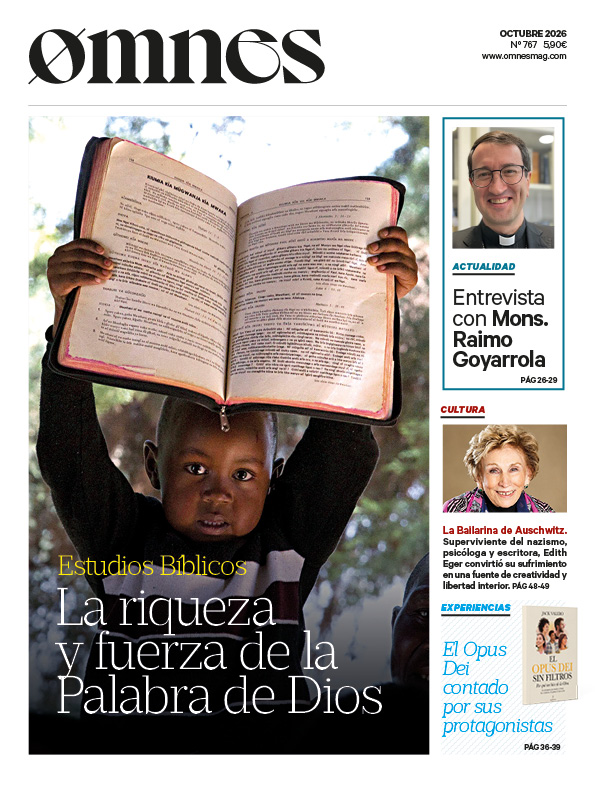



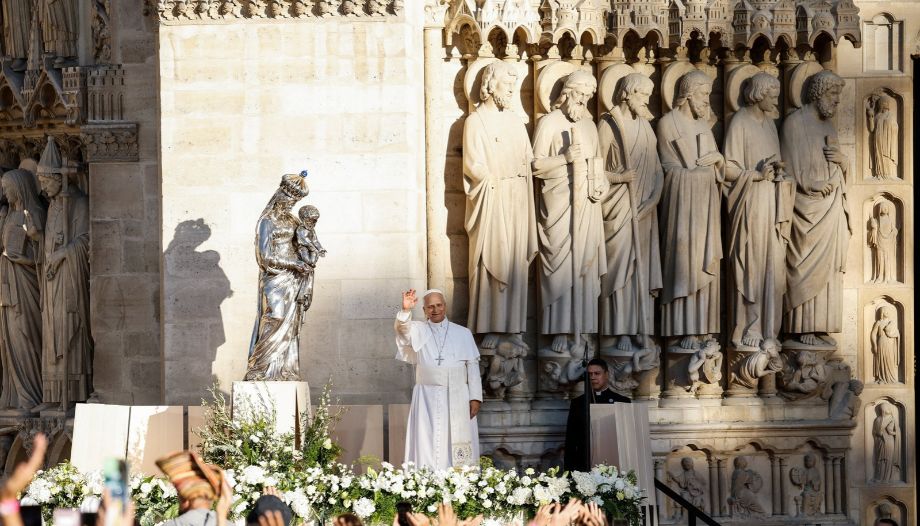
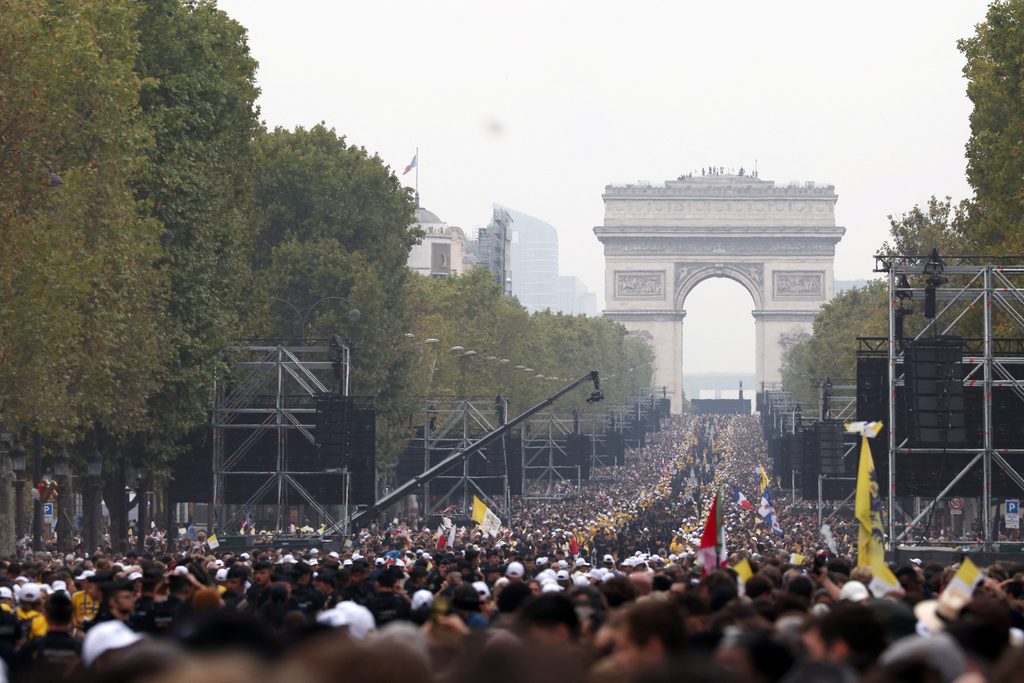
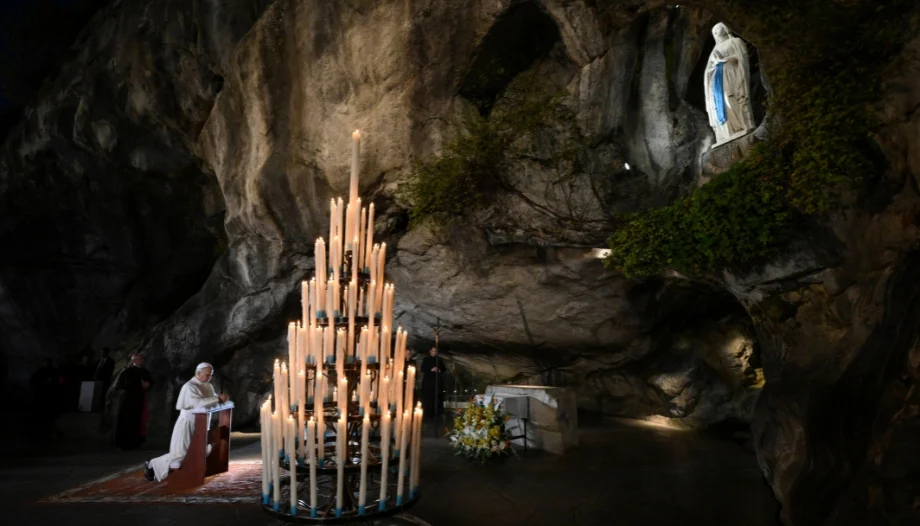

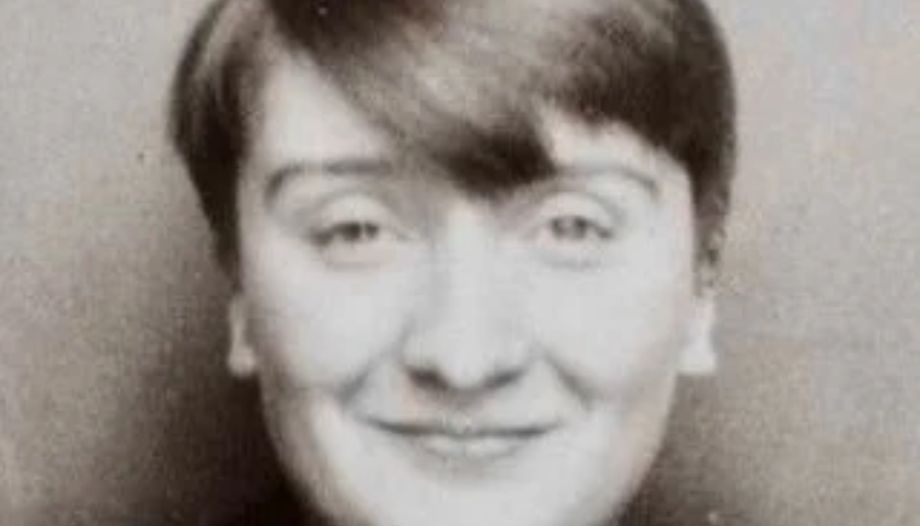
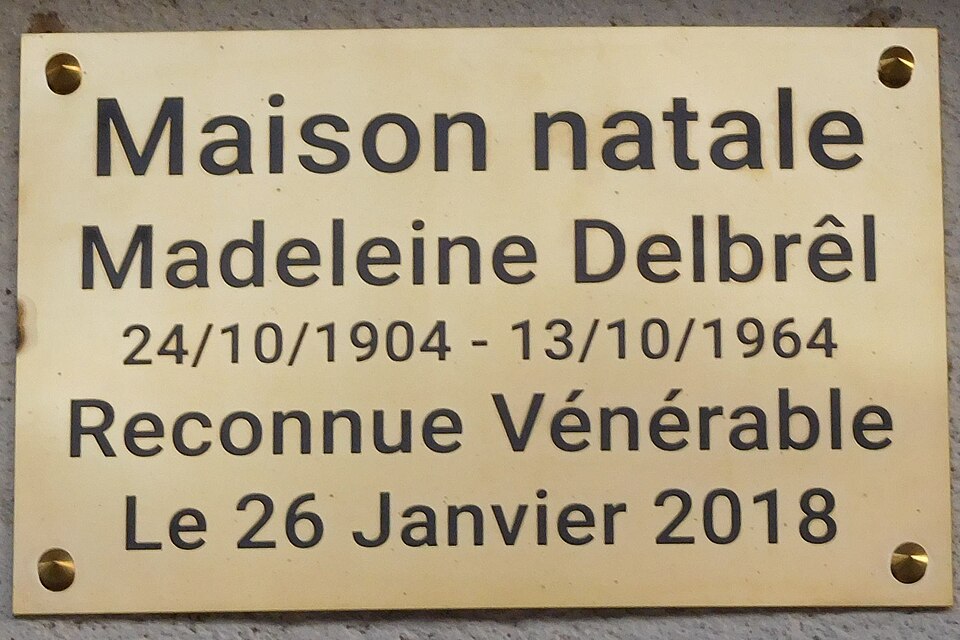

 Everything in its place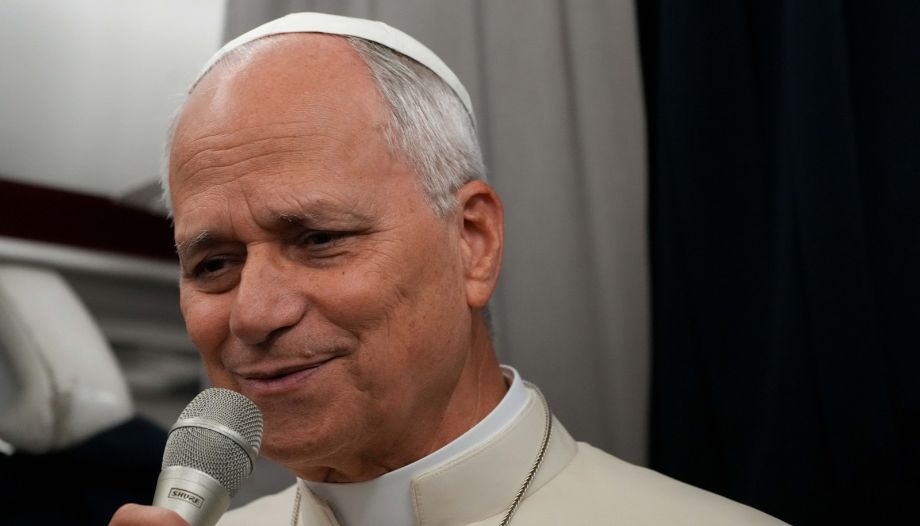
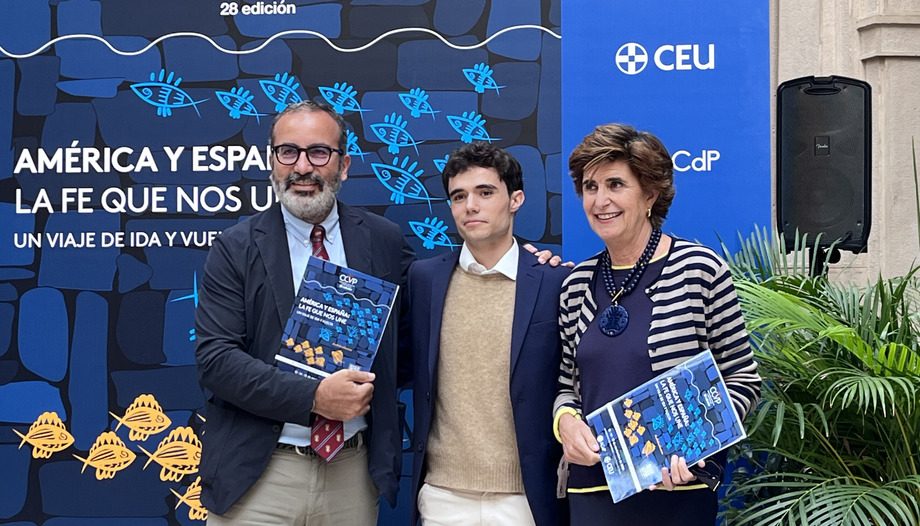
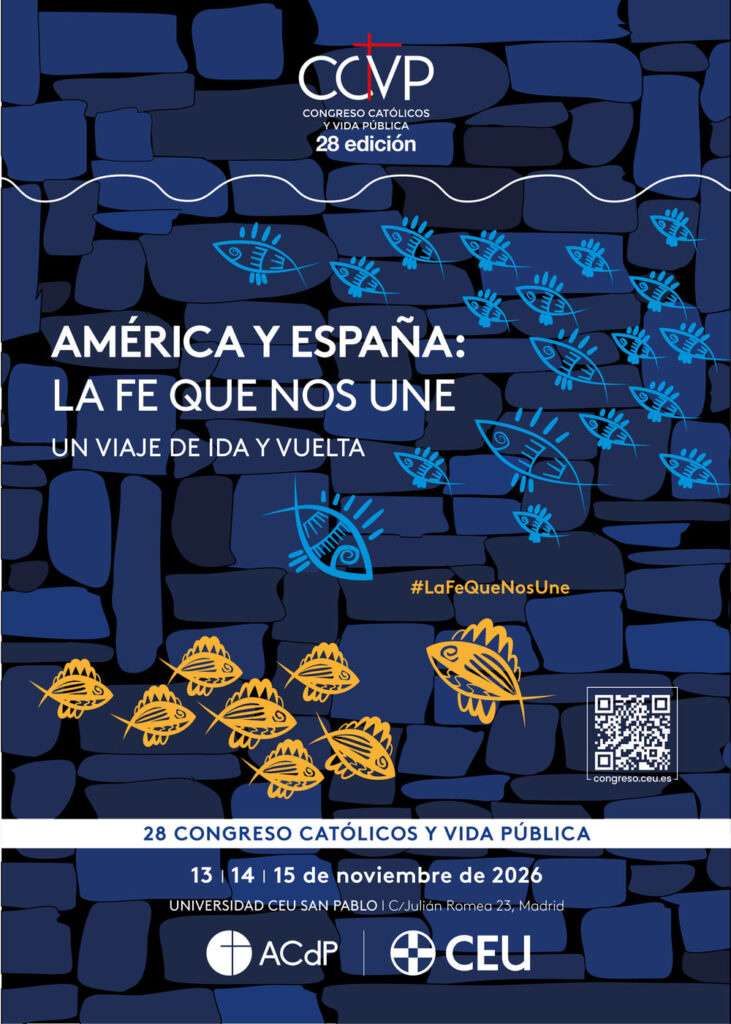
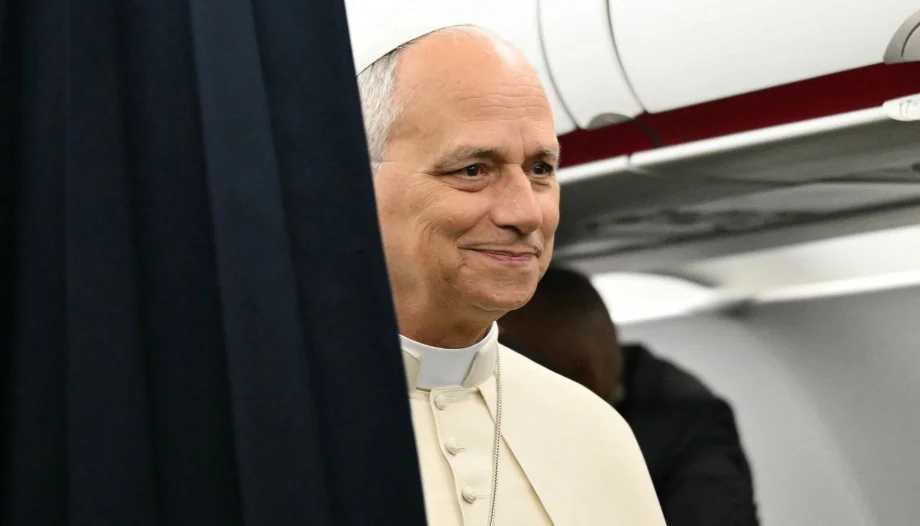
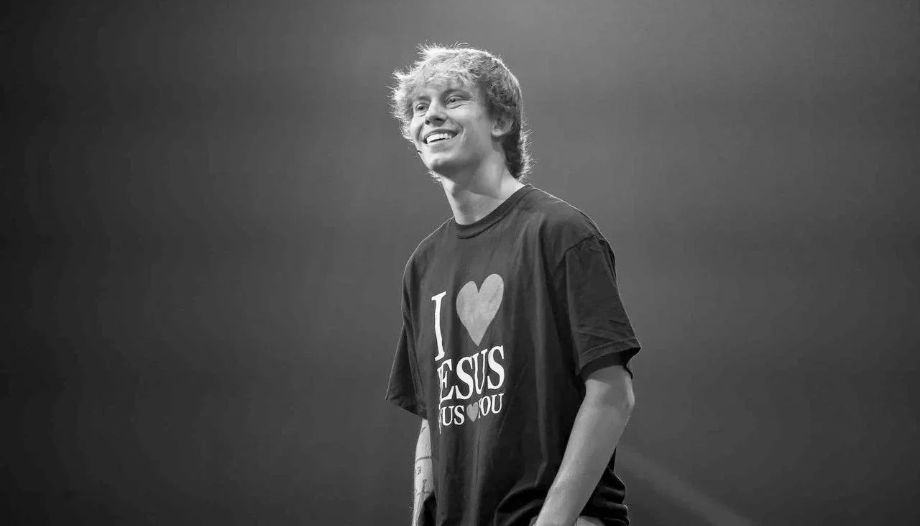
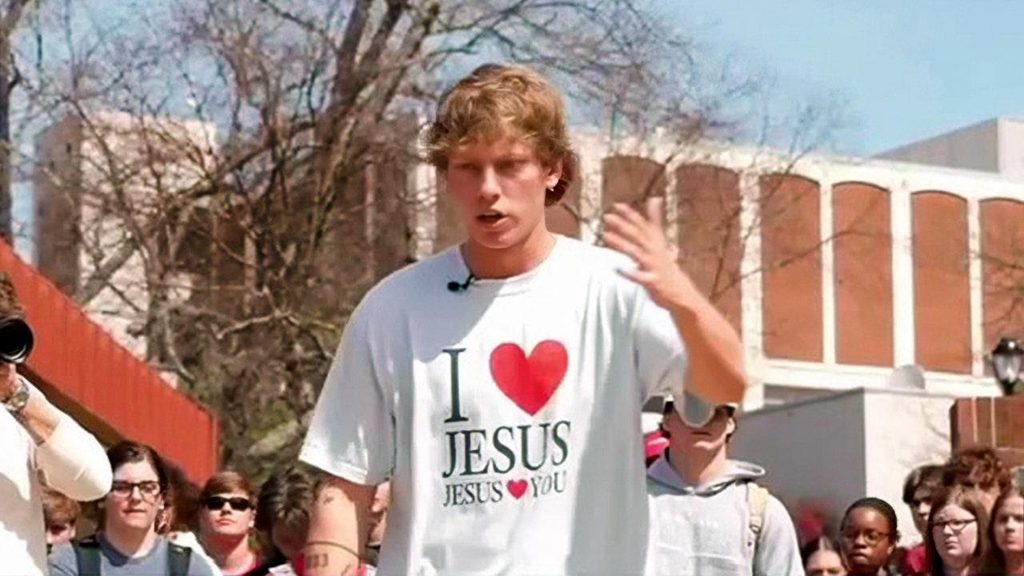
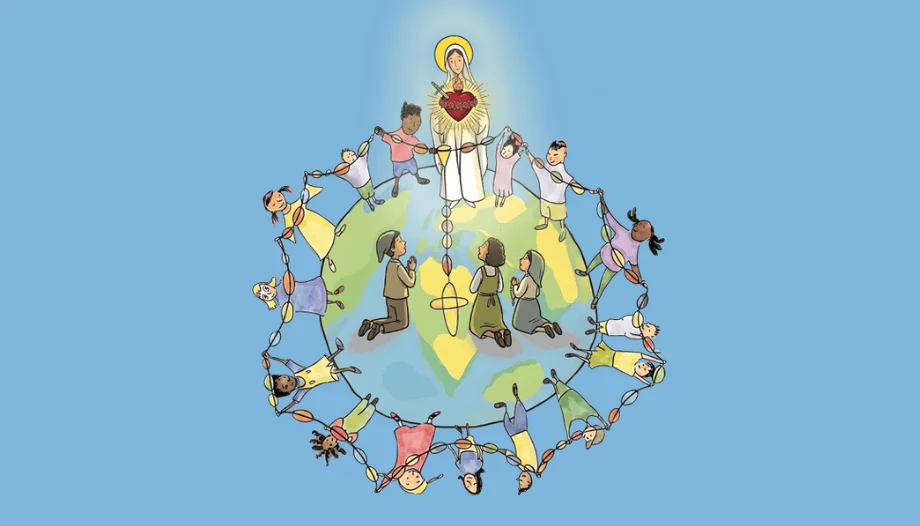
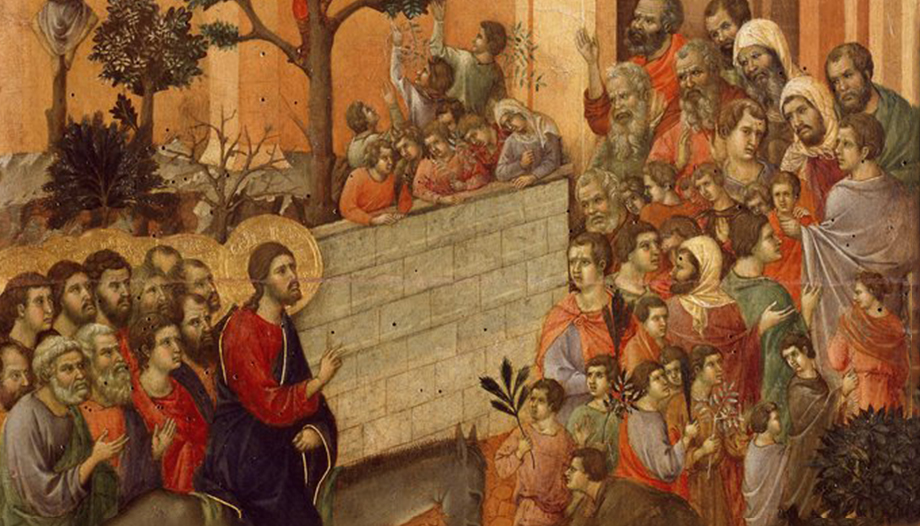
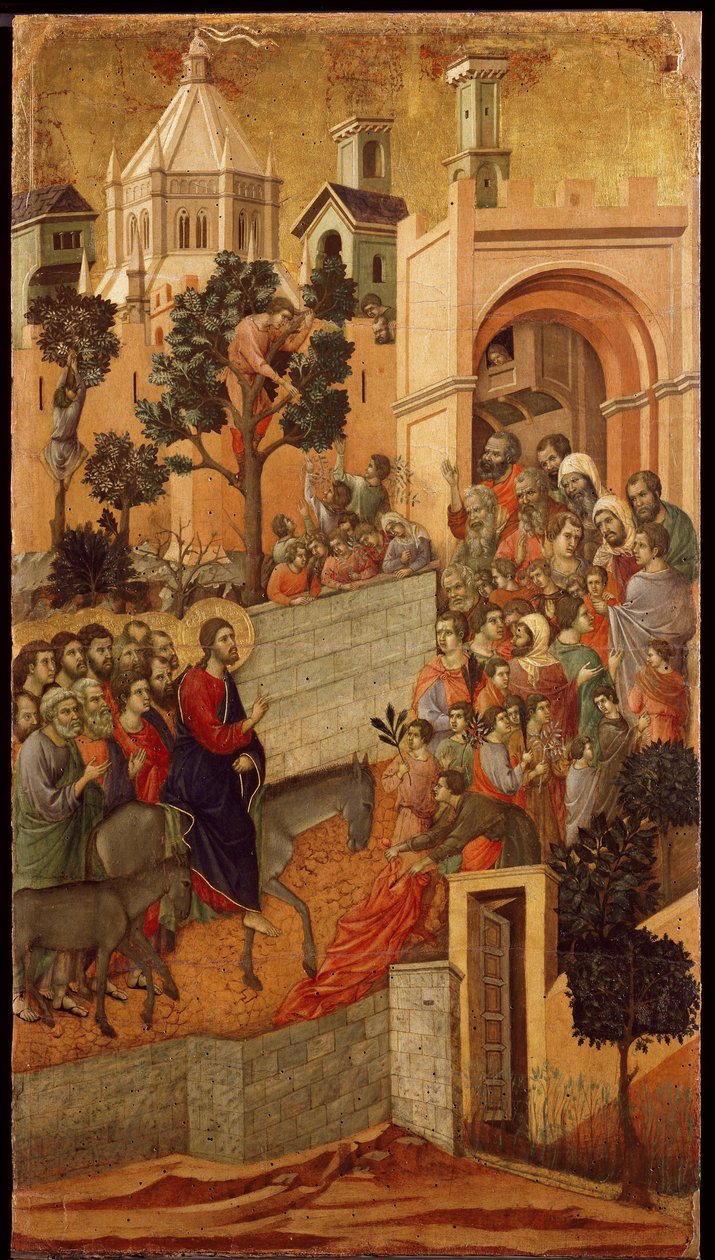

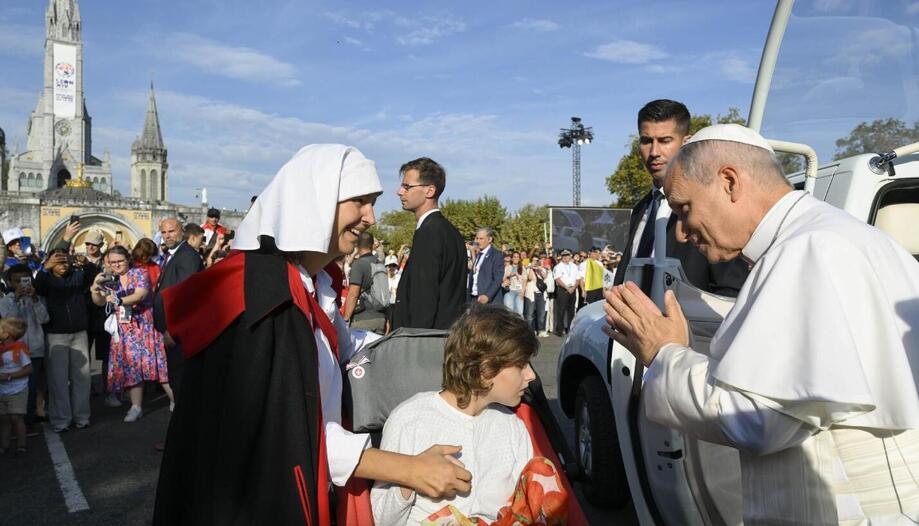
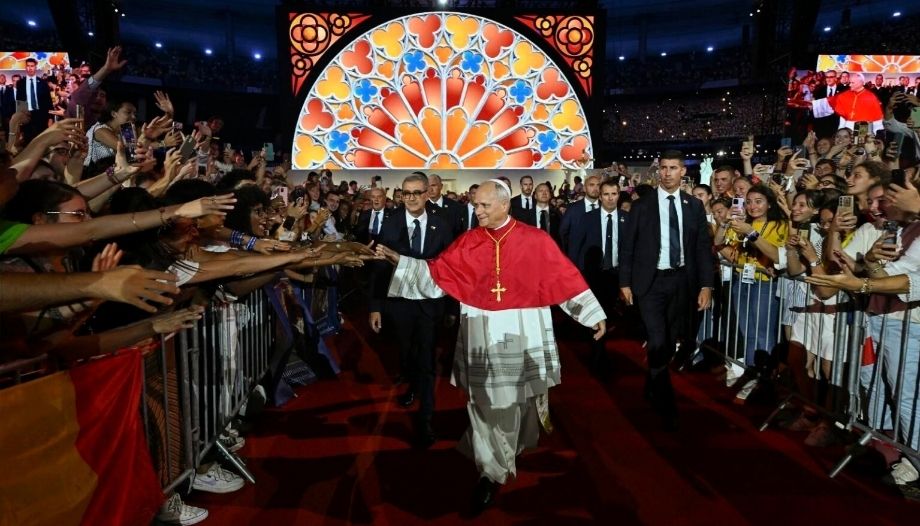
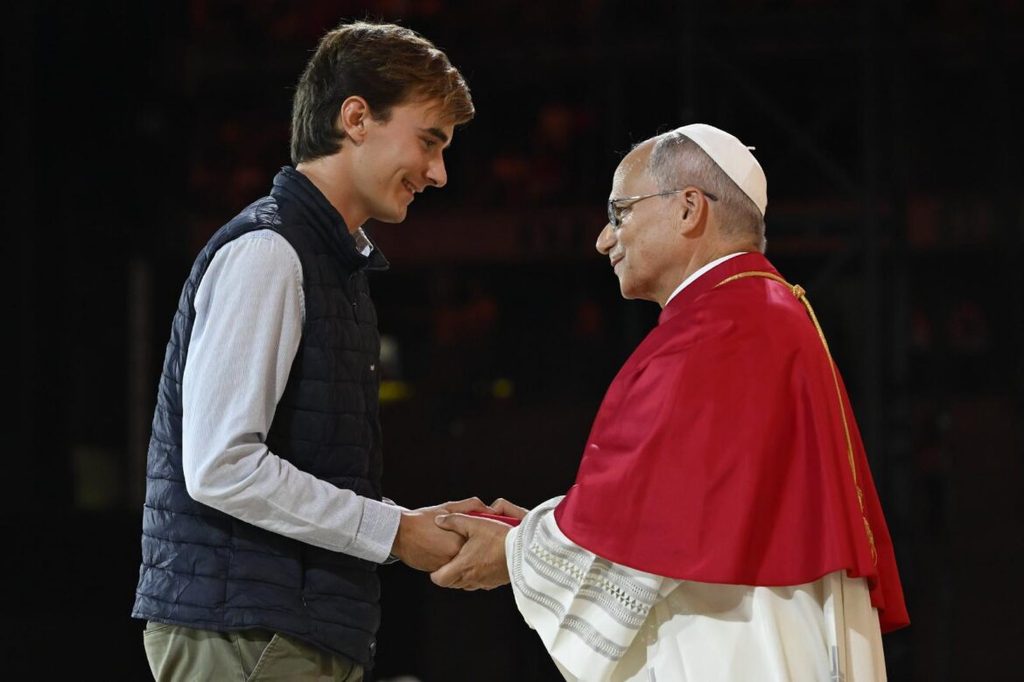
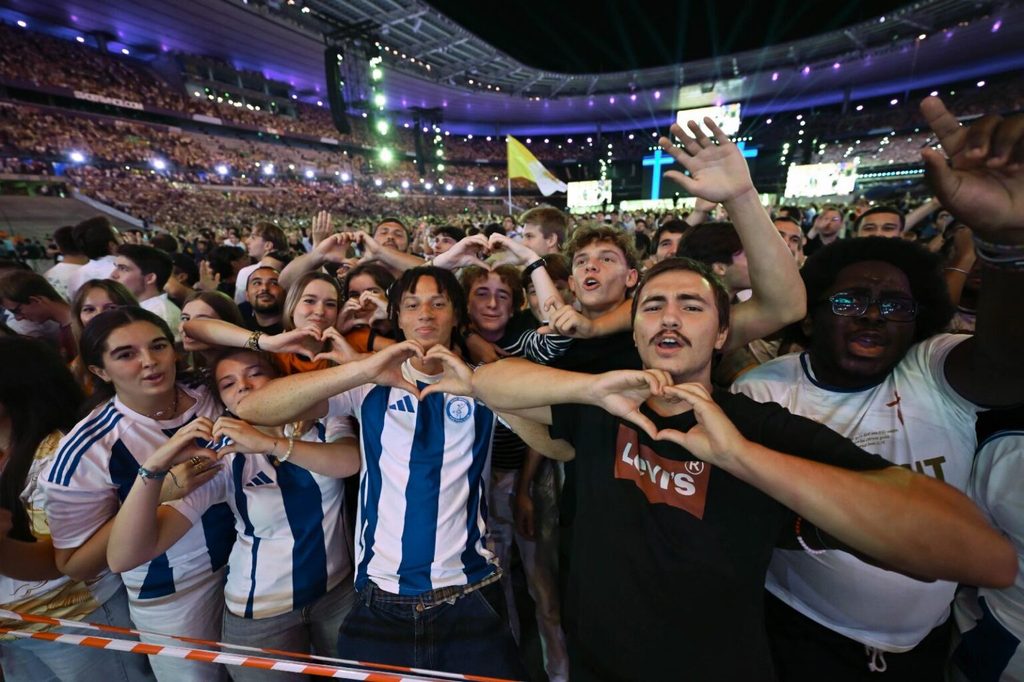


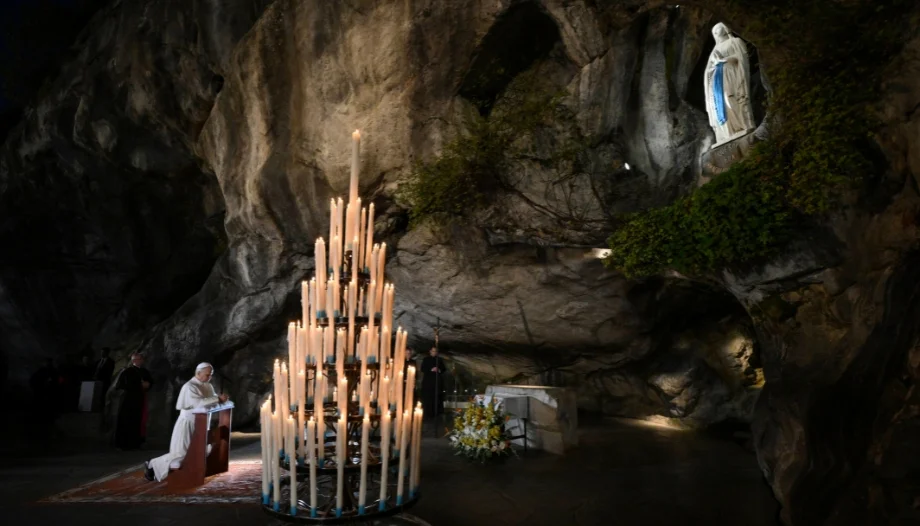

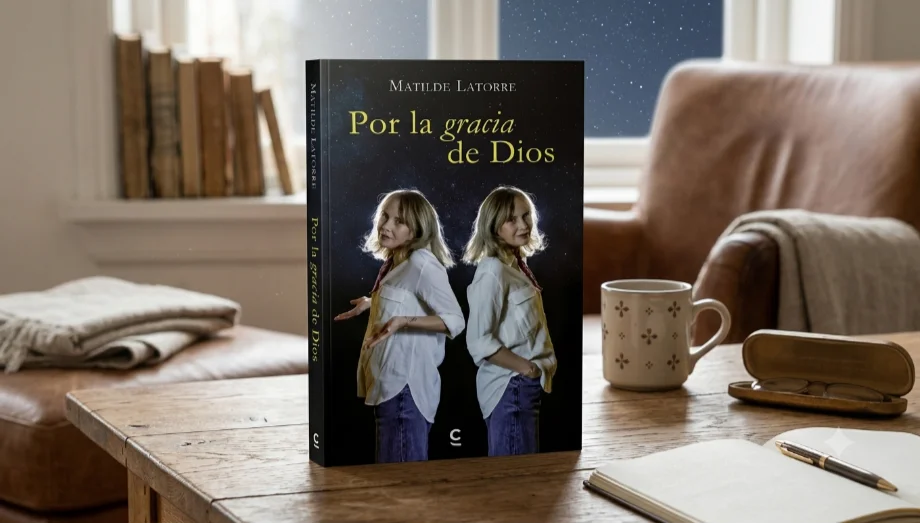
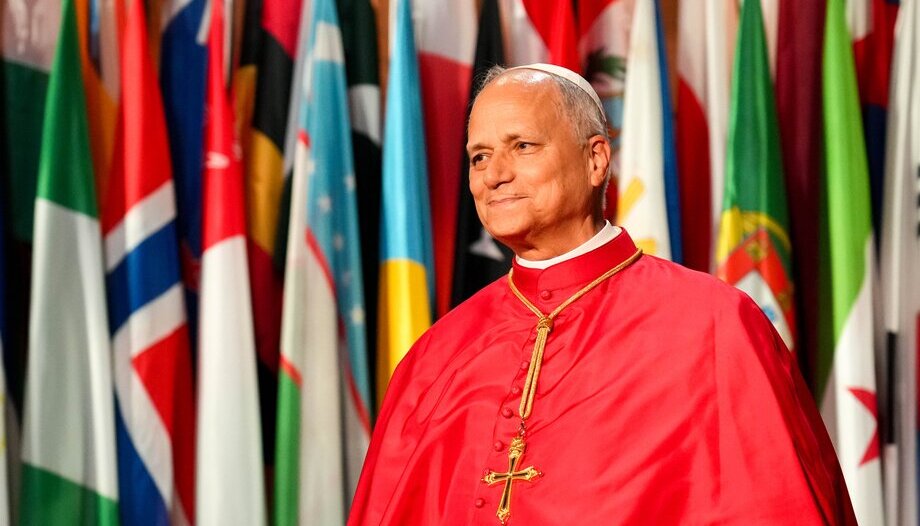
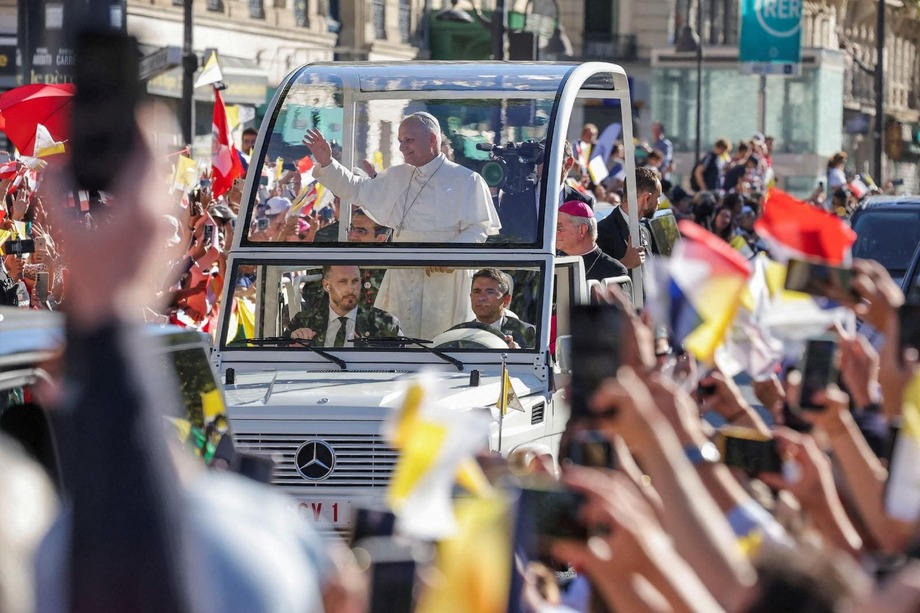
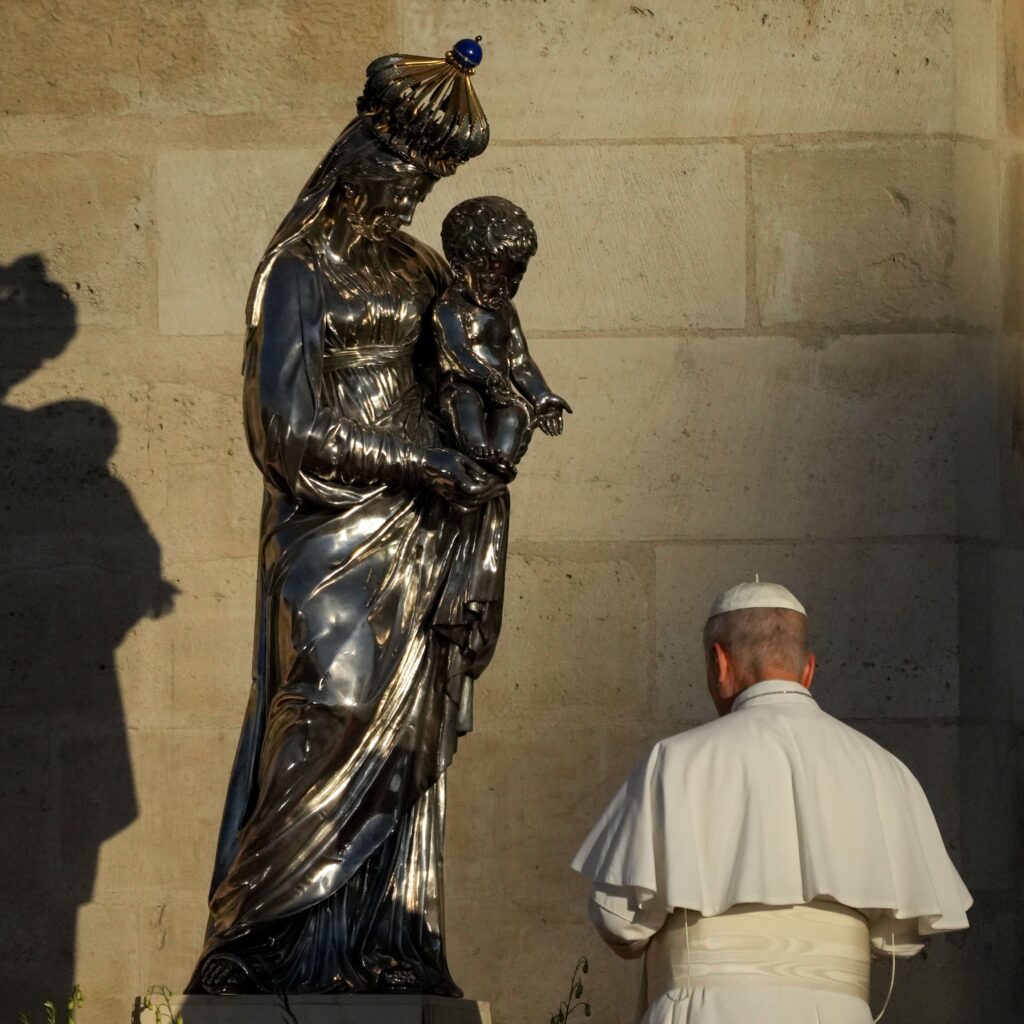
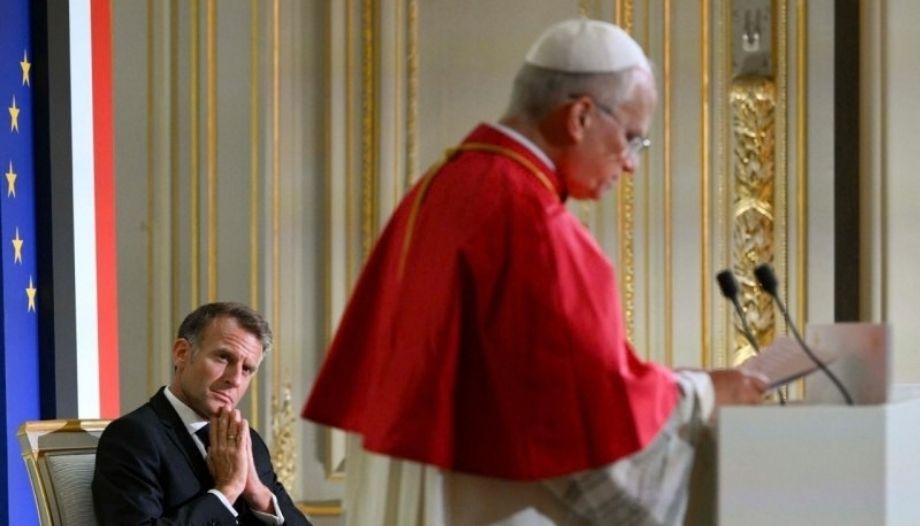
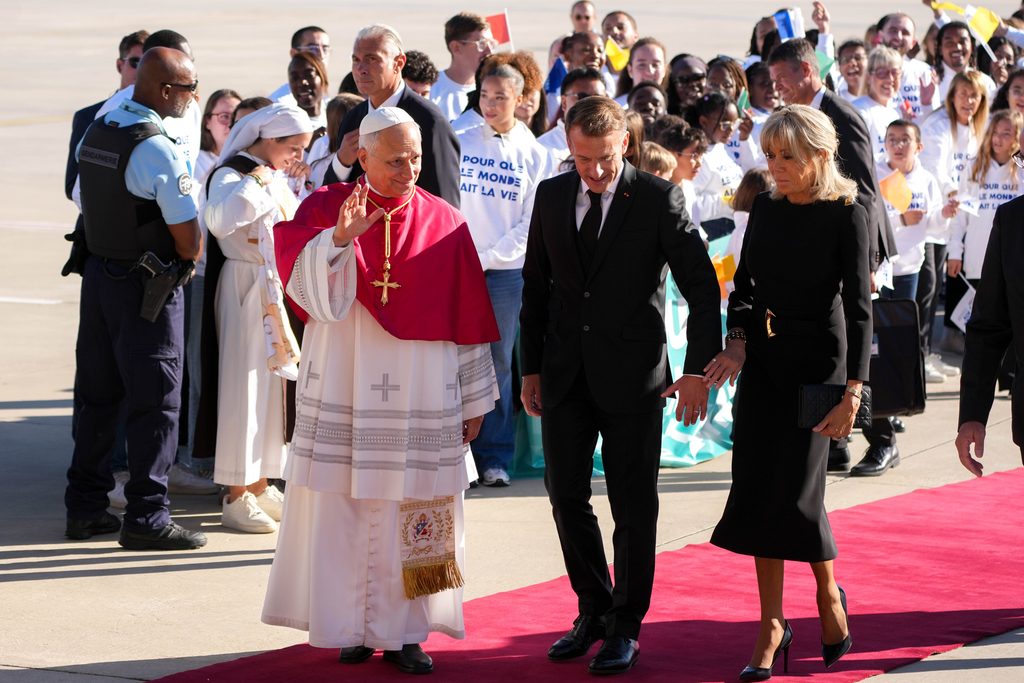
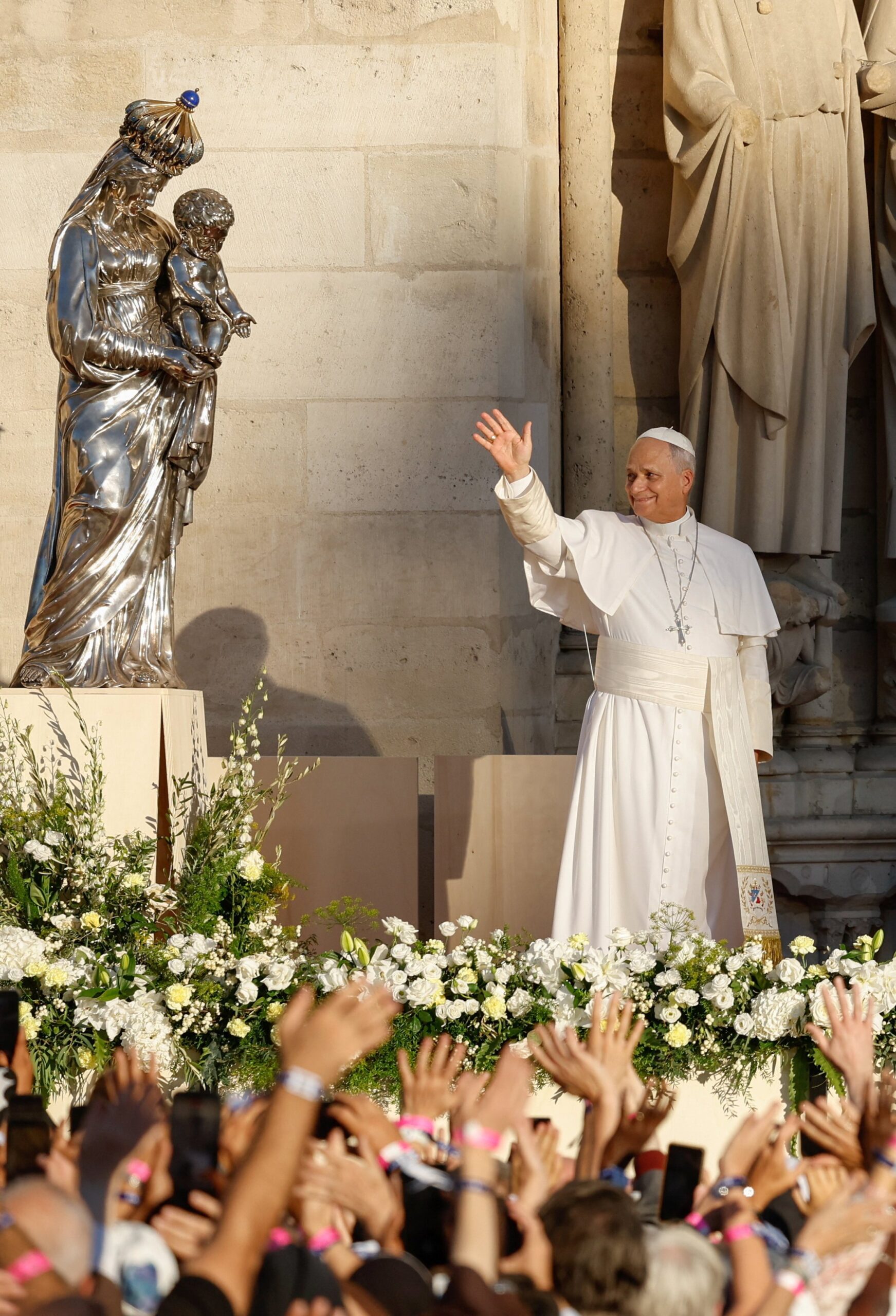
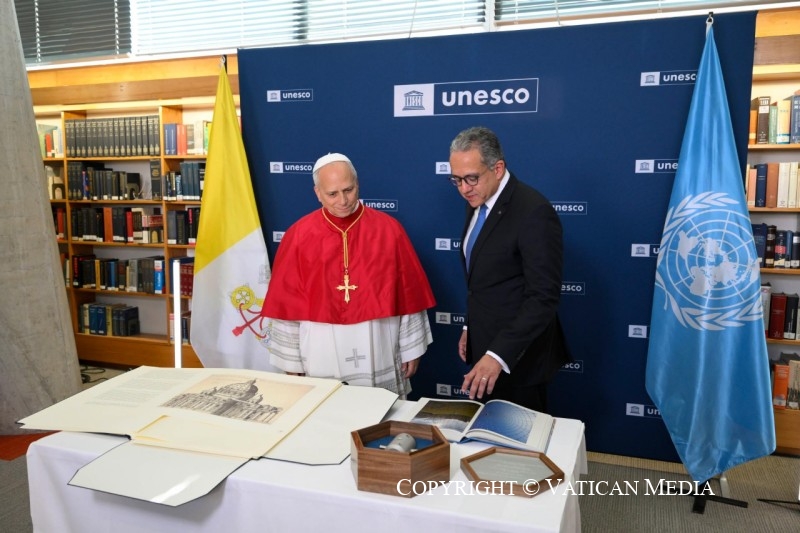
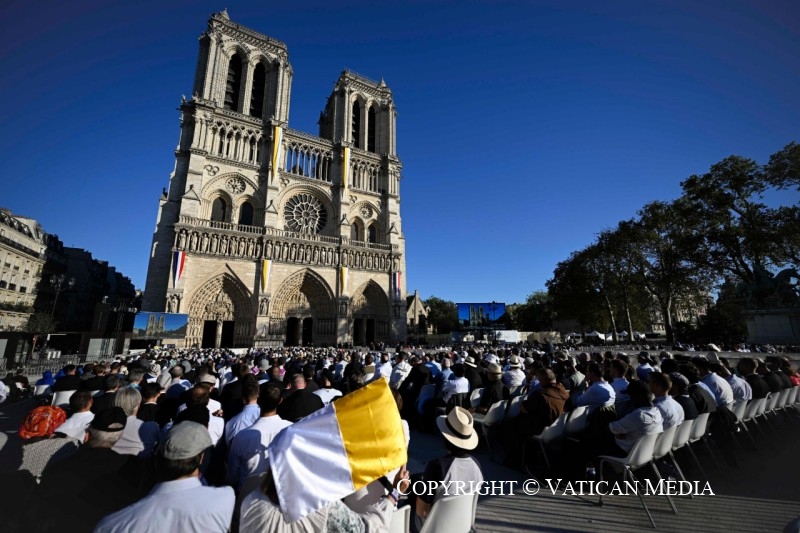
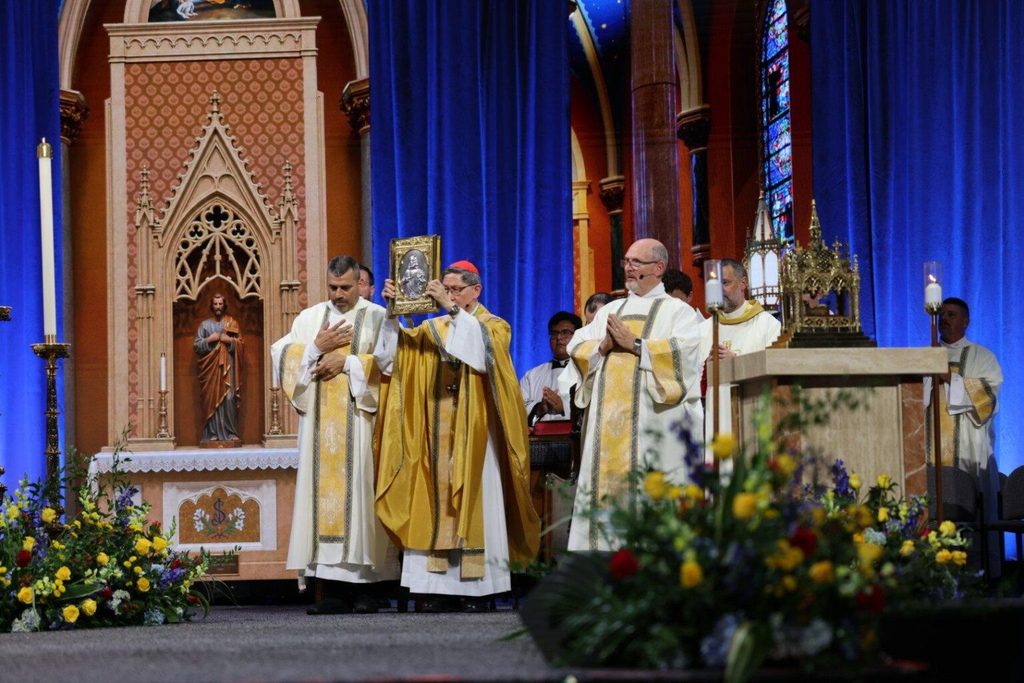
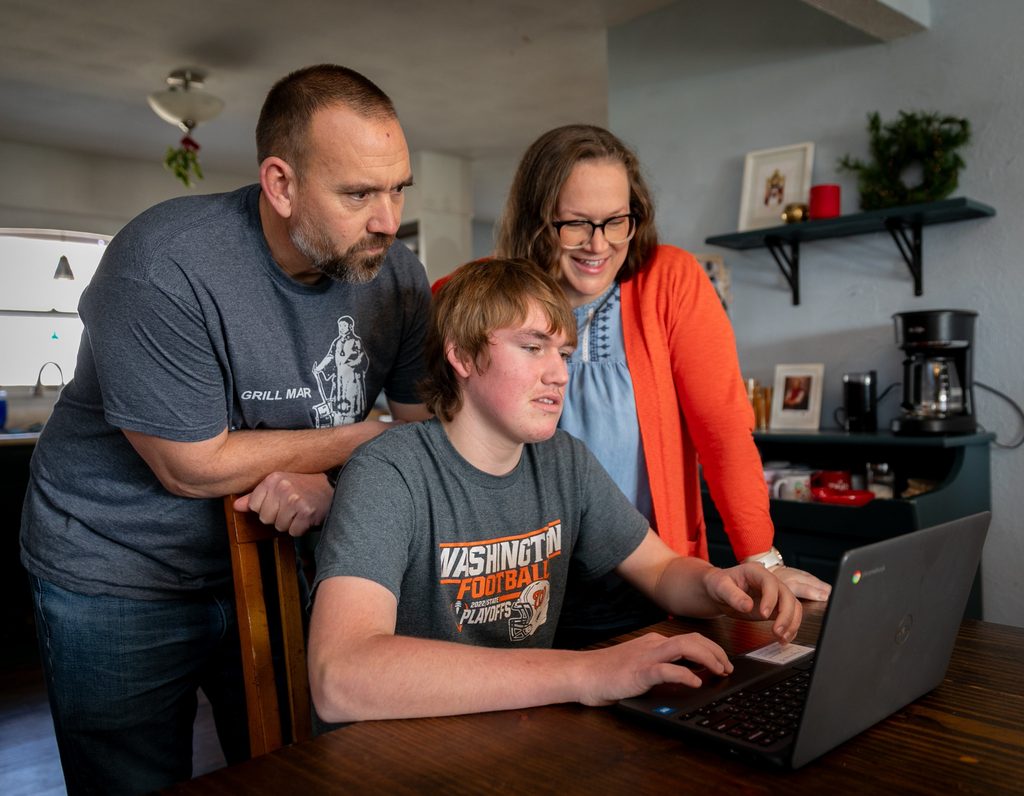
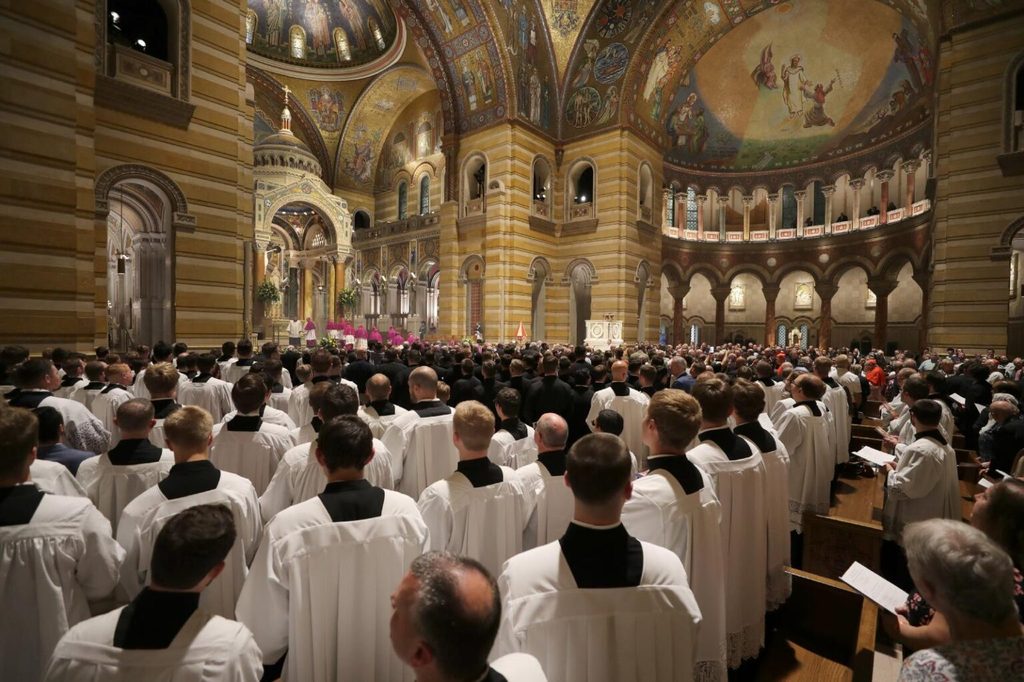

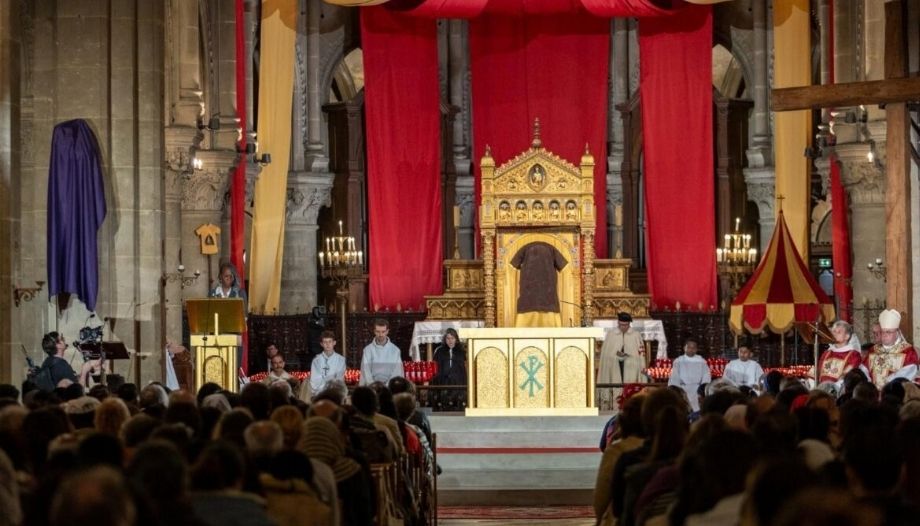
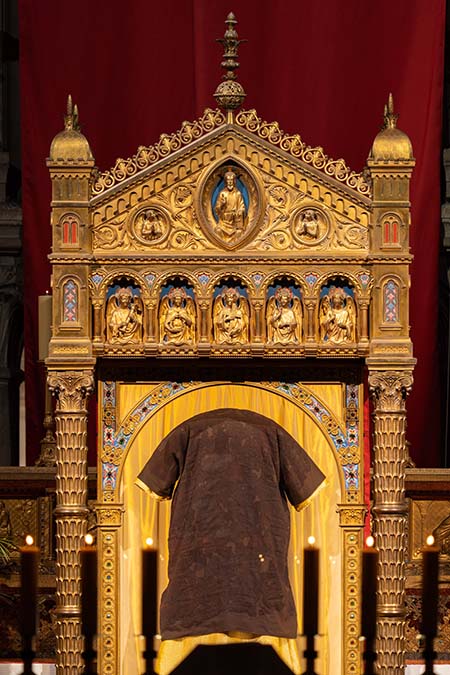
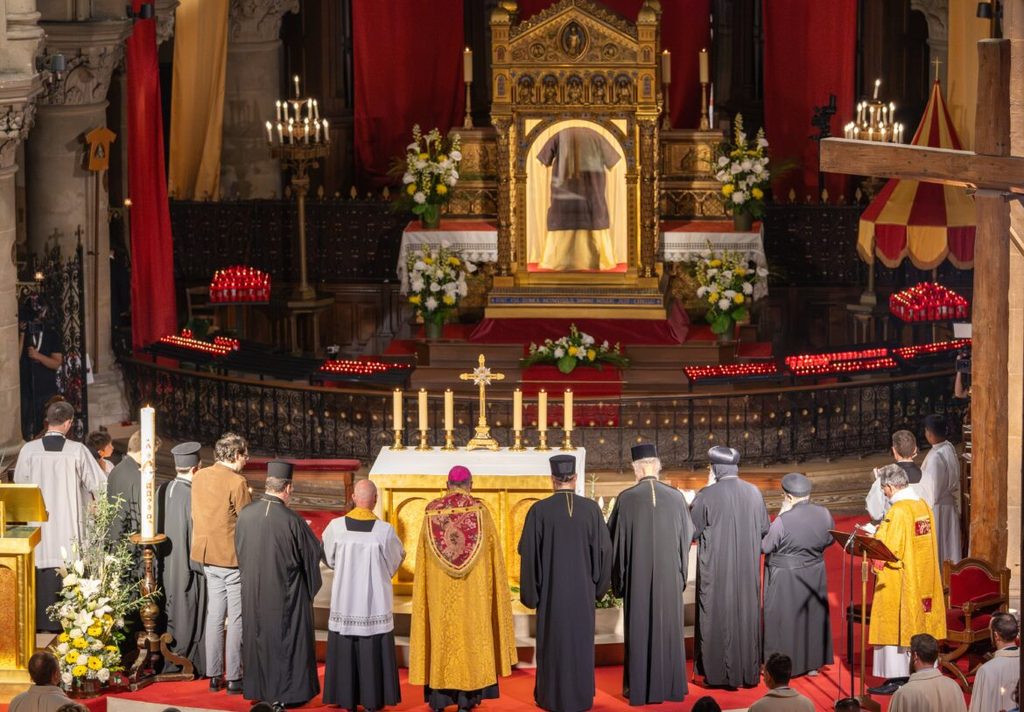

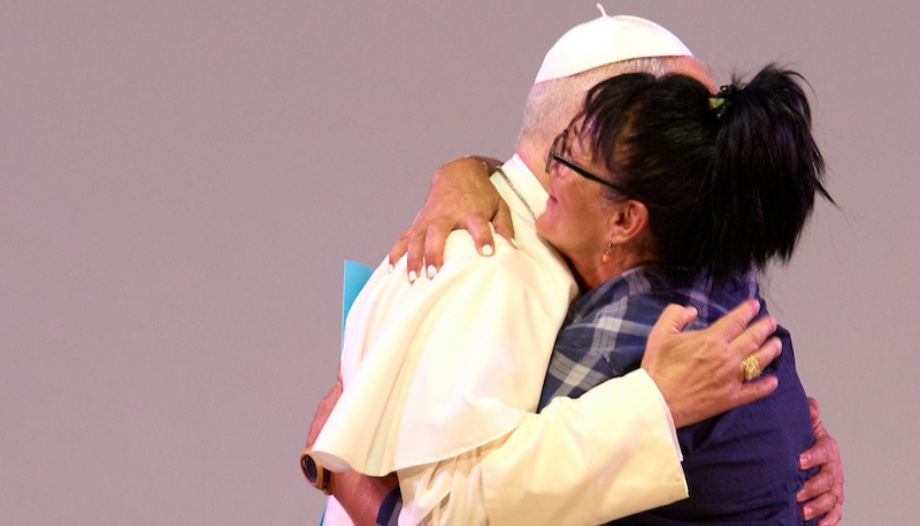
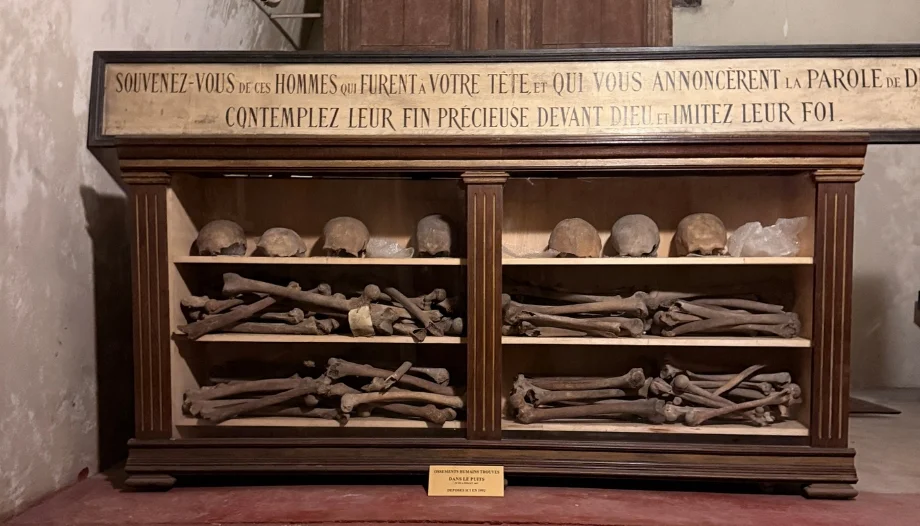
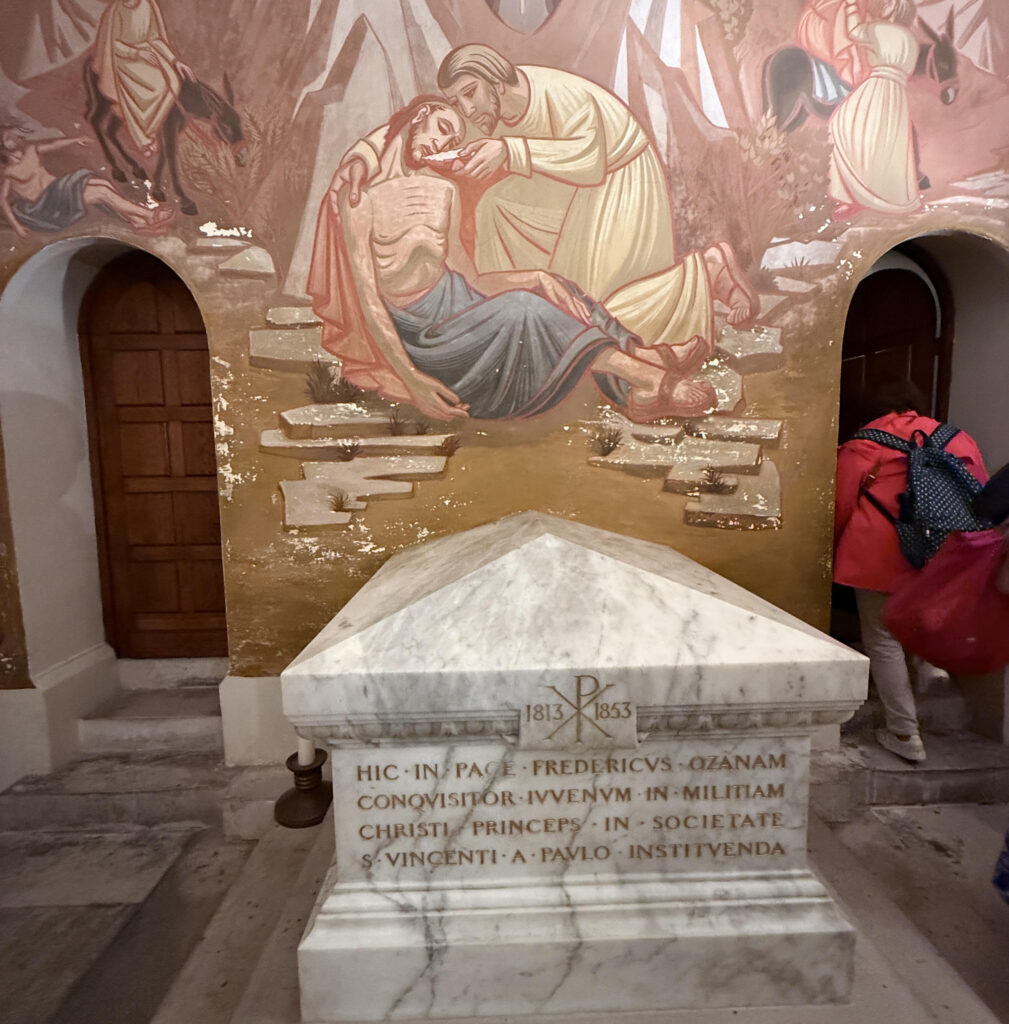
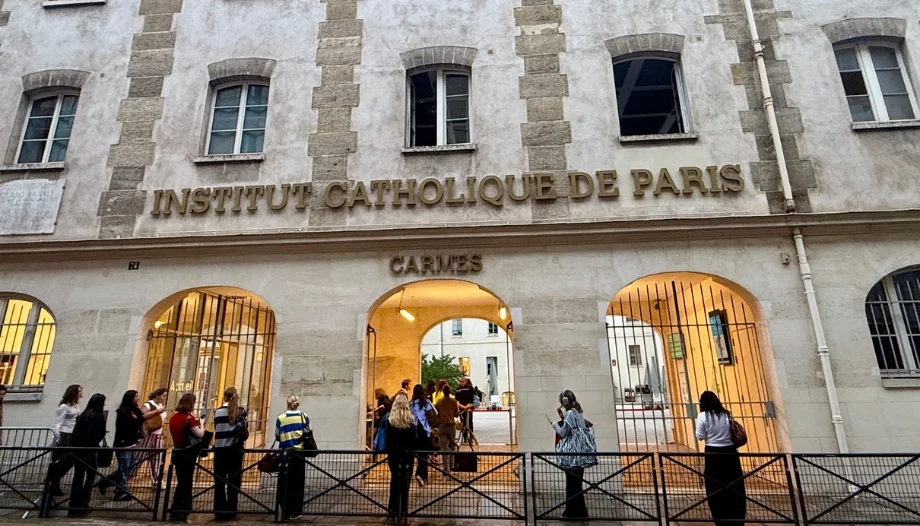
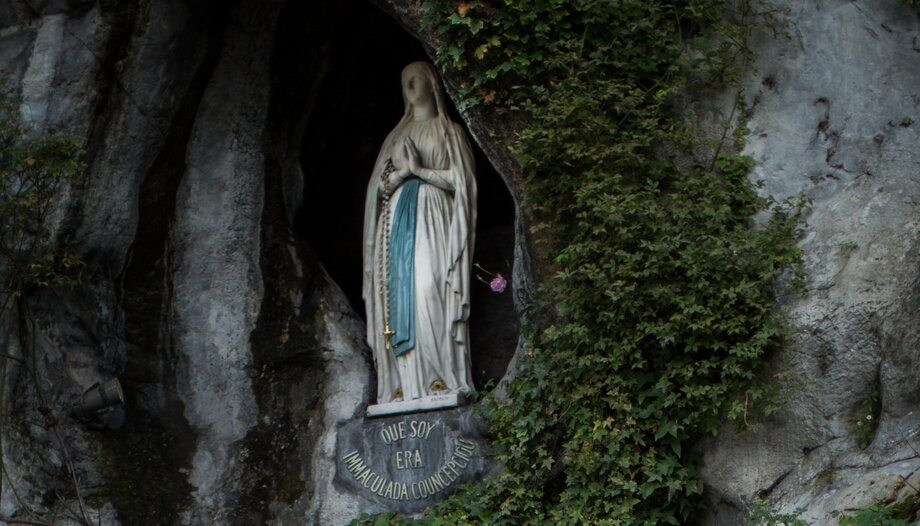
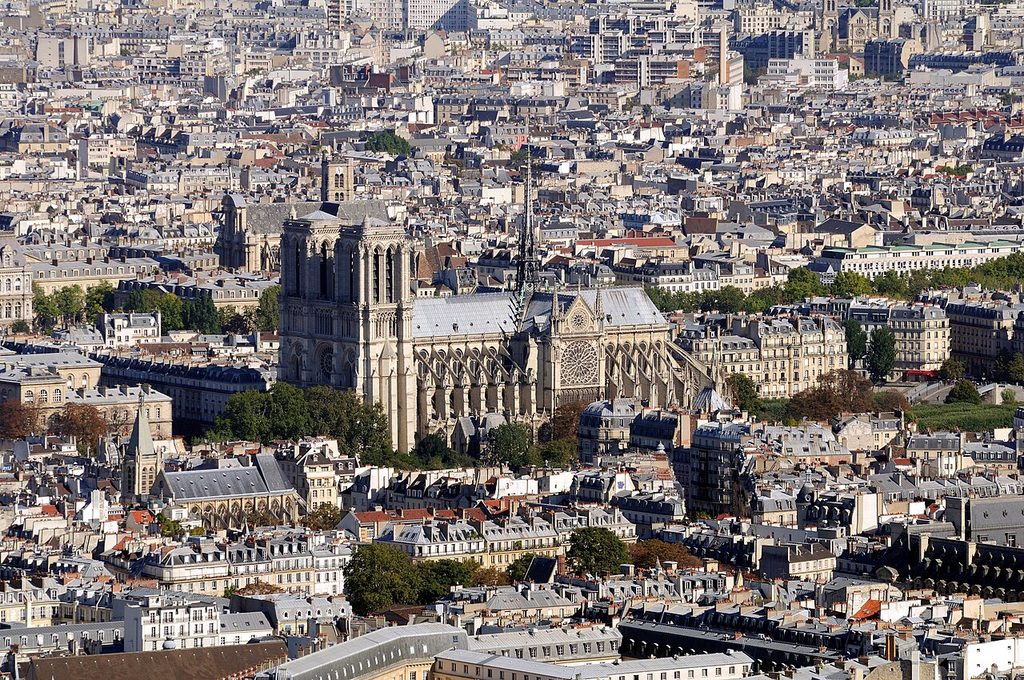
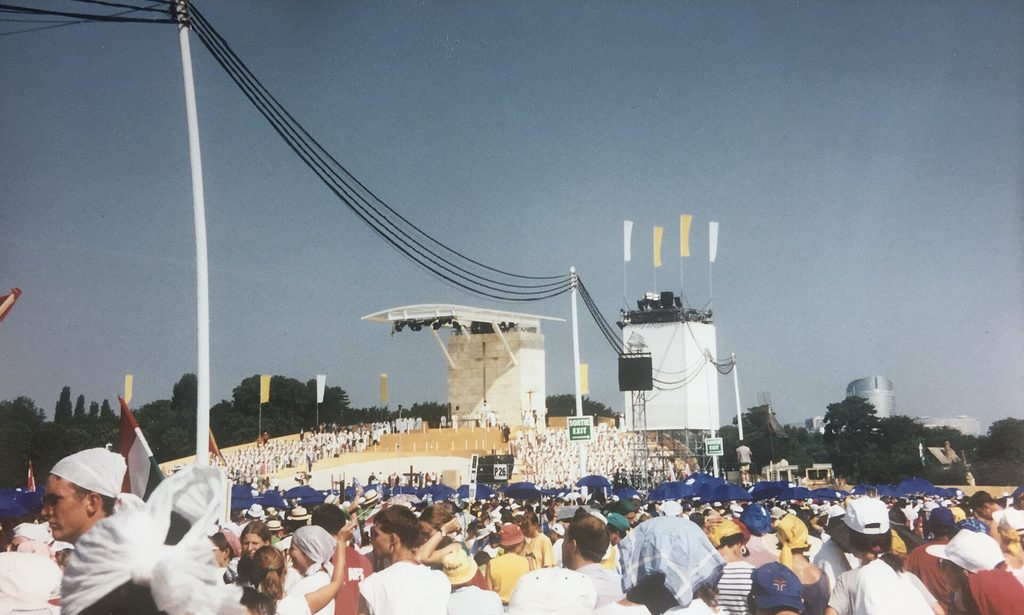
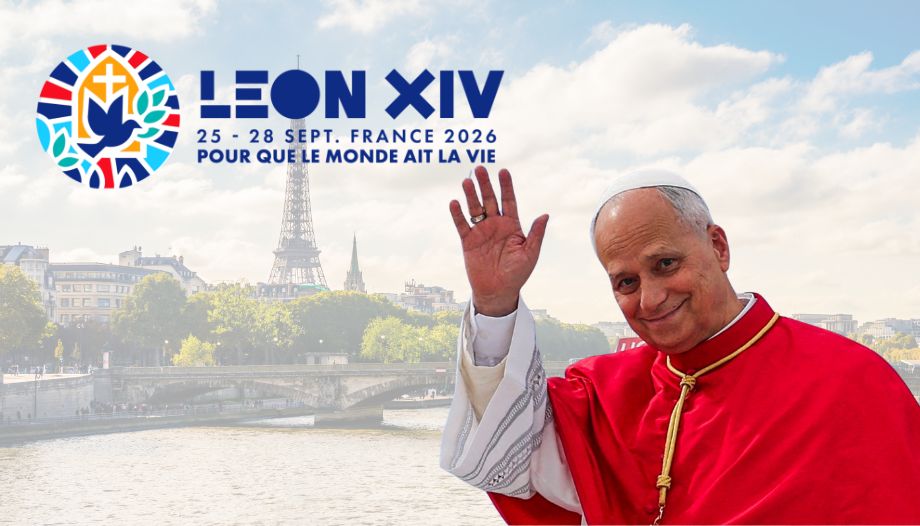
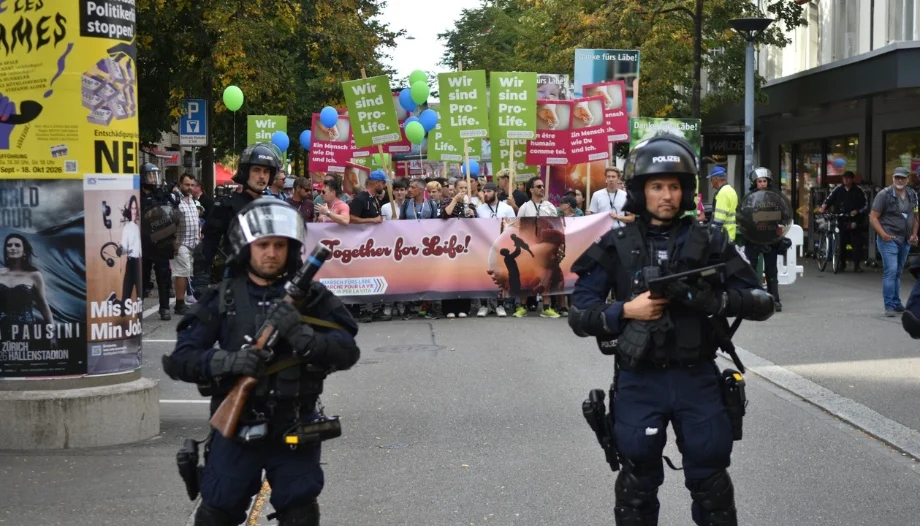
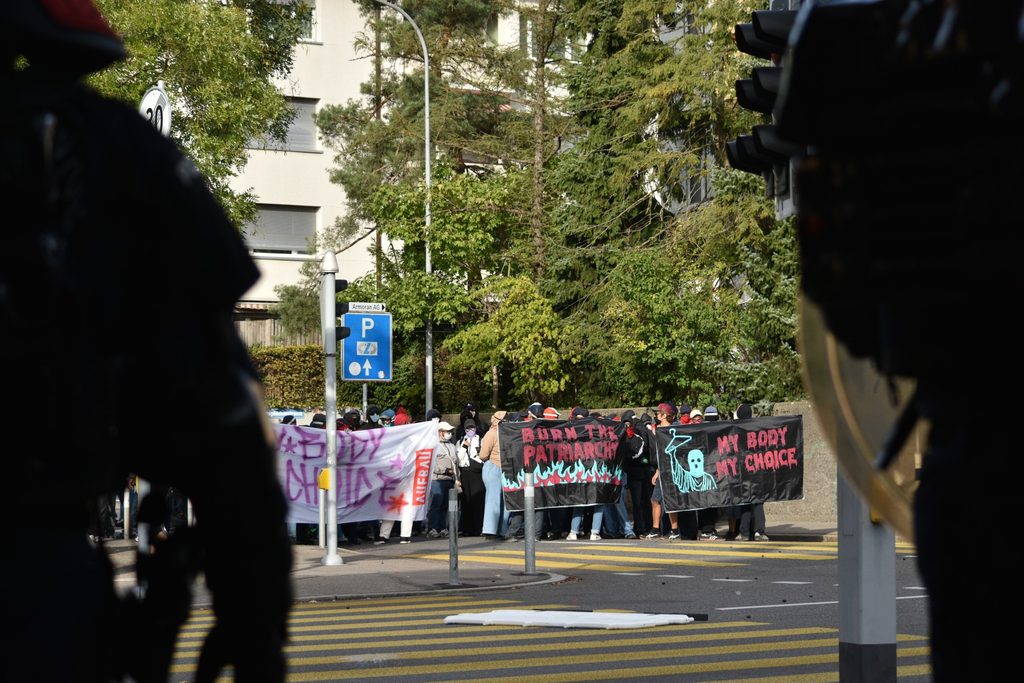
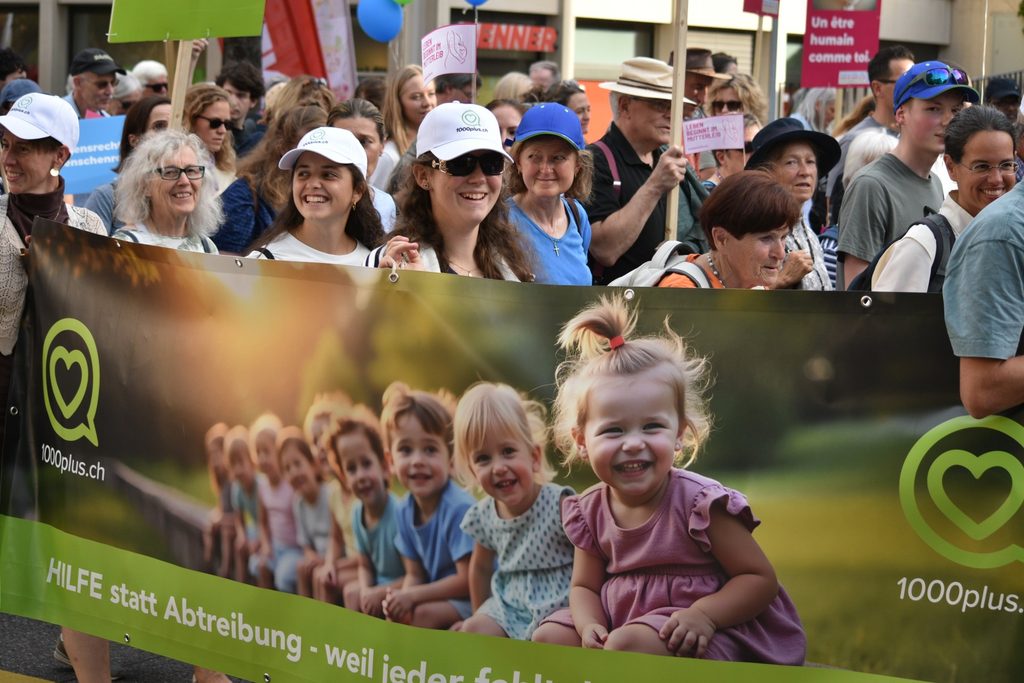
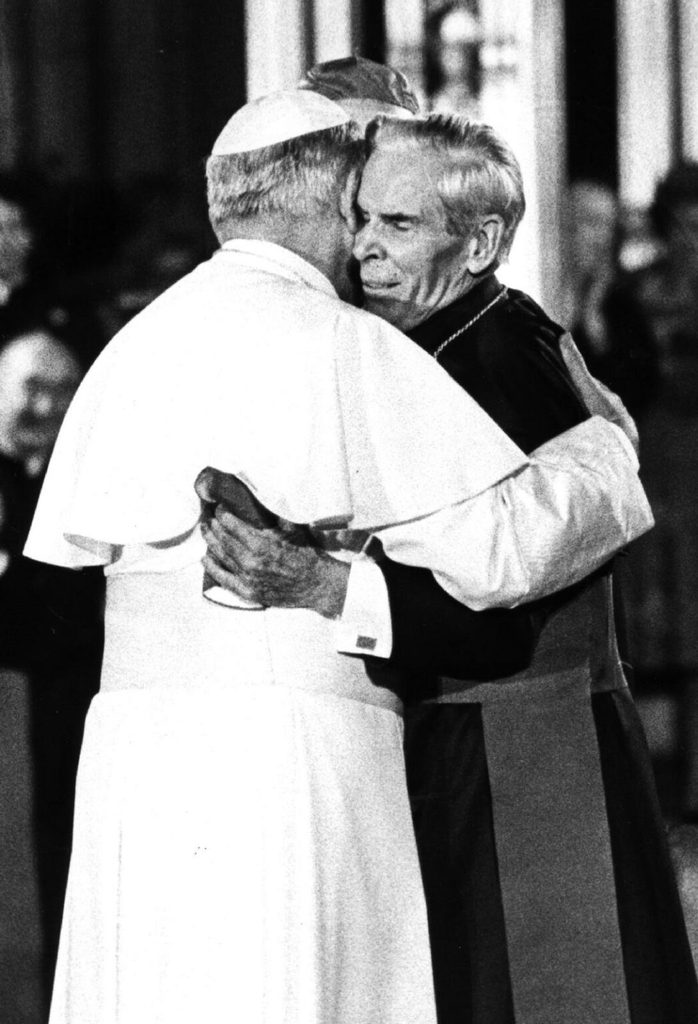
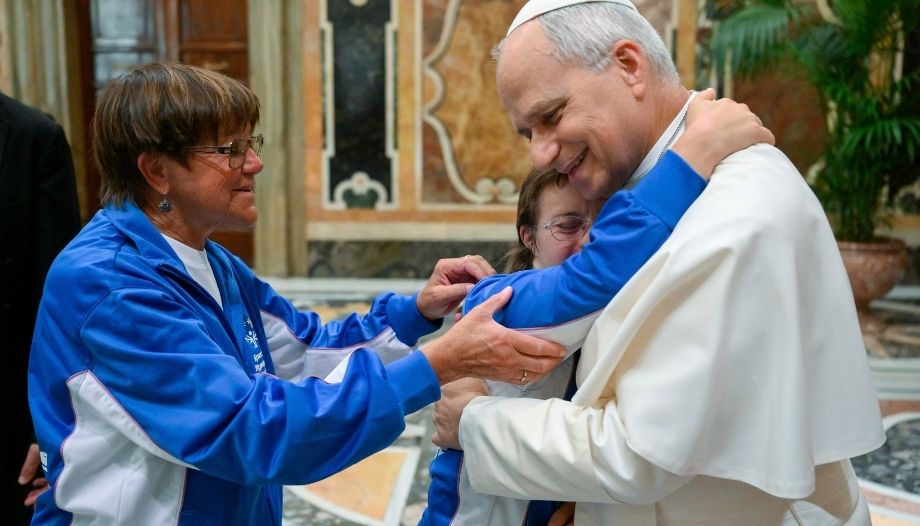
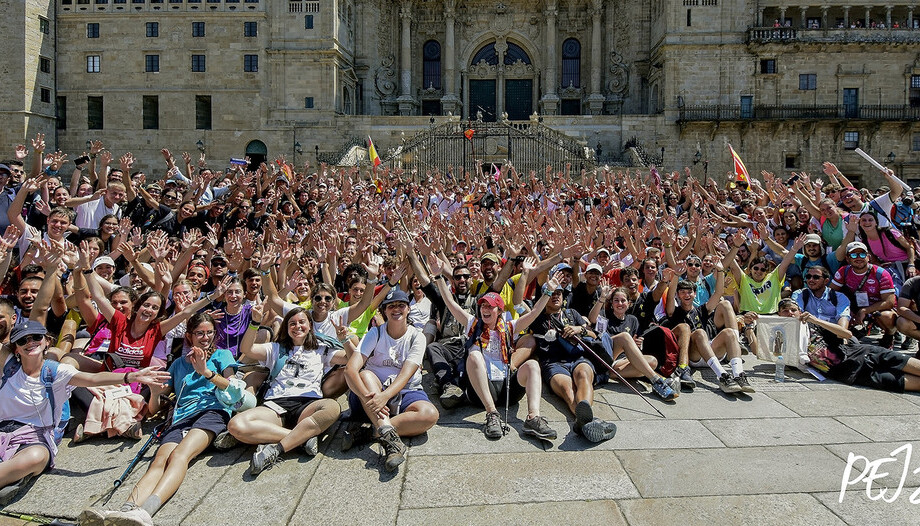
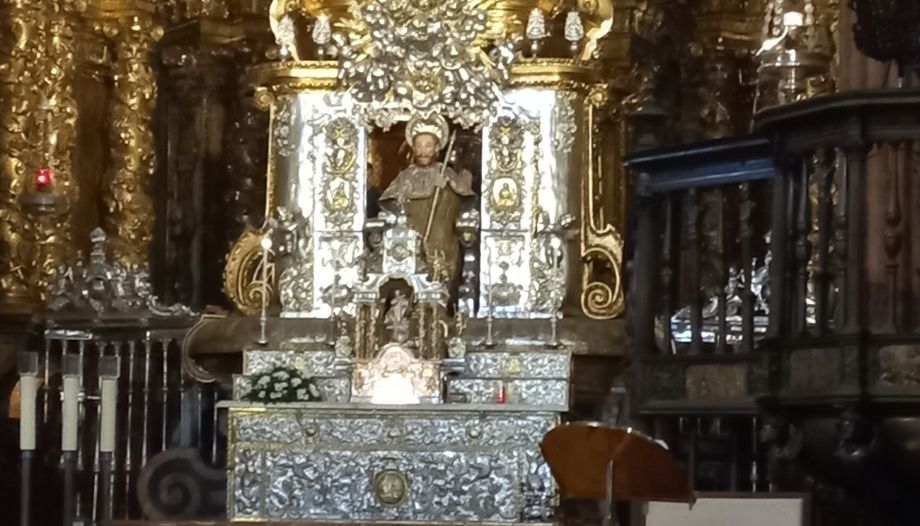
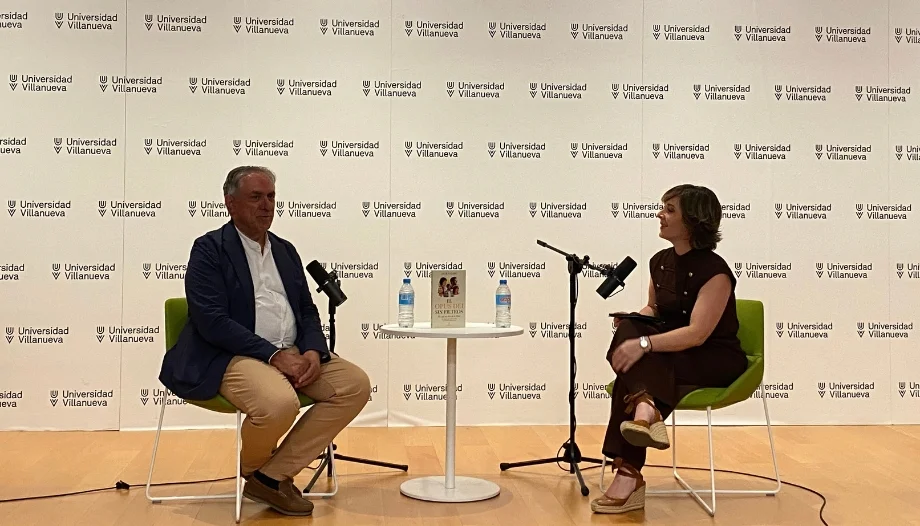
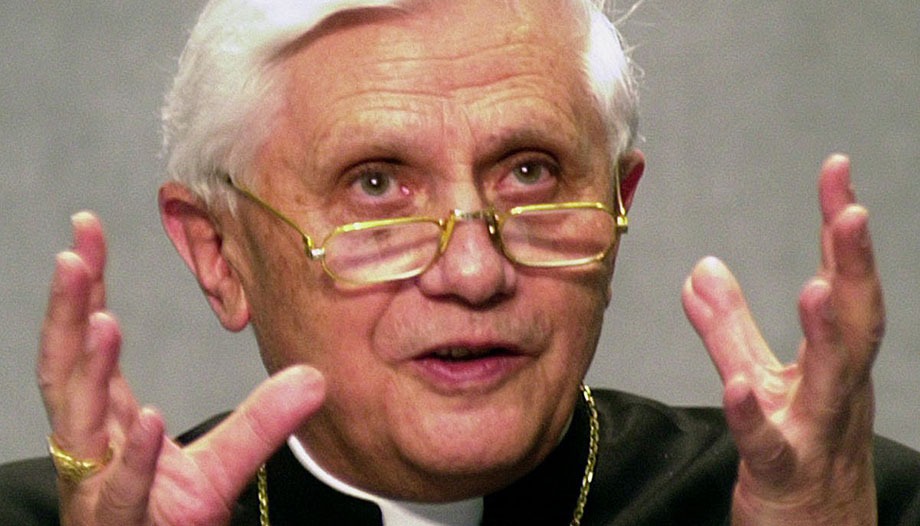
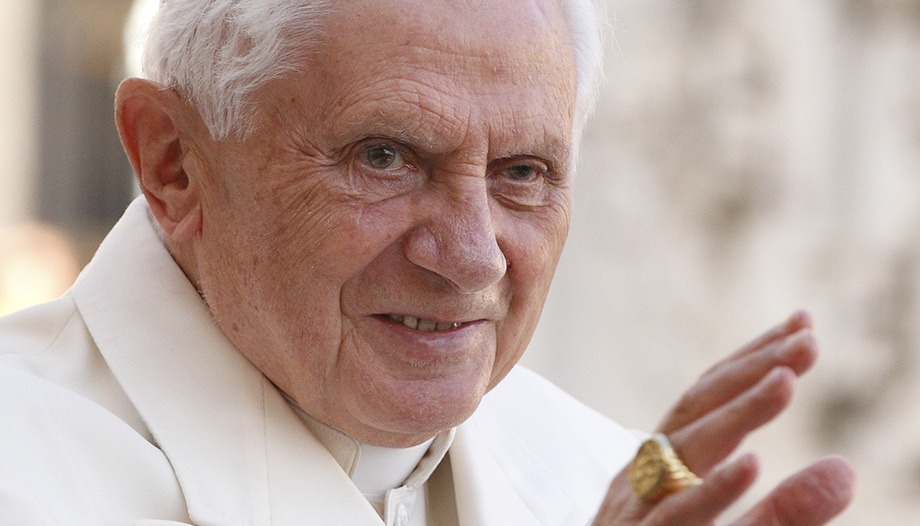
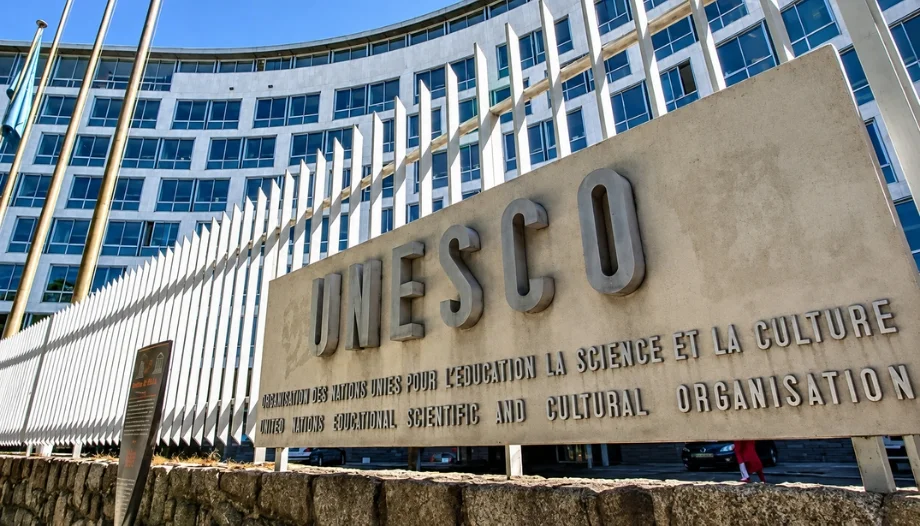
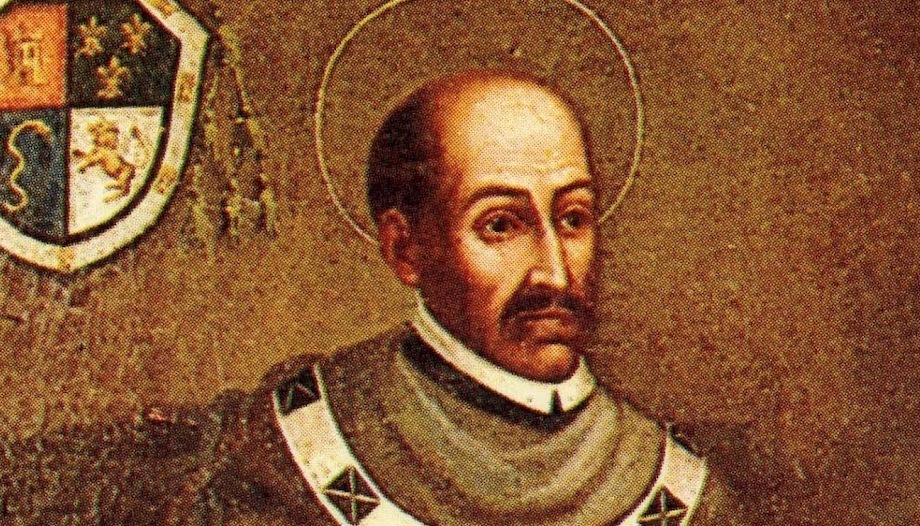


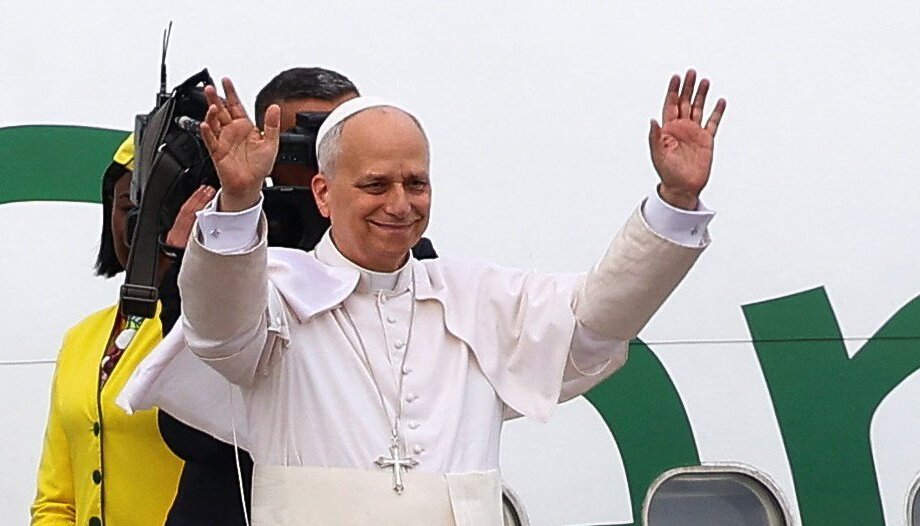
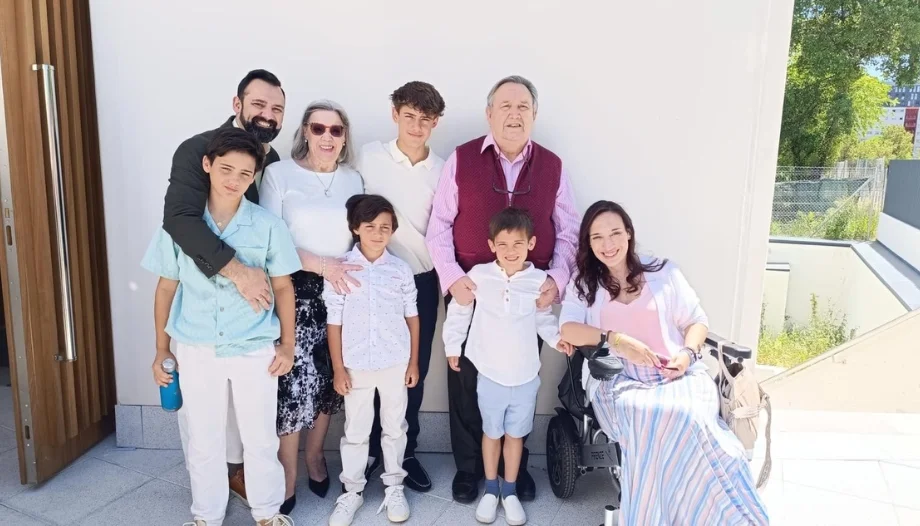

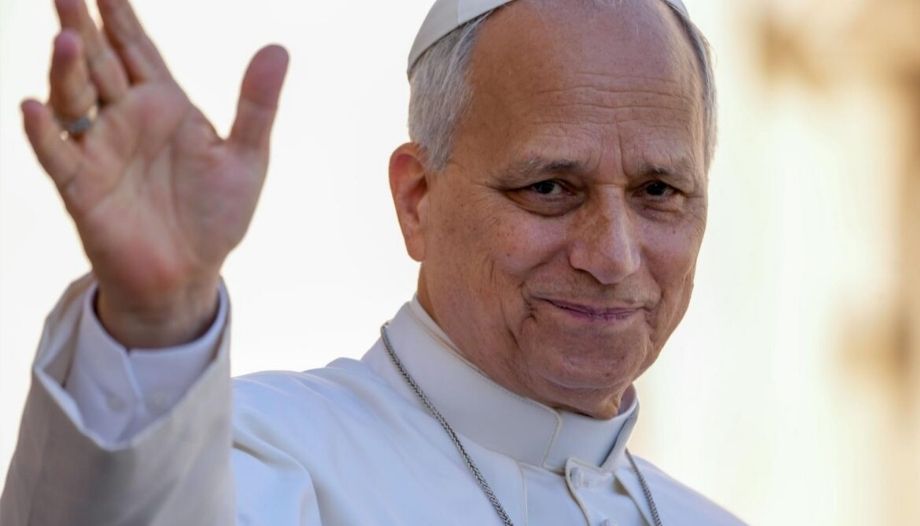
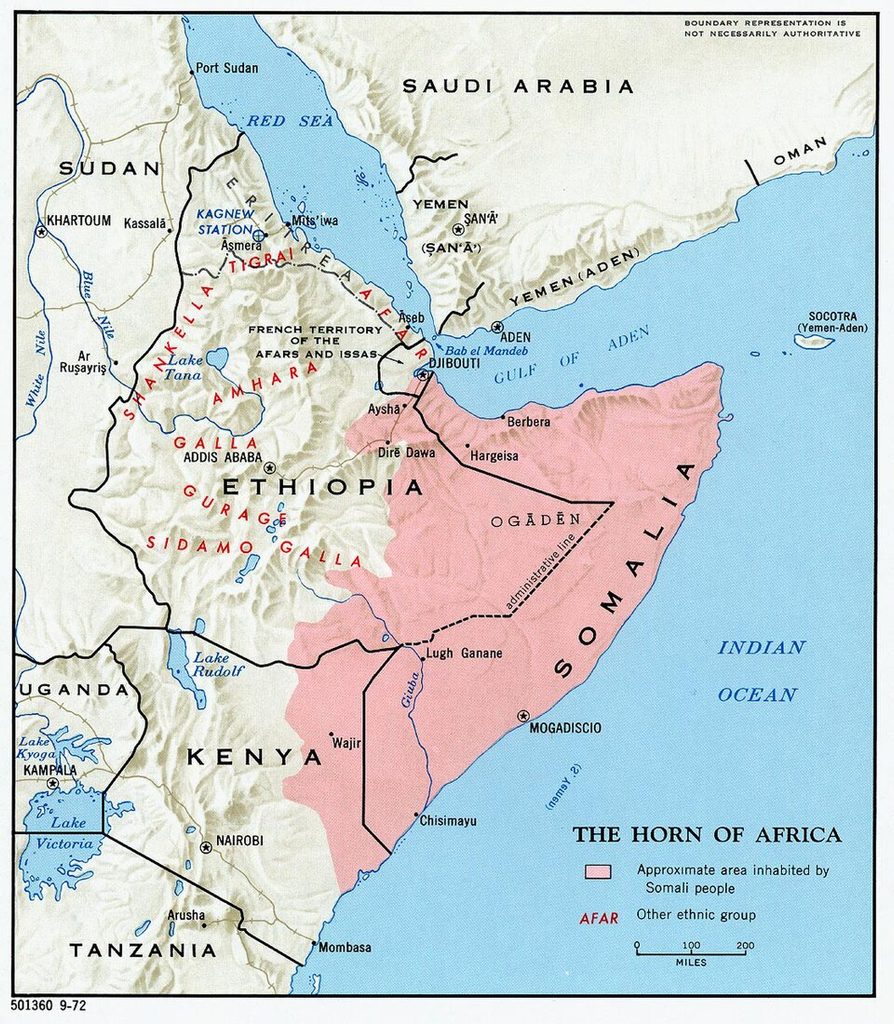
 Español
  English
  Italiano
  Français
  Deutsch
  Polski
  简体中文
简体中文