The Communication Style of Leo XIV: Communion, Presence, and Listening
Pope Leo XIV's communication style focuses on "discovering God within ourselves and in others," which reflects the Pope's deep Augustinian charism, according to various experts in Catholic communication.
OSV / Omnes-June 28, 2026-Reading time: 4minutes
– Gina Christian, Atlantic City, NJ (OSV News)
A few days ago, a roundtable discussion was held on the topic “Communicating Pope Leo XIV’s Vision: Truth, Technology, and Evangelization,» as part of the 2026 Catholic Media Conference, held June 16–19 in Atlantic City, New Jersey (United States).
The conference on June 18 was organized by the Catholic Media Association, based in Chicago, which promotes the development and networking of Catholic media professionals throughout North America and abroad.
Among the panelists were Paolo Ruffini, who served as prefect of the Vatican’s Dicastery for Communication until November; Carol Glatz, editor-in-chief of Catholic News Service in Rome; and Augustinian Father Arthur Purcaro, associate vice president for mission and ministry at Villanova University and a longtime friend of the Pope.
The debate was moderated by Kerry Weber, executive editor of America Media and president of the Catholic Media Association.
Sharing and Receiving
Glatz stated that, for Pope Leo XIV, “communication is about communion, about ‘being with,’” which is “an ontological necessity for a more complete understanding of the truth.”.
That truth is not accessible «without others,» but rather requires “a shared dialogue,” he added.
From Pope Leo’s perspective, Glatz said, “It’s also about what we’re creating. Who are we becoming through our words and our tools? Who are we helping others become through what we share and what we receive?”.
Memories of young Prevost eating with his mother and siblings
Father Purcaro recounted that Pope Leo—formerly Robert Prevost—had shared memories with him of when he was sitting at the table with his two brothers, while his mother warned them, “If you want to eat, you have to get along.”.
He described the Pope's vision of communication, based on the idea of «conversation» and the importance of "seeking together" to understand the truth.
Building a community is “a test, a process,” as well as “a moving picture,” said Father Purcaro.
“It’s a shared search for the truth, around the family table,” he said.
Pope Leo XIV speaks during a meeting with organizations that work with migrants at the port of Arguineguín, during his visit to the island of Gran Canaria, Spain, on June 11, 2026, as part of his apostolic trip to Spain from June 6 to 12. (Photo: OSV News/Borja Suárez, Reuters).
“Communion is in our DNA”
Weber reinforced that image, saying that «unity leads to sustenance.”.
Father Purcaro added that this perspective is “difficult for us to understand in our highly polarized culture.”.
But “communion is in our DNA,” he emphasized.
Pope Leo XIV believes that communication is a means of “discovering God in ourselves and in others,” he said.
Ruffini emphasized that “what we see in Pope Leo and in the way he communicates with the world is something that comes from the innermost part of who he was before becoming Pope… something spiritual, something true.”.
“He’s not acting,” Ruffini said.
He also pointed out that, while many in society—including leaders—choose to “hide behind a mask” out of fear when communicating, Pope Leo “is not communicating himself, but something transcendent”—that is, Jesus.
“We can learn from this,” said Ruffini.
Pope Leo XIV leads the Angelus prayer from a window of the Apostolic Palace in the Vatican on May 3, 2026. (Photo by OSV News/Mario Tomassetti, Vatican Media/Distributed via Reuters).
Open and Authentic Communication
Kerry Weber described the Pope's communication style as “very open and authentic.”.
After stating that he had known Bob (Pope Leo) for more than 40 years, Father Purcaro explained that Pope Leo’s serene and composed demeanor, as well as his habit of listening attentively to others, were shaped during his Augustinian ministry around the world, especially in Peru.
Father Purcaro said that those years of “building community” and enjoying the “privilege of being able to help people recognize what is good” came amid numerous challenges.
The Conflict with Shining Path
Among them was the conflict in Peru between 1980 and 1992 with the Maoist guerrilla group Shining Path, which left some 70,000 dead. The Augustinians “refused to abandon” those they served in Peru, said Father Purcaro, who, like the future pope, spent several years on mission in South America.
‘This is the right time for Pope Leo’
Ruffini, who will be succeeded in November by Montse Alvarado, president and chief operating officer of EWTN News, also highlighted Pope Leo’s concern for the common good, which has been threatened in an increasingly fragmented world.
Pope Leo, who “learned and continues to live as an Augustinian,” now “shares, as Pope,” the understanding that “everything is a gift, given to all” and meant to be shared, said Father Purcaro.
His fellow panelists agreed.
“This is the right moment for Pope Leo,” said Ruffini.
—————–
Gina Christian is a multimedia reporter for OSV News. Follow her on X @GinaJesseReina.
This information was originally published in English, and you can view it here
Everything that represents a “limitation”—illness, old age, vulnerability—can be seen as an opportunity for human beings to grow.
June 27, 2026-Reading time: 3minutes
When referring to certain interpretations of transhumanism and posthumanism, which propose overcoming the limits of our human condition through technology, the encyclical letter The current Pope states that we are faced with utopian (or even dystopian) ideologies, characterized by the glorification of the strong, with a dangerous eugenic tendency that runs counter to human dignity.
«It is one thing to integrate technologies into a human and relational vision; it is quite another to be guided by a vision that disregards limits and promises a purely technical “salvation”» (MH, 117).
Catholic doctrine teaches that limitations are inherent to our nature as creatures; added to these are the wound of original sin, which has separated us from God’s original plan, and the personal sins that subsequently accumulate within perverse social structures. Therefore, there will always be suffering of one kind or another, which we must, of course, combat with wisdom and concerted effort, but which we are not capable of completely overcoming.
In the context of the history of salvation, the Lord invites us to view these negative aspects as challenges and calls to recognize our limitations with humility and realism: in this way, we can learn from our mistakes and failings, overcome vain and harmful self-sufficiency, and grow in understanding, kindness, and wisdom.
«Everything that represents a “limitation”—disability, illness, old age, suffering, vulnerability—tends to be viewed primarily as a flaw that must be corrected, rather than as a space in which human beings mature and open themselves to relationships. Instead, we must remember that human beings do not flourish notwithstanding of the limit, but often through the limit. “A vision of reality in the light of faith helps us recognize what we call the ”contingency» of the things of this world. While, on the one hand, it is necessary to try to eliminate the suffering that marks human life, on the other hand, it is wise to acknowledge our inherent finitude” (MH, 118).
Mistakes and injustices—which so often painfully tear at the fabric of human existence—are, at their core, a call for us to reach out with solidarity and mercy to those who suffer, to lighten their burden to the best of our ability; likewise, life’s hardships contain an invitation to acknowledge the Lord’s sovereignty and to trust in his providential love, which often surpasses our limited understanding.
«It is precisely in our finitude that compassion, sincere concern for the needs of others, generosity that surprises even in the midst of darkness and failure, spiritual experience, and the worship of God find their place» (MH, 119).
The Promethean dream of eliminating all forms of suffering in this temporary life—even at the cost of discarding the weak and turning human beings into impersonal, programmed machines—must give way to the courage to use our imperfections and shortcomings to make us more human, precisely through love for our neighbor and faith in the good God, who transforms apparent defeats into fruits of life, for those who trust and love always win.
«Finitude, when embraced in truth, does not impoverish human beings, but rather opens them to the recognition of the face of God and of the other. Moreover, precisely because they experience their limitations—vulnerability, pain, failure—they can recognize their own dignity and that of others as inviolable. And in the very experience of these limits, they remain capable of sensing a brotherhood greater than themselves and of recognizing injustice as a scandal» (MH, 122).
In short, the Holy Father encourages us to see in the challenges posed by our fallible and frail nature an opportunity to better understand the truth and to love the good of others more deeply, so that we may unleash the potential hidden within the paradoxical human condition:
«Humanity—magnificent and wounded—must not be replaced or surpassed; it can embrace technological progress to alleviate suffering and open up new possibilities, provided it does not renounce what makes it who it is—that is, the capacity for relationship and love» (MH, 126).
The Pope with Pulitzer Prize Winners: Writing Is “An Act of Humanity”
Pulitzer Prize-winning writers, a Nobel Prize laureate, novelists, and authors from various countries have gathered at the Vatican with Leo XIV. Writing is “an act of humanity,” said the Pope, who urged people to read books as an antidote to “closed-mindedness” and as protection against fundamentalism and “ideological shortcuts.”.
OSV / Omnes-June 27, 2026-Reading time: 3minutes
– Courtney Mares, Vatican City, OSV News
“Writing, as you know, is an act of truth, of revelation, for it reveals who we are, what we believe in, and what we hope for—the world to which we aspire and the future of which we dream,” said Pope Leo XIV to Pulitzer Prize-winning writers, novelists, and authors from various countries during an audience held on June 24 at the Vatican.
In his address, the Holy Father added that “in this search for truth, we realize that truth is subtle, and it is revealed to us in our inner dialogue with God and in our open and respectful dialogue with our fellow human beings.”.
Among those in attendance was the Nobel laureate Jon Fosse, a Catholic convert and one of Norway’s most award-winning writers, along with Pulitzer Prize winners Elizabeth Strout and Marilynne Robinson. Jonathan Safran Foer, author of “Everything Is Illuminated,” and Irish author Colum McCann, who wrote “Let the Great World Spin,” winner of the U.S. National Book Award for Fiction, were also among those who met with the Pope.
León XIV: When we delve deeper into our humanity, we are not far from God
In his remarks to the authors, Pope Leo quoted C.S. Lewis’s observation that reading a literary text puts us in a position to “see through the eyes of others,” broadening our perspectives and fostering empathy.
“When we delve into the very depths of our humanity, we are not far from God; for there, in the midst of very human stories, God reveals himself,” said the Pope. .
Strout, whose novel *Olive Kitteridge* won the Pulitzer Prize for Fiction in 2009, described her meeting with the Pope as ‘absolutely charming.’.
She said she felt a deep connection to Pope Leo XIV’s description of writing as “an act of humanity,” calling it “absolutely true.”.
“Only through writing can we get inside another person’s mind,” Strout told OSV News. “That’s the only way to know what it feels like to be someone else. And in that way, we can feel much less alone.”.
Strout, on AI: It is essential that the written word come from a human mind
On the subject of artificial intelligence and the future of the written word, Strout emphasized: «I believe it is essential that the written word come from a human mind, because then it can also have a human soul.».
Lila Azam Zanganeh, a Paris-born writer of Iranian descent and global ambassador for ‘Libraries Without Borders,’ described Pope Leo as “a person full of grace and beauty” who made every writer feel his presence “in a profound and meaningful way.”.
“He’s an incredible listener,” she said.
Zanganeh added that he was particularly impressed by Pope Leo XIV's emphasis on the connection between Scripture and revelation.
“Words create reality,” he said. “Words connect with the spirit and, in their own way, move worlds.”.
“Parables, stories, and fables always tell us who we are and what we’re made of,” he added.
Creating Spaces of Freedom
The event was held to commemorate the centennial of the Holy See’s modern publishing house, Libreria Editrice Vaticana, established in 1926 as an independent entity separate from the Vatican Printing Office, which was founded by Pope Sixtus V in 1587.
Pope Leo XIV urged writers to “create spaces of freedom and authenticity within which divine grace can make the promise of comfort and peace resound.”.
“We need your imagination, your narrative creativity, and your lively thinking,” said the Pope. .
The Pope's Arguments in Defense of Printed Books
The audience with the authors was not the first time Pope Leo XIV had spoken out in defense of the written and printed word. A few weeks before publishing “Magnifica Humanitas,” the Pope urged people to read books as “an antidote to closed-mindedness.”.
“When we hold a book in our hands, ideally we encounter its author. But at the same time, we encounter those who have read it before us, or those who are reading it now or will read it in the future,” said Pope Leo.
“In the digital age, the physical nature of the book reminds us of the importance of thought, reflection, and study,” the Pope added. “Reading nourishes the mind; it helps cultivate a conscious and well-formed critical sense, protecting us from fundamentalism and ideological shortcuts.”.
———– Courtney Mares is Vatican editor for OSV News. Follow her on X @catholicourtney.
This information was originally published on OSV in English, and you can view it here. ———–
Love hurts because original sin severed our relationship with God, transforming mutual self-giving into mistrust and a desire to possess the other. However, pain is not inherent to love itself, but rather to living it apart from its divine source; as the heart is healed in God, love regains its original purpose as a gift and a place of rest.
In the previous article, we saw something profoundly beautiful: men and women are not called to compete, but to come together. Difference is not a war, but an opportunity for communion that arises from experiencing complementarity. But the questions remain: If we are made to love, why does love hurt?
These days, it’s very common to hear how an experience that seemed like love ultimately leaves you feeling empty, or how, after a glance that wasn’t entirely innocent, something hard to describe emerges: guilt. Unease. Shame. As if something inside were saying: “This is good, but it’s not what it should be.”.
A Wound at the Source
Genesis does not shy away from this experience. It explains it. It takes us back to the moment when everything falls apart: original sin. Because every sin breaks a relationship. And here, the most important one is broken: the relationship with God.
The problem begins when a different voice appears: the serpent plants a seed of doubt in the man's heart: “No, you will not die; it is just that God knows that on the day you eat from it, your eyes will be opened, and you will be like God in knowing good and evil.” (Gen 3:4–5). Therein lies the temptation. It is not merely a matter of disobeying a rule. It is beginning to view God with suspicion. Then, something decisive happens: man ceases to see everything as coming from God and wants to take possession of it. He no longer wants to live as a creature; he wants to “be like God.”.
In that seemingly small gesture, a profound rupture occurs. Man separates himself from the source that sustained his life. For his relationship with God was what held his entire being together. When that relationship is severed, man is left, so to speak, alone to face the weight of his own life. This is evident in the story: “I heard you making noise in the garden, and I was afraid because I was naked, so I hid.” (Gen. 3:10)
The same God who was once a loving presence is now perceived as a threat. Everything changes. Because once we no longer trust God, everything begins to feel uncertain. We no longer fully trust even ourselves, because we no longer know who we really are. Nor do we fully trust others, because fear becomes part of our relationships.
The Birth of Shame
That's when the shame sets in. “Their eyes were opened… and they realized they were naked” (Gen 3:7). The body did not change. What changed was the way of looking at it. Before, nakedness was a guarantee of a pure gaze between them. As St. John Paul II explained, man and woman lived in a state of original nakedness: the body revealed the person as a gift to the other in love. But when the relationship with God was broken, that gaze was lost.
Now, the other person is no longer perceived merely as someone to love, but also as someone from whom to protect oneself. That is why the need to shield oneself arises. In this sense, shame is not the problem. It is a sign. It reminds us that a person is worth more than an object. But it also reveals the wound: we want to love, but the rupture leads us to want to possess. We want to give ourselves fully, but we are afraid.
When love hurts… what’s going on?
So we return to the original question. Does love hurt? The truth is, no. Love, in and of itself, is always good.
What hurts is trying to live apart from God. As mentioned earlier, original sin was not merely a matter of disobeying a rule. It was severing love from its source.
To live love well means recognizing that it has a purpose. We don't invent it—we receive it. And when we live without that reference point, even with good intentions, our hearts lose their way.
When God Enters into Love
But here is where hope lies. The human heart is wounded, but it is not doomed. When we let God into our lives, something begins to change. And here is a very revealing truth: it is the Holy Spirit who truly unites people. It is He who makes it possible for love to be not just an emotion, but a bond. That is why tradition calls Him vinculum caritatis: the bond of love. When two people love one another according to God’s plan, when they seek the good of the other, God Himself enters into that relationship and sustains it.
Then love ceases to rely solely on its own strength, on those ever-changing emotions, and begins to lean on Someone greater. On that firm rock that the human heart seeks—often without realizing it—so that its loves will not crumble.
Learning to Love Again
Shame is not the end. It is the beginning. Because right there—where the wound appears—the story of redemption begins.
Christ does not come to eliminate the body that is now in a state of decline. He comes to heal the heart. As St. John Paul II taught, this is a true redemption of the heart—a transformation of it.
But for that to happen, it’s important that all of this lead us to concrete conclusions. If you’re in a relationship: Have you talked to God about it? Does the way you express your love allow God to dwell there? Do you help each other love better? And something similar happens in friendships: Do your friends bring you closer to God, and do you bring them closer to Him? Do they help you grow? All of this will help God dwell in our relationships.
Reflecting on these truths will also help us see the experience of shame not only as a reminder that something was broken, but also that something remains valuable—that true love is still possible. As St. John Paul II taught: authentic love never consists in using the other person, but in giving oneself to them.
Therefore, true love does not arise from mistrust or fear. It arises—as John Paul II insists—from the gift of God. And when God is able to dwell within a relationship, love gradually ceases to be a burden or a source of pain… and begins to resemble what it was created to be: a place where the human heart can rest and find happiness.
On the occasion of the opening of the Extraordinary City Council Meeting, to be held on June 26 and 27, the Leo XIV He presided over the working meetings and a Mass at the College of Cardinals.
Through its speech During the opening prayer and the homily, the Pontiff urged cardinals from around the world to build a synodal Church, address international conflicts through justice, and strengthen the proclamation of the Gospel.
Ecclesial Discernment
In his welcoming remarks, the Holy Father thanked the cardinals for their presence and reiterated the desire he expressed at the Consistory last January to «work together in the service of the Church» through «a dialogue that will help me in serving the mission of the entire Church.».
León XIV emphasized that communion is not a final outcome, but rather a «daily conversion» that is built «not so much through words and documents, but through concrete actions and attitudes that must be evident in our daily lives, including in the workplace.».
He also recalled that pastors are not «guardians of particular interests,» but rather «disciples and witnesses of the Kingdom of God, called to be, in Christ, the leaven of universal brotherhood.».
Thematic Sessions
To guide the proceedings, the Pope has proposed four interconnected thematic sessions:
Reflections on Today's World: An Invitation to Contemplate Reality Through the Eyes of Faith. Recalling his homily in the Plaza de Cibeles Speaking in Madrid on June 7, he recalled that «Jesus walks through the streets, crosses the squares, visits our neighborhoods, and dwells in the places of our daily lives—as the God who is close to us and walks with his people, as the Lord of history.».
The Culture of Power and the Civilization of Love: a space for discernment regarding realities marked by war, violence, and polarization. To this end, the Pontiff has proposed his encyclical “Magnifica humanitas”, expressing his interest in hearing how these passages are brought to life in the various local churches.
Building the Common Good: a session dedicated to exploring the Church’s contribution in the face of the temptations of fragmentation. Drawing on paragraph 86 of the aforementioned encyclical, the Holy Father has emphasized the importance of a synodal approach characterized by «transparency, evaluation, and shared responsibility» in decision-making.
Implementation of the Synod: a section to coordinate preliminary reflections. The Pope has clarified that «synodality is not primarily a set of procedures,» but rather «an attitude, an openness, a willingness to understand.» Furthermore, he has refuted the notion that this approach implies a diminishment of authority, clarifying that it helps us understand authority as a service aimed at «preserving communion, fostering the participation of all, and guiding our shared journey.».
Finally, Leo XIV has asked the cardinals for their «strong, explicit, and public» support, calling on them to show «freedom,» «frankness,» and «loyalty,» since «sincere counsel is always an act of communion.».
He also encouraged those present to work with conviction within the established groups, acknowledging that, although this is not the usual format for a consistory, it is part of the shared learning process of synodality.
The True Vine
During the Eucharistic celebration held at the tomb of St. Peter, as the Solemnity of Saints Peter and Paul approaches, the Pope outlined his homily centered on the Gospel image of the true vine. Drawing on the Holy Scriptures, the Pontiff has offered three fundamental guidelines to direct the deliberations of the College of Cardinals:
True Freedom: Leo XIV explained that a relationship with Jesus Christ frees us from sin and fear, inspiring the bishops as successors of the apostles. He emphasized that «the living Church is the Church that believes» through the gift of the Holy Spirit, and he urged everyone to bear witness to this faith with enthusiasm among all nations.
The Key to Peace: In the face of the grave wounds caused by international tensions and conflicts, the Holy Father has condemned the use of force: «War is never worthy of man, and it will never be blessed by God,» noting that intelligence and will must prevail over high-tech weapons. He has defined peace as a duty of justice stemming from a single human family.
The timeless truths today: The Pope has noted that rapid cultural changes require us to express «the timeless truths in a language that allows us to perceive their enduring newness,» citing Pope Francis’s apostolic exhortation *Evangelii gaudium*. Along these lines, he explained that both synodality and collegiality are expressions of Christian fraternity.
The Pontiff concluded his remarks by reiterating that the assistance requested from the cardinals stems from an attitude of service and supplication, and he entrusted the proceedings to the intercession of Saints Peter and Paul.
A few days after Pope Leo XIV received in Rome all the national directors of the Pontifical Mission Societies gathered for their General Assembly, José María Calderón, national director of the Pontifical Mission Societies in Spain, presented the 2025 Annual Report, highlighting the following statistic: Spain is the second-largest contributor to the institution worldwide, trailing only the United States. The Pontifical Mission Societies (PMS) operates in four areas: awareness-raising, training, support for missionaries, and financial assistance, and has nearly 9,800 Spanish missionaries on its roster, of whom 5,335 are currently active.
One of them is Father Alejandro Canales, a Comboni missionary who has been in Chad for 48 years: “Wherever there is need, I will be there,” was his motto when he began his missionary work. He arrived in the African country in 1978, at the age of 30, and found a situation marked by insecurity, a fledgling Church, and tiny communities. His first priority was to train catechists: “There can be no Christian community without someone to sustain it.” Over time, the work flourished: the four dioceses that existed then have grown to eight today, with 150 major seminarians and a local clergy that is becoming increasingly established.
During this past Easter alone, the diocese where Canales works baptized 3,500 adults and young people. We need priestly vocations to accompany those who are baptized, and a rigorous catechumenate—lasting four years—to prepare them. “The proclamation of the Gospel brings about social transformation,” he affirmed.
The presentation also took place during a commemorative year: in 1926, Pope Pius XI established World Mission Sunday. The acronym “Domund” was coined by the first national director of the Pontifical Mission Societies (OMS) in Spain, the priest from Vitoria, Ángel Sagarminaga, whose centennial is also being celebrated this year.
In addition to other statistical data, regarding training, Calderón highlighted the 78th Missionology Week held in Burgos and a Zoom course on missionology that brought together 140 students from around the world, including a Spanish nun in Papua New Guinea who would get up at three in the morning to attend classes.
The authorInmaculada Sancho
Subscribe to Omnes magazine and enjoy exclusive content for subscribers. You will have access to all Omnes
A video of St. Josemaría that is very relevant to our situation
Today, June 26, is the feast day of St. Josemaría, and there's a video that can help many people live their lives with less stress and in a better mood.
There is one thing everyone agrees on: we are living in an era of deep social and ideological polarization. This rift in our society has once again come to the forefront following the recent trip by León XIV to Spain, where he issued a serious warning about the risks of social tension and the urgent need to build bridges in an increasingly fragmented society.
A student shares his faith experience after a study trip to New York, a city that surprises where you least expect it.
June 26, 2026-Reading time: 3minutes
A few weeks ago I traveled to New York for the first time. The dynamism of New York captivated me. An Egyptian hot dogs he would tell me:
-You feel part of New York because we all come from everywhere.
Probably because it is such a busy city, I was thrilled to find St. Patrick's Cathedral unexpectedly among so many skyscrapers. It reminded me of the welcoming encounter produced by the cathedral in Granada. St. Patrick's is opposite Rockefeller Center and its famous Atlas holding the world: while he struggles to carry the whole world on his shoulders, behind the high altar of St. Patrick's you find, discreetly, a Baby Jesus holding the whole world in his hands.
In the mornings we had finance classes and, after lunch, we visited several major banks. Although the «transactional» culture of Manhattan is very widespread, I enjoyed meeting professionals who are aware that work is not everything. During those days I had the good fortune to visit St. Patrick's Child several times. The image gave me food for thought:
«What does it profit a man to gain the whole world if he loses his soul?» Can one really be happy in a city like this?
As I was leaving Norman Foster's impressive skyscraper at 270 Park Avenue, home of J.P. Morgan, one evening, I remembered that I wanted to go to Mass. It was almost 6:30 p.m. Accustomed to Spanish schedules, I leisurely looked for nearby churches. The last ones had started at 17:30. After a thorough analysis of the Mass Schedule application -very good, by the way-, I found one at 19:00, twenty minutes away by subway. Without thinking, I went to the subway and made sure of the correct direction of the train.
As I arrived at my stop and stepped out onto the street, a group of locals looked at me with surprise. At that moment I realized that I was not in millionaire Manhattan, but in Harlem: the historic epicenter of African-American culture. One of the group said to me something like:
-Nice jacket, young man.
He was referring to the jacket he was wearing, which was so out of place in that neighborhood. I pretended to be crazy and went towards the church, which was already ringing the quarters in the distance. On the street I felt observed and less in agreement with the Egyptian's theory that anyone there feels part of the city.
As I entered the church, I was a little tense. I sat in the back and listened to singing in Spanish. The blessing with the Blessed Sacrament was taking place. I did not understand anything. When it was over, several ladies were looking at me from the front and I approached one of them who was organizing the whole thing. She was frowning until I got up the courage to tell her:
-Good afternoon! There is mass now, isn't there?
At that moment, he smiled at me and said in a resounding, energetic voice:
-Praise the Lamb! He brought you to this, our St. Joseph's community in Harlem, and now you are one of us. -I didn't know what answer to give. Well, you'll help at Mass, okay? It's been a long time since we've had an altar boy this young.
Clearly I could not say no after such a welcome. The mass was in Spanish and very beautiful. The women, almost all Latinas, sang in unison and it was exciting to hear them. It was Thursday and the homily was impressive. I wish Martin Luther King had that kind of oratory. The women responded with amens and I dared to whisper «so be it» only at the end. The priest ended the Eucharist by exclaiming:
-San José!
While the rest answered:
-Pray for us and increase our faith!
They carried, like the Child of St. Patrick, the world in their humble hands. They, for free, made me feel at home. They convinced me that yes, you can be happy in New York.
The authorJosé María Maldonado Casado
4th year student of Law and Economics.
Subscribe to Omnes magazine and enjoy exclusive content for subscribers. You will have access to all Omnes
The St. Josemaría Historical Institute was established shortly after St. Josemaría’s canonization in 2002, and work began immediately on adapting and organizing the documents from the General Archives of the Prelature of Opus Dei so that they could form the Institute’s archives. Finally, the journal “Studia et Documenta” was founded as a forum for presenting and publishing the research papers that were being written.
Studia et Documenta
The Institute designed and published a publication plan for the critical editions of St. Josemaría’s works and also outlined the criteria that the various authors would follow in carrying out this work. Almost 25 years have passed since then, and a rich array of monographs, complete works, nearly 25 volumes of the Research Journal, and more is now beginning to emerge.
In 2028, the journal *Studia et Documenta* will examine the development of the Work during its founding phase; in 2029, it will explore the history of the first corporate works; and in 2030, it will feature several regional histories.
Recent Publications
Just recently, Almuzara published a monograph on the historiography of Opus Dei, in which four professors from various universities have examined everything that has been published about St. Josemaría and the Prelature of Opus Dei and offer an interesting assessment.
In addition, studies continue to be published on prominent figures in Opus Dei, such as Hermann Steinkamp, the early days of Opus Dei in the Netherlands, and monographs on its beginnings in other countries.
With regard to the causes for canonization, monographs have recently been published by Pedro Ballester, whose cause for beatification was opened this year in England; two books have also been published about the Alvira couple; another is in the works about the marriage of the Venerable Ernesto Cofiño and his wife Clemencia Somoyoa, from Guatemala, etc.
Upcoming Publications
In two years, a scholarly biography of St. Josemaría will be published, which will provide a historically accurate account of his life and his contribution to spirituality and the advancement of evangelization in civil society.
As is well known, part of the Vatican Archives relating to the pontificate of Pius XII have already been opened; therefore, research papers may be submitted on the activities of the faithful of Opus Dei, the development of the legal framework, the relations of the General Council of Opus Dei with various regions of the Work, and to study the periodic reports that Opus Dei submitted to the Holy See, etc.
Professor Julio Montero, already known for his extensive career as a historian of communication at the Complutense University and author of a monograph on the early work of Opus Dei with women in mid-20th-century Spain, will publish in the coming months a study on the origins of the Tajamar Institute in Vallecas, Madrid, and, later, a historical essay on Opus Dei.
Venezuela's crisis is galvanizing international support, including from China
The violent earthquakes measuring 7.2 and 7.5 on the Richter scale in Venezuela, which have left at least 188 dead and more than 1,500 missing as of press time, have prompted expressions of condolences and international solidarity, from the United States to China. The Church is mobilizing, and Leo XIV is sending humanitarian aid.
Venezuela is in shock. La Guaira, which has been declared a “disaster area,” was the region hardest hit by the 7.5-magnitude earthquake that struck Venezuela on the afternoon of June 24.
This was stated by Acting President Delcy Rodríguez when she declared a national state of emergency following the two violent earthquakes, measuring 7.2 and 7.5 on the Richter scale, that struck the northwest of the country. The president has requested that doctors, nurses, and healthcare personnel be deployed to hospitals and health centers to treat the injured.
The U.S. Geological Survey reported that the largest earthquake, measuring 7.5, occurred at a depth of approximately 10 kilometers. Dozens of buildings have collapsed, and numerous search operations are underway to find survivors under the rubble, with requests for heavy machinery from the private sector to help locate trapped citizens.
There has also been extensive damage in the capital, Caracas, where firefighters and police are working in the affected areas.
More emergency crews are working at the site where a building collapsed in Caracas, Venezuela, on June 24, 2026, following the 7.2- and 7.5-magnitude earthquakes that struck the country (Photo: OSV News/Gaby Oraa, Reuters).
Ecollapsed buildings, power outages, damage to infrastructure…
The first images from yesterday, just before dusk in Venezuela, showed collapsed buildings, power outages, and disruptions to basic services and key infrastructure, including the Simón Bolívar International Airport in Maiquetía. The tremors were also felt in other countries in the region, such as Colombia and Brazil.
Acting President Delcy Rodríguez provided a second preliminary assessment on Thursday, June 25, confirming at least 164 deaths and more than 970 people missing; by the end of the day, those figures had risen to at least 188 deaths and more than 1,500 people missing.
During a telephone interview with the state-run channel Venezolana de Televisión (VTV), Rodríguez underlined that it is a priority to focus search and rescue efforts on that region of the central coast, and reported that at least 30 replies in the last few hours.
Meanwhile, the acting president reported that 10 buildings collapsed in the city of Caracas. To address the emergency in both locations, authorities ordered the immediate deployment and transfer of rescue workers and specialized personnel from other regions of the country.
Support from the United States and countries in the region
According to Venezuelan media and international news agencies, the first country to announce concrete aid measures was the United States. The State Department reported that it was in contact with Venezuelan authorities and had activated a disaster response team to coordinate the deployment of search-and-rescue teams, medical supplies, and humanitarian aid.
In Europe, the European Union activated the European Civil Protection Mechanism following a formal request from Caracas. Within that framework, Spain, Italy, and the Czech Republic expressed their willingness to participate in relief and rescue efforts.
There have also been expressions of support in Latin America, for example, from Ecuador, Chile, and El Salvador. According to various reports, other countries in the region, including Mexico, Peru, and Bolivia, have also issued statements of solidarity and cooperation.
China's willingness to help, Russia's condolences
Outside the Americas, China expressed its condolences to the Venezuelan people and stated that it is willing to provide “all the assistance it can,” in accordance with the needs identified by the authorities in Caracas, the BBC reported. The Chinese executive He also noted that he is in contact with his country's diplomatic mission in the country to monitor how the situation develops.
Some reports indicate that Venezuelan authorities are awaiting the arrival of rescue workers and support personnel from the United States, Mexico, El Salvador, Qatar, and the Dominican Republic. This suggests that these countries have moved beyond statements of solidarity to preparing concrete operational assistance.
For his part, Russian President Vladimir Putin sent a message to Venezuelan Interim President Delcy Rodríguez, expressing his condolences for the victims and his solidarity with the Venezuelan people in the wake of the earthquakes. However, it does not appear that any announcement of material aid has been made.
The Church is taking action
As expected, one of the first messages posted on social media was from Venezuelan Cardinal Baltazar Porras, who very quickly sent a “Message of Comfort and Hope.” “I lift up my prayers to the Most High for the protection of all families, especially those in the areas where the earthquake was felt most strongly or where property damage has been reported,” the cardinal said, among other things, on Instagram.
Immediately upon his return from a visit to the hardest-hit area, the Archbishop of Caracas, Monsignor Raúl Biord Castillo, reported that “many” parishes “have suffered serious structural damage,” in addition to the cathedral and about twelve churches that have been damaged, according to Vatican News.
“Many parishes have taken people in so they could spend the night on their premises. We have already set up a solidarity network through the parish Caritas organizations,» explained the Salesian prelate.
People receive medical care at a field hospital in La Guaira, Venezuela, on June 24, 2026, following the 7.2- and 7.5-magnitude earthquakes that struck the country. (Photo: OSV News/Maxwell Briceno, Reuters).
The archbishop of Caracas also emphasized that the death toll could have been much higher, but that “thank God it was a holiday. If it had been a weekday, with schools, offices, and stores open, the number of victims would have been much higher.”.
Help from Pope Leo XIV
On the eve of the Consistory, the news was announced in the early afternoon of June 25. Leo XIV, through the Office of the Papal Almoner, has sent Initial aid to Venezuela, which has been hit by strong earthquakes. The amount allocated by the Pope currently stands at 100,000 euros, as agreed following discussions with the nuncio to Venezuela, Monsignor Alberto Ortega Martín, titular archbishop of Midila, and with the archbishop of Caracas, Monsignor Raúl Biord Castillo.
One of the areas devastated by the earthquakes in Venezuela (@Spanish Episcopal Conference).
La Guaira: No Electricity—Everyone Is Affected
In the Diocese of La Guaira, Bishop Pablo Modesto González Pérez has stated: “We are without electricity, and we have all been affected. Many walls have collapsed at the seminary.” Monsignor Pérez added that several churches have sustained significant damage.
This morning, Misiones Salesianas reported “devastation and a figure—still very preliminary and provisional—of the injured, deceased, and missing.” The Salesians of Venezuela, who, according to initial reports, have suffered only property damage at many of their locations, remain alongside the local population during this serious humanitarian emergency.
“We are doing what we have always done in times of crisis: opening our doors, standing by those who have lost everything, and bringing hope where fear has taken hold,” said Marco Mencaglia, project director at Aid to the Church in Need (ACN) International.
Spanish Bishops Stand in Solidarity with Venezuela's Suffering. Aid from Caritas
On behalf of the Spanish bishops, the president of the Spanish Episcopal Conference, Bishop Luis Argüello sent his condolences yesterday to Bishop Jesús González de Zarate, president of the Venezuelan Episcopal Conference.
“We join you in spirit in your prayers for the eternal rest of the deceased, and we implore divine comfort for their families and a speedy recovery,” he emphasized in the letter sent to his Venezuelan counterpart.
Damage caused by earthquakes at the San Pedro Apóstol Diocesan Seminary in La Guaira. (ACN).
At the same time, Spanish Caritas Caritas has allocated 300,000 euros to assist the victims of the earthquakes in Venezuela, according to a statement released around 7:00 p.m. yesterday.
Given the scale of the disaster caused by the two earthquakes, the statement says, Caritas Spain has launched an emergency campaign to respond to Caritas Venezuela’s request for support.
It so happens that Cáritas Española has just completed training for 40 leaders as part of the Natural Disaster Prevention and Mitigation Project in La Guaira.
For more information about the Caritas relief campaign, please visit here the bank accounts set up for the emergency caused by the earthquakes.
Father Ángel Ortega transformed the cold hallways of Peru's high-level public institutions into spaces of prayer, comfort, and hope.
P. Manuel Tamayo-June 25, 2026-Reading time: 4minutes
In Peru, popular piety is widespread throughout the country. There are hundreds of devotions, each with its own festivals and processions. One could say that every town has its own patron saint, and the feast day is celebrated in grand style. When we look at the Church in Peru today, we see numerous dioceses, prelatures, and apostolic vicariates spread throughout the country. In every place, popular piety is quite strong. Pope Francis once said that Peru was a “land of saints.” In every city and every town, there is some form of devotion, and the feast day is celebrated in grand style.
In Lima, the procession of the Señor de los Milagros draws millions of people in October; in Puno, the festival of the Virgin of Candelaria; in Cuzco, the Corpus Christi procession; in Arequipa, the Virgin of Chapi; in Ayacucho, Holy Week; in Piura, the Lord of the Captive; in Chiclayo, the Divino Niño de Eten; in Ica, the Señor de Luren; and so on—in many other provinces throughout the country, there is a patron saint or a deeply rooted devotion.
In addition, in the various ecclesiastical districts, catechism is taught, the faithful are prepared to receive the sacraments, and they are helped to become good Christians.
Separation of Church and State and Mutual Cooperation
In contrast, state authorities seek to emphasize the secular nature of their institutions, which, logically, do not correspond to a theocratic government. They have not gone so far as to ban crucifixes or remove any Christian symbols from state agencies. In these institutions, we can find images or paintings of the Virgin Mary or a Peruvian saint. Now, photographs of Pope Leo XIV have also become more common, simply because he is Peruvian.
Legally speaking, there is a clear and healthy separation between the Church and the State, but there is also an agreement under which the Peruvian State recognizes and values the Catholic Church. Article 1 of the agreement reads as follows: “The Catholic Church in Peru enjoys full independence and autonomy. Furthermore, in recognition of the important role it has played in the historical, cultural, and moral development of the country, the Church receives from the State the necessary support to better carry out its service to the national community.”.
Relations with all branches of government have always been very good and cordial. Whenever there is an important celebration, the authorities never fail to offer their support. Everything is very well organized; celebrations and processions can take place, along with the corresponding Masses, which are included in the calendars. Religious life is evident throughout the country.
A concern and ecclesiastical permission
Father Ángel Ortega, now in his later years and with a wealth of experience, was part of the first class of priests ordained in Yauyos and moved to the Diocese of Lima a few years ago.
In his new assignment, he noticed that government agencies did not have a chaplain. Concerned about this, he approached the bishop of Lima to ask for permission to minister to the judges of the judiciary—which was, at that time, the group he had the closest access to. The bishop granted him permission, and when he arrived at the Palace of Justice, the judges were delighted and told him that for years they had hoped to have a chapel, because many people who were suffering from serious problems— due to the cases being heard in court, and a chapel could help them receive the comfort from God or the Virgin Mary that they urgently needed.
The Origins of the Judicial Chapel
Father Ángel began taking steps to set up the chapel. First, he found the ideal location, next to the entrance hallway where many people passed by and could see that there was a chapel where they could go in and pray. He immediately asked a priest who was also an architect for help; the priest designed the altarpiece and helped him find everything needed to create a dignified and elegant space, complete with a tabernacle, so that the Lord would always be present. Officials from that branch of government collaborated on the project. Finally, the chapel was installed, to everyone’s delight.
The Cardinal of Lima and the Chief Justice of the Supreme Court attended the dedication ceremony. Cardinal Juan Luis Cipriani consecrated the chapel. The officials had previously signed a document of recognition and authorization.
Celebration at the Judiciary Chapel in Lima.
Expansion of the initiative to the provinces
Now there is daily Mass in the chapel, and many people come in throughout the day to pray. Father Ángel’s schedule includes weddings, funerals, and visits to the sick. The chapel at the Palace of Justice in Lima is now an important place that has greatly contributed to the spiritual life of the people and of many judicial officials.
Father Ángel is a man of action and initiative; he knows how to find the resources needed for the projects he undertakes. He decided to extend this initiative to the courthouses in Peru’s provinces. With that vision in mind, he began traveling. And now, with the help and support of the authorities, he has succeeded in building several chapels in those government institutions.
Father Ángel knows that in Peru, when a priest sets out to launch a project for the glory of God and the good of souls, that project succeeds. That is why Father Ángel did not hold back; he approached the Public Prosecutor’s Office and the Congress of the Republic, and there, too, he was able to build chapels, which are now fully operational. Father Ángel Ortega has earned prestige and fame among judges and members of Congress, and he is now known as the angel of judges and government officials.
Julio Borges, Venezuelan philosopher: “Politics is service, not an instrument of power”
Can democracy survive without moral foundations? The CEU-María Cristina Summer Courses will explore the relationship between Christianity and politics on July 13, 14, and 15, 2026, in a course co-directed by Venezuelan lawyer and philosopher Julio Borges, who spoke with Omnes.
Francisco Otamendi-June 25, 2026-Reading time: 4minutes
What role can the Christian tradition play in public life today? Are we witnessing a crisis of democracies? From an academic, historical, and contemporary perspective, the CEU-María Cristina Summer Courses will explore the topic “Christianity and Politics. Crisis and Continuity of a Spiritual Heritage.”.
Pope course It is directed by Julio Borges and Juan Carlos Valderrama, and the opening lecture will be given by Higinio Marín, president of CEU Cardenal Herrera University. Among the events is a discussion between the editor-in-chief of *El Debate*, Bieito Rubido, and journalism professor José Francisco Serrano Oceja.
Julio Borges (Caracas, 1969), a Venezuelan lawyer and philosopher who lives in Spain, served as president of the National Assembly of Venezuela and as Juan Guaidó’s presidential commissioner for foreign affairs. Here are his answers to Omnes.
Why did you decide to offer a course on Christianity and politics?
– Because we are living in a historic moment in which many people sense that our democracies are undergoing a profound crisis, but do not always understand its causes. We believe that behind many political problems there are also anthropological, cultural, and spiritual questions.
This course aims precisely to reflect on the contribution that Christianity has made to such fundamental concepts as human dignity, freedom, justice, and the common good. It is not about looking back on the past with nostalgia, but rather about asking ourselves which elements of that heritage remain indispensable for building more humane and free societies.
There appears to be a crisis surrounding the ideals bequeathed by medieval Christianity.
– This is largely because we enjoy many of its fruits without remembering its roots. Ideas that we now take for granted—such as the equality of all people, human rights, or the value of every human life—emerged in a cultural context deeply shaped by Christianity. When a civilization loses sight of the foundations that sustain it, it runs the risk of weakening. This course aims precisely to foster a thoughtful conversation about those roots and about whether it is possible to preserve the fruits when the sources that nourished them are forgotten.
The popes—including Leo XIV—encourage Christians and Catholics to participate in politics. I don't know if we pay much attention to them.
- Politics is not merely about managing resources or the struggle for power. At its core, politics answers a very human question: how we live together and what kind of society we want to build. The Christian tradition offers a vision of the person, of freedom, and of solidarity that can greatly enrich public life. Participating in politics from a faith-based perspective does not mean imposing beliefs, but rather placing a particular understanding of human dignity and the common good at the service of all.
Very briefly. In your opinion, what principles should a Catholic politician uphold?
– I believe there are several fundamental pillars: the inviolable dignity of every human person, the defense of life, freedom of religion and conscience, the protection of the family, the pursuit of social justice, and a special concern for the most vulnerable. But in addition to these principles, there is one essential attitude: understanding politics as a service and not as an instrument of personal power. Without that moral disposition, even the best ideas end up falling apart.
You say it's important to explore the relationship between truth and the limits of power. Why?
– Because when those in power fail to recognize that there is a truth that transcends them, they run the risk of becoming arbitrary. The great political tragedies of the 20th century taught us precisely that. A healthy democracy needs institutions, laws, and citizens capable of remembering that not everything that is legal is necessarily just. The quest for truth is not a philosophical luxury: it is a prerequisite for freedom and for democratic coexistence.
Is it hard to stand up for the truth these days?
– Today, there is strong cultural pressure to reduce many human issues to slogans, labels, or simplified narratives. Defending the truth often requires going against the grain, embracing debate, and resisting the temptation to conform to what is politically acceptable. However, history shows that societies move forward thanks to people capable of upholding deep convictions with respect, composure, and courage. That is precisely why we believe this course can be a valuable opportunity to reflect on these challenges from a rigorous intellectual perspective that is open to dialogue.
Earlier, you referred to authority as a service. Tell me more about that.
– Authority, properly understood, is not the right to command for the sake of commanding, but the responsibility to guide for the good of others. Legitimate authority is not justified by force or by the fear it inspires, but by its ability to lead a community toward justice, peace, and the common good. For this reason, the best authority does not humiliate or crush; rather, it guides, protects, corrects, and serves. In this sense, leading is a burden rather than a privilege.
When we say that authority is service, we mean to affirm that those who hold public office are not above society, but rather placed at its helm to care for it. Authority is degraded when it becomes domination, propaganda, or self-serving. And it is ennobled when those in authority understand that their power has limits, that they must be accountable, and that their mission is to help others live with greater freedom, justice, and dignity.
We're wrapping up. A word about the branches of government in democracies: the legislative, executive, and judicial branches.
– Checks and balances exist because all power tends to expand, and if left unchecked, it eventually leads to abuse. That is why modern democracies distribute power among three major branches: the legislative branch makes laws, the executive branch governs and administers, and the judicial branch interprets and applies the law, while also ensuring that no one is above the law. The underlying idea is very simple: no one should be able to rule alone.
This does not mean that the branches of government should constantly be at odds with one another, but rather that they should maintain a balance. When they function properly, each branch fulfills its role while keeping the others in check. This is how citizens’ freedom is protected.
In the constitutions of countries—in Europe, in the Americas, everywhere—do you get the impression that executive power, generally speaking, is moderate or extensive?
– Generally speaking, the executive branch tends to carry a great deal of weight in modern constitutions, because governing requires decision-making, coordination, and speed. The executive branch oversees the administration, security, foreign policy, a large part of legislative initiative, and, in many cases, the budget. That is why it gives the impression—which is largely correct—of being the most visible and powerful branch of government. But precisely because it is so powerful, it needs clearer limits.
We continue our reading from the Gospel of Matthew, and today we are presented with the conditions for being worthy of Christ. Jesus says to his apostles: “”Whoever loves their father or mother more than me is not worthy of me; whoever loves their son or daughter more than me is not worthy of me; and whoever does not take up their cross and follow me is not worthy of me.”.
One recalls the question the bishop asks during the ordination rite, before ordaining the candidates: “Do you think they are worthy?”, “Do you know if they’re worthy?””. It is a solemn and serious question, not only for those preparing for the priesthood, but for all who wish to follow Christ.
Are we truly worthy of Christ? Can anyone truly be worthy of Him? And what does it mean to be worthy of Christ? To be worthy of Christ means to love Him above all people and all things. It means being willing to take up our cross and follow Him wherever He leads us.
This dignity involves the paradox of both cost and reward. The cost is everything, and the reward is everything. We are called to give everything in order to gain everything. Jesus says: “Whoever finds his life will lose it, and whoever loses his life for my sake will find it".
At first glance, this seems contradictory. In everyday life, losing and finding are opposites: when something is lost, it is no longer found; when it is found, it is no longer lost. But in our relationship with God, the opposite is true. When we lose ourselves for Christ’s sake, when we give ourselves completely to Him, that is when we truly discover who we are. Only in Christ do we fully find ourselves. That is the Christian paradox.
This same paradox of giving and receiving is also expressed through the theme of hospitality, which is present in both the first reading and the Gospel. We are called both to give generously and to receive with gratitude. In the Gospel, Jesus says to his disciples: “Whoever welcomes you welcomes me, and whoever welcomes me welcomes the one who sent me.".
These words are beautifully illustrated in the first reading. A wealthy woman from Shunem welcomed the prophet Elisha into her home. In gratitude for her hospitality, Elisha promised her that she would have a son, and indeed she gave birth to one the following year. Later, when the child died suddenly, Elisha brought him back to life. This woman’s generosity was richly rewarded. Through her hospitality and openness to God’s prophet, she became worthy of God’s blessing.
To be worthy of Christ, then, means to live with complete generosity, giving ourselves entirely to God. And every time we give ourselves to the Lord, we discover that He never falls short in generosity.
The Liturgy of the Word and the Eucharist are a single act of worship, the Pope emphasizes
León XIV stated today that the Liturgy of the Word and the Eucharistic Liturgy “are so closely united that they constitute a single act of worship.” He encouraged greater participation in Mass during the holidays and said that visiting the tombs of the Apostles should strengthen fraternal communion and the Church’s evangelizing mission.
Francisco Otamendi-June 24, 2026-Reading time: 3minutes
During Wednesday's audience, Pope Leo continued his catechesis on the documents of the Second Vatican Council, focusing in particular on the Constitution *Sacrosanctum Concilium* (SC) on the Liturgy.
When St. Augustine seeks to explain the mystery of the Body of Christ to the newly baptized, he draws on the passage from St. Paul that we have just heard: “You are the body of Christ, and each one of you is a part of it” (1 Cor 12:27), the Holy Father said.
By participating in the Eucharist "We are invited to listen to the Word of God and to be nourished at the Lord’s table, where He Himself offers Himself to the Father," emphasized Leo XIV in his catechesis on the Audience.
“We become what we receive”
“These two parts of the Mass—the Liturgy of the Word and the Liturgy of the Eucharist—are so closely united that they constitute a single act of worship” (SC, 56), he stated.
“By receiving Him in His Word and in the Eucharist, we become what we receive. We become the Body whose Head is the risen Christ, seated at the right hand of the Father (cf. Col 1:18), who prepares a place for us in heaven (cf. Jn 14:3): the Eucharist is thus the sacrament of the Kingdom to come. It is the Bread for the journey, which leads us toward our heavenly homeland, until that blessed day when «God will be all in all» (1 Cor 15:28).”.
The Eucharist: A Force for Unity, an Antidote to Division
On the Solemnity of the The Nativity of St. John the Baptist, the Pontiff recalled that “by uniting us to Christ, the Eucharist teaches us to adopt the way of life of the Lord Jesus himself, marked by the free gift of himself.”.
”This gift thus draws us into the dynamic of unity, which offers a powerful antidote to the forces of division that threaten our world, our communities, our families, and our hearts (cf. SC, 47),",
Practical Tips for Preparing for Mass Before the Holidays
In his remarks to pilgrims speaking various languages, the Pope urged them, “Do not neglect your preparation for Mass: inwardly, through frequent confession, and in your surroundings, by silencing the noises that prevent us from hearing the Word of God” (Portuguese).
And he spoke to the Poles—and to everyone in St. Peter's Square on this hot morning, with temperatures in Rome reaching 35 degrees at 10:00 a.m.—about vacations.
"Vacations are a time for rest and for seeking the signs of God in the beauty of creation. ”Take advantage of this time to participate more fully in Holy Mass, meditate on the Word of God, go on spiritual retreats, make pilgrimages, and spend time with your loved ones,” the Pontiff urged.
For young people, to help them discern their vocation
“Let us also pray for young people, that they may choose their high school and college wisely and discern their vocation with prudence,” the Pope said.
At the end, before reciting the Our Father and imparting the blessing, he greeted “the faithful from the many parishes present here despite the heat of these past few days,” and encouraged them, saying, “May this visit to the tombs of the Apostles (the Church celebrates the feast of Saints Peter and Paul on the 29th) strengthen your fraternal communion and awaken in each of you a willingness to place yourselves at the service of the Church’s evangelizing mission.”.
Priests of the Neocatechumenal Way, St. John the Baptist
The Successor of Peter also extended a “warm welcome to the priests of the Neocatechumenal Way, from various countries: ”I hope that the daily offering of the Eucharistic sacrifice will be a source of support and strength for you in your ministry to the People of God,” he told them.
In closing, he recalled today’s feast of St. John the Baptist, which he had also mentioned in his greeting to the French-speaking pilgrims and those speaking other languages.
“Finally, my thoughts turn to young people, the sick, and newlyweds; today we celebrate the Solemnity of the Nativity of Saint John the Baptist, who prepared the way for Christ: may he help you rediscover your baptismal vocation so that you may be, everywhere, joyful heralds of the Kingdom of God. My blessing to all!”.
This morning, the Standing Commission of the Spanish Episcopal Conference (CEE) appointed Luis Ayala Cañón, a professor of economics, as the new president of Caritas Spain. The appointment was made at the recommendation of the bishops of the Episcopal Commission for Social Pastoral Care and Human Development.
With this appointment, the new president will also take on the leadership of the Foundation FOESSA (Promotion of Social Studies and Applied Sociology).
«I view this responsibility as a service.»
Following the announcement of his appointment, Luis Ayala expressed his deep gratitude for the trust placed in him by the bishops and the General Council of Caritas.
«I accept this role with a great sense of responsibility and, above all, as a service to the diocesan Caritas organizations, the general services, the Episcopal Conference, and society at large,» he said.
The president-elect has emphasized his commitment to working toward the empowerment of the most vulnerable people and the defense of their rights, expressing his appreciation for the support of the organization’s network of people: «I am deeply grateful for the opportunity to work […] alongside so many people who are capable of weaving hope and serving as a transformative force in our society.».
An expert in combating exclusion
Born in Madrid in 1966, Luis Ayala Cañón holds a Ph.D. in Economics from the Complutense University of Madrid and is a professor of economics at the National University of Distance Education (UNED). With a university career spanning more than three decades, Ayala is a renowned specialist in the study of multidimensional poverty, inequality, and social protection systems.
Throughout his career, he has led numerous national and international research projects and has actively collaborated with the European Commission and the OECD. In recent years, he has also served on various advisory bodies of the Spanish government for the design and evaluation of public policies on social inclusion and the minimum wage.
In addition to his strong academic background, Ayala has maintained close ties with Caritas since the 1980s, when he began volunteering at his parish. Since then, he has been actively involved in initiatives related to employment and social analysis.
His approach combines economic science with the Church's social doctrine and biblical spirituality—a perspective aligned with the integral human development promoted by Pope Leo XIV. The new president is married and has three children.
A Review of the Manuel Bretón Era: Growth and the Social Economy
Luis Ayala succeeds Manuel Bretón, who is stepping down as president after a period of remarkable expansion and strengthening of the organization's public presence since his arrival in February 2017.
Under Bretón’s leadership, Cáritas Española has significantly increased its engagement with public administrations, businesses, and labor unions, in addition to experiencing historic budget growth: from 353 million euros managed in 2017 to more than 529 million euros in 2025, all dedicated to programs to combat poverty.
Furthermore, during its more than nine years of operation, the Caritas social economy network was firmly established, increasing the number of integration initiatives from 45 to 68 and tripling the number of sheltered jobs, which has facilitated access to the labor market for more than 120,000 people facing social exclusion.
Josetxo Vera, Director of Communications for the Spanish Episcopal Conference, is stepping down from his position
Josetxo Vera, known in religious news circles for having served as Director of Communications for the Spanish Episcopal Conference for nearly 12 years, has announced that he will step down from his position effective September 1, 2026.
Josetxo Vera, who has served as Director of Communications for the Spanish Episcopal Conference for nearly twelve years, has announced that he will step down from his position effective September 1, 2026.
The news comes at the end of a press conference, held on the occasion of the meeting of the Permanent Commission of Spanish Bishops, who gathered on June 22 and 23 to assess the work of the Spanish Church following the apostolic visit of the Leo XIV.
In announcing his departure, Josetxo describes his years on the job as “a truly exciting time.” He also admits that he requested to step down last year, but that his resignation could not take effect until 2026. However, he is grateful that the Pope’s trip was his last major assignment, as it was “a wonderful experience” that represents “the best thing that can happen to a journalist.”.
Thanks and good work
In addition, Josetxo thanks the bishops for “their respect and trust” over the past 12 years. He extends his thanks to the journalists who cover religious news and attend the press conferences organized by the Episcopal Conference, as well as to the team that “has made all the successes possible.”.
“I am responsible for everything that has gone wrong and for all the mistakes,” Vera says. However, the secretary general of the Episcopal Conference, Francisco César García Magán, has thanked the former director of communications for his “generous, effective, and loyal work.”.
Although he has stepped down from his position, Josetxo Vera remains in his role as secretary of the Episcopal Commission for the Media.
In addition to the resignation of the Director of Communications, the press conference addressed the work of the Permanent Commission, which focused on evaluating the Pope’s apostolic visit to Spain, the tenth anniversary of “Amoris Laetitia,” the presentation of the report on hate crimes in the country, and the work being carried out by the synodal assemblies.
Zofia Kossak: The Writer Who Defied Hitler, Survived Auschwitz, and Stood Up to Communism
Kossak was one of Poland's most prominent writers of historical novels. She embodied moral resistance in the face of 20th-century totalitarianism, risking her life to save many Jews during the Holocaust and surviving Auschwitz.
Higinio J. Paterna-June 24, 2026-Reading time: 6minutes
I have the privilege of carrying out a unique rescue mission. For several years now, I have been dedicated to rescuing from oblivion the lives and works of writers who, for reasons that are sometimes quite bizarre, had barely reached the Spanish-speaking public. When I created my own publishing imprint, Topo Sármata Publishing, it was very clear to me that one of her most outstanding authors would be Zofia Kossak, the queen of the historical novel in Poland after Henryk Sienkiewicz. In addition to the literary quality of her work, the fascinating biography of this brilliant writer was a decisive factor. Kossak was not only the author of international bestsellers but also a woman whose life embodied moral resistance in the face of 20th-century totalitarianism.
My first encounter with her took place nearly three decades ago in Koden, a shrine on the border between Poland and Belarus that houses a painted image of Our Lady of Guadalupe of Extremadura. In Happy Guilt Kossak turned the family legend—which tells of Count Nicolás Sapieha’s miraculous healing and the theft of the venerable painting—into a novel, and Ediciones Palabra published my translation of this work in 2023.
A childhood spent among paintbrushes and horses, and a faith that became action
When Zofia was born in 1889, Poland did not exist on maps, having been divided among the Russian, Austro-Hungarian, and Prussian empires. She was born and spent her childhood in the Kosmin manor house, on the banks of the Wieprz River, in the Lublin countryside. She came from a family of distinguished artists, such as her grandfather and her uncle, who were famous for their equestrian and battle paintings. Although she studied at art schools in Warsaw and Geneva, her calling lay not in the paintbrush but in the pen. It was precisely in Geneva, after attending a master class given by a Catholic intellectual, that he realized his faith had until then been merely sentimental, and he decided to delve deeper into theology and philosophy.
Her early years of marriage were marked by the trauma of the Bolshevik Revolution in the Volhynia region (present-day Ukraine). There, Zofia witnessed the destruction of centuries of Polish culture and appalling violence that forced her to flee with her young children in a wagon, revolver in hand, demonstrating from an early age a resolute and courageous character. That tumultuous period gave rise to her literary debut, The Catastrophe (Pożoga), a best-selling book that saved her from financial ruin after she lost all her possessions.
Her husband, Stefan Szczucki, died in 1922 after a painful illness. Now a widow with two children, she moved to Silesia with her parents and fell in love with the region and its people. In 1925, she remarried Zygmunt Szatkowski, who had been her suitor years earlier and had since become an officer in the Polish army and a military historian.
Her spirit of service led her to become involved in the educational movement scout in Poland, seeking to counteract the moral depravity that ideologies of hate were instilling in the youth. He also saw literature as a tool for influencing society through the truth—a truth he defended at all costs, even when it was uncomfortable, as was the case with his novels about the Crusades in the 1930s, which were too realistic for certain Catholic circles of the time.
The Cry Against the Holocaust: The Protest
The outbreak of World War II in 1939 put her integrity to the test. Despite being on the Gestapo’s blacklist for emphasizing in her earlier writings that Silesia belonged to Poland, Zofia threw herself into the underground resistance and became involved in humanitarian aid from the very beginning of the conflict. She devoted herself to assisting prisoners and also cared for their spiritual well-being. A case in point is the numerous occasions on which she risked her life to bring them Holy Communion hidden in a powder compact.
In 1942, shortly after the Germans liquidated the Warsaw Ghetto, Kossak wrote a manifesto titled Protest. In this document, printed clandestinely in thousands of copies, she denounced the fact that the world could not remain silent in the face of the extermination of the Jews. With heart-wrenching honesty, Zofia—who in previous years had expressed critical views toward the Jewish minority in Poland—stated that «anyone who did not help the Jews at that time was neither Polish nor Christian.» It was not a matter of ideological affinity, but of an absolute moral imperative: one could not be like Pontius Pilate.
From this momentum came Żegota, the Council for Aid to Jews, an organization that coordinated the rescue of thousands of people by hiding them in homes and providing them with false documents, all while facing a constant threat of death. Zofia herself risked her life and that of her children in these operations.
From the depths of Auschwitz to a farm in Cornwall
In 1943, fate led her to Auschwitz-Birkenau. Caught with propaganda material, she endured a brutal ten-day interrogation at the infamous Pawiak prison before being sent to the extermination camp—without the Germans ever learning her real name, nor her ever betraying her collaborators. Even there, where despair was the norm, her testimony was described by other prisoners as a ray of hope. Upon her arrival at the Fraulager, organized a series of clandestine literary and cultural gatherings of various kinds with her friends from the intellectual elite to lift their spirits and keep her fellow inmates’ minds occupied.
Months later, when she was sick with typhus and on the verge of death, the Nazis discovered her identity and sent her to the hospital to recover and try to convince her to collaborate with them on their propaganda against the USSR, as the Reich’s situation in 1944 was becoming desperate. She refused, and was therefore sentenced to death, but she miraculously survived thanks to a bribe from the Polish underground just before what seemed like an imminent execution. She never knew that her second son from her first marriage had died in that very same Auschwitz from which she had managed to escape.
When the war ended and the communist regime took power, his situation once again became precarious. As luck would have it, it was a sinister communist leader of Jewish descent, Jakub Berman, who provided him with a passport so he could flee the country and avoid prison or death. Berman’s brother, Adolf, had been secretary of Żegota during the war.
Zofia spent ten years in exile on a modest farm in Cornwall, tending pigs and chickens alongside her husband, while her books were censored and removed from libraries in her homeland and she was stripped of her Polish citizenship. Kossak took refuge there to care for her husband, whose health was fragile after spending nearly the entire war in a prisoner-of-war camp for officers. She gave up writing at a time when her name was being mentioned as a Nobel Prize contender and Hollywood was interested in adapting her works for the screen.
The Return: Integrity Over Honors
Zofia returned to Poland in 1957, thanks to the help of other writer friends. She settled into the small gardener’s house, the only thing left of her former estate in Silesia. Her popularity among readers remained undiminished, but her relationship with the communist state was one of constant tension; in fact, the security services and their informants continued to monitor her for a long time and tried to use her to sow divisions among Catholics.
In a gesture of principle, he turned down a state award that included a substantial monetary prize because the government was boycotting the celebrations marking the Millennium of Poland’s Baptism. At the age of 70, he chose to continue battling bureaucracy to obtain coal and paper for writing rather than compromise his convictions.
The Unarmed Warrior: The Fifth Crusade, St. Francis, and Peace
The latest novel to be published, The Unarmed Warrior, is part of her literary maturity. It is a novel whose main protagonist, alongside John of Brienne, King of Jerusalem, is St. Francis of Assisi, whose 800th anniversary of death we are commemorating this year. The title is a statement of principles: in contrast to the force of arms and the brutality of the military expeditions she herself portrays in her Crusades trilogy, Kossak presents the figure of the saint who conquers through humility and poverty.
It was a resounding international success, selling 700,000 copies in the United States. Translated from English into Spanish, it was published in Argentina in 1945 under the title Blessed are the humble, but it never made it to other Spanish-speaking countries. The fact that this work is now returning to bookstores is an act of justice for an author who believed that life is never black and white, but rather a complex web of nuances where the only valid compass is compassion.
Zofia Kossak passed away in 1968. After returning from the commemoration of the anniversary of the liberation of Auschwitz, her heart gave out, and she never regained her health. Years later, Yad Vashem posthumously honored her as Righteous Among the Nations. Her life and work—as I have been able to recall with the help of various Polish institutions during recent tributes in Spain and Mexico—continue to inspire us to understand that, even in the darkest of times, inner freedom and moral courage are weapons that no totalitarian regime can defeat.
The Surprising Conversion «of a Christian to Christianity»
Tito Unda is one of many Christians who grew up surrounded by faith and never strayed from it, but it wasn't the center of his life either. That is, until his story took a turn, and he recounts it in a book available for free.
There is a question that makes precisely those who have the most reason not to ask it feel uncomfortable: Is it possible for someone to have received a good Christian upbringing—at home, in school, and in college—and yet not have had a personal encounter with Jesus Christ? The answer is yes. And it is neither a rare nor an isolated case. It is, without a doubt, a common phenomenon.
Thousands of people who have grown up in active parishes, in Catholic schools with sound doctrine, in parishes, movements, and ecclesial communities with decades of history and undeniable fruits, may reach maturity with a faith that is intellectually sound, ritually observant, and emotionally lukewarm. A faith that knows a great deal of theory about God but seems never to have had a true personal encounter with Him. A faith that knows the map of the territory but does not seem to have found the precious pearl hidden in the field.
The current context
In many countries—including Spain—people no longer nurture their faith in just one place. They turn to different realities, follow various paths, and, at the most unexpected moment, God’s grace takes them by surprise when they least expect it.
And it's not always the place where he spent the most time or received the most training; sometimes it's actually somewhere else entirely. This is the story of Tito Unda. And in a way, it's also the story of many others.
Of course, this does not mean that many people continue to find their spiritual path along a single journey, through a single spiritual tradition, or in the same parish they have attended all their lives. What is surprising is how God continues to reach out to each soul at the most unexpected turns along the way, often after failures—at least apparent ones—or after a journey with many stops along the way.
A highly educated Christian
If one were to sketch out on paper the profile of someone who should already have had a profound encounter with God, that profile could be Tito’s. He attended an Opus Dei school in Madrid. During his teenage years, he attended formation groups (círculos), retreats, and gatherings at a center of the Work.
On his mother's side, part of his family was very close to the Neocatechumenal Way, and he had occasionally participated in Masses and activities organized by the group ecclesial journey. And, as if that weren't enough, I also had a very lively parish—San Ignacio, in Torrelodones—and an excellent relationship with the parish priest.
His journey of direct experience with church institutions did not end there. Tito also became acquainted with Communion and Liberation when his parents joined the movement; they welcomed a young man from the Cenacle Community into their home, he attended an Effetá retreat, and he went on a pilgrimage to the Holy Land with Hakuna in the early days of the association.
A Special Year
However, her true encounter with God did not come about in any of those contexts. It came at age 36, just a few months ago, after a period marked by a series of tragedies among those closest to her: she lost two children just a few months into her pregnancies; a Colombian friend, who was married and had a young daughter, died of cancer after years of battling the disease; other friends suddenly lost a 2-year-old son; a nephew, also very young, spent weeks in the ICU; and then a cousin and a close friend passed away as well.
What is striking is not just the succession of misfortunes, one after another—unrelated but coming in rapid succession. There was no anger toward God. There was no crisis of faith. Nor was it a dramatic blow that knocked him to the ground and from which he cried out to heaven in despair.
It was something more subtle and profound: “I didn’t think I was a wreck, but clearly the succession of all those events and seeing how the main characters dealt with them were really softening me up. Those twelve months made me more aware of my vulnerability—that there are things you have to put in God’s hands.”
The Colombian woman holds a special place in his story. Tito’s wife became friends with her during her illness; they began attending a Hakuna worship group together, and something in that process began to tug at his heartstrings as well. “I’m certain that was the moment that sparked my ‘conversion.’ She was a person who had her faith, but what really moved me about her was how she coped with her illness with joy and acceptance. She’s the closest thing to an angel on earth that I’ve ever known. If I go to heaven, the first person I’m absolutely certain will be there is her.”.
From the Head to the Heart
From a professional standpoint, Tito is an entrepreneur and has worked at several startups He's tech-savvy, but he also has a distinctly intellectual side. He's one of those teenagers who had read Dostoevsky before turning 18, and perhaps that's why he tends to mull everything over in his head, turning it over and over again.
The paradox is that a man who had spent his life in Christian settings, who had read, studied, and attended Mass—a man who knew perfectly well who Jesus Christ was in doctrinal terms—yet for whom Jesus Christ was not a living, real presence in his daily life.
What ignited his faith like never before was attending, along with his wife, a “Life in the Spirit” seminar organized by the Catholic Charismatic Renewal in October 2025.
The key, says Tito, wasn't in receiving more content, more doctrine, or more arguments. The key was that Grace chose to touch his heart in a new way, so that he felt loved by God in a way he had never understood before.
“I had spent my whole life searching for God, but focusing on myself, on my own understanding. But Christ doesn’t enter through the mind; the mind can help anchor certain things. But the mind alone… Christ isn’t an argument—he’s a living person.”
For him, one of the most important discoveries was discovering the prayer of praise: “a prayer in which you don’t go to ask for something, or to give thanks, or to ask for forgiveness. And when you do that, you stop praying from the perspective of the self; nothing revolves around you. What matters is Him. You set aside your own abilities, open yourself up, and let Him act.”.
She learned to let go
Tito is the first to admit that his previous training wasn't an obstacle. It was, in fact, a necessary foundation. What he lacked wasn’t more knowledge, but the ability to let go of control over his life. And for someone with a very rational, highly competent mindset—someone accustomed to measuring results in business settings—that isn’t easy.
When he began to wonder what God wanted from him—what this whole process meant, what changes it entailed—he sought spiritual guidance. He found a priest from Opus Dei and had a conversation that, as he says, left him devastated. “I walked out of there bewildered. I came looking for answers and left feeling completely shaken. He told me that God’s will isn’t for you to do things. That God’s will is to win over my heart. And I was looking for a business plan ”with specific milestones—something measurable that would guide my steps with confidence.".
That tension between personal responsibility for fulfilling one’s obligations and surrendering to God’s care is one of the central themes of his journey. From the Work, he learned a culture of effort and responsibility, and from the Way, he learned of God’s unconditional love. However, the charismatic renewal helped him “manage to integrate responsibility and surrender. It’s very easy to surrender to God when only a miracle is possible, when an illness leaves you no other choice. The hard part is surrendering to God the things you believe depend on you.”.
Beyond the usually fruitless debates about whether some charisms are better than others, perhaps the most reasonable approach is to recognize the absolute sovereignty of God’s grace, which always operates beyond any classifications, touching the innermost fibers of each person’s heart at the precise moment and in the way that God chooses.
How is he doing now?
Tito admits that for many years he was more rooted in the Old Testament than in the New. “I lived more by the Ten Commandments than by the joy of the Resurrection,” and now he admits that “I live more by the Acts of the Apostles, the early centuries of Christianity, the letters of the apostles, and the Church Fathers.”.
He adds that he isn't much crazier than other Christians. “We all claim to believe in the resurrection of Christ, but until recently, I didn't realize what that meant for my life.”.
And it is striking that God has not overshadowed the rationality that usually governs Tito’s life, but rather has strengthened it: since then, he has been reading Scripture and the Catechism more attentively; he has read St. Teresa and St. Ignatius of Loyola, St. John of the Cross, and other classics of spirituality.
Today Tito is going to the Tuesday worship service with his wife. He has three children and is expecting his fourth. He just accepted a new job offer. And when he mentions Jesus Christ in everyday conversation, it no longer sounds strange to him.
Thirty-six years is not a delay. It is, at times, the time allotted by Providence to pour out its grace.
Byung Chul Han warns of the attention crisis caused by sensory overload and proposes contemplative attention as a way to regain depth and live fully in the present.
June 24, 2026-Reading time: < 1minute
We are experiencing an attention crisis. That is Byung Chul Han’s assessment in About God. This philosopher bestseller He argues that we have become accustomed to the instantaneous and nearly infinite consumption of sensory stimuli, to the point where we find it increasingly difficult to concentrate, focus on one thing at a time, delve deeply into something interesting, or simply let ourselves get bored. The result: our senses are overwhelmed with information clutter.
The “digital economy” doesn’t contribute much. Many companies pursue—as if it were true spoils of war—the seconds, minutes, or hours we spend consuming their content. And when it comes to social media, algorithms are designed to hijack our attention and, all too often, create an addiction. That’s how they can monetize their videos or texts and convince their sponsors that we’ll see their ads: they sell our attention to them.
But it's not just about protecting ourselves from algorithms, from the damn clickbait or the supply of cheap dopamine, even if we have to put up firewalls against the blaze of infinite distraction. Han’s proposal challenges us to develop “contemplative” attention. Because, as the South Korean scholar asserts, mindfulness leads us to a fulfilling life. And in this way, we become capable of immersing ourselves fully in what we are doing, enjoying the effort and the joy of the present moment.
Contemplative mindfulness is cultivated minute by minute: by focusing fully on the person we’re talking to, on the class we’re teaching or attending, on periods of deep work, on a walk through the park without a phone, on intense exercise, and on moments of prayer. These real experiences gradually reconnect us with what is true, while our ability to enjoy them fully grows.
The authorDiego Errázuriz Krämer
Professor, School of Communication, Universidad de los Andes.
The Vatican denies the Church in Germany permission for laypeople to preach during the Eucharistic homily
The Dicastery for Divine Worship and the Discipline of the Sacraments has rejected the request from the German Bishops’ Conference, arguing that reserving the homily for ordained ministers is not merely a disciplinary rule, but rather derives from the very nature of the liturgy
The Dicastery for Divine Worship and the Discipline of the Sacraments has informed the president of the German Bishops« Conference, Bishop Dr. Heiner Wilmer, SCJ, that »it is not possible to grant the dispensation requested on March 30, 2026, to allow, under exceptional circumstances, a duly commissioned lay person to deliver a homily during the celebration of the Eucharist.”.
The German Bishops« Conference had submitted its request, citing specific pastoral needs arising from the current ecclesial context in the country. The Dicastery acknowledges and appreciates »the pastoral concerns that inspired the request,” but concludes that it cannot be granted for reasons that go beyond ordinary canonical discipline.
The Homily as an Integral Part of the Liturgy
The Vatican’s response is clear in its underlying reasoning: «Reserving the homily for the priest or deacon is not merely a disciplinary rule, but derives from the very nature of the liturgy.» Therefore, it cannot be waived by means of an indult.
The document states that «the homily is an integral part of the Liturgy of the Word, is intrinsically linked to the proclamation of the Gospel, and constitutes an exercise of the munus docendi »entrusted to ministers ordained through the sacrament of Holy Orders.« Consequently, »the proclamation of the Word in the liturgical celebration is inseparable from the mission received sacramentally and from the unity that binds the Word and the Sacrament in the Eucharistic celebration.".
In addition to rejecting the request, the letter emphasizes the importance of clergy formation as a means of addressing pastoral challenges: the Dicastery highlights «the importance of promoting the ongoing formation of ordained ministers, so that the homily may fully express its pastoral and spiritual effectiveness.».
Wide-ranging opportunities for the laity outside the Eucharist
The Dicastery concludes its statement by noting that there are numerous alternatives within the current canonical framework: «The Church’s current discipline already provides for numerous forms of proclaiming the Word and preaching that can be entrusted to the lay faithful, apart from the homily and the celebration of the Eucharist, in accordance with Canon Law and the specific nature of these different forms of proclaiming the Gospel.».
The decision comes at a time of intense debate within the German Church, which is in the midst of the synodal process known as Synodal Path, which has promoted various proposals for structural reform, including greater participation by the laity in liturgical functions and church governance.
The Pope has left, and it's time to get back to our routine, to face reality without the warmth of the crowd. As always, the moment of truth will come.
Those who know me know that I have a vivid imagination.
Today, as I was meditating on the third Luminous Mystery of the Rosario —“the preaching of the Kingdom of Heaven”—an image took hold in my mind: the Gospel scene of the feeding of the five thousand. Almost immediately, inevitably, the memory took me back to the days we shared and enjoyed in Spain together with the Leo XIV.
The Gospel tells us that the crowd settled down in groups on the grass. Jesus blessed those five loaves and two fish that someone in the crowd had brought forward. An almost ridiculous gesture if we listen to the skeptical whisper of reason: “What is this among so many people?”.
I pictured a scene—very similar to some images I hold in my memory—: Jesus himself, carrying a basket full of bread, walking among the crowds. A smile played on his face as the people welcomed him with a mixture of awe, gratitude, and deep devotion. I imagine them leaping to their feet, crowding at the edges of their group, reaching out with the sole desire to touch—even if only for an instant—the hem of his cloak.
Isn't this exactly what we've seen happening over and over again, like an echo, these past few days on the streets of Madrid, Barcelona, and the Canary Islands?
There was Pope Leo XIV, cheerfully making his way through the crowds, pausing just long enough to stroke a baby’s forehead, while the throng pressed against the barriers, hoping to snatch a second of closeness with the Pontiff. That biblical scene resonates with the Sermon on the Mount, that moment when Christ revealed the Good News to the world. In the same way, in each of his actions, the Pope has sought to emphasize the pillars of the Christian faith. And we, just like those who surrounded Jesus, have absorbed his words with emotion, gratitude, and a deep desire to respond to them.
Hasn’t that been the heartbeat of Spain these past few days? A sincere gratitude, a stirring of the heart at the voice of the Vice-Christ on Earth. I am convinced that from these encounters have sprung intimate promises of greater dedication and generosity; a genuine urgency to become true apostles within this Church that goes forth. What profound joy!
The Moment of Truth
However, after the Sermon on the Mount, my mind inevitably turns to the sixth chapter of the Gospel of St. John. Jesus“ words echo in my mind: ”I am the living bread that came down from heaven; whoever eats this bread will live forever. And the bread that I will give is my flesh, so that the world may have life.”.
At that moment, many were scandalized and turned their backs on him. Seeing the crowd scatter, Christ himself asked his disciples if they, too, wanted to leave. It was then that Peter broke the silence with a beautiful act of faith: “Lord, to whom shall we go? You have the words of eternal life.”.
Now that the Pope has left, it’s time to return to our routine, to face reality without the warmth of the crowd. As always, the moment of the sifting will come. It’s clear that many will remain faithful at Jesus« side, following the example of the Apostles. For others, however, the Parable of the Sower will come true: they will disappear without a trace because the message failed to take root, or because the path became too steep for them. Who knows. There will even be those who, swept along by the current and the »wisdom“ of the powerful of the day—the new members of the Sanhedrin—will end up shouting, ”Crucify him!”
But the story doesn't end there. The day will come when many Jews of that time will once again look expectantly toward the Upper Room, and the Holy Spirit will come. And then, more than three thousand souls among those who heard them will be baptized. And upon hearing the Truth, many others will follow, and they will be able to transform the old pagan world.
The same thing will happen in our time, because time and the world belong to God, and He has entrusted them to us so that we may transform and master them through Love.
If I had Pope Leo XIV standing before me today, all I could do is thank him and tell him not to worry—even though I know full well that he lives by Christian optimism—about those who seem to be drifting away today; because in the end, everyone will return. And they won’t come alone: they’ll bring their friends with them.
Socio-religious hostility is on the rise in more countries, according to Pew Research
A new report from the Pew Research Center shows that there have been increases in socio-religious hostility on the part of individuals and groups in more countries. The data reflects the same trend as last year’s ACN report: Religious freedom is clearly on the decline.
OSV / Omnes-June 23, 2026-Reading time: 4minutes
- Gina Christian, OSV News
Religious and social hostility is on the rise, and at the same time, since 2007, an increasing number of governments have stepped up their crackdown on religious beliefs and expressions.
The findings were published on June 15 by the Pew Research Center in its 16th annual report on levels of religious restriction worldwide.
Pew researchers Samirah Majumdar and Vivian Jacobs analyzed data from 198 countries and territories—representing “nearly the entire world population”—drawn from 19 key sources, including national constitutions, the U.S. State Department, the United Nations, the European Union, the FBI, Human Rights Watch, and Amnesty International.
Pew and ACN Agree: Religious Freedom Is on the Decline
The Pew Report refers to 2023, the most recent full year for which data is available, while the figure for Aid to the Church in Need (ACN), released in late 2025, analyzed the period from January 2023 to December 2024—one more year.
According to Pew, 55 of the 198 countries studied recorded “high (high or very high) levels of religion-related social hostilities in 2023,” compared with 45 the previous year—a clear increase.
And ACN was diagnosed with that in 62 of the 196 countries analyzed, religious freedom is severely violated, and only two—Kazakhstan and Sri Lanka—showed some improvement. In his view, nearly two-thirds of humanity (more than 5.4 billion people) lives in countries without religious freedom.
Two indicators: restrictions and hostilities
The Pew Research data has been categorized according to two indicators: a Government Restrictions Index, which tracked officially imposed religious restrictions; and a Social Hostility Index, which measured acts perpetrated by individuals, groups, and organizations, such as vandalism and physical attacks.
Pew noted that its summary statistics were not intended to determine which specific religious group suffered the most religious persecution, since even a single incident of harassment in a given country was counted.
Currently, there is no internationally accepted definition of religious persecution, as it can take various forms.
Radiography: the case of Norway, and others.
According to the research center, Ethiopia and the Philippines saw a decline in religiously motivated social hostilities that same year, moving from the "high" to the "moderate" category on the Pew Index.
Belgium, Norway, Russia, Spain, and Sweden, for their part, fell into the “high” category of Pew’s social hostilities index in 2023, along with the Democratic Republic of the Congo, Guatemala, Sierra Leone, Sudan, Tanzania, Thailand, and Turkey.
According to Pew, individual and collective harassment of Muslims, Jews, and Jehovah's Witnesses raised Spain's score on the index in 2023.
Norway also witnessed, according to Pew, “repeated attacks” against Jehovah’s Witnesses, as well as an “increase in hate speech” against Jews and Muslims, following Hamas’s attack on Israel on October 7, 2023, and the subsequent war between Israel and Hamas.
Cases of violence
Collective violence in Russia against Jews and Muslims contributed to that country's higher score on the Pew Social Hostility Index in 2023.
In one incident, “several Russian women attacked a Muslim woman wearing a hijab and her children at a playground” on the outskirts of Moscow; according to Pew, “the attackers allegedly set their dogs on the family and assaulted them.”.
The research firm stated that in 2023, «government harassment of religious groups (whether verbal or physical) was one of the most common types of restrictions on religion,» continuing a trend seen in recent years.
According to Pew, this type of harassment «occurred in 185 countries»—that is, in 98% of the total number of countries studied in 2023—a figure that is nearly the same as the previous year’s total of 186.
Furthermore, according to Pew, interference with religious worship «was a very common type of government restriction,» observed in 175 (88%) of the 198 countries and territories examined, «marking a new high for the study.».
Countries with severe restrictions and lowers
According to Pew, among the world's 25 largest nations, those with the highest levels of government restrictions on religion were China, Iran, Indonesia, Egypt, and Russia.
According to Pew, among that same group of nations, “South Africa, the United States, Japan, the Philippines, and the United Kingdom had the lowest levels” of government restrictions on religion.
North Korea is not included in the study, despite its severe repression
It is important to note that Pew clarified that North Korea was not included in the study, although “sources clearly indicate that the North Korean government is among the most repressive in the world with regard to religion, as well as other civil and political freedoms.”.
Pew explained that «North Korean society is virtually closed to foreigners” and that “independent observers lack regular access to the country,” making it impossible to collect data from that nation.
Countries with the most social hostility, and with the least
Among the 25 most populous nations, “Nigeria, India, Bangladesh, Pakistan, and Egypt recorded the highest levels of religion-related social hostilities,” Pew states, noting that, with the exception of Egypt, those countries scored “very high” on that index.
In contrast, according to Pew, “China, the United States, South Africa, Japan, and Vietnam” had “the lowest scores for social hostility” among the 25 most populous countries in 2023.
Pew noted that, over the years the study has been conducted, the average score for government restrictions “has risen fairly steadily,” while the average score for social hostility has “fluctuated.”.
According to the research center, this trend “suggests that governments have been cracking down on religious beliefs and practices more severely than in 2007,” while “the number of countries experiencing social hostilities has tended to rise and fall depending on current events.”.
—————–
Gina Christian is a multimedia reporter for OSV News. Follow her on X @GinaJesseReina.
At 20 years old, Danna Bucaram is not just a communications student or a young woman with an active presence in the digital world. She is, above all, a woman who has decided that her faith is not just something she puts on for Sunday, but the driving force behind each of her projects.
With a family heritage inextricably linked to Ecuador’s political history—as the granddaughter of a former president—Danna has chosen a different kind of leadership: one rooted in charity, gratitude, and the defense of life from the front lines of everyday life.
For Danna, the encounter with God is a personal relationship forged in the reality of life, even in its darkest moments. Unlike the current tendency to avoid suffering at all costs, she is deeply grateful for the difficult and painful times she has gone through. “Those moments have made me the woman I am today; they have shaped a much more compassionate and understanding heart.”, he says with a maturity that is surprising for his age.
The Spiritual Battle in the Public Sphere
That closeness to the transcendent began in his home, but it took root when he was eight years old alongside his parents, who founded the group “Followers of Jesus,” a Marian and missionary community where he learned to recognize the face of Christ in his brother in need. It was in that environment that “Alza Tu Voz Provida” was born—a community of young Catholics who have come to understand that the defense of life is not merely an ideological debate, but an urgent evangelizing commitment.
One of the experiences that left a deep impression on her was her defense of the rights of the unborn before the National Assembly. There, amid the tension and hostility in a different city, facing prominent advocates for abortion, Danna experienced a moment of absolute clarity: “That’s when I realized that it’s much more than a political debate; it’s a true spiritual struggle: love versus hate, life versus death”.
Far from being intimidated by the insults, that experience filled him with hope, reminding him that, ultimately, Jesus has already conquered death.
Sanctifying the Ordinary: Blessed Coffee
In her daily life, Danna lives by the principle of seeking God in ordinary things, especially at work. From this passion was born “Bendito Café,” a venture that aims to be more than just a café. It is a space designed to feel like home, where every decorative detail and every act of service seeks to remind customers how deeply loved they are by God. For her, running this café is a way to offer a “safe place”, a haven of peace amid the noise of the city where people can connect with themselves and with the Creator. This is evident among the people who visit his establishment.
Despite her status as an influencer and her constant activity, the secret to her strength lies in contemplation. Danna’s path to God undoubtedly leads through silence and peace before the Blessed Sacrament. “The Tabernacle gives me the tools I need to serve His children,”, she explains. From that profound prayer springs the energy for her many roles: the missionary who travels through communities, the communications student, and the young woman who dreams of lofty goals.
Among his future plans, the most important one isn't career-related or media-related: it's to start a family where God is the center and foundation of everything. That's why it's essential to choose his partner, whose life, too, must be based on faith.
A legacy of joy and fulfillment
Danna Bucaram's goal is to dispel the myth that faith is boring or dull. Her life is a testament to the fact that it is possible to be a young, entrepreneurial, cheerful, and fun-loving woman, as long as her heart is anchored in Christ.
Her legacy seeks to show that loving God does not take away freedom, but is the only thing capable of filling the broken spaces and granting true happiness. In a world that often offers substitutes for joy, Danna’s voice rings out to remind us that true life always begins with a “yes” to God and a “yes” to life.
León XIV Offers the Key to Evangelization: an “Intimate Relationship” with Jesus
The strength to never give up and to continue spreading the message of hope, love, and peace comes from “a deep relationship” with Jesus, the Pope said during this Sunday’s Angelus. This also enables us to face hostility and persecution, just as the early Christians did.
On a hot Sunday in Rome, as in other parts of the world, Pope Leo XIV commented during the Angelus on the Gospel the part of the Mass in which Jesus sends the disciples out on their mission (Mt 10,26-33).
The Pontiff emphasized that “the power of the apostolate, beyond techniques and tools, is based on the work of the Holy Spirit within us and on the authenticity of our response.”.
We can all seek moments of stillness and silence before God
In the *Summa Theologica*, St. Thomas Aquinas spoke of preaching as the transmission to others of what we have contemplated.
However, the Holy Father said in the Angelus, we should not think of “contemplation” as “an exclusive experience, reserved for a few saints or for monks and hermits. We can all do it by making an effort, amid our daily commitments, to set aside moments of stillness to remain in silence before God, listen to his voice, entrust our joys and concerns to him, and reflect on our lives with him.”.
“This makes us, more and more, people of solid and conscious faith,” he emphasized, and “therefore credible and free apostles—men and women capable of reflecting the light of the Gospel in every setting and in every situation of life, bearing witness to it even where its value is neither understood nor accepted.”.
To face hostility and persecution, like many Christians
Saint Matthew—the author of the biblical passage we are referring to—wrote for communities that did not have an easy life. ”They had to face hostility and persecution—as is still the case today for many Christians in so many parts of the world—and there was also a great temptation to lose heart and let themselves be overcome by weariness or fear,” reflected Leo XIV.
Both today and yesterday, “it is difficult to remain faithful to Jesus” teachings and proclaim his Word: to respond to hatred with love, to arrogance with gentleness, and to discouragement with perseverance.”.
For this reason, the Pope urges, “we must delve deeper into the roots of our faith and our mission through an intense relationship with Him” (cf. Francis, Apostolic Exhortation. Evangelii gaudium, 8). “This gives us the strength not to give up and to continue sharing with everyone, under any circumstances, their message of hope, love, and peace. The world needs it so much!
”May the Virgin Mary help us to be missionary disciples of the Lord Jesus, each according to his or her own vocation," Pope Leo concluded before praying the Angelus.
World Refugee Day
After the Marian prayer, the Pope noted that yesterday marked World Refugee Day, promoted by the United Nations, commemorating the 75th anniversary of the Convention Relating to the Status of Refugees. A day established “to protect those who are persecuted and forced to leave their homeland, their homes, and their families.”.
The Pontiff hopes that “the spirit that inspired the drafting of this important international instrument will continue to enlighten the consciences of national leaders today. No one can turn a blind eye to those seeking protection and safety.”.
He also urged “everyone to welcome those who are victims of persecution, so that they may live in peace, with dignity, and look to the future with hope.”.
The Successor of Peter extended a special greeting to the members of the International Catholic-Pentecostal Dialogue, as well as to the faithful of Rome and pilgrims from various countries, especially those from Brazil, offering prayers for the young people who died a few days ago in a traffic accident in the state of Ceará.
Reading a biography of Sor Juana Inés de la Cruz alongside the novel The smartest girl I know reveals surprising similarities and striking contrasts between two women united by their intelligence.
I was reading the magnificent biography of Sister Juan Inés de la Cruz, written by Juan Manuel Galaviz Herrera (1942–2019), undoubtedly one of the most important figures of the Viceroyalty of New Spain, when I suddenly came across a novel set in the present day at the University of Madrid with a very eye-catching title: The smartest girl I know.
In fact, the biography of Sor Juan Inés de la Cruz—a 2026 reprint—is titled “Heroine of Understanding,” that is, almost the same phrase as in Sara Barquinero’s novel, but in a 17th-century version. The coincidence of the titles caught my attention, and I decided to read both books side by side.
First of all, we should note that Sor Juana Inés de la Cruz’s mother had ten siblings and was the daughter of the famous Pedro Ramírez, a native of Sanlúcar de Barrameda (Cádiz), who had made his fortune in the Marquisate of El Valle and whose marriage to a Mexican Creole woman would bring him great happiness and many children (p. 11).
It is interesting to note, incidentally, that the New Laws of 1542 had already been implemented in those lands by that time and, therefore, much to the delight of Bartolomé de Las Casas, the indigenous people had fully regained their lands and possessions and were exercising their rights and fulfilling their obligations, just like the other subjects of the Crown of Castile, in peace and freedom (p. 12).
Our protagonist, Sor Juana Inés de la Cruz—born Juana Ramírez de Asbaje—was born in San Miguel de Nepantla, on the slopes of the Popocatepetl volcano, in 1648. She was born out of wedlock and was raised by her mother and her grandfather, Don Pedro Ramírez, and is believed to have taken her vows as a Hieronymite nun at the order’s convent in Mexico as early as 1668.
Parallelisms
The novel by The smartest girl I know It was written by Sara Marquinero and tells the story of a rather shy girl from the provinces—an only child and extremely intelligent—who enrolls in a philosophy program and begins to stand out among her classmates from day one. A life centered on her studies, friendships, her first boyfriend, and her romantic pursuit of a professor—in other words, the slow and unhurried process of maturing in our time, though without any transcendent view of life or spiritual reference.
Meanwhile, the life of Sor Juana Inés de la Cruz seems to have been a direct path toward growth in love. First, through her studies and early education in the capital, and then at the viceroy’s court, where she would further develop her literary skills—for which she had already shown clear talent since childhood.
His introduction to poetry through careful reading and the guidance of the capital’s learned men ran parallel to an intense spiritual life, which would ultimately lead to his religious profession, growth in holiness, and the development of an early passion for writing that, from the publication of the first volume of his works, had an enormous impact both in New Spain and in the Mother Country.
It is interesting that on that path toward her definitive conversion to the love of loves and her divine vocation in the cloister, it would come to her precisely through a romantic disappointment, just as she describes it in one of her most significant poems, which is undoubtedly autobiographical in nature: “Love seized me without warning, cunning and tyrannical: clad in the garb of a courtier, he entered my heart” (p. 51).
Indeed, the biographer astutely points out that “Juana Inés loved so intensely that she could not find a suitable partner” (p. 52). In addition to this account of the facts, we have Menéndez Pelayo’s assessment, in which he states: “Sor Juana’s secular verses are among the most gentle and delicate ever to flow from a woman’s pen” (p. 53).
The life of the smartest girl I know will be marked by the delusions of false and superficial loves that ultimately lead to “agape” love—the love of self-giving and total devotion that Benedict XVI so aptly describes in the encyclical “Deus Caritas est.”.
Indeed, the life of Sister Juan Inés demonstrates exactly the opposite, for what happens to her is precisely what María Zambrano had predicted in her poetic philosophy: that the paths of knowledge, understanding, and love run parallel both in the intellect and in the will (p. 69).
Undoubtedly, for Sor Juana Inés, literary and poetic creation did not distract her from her duties as a nun, and her contemplative vocation intertwined with her writing—and there lie the fruits: both in her impressive collections of poetry and in literary texts of the highest caliber that can be included in the tradition of the Golden Age of Spanish literature, since at that time the viceroyalty and the mother country drew from the same cultural sources.
It is very interesting how the biographer highlights Sor Juana Inés’s lifelong passion for reading and her interest in the study of theology; it stands to reason, after all, that to love God and souls, one must know God and human nature, which is why study and prayer made her a woman of great inner richness that she was later able to express through literature (p. 84).
It is very interesting—and even amusing—to see how many pages the biographer devotes to countering the gossip and rumors about the nun’s dedication to writing, reading, and understanding the broad outlines of theology and literature of the Golden Age, as well as their reception in the New World. He returns to the same point: “These setbacks, though true, were not Sor Juana’s cross to bear” (p. 133).
Finally, we must mention the injustices suffered by this righteous woman throughout her long religious life, particularly at the hands of certain spiritual directors who, not content with humiliating her in private so that she might grow in humility, did so in public as well (p. 145).
Lebanese Christians don't just want to survive; they want to “truly live”
As clashes between Israel and Hezbollah continue and Lebanon’s economic crisis worsens, many Christians in the Land of the Cedars no longer believe they have a future in the region. Catholic humanitarian workers warn that entire communities are at risk of disappearing from the Middle East.
OSV / Omnes-June 22, 2026-Reading time: 7minutes
– Katarzyna Szalajko, OSV News
Father Jan Zelazny, director of the Polish section of the pontifical charity Aid to the Church in Need, met with Christian communities during his trip to Lebanon and Syria in late May. The priest said that local families are struggling not only to survive the crisis but also to “live fully,” feeling trapped in a war with which they do not identify and which they did not want, suffering its consequences on a daily basis.
The priest has spent years engaged in research, pastoral care, and humanitarian aid for Christians in the Middle East.
But during his travels through Lebanon and Syria, he has been able to see firsthand how the violence between Israel and Hezbollah continues destabilizing southern Lebanon and heightening fears among Christian communities. “Yesterday we had drones flying over the area,” he said. “Today there were Israeli attacks against Hezbollah in Lebanon.”.
Israel's attacks on Hezbollah continue
On May 25, Israeli Prime Minister Benjamin Netanyahu warned that military operations—which began in early March as part of the war against Iran—would intensify, claiming that Hezbollah was not respecting the ceasefire.
According to Reuters, the Israeli military was not letting its guard down. “On the contrary, I told them to step on the gas even more,” he added. (Note: In fact, the attacks continued on June 10.).
The result, according to Father Zelazny, is mounting pressure on villages near the southern border. “In some places, only small Christian villages remain,” he said. “Muslims have abandoned those areas. There are tunnels where Hezbollah fighters are hiding. The Christians remain there and live under a kind of constant siege.”.
Many refuse to leave, fearing that leaving would mean permanent exile. “They say that if they leave, they’ll never return,” Father Zelazny told OSV News.
Aid from the Church reaches some of the isolated villages through Catholic networks coordinated by Caritas and the Apostolic Nunciature in Beirut. The director of ACN mentioned three communities in particular—Debel , Ain Ebel and Rmecich—where humanitarian aid continues despite the growing insecurity.
A damaged vehicle lies amid the rubble at the site of an Israeli attack in Tyre, Lebanon, on May 28, 2026. (Photo by OSV News/Reuters).
Ordinary lives abruptly shattered
"The crisis is not measured solely in terms of destroyed buildings, but in terms of everyday lives that have been abruptly cut short," said the priest, who described his encounter with a displaced family from the region near Cana, in southern Lebanon.
His father had worked in telecommunications for years before deciding to return to his hometown due to family health issues. He sold everything, bought a small store, and started over.
“The store had even started turning a profit,” Father Zelazny told OSV News. “Nine months later, instead of a store, all that’s left is a huge ruin.” Now, two families share an unfurnished apartment with four girls, a young boy, and an elderly aunt. “They have practically nothing,” he said. “Garden chairs and mattresses on the floor are their only furniture.”.
For many Lebanese Christians, the future has come down to a matter of survival. However, Father Zelazny said that the greatest danger is despair, especially among young people.
“The most painful thing is that, when you talk to young people, all they ask about is how to get a visa,” he said. “They don’t see a future for themselves in this country.”.
Christian families create mosaics as part of a project to support displaced and vulnerable communities in Jounieh, Lebanon, on May 25, 2026. (Photo by OSV News/Michał Banach, courtesy of ACN).
Little freedom to enjoy the summer
Summer vacation has already begun in Lebanon, but for many children and teenagers, the constant insecurity, airstrikes, and economic collapse leave them with little freedom to enjoy it. Many spend most of the day at home, with few safe places to go. “What are young people supposed to do?” asked Father Zelazny. “They stay at home, maybe visit their friends. Is it any wonder they just want to get out?”.
Church groups are trying to create alternatives. He pointed to youth programs led by Franciscans and supported by Catholic charities, including recreation centers where children can play sports, swim, or simply spend time together safely.
They want “a future, a normal life”
Father Zelazny said that Christians in the region need help “not just to survive, but to have a life.” They want “a future, a normal life,” he told OSV News.
For this reason, many of ACN’s projects in Lebanon do not focus on direct aid, but rather on helping people earn a decent income. During his trip, Father Zelazny visited artisans who craft religious objects from cedar wood. Since Lebanon’s cedars are protected, the artisans use only carefully selected branches obtained from routine pruning.
Christian artists in the country's Cedar Region
During his trip through the Cedar Region of Lebanon—which gave the country its national symbol—Father Zelazny met several Christian artisans supported by ACN.
“Right now, we’re bringing in people who make items for us that we then sell, in order to help Christians who, with no tourists, simply have no way to survive,” Father Zelazny told OSV News by phone on May 27 from Lebanon.
Local Christians who made rosaries, cedar wood carvings, and small religious souvenirs were suddenly deprived of this source of income when tourists disappeared from Lebanon as fighting broke out in March.
In another initiative related to the Holy Spirit University of Kaslik, a leading Lebanese academic center, Syrian students and refugees are working alongside a Syrian Catholic priest who is also an artist. Together, they create mosaics using stones imported from all over the world. “A single icon can provide them with a decent livelihood for a month,” said Father Zelazny. “Why just give them money when they can work? They don’t want charity. They want independence.”.
That same logic guided a recent project with the Greek Catholic Sisters of Our Lady of Perpetual Help, who took in displaced families at their monastery in Harissa. The convent had originally been designed as a retreat house. Then the war broke out.
Sister Anna prays with displaced children from southern Lebanon at a convent in Harissa, Lebanon, on May 25, 2026. (Photo by OSV News/Michał Banach, courtesy of ACN).
Sharing a roof, a garden, and meals with the sisters
“The sisters took in 14 families—41 people,” Father Zelazny told OSV News. “They shared not only a roof over their heads, but also their garden and their food.” One of the biggest ongoing challenges was the electricity supply.
Lebanon’s national power grid operates intermittently, forcing many residents to rely on expensive fuel-powered generators. “The sisters could no longer afford the fuel,” he said. ACN approved funding to expand the solar panel installation.
“In Lebanon, there are nearly 300 sunny days a year,” said Father Zelazny. “It’s better to make a one-time investment in solar energy than to constantly spend money on fuel.” The panels now allow the convent to function despite overcrowding and economic collapse. Even if the displaced families eventually leave, the infrastructure will remain for the local Church.
The priest repeatedly returned to the same theme: Christians in Lebanon often feel trapped in a conflict that is not their own. “In the war between Israel and Hezbollah, they became millstones caught in the middle,” he said. “It’s not their war, but they are its victims.”.
“There is weariness,” Father Zelazny added to OSV News. “But there is also something deeper. Before our very eyes, the world of values has collapsed. International law no longer works in practice.”.
Lebanon's Slow Decline, but Faith Remains Visible
He spoke emotionally about the slow collapse of a country he loves. “Lebanon showed the world that people from different cultures and religions could live together,” he said. “And now all of this is being destroyed.”.
However, amid the destruction, faith remains surprisingly visible. Pilgrims continue to gather at the shrine of Saint Charbel Makhloufy at the Marian shrine of Our Lady of Lebanon in Harissa, while the churches remain full despite the current instability.
Father Zelazny said he had witnessed the same determination among Christians in the Syrian cities of Aleppo and Homs. “Those who remain persevere because of their faith,” Father Zelazny said. “Without faith, this cannot be overcome.”.
Basic needs. Children's joy at the sight of candy and chocolate
According to Father Zelazny, their needs are often extremely basic. In Debel, residents lack reliable access to water because the damaged infrastructure no longer functions properly. Local communities also face difficulties collecting trash and removing debris from destroyed buildings, amid ongoing restrictions and insecurity.
“They have very simple dreams,” said Father Zelazny. “Dreams of just one or two more days.”.
“When the aid workers arrived, the first thing the children asked was if they had any chocolate,” he said. Later, the volunteers returned with large quantities of candy. “The children were overjoyed,” said Father Zelazny.
“I know some might think this is insignificant,” he added. “But our entire reality is built on small things. And the fact that they dream of such insignificant things shows the magnitude of the humanitarian tragedy unfolding there.”.
——————–
– Katarzyna Szalajko writes for OSV News from Warsaw, Poland.
– This article was originally published in OSV News, and you can read it here.
The Virgin Birth. «The Annunciation.» Workshop of the Master of Flémalle
This painting depicts the opening moment of the Annunciation in extraordinary detail. The work combines a profound spiritual depth with a meticulous depiction of 15th-century architecture and everyday objects, offering a valuable testament to early Flemish art and its refined sense of the visual.
Eva Sierra and Antonio de la Torre-June 22, 2026-Reading time: 7minutes
ARTISTIC COMMENTARY
This panel is a classic example of 15th-century Flemish painting. The scene depicts the Virgin Mary praying in a room when the angel sent by God appears to her, following the account in the Gospel of Luke (1:26–38). Mary wears a magnificent blue cloak with sculptural folds and a richly decorated border. Reclining on cushions on a bench, she appears absorbed in her reading. At her feet stands a vase of white lilies, a symbol of the Virgin’s purity; a motif widely used in painting that continues to be employed even in more modern times (see, for example, Émile Bernard’s version on the same theme, 1890, Thyssen-Bornemisza Museum, Madrid). The angel enters through an opening in the wall, kneels before her, and raises his hand in greeting. He, too, wears a rich red cloak resembling priestly vestments and carries what appears to be a small diptych worn as a brooch; the feathers of his wings and the curls of his hair are rendered in minute detail. Both figures, in red and blue, dominate the composition. In the upper left corner, God appears surrounded by heavenly beings, sending his Son—this time in the form of lightning bolts descending from above—a graphic way of representing divine power.
The Four Moments of the Annunciation: The Viewer's Perspective
When viewing 15th-century scenes of the Annunciation, it is worth considering how audiences of that time would have understood them. To us, it may seem like just another depiction of the Archangel Gabriel’s visit to the Virgin Mary, but viewers back then knew how to distinguish which moment in the story they were seeing. Four stages were recognized: Mary in prayer or reading (before noticing the angel’s presence), listening (when she hears his greeting), reflecting or asking questions (as she ponders the message), and accepting (when she submits to the divine will). Each moment has its own distinct characteristics. This panel depicts the first phase, when Mary has not yet realized the angel is present.
Between the Domestic and the Sacred: A Meticulously Crafted Gothic Interior
The painter not only depicts the scene of the Annunciation, but also offers a view of the interior of a Gothic church. The carefully rendered room—the small bookcase, the key, the stained-glass windows—is an illusory space that functions both as Mary’s private room and as a small chapel or annex to a church. Stained-glass windows depicting religious scenes would have been uncommon in a domestic setting. The building is painted with great attention to detail: one can see the exterior of a Gothic church with decorated pinnacles, turrets, sculptures in niches, ashlars, balustrades, and even the small nails on the window shutters. This visual information is invaluable to art historians, as are the objects adorning the interior. On one wall, a small cartellino can be seen that may contain prayers, suggesting a certain level of erudition and devotion among the faithful.
The panel was created in the first quarter of the 15th century. Although the artist demonstrates great skill in depicting architecture and figures, his use of perspective is less confident. The proportions between the figures and the space are not entirely accurate, and the way the bookcase opens seems somewhat odd. However, these aspects do not detract from the subject matter.
This Flemish painting, part of the Spanish Royal Collection, was acquired by King Philip II in 1584 from Giacomo (Jacome) Trezzo for the Monastery of San Lorenzo de El Escorial. It was later recorded as being in the infirmary chapel at El Escorial before being transferred to the Prado Museum. Given its size and format, it likely formed part of a wing of an altarpiece, perhaps within a series dedicated to the Virgin Mary and the Nativity of Christ.
The Annunciation of Flémalle, Robert Campin
CATECHETICAL COMMENTARY
In the angel’s greeting depicted in this splendid panel painting at the Prado Museum, we discover that he is a messenger sent by God for an event of exceptional and once-in-a-lifetime significance in history. The Incarnation of the Son of God, who, as we saw in previous chapters of this series, takes on a humanity like our own (except for sin), will take place through the cooperation—both free and necessary—of a humble virgin from the people of Israel, who lives in a forgotten and hidden place in Galilee (Luke 1:26–27).
The Greeting of Fulfillment
Indeed, St. Gabriel’s greeting heralds the arrival of the fullness of time—a time that is full because, at last, God the Creator unites himself personally with his crowning creation, the human being, so that in Christ the fullness of the Godhead dwells bodily (Colossians 2:9). Time reaches its zenith and human history attains its highest fulfillment in this moment of fullness, in which the Son of God unites himself through the Incarnation to all humanity by being conceived through the power of the Holy Spirit in the womb of the humble Virgin of Nazareth.
Dwelling in the womb of the Virgin, God makes himself present in his Creation—not because he was not present in his work before, but because he is now present in a special and complete way. This new presence of God in His Creation is the fruit of the missions of the divine Persons, as depicted in the painting portraying the Father and the Holy Spirit. The Holy Spirit is sent to sanctify and make fruitful the Virgin Mary’s womb, while the Son is sent by the Father to be conceived in the fullness of the Spirit. The presence of the Holy Spirit in the painting reminds us that Jesus Christ is, from his conception, the Anointed One, the one who makes the fullness of the Holy Spirit present in Creation (Acts 10:38).
This new presence involves the cooperation of the young woman who will make it possible for God to dwell in a new way in the world He has created. Mary was chosen and predestined even before the Creation to be the Mother of God, as revealed by her magnificent mantle and the rich and splendid hem of her garment. But God’s choice respects her freedom, for grace cooperates with nature; it neither suppresses nor forces it. God waits for her “yes” before acting, because the conception of the Son of God takes place after a prayerful dialogue—one of listening, questions, and acceptance—in which both the Creator, through his messenger, and his most perfect creature, the humble Virgin of Nazareth, converse with supreme freedom.
Thus, in Mary, the fullness of a history is also realized: that of the people of Israel, saved by God through the necessary cooperation—and, paradoxically, through the freedom—of women who are seemingly defenseless, weak, and incapable. The young woman from Nazareth is the final and most splendid episode in a series that, beginning with Eve’s fall, unfolds through Sarah, Hannah, Deborah, Ruth, Judith, and Esther, carrying out God’s plan to remain present among his people and thus continue to fulfill his covenant of salvation.
Mary, the Ever-Virgin
It is, from a human perspective, paradoxical that the fullness of life should have come into the world solely through the cooperation of a virgin, without the intervention of a man. However, Christian tradition has found in this apparent absurdity a precious mystery of the faith, which must be accepted, understood in all its profound richness, and passed on as part of the Catholic faith. The Gospel of Saint Matthew, in particular, teaches us that we are not dealing with a mere incomprehensible event—one that some might even consider unnatural—but rather that the virgin birth of the Messiah places us before a unique divine act. So unique that Saint Joseph, who was righteous (that is, lived in full union with the God of the Covenant), is unable to grasp its meaning, until the wisdom of God reveals it to him through an angel: Mary is expecting a Son who is the fruit of an act of the Holy Spirit (Matthew 1:21) and, therefore, a work that can never be deciphered or explained by mere human understanding.
The conception of Jesus Christ without the intervention of a man, through the cooperation of Mary alone, has been, for the evangelist and for the Church, the fulfillment of one of the greatest prophecies of the Old Testament: the oracle of Emmanuel (Isaiah 7:14). “”A virgin will conceive and give birth to a son" as an incomprehensible and wondrous sign of God, as the evangelist once again emphasizes (Matthew 1:23). For this reason, the Church has not been deterred by the apparent impossibility of such an event, despite having faced ridicule and misunderstanding because of it since its very beginnings. Embracing the virgin birth as a unique and unrepeatable sign of God, the Church has safeguarded it in her deposit of faith and proclaimed it from her earliest history.
In it, the Church has seen an unfathomable mystery, but this has not prevented her from discovering the profound meaning it holds for our understanding of God and the life of faith. The Virgin Birth reveals the absolute initiative of God, the one Savior and Guide of human history. The history that began in paradise is also brought to fulfillment in the New Adam, when Adam was formed from the bosom of virgin, uncultivated earth and received his definitive identity through the breath of the divine Spirit. And it is also taught that human beings can be born again, born from above (John 3:3), provided they sincerely accept the gift of the Holy Spirit.
By conceiving Jesus Christ as her only Son, Mary is permanently consecrated to Him, so that she remains the Ever-Virgin. This brings us to the dogma of Mary’s perpetual virginity: before childbirth, during childbirth, and after childbirth. She is not merely a virgin who conceives the Messiah, but the Ever-Virgin par excellence—with a capital “E”—who forever extends her unique motherhood—the motherhood that gave life to Jesus Christ—to all the members of his Body, the Church. In a manner analogous to what happened in Nazareth, the Virgin cooperates with God in the supernatural birth of the new members of her only Son, thus living out a universal motherhood. For this reason, she is also a sign of the Church—Virgin and Mother of the new humanity—which was virginal conceived in the humility of Nazareth and will be brought to fulfillment at the glorious return of the Son of the Virgin.
Work
Title: The Annunciation at Flémalle
Author: Robert Campin
Year : 1420–1425
TechniqueOil on oak wood panel
Size: 76 x 70 cm
Location: The Cloisters, a section of the Metropolitan Museum of Art.
Quique Mira and María Lorenzo: “We need to make old-fashioned love trendy again”
Quique Mira and María Lorenzo launch the Caná Project, a training program for couples: “Priests spend years and years preparing for the priesthood, yet we engaged couples settle for minimal training.”.
Quique Mira and his wife María Lorenzo need little introduction, as they are well known on social media. As a young married couple, they have observed that there is a lack of preparation for those who are getting married. They argue that it is paradoxical that, while a priest requires years of training, the preparation for engaged couples consists of a relatively brief course—even though they are laying the foundation for a lifelong commitment. That is why they have launched Caná Project.
Some time ago, Quique and María left their previous jobs to focus on projects related to evangelization. In November, they launched “Kaleos” in Valencia—an event featuring talks, live music, testimonies, and moments of reflection—which brought together hundreds of young people to help them discover God’s call. Now they are launching Proyecto Caná, an online academy that aims to provide a space for growing in human love in the light of the Gospel. “We want to share our experience. The courtship ”It is a time of preparation for the vocation of marriage," they say.
The course is designed for couples—regardless of how long they’ve been together—who want to deepen their relationship. The course consists of ten modules, each featuring a 15-minute video in which Quique and María share their experiences and reflections. In addition, each module includes practical materials and group activities. The course includes a group video call after three months, during which couples can share their experiences and ask questions or voice their concerns. Proyecto Caná is an online academy. The first course, already underway, is “Noviazgo de 3,” designed for dating couples. The plan is to expand the curriculum with courses tailored to other stages of life. Quique and María explain to Omnes why a project like this is necessary today.
Do you think young people today aren't prepared for marriage?
- Today, young people—and society as a whole—are experiencing a profound thirst for meaning. Amid so much information, fast-paced life, social pressure, and a world that is constantly changing, there is a growing desire to return to the essentials: who I am, where I’m going, how I want to love, how I want to be loved, and what meaning my life and the world around me hold. In particular, we note that this search for meaning and love has led so many young people into unhealthy relationships, where commitment is no longer appealing; rather, the appeal lies in following one’s passions rather than striving for a selfless love that can last a lifetime.
This sincere search is leading many to seek an authentic and humane education, based on Goodness and Truth.
That is where the idea to launch these digital courses came from; they aim to address the real needs of today’s world, guided by a spirit of true love. We want to offer human and spiritual tools to accompany those who wish to love better and deepen their calling to love.
But the Church already offers premarital courses.
– We believe there are many gaps in the preparation offered to young people as they approach marriage. In many cases, premarital classes are limited to a few hours of sessions that don’t really delve deeply into or discuss the major step they are about to take, and unless a couple is truly seeking to educate themselves and prepare well for that step, far too many enter the sacrament of marriage without truly understanding what they are promising to each other.
Priests spend years and years preparing for the priesthood, yet we engaged couples are content with that minimal training for a calling to love one another for the rest of our lives.
We believe that investing in this kind of training, support, and resources… is extremely important and can make a big difference. Young people need it; they’re asking for it.
After so many years on social media, we've come across many cases of people who reached out to us with these concerns.
Based on your experience, what are the main challenges faced by couples just starting out?
– Based on what we see, and also on our own experience, one of the main shortcomings is that many couples start out loving each other deeply, but lack the tools to sustain that love once the initial passion fades.
It's very difficult to communicate effectively, express how you feel without hurting others, manage conflicts, or learn to live with differences.
It could also be a lack of depth. Today’s society sells us everything quickly, everything superficially… It doesn’t encourage us to go deeper, and many couples have never really taken the time to talk about important issues: personal wounds, expectations, faith, marriage, children, ways of loving…
And perhaps another major shortcoming is the lack of role models. Many young people haven't seen stable marriages or healthy relationships around them, so they try to build something meaningful with hardly any role models to show them how.
That is why we believe that today, more than ever, it is necessary to provide guidance and formation for couples in their courtship.
Parents used to teach by example and through advice. Doesn't that count anymore?
- Of course it still holds true, and in fact, our parents’ example continues to be one of the things that most shapes the way we learn to love. The way a child sees his or her parents interact—how they talk to each other, how they handle conflicts, how they show their love for one another—leaves a huge impression.
But it is also true that today many families are more fragmented, and many young people have grown up without clear examples of stable or meaningful relationships. Added to this is the fact that social media, TV shows, and the internet have often taken the place once held by family conversations.
The role of parents remains essential. But perhaps today it is a good idea to supplement that role with these opportunities for training and learning.
Many parents have thanked us for initiatives like this, because they themselves recognize that there are emotional, relational, or spiritual issues that they sometimes don't know how to address with their children.
You talk about a lifelong commitment. Is that possible today?
- It’s entirely possible—it’s what we all long for deep down. Someone who loves us and with whom we can share our whole life. We’re all moved when we see an elderly couple on the street walking hand in hand, or dancing, or strolling… To think that they’ve spent their whole lives together, that they’ve been through it all, and that they still love each other after so many years. Deep down, that’s what we all want! Why shouldn’t it be possible? But it’s up to us… we’re afraid to commit because we think we’ll lose more than we’ll gain, but in our experience, it’s actually the opposite…
We need to make old-fashioned love trendy again. We need to set an example of this kind of commitment—happy couples who, even in the face of suffering and difficulties, choose to love one another and stay together.
Today, in many cases—even among young people who identify as Catholic—dating involves moving in together. When the Church does not allow premarital relationships, is it asking for the impossible?
– In our opinion, and based on our own journey, marriage as God intended it is worth it. Living with your partner, sharing intimacy, and giving yourself fully to one another have a very profound power and meaning when they arise as the fruit of a definitive decision and a total commitment.
The Church does not advocate waiting because it is afraid of love or desire, but because it believes that human love is so valuable that it deserves to be lived to the fullest and in the context of complete self-giving. The body also speaks, and physical union expresses something very profound: “I give myself totally to you.” That is why the Church understands that this self-giving finds its fullest expression within marriage.
Furthermore, waiting also teaches us to love another person beyond immediate needs, impulses, or emotions. Waiting teaches us patience, self-control, communication, and how to build a relationship on more than just living together or sexual desire.
The Church recommends abstaining from sexual relations before marriage. And no, it isn't asking for the impossible. It offers a path full of meaning for those who wish to discover it.
Demanding, yes, but full of meaning. But we have to want to understand it and not just focus on the headline. We have to stop seeing it as a ban (because no one is banning anything) and start realizing that it’s a proposal for bringing order to love.
What sets the Caná Project apart from other initiatives?
– It’s mainly about how it responds to the emotional and relational needs of today’s young people, using language that’s relatable and firmly grounded in today’s reality. From one young person to another.
It isn't just a theoretical course on dating or marriage, but rather a space to truly delve deeper into the relationship, ask important questions, and learn to love better in the midst of a culture that often teaches us exactly the opposite—or simply doesn't encourage us to do so.
I also believe there is something very unique about combining human and spiritual formation with an accessible, everyday format. Today, many engaged couples have real concerns about this stage of their lives, but they don’t always find places where they can receive guidance or talk about it. The online format makes it very accessible to everyone and allows them to go through it at their own pace.
And perhaps another new development is precisely this view of courtship as a stage that requires care and effort. We tend to put a great deal of effort into preparing for our professional or academic lives, but very little into what will later become the foundation of our entire lives: our vocation.
How important is the Christian faith in your project? Does it help you better focus on your life together, or is it a hindrance for those who do not have faith?
- Faith in Proyecto Caná and in the premarital course is a fundamental part of it. While anyone (even those who don’t practice a faith) can take the course—and we’re sure it will help them—it’s inevitable that we’ll end up talking about God and that faith will play a significant role in the course. That’s our experience; that’s what has helped us.
For us, faith is not just an “add-on” to our relationship, but the essential ingredient that teaches us the right way to love, to give of ourselves, and to forgive… We have learned that on our own we cannot love the way our hearts desire, and that it is God who teaches us and sustains us on that journey.
But that doesn’t mean it’s a handicap for those who don’t have faith. In fact, many of the issues we address are deeply human: communication, wounds, commitment, differences, conflict resolution, self-sacrifice… topics that every couple experiences. Faith adds depth and a different perspective to all of that, which has become essential to us.
What Moms Want to Hear During Difficult or Unexpected Pregnancies
Jess Echeverry knows what it’s like to face pregnancy and motherhood alone. She experienced trauma, homelessness, and three unexpected pregnancies before she turned 22. A pregnant woman often asks herself, ‘How am I going to do this?’.
OSV / Omnes-June 21, 2026-Reading time: 4minutes
– Molly C. Scheahan, OSV News
The reaction of loved ones upon learning of a complicated or unexpected pregnancy is crucial for the mother. “Our friendship with the pregnant woman should help give her hope that it is possible,” Echeverry told OSV News.
In the coming weeks, we might ask ourselves: What do expectant mothers really want to hear when they share the big news?
Mothers with Unexpected Pregnancies: Listening and Support
Time and again, the mothers who spoke with OSV News—some of whom asked to be identified only by their first names—agree that the first word should be: “Congratulations!”.
Elaine, a former Coast Guard officer from Northern California, had two unexpected pregnancies during her military service. She felt deeply loved and supported when her brother reacted to the news with pure joy and enthusiasm: “A baby! Congratulations! I’m so happy for you. I know you’ve always wanted to be a mom.”.
Many women suggested practicing by saying “Congratulations!” so that it would come naturally in the moment, and then asking questions like “How are you feeling?” and «How can I support you while you’re in school?”.
Elaine added that this approach “requires seeing and loving every woman during her pregnancy and welcoming every baby as a blessing—especially when it’s difficult.”.
Support her as a friend so she doesn't feel alone
“The little things matter,” said Hayley, a mother of five young children from Idaho. “A blanket, a gift, a ride to an appointment. It takes surprisingly little for a woman to go from feeling alone to feeling like she has someone to turn to.”.
Several mothers urged others to step in and support her: organizing a meal rotation, hosting a baby shower, doing the dishes or laundry, taking the older children to the park in the afternoon, or explaining her rights regarding paid family leave and Title IX. This is the federal law that prohibits discrimination on the basis of sex in educational programs or activities that receive federal funding.
When Alyssa Grasinski, from Indiana, was preparing for the arrival of her first daughter while studying law, she found it very meaningful that her friends invited her out for milkshakes or tea instead of going to places less suitable for mothers, such as coffee shops or bars. A classmate put together a gift package for her containing “items to relieve nausea, some delicious tea, a journal, and a personalized greeting card.”.
Jess Echeverry is now mother a mother of adult children and an advocate for homeless families. She encourages Christians to to offer hope, serving as a vital source of support for them.
“What matters most is our constant presence, not necessarily what we can offer,” he said.
Annika Wheelock with her husband Jonah and their two children, in an undated photograph (Photo by OSV News/Courtesy of Annika Wheelock).
Do not judge or criticize
Many women have said they faced harsh judgment and criticism, especially if the pregnancy was unexpected: “Do you know what causes that?”, “Your husband doesn’t have a job yet,” “Oh, no, what are you going to do?”, “Are you sure this is the right time?”, “Was it planned?”.
Others have faced threats of being kicked out of their homes, a deathly silence, or lukewarm responses from the very loved ones from whom they needed the most support.
Hayley explained that judgment is often based on freedom of choice or the options available: ““Well, you kept the baby. So you chose this. You’re on your own. Good luck.” We need to move beyond that mindset as a society.”.
Sarah, a mother from the Midwest, urged the listener to “give the expectant mother space to feel whatever she feels, without sharing her own feelings.”.
Some family members or friends see their own dreams dashed because of their friend or child, but it's important not to burden the expectant mother with those problems.
At the same time, several women said they understood their loved ones“ strong emotional reactions. Elaine suggested making a firm statement if emotions ran too high: ”You’re pregnant! I love you so much, and I’m here to support you through this stage of your life.”.
Love and Support
Taking charge of your own response helps put the new mom at ease and shows deep affection and support. She explained that, regardless of how you feel during the conversation, “you can say ‘I love you’ or ‘I’m here for you as a friend’ at any point in your friendship. Through both the good times and the bad, and it’s always true.”.
Annika's Story: A Nurse
Annika Wheelock, a nurse from Southern California, discovered she was pregnant three months after she started dating her boyfriend; they had broken up just a few weeks earlier. Nervous, she sat on the bed next to him and broke the news to him. “He immediately burst into tears of joy, kissed me, and told me he loved me. We cried together. We were both so happy. There was no negativity, no resentment—just nerves, but above all, excitement. We spent the night whispering until the wee hours of the morning about names for the baby. It was the greatest love I’ve ever felt in my life.”.
Her boyfriend supported her unconditionally throughout her pregnancy, as she dealt with the emotional roller coaster, morning sickness, and exhaustion. In the delivery room, Jonah held her hand and counted each push. “Jonah is a wonderful father and loves both of us very much.” The couple is now happily married and has two young children.
A Space for Feelings
Sarah highlighted the range of emotions that arise during an unexpected or complicated pregnancy, and encouraged people “not to assume how someone feels about the baby on the way.”.
Amber Gray, a lawyer from Washington, welcomed her second child just 11 months after her first. She grappled with the emotions that came with her daughter’s arrival and said, “I didn’t really want to be pregnant, but I discovered that wanting to have a child is a choice you make over time. Once you decide to want and love a child, you will.” She felt understood when someone told her, “It’s okay to feel a little sad and excited at the same time. It’s a good thing, but it’s also hard.”.
Hayley put it simply: “You can acknowledge that intense, vulnerable state while also acknowledging the joy of bringing another life into the world.”.
—————-
Molly C. Sheahan is the assistant director of the Healthy Families program at the Catholic Conference of California. She writes for OSV News from California.
In his encyclical "Magnifica Humanitas," Leo XIV chooses to emphasize principles rather than specific solutions, including with regard to the domestic or personal use of technology.
Pope Leo XIV published his first encyclical. It deals with “the protection of the human person in the age of artificial intelligence,” a topic that addresses one of the Pontiff’s primary concerns. In fact, the day after his election, he explained to the cardinals that he had chosen the same name as Leo XIII (famous for the 1891 encyclical “Rerum Novarum”) to emphasize his continuity with the Church’s social doctrine, although now “to respond to another industrial revolution and the advances in artificial intelligence, which pose new challenges for the defense of human dignity, justice, and the work".
Social Media
In various sections of the encyclical, the Pope refers to social media platforms. His stance is not categorical, but rather measured and thoughtful. It focuses more on principles than on overly specific solutions.
On the one hand, he highlights the opportunities. In paragraph 238, he states: “We must educate ourselves to view the digital world as a new continent to be evangelized, one that requires missionaries who are generous and mature in the faith.” In this regard, his assessment is in line with that of previous popes, such as Benedict XVI, who popularized the description of the Internet as “the sixth continent.”.
Second, Leo XIV addresses the risks head-on. He emphasizes that new evidence has emerged since previous popes had spoken out on the matter. For example, we now understand better that technology was not as “neutral” as it seemed, since it “takes on the face of those who conceive it, finance it, regulate it, and use it” (no. 9). Therefore, I interpret this to mean that greater caution is warranted before naively embarking on “digital missionary evangelization.” As Pope Leo says in no. 141:
“In recent years, psychological and psychiatric literature has increasingly documented how early and unsupervised exposure to digital devices and social media can negatively affect sleep, attention, emotional regulation, and relationships—especially during the most vulnerable ages—with consequences that can sometimes be dramatic.”.
Third, in the very next paragraph, the Holy Father goes into the details of his proposal, which focus both on education for the “proper use” of technologies and on the need for “timely interventions” by the authorities to regulate them:
“Parents find it difficult to resist on their own the influence of business models that monetize children’s attention and time. That is why a partnership between policymakers, educational institutions, and families is essential—one capable of providing concrete support to adults in this task. It is necessary to counter, through far-reaching public policies, the immediate interests of platforms—concentrated in the hands of a few—when these interests conflict with the welfare of minors. From this perspective, legislative measures are needed to establish age limits, hold service providers accountable—without shifting the burden of restriction onto families—and provide specific protections against all forms of sexual exploitation and violence online, so that children and adolescents are truly safeguarded as precious treasures entrusted to our care.”.
Analysis
How can we live in greater harmony with digital ecosystems? Social media offers a popular and widespread environment where, it is true, adult Christians can exert influence and share our faith. At the same time, there are pitfalls. The design of these platforms, far from being “neutral,” serves an economic purpose: to keep us engaged for as long as possible (to the point of addiction) in order to profit from ad views. And this, especially for minors, leads to catastrophic consequences for their mental health. That is why the Pope refers to “timely interventions” that could be coordinated among the government, companies, and families to protect children.
When it comes to children and teenagers, the issue is clear: it’s best for them not to take the risk of hanging around on social media. The best form of digital evangelization we could offer them, therefore, is to convince them to return to fully inhabiting the real world.
As for adult audiences, Leo XIV prefers to emphasize principles rather than specific solutions, including when it comes to the domestic or personal use of technology. Drawing on the biblical images of the Tower of Babel versus Nehemiah’s reconstruction of Jerusalem, he poses a fundamental question: Do I use new technologies to serve, to love, and to build a world together with God? Or, on the contrary, are they tools that lead me astray toward narcissistic goals?
The goal seems distant, but we have the right to reclaim it: “We need to foster a true discipline of attention: rhythms that include silence, reflective study, reading, and thoughtful analysis; without these elements, inner freedom can be compromised” (no. 146). In any case, the debate remains open for our own personal reflection. No one is going to police our freedom to make the most of our time or to waste it: it is up to each of us to make that assessment and protect ourselves.
Emotionally Distant Parents: Causes and Consequences
Lupita Venegas reflects on parenthood in honor of Father's Day in Mexico (June 21): "It's not just about shaping a child's character; it's also about touching their heart.".
June 20, 2026-Reading time: 3minutes
Around the world, “Father’s Day” is celebrated during the month of June. Furthermore, the liturgical calendar invites us to contemplate the Sacred Heart of Jesus. It is a time to reflect on the ways in which fathers love their children. I extend my congratulations to all fathers—those present and absent, those committed and those estranged, those who work tirelessly to give their children the best, those who have made mistakes, the living and the deceased… all have felt the longing to live for their children, and all are called to exercise their fatherhood in the manner of God. I want to address in particular those who do not know how to “connect emotionally” with their children and wish to do so. I recently visited a friend who was imprisoned for five years:
-I received my father's first hug when he came to visit me in prison. We cried together for the first time and were able to say to each other: I love you”-
These words, spoken by a grown man as he recalled his story, reveal a wound that many people carry in silence. It wasn’t that his father hadn’t been physically present. He had worked, he had provided for the family, and he had fulfilled many responsibilities. But for years there was a deeper absence: the absence of a hug, of a kind word, of the look that says, “I care about you.”.
Sometimes parents believe that love means only providing for, correcting, and protecting their children. And those are certainly important expressions of love. But a child needs something more: to feel the emotional closeness of the person who gave them life.
The science of human development has shown that secure emotional bonds during childhood influence the way a person learns to trust, manage their emotions, and relate to others. A child needs to feel seen, heard, and valued.
Why do some parents become emotionally distant?
One of the most common reasons is their own upbringing. Many men were raised in environments where expressing feelings was seen as a sign of weakness. They grew up hearing phrases like: “Men don’t cry,” “You have to be strong,” “You don’t need affection.” They learned to suppress their emotions and, without realizing it, repeat that same pattern with their sons.
Other parents love deeply, but they never learned the language of affection. No one taught them how to hug, to ask, “How are you feeling?”, to listen without judging, or to say, “I’m proud of you.” It’s not necessarily a lack of love; often it’s an emotional limitation that needs to be acknowledged and healed.
There are also parents who rely on their authority. They believe that being a good parent means making demands, correcting their children, and preparing them for life. The problem arises when correction is a daily occurrence, but recognition is almost never given. As a result, children often hear about what they’re doing wrong and very rarely about what they’re doing right.
Consequences of a Distant Father
The consequences of prolonged emotional distance can manifest in various ways. Some children grow up constantly seeking approval; they feel that their achievements are never enough. Others have difficulty expressing their feelings because they learned that there was no room for emotions at home. Some may become accustomed to relationships where affection is scarce, because that model is familiar to them.
But perhaps one of the deepest wounds is the feeling of not having been truly known by one’s own father: that someone knew one’s age, grades, or responsibilities, but not one’s dreams, fears, or joys.
Children need boundaries, but they also need connection. They need to know that when they fail, they are still loved. They need someone who will say, “Even if you make a mistake, I’ll still walk alongside you.”.
What does it mean to be a parent?
Our faith offers us a powerful image of fatherhood in the parable of the prodigal son. Jesus describes a father who does not sit idly by waiting to judge; he sees his son from afar, runs to him, embraces him, and welcomes him. That embrace is an image of love that restores. It reminds us that true authority is not separate from tenderness.
Being a parent isn't just about shaping a child's character; it's also about touching their heart.
It’s never too late to start. A parent who acknowledges the distance between them and their child has already taken an important step. Sometimes a hug that comes after many years can open a door that has been closed for far too long. A sincere conversation, an apology, or a word of love can mark the beginning of a new chapter.
Some parents may think, “My children are all grown up now; it’s too late.” But the human heart continues to need love at every stage of life. An adult child may also need to hear from his or her father: “I love you,” “You matter to me,” “I want to get to know you.”.
Because in the end, many children won't just remember the things their father gave them. They'll remember whether they ever felt embraced by him.
This Father's Day, don't wait for your children to say “I love you” to you—surprise them and take the initiative. Tell them from the heart: "I love you, my son!"
The saints mentioned by Leo XIV during his visit to Spain
During his apostolic visit to Spain, Pope Leo XIV mentioned various saints in his speeches to illustrate points and themes related to Christian life. He mentioned more than a dozen of them, as you can see below, and, of course, the Venerable Antoni Gaudí.
Francisco Otamendi-June 20, 2026-Reading time: 9minutes
During his visit to Spain, Pope Leo XIV mentioned more than a dozen saints and, as was only natural, the Venerable Antoni Gaudí, architect of the Sagrada Familia, whose cause is still underway.
The Pope experienced in Spain that “communion of saints” described in the Catechism in *The Catechism of the Catholic Church*, when it states that “the communion of saints is precisely the Church” (nos. 946–962).
“It is comforting to know that we are not alone on the path to holiness: we are accompanied by Jesus Christ, his Most Holy Mother, and all those who have gone before us and are already enjoying the beatific vision,”, has written theologian and historian José Carlos Martín de la Hoz.
This is what Pope Leo XIV said when he was asked during his meeting with young people in Madrid: “We know that St. Augustine is very important to you, but what other saints and role models have helped you in your growth as a Christian?”.
Here is the answer. We have omitted references to canonized popes, which would make the topic even longer.
St. Augustine
Speech: Prayer vigil with young people in Plaza de Lima.
Location: (in response to the question “What other saints and role models have helped you?”), first paragraph.
León XIV recalled that “St. Augustine is a very important figure for the entire Church.” At that same gathering, he explained how the life of the Bishop of Hippo had inspired countless Christians throughout history: “As I contemplated the lives of these saints, such as St. Augustine, I said to myself: If they were capable of it, why can’t I?”.
The Pope mentioned him again during a visit to the Brians 1 Correctional Facility: “St. Augustine, in his *Confessions*, shares his life journey with us and speaks to us about it; if we trust in divine grace and allow ourselves to be guided and transformed by it, we discover how, in our lives, the past does not condemn the future.”.
Speech: Gathering at the Sant Agustí Parish (Barcelona)
“Being here, in the Church of Sant Agustí, opens our hearts to a truth that the holy Bishop of Hippo points out to us: being Christian is, above all, a gift, a grace. Grounded in Christ, who is the living stone, we experience the work of the Holy Spirit, with the conviction that every sincere effort to cooperate with Him for the sake of our neighbor will be blessed by the heavenly Father, in whom we place our hope,” said the Successor of Peter.
Detail of St. Augustine in a stained-glass window at the Lightner Museum, St. Augustine, Florida, Wikimedia Commons.
Saint John of the Cross
Speech: Meeting with government officials, civil society, and the diplomatic corps.
“In this regard, I would like to mention two figures from this country who, for five centuries, have enriched the life of the Church and the spiritual quest of many, even beyond its visible borders. They are John of the Cross and Teresa of Ávila, who became friends through their passion for the divine Mystery. (…)”.
“In particular, as we interpret the changes and endure the tensions that make our times so dark, we are aided by the theme of night, so dear to St. John of the Cross, whose Jubilee Year we are celebrating.”.
Homily: Holy Mass on the Solemnity of Corpus Christi
Leo XIV directly quoted one of the Carmelite saint’s best-known verses: “How well I know the spring that flows and runs, even though it is night.”.
He then recalled the context in which it was written: “In the convent prison in Toledo, where he was imprisoned under extremely harsh conditions, precisely around the time of Corpus Christi in 1578, he recognized the hidden presence of the Lord from within the darkness of that prison.”.
And he applied that experience to the Eucharist, stating that Jesus, present in the Sacrament, is “that eternal source that lies hidden.”.
Saint Teresa of Jesus, by Fray Juan de la Miseria (Wikimedia Commons).
Saint Teresa of Jesus
Speech: Meeting with government officials, civil society, and the diplomatic corps.
“In this regard, I would like to mention two figures from this country who, for five centuries, have enriched the life of the Church and the spiritual quest of many, even beyond its visible borders. They are John of the Cross and Teresa of Ávila, who became friends through their passion for the divine Mystery. (…)”.
“Our age, which on the surface appears to be shaken by terrible imbalances and conflicts, cries out from its very depths for peace, for a new understanding of the human person and his or her inviolable dignity, and for the civilization of love (cf. *Magnifica humanitas*, 186). St. Teresa describes this same journey using the image of the inner castle. (…)”.
Speech: Event: “Building Networks with the Worlds of Culture, Art, Economics, and Sports.”. Paragraph: Reflections on Spanish faith and culture.
“It is no wonder, then, that the proclamation of the Good News and the awareness that we are all brothers and sisters is expressed in the form of a saeta during Holy Week—a time of mystical poetry and literary mastery in the works of authors such as Lope de Vega, Saint Teresa of Jesus, and Saint John of the Cross…”.
Speech: Meeting with members of the Spanish Parliament. Paragraph: second major section on Spain's cultural and spiritual heritagea
“From the universal pages of *Don Quixote* (…) to the spiritual depth of Saint Teresa of Ávila (…) Spain has always viewed human beings as more than just cogs in the social, economic, or political machine.”.
Pope Leo XIV ranked Saint Teresa of Ávila among the great spiritual figures of Spanish culture when he referred to “mystical poetry.”.
Saint Ignatius of Loyola
Speech: Meeting with government officials, civil society, and the diplomatic corps.
The Pope highlighted “the legacy of Teresa of Ávila, John of the Cross, and Ignatius of Loyola” as part of the Christian faith’s contribution to Spain’s culture and historical identity.
On another occasion, he noted: “As another noble son of this land taught us, in the face of trials and failures, it is possible to rethink everything: Ignatius of Loyola had this courage, giving credence to the desolations and consolations of his heart, in an exercise of discernment and imagination through which he chose peace over arms and the saints over the powerful.”.
St. Gregory Nazianzen, St. Basil the Great and St. John Chrysostom, National Museum of Fine Arts of Cuba (Russian School, Wikimedia Commons).
St. John Chrysostom
Speech: Prayer vigil with young people in Plaza de Lima (Madrid), in response to a question about the saints who have helped him.
Leo XIV first highlighted the figure of the great Father of the Eastern Church and Doctor of the Church, Saint John Chrysostom.
“John Chrysostom, who carried this love for the Word of God in his heart, gave a powerful witness—especially through the consistency of his life—after becoming a priest and bishop,” he said.
The Pontiff also expressed his admiration for him: “I have been particularly impressed by his catechesis, his sermons, his homilies, and his writings, which combine a love of truth with the integrity of his life.”.
He also highlighted his courage in the face of political power: “He wasn’t afraid to speak before the Emperor, to say things that promoted justice rather than merely to please others. He was a man of his word.”.
Saint Thomas of Villanova
Speech: Prayer vigil with young people in Plaza de Lima (Madrid), in response to a question about the saints who have helped him.
Among the figures remembered by the Pope was St. Thomas of Villanueva, an Augustinian. Leo XIV recalled that “he was appointed bishop of Valencia and undertook an intensive effort to reform the Church, especially the clergy.” He also emphasized that “because of his ardent charity, he is known to this day as ‘the Bishop of the Poor.’”.
The Pope also explained the reason for his spiritual closeness to this saint: “This charity has encouraged me in times of trial and in times of service.”.
Saint Toribio Mogrovejo, second archbishop of Lima (Peru) (Blog of the Institute of Toribian Studies (IET)).
Saint Toribio of Mogrovejo
Speech: Prayer vigil with young people in Plaza de Lima (Madrid), in response to a question about the saints who have helped him.
The Bishop Saint Toribio of Mogrovejo, the second Archbishop of Lima, born in Mayorga, Valladolid, in 1538, was one of the saints most frequently cited by Leo XIV. The Pope recalled that “in the 16th century, he was a missionary in Peru, where he devoted himself with great zeal to evangelization, studying the local languages.”.
He also emphasized that “Saint Toribio ”He combined a deep life of prayer with a commitment to justice, especially in the face of the abuses and corruption of his time.".
That is why he said, “For me, he is a model of dedication to the people, especially the poorest, in the name of Christ.” At another point, he described him as “a model of a bishop who reaches out to others in a time of mission and ecclesial reorganization.”
St. John of Avila
Speech: Meeting with the bishops of Spain.
Pope Doctor of the Church and patron saint of the Spanish clergy was present during the Pope’s remarks. “On our journey, we travel along the one that St. John Paul II he wanted to call “Land of Mary.” In the Blessed Virgin, you have your first companion on the journey and your greatest treasure. (…), said Leo XIV
“The strength of the Church does not come from the grandeur of its resources, but from the holiness of its children, from the communion of its shepherds, and from the humble and persevering faithfulness of those who allow themselves to be guided by the Spirit.”.
“On this journey,” he added, “St. John of Ávila, patron saint of the Spanish clergy, also accompanies you in this year in which we commemorate the 500th anniversary of his ordination to the priesthood.”. St. Paul VI He described him as “a benevolent and wise teacher of the spiritual life, an exemplary reformer of church life and Christian customs» and, at the same time, ‘a humble priest.’.
“In this holy doctor, the Church recognizes the priestly life that every bishop is called to safeguard and nurture within his own presbytery.”.
Prayer by Leo XIV in the crypt of Saint Eulalia, patron saint of the city of Barcelona and co-patron saint of the archdiocese, where the Pope prayed in silence before her tomb on June 9 (@Dr. G. Simón, Archdiocese of Barcelona).
Saint Eulalia of Barcelona
Speech: Homily at the Cathedral of the Holy Cross and Saint Eulalia
During his visit to Barcelona, the Pope spoke of Saint Eulalia, co-patroness of the city. “We will soon venerate the remains of Saint Eulalia, co-patroness of this cathedral, this archdiocese, and this city,” he said.
Citing his example for Christians today, he stated: “We want to be “martyrs”—that is, witnesses and prophets of unity, hospitality, harmony, and peace—even at the cost of sacrifice and self-denial.”.
“Like the Virgin Eulalia and so many other martyrs, we want to say our “yes,” willing, if necessary, to die to ourselves, to lose ourselves in order to find ourselves again, to renounce the superfluous in order to build upon what is essential and lasts forever (cf. Mt 16:24–26).”.
Saint Peter of Saint Joseph Betancur
Speech: Meeting with migrants at the Las Raíces Reception Center.
Paragraph: historical section on the Canary Islands as a point of departure for missionaries.
León XIV recalled Saint Brother Pedro during a meeting with migrants. “Saint Brother Pedro and Saint José de Anchieta set out from these Canary Islands to proclaim the Gospel in the Americas,” he explained.
Referring to both saints, he stated that “they, too, were migrants who set out into the unknown, carrying faith, hope, and charity as their main provisions.”.
He added that “in those unfamiliar lands, the holy migrants and missionaries knew how to share what they had and also to embrace the new things that were offered to them.”.
Saint Joseph of Anchieta
Speech: Meeting with migrants at the Las Raíces Reception Center.
In the words of Pope Leo XIV, the figure of Saint Joseph de Anchieta was linked to that of Saint Peter of San José Betancur.
The Pope recalled that both of them “set out from these Canary Islands to preach the Gospel in the Americas.”.
Saint Manuel Gonzalez
Speech: Holy Mass on the Solemnity of Corpus Christi
At one point in his homily, Pope Leo XIV wished to remember “Saint Manuel González, the bishop of the abandoned tabernacles.” His life reminds us that the Eucharist cannot be honored only during grand celebrations or on special occasions, but also through the quiet faithfulness of those who walk with the Lord in a humble and discreet friendship that is nourished day by day.”.
Venerable Antoni Gaudí
Speech: Homily at the Basilica of the Sagrada Familia
“Much more than a monument, the Basilica of the Sagrada Familia remains a work in progress today, reminding us that the Christian life is always a journey, because it is a project that God is carrying out. We do not, therefore, inhabit an unfinished work, but a temple still under construction,” said Pope Leo XIV. (…)
He went on to say: “As an architect with a fervent faith, the venerable Antoni Gaudí conceived these spaces with the desire to recount the mysteries of the Lord’s life: in this way, he has offered us a spiritual pilgrimage that leads to an encounter with Christ, who was born, died, and rose again for us.”.
Apparitions of the Virgin Mary, in the Service of Our Mother
Apparitions of the Virgin Mary It is a project that seeks to gather and organize information about all the times the Virgin Mary has appeared throughout history. The goal is to make this information accessible to everyone, so that the messages of the Virgin Mary may inspire Christians.
Ignacio Pérez is a young father and engineer who, about five years ago, had the idea of compiling all the apparitions of the Virgin Mary in one place. It all began when he became interested in “because of the Virgin of Fátima and her messages during that apparition” and observe “the very limited organization, or structure, that exists online regarding the nearly one hundred different apparitions approved by the Church” of Santa María.
Ignacio hoped to find “a Vatican website or ecclesiastical authority that provides a list of apparitions serving as the definitive source on the Church’s position regarding the various apparitions (both genuine and those rejected) of the Virgin Mary”. However, all he found was “a list of disorganized web pages that presented information—almost always with the best of intentions—that was biased and/or incomplete”.
So Ignacio decided to design it himself “a place where all the information is organized in a way that’s easy enough for visitors to simply let themselves be guided or learn a little more about the apparition or message that the Virgin Mary wishes to convey to them that day”.
The result of their efforts is Apparitions of the Virgin Mary, a website that is “”a journey through the most significant accounts of the Mother of God's presence among humankind". On this website, users can find information about all Marian apparitions, from the oldest to the most recent. These apparitions are accompanied by a map showing their locations, as well as an explanation of the classification assigned by the Holy See to each of these events, taking into account both the old and new guidelines.
In addition, the website features a table that summarizes information on all sightings and makes it easy to search for details on each event.
Faith and Historical Accuracy
It is not difficult for Ignacio to remain objective while working on this project because “The documentary or historical approach inevitably leads to the approach based on faith, since the Catholic faith is the true faith.”. Therefore, it is impossible to separate one thing from another “After so many miracles, gifts, and fulfilled prophecies that our Mother has bestowed upon us all this time”.
According to the website's founder, these signs—which include “The videos of the Virgin of Akita weeping on television, the tilma of the Virgin of Guadalupe in Mexico, the prediction of World War II by the Virgin of Fátima… these are gifts that our Mother constantly leaves for us—for those of us who, like Saint Thomas, are a little hard of heart unless we are shown clear proof of the love and the call to conversion that our Mother expects of us.”.
A Mother for Everyone
These gifts, Ignacio points out, are for all Catholics “regardless of the thousands of kilometers, cultures, or historical periods that may separate us”. Along the same lines, and drawing on the many apparitions he has researched, he highlights the intrinsic beauty of “How, over the years, the Virgin Mary has been depicted with features as diverse as Asian, African, American, or European—all portrayed with such love and tenderness that they unmistakably point to our very own mother”.
This, the engineer says, is proof that “There are many cultures and devotions, but, as Leo XIV so aptly shows us, in Christ (and, if I may add, in Mary) we are one.”.
In Mary, who, as Mother, chose to make herself present in a special way in the 20th century—a century filled with wars and, at the same time, “where there have been more apparitions of the Virgin Mary than anywhere else in the history of the Church”.
“We know that Jesus Christ was born, lived, and suffered for us more than 2,000 years ago”, ", Ignacio continues, “And we know that when He returns to Earth for the second time, it will be at the end of time. Therefore, if the living Jesus—who is truly present every day in so many churches scattered throughout the world—will not return in all His glory until the Day of Judgment, I don’t think it’s far-fetched to imagine that He might choose to use the Blessed Virgin Mary—as a loving Mother—to call each one of us to conversion one last time, in the face of a world that may not have as much time left as we think.”.
Between Faith and Mystery
All these apparitions of the Virgin Mary can arouse a fascination in people that goes beyond faith and enters the realm of mystery. “In this regard, and despite that”, says the website's founder, “I believe that the main value may not lie so much in the reason why they turn to the Virgin and her apparitions, but rather in how they allow themselves to be transformed by that call.”.
Therefore, “Although the reasons why someone might visit our website can vary widely—from a purely faith-based perspective to someone drawn by a sense of mystery— I’d like to think about the good that the Virgin’s testimony and messages (through her apparitions) can do, even if it’s just for a single person who visits the website.”.
The Future of the Project
When discussing what Ignacio expects for the future of his website, he believes that his “Our only duty regarding the website on Marian apparitions should be to report what happened exactly as it happened, since this information is of such gravity that it can transform each one of us through the intercession of the Virgin’s grace in our lives.”.
The titles of the works: "Christ by Antonello da Messina," "Christ Blessing"
Antonello da Messina blends Flemish precision with Italian clarity in this intimate work, in which a Christ depicted head-on and up close invites personal contemplation.
Eva Sierra and Antonio de la Torre-June 20, 2026-Reading time: 7minutes
ARTISTIC COMMENTARY
This small but captivating painting depicts a man wearing a red tunic and a blue cloak draped over his left shoulder. There are no obvious elements that immediately identify this frontal image as Christ: no inscription other than the artist’s signature, no symbols, no halo, no instruments of the Passion, and no reference to the Holy Trinity, as was customary in the past. The only clear clue is the gesture of his right hand: a blessing shown in foreshortening.
Technical Innovation and Flemish Naturalism
Christ is depicted facing the viewer, an unusual choice in portraiture of the time, when the three-quarter view—inherited from antiquity—predominated. Here, Christ looks directly at the viewer, establishing an intense connection as he blesses us. The flat black background isolates the head and shoulders, accentuating the sense of presence. The simplicity of the composition evokes the imprint of Christ’s face on Veronica’s veil. However, this is not a portrait in the conventional sense of a model posing for the painter; Antonello draws inspiration from the well-known devotional image of the Holy Face, using it as the basis for an intimate and imaginative interpretation.
The foreshortened view of the right hand, with the fingers resting on the ledge of an imaginary frame, creates the illusion that it protrudes into our space. This technique is reminiscent of the Flemish styles employed by Jan van Eyck and other 15th-century Dutch masters. Traces of Antonello’s initial design can be seen on Christ’s raised hand. He modified the position to create a greater sense of immediacy, aligning the fingers as if stacked and bringing them forward, so that the hand appears to pierce through the painted frame. This intensifies the sense of closeness and realism.
Antonello's mastery of the technique of applying oil paint in thin layers allowed him to depict textures with great precision: the silky sheen of the hair, the marbled variations of the ledge, and the sharp folds of the tag (signed paper) with his signature. These innovations, learned from the Flemish school, were revolutionary in Italy and soon influenced artists beyond his native Sicily. Such technical virtuosity encouraged painters to openly sign their works, putting an end to the previous anonymity. The tag Here, written in Latin, it says: “In the year 1465 of the eighth indiction, Antonello da Messina painted my portrait”.
A work for private devotion
The intimate scale of the work suggests that it was intended for private devotion rather than for display in a church. In the fifteenth century, the art market was undergoing changes. Although large commissions for churches—funded by monarchs, the nobility, civic institutions, or guilds—continued, there was a growing demand for small paintings, illuminated prayer books, portable diptychs, and other devotional objects commissioned by private individuals. These pieces were hung in one’s own home, in a study or private room, as a focal point for prayer and contemplation. They reflect a shift in the relationship of the faithful (at least those who had the means to commission them) with Christ, toward a more personal and intimate devotion. For its owner, such a work constituted a cherished representation of the Holy Face, inspired by the Veil of Veronica.
Antonello da Messina was the leading painter of the early Renaissance in southern Italy; he was likely trained in Naples, a city with close cultural and artistic ties to the Low Countries. His ability to combine the precision of Flemish oil painting with the clarity and order of Italian design marked a turning point in Italian art. This work entered the National Gallery’s collection in 1861, following its acquisition in Genoa, and remains an outstanding example of Antonello’s fusion of technical mastery and devotional intensity.
CATECHETICAL COMMENTARY
After the first part of the Creed, dedicated to God the Father, the Catechism leads us to the second part, which focuses on the exposition of the faith regarding God the Son. At the heart of this faith is the certainty that God sent his Son to save humanity from the consequences of sin and to bring his creative work to fulfillment through the glorification of the human person. God’s response to the sin of Adam and Eve, then, does not end with the expulsion from Paradise, as masterfully depicted by Masaccio, but rather with the sending of his own Son in a humanity like our own, as evoked by the oil painting by Antonello da Messina with the admirable synthesis of clarity and precision that we see in this work.
Through this sending, God has fulfilled the promise of salvation made to our first parents and, especially, to Abraham and his descendants. For this reason, the Son embodies a multitude of names that illustrate his identity and salvific mission; thus, all these names, in one way or another, speak of salvation and blessing. From the very beginning, the Church has proclaimed the richness contained in these names; based on Peter’s confession at Caesarea (Matthew 16:16), she has chosen three as particularly significant: Jesus, Messiah, and Son of God, to which the New Testament and Christian tradition add the name Lord. In these four names we contemplate the ineffable presence of God the Son incarnate among us; just as the painting offers no explanations or special attributes to represent the Son, so too it is unnecessary to seek further names or adjectives beyond these four names, which reveal to us the identity and mission of the Son of God.
Jesus and Christ
The accounts of Jesus’ conception reveal that the name “Jesus” was chosen by God, as the archangel Gabriel tells Mary (Luke 1:31), and refers to the One who brings God’s salvation (Matthew 1:21). Indeed, the angel explains to Saint Joseph that Jesus will save his people from their sins, based on the Hebrew etymology of this name: “salvation of God.” Therefore, hearing the name of Jesus, just as contemplating his Holy Face, evokes the entire saving work of God on behalf of humanity, which finds its culmination in Jesus the Savior.
The name of Jesus is the human embodiment of the ineffable divine name, which believers invoke knowing that it is the only one that can save (Acts 4:12). The name of Jesus, humbled in the Passion, has been glorified by the Father above every other name (Philippians 2:9), and therefore invoking it is equivalent to calling upon the omnipotent power of God: before this name of salvation, demons flee and diseases are healed; whatever is asked in the name of Jesus with true faith will be granted.
The blessing associated with this name—represented by Christ’s right hand in the painting—makes the invocation of Jesus the heart of Christian prayer, not only in liturgical forms or in the devotions that have developed throughout the history of the faith, but especially in individual prayer. These small paintings, commissioned for private devotion, serve as a reminder of the importance of frequently invoking the name of Jesus in daily life.
In the New Testament, the name “Christ” is associated with the name “Jesus,” often inseparably. This name, which comes from Greek, translates the Hebrew word “Messiah” (the anointed one), a title given to the kings of Israel who were anointed with oil as a sign of their kingship. This name was associated above all with the future king who would come in the last days to liberate the people of Israel and establish a definitive kingdom on earth. With this hope fulfilled in Jesus, the New Testament proclaims him as the Messiah sent by the Father, anointed by the Holy Spirit, to liberate all humanity and establish the Kingdom of God.
This name, which unites the Trinity, humanity, and liberation, is rarely accepted by Jesus during his public life. The danger of understanding the liberation offered in Him in human or political terms means that Jesus must purify this name of such distortions, proclaiming several times that the Christ will have to reign after humiliation and suffering. Only after the cross will He be universally recognized as Christ and the Son of God.
Son of God and Lord
In the tradition of Israel, the title “Christ-Messiah” is associated with that of “Son of God,” since that was the title given to the king of Israel, as the representative of the people whom God had adopted as His son in the Exodus. Although it is a human title, in Jesus this name takes on a special connotation, since He is the only Son of God, related to the Father in a unique and permanent way, such that the expression “my Father” is distinguished from “your Father” in the case of Jesus. This unique relationship of the Son with the Father (Matthew 11:27; Luke 10:22) is expressed in the Fourth Gospel with the term “Only-Begotten” (John 3:16), which reveals that Jesus is truly the Son because He is eternally begotten by the Father.
Jesus’ unique sonship is evident in three major scenes in the Gospels: the Baptism, the Transfiguration, and the Agony in Gethsemane. Jesus would therefore be referred to as the Son of God from the very beginning of the apostolic preaching, as we see in St. Peter (Matthew 16:17) and St. Paul (Galatians 1:15–16).
Since the Son is intimately related to the Father, He also shares with Him His lordship over all creation; therefore, “Lord” is a proper name for Jesus. Among the people of Israel, this name is reserved solely for God, as an equivalent to God’s ineffable Hebrew name (YHWH). In the New Testament, the name “Lord” is applied not only to God the Father but also to Jesus, who shares with the Father divine sovereignty over nature, sin, sickness, demons, and even death.
Everything is subject to the power of Jesus the Lord, but it is subject to a power of mercy and closeness. That is why this name also appears in the New Testament during moments of special intimacy with the Risen Jesus, such as St. Thomas’s confession (John 20:18) and St. John’s exclamation on the lake (John 21:7). Hence, recognizing Jesus as Lord is a special gift of the Holy Spirit (1 Corinthians 12:3), and longing for his final coming into the world as its Lord is a constant attitude of all who believe in Jesus Christ (Revelation 22:20).
Dr. Gaona on possessions: «I’ve seen things that science can’t explain»
Neuropsychiatrist José Miguel Gaona publishes Possession, an investigation at the intersection of reason, faith, and the inexplicable. A work that steers clear of the sensationalism typical of this type of publication.
The writer C. S. Lewis once said that the devil’s greatest success was having convinced people of faith not to believe in him. Eighty years later, that statement is even more true, but a scientist has decided to study the subject of demonic possession in depth and put his conclusions in writing.
Dr. José Miguel Gaona is a forensic neuropsychiatrist who has spent more than 20 years exploring that frontier where medicine runs out of answers. He does not set out to tell the reader what to believe, but rather to recount honestly what he has seen. This is not a religious book, but rather a scientist’s honest exploration of these kinds of phenomena.
The Indiana Jones of Neuroscience
A leading specialist in brain research described Gaona as the «Indiana Jones of neuroscience,» and that nickname is hard to dispute once you learn about his track record in fieldwork.
A member of the European Psychiatric Association and the New York Academy of Sciences, a specialist in noninvasive brain stimulation trained at Harvard University, and one of Spain’s most renowned forensic psychiatrists, Gaona has spent years venturing into territory where few scientists have set foot: he has attended exorcisms with Catholic priests and even nighttime ceremonies in Morocco from which he nearly did not emerge unscathed.
«I was in Casablanca, in a suburb, attending one of these ceremonies when it suddenly turned dangerous,» he says. It was a Gnawa ceremony—music of African origin that has been syncretically absorbed by the Islamic world, whose secret rituals are persecuted by the Moroccan regime. I was the only Westerner there. When one of the participants pulled out a real machete and began cutting himself, splattering blood on the walls, Gaona realized the gravity of his situation: «I’m the only Westerner here, it’s 3 a.m., and no one knows where I am.».
When Gaona began to take a serious interest in these topics, he decided to pursue «a diploma in theology at the University of Navarra so he could understand what goes on in the minds of priests. I’ve always found it to be both a tremendously mysterious and fascinating question.».
But the hardest part was getting the Vatican to admit him to the course for exorcists at the Regina Apostolorum—a pontifical university in Rome—which is highly unusual for a layperson. «It took some effort because they didn’t admit anyone who wasn’t a member of a religious order,» he explains. Once admitted, he spent days living alongside priests from the United States, the Philippines, and Peru, and formed friendships that opened doors for him to attend numerous actual exorcisms.
A book for believers, skeptics, and those in between
Possession It stems from a question that few scientists dare to ask aloud: Where does disease end and the inexplicable begin? «The book does not aim to settle the debate over the existence of the devil»—that, says the author, is beyond the scope of any reproducible scientific method—«but rather to explore what happens in that small but unsettling percentage of cases that do not fit into any known psychiatric classification.».
Gaona’s work may appeal to deeply religious people as well as skeptics or those interested in science or spirituality. Its pages blend neuroscience, theology, forensic cases, and firsthand accounts from some of the world’s most prominent exorcists. The result, according to the author himself, is «interdisciplinary.».
Gaona clarifies that the book «isn’t scary to read. Everything is seen from the perspective of good. It is good that observes and looks at evil. Therefore, I think anyone could read it.» Sensationalist language and gory anecdotes are completely absent from the text.
Amorth, Gallagher, Sudano, Luzón, or Randazzo
Four key figures form the backbone of the book’s testimonial section. Father Gabriele Amorth, the most famous exorcist of the 20th century and founder of the International Association of Exorcists, appears in an interview that Gaona conducted with him during his lifetime and that is now being published posthumously.
Amorth, who performed thousands of exorcisms throughout his life—although, as Gaona points out, «many of them were actually prayers of deliverance, not the formal exorcism ritual»—had numerous enemies for decades, even within the Vatican. «There is no worse thing than denying the existence of the devil. Ultimately, it is denying the existence of evil as a force,» says Gaona when discussing the resistance Father Amorth encountered during his lifetime.
Richard Gallagher, a psychiatrist and professor at Columbia University, writes the foreword to the book and wholeheartedly recommends it. Gallagher is no ordinary figure in the world of paranormal phenomena; he is possibly the therapist who has treated the most possessed individuals worldwide, having documented cases that defy medical explanation: patients who speak fluently in languages they have never learned, reveal information they could not possibly know, or display physical strength far exceeding their build.
Glenn Sudano, an exorcist for the Archdiocese of New York, is another of the people with whom Gaona has spoken at greatest length, and to whom he devotes 15 pages of the book. The choice of New York as the setting is no coincidence: «It’s a global icon of modernity, of the avant-garde, of what’s most current. And at the same time, it’s paradoxical that Glenn Sudano, the exorcist, is swamped with work,» explains Gaona.
And finally, there is Pietro Randazzo, to whom Gaona dedicates an entire chapter: “He is considered the world’s most famous exterminator; he lives in a small Italian village and spends his time traveling halfway around the world to treat houses that their inhabitants describe as haunted.” Gaona precisely defines what a possession is and what it is not, rigorously explains exorcism rituals, and delves deeply into the phenomenon of infestations—those places and objects that, according to tradition, may harbor malevolent presences—with a seriousness that contrasts with the sensationalism surrounding the topic in other contexts.
The Unicorns of Science
The Catholic Church, Gaona clarifies, is much more rigorous about exorcism than the movies would have us believe: «I would venture to say that in 95 %, if not 98–99 %, of cases, the Church itself refers the supposedly possessed person to a psychiatrist. A large proportion of cases, without a doubt, have a psychiatric root.».
Exorcism is a last resort; it is free, discreet, performed only by priests appointed by their bishops, and preceded by a period of preparation that Gaona compares to that of an elite athlete: fasting, confession, and deep prayer.
But what interests Gaona as a scientist is that residual margin that defies all of the above. «What we might call the unicorns of science. These are situations in which a rational explanation is very difficult to find. It occurs in all fields of science; for example, in quantum physics, it’s an accepted fact that sometimes 2 plus 2 does not equal 4,» he explains.
This occurs, for example, when one observes xenoglossy—people with no formal training who speak fluently in languages they have never learned—the levitation of objects, and knowledge that those supposedly possessed would have no way of possessing. «How is it possible that during an exorcism, someone would have knowledge of something happening elsewhere or of something that happened long ago to one of those present who are accompanying the priest with their prayers?» he asks.
As a forensic neuropsychiatrist who has served as an expert witness in some of Spain’s most extreme criminal cases—including that of Patrick Nogueira, the young man who dismembered his in-laws—Gaona has reached an uncomfortable conclusion: «There comes a point when you start pulling at the thread, pulling at the thread, and I can only explain it as evil. And it’s a force that drives us against one another.».
That’s not a theological statement. It’s the acknowledgment of a limit. «Science must study everything. I think we have a license—in quotes—to kill like James Bond, in the sense that we can study anything. If science has prejudices, that’s the height of not being open-minded,» says Gaona.
For believers and non-believers alike, Gaona’s message points in the same direction: it’s worth focusing on that one or two percent. We’re a group of people trying to snap a photo of the unicorn.
Catholics in the Spotlight? The Pope, Nachter, and Bad Bunny
León XIV’s visit, Nachter’s reflection, and the enthusiasm of Bad Bunny’s fans invite us to ask ourselves whether we Catholics live out our faith from the back row or from the front.
June 19, 2026-Reading time: 3minutes
Pope Leo XIV’s recent visit to Spain has been a true celebration for thousands of Catholics. We’ve seen long lines, packed squares, and people traveling hundreds of kilometers in the hope of catching a glimpse of him for just a few seconds. The excitement was palpable. And yet, all this joy has brought to light a paradox worth reflecting on.
Comedian Nachter illustrated this perfectly in one of his Reels. With his lighthearted style, he showed how Christians who wait in line for hours to get close to the Pope are the same ones who sit in the back pews when they attend Mass.
I see this every Sunday at my parish. The pastor never begins the service until the front pews are filled. However, there’s rarely a crowd scrambling for those prime seats. Quite the opposite, in fact: it’s often the pastor himself who has to point at someone to fill that empty pew. It’s curious: we’re there to encounter God, but we don’t seem particularly interested in getting closer to Him.
Being fans, like Bad Bunny's fans
Perhaps, in this sense, we Christians could learn something from Bad Bunny’s fans. His fans are eager to be at the famous «casita»; they stand in endless lines to get a better view of the artist or even to touch him. They enjoy the event to the fullest, and when they leave, they boast about having experienced something extraordinary: «I saw Bad Bunny up close!».
The comparison may seem provocative, but what kind of image do we project of our faith if we follow Christ with less enthusiasm than we do an artist? St. Carlo Acutis himself wondered the very same thing. His mother recounted that he couldn’t understand why people didn’t line up to visit the King of the Universe, alive and real in the tabernacle: «Eternal Life is in the tabernacle, and yet the churches are empty,» he would say.
As Matthew said: «You are the salt of the earth. But if salt loses its saltiness, how can it be made salty again? It is no longer good for anything but to be thrown out and trampled underfoot.” Who would dare to become a fan of God if those who claim to follow Him aren’t lining up to see Him?
Remain salty
But the issue goes far beyond the witness we give to others. It also affects our own spiritual life. The greatest danger for any believer is not usually outright rejection of God, but routine. Routine. That is why we should strive to remain «salt» and cultivate a sense of wonder at God’s greatness.
What a blessed sense of wonder! Saint John Paul II spoke of two spiritual attitudes for discovering God, who comes to meet us. «The second—after attentive and watchful waiting—is admiration, a sense of wonder. We must open our eyes to admire God, who hides himself and at the same time reveals himself in all things» (General Audience, July 26, 2000).
That is why the devil is eager to rob us of this sense of wonder. He wants us to take God’s wonders for granted, thereby dampening our passion and our desire to see Him. How can we take for granted that God speaks to us like a lover in every Liturgy of the Word? How can we take for granted that He dies for us and bears our sins? How can we get used to the fact that God thirsts to see us and will do anything to meet us?
The Pope: A Push to the Front Row
Perhaps that is why the Pope’s visit has also been an opportunity—an opportunity to ask ourselves whether we live out our faith from the back row or from the front row, and to ask ourselves whether we seek Christ with the dedication he deserves.
Because when the crowds disperse and the big events are over, Jesus will still be waiting for us in the tabernacle. No spotlights. No applause. No lines. And perhaps the real question isn’t how moved we were to see the Pope, but how much we long to draw closer to Christ every day.
Let's hope we learn to live out our faith to the fullest.
15 Patron Saints and Intercessors for Unusual or Diverse Causes
There are patron saints of countries, cities, guilds, and institutions—both religious and secular—as well as saints for the family, to pray for good health, and to attract prosperity in times of poverty. There are intercessors to help us acquire virtues or overcome flaws, to find work, to find love and a partner, to care for animals, and to achieve the seemingly impossible. Here is a sample list.
Francisco Otamendi-June 19, 2026-Reading time: 4minutes
We could talk about the Blessed Virgin Mary, Saint Joseph, or the many saints and martyrs to whom Christians turn in prayer. But on this occasion, we’ll focus on some patron saints and intercessors who are invoked on certain occasions—and who might be called “unusual” or “less well-known”—because they are invoked for a wide variety of reasons, some of which may seem unusual.
The common people have expressed these requests to the saints in a few phrases, asking them to help when things get tough or when there is a real need.
For example, remembering to Santa Bárbara When It Thunders, Blessed Saint Anthony, help me find what I have lost. Saint Rita, advocate for the impossible, pray for us. By Saint Blaise, you’ll see the stork. By Saint Andrew, snow at your feet. Let nothing trouble you, let nothing frighten you (to attain peace, from Saint Teresa of Jesus), until Saint Anthony, it’s Easter, and so on.
Saints Rita, Barbara, Bibiana, and Clare of Assisi
Saint Rita of Cascia, patron saint of impossible causes, whose feast day is celebrated on May 22. She was born in 1381, lost her husband (who was murdered) and her children, forgave them, and was admitted to the Augustinian convent of St. Mary Magdalene in Cascia. She asked the Lord to allow her to share in His Passion, and she bore the stigmata for 15 years.
She is called the saint of roses because, while bedridden before her death, she asked a cousin to bring her two figs and a rose from the garden of her parents’ home. It was January. The woman thought she was delirious. However, to her astonishment, she found the figs and the rose, and brought them to Casia. Saint Rita He died in 1447.
Saint Barbara, patron saint against storms, thunder, and lightning. This virgin martyr was born in the 3rd century in Nicomedia (Asia Minor, present-day Turkey). Her father was a tyrant named Dioscorus, who imprisoned his daughter when she converted to Christianity. He then had her executed. After killing his daughter, he died when he was struck by lightning. Saint Barbara is the patron saint of artillerymen in Spain and Europe, as well as of professions related to explosives and fire.
Saint Bibiana, patron saint of epilepsy and headaches. She lived in the second half of the 4th century. She was arrested and martyred along with her sister Demetria, who is also a saint.
St. Joseph of Cupertino rises into view from the Basilica of Loreto (Ludovico Mazzanti, Wikimedia Commons).
Saint Joseph of Cupertino, pattern of airline passengers and pilots, and students with difficulties. He had the gift of levitation, and he is depicted flying.
Saint Clare of Assisi, patron saint of good weather, people pray that Let's hope it doesn't rain on the wedding day, among other reasons. In 1958, Pope Pius XII declared her the patron saint of television and telecommunications. Saint Clare of Assisi was the founder, along with St. Francis of Assisi, of the Order of St. Clare.
Saint Magnus of Füssen, insect repellent and other ‘harmful’ animals, and caterpillars.
San Sebastian, patron saint of archers and protector against poisoned arrows. The holy martyrs Sebastian, born in Milan, and Fabian were imprisoned during the persecutions of Christians under Diocletian and Decius. Saint Sebastian helped Christians in prison. He survived being shot with arrows but died after being beaten. Saint Fabian served as pope for 14 years.
Saint Joseph of Arimathea. Patron saint of mourners and funeral homes.
The evangelist Saint John recounts that Joseph of Arimathea, a disciple of Jesus—though secretly, for fear of the Jews—asked Pilate to allow him to take Jesus’ body, and Pilate granted his request. So he came and took the body.
Together with Nicodemus, they took Jesus' body and wrapped it in linen cloths with spices, according to the Jewish burial custom. At the place where he was crucified there was a garden, and in the garden a new tomb in which no one had ever been laid to rest. There they laid Jesus.
Saint Friard.A Pattern to Overcome Fear of Wasps.
St. Thomas Aquinas. Patron saint of students. St. Paul VI called him “a light for the Church and the whole world.” St. John Paul II called him “a master of thought.” Benedict XVI highlighted his work in fostering “harmony between faith and reason,” and Pope Francis encouraged us to place ourselves “in his school” as he launched three years of celebrations.
Saint Simeon “Salus”, the madman. Patron saint of puppeteers.
San Julián. Patron saint of clowns.
San Cristobal, patron saint of drivers. The saint began as the patron saint of muleteers, who were responsible for transporting goods using animals.
Saint Anthony the Abbot and Saint Paul the Hermit (Wikimedia Commons / Bernhard Strigel).
San Antón, patron saint of animals and numerous tradesSt. Born in Egypt around the year 250, in the 3rd century, St. Anthony the Abbot is considered father of monasticism, that is, the communal life led by monks and nuns. In addition, on January 17, he is invoked to protect those who earn their living through livestock-related businesses, and pets and companion animals are blessed.
The authorFrancisco Otamendi
Subscribe to Omnes magazine and enjoy exclusive content for subscribers. You will have access to all Omnes
Pope Leo XIV has authorized the Dicastery for the Causes of Saints to promulgate the decrees which recognize a martyrdom in Spain and the heroic virtues of five religious figures from Europe and the Americas.
The Martyrdom of Ibiza: The Way Is Clear for Beatification
The most significant decision is the official recognition of the martyrdom of Juan Torres Torres and 19 of his companions. This group consisted of diocesan priests who were murdered out of «hatred for the faith» between August and September 1936 in the territory of the Diocese of Ibiza, amid the religious persecution of the Spanish Civil War.
Once martyrdom is confirmed, the Church waives the requirement for a verified miracle, so this group of 20 future blesseds is on the verge of the official ceremony of beatification.
Five New «Venerables» for the Universal Church
In addition, the Holy Father recognized the «heroic virtues» of five servants of God, formally granting them the title of Venerable. From this point forward, confirmation of a miracle attributed to their intercession will be required before they can be beatified. The new Venerables are:
Fr. Julio Maria De Lombaerde (Belgium/Brazil): Priest born in Belgium born in 1878 and died in Brazil in 1944. He founded three religious congregations: the Daughters of the Immaculate Heart of Mary, the Missionaries of Our Lady of the Blessed Sacrament, and the Sisters of Our Lady of the Blessed Sacrament.
María Teresa Tallon (United States): Founder of the Congregation of the Parish Visitors of Mary Immaculate, who died in Monroe in 1954.
María Agnese Tribbioli (Italy): Founder of the Congregation of the Pious Working Sisters of St. Joseph, who carried out her work in Florence until her death in 1965.
Clara Andreu y Malferit (Spain): A professed nun of the Hieronymite Monastery of San Bartolomé de Inca, born in Palma de Mallorca in the late 16th century (1596) and died in 1628.
Maria Petra Giordano (Italy): A nun of the Order of Preachers (Dominicans), born in Naples and died in Bibbiena in 2006.
A Timeless Wonder: The Legacy of Jérôme Lejeune, One Hundred Years Later
Madrid celebrated the 100th anniversary of the birth of Jérôme Lejeune, who discovered the cause of Down syndrome, with an event that highlighted his defense of human dignity and served to launch a course on his life and legacy.
The centennial of Jérôme Lejeune’s birth was celebrated this week at the Colegio Mayor Roncalli in Madrid, with an event that brought together family members, doctors, and thinkers to honor the French geneticist, who discovered the chromosomal cause of Down syndrome and was one of the 20th century’s greatest defenders of human dignity.
During the ceremony, Elena Postigo, president of the Jérôme Lejeune International Chair in Bioethics, read a letter from the current president of the Pontifical Academy for Life, Monsignor Renzo Pegoraro, noting that Lejeune was the first president of that very institution and that «we are called upon to remember his life and his legacy.”.
He also pointed out that, in his view, “the central point is that human dignity is indisputable, and that dignity begins at the start of life, at the moment of conception.” He added that “a person’s dignity does not depend on their abilities, wealth, or the role they play,” but rather is “a gift that precedes and transcends them.”.
The event consisted of a conversation between Jean-Marie Le Méné, Lejeune’s son-in-law and president of the Jérôme Lejeune Foundation in France, and the writer and philosopher Fabrice Hadjadj, father of a son with Down syndrome, moderated by José Martín Aguado, also the father of a son with trisomy 21. Le Méné focused on debunking the image that, as he said, circulates about Lejeune in certain circles: that of a rigid scientist opposed to progress.
In light of this, he has paid tribute to a man whose defining trait was “perpetual wonder.” He also summarized the medical ethics he observed in his father-in-law with an idea he has repeated almost like a motto: the doctor’s role is to care for the patient, not to hasten their death, but also to always prevent them from suffering. He also shared a personal memory: the death of a sister in his childhood when she was just four months old, from a condition that today would be easily treated: “It has haunted me personally my whole life.”.
Hadjadj, for his part, offered a more philosophical reflection, contrasting the figure of the superman—doomed to become obsolete by his own logic of technical advancement—with that of a child with Down syndrome: “The problem with the superman is that he is always caught up in competition, whereas the child possesses something more—not primitive, but primordial,” with a simplicity that “broadens our hearts, our historical consciousness, and our relationship with nature.” And he posed the question that, in his view, sums up the true challenge: “Who are the weak in this case? We are, because each of us has our own weakness.”.
Course on Lejeune
The centennial also provided an opportunity to present a course that explores the life of Lejeune from a variety of perspectives. Pablo Siegrist, executive director of the Jérôme Lejeune Foundation in Spain, presented the course content, which features, among others, his children Karin and Thomas Lejeune, who offer a family perspective on their father; American attorney Martin Palmer, who recounts his role as an expert witness in legal proceedings regarding the legal status of the embryo; Dr. John Bruchalski, who discusses how Lejeune’s legacy has shaped his own obstetric practice; and George Weigel, writer and biographer of St. John Paul II, who reflects on the Pope’s friendship with Lejeune.
In addition, there is an unpublished interview with Birthe Lejeune, his widow, in which she reflects on her life with the geneticist.
Rouault: The Catholic Artist Behind Some of the Finest Works of Christian Art
The French painter Georges Rouault (1871–1958) is considered one of the most prominent Christian artists of the 20th century. He painted works such as “Christ on the Outskirts,” “The Crucifixion,” and “The Old King.”.
Rouault, a French expressionist and devout Catholic, was born in the Belleville neighborhood on the outskirts of Paris. “In the marginal neighborhood of labor and suffering, in the darkness, I was born. Guarding against pictorial vileness, I worked miles away from certain dilettantes,” he later wrote.
His father was a cabinetmaker, and Rouault’s first job was as an assistant to a stained-glass restorer. “My time there was brief, but it left an indelible, legendary mark on me,” he remarked. From then on, he would draw inspiration from the spirit of the anonymous medieval artists who created the stained-glass windows but chose not to sign them.
In 1908, he married Marthe Le Sidaner; they had four children.
As early as 1913, a critic named Gustave Coquiot exclaimed, “You have to be a monk to understand him.”.
A work that is more about humanity than politics
Rouault was deeply affected by the outbreak and aftermath of World War I. He became friends with the Catholic writer Léon Bloy, known for his hot temper, and later with the philosopher Jacques Maritain and his wife, Rāissa, both of whom were converts.
He painted fugitives, clowns, prostitutes, beggars, and corpses: the victims of war, materialism, and a complacent bourgeoisie. But Rouault’s work was human, rather than political.
As Rāissa Maritain observed, “The quality of a work does not depend on its subject matter, but on its spirit.” Jacques Maritain noted: “This kind of “realism” is by no means a realism of physical appearances; it is a realism of the spiritual meaning of what exists (and moves, suffers, loves, and kills); it is a realism imbued with the signs and dreams that are interwoven with the very being of things.”.
‘El Miserere’ Series of Engravings’
Rouault's masterpiece is considered by many to be the series of mixed-media intaglio prints titled “The Miserere,” which he exhibited in 1948. He was nearly 80 years old at the time.
With its subtle shades of black and gray, the series portrays the horror and sadness of human suffering, as well as every human being’s complicity in that suffering. “Are we not all convicts?” asks the title of one of the works. In another, a drawing of a conceited, well-fed man is titled “We Think We’re Kings.” A third, “Street of the Lonely,” could—with its evocation of existential isolation—be the street where I—or you—live.
The political turmoil, the threat of mass destruction, and the rise of the far right that characterized Rouault’s era have only intensified in our own time.
In 1952, a writer for the religious magazine *La Croix* asked Rouault what he thought of religious or sacred art. As usual, Rouault refused to engage in the debate. He simply said that, to speak of art in the Church, one must first love painting.
For Rouault, creating art was also a form of prayer
In a 2010 interview for the quarterly literature and art magazine *Image*, artist Makoto Fujimura added:
“Rouault invites us not only to the surface of the painting, but also to a sacramental vision that understands painting as a mediator of a higher reality. For Rouault, to make art ”It was also a form of prayer. It was a daily discipline and ritual that brought him closer to God.".
“Although he was influenced by the Expressionists, he did not belong to that movement. He was not seeking to express himself; he wanted to sanctify himself in the process. His work focused on fidelity to inner realities, but also to the fragility of the world. He was deeply committed to those on the margins of society. By identifying with the poor, prostitutes, and marginalized people, he believed he would find Jesus—a deeply Catholic and biblical perspective, as evidenced in the writings of Isaiah and Jeremiah.”.
To that end, Rouault exemplified the vocation of art as a mission and a calling.
Matisse and Rouault, when asked if they would continue painting on a deserted island
Biographer Pierre Courthion has told the following story:
I once asked Matisse and Rouault the following question: Would they continue to paint a deserted island, where they had lost all hope of ever communicating with their fellow human beings again? Matisse’s answer was a resounding no: “There are no artists without an audience… An artist wants to be understood; a painter, to be admired.”.
Rouault, on the other hand, was more reserved: “I am sure I would continue to paint, even without a single viewer, even without any hope of having one.” I realized that for him, beyond the inevitable turning inward—which is the source of every work of art (even though this may seem, at first glance, self-centered)—creation leads to an act of generosity, a gift to the community, whether visible or invisible. This must be true for any man whose genius comes solely from God.
The most insignificant painting…
Finally, in Rouault's own words:
“The most insignificant painting—whether created in prison or in a palace, by whomever (perhaps by some poor wretch of a painter who never asked to be born or to be a painter)—this small, insignificant painting, no matter how technically unskilled it may be, will refute all our sensible and reasonable art scholars for perhaps a hundred years.”.
——————
This article was originally published in ‘Angelus News,’ and you can find it here.
Christophe Flippo: “In the Christian faith, you are saved by Jesus Christ. In Freemasonry, you try to save yourself.”
Christophe Flippo, a former Freemason who was a member of the organization for more than 20 years, shares his testimony with Omnes to dispel some myths and explain the characteristics of Freemasonry, as well as its incompatibilities with the Catholic faith.
Christophe Flippo was a Freemason for 21 years. Suddenly, in a matter of seconds and at his wife’s request, he left the lodge and returned to Catholicism. His time in deist Freemasonry was not superficial; in fact, he even became a master of a lodge. Today, at age 66 and about to retire, he shares his testimony to debunk some misconceptions about this organization and explain why it is impossible to reconcile the Catholic faith with Freemasonry.
What initially motivated you to join Freemasonry?
– I was a Freemason for 21 years. I went through all the ranks and levels. I feel qualified to speak about it because I have extensive experience. I worked on Masonic rituals in Paris and served several times as what we call the “Venerable,” which is the master of a lodge.
As for why I joined: like most people, I was searching for meaning in life. Many people come from a Christian background but aren’t practicing. God may feel very distant to them, and that was the case for me.
In the past, my wife and I were religious and raised our children in the Christian faith, but we gradually drifted away from it because of Freemasonry itself. Personally, I’ve always had Leibniz’s question in mind: “Why is there something rather than nothing?”. That is, why do we have a world, people in it, and an awareness of who we are in the midst of a universe full of violence and nuclear explosions? It seemed incredible to me, and I sought answers in esoteric books before joining. In the end, I joined because someone close to me suggested it.
How would you describe the organization?
– Freemasonry cannot be understood as a single organization; there are two types. One is atheist or secular, and the other is deist, believing in a generic god or an “architect” who created the world, but nothing more.
The atheist movement is very significant in France. Its goal is to build a new and better world, which brings with it modernism and social issues such as abortion. The entire evolution of society has been driven primarily by this atheist movement. There was a time, during the Third French Republic in 1870, when 80 % of the deputies were Freemasons, so their influence was enormous right up until World War II.
Atheist Freemasons are very involved in politics because they want to promote their vision of society. That’s why, when you see someone talking about Freemasonry on TV or in the newspapers, it’s almost always from this side—because when they’re involved in politics, they have to talk about it. The entire network of business and politics is on that side, because to be a politician, you need money and connections.
The other branch, the Deist one, is rooted in the tradition of the United Kingdom, and its constitution was established in the 18th century, around 1715. It was founded by two Protestant pastors with the aim of fostering peace during a time of conflict between Catholics and Protestants. They wanted to bring people together to discuss philosophy with tolerance, without the Church getting in the way. As the British Empire expanded, they recruited local people in India or China to support and manipulate them. To make this work across different religions, they removed any mention of the Christian faith. Thus, a Muslim, Buddhist, or Hindu can be a Freemason because the only common ground is the “Great Architect of the Universe.”
What is the problem that arises from that combination?
– The problem is that they construct rituals and a narrative based on a blend of many cultures: alchemy, Greek and Egyptian rites, Templar traditions, and the Bible. In the Emulation Rite, which is the best known, the name of the “Great Architect” changes at each level. It starts as “Architect,” then “Geometer,” and at one level comes to be called “Divinities,” in the plural, which is already a problem for a monotheistic faith. In the end, the name is a combination of three gods: Jehovah, Baal (the Syrian god), and On or Ra (the Egyptian sun god). You move away from the one true God and end up in a fully pagan place.
Such syncretism ultimately raises questions. What light can be found in these pagan traditions?
In the Christian faith, you are saved through the redemption of Jesus Christ. In Freemasonry and alchemy, you try to save yourself in order to become the “perfect Adam” of before the Fall. It is a path to total self-destruction.
Deist Freemasonry is completely incompatible with the Christian faith, because it relativizes everything. Everything is treated as equal: from the myth of Isis and Osiris to the resurrection of Christ. In short, I quote to Freemasons Christ’s first words in the Gospel of John: “What are you looking for?”.
Is that why you decided to leave?
– I left within a few seconds, even though I loved Freemasonry. I left because my wife asked me to. We were rediscovering the Christian faith on a pilgrimage in France and were going through a crisis. My wife said the crisis was because I was a Freemason, and as her husband, she is my priority.
The day I left, I received a sign: I read a passage by St. Athanasius of Alexandria in a magazine that said: “Your brother is God”. It was a message telling me to stop looking for “brothers” in my former community; now my brother is Christ.
How does being a Freemason affect a marriage?
– It’s a problem for couples because you develop your spirituality on your own. Your wife can’t understand the rituals, which are strange and progressive. A rift develops. A woman once told me that her husband, who was a Freemason, asked her for a divorce over dinner, simply saying: “We have nothing else to share”. He was building something on his own, and she was left alone.
Is Freemasonry a cult?
– It’s not a cult. It’s hard to join, but easy to leave. They don’t drink blood or spit on Christ. It’s a philosophical aberration. A gradual drift away from Christ toward pagan traditions.
However, this “brotherhood” is false. The day you leave, you disappear from their lives. I was crying at my last meeting because I was sad to be leaving my brothers, but the next day, no one called me. The relationship is with the group, not between individuals.
How has your departure from Freemasonry affected your personal, professional, or spiritual life?
– What changed my life was becoming a Christian again. You stop judging others. Before, if I saw someone begging on the street, I would judge them, thinking it was their own fault for drinking or not working; now I simply help them because they need help. Being a Christian gives you hope and joy.
When I was little, they would take us from school to visit the elderly at a nursing home. It didn't smell very good, and some of the elderly residents were a little scary. As a young child, I didn't understand the point of those visits, but I came to understand it years later.
I've recently read two books about the elderly that have really impressed me. The first one, “When the cranes return south” by Swedish author Lisa Ridzén (RBA 2024) tells the story of Bo, who is already ill and whose wife has been admitted to a nursing home for people with dementia. Bo lives alone in a house in the middle of the forest, with only his dog and the assistance of home care providers.
I was moved by this simple story, which tells of the old man’s affection for his dog, his struggles to come to terms with his loss of independence, his grief over his absent wife, and his desire to communicate better with his son Hans—even though he feels that Hans now wants to control everything.
The second book is called “Acknowledgments”, by the French author Delphine De Vigan (Anagrama 2016), tells the story of an elderly woman who needs to express her gratitude before she dies. With the help of Marie, a neighbor who is like a daughter to her, and Jérôme, the speech therapist at the nursing home where she lives, Michka will try to fulfill her wish to find the couple who, during the German occupation when she was a child, saved her from death by taking her in and hiding her in their home.
The story De Vigan tells made me think that perhaps it should be the other way around. We should be the ones thanking the elderly while they’re still with us. We owe them respect, gratitude, and a willingness to listen.
Existence Projects
Sometimes it’s not easy to live with or care for older people, but we must always remember that they are not children. We can’t scold them, corner them, or forget that they have a lot to offer. We worry about their medications, their diet, and their practical needs, but we don’t put ourselves in their shoes.
As Pope Francis stated in his catechesis on February 23, 2022, “For a stage of life that is already a defining part of the community and spans one-third of one’s entire life, there are—at times—assistance programs, but no life plans. Plans for assistance, yes; but no projects to help them live life to the fullest. And this is a void in thought, imagination, and creativity.”.
We must therefore reflect on how important and beautiful it is to care for the elderly, and on how we can best support them. We can share a quiet conversation, a laugh, a gentle touch, or simply spend some time by their side, even if we say nothing. We can listen to their memories—or their ramblings—and help ease the anxiety and fear that old age sometimes brings.
Some people wonder why we should keep a elderly person who no longer recognizes anyone or who has a terminal illness. “What’s the point of that life?” many people ask themselves. Clearly, these are situations that cause great helplessness, suffering, and exhaustion. Why are those poor old people still here if they don’t realize what’s going on? The answer isn’t simple and is understood more with the heart than with the head. As always, and as with almost everything in life, there is only one explanation: love.
The elderly teach us to love; they teach us lessons in perseverance; they show us what dignity is—because they embody it and because, through the eyes of faith, they are especially loved by God. As Pope Francis reminded us, the elderly are a gift: “Old age is a gift for all stages of life. It is a gift of maturity and wisdom.”.
Thanking the Elders
I am quoting from another book titled “Vivero,” written by the Chilean author A. J. Ponce, about his experience attending a meeting for family members of people with Alzheimer's: “I met Manuela at one of those talks given by veteran nurses and caregivers at the mental health center where Dad was diagnosed. She had come to say goodbye. Her father had died a few days earlier. She no longer wanted to have anything to do with anything that reminded her of the disease that had taken not only her father but also her sense of time. She didn’t say that in her farewell speech. She told me later at a café near her home. What she assured all of us—first-time caregivers who had just been notified of our relatives” new condition—was that it had been the process that had helped her grow the most in her life. Sixty-three years old, a husband, five children, two miscarriages, a career as a linguist—and what had made her grow the most was holding her father in her arms to carry him from the bed to the shower. Every day, for fifteen years. “What does it mean to grow?” We grow when we care for others. That changes everything.
Those who need care take care of us, even if they don't realize it. They make us better people. When I was little, they would take us from school to visit the elderly at a nursing home. It didn't smell very good, and some of the elderly residents were a little scary. As a young child, I didn't understand the purpose of those visits, but I came to understand it years later.
The elderly came before us. They surely fought tooth and nail as well, even though now all they have left is the tremor in their voices, their sometimes distorted or nonsensical words, their frailty, and sometimes their complaints and grumbles. They inspire in us the kind of love that can save the world. The most unconditional kind. That’s why we need them. Thank them while you still have the chance.
Today’s liturgy is centered on the theme of fear. It tells us what we should fear and what we should not. Above all, Christ wants to free us from the kind of fear that paralyzes us and silences our witness. Following last Sunday’s calling and mission of the Twelve, the Lord is now preparing his apostles for what lies ahead: opposition, rejection, and even persecution.
Jesus insists: “Do not be afraid”. We hear this exhortation three times in the Gospel, and on one occasion we are told what we should fear. We are encouraged not to fear anything that happens as part of Jesus“ mission. We are invited to proclaim Christ without fear. Jesus says: “What I tell you in the dark, say it in the light".
Christians face threats as they live out their faith and carry out their mission. This experience is not new. The prophet Jeremiah, in the first reading, finds himself surrounded by fear and hostility. Betrayed even by his friends, he hears the whispers of his enemies. Yet he declares: “But the Lord is my strong defender”. Fear does not have the final say; confidence does.
Unfortunately, this reality continues to this day. Many Christians still face persecution—even death—because of their faith. One might expect fear to silence them, and yet, time and again, we witness extraordinary courage. Their faithfulness challenges us, and their example strengthens us.
This reminds us of the story of Blanca and the Agony of Jesus in Dialogues of the Carmelites, by Georges Bernanos. She is a young woman overcome by fear who enters a Carmelite convent in search of peace, only to face the terror of the French Revolution, which abolishes religious life and condemns the nuns to death. Blanca initially flees out of fear, but ultimately returns at the moment of her martyrdom, joining her sisters as they serenely sing the Salve Regina and the Veni Creator Spiritus As she climbs onto the scaffold, their voices fade away one by one with each fall of the guillotine, until Blanca herself steps forward to join her voice with theirs and embrace death with solidarity and courage.
The so-called “!Do not be afraid!” still resounds powerfully even in more recent times. At the beginning of his pontificate, Saint John Paul II proclaimed it to the world. He repeated this exhortation three times, inviting people to welcome Christ, throw open the doors to him, and accept his authority.
That invitation to “!”Do not be afraid!” is always true for Christians of every age, because it is always an invitation to trust God more. It is an invitation to remember that we are of immense value in His eyes. Jesus says: “You're worth more than a lot of sparrows”. The remedy for our fears is trust in God and in His providential love.
Jesus also tells us what we should fear: “Fear the one who can condemn both soul and body to Gehenna”. In other words, fear sin. There is a danger far greater than persecution: the perdition of the soul. Unlike external threats, sin acts from within. It does not harm the body, but it corrodes the heart. Today, it often appears in subtle forms: addictions, false ideologies, the allure of materialism, the pursuit of comfort at any cost. These are the silent enemies we must learn to recognize and resist.
The Pope calls on people to “look up” with love and respect, and sees the Canary Islands as “a key to dialogue”
During today’s audience, Pope Leo XIV once again expressed his gratitude for his apostolic journey to Spain and for the faith of the Spanish people. Among his reflections, he sees the Canary Islands as a key to viewing people and the world through “the eyes of God: love, respect, and compassion,” and to fostering “dialogue among individuals and peoples.”.
Francisco Otamendi-June 17, 2026-Reading time: 4minutes
The Holy Father once again expressed his gratitude in the Audience this morning on his apostolic trip to Spain, “a European country with a long and rich Catholic tradition,” he said.
The Pope has been welcomed everywhere “with enthusiasm and a willingness to listen,” and “I give thanks for this to God and to all the Spanish people, to the King and the civil authorities, to the bishops, and to the ecclesial communities. The people of God have greatly comforted me with their joyful expression of their faith and affection.”.
For his part, he added, “I have reassured the faithful and, as Bishop of Rome, I have encouraged them to overcome all forms of division and conflict, and to always foster communion, dialogue, and unity in diversity.”.
Safeguarding the heritage of Spain and Europe
In his reflections, Spain's Catholic tradition has led him to to reflect about Europe.
The participation of large crowds in the events in Spain—which, he said, should not be taken for granted—expresses, above all, “the faith of the Spanish people; at the same time, I believe it demonstrates the widespread need to come together again on a true and profound foundation, one that is neither ideological nor based on partisan interests.”.
“That foundation which, ultimately, only Christ can ensure, and which the Gospel, through the necessary “inculturations,” can bring into the lives of peoples.”.
The Holy Father recalled that in Madrid and Barcelona, we gathered in the great cathedrals as well as in state-of-the-art stadiums, in addition to praying the Holy Rosary at the Abbey of Montserrat and celebrating Mass at the Sagrada Familia, a majestic symbol—a symphony of stone and light that speaks to everyone of the Christian mystery.
Pope Leo XIV hugs a child who asked him some questions during a meeting with representatives of diocesan charitable and social service organizations at the parish of Sant Agustí in Barcelona, Spain, on June 10, 2026. (Photo by CNS/Lola Gómez).
Where the Old Meets the New
And he immediately emphasized that “this encounter between the ancient and the modern, between Catholic tradition and contemporary culture, has allowed me to perceive firsthand the very essence of Europe—its inestimable richness—as a reality of the present, not a thing of the past.”.
“This is a heritage that must be carefully safeguarded so that it can be invested in today’s global world with its historical challenges: peace, integral ecology, equitable and sustainable development, and respect for human dignity.”.
Key Points for Understanding the Canary Islands
The Successor of Peter has revealed that it was during the final leg of his journey, in the Canary Islands, that he found “a key to a general interpretation.”.
One key factor has been provided “on the one hand, by the archipelago’s geographical location itself; and, on the other, by the reality of a local Church that welcomes a large number of forced migrants, primarily from Africa.”.
“The phenomenon of migration is complex and requires comprehensive and coordinated action plans,” he continued in his remarks.
And this key to interpretation “helps us understand that we are called to re-read the Gospel in today’s world by sharing the gifts of our respective cultures and, in particular, the fruits that the fruitfulness of Christ’s message produces in them.”.
Dialogue between individuals and communities, brotherhood
One of these fruits is “precisely dialogue among individuals and among peoples,” he noted, “encounter in a spirit of fraternity, which allows us to discover and appreciate one another’s values.” This path is not easy; it requires goodwill and God’s help, but it is the path that leads to the civilization of love.
“Let’s lift up our eyes! Let’s learn from Jesus”
“Dear brothers and sisters,“ the Pope concluded, ”the theme of this apostolic journey was ‘Lift up your eyes’ (cf. Jn 4:35).” These are the words Jesus addressed to his first disciples to teach them to see in people and in crowds the desire for life, for truth, and for fulfillment.”.
“The Lord repeats these words—to me first of all—and, by His grace, I have experienced this during the journey. Today I would like to share this invitation with you: let us lift up our gaze! Let us learn from Jesus to look at our neighbor, at people, and at the world “through the eyes of God”—that is, with love, respect, and compassion.”.
Iran-United States: “”It is always better to do so through dialogue and negotiation"
Last night, as he was leaving Castel Gandolfo to return to Rome, the Pope answered a few questions from our correspondents, on the G7 meetings and the preliminary peace agreement between the United States and Iran.
“Negotiations… Thank God, at least there is this Memorandum, which, they say, will be officially signed on Friday,” the Pope remarked. “There are still several points to be worked out, but it is always better to do so through dialogue and negotiation than to return to war.”.
“The hope is that ”this will truly be a solution to the war, that the war will truly be over, and that we can move forward for the good of all. Eliminating nuclear weapons, of course, seeking the good of all peoples, and finding ways to resolve the problems—including economic and social ones—that have arisen during this time,' he said.".
This morning, he reiterated the same point at the end of the hearing, noting that he views the agreement with satisfaction, and thanked all the participating countries for their efforts.
In contrast, he has reacted to the news about Ukraine and has called on people to pray “for this war to end” and “for avenues of dialogue to open up, making a just and lasting peace possible.”.
From Torrelodones to Vallecas: A Journey to the Essence
You can live in Vallecas looking down or gazing toward the horizon; your inner world is the key to experiencing it one way or the other.
June 17, 2026-Reading time: 4minutes
I’ve been thinking a lot about everything I’ve been through since I got married in 2021. Since then, any attempt to control or predict my own life would have failed 100 %. I never thought that what has happened to me would happen, that I’d be living where I live, or that I’d be spending my days the way I do.
I come from a well-to-do family, I attended a private school, and my academic performance was excellent. I've lived my whole life in Torrelodones, north of Madrid, in a house with a wonderful pool.
Everyone in my family has enjoyed good health, and we’ve been able to enjoy wonderful summers. I’ve visited Marbella, been a member of the Club de Campo in Madrid, spent Christmas at the Ritz Hotel in Madrid, and traveled several times to Venice, London, and Paris. I’ve visited the castles along the Loire River. I’ve lived in Germany and Chicago. I’ve been able to go on cruises and learn whatever I’ve wanted to: windsurfing, skiing, horseback riding, flamenco, and piano.
Now, I find myself in such different circumstances that it seems as though my adult life doesn't match what I've experienced since I was a child, and that's why I might feel frustrated or dissatisfied.
From the outside, anyone might say that I’ve done something wrong, since it seems I’ve fared rather poorly financially. However, even though I haven’t made any material progress, I haven’t missed out on anything in terms of my life. What’s more, more things—and even bigger things—are happening inside me than outside.
I live in Vallecas with my husband and my three children. We’re barely making ends meet, enduring very hot summers without a pool, and crammed into an apartment where I do my best to help my children experience the same beauty I experienced as a child.
I live in Vallecas, without a clear career path, taking care of one of my children who has cystic fibrosis, an incurable disease for which there are now very effective treatments that allow him to live a good life. However, to do this, at 31 years old, I’ve had to give up my career and devote myself fully to him, day in and day out, without rest. This way, I can ensure that he maintains good lung health and breathes well, even if it means giving up, to some extent, everything I’d like to enjoy with my friends and in my social life.
Everything I've described seems to suggest that things aren't going well for me—neither financially, nor professionally, nor in any of the ways a person might expect from their decisions; some might even think it would have been better not to get married or have children. Because, for now, the things that have come my way because of them seem like great misfortunes.
However, deep within me, I walk paths of beauty—the kind that faith bestows when one lives from the depths of a vocation.
Thus, based on my calling and the conviction that I do not shape my own life, but that God Himself shapes it for me, everything appears to me as a privilege. On the one hand, my little one’s illness appears to me as a gift from Him: a face-to-face encounter with Christ, with Christ crucified, who makes a personal promise to me. On the other hand, our modest means do not limit us, but rather help us enjoy what is essential. An afternoon in the countryside seems like the perfect plan to us, followed by returning to our little apartment in Vallecas to sleep.
It’s true that Vallecas will never be as beautiful a place as Torrelodones. But, in reality, I can live in Vallecas without any sense of inferiority and with gratitude for everything I’ve received. I’m not living any less—I’m living life to the fullest. I can give my children and my husband what matters most: I can give them all my knowledge and culture, all my affection, and the love of my dear God.
In a neighborhood like Vallecas, there’s nothing we can’t handle. It’s not a homogeneous neighborhood; people come from a thousand different places and are a thousand different ways. I watch it all from my home, where I spend my days taking care of my little one, and I experience it all from the inside. And, in fact, within me, God is opening up new paths where I’m living a life I never expected. Filled with joy, I give myself over to this place and to the people of Vallecas—who speak, laugh, and cry out loud; who don’t stay silent about what outrages them; who shout with emotion.
And I believe the key to it all lies in one’s perspective. You can live in Vallecas looking down or looking toward the horizon. The difference, in my case, lies in a solid education in the humanities and in the teachings of my Catholic faith. My mind and heart are filled with passions, ideas, and interests that spring from nowhere else but the human soul. And everything my soul has absorbed, I carry with me wherever I am and wherever I live. A good education eliminates the arrogance of those who live well and the inferiority complex of those who live less well. The Catholic faith offers a way to approach any situation with a renewed perspective. From a sense of misfortune, you can arrive at a sense of privilege. From the experience of illness, you can arrive at an even greater experience of love. From Vallecas, a place of genuine humanity.
I am writing all this as a tribute to my husband, a fine man from Vallecas. We were not brought together by anything external, but by what each of us carried in our souls: a shared love for goodness, truth, and beauty.
Harassment of Christians in Israel is on the rise, and their advocates are urging people to report it
According to new data released on June 4 by the Religious Freedom Data Center, there has been a sharp increase in reported cases of harassment against Christians in Israel.
OSV / Omnes-June 17, 2026-Reading time: 4minutes
– Judith Sudilovsky, Jerusalem, OSV News
The founder of the Religious Freedom Data Center, Yisca Harani, has stated that more than 88 incidents have already been documented this year—63 of them in the second quarter alone—putting 2026 on track to exceed last year’s total of 181 cases.
“We’ve exceeded all our projections, and it’s not even the end of June yet,” he said.
Most of the incidents—which include spitting and verbal insults, vandalism, and the desecration of graves, tombstones, statues, and crosses, as well as damage to signs and graffiti—have taken place in the Old City of Jerusalem, on Mount Zion and near the Armenian Patriarchate, located on one of the routes leading to the Jewish Quarter, according to Harani, a Jewish-Israeli Christian scholar.
He added that there have also been reports of harassment, vandalism, and arson at Christian holy sites in northern Israel.
Two versions: “isolated” incidents or “an everyday occurrence”?
Although Israeli authorities maintain that these are “isolated incidents” and “pranks” carried out by a small minority of young people, most of whom are minors, Christian clergy report that it is “an everyday occurrence,” Harani said, criticizing what she called the authorities’ reluctance to treat the problem as a systemic issue.
A report is required to report incidents
Ori Narov, director of the legal department at the Israel Religious Action Center (IRAC), has pointed out that the police typically open only a small number of investigations. Of the 25 complaints filed by the IRAC between 2012 and 2021, 19 were closed on the grounds that “the suspect was not found,” that “no crime was committed,” or that the case “was not suitable for investigation,” he explained.
However, he emphasized to Christian leaders, including the Catholic clergy and the men and women religious present at the conference, on the importance of continuing to file complaints, documenting incidents, and demanding full accountability under the law.
“I have no doubt that the road ahead is long… but as we’ve already said, we’re not afraid of a long road, and we will achieve a better future,” he said.
Vandalism and Harassment Against the Sisters of St. Elizabeth
Father Stanislaw Kolakowski, speaking on behalf of the Sisters of St. Elizabeth at the New Polish House pilgrim hostel—located in an ultra-Orthodox Jewish community on the outskirts of the Old City—stated that the incidents occur in waves. Sometimes, neighbors offer friendly greetings, but the Catholic sisters have also been victims of vandalism on their property, mainly by young people, who have knocked down a stone cross, smashed a car’s windshield, trespassed, and thrown eggs, trash, and rocks onto the grounds.
As he explained, the hotline for the Data Center on Religious Freedom They have found it to be “extremely valuable” as a resource in crisis situations, as it provides guidance on “what to do, how to react, who to report a specific incident to, and how to do so.”.
Limited cooperation from state authorities
Harani described the work of the Center’s hotline, which has just celebrated its third anniversary: systematically documenting incidents, determining their scope, and presenting evidence to the authorities to reduce and, ultimately, eliminate the phenomenon. Throughout its three years of operation, he said, the initiative has experienced both progress and setbacks.
The lack of cooperation from state authorities and their tendency to downplay the severity of the problem pose a significant challenge, Harani said, as does the lack of reports of incidents within Christian communities themselves. Harani noted that many victims choose not to report incidents or contact the center’s hotline, which limits the organization’s ability to obtain a complete and accurate picture of what is happening.
Although representatives from the Ministry of Foreign Affairs, the Ministry of Justice, and the Israeli police were present at the conference, they were not authorized to make public comments.
Increased involvement of the Israeli academic community and civil society
Among the positive developments, Harani highlighted the growing involvement of the Israeli academic community.
Universities such as the Hebrew University, the Open University, and the University of Haifa have supported the research and organized conferences despite initial resistance, Harani said.
She also highlighted the role of civil society, noting that hundreds of volunteers have joined the initiative, forming what she described as the largest volunteer initiative of its kind in Israel. These volunteers provide support through a protective presence, documentation, accompanying victims, and preparing reports on the ground, she explained.
“Hundreds of Israelis, concerned and hurt by the harassment, chose not to remain alone in their despair and anger. They turned their concern into action and their pain into volunteer work,” Harani emphasized. “Every month, new people join the group of volunteers. We are ready to respond to calls to accompany, document, provide assistance, and be present on the ground whenever necessary.”.
The attack on a French nun highlights the problem
Pope violent attack The attack on April 28 against a French nun who works as a researcher at the French Biblical and Archaeological School, near the Cenacle and King David's Tomb in Jerusalem, made international headlines, as the assault was captured on security cameras.
The suspect in the attack has remained in custody ever since and is expected to stand trial for assault motivated by hostility toward a religious group.
Priest of the Latin Patriarchate
A few days before the report was scheduled to be presented on June 4, a priest from the Latin Patriarchate reported that he had been spat on and verbally abused by three young Jewish men, who also made obscene gestures at him as he was leaving a restaurant near the Damascus Gate. According to a statement he issued, the priest had been having lunch with Israeli friends, including peace activists.
According to his account, the harassment lasted several minutes, and his companions left the restaurant and confronted the young men. The priest’s friends filed a complaint with the police, despite the long delays in the process and repeated attempts to dissuade them from doing so, he added.
While acknowledging that publishing documentation on the persecution of Christians carries risks—including the possibility that it could be misused for anti-Semitic propaganda abroad—Harani insisted that transparency and the publication of data remain essential.
“We know that what we post—especially the videos—turns into virulent anti-Semitic propaganda, with consequences,” he said. “That won’t stop me from publishing the statistics, but it will stop me from doing anything sensationalist.”.
———————-
– Judith Sudilovsky writes for OSV News from Jerusalem.
Interview with Antonio and Elena, parents of three children. One of them, Jaime, has been battling two brain tumors for some time, but that hasn't stopped him from making his First Communion.
On May 9, Jaime received his First Communion, which is quite common during the month of May. But in the case of Jaime and his family, it was much more special than usual, because in just 8 years of life, he has suffered from no less than two brain tumors—one of which has been cured, and the other has shrunk by 60 %. This is what makes Jaime’s First Communion—which the whole family has experienced with great faith—so much more moving.
They say that behind every great man there is a great woman. Applying this to Jaime’s case, we can say that behind him there is a great father and a great mother, Antonio and Elena. They are a living testament to faith and hope, because they are raising their family—through moments of darkness and light—but always with enthusiasm and trust in God. Through this publication, we have been fortunate enough to interview this family and get to know them better.
Could each of you tell us a little bit about who you are and where you're from?
– [Elena]: I’m a pharmacist and the mother of three children—two girls and our son Jaime. I work at a pharmaceutical company, but I’m currently on leave to care for my children who have cancer or another serious illness, so I’m devoting myself to caring for my children—especially Jaime—ever since he was diagnosed with a recurrence of his brain tumor.
– [Antonio]: My name is Antonio, and I'm an architect. I run my own interior design firm that specializes in residential spaces as well as sacred spaces such as parishes, monasteries, and chapels.
What was life like in your respective families?
– We come from families that have been settled in Madrid for many years, where we have been showered with love and care and have received a solid Christian upbringing and education in human virtues, with a deep respect for freedom and a focus on fostering personal responsibility.
Have you received the gift of faith within your family?
– Yes, our families taught us to pray and to have devotion to the Holy Family, as well as to think of others and be generous toward our siblings, friends, and neighbors. In addition, our parents sent us to Christian schools, where we reinforced the values we had learned at home.
How did you meet? How did your relationship begin? When did you decide to start a family?
– [Elena]: You could say we met because some friends of ours set us up. A friend of mine told me she was going to introduce me to a friend of her boyfriend at the time. The four of us met up for dinner one night, and that very same day, love blossomed between the two of us. Later on, we started dating, and a year and a half later, we got married.
What were your first few years of marriage like?
– Very happy. We had very few resources, but we hardly needed anything. We rented a small apartment in Paracuellos de Jarama—one of the most affordable rental areas in 2014—which was close to our jobs and seemed like a quiet, safe neighborhood to raise our children, at least during their early years.
How many children have you had? How old are they now?
– We were looking forward to having 3 or 4 children, and soon our first child arrived: Celia. She is now 10 years old. Shortly after that, Jaime was born; he just turned 9, and later Miriam was born; she is now 5 years old.
But at some point in your lives, things started to take a “twist,” and life became more exciting. To start with… What was it like when you got that “cold shower” of a diagnosis—when they told you that Jaime had a brain tumor? What treatment did you receive?
– Yes, up until that point, we could say we’d led a simple, uncomplicated life, and the news of Jaime’s illness changed everything.
Jaime had been experiencing sporadic, severe headaches for a few months, along with occasional vomiting. We took him to the doctor—and even to the hospital closest to our home—on four separate occasions, but they always thought it was gastroenteritis or a headache of unknown origin. Since these were isolated episodes and they didn’t think much of it, we remained calm, though we kept a close eye on him in case his condition worsened.
After a few weeks, it became clear that it was something more serious. Another episode of severe headache led us to decide to take him directly to the emergency room at a hospital that specializes in children, so we went to the Baby Jesus. Even so, it took two visits and a sudden bout of vomiting before they detected it there, after deciding to perform a CT scan.
When they told us he had a brain tumor, we couldn't believe it. We thought illnesses like that only happened to other people. Our hearts sank, and then began a series of battles we had to face—the first of which was comforting our son so he could stay calm during this extremely stressful situation.
First, he underwent emergency surgery that very night when we went to the hospital to have a drain inserted. The headaches were ultimately caused by hydrocephalus resulting from the accumulation of cerebrospinal fluid, which was caused by the brain tumor. They performed an external shunt procedure, which went quite well.
A few days later, he underwent surgery to remove the tumor. Although the surgery succeeded in removing most of the tumor, it left him with serious complications that would completely change Jaime’s life: he had developed posterior fossa syndrome, a complication of surgery for this type of tumor that occurs in 25 % of cases. He came out of surgery unable to walk, eat, or speak, with no fine or gross motor skills, and in a state of great emotional instability. As if the news of the tumor weren’t enough, now this syndrome.
From that point on, we entered another world—one that was new and unfamiliar to us: the world of functional rehabilitation. We were very fortunate to be at this large hospital where, at the Brain Injury Unit—which had been established only a few years earlier—physical therapists, occupational therapists, speech-language pathologists, and neuropsychologists were able to treat us right in our hospital room.
A few days later, he underwent another surgery to remove the tumor completely. The surgery was a success, and they were able to remove it entirely. Afterward, they explained the treatment plan they would follow to prevent the malignant tumor from returning: proton therapy and chemotherapy.
We were very fortunate to be able to receive the proton therapy treatment offered by the University of Navarra Clinic in Madrid, under an agreement with Social Security for such cases, where he could receive radiation in a more controlled and less invasive manner than with conventional radiation therapy.
After 30 sessions at this clinic, he began a long course of chemotherapy that required monthly hospital stays and forced him to leave school due to a severe drop in his immune system. However, his rehabilitation has continued uninterrupted since he left the operating room after his first surgery, and today he continues with it daily, having made significant progress.
Time passed, and just as Jaime was starting to “recover” from the first treatment—and you were beginning to get over the initial shock—you received the news of a second tumor. How did you react to this news?
– Honestly, we never imagined this would happen. We knew it was a possibility, but we were so confident in the success of the surgery—since they had managed to remove the entire tumor, which reduced his risk—as well as in the proton therapy and chemotherapy, that we thought the cancer wouldn’t come back.
It had been a while since his treatment had ended, and his MRI scans were coming back normal. We were focusing all our attention and efforts on his functional recovery, and he had managed to regain most of his abilities, except for fluent speech and, especially, his balance. At that time, our greatest hope was that he would be able to walk on his own again, without the help of his walker.
Then he began a new course of chemotherapy (oral, intravenous, and intrathecal). Everything we had placed so much trust in seemed not to have worked 100 %, and we had to try other options. Fortunately, we were at a major hospital. We researched possible treatments in other parts of the world and were reassured to learn that the treatment offered to us at El Niño Jesús was yielding good results.
What is your daily life like?
– [Antonio]: We get up at 6:45 a.m. to get ready and take care of the kids. Jaime starts his day by taking several oral chemotherapy medications with breakfast—he takes them every day. Then Elena takes them to school, and I start working from home or go out to visit construction sites, clients, or suppliers. On days when Jaime doesn’t have intravenous or intrathecal chemotherapy at the hospital, he goes to school with his walker and his Care Assistant Level III, Dani, who is like his guardian angel. Dani helps him get around—whether it’s going to the bathroom, heading to the cafeteria, or during recess—and encourages him to join in with his friends and play with them just like everyone else. Jaime loves soccer and enjoys playing from his walker—his friends have to be careful if they want to keep their ankles safe, even though his walker has cushioned wheels.
At 5:00 p.m., Elena picks up the girls and I pick up Jaime. Right after that, we head to private clinics for therapy sessions: vision therapy, adapted sports, or physical and occupational therapy, depending on the day. On Tuesdays, he always has blood tests at Niño Jesús to monitor his levels. At the end of the afternoon, we head home, and Jaime plays with his sisters for a bit before we all take a bath. Then they have dinner and go to bed.
Do you think that everything that has happened is part of God's plan? Do you trust Him when what's happening doesn't make sense?
– At the beginning of the illness, we wondered why this was happening to us; it felt like the hardest thing that could ever happen to us. As month after month went by—with us going to the hospital almost every day and learning about other cases—we gradually realized that there were many more families facing illnesses and situations that were far more complicated. That helped us pray for them, admire their strength and love for their children, and also give thanks for what we had and the progress we’d made.
There we discovered more clearly than ever that we all have our own cross to bear, and that no one’s cross is better than another’s; rather, the key is to embrace the one that has been given to us, because it is the one God wants for us.
Who would you especially like to thank for their help?
– To our families for being so attentive to all our needs, and also to the many friends we asked to pray for us during the days of surgery and bad news—and who have continued to pray for us and check in on Jaime constantly ever since.
I suppose many people have told you that you're a great example. Do you feel that way? Do you feel like you're instruments of God?
– Some people have told us that, but we always tell them that we’re just trying to do what any father or mother would do in our situation. We never thought we’d be able to handle something like this, but we’ve seen that, if God wills it, He doesn’t leave you alone in the face of danger—He gives you the strength to overcome it.
At first, we wondered, “Why” had this happened to us. Little by little, we began to ask ourselves, “What is the purpose” of what happened to us. We believe that, in some way, God will use all this suffering to accomplish great things.
Sometimes we think that just seeing Jaime in his walker, smiling as he runs down the hospital hallways or down the street, will touch many hearts.
Is there a saint—male or female—whom you have asked to heal you?
– Yes, we’re praying to God every day for her healing through two intercessors: Sister Clare Crockett and Saint Charbel. We discovered the first, a 21st-century nun with the Servants of the Mother’s Home, through social media, and we were deeply moved by her life, as well as her charisma and joy. The second, Saint Charbel, was introduced to us by a friend who had been to Lebanon and told us about the amazing miracles he had performed for many people, especially those suffering from incurable diseases.
Elena and Antonio, how do you manage to balance taking care of Jaime with supporting the rest of the family and your jobs?
– [Antonio]: It’s not easy, because Jaime—due to his dependence and fragile health—and the girls, who are still young, require a lot of attention. From the very beginning of his illness, we’ve requested the child care benefit for children affected by cancer or another serious illness, which has allowed us, first me and now Elena, to fully care for Jaime during his hospital treatments and therapies at clinics, as well as at home, where it’s very important to continue his rehabilitation—which we always try to make fun and enjoyable.
What is your family's life of faith and hope like? How do you share it with your friends and family?
– We pray every day with the children before they go to bed and ask for everyone, especially for Jaime’s healing. Whenever we can, we try to listen to “10 Minutes with Jesus” with them in the car, because it really touches Celia’s heart—she’s especially sensitive. We make a special effort to attend Sunday Mass, where Jaime really enjoys participating and singing. Now that he’s just had his First Communion, he finds it even more meaningful.
What do you say to families who receive the news that their children are struggling or have an illness?
– May they have hope and courage. May they know that with faith, perseverance, and love, they can move forward. And above all, may they live each day as if it were their last with their child. We don’t know how long they’ll be with us, but what matters is enjoying them every day, trying to make them happy, and giving thanks before we go to sleep for the good times we’ve shared together that day. As the neurosurgeon told us before we began the whole process, “We’ll take it one step at a time, as Cholo says.”.
Amid so much positive news in Spanish Catholicism, the conversion of one of the most influential young intellectuals of recent years has gone largely unnoticed.
Ernesto Castro Córdoba (Madrid, 1990) has established himself as one of the most distinctive and prolific philosophers, essayists, and popular science writers on the contemporary intellectual scene in the Spanish-speaking world.
Born into an environment of intense intellectual debate as the son of the renowned art critic and philosopher Fernando Castro Flórez, he earned his bachelor’s and doctoral degrees in philosophy from the Complutense University of Madrid. Throughout his career, he has taught at the University of Zaragoza, at the Complutense University itself, and, more recently, as a professor of Aesthetics at the Autonomous University of Madrid.
He stands out as a prime example among his generation millennial thanks to his extraordinary ability to blend high academic culture with mass phenomena of the digital age, demonstrating a conceptual rigor that neither undermines the former nor condescends to the latter. Ernesto Castro first came to prominence 13 years ago when, at the age of 25, he began a channel In his *Philosophy* journal, he published his university lectures and his analyses of the great works of philosophy.
The videos had no technical flourishes, no background music, and no flashy editing. Just a young man sitting at his desk at home, recording reflections that often lasted more than an hour and a half. More than 300 videos containing 1,000 hours of thinking out loud.
What set this channel apart from conventional media coverage was Ernesto’s approach—his effort to understand the authors rather than simply criticize them. In an intellectual environment where hasty criticism is often mistaken for intelligence, this is a rare virtue. And he did so from an unequivocally leftist stance—an enthusiastic heir to the 15M movement in which he participated—without letting that prevent him from delving rigorously and respectfully into the great Christian thinkers: Augustine, Thomas, Bonaventure, and also lesser-known figures such as Nicholas of Cusa, the authors of the School of Salamanca, Peter Abelard, and Hugh of Saint Victor.
That channel had amassed 170,000 followers. Then one day, it disappeared—out of the blue. Ernesto shut it down just as decisively as he had built it up.
A thinker with radical convictions
Ernesto Castro was always a man of firm and radical convictions. This held true whether he was criticizing the left—of which he was an enthusiastic supporter—or denouncing the mediocrity that had taken root in Spanish universities, where critical thinking is often buried beneath layers of jargon and corporatism.
His philosophy was rooted in both reflection and real-life experimentation. It wasn't uncommon to see him with his hair dyed extravagant colors, or to see him show up to class with a huge tonsure that made him look like a medieval monk transported to the 21st century. Ernesto wasn't a regular guy, and that was precisely what made it extraordinary.
When he was assigned to the University of Zaragoza—his first post outside of the Complutense University of Madrid—he complained about having to teach the same courses year after year. And not because he disliked the subjects—he loved them, and it showed—but because he hated having to explain the same thing twice. His argument was as simple as it was devastating: «My classes from last year are already on YouTube; anyone can watch them.» Ernesto liked to learn and explain things he didn’t yet know. He stood at the opposite end of the spectrum from the mundane comfort zone that characterizes far too many professors.
In addition to that immense intellectual capacity and integrity, he possessed a breadth of culture that extended beyond philosophy into literature and poetry as naturally as a river overflows when it rains too much.
Conversion
A few months ago, Ernesto Castro was baptized and received his First Communion. He converted to Christianity.
It's not easy to know exactly what happened inside, although he has shared some details about his conversion in a podcast and an interview in El Confidencial at the beginning of the month.
It may have been primarily an intellectual conversion—the culmination of a very long journey of reading and of being honest with himself about what those readings raised for him. There may also have been a mystical rapture, a personal encounter with Jesus Christ that defied all rational explanation, or an existential void that no philosophy could fully fill. Probably all of these at once, blended in proportions known only to him.
According to what he has said publicly, the final catalyst for his conversion had to do with a severe bout of depression he was going through and a pilgrimage to the Virgin of Montserrat that his wife suggested he take.
Be that as it may, it is significant that someone who for years has been commenting on the great classics of the history of philosophy has taken the leap to reading the encyclicals published since the 19th century with the same seriousness and rigor he devoted to Aristotle or Marx. It is a gesture that reveals the journey of someone who follows ideas wherever they lead, even if the destination wasn’t on the map.
I also don’t know if the famous debate that Diego Garrocho and Miguel Ángel Quintana Paz sparked a few years ago in Spain—regarding the lack of credible Catholic intellectuals in the public sphere—had any influence. Perhaps he read the numerous publications and attended the many conferences that were organized. But what is truly a cause for great joy is that one of Spain’s most promising young intellectuals has taken that step and speaks clearly about it in interviews and podcasts, without euphemisms or apologies. Although he has much to learn, much to experience, and much to enjoy in Christianity, Ernesto’s conversion could be that of a young St. Augustine or Chesterton. Time will tell, but he certainly doesn’t lack intellectual potential or youth.
Although he has read more than most people his age, what is most moving about his new Christian life is the humility with which he speaks of his faith. He considers himself the least of the neophytes. That humility in the face of what he cannot control, coming from someone with his background and temperament, is in itself a testimony.
The Papal Chronicle: In Theos
Ernesto Castro published on Spanish —a newspaper to which he regularly contributes— a very long and personal account of Pope Leo XIV’s trip to Spain. The text is an exercise in enthusiasm in the etymological sense of the word: in Theos, to be filled with God. But also to retain a critical spirit, a recognizable sense of irony, and the ability to view with detachment the very things that matter deeply to him.
The chronicle begins with an image that only someone from Ernesto Castro’s background could describe—one that, in just a few words, encapsulates the entire journey he has taken: «I don't know about God, but if Nietzsche weren't dead, that postmodern performance would have finished him off.».
Nietzsche is left behind from the very first paragraph. What follows is a description of a physical presence that has something of a confession about it, almost like a stocktaking on one’s knees: «On my knees, on a balcony under construction at the Sagrada Familia. On my knees, in the crowd and in the press area. On my knees, going to confession and receiving Communion before one of the hundreds and hundreds of concelebrants of His Holiness.»
And regarding the encyclical Magnifica humanitas In the letter with which Leo XIV traveled to Spain, the tone becomes even more strident: «Magnifica humanitas—the first encyclical with which Leo XIV has journeyed to Spain, like a baker delivering freshly baked baguettes of salvation door-to-door—is a masterpiece in that delicate art of papal conciseness. I read its first two chapters on my knees, weeping with joy.»
But where the account becomes most surprising is in its portrayal of the volunteers of the Papal Committee, in whom Castro discovers, against all ideological expectations, something unexpected: «I will soon discover that these coordinates are—one of the great discoveries of this journey—the most coherent forms of feminism and acracy I have ever encountered. Radical, matrix-based feminism and acracy driven by faith, you might say. If there is anyone in this world who puts charity before the law, if there is anyone who puts into practice equality rooted in the human matrix, it is these utterly charming ladies of the Committee.»
And he immediately adds, with the honesty that always characterized him, the question he never got to ask—and the practical reason why he couldn't ask it: «I would have liked to ask them about the protests calling for female priests in the Catholic Church as well. But they’ve been so busy saving my ass, making sure the police didn’t arrest and handcuff me for being more Catholic than the Pope, ensuring I was allowed access to the events, the press pools, the photo zones, the armored buses… All in all, they’ve been so busy playing boss—good bosses, caring and empathetic bosses—that I haven’t been able to ask them my little protest questions.»
There are two short sentences that are worth reading together, because their apparent contradiction encapsulates the entire journey of conversion: «I don't know at what point, caught up in the Roman frenzy, I forgot about the classic »Fuck tha Police!« and »ACAB.'" "I don't know at what point I joined in the cheers the crowd was directing at the police.".
And Ernesto himself answers his own question with a scene that has something of a Roman Pentecost about it, with a Madrid accent: «Well, I do know. After the Holy Mass of Corpus Christi, a million and a half of us faithful were walking through the streets around Cibeles, reeking of the risen Christ, accidentally trampling the flower beds (how beautiful, but so fragile, those white and yellow flowers!), peeing and pooping ourselves, but with the Spirit clamping down on and blocking our sphincters. We were on such a Catholic high that we would have cheered even a chair.»
Not even the euphoria makes him lose his sense of proportion. The chants, repeated ad nauseam, draw his ironic commentary—and his simultaneous defense: «Well, it’s not all going to be «Pope Leo / we love you so much!» and «You can see it, you can feel it, / the Pope is here!» and «The Year of Gaudí, / the Pope is here!» and, of course, «This is / the Pope’s youth!»» All of this chanted amid pre- or post-ironic tears. No, the only objective and real irony is that of our faith, which drives us to follow the Pope for a week, going to bed and getting up at dawn, sleeping only a few hours a day, only to end up exhausted halfway through the rosary, like another apostle at the foot of his olive tree.”
A revealing moment in his account is the section he devotes to the small anti-clerical demonstration he stumbled upon. Ernesto went to see it as if he were visiting a neighborhood from his childhood. What he found was something else entirely: time has passed very differently for some people than for others:
«Of course, there were already people fed up with this theophany before it had even begun. Two days before that clown touched down, some twenty anticlerical organizations called for people to take to the streets and squares. One street and one square, specifically, in Madrid. That’s where this sinner happened to be, hoping to refresh his memories of his post-adolescent, anti-WYD days. Back then, in 2011, several thousand of us «Indignados» protested against World Youth Day, which drew two million kids to Madrid, stealing the spotlight and the square from our meticulous, horizontal, and deaf-mute assemblies. Our marches began with us shouting absurd fiscal accusations at pilgrims who didn’t understand the local language—and even if they had, it was absurd to shout, «That backpack—I paid for it!» in reference to the symbolic gift they’d received from the government—and ended in the usual cycle of getting ourselves arrested at demonstrations calling for the release of »the women detained” at previous demonstrations.”
What he found in 2026 in that same place was this: «About thirty elderly men and women—the men bald and potbellied beneath Republican soccer jerseys, the women with gray hair dyed green, red, or purple—crossed their fingers as they waited for the microphone to be disconnected from the loudspeaker. Despite the shrill beeping in the background, they were barely noticeable in the enormous plaza in front of the Reina Sofía Museum, where people were still lining up at the entrance and lingering on the terraces as if there were no tomorrow. By the old woman’s count, each organization had mobilized 1 and 3/4 protesters, as in the best Western birth rate statistics. «This is not / the Pope’s youth,» we chanted eristically in 2011. In 2026, there’s no need to chant it. The only audience under 40 that the anticlericals briefly enjoyed were two museum ticket clerks, with nothing better to do during their smoke break.»
Irony isn't cruel: it's the realization of someone who was on that side and acknowledges, without schadenfreude, that the world has changed in ways their former certainties did not foresee.
His intellectual journey
His philosophical trajectory can be seen as a constant shift between hard theory, cultural criticism, and lived experimentation, unfolding in three distinct phases. The first, between 2011 and 2015, finds him as a thinker a staunch opponent of relativism: his work Against Postmodernism He argued for the need to restore truth and political commitment in the context of the socioeconomic crisis and the 15M movement. He was still part of the left at that time, but he already suspected that something was fundamentally wrong.
The second period, from 2016 to 2019, is that of its pop twist: the application of classical philosophical tools to the analysis of mass culture, which culminated in Trap: A Millennial Philosophy for the Crisis in Spain, a book that managed to capture the generational divides in a way that conventional scholars could not.
The third one, between 2020 and 2021, led him to the ontology and speculative realism: his Post-Continental Realism It is now a seminal work in Spanish that systematizes the contemporary «realist turn,» distancing itself from both analytical idealism and continental deconstructionism.
There is now a fourth chapter that does not yet have a title, but which is, in a way, the most radical of all: that of someone who has come to the faith after having understood it better than most believers. Castro still has a long way to go in his Christian life, and he himself knows it and says so. But it is very promising that a person of his intellectual stature is now part of the Church and is working for the Kingdom of Heaven.
The Observatory of the Invisible is holding its sixth edition in El Escorial
The summer school of art and spirituality will bring together 150 artists from July 20 to 25 at the Royal Monastery of San Lorenzo de El Escorial, under the theme "...and breathed the breath of life into his nostrils..."
This summer, the Observatory of the Invisible (OI) celebrates its sixth edition, having already become the premier event for those working at the intersection of art and spirituality in Spain. For one week, 150 artists from various disciplines will gather at one of the most impressive sites in Spain’s cultural heritage, the Monastery of El Escorial, to create, reflect, and pray together, under the guidance of some of the most prominent creators on the national and international scene.
A week of intense creativity, reflection, and prayer
Organized by the Vía del Arte Foundation and hosted by the Real Colegio Alfonso XII and the Archdiocese of Madrid, the OI is not just your typical summer school.
From day one, participants—known as «observers of the invisible»—are immersed in a program that combines workshops by artistic discipline, lectures and forums, polyphonic prayers, Masses, interdisciplinary evenings, and, as the culmination of the final night, a grand closing celebration. All of this is steeped in an atmosphere of spiritual seeking that, according to the organizers, is difficult to replicate outside its walls.
A project that fosters an ecosystem
What makes OI unique is not just what happens during that week in July, but what it has spawned over the past six years. Initiatives have emerged from its community that now have a life of their own: in Barcelona, Madrid, and Pamplona, a series of lectures is held every two weeks under the title The beauty of Christ; the first Spanish magazine dedicated to art and spirituality has been launched, Transfiguration; this year, they launched a course in Artology, a discipline that explores the teaching of theology through art; and twice a year, they organize a retreat for artists.
Without a doubt, OI is the artistic activity in Spain that brings together the most people interested in this realm that straddles the line between creativity and the sacred. Its active WhatsApp group has over 500 members, most of whom are young people.
Javier Viver's final year
At the presentation of this year’s event, Javier Viver, who has directed the initiative since its inception six years ago, announced that this is likely to be his final year at the helm of the project, though he made it clear that the Vía del Arte Foundation—of which he is president—will continue to organize it and that he will participate in future editions.
With his usual sense of humor, Viver admitted at the press conference that every year they approach the project with the same concern: «We’re always worried that this year the sacred flame that makes the event so magical and inspires enthusiasm among the participants might go out.» So far, that fire has not gone out. On the contrary, it continues to grow and spill over into new initiatives
Viver also shared a detail that perfectly captures the spirit of the event: the painter Antonio López, who has just turned 90, eagerly awaits this event every year and visits the monastery one day to spend time with the participating artists.
The 2026 Workshops
As has become tradition in each edition, the event will be structured around a central theme that will serve as the common thread linking all the scheduled workshops. This year, the chosen theme is «…HE BROUGHT THE BREATH OF LIFE INTO HIS NOSE…,» an inspiring motto that will guide the focus of the various educational and creative activities.
French philosopher and writer Fabrice Hadjadj, one of the most eagerly awaited speakers at this year’s event, has revealed that his writing workshop will revolve around an idea as simple as it is radical: breathing, which he «considers the first word.» Starting from this premise, Hadjadj invites his students to write about air: to describe a scent, a breath, an atmosphere, an absence, the timbre of a voice. With no prerequisites whatsoever. The challenge, he says, is to approach a phenomenology of elemental discretion.
This year, the OI is offering nine disciplines taught by top-notch instructors:
Curated — Maider Montalbán and Javier Ortíz Echagüe, an art historian and researcher who has curated exhibitions at the Reina Sofía Museum and the MNAC, propose in their workshop PNEUMA: to breathe life into to explore curation as a dynamic process, drawing on the biblical motif of the breath to consider how an idea can breathe life into a collection of works, spaces, or experiences.
Music — Ignacio Yepes, conductor of the Kairós Orchestra, flutist, composer, and winner of the Spanish Episcopal Conference’s Bravo Music Award, works at Mary, Breeze from Heaven Marian works for choir and chamber orchestra that evoke the Virgin Mary’s contemplative silence and her role as the bearer of the Spirit.
Dance — Elisabet Biosca, a principal dancer with the National Dance Company who has trained under choreographers such as Nacho Duato, William Forsythe, and Ohad Naharin, discusses in Air as a creative force to explore breathing as a biological, relational, and creative foundation; it does not seek technical virtuosity, but rather presence and listening.
Writing — Fabrice Hadjadj (see above) directs Words and melody are air, with the challenge of writing about what cannot be seen but holds everything together. No prerequisites.
Poetry — Daniel Cotta, a poet from Málaga and winner of the Fernando Rielo Prize for Mystical Poetry, proposes in Poets of Heaven and Earth to use the poem as a pair of glasses to see what everyday myopia hides from view, until we look up through the telescope and find God whispering verses in our ear.
Theater — Lluís Homar, a Barcelona-based actor known for his collaborations with Pedro Almodóvar in Bad Manners y Broken Hugs, and Luis d’Ors, a stage director with more than twenty productions to his credit and a professor at CEU and UNED, direct The Word Made Flesh: Each participant chooses a text by spiritual masters to learn by heart and put into practice.
Painting — Carles Belda, an artist from Alicante trained in the classical tradition and winner of the Best Small Portrait of the Royal Society of Portrait Painters in 2023, proposes in The Magic of Objects to revive a traditional style of painting from before the 20th century, in which the still life ceases to be merely a decorative motif and becomes a gateway to the spiritual dimension of things.
Photography — José Manuel Ballester, winner of the 2010 National Photography Prize and the 1999 National Printmaking Prize, combines in From capturing reality to capturing it online traditional photographic processes—cyanotype, gelatin-bromide—combined with contemporary digital techniques, in a theoretical and practical course open to anyone interested, with no prior knowledge required.
Relief — Matilde Olivera, who holds a Bachelor of Fine Arts degree from the UCM and studied at the Florence Academy of Art, offers Air and Space in the Landscape An introduction to the techniques of bas-relief, half-relief, and high relief, where space begins to envelop the forms and give them a sense of independence. No prior experience required.
Sponsors and Scholarships
The 2026 edition is sponsored by the Herrera Oria Cultural Foundation and is supported by a wide range of institutions that offer scholarships to their students or the general public: ONCE Foundation, Rey Juan Carlos University, Estudio Javier Viver, Villanueva University Foundation, University of Navarra Museum, San Pablo CEU University, Tatiana Foundation, Puerta Gótica, Francisco de Vitoria University, UIC Barcelona, Mainel Foundation, Art and Faith Association, Nartex, as well as several private patrons.
The Pope’s visit concludes with “a Catholic response to the complexities of Spain”
During a press conference at the headquarters of the Episcopal Conference, the trip’s organizers described the apostolic visit to Spain as a success that will have a major impact not only on the Church but on society as a whole.
On Tuesday, June 16, they appeared at the headquarters of the Spanish Episcopal Conference Monsignor Luis Argüello, president of the institution; Yago de la Cierva, national coordinator of the His Holiness's trip; and Fernando Giménez Barriocanal, deputy national coordinator. The three speakers offered different assessments of the apostolic visit to Spain, but all agreed that the Holy Father’s visit to the country was a success.
At the start of the press conference, Monsignor Argüello thanked Pope Leo XIV for his visit to Spain and extended his gratitude to “the entire Spanish Church” for its involvement in organizing and participating in the papal trip. Similarly, the president of the Episcopal Conference admitted that “the visit has overwhelmed us” both in terms of expectations and the impact of the trip.
From left to right: Fernando Giménez Barriocanal, deputy national coordinator; Monsignor Luis Argüello, president of the Spanish Episcopal Conference; and Yago de la Cierva, national coordinator for His Holiness’s trip.
Thanksgiving
However, the archbishop drew two conclusions from the apostolic visit: “Both the Pope and the people of God have invited us to look to the Cross,” demonstrating that “there is a Catholic response to the complexities of Spain.”.
Argüello emphasized that the Holy Father’s speeches have brought a message of hope to all Spaniards. The fact that society—beyond the Catholic community—has embraced them is proof that the Gospel has something to say to everyone today, especially within the framework of the Church’s social teaching.
Nevertheless, the Spanish archbishop has urged people “not to stop the journey at the excitement, but rather to live out thanksgiving as a genuine act,” allowing the Pope’s words to truly take root in our hearts and inspire the entire Church to a genuine mission of evangelization.
Pope Leo XIV shakes hands with actor Antonio Banderas (Photo: OSV News / Elisabetta Trevisan, Vatican Media)
Next stop: Santiago de Compostela
For its part, Yago de la Cierva He also wanted to thank everyone who helped organize the trip, highlighting the work done by the state government.
In addition, the national coordinator expressed his hope to see Pope Leo XIV in Santiago de Compostela next year, on the occasion of the Holy Year of Santiago de Compostela.
An impact worth millions
Finally, Fernando Giménez Barriocanal emphasized that, from June 6 to 12, “we encountered a Pope who allowed us to lift our gaze toward the Cross.” A gaze that, in economic terms, cost approximately 26 million euros, but had an impact of around 150 million. However, the exact figure will be confirmed by an audit.
Regarding funding, the national deputy coordinator explained that “of every 100 euros, 45 come from donors,” including companies such as Telefónica, Iberia, Endesa, El Corte Inglés, Sabadell, and Mapfre. About 30% of the funds come from the Church’s own resources, 20% from public administrations, and 5% from collections made to finance the apostolic visit.
View of the Sagrada Familia during the inauguration of the Tower of Jesus Christ with the Pope (OSV News photo / Michele Spatari, Reuters)
Giménez Barriocanal also wished to apologize, on behalf of the entire organization, for the communication and coordination issues that many journalists and participants reported during the Pope’s visit.
All those present at the press conference agreed that this experience is an opportunity to learn from what was done well and what could be improved. However, there was also unanimous agreement in describing Pope Benedict XVI’s visit to Spain as a success and as a clear boost to both the Church and society as a whole, highlighting moments such as the Holy Father’s address to the Congress of Deputies or his meeting with immigrants in the Canary Islands.
Pope Leo XIV lays a wreath during his visit to Gran Canaria in memory of the migrants who died at sea (OSV News photo / Borja Suarez, Reuters)
To provide the best experiences, we use technologies such as cookies to store and/or access device information. Consenting to these technologies will allow us to process data such as browsing behavior or unique IDs on this site. Not consenting, or withdrawing consent, may adversely affect certain features and functions.
Functional
Always active
The storage or technical access is strictly necessary for the legitimate purpose of enabling the use of a specific service explicitly requested by the subscriber or user, or for the sole purpose of carrying out the transmission of a communication over an electronic communications network.
Preferences
The storage or technical access is necessary for the legitimate purpose of storing preferences not requested by the subscriber or user.
Statistics
Technical storage or access that is used exclusively for statistical purposes.Storage or technical access that is used exclusively for anonymous statistical purposes. Without a request, voluntary compliance by your Internet service provider, or additional records from a third party, information stored or retrieved solely for this purpose cannot be used to identify you.
Marketing
The storage or technical access is necessary to create user profiles to send advertising, or to track the user on a website or multiple websites for similar marketing purposes.



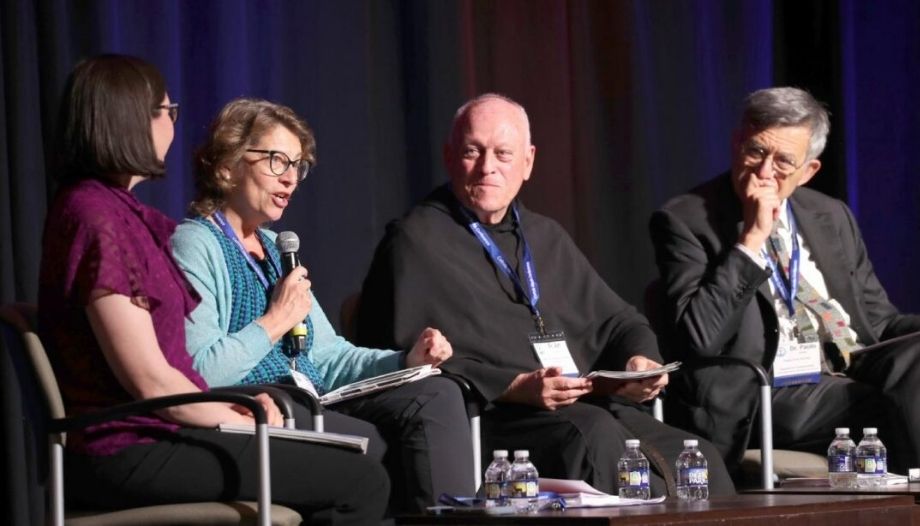
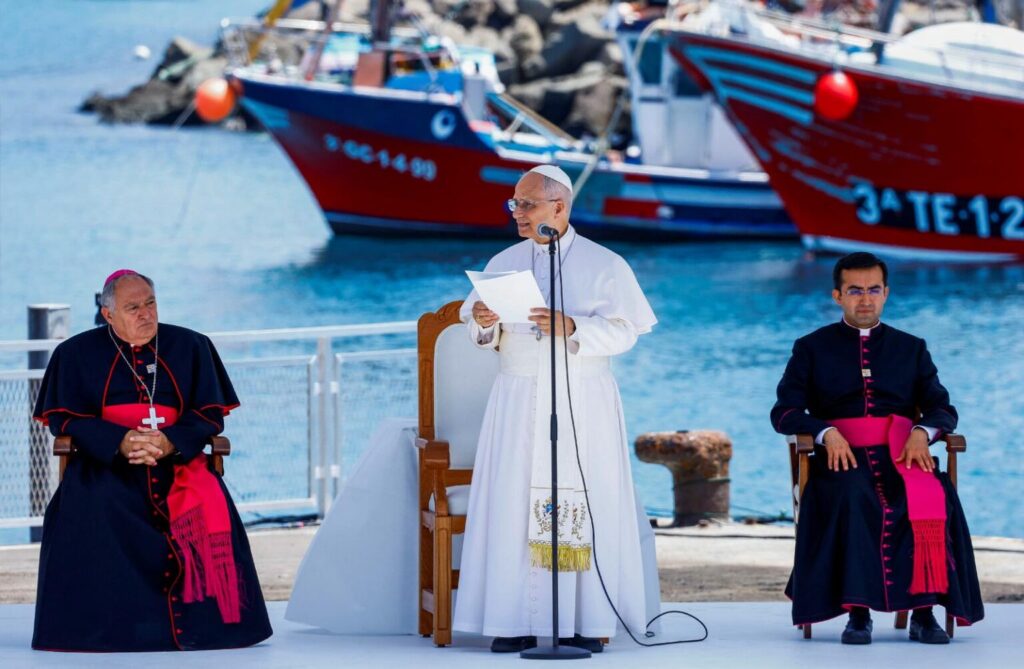
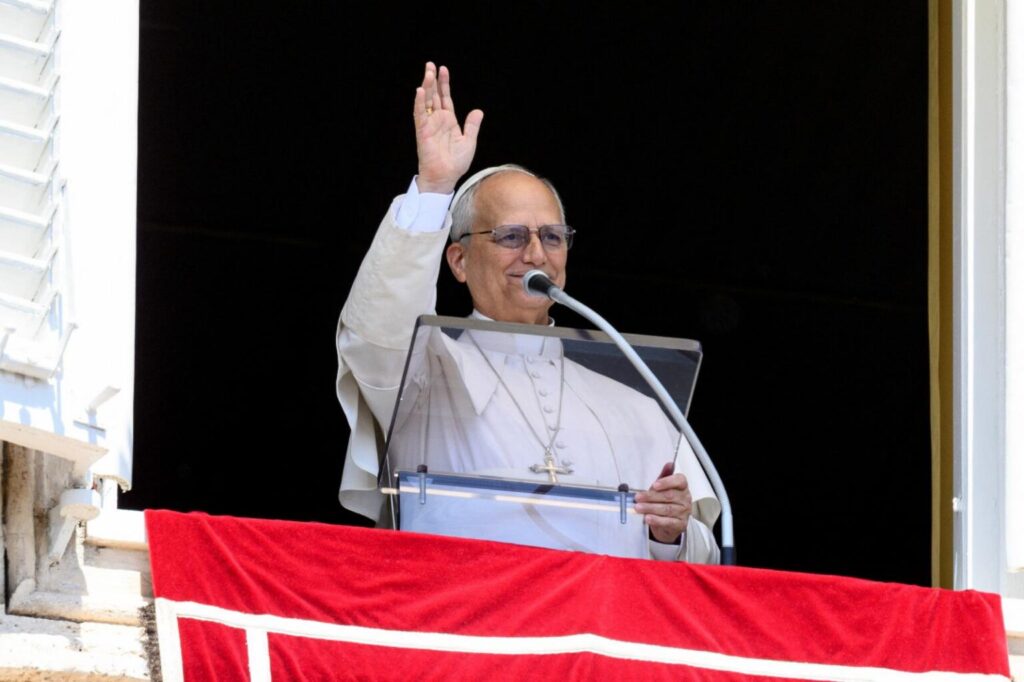




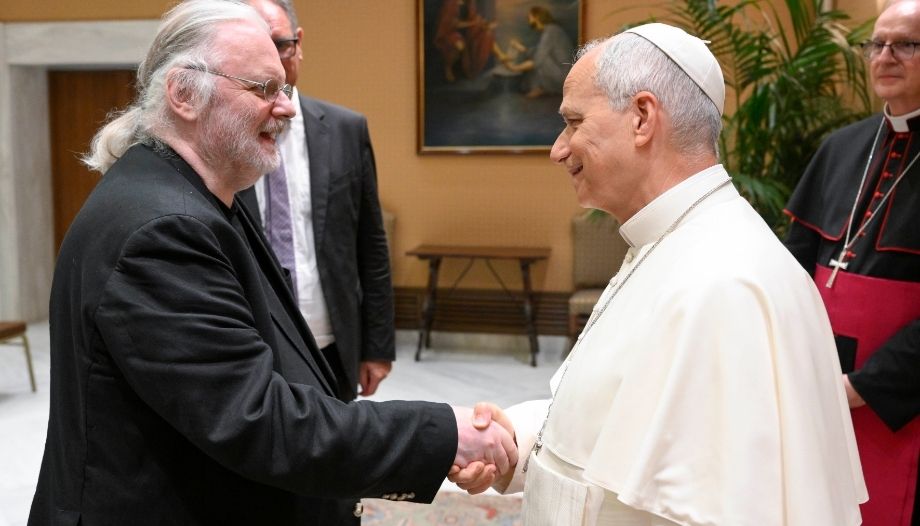
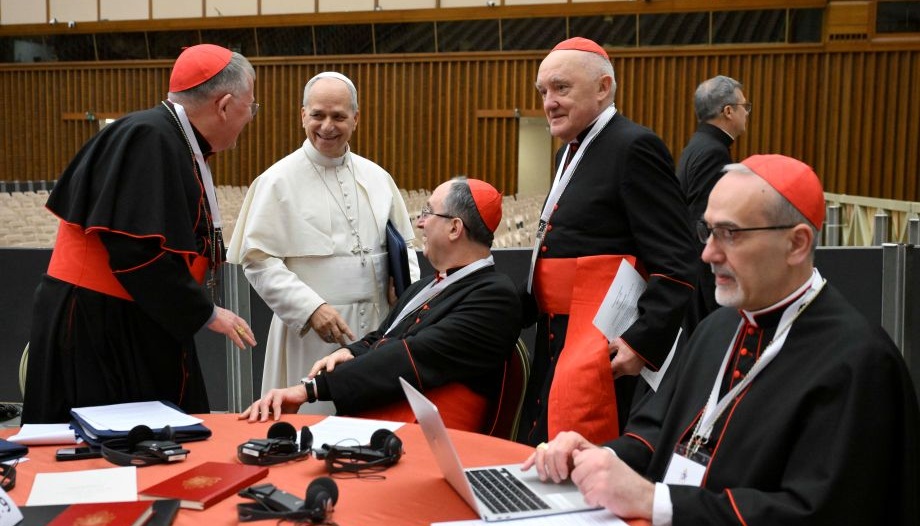
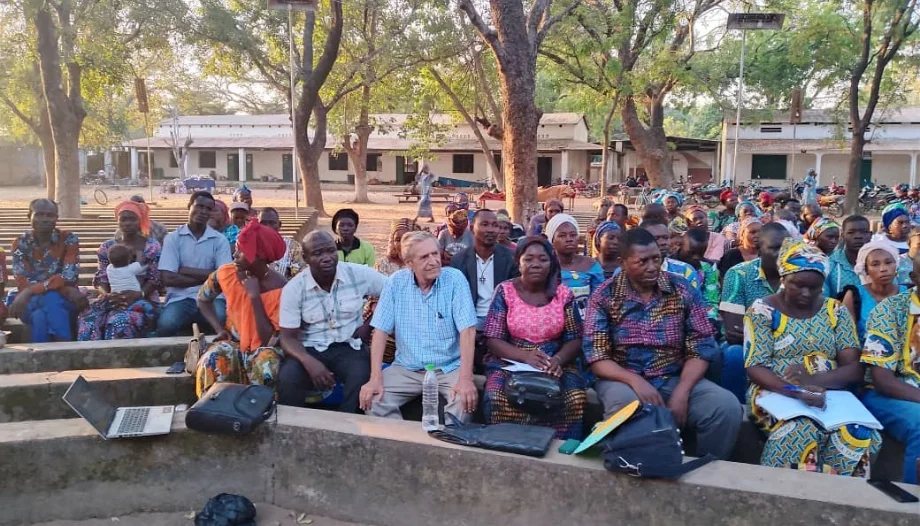
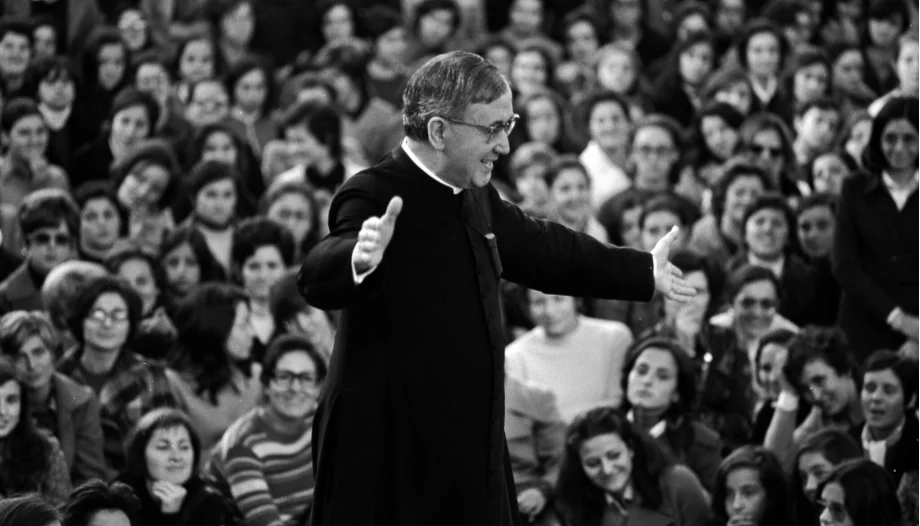
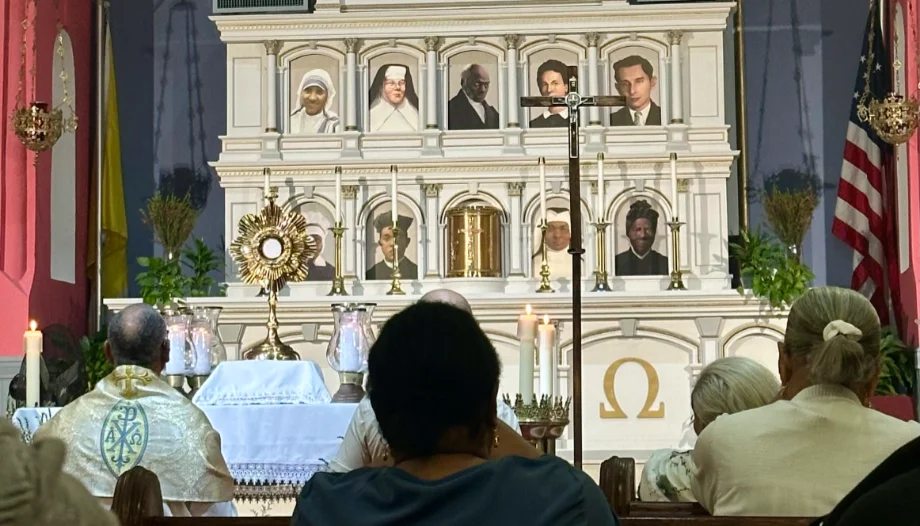
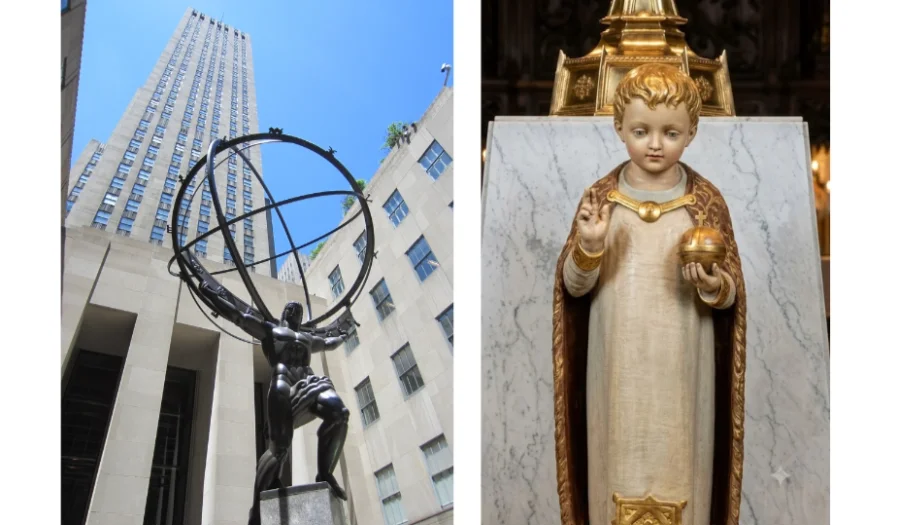
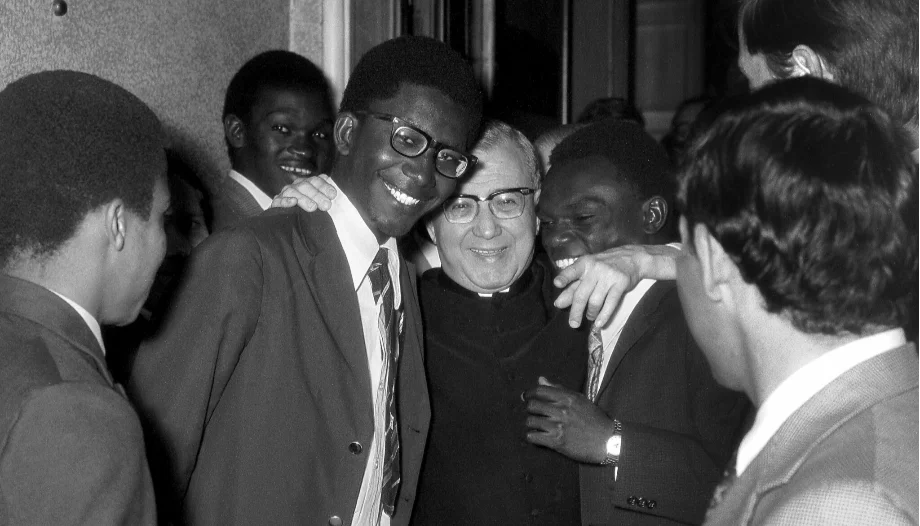
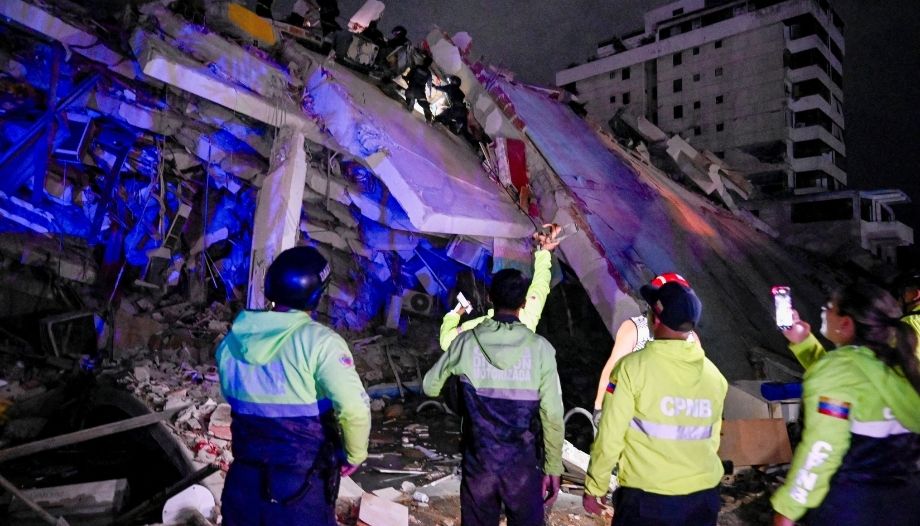
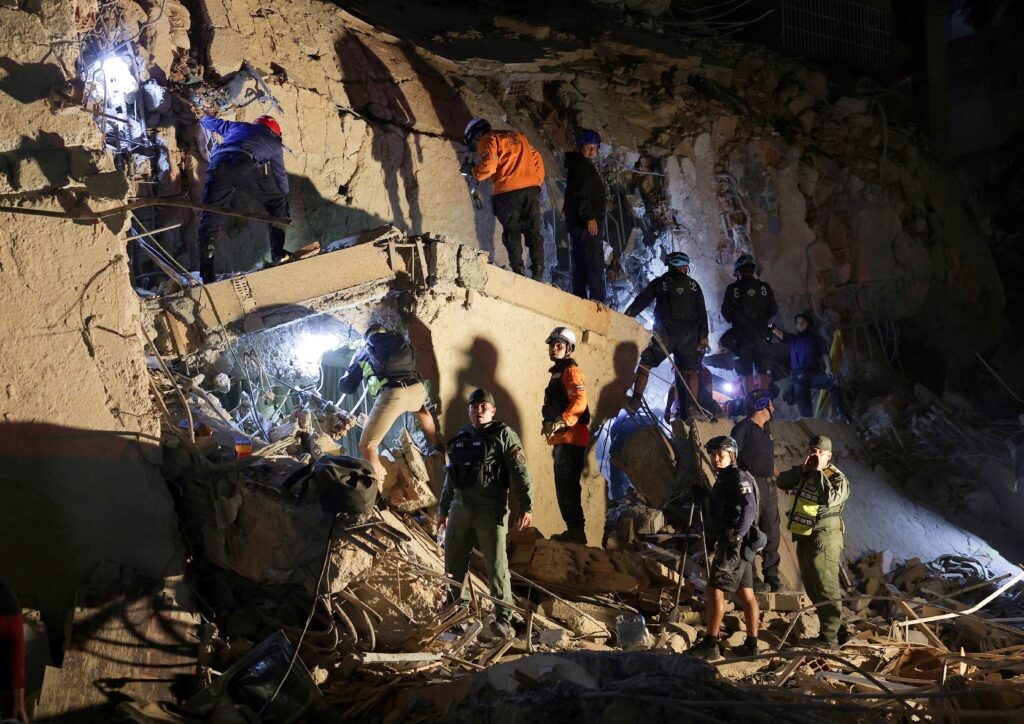
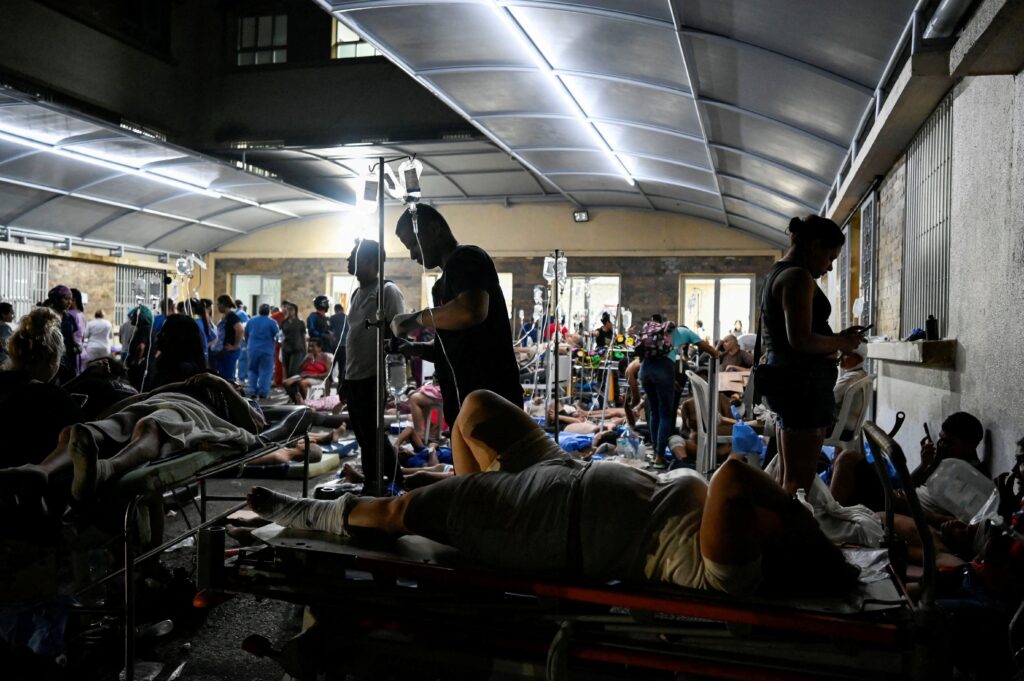
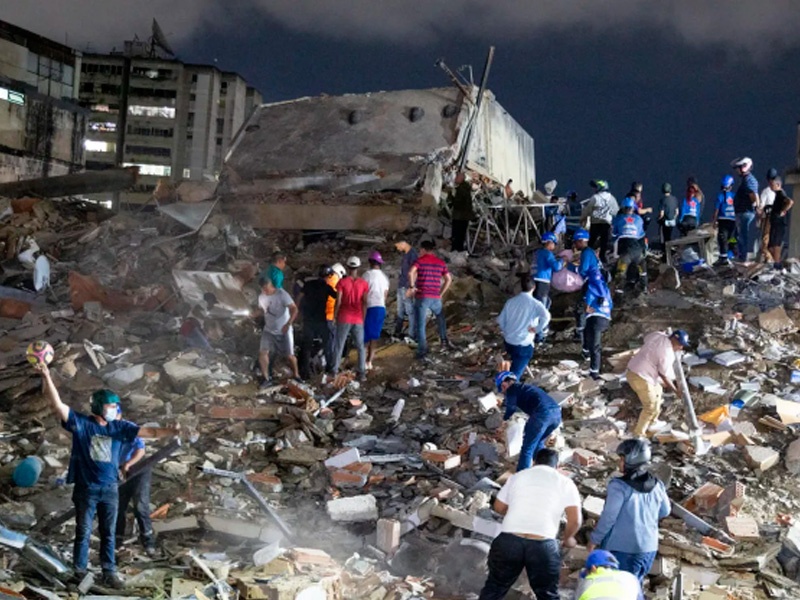
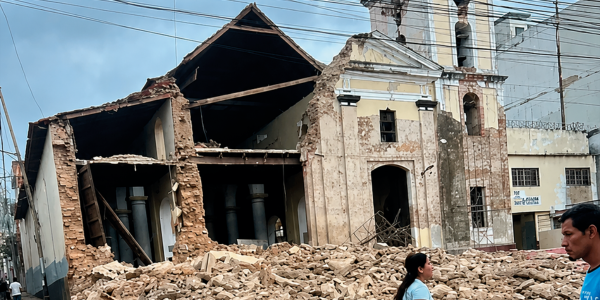
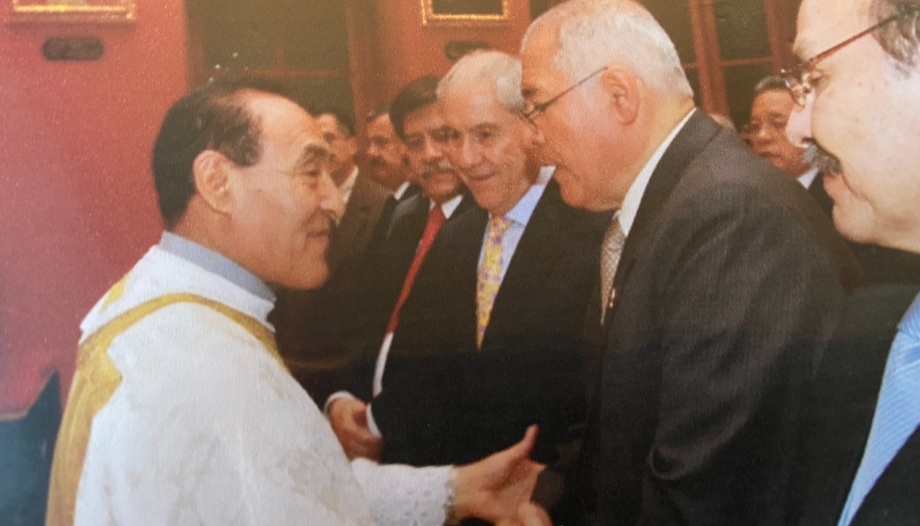
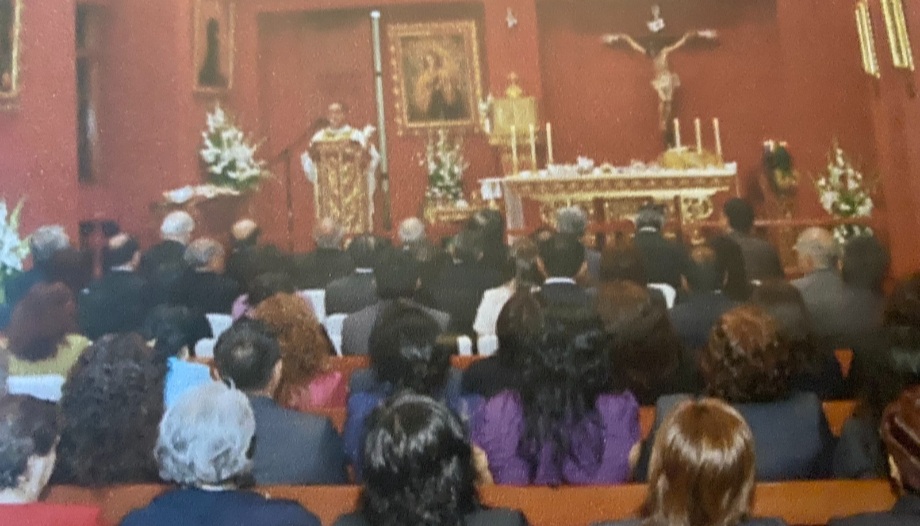
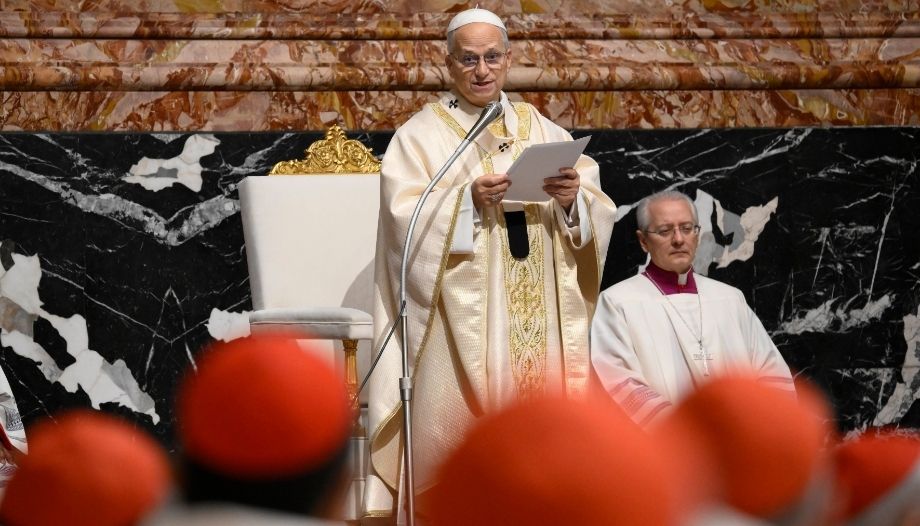
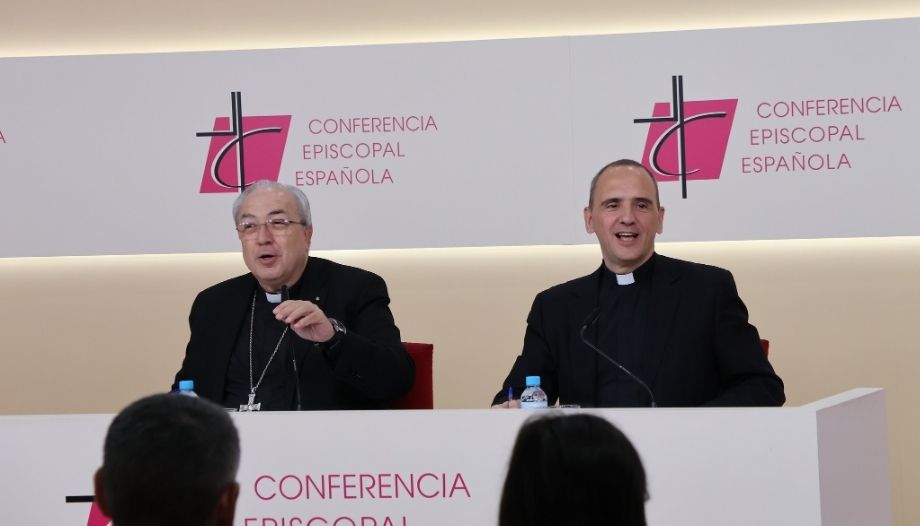
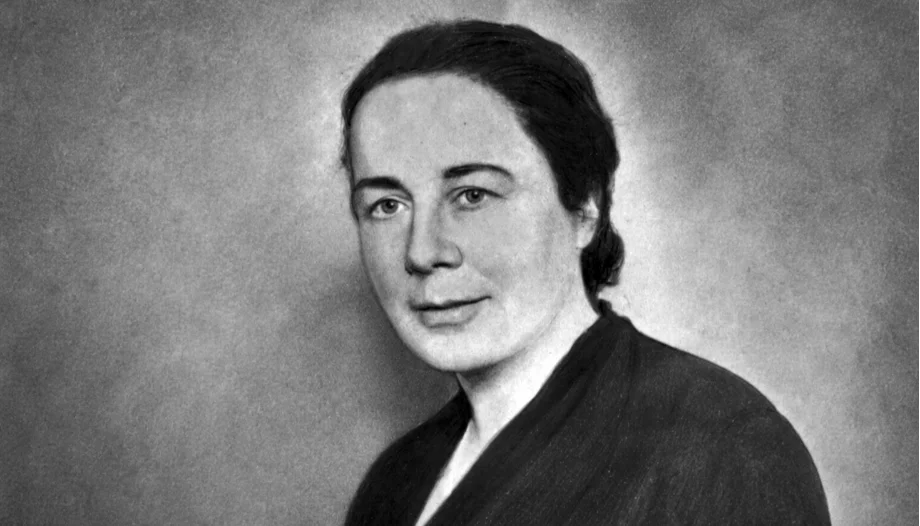
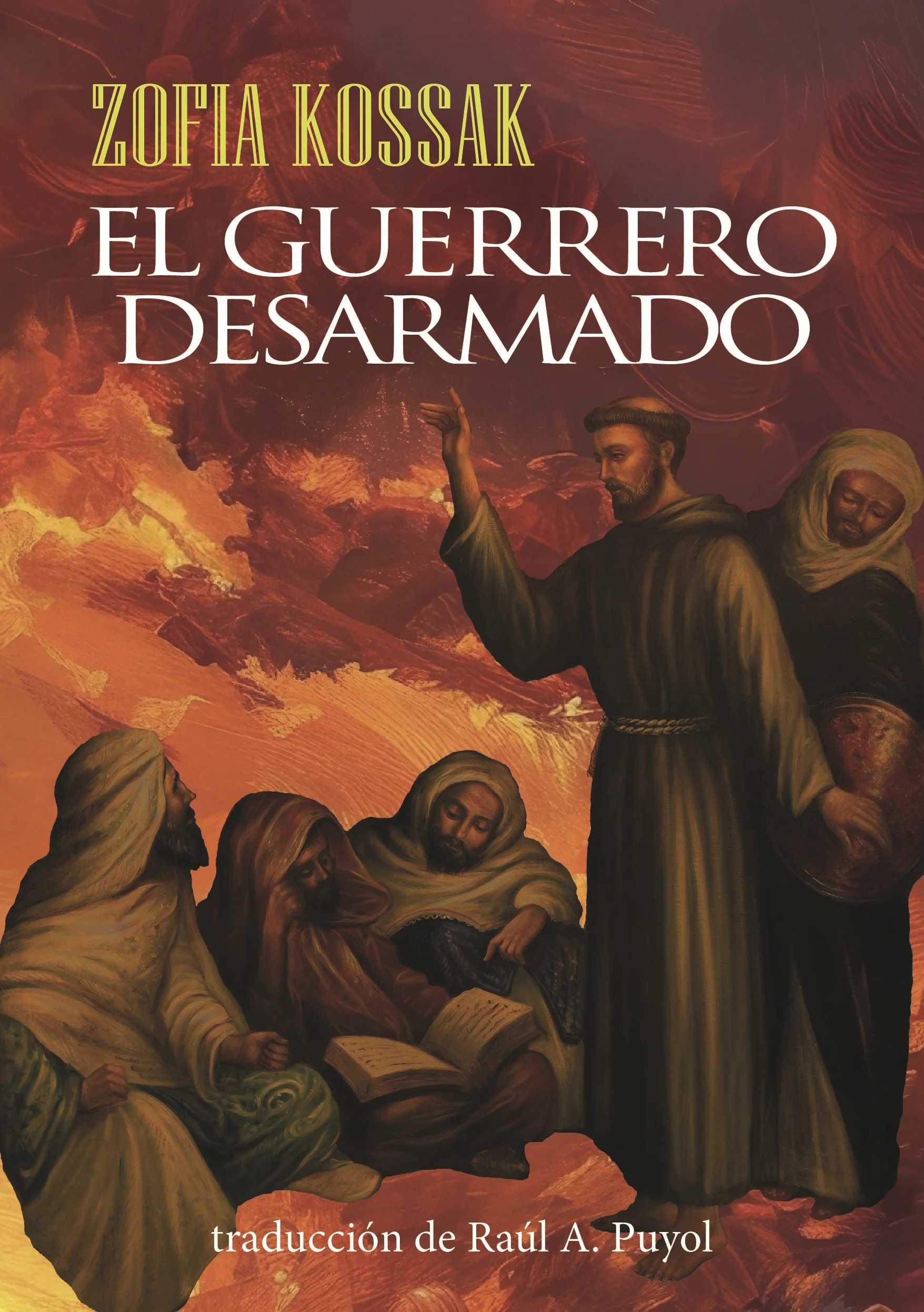
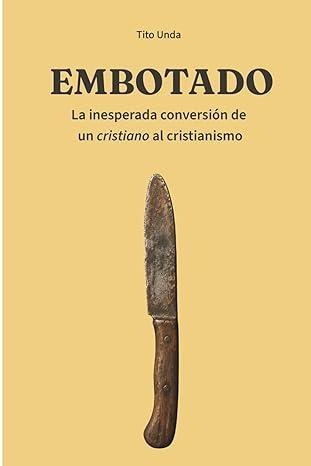

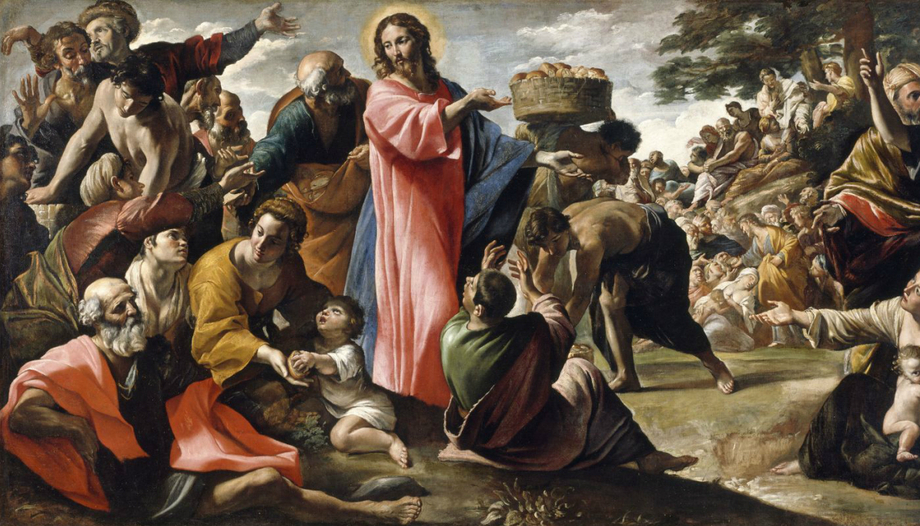
 The Pope in the Spanish Cortes: “Can a community be called fully just that leaves in the shadows the unborn child, the elderly?”
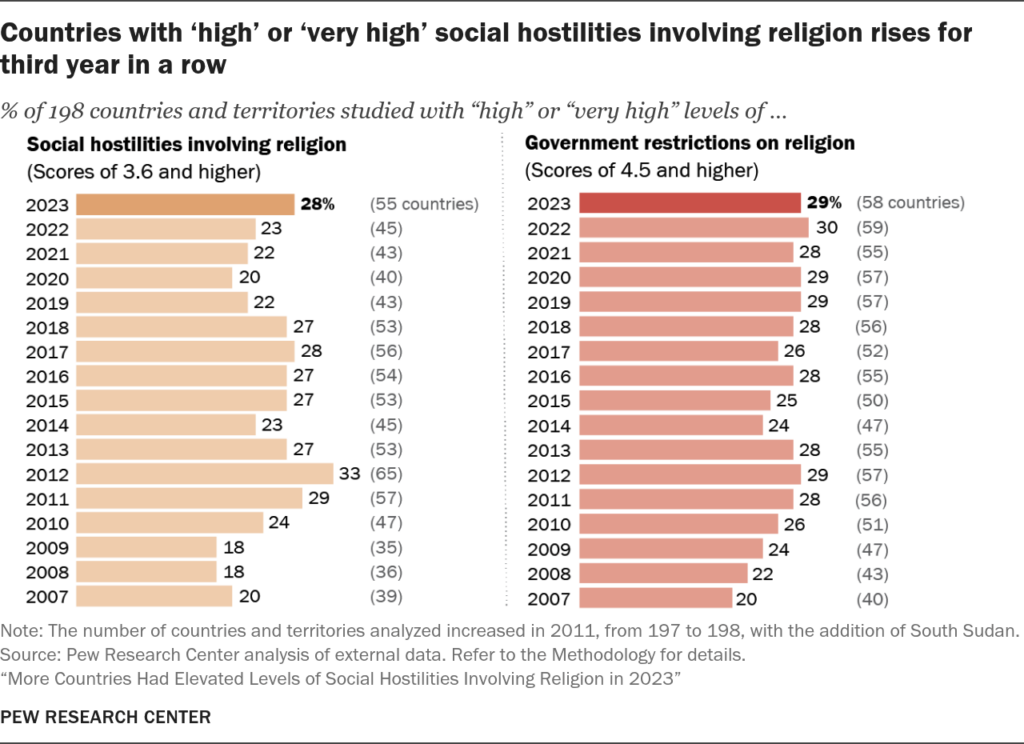
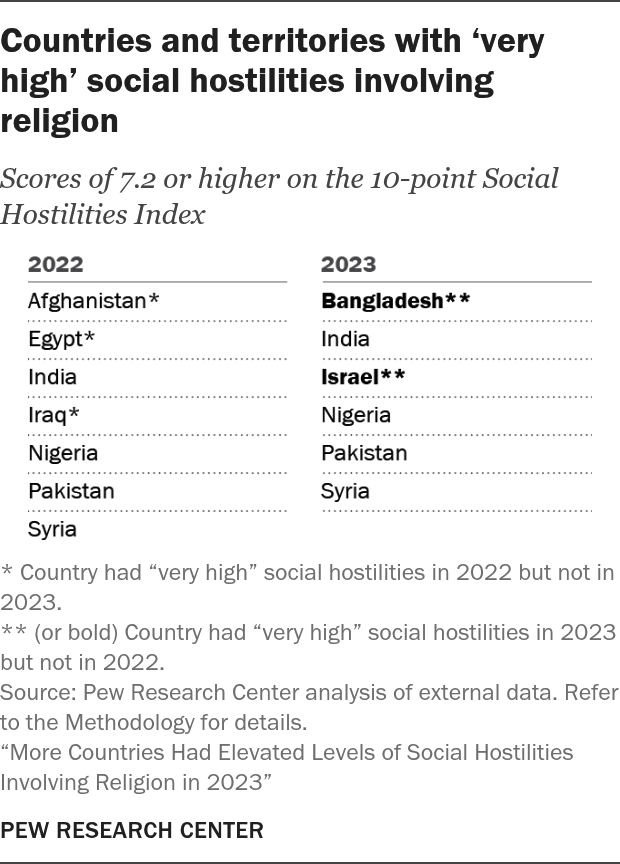
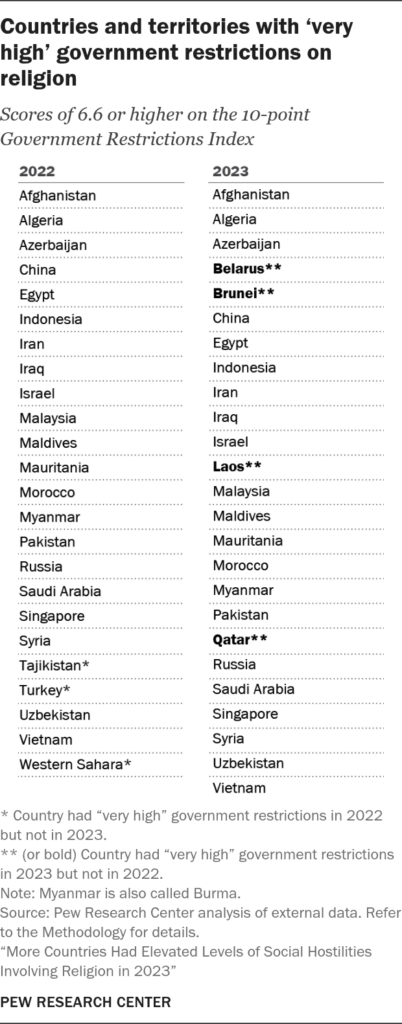
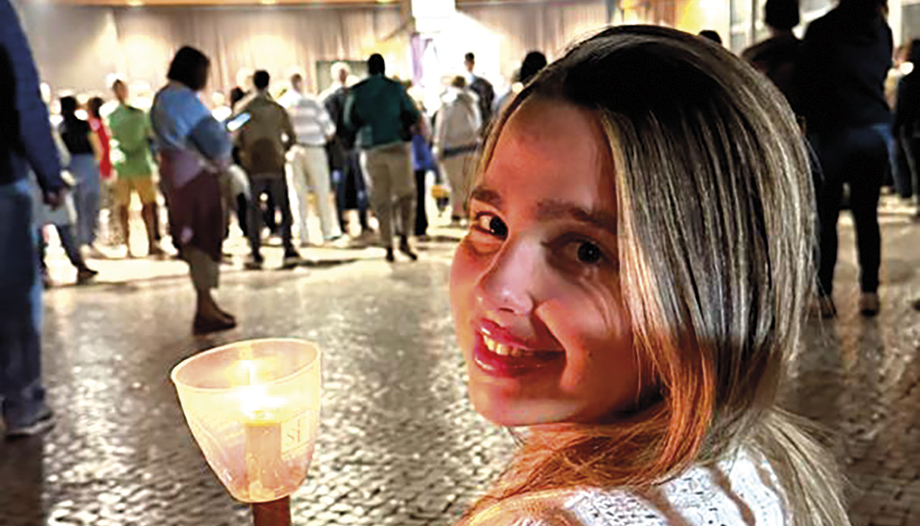
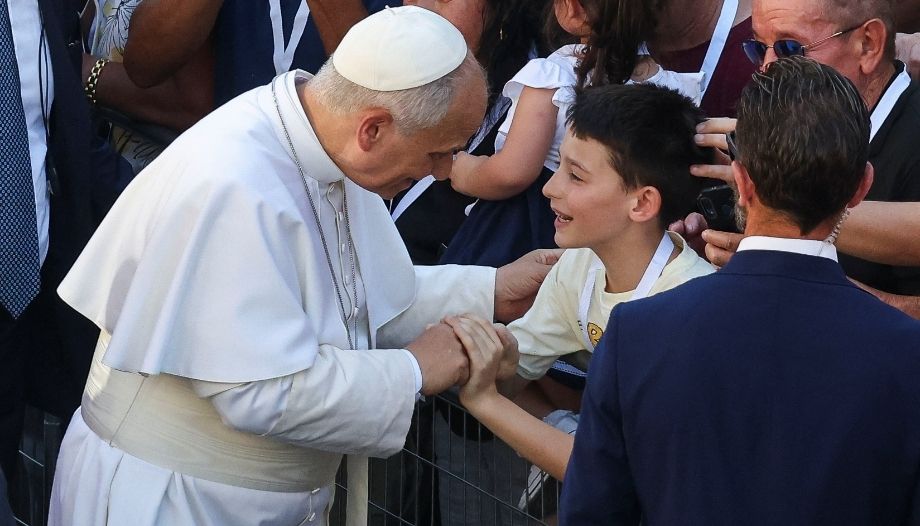
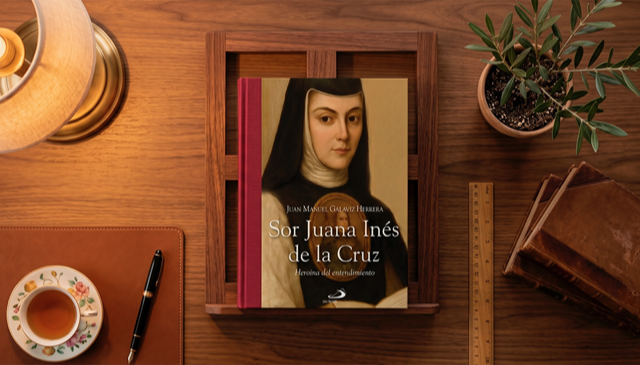
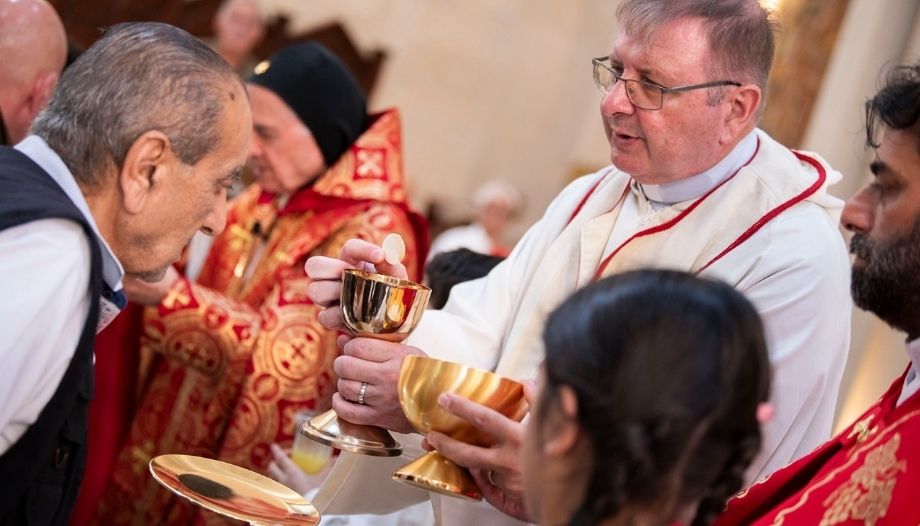
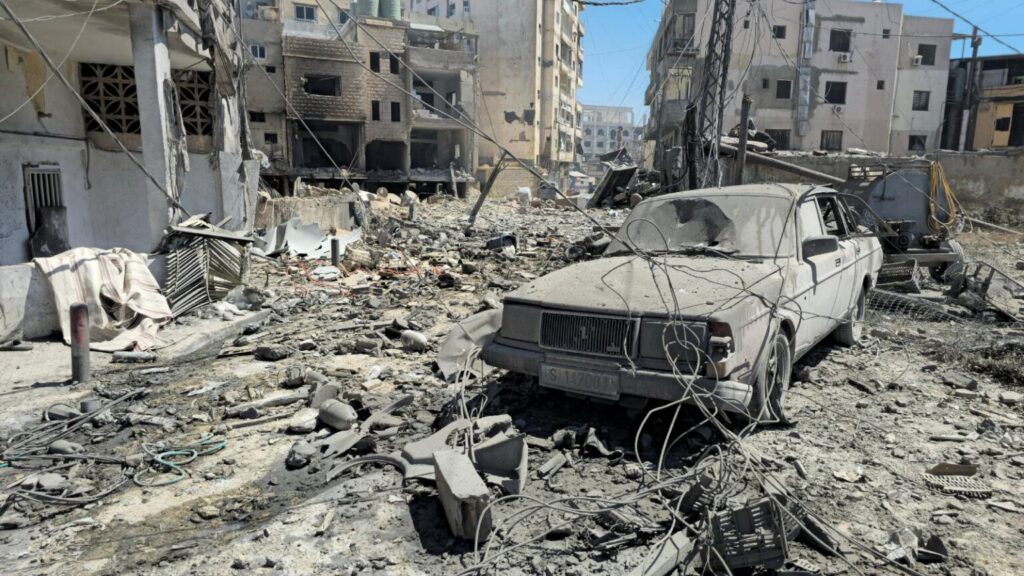
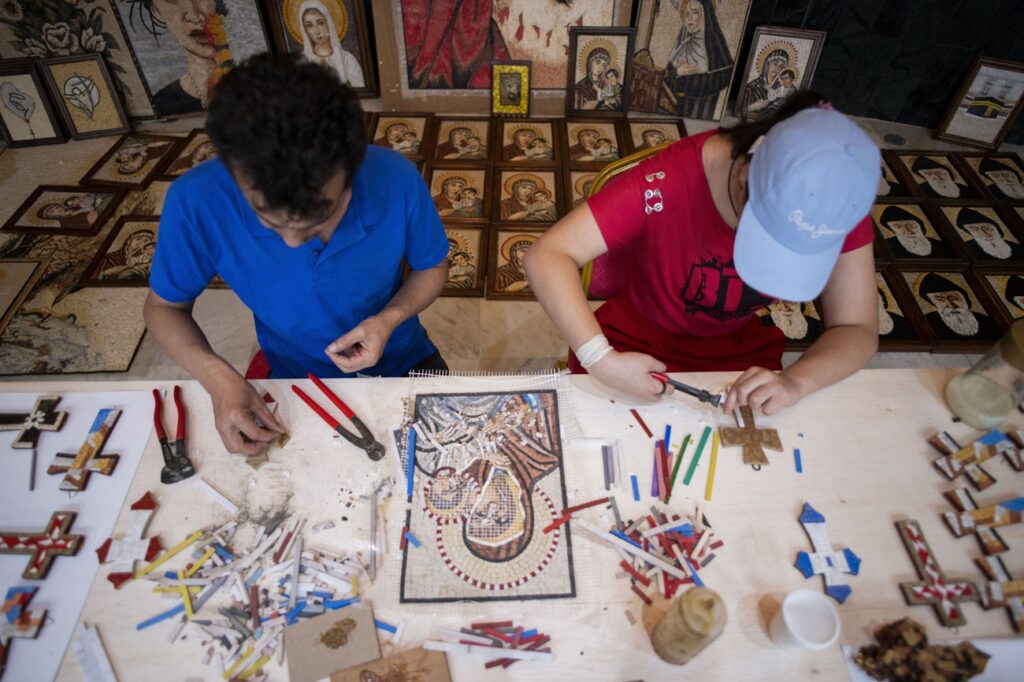


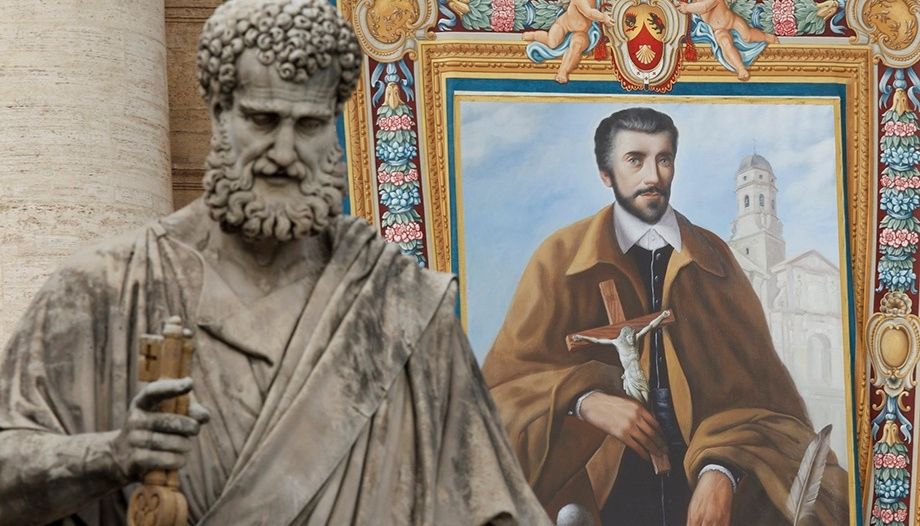
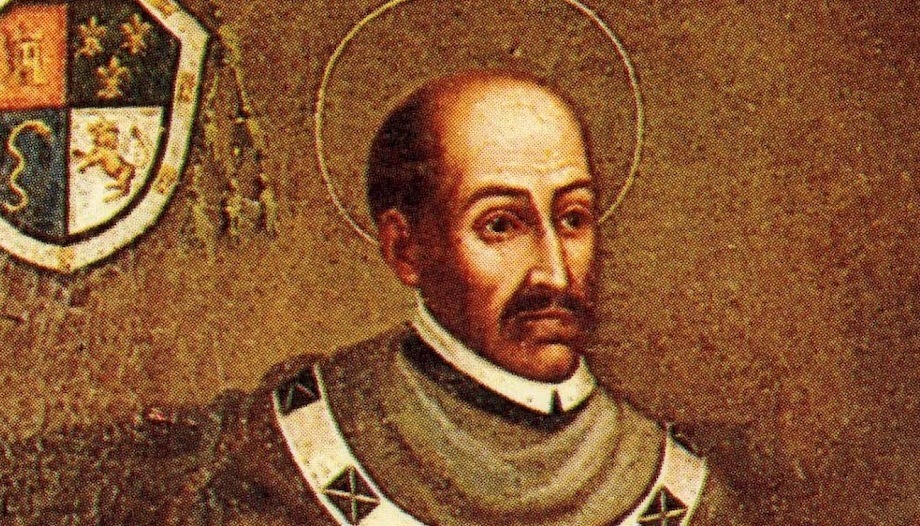
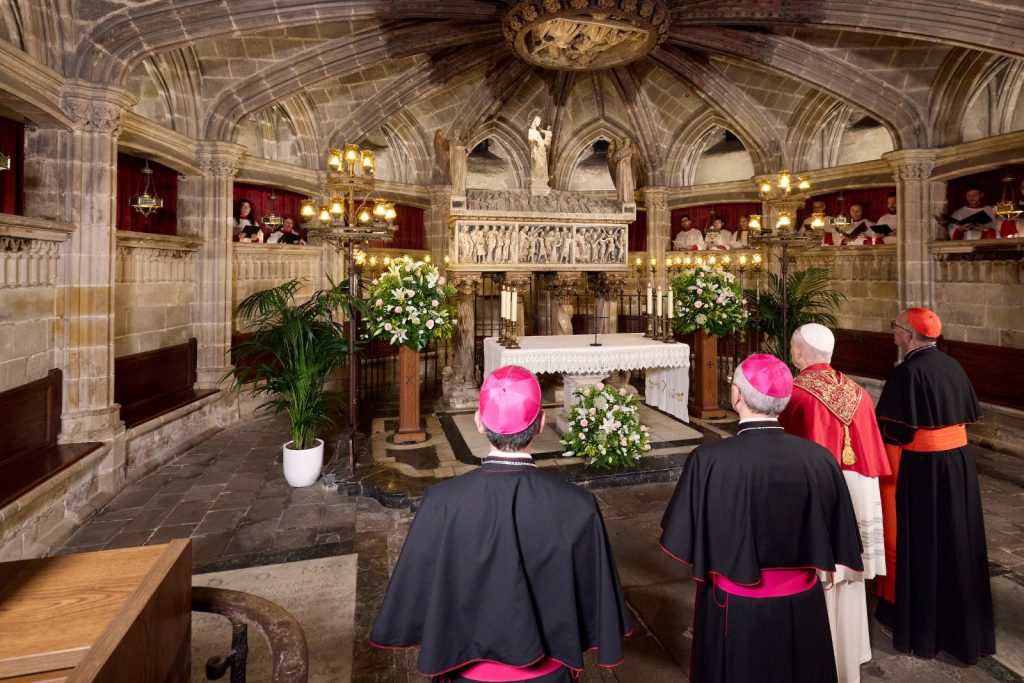
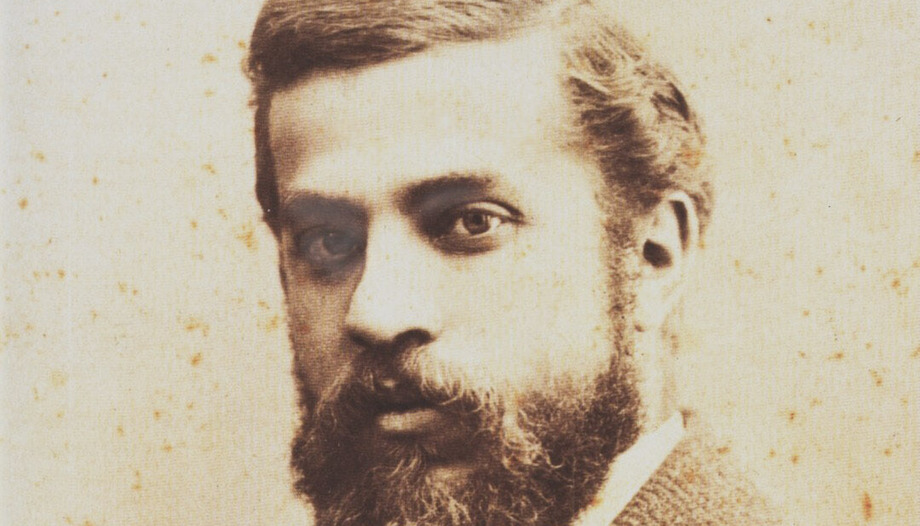
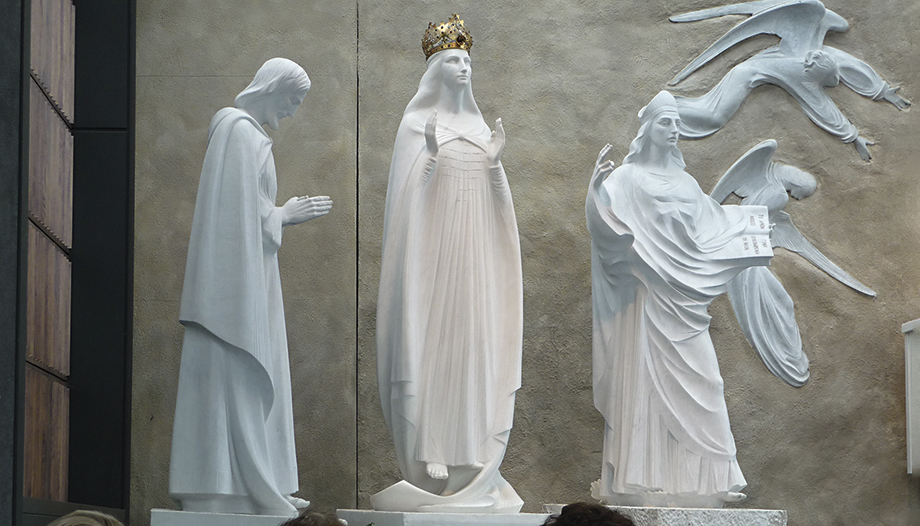
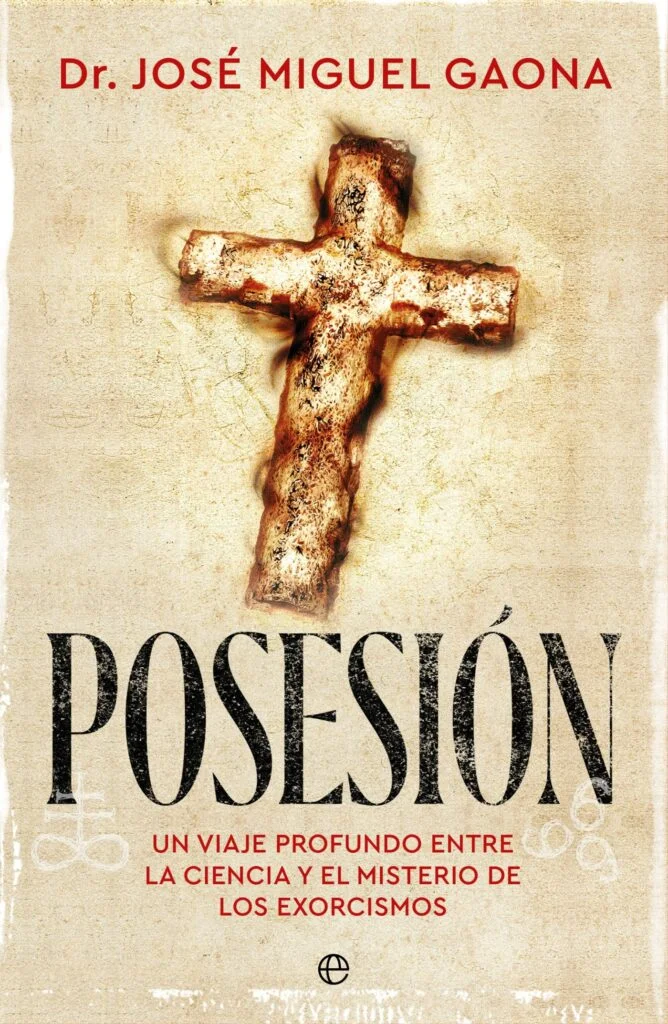

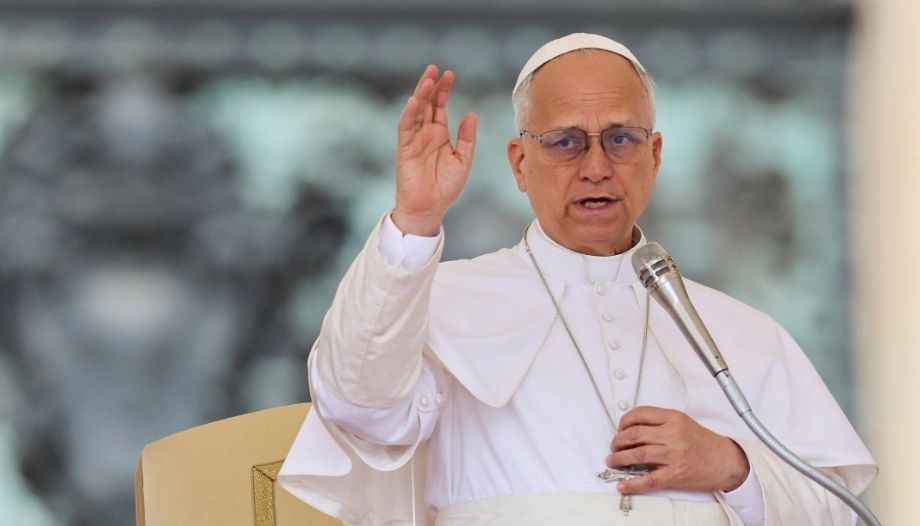

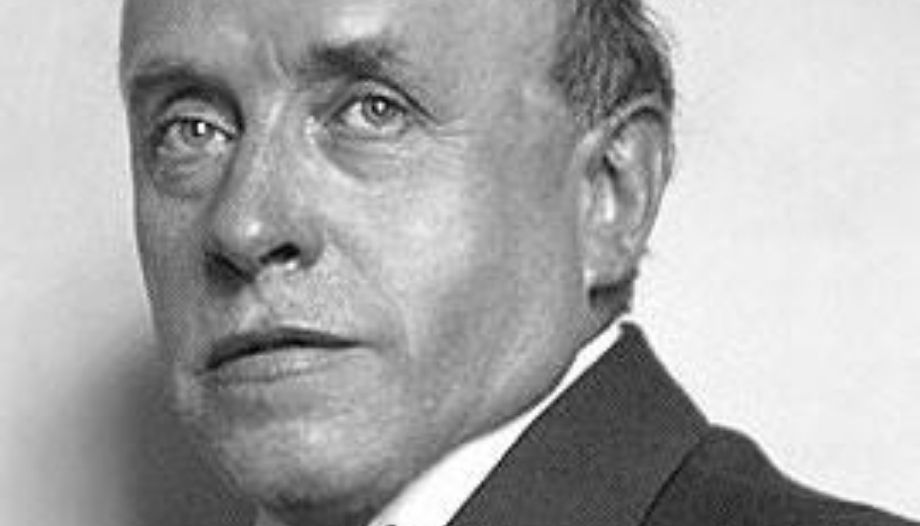
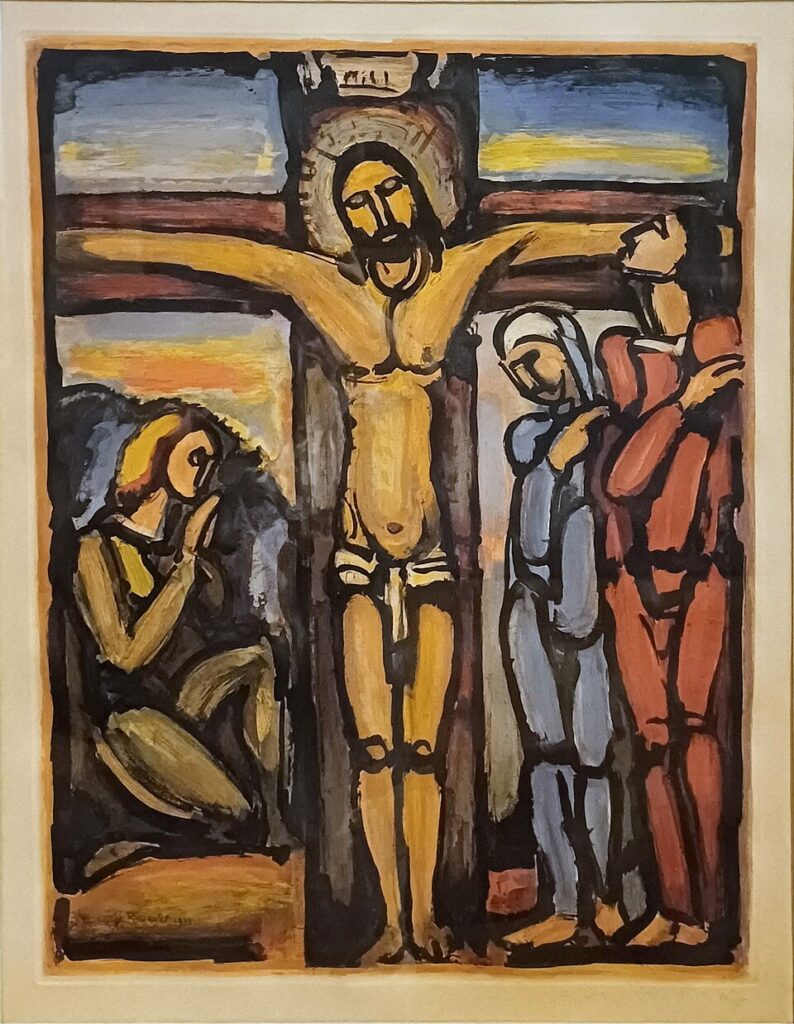

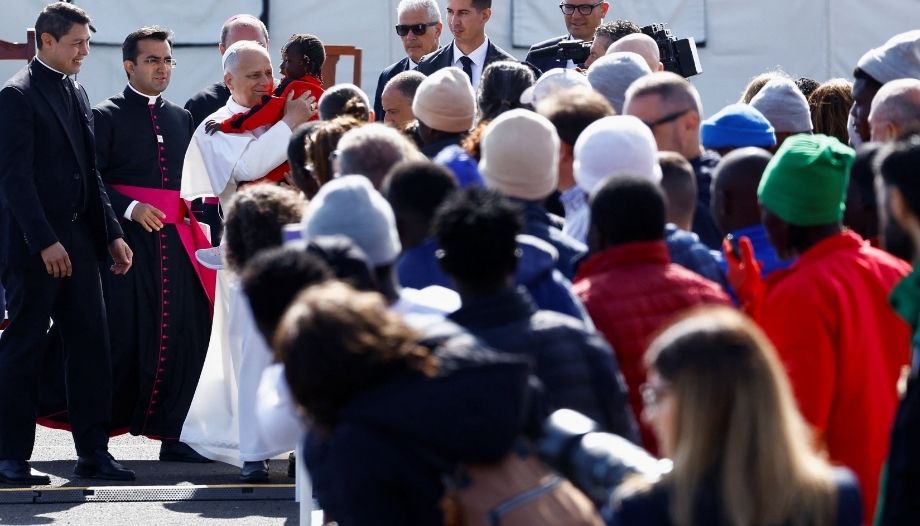
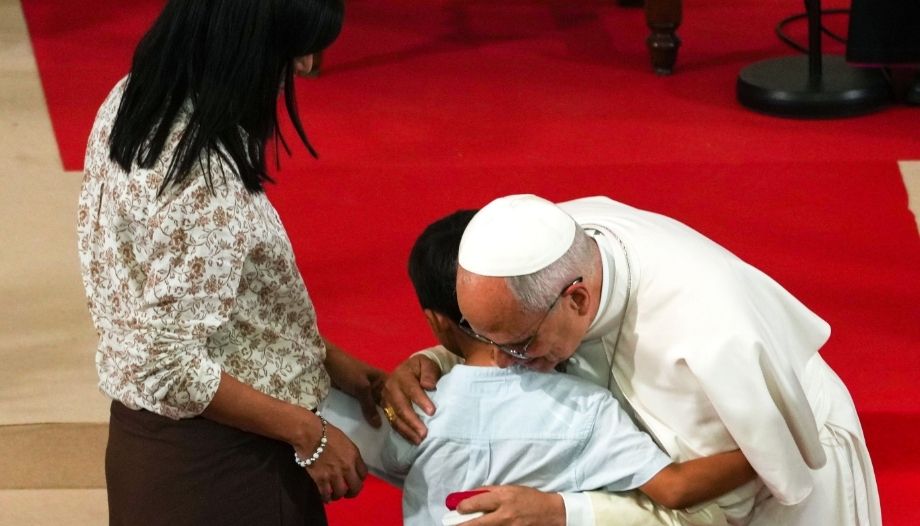
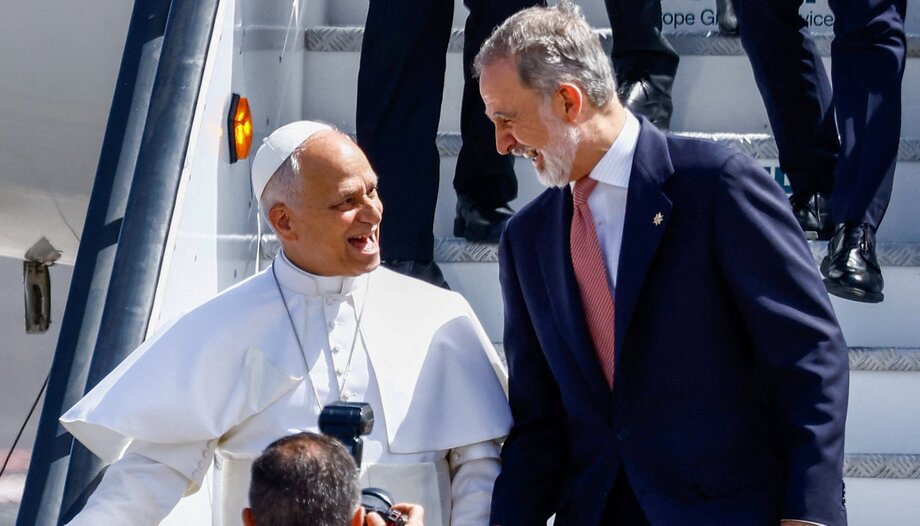
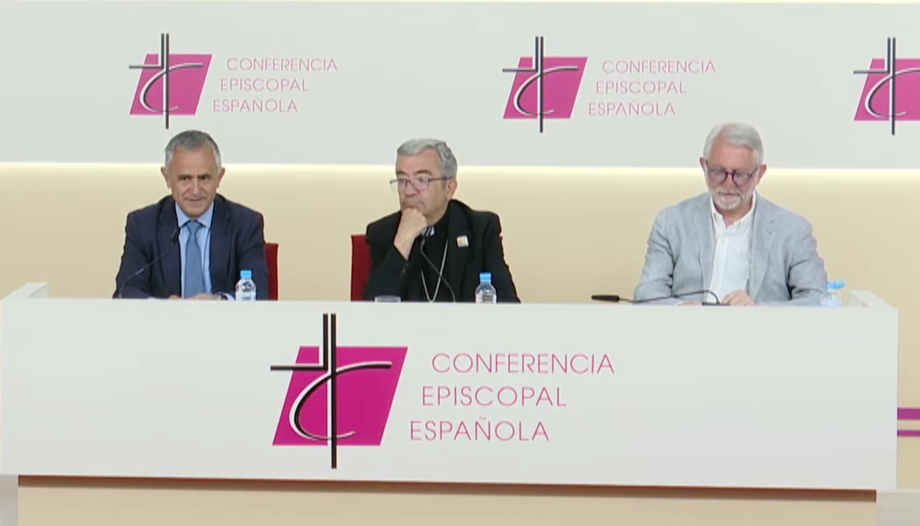
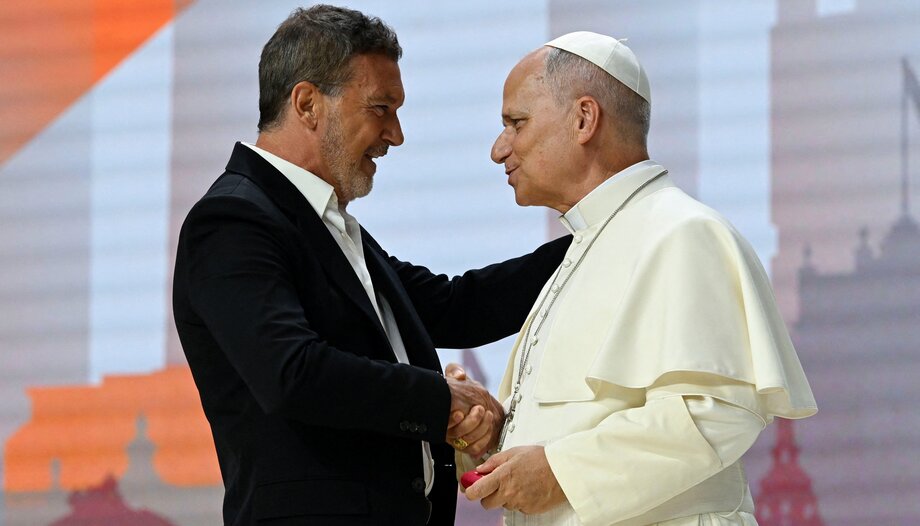
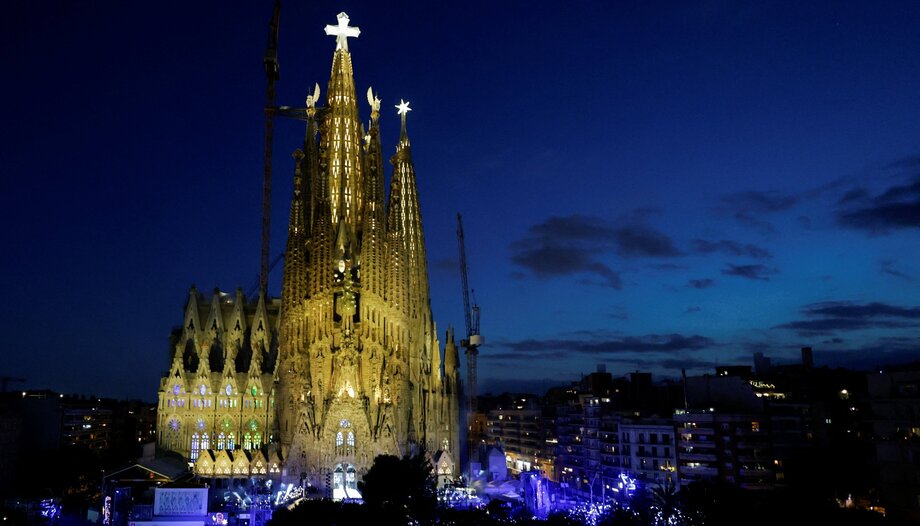
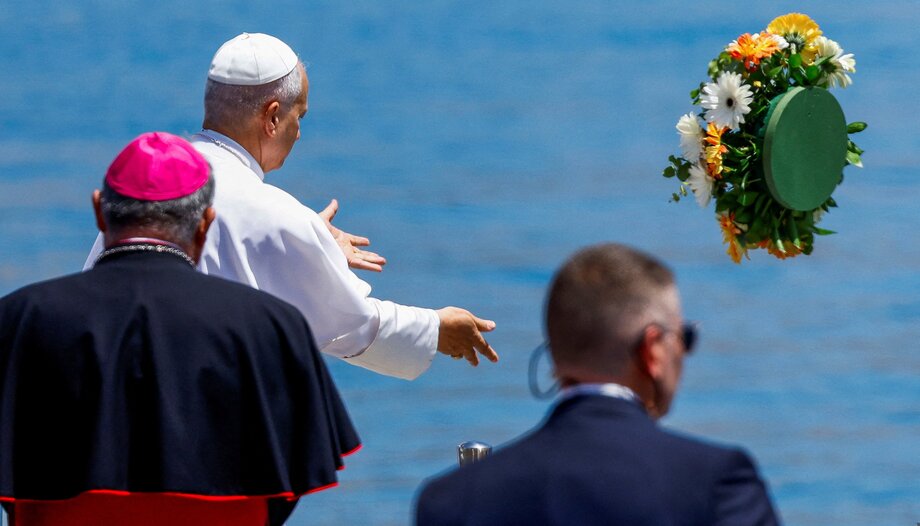
 Español
  English
  Italiano
  Français
  Deutsch
  Polski
  简体中文
简体中文