


 Does it make sense to study theology today?"Theology: a before and after in my way of conceiving the world".
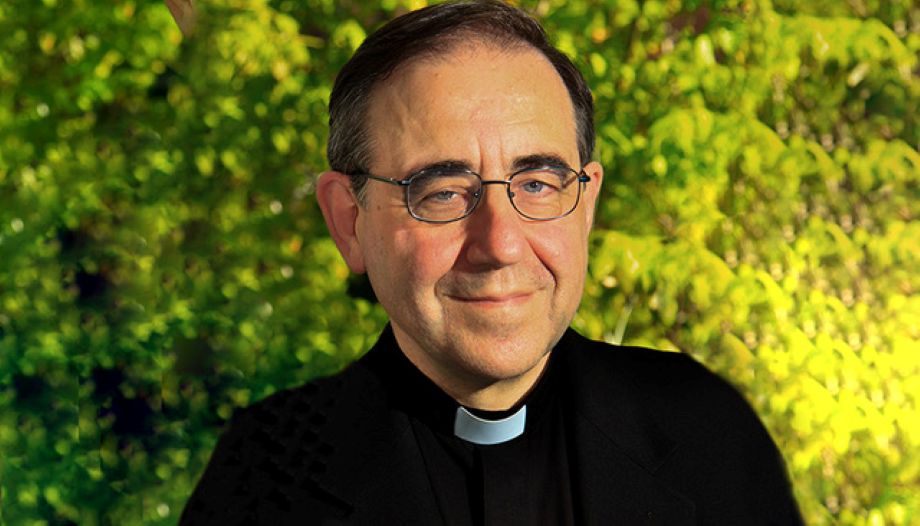
Juan Luis Lorda is a priest and Doctor of Philosophy. Theology. He has spent much of his life teaching Dogmatic Theology and is the author of many books on spirituality that have helped many people to know the Catholic faith better.
In this interview with Omnes, he talks about Theology, analyzes the Vatican Council II and cites some of the authors who have most influenced his work.
What is Theology?
- Theology is the reflection on faith. Theology is: we believe in something, but to believe does not mean to accept without further ado; it means to accept knowing what one accepts, understanding it as far as one can, resolving the questions that may exist.
What is the role of theology today in the Church?
- Theology is and always has been very great. It is developed with four aspects that are nothing more than the application of what I have said:
First, you have to understand what you believe. This is a famous theme which, for example, is treated by St. Anselm of Canterbury and which also belongs to the tradition of theology. “Fides quaerens intellectum” (also comes from St. Augustine): the faith that seeks to understand.
The second point is when I have to explain that faith; I have to put it in order. Everybody knows that when he has to teach he learns much more than when he simply learns on his own. If you have to teach, you have to make an effort to go deeper. That is why theology is also done, because it is taught.
There is a third point that leads to thinking, which are the external and internal difficulties. When someone says: “Well, this seems to me to be impossible”, “I do not believe this” or “this is another way”, this forces me to resolve this question. It is one of the historical points of growth of theology. It grows because it is necessary to think, it grows because it is necessary to teach and it grows because it is necessary to solve.
And then it also grows because it is necessary to interpret Scripture. It is always necessary to interpret the Scripture.
Historically, these four activities have made theology grow. It is interesting to keep this in mind: Christian statements are real, they are historical, they are not symbolic; or rather, they are not only symbolic. When I say “Christ became man”, it is not that he somehow became man or a way of speaking. If I reduce it to a symbol, to a poetics, then everything floats and can be said in any way.
But Christianity makes rigorous affirmations, I mean, rigorously historical and, therefore, it compromises the truth of things. It says: “God created the world”. God created the world, it is not a way of speaking. “Jesus Christ is God and true man.” “The Eucharist is a real presence of Jesus Christ.” All of that demands that things be explained.
Today when we talk so much about language, and it seems that it is almost a political weapon, how do language and theology relate? What level of precision should be demanded of theological treatises and students?
- Everything is humanly deficient because in reality, as it happens in the whole life of the Church and in all aspects, there is an enormous distance between the category of what is spoken and what you can say.
We are poor men and we talk about God, who is much more than we are. So there is always a kind of brutal disproportion.
However, precisely because Christian affirmations are real - there is an incarnation of truth, Christ has become incarnate - human words are able to convey God's message because he has made it so.
Surely nothing has been studied as much as this or has garnered as much effort. Although there is much research in many branches of the sciences and many researchers, historically it has occupied a place that has no resemblance in any religion; there is nothing like it. The rabbis are not engaged in studying the faith in that sense, but simply in saying how it is lived. And the Muslim experts also dedicate themselves to how to live it, but not to the theory, because they think that this is in the mystery and should not be touched.
Which authors and which works have particularly influenced your work?
- First, St. Josemaría Escrivá. He has had a great influence on my life and spiritual mentality, and also on the way I understand Christianity. I owe much of my way of thinking about the spiritual life and Christianity as I live it to him. Then I did my thesis on St. Thomas Aquinas, so I am also formed with him.
I lived through the pontificate of John Paul II and, since I taught anthropology in the Faculty of Theology, I learned a lot from him. John Paul II took me to authors that he uses and depends on: the whole field of phenomenology and personalism. For some years I devoted myself to personalist authors such as Martin Buber (philosophy of dialogue), Ferdinand Ebner, and authors of phenomenology such as Max Scheler, Edith Stein or Dietrich von Hildebrand. Also authors of French personalism such as Jacques Maritain and perhaps Gabriel Marcel. All this has been an interesting world for me.
Then, a little bit literarily so to speak, I was very influenced by C.S. Lewis. I was very struck by his ability to say important things in a brief and loose way; both as a style and as an exposition objective.
For many years I have been reviewing the theology of the nineteenth and twentieth centuries. There I am more and more interested in John Henry Newman. As for the twentieth century, I have worked on the important theologians and I am still very active in this regard.
In this line, perhaps the figure that will remain as the most representative of the twentieth century will be Joseph Ratzinger, who is gaining ground because he has occupied important places in the life of the Church. As Pope, he was a lucid person, he sweeps a lot of ground, he is a very good representative, he was very well placed and he has personal contributions.
But then, there are other important ones, such as the French Jesuits. Henri de Lubac and Jean Daniélou. I also greatly appreciate Romano Guardini. And then, for example, Yves Congar (a French Dominican) is very important and Hans Urs von Balthasar occupies a relevant place. There are many more, but Louis Bouyer, for example, who is a French Oratorian, is very interesting and has grown in my consideration because of the volume and interest of his work.
Of course, so did St. Augustine and the Fathers of the Church. In the history of theology, Augustine occupies a very great place.
For two reasons (the subjects I taught on grace and the theology of the twentieth century), I have had contact with Orthodox theology. Especially with a group of Russian Orthodox theologians related to the Saint Sergius Institute in Paris, such as Vladimir Lossky or Paul Evdokimov, who has a beautiful book on the theology of the icon. I also liked very much other Protestant authors, for example Oscar Cullmann, or from the field of exegesis, very good and believing people like Martin Hengel and Joachim Jeremias.
In fact, I have a perception of an enormous wealth of thought in the twentieth century. It is a bit paradoxical, because the 20th century has been a century of much and very good theology, but also a century of crisis. There were theological crises; a paradigmatic case is Hans Küng, for example, or the previous case of the problem of the Dutch Catechism. These have been very decisive points in the evolution of the crisis of the Church in the 20th century. But in reality there has been a very rich theological renewal. I am very motivated by this because it seems to me that it is necessary to synthesize it, transmit it and give it an outlet for teaching.
What do you think should be asked of universities in order to recover the theological level that existed in the 20th century, and that we seem to be losing now in the 21st century?
- Every era has its place and right now the 20th century is inimitable. The 20th century coincided with a great expansion of religious orders and religiosity: many young vocations, many people in formation, many young theologians eager to evangelize and renew. Now we are not in that situation.
We are now passing throughout Europe, in a rather accelerated way, from a situation of a Christian majority to a minority of converts. This may last for a couple of centuries (it has actually been going on for two centuries). The old scheme of Christian nations is disappearing. Politically it has already disappeared; but culturally, the traditional nations of Europe are ceasing to be Christian for reasons of loss of faith and also for demographic reasons. Europe is in a process of almost a certain demographic extinction. It is a slow process that will take three or four generations.
In Spain right now the birth rate has been very low for many years and has no chance of recovery. The population is going to change very strongly; right now there is a 2 0% of foreign population, which changes the culture, customs and thinking. The ecclesiastical institutions have a lot of inertia, but look: when the theology faculty I have been in for 42 years started, in the 70's 770 priests were ordained every year; last year 62 were ordained.
The situation is very different because we went from a Christianity of majorities that sometimes was lived a little by inertia. I do not denigrate it, because I have seen it and I know that people did not know much, but they tried to be Christian and were not false. However, previous generations did not know how to transmit the faith to their children. Why? Because, among other things, they did not know what the faith was like, they could not explain it. They knew that it was necessary to go to Mass and that it was convenient to be close to the Church, but they were not able to explain it to their children. And by not explaining it, the transmission was clearly lost.
What do you consider to be the greatest spiritual or theological challenge today??
- I believe that it is precisely the transition to a Church of converts. In Spain they are still small in number, but they will grow within certain limits. It does not seem to me that the majorities that cease to be Christian will be replaced by majorities of converts; it does not give that impression.
But it does give rise to the existence of living, renewed Christian centers. For those of us who are Christians by tradition and do not come from personal conversions (although we must always be converting), it can help us to see that we have to have a much more testimonial approach. This is happening at the rate of a generation, it will be seen in about 30 years.
One of the big problems with the Second Vatican Council has been its application. Can you tell us about this?
- When the Council came, with so many young people all over Europe, it aroused a lot of expectation and a great desire to renew everything. In principle that is good. But it also generated tensions.
I usually use the example of the room I'm in: what could be improved? If I think about it in a sensible way, there are a few things; tomorrow some shelves and cabinets are going to arrive that are going to improve the room. That's very good. But if I were to get a nervousness, a kind of constant criticism and look at the room with little love, I would find it horrible and unbearable. In the end, what could be an improvement would end up in a destructive pyre; I could end up burning the room down.
That happened, because the Church is very defective, not in Jesus Christ, but in us. It has always been so. It does not mean that we should not try to improve, because we all have to improve, but we need a little patience. If you do not have patience and lack criteria of what is important and how to do it, you fail.
The same expectation sometimes became a destructive phenomenon because it was change for the sake of change, sometimes choosing anything without criteria. And then it provoked a delicate issue: the lack of confidence in the Church, in the magisterium and in the bishops. What was an illusion to improve sometimes turned into criticism and ill-considered changes. Being the Church such a big institution, there was much disorder and much damage.
This has not always been recognized because there is a kind of understandable Christian goodism (we are optimists and people of faith), and also a logical intellectual defense of ecclesiastical government.
In spite of everything, Christian life lives with hope, looks to the future and trusts in the Lord. Although there have been crises, there have been many good things and, of course, the Council has been a very good thing.
On the theological level, what positive developments have there been thanks to the Second Vatican Council?
- A lot, because it has been enriched a lot. The same richness is a difficulty because it needs to be assimilated and ordered to be able to transmit it, but we have recovered a lot of direct knowledge from the Fathers of the Church. We have improved immense topics of liturgy and ecclesiology (what is the Church); it has been enriched a lot.
It is true that this also sometimes leads to confusion or difficulty in discerning what to choose, and fashionable phenomena are created. Moreover, the Church is subject to external tensions. On the one hand, in the twentieth century and now, it continues to be subjected to a worldly or modernizing pressure that criticizes the faith at its core. This has a dissolving effect on people and on theology. It seems that you are more modern or acceptable if you do not believe in anything but matter. This pressure is very great and generates a worldly theology, ready by osmosis to say what people want to hear.
On the other hand, although today it is somewhat marginal in our cultural environment, the twentieth century was marked by an enormous communist presence and pressure (propagandistic and strategic) that greatly affected the life of the Church. It created a utopian climate where it seemed that with two kicks and a revolution we would arrive at a happy world. It generated a criticism based on a simplified economy and political vision. All this atmosphere hit idealistic Christian people with a lack of discernment. Communism and its propaganda machine had a great influence.
Is there any question that is open today that you find particularly challenging theologically?
- One might think that the most important thing is the novelties, but here the most important thing is not the novelties, but the centers. Gospel means “good news”, which implies a perennial novelty. And it is always good because it means that God exists, that there is a way to live facing God, that this world has meaning and that there is salvation from death and from our own limitations and miseries. That is the Christian good news, which is always exciting.
The great challenge of theology is to make it exciting, because sometimes everything becomes a bore. The real challenge is to make it what it should be: something very exciting.






 Español
  English
  Italiano
  Français
  Deutsch
  Polski