


 12 months, 12 apostles, 12 petitions
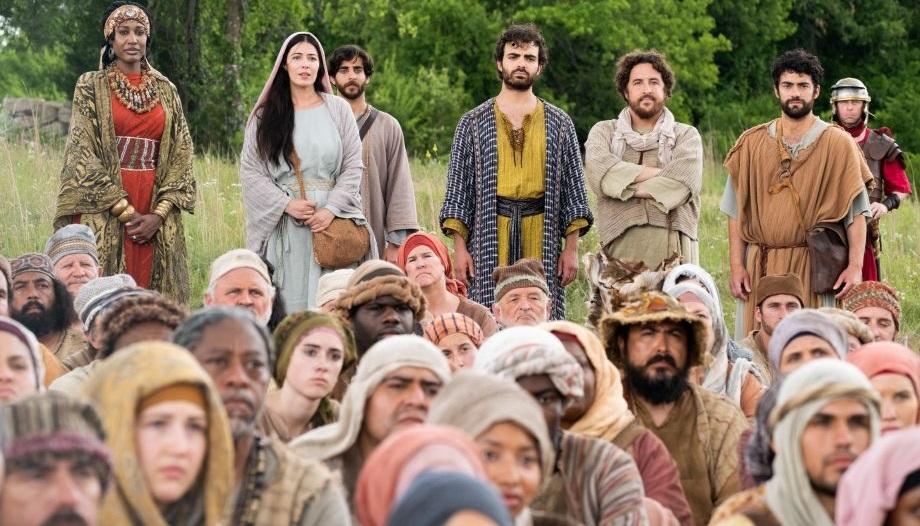
When we speak of Jesus’ apostle, we are referring to the witness chosen and sent on a mission by Christ himself, who, at the beginning of his public ministry, would choose a few who would become the foundation of the Church he intended to establish.
We are referring primarily to the 12 Apostles, although it is true that Jesus, in the early days of the Church, chose a group of disciples—including women—to whom he would convey, more fully and intimately, the Word he had come to preach.
The Greek word “apostoloi” means just that: “sent.” Sent to do what? To proclaim the kingdom of God, which they would hear from Christ himself.
When the Lord chooses a few, He tells them what they must do, as recorded in the Gospel of Saint Matthew (28:19): “Go, therefore, and make disciples of all nations, baptizing them in the name of the Father, and of the Son, and of the Holy Spirit; teaching them to observe all that I have commanded you.”.
It is worth noting that these chosen individuals were ordinary people of the time—rather simple folk, many of them fishermen who lived from day to day and had no prominent social standing.
Thus, they were humble and—we might say—trusting in the Master, whom they followed with an attitude of total surrender. And if they made mistakes—because they had flaws and were fragile, just like Peter himself, who went so far as to deny Jesus—they returned with renewed spirit. Men who loved Christ, at least in words.
But are there “apostles” today? Yes, and this is mentioned in the Catechism in paragraph 863, noting that “The entire Church is apostolic insofar as she is «sent» to the whole world; all members of the Church, though in different ways, share in this mission.”.
Following Christ—and that is what it means to be a Christian—is in itself an acceptance of the apostolic mission, and it means embracing the Lord’s command when He says, “Go into all the world and preach the Gospel ”to all creation” (Mk 16:15). Thus, every Christian, by virtue of being a Christian, is an apostle, for they are called to proclaim the Word of God, which they will do primarily through the example of their lives. This is because the Redemption or Salvation of humanity is still unfolding, and Jesus did nothing more than begin it.
The 12 Apostles and their successors, the bishops
In a general sense, we have just seen that one is an apostle simply by virtue of being a Christian, and that those first disciples of the Master were therefore apostles, and that today—and not just twenty-one centuries ago—any Christian is an apostle.
That said, strictly speaking, we could say that the Apostles are the 12 whom Jesus called directly, who received and shared in his mission and bore witness to his words and deeds.
In addition to having been eyewitnesses to the life of Jesus, what primarily characterizes the Apostles is their pastoral ministry of preaching, governing, and administering the sacraments.
Simon Peter was the apostle whom the Lord appointed as head of the Church, and we know him as the first pope. He preached mainly to the Jews and was martyred in Rome.
Andrew, Peter's brother, was first a disciple of John the Baptist; he then followed Christ and introduced his brother Peter to him.
James, son of Zebedee, known as the Greater, and brother of the apostle John, was present at the Lord’s most significant miracles. According to tradition, he preached the Gospel in the far reaches of the West, where the Virgin Mary appeared to him in Zaragoza and encouraged him to continue his evangelization.
John, the brother of James, “the beloved disciple of Jesus” (cf. Jn 13:23), was the only one of the Apostles who stood at the foot of the Cross with the Virgin Mary and other devout women, and it was he who was entrusted with the care of the Mother of the Redeemer. According to tradition, he was the youngest of the Apostles and went to evangelize in Asia Minor. He is recognized as the author of the fourth Gospel of the canon, the three letters bearing his name, and the Book of Revelation.
Philip, who was born in Bethsaida, would preach the Gospel throughout Asia Minor and the Middle East.
Bartholomew, also known as Nathanael, preached the Gospel in India, where he left a copy of the Gospel of Matthew in Aramaic and received the crown of martyrdom.
Matthew, also known as Levi, was working as a tax collector when Jesus called him. He is recognized as the author of the Gospel that opens the New Testament. According to tradition, he preached in many places, including Ethiopia, where he was martyred.
Thomas, also known as Didymus, who, according to tradition, evangelized India, where he was martyred.
James, son of Alphaeus, presided over the Church in Jerusalem, where he took part in what is recognized as the first council, and died a martyr. He is considered the author of a letter in the New Testament.
Thaddeus, also known as Lebeo or Judas, son of James, is the apostle who, at the Last Supper, asked the Lord why He was revealing Himself to His disciples and not to the world.
Simon, also known as the Zealot, who, according to Western tradition as reflected in the Roman liturgy, met Saint Simon in Mesopotamia, and the two preached for several years in Persia, where they were martyred.
Judas Iscariot, who later betrayed the Lord, was replaced by Matthias to take his place as a witness to Christ's resurrection.
That is what is known as the “apostolic college,” which came to an end with the death of the last of the Apostles. But that college will continue through the bishops, who—beginning with what we might call the second generation—continue to exercise the ministry entrusted by Jesus to the Twelve. We call this “apostolic succession” or the continuation of the Apostles in the history of the Church.
Certainly, the bishops have not been eyewitnesses to the life of Christ, but through the action of the Holy Spirit they inherit their pastoral duties from the Apostles, and in this way Christ himself reaches all the people of God through the Word, the sacraments, and the duties of governance to which we were referring.






 Español
  English
  Italiano