




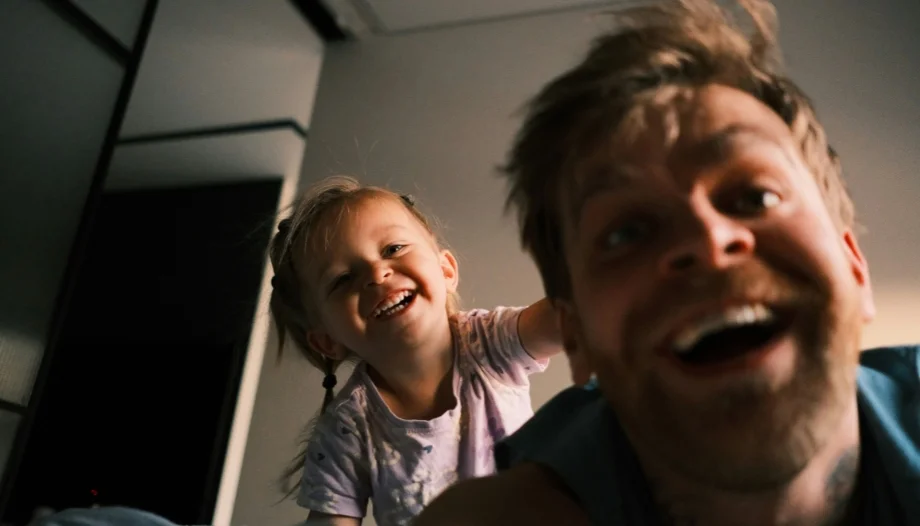
Around the world, “Father’s Day” is celebrated during the month of June. Furthermore, the liturgical calendar invites us to contemplate the Sacred Heart of Jesus. It is a time to reflect on the ways in which fathers love their children. I extend my congratulations to all fathers—those present and absent, those committed and those estranged, those who work tirelessly to give their children the best, those who have made mistakes, the living and the deceased… all have felt the longing to live for their children, and all are called to exercise their fatherhood in the manner of God. I want to address in particular those who do not know how to “connect emotionally” with their children and wish to do so. I recently visited a friend who was imprisoned for five years:
-I received my father's first hug when he came to visit me in prison. We cried together for the first time and were able to say to each other: I love you”-
These words, spoken by a grown man as he recalled his story, reveal a wound that many people carry in silence. It wasn’t that his father hadn’t been physically present. He had worked, he had provided for the family, and he had fulfilled many responsibilities. But for years there was a deeper absence: the absence of a hug, of a kind word, of the look that says, “I care about you.”.
Sometimes parents believe that love means only providing for, correcting, and protecting their children. And those are certainly important expressions of love. But a child needs something more: to feel the emotional closeness of the person who gave them life.
The science of human development has shown that secure emotional bonds during childhood influence the way a person learns to trust, manage their emotions, and relate to others. A child needs to feel seen, heard, and valued.
Why do some parents become emotionally distant?
One of the most common reasons is their own upbringing. Many men were raised in environments where expressing feelings was seen as a sign of weakness. They grew up hearing phrases like: “Men don’t cry,” “You have to be strong,” “You don’t need affection.” They learned to suppress their emotions and, without realizing it, repeat that same pattern with their sons.
Other parents love deeply, but they never learned the language of affection. No one taught them how to hug, to ask, “How are you feeling?”, to listen without judging, or to say, “I’m proud of you.” It’s not necessarily a lack of love; often it’s an emotional limitation that needs to be acknowledged and healed.
There are also parents who rely on their authority. They believe that being a good parent means making demands, correcting their children, and preparing them for life. The problem arises when correction is a daily occurrence, but recognition is almost never given. As a result, children often hear about what they’re doing wrong and very rarely about what they’re doing right.
Consequences of a Distant Father
The consequences of prolonged emotional distance can manifest in various ways. Some children grow up constantly seeking approval; they feel that their achievements are never enough. Others have difficulty expressing their feelings because they learned that there was no room for emotions at home. Some may become accustomed to relationships where affection is scarce, because that model is familiar to them.
But perhaps one of the deepest wounds is the feeling of not having been truly known by one’s own father: that someone knew one’s age, grades, or responsibilities, but not one’s dreams, fears, or joys.
Children need boundaries, but they also need connection. They need to know that when they fail, they are still loved. They need someone who will say, “Even if you make a mistake, I’ll still walk alongside you.”.
What does it mean to be a parent?
Our faith offers us a powerful image of fatherhood in the parable of the prodigal son. Jesus describes a father who does not sit idly by waiting to judge; he sees his son from afar, runs to him, embraces him, and welcomes him. That embrace is an image of love that restores. It reminds us that true authority is not separate from tenderness.
Being a parent isn't just about shaping a child's character; it's also about touching their heart.
It’s never too late to start. A parent who acknowledges the distance between them and their child has already taken an important step. Sometimes a hug that comes after many years can open a door that has been closed for far too long. A sincere conversation, an apology, or a word of love can mark the beginning of a new chapter.
Some parents may think, “My children are all grown up now; it’s too late.” But the human heart continues to need love at every stage of life. An adult child may also need to hear from his or her father: “I love you,” “You matter to me,” “I want to get to know you.”.
Because in the end, many children won't just remember the things their father gave them. They'll remember whether they ever felt embraced by him.
This Father's Day, don't wait for your children to say “I love you” to you—surprise them and take the initiative. Tell them from the heart: "I love you, my son!"






 Español
  English
  Italiano
  Français
  Deutsch
  Polski
  简体中文
简体中文