


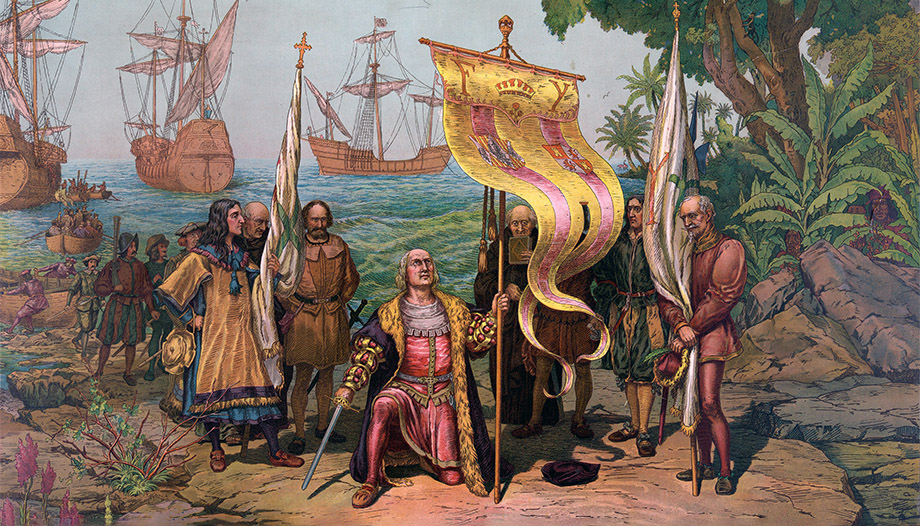
If someone had told Queen Isabella I of Castile that, more than five hundred years later, Spain and the Americas would still be united by a common language, a shared culture, and a faith that has survived wars, independence movements, and profound social transformations, she herself probably wouldn't have been able to imagine the significance of that encounter between two worlds. What began as an extraordinary undertaking ended up giving rise to a community of peoples that, five centuries later, still has much to contribute to the world.
However, we are not always aware of the value of that heritage. We spend more time talking about our differences than recognizing all that we share. That legacy lives on in our institutions and communities. It is Hispanicity.
This is the proposal we want to make in the 28th Congress of Catholics and Public Life, which we celebrated from November 13th to 15th at the CEU San Pablo University in Madrid, under the motto “America and Spain: the faith that unites us. A round trip”. It's not about looking at the past with nostalgia, but about asking ourselves what we can do today with what we have received and what future we want to build together.
The manifesto for this edition begins with a statement that I fully endorse: “Hispanicity is not a hypothesis, nor a nostalgia, nor a cause pending proof: it is a fact.”. We share language, culture, and history. But above all, we share a faith that has shaped our understanding of individuals and society.
That faith was an essential part of the encounter between Spain and America. And we must not forget that it is a two-way street. The vitality of many Christian communities in the Americas is an inspiration to a Europe that seems to have lost its bearings.
Remembering our roots also requires knowing them. Queen Isabella I of Castile stipulated in her will that the native inhabitants of the Indies should be treated as free people. Later, the Laws of the Indies and the School of Salamanca, with Francisco de Vitoria, contributed to developing a reflection on human dignity and the limits of power. Although not always respected, those principles can still guide our decisions.
We find ourselves at a time when certainties that once seemed firm are being questioned. Polarization and distrust are growing, and many young people are searching for answers. Faced with this reality, we Catholics must participate in public life with resolve, without abandoning our convictions and without ceasing to listen to others. Faith cannot remain confined to the private sphere: it must also inspire our commitment to the common good. And that commitment begins in our immediate surroundings: in our families, at work, and in respecting those who do not share our views.
With that intention, we have prepared a Congress open to dialogue between different generations and experiences. Joining us will be Hernán Larraín, former Minister of Justice and Human Rights of Chile. Adriana Tudela, a lawyer and former Peruvian congresswoman, will address a fundamental question: what should the limits of the State be? We will also have María Eugenia Campos, Governor of Chihuahua, Mexico, whose experience will allow us to hear another perspective on political responsibility.
The Hispanic world and its legacy of faith and hope will be the focus of one of the roundtables, with the participation of, among others, the Venezuelan Hispanist Carlos Leáñez. Christian Gálvez and José María Zavala will also be present, along with younger voices such as Rene ZZ and Pablo Sánchez Bergasa.
There will also be moments of prayer, celebrations of the Eucharist, and a holy hour with Hakuna. These are not secondary activities. They are part of the identity of a Congress that seeks to address the presence of Catholics in society from the perspective of what gives meaning to our lives: faith in Jesus Christ.
The manifesto recalls an invitation from Benedict XVI: “We must live as if God existed”. This deserves personal reflection. What would change in the way we work, educate, conduct politics, or treat others if we truly lived according to our beliefs? It's not enough to defend our roots in speeches. We must demonstrate in our daily lives that these principles still hold value.
Spain and Latin America can face many challenges together if we are able to recognize what unites us. We need to rebuild trust, nurture our ties, and pass on to new generations a heritage worth knowing and continuing.
The manifesto ends with a few simple words:“Together we are stronger.”. That is also the invitation we want to extend from the Congress. May these three days help us to look at our history with gratitude, our present with responsibility, and our future with hope. Because the Hispanic world is not only what we were. It is, above all, what we can still build together.
Directora del Congreso Católicos y Vida Pública.



 Español
 English
 Italiano
 Français
 Deutsch
 Polski