



 “Uruguay will never be the same again”Leo XIV: “Do not resign yourselves to the voices that repeat that the Christian family is outdated”Leo XIV in Chiclayo: “The world awaits us and the mission is just beginning”
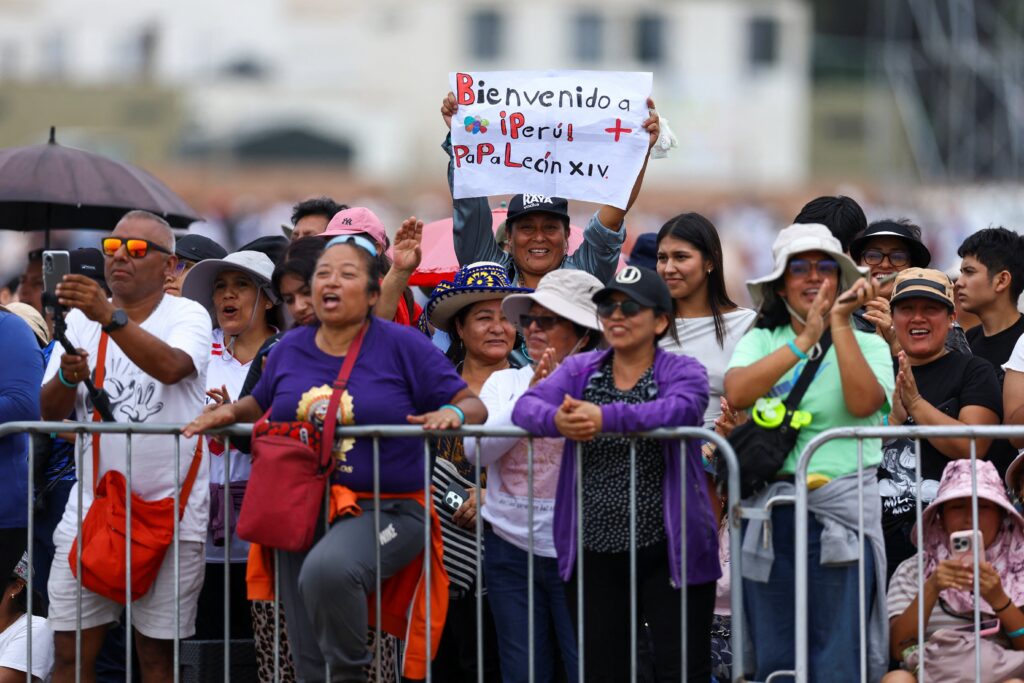
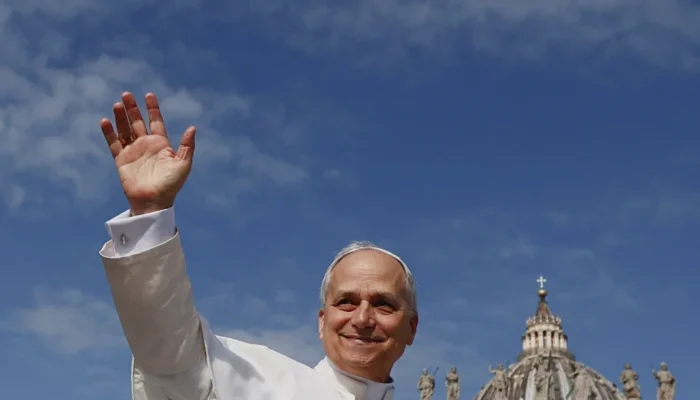
I believe that Leo XIV's visit to Latin America (November 6-17), and especially to Peru, will be of this kind. We saw a radiant pope, singing, laughing, and sharing with his people. He arrived like a father returning home to greet, look at, and spend time with familiar faces. He himself said it on his first night in Lima: «Here I am at home.».
Just remember Chiclayo. From the moment he stepped off the plane, handshakes turned into hugs. He looked again, perhaps with nostalgia, at the places where he had prepared for his mission as Bishop of Rome.
The main topics of the visit
This journey cannot be understood without considering the pontificate of Francis. The themes demonstrate this continuity: the poor, the Amazon, work, synodality. The tone, however, is different. I believe this journey had five thematic axes: the universal call to holiness, the family as the primary locus of faith, the mission that springs from baptism, Mary as mother of every people, and a credible Church, capable of reconciliation and of forming holy pastors. These axes were adapted to very different realities of faith.
Holiness
The universal call to holiness was the most constant thread. The Pope brought it into everyday life: family, school, work. Before the clergy of Montevideo, he explained it with a simple image: the human heart «little by little takes the form of that which it loves.» To make it relatable, he turned to the saints of each place. Uruguay had Blessed Jacinto Vera as its model. Córdoba was «land of saints,» with Father Brochero and Mama Antula. In Lima, Saint Rose, Saint Toribio, and Saint Martin de Porres appeared as a school of holiness that serves as a measure for the Church today. To the young people of Buenos Aires, he showed the other side: being holy involves serving and not bowing down to success, money, or appearances.
The family, the first place of faith
The family was the second central theme, and the reason is common to all three countries: faith is no longer transmitted on its own, especially in a secularized and often antagonistic society. In Florida, the Pope thanked the mothers and grandmothers who passed on the faith from generation to generation and asked them not to grow weary. In Buenos Aires, he presented the family as a pillar amidst the hardships of our time and urged people not to resign themselves to those who consider it obsolete. To the young people of Uruguay, he spoke of the future: he asked them not to fear lifelong commitment, whether in marriage, consecrated life, or the priesthood.
Baptism, mission and synodality
The third focus was the mission that springs from baptism, in which witness precedes words. In Uruguay, the most secularized country, the Pope encouraged living the faith in minority: to illuminate, it is not necessary to be many, but rather to reflect the light of the Lord. In Chiclayo, he affirmed that no baptized person can disengage from evangelizing and that the participation of the laity arises from their baptismal dignity. This same logic underpins synodality, which he promoted in the synodal teams of Buenos Aires and in the process of the Peruvian Church: a Church where all recognize their shared responsibility.
Mary, mother of every people
Mary accompanied him at every stage. The Pope appeared before the patron saint of each place and united her to his own ministry. He offered the Golden Rose to Our Lady of the Thirty-Three in Florida, to Our Lady of Peace in Chiclayo, and to Our Lady of Bethlehem in Cusco. In Luján, he recalled that his pontificate began on May 8, the day of that feast, and he remembered Francis, a devotee of the «Dark-Skinned Patroness.».
A credible Church: reconciliation and vocations
The final theme was a credible Church, capable of asking for forgiveness and forming pastors. In Luján, the Pope structured his homily like the itinerary of every Mass: reconciliation, the Word, communion, and sending forth. He asked for recognition of one's own failings and reconciliation with history, concluding with «Argentina, rise up and walk.» In Lima, he spoke of abuses in the Church and called for confronting them with truth, justice, forgiveness, and reparation. Vocations were another constant theme. From Montevideo, he invited bishops around the world to call for days of prayer and fasting for vocations.
The wounds of each country
Alongside his message of faith, the Pope spoke as a shepherd who recognizes the wounds of each nation and wants to help heal them. In Uruguay, before President Yamandú Orsi, the central theme was inequality: he asked that investment generate opportunities for all and that technology not reduce workers to replaceable parts. In Argentina, before President Javier Milei, the focus was on the economy. He spoke of those who work but cannot provide for their families, of the elderly, of young people who emigrate, and of corruption. The following day, at the Catholic University of Argentina, he added that depriving someone of work wounds their dignity.
In Peru, the Pope addressed further wounds. Before President Keiko Fujimori, he called for treating the past with justice and sensitivity in a country scarred by Shining Path, the government of Alberto Fujimori, and years of political instability. He described peace as being able to go to work without fear, and in Zaña, he spoke of families devastated by extortion and crime. In Lima, he denounced a patriarchal mentality manifested in the absence of fathers and violence against women. He pointed to the double marginalization suffered by poor, indigenous, and Afro-descendant women and rejected judging people by their appearance or origin.
In Pucallpa, before missionaries and representatives of Amazonian peoples, he denounced illegal mining, deforestation, drug trafficking, and the neglect that deprives these communities of healthcare and education. He also remembered the Indigenous leaders murdered for defending their territories. Later, at the first Mass celebrated by a Pope in the Amazon, he linked the care of the land with the care of its people: harming one is harming the other.
The fruits of the visit
The visit is already bearing some visible fruit. In Uruguay, the president of the Episcopal Conference, Archbishop Milton Tróccoli, spoke of a missionary launch. The bishops created the Leo XIV Scholarship with the funds remaining from the visit. Half will be allocated to scholarships for young people from disadvantaged neighborhoods, and the other half to programs for single mothers and for the job reintegration of people released from prison. Cardinal Daniel Sturla also reported that adults are approaching parishes to request baptism, communion, and confirmation.
In Argentina, Archbishop Marcelo Colombo, president of the Episcopal Conference, affirmed that the missionary zeal left by the Pope must be reflected in the concrete reality of each day. In Peru, the president of the bishops, Archbishop Carlos García Camader, had expressed before the visit his hope that the open hearts of the people would be filled with the Pope's message. Three issues remain on the table there: reconciliation with justice, the Amazon, and the Pope's personal connection with the country.
This trip revealed the distinctive style of Leo XIV. The themes of Francis's pontificate continue, but he presents them differently: with a very Christological and ecclesiological tone and with specific references to each people, such as their saints and Marian devotions.
His pontificate will also leave its mark. One scene perfectly encapsulates this. In Argentina, the Pope sang «Missionary Soul» with the people, visibly moved. The song is the prayer of someone asking to be taken to places where hope and joy are lacking, where God is still unknown. This is also the story of Robert Prevost, the missionary who left his homeland to serve in Peru and later in Rome. Therefore, the trip confirms what was already suspected: this is the pontificate of a missionary pope.




 Español
 English
 Italiano
 Français
 Deutsch
 Polski