


 Leo XIV consecrates Uruguay to the Virgin of the Thirty-Three, and calls for multiplying the faithLeo XIV asks Uruguayans not to confuse smallness with insignificanceUruguay: progressive secularism
Montevideo's waterfront promenade stretches along the sea (that's what we call it here, quite rightly; in Buenos Aires they call it a river, also quite rightly) for 22 kilometers. When the Pope Leo, Our promenade was covered with a huge carpet of joy.
I got to ride on a bus in the papal motorcade (one of the perks of being a bishop). I was so moved I almost cried tears of joy. The bus was moving fast, and you couldn't help but be touched seeing entire families, teenagers, mothers with children in their arms, and quite a few elderly people watching the Pope's car go by from their wheelchairs… Everyone was more than happy, they were overjoyed! Because I saw the Pope! Official figures say there were between thirty and forty thousand people on the waterfront promenade: no athlete, singer, or politician has ever received such a welcome.
But what's the truth? Hasn't it been said time and again that Uruguay is the least Catholic country in Latin America? It's only half true. It's true that, at the beginning of the 20th century, a fierce cultural battle was waged in the country against the Catholic Church. The “free thinkers,” many of them Freemasons, achieved victories such as the legalization of divorce (1907); the total prohibition of religious instruction in public schools (1909); and the complete separation of Church and State (1917).
It is true that Uruguay has a very low rate of religious practice and a very high percentage of those who have no religion, but why did Pope Leo receive such kind, affectionate treatment?… To a large extent, perhaps, it was due to the Uruguayan way of being: calm, friendly, open… But, delving deeper into the subject, in my opinion it was due to the personal and collective instinct that intuitively perceives where the truth lies.
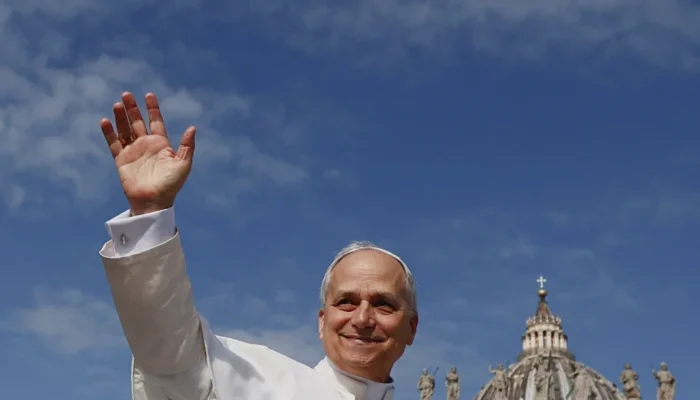
He smiles a lot and speaks little.
The Pope smiles a lot and speaks little; he listens a lot and makes sure he is understood when he must speak: then he does so with kindness, even when dealing with temporal matters: “We cannot silence our conscience when we see that a mother does not have the means to feed her children.” “A child of this country, so rich in resources, should not go to bed hungry, nor should they have to give up receiving a decent education and a decent future because of the insecurity that reigns in the streets” (in the Borro neighborhood).
In the days immediately following his departure for Argentina, the Pope has been the sole topic of conversation in all media outlets. We bishops had proposed, as the motto for his pilgrimage through our land, the message that came from Heaven and was communicated to the pastors: “I bring you great joy.” Pope Leo XIII embraced this message, explaining on more than one occasion that this “great joy” has a name: Jesus Christ, whom we must love and serve, and whom we find in our closest neighbors.
What did the Pope say in Uruguay? His speeches are available online and share a common thread: clarity, precision, affection, humility, understanding, and hope. A true treasure, in short, that Uruguayan Catholics (and Catholics worldwide) should read and reflect upon in order to act as Jesus would.
Words and, above all, gestures
More important, for understanding the teachings of Pope Leo, have been his gestures, his selflessness, his willingness to say yes to everything… I traveled from Madrid to Montevideo (a twelve-hour flight) a few days before the Pope's arrival. I arrived home tired, really wanting to sleep (the trip plus the four-hour time difference) and feeling generally unwell… jet lag They tell me it lasted several days.
The Pope had to endure a 13.5-hour flight. He arrived in Montevideo at 4:30 p.m. and was greeted by the President of Uruguay, Yamandú Orsi, and his ministers. He went to Independence Square and, after listening to an excellent speech by the President (“We are clear, Your Holiness, that in this joint endeavor that is Uruguay, the Church has been a fundamental pillar”), the Pope delivered a magnificent first address, praised without exception by all the political leaders. He then went to the Montevideo City Hall, where Mayor Bergara presented him with the Keys to the City and the declaration of Distinguished Visitor.
At the end, he crossed the Plaza Matriz, filled with children dressed as different saints, who applauded and cheered him… The Pope took an interest in them, blessed them, joked with them, and entered the Metropolitan Cathedral Basilica of the Immaculate Conception and Saints Philip and James, where hundreds of bishops, priests, deacons, nuns, and monks awaited him: it was time to solemnly celebrate Vespers… He gave us a beautiful, vibrant, and inspiring homily…
I was thinking: tomorrow, early, the Pope flies to Paysandú (390 kilometers), he'll celebrate Mass, give his homily, ask questions of everyone… and, upon returning to Montevideo, he'll go to the Borro neighborhood to experience the poverty of the people… (No one goes to the Borro neighborhood, only the Pope and those who help those in need through the Church's many work programs). When he finishes, he'll go to the Catholic University to meet with the cultural community. And he'll end the day at the Centenario Stadium: more than 60,000 people participated in the event.
The Holy Father followed the planned schedule to the letter. On Sunday, November 8, the Solemnity of Our Lady of the Thirty-Three, he celebrated Mass in Florida (95 km from Montevideo), where the image of the Patroness of Uruguay is venerated. The choir and the liturgy were beautiful… The Pope exhorted: “I had been told that, although Uruguay is a relatively small country, its people have generous hearts and are capable of great things. This has been evident during these days. You have prepared everything very well. Thank you from the bottom of my heart!”.
A Golden Rose
León wanted to present the Virgin with the Golden Rose. Beforehand, he repeated what Saint John Paul II had done in 1988 in the same place: “To Mary, Captain and Guide of this people, I wish to consecrate this nation anew, to entrust to her protection this land and all who live in it, and to beseech God that, through her powerful intercession, He may break the works of the devil and preserve beloved Uruguay from all that seeks to separate it from Christ.”.
President Orsi, a history professor and agnostic, appeared deeply moved as he bid farewell to the Pope. Before the Pope boarded the plane, he declared: “Uruguay will never be the same from today onwards.” So be it.
Bishop emeritus of Minas (Uruguay).




 Español
 English
 Italiano
 Français
 Deutsch
 Polski