



That Christendom, as a sociocultural and political entity, no longer exists is nothing new. The reality is that it has been practically buried for over two hundred years, although it remains alive in the minds of many Christians. Many—though not all, thank God—continue to think in terms and categories that no longer exist.
This isn't about the easy excuse of "the Church hasn't adapted to the times," or "we have to change the things about the Church that 'bother' us," etc. No. We're referring to an explosive mix that has taken root, almost unconsciously, in the minds of many Catholics, combining a feeling of being a "persecuted Christian" with a certain nostalgia for a past that was supposedly better, and a detachment from personal responsibility.
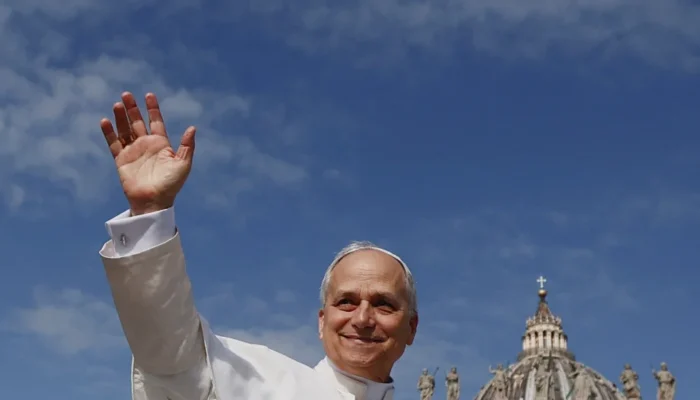
As Pope Leo XIV recalled at the beginning of his catechesis on the Pastoral Constitution Gaudium et spes, “Saint John XXIII, already in his inaugural address of October 11, 1962, wanted to show his disagreement with the 'prophets of doom', who 'even in their ardent zeal […] go about saying that our era, compared with past ones, has been getting worse; and they behave as if they had learned nothing from history'‘. Experts from Mary's University point out something similar in From Christianity to apostolic mission, in the face of the new reality of a post-Christian society: “One of the reasons for this rapid collapse has been that the change that the global vision of society had been undergoing for some time went unnoticed, and the Church institutions did not adapt to it, but continued to be led with an attitude of 'nothing's happening here.' Until a moment came when such an eroded Christian vision was unable to bear the weight of the culture: the house fell and its ruin was great.‘.
Indeed, we are not in the glorious age of Christianity, probably because God's true glory belongs to the realm of eternity. In our lives, at most, we glimpse a glimmer of that glory, but that is our "promised kingdom." When the apostles ask Jesus if he will restore the kingdom to Israel, Christ does not specify a time, but rather that they will receive it. “the power of the Holy Spirit that will come upon you, and you will be my witnesses in Jerusalem, and in all Judea and Samaria, and to the ends of the earth.” (Acts 1:8). The kingdom of God is shaped by the task of each one of us, every day.
Especially interesting at this point in social history and the history of the Church is the catechesis that Pope Leo XIV is developing on the Gaudium et spes, in which he reminds us that “The Church is called to serve humanity, listening to and welcoming the deepest questions of its heart and the longings that dwell within it, pointing to Christ as 'the key, the center and the end of all human history'‘ (Leo XIV, Catechesis at the General Audience, September 2, 2026). It is not about changing the names of old structures, watering down doctrine or infantilizing morality, but about changing mental structures and making them truly Catholic in order to respond to the world with the radical nature of Faith and the Gospel.





 Español
  English
  Italiano
  Français
  Deutsch
  Polski
  简体中文
简体中文