




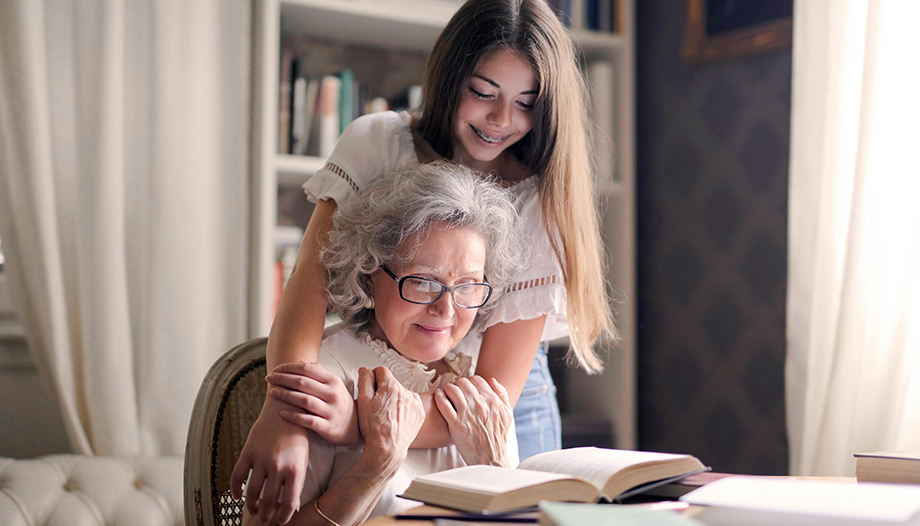
 "Bring children close to the elderly", Pope asksVittorio ScelzoElderly people ask not to be left alone".Caring for elderly priests
I've recently read two books about the elderly that have really impressed me. The first one, “When the cranes return south” by Swedish author Lisa Ridzén (RBA 2024) tells the story of Bo, who is already ill and whose wife has been admitted to a nursing home for people with dementia. Bo lives alone in a house in the middle of the forest, with only his dog and the assistance of home care providers.
I was moved by this simple story, which tells of the old man’s affection for his dog, his struggles to come to terms with his loss of independence, his grief over his absent wife, and his desire to communicate better with his son Hans—even though he feels that Hans now wants to control everything.
The second book is called “Acknowledgments”, by the French author Delphine De Vigan (Anagrama 2016), tells the story of an elderly woman who needs to express her gratitude before she dies. With the help of Marie, a neighbor who is like a daughter to her, and Jérôme, the speech therapist at the nursing home where she lives, Michka will try to fulfill her wish to find the couple who, during the German occupation when she was a child, saved her from death by taking her in and hiding her in their home.
The story De Vigan tells made me think that perhaps it should be the other way around. We should be the ones thanking the elderly while they’re still with us. We owe them respect, gratitude, and a willingness to listen.
Existence Projects
Sometimes it’s not easy to live with or care for older people, but we must always remember that they are not children. We can’t scold them, corner them, or forget that they have a lot to offer. We worry about their medications, their diet, and their practical needs, but we don’t put ourselves in their shoes.
As Pope Francis stated in his catechesis on February 23, 2022, “For a stage of life that is already a defining part of the community and spans one-third of one’s entire life, there are—at times—assistance programs, but no life plans. Plans for assistance, yes; but no projects to help them live life to the fullest. And this is a void in thought, imagination, and creativity.”.
We must therefore reflect on how important and beautiful it is to care for the elderly, and on how we can best support them. We can share a quiet conversation, a laugh, a gentle touch, or simply spend some time by their side, even if we say nothing. We can listen to their memories—or their ramblings—and help ease the anxiety and fear that old age sometimes brings.
Some people wonder why we should keep a elderly person who no longer recognizes anyone or who has a terminal illness. “What’s the point of that life?” many people ask themselves. Clearly, these are situations that cause great helplessness, suffering, and exhaustion. Why are those poor old people still here if they don’t realize what’s going on? The answer isn’t simple and is understood more with the heart than with the head. As always, and as with almost everything in life, there is only one explanation: love.
The elderly teach us to love; they teach us lessons in perseverance; they show us what dignity is—because they embody it and because, through the eyes of faith, they are especially loved by God. As Pope Francis reminded us, the elderly are a gift: “Old age is a gift for all stages of life. It is a gift of maturity and wisdom.”.
Thanking the Elders
I am quoting from another book titled “Vivero,” written by the Chilean author A. J. Ponce, about his experience attending a meeting for family members of people with Alzheimer's: “I met Manuela at one of those talks given by veteran nurses and caregivers at the mental health center where Dad was diagnosed. She had come to say goodbye. Her father had died a few days earlier. She no longer wanted to have anything to do with anything that reminded her of the disease that had taken not only her father but also her sense of time. She didn’t say that in her farewell speech. She told me later at a café near her home. What she assured all of us—first-time caregivers who had just been notified of our relatives” new condition—was that it had been the process that had helped her grow the most in her life. Sixty-three years old, a husband, five children, two miscarriages, a career as a linguist—and what had made her grow the most was holding her father in her arms to carry him from the bed to the shower. Every day, for fifteen years. “What does it mean to grow?” We grow when we care for others. That changes everything.
Those who need care take care of us, even if they don't realize it. They make us better people. When I was little, they would take us from school to visit the elderly at a nursing home. It didn't smell very good, and some of the elderly residents were a little scary. As a young child, I didn't understand the purpose of those visits, but I came to understand it years later.
The elderly came before us. They surely fought tooth and nail as well, even though now all they have left is the tremor in their voices, their sometimes distorted or nonsensical words, their frailty, and sometimes their complaints and grumbles. They inspire in us the kind of love that can save the world. The most unconditional kind. That’s why we need them. Thank them while you still have the chance.






 Español
  English
  Italiano