




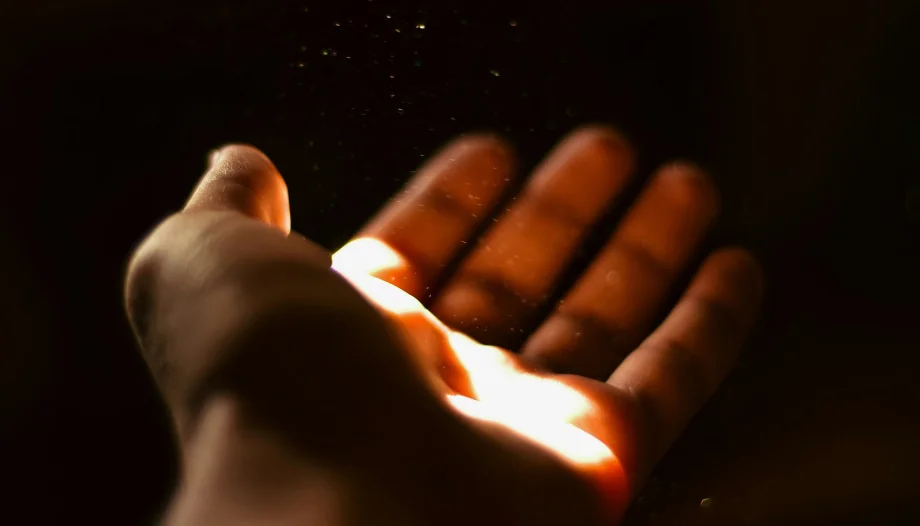
The other day, at my parish, I heard the testimony of a person with a disability. To be honest, it gave me a lesson on forgiveness that I felt compelled to share.
She spoke bravely about the pain she had endured throughout her life, facing ridicule from others because of her appearance or abilities. She confessed how difficult it was for her to forgive those who had caused her suffering. Listening to her moved me deeply. It made me understand that suffering transcends IQ and labels. The human soul suffers the wound. We all recognize hurtful words, inappropriate gestures, and how, in the face of aggression, resentment, envy, or bitterness can surface within us.
But what is forgiveness?
According to the RAE (Royal Spanish Academy), it is the remission of a deserved punishment, of an offense received, or of some outstanding debt or obligation.
According to paragraph 2843 of the Catechism of the Catholic Church: «Thus, the Lord’s words on forgiveness come to life, this Love that loves to the extreme of love (cf. Jn 13:1). The parable of the unforgiving servant, which culminates in the Lord’s prayer on forgiveness (cf. Mt 18:23-35), reminds us: «So will the wrath of my heavenly Father be upon anyone who does not forgive his brother from his heart.» It is there, indeed, in the depths of the heart, that everything is bound and loosed. It is not within our power to cease feeling the offense and forget it; but the heart that offers itself to the Holy Spirit transforms the wound into compassion and purifies the memory, turning the offense into intercession.«.
The Catechism recognizes something fundamental: it is not within our power to stop feeling the offense. Forgiveness does not consist of repressing the feeling of wrongdoing, nor of numbing the heart; but rather of preventing the wound from becoming infected with hatred.
This internal struggle between wounds and grace can be found in the writings of Saint Josemaría Escrivá. In The Way, he invites us not to seek excuses in the harshness of our surroundings or in the behavior of others to justify our lack of charity. In paragraph 452 he writes:
"Have no enemies. —Have only friends: friends… on the right —if they did you good or wanted to do you good— and… on the left —if they have done you harm or tried to do you harm.".
And to delve deeper into how to react to incomprehension or contempt, point 682 gives us a very practical recipe for everyday life:
«"If you find it hard to forgive, remember that Jesus died for you and has forgiven you everything. Look at yourself on the Cross and you will see how little they do to you, compared to what they did to the Lord... and to what you do to Him.".
This same lesson was taught to us by Saint John Paul II. In 1981, after surviving the assassination attempt in St. Peter's Square, the Pope not only publicly forgave Mehmet Ali Ağca from the ambulance, but two years later he visited him in Rebibbia prison. That private meeting, looking into the eyes of the man who had tried to take his life, was an excellent lesson in what it means to not let evil have the last word. John Paul II showed the world that the strength of humankind lies in the capacity to transform aggression into an act of mercy.
That woman from my parish taught us a truth that we can easily forget: forgiveness is not an automatic act nor a force born of human volition, but a decision of the heart sustained by grace.
Seeing her vulnerability, I understood that forgiving doesn't mean justifying the harm done or erasing the past, but rather denying resentment the power to dictate our present. When we stop focusing solely on the offense and offer our open wound to God, forgiveness ceases to be an unattainable act and becomes a true experience of freedom and love.
Father of six daughters. Speech-Language Pathologist and child of deaf adults (CODA). My personal and professional stories are intertwined in a single calling: to break down communication barriers.





 Español
  English
  Italiano
  Français
  Deutsch
  Polski
  简体中文
简体中文