



 What a mess you've made, Carlos!Leave me alone... I want to be free! The abortion debate"Inconvenient truths for autonomous people": a dissection of the tumors of our society.
The November 29th elections are approaching, and in this fragmented environment, with factions on both the left and right, where politicians seem detached from the real needs of the people, the revolutionary thing for us to do would be to vote—silence the media noise and polarization—for the politician who demonstrates the greatest commitment to public service and competence. Not for the one who shares my ideology or best understands how to exploit the fragmentation to their advantage. Because that's not progress; it's perpetuating power at the expense of the country's downfall. The alternative is to seek a more sustainable evolution for society by electing the best leaders.
It would also be revolutionary and beneficial for politicians to govern with the goal of creating a more livable society, one that solves problems and addresses current challenges. Their calling card should be «Actions, not words»—visible actions that resolve or improve concrete social, technical, and other problems.
Given this, we citizens must ask ourselves: Are we capable of choosing the best (least bad) leaders based on their competence, regardless of their ideologies (left or right)? Or are we trapped (enchanted) by empathetic preferences (they're one of us), to prevent others from governing, or do we seek politicians who solve problems? Are we capable of choosing authentic politicians (with flaws), without being swayed by polarization? Let each of us answer according to our conscience.
And what about politicians? Are there guidelines for choosing a politician who is committed to public service and who implements effective social and technical policies? How can we identify a politician who seeks to solve problems and promote the progress of society? How can we detect the “wolves in sheep's clothing” in politics? The way is clear. Faced with a political class that is increasingly corrupt, cynical, and egocentric, the way to separate the wheat from the chaff is to analyze the vices of politicians in order to find, by contrast, the antidote—that is, to discover the virtues of a true politician. Enrique García-Máiquez would define it as the nobility of spirit of a 21st-century gentleman who is willing to fight in political battles, but not just any old way. And we should vote for those politicians, regardless of their party affiliation.
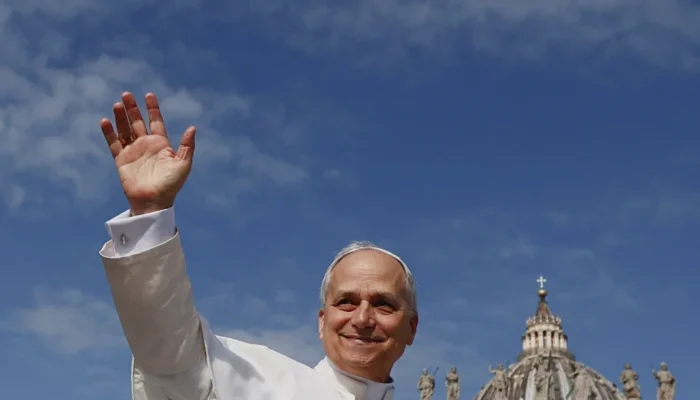
For example, instead of seeking personal gain, or the gain of one's own family, the path forward lies in pursuing the common good, placing it above individual interests, thus enabling the creation of a society that rejects moral and material corruption. As Leo XIV stated in his address to the Congress of Deputies on June 8, 2016: “The common good is, in a certain sense, «the social form of human dignity» (cf. Magnifica Humanitas, 59). It does not consist in the mere sum of individual interests, but in «the sum total of those conditions of social life which make it possible for associations and for each of their members to achieve their own perfection more fully and more easily» (Gaudium et Spes, 26). When the common good ceases to be a shared horizon, public action risks fragmenting into partial interests, incapable of safeguarding what belongs to everyone.”.
We can continue… In contrast to politicians who use institutions for their own benefit, we can talk about politicians who serve the institutions, awakening their vocation for public service, which a true politician should exercise.
In contrast to polarity (the legitimate defense of certain ideas) that ends in polarization (the deliberate pursuit of fragmentation to provoke social unrest, generate division, and create chaos), the virtue lies in respecting each person's freedom of thought. On September 17, 2025, Salvador Illa (President of the Generalitat of Catalonia) and Monsignor Luis Argüello (Archbishop of Valladolid and President of the Spanish Episcopal Conference) engaged in a public dialogue in Madrid, at the Pablo VI Foundation, where Argüello defended “polarity” as a legitimate way to showcase diversity, in contrast to polarization, which “is growing as an electoral strategy because difference is not valued.”.
Given the technical incompetence of some ministers in managing infrastructure, healthcare, economic, scientific, and administrative matters, we must seek out technocrats or advisors in their respective fields (and not in “political marketing,” like the hundreds we have now). For example, to find sustainable solutions for pensions, address the forgotten tragedies of the La Palma volcano, the DANA storm, the invasion of Ceuta, or the Adamuz and Urda accidents…
In contrast to street-level leadership, there is civic and virtuous leadership. The main characteristic of a leader is consistency in their life, that is, setting a good example rather than engaging in neat, superficial, and posturing political actions. The virtues of a leader are dialogue, respect, sensitivity, and the pursuit of the common good.
In short, as Aristotle stated in his Nicomachean Ethics, politics is the highest practical science, seeking to organize the community to achieve the good life and happiness (eudaimonia) of its citizens. If politicians were able to reclaim this noble function, and if citizens were able to elect them, setting aside their ideologies, so that they could organize our society for the good life and happiness, we would be in a much more favorable situation for everyone.





 Español
 English
 Italiano
 Français
 Deutsch
 Polski