


 12 readings on St. JosephOscar Wilde. Reading "De Profundis" 125 years later The demonsby F.M. Dostoyevsky. A journey to moral "solidarity
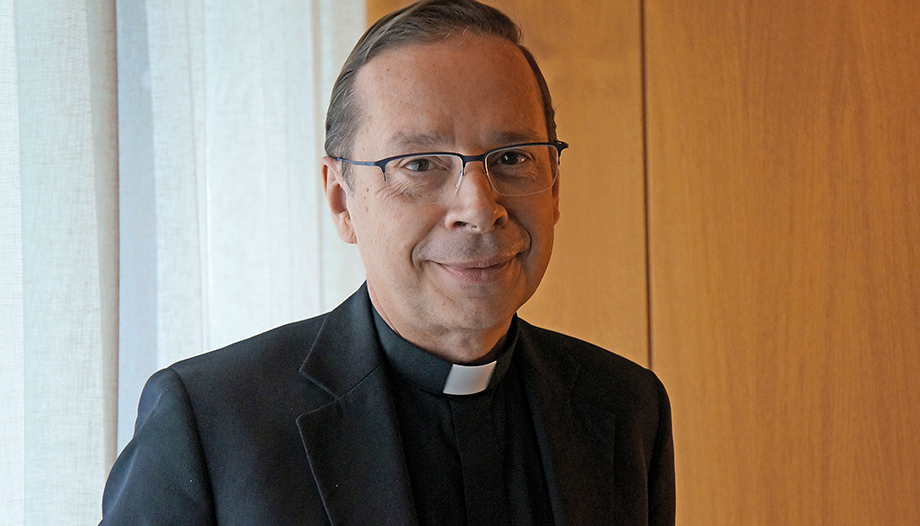
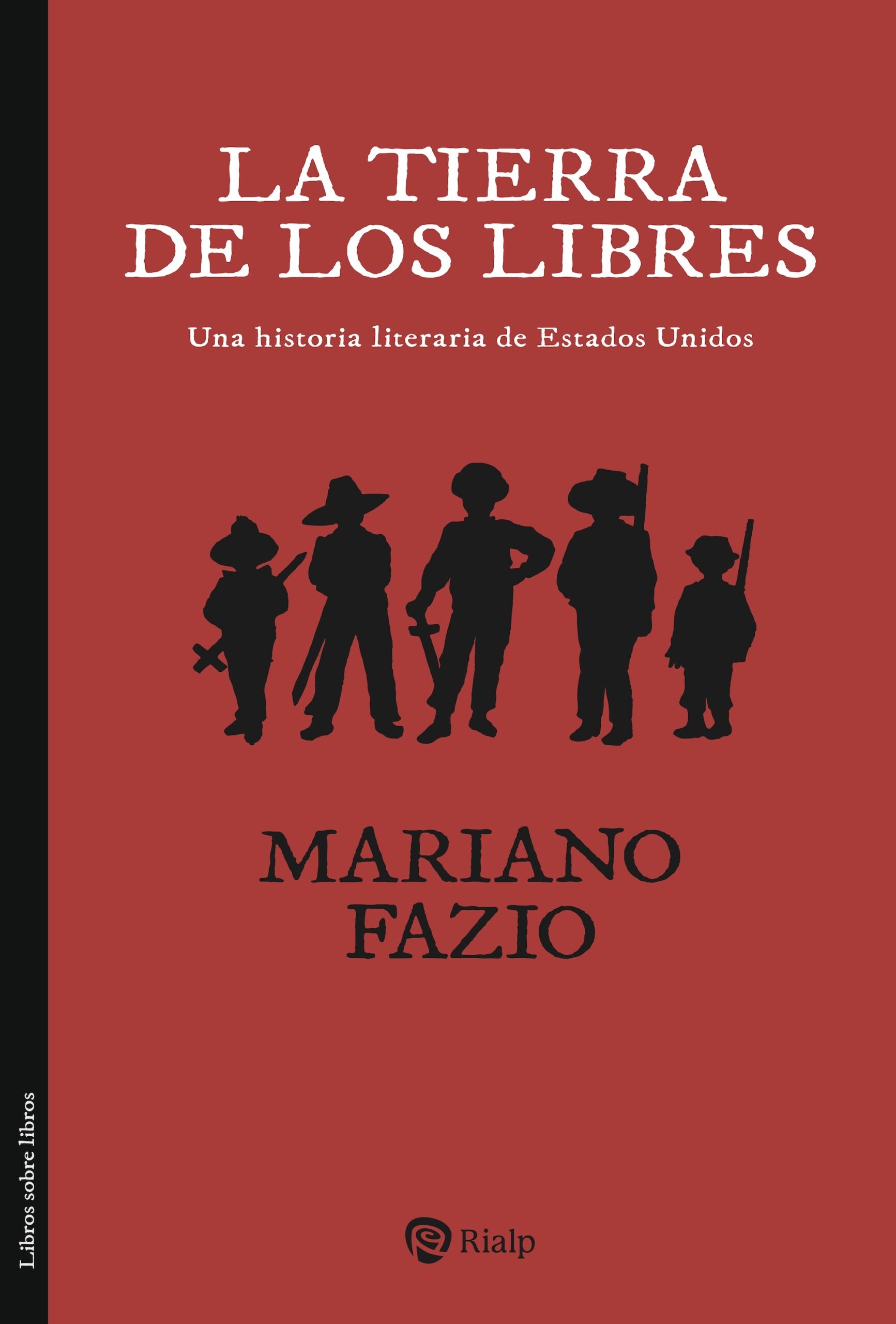
Mariano Fazio, historian, philosopher and auxiliary vicar of Opus Dei, has just published a book in which he traces the history of the United States through its literature. On the occasion of “The land of the free”speaks to Omnes about the importance of reading the classics and promoting reading among young people. He also recommends some titles to delve into Western literature.
The land of the free
What encouraged you to write this book?
- In addition to being a writer, I am fundamentally a priest and, therefore, I am always looking for new ways to transmit the values of the Gospel. It seems to me that through the great books, which are the classics - a classic is a universal book, that is, even if an author is profoundly, in this case, from the United States - if he speaks to me of truth, good, beauty; if he knows how to give me instruments to distinguish the good from the bad, the beautiful from the ugly, the true from the false... it is a very natural way of transmitting the Gospel as well. Even if the author is not Catholic, even if he is not confessional, good literature transmits to me what makes the human soul vibrate.
For this reason I have written several books on classics: five Italian classics, British classics, Spanish Golden Age, six great Russian writers... now it is the turn of the United States.
What criteria did you use to make the selection of authors and books?
- It is a somewhat original book in the sense that I was interested, taking advantage of the 250th anniversary of the independence of the United States, to make a journey through history through books that tell me about each historical period. From before independence, for example with “The Last of the Mohicans”, and ending in the present day with “The Road” by Cormac McCarthy.
Therefore, it is not simply a question of the literary value of each book, but it must also have the characteristic that it speaks to me of a specific historical period. And we often understand history better not so much through official documents, but through fiction.
It has dispensed with captivity narratives (such as Mary Rowlandson's) and the writings of early settlers such as John Smith and William Bradford. Why is this?
- I have excluded them because they are not pieces of fiction, but are more historical documents. In “The Last of the Mohicans” there are quite a few fights between Indians and Europeans, English and French. That is why in the prologue I say that I have excluded historical documents, legislation, etcetera. And also within literature I have concentrated on narrative, that is, novels and short stories.
You allude several times to religion in the book, pointing to the authors' criticisms of movements such as Puritanism. What is the relationship between faith and American history?
- I think a key element of the history of the United States is that, in the thirteen colonies, many of those who went there did so precisely for religious reasons. Because in England there was a persecution against what were called at that time dissenting churches or dissenting faiths. Therefore, Catholics, Quakers, but especially the Puritans, settled there seeking religious freedom.
Interestingly, in the Puritan colonies - what is now primarily Massachusetts - even though they were persecuted people, they also persecuted those who didn't think or share their own faith. And because New England had a bit of a cultural lead in the early decades of the country, I think there is a very deep Puritan imprint on American identity.
I tried to express that, for example, in Hawthorne's “The Scarlet Letter” or “The House of Seven Gables”; but also in Melville there is quite a lot of puritanism, maybe not entirely conscious, but it's like the background.
On the other hand, it has always been a country characterized by its openness to transcendence. Tocqueville, a Frenchman who went to the United States after the Revolution to analyze the prison system, was surprised by the religious freedom that already existed at the beginning of the Republic and the fundamental role that religion played in society.
So, unlike Europe, where there was always a very clear distinction between the public and the private, between religion and politics - also because of centuries of history this situation is quite understandable in Europe - in the United States religion was something incorporated into the lives of all people. And I think that is a very positive thing.
In line with the various books you have written on literature, could you recommend an Italian, a British, a Spanish, a Russian and an American read?
- From Italian literature, leaving aside the “Divine Comedy” because it is a work that in Italy we call «impegnativa», which means “demanding”. I would suggest “The Betrothed” by Manzoni, which is a story of love, forgiveness, self-giving, conversion... It is a whole world in a rather long novel that has marked all Italian generations because it has been compulsory reading in schools.
From Spanish literature, without a doubt, “Don Quixote”, which is the first modern novel; also another universe within a single book where it tells us about the distinction between reality and fiction. A book that fundamentally speaks of dialogue: Don Quixote and Sancho Panza are continually talking and that humanizes them. It is the process of «sanchification» of Don Quixote and «quixotization» of Sancho, and it helps us a lot at a time when dialogue is sometimes cut off.
From Russian literature it is difficult to choose among great classics, but I would say “Anna Karenina” by Tolstoy. It is curious that Dostoevsky did not have a very good relationship with Tolstoy, and yet he said that it was the best novel that had been written in the history of world literature. Here, too, we are told about the consequences of the acts we perform freely, and how a wrong decision, if one does not rectify it, can ruin one's life; and on the other hand, coherence with values can lay the foundations of a happy existence.
And in English literature my favorite author is Dickens. I also published a book called “Dickens” Universe: A Lesson in Humanity“, because he is a man who talks fundamentally about how we have to lead our existence so that it is a successful, complete, happy existence; and the key is the sincere gift of self, giving oneself to others. There are many characters in Dickens who give themselves totally to others and they are the happiest, most joyful, most attractive people. In that sense, if I may, as he is the favorite author, I would give two books: ”David Copperfield“, which was the favorite of Dickens himself, and ”Bleak House", where there is a central character who is Esther Summerson, which is a school of the sincere gift of ourselves.
And in American reading, there is a lot to choose from, but I would say “The Grapes of Wrath” by John Steinbeck. It's set in the Great Depression of the early 1930s: a family that has to emigrate from Oklahoma to California, that has dreams of getting ahead, and yet those dreams are not realized. But it talks about the dignity of poor people, people struggling to make a living and the importance of the family unit, etcetera, and that mercy to be shown to the weakest people. I think it is a book that today, given the current situation, sheds a lot of light.
You have talked about how the classics can help us reach the truth. Nowadays reading is almost a fashionable thing to do. How do you think we can make the leap between simply «reading for the sake of reading» and «reading to find the truth» and make it concrete in our lives?
- Through the same social networks there are so many blogs and YouTubers that talk about books and I think many of them help a lot to at least arouse that curiosity.
The point is that you have to choose the right book to start with, because of course, if you start reading “The Brothers Karamazov” or “Crime and Punishment” or “War and Peace”, you may despair because they are difficult and very long books. On the other hand, if you start with a book that is very accessible, you will get a taste for it.
I think we have to make, in quotation marks, an «apostolate» of reading and those of us who read, to encourage young people by saying: «why don't you try this book, or the one beyond, and you will see how it opens your horizons.
It is impossible to travel all over the world and through all times; the most economical way to do so is precisely by reading.
I would like to give some titles of books with which you can start reading and you will see how they really leave many seeds in your soul. For example, by Tolstoy, “The Death of Ivan Ilyich”, which explains the meaning of life in a very exciting way.
Then, following Dickens, “A Christmas Song», where he talks about the true meaning of Christmas, but he does it not by giving a sermon, but through a tremendously endearing story.
To return to the book I have published, “The Land of the Free”, there is a little book that is very well known called “The Red Badge of Courage” by Stephen Crane, which tells us how a teenager -who at first thought he was very brave- lives through the Civil War in the United States, and there he realizes that he has many virtues but also many defects, many limitations, and he begins to know himself.






 Español
  English
  Italiano
  Français
  Deutsch
  Polski
  简体中文
简体中文