



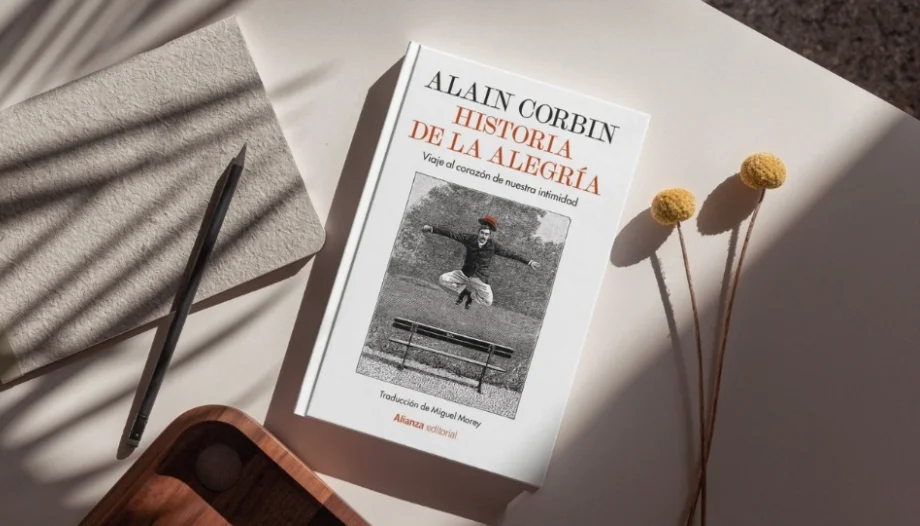
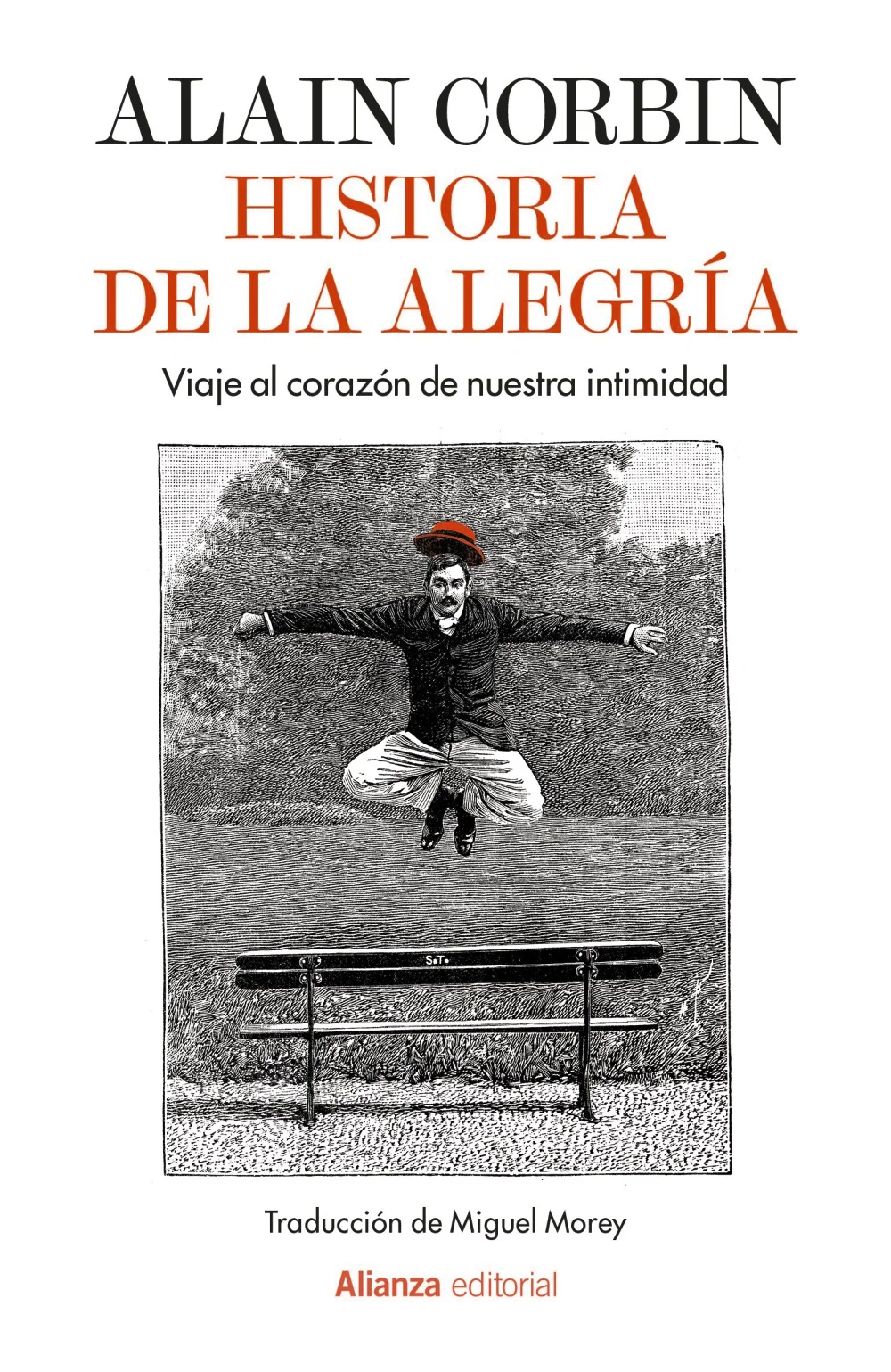
In this work, Sorbonne University professor Alain Corbin takes a highly topical journey into intimacy, addressing the importance and history of joy.
It is very interesting that Corbin has no qualms in recognizing that the best source for knowing the truth and substance of joy is in Sacred Scripture and, of course, in the New Testament and, especially, in the direct words of Mary Most Holy, in the wonderful song of the Magnificat: a song of joy and infinite gratitude to the Creator: “My spirit trembles for joy in God, my Savior” (Lk 1:47).
The path to the beatific vision
After a journey through the Middle Ages, he arrives at the unforgettable figure of Chateaubriand in his Genius of Christianity, to describe beautifully the incredible paradise that God has prepared for us, nothing less than the beatific vision (35).
Indeed, Bossuet will affirm that, as the biblical injunction says, if we love God with all our heart, with all our intelligence and with all our strength, rejoicing in His glory, joy cannot be taken from us, for it is “the joy we have from the Being of God” (40).
Some time later, Pascal will speak of the power of God's love and the joy of the convert: “Thus the soul rejoices for having found a good that cannot be taken away from her as long as she desires it: she annihilates herself, adores and blesses God in silence” (42).
Liturgy and community festivities
Our author then brings up the liturgy and the times set aside for joy by the Church: “Religious authority then prescribes various moments in which the faithful are invited to experience joy in the depths of their being, while the whole of the faithful collectively manifest great joy” (43). In particular, he will stop to speak of personal feasts: “since the Modern Age, the solemn celebration of First Communion has been a great joy, first of all, for the communicant, but also for his entire family” (46).
As a strong contrast, he will then refer to “satanic” joy and gives as an example envy, present in human history since Cain and Abel: “Who has not experienced at some time in his life a feeling of joy, more or less dark, at the setbacks of a competitor or a person who had aroused envy, or even fear?” (51).
Intrigues and power ambitions
Retz's obtaining of the cardinalate in 1652, in frank and open competition with Cardinal Mazarin, is narrated in such detail that it makes the reader suspect a scathing criticism of the envy and quarrels both in the Roman Curia and at the French court: “this episode in the life of the new cardinal, whose joy is guessed despite his reserve, demonstrates the tenacity of the intrigues within the Court and the Vatican, either to prevent or to obtain the much desired promotion” (58).
Changing the subject, he will refer to Baruch Spinoza, an author currently in fashion and highly sought after, since every week there are new publications that praise him, edit his texts and comment on them. Always following in the wake of Hegel, who had him as the key thinker of history.
Spinoza's Philosophical Perspective
First of all, he will recall that, for Spinoza, God is not affected by any feeling of joy or sadness and therefore we should eliminate from Scripture all fickleness in this regard, like all miracles. Therefore, for Spinoza, Scripture must be interpreted rationally and not literally.
He will then contribute these texts of Spinoza: “All the attributes of God are eternal and God is the cause of the existence and essence of things”. Moreover, Spinoza will affirm: “man is no longer the union of soul and body, but part of the homogeneous universe, part that has its singular structure” (61).
He will also affirm that man is dominated by the passion of joy and sadness. Moreover, he will define them as follows: “joy is the passion by which the spirit reaches a greater perfection; by sadness, on the contrary, I understand the passion by which it reaches a lesser perfection”. Therefore, he will affirm that it is convenient to strive to live with joy and to avoid sadness (61).
Logically, he will add shortly afterwards that “to understand is to understand God, through whom everything exists, God who is the truth and, therefore, the living source of the highest joy (...). Loving God does not imply any reciprocity”. But Corbin points out, “God, according to Spinoza, neither loves nor hates anyone. He loves himself” (62). Herein lies the great error of Spinoza, who disregards Scripture, Tradition and the Magisterium of the Church and therefore the vital experience of millions of Christians who believe that “God is Love” and that He has revealed it to us and granted us to experience it.
He will end by picking up Spinoza's profound subjectivism: “The greater the joy that seizes us, the greater the perfection to which we rise and, consequently, the more we participate in the divine nature” (63).
From Deism to the Christian family
When he delves into the German Enlightenment, he will bring the interesting testimony of Schiller with his ode to joy of 1785, “where he will speak of the intimate joy that animates us under the aegis of a creator God endowed with personality. This reference to deism departs radically from Spinoza's God and borrows only a part of the God of the Christians” (69).
We do not want to end this brief commentary on Alain Corbin's history of joy without referring to the joy within the Christian family, that is, the family of always, of all life, where children grow up in the love and security of parents who are committed to a careful education and a broad culture and whom they try to form with a large dose of tenderness and trust (97).
History of joy. Journey to the heart of our intimacy





 Español
  English
  Italiano
  Français
  Deutsch
  Polski
  简体中文
简体中文