



What role can the Christian tradition play in public life today? Are we witnessing a crisis of democracies? From an academic, historical, and contemporary perspective, the CEU-María Cristina Summer Courses will explore the topic “Christianity and Politics. Crisis and Continuity of a Spiritual Heritage.”.
Pope course It is directed by Julio Borges and Juan Carlos Valderrama, and the opening lecture will be given by Higinio Marín, president of CEU Cardenal Herrera University. Among the events is a discussion between the editor-in-chief of *El Debate*, Bieito Rubido, and journalism professor José Francisco Serrano Oceja.
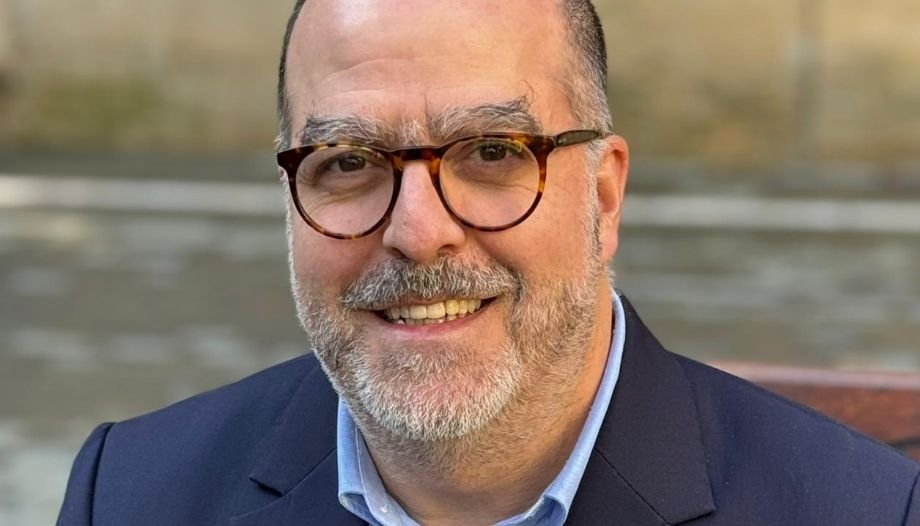
Julio Borges (Caracas, 1969), a Venezuelan lawyer and philosopher who lives in Spain, served as president of the National Assembly of Venezuela and as Juan Guaidó’s presidential commissioner for foreign affairs. Here are his answers to Omnes.
Why did you decide to offer a course on Christianity and politics?
– Because we are living in a historic moment in which many people sense that our democracies are undergoing a profound crisis, but do not always understand its causes. We believe that behind many political problems there are also anthropological, cultural, and spiritual questions.
This course aims precisely to reflect on the contribution that Christianity has made to such fundamental concepts as human dignity, freedom, justice, and the common good. It is not about looking back on the past with nostalgia, but rather about asking ourselves which elements of that heritage remain indispensable for building more humane and free societies.
There appears to be a crisis surrounding the ideals bequeathed by medieval Christianity.
– This is largely because we enjoy many of its fruits without remembering its roots. Ideas that we now take for granted—such as the equality of all people, human rights, or the value of every human life—emerged in a cultural context deeply shaped by Christianity. When a civilization loses sight of the foundations that sustain it, it runs the risk of weakening. This course aims precisely to foster a thoughtful conversation about those roots and about whether it is possible to preserve the fruits when the sources that nourished them are forgotten.
The popes—including Leo XIV—encourage Christians and Catholics to participate in politics. I don't know if we pay much attention to them.
- Politics is not merely about managing resources or the struggle for power. At its core, politics answers a very human question: how we live together and what kind of society we want to build. The Christian tradition offers a vision of the person, of freedom, and of solidarity that can greatly enrich public life. Participating in politics from a faith-based perspective does not mean imposing beliefs, but rather placing a particular understanding of human dignity and the common good at the service of all.
Very briefly. In your opinion, what principles should a Catholic politician uphold?
– I believe there are several fundamental pillars: the inviolable dignity of every human person, the defense of life, freedom of religion and conscience, the protection of the family, the pursuit of social justice, and a special concern for the most vulnerable. But in addition to these principles, there is one essential attitude: understanding politics as a service and not as an instrument of personal power. Without that moral disposition, even the best ideas end up falling apart.
You say it's important to explore the relationship between truth and the limits of power. Why?
– Because when those in power fail to recognize that there is a truth that transcends them, they run the risk of becoming arbitrary. The great political tragedies of the 20th century taught us precisely that. A healthy democracy needs institutions, laws, and citizens capable of remembering that not everything that is legal is necessarily just. The quest for truth is not a philosophical luxury: it is a prerequisite for freedom and for democratic coexistence.
Is it hard to stand up for the truth these days?
– Today, there is strong cultural pressure to reduce many human issues to slogans, labels, or simplified narratives. Defending the truth often requires going against the grain, embracing debate, and resisting the temptation to conform to what is politically acceptable. However, history shows that societies move forward thanks to people capable of upholding deep convictions with respect, composure, and courage. That is precisely why we believe this course can be a valuable opportunity to reflect on these challenges from a rigorous intellectual perspective that is open to dialogue.
Earlier, you referred to authority as a service. Tell me more about that.
– Authority, properly understood, is not the right to command for the sake of commanding, but the responsibility to guide for the good of others. Legitimate authority is not justified by force or by the fear it inspires, but by its ability to lead a community toward justice, peace, and the common good. For this reason, the best authority does not humiliate or crush; rather, it guides, protects, corrects, and serves. In this sense, leading is a burden rather than a privilege.
When we say that authority is service, we mean to affirm that those who hold public office are not above society, but rather placed at its helm to care for it. Authority is degraded when it becomes domination, propaganda, or self-serving. And it is ennobled when those in authority understand that their power has limits, that they must be accountable, and that their mission is to help others live with greater freedom, justice, and dignity.
We're wrapping up. A word about the branches of government in democracies: the legislative, executive, and judicial branches.
– Checks and balances exist because all power tends to expand, and if left unchecked, it eventually leads to abuse. That is why modern democracies distribute power among three major branches: the legislative branch makes laws, the executive branch governs and administers, and the judicial branch interprets and applies the law, while also ensuring that no one is above the law. The underlying idea is very simple: no one should be able to rule alone.
This does not mean that the branches of government should constantly be at odds with one another, but rather that they should maintain a balance. When they function properly, each branch fulfills its role while keeping the others in check. This is how citizens’ freedom is protected.
In the constitutions of countries—in Europe, in the Americas, everywhere—do you get the impression that executive power, generally speaking, is moderate or extensive?
– Generally speaking, the executive branch tends to carry a great deal of weight in modern constitutions, because governing requires decision-making, coordination, and speed. The executive branch oversees the administration, security, foreign policy, a large part of legislative initiative, and, in many cases, the budget. That is why it gives the impression—which is largely correct—of being the most visible and powerful branch of government. But precisely because it is so powerful, it needs clearer limits.






 Español
  English
  Italiano
  Français
  Deutsch
  Polski
  简体中文
简体中文