


– Russell Shaw, OSV News
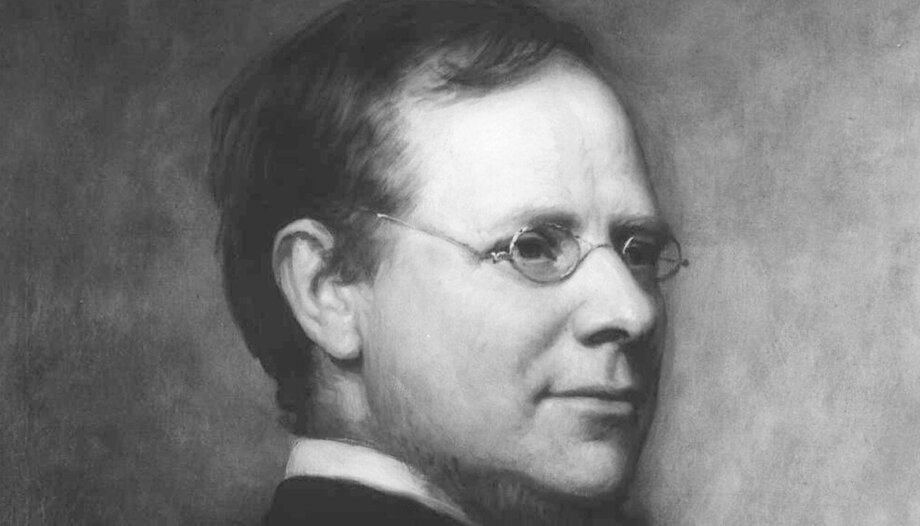
In late spring or early summer of 1842, Isaac Hecker had a vision. At his side, it seems, stood “an angelic, pure, and beautiful being,” whose presence filled him with “heavenly joy.” This life-changing experience prompted the young man, barely 22 years old, to seek a way of life that would somehow reflect it.
Although there is no record of Hecker having any other visions after that one, in a broader sense, the founder of the Paulist Fathers He remained a visionary throughout his life.
A grand dream: the conversion of Protestant America to Catholicism
His main goal was to convert Protestant America to Catholicism, something he believed was possible. After all, he said, in the United States, “the true religion will find the welcome it has sought in vain elsewhere.”.
If he is ever canonized (the process began in 2008, and he currently holds the title of ‘Servant of God’), it is understandable that he would be designated the patron saint of the Americanist movement within U.S. Catholicism.
‘Sponsor of the Americanist Movement’
On an ideological level, no one—neither before nor since—has done more than my father Isaac Hecker to promote the integration of Catholicism into the secular culture of the United States.
He was born on December 18, 1819, in New York, the third child and youngest son of a family of German-American immigrants. The Heckers were bakers, a trade that Isaac also pursued. But from an early age, despite having little or no connection to the church, he showed an unusual interest in religion.
Over time, this led him to the loosely religious movement of New England intellectuals known as Transcendentalism and to the experimental communities of Brook Farm and Fruitland.
Moving in these stimulating circles, the young man was initially influenced by Ralph Waldo Emerson, the most prominent American thinker of the early 19th century. However, over time, he became disillusioned with Emerson’s beliefs, complaining that the great man “had no idea what the church was.”.
Friendship with Orestes Brownson. Baptism, priesthood, missionary work
Around this time, he met and became friends with Orestes Brownson, a well-known writer and lecturer on religion and social issues, and a religious seeker like Hecker.
Brownson, who was sixteen years his senior, guided him toward Catholicism. As early as April 1843, Hecker wrote in his diary: “Only the Catholic Church seems to satisfy my longings.” On August 1, 1844, he was baptized by Bishop (later Cardinal) John McCloskey of New York. Brownson was baptized shortly thereafter.
Feeling a calling to the priesthood, Hecker joined the Redemptorist Order and, after studying at a seminary in Belgium, was ordained a priest in October 1849 by Cardinal Nicholas Wiseman of Westminster.
“Matters of the Soul.” A Catholic America
Upon his return to the United States, Father Hecker worked as a Redemptorist missionary. As his vision of a Catholic America grew and took shape, he also began to put his ideas into writing. The result was the book *Questions of the Soul*.
Published in 1855, the work was widely debated and earned its author a national reputation. Arguing that Protestantism did not meet the needs of seekers like himself, he wrote that the time was approaching when the Catholic Church would be seen as the only satisfactory answer. “Hecker advocated for nothing less than a Catholic America—not for the sake of the Church, but for the sake of the nation and its people,” according to biographer David O’Brien.
Evangelistic Zeal
Quickly capitalizing on the success of his book, Father Hecker published *Aspirations of Nature* two years later, a volume that outlined his vision for evangelization in the United States and the reasoning behind his conversion to Catholicism.
Much to his chagrin, “Aspiraciones” received far less attention than the previous one. The author found Orestes Brownson’s review in his own magazine, the *Quarterly Review*, particularly disappointing.
Brownson dismissed the idea that the United States was fertile ground for Catholic missionary work. He argued that the number of “sincere seekers” was much smaller than Hecker assumed, and that, in fact, “there was scarcely a trait of the American character… that was not more or less hostile to Catholicism.”.
Meanwhile, Hecker grew increasingly dissatisfied with the Redemptorists, whom he considered more interested in conducting parish missions for German immigrants than in converting intellectuals like his former friends at Brook Farm.
In August 1857, he made an unauthorized trip to Rome to present his case to the superior of the Order. However, as a result, he was expelled.
Foundation of the Paulist Fathers
But the trip was by no means a failure. During his stay in Rome, he met Pope Pius IX and secured his support for his ambitious evangelization project.
Upon returning to the United States the following year, he and four other former Redemptorists joined forces to found a new order: the Congregation of the Missionary Priests of St. Paul the Apostle, better known as the Paulist Fathers.
In the years that followed, Father Hecker was very busy, constantly traveling to give lectures to a predominantly non-Catholic audience. On one such trip, he traveled 7,200 kilometers and spoke to some 30,000 people—a considerable number in the days before radio, television, and social media. “He is modernizing the system and preparing to power it with steam,” remarked one writer.
Publications. First Vatican Council. Papal Infallibility
In 1865, he launched the magazine *The Catholic World*, which would be published for more than a century. The following year, he founded the publishing house Paulist Press.
During the First Vatican Council (1869–1870), Father Hecker secured a position on the periphery as a representative of the bishop of Columbus, Ohio, who did not attend. At first, he sided with the group that opposed issuing a formal definition of the doctrine of papal infallibility at that time, but after the Council defined the dogma anyway, he welcomed it and even saw it as a potential boost for evangelization in the United States.
Religion and Society
In early 1870, he sent his friend Brownson an extraordinary letter from Rome that elicited an equally extraordinary response. Rarely have the terms of the debate over the situation of the Church in the United States been set forth as clearly as in Father Hecker’s letter and Brownson’s reply.
Father Hecker wrote with his characteristic enthusiasm about the warm reception he had received from Europeans who envied the American-style separation of church and state. This confirmed something he had long believed: American democracy was “extending the influence of the Church, adding a new reason for gratitude for its services, and showing, in a new light, the absolute necessity of religion for civil society and good government.”.
Brownson was not convinced. Although he supported the American system as “the only legally viable option,” he said, he believed it was fundamentally at odds with Catholicism.
“Both Catholics and the rest of the population are imbued with the spirit of the country… freedom from all restrictions, boundless license. We are so far from converting the country that we cannot even stand firm.”.
Entangled in the heresy of “Americanism”
Shortly after the First Vatican Council, Father Hecker’s health deteriorated. He spent his final years in a state of partial incapacity, becoming increasingly isolated within the community he had founded. Worn down by illness and dashed hopes, he passed away on December 21, 1888, after blessing the Paulists with whom he lived.
Inevitably, the name of Father Isaac Hecker is linked to what is known today as “Americanism.” The story, which is quite complex, can be summarized as follows: in 1896, the book *Life of Isaac Thomas Hecker*, written by a man from São Paulo named Walter Elliott, was published in French, with a lengthy introduction by a liberal French priest who extolled Father Hecker’s virtues.
Catholicism à la carte?
Meanwhile, Rome was concerned about trends in liberal Catholic thought in Europe, which it associated with the Church in the United States and with the founder of the Paulists. In 1899, Pope Leo XIII published a document—addressed nominally to the head of the American hierarchy, Cardinal James Gibbons of Baltimore—in which he specifically condemned the ideas he summarized under the heading “Americanism.”.
Historians who support the Americanization of U.S. Catholicism tend to downplay the papal criticism and dismiss the Americanization as a “phantom heresy.”.
However, Pope Leo XIII’s document contains a surprisingly prescient warning against attitudes common in American Catholicism today. Among these is the arbitrary selection of Church doctrines, often referred to as “à la carte Catholicism.”.
What does that have to do with Hecker?
Even so, it’s natural to wonder to what extent all of this has to do with Father Isaac Hecker. Today, just as during his lifetime, he is known above all as a passionate visionary and a staunch optimist who wanted Catholics to integrate into mainstream American society in order to convert it. If that has not yet fully happened, it can hardly be Hecker’s fault.
——————–
– Russell Shaw, a longtime journalist and writer, authored more than 20 books, including three novels. He passed away in January 2026.
– Editor's note: This article is part of a series that explores the lives of prominent American Catholics in celebration of the 250th anniversary of the United States.
– Originally published in OSV News in English; you can read it there here.
—————–






 Español
  English
  Italiano
  Français
  Deutsch
  Polski
  简体中文
简体中文