


 Josetxo Vera, Director of Communications for the Spanish Episcopal Conference, is stepping down from his positionYago de la Cierva: “In the Pope's trips there are always surprises”.”
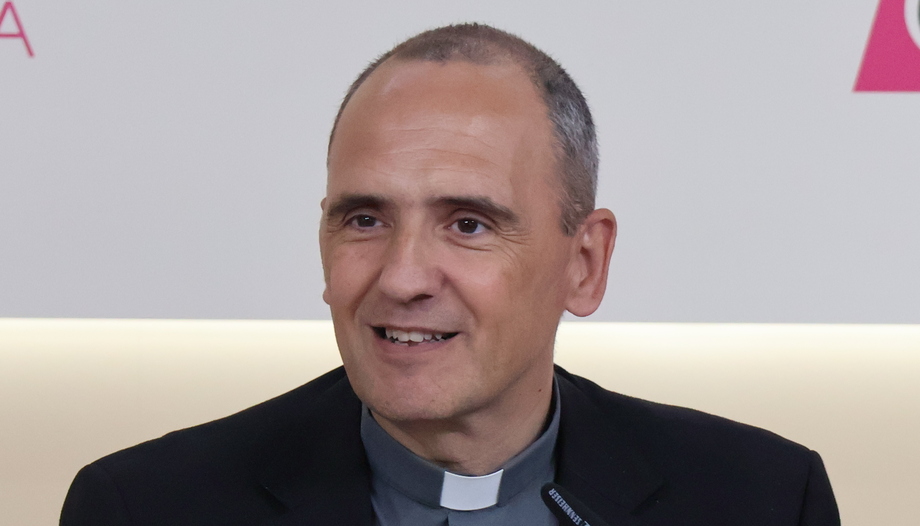
On June 24, at the press conference marking the end of the 273rd meeting of the Permanent Commission of Spanish Bishops, José Gabriel Vera, –Josetxo announced that he was stepping down from his position as Director of Communications for the Spanish Episcopal Conference.
For twelve years, this priest from the Archdiocese of Navarra–Tudela—who holds a Ph.D. in Information Sciences and a bachelor’s degree in Philosophy and Theology from the University of Navarra—has led the communications efforts of the Spanish bishops.
During this time, Vera has faced difficult moments, such as managing communications regarding cases of abuse within church settings or the questioning of the Church’s funding model, but also moments of joy and “success,” if one can call them that: the creation of the Church’s Annual Galas de la Memoria, the election of the Pope Leo XIV, and the papal visit to Spain, which marked the end of his more than two lustros in this role.
In this interview with Omnes, José Gabriel Vera breaks down the challenges the communications department of an institution as complex as the Spanish Episcopal Conference has had to face in recent years and emphasizes, above all, the importance of a genuine commitment to the Christian life in order to convey Christ’s message in today’s society.
You have been in charge of communications for the CEE At a time when social, ecclesial, and—above all—communicational changes—in media and language—have been enormous, how has the institution had to adapt to these changes?
–All institutions are making an effort to adapt to a new playing field that has expanded in recent years, in part due to the emergence of social media, which has turned everyone into a media outlet with even greater influence than that of traditional media.
Institutions must adapt to this reality. Every person has become a media outlet—including the members of the institution itself.
And, now that it has become a medium of communication, everyone thinks they’re capable of communicating effectively. That makes it harder to manage or forces institutions to adopt new management approaches. We experienced the revolution that was the Internet quite a few years ago, but during the time I’ve been at the information office, we’ve seen the social media revolution and the emergence of smartphones and, at the same time and more recently, the artificial intelligence revolution.
All of this represents a huge change, one that all of our institutions are called upon to address in order to serve the public better.
Ultimately, communication aims to serve the institution, serve the media, and serve as a meeting point: to bring together people from the institution and people from the media.
It seems to me that the Church is going through a period of adjustment that I believe will never truly come to an end.
We're always going to have to adapt to new media, new methods, and new formats.
All members of the Church must recognize their responsibility to communicate what the Church is, what it does, and what its mission is
José Gabriel Vera
What areas of the Spanish Church's communication still need improvement?
–I believe that a very important point—in line with the idea that every person in the Church is a means of communication—is that all members of the Church must realize their responsibility to communicate what the Church is, what it does, and what its mission is.
We all need to realize that we are responsible for the Church’s image. It’s not just a statement, an interview, or a newspaper headline—each of us can ask ourselves, “What am I personally doing with my friends, my family, and my coworkers to help them have a more accurate and appropriate understanding of the Church’s identity and mission?”.
I believe that the Church’s communication is the responsibility of all its members and that each one must give an account of who they are, what they do, how they live, and how they feel as a member of the Church in Spain.
It seems to me that there is significant room for improvement there.
To develop a sense of belonging and to express that sense of belonging publicly, each in their own setting and environment.
What is your assessment of this work, after more than two lustros, each of which was very different from the other?
–I can’t say whether it’s positive or negative. I think that assessment has to be made from the outside. From the inside, we’ve done some things right and some things wrong. I think we’ve done well in addressing certain issues, and I believe there are areas where we still need to improve and do better.
We've joined the world of social media, though not without some difficulties.
We have raised awareness of the life and mission of the Church. We have responded to all media outlets that have requested information. We have carried out the work expected of a press office, covering positive, negative, and neutral aspects.
Of course, it has dealt with controversial issues: abuse within the Church, ownership of buildings, interfaith dialogue, Church funding, relations with governments… some of which continue to be a constant topic in the media. Has the Church been able to convey its position on these matters?
–This brings to mind two ideas that I’ve already mentioned. On the one hand, the conviction that we are all the Church and that the responsibility for the Church’s communication rests with each and every one of us.
Everyone should be able to talk about how the Church is funded, interfaith dialogue, property registrations, or cases of abuse. But, obviously, to do that, you have to have a good understanding of what the Church is and be a part of it—with both your heart and your mind.
It makes no sense to explain what the Church is if one does not experience it firsthand and deeply, if one does not live it with the radicality of one’s very being, if one does not live it with love—with joy at belonging to this people of God and with an awareness of its virtues and its flaws, and of those of each one of us.
If each of us knew the Church well and communicated it more effectively, that would be great.
The second aspect of these difficulties is how much we know about the truth of the Church. How many people have a deep understanding of the life of the Church? And also, what is each of our individual stances regarding the Church? Ultimately, it comes down to deciding what takes precedence: my political opinion or what the Church says; my stance on these controversial issues or what the Church teaches.
There will be people who have a legitimate way of seeing things, a way of understanding the world, and a political stance that will lead them to align themselves more or less closely with the Church’s position.
In recent years, some documents and statements issued by the CEE or one of its commissions have provoked negative reactions among the faithful themselves, leading to interpretations that may be far removed from their intended meaning. Do you think that the key message of these documents has not been clearly conveyed, or that the reaction to them was not properly gauged at the time they were published?
–At this stage of the communication process, all institutions must take into account three elements that have recently been incorporated and cannot be overlooked.
First, the role of social media, which often amplifies, ridicules, downplays, or alters the meaning of what the Church is communicating.
Ultimately, social media addresses complex issues—or complex ideas—in a very straightforward, very simple, and sometimes overly simplified way. There’s no doubt that this leads to many misunderstandings.
By relying on social media, one might get the impression that the Church says the opposite of what it actually says. A photograph taken at a specific moment, a slight manipulation using artificial intelligence, or a tweet that attempts to summarize a two-hour lecture are clearly not the right ways to understand what the institution says, whatever that institution may be.
The second factor at play—one that particularly affects the Church—is the mix of styles, content, and formats, so to speak. In other words, a lecture is not the same as a homily, which is not the same as a discussion group, which is not the same as a conversation with friends, which is not the same as a presentation in class.
However, because of social media and the very fact that everything is being recorded practically in real time and broadcast over the Internet around the world, context is often lost. What was originally a homily, preached to Catholics who attend Sunday Mass, when taken out of context or fragmented and heard by a politician—who is an atheist and hasn’t attended Mass in 25 years—is difficult for him to fully understand.
Or, as they say in an academic context, when shared via a TikTok video, it's hard to understand properly.
In that sense, the Church and all institutions must realize that communication is now global, that communication is happening all the time. You’re reaching—not just the audiences right in front of you, and in fact not even primarily those audiences—but rather, you’re reaching the whole world. That means you have to speak with greater caution, or it means you have to consider a much broader context than what you might initially see.
The third factor that comes into play is the political variable. At a time when, let’s say, political stance—understood in the broadest sense—takes precedence over any sense of belonging or identity.
Politics has established itself as the valid framework for interpreting any institution. Therefore, a person who identifies with a particular political ideology interprets everything through the lens of that ideology.
This is a bit strange when it comes to the Christian life, because we tend to think that the Christian life is what gives meaning to everything we know; we believe that the proper perspective or lens through which to view reality is our Christian identity. But the reality is that today, people interpret reality through the partisan lens of one side or the other. Based on that perspective, they interpret what is said.
If politics has become the framework for interpreting reality, I think that’s a somewhat reductive and misguided way of understanding things.
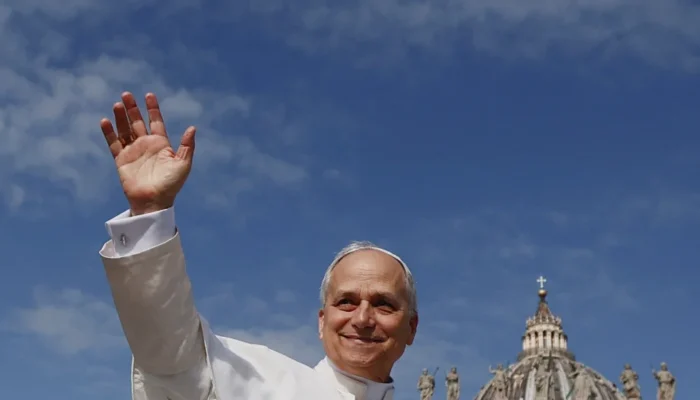
Pope Leo XIV’s visit to Spain was a magnificent conclusion to his tenure at the EEC. How would you assess the communication strategy for this visit?
–From the Pope's visit, I have simply been a small tool and a small piece of a very complex, very broad puzzle with countless pieces, in which each person has given everything they had. And in a way, the result is almost greater than the combined contribution of each of the pieces that have worked together to make the Pope’s trip a success.
I mean, from an outsider’s perspective, the trip has been a complete success. A great many people have been involved, and a great many people have done a great job. There have been countless professionals who have worked as volunteers. They have placed all their wisdom and knowledge at the disposal of the organization as volunteers. At the same time, there have been many volunteers who have worked like professionals—putting in the hours of a professional, with the commitment of a professional, and the dedication of a professional.
Among the volunteers who have worked as professionals and the professionals who have worked as volunteers, one learns a way of being in the Church that Pope Leo recognized very strongly—such as the value of selflessness, of being in a place not to receive but to give. It is a very concrete form of service in the Church, and it seems to me that it is one of the keys to the management—not only in terms of communication, but in all aspects—of this papal visit.
Communication has been complex, but at the same time, the quality of the communications teams in each of the dioceses involved has made the overall effort a success.
I think the overall picture is very, very positive.
What stands out to you about this visit?
-“Without a doubt, through Pope Leo’s messages. I think we’ll need to study them for a long time, because they’ve shown that the Church has a message for everyone, and a specific one for each person.”.
The Church is the only institution that can speak to everyone. It can speak to the art world, the world of dance, labor unions, politicians, bishops, the lay faithful, young people, the poor, migrants, and those served by Caritas.
He can speak to everyone, and he has a message for each and every one of them—a message full of commitment. That’s what stands out to me from the Pope’s visit, in addition to the countless hours of work I’ve seen the people around me put in to make sure everything went smoothly.
In recent years, we have seen how “non-institutional” communications have a greater impact than corporate communications Are we witnessing a new paradigm of communication within the Church? What can an institution learn from this new language?
–Rather than a new paradigm of communication within the Church, we find ourselves in radically new territory where change is the norm. A landscape in which we will constantly be confronted with new communication networks and new styles of communication, where everything will be constantly intermingling, where Artificial Intelligence has just begun to emerge, and this is going to change everything all over again in just a few short years.
Truly, this is a new era in the life of the Church—and in communication—not just for us, but for all institutions.
At this time, I believe we need to strengthen our targeted messages that highlight the Church’s identity. Messages that make it clear that we strive to be the people of God, that we are a people who have been saved, that we are people whom the Lord has redeemed and saved.
I believe that is the Church’s greatest source of appeal today: making it clear that death has been conquered, that sin does not have the final say, and that we must therefore incorporate this into our way of being and our way of acting. That will be the Church’s most effective message.
The Church’s greatest message is that of holiness of life. This is always woven into the fabric of the Church’s growth, and it is also what is always within the reach of all Christians. It is always possible to be holy, and the greatest service one can render to the Church’s mission is holiness of life.
So this is a mission that is within everyone’s reach. No matter how many technologies, difficulties, or problems there may be, it will still be the saints who ultimately fill the churches with the faithful. It is something that is within our power, but it is something we must demonstrate to others through the example of our lives.





 Español
  English
  Italiano
  Français
  Deutsch
  Polski