




- Katarzyna Szalajko, OSV News
As declining birth rates transform the West, the global debate on marriage and the family takes on greater urgency ahead of a meeting in Rome in October, convened by Pope Leo XIV.
New data highlight this trend: births in the United States fell by 1% in 2025, to around 3.6 million, while fertility rates in Europe remain well below generation replacement levels.
Pope Leo XIV summoned the presidents of bishops' conferences throughout the world to meet in Rome to renew and deepen the Church's debate on marriage and the family in light of ‘Amoris Laetitia’.
As in much of the Western world, fewer and fewer people are marrying and having fewer children, Catholic experts say it is an urgent issue to address, and the Church, especially parishes, have a role to play.
Birth rates decline drastically
According to the April report from the National Center for Health Statistics, released as part of the National Vital Statistics System Quarterly Rapid Release Interim Estimates, the number of births in the United States in 2025 was approximately 3.61 million, down 1% from 2024.
The total fertility rate was 53.1 births per 1,000 women aged 15-44, a decrease of 1% from 2024.
In the European Union, almost twice as many children were born in 2024 as six decades ago, with 3.55 million births in the EU in 2024. The crude birth rate, or the number of live births per 1,000 people, in the EU in 2024 was 7.9, while in 2000 it was 10.5, in 1985 12.8, and in 1970 16.4. In 54 years, 8.5 percent less.
In the United States, the total fertility rate remains around 1.6 births per woman, while in much of Europe it is around 1.3, Demographers point out that, in addition to declining family size, an increasing percentage of adults are childless.
Fertility decline goes beyond financial explanations
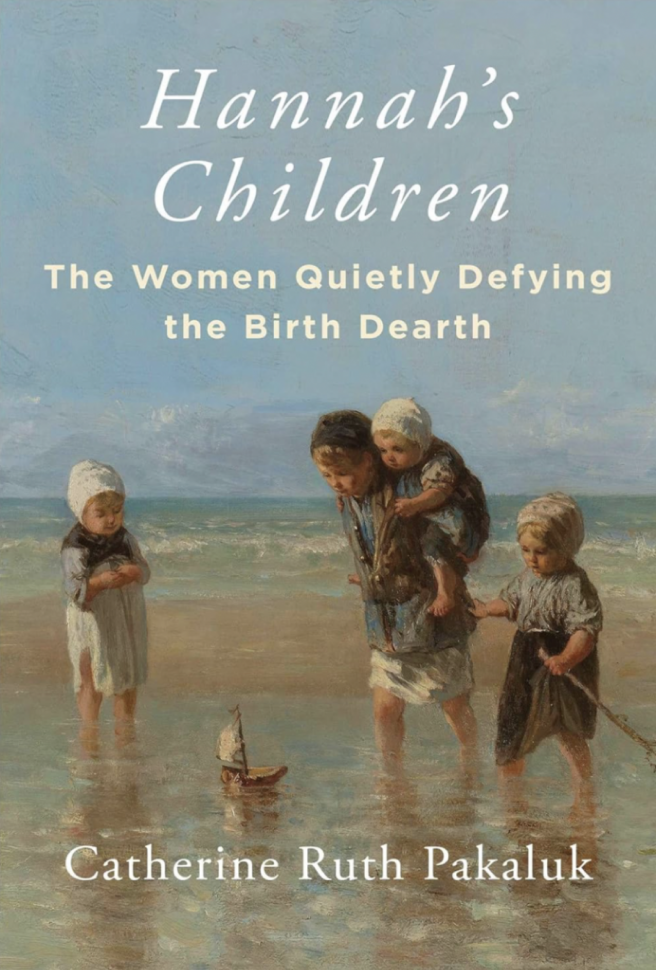
Catherine Pakaluk, an economist and professor at The Catholic University of America and executive director of the James Cardinal Gibbons Institute for Human Ecology, has told OSV News that understanding the current fertility decline requires going beyond financial explanations.
“The most important change may be structural: we have quietly dismantled the contexts in which those reasons once flourished naturally,” he said.
“For most of human history, children arrived within a network of community, extended family and shared expectations,” he explained. “The desire to have a child did not need an individual justification; it was intrinsically tied to the way life was lived.”.
Technological and cultural changes: utilitarian logic
As he explained, technological and cultural changes altered that framework. “When contraception broke the natural link between sexual union and children, it not only expanded individual freedom of choice, but also revealed a utilitarian logic that had always been latent,” he said.
“As soon as couples have to plan with children in mind instead of planning in spite of them, an unclear costing system creeps into the most intimate decision a family can face.”.
“Rejecting the idea that money comes first and family comes second would be refreshing to young people who may never have heard anything else,” he said.
The value of children is future, and largely invisible.
In this sense, he added, “children hardly appear on the balance sheet, because their value is future and largely invisible”. Catherine Pakaluk assures that indecision about parenthood is widespread and should not be ignored. “I take that indecision seriously; it's not just selfishness or confusion,” he said. “Many people sincerely want children and find they can't achieve it.”.
Paralysis in the face of commitment
He pointed to economic pressures, such as housing costs and job instability, but said they do not fully explain the trend.
“What I see in the data - and in my students - is more of a paralysis about commitment itself,” he said. “We've developed a cultural ideal of adulthood where you're constantly self-defining, keeping options open and putting off the final decision.” Children, he added, challenge that model. “They irreversibly transform you. They make demands you can't escape.”.

Eberstadt: reaching middle age without having cared for a child
Mary Eberstadt, Catholic author of, among other works, ‘Primal Screams,’ social researcher, essayist and novelist, also pointed to cultural factors. “America used to be much poorer than it is today,” she told OSV News. “So there's something else influencing the move away from marriage and family.” He identified what he described as a loss of lived experience.
“Many young women reach midlife without ever having cared for a child, because they had no experience with siblings or caring for children at a time when fewer and fewer were being born,” she said. “Caring for a baby is not scary for someone who has been doing it for years. Having to do it without the benefit of experience greatly increases anxiety about motherhood.”.
Public policies alone will not reverse the trend.
Eberstadt also pointed to the role of social imitation. “A second cause is that human behavior, as René Girard rightly described, is mimetic,” he said. “A world in which fewer people know people who are married, have children, or become engaged in their twenties, is a world in which we can expect the same tendencies to repeat themselves.”.
Pornography affects relationships and families
He added that pornography is another factor affecting relationships and family formation. “This force is so destructive that it seems unlikely that it can be remedied without a religious awakening, because the secular world not only offers no answers to the destruction of romance that pornography causes, but does not even consider it a problem,” he said.
Kugler: broad family support needed
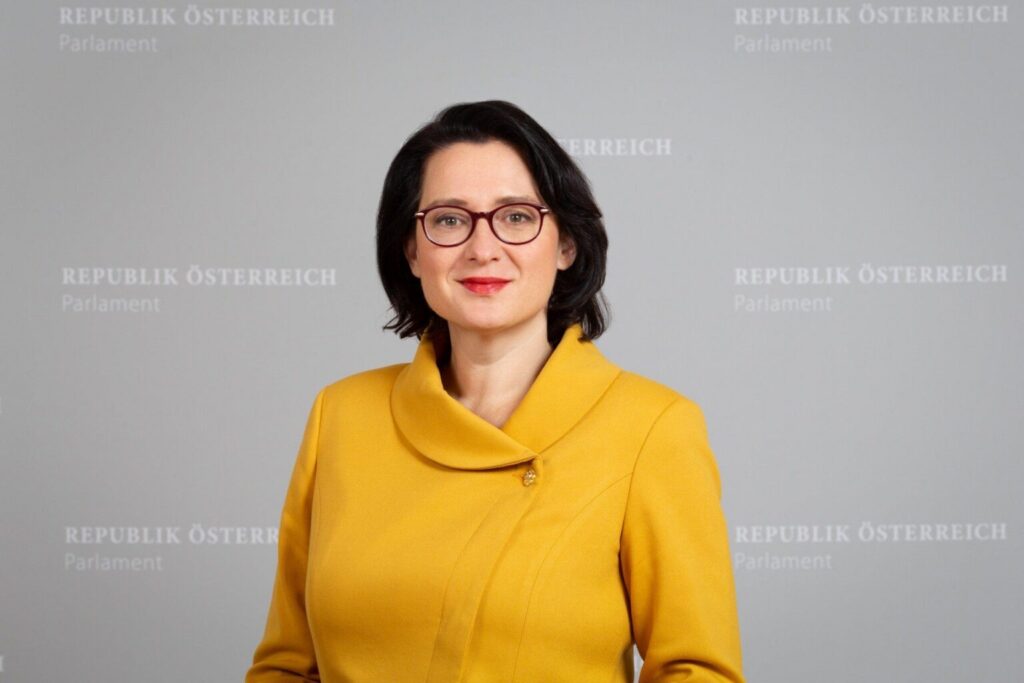
In Europe, where birth rates have remained below replacement level since the 1970s, Gudrun Kugler, a member of the Austrian Parliament and vice president of the Parliamentary Assembly of the Organization for Security and Cooperation in Europe, says that public policies alone have failed to reverse this trend.
“Broad family support - through tax breaks, transfers and in-kind benefits - is fair and necessary,” he told OSV News. She warned that, in some cases, policies may even incentivize delay, which can become a decisive obstacle. In Europe, the average age at first birth is around 30.
“Statistics suggest that if someone hasn't had children by that age, the probability of ever having children drops below 50 %.” As a result, he said, “not only do we have very few children, but we also have very few people having children.”.
Demographic decline: a generation grows up without siblings
“Today, having children carries relatively little social prestige,” said Kugler, a mother of four. “The desire for status is a fundamental human trait, deeply ingrained in our social nature.”.
The Austrian politician, an advocate of the role of the family, also pointed to the broader social consequences of demographic decline, echoing Eberstadt's concern that the entire generation has grown up without siblings, which has additional social consequences.
“We are getting used to empty streets, closed stores and the absence of children's laughter, often without realizing these changes,” Kugler said. “Ultimately, this raises a deeper question about purpose and meaning: what's it all for - what's the point of great accomplishments if there's no one to share the joy with?”
“The risk is not just demographic.”
Pakaluk, a mother of eight, pointed to the profound cultural consequences of this trend. “When fewer people experience it intensely, something affects the morale of society. We become less prone to the generosity that an engaged community requires. The risk is not just demographic; ultimately, it is a risk to our capacity for solidarity!" she said.
The three experts, who are Catholic, pointed in different ways to the need for a broader cultural reflection.
The meaning of freedom: children, the supreme commitment
Pakaluk said that reconsidering the meaning of freedom can be part of that process.
“The dominant cultural narrative views freedom as the ultimate preservation of choice,” he said. “According to this perspective, every commitment involves a cost, and children represent the ultimate commitment. However, the older tradition - philosophical and theological - understood freedom as the ability to give oneself fully to what is truly good. That is a freedom that grows through commitment, not in spite of it,” Pakaluk told OSV News.
“In practice, this means recovering contexts where the desire to have children can be recognized and respected, where ‘I want to start a family’ is not considered a lack of ambition or a withdrawal from the world. It means supportive communities, not just political ones,” he added.
In Western culture, children are seen as a burden, not as a gift or a blessing.
Kugler emphasized the importance of recognition and meaning. “People decide to have children when they have a compelling reason to do so, and recognition is a more powerful motivator than a marginal increase in state support.” He added: “In Western culture, children are seen as a burden, not a gift or a blessing. Instead of ‘just loving them,’ we worry too much about too many secondary things.”.
Eberstadt, who is also a mother of four, emphasized the role of religious communities in responding to current trends.
Parishes can help in family formation
“The Church, and especially parishes, can help with family formation at the community level,” he said, suggesting practical support such as sending meals and cooperation between families for child care.
Pakaluk added, “Many people who delayed or gave up parenthood didn't get the freedom they expected; they suffered another kind of loss,” he said. “That honest conversation, neither moralistic nor sentimental, can be the starting point for renewal.”.
—————
- Katarzyna Szalajko writes for OSV News from Warsaw, Poland.






 Español
  English
  Italiano
  Français
  Deutsch
  Polski
  简体中文
简体中文