


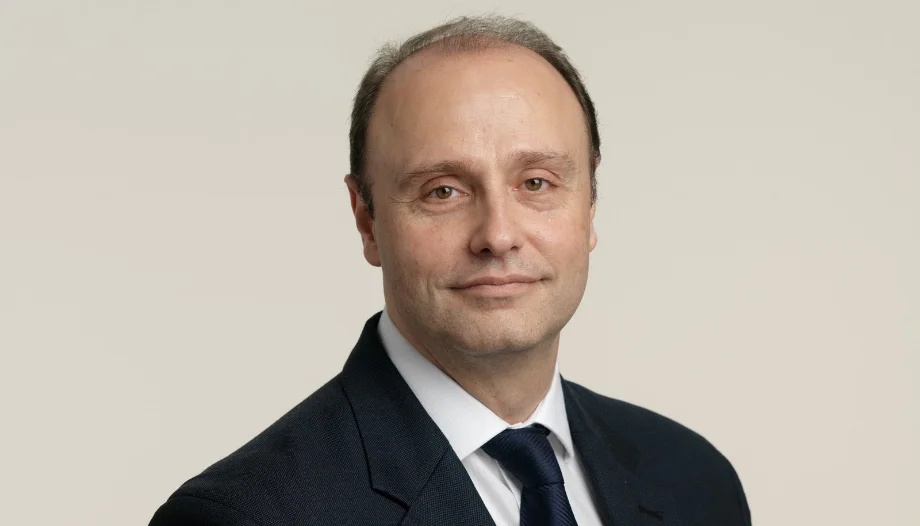
 José Carlos González-HurtadoThe more science, the more God".
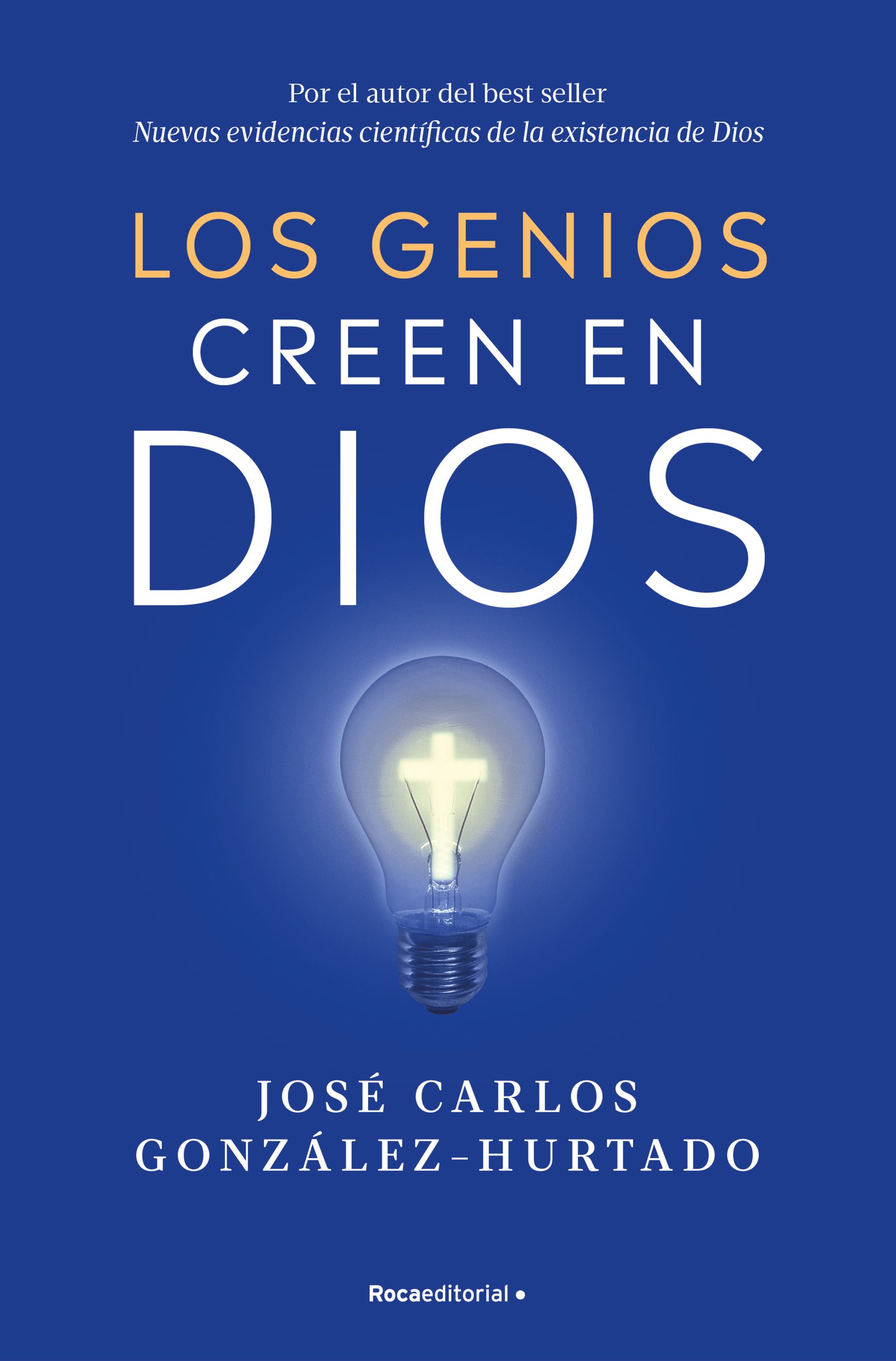
According to a study conducted in the United States, 82% of millennials Those who abandon religious practice do so because they believe that God and science are at odds. Combating this idea is precisely one of the objectives of Geniuses believe in God (Roca Editorial), the new book by José Carlos González-Hurtado, president of EWTN Spain and author of New scientific evidence for the existence of God y Evidence that Jesus is God.
«The most intelligent people in the history of humankind, especially in the last century, and all of them scientists, were believers and, moreover, deeply religious,» explains González-Hurtado. «It’s not that there is evidence, it’s that there comes a point when it becomes obvious: God exists,» he adds.
Thus, in Geniuses believe in God, González-Hurtado explores the lives of great figures in science who found reasons to believe in knowledge and research. Heisenberg, for example, wrote books on theology; Euler, considered one of the greatest mathematicians in history, was a believer, as were Kurt Gödel and John von Neumann.
«We have placed scientists on the pedestal of our generation, but many of them were religious,» he points out. For the author, these testimonies are important because they dismantle the image that intelligent people are necessarily skeptical. He illustrates this idea with the words of two Nobel laureates: Barton, in Physics, stated that «I don’t know any intelligent person who doesn’t believe in God,» while Christian Anfinsen, in Chemistry, expressed it even more forcefully: «Only an idiot can be an atheist.».
In this interview, José Carlos addresses the role of reason in the knowledge of God, the difficulties in taking the step towards faith, and the responsibility of Christians to know and give reasons for their beliefs.
Why does the image of the believer as an uneducated person persist?
–That image of the believer is a myth. And myths are often self-serving, created by people or groups who benefit from them. In this case, it has been promoted on many occasions by skeptics.
However, the reality is quite the opposite: believers are not necessarily less educated. In fact, as I explain in the book, most Nobel Prize-winning scientists are believers.
There's another fact I often mention when I talk about miracles: 80% of the world's population believes in them. Furthermore, the higher a person's level of education, the greater their tendency to believe in miracles. Thus, those who deny their existence are usually the least educated.
Ultimately, it is a myth that persists, like so many others, despite not being true.
Could it then be said that believing in God is more scientific than not believing?
–Absolutely. In fact, not believing in God, that is, denying his existence, is a belief that lacks evidence. Belief in God, on the other hand, has arguments from physics, chemistry, biology, mathematics, and cosmology, which I present in the book through the work of leading scientists in these disciplines.
There is no scientific evidence for the non-existence of God. It is a belief, a faith, or, if you will, an ideology, but it is not based on any evidence. And such evidence does not exist, among other things, because God does exist. What I usually tell atheists is: «Unfortunately for you, God does exist, and you're missing out.».
Do you agree with Pasteur's statement, «A little science takes you away from God, and a lot of science brings you closer to God»?
–Yes. And Werner Heisenberg, considered one of the fathers of quantum physics, expressed it in an even more beautiful way: «The first sip from the glass of natural sciences will take you away from God, but at the end of the glass God is waiting for you.».
When you know little about science, you might think it can explain everything. However, as you delve deeper, you discover another perspective. The most important mathematicians, physicists, and chemists in human history were either already believers or came to God.
In the book I include biographies of people who were always believers, such as Euler or Legendre, and of others who converted through science, such as Francis Collins, probably one of the most important biologists of our generation, or Fred Hoyle, who was nominated several times for the Nobel Prize in Physics.
What role does reason play and what role does faith play on the path to God?
–We must distinguish between two statements: the belief that God exists and the belief that Jesus Christ is God. The first does not require faith. In fact, the Catechism of the Catholic Church states this in paragraph 36: «Holy Mother Church teaches that certain knowledge of God’s existence can be attained through reason and observation of nature.».
Through science, by applying reason to the observation of nature, one can arrive at the knowledge of God's existence. In fact, there are people without religious faith who have concluded that a creator God exists.
However, believing that Jesus Christ is God and establishing a personal relationship with Him does require faith. According to St. Thomas Aquinas, faith is a movement of the intellect under the rule of the will and with the help of grace.
But there's something important: faith is not a feeling. Christianity is a faith based on evidence, not sentimentality. Jesus himself said that he transmitted his teachings so that people would believe, and Saint John explains at the end of his Gospel that he writes so that, based on that evidence, his readers will believe.
Therefore, we need God's grace, but also our own will. I maintain that God will always grant faith to those who ask for it with good will. He expresses this in Jeremiah 29:13: «If you seek me with all your heart, I will be found by you.» If you ask with all your heart, God will make himself present, and you will come to believe.
A person can arrive, through reason, at the conclusion that God exists. But believing in God implies making changes in your life. That can be a leap that many find difficult. What advice would you give to someone in this situation?
–I would tell them that it is not enough to believe in God: it is necessary to discover that we are his children and that we can have a personal relationship with him.
My advice would be to consider it and give it a try. In the book, I tell the story of Allan Sandage, one of the most important astronomers of the 20th century. He had come to the conclusion that God existed, but he hadn't yet had a personal religious experience. So he decided to live as if God existed: he started going to Mass and praying. What happened? He found faith and ended up becoming a devout Christian.
He himself explains it by saying that we simply have to give God permission to enter our lives. But we have to give Him that permission. God isn't going to violate our freedom: if we don't want Him to enter, He won't. We have to open the door for Him. That's precisely what Sandage did, and in doing so, he found God and, indeed, was happier.
To reach God, we must first ask ourselves if He exists. But we can become so accustomed to a comfortable, materialistic life that we stop asking ourselves what our purpose is. Do you think we ask fewer questions in today's society? Is this a real danger?
Yes. The thing is, many people who define themselves as agnostic are actually people who simply don't want to ask themselves that question. The problem with agnosticism is that it can become a comfortable position: it doesn't force me to deny God, but neither does it force me to commit to His existence.
To explain this, I often use the image of the Sargasso Sea, where there are no currents or winds and ships can become trapped in the seaweed, unable to move forward. Agnosticism can be something similar: a kind of limbo in which one remains because one doesn't want to confront the questions that might challenge one's way of life.
This is especially dangerous for young people because, as you get older, it can be harder to change. That's why I often tell them not to let the decisions they made in the past dictate their future. You can't decide how your life began, just as you can't change how a movie started, but you can decide how it ends.
I believe there is a significant risk that some people will adopt agnosticism to avoid asking themselves potentially uncomfortable questions. Why wouldn't someone who knows the evidence for God's existence take the step toward faith? Often, it's because it would require them to change something in their life. Perhaps they don't consciously acknowledge it, but deep down, they think that if God exists, there are aspects of their life that are out of order and that they would have to modify.
I'll use a somewhat graphic image to explain it: even pigs are happy in their styes, wallowing in the filth. One can get used to living like that and not realize that life is so much more than that.
That's why we need to remind people that there is an afterlife, that we are here on a journey, and that our true home is heaven, not this world. We all intuitively know that there is more to life than this one. If something is preventing you from making a decision and taking that step, you will have to face it. Often, the problem for agnostics is precisely that they don't want to change some aspect of their lives.
What mistakes can Christians make when trying to convince others that God exists?
Our Lord Jesus Christ commands us to preach to all people. He doesn't say this only to priests, bishops, or preachers, but to all Christians. We therefore have an obligation entrusted to us by Christ himself. He also tells us: «You are the light of the world and the salt of the earth.» If salt loses its saltiness, that is, if it no longer fulfills its purpose, it is only fit to be trampled underfoot.
What we must keep in mind is the salvation of the soul of the person before us, but also our own. We must do what is right and let the Holy Spirit do the rest.
To my surprise, I receive messages almost every day from people who have converted or been baptized thanks to my books. However, I deserve no credit: I'm just the mail carrier delivering a package. But if there's no mail carrier or distributor, the package doesn't arrive. That's our job.
Of course, we must be prudent and know how to find the right context to talk about God. But my experience is that many people are eager to have those conversations. When I was the number two at Carrefour Global, my CEO, who was Protestant, saw me bless the table during a business lunch. From there arose a religious conversation that was probably one of the first of his life. He asked me if I was a Christian, and when I said yes, he told me that he was too, although Protestant. We started talking about the differences between Catholics and Protestants, and he himself facilitated those encounters. Therefore, what we have to do is bear witness to our hope, as Saint Peter says in his letter. And we must do so with humility, love, and courage.
Now, we must distinguish between loving a person and respecting their mistakes. We must always seek the good of the person before us, but that doesn't mean we should refrain from pointing out what is false. Sometimes I'm told that I speak too forcefully against atheism. But atheism is a mistake that can lead people to lose their souls. Saint Paul also didn't hesitate to speak clearly. The Bible itself calls denying God foolishness. That doesn't mean the person is foolish, but rather that atheism is foolish.
At the same time, it's essential to listen carefully. I've discovered that many skeptical people don't actually disbelieve in God; they simply don't want God to exist. Or they're angry with Him because they've suffered some misfortune: they've lost a husband, a child, or a partner. They say God doesn't exist, but in reality, they're expressing their pain and anger toward Him. Listening to them allows us to uncover what lies behind their rejection.
Furthermore, many of these people acknowledge that those of us who live our faith have a greater chance of being happy. Deep down, they too would like to experience that happiness.
Geniuses believe in God
Of all the geniuses featured in this book, is there any testimony that particularly caught your attention?
–There are several. Euler, for example, whom we mentioned earlier, was a mathematician who formulated what is probably the most beautiful equation in existence, known as Euler's identity. It includes the base of the natural logarithms, the number pi, the square root of negative one, and the number zero. I explain it in the book because it's as if all of mathematics were contained in a single formula, as if God were telling us: «Everything is integrated, everything makes sense.» He's one of them.
Another figure I often mention, because I discovered him during the research for this book, is Alexis Carrel, Nobel laureate in Medicine. He was French and died in 1944. Carrel was an atheist, and his encounter with faith was marked by an extraordinary event. During a train journey, he met Marie Bailly, a woman who was gravely ill and had been taken to Lourdes. Carrel, a doctor, examined her and was convinced she wouldn't survive the journey. However, he witnessed her recovery. He saw that miracle, but even then, he didn't convert.
Carrel had experienced something that challenged his convictions, but he refused to accept what he had seen. He tried to avoid commenting on it, until finally he had to. Later, he witnessed a second healing in Lourdes, and even then he did not take the step toward faith.
But there is something especially beautiful in this story: God keeps knocking. We mustn't despair, because He never stops. He loves us so much that He continues knocking until the last day of our lives, hoping we will open the door and say yes. And that is precisely what ended up happening with Carrel. At the end of his life, he experienced a transformation and wrote some beautiful pages about the Catholic Church. In them, he acknowledged that he had spent his entire life rejecting its truths, but that now he realized they were absolutely true. Finally, he died within the Catholic Church.
Although there are many more. There's Einstein, for example, about whom I'm often asked. Atheists insist he was an atheist, but he wasn't. He wasn't religious, but he did believe in God. In fact, in the book I include several quotes in which Einstein himself seems to be addressing atheists, telling them to stop using him because he's tired of it: he wasn't an atheist, and he believed in God.
Monica Hall, José de Acosta, and several other Spaniards, such as Domingo de Soto, also appear in the book. It's not widely known, but the theory of evolution originated with a Spaniard, José de Acosta, who is also considered the father of anthropology. The book thus helps us learn about several of the great thinkers we have in our country, many of whom are often overlooked.
Do we Christians have a responsibility to educate ourselves and learn about the evidence that God exists?
Yes. When I give talks, I sometimes encounter people who say, «I don't need evidence, I believe that God exists and that Jesus Christ is God.» To that, my response is: fantastic, keep believing. Don't lose faith, because it's something that will make you happy both in this life and the next.
The important thing is not to lose faith, regardless of how each person experiences it. If you don't need scientific, philosophical, or rational evidence, that's fine. Philosophy also necessarily leads us to God: metaphysics or any of the five ways of St. Thomas Aquinas lead, in my opinion, to His existence. However, for those of us who do need evidence, that evidence exists.
In my opinion, we have an obligation to know our faith better in order to be able to give an account of that hope we were talking about earlier.
It's very important, because in today's world there are many people who want to know more, and we have to provide those answers. That's also one of the goals of the books I write, specifically... Geniuses who believe in GodTo do apologetics, to provide tools, answers and arguments — or, if you prefer, a logical construction — so that a person can talk about their faith with their neighbor, their boyfriend, a friend or someone at work who is really interested, but to do so in a rational way.
It's not enough to say, «I believe in Jesus Christ because I go to Mass,» even though that's wonderful. The other person is probably also looking for an answer to this question: «Why do I have to believe the same things you do?».





 Español
 English
 Italiano
 Français
 Deutsch
 Polski