


At the age of 38, Rafael Merry del Val (1865–1930) became Secretary of State to St. Pius X, one of the most senior positions in the Church. However, he sought a simple, hidden life. Every day he prayed the well-known Litany of Humility, a sentence that reveals his inner struggle.
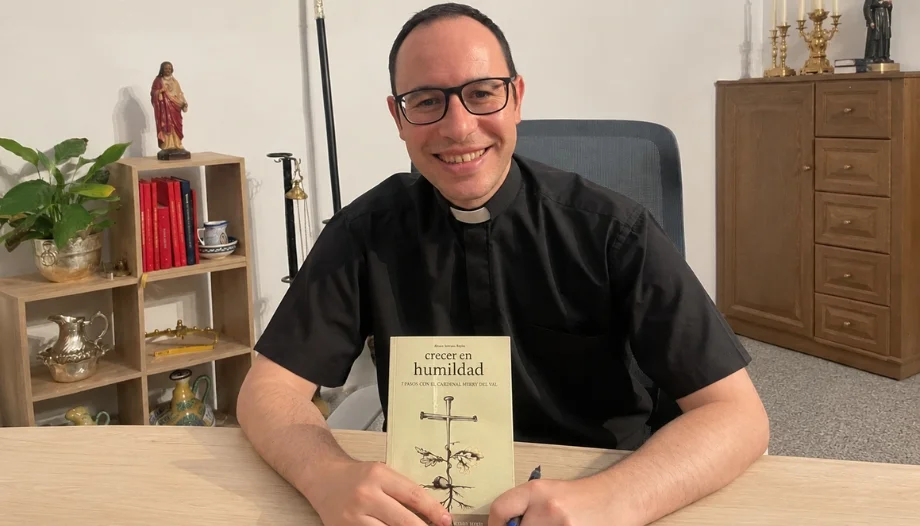
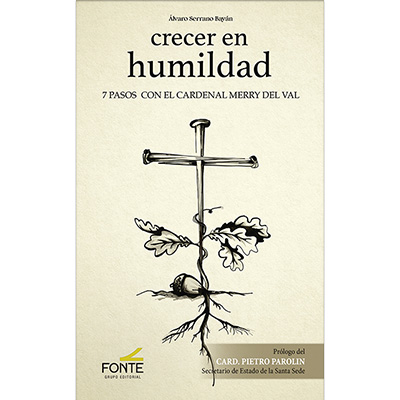
More than a century later, Father Álvaro Serrano Bayán has unearthed letters, writings, and spiritual advice by Merry del Val and compiled them in «Growing in Humility: 7 Steps with Cardinal Merry del Val» (Mount Carmel), a guide to cultivating this virtue in daily life. The book, with a foreword by Cardinal Pietro Parolin, is the result of years of research and reading the cardinal’s writings.
Serrano, a priest of the Archdiocese of Toledo, an aerospace engineer, and a student of Institutional Communication in Rome, approaches Merry del Val not to write a new biography but to let him speak for himself. In his writings, Serrano reveals a man who is aware of his talents but determined not to make them the center of his life.
In this interview, Álvaro Serrano explains what lies behind the Litany of Humility, how Merry del Val lived out this virtue while holding a position of great responsibility, and what lessons it can teach us today—especially in a society marked by the pursuit of recognition, followers, and «likes.».
What did you discover about Merry del Val that led you to devote seven years to researching, reading, and organizing his writings?
–Merry del Val is known for his litanies of humility. He took some existing litanies, prayed them, and adapted them to his liking.
Having learned about those litanies, I happened to come across a book by Merry del Val in which he discussed them. Some of them particularly caught my attention, and I thought it was very interesting. Merry del Val is a little-known figure, and among those who know him, many are familiar only with his litanies. However, he is a much richer character and has so much more to offer. He is the kind of person who, the more you get to know him, the more you are drawn to him.
From then on, I began reading more and more about Merry del Val: I consulted biographies and his writings, and I came across letters he had written to other people. I read a great deal, and I thought that what I found helpful and interesting might also help others get to know him.
I didn't want to write a biography. In Spain, we have great biographers of Merry del Val—very capable people who have done that work.
That is why I decided to compile what he said. In this way, I avoided venturing into the realm of biography. It is something else entirely: putting Cardinal Merry del Val’s original texts in the reader’s hands.
Was there any text or letter by Merry del Val that particularly changed your understanding of humility?
–One of the things that has struck me the most is that Merry del Val lived a life of humility day in and day out, without ever needing to say, «I am humble.» There’s a quote from St. Augustine that says, «Love, and do what you will.» In a way, that’s how he lived out humility: he did what he had to do and didn’t worry about anything else.
Clearly, he had to deal with a lot of envy. At 38, he was already Secretary of State and, so to speak, one of the most powerful men in the world—at least within the Vatican. However, he didn’t spend his time worrying about what others said about him. He worked, followed his routine, and did what he had to do. He didn’t consider himself more important because of the position he held, nor did he feel the need to prove who he was. If people didn’t greet him, they didn’t; if they did, they did. He did what was appropriate in each situation.
I think that is true self-emptying. It’s not about practicing humility on a case-by-case basis, but about living humbly. Merry del Val made humility a habit, a way of life. That’s why she wasn’t simply someone who practiced humility, but a humble person.
We often think that humility means letting others win, always coming in last, allowing others to take advantage of us, or saying “yes” to everything. But that is not humility. Humility means recognizing that we have gifts, knowing that they come from God, and putting them at the service of others—without feeling that we own them or needing recognition from others.
Where does humility end and false humility begin—the kind that can mask insecurity or even self-contempt?
–With Merry del Val, it’s very clear. When he was Secretary of State, many people turned to him for what they could get out of his position, not for him as a person. However, he distanced himself from all of that.
In the afternoons, he would go to Trastevere to minister to poor people who didn’t even know he was Secretary of State. Therefore, they couldn’t approach him because of his position. He himself would say, «I am Secretary of State, but above all, I am a priest.».
For him, stepping down as secretary of state would not have been a big deal. His life revolved around being a priest, not around holding a position. The priesthood was the core and essence of his life; being secretary of state was merely a circumstantial and temporary matter.
One example of this is that he never sought to remain in power indefinitely nor did he aspire to hold other offices. In fact, there is a telling anecdote: when he was Secretary of State, he kept the same mattress he had used as a seminarian. It was a simple straw mattress that he had brought with him to the Colegio Español and continued to use throughout his life. He did not change his lifestyle simply because he had become Secretary of State.
Merry del Val must have had to work hard to remain humble while holding such an important position in the Vatican…
–Humility is a gift from the Lord, but it’s also something we all have to work on every day. In fact, in the Litany of Humility, we pray: «From the desire to be consulted, deliver me, Lord.» He was Secretary of State, and everyone had to consult him. But he did not draw his strength from the desire to be consulted. Obviously, being consulted isn’t bad; what can be bad is constantly wanting to be the focus of those consultations.
The same is true of the desire to be loved. Being loved is a good thing, but turning that desire into an obsession is bad. Ultimately, it is the disordered desires that we must combat.
That’s why I believe Merry del Val, like everyone else, had to struggle. It’s possible that, as she came to master her virtues and passions, it became easier for her. But her writings show that she had to work on her humility. In the book, we see how he connects humility to abandonment and suffering. His own words are thought-provoking because they show that he, too, had to struggle to live out that humility.
What aspect of Merry del Val do you think is least known, and what would you like readers to discover about him through the book?
–I think a little-known aspect of Merry del Val is that he was an ordinary person. Sometimes we see saints as unattainable figures, as if we could never become like them. However, Merry del Val played the piano—and played it very well—he composed several pieces because he loved music, he went for walks, he did charitable work, and, at the same time, he served as Secretary of State.
He was a priest, and as part of his priesthood, he fulfilled the role the Church had asked of him at that time. I would like the reader to see him as an ordinary priest, a person who, through his life, sought holiness and humility.
I believe that this can help anyone realize that they, too, are called to seek holiness and that humility can be a path to living it out.
Humility is essential because it underpins all the other virtues. It is like the thread that connects the beads of a rosary: all the other virtues depend on it, because without humility, pride and vanity can take root.
What would you recommend to someone who wants to start growing in humility today?
–First, patience. Humility isn't something we decide to have overnight; it's a virtue that requires persistent effort. We have to try again every day, because it isn't something we acquire overnight.
It’s also important not to let scruples get in the way. As I’ve said before, humility doesn’t mean saying “yes” to everything or letting others take advantage of us. We need to understand what humility really is and work on it with patience and perseverance. That way, little by little, we’ll grow in this virtue.
Is it harder to live a humble life in today's society?
–Yes, it may be more difficult today. Just as it can be harder to practice abstinence in a society where food is abundant, or to live a sober life in a society where money is plentiful, a highly self-centered and self-referential society makes humility more difficult.
There is a lot of emphasis on physical appearance, and social media makes us constantly worry about what we post, how many «likes» we get, or how many followers we have. All of that can fuel pride and vanity.
It’s not a bad thing to have followers or get «likes,» but our hearts shouldn’t set their sights on those things. We can use social media to do good, to love, and to make the Lord known. If that results in «likes,» blessed be God, and we are grateful. But our lives shouldn’t be about seeking «likes»—they should be about seeking God.
Growing in Humility: 7 Steps with Cardinal Merry del Val





 Español
  English
  Italiano