



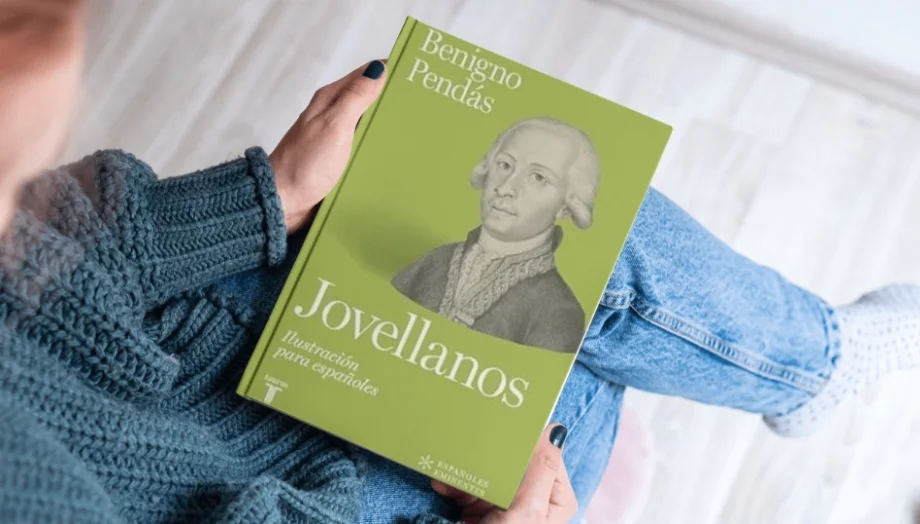
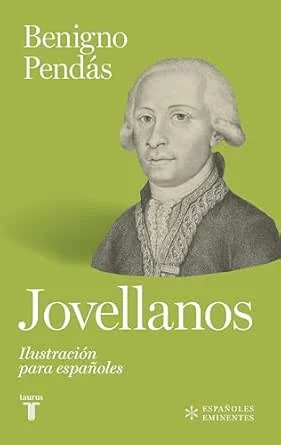
Professor and academic Benigno Pendás (Barcelona, 1956) has written a magnificent biography of the illustrious Asturian Gaspar de Jovellanos, who was the man of transition between the “enlightenment for Spaniards” (as he is called in the book) and the first liberalism of the Cortes de Cádiz.
One of the signs of the change of mentality is found by Benigno Pendás in the work carried out by our learned man both in Seville and in Madrid when he held the position of “Alcalde de Casa y Corte” with great energy, dedication, prudence and humanitarian sense. This led him, among other things, to call for the disappearance of the systematic use of torment in civil and criminal courts, both to find out the name of the accomplice (which was systematic practice in the procedural law of the time), and to prohibit the use of what was extracted by extortion as evidence in the subsequent trial (135-136).
The undoubted reappearance of the humanitarian character in the world of law and the respect for the dignity of the person - in this case of petty thieves and perpetrators of minor crimes that fell under his jurisdiction - make Jovellanos a jurist ahead of his time (p. 227). Indeed, his ideas would achieve the abolition of torment in the Cortes of Cadiz in 1812, even though he had died shortly before; also noteworthy is his frontal opposition to the tribunal of the Inquisition, which continued to discredit the Catholic Church in Spain before the European concert after the French Revolution (p. 201).
His banishments, especially the second one to Mallorca for seven years due to an unproven slander and in which the facts were never judged, will mark the end of the enlightened despotism and the appearance of the liberal monarchy. In this, the powers of the king and justice will be moderated by the Cortes of Cadiz and by the successive liberal governments, so that the execution of arbitrary and cruel actions will disappear from the government of the monarchy, as our author points out (p. 135).
Church and state
One element common to the government of Charles III and the liberal governments of the 19th century was the distinction between the Catholic Church as the repository of the treasure of Christian revelation and the ecclesiastical organization. The latter, which included both the curia and the religious orders, was seen as an institution in need of a profound renewal: application of a numerus clausus in seminaries, reduction of the number of friars and the suppression of those orders that were not useful to the State or to the enlightened society.
It will suffice to know that Jovellanos, a practicing Christian and man of faith, was a devoted reader of Gibbon and, as a member of the Academy of History, a supporter of a historiographical revision of the lives of the saints. His objective was to purify the saints and the life of the people of superstitious elements to combat scientific backwardness, but without breaking with the essence of his faith.
Of course, his proposal, which anticipates the disentailment of Mendizábal (p. 47), suggests that this measure was already in the minds of Charles III's ministers, like so many other reforms that the Bourbons did not have time to consolidate before the change of dynasty with Joseph I (p. 215).
The efforts of Campomanes and Jovellanos to promote the “Sociedades Económicas de Amigos del País” to involve men of science in the progress of Spain are very illustrative. Thanks to this impulse, when 1898 arrived and the colonies were lost, Spain had already advanced in its economic progress, although this was still scarce due to the lack of farsightedness of certain liberal governments, more focused on their conflicts with the Church than on shoring up the productivity of the disentailed lands.
The Spanish Enlightenment
The establishment in Gijón, his homeland, of what is now the Royal Jovellanos Institute (a center for the study of chemical sciences, nautical science and mineralogy) demonstrates his firm interest in the useful sciences (p. 232). Evidently, the concern to revalue the national Academies would lead to an unprecedented advance in the investment of public resources for research and development of the country.
These characteristics should be evaluated under the concept of “illustration for Spaniards”, a term with which Pendás qualifies the expressions of “Catholic” or “Spanish illustration”, which are often confusing for scholars.
Another topic of enormous interest is the proposed “Agrarian Law” that Jovellanos turned into an object of study and public reports. The reading of this work reveals the vision of a statesman who knows that, in order to promote industrial development, he must first rearrange crops and size human resources, determining how many families should work the countryside and how many should emigrate to the cities in order to boost the economy (p. 231).
Undoubtedly, Jovellanos was aware of the freedom of citizens to remain on their land, but also of the need to open roads, build bridges and improve ports to connect rural areas with culture and commerce (p. 233).
Jovellanos. Illustration for Spaniards






 Español
  English
  Italiano
  Français
  Deutsch
  Polski
  简体中文
简体中文