



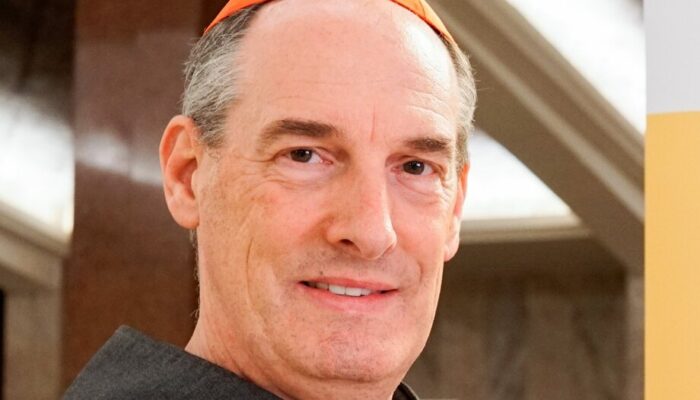
Pope Leo XIV published his first encyclical. It deals with “the protection of the human person in the age of artificial intelligence,” a topic that addresses one of the Pontiff’s primary concerns. In fact, the day after his election, he explained to the cardinals that he had chosen the same name as Leo XIII (famous for the 1891 encyclical “Rerum Novarum”) to emphasize his continuity with the Church’s social doctrine, although now “to respond to another industrial revolution and the advances in artificial intelligence, which pose new challenges for the defense of human dignity, justice, and the work".
Social Media
In various sections of the encyclical, the Pope refers to social media platforms. His stance is not categorical, but rather measured and thoughtful. It focuses more on principles than on overly specific solutions.
On the one hand, he highlights the opportunities. In paragraph 238, he states: “We must educate ourselves to view the digital world as a new continent to be evangelized, one that requires missionaries who are generous and mature in the faith.” In this regard, his assessment is in line with that of previous popes, such as Benedict XVI, who popularized the description of the Internet as “the sixth continent.”.
Second, Leo XIV addresses the risks head-on. He emphasizes that new evidence has emerged since previous popes had spoken out on the matter. For example, we now understand better that technology was not as “neutral” as it seemed, since it “takes on the face of those who conceive it, finance it, regulate it, and use it” (no. 9). Therefore, I interpret this to mean that greater caution is warranted before naively embarking on “digital missionary evangelization.” As Pope Leo says in no. 141:
“In recent years, psychological and psychiatric literature has increasingly documented how early and unsupervised exposure to digital devices and social media can negatively affect sleep, attention, emotional regulation, and relationships—especially during the most vulnerable ages—with consequences that can sometimes be dramatic.”.
Third, in the very next paragraph, the Holy Father goes into the details of his proposal, which focus both on education for the “proper use” of technologies and on the need for “timely interventions” by the authorities to regulate them:
“Parents find it difficult to resist on their own the influence of business models that monetize children’s attention and time. That is why a partnership between policymakers, educational institutions, and families is essential—one capable of providing concrete support to adults in this task. It is necessary to counter, through far-reaching public policies, the immediate interests of platforms—concentrated in the hands of a few—when these interests conflict with the welfare of minors. From this perspective, legislative measures are needed to establish age limits, hold service providers accountable—without shifting the burden of restriction onto families—and provide specific protections against all forms of sexual exploitation and violence online, so that children and adolescents are truly safeguarded as precious treasures entrusted to our care.”.
Analysis
How can we live in greater harmony with digital ecosystems? Social media offers a popular and widespread environment where, it is true, adult Christians can exert influence and share our faith. At the same time, there are pitfalls. The design of these platforms, far from being “neutral,” serves an economic purpose: to keep us engaged for as long as possible (to the point of addiction) in order to profit from ad views. And this, especially for minors, leads to catastrophic consequences for their mental health. That is why the Pope refers to “timely interventions” that could be coordinated among the government, companies, and families to protect children.
When it comes to children and teenagers, the issue is clear: it’s best for them not to take the risk of hanging around on social media. The best form of digital evangelization we could offer them, therefore, is to convince them to return to fully inhabiting the real world.
As for adult audiences, Leo XIV prefers to emphasize principles rather than specific solutions, including when it comes to the domestic or personal use of technology. Drawing on the biblical images of the Tower of Babel versus Nehemiah’s reconstruction of Jerusalem, he poses a fundamental question: Do I use new technologies to serve, to love, and to build a world together with God? Or, on the contrary, are they tools that lead me astray toward narcissistic goals?
The goal seems distant, but we have the right to reclaim it: “We need to foster a true discipline of attention: rhythms that include silence, reflective study, reading, and thoughtful analysis; without these elements, inner freedom can be compromised” (no. 146). In any case, the debate remains open for our own personal reflection. No one is going to police our freedom to make the most of our time or to waste it: it is up to each of us to make that assessment and protect ourselves.





 Español
  English
  Italiano