


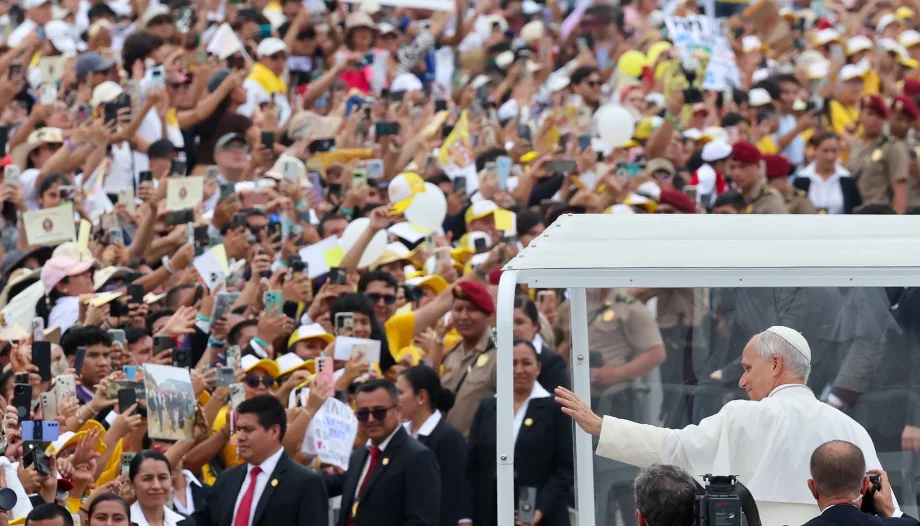
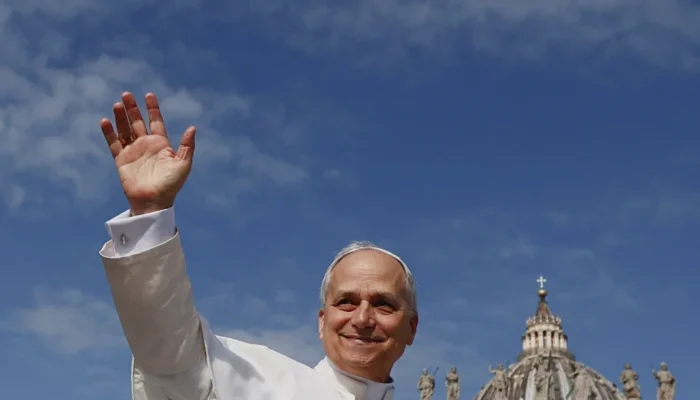
Pope Leo XIV's visit to Peru has given us a perspective that transcends the boundaries of the Catholic faith. There is something especially significant in the fact that a man born in Chicago, who came to Peru as a missionary and ended up making that country his home, now returns as the successor of Peter.
An identity made of encounters
Peru is a country where geography largely shapes the identity of its people. Coast, highlands, and rainforest have been home to people from diverse backgrounds for centuries. One of the most poignant and well-known expressions of this coexistence is reflected in its gastronomy. Peruvian cuisine is the result of exchanges and adaptations forged between scarcity and abundance, where ingredients and traditions have created something genuinely Peruvian.
This is how the language of art is born: it receives influences, transforms them, and generates new expressions. Its capacity to communicate allows people who do not share the same language, history, or religion to recognize themselves in the same experience.
The encounter between two cultural universes
Around five hundred years ago, the first crucifix arrived in the Americas. This marked the beginning of one of the most complex and profound processes of cultural encounter in modern history. Those who set out had a clear mission, but upon arrival, they understood that the challenge went far beyond simply translating words. How could they communicate a religious experience to those who interpreted the world through different cultural frameworks?
There is no doubt that the conquest was marked by violence and imposition. However, Indigenous peoples preserved, reinterpreted, and transformed many of their own symbols. For Andean cultures, nature is not a stage external to human life. Pachamama, Mother Earth, represents a reciprocal relationship with the world that nourishes communities. The Apus, the mountains, are presences linked to the protection and identity of the people.
The arrival of Christianity introduced new images and meanings, and painting played a fundamental role in this conversion. Artists did not simply copy images arriving from Europe; they began to create metaphors that brought the Christian faith closer to Andean beliefs. The maternal figure, associated with protection and life, offered a bridge of understanding between these two cultural universes. God is the father who brings forth life, and because no good comes to earth without thanks to the Virgin, he bestows upon her the rays of his power, so that she, as Mother, may then communicate it to the earth.
Leo XIV, witness to Peruvian diversity
During his visit to Cusco, Leo XIV was received at Sacsayhuamán, one of the sacred sites of the Inca civilization. There, the Inti Raymi, the Festival of the Sun, is celebrated every year. The Pope's presence amidst the music, costumes, and dance that preserve the indigenous memory (predating the Spanish) took on a special symbolic dimension. Leo XIV knows Peru from within. He has lived among its people and, with his unique perspective, has recognized each individual in their differences. With this journey, the Pope teaches us to recognize that Peruvian identity is not built despite its differences, but also because of them.
In his meetings with representatives of popular religiosity, he emphasized the value of processions as spaces for encounter: «A procession can bring those with different opinions together to walk together.» This statement encapsulates a way of understanding coexistence that transcends religion. It is not necessary to think alike to share a path.
Peru is made up of many different bloodlines and mental frameworks. Indigenous memories, European heritages, African roots, and Asian influences coexist within its borders. Its inhabitants don't necessarily interpret the world from a single perspective, but together they have woven a history that continues despite their differences. Art makes these differences visible and allows them to engage in dialogue.
A coexistence that does not require uniformity
With this visit from the Pope, we have been reminded that the beauty of a culture lies not in its purity but in its capacity to encounter others without losing what makes it unique. The Christian faith arrived from the Old World, but in Peru it found its own faces, colors, symbols, and forms of expression. Today, it could not be understood without that history of encounters.
Leo XIV understood this reality and made it visible. His message reminds us that coexistence does not require uniformity, nor does it require translations. The true universal language is the one that allows us to see and recognize each other, understanding one another and adapting without losing our individual identities in the process.




 Español
 English
 Italiano
 Français
 Deutsch
 Polski