


- Maria Wiering, OSV News
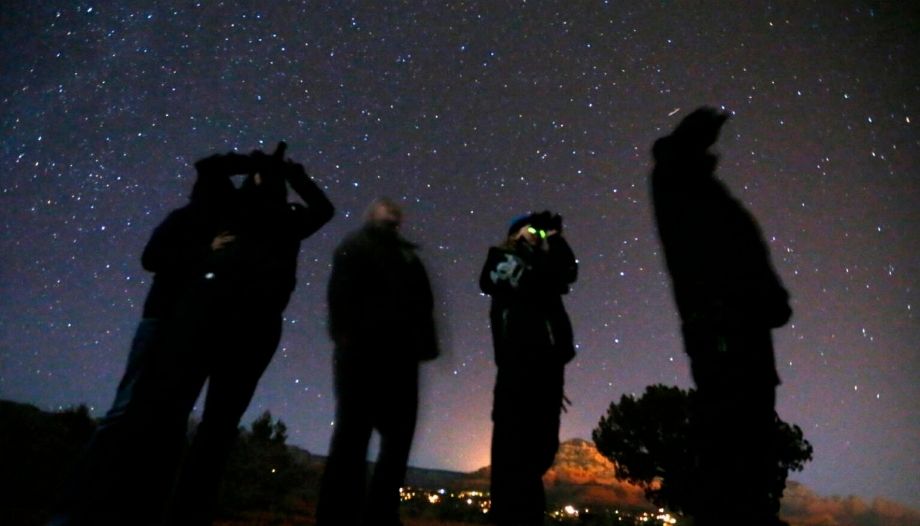
UAPs - formerly known as ‘unidentified flying objects’ or UFOs - and the intelligence behind their existence have long been a source of public fascination, even before the discovery of UFO debris at Roswell, New Mexico, was claimed.
But Catholic theologians and scientists have also reflected on its implications for the way humanity perceives itself in relation to its Creator.
Among scholars researching this topic, the general consensus seems to be that the existence of extraterrestrial intelligent beings does not upset the Church's theology of creation.
Christopher Baglow, director of the Science and Religion Initiative at the McGrath Institute for Church Life at the University of Notre Dame in Indiana, addressed this question in a 2021 lecture given for the Society of Catholic Scientists Annual Conference, a version of which he published in Church Life Journal.
Humans and extraterrestrials share God as their creator
His starting point was that humans and extraterrestrials share God as their creator, which gives extraterrestrials “the capacity for a special relationship with God in which they can know Him and respond to Him with freedom and love.”.
“God would love them and want to share his life with them,” he said.
St. John Paul II is said to have expressed a similar idea when a child asked him if extraterrestrials were real. “Always remember,” the late pontiff reportedly said. , “they are children of God, just as we are».
Could the Church baptize extraterrestrial beings?
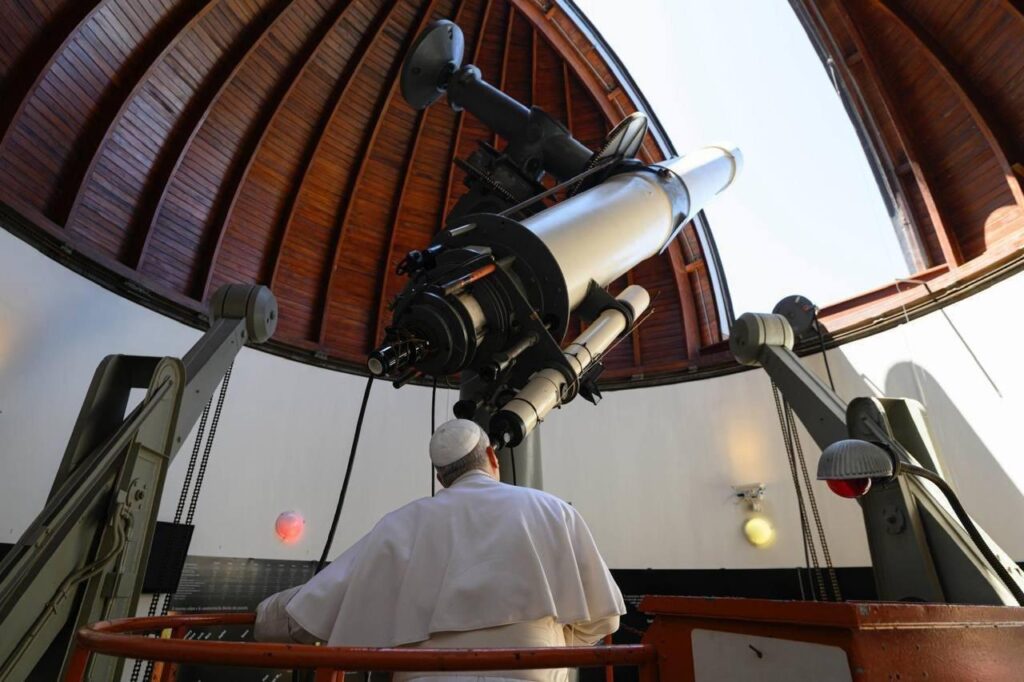
Although the Catholic Church does not offer a definitive teaching on extraterrestrial life, Catholic intellectuals have reflected on the subject over the centuries. In the 15th century, the German Cardinal Nicholas of Cusa, philosopher and theologian, speculated that God's creativity made the existence of intelligent life on other planets probable.
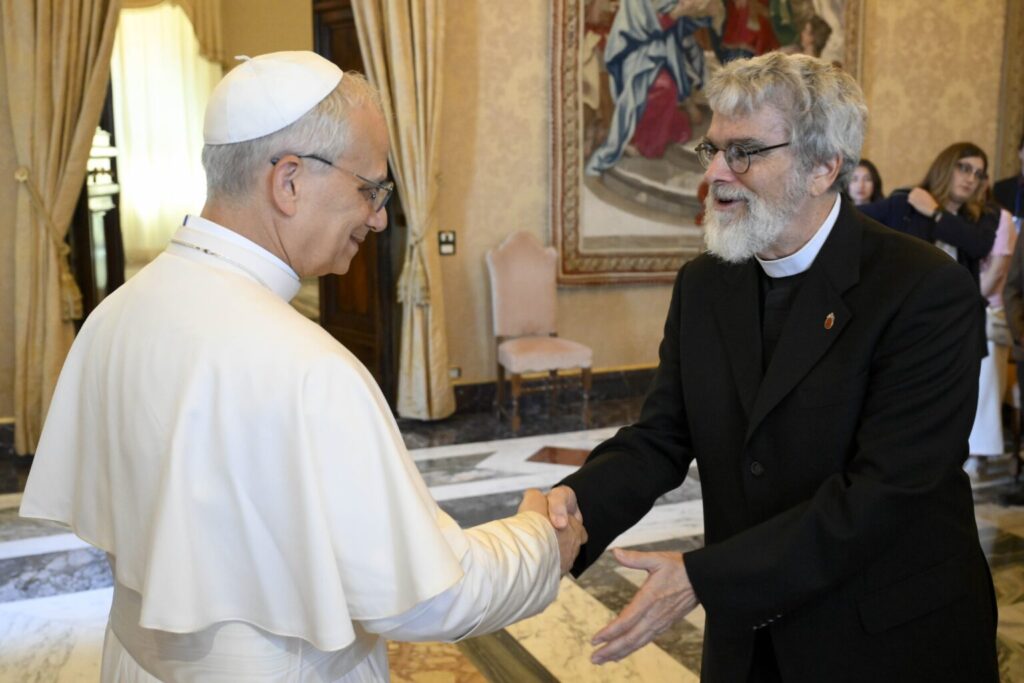
Much more recently, Jesuit astronomer Brother Guy Consolmagno posed a key question bluntly in the title of his 2014 book:“Would you baptize an alien?”.
Written in collaboration with Jesuit Father Paul Mueller, the book addresses various issues of faith and science through a question-and-answer format. As for the question that gives the book its title, it answers in the affirmative, but only if the alien requests it, since it is a sacrament that must be freely given and received.
Brother Consolmagno, a Detroit native, is president of the Vatican Observatory Foundation and served as director of the Vatican Observatory for a decade, from 2015 to 2025. “Any entity, no matter how many tentacles it has, has a soul,” he declared to The Guardian in 2010, adding that he would be “delighted” if intelligent extraterrestrial life were discovered.
Are there other “sons of God” in the universe?
The observatory's current director, Jesuit Father Richard D'Souza, shares a similar opinion.
“They would be children of God,” D'Souza said, referring to the extraterrestrial beings in 2025. “I believe in a benevolent Creator. He is behind everything.”.
Jesuit Father José Funes, another former director of the Vatican Observatory, leads the OTHER Project, which brings together scientists, theologians and philosophers at the Catholic University of Córdoba, Argentina, to study the possibility and potential impact of the existence of intelligent extraterrestrial beings.
“Just as there is a multiplicity of creatures on Earth, there can be other beings, even intelligent ones, created by God. And this does not contradict faith, because - and it is important to understand this - we cannot place limits on God's creative freedom,” he said in a article 2023 published by the Vatican Observatory.
Neither necessary nor excluded
“The existence of intelligent life on planets other than Earth is neither necessary nor excluded by any theological argument. Theologians, like the rest of humanity, must wait and see.”.
In a 2021 interview with Catholic News Service, Father Funes urged Catholics and others to consider the issue from an academic perspective, not from conspiracy theories.
Among the questions theologians-including the celebrated 20th century Jesuit theologian Father Karl Rahner-have asked is whether the Incarnation would have been repeated on other planets for other intelligent species. Both Father Funes and Dominican Father Thomas F. O'Meara, retired professor of theology at the University of Notre Dame and author of “The Incarnation of the Incarnate Word", and "The Incarnation of the Incarnate Word".“Vast Universe: Extraterrestrials and Christian Revelation”, they told CNS that the incarnation of Jesus was a “unique” event that would not necessarily take place beyond Earth.
This is a question that the Christian apologist C.S. Lewis, Anglican author best known for his “Chronicles of Narnia” series, explored through fiction in the late 1930s and 1940s with his “Space Trilogy”. The books - ”Out of the Silent Planet,” “Perelandra” and “That Hideous Force” - tackled the alien theme, popularized in the culture by other writers such as H. G. Wells, best known for “The War of the Worlds,” a novel first published in 1898 and infamous for its 1938 radio adaptation.
Would extraterrestrial beings need the Redemption?
Lewis' work raises the possibility that rational beings from other planets may continue to live in a relationship with God that has not been affected by the fall and, therefore, do not need redemption in the same way that human beings do.
Lewis“ trilogy was also a focal point in a 31-minute documentary entitled "¿?What should Catholics believe about UFOs?”from Notre Dame's McGrath Institute. Produced by Brett Robinson of the same institute, the documentary brought together a number of scientists, theologians and other scholars to discuss the title question.
In the documentary, Lewis scholar Michael Ward points to Lewis“ own doubts about whether the current cosmological model could be overturned by new discoveries. Noting that Christian anthropology has accommodated other scientific advances, such as the Copernican system and Darwinian biology, Ward asserted, ”There is nothing new under the sun that cannot be integrated into the existing framework.".
Wisdom in dealing with non-human intelligence
Among the experts interviewed was Diana Walsh Pasulka, professor of religious studies at the University of North Carolina at Wilmington and author of. «American Cosmic, published in 2019 by Oxford University Press, which explores the phenomenon of belief in intelligent extraterrestrial life.
“A lot of people think that acknowledging the existence of non-human intelligences would change religion, eradicate it or discredit it altogether, but I don't believe that at all,” Pasulka said in the documentary. “Within the major religions there is wisdom on how to deal with non-human intelligence.”.
Pasulka, a practicing Catholic, sees a connection between contemporary reports of unidentified aerial phenomena and medieval descriptions of celestial phenomena, and her work has led her to correspond with aerospace engineers and members of the U.S. Space Force seeking explanations for their own experiences or research.
¿Are UAPs angels? demons? or something else?
In an interview published in March in the Spanish newspaper ‘El Pais’, Pasulka said: “In the U.S. government right now there are many people who believe in UFOs, in unidentified aerial phenomena. That's a fact. They use taxpayer money to study it. But they have different interpretations.
“By the way, there is a high percentage of devout Catholics in the military who study this,” he added. “They believe that there are probably a variety of phenomena. Some would classify them as being caused by angels and demons. And then there are those they consider a threat, coming from an unknown extraterrestrial civilization. They just know they're here, and they treat them as a threat because they're military: if there's something in their airspace, they want to know what it is.”.
In March, Vice President J.D. Vance, a Catholic, called attention to the theory that aliens are fallen angels, saying in a podcast interview that. thought that the alleged extraterrestrials are demons, and that spiritual warfare is the easiest explanation for «alien phenomena».
Paul Thigpen, a theologian who passed away earlier this year, also explored that possibility in his 2022 book , Extraterrestrial Intelligence and the Catholic Faith: Are We Alone in the Universe with God and Angels?”. But he concluded that the spiritual realm was an unlikely explanation for all unidentified aerial phenomena (UAP). And he expressed concern that human contact with extraterrestrials could lead some to substitute their reality for that of God or to mistakenly regard them as a source of salvation.
“The Church could welcome this new scientific knowledge.”
“The Church could embrace this new scientific knowledge, just as it did with the scientific revolution of the 16th century that proved that the Earth is not the center of the solar system,” he said in an 2022 interview with the National Catholic Register.
“If we were to encounter directly an alien species, with the ability to communicate, the Church would, of course, have many questions about its spiritual and moral condition. The answers to those questions would determine the Church's response to such creatures.”.
“In examining the issues involved, we are forced to delve much deeper into the meaning of traditional Catholic teaching on the omnipotence and creativity of God, the image of God in humanity, the fall of the human race, the nature of the Incarnation, the means and scope of redemption, and the reality of the ‘end times.’”.
Aliens are not impossible for Catholics, but they imply a different way of thinking.
On May 5, Will Rahn of The Free Press published a podcast episode titled “Ehese two Catholics see signs of God in UFOs” featuring Pasulka and New York Times op-ed columnist Ross Douthat for a series titled “What Should Smart People Think About UFOs?”.
Douthat did not subscribe to any particular theory about the nature of extraterrestrial life, should it exist. However, he did acknowledge the tension Catholics might feel if it were proven to exist.
“Most Catholics are quite comfortable with a set of categories that are real but invisible,” Douthat said. “And it would be a change, say, if the Church were to say, ‘By the way, some of these supernatural beings can appear on Air Force cameras.’ That wouldn't be impossible, but it would involve a different way of thinking about these things than most Catholics currently have.”.
—————————
Maria Wiering is the editor-in-chief of OSV News.





 Español
  English
  Italiano