


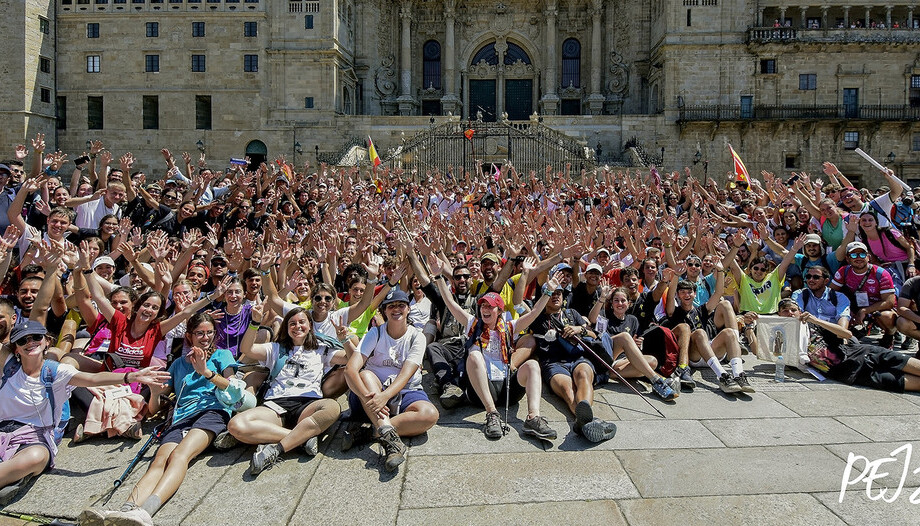
Under the motto "A different world is possible," some fifty people—Catholics, Jews, Muslims, Buddhists, Bahá'ís, Hindus, and representatives of other spiritualities—are sharing the journey, prayer, and silence along a 115-kilometer route from León to Santiago de Compostela, reports say. The Search Engine and the Federation Spanish Association of Friends of the Camino de Santiago, with sources from Herald of León.
The initiative symbolically kicked off in León, where on Monday, September 21, participants were scheduled to be welcomed at the Benedictine monastery of Santa María de Carbajal. The following day, the group traveled to Sarria to begin their six-day walk along the French Way to Santiago.
Each stage will be led by one of the participating religious groups, according to the schedule released by the Spanish Federation of Associations of Friends of the Camino de Santiago.
Stages of the interfaith pilgrimage
The stages of the Interreligious Pilgrimage for Peace are as follows:
– September 21: reception of the participants at the Monastery of Santa María de Carbajal de León.
– September 22: Sarria-Portomarín, 22 kilometers. Tuesday's stage is led by the Bahá'í group.
– September 23: Portomarín-Palas de Rei, 25 kilometers. Wednesday's stage is led by the Buddhist group.
– September 24: Palas de Rei-Melide, 14.5 kilometers. Thursday is the turn of the Hindu group.
– September 25: Melide-Arzúa, 14 kilometers. The Jewish team leads Friday's stage.
– September 26: Arzúa-O Pedrouzo, 19 kilometers. Saturday's day is run by the Muslim group.
– September 27: O Pedrouzo-Santiago de Compostela, 20 kilometers. The final stage, on Sunday, will be led by the Christian group.
The journey will conclude precisely on Sunday the 27th in Santiago de Compostela, after seven days of coexistence, dialogue, mutual understanding and reflection.
Spaces for reflection, prayer and fellowship
During the itinerary there will be spaces for celebration, reflection, prayer and fellowship respecting the times of each tradition, with the purpose that the meeting does not end in a week, but rather promotes a lasting process of dialogue between religious communities based in Spain.
The organizers trust that “Ultreia”, the Jacobean expression that encourages continued progress, will symbolically accompany the entire route.
An ancient path of searching
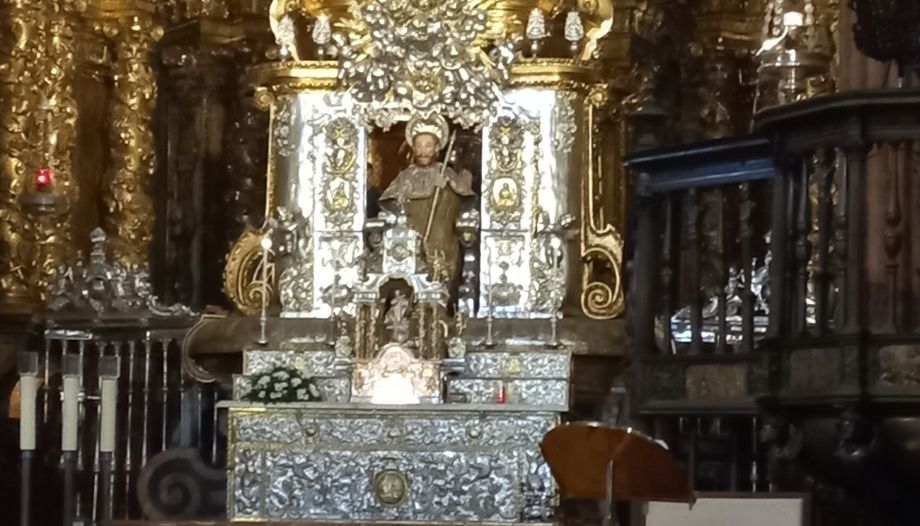
The Camino de Santiago is the network of pilgrimage routes that, since the Middle Ages, leads to the tomb of the apostle James the Greater in the cathedral of Santiago de Compostela. Declared a World Heritage Site and the first European Cultural Route, it has been for centuries a meeting point between peoples and cultures from all over Europe, and today receives hundreds of thousands of people each year from very diverse backgrounds and motivations: religious, cultural, sporting, or simply personal.
It is precisely this ability to welcome pilgrims of different beliefs and concerns that, according to the Archbishop of Santiago de Compostela, Monsignor Francisco José Prieto, defines the essence of the Camino.
Monsignor Prieto: “A message of hope”
The Archbishop of Santiago de Compostela has described The Camino is an open space traversed by both seekers and non-seekers, believers and non-believers, and he emphasized that this diversity is precisely what makes it valuable. In his view, the Camino invites one to consider the ultimate meaning of existence, and for those who have faith, it becomes a privileged opportunity to encounter God at the final destination.
Monsignor Prieto also extended this reading of the Way to a broader level, pointing out that it reflects the idea that Europe—and humanity as a whole—is above all a shared project between people and nations, not just a sum of political or economic strategies.
The archbishop also recalled that this common project can become a message of hope capable of transforming difficulties into a driving force for unity in the face of present-day fears.
A proposal originating from León
The pilgrimage is promoted by DIR León, an interreligious dialogue group, together with the Iberian Commission for Monastic Interreligious Dialogue (DIM-MID) and the Santa María de Carbajal Foundation, according to the Spanish Federation of Associations of Friends of the Ways to Santiago.
Also collaborating are Arco Fórum, the Bahá'í Community of Spain, the Jewish communities Bet Januká of Andalusia and Bet Ha Torá of A Coruña, the NgalSo Community of Spain —integrated into the Buddhist Union of Spain—, members of Amma Spain, practitioners of the Thich Nhat Hanh tradition, the Community of the Ark and Friends of the Desert, among other groups.
With this second edition, its organizers seek to demonstrate that religious differences don't have to divide, but can instead become a bridge to coexistence, as highlighted by El Buscador. Seven days after departing from León, the group will arrive in Santiago de Compostela with a shared message: walking together, despite differences, is a possible way to build peace and social justice.





 Español
  English
  Italiano
  Français
  Deutsch
  Polski
  简体中文
简体中文