



The document is a joint reflection by the Dicasteries for the Doctrine of the Faith, for the Promotion of Christian Unity, and for Interreligious Dialogue, which, in 60 points and 95 notes, reviews key aspects and essential challenges of interreligious dialogue as we look ahead to the coming years. The Note, consisting of about 20 pages, was approved by Leon XIV on June 22.
The text addresses “the visible and silent fruits” of the declaration Nostra Aetate, signed by Pope Paul VI on October 28, 1965; the resistance and misunderstandings that persist; the pedagogy of dialogue, which must be further explored; and the prospects and guidelines for the future of interreligious dialogue.
In its conclusion, in paragraphs 57 through 60, it states that the Catholic Church looks back on the path it has traveled with deep gratitude, “because it has radically transformed the face of interreligious relations,” and emphasizes that “the message of ‘Nostra aetate’...remains highly relevant today.”.
“For Religions to Transform the World: Renewed Education Through Dialogue”
However, the text points out that fellowship among believers of different religious traditions is not merely an ideal, but a moral, spiritual, and social imperative.
And “in the face of today’s challenges—religious extremism, global migration, secularization, and ecological and social crises—religions are called upon to transform the world and society so that they may become expressions of brotherhood” ”of God's will.".
“This task necessarily involves a renewed focus on education through dialogue, especially among the younger generations, in order to overcome fears and prejudices and foster a true culture of encounter.”.
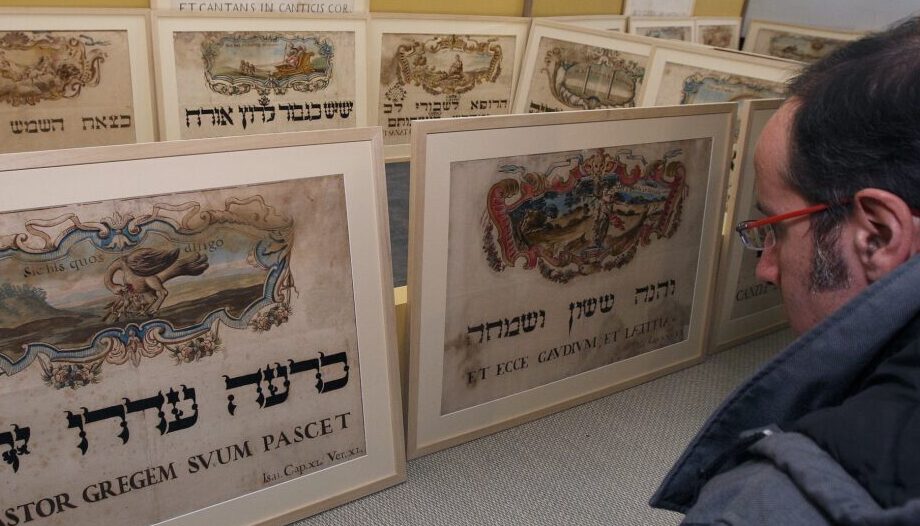
Rejection of Anti-Semitism
The document notes that Jewish-Christian dialogue cannot be considered a secondary concern for Christians, and that “solidarity with the Jewish people also includes the common struggle against anti-Semitism”. The Note devotes several sections (nos. 10 et seq.) to explaining relations with the Jewish people, and cites recent popes, including Benedict XVI, Francis, and Pope Leo XIV.
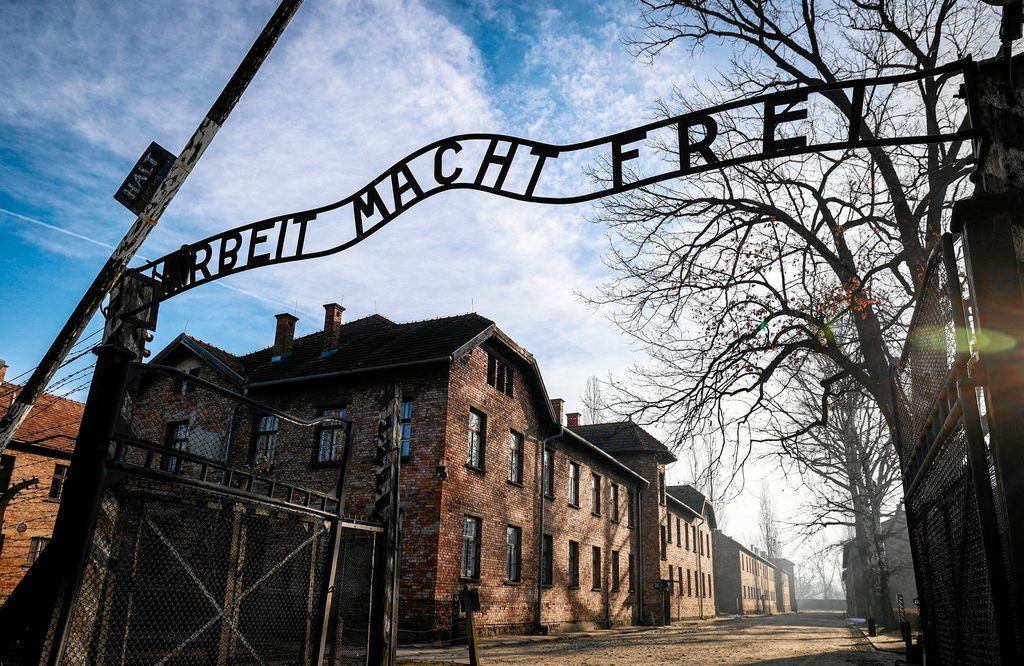
For example, the book includes extensive excerpts from a 2009 General Audience in which Benedict XVI said: “As I once again affectionately express my full and unquestionable solidarity with our brothers and sisters, the recipients of the First Covenant, I hope that the memory of the Holocaust will prompt humanity to reflect on the unforeseeable power of evil when it takes hold of the human heart. May the Holocaust serve as a warning to all against forgetting, denial, or oversimplification, for violence committed against a single human being is violence against all.”.
Growing Critical Awareness of Islamophobia
Among other points, the document highlights “the growing critical awareness of manifestations of Islamophobia, which fail to adequately distinguish between cases of fundamentalism and violence and the peaceful coexistence of other Muslim believers who integrate and work in their host countries.”.
“We must thank the Christian communities that have grown in a spirit of hospitality and also of greater understanding and respect toward Muslim believers,” the statement notes.
The Ongoing Challenge of Dialogue
‘Nostra aetate’ continues to inspire the Church’s pastoral and theological decisions and to foster that dialogue with various religious traditions. However, the signatories of the Note (Cardinal Prefects Víctor Manuel Fernández, Kurt Koch, and George Koovakad, and Secretaries Monsignors Armando Matteo, Flavio Pace, and Indunil Janakaratne Kodithuwakku Kankanamalage) assert in point 3 of the Introduction that this dialogue also constitutes “an ongoing challenge.”.
And they ask themselves: “How can we reconcile fidelity to our Christian identity with a sincere openness to otherness? How can we concretely live out the call to universal brotherhood in societies marked by growing cultural and religious diversity, by war and violence, and characterized by an ever-increasing trend toward secularization?”.
In this document, they essentially address these issues and outline future prospects.
“It’s not about founding a major world religion”
Before proceeding in an almost chronological order, it is worth jumping ahead to numbers 52 and 53, where the Note clearly states—to avoid any suspicion—that “this is not about founding a great world religion in which all beliefs are placed on the same level. That possibility must be ruled out out of respect for oneself and for others. Rather, the aim is to build a fraternal society capable of accepting differences.”.
“This intention remains at the heart of interreligious dialogue, just as it was in the Declaration Nostra aetate, ”, and in the efforts in this regard that have characterized the decades following its enactment," he adds.
“Dialogue is not merely a matter of setting forth one’s own doctrines or comparing one’s own worldviews; today, in the face of those who foment divisions and stir up conflict, believers from different traditions—and, first and foremost, their leaders—aware of their irreconcilable differences, are called to seek, with clarity and hope, the conditions for peaceful coexistence.”.
Why We Need to Renew the Ways We Communicate
A few lines earlier, the text had pointed out the reasons that “make it necessary to renew the forms of dialogue in a rapidly changing world.”.
The text (no. 52) refers here to “tensions over identity, the isolation of communities, fundamentalist ideologies, conflicts with religious overtones, the political manipulation of religion, but also the growing indifference in many countries toward any form of spirituality.”.
Consequently, “the future of interreligious dialogue today calls for renewed reflection and particularly clear commitments,” the document states.
Changing Mindsets and Avoiding Misunderstandings
To achieve this goal—that the various traditions, and first and foremost their leaders, as we have seen, may “seek, with clarity and hope, the conditions for peaceful coexistence”— the text considers it “necessary to bring about a genuine transformation of mindsets: to abandon the logic of defense, hostility, or conquest, and to adopt an open, benevolent, and courageous attitude.”.
Despite the progress made, difficulties in dialogue remain, the Note continues. “In some circles, there are still doubts about its appropriateness, out of fear of doctrinal relativism or a dilution of religious identity. (…) Some still wonder whether this is a pastoral issue, an act of charity, a theological exchange, or a call for political commitment to the common good” (no. 44).
“Outside the Church, misunderstandings are no less significant (no. 45). In some regions, relations between believers of different religions have historically been marked by conflict, and the memory of past wounds hinders mutual trust, despite the exhortation of the Declaration Nostra aetate «so that, putting the past behind them, they may sincerely practice mutual understanding,» particularly between Christians and Muslims.
The path remains challenging: it requires humility, courage, and discernment, the text notes (no. 45), and it is no less important to highlight the persecution Christians suffer in various parts of the world at the hands of extremist religious groups, it adds.
Conclusions: 4 points
Although some of the conclusions of the Note from the three Dicasteries have already been disclosed, it is worth summarizing a few of them.
1. "Now is the time to promote a new ethic of dialogue: a culture of complexity, flexibility, and friendship. It is no longer a matter of fearing or keeping at a distance the “other believer,” the other civilization, or the other way of thinking, but rather of to take the plunge".
"Civilizations and Religions ”They can certainly come into conflict, but they can also find common ground, creating a dynamic of creativity, by learning to transform diversity into solidarity. Otherness should no longer be seen as an obstacle, but as a challenge to be faced" (no. 55).
2. A richer and more articulate model of dialogue It is therefore not only desirable for the future, but is already taking shape, both within the Church and in its relations with other religious traditions. (…). ”It is through this interaction that a common future is built, in which peace and friendship are no longer utopian ideals, but the ripe fruits of encounter” (no. 56).
3. The Church invites everyone to become “builders of bridges, not walls”, artisans of peace and brotherhood, capable of welcoming others in their diversity, of recognizing their spiritual riches, and of working together to build a more just and humane society.”.
The text cites the Leo XIV: “The witness of our brotherhood—which I hope we can demonstrate through meaningful actions—will undoubtedly contribute to building a more peaceful world, just as all men and women of good will desire in the depths of their hearts.”.
4. “We must move forward with determination in this direction, sustained by God’s grace and by the spiritual treasure of religious traditions. 'Nostra aetate’, sixty years ago, “brought hope to a world emerging from World War II. Today we are called to renew that hope in our war-torn world and in our degraded natural environment.”.






 Español
  English
  Italiano