


The call from Pope Leo XIV at Notre Dame, on the first day of his visit to France, was no small matter.
The Pope was concluding some advice to the structure of the French Church, and to the lay people present, and in a few minutes we were going to hear that “This cathedral has been reborn so that you may be reborn with her in a new impulse of holiness and daily mission.” And suddenly, the name of Madeleine Delbrêl was heard.
The Pope relied on Madeleine Delbrêl, not a nun, nor a founder nor a theologian, “but a lay woman, artist and activist immersed in difficult realities, who found her mission (already in God) in the street, literally: the street, with its “existential peripheries”” (Ferrara wrote on July 4th), to encourage friendship with the Lord and personal prayer among those present.
Madeleine Delbrêl: “Without prayer, we will not love God with love”
What the Successor of Peter said, almost at the conclusion of his homily at Vespers in Notre Dame, was the following:
“Dear bishops, priests, seminarians, and consecrated persons: to you who have been called to follow Christ, I express my gratitude for your response and your fidelity to the Lord. Never neglect this friendship, so dear to the Lord, which must be cultivated in personal prayer, the essential foundation of every vocation.
As I said Madeleine Delbrêl“Without prayer, we will not love God with love. We may be his servants or his fighters, or even his disciples; but we will be neither loving children of our Father nor friends […] of Jesus Christ” (The Joy of Believing, Santander 1997, p. 213).
“Therefore, nurture your interior life with the Lord in the light of the school of the many saints who have gone before you, always drinking from the fountain of God’s infinite love in silent prayer. Your mission springs above all from this intimate relationship with the Lord, who awaits you there.”.
Social worker in a working-class neighborhood on the outskirts
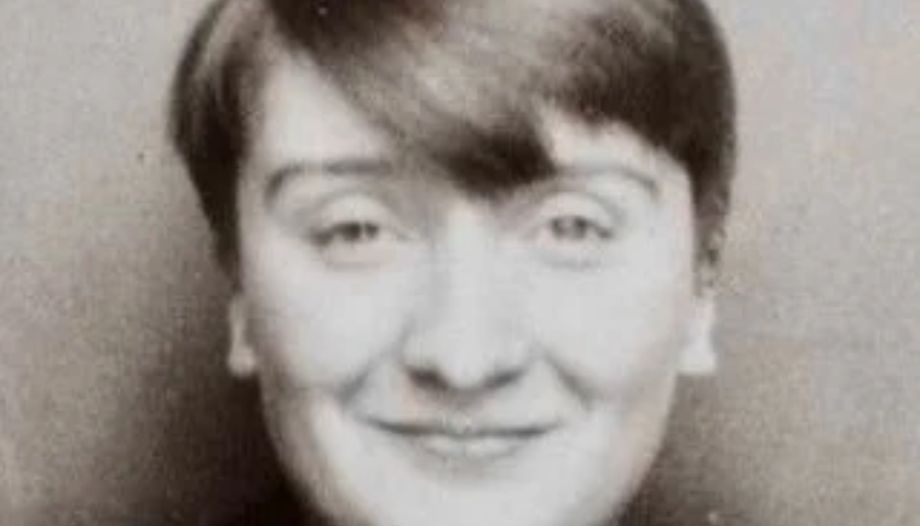
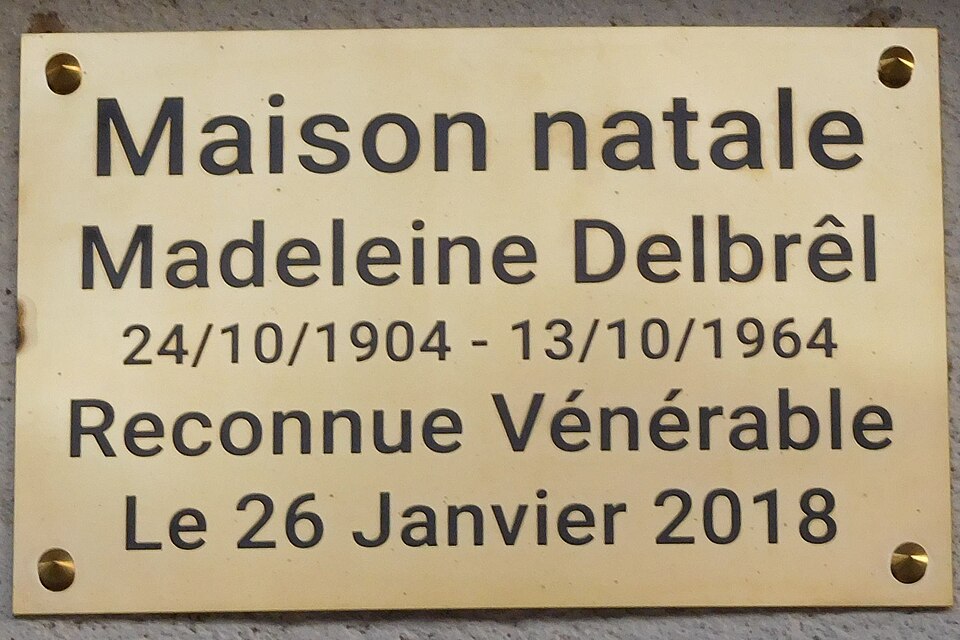
Madeleine Delbrêl was born on October 24, 1904, in Mussidan, France, into a family that we would today describe as “dysfunctional.” Her father, Jules, was a stationmaster—a frustrated intellectual, anticlerical, proud, and temperamental—who frequently changed jobs, forcing the family to move constantly. Her mother, Lucile, was the complete opposite: conformist, conventional, and from a bourgeois family.
This is how Ferrara described Madeleine's family, and then how he approached her. They have all the details there, so we'll only focus on a couple of things here.
The first, who in 1933 moved, along with some colleagues, to Ivry-sur-Seine, in the working-class suburbs of Paris, an industrial neighborhood steeped in class struggle and governed by a communist junta. She studied to become a social worker and was hired by that very same anti-clerical administration, which valued her greatly. Her house on rue Raspail became a haven for the poor, the homeless, and, during the Resistance, for Jews and refugees.
He lived like this, on the outskirts of Ivry, until October 13, 1964, when he died from a sudden cerebral hemorrhage. He was working at his desk. In 2018, the Pope Francis granted him the title of Venerable.
He is not a marginal figure.
Secondly, one consideration. If Pope Leo XIV she quoted her In Notre Dame, it's important to remember that she is not a marginal figure. Madeleine Delbrêl is one of the key figures of 20th-century French Catholicism in the evangelization of a secularized society.
Delbrêl posed a question that remains relevant today: how to be a Christian and evangelize in a society where faith no longer constitutes the dominant cultural environment?
Their response was to live the Gospel within themselves: to work, to relate to others, to share their problems and joys, and to strengthen and purify their own faith, as they were called to be missionaries "here and now".
A text that challenges us: patience, our nerves, the bus…
In conclusion, we've summarized a few lines from Madeleine Delbrêl that Ferrara published almost three months ago. You can reread them. here".
“Sometimes, throughout the day we eagerly await passions, great passions…
Those people will be called heroes—and that makes it worth sacrificing one's life…
Instead, tests of patience lie ahead.
Patience, those crumbs of passion, whose purpose is to slowly kill us for your glory, oh God, to kill us without our glory.
First thing in the morning, they’re already there: our nerves—either too jittery or too sluggish; the crowded bus passing by, the spilled milk, the chimney sweeps arriving, the kids who ruin everything.
“Our trials… the martyrdom that awaits us”
“They are the guests our husband brings home and that friend who, precisely, doesn't come; it's the phone that keeps ringing; they are those we love who no longer love us.
(…) it's wanting to go out when we're locked up,
is staying home when we should be going out;
He's the kind of husband we'd like to lean on
and who becomes the most fragile of all the children;
(…) This is how our trials arrive, in closed ranks or in single file, and they always forget to tell us that they are the martyrdom that awaits us.
And we let them pass us by with disdain, waiting—
to give our lives—an occasion worthwhile.”.





 Español
  English
  Italiano
  Français
  Deutsch
  Polski
  简体中文
简体中文