Gospel

“Curriculum” for holiness. All Saints (C)

Joseph Evans comments on the readings for All Saints' Day (C) corresponding to November 1, 2025.

Joseph Evans-October 29, 2025-Reading time: 2 minutes

In his Sermon on the Mount, the Gospel of the Solemnity of All Saints which we celebrate today, Jesus gives us the “curriculum” for holiness. To climb the mountain of holiness we need the encouragement, the action of the Holy Spirit. Without his grace we would quickly tire and give up. It is the Holy Spirit who inspires in us both the desire for holiness and the effective will to work toward it. But Jesus outlines for us the way of life that the Spirit inspires in those who truly follow his movements. And since holiness is like climbing a mountain, Jesus climbs one to tell us how we must live to attain it.

“He sat down and his disciples came to him.”. Jesus speaks to us from his “cathedra”, as a teacher. He alone knows the way to holiness, because he alone is the mediator, the ladder, the way between earth and heaven (cf. 1 Tim 2:5; Jn 1:51; 14:6). He alone knows the way to the Father's house (Jn 14:2). Therefore, instead of exhausting ourselves trying to devise our own way to Heaven, the best we can do is to “draw near” to Jesus, through whom we come to the Father (Jn 14:6).

The first four beatitudes are related to humility, to the recognition of our own spiritual poverty. If we are poor in spirit, empty of ourselves, we let God fill us. We weep because nothing on this earth can satisfy us and we are well aware of our own sinfulness and the evil that surrounds us, which alone we cannot overcome. We are meek in peacefully accepting our limitations and the imperfect situation in which we find ourselves, but always trusting in God. And we hunger and thirst for justice, to live as God wants us to live and for society to function as God wants it to, always knowing that only He can satisfy our hunger and thirst and bring about positive change.

But this awareness of our own need leads us to see the needs of others. It leads us to a merciful and pure heart that seeks to give to others and not just seek their selfish pleasure. We strive to build peace in society, the peace that Christ himself has given us (see Jn 14:27; 16:33; 19-21:26). And we courageously offer Christ to others, even at the cost of persecution.

It is by living the beatitudes that we too will be among this multitude“.“that no one could count”unknown perhaps to the world, but known to God, who, as we read in today's first reading, cries out praises to God in Heaven, thanking him for the salvation that comes only through his Son Jesus Christ.

Vocations

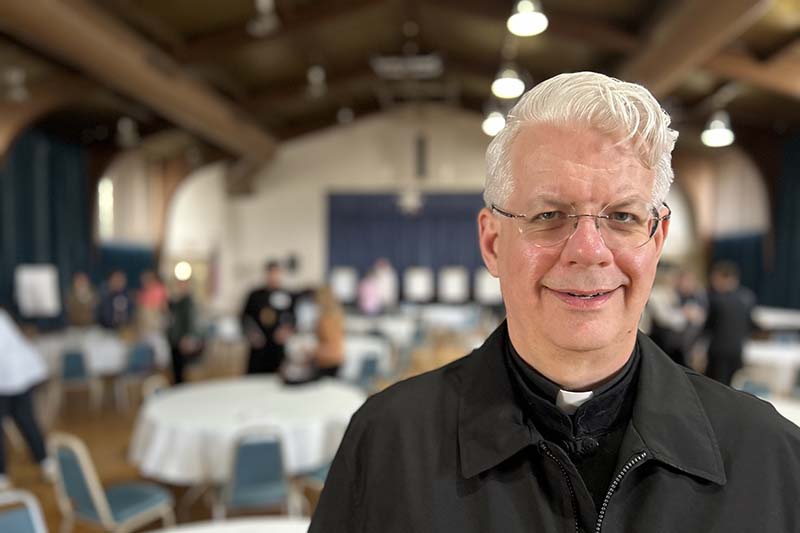
Daniel Callejo: “To follow one's vocation means to throw oneself into the unknown”.”

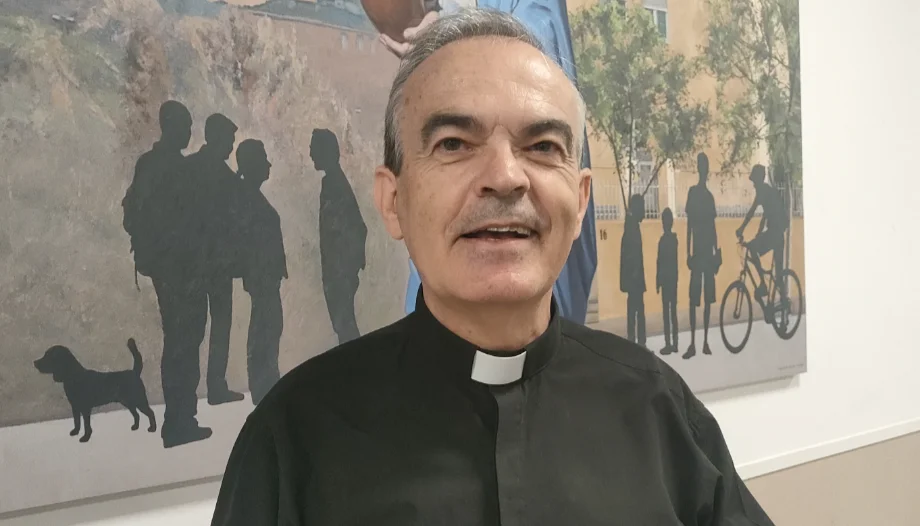
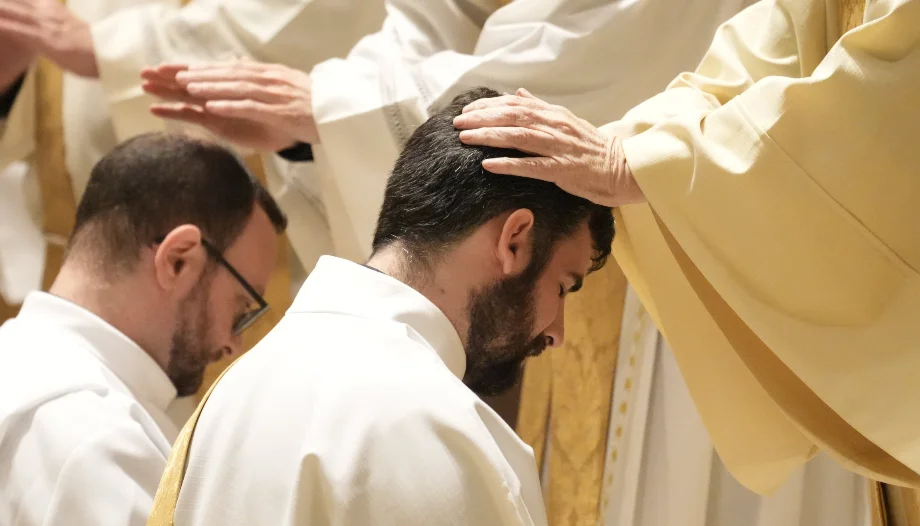
A Navarre native and engineer by training, Daniel Callejo, who grew up in a family of 12 siblings, left his profession to follow his priestly vocation. Daniel shares how growing up in a large family has marked his life of faith and guided him towards his vocation.

Teresa Aguado Peña-October 29, 2025-Reading time: 3 minutes

Daniel Callejo is from Pamplona. He grew up in a family of 12 siblings and trained as an engineer in Barcelona. After working and making his way in the professional world, he left everything to follow God's call. He is now pursuing a doctorate in Philosophy at the Pontifical University of the Holy Cross in Rome.

Daniel assures that faith has always been present in his life, first at home and then at school. “My older siblings have always been a reference point for me as I watched them live such simple things as going to Mass together or entering a church during a trip to greet Jesus in the tabernacle. In that way, I naturally understood what it meant to live the faith.”.

From engineer to priest

One of his older brothers has also been a priest for eight years, a close example that influenced his own vocational path. “At home they have lived it with great joy and support, both in prayer and in affection. They have accompanied us with sincerity and enthusiasm. It has been a shared joy.”.

Even before entering the seminary, he was a numerary member of Opus Dei. “What attracted me most to the Work was finding God in everyday things and the idea of sanctifying work. Then, little by little, I discovered through prayer and the example of others that perhaps God was asking me to put aside this professional development and serve as a priest, above all through the sacraments.”. Daniel emphasizes that it was a progressive process in which God gradually showed him His will.

A faith without ruptures

Daniel says that, thanks to God, he has always lived in faith, with varying degrees of intensity, but always keeping him in mind: “since I was a child I knew that God is Father and that He is with me.”. It also recognizes the importance of training at school: “The atmosphere of trust, the friends, the teachers..., everything helped. In addition, religion classes, talks by priests and being able to go to Mass or confession completed what I was already experiencing in my family.”.

“In my experience, faith was not an imposition. Adolescence is a time when one seeks independence and one has to accompany without forcing. The important thing is that the doors are open so that, if someone moves away, they know they can come back and be welcomed.”.

In Rome, in addition to his priestly formation, he is completing a doctorate in philosophy: “Studying is an exercise that, although arduous and time-consuming, is very valuable. In a fast-paced world, it is good to stop and think and ask oneself about the underlying reasons for things. Moreover, it encourages dialogue: by looking for those underlying reasons in oneself, one can also help others to discover the deeper motivations behind their lives, their actions and what happens to them.”.

A confident yes

When speaking of the fear that many feel before God's call and the renunciations that it entails, Daniel has a clear answer. For him, the essential thing is to go to the heart of the Christian message: God is our Father and no one loves us more than He does. That certainty underpins everything.

“It is true that God may ask for things that seem very demanding or uncertain, but he always does it with love. And he gives us, step by step, the motivations, the feelings and the strength to carry it out. In my case, I also experience uncertainty about the future: I don't know what will come or if I will be up to it. But at the same time I have the certainty that giving my life to God is the firmest and truest thing to do.”.

Looking back, Daniel sees that God has always been with him, in difficulties and in moments of light. “Of course, following a vocation involves throwing oneself into the unknown, just as in married life: no one can know in advance whether he or she will be strong enough or overcome all the obstacles.”. For him, the important thing is love, and the decision to renew it every day.

“If we think of Peter, when he was fishing, what would he have felt if he had been told everything he would experience later? Surely he would have felt incapable, as would the other apostles. But what was clear to them was that Jesus, looking at them with infinite love, was calling them to follow him. And the only possible answer was: ‘yes, I want to go with you,’ even if they did not know what the future would be like.”.

Read more
The Vatican

Cardinal Burke celebrates traditional Latin mass in St. Peter's Basilica

The Vatican authorizes a traditional Latin Mass at St. Peter's, in a pastoral gesture by Pope Leo XIV towards the faithful of the ancient rite, despite the restrictions established by the "Traditionis Custodes.".

CNS / Omnes-October 28, 2025-Reading time: < 1 minute

In the presence of hundreds of priests and lay faithful crowded in the pews and standing along the walls, U.S. Cardinal Raymond L. Burke celebrated the traditional Latin Mass at the Altar of the Chair in St. Peter's Basilica.

The Vatican said Pope Leo XIV had authorized the cardinal to celebrate the pre-Vatican II liturgy on Oct. 25 with people attending the annual Ad Petri Sedem “Summorum Pontificum” pilgrimage to Rome.

“Summorum Pontificum” was Pope Benedict XVI's 2007 document that expanded access to the ancient liturgy, giving priests discretion over whether to celebrate it and affirming that the faithful had the right to ask for it.

But, citing concerns about the unity of the church and about the lack of acceptance of the Second Vatican Council, Pope Francis issued “Traditionis Custodes” (“Guardians of Tradition”) in 2021, which significantly limited celebrations of the traditional Latin Mass using the 1962 Roman Missal.

Even so, the Ad Petri Sedem “Summorum Pontificum” pilgrimages of October 2021 and 2022 - after “Traditionis Custodes” - could celebrate the ancient Mass in St. Peter's Basilica. Pope Francis gave the permission, according to Andrea Tornielli, editorial director of the Dicastery for Communication.

When the 2025 Pilgrimage Mass was announced, Joseph Shaw, president of Una Voce International, a federation of Catholic groups faithful to the pre-Vatican II liturgy, stated, «We thank Pope Leo for his pastoral response to the request for a Traditional Mass at St. Peter's. We are grateful to Pope Leo for his pastoral response to the request for a Traditional Mass at St. Peter's. This celebration symbolizes the unity with the Holy Father so longed for by Catholics faithful to the ancient rite of the Mass.».

The authorCNS / Omnes

Evangelization

Saints Simon and Jude Thaddeus, Apostles

The liturgy of the Church celebrates on October 28 two of the Twelve Apostles whom Jesus called after spending a night in prayer. They are Saints Simon and Jude Thaddeus, who died martyrs for the Gospel in Mesopotamia.  

Francisco Otamendi-October 28, 2025-Reading time: 2 minutes

Saints Simon and Jude Thaddaeus are two of the least known Apostles, although they are among the closest to the Master, since they are two of his cousins, says the vatican saints' calendar. The tradition is quite true in the case of Jude Thaddaeus, since it is deduced from the Scriptures that his father, Alphaeus, was the brother of St. Joseph, according to Vatican News. While his mother, Mary of Cleophas, was a cousin of the Virgin. As for Simon, there are no certainties. 

St. Fortunatus of Poitiers affirms that Simon and Judas Thaddeus were buried in Suanir, the Persian city where they suffered martyrdom. According to tradition, it is almost certain that in this part of the world Simon, called “the Zealot” or “the Canaanite”, set out on the road with his companion of mission and destiny.

There were two Judas who followed Jesus, of whom Thaddaeus is the least known, being named after the one who betrayed him, Iscariot. When the Eleven left Jerusalem to announce the Kingdom of God in other lands, Judas Thaddaeus passed through Galilee and Samaria to go, over the years, to Syria, Armenia and ancient Persia. In this area he met Simon. The preaching of both led to the baptism of thousands of Babylonians and people from other cities, the Vatican agency adds.

Martyrology

The Martyrology Romano writes: “Feast of St. Simon and St. Jude, apostles, the first called Canaanite or Zelotas, and the second, son of James or Thaddaeus. Who, at the Last Supper asked the Lord about his manifestation, receiving this answer. ‘He who loves me will observe my word, and my Father will love him, and we will come to him and make our abode in him.’” Both were martyred.

St. Jude wrote little. Only one letter of his is found in the Bible. It was a severe criticism against the Gnostics, heresy that separates the corporeal from the spiritual. The physical or corporal is bad, and the spiritual is good. His Letter ends thus: “Eternal glory be to our Lord Jesus Christ, who is able to keep us free from sin, and without spot in the soul and with great joy”.

The authorFrancisco Otamendi

Evangelization

The world of music thirsts for God...

Music is spiritually hungry, thirsty for God. Lauren Jackson, editor of ‘The Morning’ of the New York Times, talked about it in her project ‘Believing’. Famous singers and songwriters tell about it in interviews and concerts: Daddy Yankee, Paris Jackson, Michael Jackson's daughter, Rosalía, Mónica Naranjo, the Congolese Yal Le Kochbar, etc.  

Francisco Otamendi-October 28, 2025-Reading time: 5 minutes

He was not referring only to the world of music. But also to him. The editor of the newsletter ‘The Morning’, of the New York Times, Lauren Jackson, has developed over the past year a project on religion and spirituality now, Believing. Her conclusion was stark: ‘America wants a God’.

And in these months, but also before, some well-known singers, and they too, have revealed that they pray and seek God. They are probably not a manual of orthodoxy, or yes, but they are a sample of the thirst for God and how current it is to publicly manifest the faith. 

«My super power is sobriety. The only ‘vice’ I have left is prayer,» Paris Jackson, daughter of Michael Jackson told ‘Elle’ (Oct. 22), after confessing that she also goes to «therapy twice a week,» and that «I'm very involved in my mental health.».

Rosalía: «God is the only one who fills».»

The Catalan singer Rosalía has sold millions of copies worldwide, has won numerous Grammys, Latin Grammys... And I don't know if she had ever spoken so clearly before about spiritual matters.

October 16, 2009 explained in a conversation in Catalan, in Radio noia, with Mar Vallverdú, that «it is the first time I have made an album without fear of failure», referring to what will be his fourth album, to be released soon.

In a relaxed and informal conversation, says Xavier Cervantes, «Rosalía has also shown a spiritual side, as when she assured that ‘the more space you make inside you, the better receptacle you are’». «Sometimes I have a desire that I know this world will not be able to satisfy, because it will not be able to fill that emptiness. Perhaps this space can only be filled by God, if you have the necessary predisposition,» he argued. And then he said: «I admire the nuns very much, they are like celestial citizens».

Rosalía has had certain nods in her career towards religion and faith. One of them may be the beautiful song ‘Although it is night’, in which he sings verses of the mystic St. John of the Cross, reveals ‘Religion in freedom’. 

«I like the idea of living in cloistered living, creating and finding peace.»

‘La Vanguardia’ also includes an interview with Rosalía, who admits that her next project is born from the need to empty herself spiritually: «As an artist, there is a connection between emptiness and divinity. If you make space, maybe someone above you can come and pass through you. I have a desire that I know this world can't fulfill.».

«God is the only one who can fill the spaces if you have the predisposition, the attitude and the way to open yourself so that it can happen». She defines herself as a kind of contemporary nun: «I like the idea of living in a cloister, like a nun». She compares herself to them because she would like to be focused on creating and finding peace. 

Daddy Yankee: first Christian themed album

On the other hand, the legendary Puerto Rican reguetonero Daddy Yankee released last week his first album with a Christian touch, ‘Lamento en baile’ (Lament in dance). It is also his first after retiring from popular music, and reflects, reported Efe, on the fact that music «has the power to heal, inspire and celebrate».

Famous reggaeton singer Daddy Yankee has reappeared «reborn» in his Christian faith, and with a new mission to «preach the Gospel,» during the closing of Billboard's Latin Music Week 2025 talks, according to ‘El Universal’.

The artist, whose real name is Ramón Luis Ayala Rodríguez, is inspired by a biblical psalm. He assured that he maintains «the same power, the same flavor and the same flow», but now with a spiritual purpose, combining reggaeton, salsa, cast and hip hop with Christian lyrics.

DaddyYankee.
Daddy Yankee. @Wikimedia Commons

«I feel reborn.»

«I feel reborn, with new energy, joyful, happy, with all that I am living and the personal, spiritual change in my faith,» said the Puerto Rican, who wore a brown suit that contrasted with his traditional urban attire.

This was his first public appearance since December 2023, when he closed his La última vuelta tour in Puerto Rico, declaring to his audience: «I recognize that Jesus lives in me».

The new album includes 19 tracks, among them DTB (God Bless You), I will praise YOU (Ps 27) and Jezebel and Judas. «We have everything on the album, and people are saying, ‘Wow, we didn't know you could do urban Christian music,’» he commented.

Mónica Naranjo: «I trust a lot in God».»

«I have a lot of faith in God. Faith is more important than you think because it is not easy to be 18 years old and live in a foreign country like Mexico, but I did it». Thus reveals the singer and producer Mónica Naranjo reflections on her career, faith and intimate decisions, in an interview in La Vanguardia, also this October.

His vision of faith occupies a good part of the interview. Naranjo reminds the journalist that she grew up «under the religious guidance of missionaries», who helped her to develop as a person. Now, he maintains an intimate relationship with God: «I am a great believer and I like going to church a lot. I like to put my head and my heart in order».

«If He is with you, who can be against you? No one.»

In the interview she reveals that what she does to avoid being nervous before going on stage is to «trust in God»: «If He is with you, who can be against you? No one. Faith is more important than you think and it helps us in the most difficult moments. It is not easy to be 18 years old and live in a foreign country like Mexico. I did it and I was very happy.

Her first album, she explains, did not end up working in Spain, so Naranjo went to live in Mexico, where she sold almost a million copies. For her, religion is not only a spiritual issue, but also a moral one. «Religion gives values. And values are very important in the life of human beings,» she defends. Moreover, if there were «more schools that taught religion, there would be more values in society today,» she adds.

D.R. Congo rapper Yal Le Kochbar.

Yal Le Kochbar: «need for unity and universal love».»

The rapper from the Democratic Republic of Congo, Yal Le Kochbar, wants to bring hope to the youth of his country through music. Born in Goma, in eastern DRC, on June 10, 1997, he lived through the war with his mother and siblings, and finally returned to Kinshasa in 1999. 

Yal is the head of a family of six siblings, two boys and three girls, marked by the trauma of war. Years ago he took a professional turn and entered the world of music and began composing and singing songs, Omnes reported in this year's June issue.

Music of Light, crossing borders

Through his music, he wants to transmit «light, self-awareness, the truth about life and the need for unity and universal love», and his inspiration is Fally Ipupa.

Yal Le Kochbar converted to Catholicism after a long spiritual quest following a serious illness. «I asked God, and Jesus in particular, to manifest Himself if He really existed, and He answered me. It was the beginning of a new relationship.».

«I am making myself known little by little, thanks to my music, which is available on all platforms. I am also developing my presence on social networks. My Music of Light project is designed to cross borders: it is based on the universal.».

The authorFrancisco Otamendi

Read more

Leave me alone... I want to be free! The abortion debate

The polarization of the abortion debate makes dialogue difficult and underscores the need to understand women's circumstances and offer support.

October 28, 2025-Reading time: 3 minutes

The polarization that we live in much of Western society seeks to divide, to make us think that to disagree with what someone else says is to discriminate. We have experienced something like this in Spain, in recent weeks, with the revival of the debate (never closed) on abortion as a result of a campaign, promoted by the state government and some local governments, in which abortion is promoted and is even working to include it as a “constitutional right”. 

On this board, any opinion against the elimination of the unborn, against helping mothers..., has been labeled as “discriminatory”, “retrograde” or “anti-feminist”. When having a different opinion and defending it is not to be polarized but to have polarity (opinion, ideas, own sense of life). And the beautiful thing, and this is to be envied, is to be able to dialogue, to have different positions, and to be able to defend them, without feeling attacked or falling into victimhood.

In this line of seeking understanding, videos and articles have appeared that lead the debate to show that abortion is something unwanted, that many times it is carried out because of the precarious situation in which a pregnant woman may be, either for economic reasons, because of vital anguish, lack of information or because there is not enough help offered when she wants to carry a pregnancy to term. All this is very much influenced by the economic interests behind it, since abortion is a very profitable business. But the argumentation to defend the “right to abortion” does not show these circumstances, since the pro-abortion narrative is different. It goes along the line of making visible that there is little help to exercise freedom and be able to terminate the pregnancy, so they have developed a tool to inform through the web “abortion rights".“quieroabortar.org”This is supported by the Ministry of Health and Equality, in order to be able to have an abortion depending on the autonomous community where you live. They imply that it is an impossible task to carry out this practice in Spain, when 106,172 abortions are performed every year. Or that 80 % are carried out in private centers, without saying that these centers are subsidized with public money. And to consolidate the argument they propose to make this practice a constitutional right.

To understand this biased stance, lacking in dialogue and far from reality, it is worth watching some videos such as the one by Juan Soto Ivars, the one by Chapu Apaolaza or reading the article by Ana Iris Simón, in which she quotes Leire Navaridas, who has jumped into the news. She is “mother of three wonderful children and founder of AMASUVE, a non-political and non-denominational association for the Support and Visibilization of post-abortion trauma”, as she explains in her article. web. This feminist had an abortion in 2008, as she testifies in multiple videos (as in this interview with Vozpópuli ). Her decision to interrupt her daughter's life, because she was overwhelmed by the situation of not wanting to accept motherhood, because she was badly advised and because in her situation she did not see any other solution, did not affect her at first, she came out as if she had done “the English”. But when she realized that she had not emptied herself of a “jumble of cells”, but of a living being, the result of having received therapy for vertigo. Years later, in addition to founding the association for the accompaniment of pregnant women, she became a volunteer for Red Madre. This is a “solidarity network of support, advice and accompaniment for women to overcome any conflict arising from an unexpected pregnancy”.

The message is clear, the abortion debate is not closed. We must be open to dialogue and build bridges to understand the circumstances in which many pregnant women live. Faced with this delicate situation, we must offer alternatives of all kinds to help women who want to carry out their pregnancy. As the recently created website explains quierosermadre.org, which tries to facilitate the desire to carry out motherhood. In this way, when an unexpected pregnancy comes, there will be more chances of not being forced to undergo the most violent obstetric operation that can be for the woman and lethal for the new human being that is on the way.

The authorÁlvaro Gil Ruiz

Professor and regular contributor to Vozpópuli.

Read more
Evangelization

George Gänswein speaks of relativism as a threat to faith and freedom

The archbishop warned in Šiluva (Lithuania) about the dangers of relativism, which he described as “a poison that poisons the faith”.

Bryan Lawrence Gonsalves-October 27, 2025-Reading time: 3 minutes

Apostolic Nuncio to Lithuania, Latvia, and Estonia, Archbishop Georg Gänswein, reminded Christians of the dangers of relativism in today’s society during a recent conference in Šiluva, Lithuania. Remarking that it “leads to the erosion and ultimately the destruction of a faith based on the confession of truth. And this leads to a poisoning of faith”.

The conference, organized jointly by the Lithuanian civic group Laisvos visuomenės institutas (Institute of a Free Society), the Lithuanian Christian Workers’ Trade Union, and the Faculty of Catholic Theology at Vytautas Magnus University, brought together academics, civic leaders, public intellectuals and clergy to discuss the principles of the Šiluva Declaration. 

Building positively

This is the third such conference dedicated to reflecting on the Šiluva Declaration, published on September 12, 2021, during the town’s annual Marian festival. The public document advocates the defence of fundamental human rights, the fostering of virtue and the promotion of societal common good. It recognises the importance of a society built upon the pillars of truth, family values, human dignity and faith in God. It has since become a moral reference point for Catholic social thinkers in Lithuania.

The former Prefect of the Papal Household and longtime personal secretary to Pope Benedict XVI, Archbishop Georg Gänswein, delivered the keynote address, drawing deeply on the late Pontiff’s philosophy. His lecture offered a rich philosophical and theological reflection on faith, reason, and relativism, aspects that he described as a “constant theme in Ratzinger’s work”. Archbishop Gänswein warned that when either faith or reason is diminished, it inevitably leads to “pathologies and the disintegration of the human person".

The conference opened with remarks from Archbishop Kęstutis Kėvalas of Kaunas and Archbishop Gintaras Grušas of Vilnius, who both stressed the Christian duty to defend the truth in public life.

In his opening remarks, Archbishop K. Kėvalas urged vigilance against temptations to experiment with human nature and dignity. He also reminded attendees that Šiluva, a Marian shrine known for one of Europe’s earliest approved apparitions, symbolizes fidelity to God’s order in creation. “The holy place of Šiluva invites respect for the order that the Creator has given to this world”, he said.

Archbishop G. Grušas recalled Pope Leo XIV’s words that the Church “can never be exempted from the duty to speak the truth about man and the world, using, when necessary, even harsh language that may initially cause misunderstandings”. He stressed that all Christians, including those in public life, have a duty to defend the truth, which he described as “not an abstract idea, but a path along which a person discovers true freedom”.

Recovering reason

Archbishop Georg Gänswein urged participants that in the face of today’s great challenges, such as technical thinking and globalization, the first step must be to recover the full scope of reason. He described true reason as inherently truthful, contrasting it with relativism, which he called “an expression of weak and narrow-minded thinking… based on the false pride of believing humans cannot recognize the truth and the false humility of refusing to accept it”. “The truth sets us free”, he added, referencing John 8:32, noting that it serves as the standard by which humans must measure themselves and that embracing it requires humility.

The conference also featured a range of thought-provoking talks on Lithuania’s moral and political identity, the challenges of liberal democracy, post-Soviet societal changes and the role of faith and family in public life. It concluded with a panel discussion on Europe’s moral direction, freedom of speech, and the renewal of Christian values in society.

Archbishop Gänswein concluded by warning that relativism, the defining mindset of modernity, which he described as “a creeping poison”, ultimately undermines human freedom. Driven by self-sufficiency and amplified by social media, it blinds people to truth and their ultimate purpose. Humanity’s true goal, he affirmed, is “to come to the knowledge of the truth, which is God, and thus to attain eternal life”. His address was met with sustained applause.

The authorBryan Lawrence Gonsalves

Founder of "Catholicism Coffee".

Books

«The subdued earth»: the history of thinking about science and faith.

Philipp Blom, in his book "The Subdued Earth" traces the history of thinking about nature, reason and the relationship between God, science and humanity.

José Carlos Martín de la Hoz-October 27, 2025-Reading time: 4 minutes

Man's relationship with the world has had different interpretations throughout history and, above all, today we have a clear feeling of having arrived late in the despotic domination of nature, as if it were beyond repair and we had caused an almost irremediable deterioration. It is within this framework that this extraordinary work by historian Philipp Blom, always intelligent and with ideas to contribute to the intellectual debate and to historical science, moves.

Of course, he will always speak from the history of ideas, with depth and rigor, in spite of being diverse and dispersed themes. Blom's visit to Sacred Scripture and classical antiquity is very important to prove the sin of idolatry of the Jewish people (p. 63) together with the command to “subdue the earth” (p. 93).

Reason at the service of the mastery of nature

Regarding St. Augustine and his famous contribution in the treatise “de bono matrimonii”, about concupiscence, Blom reminds us of its origin in Manichaeism and neo-Platonism, which would explain “the obsession with Greek systematics, the Platonic opposition to carnal pleasures and Manichaean paranoia” (p. 112).

Particularly interesting is Blom's study of one of the fathers of modern science, Francis Bacon (1561-1626), a contemporary of Montaigne (1533-1592), but much more incisive than him in subduing the earth with instrumental reason (p. 186). For example, in his “Novum Organum” he will tell us: “Man, servant and interpreter of nature, neither works nor understands except in proportion to his experimental and rational discoveries about the laws of that nature: outside of that, he knows nothing and can do nothing” (p. 187). 

The parliamentary Bacon ended badly but the “jurist and political Bacon was a productive thinker in his conversations or in correspondence with other scholars” (p. 188). That is why Blom will assert: “Bacon's ambition went further: he not only wanted to be a servant of nature: he also aspired like Telesius, to master it by learning, to know it from the inside out” (p. 192).

Blom will end this short synthesis of Bacon's thought with a quotation from Descartes to close a chapter that began with the rationalist's view of the animal soul (p. 178): “Descartes recognized that his image of nature also rested on the opinion and interests of the masses, but in his books he defended it until he ran out of ink: only man alone has a soul; the rest of nature is composed of non-sentient automatons that are to serve man, with the help of reason, to carry out - by mastering it - his divine mission” (p. 193).

He then turned to Baruc Spinoza (1632-1677), an author so vilified in his time that he could hardly be mentioned in the intellectual debate because he was considered “subversive and scandalous” (p. 194), for he claimed that “God is matter and the laws of nature, and the world, in Spinoza's legendary formulation, is deus sive natura, God or nature, two interchangeable terms” (p. 196).

And more: “As an attentive reader of Montaigne and Bacon, of Telesius and Descartes, Spinoza knew the models of his predecessors and developed his argument with unsurpassed elegance, as if Montaigne had moved Descartes” pen. Nature is an infinitely complex system whose laws are circumvented and distorted through ignorance or greed“ (p. 198). Finally Spinoza was buried in the index of banned books, ”however, his work sank under the general movement towards the new gospel of scientific and rational domination of nature, engine of new prophets..."(p. 199).

The Enlightenment was never a school of thought with binding dogmas, apart from the emphasis on reason, a basic optimism and a certain elitist tendency which, however, already had very different faces“ (p. 208). In addition, various trends began to differentiate themselves: ”The rationalist and moderate enlightenment of Immanuel Kant or Voltaire, Thomas Hobbes or Leibniz was, for many of its opponents, an attack on the traditional order of the world, although in reality it also played the opposite role, because in a secular world it breathed new life into many central ideas of the Christian theological tradition“ (p. 209).

Blom then reminds us: “Most of the enlightened had received a Christian education and these ideas were so familiar to them and their societies that they seemed to them the only possible structure of thought. Although the Enlightenment authors attacked Christian dogmas, they also used arguments and conceptual images from the Christian tradition to rewrite them in their own way” (p. 211).

Logically, Philipp Blom had to dedicate a chapter to the Lisbon earthquake of November 1, 1755, which caused thousands of victims in that city and in others nearby and, in addition, the tsunami that took thousands more people and, above all, a broad and heated philosophical, scientific and theological debate about physical evil and moral evil (p. 219). The conclusion, for Blom, after exposing the Kantian, Voltairean or Herderian arguments is the following: “Lisbon became synonymous with the analytical weakness of rational religion. At least for the educated elite, the earthquake of 1755 was an intellectual tremor” (p. 223).

Moreover, he will add: “After all, both the aristocracy and the Church derived their legitimacy from a divine mandate and the grace of God (even the rich Calvinists had learned to consider their prosperity as proof of God's favor, which at the same time allowed them not to feel responsible for the poor). Therefore, any reasoning that questioned the divine order and removed the authority of knowledge and morality from the throne and the Church was in itself a revolutionary act” (p. 224).

Having arrived at the substance of the Enlightenment Blom will tell us: “On the one hand Kant drove his contemporaries to despair insofar as his philosophy affirmed that with the sensory experience of the essence of the world it was impossible ever to perceive anything and therefore nothing either of an expected spiritual truth, i.e. of God, but, on the other hand, like Descartes with his res cogitans, created a space that made room for mystery and the Creator, a place that would never be touched by science” (p. 226). 

The subdued land

AuthorPhilipp Blom
Editorial: Anagrama
Pages: 432
Year: 2025
Read more
Culture

Dana Gioia, a sacramental poet

Although Dana Gioia does not write in a confessional tone, his poetry reflects a deep Catholic root. Tyler Cowen, who interviewed him in his podcast Conversations with Tyler, William Oxley, author of the prologue to his only poetry anthology in Spanish, considers him the most relevant poet in his country since the eighties.

Carmelo Guillén-October 27, 2025-Reading time: 4 minutes

Whoever approaches Dana Gioia's poetic work -with a metaphysical background and based on a genuine visionary realism- discovers that there are two fundamental keys. The first is her link with the New Formalism, a U.S. movement that emerged in reaction to the predominant avant-garde trends of the 1980s and 1990s, and which found in Gioia not only its most prominent representative but also its most lucid theorist. Far from promoting a simple return to traditional metrics, New Formalism sought to renew attention to form and to rescue the musicality of language, both in rhymed verse and in versolibrism. For Gioia, poetry is an art form deeply linked to song. As he himself affirms: “Uses sound and rhythm to create a physical connection with the listener and evoke meaning beyond words".

The second key is his spiritual dimension, especially his Catholic roots, even though his work does not contain explicit religious references to traditional themes. Gioia himself has responded to this question, posed as to why his identity as a Catholic poet has gone unnoticed for so long. His answer was clear: “Most readers are very literal and focus mostly on the subject matter. Since I didn't write poems about the crucifixion or the Virgin Mary, it never occurred to them that I was a Catholic poet. What makes my poetry Catholic is the worldview, the sacramental use of symbols, the redemptive role of suffering, the interpenetration of the sacred and the mundane and, perhaps crucially, the conviction that truth and beauty are interdependent. (...) I write from the everyday details of real life. It should not be necessary to visit the Vatican to perceive the divine. It is everywhere if you know how to look.”.

Indeed, Gioia does not preach from her poems nor does she take refuge in liturgical gestures. Her gaze seeks the transcendent in the commonplace, the eternal in the everyday. It is, perhaps, there where her voice reaches one of its greatest singularities: in that ability to create beauty with depth, without solemnity or fuss, but with absolute fidelity to the inner music of language.

Beatitudes

Precisely, his most catholic poem -in the author's own expression- is Winter solstice prayer, a title that alludes to the shortest and darkest day of the year, an ancestral symbol of recollection, waiting and hope for the resurrection. The poem in question reads as follows: “Blessed is the road that keeps us wandering / Blessed is the mountain that blocks our way / Blessed is hunger and thirst, loneliness and desire / Blessed is the toil that consumes us without end / Blessed is the night and the darkness that blinds us / Blessed is the cold that teaches us to feel / Blessed is the cat, the cricket and the raven / Blessed is the hawk that devours the hare / Blessed is the saint and the sinner, redeemed from each other / Blessed is the dead, peaceful in their perfection / Blessed is the dead, peaceful in their perfection / Blessed is the saint and the sinner, redeemed from each other / Blessed is the dead, peaceful in their perfection / Blessed the hawk that devours the hare / Blessed the saint and the sinner, redeemed one from another / Blessed the dead, peaceful in their perfection / Blessed the pain that humbles us / Blessed the distance that impedes our joy / Blessed the brief day that makes us long for the light / Blessed the love that we discover in losing it / Blessed the love that we discover in losing it / Blessed the love that we find in losing it / Blessed the love that we find in losing it / Blessed the love that we find in losing it / Blessed the love that we find in losing it / Blessed the love that we find in losing it / Blessed the love that we find in losing it / Blessed the love that we find in losing it.". 

The poet himself has described this text as “...".“a set of beatitudes praising the suffering and renunciation necessary to alert us spiritually, from which it celebrates the transformative and redemptive nature of suffering, one of the central spiritual truths of Christianity, as well as one that is easily forgotten in our materialistic consumerist culture. It is also a poem about facing the harsh realities of our existence. Our welfare society tries to deny suffering, unless it can sell you a pill or a product to banish it.". 

Thus, without solemnity or doctrinal positions, Gioia offers a prayer born from the darkness, a voice that seeks meaning in the midst of pain and that affirms, with the strength of poetic language, that even there -in the most inhospitable- the divine can dwell.

Intimate, existential and cultural issues

Many of his other poems are of the same style, in which he deals with intimate themes such as betrothal love -in Marriage of many years, for example, he defends his marital fidelity-; the mourning for the death of his son-; the mourning for the death of his son-.Pentecost is a heartbreaking text that serves as a showcase, in which guilt, impotence and a broken but persistent faith intertwine, and where death is presented as a radical transformation, a dark “pentecost”; or family memory and personal roots, as in Return home, The background of many of his poems is the usual background of many of his poems.

Likewise, he explores existential dimensions through symbolic or phantasmagoric forms, in which objects, places or souls dialogue with the poetic character, generating an atmosphere of estrangement charged with metaphysical resonances. To this is added a reflection on the very nature of language, which in his poetic work is not only an expressive tool, but also the very substance of reality and a vehicle towards the transcendent. In this respect, his most eloquent poem is Words, The term “language" suggests that existence exceeds what words can encompass, although language is still essential: "...".“To name is to know and remember”He affirms, suggesting the need for faith to penetrate the very entity of the real. 

Presence of the sacred 

Thus, Dana Gioia's poetic work must be understood in the light of the two keys already exposed: the formal renewal - inherited from the New Formalism- and a deeply incarnated spiritual vision, sustained by a Catholic sensibility that is not formulated, but constitutive. From this double perspective, it is legitimate to understand him as a sacramental poet, and not because he employs, as I say, a conventional religious imagery, but because his poetry expresses an essential -and often countercultural- conviction that the divine dwells in the real, in the specific, in the ordinary.

In an age dominated by cultural frivolity, aesthetic superficiality and the neglect of the spiritual, Gioia's work stands as a silent but firm affirmation of human dignity. In her verses -musical, profound, illuminating- resounds the certainty that beauty, when it is authentic, is not mere ornamentation, but a revealing path towards a more sublime truth.

Read more
The Vatican

Catholics must build a more humble Church, seeking truth together, Pope says

Pope Leo XIV calls for the building of a humble, synodal Church, guided by love, where no one imposes his ideas or dominates others, but where all listen, serve and seek the truth together in a spirit of fraternity and humility.

CNS / Omnes-October 26, 2025-Reading time: 4 minutes

- Carol Glatz (Vatican City, CNS).

The supreme rule in the Catholic Church is love, which impels all the faithful to serve, not to judge, exclude or dominate others, Pope Leo XIV affirmed. «No one must impose his own ideas; we must all listen to one another. No one is excluded; we are all called to participate,» he said in his homily during a Mass in St. Peter's Basilica on Oct. 26. «No one possesses the whole truth; we must all humbly seek it and search for it together,» he said.

A Church that listens and walks together

The Mass marked the closing of the Jubilee of Synodal Teams and Participation Bodies, held October 24-26. Nearly 2,000 members of synodal teams and bodies, such as presbyteral councils, pastoral councils and finance councils at diocesan, eparchial, national and regional levels, registered for the Jubilee events.

The Jubilee included workshops and other meetings to further strengthen the implementation phase of the final document of the Synod of Bishops 2021-2024 on synodality. «We must dream and build a more humble Church,» Pope Leo stated in his homily.

It must be a Church that does not rise up «triumphant and inflated with pride, but bends down to wash the feet of humanity,» he said. It must be a Church that does not judge, he said, «but becomes a place of welcome for all; a Church that does not close in on itself, but remains attentive to God so that it can listen equally to all.».

By «clothing ourselves with the sentiments of Christ, we expand the ecclesial space to be collegial and welcoming,» he said. This will enable us to live with confidence and a renewed spirit in the midst of the tensions that permeate the life of the Church.

«We must let the Spirit transform» the current tensions in the Church «between unity and diversity, tradition and newness, authority and participation,» he said. «It is not a matter of resolving them by reducing one to the other, but of letting them be purified by the Spirit, so that they can be harmonized and oriented toward a common discernment,» he said.

Humility as the path of love

“Being a synodal Church means recognizing that truth is not possessed, but sought together, allowing ourselves to be guided by a restless heart in love with love,” he said. Synodal teams and participatory bodies, he said, must «express what happens within the Church, where relationships do not respond to the logic of power but to that of love.».

Instead of following a «worldly» logic, the Christian community focuses on «the spiritual life, which reveals to us that we are all children of God, brothers and sisters, called to serve one another,» he said.

«The supreme rule in the Church is love. No one is called to dominate; all are called to serve,» he said.

He said that Jesus showed how he belongs “to the humble” and condemns the moralists in the parable of the Pharisee and the publican, which was the Gospel reading of the day (Lk 18:9-14).

The Pharisee and the publican enter the temple to pray, the Pope said, but they are divided above all by the attitude of the Pharisee, who is «obsessed with his own ego and, in this way, ends up centered on himself without having a relationship with either God or others.» «This can also happen in the Christian community,» he said. «It happens when the ego prevails over the collective, causing an individualism that prevents authentic and fraternal relationships.».

“It also happens when the claim to be better than others... creates division and turns the community into a place of judgment and exclusion; and when one uses one's role to exercise power, rather than to serve,” the Pope said. The publican, on the other hand, recognized his sin, asked God for mercy and «returned home justified,» that is, forgiven and renewed by the encounter with God, according to the reading.

Called to conversion and forgiveness

All in the Church must show the same humility, he said, recognizing that «we all need God and one another, which leads us to practice reciprocal love, listen to one another and enjoy walking together.» This is the nature and praxis of synodal teams and participatory bodies, he said, calling them «an image of this Church that lives in communion.».

“Let us commit ourselves to building a Church that is totally synodal, ministerial and attracted to Christ and, therefore, committed to serving the world,” he said.

Pope Leo quoted the words of the late Italian Bishop Antonio Bello, who prayed for Mary's intercession to help the Church «overcome internal divisions. Intervene when the demon of discord infiltrates its bosom. Extinguish the fire of factionalism. Reconcile mutual disputes. Calm their rivalries. To stop them when they decide to go their own way, neglecting the convergence in common projects».

The Church catholic , It is the visible sign of the union between God and humanity,« he said, »where God wants to gather us all into a single family of brothers and sisters and make us his people: a people made up of beloved children, all united in the one embrace of his love.

Later, before praying the Angelus At noon with those gathered in St. Peter's Square, Pope Leo continued his reflection on the Gospel of the day, saying: «It is not by boasting of our merits that we save ourselves, nor by hiding our errors, but by presenting ourselves honestly, just as we are, before God, before ourselves and before others, asking forgiveness and entrusting ourselves to the grace of the Lord».

Just as a sick person does not try to hide - out of shame or pride - his wounds from the doctor, neither should a Christian try to hide his pain if he wants to be healed, he said.

«Let us not be afraid to recognize our mistakes, to expose them, to take responsibility and entrust them to God's mercy,» he said. «In this way, his kingdom - which does not belong to the proud, but to the humble, and is built through prayer and action, practicing honesty, forgiveness and gratitude - will be able to grow in us and around us.».

The authorCNS / Omnes

Read more
Spain

St. Josemaría Escrivá: «It is a time of hope, and I live from this treasure.»

On November 14 and 15, the XII International Symposium on St. Josemaría will be held in Jaén, Spain, this year under the theme 'Voices of Hope.

Editorial Staff Omnes-October 26, 2025-Reading time: 2 minutes

The St. Josemaría International Symposium is celebrating its twelfth edition this year, on November 14 and 15, at the Palacio de Congresos in Jaén. This annual meeting brings together experts, academics and interested members of the public to examine in depth the teachings and message of St. Josemaría Escrivá, founder of Opus Dei, in different aspects of society and our lives.

The central theme of the symposium, “Voices of Hope,” invites us to reflect on how hope in Christ can inspire and sustain all human values, from friendship and culture to science and spirituality. As St. Josemaría said: «It is a time of hope, and I live from this treasure. It is not a phrase, Father,” you tell me, »it is a reality. So..., the whole world, all the human values that attract you with enormous force-friendship, art, science, philosophy, theology, sports, nature, culture, souls..., all of that, place it in hope: in the hope of Christ.

The symposium will begin on Friday, November 14, with the reception of participants and the inaugural conference “De dos en Dios. A proposal for marriage spirituality according to the teachings of St. Josemaría,” given by Javier Vidal-Quadras, president of the FERT Association. In addition, the St. Josemaría International Symposium Award will be presented.

Saturday, November 15, will feature various presentations and panel discussions, beginning with the conference “The Hope of the Christian. A reading from the encyclical Spe salvi of Benedict XVI”, by Pablo Blanco, priest and professor of Systematic Theology at the University of Navarra, and several panels that will address hope from perspectives such as social action, human reality and professional life. Speakers will include Almudena Calvo, Leire Navaridas, Ignacio Morón Henche, Aniceto Masferrer and more.

The symposium will conclude with a conference entitled “St. Josemaría, the Sick and Hope,” given by Professor Miguel Angel Martinez, and the official farewell by Luis Alberto Prados, Vicar of the Opus Dei Prelature in Eastern Andalusia.

Entrance to all activities requires prior registration and access will be via QR code, available on the official website.

Evangelization

Abel de Jesús: “Artists, carry beauty and bring it to the camp of men”.”

Theologian Abel de Jesús inaugurated the first course of Arteology promoted by the Fundación Vía del Arte, a formative space that seeks to build a bridge between artistic creation and spiritual experience.

Sonia Losada-October 25, 2025-Reading time: 4 minutes

Under the motto “Artists, carry beauty and bring it to the camp of men”, Abel de Jesús invited the attendees to contemplate art as a path of revelation, where beauty becomes a path to the divine.

The course, structured in four modules - Ars Credendi (faith), Ars Celebrandi (liturgy), Ars Vivendi (morals) and Ars Orandi (prayer) - proposes to rediscover the fundamental arts of the Christian through aesthetic language. The first trimester, led by Abel de Jesús, addresses themes such as creation and tribulation, expectation and revelation, the figure of Christ as the eternal man, charity as love, and the tree of life in the middle of the square.

Heralds of God

During the first session, held in the workshop of sculptor Javier Viver, Abel de Jesús reflected on the role of the artist in the contemporary world. For him, the artist is a herald of God: someone capable of perceiving the depth of the real and transmitting it to men through beauty. “The artist is the man carrying Beauty and bringing it to the camp of men,” he affirmed.

The theologian explained this idea by resorting to a powerful image taken from the “Iliad”: the scene in which Achilles rescues the lifeless body of his friend Patroclus, killed by Hector. Achilles, overcome by grief and love, carries the body of his companion back to the Greek camp. For Abel, this scene symbolizes the task of the artist: to carry the wounded beauty of the world, rescue it from the battlefield of pain and chaos, and bring it back to the heart of humanity. Art, then, is not an ornament, but an act of redemption.

The artist, he added, is the one who overcomes the temptation of materialism and manages to connect with the divine life. His work, then, is not only the fruit of talent, but an echo of a transcendent experience. “One listens to Tchaikovsky's «The Nutcracker» - said Abel - and says: here is God”.

Wounded by Beauty

The experience of beauty, according to the theologian, is not without suffering. “Man is wounded by the eternal,” he said, recalling that every human being carries within him a nostalgia for the absolute. That wound pushes us toward the search for the divine, but it also confronts us with our finitude. The experience of God is painful,“ he added, ”St. Teresa said: I die because I do not die. That mystical longing is finally reconciled with the everyday".

Mysticism, Abel said, is what God puts in the soul; asceticism, what man offers to dispose himself to God. However, he warned that the experience of the divine is not manipulable: “Beauty is unavailable. You don't know when you're going to experience a Stendhal syndrome. And when it happens, you are left breathless. It opens a wound: the wound of original sin.”.

The search for the ultimate

In one of the most profound reflections of the session, Abel de Jesús asked, “Who is God?” His answer pointed to the human desire for wholeness: “We believe in one God because our longing projects us toward an ultimate reality. We do not console ourselves with the penultimate, but with the ultimate.”.

He quoted Ortega y Gasset: “If the beloved leaves, the city is empty.” Thus he explained that authentic love seeks unity with the beloved. When that love is oriented toward God, the soul rises; when it remains in the earthly, it sinks. “It is not that God is insufficient,” he clarified, "but that our experiences of Him are ideological or superficial.

Abel urged artists to detach themselves from the human structures that often replace God, to live their own “dark night of the soul,” in the words of St. John of the Cross, and to search “deeper, in the thicket.” Only there, he said, are the joys and sorrows that do not come from God purified.

Creation as an act of love

“Creation is an act of love for another,” Abel explained. Love, like art, involves a tension between unity and otherness. “To be different, but to tend toward unity: that is the drama of love.” The theologian related this dynamic to the Trinity: the Father who loves, the Son who is loved, and the Holy Spirit who is the movement of love. “Love is realized in otherness and only in this way can it create.”.

From this point of view, the creation of the world is an expression of an overflowing love. In paradise, man lived reconciled with his body and with nature. Everything was in harmony. Sin, however, introduced the rupture: the beautiful creature became perishable, wounded. Even so, beauty retains its power of attraction, although it always refers us to something that transcends it. “Everything that is not rooted in God becomes insufficient,” the theologian reminded us.

Without God, beauty becomes hell

Abel also warned about the danger of a beauty detached from the divine. “Without God, beauty becomes hell,” he said, recalling 20th century attempts to replace religion with totalitarian ideologies. “Hitler had a fascist idea of beauty, and anything that did not conform to it was intolerable to him. When God is eliminated, beauty ceases to enlighten and becomes devouring.”.

He cited the cases of Nietzsche and Freud as examples of modern despair. “When one turns away from God,” he said, “one needs to fill the void with other things.” Today, that emptiness is disguised as hyperconnectedness, social networks or consumerism, when what the soul needs are "lamps of Truth that give light and warmth to the caverns of meaning.".

The artist as a juggler of desire

“The artist,” Abel concluded, "must be a juggler of desire that leads man toward the eternal, toward the unconditioned love of God the Creator." That mission, he insisted, is not optional: it demands total surrender, risk and fidelity to inner truth. His task is not to entertain, but to awaken.


The training continues. If you would like to join the next session of the course -Expectation and Disclosure, by Abel de Jesús - you can see the information here

The authorSonia Losada

Journalist and poet.

The Vatican

Pope gives green light to beatification of 11 martyrs of Nazism and communism

The Pope will officially recognize the martyrdom of those who upheld their faith in the midst of Nazi barbarism and Communist persecution.

Javier García Herrería-October 24, 2025-Reading time: 3 minutes

In a solemn gesture of remembrance, Pope Leo XIV has approved the martyrdom - for hatred of the faith - of eleven Catholic priests who were victims of ideological persecution during the 1940s and 1950s. Among them are the Servants of God Jan Świerc and eight companions, professed religious of the Salesian Society of St. John Bosco who were murdered in the concentration camps of Auschwitz (Poland) and Dachau (Germany) between 1941 and 1942, and diocesan priests Jan Bula and Václav Drbola, who suffered martyrdom between 1951 and 1952 in Jihlava (then Czechoslovakia).

Salesian martyrs

The nine were arrested and murdered «in odium fidei» because they were priests. On June 27, 1941, in the Auschwitz concentration camp, priests Jan Świerc, Ignacy Dobiasz, Franciszek Harazim and Kazimierz Wojciechowski were executed. Ignacy Antonowicz died on July 21, 1941 as a result of the ill-treatment he suffered that day.

On January 5, 1942, priest Ludwik Mroczek died after torture and multiple surgeries. On May 14, 1942 Karol Golda was shot in Auschwitz, after accusations of administering the sacrament of confession to German soldiers. On September 7, 1942, Włodzimierz Szembek died of ill-treatment in Auschwitz.

Finally, on May 30, 1942, the priest Franciszek Miśka was murdered in the Dachau concentration camp (Germany) after suffering torture and ill-treatment.

The martyrs of communism

At the same time, the pontiff gave the green light to the recognition of the martyrdom of Jan Bula and Václav Drbola, diocesan priests who were victims of the Czechoslovak communist regime between 1951 and 1952.

Václav Drbola was executed on August 3, 1951 in Jihlava as a result of a political trial. Jan Bula was convicted and hanged on May 20, 1952, also in Jihlava. Both priests had been baselessly accused of conspiracy, linked to the so-called “Babice trial”, a state set-up to criminalize religious activity and Catholic fidelity.

Religiosity in the fields

Auschwitz-Birkenau, symbol of the National Socialist genocide where 1.1 million people died (one million of them Jews), was also a place of confinement for thousands of Catholics, mainly Poles, Gypsies and homosexuals. Between 1940 and 1945, at least 464 clergy and 35 nuns were deported to the complex.

Although the SS - a particularly anti-Christian organization - had strictly forbidden all religious activity and the possession of objects of worship, the faith survived in hiding. The Auschwitz-Birkenau Museum documents numerous testimonies that reveal how the inmates, risking severe punishments (such as 25 lashes), managed to keep their sacramental life alive.

Clandestine Masses were held (especially in Dachau, with secretly brought in hosts and wine). In Auschwitz, discreet confessions were held, often next to the walls of the blocks, providing «profound relief and consolation» to the inmates.

The midwives in the camp, with the mothers' permission, baptized newborns who had little chance of survival. A marriage was even celebrated with a prisoner priest blessing the couple through the barbed wire that separated the camps.

The inmates also formed groups to pray the rosary in October or performed May devotions in praise of the Virgin Mary.

This life of faith, driven by figures such as Father Maximilian Kolbe (who confessed Władysław Lewkowicz) and midwife Stanisława Leszczyńska (who baptized Adam and many other children), not only offered comfort to the dying, but demonstrated the strength of the human spirit in the face of barbarism. Faith, in the heart of the extermination camp, was a testimony to the inseparability of a person's spiritual life.

Spain

You can be a saint too!

The Spanish Episcopal Conference chooses the slogan "You too can be a saint" for the Diocesan Church Day campaign.

Teresa Aguado Peña-October 24, 2025-Reading time: 3 minutes

The Spanish Episcopal Conference presented today, October 24, the Diocesan Church Day Campaign, to be held on November 9, under the slogan «.«You too can be a saint«. Thus, the Secretariat for the Support of the Church invites us to connect holiness with our daily lives.

Vicente Rebollo, bishop in charge of the Secretariat for the Support of the Church; José María Albalad, director of the Secretariat; and Lourdes Grosso, director of the Office for the Causes of Saints.

Bishop Rebollo explained that this year's campaign focuses on celebrating holiness: «It is something essential in the life of a Christian, a vocation that every baptized person has. He also stressed the beauty of the Diocesan Church Day, which invites us to be an active part of the Church, to understand and discover that we are an important part of the universal Church. »It is important that each one of us feels like a church, that we know that our common home is our diocese«.

Holiness, more relevant than ever

«Holiness is conceived as something of the past, as a black and white picture,» says José María Albalad, explaining that, in the face of a world in which a utilitarian god prevails, it is countercultural to speak of holiness and «that is why this call is transforming. The desire for holiness of each one, he said, is the best way to contribute to the support of the diocesan Church. He thus emphasized Pope Leo's call at Tor Vergata to »aspire to great things and not to settle for less.

The campaign cover shows a ‘gamer’ with the image of Carlo Acutis in his room, being a direct invitation to find inspiration to lead a life of holiness in the «friends of God». This campaign has found special inspiration in this saint, who has been a great impetus for young people to approach the Church. His surprising and rapid arrival at the altars is seen as a clear work of the Holy Spirit, manifested especially through the medical miracles attributed to his intercession. «Providence wanted this young man to be recognized as a saint with a special force, and his example has inspired many young people to contemplate holiness as a possible and near goal in everyday life» comments Lourdes Grosso.

«Holiness is the most beautiful face of the church,» says José María Albalad. Thus, on the campaign's web page, saints and blessed have been selected and made known through a brief biography and a prayer. Albalad comments that in this selection there are saints that few people know: «in this world where success is measured by ‘likes’ and followers, there are very fruitful lives in the shadows, without opening the front pages of newspapers».

Lourdes Grosso has pointed out that November 9, the date that coincides with the dedication of the Basilica of St. John of Beltran, has a profound providential meaning. In her words, sustenance and holiness can go hand in hand, for it is clear that what really sustains the Church is the Holy Spirit together with the life of the saints. Pope Francis expressed his wish that, on this date, the Church would make present all those who have lived saintly lives in every territory - saints, blessed, venerable and servants of God - even if not all of them enjoy public worship, so that they may be known and remembered. This gesture seeks to highlight the importance of holiness in the particular Church and to remind us that we ourselves are called to be the future saints who will continue to sustain the Church.

Evangelization

St. Anthony Mary Claret, archbishop in Cuba and founder of the Claretians

The liturgy celebrates St. Anthony Mary Claret (Sallent, Barcelona, 1807) on October 24. He founded the Congregation of the Missionary Sons of the Immaculate Heart of Mary (Claretians). He was ordained a priest, was archbishop of Santiago de Cuba and confessor to Queen Isabel II. Penitent, he faced trials and died in exile in 1870.

Francisco Otamendi-October 24, 2025-Reading time: 2 minutes

Antonio Claret was born into a large family. Two days later, on the feast of the Nativity of the Lord, his parents, Juan and Josefa, baptized him in the parish church of Santa Maria, in Sallent. Antonio is the fifth of eleven siblings, five of whom die before their fifth birthday. He lives in a home dedicated to textile manufacturing. A few months later, the sound of the looms is disturbed by the French invasion, recounted the claretian web.

He was educated as a Christian and was immediately distinguished by his devotion to the Virgin and the Eucharist. He had to help support the family, and dedicated himself to weaving with his father. However, Antonio already knew that his place was elsewhere.

At the age of 22 he entered the seminary of Vic. He had not yet completed his theological studies, and on June 13, 1835 he was ordained to the priesthood. His ideal was to leave for the mission, he went to Rome and came into contact with the Jesuits. But due to an illness he had to return to Spain, and preached throughout Catalonia and the Canary Islands. The vatican saints' calendar says that “he was very convincing because of his consistent witness and his limpid ascetic life: he always walked on foot, like a pilgrim, with a Bible and a breviary in hand”.

Archbishop of Santiago de Cuba, and return to Spain.

On July 16, 1849, in a cell of the seminary of Vic, he founded the Congregation of Missionaries Sons of the Immaculate Heart of Mary. “The great work of Claret begins humbly with five priests endowed with the same spirit as the Founder”. And a few days later, on August 11, Mgr. Anton was informed of his appointment as Archbishop of Santiago de Cuba. 

In spite of his resistance and his concern not to leave the Religious Bookstore and the recently founded Congregation of Missionaries orphaned, he accepted the position out of obedience. But in 1957, Queen Elizabeth II chose him personally as his confessor and he was forced to move to Madrid. He would later participate in the First Vatican Council.

The Roman Martyrology says: “St. Anthony Mary Claret, bishop, who, ordained as a priest, for several years devoted himself to preach to the people in the regions of Catalonia, in Spain. He founded the Society of Missionaries Sons of the Immaculate Heart of the Virgin Mary and, ordained bishop of Santiago de Cuba, worked admirably for the good of souls. Having returned to Spain, he had to endure many trials for the Church, dying banished in the monastery of Cistercian monks of Fontfroide, near Narbonne, in the south of France († 1870)”.

The authorFrancisco Otamendi

ColumnistsAlberto Sánchez León

The person is free, the universe is not

The person is distinguished from the universe because not only does he exist, but he is free, capable of loving, of living with others and of transforming the world with his conscious action.

October 24, 2025-Reading time: 4 minutes

Of all that exists, we could say - in a somewhat radical but true way - that there are two beings: persons and all that is not a person, which I would call the universe. There are three ways of being persons: divine, angelic and human. And it is evident that the universe is not a person, however much the human person dwells in it, the angelic persons act in the universe, and the divine person creates and cares for the universe. And what differentiates the person and the universe is freedom. The person is free, the universe is not. And this difference is so abysmal that these modes of being cannot be equated. The universe's mode of being is far inferior to the personal. Moreover, one of the most current mistakes we are beginning to get used to is to treat the world better than people (or the same), and it is a mistake because the personal being is much more valuable than the universe, no matter how badly the human being behaves.

The universe is, it has its intrinsic, unchangeable rules, its modus operandi, We learn from the world what we know, from the world we admire its beauty. From the world we learn what we know, from the world we admire its beauty, in the world we live, in the world we are, in it we grow and we grow as people. Culture, true culture is to make the world more livable, more human, more beautiful. This means that culture consists in perfecting what we have been given: the world. And, on the contrary, to make it worse, to destroy it, is not culture, it is anti-culture. The cult, the care, the improvement of the world is what is proper to culture. There is also a cult of God, which would properly be religion, which is the way of relating to the creator. But the world does not love, it is not free, it exists but does not coexist, it is not a universe, it does not understand... that is to say, it is not a person.

The distinction between universe and person is key to understanding ourselves. What does it mean to be a person? Person means not only to be a creature because the universe is also created, but also to be a child. And to be a child does not only consist in being born, also the animal universe is born (to be born comes from nascor, (hence the word nature). Man is born feeling need, being dependent. The world, the universe is born being practically independent. To be a person means to be born in a dependent, needy way. co-being, co-it exists... it is not uni-verse, the person is the co from co-exist. As long as the universe exists, the human being co-exists and his or her condition of co is radical, because man alone is not possible.

The modern and postmodern pretension does not accept this dependence. And that is why there is much talk of autonomy and of a freedom that is not the freedom of a son, but the freedom of a god... deep down the modern pretension is that man is not a son but a god... And since he sees himself as a god, then he is accountable to no one, and in this goes their conception of freedom. It is the pretension of having no origin, of being creators, of manipulating nature at will, of not improving the world but of controlling and dominating it (power). And so ideologies are born. For example, gender ideology does not accept the laws of nature. And if it does not accept them then it cannot improve them. And if it does not improve them, it can no longer speak of culture. This ideology is anti-cultural, because it does not improve nature but changes it at will. It is a “social construct” they say when they define themselves as what they are. They decide who they want to be as if they could... but that is up to the creator, not to the creatures. They have dispensed with nature and everything is culture. But that culture that manipulates and controls but does not improve is, at bottom, anti-culture.

As an admirer of Leonardo Polo's philosophy, I propose that both modernity and post-modernity have not reached to the person. They have remained in the self. They have not glimpsed the person as intellect, gift-love, freedom and co-existence, but rather as reason, will and feelings. The self is important, the world of faculties, of potentialities is important, but they have not reached the act: love, intellect, freedom, co-existence, which is precisely what update those faculties of the self. A self, like Freud's, in which the key to his philosophy is the ego, A self like Nietzsche's superman, which is pure will to power, that is, faculty, potency, but not act, a self like Sartre's, where the self is not in the consciousness but outside of it, in the world, such a self is poor, very poor. And they have made a philosophy of man where instead of growing he has become smaller: a self that can and does not know what it can, with the pretension of wanting everything, without knowing what that everything is. A poor self that wants to be God, a power without knowing the act of personal being, which is what makes it grow. 

To these philosophies that do not go beyond, do not transcend the self, no matter how hard they try - let us not forget the work of Sartre The transcendence of the Ego-, these philosophies lack the hope of being a person. The person is a created gift that accepts its creaturely condition of dependence. To accept is not less than to give. To accept oneself is a challenge and a condition for growing as a person. And giving is properly what man can contribute. In both cases the person is a novum, The person is a novelty, probably the only novelty in the world: each person. And it is so insofar as it is accepted and is accepted by the creator and by itself, and insofar as it gives, and its contribution is acting, the proper of ethics. In such a way that acting follows being, that ethics follows the person, that the self follows the personal being, but a self that follows nothing but itself is a tragedy. Discovering the person, the act of personal being, is a way of discovering the key to human hope.

The authorAlberto Sánchez León

Read more
The Vatican

Pope and Charles III share a historic prayer in the Sistine Chapel

According to Buckingham Palace, it is the first time since the Reformation in the early 16th century that the Pope and a British monarch have prayed together in an ecumenical service at the Vatican.

OSV / Omnes-October 23, 2025-Reading time: 3 minutes

By Cindy Wooden, OSV.

Pope Leo XIV received King Charles III of Great Britain and Queen Camilla at the Vatican for a unique visit that combined solemn ceremonies and a historic moment of prayer in the Sistine Chapel.

From the moment the royal couple arrived Oct. 23 in the St. Damasus Courtyard of the Apostolic Palace, the high formality of the official visit was evident as a larger-than-usual contingent of Swiss Guards welcomed the king and queen, and the Vatican police band played the Vatican anthem and «God Save the King,» which is the British national anthem.

Gift exchange

After a private meeting, Pope Leo XIV and King Charles III exchanged gifts: a mosaic of Christ for the king and an icon of St. Edward the Confessor for the pope. They also gave each other framed and autographed photos.

But the two also exchanged the highest honors. Charles III conferred on the pope the «Grand Cross of Knight of the Order of the Bath», which is traditionally awarded to heads of state, and the pope conferred on the king the «Grand Cross of Knight with Collar of the Vatican Order of Pope Pius IX». Pope Leo XIV named Queen Camilla a Dame of the same order.

Their Majesties had originally planned to make the visit in April, coinciding with a state visit to Italy. While the Italian part of their trip went ahead as planned, they only briefly visited the Vatican to greet Pope Francis, who passed away a few weeks later.

Prayer in the Sistine

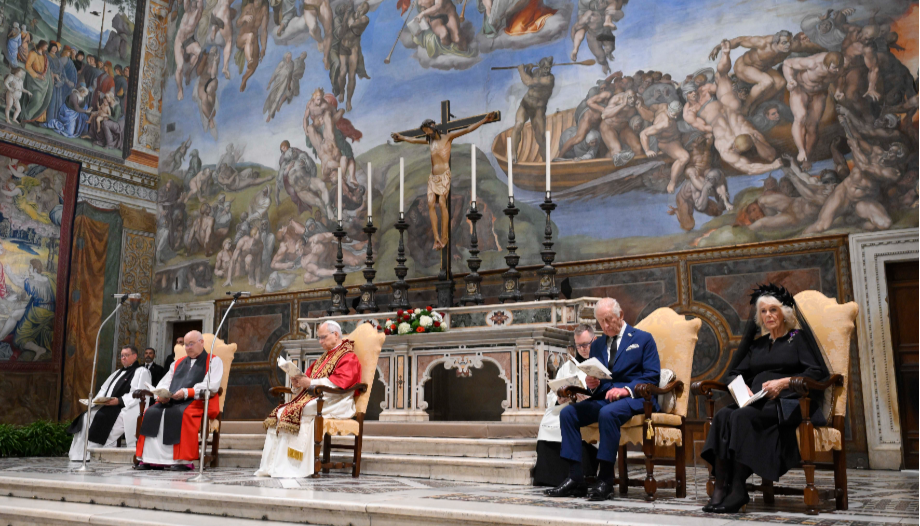
After the private meeting and exchange of gifts, Pope Leo XIV and Anglican Archbishop Stephen Cottrell of York, the highest-ranking prelate of the Church of England, led the midday prayer in the Sistine Chapel with a focus on «care for creation.».

Pope Leo XIV and Archbishop Cottrell sat in front of the altar, under Michelangelo's Last Judgment, during the prayer service, while the king and queen sat slightly to one side.

The singers from the Sistine Chapel choir were joined by adults from the choir of St. George's Chapel at Windsor Castle and children from the choir of the Chapel Royal at St. James's Palace in London.

Cardinal Vincent Nichols of Westminster, president of the Catholic Bishops' Conference of England and Wales, and Archbishop Leo Cushley of St. Andrews and Edinburgh, representing the Catholic bishops of Scotland, and the Rev. Rosie Frew, moderator of the Presbyterian Church of Scotland, joined the king and queen for the prayer service.

Briefing reporters on the visit, Archbishop Flavio Pace, secretary of the Dicastery for Promoting Christian Unity, said the moments of prayer and the exchange of honors were clear signs of the progress made in Catholic-Anglican relations since the 1960s.

Pope Leo XIV and King Charles III left the Sistine Chapel together and headed to the adjoining Sala Regia to meet with business leaders and activists committed to fighting climate change and promoting sustainability.

The Pope personally accompanied the King back to the courtyard of St. Damasus, where his «Bentley State Limousine,» an armored vehicle used for formal visits, awaited him and the Queen.

Issues addressed

As usual, the Vatican press office did not provide any information about the private conversation between the Pope and the King.

However, in a meeting with Cardinal Pietro Parolin, Vatican Secretary of State, and Archbishop Paul R. Gallagher, Minister of Foreign Affairs, the press office indicated that «issues of common interest were discussed, such as the protection of the environment and the fight against poverty.».

Particular attention was given to the shared commitment to promote peace and security in the face of global challenges, according to the statement. And, recalling the history of the Church in the United Kingdom, it reflected on the need to continue to promote ecumenical dialogue.

Visit to St. Paul Outside the Walls

After leaving the Vatican, King Charles III and Queen Camilla went to the Basilica of St. Paul Outside the Walls in Rome and went through the Holy Door, prayed at the tomb of St. Paul and attended another prayer service.

With the approval of Pope Leo XIV, King Charles III was recognized as a «royal confrere» of the basilica, a decision made by the American Cardinal James M. Harvey, archpriest of the basilica, and the Benedictine Abbot Donato Ogliari, in charge of the monastery of St. Paul Outside the Walls.

In return, Buckingham Palace said, «with the King's approval, the Dean and Canons of St. George's College Windsor have offered that Pope Leo XIV become a ‘papal confrere’ of St. George's Chapel at Windsor Castle and the Pope has accepted.».

«These mutual gifts of ‘fellowship’ are acknowledgements of spiritual companionship and are a profound symbol of the path that the Church of England - of which His Majesty is Supreme Governor - and the Roman Catholic Church have traveled over the past 500 years,» the palace said in a statement.

The authorOSV / Omnes

STIs soar and evidence of sex education failure

The Instituto de Salud Carlos III confirms a steady increase in STIs (chlamydia, gonorrhea and syphilis), which continue to worsen.

October 23, 2025-Reading time: 2 minutes

The Sexually Transmitted Infection (STI) Epidemiological Surveillance Report 2024, The report, prepared by the Carlos III Health Institute in collaboration with the Ministry of Health, confirms a trend that worries experts: STIs continue to grow steadily in Spain.

During 2024, 41,918 cases of Chlamydiaa 10 % more than in 2023. The gonococcal infection reached 37,257 cases (an increase of 7 %), the syphilis reached 11,930 (6 % more) and the lymphogranuloma venereum 1,996 people were reported, an increase also of 10 %.

The most affected group is the young people under 25 years of age. The report reflects not only a bad year, but also a sustained trendbetween 2020 and 2024, gonococcal infection rates have increased by 28.9% per year, while those for syphilis and chlamydia have grown by nearly 20% each year.

The failure of sex education

Despite more than two decades of investment in sex education programs in schools and institutes, the results are not encouraging. The numbers show that abortions and unwanted pregnancies are also growing year after year.

This situation reflects a crisis of political and health responsibility: access to free abortion is celebrated while sexual health indicators worsen. No one assumes failure.

The big lie of “safe sex”

The debate centers on the dominant model of sexuality education, which revolves almost exclusively around the condom use. Public campaigns, such as the historic “Put it on, put it on.”, promised “safe sex” that has not translated into better results.

According to data cited by the World Health Organization, Planned Parenthood, and Durex, the condom efficacy against pregnancy is 98% only with perfect use, but down to 85% in actual conditions. This means that 18 out of every 100 women who rely solely on this method become pregnant within the first year.

In addition, psychologists and epidemiologists warn about the phenomenon of “risk compensation”The young people, feeling more protected, feel that they are start their sex life earlier and increase their number of partners, This increases the total number of infections even though the individual risk per relationship is lower.

The cancellation of the truth

As early as the 1990s, several physicians proposed the use of the ABC model (Abstinence, Be faithful, Condom use), which prioritizes abstinence and fidelity over the simple use of condoms. In 2004, an article published in The Lancet called for a courageous reorientation of AIDS prevention policies, stressing the need to delay the onset of sexual relations and reduce the number of partners.

The approach, however, was harshly criticized in the media and by international organizations when in 2009 Benedict XVI defended this same line when talking about AIDS in Africa, generating intense controversy. Even so, the Dr. Edward C. Green, then director of Harvard University's HIV Prevention Project, backed the Pope, explaining that the data showed that fidelity and partner reduction are more effective than mass condom distribution.

A challenge for public health

The report of the Instituto de Salud Carlos III highlights a challenge that goes beyond healthcare: how to educate in affective and sexual responsibility in a society that promotes freedom without limits.

As infections rise and the age of sexual debut falls, perhaps there should be a growing consensus that only a profound change in sexual culture can reverse the trend.

The authorJavier García Herrería

Editor of Omnes. Previously, he has been a contributor to various media and a high school philosophy teacher for 18 years.

Integral ecology

Miguel Delibes and Ana Iris Simón: Is abortion progressive?

On April 21 of this year, Pope Francis died in the Vatican. Three days later, the writer Ana Iris Simón said that some people had “one problem: abortion. But is abortion progressive?” continued Simón. “The great Miguel Delibes wrote this.” And he put us in luck with Delibes, who recalled the parameters of progressivism: support the weak.

Francisco Otamendi-October 23, 2025-Reading time: 3 minutes

Last Saturday, the writer Ana Iris Simón, from La Mancha, published a article in the media in which he collaborates, ‘El País’, entitled ‘A pain that does not fit the slogan’. He said that he had never heard a testimony like that of Leire Navaridas, “much less in a major media outlet”. Leire, who had voluntarily aborted in 2008, happily attended the 8M demonstration in 2018. But the posters claiming abortion as a feminist right stirred something in her, and she decided to make her testimony public, writes Ana Iris.

“According to her, she spent several years undergoing psychological treatment for the after-effects of that voluntary abortion, which was followed by another spontaneous one”. And “Leire became certain that to abort is to end a life. With the life of a child. According to what she told me off camera,” the columnist continued, “for her the sacredness of life has nothing to do with theological arguments but with human ones.

Eugenic society

Ana Iris Simón has been thinking about this issue for some time. For example, in June 2024 she told in the same media the story of a three-year-old girl with Down syndrome. Her parents decided to go ahead with the pregnancy, and left a letter in the school locker, where they explained that for them it was a gift to have brought her into the world, and so they told it. In her opinion, the fact that most children with Down syndrome are aborted reflects the fact that we live in “a eugenic society”.

Progressivism, according to Delibes

These days I have rummaged in my computer a little tweet from Simon, dated April 24 of this year, three days after the death of Pope Francis. Ana Iris said: “These days, those who want to sell Pope Francis as a progressive and not as what he was (a Catholic) put a but: abortion. But, is abortion progressive? In ABC, in the 80s, the great Miguel Delibes wrote this”.

And it refers to a photograph of Miguel Delibes (Valladolid, 1920 - Valladolid, 2010), where, when clicked, some paragraphs of an article by the Castilian writer appear, but not all of them. The full text was published by Delibes in ABC, under the title ‘Aborto libre y progresismo”’, on December 14, 1986. The same newspaper republished on December 20, 2007.

“Progressive anti-abortionist, almost inconceivable?”

In the paragraphs selected by the writer from La Mancha, the central theme is progressivism, what is progressive. The author of ‘Cinco horas con Mario’, or ‘Los santos inocentes’ says:

“And the fact is that abortionism has come to be included among the postulates of modern ‘progressivism’. In our time it is almost inconceivable to have an anti-abortionist progressive. For them, anyone who opposes free abortion is a retrograde, a position that, as they say, leaves many people, socially advanced, with their asses in the air”.

“In the past, progressivism responded to a very simple scheme: support for the weak, pacifism and non-violence,” the writer continued. “Years later, progressivism added to this creed the defense of Nature. But the problem of abortion arose and, faced with it, progressivism hesitated. For the progressive, the weak were the worker against the employer, the child against the adult, the black against the white. It was necessary to take sides with them. For the progressive, war, nuclear energy, the death penalty, any form of violence, were recusable”. (...).

The embryo, helpless, defenseless, defenseless life

“But the problem of abortion arose, of chain abortion, free abortion... (...) The embryo, a helpless and defenseless life, could be attacked with impunity. Its weakness mattered nothing if its elimination was carried out by means of painless, scientific and sterilized violence”, denounced Delibes. Because, following his line of argument, the logical thing for progressivism would have been to support the weak, in this case the embryo. 

Miguel Delibes concluded: “Because if progressivism is not defending life, the smallest and most needy, against social aggression... what am I doing here? Because for these progressives who still defend the defenseless and reject any form of violence, that is, they still abide by the old principles, nausea is equally produced before an atomic explosion, a gas chamber or a sterilized operating room”.

The arguments can be multiplied. Here we have limited ourselves to follow the thread, the ball pass from Simon to Delibes, with the testimony of Navaridas. And to reflect in part arguments, which seem honest and give food for thought, along the lines that I suggested a couple of years ago Javier García Herrería.

The authorFrancisco Otamendi

Read more

How to regain enthusiasm for the teacher's vocation?

In many countries, getting good teachers for schools is a challenge. How can we encourage our best graduates to feel the desire to venture into the profession of schoolteacher? How can we ignite in them the desire to passionately train the new generations of Chileans?

October 23, 2025-Reading time: 2 minutes

Whoever aspires to teach, at least at the beginning, feels the beat of generosity, the love for knowledge and the desire to share it, the audacity of wanting to participate in the formation of the young promises of the Nation. The person who discerns this vocational path imagines the fruits of his work, such as the growth of the students, the sowing of hope in their families, the promotion of a better country. All this, however, has been covered by a fog of doubts.

In this haze, one hears, as if in whispers, sentences that form a structure of political correctness, but that wear down the desire to teach. These sentences do not usually come from teachers who know the dynamics of the classroom, but from “experts” who comment from outside and influence legislation. For example: “It's better for students to learn on their own, don't go imposing your knowledge”. Or “Beware of meddling too much in the lives of young people: that could be invasive and authoritarian”. In short, it is a reproach that taints the legitimate aspiration for enthusiasm that any educator has, for what is the point of going out of your way to enter a classroom where no one needs you? In other words, how can you want to be a teacher if you are not allowed to practice the profession?

Daniel Mansuy explains that the origin of these misunderstandings lies in Rousseau's thinking. He explains in his book Educating among equals (IES, 2023): “Education had been understood as that instance that seeks to transmit an inheritance; and the teacher, as the depositary of something that deserved to be handed over. In Rousseau's scaffolding, the place of the teacher undergoes more than one modification. The teacher ceases to be someone who delivers something relevant, ceases to be someone who embodies a world that the student receives and appropriates, and becomes a facilitator of the learner's self-development”.

Facilitating the learner's self-development“ has a nice ring to it. And it has some truth to it. But in the extreme it is quite similar to the abandonment of homework. Thus, we leave the students so free in their ”self-learning“ that, in practice, we disregard them. They are born and grow up on their own, scattered in the fantasy of telephones, innocent before the dangers of the street, ignorant of history, fragile before dangers for which they have not been prepared. They advance in their curricula, but very few teachers stop to invite them to dream, to create, to project a display of virtues and talents.

It is time to react. Young people who feel a call to teaching do not wish to become bureaucrats of “thinking routines”, but rather think of a genuine vocation as teachers. That is, someone who shows horizons, who recognizes and enhances talents, corrects deviations and guides on the road to excellence. As the literary critic George Steiner said, with a vision that now serves as a conclusive summary: “A teacher invades, bursts in, can raze in order to clean and rebuild. Poor teaching, a pedagogical routine, a style of instruction that, consciously or not, is cynical in its merely utilitarian goals, are destructive. They uproot hope. Bad teaching is, almost literally, murderous and, metaphorically, a sin. It diminishes the pupil, it reduces to gray inanity the motive that is presented. It instills in the sensibility of the child or adult the most corrosive of acids, boredom, the methane gas of weariness” (Lecciones de los maestros, Siruela: 2020).

The teacher's vocation is fascinating. Let's see how we can recover it.

The authorJuan Ignacio Izquierdo Hübner

Lawyer from the Pontifical Catholic University of Chile, Licentiate in Theology from the Pontifical University of the Holy Cross (Rome) and Doctorate in Theology from the University of Navarra (Spain).

Books

Pius XII did not remain silent in the face of Nazism

Historian Vicente Cárcel Ortí publishes the first volume with unpublished documents from the Vatican Archive on Pius XII, which reveal his opposition to Nazism and his complex relationship with the Franco regime.

José Carlos Martín de la Hoz-October 23, 2025-Reading time: 4 minutes

The veteran Church historian Vicente Cárcel Ortí (Manises Valencia 1940), specialist in contemporary Church history, has worked on the preparation of the Vatican archives in order to give access to the funds about the pontificate of the venerable servant of God Pius XII.

That is to say, when the Holy Father decides to open the doors of the Vatican Apostolic Archives, the oldest and most complete government archives in the world, the documentation is read and arranged in the general and reserved collections. In this way, historians can publish serious and reliable works while at the same time avoiding putting in the hands of anyone, questions of conscience or especially delicate matters about which the necessary reserve and delicacy in their treatment must always be maintained.

A key work on Pius XII and Spain

After many years working and teaching in the pontifical universities and writing works of great importance, Dr. Cárcel Ortí provides us with the first and most important document on the relations between Pius XII and Spain.

Once again, as he did with the pontiff Pius XI, Cárcel Ortí has published in the BAC the first volume on Pius XII's collections, with first-hand documentation from the Vatican Apostolic Archives and with updated and recent bibliography. A real first that historians have at hand from now on and that will be expanded with more documentation and successive works.

The first thing we have to thank the Valencian historian for is the magnificent documented biography of the Roman Pontiff with which he begins this magnificent volume that we now present. Certainly, he has placed in our hands, documents of great value thanks to which we have been able to know in greater detail the human and supernatural profile of Pius XII, as well as more obscure moments of his biography, almost unknown to date. For example, here it is specified how Pope Pius XI was preparing his Secretary of State to succeed him after being elected by the Holy Spirit in the conclave of 1939. In this way one can understand the trips and delegations of the last years (p. 141).

Pius XII in the face of Nazism and Francoism

As is well known, the opening of the Vatican Apostolic Archives concerning the pontificate of Pius XII was brought forward to 2020, and has been brought forward from its usual date by a wish of Pope Francis, especially motivated to put an end to the false interpretations and accusations of collusion of Pope Pius XII with the Hitler regime.

Undoubtedly, the documentation provided is devastating and definitively frees the Roman Pontiff from any “cover-up” and, of course, from the accusation of guilty silence. The documents provided are clear that Pius XII, first as nuncio in Germany (p. 40), as Secretary of State and as Roman Pontiff, unmasked Hitler before public opinion, condemned his doctrine and ideology and fought strenuously to save the Jews and all humanity from the racism underlying Nazism and, therefore, the vast destructive capacity of humanity that it contained (p. 148-199).

It is also very interesting, the Roman Pontiff's dedication to Spain, both from his time as Secretary of State when he was able to closely follow the evolution of the civil war and encouraged Pius XI to receive 500 survivors of the war in Rome on September 14, 1936. Many times throughout his pontificate, the phrase that appears on the cover of this book resounded in his ears: to the cries of the Spaniards “Spain for the Pope”, he replied: “The Pope for Spain”.

The documentation provided by Vicente Cárcel Ortí confirms the distrust of Pius XII towards the Franco regime due to its totalitarian character and, therefore, subject to a diplomatic blockade by the United Nations (p. 297). He then goes on to say: “Pius XII recommended moderation, love and forgiveness to Franco, but he was not always listened to, and with regard to the Regime, he was concerned about its immobility and agreed on the need for an opening, without the slightest doubt, but carried out at the appropriate speed to avoid traumas and tears. The hierarchy also demanded an opening of the Regime, as slowly as necessary, but never its closure” (p. 298).

It is very interesting to note the intense process of negotiation of the 1953 Concordat in the Vatican documentary sources, where they were fully aware of the fragility of the dictatorship and how it would lose strength and internal support over the years precisely because of the strength of the nascent European Community, which would end up imposing itself both politically and economically. 

At the same time, the Holy See was aware of Franco's immobility and his inability to allow political freedoms in an increasingly personal and autarchic regime. Hence the effort to reach a Concordat of long duration like those being drawn up with other Western countries (p. 337).

About Opus Dei

Another interesting chapter of this work is about the juridical itinerary of Opus Dei. This is precisely the title of an extraordinary work carried out some years ago by three eminent persons: José Luis Illanes, Amadeo de Fuenmayor and Valentín Gómez Iglesias, who contributed the documents they had at their disposal to study how Opus Dei had been adopting the juridical clothing necessary to safeguard its charism and enable it to work throughout the world in unity with the Holy Father, the bishops and the entire Church, safeguarding the lay and secular charism of the majority of its ordinary faithful of every class and condition. Likewise, these authors studied juridically the various formulas that the Holy See was providing for the unity in the work of priests and laity until, in 1982, they finally arrived at the Prelature of Opus Dei united to the Priestly Society of the Holy Cross. Logically, after the opening of the Vatican Archives, this work will have to be revised (pp. 450-470).

As is well known, and as Professor Vicente Cárcel Ortí recognizes, since the juridical configuration of the prelatures has changed in the Code and following Francis“ own Motu proprio ”Ad charisma tuendum", a process of adaptation of the Statutes has begun and is currently underway (p. 439).

Pius XII. The Pope for Spain

AuthorVicente Cárcel Orti
EditorialBiblioteca de Autores Cristianos
Pages: 920
Year: 2025
Read more
Gospel

Mercy and justification. Thirtieth Sunday in Ordinary Time (C)

Joseph Evans comments on the readings for the XXX Sunday in Ordinary Time (C) corresponding to October 26, 2025.

Joseph Evans-October 23, 2025-Reading time: 2 minutes

Jesus “he spoke this parable also to some who trusted in themselves because they considered themselves righteous and despised others.”. Our Lord speaks to us of pride, a sin that leads us to exaggerate our own worth and belittle others. The Pharisee was full of his own accomplishments, as he saw them. In fact, Christ gives us the detail that the Pharisee's prayer was really “to himself” and not to God. His pride manifests itself in three ways: in the exaltation of his own works (while being completely blind to his shortcomings, mainly pride, which is the worst sin of all); in contempt for others in general (“the other men”); and in the contempt for the particular man in his presence, in this case the tax collector.

The tax collector was wiser and went home to God, “justified”because he accepted his own weakness and unworthiness. But what does it mean “justified”? Justification is a key theme for St. Paul, especially in his letters to the Romans and to the Galatians. It has also become a topic of controversy between Catholics and Protestants. To be justified is to regain a right relationship with God, and this fundamentally requires grace and faith. As St. Paul writes: “For we hold that a man is justified by faith without works of the Law.” (Rom 3:28). Paul points out here precisely the error of the Pharisee: he thought that he could be justified, one with God, by his own works. But the tax collector, knowing how bad his works had been, trusts only in divine mercy.

We will never be able to offer God any work worthy of Him. Still less can we earn our own salvation. We can learn this lesson in two ways: like the repentant publican, through a deep awareness of our sins; or like children who, though totally innocent, understand that they must depend on their parents for everything and that they can do nothing to “deserve” their attention. This is why our Lord insists so much that we must be like children.

And that is why true prayer should always be an appeal to God for mercy and never an attempt to convince him of our own virtue. Even our good works are gifts of grace that God inspires us to perform. As St. Teresa of Calcutta once said: “We are always too poor to help the poor! Think about it: I am just a poor woman who prays. When I pray, God puts his love in my heart and only then can I love the poor, because I pray!”.

Culture

Catholic Scientists: Andresa Casamayor, Mathematician and Writer

On October 23, 1780, Andresa Casamayor, a mathematician and writer who excelled in the handling of numbers and arithmetic, died. This series of short biographies of Catholic scientists is published thanks to the collaboration of the Society of Catholic Scientists of Spain.

Inmaculada Lizasoáin-October 23, 2025-Reading time: 2 minutes

Andresa Casamayor (November 30, 1720 - October 23, 1780) was born in Zaragoza, in a wealthy merchant family. At the age of 17 she wrote the first scientific manual written by a woman in Spain, Tyrocinio aritmético. This work is dedicated to the Piarist Fathers of the College of Zaragoza, so it is easy to think that it may have been a Piarist father who educated her. The work is written with a clear didactic intention, to facilitate the instruction to many who cannot achieve it in any other way. It begins by presenting the figures in a simple way, as letters of an alphabet with which we can write all the numbers, as big as we want. Along with the numbers, the book explains our number system, completely positional, which makes it much simpler than Roman numerals and allows us to perform the four arithmetic operations in a systematic way. This way of working is what today can be programmed in a computer and is known as an algorithm. Maria Andresa does not limit herself to presenting the rules of the algorithms in a progressive way in terms of difficulty, but wants her readers to understand why it is done this way; why these algorithms “work”. In addition, he seeks to achieve accuracy and speed in the calculation. Thus, no sooner does he teach a rule than he goes on to apply it to problems in the world of commerce, with coins or weights, preparing his readers for the trades and mercantile calculus.

Father Latassa gives news of a second manuscript by Andresa, “El Parasi solo”, on more advanced arithmetic, with tables for calculating square and cube roots, although it is not known if the manuscript was ever published.

On the other hand, contrary to what was customary in Spain at the time, Maria Andresa did not marry or take the habits of a religious order. Her father died when she was only 18 years old and, shortly after, her friend and collaborator, Fray Pedro Martínez, also died. María Andresa then dedicated herself to her vocation as an educator, working as a teacher of girls in the Public Schools of Zaragoza until her death in 1780.

The authorInmaculada Lizasoáin

Public University of Navarra. SCS-Spain

The Vatican

Leo XIV: openness to Christ, antidote to sadness and despair

In this morning's Audience, Pope Leo XIV announced the antidote to sadness and despair, one of the illnesses of our time. And that is to look to the Risen Jesus Christ. Forty-seven years ago, in St. Peter's Square, St. John Paul II exhorted the world to open itself to Christ, he said. And "this appeal is still valid".  

Editorial Staff Omnes-October 22, 2025-Reading time: 3 minutes

"Today we celebrate the liturgical memorial of St. John Paul II. Exactly 47 years ago, in this square, he exhorted the world to open itself to Christ. This appeal is still valid today: we are all called to make it our own." This is what Pope Leo XIV said in the Audience today, as he addressed the Polish-speaking pilgrims and the entire St. Peter's Square. 

In his words, has encouraged to look to "the resurrection of Jesus Christ. This central event of our faith, the Pontiff stressed, "can cure one of the illnesses of our time, which is sadness. It is a feeling of sorrow and emptiness that leads us to lose the meaning and strength of life, causing desolation and hopelessness in our hearts". 

How Jesus heals: story of the disciples of Emmaus

But we have "an example of how Jesus heals our sadness. We can find it in the story of the disciples of Emmaus. After Jesus' death, they leave Jerusalem. On the way, the Lord comes to meet them, listens to their affliction and, since sadness does not allow them to recognize him, he explains the Scriptures to them, so that they may understand the mystery of the cross and their hearts may be opened to hope". 

For this reason, despite the fact that night is falling, the disciples ask him to stay with them and, recognizing him in the breaking of the Bread, joy is reborn. "Jesus is risen and that changes everything," Pope Leo recounted in his catechesis. "He has saved us and saves us, instilling a new hope in our lives."

"Let us ask to know how to recognize their presence".

Then, in his greetings to pilgrims of different languages - the catechesis is in 9 languages, including Arabic and Chinese, for example - he has taken up the idea in different ways.

For example, to the Spanish-speaking people, he said: "Let us ask the Lord that we may know how to recognize his presence on our life's journey, especially in moments of sadness and darkness, and that the joy of Easter may be the hallmark of our missionary commitment".

In English: "Sadness and despair overwhelm countless people". 

But perhaps it was when he addressed the many English-speaking faithful and pilgrims that his message was most extensive. The Pope read these words in English, as he usually does.

In our catechesis on the Jubilee theme 'Jesus Christ, Our Hope,' "today we will consider the transforming power of the Resurrection," he said. 

"In our society, sadness and despair overwhelm countless people struggling to find meaning in their lives. On the road to Emmaus, we see that the disciples were also discouraged, for they had just witnessed the apparent destruction of their hope. 

After breaking bread with them, the Lord disappeared from their sight, which flooded their souls with an unexpected and joyful realization: Christ is truly risen!" 

The Lord desires to do the same for us, dispelling any sadness and despair we may feel, he encouraged. "Let us therefore contemplate the glorious wounds of Jesus that bear witness to his merciful love for us and let us allow ourselves to be renewed by the joy of the Resurrection."
Friends of the Holy Father' from Great Britain donate a portable studio

He then thanked the group 'Friends of the Holy Father' from Great Britain, who donated the portable studio for use by the Vatican News Services. 

I hope that the Jubilee will continue to be for all of you," he said, "a time of spiritual renewal and growth in the joy of the Gospel. On you and your families I joyfully invoke God's blessings of wisdom, strength and peace".

"He alone makes the impossible possible!"

In conclusion, the Successor of Peter said: "Sisters and brothers, let us remain vigilant every day in the wonder of the Easter of the Risen Jesus, who alone makes the impossible possible! It is an idea that he had launched to the French-speaking pilgrims, along with this advice: "Let us pray often to Our Lady of the Rosary in this month of October dedicated to Her".

Before the Blessing, Pope Leo said that the month of October invites us to renew our active cooperation in the mission of the Church. "With the strength of prayer, with the potential of married life and with the fresh energies of youth, know how to be missionaries of the Gospel, offering your concrete support to those who dedicate their existence to the evangelization of peoples. To all my blessing!".

The authorEditorial Staff Omnes

Read more
Evangelization

Why does the liturgy celebrate St. John Paul II on October 22?

The Church celebrates the memory of St. John Paul II on October 22 because that day was the solemn Mass for the beginning of his pontificate (1978-2005). Pope Wojtyla was the third longest-serving Pastor in history (26 years and five months), traveled to 129 countries, wrote 14 encyclicals, and accompanied the Church into the third millennium.

Francisco Otamendi-October 22, 2025-Reading time: 2 minutes

The Polish Pope celebrated the Mass of inauguration of his pontificate on October 22, after being elected Successor of Peter on the 16th of the same month. That is why the liturgy celebrates him on this day. He immediately pronounced a phrase that became emblematic: "Do not be afraid! Open wide the doors to Christ".

He was canonized on April 27, 2014 by Pope Francis along with St. John XXIII, and that same year his memorial was officially included in the General Roman Calendar for October 22. 

The day of the four Popes

The joint canonization was an unprecedented symbolic act that some called "the day of the four popes." John XXIII and John Paul II were being canonized by Pope Francis, and Pope Emeritus Benedict XVI, who had beatified John Paul II, attended.
According to Vatican analysts, the joint canonization of both popes was a gesture of unity of symbolic value, both popes already enjoyed great popular veneration before they were canonized. Many of the faithful called for "Sudden saint!" after John Paul II's death in 2005, and John XXIII was referred to as 'the good pope'.
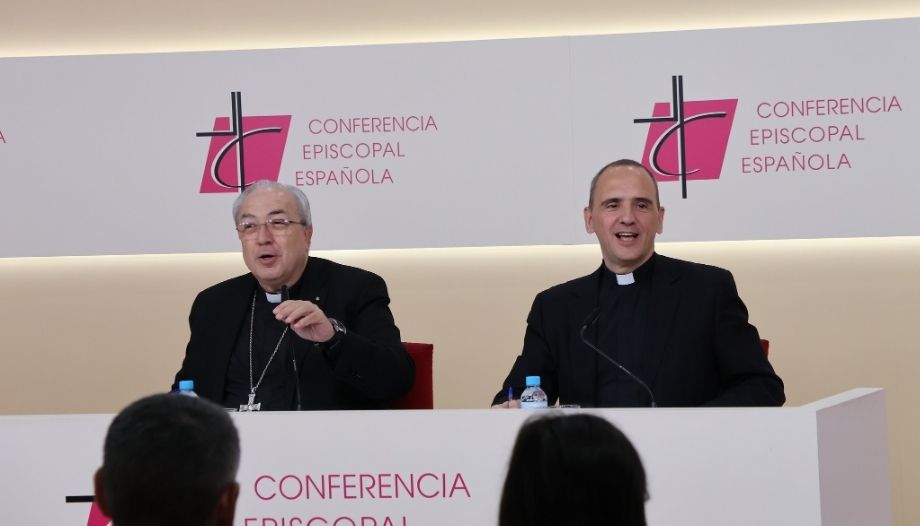
Saint John Paul II was the first non-Italian pope in 455 years, since the time of Hadrian VI, the first Polish pope in history and also the first pontiff from a Slavic-speaking country. 

Some central themes

Among the central themes of his pontificate and its legacy Christ as the center of man and of history (Redemptor hominis, 1979). The defense of the dignity of the human person, from conception to natural death, and the fight against reductive ideologies of the human being, Human Rights. Teaching on human love and sexuality (Theology of the body). Dialogue with the world and other religions. Youth and hope, with the World Youth Days (WYD) to bring young people closer to Christ and the Church. Mary, model of faith, Totus tuus. Reasonable and coherent faith (Fides et Ratio).

The authorFrancisco Otamendi

The Vatican

Charles III, first British monarch to pray with a Pope in 500 years

King Charles III and Pope Leo XIV will become the first British monarch and the first Catholic Pontiff to pray together in a religious service since the Reformation of the 16th century. This has not happened for at least 500 years, the British BBC noted when commenting on the state visit of King Charles and Queen Camilla to the Vatican on October 23.  

Francisco Otamendi-October 22, 2025-Reading time: 3 minutes

This historic moment of the visit of British King Charles III and Queen Camilla will take place in the Sistine Chapel of the Vatican on Thursday, October 23. It will be an ecumenical prayer for the Care of Creation, to be presided over by Pope Leo XIV.

Quoting Buckingham Palace and the Church of England, the BBC has highlighted that King Charles will be the first British monarch to pray with a Pope since the separation from Rome of King Henry VIII. In addition, the Pope is American-born.

The service will bring together clergy and choirs from both the Roman Catholic Church and the Church of England (Anglican), of which King Charles III is supreme governor. The visit is seen as an important symbol of reconciliation.

Strong ecumenical value and attention to integral ecology

The Vatican has reported that the state visit of King Charles and Queen Camilla is a meeting that will have a strong ecumenical value. And also with a special focus on integral ecology, given the British King's commitment to environmental causes.

The arrival of the sovereigns in Rome is scheduled for the 22nd. The King and Queen will be received on the 23rd in the Courtyard of San Damaso, and at 11:00 a.m. the audience with the Pope will take place. Then, Queen Camilla will visit the Pauline Chapel, and King Charles will meet with Cardinal Pietro Parolin at the Secretariat of State. They will then go to the Sistine Chapel for ecumenical prayer.

King Charles, 'Royal Confrater' of São Paulo 

On Thursday afternoon, the King and Queen will visit the Basilica of St. Paul Outside the Walls, which, together with the Benedictine abbey annexed to it, maintains a strong bond with the Crown of England. The secretary of the Dicastery for Promoting Christian Unity, Monsignor Flavio Pace, pointed out that the coat of arms of the abbey bears the emblem of the Order of the Garter. This is one of the highest English distinctions.

Afterwards, Cardinal James Michael Harvey, and Abbot Dom Donato Ogliari, will confer on King Charles III the title of 'Royal Confrater' of St. Paul. The main reason is the historical ties and the progress made in the path of reconciliation between the Church of Rome and the Church of England.

The hymn of St. Ambrose

In the ecumenical prayer at noon, the psalms and readings will be centered on praise to God the Creator. Msgr. Pace stressed that the ecumenical character will also be reflected at the beginning in the hymn. The text is by St. Ambrose of Milan, but it will be interpreted in an English translation by St. John Henry Newman, an Anglican for half of his life and a Catholic for the other half.

Next November 1, an important delegation of the Anglican Church will arrive for the proclamation of St. John Henry Newman as Doctor of the Church by Pope Leo XIV. King Charles was present at the cardinal's canonization in 2019. Subsequently, the British royalty held a private meeting with Pope Francis before his passing on April 21.

Coronation "profoundly Christian" in the wake of Queen Elizabeth II

The coronation The ceremony, which was presided over by King Charles III, and Queen Camilla by the then Archbishop of Canterbury, Justin Welby, was "profoundly Christian", with participation from "the full spectrum of Christian denominations".

The impression is that Charles III is following in the wake of his mother, Queen Elizabeth II, who died on September 8, 2022. In her later years, Elizabeth II was increasingly explicit in her profession of religious faith, mainly through her annual Christmas messages, a tradition begun by her grandfather, George V, in 1932, and continued by her father, George VI. 

Thus Elizabeth II spoke of her faith: "For me, the teachings of Christ and my own personal responsibility before God provide a framework within which I try to conduct my life. I, like many of you, have drawn great comfort in difficult times from the words and example of Christ."

The authorFrancisco Otamendi

Read more
Evangelization

6 reasons to read St. Peter of Alcantara's Meditation Manual

How can the fire of faith be ignited in a world of likes y scrolls? The San Pedro de Alcantara manual is a "user's guide" that can work very well.

Alfonso Martija de la Llama-October 22, 2025-Reading time: 2 minutes

Mental prayer often lacks a clear methodology, as many books merely provide ideas and theory. St. Peter of Alcantara's Meditation Manual offers the concrete discipline that is lacking: a rigorous guide detailing the process for initiating and sustaining devotion. It is an essential resource for those seeking practical instruction in their spiritual life.

1. It is a firm handhold for the one who sets out to learn to pray.

When we buy a cell phone, a television or a computer, we simply turn it on and use it without ever consulting the manual. This same attitude, that of ignoring the instructions, is what many adopt when approaching mental prayer. For this reason the manual of St. Peter of Alcantara is useful to have a good instruction manual, because it describes step by step the exercise of prayer. Not an easy task; many books provide fuel for mental prayer, this one details how to light and dose that fire. 

2. Your message is current. 

Six centuries are a long time, we live in a different society, but human nature is the same. This manual rescues the saint's wise advice about meditation, adapting its language to modern Spanish so that today's young people can put it into practice. Alcántara, in simple pages, explains the benefits obtained from this exercise so that we can give ourselves to it with joy. 

3. It has a lot to contribute to the one that has been in this exercise for years.

Experience teaches that the person who makes an effort to pray ends up acquiring the desire to please and love God. It advises, first of all, to dispose the heart, as one who tunes an instrument preparing it to play the melody well.

4. A simple and luminous book. 

The saint considers important the distinction between meditation and contemplation. The former is a stepping stone leading to the latter. "The office of meditation consists in considering divine things with attention, reflecting on them, moving the heart to spiritual sentiments. It is something similar to what we do with flint: we strike it to draw out the spark that will start the fire. After meditation comes contemplation. The soul remains in peace, in silence, enjoying the feeling received".

5. Explain how to overcome the difficulties we encounter when praying. 

"I don't know what to say, I'm bored, I'm lazy..." The greatest obstacle is the lack of devotion that the one who prays often experiences. Because, when you find it, praying becomes easy and sweet. The saint details the most frequent temptations faced by those who have decided to pray daily, and the way to overcome them. He gives many useful tips for this exercise.

6. With great simplicity, he emphasizes the importance of union with God.

"Devotion is a very special grace, a heavenly dew that brings relief and freshness to the soul. The Holy Spirit visits the person who strives to pray, makes him light and joyful to do good, fills his heart with good desires. He enkindles him in divine love, dissipates his lukewarmness, extinguishes his evil desires, strengthens his will. He who tries it, wants nothing else".


The author of the article has published an adaptation of the Meditation Manual to make it more accessible to today's readers.

Meditation Manual. St. Peter of Alcantara

AuthorAlfonso Martija de la Llama
Year: 2025
No. of pages: 114
The authorAlfonso Martija de la Llama

The World

Religious freedom in "free fall": nearly two-thirds of humanity lives in repression

Aid to the Church in Need (ACN) releases its report on religious freedom in the world, which reveals a decline in religious freedom: more than 5.4 billion people live under persecution or discrimination.

Teresa Aguado Peña-October 21, 2025-Reading time: 4 minutes

"Religious freedom is not improving, it is in free fall" assures José María Gallardo, director of ACN Spain. According to the report on religious freedom issued by Aid to the Church in Need (ACN), which analyzes the period from January 2023 to December 2024, almost two-thirds of humanity (more than 5.4 billion people) live in countries without religious freedom. In 62 of the 196 countries analyzed, religious freedom suffers serious violations and only two - Kazakhstan and Sri Lanka - showed some improvement.

24 countries are in the most serious category, persecution..  Restrictions are systematic and violent: they include repression, arrests, mass surveillance and direct attacks, affecting more than 4.1 billion people in countries such as China, India, Nigeria and North Korea. In 75 % of these countries (in 18 out of 24), the situation has worsened.

Religious discrimination, although less extreme, continues to affect more than 1.3 billion people in 38 countries. In these contexts, religious minorities face systematic restrictions on their spiritual and social life, suffering legal inequality, harassment and marginalization. Although they are not victims of overt violence, discrimination often paves the way for more serious situations. In addition, 24 countries have been flagged as "under observation" for showing alarming signs of deterioration, such as rising religious extremism, weakening legal protections and state interference in religious affairs.

Threats to religious freedom

Among the main threats identified in the report, authoritarianism stands out as the most widespread cause. In at least 19 countries, authoritarian regimes use restrictive laws, digital surveillance and institutional repression to suppress religious life, and foster patterns of discrimination in 33 others. China, Iran, Eritrea and Nicaragua are among the most worrying cases. In parallel, jihadist violence has spread through decentralized networks that operate with brutality in regions such as the Sahel, Mozambique and the Democratic Republic of Congo. Groups such as Jama'at Nusrat al-Islam, the Islamic State of the Sahel Province or the Allied Democratic Forces have turned religious persecution into a tool to consolidate their power and impose extremist ideologies.

The rise of religious nationalism also increases and fuels the repression of minorities. In India and Myanmar, it is the main cause of persecution, while in other countries such as Israel, Palestine or Nepal, it fuels systematic discrimination. In these contexts, the majority religion becomes the defining element of national identity, relegating other faiths to a position of legal and social inferiority. This situation is compounded by the effects of war and organized crime. In regions such as Sudan, Gaza and Ukraine, conflicts have destroyed temples, displaced entire communities and turned religious minorities into strategic targets. In countries such as Mexico, Nigeria and Haiti, criminal groups directly attack religious leaders and institutions to exert territorial control or silence critical voices.

The report also points to an alarming increase in anti-Semitic and anti-Muslim hate crimes, especially following the outbreak of the Gaza conflict in October 2023. In countries such as France and Germany, religious hate crimes have increased tenfold, while Latin America has also seen a worrying escalation. On the other hand, incidents against Christians in Europe and North America have increased markedly. In 2023, nearly 1,000 attacks against churches and Christian symbols were documented, ranging from arson in Canada to desecration and physical attacks in Greece, Spain and the United States.

Another alarming phenomenon is the increasing use of digital tools and artificial intelligence to repress religious life. In regimes such as China, North Korea or Pakistan, technology is used to monitor, profile and punish believers, making faith a motive for criminalization. Likewise, the right to conscientious objection faces increasing restrictions, even in democratic countries, where religious institutions are pressured to act against their principles, for example, on issues such as abortion or euthanasia.

The report also highlights one of the cruelest realities: the double vulnerability of women and girls belonging to religious minorities. In countries such as Pakistan, Egypt and Mozambique, hundreds of cases of kidnappings, forced conversions and forced marriages have been recorded, sometimes involving girls as young as ten years old. Impunity for these crimes is almost absolute.

Despite this bleak picture, Aid to the Church in Need highlights the resilience of religious communities, which continue to offer hope, humanitarian aid and peace mediation in deeply hostile contexts. In places such as Burkina Faso and Mozambique, religious leaders continue to promote unity, dialogue and human dignity through interfaith initiatives. The report stresses that religious freedom is not just an individual right, but an essential pillar of any pluralistic and peaceful society. This report is a clear warning: in the midst of global instability, religious freedom has become one of the major casualties of the 21st century. Its deterioration is not an isolated phenomenon, but the symptom of an increasingly intolerant, unequal and violent world order. The defense of this basic right - the right to believe, practice and live according to one's faith - is more urgent than ever.

Thus, for the first time, ACN is launching an international signature campaign in a global appeal for religious freedom. They invite you to join this initiative to protect the right to believe around the world, which they want to present to the United Nations, the European Union and various diplomatic representatives. You can sign at manifiestolibertadreligiosa.es.

ColumnistsMiriam García López

Gaza and the strikes: the paradox of empathy 4,000 kilometers away

Concern for Gaza provokes strikes and fills the walls with messages, but when the pain is closer to home we may not act as consistently.

October 21, 2025-Reading time: 4 minutes

This morning I looked at a group of WhatsApp I came across a striking piece of news - at least for me - given by my sister-in-law: "Today, Wednesday, October 15, 2025, my nieces have no school because their teachers have decided to go on strike in protest against the events taking place in Palestine". 

Recently, as a consequence of my father's death, I have had to go to different public administration centers to request and present documents related to inheritance and succession procedures. In all the offices, I have found pamphlets and images that call the attention of citizens and taxpayers to the great catastrophe caused by the war between Hamas and Israel. Likewise, in the "states of WhatsApp"From neighbors, friends and acquaintances I have read slogans, phrases, speeches, photos and other propaganda in support of Palestine. I have allowed myself to use the word propaganda.  

According to the RAE propaganda is:  

1. "Action and effect of making something known in order to attract followers or buyers. 

2. "f. Texts, works, and means used for propaganda. 3. f. Association whose purpose is to propagate doctrines, opinions, etc.". 

It is clear that our society is very concerned about the situation in Palestine, especially for its women and children. 

It is 12 o'clock in the morning on an ordinary Wednesday. My father, who was closer to me than I had imagined, died suddenly on the morning of May 24, 2025. The event greatly shocked my entire family: my mother, a 65-year-old widow; my children, who adored their grandfather; my siblings and me.

Broken with grief, I set out to help my mother with the bureaucracy that one must go through after the death of a parent. The fact is that the State -specifically, the autonomous administration- "considers" that it should receive part of the deceased's assets by the mere fact of his or her death. With that dejection I presented myself to different administrations served by specific individuals, with a name and surname, a family, a history and a very deep concern: Gaza and the State of Palestine.  

- Good morning. I am here to present this documentation and the form 650 to fill in the inheritance tax related to my father's inheritance. 

The good official, concerned - let's remember - about the situation of women in Gaza, without saying good morning to me, tells me: 

- This must be submitted online. 

- Yes, I know, but since the site is giving me problems I decided to bring it in person. 

- But all this that you bring me is a lot of papers and even if the telematic form gives an error, you can try again. 

- You see, the deadline for filing the document has expired and I cannot waste any more time to file it telematically. Last night I tried to do it and, finally, after two hours, I could not. 

- Look, the law encourages telematic filing and I insist that you do so. 

At that moment my eyes were on the verge of tears. I had just come from other procedures that cost me sweat and tears to complete and even some hand contact. 

At that moment my mind was thinking: "don't get angry, surely he has some bad situation, or maybe he is going through a marital crisis" (according to statistics a 50% of Spaniards get divorced). So I decide to continue being nice and ask for help: 

- Look, I just want to present this and get it stamped. My kids get out of school at 2:00 p.m. and I have to pick them up. can you help me? 

- I'm telling you, the best thing to do is to do it telematically. 

At that moment my mind and my strength could not take it anymore, so I answered this good woman concerned about Gaza: - Look, I am a magistrate by profession and I know my rights and my rights are that you pick up this request.

It seems that the word "magistrate" provoked some strange sensation in her head, perhaps the same one that the news about Gaza provokes in her. She immediately called her superior, whom she informed without any discretion about my condition. Everything was great from then on, they even offered me water. 

I believe that the reader has sufficient intelligence to reach the conclusion as to the motive that led this official to suddenly help me. She felt that my working and social condition was worthy of assistance. We can also always think well and come to the conclusion that my watery eyes made this official reconsider and she finally decided to help me and put the stamp I needed on the papers presented. 

Whether we think one way or the other, the truth is that for a moment I thought I would like to be treated like that woman in Gaza who, thanks to the propaganda hanging on the wall of the public buildings, awakens in the civil servant feelings so strong that they lead to a strike to join her in her pain. However, I live 4,000 kilometers away from Gaza and only a few meters away from this official; I live just below the neighbor who publishes "states of  WhatsApp"I have been in Gaza for hours and hours asking for help for the women and children of Gaza, I live with friends who talk for hours and hours about the Gaza problem, and I work with civil servants who decide to strike for the people of Gaza.  

Søren Kierkegaard, Danish philosopher, said that life is not a problem to be solved, but a reality to be experienced. That is to say, it is not right to live a problem so far away that we can do nothing about it as if our life depended on it, and yet neglect the nearby problem that other people may suffer every day, looking the other way. The world can only change when we undertake and attempt change in our environment.

The authorMiriam García López

Magistrate

Read more
The World

Archbishop of Homs, John Paul II Award: "Things have not changed in Syria".

Syrian Archbishop Jacques Mourad of Homs, a prisoner of the Islamic State group for five months in 2015, has received the St. John Paul II Award from the Vatican Foundation of the same name. The award has been for him a hopeful reminder of the late pontiff's efforts to promote peace and dialogue. But "things have not changed in Syria," he assures.  

OSV / Omnes-October 21, 2025-Reading time: 3 minutes

- Junno Arocho Esteves, Malmoe (Sweden), OSV News

Archbishop Mourad of Homs, Syria, has noted that things have not changed for the better in Syria, not only for Christians, but for the entire population. "It's the same, nothing has changed," the Syrian archbishop told OSV News. "We should not listen to the official speeches of the current government, because they do not reflect the reality we live in on a daily basis." 

In a telephone interview with OSV News, the Archbishop Mourad said that St. John Paul II's experience of living through World War II meant that he knew "well what war means, the evil and suffering it causes."

"For all of us, who live in a time of war that has not ended for 14 years, the teaching of the holy Pope John Paul II is, above all, a very important point of reference," he said. 

Committed to interreligious dialogue

According to Msgr. Paweł Ptasznik, president According to the administrative council of the John Paul II Vatican Foundation, "the award was created to promote those persons and communities that carry out their activity inspired by the teaching and work" of the Polish pontiff.

Archbishop Mourad was chosen by the foundation's jury, "almost unanimously, even though we had about 20 candidates," Archbishop Ptasznik told OSV News Oct. 17.

"The situation in the Middle East in general, and the suffering that people have had to endure, made us think of Archbishop Mourad, who, on the one hand, is very committed to interreligious dialogue. And on the other, he does so inspired by the teachings and work of St. John Paul II," said Archbishop Ptasznik.

'He continues in this work'

"We chose Archbishop Mourad, who suffered for the dialogue between Christianity and Islam, and did not stop," he added. "He continues this work, which is not easy."

Prior to serving as Archbishop of Homs, Monsignor Mourad was a member of Deir Mar Musa, a monastic community restored in the 1990s by Jesuit Father Paolo Dall'Oglio.

Father Dall'Oglio was kidnapped in 2013 by Islamic State militants in Raqqa and allegedly killed. 

Calling the late Italian Jesuit a "champion of dialogue in Syria," Archbishop Mourad told OSV News that the charism of the monastic community "was always to work through hospitality, to build the path of dialogue of peace and coexistence."

He dedicated his life "to this charisma".

"I have dedicated practically my entire monastic life to this charism, to this path," he said, noting the strong ties between Christians and Muslims, when he served as rector of the Mar Elian Church in Qaryatain, Syria. 

Many Muslims who lived near the church, he recalled, came to pray before the relics of St. Elian (Julian), a Syrian martyr of the third century, "because for them this saint is also a saint, a wali (holy person). So they come to pray and ask for a blessing."

Those encounters, he continued, were an opportunity to get to know each other and build friendships, especially during the war, as he tried to help the wounded and those fleeing the conflict. 

Recalling his three-month captivity, Archbishop Mourad said that during that time he "truly understood that the path of dialogue sustained by prayer is the only way, the only way...to achieve this peace." 

A man of faith is "a man of peace".

"If I say I'm a man of faith, it means I'm a man of peace because we can't turn things against each other," he told OSV News. 

"This point is very important because today, with the way fanatical Muslims who practice violence in the name of God act, they do not understand that this is not the God they worship. It is another God that they have constructed, that they have founded," he explained.

Because God - "the Merciful, the Clement," as we say in Arabic - is not a God who kills or tortures. In fact, during my kidnapping experience, I confronted him because they really changed their position just because I tried, in a simple way, to understand their violence, not to judge them. This is very important: not to judge each other.

Initial hopes for peace after Assad's overthrow

After former Syrian ruler Bashar Assad was overthrown, ending his family's 53-year rule, there were initial hopes for peace. Especially after Syria's interim president, Ahmend al-Sharaa, met with Catholic, Orthodox and Anglican leaders in the country in December 2024. 

However, according to Archbishop Mourad, things have not changed for the better in Syria, not only for Christians, but for the entire population.

"It's the same, nothing has changed, it's like this," the Syrian archbishop told OSV News. "We should not listen to the official speeches of the current government, because they do not reflect the reality we live in on a daily basis." 

"The violence, the corruption, the evil continues," he lamented.

—————————-

Junno Arocho Esteves writes for OSV News from Malmö, Sweden.

This information was originally published in OSV News, and can be found at here.

————————

The authorOSV / Omnes

Evangelization

Michael Sliney: "Christ awaits us at the finish line with open arms".

From marathon to social media: Father Michael Sliney teaches how to live an authentic faith amidst the digital noise and fast pace of modern life.

Teresa Aguado Peña-October 21, 2025-Reading time: 5 minutes

Father Michael Sliney, a Legionary of Christ and chaplain of the Lumen Institute in Washington, D.C., combines his spiritual work with an active presence at social networks, where he shares daily reflections and messages of faith. A marathon runner and passionate about accompanying young people and families, he encourages to live an authentic faith in the midst of digital noise and the accelerated pace of modern life.

You have said that spiritual indifference is one of the great challenges of today. How can a Catholic “awaken” their faith amid the digital noise and daily rush? What message would you give today to parents who feel they are losing touch with their children?

-The only thing necessary for evil to triumph is for good men to do nothing" (Edmund Burke). There is a risk of becoming comfortable and complacent with your group of devout Catholic friends and your inner circle of the parish, and not feeling the need to share the richness of our faith with those around us. I encourage the souls I lead to discern who in their professional and social world needs to be approached and gently challenged to experience the beauty of our faith. We need to listen to the "whispers" of the Holy Spirit, who is the primary agent of evangelization, and this requires more silence and less social media and screen time.  

I feel that technology is creating a huge gap between parents and their children. Limits must be set on children's use of cell phones and technology. How many cars today are equipped with TV screens and how many conversations actually take place today over dinner? Car time and mealtimes are wonderful opportunities to create this dialogue and bonding, as well as special "one-on-one" experiences, such as golf outings, coffees, weekend trips, etc., with just one of your children. 

Your missions with young people in indigenous, rural, or impoverished communities show a Church that is reaching out. What have you learned from those places about faith, poverty, and Christian joy? What would you say to those who criticize missions to underdeveloped countries, arguing that we should first help our own people?

-Of course, we must help the poor in our own country, but this should not limit us from reaching out to even poorer people in other countries. It was a revelation for our children and parents to see children from El Salvador, Mexico and Colombia sleeping in shacks with no running water and subsisting on corn tortillas and beans. It was painful to see boys playing soccer on hard gravel without shoes, many of whom could not afford to attend the local school due to their lack of financial resources, and girls washing clothes in a dirty river with a herd of cows bathing upstream. This made us appreciate what we have here in the United States and also made us aware that we must reach out not only materially with food and clothing, but also with our hearts and our love. Pope Leo recently mentioned in his Apostolic Exhortation Dilexi Te"I often wonder, even though the teaching of Sacred Scripture is so clear about the poor, why many people continue to think that they can safely disregard the poor.”  

You insist on forming leaders with virtue. In times when leadership is often confused with power or influence, how do you define an “authentic Christian leader”?

-The Lumen Institute focuses on forming Christian leaders to illuminate society with the light of Christ. God has given these men and women platforms from which they can influence many people, and this begins, first and foremost, with their holiness and authenticity of life.  

You also live your apostolate on social media, a realm where the superficial and the sacred coexist. How do you maintain the balance between evangelizing and not getting absorbed by the logic of the algorithm?

-I am very active on many different social media platforms, such as Instagram, Facebook, Youtube, Linkedin, Truth Social and X, and I have my own platform at "Sliney.org”. I also am an avid marathon runner, so I love to post on various running pages on Facebook, combining my love for running (especially in the Boston Marathon) with some spiritual reflections. Thousands of people benefit from these posts, so I can see the value in producing simple but inspirational messages, but I am also aware of the risk of getting too absorbed by this virtual world.  

In your years of ministry, you have accompanied young people with deep wounds, broken families, and homeless people. What have you discovered about the face of Christ in human frailty?

-I love this quote from Pope Francis about the fractured world today: "What the Church needs most today is the ability to heal the wounds and warm the hearts of the faithful; she needs closeness, proximity. I see the Church as a field hospital after the battle. It is no use asking a seriously wounded person if he has high cholesterol and what his blood sugar level is! You have to treat his wounds. Then you can talk about everything else. Heal the wounds, heal the wounds... And you have to start from the beginning. Many children grow up in broken and dysfunctional families, very few have received the gift of the Catholic faith from faithful and devout parents, and many have been affected by the sting of pornography and the darker side of social networks. So my initial response is always more compassion and patience, and to try to help them understand how much Jesus loves them and only wants to help them recover.   

As chaplain of Lumen, you accompany leaders who live in high-performance, high- stress environments. How can one be a true disciple of Christ in the business world without diluting one's faith or falling into a rut?

-The business people I work with here in the Washington D. C. area have too much stress and too many responsibilities. I try to help them find a better work-life balance by creating space for more daily prayer, exercise and time with their wives and children. I remind them that their deepest identity is, in this order: child of God, husband, father... and then a working professional called to be an apostle of Christ.  

You speak of “Catholics who shine in the darkness.” What does that mean specifically in today's world, and how can a Christian recover that inner glow?

-They can bring the light of Christ to their workplace by, first and foremost, being authentic and caring Christians, "Catholics shining in the darkness" in a world that longs to see this light. It has been wonderful to see the gradual transformation of many of our Lumen members. Many of our kids attend daily Mass, daily adoration and regular confession, and all meet with me for monthly spiritual guidance. Some of the business people have found ways to do community service as a company, or to have discussions about virtue and even faith in some places outside the office. The idea is to find a way for the light and love of Christ to permeate and spread in their workplace.

If you could give a brief spiritual advice—like those “Gospel minutes” you share online—to someone who feels exhausted or aimless, what would you say?

-My priestly motto is: "Keep going... with joy... for the love of Christ. Sometimes, all we can do is keep going, keep striving and give the best of ourselves. In the words of St. Francis de Sales, we should strive to be like "birds singing in a hawthorn tree," carrying our crosses with a joyful heart, knowing how much this consoles the Sacred Heart of Christ. And all should be done as an expression of our deep love for our Lord. As a marathon runner, I remind myself that there is a finish line, and that Christ encourages us and waits for us with open arms, so that we may be with him forever in heaven. 

Father Michael Sliney running a marathon
Evangelization

Radiating Humanity in the World: John Paul II and Culture

Alejandro Pardo, PhD in Moral Theology and Communication, has recently published a volume entitled ".Radiating Humanity in the World: St. John Paul II and Culture, Art and Communication". On the occasion of the twentieth anniversary of his death, which will be celebrated in 2025, we publish the second article in a series on the saint.

Alejandro Pardo-October 21, 2025-Reading time: 11 minutes

Three years after beginning his voyage at the helm of the barque of Peter, St. John Paul II wrote in a letter addressed to Cardinal Agostino Casaroli: "From the very beginning of my pontificate, I have been thinking that the dialogue of the Church with the cultures of our time is a vital field, where the destiny of the world is at stake in this twilight of the twentieth century". Indeed, Pope Wojtyła was well aware of the concern expressed by the Second Vatican Council, which saw culture as a privileged field where the Church should enter into dialogue with the contemporary world. In fact, in 1982 he instituted the Pontifical Council for Culture, and in the preceding months he delivered a series of emblematic speeches that would later be widely quoted. First of all, he gave a speech to the United Nations Educational, Scientific and Cultural Organization (UNESCO) in Paris in June 1980, in which he expounded the principles of an authentic anthropology of culture.

A month later, he addressed representatives of the cultural sphere in Rio de Janeiro with another speech on the role of culture in society. He closed this first cycle of speeches with the words he delivered to an audience of academics at the University of Coimbra in May 1982. From then on, many other exhortations will follow on the occasion of meetings with intellectuals, scientists and representatives of different cultural spheres, in which he will emphasize the human dimension of culture and its projection in society. All this collection of texts forms a vast magisterium that has been the object of attention on different occasions. In this article we summarize the main ideas presented therein.

In his address in Rio de Janeiro, we find a good synthesis of his vision of the relationship between culture and the person, which was also dealt with at length in his speech to UNESCO: "Culture must cultivate man and each man in the extension of an integral and full humanism in which the whole man and all men are promoted in the fullness of each human dimension. The essential purpose of culture is to promote man's being and to provide him with the goods necessary for the development of his individual and social being. All the diverse forms of cultural promotion are rooted in the anime cultureThe culture of thinking and loving, according to Cicero's expression: the culture of thinking and loving, by which man rises to his supreme dignity, which is that of thought, and is externalized in his most sublime gift, which is that of love". Here we can see the two basic ideas that underlie the entire magisterium of St. John Paul II on culture: the relationship between culture and the human person (cultural anthropocentrism) and the relationship between culture and society (social projection of the human spirit).

Culture according to Wojtyła

Karol Wojtyła's first reflections on culture coincide with the years of the Second Vatican Council. It is a lecture he delivered in 1964 and which was published in several articles. In one of them - "The Christian and Culture" - he offered the following description: "The word culture is one of those that are most deeply linked to man, that shape his earthly existence and in a certain way denote his very essence. It is man who creates culture, who needs it, who creates himself thanks to it. Culture constitutes a set of factors in which man continually expresses himself more than in anything else. He expresses himself for himself and for others. The works of culture, which outlast man, bear witness to him. It is a testimony of spiritual life, and the human spirit lives not only because it reigns over matter, but it lives for itself by the contents that are accessible and meaningful only to it. It therefore lives by truth, goodness and beauty, and succeeds in expressing its inner life outside and objectifying it in its works. This is why man, as a creator of culture, gives a particular witness to humanity". And shortly before he was elected Pope, in another article published in 1977 - "The problem of the constitution of culture through the praxis He added: "Culture develops (...) within this autonomous subject [the human person]. Its fundamental current constitutes not so much human productivity as, above all, the human personality, which carries within itself the task of the 'creation of itself', which in turn radiates into the world of products". This idea of culture as irradiation of the human spirit in the world (or, in other words, as the humanization of the world) will be key in his thought. These two brief texts condense his entire anthropological vision of culture, which he would later develop in his Petrine magisterium. 

A culture tailored to man

– Supernatural centrality, primacy and defense of the human person is the key to understanding the programmatic discourse that St. John Paul II delivered before UNESCO in mid-1980, which, as we have noted, can be considered a proposal for an anthropological foundation of culture. So much so that, in his own words, "culture is a specific mode of man's 'being' and 'existing'". In other words, culture y humanity identify themselves. "Culture is that through which man, as man, becomes more man, 'is' more, has more access to 'being' -adds this holy Pope- (...) Culture is always in an essential and necessary relationship with what man is". And he concludes: "Man is always the first fact: man is the primordial and fundamental fact of culture".

Shortly afterwards, in his speech at the University of Coimbra, he would express this primacy of the human person - subject and object of culture - in a triple formula: "Culture is from man, from man and to man". The human being as the object, origin and recipient of culture, or in another successful expression, "man as the center and root of all culture". In this sense, culture must reflect the truth about man, and this cannot be understood without the Christological key, the reference to the Model of all humanity is necessary: "If culture is the place in which the human person is humanized and gains ever deeper access to his humanity, it follows that the fundamental condition of all culture is that in it, and through it, the whole man, man in the full measure of his truth, is recognized (...). For the believer, 'only in the mystery of the incarnate Word does the mystery of man find true light... Christ, by revealing precisely the mystery of the Father and of his love, fully reveals man to man himself' (Gaudium et Spes, n. 22)".

Material and spiritual character of culture

There are several consequences that follow from the concept of this concept of culture. Following Heiddeger, Pope Wojtyła considers man to be a "being in the world" and there he develops as a person and embodies or humanizes the surrounding reality through its actions. To this is added the consideration of man as a social, dialogical, relational being, oriented by nature to live in community. In the same way, the Polish Pope shares the vision of Hegel and Scheler, who, starting from the singular human condition (incarnated spirit), understand culture as an expression of the spirit. Concretely, the Wojtylian concept of culture reflects the spiritual and material of cultural manifestations as works of man. In this sense, culture can be considered both a "spiritualization of matter" and a "materialization of the spirit", as he himself explained to UNESCO: "If, according to the nature and content of the products in which culture manifests itself, the distinction between spiritual culture and material culture is relevant, it is necessary to note at the same time that, on the one hand, the works of material culture always bring to the fore a spiritualization' of matterthat there is a submission of the material element to the spiritual forces of man, that is to say, to his intelligence and his will; and that, on the other hand, the works of spiritual culture manifest, in a specific way, a 'materialization' of the spiritan incarnation of what is spiritual. It seems that, in cultural works, this double characteristic is equally primordial and permanent". 

Therefore, a true culture would not be one that rejects or omits any of the two ontological dimensions of the human being (bodily and spiritual), fused into an inseparable unity. It is through his character as an incarnated spirit that man humanizes the world. This is how he explained it in Rio de Janeiro: "True culture is humanization (...). Humanization, that is, the development of man, takes place in all the fields of reality in which man is situated, and is situated: in his spirituality and corporeality, in the universe, in human and divine society. (...) Culture refers neither only to the spirit nor only to the body, nor only to individuality, nor only to sociability or universality (...) Culture must cultivate man and each man in the extension of an integral and full humanism in which the whole man and all men are promoted in the fullness of each human dimension. The essential purpose of culture is to promote man's being and to provide him with the goods necessary for the development of his individual and social being". Culture, therefore, is nothing other than the result of man's action in his bodily and spiritual dimension, a projection of his being-person in both the individual and communitarian spheres, the result of a way of being (human) in the world. And it is not a unidirectional dynamic (contribution only) but a bidirectional and multidirectional one (mutual enrichment), because culture, as a melting pot of individual and collective contributions, builds humanity.

Culture as spirit and ethos of a people

As can be seen, in the thought of St. John Paul II there is a line that unites anthropology and sociology in the field of culture. If culture is a manifestation of the human spirit and man is a social being, culture as an expression of humanity takes on a historical and geographical reality and, consequently, is closely linked to a national identity. "Notwithstanding its universal and in a certain sense transcendent character," this holy Pope affirms, "human culture also necessarily has a historical and social aspect" and can be considered "above all a common good of the nation". As a group of persons, a people or a nation share the same spirit, which gives rise to their own culture, created in communion and shared. This is how Pope Wojtyła explained it in the early years of his pontificate: "Culture is the life of the spiritIt is the key that allows access to the deepest and most jealously guarded secrets of the life of peoples; it is the fundamental and unifying expression of their existence, because culture contains the riches, I would say almost ineffable, of religious convictions, of history, of literary and artistic heritage, of ethnological substratum, of attitudes and of the forma mentis of peoples". This being so, culture cannot be considered a mere transmission of knowledge and theoretical or practical knowledge of an identitary nature; it also implies the transmission of moral knowledge. "Full culture," St. John Paul II explains, "includes moral formation, education for the virtues of individual, social and religious life. Thus, uniting the social and ethical dimensions, culture can be defined - in the words of this same Pope - as "the set of principles and values which constitute the ethos of a people" and therefore forms part of the common good of a nation or of any human community.

Characteristics of a fully human culture

From the above ideas, St. John Paul II draws some of the features of a fully human culture: its communicative natureits universalityits ability to humanize and, finally, its transcendent character. He developed the first three features in a speech he delivered in Buenos Aires in May 1987. "I am thinking, [in the first place], of the communication of culture itself. Indeed, everything that man knows and experiences in his inner self - his thoughts, his concerns, his projects - can be transmitted to others to the extent that he succeeds in expressing it in gestures, symbols and words. Usages, traditions, language, works of art, sciences, are channels of mediation among men, both among contemporaries and in a historical perspective, since, insofar as they are transmitters of truth, beauty and reciprocal knowledge, they make possible the union of wills in the concerted search for solutions to the problems of human existence". To such an extent communication y culture They are so closely identified that it is difficult to think of one without the other: "Communication generates culture and culture is transmitted through communication," he concludes.

Secondly, we find its universal character. "This is an aspect of culture closely linked to the previous one," Pope Wojtyła continued. Culture, in fact, by bringing man into contact with concerns, ideas and values that have their origin in other places and times, helps to overcome the limited vision, the fruit of an exclusive dedication to a particular area. On the other hand, although culture is also a phenomenon localized in a specific area, it always allows us to be in connection with universal aspects, which affect all men. A culture without universal values is not a true culture.

The third feature of culture is its ability to humanizeThis is the most important property, because communication becomes possible when there are universal values, and universal values become effective when, thanks to culture, they serve the whole man. The purpose of culture is to give man a perfection, an expansion of his natural potentialities. Culture is that which impels man to respect his fellow men more, to occupy his free time better, to work with a more human sense, to enjoy beauty and to love his Creator. Culture gains in quality, in human content, when it puts itself at the service of truth, goodness, beauty, freedom, when it contributes to live harmoniously, with a sense of order and unity, the whole constellation of human values".

Finally, as a feature that underlies the previous ones, this saintly pope underlines the openness to the transcendence.. There are several references to this aspect in other speeches: "In order to create culture," he will say before UNESCO, "it is necessary to consider man as a particular and autonomous value, as the bearer of the transcendence of the person", because "culture is rooted in the 'naturally religious soul' of man". And he will add on another occasion: "Culture, in fact, (...) must lead man to his full realization in his transcendence over things; it must prevent him from being dissolved in materialism of any kind and in consumerism, or from being destroyed by a science and a technology at the service of greed and violence of oppressive powers, enemies of man". Thus, "a culture that refuses to refer to God loses its own soul and becomes disoriented, transforming itself into a culture of death".

Culture and evangelization

It is therefore understandable that culture can be defined as "a meeting place" between faith and reason, between faith and human creativity. St. John Paul II has reflected much on the relationship between faith and culture. In addition to his speech in Buenos Aires, the following stand out, among others: his address to the participants in the First National Congress of the Ecclesial Movement of Cultural Commitment (1982); his message on the occasion of the XVIII World Communications Day: Social communications, an encounter between faith and culture (1984); and the address to the IV General Conference of the Latin American Episcopate (1992), in the year in which the fifth centenary of the discovery of America was commemorated. In addition to these, there were some addresses to the members of the Pontifical Council for Culture and other magisterial documents such as the Apostolic Exhortation Catechesi Tradendae (1979) and the Encyclical Redemptoris Missio (1990). All his thinking in this regard could be summarized in the phrase: "A faith that does not become culture is a faith not fully accepted, not fully thought, not faithfully lived".

Hence, during his pontificate, St. John Paul II made a strenuous effort to advance along two lines: the "evangelization of cultures" and the "inculturation of the Gospel". "How to make the response to today's man accessible, penetrating, valid and profound, without altering or modifying in any way the content of the Gospel message, how to reach the heart of the culture we wish to evangelize, how to speak of God in a world in which a growing process of secularization is present?" asked Pope Wojtyła himself on one occasion. And he himself offered the answer. First of all, he emphasizes the primacy of Jesus Christ in the Gospel messagebecause "to evangelize is to proclaim a person, who is Christ". Secondly, the receptive, dialogic and patient attitudeThe third point is that the "adveniente culture" (the one that brings the faith) should be far removed from any air of superiority or imposition, so that the "adveniente culture" (the one that brings the faith) can soak into the "already existing cultures" in a natural way, and so that "all that is profoundly human and humanizing in them" can be assimilated and brought to the fore. Thirdly, he underlines the love for the human beingwhich is manifested in the defense of his dignity as a rational and free being, and in the search for peace and social communion, because "in urging us to evangelize, our faith urges us to to love man in himself". Finally, he insists on the need to find new creative ways to present Christ's message to the men and women of our time. In particular, this holy Pope stresses "the need to mobilize the whole Church in a creative effort, with a view to a renewed evangelization of people and cultures(...) This is a cultural and evangelical project of prime importance".

St. John Paul II, "theologian of culture".

This brief synthesis of the magisterium of St. John Paul II on culture is sufficient to appreciate the great depth of his reflections. It is not in vain that Cardinal Avery Dulles went so far as to call him "a theologian of culture. Indeed, this holy Pope offers an idea of culture that is consistent with an anthropology based on the greatness of man as imago Deia creature that acts as the center and measure (origin, end and object) of every cultural expression, so that, as Francesco Botturi points out, "in the anthropological vision of Pope John Paul II, culture constitutes the figure synthetic of the human being". The work of man through culture possesses a power that radiates both ab intra (perfects the person and contributes to his or her fullness) as well as ab extra (it transforms the world by humanizing it). In its social dimension, it constitutes the spirit and the ethos of a people, an inescapable part of its identity. At the same time-and consequently-true culture respects human dignity and is open to transcendence. It is a culture that acts as a place of encounter and dialogue between the Church and contemporary man, and which remains a key areopagus for the new evangelization.

Irradiation of humanity in the world

Author: Alejandro Pardo
Editorial: Eunsa
Pages: 400
Year: 2025
The authorAlejandro Pardo

Priest. Doctor in Audiovisual Communication and Moral Theology. Professor of the Core Curriculum Institute of the University of Navarra.

Evangelization

Families, parish priests of Paiporta and Vallecas, and Yes to Life, Mission 2025 Award winners

Eight initiatives and personalities have been honored with the Mission 2025 Awards, presented by Misión magazine at a festive gala. The winners were the family of Pablo and Lola, the parish of San Ramón Nonato de Vallecas, Mar Dorrio, the association Nártex, the sisters Ana and Casilda Finat, the Zavala Gasset family, Father Salvador Romero Abuin, parish priest of Paiporta during the DANA, and the Marcha Sí a la Vida (Yes to Life March).

Editorial Staff Omnes-October 20, 2025-Reading time: 3 minutes

Last week, the gala ceremony for the XIII Edition of the Mission 2025 Awards was held at the Francisco de Vitoria University by Misión magazine. The winners were eight entities and personalities of Spanish life, in a gala that took place in a festive atmosphere, with the attendance of more than a hundred people.

At the beginning of the ceremony, the rector of the Universidad Francisco de Vitoria, Daniel Sada, emphasized that the magazine "is one of those stories that are worthwhile. And it is worthwhile because of the number of stories of light that Mission allows us to know and that on a day like today is concentrated in some award winners who represent that light".

Subsequently, Isabel Molina Estrada, director of the Mission magazine, recalled how "the dominant ideologies have led men and women to lose sight of the very high vocation to which they are called". Molina made an important appeal: "God has given each one of us, each family, a mission. What we do not do for Him in terms of sacrifices, prayer, work and dedication, no one else will do. Your mission and that of your family are unique and unrepeatable.

Isabel Molina, director of Misión magazine, at the Mission 2025 Awards gala.

Families, parishes, volunteers, influencers... 

The first winners this year 2025 were the family of Pablo and Lola, a married couple from Madrid, parents of 6 children, three of them adopted and with special needs. The parish of San Ramón Nonato de Vallecas, in the person of its parish priest, José Manuel Horcajoan example of how to help those most in need while evangelizing". And Mar Dorrio, @whynottwelve, mother of 12 children, writer and lecturer, "whose experience has helped thousands of Catholic families in the education of their children".

Next, the award was given to the Nártex Association, volunteers who have been "showing the Gospel through art in churches and cathedrals in Spain and Europe" for 19 years, in the person of its president, Isabel Fernández. The sisters Ana and Casilda Finat, known "influencers" who after their conversions dedicate their social networks to talk about God. And the Zavala Gasset family, who evangelize together through film, audiovisual media and literature, after the conversion of José María Zavala, the father of the family, a well-known journalist and writer.

Pastor of Paiporta (DANA)

The seventh prize was collected by Father Salvador Romero Abuin, parish priest of the parish of San Ramón Nonato de Paiporta during the DANA, which devastated many towns in the Spanish Levante region. Salvador Romero explained that "Providence began to manifest itself from the very first moment". And although it was "like a horror movie", there was "an experience of authentic blessings, of many miracles and a truly scandalous evidence that God is always present". 

Yes to Life March

The last award went to the Yes to Life Marchwhich brings together more than 500 associations and every year brings thousands of people to the streets in defense of the dignity of all human life. Alicia Latorre recalled that official statistics alone show that more than three million babies have been prevented from being born in Spain due to abortion.

Javier Cereceda LC, territorial director of the Legionaries of Christ in Spain, encouraged those present to let the Holy Spirit act in their lives. The award winners show, he said, that "the Lord wants to and can act through you and this is a miracle of hope. In this world that needs this light of hope, you show that you can believe that the Holy Spirit wants to act in you".

Misión has more than 50,000 subscribers throughout Spain and is linked to the Universidad Francisco de Vitoria, the Regnum Christi movement and the Legionaries of Christ. It is a general, quarterly, Catholic-inspired publication, aimed at families, and one hundred percent free of charge.

The authorEditorial Staff Omnes

Evangelization

Pope: "sanctity in married life" of the parents of St. Therese of the Child Jesus

This weekend, at the shrine of Alençon (France), many families were invited to commemorate the tenth anniversary of the canonization of Louis and Celia Martin, parents of St. Therese of the Child Jesus. On this occasion, Pope Leo XIV sent a message to those assembled, "in the same place where they were sanctified in their married life".

Francisco Otamendi-October 20, 2025-Reading time: 2 minutes

The Pope's message was directed to to the bishop Bruno Feilletand dated October 1, the memorial of the saint of Alençon. "Being the first couple to be canonized," the Pope wrote, referring to the parents of St. Thérèse of the Child Jesus, "this event is of special importance because it highlights marriage as a path to holiness."

"Among the vocations to which God calls men and women, marriage is one of the noblest and highest," the Pontiff continues. "Louis and Celia understood that they could sanctify themselves not in spite of marriage, but through, in and by marriage, and that their marriage was to be considered the starting point of a joint ascension" (Card. Martins, Beatification Homily)".

"The Holy Couple of Alençon is, therefore," Pope Leo adds, "a luminous and enthusiastic model for generous souls who have undertaken this path, or who plan to do so, with the sincere desire to lead a beautiful and good life under the Lord's gaze, both in joy and in trial.

"In married life."

On the occasion of this anniversary, Pope Leo XIV spiritually joined the faithful gathered in the city where the Martin spouses "achieved holiness in their married life", collect Vatican News. At AlençonCelia and Luis met, married and lovingly welcomed their nine children. Five of their daughters became religious, and among them was St. Therese of the Child Jesus, the youngest, proclaimed patroness of the missions by Pius XI in 1927.

The Pope stresses that they never "withdrew from the world" in their journey of holiness. Louis and Celia were "saints next door," in the expression of Pope Francis. Leo XIV invites the Church to present this "exemplary" marriage to young people who hesitate to embark on "such a beautiful adventure," because of their mutual fidelity, their fervor and perseverance in the faith, and the way they educated their children and lived charity and social justice.

The authorFrancisco Otamendi

Evangelization

5 tips from Jacques Philippe to keep hope alive

Jacques Philippe explained, at the University of Navarra, how to cultivate hope in times when everything seems to go against the Christian.

Teresa Aguado Peña-October 20, 2025-Reading time: 4 minutes

The famous French priest and writer Jacques Philippe spoke at the University of Navarra about hope: "the most important virtue that we must cultivate". St. Catherine of Siena said that the human being is limited in his strength and intelligence but there is something unlimited in him: his desire. We all long to be happy and we have inscribed in our souls a desire for fulfillment that God has placed in us.

Jacques Philippe explained how growing in hope means welcoming the Holy Spirit and desiring what God desires for us, which is always a greater plan than what we expect. Thus, he proposes "to leave our desire to him, so that he may purify it and bring it to fulfillment. We must love what God has prepared for us and we will not be disappointed, because God is faithful".

It is true that being a Christian today means fighting against many evils. But Jacques Philippe encourages us to "hope against all hope". Faced with the apparent triumph of abortion and euthanasia, the writer points out that these are only temporary failures. Churchill said "we have lost a battle but not the war". We must remember that one day there will be a definitive victory, "because the war is Christ's war. Human history does not end in darkness but in the glory of Christ. We will all be transfigured. Thus, the main mission of every Christian is to keep alive the flame of hope".

Jacques commented that the human heart tends to shrink, to see the negative. But the gift of hope expands our intelligence, our gaze and our aspirations, thus recovering the joy of loving. Although it is a gift, we too can cultivate it. Jacques gave five tips for this purpose:

1.Ask for it in prayer

God can nourish our hope, if we ask him for it. "If you who are evil know how to give good things to your children, how much more will your Father who is in heaven give good things to those who ask him!" (Mt 7:11). Jacques invited to perseverance in prayer: "ask and it will be given to you" (Mt 7:7). Thus St. John of the Cross said: "From God we obtain as much as we hope for".

When at the end of the day one makes an examination of conscience, one may think "I have failed in all the virtues". We can see ourselves as poor, incapable of doing good things. "That's when one must say: 'in my bow I still have an arrow left: hope in God's mercy'." Thus, before going to sleep, Jacques invites us to pray the following prayer: "Lord, I cannot glorify you for my patience, my generosity or my holiness of life, but I still have one way left to give you glory: I trust in your mercy". Trusting without limits in your love and forgiveness saves us from sadness and discouragement.

2. Feeding on the Word of God

Jacques spoke of a danger: "we focus too much on our impressions and not so much on the Word of God". "Heaven and earth will pass away, but your word will not pass away" (Mt 34:25). He urged each of us to ask ourselves "What place does scripture have in my life?"

The writer affirmed that the Scriptures are full of beautiful texts on hope. He mentioned Hebrews 6:18: "It is impossible for God to lie, let us be of the greatest comfort to those of us who have come to take hold of the hope that is set before us. Which we hold as a sure and steadfast anchor of the soul". He thus explained that hope is the sure and steadfast anchor of the soul to which we must hold fast.

3. Share faith and hope with others

"We cannot live our faith alone. We must belong to spiritual families, whether family, parish or prayer groups," Jacques said. By sharing faith and longings, we encourage each other with our testimonies. "For where two or three are gathered in my name, there am I in the midst of them" (Mt 18:20). With God in our midst, faith is strengthened and hope becomes more joyful.

Jacques Philippe recounted how the press speaks of the horror the Church is going through in France, "but I see Christians sharing their faith and they are happy. There is not that layer of lead that the journalists describe".

He spoke of the importance of being happy to be Christians: "One of the greatest temptations of the devil is to deprive Christians of the pride of their faith, of the joy of being Christians. We need fervent communities in prayer, praise and the Word of God".

4. Reaching out to those who suffer

"To look upon suffering is a paradoxical thing," he said. When a Christian is sensitive to suffering, his natural tendency is to give encouragement to the suffering and try to give them hope. "When you practice charity, hope is renewed," he repeated. He thus encouraged, in communion with Dilexi teto get close to the poor, to the little ones, recognizing Christ in them.

"Blessed are the poor in spirit, for theirs is the kingdom of heaven" (Mt 5:3). With this quote he explained that poverty is precisely a grace that obliges us to practice hope. Therefore, we should not be afraid of our poverty, weaknesses and sufferings. For it is through them that we perseveringly await God's salvation.

5. Proclaiming the Gospel

When we proclaim the Gospel, we feel a deep joy, but Jacques Philippe reminds us that this joy should not be based on our merits, talents or human achievements, but on the firm hope of what God has promised. When Jesus sent the disciples out to proclaim the Gospel he told them "do not rejoice that you can subdue the spirits, but rejoice that your names are written in Heaven" (Lk 10:20). True Christian joy is born of this certainty: eternal salvation assures us of a full future in the presence of God, and living the Gospel becomes a constant exercise of hope, allowing us to look beyond the difficulties of the present and find peace and joy in the promise of eternal life.

True love is not on the Internet

To truly love is to give oneself and seek the other in order to give oneself, not to possess them; a love that only grows in real closeness, not in virtuality.

October 20, 2025-Reading time: 2 minutes

What is love? Is there true love and false love?

There are two reflexive verbs that will enlighten us on this new bimonthly issue of ours: darse and buscarse.

When one wonders if there is true love in a relationship, one must question the capacity for mutual self-giving between the lovers, if they give themselves to each other, if they seek each other precisely in order to give themselves to each other.

We could emphasize that true love is a pure, unconditional and lasting feeling, based on mutual respect, freedom, support and acceptance of the other person as he/she is, even in adversity. 

On the other hand, false love is selfish and possessive, seeks personal gratification, feeds on external circumstances and is fragile and ephemeral. 

Genuine love requires presence and personal treatment

Having made the above distinction and determined what genuine love is, it seems evident that, in order to find it, the only way to verify this "requirement" will be the encounter between those who love each other; a present encounter, not a virtual one.

Love does not require presence as an absolute condition, but it facilitates it enormously. Physical contact is fundamental for the communication of affection. It appears evident to all eyes that only an intimate, deep, and therefore real and present connection will make true love grow. 

While long-distance relationships can work, they involve a conscious effort and greater adaptation to make up for the lack of physical closeness, which is a key ingredient in strengthening the relationship. Physical closeness allows affection to be expressed and received through caresses, hugs and kisses, which stimulates the release of oxytocin, the so-called love hormone, and other chemicals related to pleasure and connection. 

Presence facilitates the reading of body language and facial expressions, crucial elements for understanding and feeling cared for -loved- by the other person. 

Sharing physical space contributes to a deeper intimacy and a joint evolution of the relationship, aspects that can be diminished in long-distance relationships. 

Getting to know the person in different spheres and in his or her natural environment, rather than relying on an idealized image, is key to a healthy relationship and avoiding disappointments. As Pope Francis said in February 2023 at a meeting to reflect on the challenges of technology, technology cannot replace human contact: the virtual cannot replace the real and neither can social networks replace the social sphere.

The wonder of cyberspace and the obvious limitation of its virtual nature

Cyberspace offers virtues such as instant access to information and knowledge, global communication and the facilitation of social and professional interactions; but it also has limitations such as, among others, misinformation, security and privacy risks. 

It facilitates the connection with people from all over the world, allowing asynchronous and synchronous interactions and the development of online communities. 

However, the abundance of information makes it difficult to distinguish the veracity of the sources, propagating erroneous, false, or false information.fake- or inappropriate. And there is the risk of cyberbullying, scams, identity theft and exposure of personal information to third parties. 

This is evidenced in the so-called dating platforms -dating sites- which, although they have advantages, such as the expansion of the social circle and access to people with similar interests, also have disadvantages, such as superficiality based on appearance and the aforementioned risks related to falsehood.

The authorAlejandro Vázquez-Dodero

Priest. Director of Development of the Ecclesiastical Faculties of the University of Navarra.

Read more
Books

An analysis of religious and social changes in Spain.

Rafael Ruíz Andrés and Rafael Díaz-Salazar analyze in their new book the relationship between political commitment, Christianity and secularization, exploring the experience of "Christians for socialism" and the challenges of Catholicism in the 21st century.

José Carlos Martín de la Hoz-October 20, 2025-Reading time: 4 minutes

Rafael Ruíz Andrés, Professor of Religious Sociology at the Complutense University of Madrid and one of our most prestigious sociologists of current academic affairs, has published in PPC the results of an interesting dialogue with the almost emeritus Professor of Sociology Rafael Díaz-Salazar, held between the first months of 2024 and the first week of April 2025, when Pope Francis was still alive.

The co-authors of the book are people of relevance in the academic world of sociology at the Complutense University of Madrid. First, the fine interviewer, Rafael Ruiz Andrés (Palencia 1991), a prestigious professor at that university and author of an important doctoral thesis already published with great success on secularization in Spain during the twentieth century.

The interviewee is Rafel Díaz-Salazar (Ciudad Real 1956), professor of sociology at the Faculty of Political Science and Sociology of the Complutense University of Madrid, an authority in the field of religious sociology and politically marked as a left-wing Catholic and committed to Christianity in the PSOE and lately in international ecosocialism. He is the author of important works on this subject referring to Antonio Gramsci and, of course, his interesting study "The Catholic factor in Spanish politics. Del Nacionalcatolicismo al laicismo, in PPC in 2006 and other works of religious sociology that were present in the democratic transition in Spain and that explain the rapid growth of socialism in Spain at that time in the seventies. 

Revolutionary Christians: faith and social commitment

From the very first pages, Rafael Díaz-Salazar has no shame in explaining his conversion to Marxism, his class consciousness, his commitment to justice and social action from his youth to the present, always with a tenuous link to Christianity: "I am the fruit of the Christian workerism of the HOAC" (15). It is interesting in the personal life of Ruiz-Salazar the confusion between the life of personal prayer and the practice of cultural and spiritual formation (30-31). All this goes together with a total absence of sacramental life and Eucharistic devotions or meditative reading of the classics of spirituality (256-257). 

It seems to Díaz-Salazar that religion has mutated and has become something more personal or familiar and less public and ostensible (47). All this forms a rupture of unity of life between faith in Jesus Christ and his doctrine.

His historical vision of the Church is full of commonplaces and ignorance: "the Church allied with power" (97), or this other statement: "it was a misfortune that Protestantism could not take root in our country" (66). Likewise, he shows a great ignorance of the subject when he affirms that the Inquisition expelled the Jews and the Moors from Spain (80, 89).

The knowledge about the late-Francoism is exposed when he affirms with all forcefulness, as someone who dominates the knowledge of the matter, that the two pillars of the regime were Opus Dei and the ACNdP. Quite simply, the dictator never allowed himself to be dominated by any institution or group of people who could overshadow him and, furthermore, Opus Dei did not have the aim of entering politics, nor the extension, nor the capacity to politically influence the regime since it never got involved in politics, nor did it have people or institutions to do so. It is understood that, if he is wrong in something so basic and well known, how many times will he have been wrong in his sociological theories expressed in this work (75). 

Regarding the sources of his thought, it is enough to read the list of authors that he himself presents to confirm that we are before a genuine exponent of "Christians for socialism", since he is superficially a believer and is also imbued with the social question, not only Marxist, but also committed to revolutionary action (16). 

He then added that for young people of his age and his line of thought, the north was "the hunger for justice and the hunger for God were connected and deeply united to our being. We were revolutionaries and Christians at the same time (...). Revolutionary Christians" (17).

Pages later he summarized his commitment-vocation: "to dedicate myself to political commitment and direct action, like Jesus of Nazareth, to change the reality of injustice and exploitation suffered by the working class world" (20). 

Shortly thereafter, he will point out how his struggle took shape in the Complutense University as a professor of Social Structure of Spain: "I have always been clear that I had to walk with two feet: one was there and the other in the world of social movements and other socio-political and Christian organizations in order to accompany the formation of activists and generate critical public opinion" (23).

Sociology of religion and the challenges of Christianity

Logically, the two authors of the book will end up speaking as sociologists of religion and of the new map of religious sociology in Spain, they venture dire predictions for Christianity, such as its disappearance. Although they give all kinds of possibilities, including that of the Catholic Church benefiting from the reigning secularism.

Indeed, it can happen that the Holy Spirit brings to Catholic temples and to the warmth of Christian families men and women and pagan families who, in the heat of the liturgy, discover the "Deus absconditus" in the interior of the Christian soul and of the churches and of Christian charity in its many and varied forms of corporal and spiritual works of mercy. 

Diaz-Salazar is wrong to blame the defeat of the growth of Catholics in the center-left vote on John Paul II. The social doctrine of the Church revalued by him has had its continuity in Pope Francis. Perhaps the key lies in the fact that John Paul II, who came from Poland to fight against Marxism as an engine of political life, opened the eyes of many left-wing activists to the anti-Christian anthropology contained in Marxism (78).

Conversations with Rafael Díaz-Salazar

Author: Rafael Día-Salazar, Rafael Ruiz Andrés
Editorial: PPC
Pages: 304
Year: 2025
Cinema

A world champion against Artificial Intelligence

Revenge revives the duel between Kasparov and Deep Blue, exploring the clash between the human mind and artificial intelligence.

Pablo Úrbez-October 20, 2025-Reading time: 2 minutes

Series

Address: Yan England
Distribution: Christian Cooke, Sarah Bolger, Trine Dyrholm
Platform: Movistar
CountryFrance, 2024


Revenge - MovistarIn 1996, the chess champion Garri Kasparov agreed to take part in an experiment: to play a game of chess against a machine named Deep Blue. After Kasparov won with little difficulty, IBM offered him a rematch: a series of six games spread over 1997.

Revenge may be reminiscent of classic feature films and series about chess, such as In search of Bobby Fischer (1993), The Queen of Katwe (2016) or the recent Queen's Gambit (2020). And, in many respects, it does unfold in the usual molds of this kind of work. But Revenge adds in its favor an original component: the battle between the human being and the machine, the frontier between human reason and artificial intelligence. The key to the story is whether or not Deep Blue will be able to beat the world chess champion. 

In this way, it reveals itself as a work full of substance and rabid topicality. The characters argue about what is proper to man and what is proper to the machine; those who work for IBM introduce in Deep Blue numerous functions, algorithms and rules to surprise Kasparov, and, of course, there is the temptation to cheat. For his part, Kasparov is not playing just any game: his own vocation as a chess player is at stake (will chess end if he loses?), his fears and ghosts are limitations to compete, and he must deal with a family conflict due to the neglect of his wife and daughter. 

Throughout its six chapters, the tension of the chess games is interspersed with Kasparov's conversations with his manager and his family; the work sessions of chess players and computer scientists to perfect Kasparov's chess skills. Deep BlueWe look at how IBM's management made the duel a matter of survival for the company, fearing that its stock market value would plummet. In addition, we show some of the flashbacks The series also includes some relevant scenes about Kasparov's beginnings as a chess player in the USSR, as well as some less necessary scenes that took place in 2015. Finally, the denouement is not perfect and does not live up to the series as a whole, although it will surely excite both chess fans and those with an interest in artificial intelligence and the battle between man and machine.

The authorPablo Úrbez

Read more
The Vatican

Do Christians respond with love, asks Leo XIV on a "feast of holiness"?

"A great feast of holiness!". This is what Pope Leo XIV called the celebrations of this Sunday, World Mission Day, with 70,000 people in St. Peter's Square. The Church has seven new saints: a martyred Armenian archbishop, three nuns and three lay people. In his homily he asked: "When there are cries for help, do Christians respond with love?

CNS / Omnes-October 19, 2025-Reading time: 5 minutes

- Carol Glatz (Vatican City, CNS).

Canonizing seven new saints - "a great feast of holiness" - on World Mission Sunday, Pope Leo XIV asked whether Christians respond with love when there are cries for help. And he said that God is present wherever the innocent suffer, and his form of justice is forgiveness. 

"God grants justice to all, laying down his life for all," he said in his homily during the canonization Mass in St. Peter's Square on Oct. 19. It is the penultimate Sunday of this month, when the Church prays for missionaries and their efforts in evangelization, education, health care and other ministries.

"In fact, it is this faith that sustains our commitment to justice, precisely because we believe that God saves the world out of love, freeing us from fatalism," he said. "As we listen to the cry of those who are experiencing difficulties, let us ask ourselves: are we witnesses to the love of the Father, as Christ was for all?"

Jesus "is the humble one who calls the proud to conversion, the just one who makes us just," he said.

Seven new saints, including first two from Venezuela

During the second canonization ceremony of his pontificate, Pope Leo declared the sainthood of seven men and women from the 19th to the 21st centuries. Including the first saints of Venezuela: Saint María Rendiles Martínez and Saint José Gregorio Hernández Cisneros.

Maria del Carmen Rendiles was a Venezuelan foundress of the Congregation of the Servants of Jesus, born in Caracas in 1903 and died in 1977. José Gregorio Hernández was born in 1864 and became a member of the Franciscan Third Order. A Venezuelan physician, he was known as "the doctor of the poor" and died in an accident in 1919 while on his way to attend a patient.

Five others canonized

The Pope also canonized five other Blesseds.

They are Ignatius Maloyan, martyred Armenian Catholic Archbishop of Mardin, in present-day Turkey. Born in 1869, he was arrested, tortured and executed in Turkey in 1915. Peter To Rot, martyred lay catechist, husband and father of Papua New Guinea. Born in 1912, he was arrested in 1945 during the Japanese occupation in World War II and killed by lethal injection in prison.

Vincenza Maria Poloni, foundress of the Sisters of Mercy of Verona, Italy; lived from 1802 to 1855. Maria Troncatti, Salesian sister born in Italy in 1883 who became a missionary in Ecuador in 1922. She died in a plane crash in 1969.

And Bartolo Longo, Italian lawyer born in 1841. He was a militant opponent of the Church and was involved in occultism. But he converted, dedicating himself to charity and to the construction of the Pontifical Shrine of the Most Holy Virgin of the Rosary of Pompeii. He died in 1926.

Aspect of St. Peter's Square at the Mass for the canonization of seven new saints by Pope Leo XIV on October 19, 2025 (CNS Photo/Lola Gomez).

"Faithful friends of Christ," "not heroes or champions."

The Pope called the new saints "faithful friends of Christ" who "are not heroes or champions of some ideal, but authentic men and women" who were "martyrs of their faith, evangelizers, missionaries, charismatic founders and "benefactors of humanity."

Having faith on earth is what "sustains hope in heaven," the Pope said in his homily.

"Pray always" without tiring

In fact, Christ tells his disciples to "pray always" without tiring, he said. "Just as breathing sustains the life of the body, prayer sustains the life of the soul: faith, in fact, expresses itself in prayer, and authentic prayer lives from faith."

In the parable of the persistent widow in today's Gospel (Lk 18:1-8), Jesus asks his disciples if they believe that God is a just judge of all. And "do we believe that the Father always desires our good and the salvation of every man"?

Two temptations

It is important to ask about the temptations that test this belief, the Pope said. The first temptation "is strengthened by the scandal of evil, leading us to think that God does not hear the cry of the oppressed or take pity on the innocent who suffer."

"The second temptation is the claim that God must act as we wish: prayer then gives way to a command to God, to teach him to be just and effective," he said.

Pope Leo XIV delivers his homily during the Mass for the canonization of seven new saints in St. Peter's Square at the Vatican on October 19, 2025 (CNS photo/Lola Gomez).

"Father, thy will be done."

But Jesus "frees us from both temptations," especially with his words during the Passion: "Father, your will be done," Pope Leo said.

"The cross of Christ reveals the justice of God, and the justice of God is forgiveness. He sees evil and redeems it by taking it upon himself," he said. "When we are crucified by pain and violence, by hatred and war, Christ is already there, on the cross for us and with us."

"There is no cry that God does not comfort; there is no tear that is far from his heart," he said. "The Lord hears us, embraces us just as we are and transforms us just as he is."

"He who does not welcome peace as a gift will not know how to give peace."

"Whoever rejects God's mercy, however, remains incapable of showing mercy to his neighbor. Whoever does not welcome peace as a gift will not know how to give peace," he said.

Jesus invites the faithful "to hope and action" and asks, "When the Son of Man comes, will you find faith in God's providence?" the Pope asked.

After the Mass and before praying the AngelusPope Leo XIV thanked the leaders and dignitaries from different countries who attended the canonization Mass. Among them were Italian President Sergio Mattarella and Lebanese President Joseph Khalil Aoun.

Missionaries of hope

Before some 70,000 people present, he said that "today is World Mission Day".

While the whole Church is missionary, "today we pray especially for those men and women who have left everything to bring the Gospel to those who do not know it," he said. "They are missionaries of hope among all peoples."

"Prayer for the Holy Land, Ukraine, other places".

"I heartily greet all those who have participated in this celebration, which has been a great feast of holiness!" the Pope also affirmed before praying the Angelus.

In concluding, he stressed: "We entrust to the intercession of the Virgin Mary and the new saints our continued prayer for peace, in the Holy Land, in Ukraine and in other places at war. May God grant all those responsible wisdom and perseverance to move forward in the search for a just and lasting peace."

The authorCNS / Omnes

Read more
Initiatives

Amanda Achtman: "With euthanasia, one doubts that one can be loved until the end".

Amanda Achtman, founder of 'Dying to Meet You', shares how her project fights against euthanasia and promotes a culture of accompaniment, dignity and hope in the face of suffering and death.

Teresa Aguado Peña-October 19, 2025-Reading time: 7 minutes

Amanda Achtman is the founder of Dying to Meet You, a cultural and educational project that seeks to humanize the conversation about death and defend the dignity of all human life in the face of the advance of euthanasia in Canada and around the world. Through writing, short films and community meetings, Amanda proposes an alternative based on accompaniment, love and hope. In this interview, she shares the origin of her initiative - born as a personal blog during the legislative debate on the expansion of euthanasia - and reflects on how to restore our cultural health regarding our experiences of death and dying.

Amanda grew up in a Jewish-Catholic family, a dual heritage that deeply marked her worldview and her sensitivity to the dignity of human life. Her grandfather, a Polish Jew who managed to escape to Canada shortly before the outbreak of World War II, was one of the few survivors of a family almost annihilated by the Holocaust.

That family history and her early contact with suffering led her, at the age of 18, to participate in the "March of Remembrance and Hope," a trip to Germany and Poland together with Holocaust survivors. There, in front of the mausoleum of ashes at Majdanek and in St. Maximilian Kolbe's cell at Auschwitz, Amanda understood the depth of the value of each life and the responsibility to live with reverence and purpose. That experience of faith, memory and commitment prepared her for her current mission: to humanize the conversation about death and suffering through her project.

What motivated the creation of 'Dying to Meet You' and how has it evolved? How do you humanize the conversation about death and euthanasia?

-On January 1, 2021, I made a new year’s resolution to blog about death every day for an entire year. At the time, I was working as an assistant to a Canadian member of parliament. One of the key bills at the time, Bill C-7, would expand euthanasia to those living with disabilities or mental illness.

The MP put out a call for stories about how this expansion of euthanasia to persons with disabilities and mental illness would affect individuals and their loved ones. We received hundreds of emails in a single week. I was responsible for poring over these emails, and we resolved to respond appropriately to each one. Reading these stories made me feel like the parliamentary office had been transformed into a crisis centre. I was realizing the extent of suffering among my fellow citizens and knew that we had to have something better to offer than death.

Unfortunately, we were outnumbered in Parliament and the bill passed. Canada expanded so-called medical assistance in dying [MAID] to those who are not terminally ill.

I started blogging about death and dying as a personal project, really as my own catharsis from this experience of receiving all those emails. I was sure there had to be a more human way to suffer and die than hastening death. And so, my blog at DyingToMeetYou.com was an effort to address these issues of suffering, death, meaning and hope in a more humanized way.

At the time, I did not expect this blog would lead to anything else but God frequently has a way of multiplying our modest offering. After leaving Parliament Hill to study in Rome for two years, I returned to Canada ready to expand Dying to Meet You into the broader cultural project that it has become. Now, the Dying to Meet You Project involves a mix of writing, speaking, producing short films, and organizing community events. The videos are a key means by which I give voice to those most impacted but often the least represented in our public conversations surrounding euthanasia.

What challenges do you face in addressing controversial issues such as euthanasia, genetic discrimination and the rights of people with disabilities?

-The challenges that I face are inherent to these practices themselves. Euthanasia and eugenics are dehumanizing because, through these practices, human beings are discarded, dismissed, and discounted.

Sometimes people think that euthanasia is not so bad, since the person him or herself is asking for it. However, I think this is precisely what makes euthanasia so sad. The request for euthanasia betrays a lack of self-esteem and a low self-worth whereby the suffering or dying person doubts that anyone could love them enough to give them the care, support, and accompaniment they need to live well until they die.

Many people with disabilities tell me that they are getting the pitying message from others, “I’d rather be dead than be you.” To presume that life with certain vulnerabilities makes life less worth living is dehumanizing to those currently living with those vulnerabilities. It also makes everyone more precarious by insinuating that life could ever become less worthwhile. Ultimately, as some disabled Canadians like to remind their fellow citizens, we are all “temporarily able-bodied.”

I think one of the biggest challenges I face is helping those with conceits about their autonomy and independence (conceits from which I am not immune, either) see the consequences of this worldview on others and even on their (our) future selves.

How do you think modern society can avoid making judgments about the value of life based on arbitrary or medicalized criteria?

-The most important remedy is encounter and presence. When we meet others and spend time with them, we see that they and we are capable of more than we expected. Lord Rabbi Jonathan Sacks liked to say, “It’s the people not like us who make us grow.”

It is natural for parents to fear the unknown when their unborn child receives a challenging prenatal diagnosis or for someone with dementia to become fearful about how they and their family will manage. But what makes any and all of these experiences capable of being borne nobly and meaningfully is love. We need examples around us of bearing life’s challenges with fortitude and in community.

This is why I like to organize events in which community members give testimonies that touch on themes of human dignity and fragility, including: adoption, disability, mental health, cancer, aging, accompaniment, and end of life. The more that we have the opportunity to contend with these experiences and to make meaning from them together in community, the more we will humanize the culture.

What changes have you observed in the people who participate in 'Dying to Meet You' workshops and events?

-One of the most surprising things is that I have never had someone who did not want to speak with me about their experiences of suffering and death. Whether interviewing someone for a blog post, speaking casually over coffee, or creating a short film about someone’s story, people are extremely willing to open up about these topics. In fact, many seem so relieved to finally have the opportunity to speak about the things that matter ultimately.

One of the most special events I organized earlier this spring was a Eucharistic Procession through a retirement residence in Regina, Saskatchewan. It was also an experience of intergenerational encounter because Grade 4 students participated in the Procession throughout the four-floor residence. A high school student served as the cross bearer, the Grade 4 boys rang bells (not too loud!), and the Grade 4 girls dropped flower petals (artificial ones!) as the Blessed Sacrament was processed and stopped before each resident’s door. The residents stood in their doorways waiting for Our Lord and bowed with such reverence and appreciation that Christ had come to Him like this.

It is hard to describe what was stirred in the souls of the children, the elderly, and even the staff at the residence. But, there is no doubt that everyone was deeply moved. This is the purpose of Dying to Meet You, to do simple apostolic experiments like this that take people by surprise but that are totally ordinary treasures of our faith that we can help bring about the “revolution of tenderness” of which Pope Francis often spoke

What is your main message to young people and adults regarding respect for life in all its stages?

-I recently had the great joy of attending the Canonization Mass of Saints Pier Giorgio Frassati and Carlo Acutis in St. Peter’s Square in Rome. The entire homily is worth reading. In it, Pope Leo says, “Even when illness struck them and cut short their young lives, not even this stopped them nor prevented them from loving, offering themselves to God, blessing him and praying to him for themselves and for everyone.” Whether we are young or old, our origin and our destiny is love.

In the same homily, Pope Leo exhorted us saying, “Dear friends, Saints Pier Giorgio Frassati and Carlo Acutis are an invitation to all of us, especially young people, not to squander our lives, but to direct them upwards and make them masterpieces.”

When we realize what a tremendous gift our lives are and that we are not our own, we will not squander them. We will not waste time, we will not cut life short. Our lives become masterpieces not because we finish them unscathed, but because we fight the good fight, finish the race, and keep the faith. (2 Tim. 4:7)

You speak of a "death without culture" instead of a culture of death. Can you explain this concept? Is there any hope of changing this culture? What can we "ordinary" Christians do?

-Yes, what I mean by “death without culture” is that we are losing the customs and rituals around death and dying. We are losing the cultural mores around dying well. For Catholics, it is important to bolster catechesis on the Last Things (death, judgment, heaven, and hell), the Sacrament of the Anointing of the Sick, Catholic funeral rites, and other topics in this vein.

The Church has such a rich tradition that can help us experience these realities in ways that are adequate to both our humanity and our hope for eternal life.

Christians can look for occasions to catechize on end of life themes in parish, school, and care home settings. Parishioners can start and develop ministries committed to bringing Communion to those who are sick at home, in hospitals, or in retirement homes. Those involved in funeral choirs or funeral luncheon ministries can invite younger people to join as volunteers. Funerals themselves can be catechetical opportunities for clergy and lay people to explain the meaning of symbols like the pall, Paschal candle, holy water, flowers, etc. Making an annual retreat can present an occasion to consider the Last Things. Bringing generations together at schools and retirement homes can foster intergenerational solidarity and reflection on God’s faithfulness from age to age. There are boundless ways for us to promote a culture of life that is truly cultural! I’d love to hear your ideas!

Read more
The Vatican

Bartolo Longo, from Satanist to saint, with the doctor José Gregorio and the Papuan To Rot

Italian lawyer Bartolo Longo, who went from Satanist to promoter of the rosary and the sanctuary of Pompeii. Venezuelan physician José Gregorio Hernández. And the Papuan father of a family, Pedro To Rot, killed during the Japanese occupation. These are three lay people canonized by Pope Leo XIV this Sunday. In addition to three nuns, two of them foundresses, and a martyred Armenian archbishop. 

OSV / Omnes-October 18, 2025-Reading time: 5 minutes

- Katarzyna Szalajko (Warsaw, Poland, OSV News).

The Blessed Bartolo Longo He had been a militant opponent of the Church and involved in the sanatism and occultism, but he converted, dedicating himself to charity and to the construction of the Sanctuary of the Most Holy Virgin of the Rosary of Pompeii, and of the city itself. Here are a few brushstrokes.

Born in Latiano, Italy, in 1841, Longo seemed destined for worldly success. He studied law at the University of Naples, where the intellectual fashions of the time-positivism, rationalism and spiritualism-distanced him from the faith of his youth.

He immersed himself in the occult, even practicing for a time as a self-proclaimed satanic priest. 

From occultism to love of the Virgin

However, as Father Salvatore Sorrentino, director of the 'Bartolo Longo' historical archive in Pompeii and author of the book on the future saint, told OSV News: "The most striking thing that emerges from his writings is, above all, his immense love for the Virgin Mary. Bartolo Longo can be considered, in every sense, a Marian mystic".

It was this love that became the seed of his redemption. Although far from the sacraments, he never completely abandoned the daily recitation of the rosary, a habit from his school years with the Piarist Fathers.

"Through that little door," Father Sorrentino said, "Mary triumphed over his heart and brought him back to Christ."

The turning point came on May 29, 1865, exactly one year after he had leaned toward spiritualism. "Oh, my God, ever patient, ever kind... on that very day, May 29, when I rejected you to embrace the serpent, you willed your mother's triumph in me," Father Sorrentino said, quoting Longo's words to his Dominican spiritual director.

"From that moment on," says Father Sorrentino, "his life was totally oriented to the Gospel and to charity."

"If you seek salvation, spread the rosary."

In 1872, Longo heard in his heart what he called a divine whisper: "If you seek salvation, spread the rosary. It is Mary's promise: whoever spreads the rosary will be saved." 

Obeying that call, he swore not to leave the region until he had sown there the devotion to the Virgin of the Rosary. From that promise, the Sanctuary of Our Lady of the Rosary of Pompeii was born and, around it, a whole city was reborn.

Sanctuary of Our Lady of the Rosary of Pompeii (Italy), in 2023 (Kasa Fue, Creative commons, Wikimedia commons).

Founder of a sanctuary and a new city

"Blessed Bartolo Longo was not only the founder of a shrine," Archbishop Tommaso Caputo of Pompeii, pontifical delegate for the shrine, told OSV News. "He was the founder of a new city, a city born of faith," the archbishop said.

In fact, Longo laid the foundations of a living community: post and telegraph offices, running water, a train station, an observatory. He built not only monuments, but also infrastructure.

Pompeii was destroyed by the eruption of Vesuvius 79 years after the birth of Christ, a disaster that buried the Roman city under thick layers of volcanic ash and pumice, killing thousands of residents. And it was Longo's efforts that truly brought it back from the ashes.

Married to Countess Mariana di Fusco

In 1885, Longo married Countess Mariana di Fusco, a widow who shared his deep Marian devotion and passion for the poor. Together they ran the shrine's charitable works, combining prayer with service. Their marriage, lived in chastity by mutual choice, was a sign that holiness can flourish in ordinary lay life.

"Longo has lived his whole existence rooted in the Gospel," said Archbishop Caputo. "He is the pure expression of the 'Church in mission going forth' that Pope Francis spoke of. He loved the poor, cared for abandoned children, the sons and daughters of prisoners, orphans; he spread the holy rosary, gave witness to the faith, became an instrument of charity and sowed hope in the world."

Charitable works

In 1887, she founded an orphanage for girls; in 1892, an institute for children of prisoners; in 1922, another for daughters of prisoners. Her understanding of charity was deeply theological, not merely philanthropic. That conviction continues to animate the shrine today. "The social works of the shrine follow the path traced by the founder," said Archbishop Caputo. By the time of his death in 1926, Blessed Bartolo Longo had transformed what was literally ashes into a spiritual and social oasis.

The rebirth of Pompeii. What Benedict X saidVI

When Pope Benedict XVI visited Pompeii in 2008, he summed up the miracle: "Who would have thought that here, next to the ruins of ancient Pompeii, a Marian Shrine of worldwide importance would arise, as well as so many social practices aimed at expressing the Gospel in concrete service to the most needy? Where God comes, the desert flourishes!".

Devotion to Our Lady of Pompeii has spread throughout the world. "There is no continent that does not venerate Our Lady of the Rosary of Pompeii,2 Archbishop Caputo told OSV News. "Now, the canonization will give even more recognition to the one who was called the 'Apostle of the Rosary' and the 'Advocate of Our Lady'."

Old photo of Dr. José Gregorio Hernández,
of Venezuela. The image is more than 70 years old
(Wikimedia Commons).

The 'doctor of the poor

The so-called "doctor of the poor", José Gregorio Hernández, a layman, is one of the two Venezuelans who will be canonized. Although he tried twice to join the religious life in Italy, José Gregorio's life path developed mainly in the capital of Venezuela, where he worked almost all his life. 

The Pope will also canonize to the first woman saint of Venezuela, Blessed Carmen Rendiles Martínez (1903-1977), Venezuelan foundress of the Congregation of the Servants of Jesus. 

Peter To Rot, Papuan, advocate of marriage and the family

The third layman to be canonized by Pope Leo XIV is Peter To Rot, a Papua New Guinean husband and father and catechist. Born in 1912, he was arrested in 1945 during the Japanese occupation in World War II and was killed by lethal injection while in prison.

Peter To Rot "will be the first native Papuan saintHe was a fervent defender of marriage and the family, a catechist committed to the mission of the Missionaries of the Sacred Heart. His holiness is the fruit of the close collaboration of priests and laity in evangelization," the Vatican agency noted.

First Venezuelan saints on Mission Sunday

José Gregorio Hernández and Mother Carmen (Rendiles) are signs of hope for Venezuela. In declarations to Vatican News, the Archbishop of Caracas, Monsignor Raúl Biord Castillo, SDB, and Monsignor Carlos Márquez, auxiliary bishop of the capital, informed that have thanked to the Pope the canonization of the first saints of Venezuela. 

And also the fact that the ceremony takes place in the Mission Sunday.. "We believe that it is a great gift from God that the canonization of the first two saints takes place in the midst of this Jubilee Year," they said.

Three nuns and an Armenian archbishop martyred

The three religious that Leo XIV will also canonize this Sunday are the following.

- Blessed Vincenza Maria Poloni, foundress of the Sisters of Mercy of Verona, Italy; lived from 1802 to 1855.

- Blessed Carmen Rendiles Martínez, Venezuelan foundress of the Congregation of the Servants of Jesus. Born in Caracas in 1903, she died in 1977. She will be the first woman saint of Venezuela.

- Blessed Maria Troncatti, Salesian, born in Italy in 1883 and missionary in Ecuador in 1922. She died in a plane crash in 1969.

Pope Leo XIV will also declare Blessed Ignatius Maloyan, martyred Armenian Archbishop of Mardin, a saint. Born in 1869, he was arrested, tortured and executed in Turkey in 1915.

The authorOSV / Omnes

Evangelization

St. Luke, physician and evangelist, author of the Acts of the Apostles

On October 18, the liturgy celebrates St. Luke, author of the third Gospel and the Acts of the Apostles. The relationship with the Virgin Mary is one of the main characteristics of his Gospel, which includes the words of the Annunciation, the visit to St. Elizabeth and the "Magnificat".

Francisco Otamendi-October 18, 2025-Reading time: < 1 minute

In the Letter to the Colossians, St. Paul speaks of St. Luke the Evangelist and defines him as "Luke, the beloved physician" (Col 4:14). After everyone had abandoned St. Paul in the final phase of the captivity, the Apostle of the Gentiles wrote to Timothy: "the only one who is with me is Luke" (2 Tim 4:11).

According to the historian Eusebius, he was born in Antioch of Syria, and was of a pagan family. Vatican Agency on St. Luke, who shows a special sensitivity in recounting the evangelization of the Gentiles. He narrates the parable of the Good Samaritan, quotes the words of Jesus for the faith of the widow of Zarephath, of Naaman the Syrian and of the leprous Samaritan, the only one who returns to give thanks after his healing.

He accompanied the Apostle Paul in his preaching and has been called the evangelist of mercy. He pays special attention to the poor and to repentant sinners who have accepted God's forgiveness. He includes the parable of Lazarus and Epulon, the parable of the prodigal son and the Father who receives him mercifully with open arms, and the parable of the forgiven sinner who washes the feet of Jesus with her tears, among others.

At the side of the Virgin Mary

As we have already mentioned, the relationship with Mary is another main characteristic of his Gospel. We learn about the Annunciation, the visit to St. Elizabeth, the "Magnificat", or the anguish of Mary and Joseph, when they do not find Jesus and he was with the doctors of the law in the Temple. 

St. Luke is the patron saint of doctors, together with St. Cosmas and St. Damian, and also of painters, because he is the evangelist who best traced the physiognomy of the Virgin, says the franciscan directory.

The authorFrancisco Otamendi

Education

Álvaro Hernández: "Kobotama Lisusu is a story of overcoming in Kinshasa".

The Friends of Monkole Foundation presents the documentary 'Kobotama Lisusu' (The Reborn), directed by Álvaro Hernández Blanco, on November 27 at the Palacio de la Prensa movie theaters in Madrid. Filmed in Kinshasa (D.R. of Congo), it tells a true story of overcoming and hope of Fils and Ruth, two siblings expelled from their home, accused of witchcraft.  

Francisco Otamendi-October 18, 2025-Reading time: 5 minutes

In the capital of the Democratic Republic of Congo, Kinshasa, with nearly 20 million people, alone, there are more than 30,000 children living on the streets. An estimated 80 % of them were abandoned due to accusations of witchcraft. The documentary Kobotama Lisusu (The Reborn), focuses on two siblings accused of witchcraft, Fils and Ruth, and their story of overcoming and hope to become more than just street orphans.

The film will premiere in Madrid on November 27, directed by Álvaro Hernández Blanco, "a firm believer in the power of documentary cinema to catalyze certain changes, to raise awareness," he says. To situate himself, just one fact is enough: between 50,000 and 70,000 children in the Democratic Republic of Congo have been accused of sorcery and witchcraft, according to UNICEF and Save the Children.

From the Friends of Monkole

Alvaro Hernandez does so "hand in hand with Friends of Monkolewhich, since its inception, has helped so many people in the Congo," more than 150,000 people, mainly children and women in vulnerable situations. In fact, this foundation has launched a scholarship program to provide schooling, in a first phase, to 50 children from two orphanages in Kinshasa.

"You're actually proposing to people to collaborate in the solution, so it makes sense. They are initiatives to schooling children. For a modest amount you can pay for a school year for an orphaned child," explains Álvaro Hernández in a conversation with Omnes.

Álvaro Hernández Blanco, director of the documentary film Kobotama Lisusu (The Reborn), filmed in Kinshasa (D.R. Congo) and produced by the Friends of Monkole Foundation, which premieres in Madrid on November 27.

You believe in the power of documentary film...

- Yes, to be able to tell these stories, to contextualize, to delve into the richness of the site's problems, to transmit a bit of those cultural differences, that idiosyncrasy so exotic in this case. In the end it helps you to understand everything better from the inside, and to want to collaborate a little bit in the change. I try to make documentaries with people who know the terrain very well and the possible solutions to many of these problems.

How did you connect with that country, D.R. Congo, and did you become sensitized to the subject of the documentary?

- I was contacted by Gabriel González Andrío, who works at the Friends of Monkole FoundationI had made another documentary on the subject of migration. Gabriel, executive producer of the documentary, gives importance to the value of telling stories from the inside in order to convey a message about a cause. When you let the protagonists talk about these issues, you begin to understand them and feel that they are also important.

Gabriel proposes me a trip with this foundation Amigos de Monkole, to make some of the stories they are used to find in the region they work in their own. And we traveled to the D.R. Congo during Easter this year.

The phenomenon of abandoned children in the street...

In particular, we wanted to focus on the phenomenon of children abandoned in the street, often sadly due to accusations of witchcraft. These are children who grow up in poverty, homeless, orphaned. And thanks to Friends of Monkole, a minority of them are getting ahead. And thanks in general to charity, because these children are absolutely hopeless, and some are luckier, because they find other ways to get ahead, some orphanages, an education ..... This is a little bit what we want to reflect in this documentary.

There are also very beautiful images of Palm Sunday, which show how these celebrations are lived in such a different way, they give the finishing touch to the documentary, it is one of my favorite scenes.

The protagonists are two Congolese brothers...

- We were closely following two brothers, Fils and Ruth, who told us where they came from and where they were going. The documentary is titled 'Kobotama Lisusu', which means something like 'The Reborn' in Lingala, a main language spoken in Kinshasa (D.R. Congo), apart from French.

Fils and Ruth were abused and expelled from their home as children, accused of being witches. In Kinshasa alone, home to some 20 million people, there are more than 30,000 children living on the streets. An estimated 80 % of them were expelled and abandoned because of accusations of witchcraft.

Are these accusations coming from outside, or from within the family?

- They come from within the family, that is the hardest thing. That such harmful and insidious beliefs can lead a father or a mother to be convinced by silly things, such as having pimples, or others, by unhealthiness, to add fuel to the fire... And they can even say: you are cursed... 

Sometimes they are absolutely external factors, like the father's job is not going well. And they manage to make the poor innocent kid a scapegoat. And this is something you see a lot. In the documentary we don't explicitly tell about some of the most horrifying cases we hear about, of children who are killed directly, in short...

It seems that in the country there are many children without families, without parents to care for them, and orphanages. Is that so?

- Yes. It is a multifactorial problem, which makes, for example, that Mama Koko is the largest orphanage, or one of the largest orphanages in the Democratic Republic of Congo, that has so many children.

I do not know if there are many who are war orphans, others for the reason I have explained about witchcraft... These are sensitive issues that one does not want to investigate too much. Looking at the images, it is clear that they are kids with some kind of handicap. It is not unreasonable to assume that most of these kids have been abandoned for this reason.

Then there are armed conflicts. 

- Let's see, there are problems of all kinds.

And what is your approach?

- The spirit in which we have approached the work is to tell stories of hope and overcoming. It is urgent to vindicate those stories. That is, when you see someone like Ruth and Fils get ahead despite everything. And meet good people who give them a hand, who make them believe in themselves. Who give them the tools and the paths, and the resources to become something more than just orphans of the street. 

I believe that even if it is an isolated story, it should be celebrated, and it should be amplified. So that it is no longer an isolated story. At the end of the day, that's the inspirational part of what we're trying to do with this.

And then there is a more practical part. Effectively we are proposing the way to collaborate in this cause, it is for a good purpose. For something like a hundred euros, or two hundred, you pay for an entire course for a kid, and it's not much really.

One last question, were you able to shoot freely?

- It is a delicate issue to make documentaries, especially in a place like the Congo, where there can be a look of suspicion towards the white man, and not without reason. It is not easy to get resources and film people other than the protagonists. Filming in the streets of Kinshasa is almost unthinkable. But even though we didn't have all the freedom, I think we still managed to get some pretty shocking images.

We concluded the conversation by talking about Friends of Monkole, which has a dozen projects in this African country, many of them through the Monkole Mother and Child Hospital in Kinshasa. 

Education, fundamental

"We are convinced that education is fundamental for the development of a country and a guarantee of equal opportunities for all children," said Enrique Barrio, president of Amigos de Monkole, which is based in Madrid. You can collaborate with these projects through Bizum 03997. The documentary will premiere at the cinemas of the Palacio de la Prensa in Madrid (c/ Gran Vía) on Thursday, November 27 at 8:45 pm.

The authorFrancisco Otamendi

The World

Church adds 31,000 lay missionaries while clergy face 236 more faithful per pastor

On the occasion of the 99th World Mission Day, which will be celebrated on Sunday, October 19, the Vatican's Fides Agency has presented the statistics of the missionary Church in the world, corresponding to the year 2023.

Javier García Herrería-October 17, 2025-Reading time: 2 minutes

As of June 30, 2023, the world population was 7,914,582,000, an increase of 75,639,000 over the previous year.

Positive data

The number of Catholics reached 1,405,454,000, an increase of 15,881,000 compared to the previous year. The percentage of Catholics in the world's population rose slightly (+0.1%) to 17.8%.

Permanent deacons also increased by 1,234, bringing the total to 51,433.

The number of lay missionaries grew by 31,320, reaching 444,606 worldwide.

The number of catechists increased by 17,384, for a total of 2,866,966.

In education, Church-run nursery schools increased by 228 units, while the number of students grew by 16,571.

According to the latest figures, there are 122,777 mission stations, compared to 126,549 the previous year.

Negative data

Each priest must now attend to 236 more faithful than last year, with an average of 15,918 Catholics per priest.

The total number of priests in the world continues to decline over the past six years, standing at 406,996, or 734 fewer than the previous year.

The number of non-priest religious also decreased, with 666 fewer, for a total of 48,748.

Likewise, the number of major seminarians - both diocesan and religious - decreased to 106,495, compared to 108,481 the previous year.

Other information of interest

The number of bishops worldwide increased by 5,430. Diocesan bishops increased (+84) and religious bishops decreased (-7). In total, there are 4,258 diocesan bishops and 1,172 religious bishops.

Currently, 71 million people study in Catholic educational institutions, ranging from nursery schools to universities.

The Church administers 103,951 health and welfare institutions worldwide, including 5,377 hospitals, 13,895 dispensaries, 504 leprosaria, 15,566 homes for the elderly, chronically ill and disabled, 8,593 orphanages, 10,858 children's schools, 10,827 marriage counseling centers, 3,147 centers for education or social re-education and 35,184 other institutions.

Evangelization

St. Ignatius of Antioch, bishop and martyr in Rome

On October 17, the Church celebrates St. Ignatius of Antioch (Syria), a disciple of St. John and the second successor of St. Peter in that see. He was the first to call the Church "catholic", to use the word "Eucharist" referring to the Blessed Sacrament, and to write about the virgin birth of Mary.

Francisco Otamendi-October 17, 2025-Reading time: < 1 minute

The known facts about the life of St. Ignatius of Antioch, martyr, begin when the apostles St. Peter and St. Paul  He was appointed bishop of the city, relevant in the Roman Empire. He faithfully transmitted the doctrine of the first apostles.

The Martyrology Romano writes: "Memory of St. Ignatius, bishop and martyr, disciple of St. John the Apostle and second successor of St. Peter in the see of Antioch. In the time of the emperor Trajan he was condemned to the torture of the wild beasts, and consummated his glorious martyrdom in Rome.

Seven epistles

During the journey, while experiencing the leopard-like ferocity of his sentries, he wrote seven letters addressed to various churches. In them he exhorted the brethren to serve God united with the bishop himself, and not to hinder him from being able to be immolated as a victim for Christ († c.107)."

When they learned that he was traveling to Rome as a prisoner to be martyred, they went out to meet him, like St. Polycarp in Smyrna or Eusebius of Caesarea. The latter showed the apostolic zeal of the saint, who made Christ known at all times. 

To lay down one's life for Christ

In the seven epistles that wrote to different churches, he exhorted Christians to give their lives for Christ, and to be faithful to the teachings received. To stand firm and to live in charity and unity among all. He received martyrdom the year 107, in the time of Emperor Trajan. 

The Acts of the Martyrs reflect the sacrifice of the bishop, whose nickname "Theophoros" (God-bearer) sums up his life. In his works he shows that the doctrine of the Church comes from Christ through the apostles. His remains were taken to Antioch.

The authorFrancisco Otamendi

ColumnistsJosé María de Andrés Garrido

The key is not to ban cell phones, but to educate by example.

Rather than blaming technology, the director of the Mulhacén school invites parents to look in the mirror: their children's cell phones, habits and virtues reflect the example and education they receive at home.

October 17, 2025-Reading time: 3 minutes

Last year we started in the History of Philosophy course to prepare a philosophical dissertation that has to be done in the PAU exam. A few days ago we started with our first dissertation of the course. The title was about whether Social Networks and technology affected young people. One of the guys did his dissertation and it started with an axiom. In philosophy an axiom is a is a proposition so clear and self-evident that it is admitted without demonstration. This student wrote his first axiom: Every cell phone in a boy's pocket has been put there by someone. You can make all the crusades you want against cell phones but the fact that in all the discussions you never talk about who bought the device. It's as if these gadgets have arrived, invaded our lives without us knowing it. But it would be cheating ourselves if we do not admit that it is the parents who are responsible. 

In this debate we are not being sincere, it is always better to blame someone else for how bad the world is and thus sleep with some peace of mind that I have been forced to buy the phone because the whole class has it, because I have my daughter located and when they are of a certain age and go out partying to know where my children are. But that does not take away the fact that we parents are the ones who have made the decisions and we hope that they do not have consequences on our children's lives and ours as well. 

Maybe this generation spends a lot of time alone because we have jobs with very long schedules, our children leave school very early in high school and spend a lot of time with their cell phones in their hands, because homework (another big debate) has been eliminated because they do it with Chat GPT (brilliant excuse) and so on. 

Now we think of solutions and discover that reading can be the great salvation of our children, but we do not realize that in order for them to read at home, parents have to read, the socioeconomic level also influences and the number of books we have at home is also important. But if mom and dad don't read, it will be difficult for salvation to come from this side. Even so, I think that reading is very important. 

The example of parents, the true education

And I am truly sorry, the engine of the family is the parents and they are the ones who educate their children with their example and love. The example we set is the best way to educate. Either we are the best version of ourselves that we can be or we will be an example of nothing. Personal growth, marriage as a path of improvement and therefore of the family is the way we will educate our children in the best way. What I mean by this is that if you have your cell phone in your hand all the time, your child will say don't scratch me because first give me your example of what to do. 

That's why when you see those children at such young ages using the cell phone so that we can eat at ease in the restaurant, you can already see that the child has self-control problems and the virtue of temperance is hard for him/her. Of course, if we have never thought that this virtue is fundamental from 0 to 6 years old, then don't be surprised if your daughter is still having tantrums when she is 12 years old. Not to mention the enormous number of children with obesity problems because we have not taught them to eat well. 

If you have a child who finds it hard to do chores, to keep up the effort over time, to keep his room tidy, then you know that he lacks a bit of strength. Maybe in the end I do everything myself, as mothers say, it is true, but with that we do not help our children to gain autonomy and strength. And yes, it is a battle we have every day, which we end up winning by the way. Because your children, who are very smart, are waiting for you to lower the intensity that lasts a week or so, which is what has happened so far, so we parents should be the first to be strong. Again the example. 

I think, and with this I finish, that the problem of the cell phone is best solved with well-educated parents, who are the example that makes children not have it so complicated. Parents with the ability to reflect a little, see what is happening and make action plans to make their children better people. And that is done from the unconditional love you have for your children, because they are your children, you loved them.

The authorJosé María de Andrés Garrido

Director of Colegio Mulhacén.

Family

Pep Borrell: "The 100 % of education is for children to see that their father and mother love each other".

Interview with Pep Borrell, writer and disseminator on dating relationships and marriage and speaker at the First Family Forum Conference.

Maria José Atienza-October 17, 2025-Reading time: 7 minutes

On Saturday, October 18th, hundreds of families will participate in the I Family Forum DayThis meeting seeks to reflect on the role of the family in today's society as a privileged space for human, emotional and educational growth.

One of the "highlights" of this day will be Pep Borrell. This dentist, married to Mercè and father of 5 children, has put "Dancing in the kitchen" to thousands of couples around the world and has been the "cupid" of many others through social networks.

His prescription? Little things every day to make the road to marriage a happy one and to live the courtship to get to know each other. With him we talked about how to learn to be engaged, to be exemplary marriages (and not preachy) and happiness in the marital relationship.

How can we be teachers of our children without being "parent teachers" at home, giving lessons all day long? 

- Parents always set an example. We set an example even when we don't want to set an example. That is, not only do we set an example on the day we set out to be "exemplary"; that Saturday when you get up, prepare breakfast for everyone, go on an outing and, "wow, what a great day!

Too many times, married couples give much more importance to how we want to raise our children and we don't keep each other in mind. I always say that one hug to your wife in front of your children is worth a hundred hugs to each child.

What the children see is beyond doubt: that the father and mother love each other and the children see it, feel it, notice it, that is the 100 % of education. 

Sometimes we become obsessed with "doing things". And what we need to do is to live quietly, with a lot of peace.

It is said that young people are marrying less and less. Do you think you have received particularly negative images of marriage? 

-I think that many times we speak very badly about marriage: we give bad examples, we make jokes... How many times before a young person who wants to get married we have not said things like: "Don't get married, you are still too young! Another thing is when we say to our children, in their last years of school or first years of college, things like: "don't fall in love now, you have to study". They are 16 or 18 years old, their hormones are at their peak and of course they are going to fall in love! 

Of course, but they also have to study! How do we combine both?

-Without obsessing and talking to them. Sometimes we focus only on talking to them about sexuality. Not only at home, eh? also in very good schools. There comes a year when we say, "We are going to talk about the subject"..., but we stay in the pipes, in the functioning and one thing is sexuality and another, very different, is to talk about affectivity. And it is more difficult for us to talk about affectivity and it is fundamental. We have to talk about affectivity to children.

Series, movies..., even the good ones, treat this very badly and, what happens, we find that for many boys and girls sex comes first and then, if anything, we get to know each other. In order for them to know how to put things in their place, you have to talk. you have to tell 15 or 16 year old boys and girls "Yes, you are going to fall in love, and don't worry. It's a soufflé, it happens and we can make missteps ....". These are topics that need to be a recurring conversation in families.

Natalia Barcáiztegui says that we must live in the present so that, in the future, we do not have to regret the past.  

In this regard, don't you think that the gap Haven't we gone from reason to heart without balancing?

-Yes, we used to live in a society that was very rationalistic. People asked why something was done and the answer was "because I say so, or because the Church says so...". From this, we have moved on to a totally emotivist and sensationalist society in which things are done because they feel like it, because I feel it or I don't feel it. Today's society tells you to "feel" and when you "stop feeling... go for something else", or another sentimental relationship.

Feelings are important but reason is also important. I insist a lot on this in my affective talks. Many young people come to me and say "I have fallen in love with a guy or girl who does not suit me at all... I tell them "like" Why? Because that boy or girl is going through a very strong feeling in his or her head and that is very important, it is a discernment. 

You cannot fall in love with a person you are not attracted to, nor the other way around. There are people who tell you "there is one who would suit me very well, but I don't like him"... These are the topics we have to talk about in the family! 

How do you start talking about this with your teenage children? 

-We have to "put ourselves in the situation", ask them what they think, for example, of falling in love with someone very handsome but very superficial, how they would experience it... See how they breathe, talk about the subject, make it something to talk about, without obsessions, without sermons. 

Parents never have to give sermons, what we have to do is to be the example, to be very coherent.  

Pep Borrell with his wife, Mercè, and their children.

How do you learn to be a bride and groom?  

-Our society confuses courtship with marriage. And we experience courtships that are like miniature marriages. There are many people who base courtship exclusively on "I feel good, I have a good time", and since I feel good and I have a good time, I will always have a good time. And therein lies the big mistake, in that the stages are burned. 

In mathematical multiplication it is said that the order of the factors does not alter the product. Well, in affectivity it is the opposite: the order of the factors greatly alters the product. 

Most of the inputs that reach the youngest alter the order of the products: sex first and then, if anything, personal knowledge. I see it even in very well-educated people. 

Many young people talk to me about their relationships and I ask them: "Do you go out, are you going out, are you dating? We've met three times and we've kissed,"... that's not dating. They haven't even told each other how they feel about each other. 

It is very important to explain what a courtship is: a courtship is for getting to know each other. A courtship is to leave it. I always say, in a courtship, either you get married or you leave. In courtship, it is essential to get to know each other very well and not to burn stages. The courtship stages are very important: attraction, falling in love, discernment. 

Nobody can say, on a Saturday night, "today I'm going to fall in love", because you don't control this deep down, what you can say on a Saturday night is "today I'm going to get into bed with the first person I meet". They are different things. You fall in love when you fall in love. 

Jose Pedro Manglano in "Construir el amor" (Building love) says that falling in love should let us see at the beginning what should be the end. It is a flash that makes you say "what a great thing", and now, work it out! With this person, do you see yourself capable of sharing your life? Talk about the topics that need to be talked about, don't burn stages, have marriage as your goal. 

Marriage is the beginning, not the end. We see many couples who are engaged for a thousand years, live together for another 2,000 years, get married, and separate a few months later. How can this be? Because they didn't know each other. Because, for example, there were difficult or important issues that, as a couple, every time they talked about it, they argued and the solution was not to talk about it. 

And, once married? 

-In marriage, it's the little things of every day that are important. When you make a commitment, you say "for all the days of our life". This is very nice. I don't commit myself to be faithful all the days of my life. I mean, today. You don't need to say, "20 years from now." Today. And I have to see what I have done for the other person today: Did I love him/her? Did he/she notice?

For me, marriage is about very small but very constant things. From time to time there has to be an extraordinary, as in everything in life: a good dinner, a nice trip, a getaway.... But this is not a solution.

I see marriages that are not going well and they say "we need a trip". No. If you're not doing well, you don't need a trip. If you're not doing well, you need to stop, think... Because if you're not doing well and you go on a trip, you're going to be angry and the trip is going to go badly and you're going to spend a lot of money. What can you do? Prepare a special breakfast, pick up one thing you haven't put you....

Pep and Mercé

What about those who have gotten into a "holding on" routine?

There are many such marriages. And many that are Catholic and very good marriages, but they don't enjoy it, and it's a shame. I always think that, when they die, St. Peter will say to them, "Come in, but you are a fool. Because you could have had a great time on earth and you have been making a fool of yourself". I come back to the same thing: to the little things of every day and to stop, think, propose and ask for help if necessary. 

José Fernández Castiella in "Marriage, the great divine invention", says that marriage is not a matter of tips, Neither of advice, it is the firm conviction of loving a person with a love that transcends us. This is clear to many of those people who put up with it, but do not enjoy it.

God thought of us as a man and a woman and we have to stop and think, which "in Christian" means to pray. To take out the consent form and read it to him, even if you have been married for 40 years; to look at each other more, to make ourselves more beautiful for each other, to have details of service. 

We see a new generation that, more and more, wants to be prepared for marriage and is looking for referents Is the future better?

-Totally. St. John Paul II saw spring buds, I see forests! During the week I am a dentist and I dedicate the weekend to this and a lot of young people write to me.

It is not true that young people do not want to commit themselves. There are those who don't, because there are people for everything. But there are many who do want to commit themselves and many who want to do things well. And these, who want to do things well, are much more convinced than those of my age, those of us who are 60 years old. Because at that time everyone thought the same way, or it seemed so, as if by inertia.

What I see is that the world has become too small for young people. They think they are going to find a prince charming that does not exist. They have their fears and we also live a very comfortable life, where everything comes true in a click... and the subject of love is a complex one.

The Vatican

Vatican presents 2nd report on Church guardianship procedures

The study, conducted by the Pontifical Commission for the Protection of Minors, is presented as a tool to assist in the creation of safe environments and advocates for a broader understanding of reparation beyond the economic issue.

Maria José Atienza-October 16, 2025-Reading time: 3 minutes

– Supernatural Pontifical Commission for the Protection of Minors has presented in Rome its second Annual Report on Church Guardianship Policies and Procedures. It is a comprehensive study aimed at prevention, assistance and knowledge of the facts that, in this edition, has counted with a much higher number of victims of abuse in ecclesial environments in all regions of the world.

The report, whose first edition published last year, this time focused on how the Church is doing with regard to existing reparation practices in the local Churches and their pastoral and theological foundation "understood as the Church's responsibility to accompany victims/survivors on their journey of healing and reparation". 

40 victims participating in the study

In his presentation, the president of the Pontifical Commission for the Protection of Minors, Bishop Thibault VernyArchbishop of Chambéry, stressed that "the annual report is intended as a tool to accompany the Church's mission of protection" and that it "takes subsidiarity into account.

This second report has seen an expansion and improvement of the victim listening system from one region to four (Africa, America, Asia-Oceania and Europe) and reiterates its "commitment to continue to welcome contributions from victims/survivors" for future reports. Forty victims from these various regions have contributed to this second report and it also includes the report of a lay association: The Work of Mary - Focolare. 

An experience that Bishop Verny highlighted by emphasizing how "walking alongside victims and survivors, we have acquired the deep conviction that the road that leads to a culture of protection is not traveled simply by victims and survivors, but with them". 

For her part, Dr. Maud de Boer-Buquicchio, a jurist in charge of the Annual Report, emphasized the need to give "an honest response to the countless victims and survivors, known and unknown, who have had the courage to raise the alarm about abuses, despite unimaginable obstacles."

The need to listen and for the victims to feel heard by the Church has been a constant call in this presentation as well as in the report itself. We have to overcome some internal or cultural resistance, as Luis Manuel Alí Herrera, secretary of the Commission, pointed out, who also showed his awareness that there may be "a certain fatigue" about this issue, and that we have to overcome it.

"The Church must broaden its understanding of reparations." 

"Our study clearly revealed that the Church must broaden its understanding of reparations beyond mere financial compensation," Boer-Buquicchio said. This broadening includes the need to embrace what he describes as "critical means of reparations" that go beyond economic reparations. "A truly comprehensive approach to reparations includes (1) welcoming, listening and caring; (2) public and private communications and apologies; (3) spiritual and psychotherapeutic support; (4) economic support; (5) institutional and disciplinary reforms; and (6) safeguarding initiatives throughout the ecclesial community," she enumerated. 

II Annual Report on Church Guardianship Policies and Procedures

The person in charge of preparing this report wished to stress the importance of the Church's organization in collecting data on this issue in order to continue the fight against abuse. In this regard, she stressed the importance of collaboration with apostolic nuncios who "are in a unique position to offer a deeply insightful perspective on the protection challenges facing a given country."

The II Annual Report 

Each section of the Annual Report provides the analysis of various church entities, presenting the following aspects: a profile of the area or community, an overview of safeguarding, the Commission's critical observations on the safeguarding challenges facing each region or community, and a series of recommendations from the Commission. 

The nations that have participated in this II Report are: Italy (including a regional breakdown), Gabon, Japan, Equatorial Guinea, Ethiopia, Guinea (Conakri), Bosnia-Herzegovina, Portugal, Slovakia, Malta, Korea, Mozambique, Lesotho, Namibia, Regional Episcopal Conference of North Africa (Algeria, Morocco, Western Sahara, Libya, Tunisia), Mali, Kenya and Greece. 

The religious institutes included in this Report are: Brothers of Christian Instruction of St. Gabriel - Montfortians and the Missionary Sisters of Our Lady of Africa as well as the report of the Work of Mary (Focolare).  

Education

Ignasi Grau: "In the Netherlands, school choice is independent of family income".

There are European countries that lead the ranking of educational pluralism, such as the Netherlands, because school choice is independent of family income. The general director of OIDEL, Ignasi Grau, considers that recognizing the rights of parents without a plurality of options is like recognizing democracy in a state with only one party.  

Francisco Otamendi-October 16, 2025-Reading time: 3 minutes

The report "Educational pluralism in Europe", elaborated by Martens Centrethe think tank of the EPP, with active participation of the consulting firm OIDELhas just been published. It is signed by Ignasi Grau (OIDEL), Peter Hefele (Wilfried Martens Center) and Alexandre Moreira (Education Law Association, ELA). And it explains, for example, that parental rights are not enough if there are no options available. 

Ignasi Grau (Girona), general director of OIDEL, is a lawyer, with a degree in Business Administration and a master's degree in Political Theory from the University of Geneva, where he works, although he frequently travels to Brussels and Paris. 

We talked with him about educational pluralism, freedom of education and the rights of parents. Education remains the mother of all battles.

The report discusses how educational pluralism strengthens freedom of choice, school diversity and parental rights. Is it right? 

- That is correct. In a pluralistic and diverse world, educational pluralism is the best way to ensure that all parents can be responsible for their children's education. Without a diversity of options and without tools that allow families with fewer resources to choose non-government centers, only wealthy families or those who are comfortable with state schooling will be able to access the education they want for their children.

Pluralism

What was Oidel's contribution and how does he define educational pluralism?

- OIDEL regularly prepares a report entitled 'Index of Freedom of Education', in which we analyze the state of pluralism in the world. For this report, OIDEL prepared the data for the countries of the Union and updated the results. 

Educational pluralism is a system of education present in many democracies, in which the state funds and regulates education, but does not necessarily provide it directly. This definition by Boston University professor Charles Glenn argues that the state is only one of the educational institutions, and that there should be a diversity of options within the educational system. educational system to meet the needs and preferences of diverse individuals and communities.

In two words, can you summarize the rights of parents in education?

- Parents, as those primarily responsible for the education of their children, have responsibilities and rights. Among the rights, as indicated in the main human rights instruments, is the preferential right to choose the type of education to be given to their children.

Would it be true to say that parental rights are not enough if in practice there are no available and accessible options?

- As the first director of UNESCO said, recognizing parental rights without recognizing a plurality of actors is like recognizing democracy in a one-party state. 

Source: OIDEL, 2024.

According to the report, there are countries with a high degree of educational pluralism (Ireland, Netherlands, Belgium, United Kingdom) that lead the OIDEL/FUNCIVA "Freedom of Education Index". Can you explain this a little?

- That is correct. In countries like the Netherlands school choice is independent of family income. Within a framework of minimums if there is sufficient social demand, it is easy to open a school and have it financed by the state. This is constitutionally protected in the Netherlands. 

Limitations

It seems that in Spain and Italy, for example, there is a reduction in attendance at non-government schools as a result of the cost to families or lack of sufficient support. And this limits the real choice for families with fewer resources. Is this the case?

- Indeed, if the choice of schools depends on family income, fewer families will be able to exercise these recognized freedoms. In Italy this has been observed especially with COVID, and in Spain in those communities where concerts are being made more difficult. In any case, we cannot attribute this reduction in non-government school attendance to a decrease in demand, but rather to the impossibility of paying for it. 

What proposals/recommendations does the report make, which should be implemented to strengthen educational pluralism?

- The report makes six specific recommendations: fully recognize and protect the rights of parents; promote alternative modes of education through subsidies or direct funding. Respect the autonomy of private schools, especially those with denominational affiliation. Guarantee access to essential knowledge for all. And protect the rights of minorities through educational pluralism and the establishment of minimum standards.

What would it take for Spain's ranking to be higher? Does it have something to do with charter schools, with autonomy, or with the lack of political consensus?

- Spain ranks relatively high, sixth. However, the implementation of the LOMLOE in the coming years may cause a setback. One measure that could ensure a good place for Spain is to return to the criterion of social demand in the establishment of state-funded educational places.

The authorFrancisco Otamendi

Priestly celibacy is much more than just a disciplinary rule

The ministerial priesthood incarnates Christ and transmits his presence to the Church through service, celibacy and the sacraments.

October 16, 2025-Reading time: 3 minutes

Some time ago I was surprised to read some statements by Cardinal Walter Kasper in which he expressed his conviction that the book "From the Depths of Our Hearts", written by Cardinal Robert Sarah with Joseph Ratzinger Benedict XVI, already as Pope Emeritus, had frustrated an attempt, by a majority of those who had participated in the Synod on the Amazon, held between October 6 and 27, 2019, so that, at least in some territories of the Church as in the Amazon itself, married men, who are already permanent deacons or so-called "viri probati", could be ordained priests. 

Cardinal Walter Kasper's surprising statements led me to read the aforementioned book which, in my opinion, apart from its exhortative and passionate orientation, contains good doctrine and theology on the ministerial priesthood; doctrine and theology that support the very ancient ecclesial norm, confirmed by the Second Vatican Council and post-conciliar magisterial documents, of requiring priests to "observe a prefect and perpetual continence for the Kingdom of Heaven" (c. 277,1 of the Code of Canon Law). 277,1 of the Code of Canon Law).  

Cardinal Robert Sarah insists on not allowing oneself to be carried away, in this area, by "functionalism" or "efficiency". Indeed, the ministerial priesthood performs a "function," a "service" whose importance in the Church, as willed by her Founder, is of the first order, for it is the "function" or "service" of Christ the Head, High Priest, Shepherd and Spouse of his Church.

We insist today, with good reason, that the ministerial priesthood cannot be conceived or exercised as a temporal power, an honor or a form of "establishment" that, in the past, may have had a certain social recognition. 

A service instituted by Christ

The ministerial priesthood is an ecclesial service and whoever exercises it must exercise it as a true and sincere servant of all. However, it is a "service" or "function" (ministry) that the Church does not create herself as an Institution in the world in order to be better organized and more effective in her mission of announcing the Gospel. No! The ministerial priesthood is the ministry that Christ himself institutes. It is the ministry of Christ Himself as Head, High Priest, Shepherd and Bridegroom to His Church. The ministerial priest "impersonates" Christ precisely in these functions and Christ was celibate and had no other spouse than his community, which needs the action of its Head and cannot be self-constructed or self-realized by itself. It is Christ himself who conferred this ministry on the Apostles and it is transmitted in the Church by a specific sacrament.  

The ministerial priest acts immediately in the acts of his ministry "in persona Christi Capitis," in the person of Christ the Head, which implies that the ministerial priest is a living and free instrument through whom Christ himself works in his Church. This is evident in the exercise of the "tria munera", of the three functions proper to this ministry, which are inseparable from one another; in the exercise of Christ as Master of truth, in the identification with the Good Shepherd who gives his life for the sheep and in the administration of the sacraments, above all, in the Eucharist and in Penance, where only the ministerial priest can pronounce the words in the first person, which is that of Christ: "This is my Body", "This is the chalice of my Blood" or in the sacrament of Penance: "I absolve you from your sins..". Also in ritual formulas that sometimes go unnoticed, such as: "pray, brothers, that this sacrifice of mine and yours" where the "mine" is for Christ or "you may go in peace" instead of "we may go in peace". 

All this in no way detracts from the sinful and fallible human condition of the minister. This living and immediate presence of Christ in his ministers should not be understood as if he were exempt from human weaknesses. He too acts in the name of the whole Church, which unites itself to the prayer and offering of its Head and only Savior.  

For all these reasons, it is understood that the celibacy of ministerial priests is much more than a disciplinary norm. The praiseworthy desire that all Christian communities have frequent Eucharist and priestly service cannot lead us to an "efficiency" mentality, considering celibacy as a purely disciplinary norm, which can be changed without major problems, but to create Christian communities of living and authentic faith, praying with full confidence to the Lord of the harvest to send workers into his harvest (cf. Mt 9:38).  

The authorCelso Morga

Archbishop emeritus of the Diocese of Mérida Badajoz