


 Introduction to the History of Philosophy: Georg Wilhelm Friedrich HegelImmanuel Kant: Critique of Pure Reason
a) Exposure
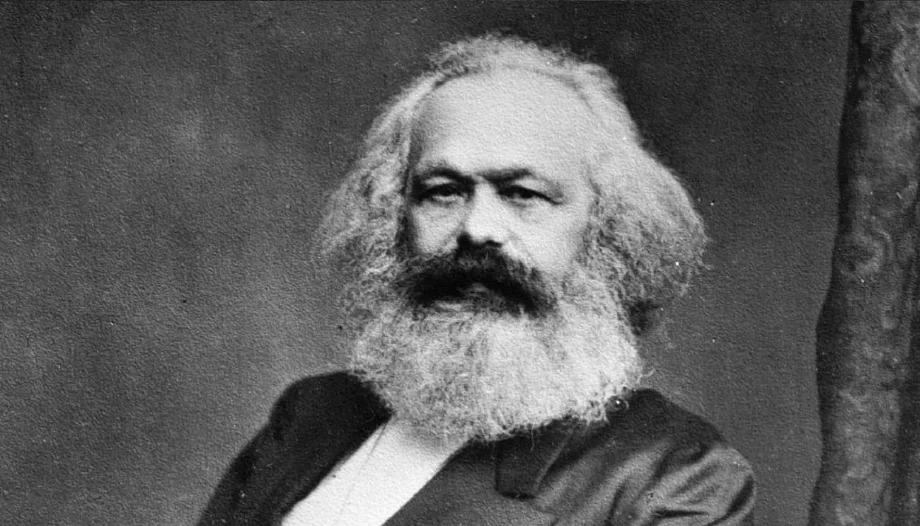
This work by Karl Marx is a response to another by Proudhon that had just been published: «Philosophy of Poverty.» The latter represented a sophisticated version of reformist socialism, revolutionary only in appearance: the socialism before Marx, what has come to be called utopian socialism. This form of socialism was a romantic reaction against the horrific exploitation of the working class in Europe immediately following the Industrial Revolution, at the beginning of the 19th century: twelve-hour workdays, and sometimes up to sixteen hours, seven days a week, three hundred and sixty-five days a year, in exchange for subsistence wages—just enough to eat and clothe themselves—and the labor of young children taken from orphanages and exploited, sometimes with whippings, and even subjected in some cases to sadistic punishments, such as filing their teeth, to temper their natural liveliness. That is Owen's utopian socialism, from which posterity has taken something—and a very important one at that—such as the idea of cooperatives. These are the absurd utopias (like «Fahrenheit») of Saint-Simon and Fourier. The mere fact that they found enthusiastic followers—the Saint-Simonists and the Fourierists—speaks volumes about the need for heart in that heartless society.
Proudhon's work is more scientific, though only in intention: its lack of rigor is exposed with merciless humor by Karl Marx, a young intellectual whom he leaves in his wake, in his Misery of Philosophy, Proudhon's intellectual pirouette, a self-taught man of humble origins, unsophisticated, a self-made man, is remarkable. Marx says that the Germans forgive him his ignorance of philosophy because he is a great French economist, and the French forgive him his lack of economic knowledge because he is a great German philosopher. In its economic aspect, Marx's critique is directed squarely at Proudhon, and indirectly at Ricardo, revealing that Proudhon's utopia is nothing more than the formula already present in the market, the formula of servitude that Ricardo merely observes. And in its philosophical aspect, Marx's work is a critique of Hegel's, on whom Proudhon bases his philosophical reflection.
Proudhon's discourse is not directed at the worker but, in a moral tone, at the exploiting class, seeking in it a patron to sponsor his utopia, or good men willing to preach to those of his class his formula for saving the situation of the proletariat (moralism in which Marx sees an unrealizable utopia because each class looks out for its own interests).
Scientific socialism truly earned this name with the conversion to it—or rather, to a liberalism moderated by state intervention—of a true intellectual, John Stuart Mill, whose «Principles of Political Economy» was published a year after “The Poverty of Philosophy,” in 1848, the same year as the «Communist Manifesto,» a year of social revolution in Europe, though not in Spain, which was then essentially in the hands of Narváez, the strongman who prevented the revolutionary fervor from spreading to our country. Let this introduction serve as a brief description of the historical context of the work we will be discussing.
In his «Philosophy of Poverty,» Proudhon observes that the exchange value or purchase price of manufactured goods does not coincide with their true value—that is, their utility value—but is instead arbitrarily established by both parties, which is the root of all injustices. His revolutionary formula is its replacement with «constituted value,» a value derived from the «utility value» and the «exchange value»—a value that synthesizes the thesis and antithesis of these two values. The constituted value that Proudhon proposes is to be measured by the labor time required to produce the product (or the labor embodied in the commodity), that is, the sum of hours worked by all employees involved in production, divided by the number of products manufactured.
Thus, Marx points out, Proudhon's supposed revolutionary formula boils down to the minimum wage the worker needs to survive during production time: The «future» formula of «emancipation» that Proudhon «discovers,» the determination of the product's price by the labor time fixed in the product, is nothing but the «present» formula of «slavery» already «described» with acuity by Ricardo, a mere describer of the economic laws governing the free market of bourgeois society!
Marx first points out that what Proudhon calls constituted value is also exchange value, since it is equivalent to the price that had to be paid to the workers during the time they produced the commodity, a price stipulated between capitalist and worker according to the law of supply and demand. But what he denies is that this implies arbitrary value, since—in a free market—the price is determined by market competition. If I set the price I would like, perhaps driven by good intentions, perhaps after having read Proudhon, I simply wouldn't be able to sell the product. Thus, neither my free will nor my good intentions matter much after having been convinced by the appeals to the heart and morality of utopian preachers and socialists like Proudhon. Marx recalls what Ricardo had already observed: in a free market situation, competition drives prices down until they can't go any lower to avoid losses, that is, down to the sum of the wages paid to the workers during the time they produced the merchandise, or the minimum they needed to survive during that time, which is ultimately the price of the clothes and clothing they then consumed. Thus, the determination of the price of a commodity by the labor time fixed in it, which Proudhon discovers as a formula for revolutionary emancipation, is exactly what Ricardo had penetratingly discovered as the ultimate description of the situation in the free market: articles end up being sold—due to competition—for the labor time fixed in them, or more precisely for the labor time necessary to produce the food and clothing that the workers used during the time they produced the commodity (to this must be added the price that the capitalist paid for the machinery used. But, since in buying the machines he was in turn buying the labor time fixed in them, in the end everything is in a single currency: labor time).
This inexorable conclusion of Ricardo's is precisely the formula for valuing commodities that Proudhon proposes as a panacea, a saving grace and emancipatory solution for the proletariat. But to this sarcastic observation and to Ricardo's analysis, Karl Marx adds his own discovery, which appears in economic theory for the first time and is here to stay: the notion of surplus value, implicitly described in “The Poverty of Philosophy” and later analyzed in detail in “Capital.” If a worker needs to work six hours a day to earn a living, but in fact works twelve hours and earns a subsistence wage because that is what the supply and demand for labor dictates—which is itself subject to the supply and demand of products in the market—then the other six hours are spent working for something more than just subsistence, for a decent life for himself and his family, but that is not given to him.
This surplus value is partly retained by the capitalist who employed the worker and primarily by the buyer of the commodity, who was able to acquire it for less than its actual value (thus appropriating the surplus value). If the commodity is a means of production, say a machine or raw materials for making machinery, the capitalist who buys it appropriates the surplus value, and thus the surplus value gradually accumulates in the hands of capital, without the proletariat seeing any improvement in their condition as a result of their labor. They live in a state of permanent alienation. For labor is an alienation, initially temporary, in a dialectical process whose final synthesis is prevented by capital: I alienate myself by working, leaving my life in the production of something other than myself, «outside of me»—my alienated life. But then that product, that alienated life of mine, becomes labor «for me,» to help me live better. But in the situation that the free market inexorably leads to, when the moment for synthesis to occur arrives, it doesn't; what is produced is not «for me,» it is taken from me, without anything improving my life in return. Transitory alienation thus becomes—with this theft by capital—permanent alienation.
But—Marx observes—things get worse when these economic laws, which Ricardo merely describes, are incorporated by Proudhon into Hegelianism as logical categories, eternal laws derived from the Idea in dialectical process, just as Hegel himself had done with the laws of the State and of Science and those of other fields of knowledge. If they are eternal, there is not the slightest hope of changing them! And is this the revolutionary nature of Proudhon's socialism? Hegelian dialectics—affirmation, negation, and negation of the negation—consists, in Proudhon's version, in elevating all the categories with which bourgeois economists describe the current free market to categories eternally derived from the Idea, seeing in each of them always a good aspect (that is, an “equalizing” one, since this is Proudhon's utopian ideal) and a bad aspect that must be eliminated, and in fact is eliminated, as it is always compensated for by another category in Proudhon's economic theory. Thus, in his “Philosophy of Poverty,” Proudhon analyzes the advantages and disadvantages, and the regulatory mechanisms of those disadvantages, in various ambivalent situations for his ideal of equality: division of labor, competition, etc…
Before opposing Proudhon, and with him the Hegelian socialists, Marx directly opposes Hegel, and by showing the misery of his philosophy he shows us the misery of all philosophy - since he sees in Hegel philosophy in its final state -: he shows the enormous conformism involved in trying to explain the world by giving every current situation its status as a logical category ab aeterno instead of getting down to work to transform it!
Because there is no doubt that in a free market, in a competitive environment, exchange value ultimately becomes the time invested in labor, which—though it may sound novel and revolutionary to Mr. Proudhon—is nothing more than the workers' old subsistence wage, the food thrown to slaves. Ricardo was right in his analysis. But why should the current mode of production, which gives rise to the current form of exchange of products, be considered necessary, a category derived from the Idea, inherent in immutable human nature? This mode consists of individual exchange or buying and selling, a form materialized in money and based on private property, which is both an inexorable consequence of the current mode of production and an inexorable cause of the current enslavement of the working class. Why should what is merely the current mode of production, the convergence of capital and labor—that is, the convergence of accumulated and immediate labor—be seen as necessary, immutable, and eternal—a consequence of immutable human nature?
Where Hegel said that everything is Idea in dialectical evolution, Marx will say that everything is matter, that is, labor, production, in dialectical evolution, that is, through successive processes of thesis, antithesis, and synthesis. As the modes of production change, this being the true foundation of the entire social edifice (or, in philosophical terms, since production, that is, matter, is all of reality), the relations between the forces of production (the form of commodity exchange) will change; and, with it, the social relations between people will change, for the social classes we know will disappear. We will then see their culture, their philosophy, and those ideas that were considered eternal—the very idea of man, human nature—changed; ideas that were not eternal at all, but merely historic, corresponding to the current state of things. Everything considered immutable by the Hegelian philosophers—the principle of resignation, the true misery of philosophy—all of that will change when the forms of production change.
Dialectical evolution will lead to the inexorable disappearance of capital because, with the free market, it tends to concentrate in the hands of a few, so that more and more people swell the ranks of a proletarian class that will ultimately prevail in this struggle, if only through sheer numbers. With the emancipation of the working class and the disappearance of capital, the very form of production will change, no longer based on the interaction of labor and capital. With it, everything else will change: the form of exchange will no longer be individual exchange, the so-called buying and selling, and even humanity itself will change, along with its philosophy. People will behave and philosophize differently because, in the classless society, human nature itself will have changed. Marx does not describe in great detail what this classless society will be like or what social relations will be like in this new humanity, because his main discovery is that it will be achieved, and that capitalism will disappear. Marx, as an economist, simply observes this fact as an inexorable law.
This inexorable dialectic is already underway, for workers' coalitions are flourishing everywhere, despite warnings to the contrary coming from all sides. These temporary workers' coalitions—strikes—and those that remain after the strikes—the unions—are creating class consciousness in the proletariat, a condition for one class to fight against another—a civil struggle between political powers—in which the larger class will ultimately prevail over the smaller one, until only one class remains.
There will then be no antagonisms or political power, for the social revolutions that are still to be foreseen (since science continues to invent new machines) will no longer be political revolutions or struggles, as there will be no opposing classes. The famous eternal nature of man—to which bourgeois moral precepts clung as a means of perpetuating their privileged status—will have changed. There will no longer be property, because there will no longer be individual exchange of products—its very foundation—but rather society will produce those goods that are useful for consumption and only to the extent that they are needed.
Marx focuses on the production of goods solely in terms of their utility. We have seen that in the individual exchange of products that stems from the current mode of production—capitalism—the value assigned to a manufactured item in exchange is not its utility value but the minimum that competition can withstand: the time it took to produce it. In the future society, the value of a product will be its utility, since products will have been manufactured not according to strategic market reasons—based on their use—but based on their utility, that is, to the extent and in the quantity that they are useful to society. Let us consider, for example, what is more useful for human sustenance: the production of meat or the production of potatoes. But in the current situation, with poverty so widespread, it is easier to sell potatoes than meat, and thus—for purely market reasons—what is produced is less useful to society, even though it has greater use.
In short: when the capitalist class has disappeared, defeated, the mode of production will no longer be the antagonistic competition between labor and capital, that is, between immediate labor and accumulated labor, and therefore money and private property will disappear. There will be no individual exchange of products, but only what is useful to society will be produced, and only to the extent and in the quantity that it is useful. This will imply new social relations, with the elimination of the current classes, exploiter and exploited. And with the disappearance of the bourgeois class, so too will its own philosophy, the one that has elevated to the status of eternal categories what are nothing more than its own interests.
Marx reminds us that something similar happened in the past with the bourgeoisie of the nascent cities of the Late Middle Ages. In its initial struggles against the other estates, the bourgeoisie became aware of itself as an estate, and as such, it continued under the absolute monarchy until its emancipation in the French Revolution—a victory over that estate from which, essentially, only it would survive. But with mechanization, a new estate has emerged within its ranks, one that is already beginning to develop class consciousness and to oppose it as such: the proletariat. Currently, through temporary coalitions (strikes) and permanent ones (trade unions), the proletariat is developing class consciousness, and it is doing so precisely in its struggle against the other class, the bourgeoisie, until, as happened in the past with the old estates, the proletarian class prevails over the bourgeoisie, if only through numerical superiority, so that only one class remains.
Let no one, therefore, attempt to stop history. Let these workers« coalitions be fostered, for this is how struggle and antagonism arise, since antagonism—let us not forget—has been and always will be the dialectical driving force of the movement of history. Hegel said that everything was an idea in dialectical evolution. This conception is, as we have seen, counter-revolutionary, because of the necessary and untouchable nature of the categories of the eternal evolution of the idea. But in reality, everything—labor, production—is matter in dialectical evolution—call this, if you will, »dialectical materialism«—but an evolution that is not predetermined; there is no given truth in it, no given human nature, no given morality. Rather, this truth, this nature, if it can still be called that, is historical in nature, for we realize it in praxis; there is only our project, only what we are going to do, our struggle, our negation of the negation, our negation of slavery, our negation of the negation of humanity. How reactionary, then, is Proudhon's supposedly revolutionary maxim of eliminating »the bad side of every contradiction," without realizing that by eliminating the contradiction, one eliminates the very engine of history! The negation that Proudhon wishes to eliminate is the engine of change, for it must lead to the negation of the negation! Eliminate from history the exploited serfs of feudal society, and you will have eliminated their successor, the bourgeois class—you will have eliminated the French Revolution! No. No Proudhonian magic formulas. The proletarian class must not be eliminated with measures that bourgeoisify it. It must remain. In struggle. Until it triumphs. Until it imposes itself, by sheer numbers, on the class that exploits it, that alienates it, that negates it. Until it negates the negation.
The economists, the liberals, tell the workers: don't form coalitions, because when wages rise, paper prices immediately rise as well, so real prices stay the same, and in the end, you only lose with the strike, because behind every strike comes, as a bourgeois reaction, the invention of a new machine. Marx tells you: welcome the machine; its invention will not hinder a classless society, helping us to produce with less effort, in proportion to the needs of society, to the utility of the products (and not unreasonably as now, according to the arbitrary laws of the market).
Socialists like Proudhon tell the workers: don't form coalitions because the result of strikes is that prices rise and the cost of living increases, and in the end, you'll pay for it. Marx tells you: False. Even if nominal prices rise, real prices remain the same, and industries with high mechanization and few workers, not being forced to raise their nominal prices and therefore—by virtue of the law of competition—not raising them, actually lower real prices!
Marx tells you: Form alliances, extend beyond borders the struggle already begun, until the international proletariat achieves class consciousness in struggle. Workers of the world, unite!
And although this is not the final cry of this work, it is the cry of “The Communist Manifesto,” written with Friedrich Engels. If I have chosen to comment on this work, much longer than this manifesto but considerably shorter than his monumental work “Capital,” it is because it best reveals Marx's philosophical thought, although his economic thought is also evident; and also because it was this early publication that historically marked his line of thought, from which he would never deviate.
B) Appointments
From the moment you assume more than one hand helping with production, you have already assumed a whole production based on the division of labor.
To explain exchange value, one must explain exchange. To explain exchange, the division of labor is necessary. To explain the division of labor, one needs that require the division of labor.
What, then, is this “constituted value” in which everything discovered by Mr. Proudhon in political economy consists?
Once utility is accepted, labor is the source of value. The measure of labor is time. The relative value of products is determined by the labor time required to produce them. Price constitutes the monetary expression of a product's relative value. Finally, the embodied value of a product is simply the value created by the labor time invested in it. In the same way that Adam Smith discovered the division of labor, Mr. Proudhon claims to have discovered the value constituted.
So, what is the whole dialectic of Mr. Proudhon? It consists of substituting utility value and exchange value, supply and demand, with abstract and contradictory notions… In his view, production costs constitute the synthetic value o constituted value.
Mr. Proudhon presents as a “revolutionary theory of the future” what Ricardo has scientifically expounded as a theory of present-day society, of bourgeois society. Thus, to resolve the antinomy between utility and exchange value, he takes what Ricardo and his school, long before him, had considered the scientific formula for one part of the antinomy, that of exchange value,
[Ricardo writes:] It is the costs of production that ultimately regulate the prices of things, and not, as has often been claimed, the ratio between supply and demand…
Regarding goods subject to competition among sellers and whose quantity can be increased within moderate limits, the price ultimately depends not on the situation of demand and supply but on the increase or decrease in production costs…
Mr. Proudhon… “busies himself” frantically to invent new procedures for organizing the world according to a supposedly new formula, which is nothing more than the theoretical expression of the movement that actually exists and which has been so well explained by Ricardo. Ricardo starts from present-day society to show us how value is constituted within it; Mr. Proudhon starts from constituted value to establish a new social world by means of this value…
For Ricardo, the determination of value by labor time is the law of exchange value; for Proudhon, it consists of the synthesis of utility value and exchange value. Ricardo's theory of values amounts to a scientific interpretation of current economic life.
Wages, that is, the relative value or price of labor, are thus determined by the time required to produce everything necessary for the worker's maintenance.
[Ricardo writes:] Reduce the manufacturing costs of the workers and their price will eventually fall to its new natural price, even if demand doubles, triples, or quadruples. Reduce the expenses for the upkeep of men, Lowering the natural price of food and clothing that sustain life, you will see how wages eventually fall, even though the demand for labor increases considerably…
To summarize: labor, since it is itself a commodity, is measured as such in terms of the labor time necessary to produce the labor-commodity. And what is necessary to produce the labor-commodity? Precisely the labor time needed to produce the objects indispensable for the continuous maintenance of labor, that is, to allow the worker to live and enable him to propagate his race… In this way, relative value, measured by labor time, inevitably constitutes the formula for the modern enslavement of the worker, instead of being, as Mr. Proudhon would have it, the “revolutionary theory” of the emancipation of the proletariat…
Everyone knows that, when supply and demand are in balance, the relative value of any product is determined exactly by the amount of labor that is fixed in it.
Things happen very differently than Mr. Proudhon thinks. From the very moment civilization begins, production starts to be founded on the antagonism of orders, states, and classes; and above all, finally, the antagonism between accumulated labor and immediate labor. Without antagonism, there is no progress.
In a future society, in which class antagonism had ceased, in which classes did not exist, utility would no longer be determined by time. minimum of production; the social production time that would be devoted to the different objects would be determined according to the degree of their social utility.
Any new invention that allows one to produce in one hour what has previously taken two hours devalues all similar products on the market. Competition forces producers to sell the two-hour product as cheaply as the one-hour product. Competition enforces the law that the relative value of a product is determined by the labor time required to produce it.
It is important to emphasize this point: that what determines value is not the time in which something has been produced, but the minimum time in which it is capable of being produced, and this minimum is evidenced by competition.
What remains of this “relationship of proportionality”? Nothing but the wish of an honest man that goods be produced in such proportion that they can be sold at an honest price. Throughout history, good bourgeois and philanthropic economists have been pleased to have this innocent wish.
Initially, there is no exchange of products, but rather an exchange of the labor involved in production. In general, the form of exchange of products corresponds to the mode of production. Change the latter, and the former will change accordingly. Individual change also corresponds to a specific mode of production, which, in turn, is determined by class antagonism. Thus, there is no individual change without class antagonism.
Here we are in the heart of Germany! We're going to have to talk about metaphysics when we talk about political economy. And in this, too, we're simply following in the footsteps of Mr. Proudhon's “contradictions”...
Now then: metaphysics, all philosophy, according to Hegel, boils down to method. It will therefore be necessary to attempt to clarify Mr. Proudhon's method, which is at least as obscure as... Economic table.
The economists' materials are the active and functioning life of men; Proudhon's materials are the economists' dogmas. But since one no longer pursues the historical movement of the relations of production, whose categories are merely their theoretical expression, since one no longer wants to see in these categories anything but ideas, spontaneous thoughts, independent of real relations, one is obliged to designate the movement of pure reason as the origin of such thoughts.
Impersonal reason… is forced to perform a somersault by positing, opposing, and composing itself—position, opposition, composition. To speak in Greek, we have thesis, antithesis, and synthesis. For those unfamiliar with Hegelian language, we will reveal the sacramental formula: affirmation, negation, and negation of the negation.
Thus, metaphysicians, who in making these abstractions imagine that they are doing the analysis and who, as they separate themselves more and more from the objects, imagine that they are getting closer to them to the point of penetrating them, these metaphysicians are in turn right to say that the things down here are embroideries whose logical categories constitute the canvas.
Thus, the movement of history produces social relations, the industrial movement offers us industrial products, etc., etc.
Since everything is reduced to a logical category, and every movement, every act of production, to a method, it spontaneously follows that every set of products and production, of objects and movement, is reduced to an applied metaphysics. What Hegel accomplished with respect to religion, law, etc., Mr. Proudhon attempts to accomplish with respect to political economy.
What does the movement of pure reason consist of? In opposing, in composing, in formulating itself as thesis, antithesis, synthesis, or also, in affirming itself, denying itself, denying its negation.
Apply this method to the categories of political economy and you will have the logic and metaphysics of political economy, or, in other words, you will have the economic categories known to everyone translated into a little-known language, giving them the air of having recently emerged from a mind of pure reason…
For Hegel, everything that has happened and everything that is happening consists precisely in what occurs within his own reasoning. Thus, the philosophy of history is nothing more than the history of philosophy, of his own philosophy. There is no “history according to the order of time,” there is only a succession of ideas in the understanding. He believes he constructs the world through the movement of thought, while he is doing nothing more than systematically reconstructing and classifying, under the absolute method, the thoughts that everyone has in their head.
What [Proudhon] has failed to grasp is that these specific social relations are as much a product of humankind as cloth, linen, and so on. These relations are intimately linked to the forces of production. As people acquire new productive forces, they change their mode of production, and as the mode of production, the way they earn their living, changes all their social relations. The hand mill will bring you society with the feudal lord; the steam mill, society with industrial capitalism. The same people who establish social relations according to their material productivity also produce the principles, the ideas, the categories, according to their social relations. Thus, these ideas, these categories, are as ephemeral as the relations they express: they are products. historical and transitory.
What constitutes the dialectical movement is the coexistence of these two contradictory aspects, their struggle, and their fusion into a new category. The mere fact that [Proudhon] sets out to eliminate the "bad" side shortens the dialectical movement.
Each new thesis that [Proudhon] discovers in absolute reason and that consists in the negation of the first thesis thus becomes a synthesis that he accepts rather naively as a solution to the problem in question.
Equality constitutes Mr. Proudhon's ideal… Hence, since history and Mr. Proudhon's fiction contradict each other at every turn, he concludes that a contradiction exists. If a contradiction exists, it occurs only between his fixed idea and actual reality. From now on, the good side of an economic relationship is that which affirms equality; the bad side, that which denies it and affirms inequality…
By saying that current relations—the relations of bourgeois production—are natural, economists imply that these are the relations through which wealth is created and productive forces are developed according to the laws of nature. Thus, these relations are themselves natural laws, independent of the influence of time. They are eternal laws that must always govern society. Therefore, history existed, but it no longer does. History existed because feudal institutions existed, and within these feudal institutions, relations of production are found that are completely different from the relations of bourgeois society, which economists want to pass off as natural and, therefore, eternal.
If, during the era of feudalism, economists had set out to eliminate everything that casts a shadow on this picture—serfdom, privilege, anarchy—what would have happened? All the elements that fueled the struggle would have been annihilated, and the development of the bourgeoisie would have been stifled in its infancy. The absurd problem of erasing history itself would have arisen.
The wealth of the bourgeois class, by continually destroying the wealth of its members, produces an ever-growing proletariat.
The accumulation and concentration of tools and workers preceded the development of the division of labor within the workshop.
In short: through the introduction of machines, the division of labor within society increased, the worker's task within the workshop was simplified, capital was accumulated, and man was further broken down.
Mr. Proudhon ignores that all of history consists of nothing more than a continuous transformation of human nature.
We have seen that, according to Ricardo's doctrine, the price of all goods is ultimately determined by the costs of production, including industrial profit; in other words, by the labor time employed. In manufacturing, the price of the product obtained with the minimum amount of labor regulates the price of all other goods of the same kind… Free competition necessarily implies a market price, that is, a common price for all products of the same kind.
The debasement of the worker, reduced to the role of mere laborer, day laborer, or wage earner, working for the industrial capitalist; the intervention of the industrial capitalist, exploiting the land like any other factory; the transformation of the landowner from a petty sovereign into a vulgar usurer: these are the different relationships expressed by rent. Rent, in Ricardo's sense, consists of patriarchal agriculture transformed into commercial industry, industrial capital applied to the land, and the urban bourgeoisie transplanted to the countryside.
Rent has so perfectly separated the landowner from the land, from nature, that he doesn't even need to know his land.
It is these procedures of all economists that represent the relations of bourgeois production as eternal categories.
Land, as long as it is not exploited as a means of production, is not capital. Capital lands can be increased just like other instruments of production.
Economists and socialists agree on one point only: they condemn coalitions. They merely justify their condemnation in different ways. Economists tell workers: Don't form coalitions. You will hasten the invasion of machines which, by transforming your partly useless labor, will force you to accept an even lower wage… Socialists tell workers: Don't form coalitions, then, after all, what will you gain? A wage increase? Economists have proven beyond a doubt that the pennies you might gain, even if you succeed, will be followed by a permanent decline… You will remain workers, while employers will always be employers, then as before. So, no coalitions…
Despite both sides, despite the manuals and the utopias, the coalitions have not ceased for a moment to progress and expand with the development and growth of modern industry.
In the bourgeoisie, we must distinguish two phases: the phase during which it constitutes itself as a class under the regime of feudalism and absolute monarchy, and the phase in which, already constituted as a class, it overthrows feudalism and the monarchy to create a bourgeois society. The first of these phases was the longest and required the greatest effort. It, too, began with partial coalitions against the feudal lords.
An oppressed class is the vital condition of any society founded on class antagonism. The liberation of the oppressed class therefore necessarily implies the creation of a new society… Does this mean that after the fall of the old society there will come a new class domination, summed up in a new political power? No. The condition for the liberation of the working class is the abolition of all classes, just as the condition for the liberation of the Third Estate from the bourgeois order was the abolition of all estates and all orders. In the course of its development, the working class will replace the old civil society with an association that excludes classes and their antagonism, and there will no longer be political power in the proper sense, since political power is precisely the official summary of antagonism in civil society. Meanwhile, the antagonism between the proletariat and the bourgeoisie is a class-against-class struggle, a struggle which, carried to its highest expression, constitutes a total revolution.
C) Critique
Francisco Suarez: The distinction between essence and existence is a distinction of reason.
If there is no real distinction between them, if essence and existence are truly the same, if all beings exist by essence, then necessarily no cause is required for our existence. Reason's access to God as the cause of being has been severed, without our noticing. And now it is only a matter of waiting for what Pascal called «the misery of man without God.»
But can such an abstract statement as that of our compatriot Francisco Suárez really move anything?
René Descartes, trained in the scholastic philosophy of Francisco Suárez: I will doubt everything. Since beings necessarily exist, regardless of the information about their existence provided by our knowledge—even if it is only methodological doubt—I must be able to deduce their real existence from mere thought: I think, therefore I am. This is the starting point of philosophy as a “universal science” for René Descartes.
Fichte. I agree to start only from my own thought, but let's be consistent: From thought we only arrive at thought, and what is superfluous in Kant's later arrangement is precisely “the thing-in-itself,” that which is not thought. All reality is therefore a dialectical elaboration of my thought, of the Self.
Hegel. And where, then, does God fit in? He is Being, which is the same as saying that He is the Idea (let us remember: between existence and essence, between being and idea, there is only a distinction of reason). That is the principle from which Fichte should have started in order not to be an atheist, and all reality is the necessary dialectical movement of the Idea.
Marx. All reality is reduced to matter—labor, production—and this matter is in necessary, dialectical motion—advancing through the opposition of antagonists—what we call history. And he is not wrong, from the perspective of someone educated in Hegelian circles: If everything is the same, what difference does it make whether we call everything Idea or Matter? Thus, any logical category is invented; everything that is not matter is invented. Human nature, invented. God, invented. Morality, another invention. Inventions of the bourgeois class to lull the other class to sleep and perpetuate its status. That is to say, they are the thought—sublimated matter—of the bourgeoisie, that is, a class at a historical moment, whose reality is not eternal but merely historical: thought that exists as long as that class exists. Human nature will be different when that class has disappeared. In short, total historicism. There is no permanent, eternal truth, no truth that I do not construct, that I do not have to discover; there is therefore no philosophy, but only my project. There is no theory, only praxis. «The world is not to be explained, but transformed.»
These letters presided over the grand staircase of the Humboldt Universität, which, incidentally, was precisely the grandiose staircase of the Reichstag that Albert Speer built for Hitler, moved stone by stone, as a permanent metaphor.
A literary interlude. Tolstoy, Voice from beyond the grave. The story begins one night when a father meets with his eldest son and asks him to stay up with him, for this is the night his business partner, whom he had fatally wronged, had sworn to return for revenge, a vow he had foretold in a dream a few days after his death. Father and son talk all night. The son—an educated man—convinces his father that there is no reason to fear, for all that talk about life after death, the soul, God, is nothing but superstition among ignorant people. The father is reassured and spends the night; there has been no revenge from his partner, his son was right. But the next day, the father begins to worry: if there is no God, if there is no morality, what reason do the servants have not to steal from him? He must not be naive; he must be vigilant. Little by little, he becomes suspicious of everyone around him, trusting no one, living in constant alarm, perpetually on guard. And although the author does not say so, there is no doubt in the reader's mind that the feared partner had returned that night and had taken his revenge just as he had promised.
Dostoevsky. Ivan Karamazov: «If God does not exist, everything is permitted.»
Genesis 3:4: «You will be like God.» A door slammed shut in paradise, the emancipation of those young people to whom God had told what to do, what to eat, and which tree not to eat from. The tree of the knowledge of good and evil, of what is right and wrong. It reminds us of the young teenager who leaves his parents' home, slamming the door behind him. A door slammed shut in that paradise that was his childhood. He leaves home, he can't stand it anymore. He becomes independent. No one will control him anymore. From now on, he will decide how he is to live and what he is to do. He is going to create his own paradise. But it will soon turn out that not everything in an independent life is idyllic: the young man has to worry about many things that were previously provided for him by his father's care. He has to look after everything in his life from now on, because otherwise, no one will. In a way, besides being a son, he has to be his own father.
Let's return to Marx's paradise. There is no God, no morality. But then, someone—the State—must take care of everything we entrusted to God, and we must replace our trust in people, in private virtues, with something else. It would be an unacceptable risk for the State to leave them free. Marxism places no trust in the virtue of individuals, because for it, there are no individuals; they have been dissolved into matter, into the impersonal process of production, for this, let us remember, is all there is. Thus—under the accusation that religion is the opium with which the bourgeoisie lulls the people to sleep in order to halt their inexorable struggle—Marx gives the people the opium of an impersonal paradise, which Society will reach, yes, but not for the individual, for whom it offers no hope, once it has robbed the people of their last wealth: faith, charity, true hope—not hopes, but hope itself. And even having reached that paradise, we speak only of a material paradise, consisting of the satisfaction of man's most basic material needs. But, stripped of all trace of spirit, what hope, what response, what victory is there for man in the face of death—the inexorable test of all Wisdom, death? «Et in Arcadia, Ego» “Even in Paradise, I am,” says Death.
«They dream of a system so just that no one needs to be just,» wrote T.S. Eliot in the chorus of “The Rock.” And since he only trusts in the virtue of the State, Marx doesn’t attempt the conversion of people’s hearts—a conversion he ridicules as utopian—he never addresses the exploiter with love and justice, but always the exploited, with hatred and struggle. To revolutionize the State until the proletariat itself becomes dictator (But that’s the problem, which he seems to ignore: there is no generic proletariat, only individuals, and only individuals can dictate, and so we end up with the same thing, with the mustachioed dictator and his retinue of flatterers, the mastiff-dogs in military caps taking care of anyone who dares to utter a murmur on «the Farm»). This new State will then have to take care of everything that was previously entrusted to God, or entrusted to individuals, to their individual freedom, to the much-maligned private virtue. Atheism, we repeat, necessarily leads to totalitarianism, because nothing can be entrusted to the individual. And for this reason, because the totalitarian and provident state must attend to absolutely everything, we will see everything reduced to politics. Art, sports, entertainment, family, science: everything will be political. And a transgression in any of these spheres is a transgression against the state. We have seen, in the countries that have realized this utopia, art transformed into politics, from the most vulgar cinema to the brilliant works of Eisenstein: state propaganda. Sports, transformed into an instrument of political propaganda, with the Paradiso region topping the medal counts in every Olympics, especially for women, since it was enough to pump them full of testosterone. Science, the same. Quantum mechanics, declared a bourgeois science and its teaching prohibited for years in Russia, until they had to reluctantly compromise, because it was impossible to go against history. Regarding education, children are educated by the State because education is also political. And the family. When the State sleeps with spouses in the marital bed and determines how many children each family should have (as happened in China: one if it is a boy, two if the first is a girl).
Thus, the State is everything in that paradise; everything is politics (and every transgression, therefore, is considered a direct attack against the State). In the Marxist Paradise, the individual doesn't count, doesn't exist, isn't trusted. And a wall is erected around Paradise—an iron curtain in Paradise. But it turns out it's not to prevent the massive, uncontrolled, alarming immigration of the enslaved proletarians from the other side, where they haven't yet been emancipated. No. It turns out that—although this wasn't foreseen—the wall is built to prevent the happy and liberated proletarians from escaping their paradise! A paradise in which, incidentally, the idea of a single class failed. There remained two classes: a ruling class, and the rest, misery.
And, as the protagonist of George Orwell's novel «1984» says, there is something very powerful that man will never be able to change, something that will always be against those who try, something that in the end will always impose its law: human nature.
In particular, it turns out that human nature won't lift a finger if the end result is going to be the same as if it did: I don't keep anything for myself, because there's no private property (but I don't have to worry about that either, since the State is provident). And if someone wants to keep something for themselves, that's what the police are for. This is on an individual scale. On a collective scale, the result is predictable: nothing works. Conclusion: misery for everyone (except the ruling class). And we've seen human nature cling like a nail to the crumb of property it's been allowed, and work it, as if it were its own, as if it were a great treasure. This has become evident in every experiment with a mixed system. Until finally, of course, what had to happen, happened: the first cracks in the ironclad police system, the first glimpses of true democracy, have brought down what was only maintained by an ironclad police system. Incompatible with human freedom. And if paradise still exists in unfortunate countries today, it's only because they've learned their lesson and literally rolled the tanks of Tiananmen Square over the heads of even the slightest dissent. But, as we know, things have changed, and as for what remains of that era, it's just a matter of waiting: in the end, human nature always wins war.
This applies to countries that have implemented Marxism as a program, imposing it by force. But let's look at what has happened where Marxism has not triumphed and things have evolved naturally. Marx's prophecy—the core of his work, since, as we insist, it is not a moral work but a prophecy—has not come to pass. Capitalism has not destroyed itself, but has progressively become more civilized, moving from the savage capitalism of the 19th century to the society we know today, where the main driving force is individual freedom, private initiative, and where the State criminalizes by law any kind of abuse in the use of that freedom. And the State intervenes, covering what private initiative has left unaddressed, perhaps because it is not profitable, although it is necessary for the well-being of society, and that is, in part, the ultimate purpose and raison d'être of taxes.
The mechanism discovered by David Ricardo and recalled by Karl Marx, according to which market competition inexorably leads to the maximum possible hours of daily work and the minimum wage necessary for subsistence during that time, is no longer inexorable when, without eliminating healthy competition, laws are imposed, rules are imposed on the game: the mechanism that Marx so lucidly described has been broken, for example, by the law mandating a minimum wage. With this imposition, instead of lowering wages to the point where the worker can no longer subsist, wages only fall to the level permitted by law—and thus the company does not collapse, as predicted in the work I am discussing, because competing companies are also bound by this same law. From now on, social progress will consist of this mandatory minimum wage gradually increasing, so that the surplus it leaves over mere clothing and food grows ever larger, and so that, with successive achievements, more dignified living conditions for the worker are attained. Monopolies abolished by law. The number of hours limited to eight. Daily rest periods, holidays, and Sabbath and Sunday rest mandated by law. Child labor prohibited, and the minimum age permitted for children has been progressively raised to a reasonable limit.
The accumulation of surplus value continues unabated—a concept whose merit cannot be denied to the analyst Marx—but, following Lassalle's early recommendation, the State has sought ways to return this surplus value to society and the worker. These methods currently include income tax, value-added tax (or surplus value) on the purchase of every product and on every sale, and inheritance taxes. The State retains this surplus value to then return it to citizens in the form of services. This is the basis of Social Security, and in general what we now call the Welfare State, which is compatible with private initiative, private property, and individual freedom.
What happened? Initially, at the dawn of mechanization, there were no laws to prevent the disruptions brought about by this advent. For example, there were no laws prohibiting child labor. But it wasn't necessary. Quite simply, before automation, children were incapable of production. Over time, moral discourse has introduced laws into industrialized society, thanks to which it can no longer be described as a jungle where anything goes. But the fundamental driving force of society remains individual freedom. Ultimately, who has saved us from the situation of savage exploitation we described at the beginning? Human nature, morality, and morality supported by the values of Christian civilization. And I say “values” and “civilization” because they don't always come from religious people, but rather from people raised in a society that has embraced these values (and because, ultimately, it is about human nature, which cannot be disregarded with impunity).
This is the case, for example, of John Stuart Mill (1847, Principles of Economics), who proposed income and inheritance taxes, state intervention through laws to curb abuses, and laid the groundwork for what we now call Social Security. Human nature recognizes this defense of justice, the progress inherent in these solutions, and their viability. And it is human nature—with the advent of democratic society—that has led to the voting on projects of justice through universal suffrage. Firstly, because those who suffer injustice vote, and they are not few, but also because many others who do not suffer injustice but desire a more equitable society. And, of course, the demands of the working class are also a factor, driven by their unions and their strikes.
But, a word of caution: let's not be too quick to attribute all the credit for these demands to Marxism. They existed even in Marx's time. And while he advocated for them, so did the Church in its Social Doctrine, and so have Christian-inspired political parties. Ultimately, they were crying out against an injustice that violated their dignity as human beings, and in this recognition of their own dignity, of what is just, of what should be and what should not be, we also see the imprint of Christian values on the people. In the end, Marx isn't talking about improving the miserable situation of the workers (which is what has gradually happened). In his critique of well-intentioned and salvific formulas that advocate for improvement, he implies that this would mean losing the antagonism that revolution must bring: as if we were to suddenly eliminate from history the state of serfdom in feudal society. We would have destroyed, says Marx, the engine of history. (Lenin said, or was made to say, that Rasputin did more for the Russian revolution than several brigades of the people's army combined).
Has Christianity had an influence? Yes, and primarily through its values, which resonate with human nature itself, as it did in its time when the School of Salamanca established the Ius Gentium (now called international law) and what are now called human rights, in response to the emergence of another part of humanity that had remained unknown to us. And let it not be argued against this undeniable fact that there are also many non-believers who selflessly defend these values of justice. They are right in what they say, but it must be observed that the inertia of values is an inertia of centuries. They defend them, in part, because there has been a Christian civilization. Marx himself, unknowingly, raised his voice from the values of a Judeo-Christian culture (he was the son of a Jew converted to Protestantism). Many wise men, thinkers, and philosophers existed in antiquity while situations of slavery far worse than those described above took place, but they did not raise their voices against it, and in fact it has been the values of Christian civilization that have ended slavery.
But even though values are the primary influence, has there also been an influence on the direct teaching of the Church? Has the Church's social doctrine, for example, had an impact in the last century and a half? By this, we mean the doctrine of the social encyclicals that began with Rerum Novarum: condemnation of both communism and liberalism. There must be private property, but also regulatory laws. Workers have the right to defend themselves through strikes and workers« associations. This doctrine has been repeated and expanded in subsequent encyclicals commemorating the first: social cooperatives, worker co-management, worker co-ownership, profit-sharing, the social function of private property (the social mortgage it bears), subjective wages, and family wages. The similarity between the solutions proposed by the »third way" and those proposed by the Church's social doctrine has recently been noted.
But have these principles and proposals truly had an impact? Let's divide the question into two parts. First, has the social doctrine of the Church influenced the programs of Christian Democracy, or other political parties with Catholic members? Undoubtedly, because the very raison d'être of Christian Democracy, its original ideology on social matters, is precisely the social doctrine of the Church. Second, have Christian Democrats had an influence in Western European countries? Yes. And the history of Western Europe cannot be written without mentioning this political and social movement.
Complutense University of Madrid. SCS-Spain.





 Español
 English
 Italiano
 Français
 Deutsch
 Polski