


As we move through the Gospel of Saint John, we often encounter the “I am” statements throughout the Gospel, but I wanted to focus on “The Vine and the Branches” (15:1–11), a passage that seems brief but holds great significance for Jesus’ identity.
I find it interesting to explore this text because it presents a very simple image that carries a profound meaning regarding union with the person of Jesus. Furthermore, it offers a vision of the Church as the union and mystical body of Christ, where the body is perfectly united with its head.
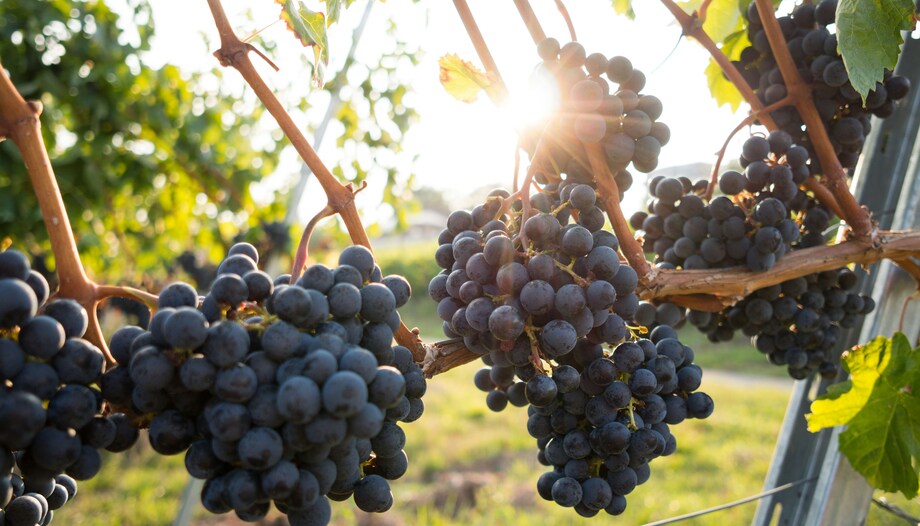
A simple image of the everyday carries a very practical meaning. We see this in a vine, where a branch that does not cling to the vine dies. This is particularly evident in Mediterranean culture, where the vine shoots can be seen perfectly intertwined.
This passage also serves as a message and a discourse preceding Jesus’ Passion and his High Priestly Prayer. Its purpose is to urge us to remain united with Christ even in the trials to come, so that we do not wither; for even if the vine seems to die, the branches remain united to it.
This type of discourse is common in the Gospel of John. Here it is set in the context of the Last Supper, forming part of the words Jesus addresses directly to his disciples. He does not tell stories or parables, but rather uses language consisting of assertions about himself. He teaches with authority, speaks in the first person, and addresses others with the clear intention that they learn something new, always centering on his person and the disciples’ abiding in him. In short, this passage is part of Jesus’ farewell discourses.
Verses 1–2
“I am the true vine, and my Father is the vine-grower. He cuts off every branch in me that bears no fruit, and every branch that does bear fruit he prunes, so that it may bear even more fruit.”
Christ begins with an allegory, presenting himself as the “true vine” (αληθινή), where “true” can mean authentic or real. This stands in contrast to something degenerate, false, or vulgar. Therefore, he is teaching with a clear intention, using simple language, and speaking entirely about himself and his relationship with the Father. The role he assigns to the Father is that of the “vine-grower” (γεωργός), and it is understood that Christ tends to the branches, but the Father is the one who has authority over the vineyard, further demonstrating that there is a relationship between the Father and the Son.
Verses 3–5
“You are already clean because of the word I have spoken to you; remain in me, and I in you. Just as a branch cannot bear fruit by itself unless it remains in the vine, so neither can you unless you remain in me. I am the vine; you are the branches. Whoever remains in me and I in him bears much fruit; for apart from me you can do nothing.”
The “cleansing” that Christ offers through his word purifies what makes man impure. His preaching cleanses and purifies, just as he tells Saint Peter: “A person who has bathed needs only to wash his feet, for he is already clean all over. You are already clean” (Jn 13:10). The purity that comes from knowing Christ allows us to unite ourselves to him with a clean heart, and remaining in the vine guarantees abundant fruit: “The true Vine is Christ, who communicates sap and fruitfulness to the branches, that is, to us, who through the Church are united to Him, without whom we can do nothing” (“Lumen Gentium,” 6).
Verses 6–7
“Anyone who does not remain in me is thrown out like a branch and withers; then they are gathered up and thrown into the fire, and they burn. If you remain in me and my words remain in you, ask for whatever you wish, and it will be done for you. By this my Father is glorified, that you bear much fruit; thus you will be my disciples.”.
The verb “to remain” (μένω) appears many times in this Gospel and is presented as something fundamental: remaining in Christ prevents us from withering and falling into the flames. After all, the branch cannot survive on its own; it is absolutely dependent on the vine. It is Christ who guarantees this eternal life. As for fire, we also find it in Luke 3:9 and 1 Corinthians 3:13: “Each one’s work will be clearly seen; the day will bring it to light, for it will be revealed by fire. And the fire will test the quality of each one’s work.”.
Now, we understand fire in two ways: one is purification in order to enter into the presence of God, and the other is eternal damnation. God treats man with freedom; therefore, when man completely rejects that divine love, at that very moment he dies because he has not believed in Him. Human beings can close themselves off from that infinite love, which leads to being cut off from the vine, withering, and ending up in the fire. The other fire refers to that which, even while remaining in the vine, still tends toward sin and is possessed by it; here “purification” appears, necessary to enter and see the Lord as He truly is.
While the withered branch cannot survive because it receives no life, the purifying fire has the power to reveal everything within the branch, bringing the fruit to light just as it is. In this way, everything that brings impurity will be burned, and whatever does not serve eternal life will die. Thus, we understand fire as both judgment and purification: a purely divine fire.
Verses 8–11
“This is how my Father is glorified: that you bear much fruit; then you will be my disciples. Just as the Father has loved me, so I have loved you; remain in my love. If you keep my commandments, you will remain in my love, just as I have kept my Father’s commandments and remain in his love. I have told you this so that my joy may be in you, and your joy may be complete.”.
Bearing fruit is understood as the natural consequence of union with Christ, but also as the sharing of what has been freely received. The text again mentions the Father and his union with the Son; a relationship in which the Father exercises authority and separates the bad branches from the vine. Likewise, he prunes and purifies those who do bear fruit, so that they may yield the greatest possible harvest. Here Jesus presents himself as the way to the Father, where we will give glory to the Father by showing our faithfulness to the Son through our works, remaining in love, and keeping the commandments so that we may thus attain fullness with Him.
This Gospel passage is part of the farewell discourses, which come before the Passion, before the commandment of love, and after the promise of the Holy Spirit. It comes after the Last Supper; therefore, it is among Jesus’s final teachings. It conveys an intimate relationship with Jesus, a prelude to the scattering of the disciples following Jesus’s arrest.
We also find the idea of bearing fruit in the Gospel of Matthew: ‘Every tree that does not bear good fruit is cut down and thrown into the fire’ (7:19). An important connection is found in the verses that follow this passage, where the commandment of love is mentioned as the greatest of the law. To remain in Christ is to love Him through love for our brothers and sisters. Now, regarding the question of judgment, we find that the actions that spring from union with Christ and love for one’s neighbor will be examined. We see this clearly in Matthew 25:31–46, when he speaks of the sheep and the goats, and of the separation of the good from the evil. Ultimately, the act of loving the Father and union with the Son necessarily entail charity.
"”I am"
The «I am» is one of the most important expressions used by Jesus and appears in various places throughout the Gospels, highlighting the significance He attaches to it by comparing Himself to elements of everyday life. This «I am» can be interpreted in two ways: one that is accompanied by a predicate and another that stands alone, as a phrase requiring no complement.
The phrase «I am» is used in an absolute sense on eight occasions, such as: «It is I; do not be afraid» (6:19–20); «if you do not believe that I am» (8:24); «you will know that I am» (8:28); «Before Abraham was born, I am» (8:58); «believe that I am» (13:19); or «I have told you that I am» (18:8). We find this «I am» formula (Εγώ είμι) in Exodus 3:14, when God reveals himself to Moses in the burning bush. Thus, the revelation of Jesus« being as »the one who is« establishes in itself an allusion to his divine nature; although it does not literally specify him as »I am God,” since the recognition of the latter arises from an act of faith.
On the other hand, on thirteen occasions Jesus adds a predicate to the «I am»: «The bread of life» (6:35); «The light of the world» (8:12); «The gate» (10:7); «The good shepherd» (10:11); «The resurrection and the life» (11:25); «The way, the truth, and the life» (14:6); and «The vine» (15:1, 5). Regarding the latter, Israel has traditionally been spoken of as the vine, as it appears in Isaiah 5:7: «The vineyard of the Lord of hosts is the house of Israel.» However, now the true vine is Christ, who welcomes those who hear his word and brings them into a bond of love with the Father and the Holy Spirit.
Love
Remaining in God’s love and, in this way, giving glory to the Father: union with Christ ensures communion with and worship of the Father, the source of all righteousness. Since Christ’s mission is to give glory to the Father, remaining in divine love necessarily leads to the fruits that spring from Him. Thus, united to Him and loved by Him, the disciples need only remain to bear ‘much fruit.’ In keeping with this, in the Gospel of Matthew we find that whoever does the will of the Father enters the Kingdom of Heaven (7:21).
Love (charity) is the very essence with which Saint John defines God (cf. 1 Jn 4:8), who is revealed by Jesus and communicated by the Holy Spirit. The love in which Christ says we must remain is the Father’s love as providence. This brings with it the joy of knowing that one is loved by God and of remaining in Him. Christ loves his disciples and longs for the Father’s love to reach them all; he loves in a supernatural way, and in this way, the One Sent is fulfilled and rejoices as he sees his mission to give glory to the Father being carried out.
Stay
Although “to abide” seems like an ordinary verb, John uses it 40 times and gives it a clear connotation of Christian community. It is important to note that in the previous chapter, Jesus delivers a discourse that is interrupted by the command to go to Gethsemane, and the action does not resume until chapter 17. Therefore, chapters 15 and 16 seem to have a strange relationship with the rest of the text, since the sequence does not make sense because it is not specified where Jesus is at that moment. There are several theological explanations for this: one suggests that Jesus would have continued his discourses as he walked, a hypothesis that lacks much support given that 86 verses are too extensive for a journey on foot.
Rather, it could be a later addition by the author or his disciples, who may have inserted these words about abiding in Christ in response to a specific situation within the community. This makes sense especially when considering the context of the early Church, since abiding in Christ is also interpreted in light of an ecclesiology that I will explain later.
Remaining in Christ does not imply merely a union of words, but entails deeds as well. The “I am,” which through faith is recognized as “I am God,” thus establishes a faith that necessarily leads to deeds (cf. James 2:17). In conclusion, abiding leads to action, but it is not limited to an individual dimension; rather, it is lived out in community—and this is where we encounter a new question.
Ecclesiology in the Vine
It is true that the term ekklesia (church) does not appear anywhere in the Gospel of John; nor is it found in Mark or Luke, whereas it is present in Matthew. In the fourth Gospel, discipleship is presented in terms of “remaining” rather than “following.” While it is true that each believer’s abiding in the vine is entirely personal—insofar as each one is intimately united to Christ—this reality is lived out within a community that accepts the commandment “to love one another” (15:12). This highlights the existence of a community united by a common bond, where each member, from their own reality, remains in the same vine.
Christ reveals the Father; the Church, as the mystical body of Christ, continues this union with Christ in order to give glory to the Father and save souls. The Second Vatican Council, in *Lumen Gentium*, states: “The Church is in Christ like a sacrament, or sign and instrument, of intimate union with God” (1)
Although the community that John presents in his Gospel does not correspond to what we today institutionally define as the Catholic community, it possesses a profound identity. While Matthew (21:42) speaks in his Gospel of the cornerstone, presenting Christ as the foundation, John uses the image of the vine to show that Jesus is not merely the initiator of a movement, but the One through whom the very life of the community is generated. Jesus and the Father are one; therefore, God’s commandment is realized in the person of Jesus as the principle of unity. From this perspective, access to the Kingdom of God does not consist in entering a geographical space, but in a vital commitment to Jesus.
John does not describe a community with different charisms, although we might interpret the vine and the branches—with the trunk, the branches, and the leaves—as something similar to what St. Paul says in his comparison of the body (cf. 1 Cor 18). This could mean that there were different charisms in the Church, as seen in John, who, for example, does not mention the term “apostle.” He only mentions the “disciple,” the term that can be applied to every follower of Jesus without the need for a specific commission.
John, therefore, emphasizes the reality of union with Christ through baptism, not through his specific ministry. It is more a matter of salvation than of office or hierarchy. Although this union can be understood primarily as an individual relationship with Christ, it necessarily leads to a communal dimension; therefore, the only essential thing must be love for the Lord lived out in communion. In the Church, conceived as the body of Christ, the personal relationship with God—even as it develops within the community—must be visibly manifested through works.
The vine
Although we have already spoken of the vine, it also has a profound Eucharistic significance. Just as Christ foreshadows the Last Supper by speaking of the bread from heaven from which he will give his body (cf. Jn 6:35), so too can the vine be spoken of as the fruit from which the wine he gives us is born. Jesus brings with him his love taken to the extreme through self-giving: He drinks the cup of passion, which is the wine reserved for God’s wedding feast with humanity. Therefore, the fruit that the branches united to the vine must bear is the ultimate self-giving, following the example of Christ himself, through actions that reflect what St. Paul expressed: “I fill up in my flesh what is lacking in the sufferings of Christ, for the sake of his body, which is the Church” (Col 1:24).
These fruits are difficult to bear and involve suffering. In the reality of nature, the vine shoots do not remain in a static state of growth, but endure inclement weather, pests, and rain; in the same way, human suffering takes on its full meaning in a Christian perspective in the light of the One who gave his life for us.
The vine is constantly being purified; it is pruned so that it may bear fruit. Purification and fruit are intrinsically linked; only through purification can we bear the fruit that the Lord desires for all of this, from the very heart of the Christian life, which is the Eucharist. Remaining in the vine is difficult; it is not a simple matter of a moment or an emotion. Yet remaining brings joy: the Holy Spirit.
Unity on a solid foundation is important in every respect—not only in ecclesiology, but also in civil matters. Unity is a key factor; having a common purpose counteracts any disunity that risks causing things to wither away.
People today believe themselves to be self-sufficient; they seek within themselves a fulfillment they cannot achieve on their own, but what they truly need is the recognition of others—to wither on the inside while appearing healthy on the outside. Communication is important within a system; the roots nourish the branches, but the goal is not to seek a place at the center, but rather to ensure that the center is recognized through its fruits. In the ecclesial sense, I believe this is highly relevant; it is not about showing anything other than Jesus, but I think this is sometimes distorted, presenting different ideas of union with Christ.
We are not isolated beings; it is through relationships that we come to know one another. That union within the same vine makes us equal in the eyes of the vine-grower, for this is of great importance in a world where the separation between the branches seems evident, and that is the fruit of evil. It is also essential to maintain consistency between what one believes and how one wishes to live, which is an invitation to examine our souls and see in which root we are immersed.
In the Church, our foundation is Christ, who acts as the head of the body that we are. Therefore, it is essential that fraternal love not be lived in a way that contradicts the fulfillment of the Lord’s command. This highlights the importance of the community, where each member, with their own charism, ideas, and contributions, visibly manifests what the Holy Spirit can accomplish. It is not a matter of fighting for particular ideals or allowing faith to become an ideology, but rather of remembering that, as the body of Christ, we must remain united to Him. This union is not something external, but rather requires that each person open their heart as the Spirit inspires them.
The vine and the branches, which then bring forth the commandment of love, are a reminder that we are all children of God, of a Father who makes us brothers and sisters and who sanctifies us through the Spirit, no matter where we come from. Through Baptism, we are all the branches that wish to be united to the vine, to give glory to the Father who is in heaven.





 Español
  English
  Italiano