




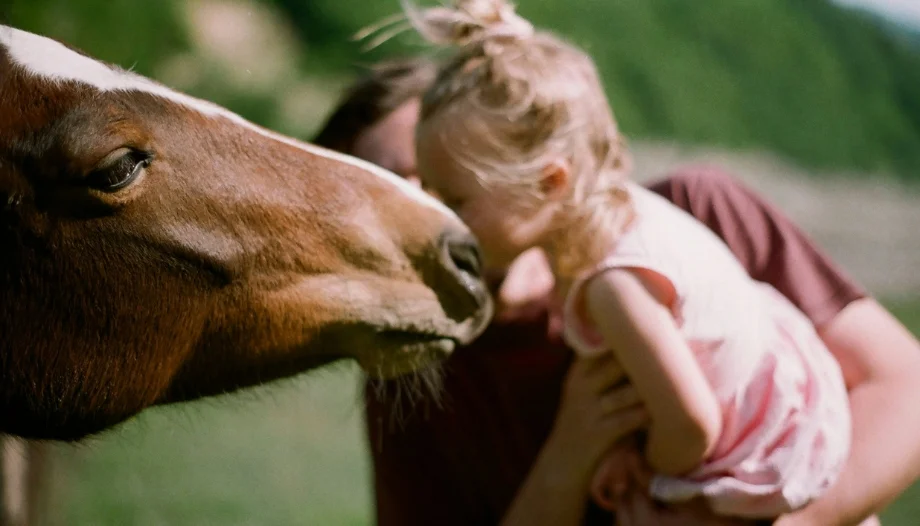
It is not uncommon to hear some Catholics harshly criticize those who profess a tender love for their animals. The argument is that «"There are too many children going hungry to spend money on veterinarians.". However, this dialectic of exclusion —either you love men or you love animals— is alien to the harmony of Creation and forgets the delicacy with which God himself relates to his work.
It is a truth of faith that humankind is the pinnacle of creation. But humanity's primacy does not stem from contempt for creation, but from its responsibility as its steward. Saint Francis of Assisi, the Poverello, did not call «"brother"» He didn't see the wolf out of sentimentality, but because he recognized in it the same «"breath"» from the Father:
«"If you have men who exclude any of God's creatures from the refuge of compassion and mercy, you will have men who will treat their brothers in the same way."» (Saint Francis of Assisi).
The doctrine of the Catholic Church teaches that animals are creatures loved by God who manifest His glory through their very existence. According to the Catechism of the Catholic Church, The Creator entrusted humanity with a dominion over animals that is neither absolute nor tyrannical, but moral and responsible. For this reason, the Magisterium considers it legitimate to use animals for sustenance, shelter, moderate scientific work, and companionship. However, it explicitly forbids causing them needless suffering or sacrificing their lives in vain, while also warning that affection for them should never divert from or replace the love owed primarily to human beings.
Regarding whether they have souls and go to Heaven, Catholic theology, as founded by Saint Thomas Aquinas, explains that animals do possess a sentient soul, which gives them life, basic emotions, and instincts. Another question is whether they have an immortal soul. The Church does not completely close the doors of eternity to material creation. In 2014, Pope Francis explained the doctrine of Christian eschatology in an audience: the biblical promise of «"new heavens and a new earth.". This means that, at the end of time, God will transform and restore the entire material universe. Church theologians suggest that in this ultimate Kingdom there will be a presence of nature and animals in perfect harmony, reflecting divine beauty, although probably not in the same way that human beings will experience the beatific vision of God.
Regarding flies and other annoying insects, the ancient Israelites mockingly modified the name of the Philistine god of Ekron, Baal Zebul (Lord of the Heavenly Abode), to Baal Zebub (Lord of the Flies). Later, in the New Testament, the insult evolved among Jews into the word Beelzebub, which translated directly as «"Lord of the dung,", alluding to the place where flies gather. In the ancient Near East, flies were not only a nuisance, but also the unmistakable symbol of decay, filth, and death. By associating this god with flies, the Hebrews conveyed the theological message that false idols only brought spiritual corruption. Centuries later, Saint Francis called «"Brother Fly"» (Brother FlyTo the friars who were lazy, idle, and troublesome within the monastery, Saint Francis de Sales explained that flies and mosquitoes are excellent trainers of daily patience. Man's rebellion against God in original sin caused insects to go from fulfilling invisible ecological functions to becoming a constant reminder of the loss of Paradise through their bites, buzzing, and the spread of disease.
Sometimes we forget that Jesus was not an abstract theorist, but someone who contemplated nature with profound love. He taught us to read the Father's love through animals: “Look at the birds of the air: they neither sow nor reap… and yet your heavenly Father feeds them.” (Mt 6, 26).
Christ uses the image of the hen sheltering her chicks (Mt 23:37) to explain His own desire to protect Jerusalem. In His view, animals are not «"objects", but witnesses of divine providence. Even in the Old Testament, the book of Tobit gives us a beautiful image: the angel Raphael and the young Tobias set out on a journey, and the text explains it simply: «"And the dog followed them"» (Tb 6, 1). God allows animal faithfulness to be a companion on the path of salvation.
Often, criticism of the «"animal lover"» It ignores a painful human reality: loneliness. Pope Francis, in Laudato si', warns us:
«"A feeling of intimate union with other beings in nature cannot be real if at the same time there is no tenderness, compassion, and concern for human beings in the heart. [...] Everything is connected.". (Laudato si', n. 91)
Under this premise, affection for an animal can be the last bridge that keeps a person connected to the capacity to give and receive tenderness. Søren Kierkegaard, the great Christian thinker, explored this idea in his reflections on purity of heart. For him, animals have an advantage over fallen humanity: their lack of duplicity. Animals love without ulterior motives, and in that simplicity, wounded humanity finds refuge where it can rediscover itself. As the Danish philosopher would say, in the silence of a creature, one learns to hear God more clearly than in the noise of human disputes.
Those Catholics who view affection for pets with suspicion should be reminded that faith calls us to gentleness. If we see someone dedicating their life to caring for a creature, perhaps we should ask ourselves what loneliness that person experiences or what comfort they find in that silent devotion that we, as brothers and sisters, may not have been able to offer them.
God uses the small to heal the great. And in a dog's lick, a cat's companionship, or a canary's song, there is often hidden a caress from God for someone who perhaps has no one else to caress their soul. Or perhaps the beauty of animals, like the beauty of all Creation, is a first contact with the Goodness of the Creator, who created everything out of Love, so that we may enjoy Creation. Let us love people above all else, yes, but let us allow love for animals to be that place where human beings learn, once again, to be profoundly human.






 Español
  English
  Italiano
  Français
  Deutsch
  Polski
  简体中文
简体中文