



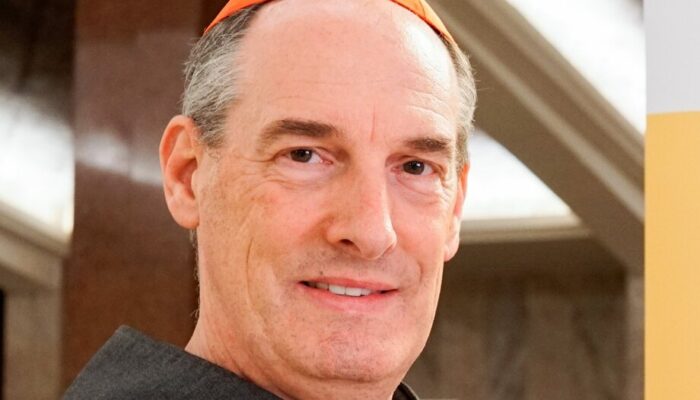
Vincent died at the age of 37. This monk, whose multiple sclerosis totally prostrated him during his last years and even deprived him of the ability to speak, had a strong impact on Cardinal Sarah, who, after meeting Brother Vincent de la Resurrection, wrote The power of silence.
In this book, the purpure wondered: “Who was looking for Brother Vincent? Who came to take him away without a word? God. For Brother Vincent-Marie de la Resurrection the program was simple. It was summed up in three words: God or nothing.”.
God or nothing.
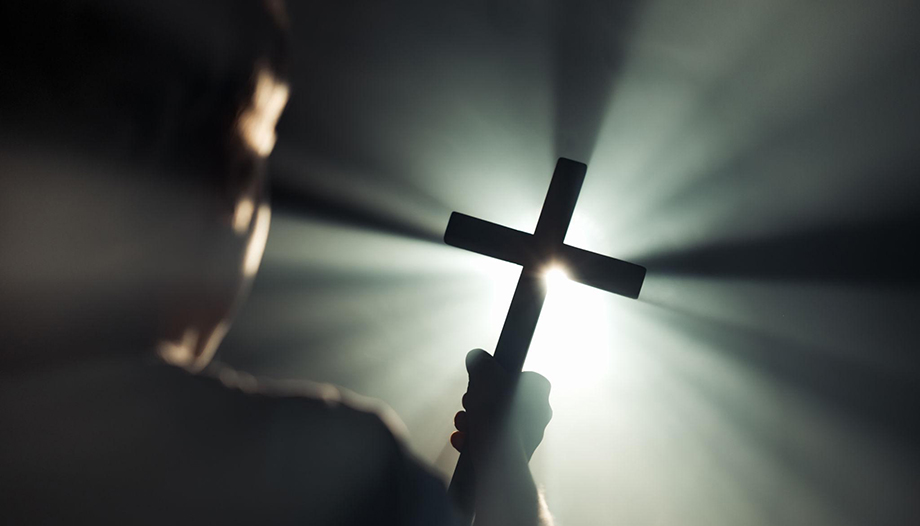
This is the essential dichotomy that marks our life: to choose God or to choose nothingness; eternity or our finitude (more or less long-lived and limited); the path to life or the sorrowful path to death.
The logic of Christ's Incarnation, that of the God who shares our human condition, is what makes it possible for this choice not to be a chimera: it is inscribed in our nature.
We have been created out of Love for eternal life and for human life. And one and the other start from the same creative root of God.
God or nothing.
God searches for us every day, as He did for Brother Vincent. “I am my beloved's, and he seeks me with passion.”, we read in the Song of Songs.
God is that creator who asks for us, as St. Josemaría Escrivá recalled in his Way of the Cross. In the hour of life, and in the hour of death, which is another step to life.
Perhaps, too often, we forget that God is greater than the God I imagine, who is everything.
Perhaps that is why we have reduced, not infrequently, the Church to a staff of more or less good (or more or less unbearable) people, and the sacraments to a kind of subway ticket that requires putting on a jacket.
Perhaps that is why we think that our limited, pocket solutions are better. And we invent liturgies to “reach more people”, and “listeners” to try to heal the wounds of so many who, deep down and in form, are looking for the God of life, the God of the Eucharist, the God who is everything. Because: “You have made us for yourself, Lord, and our heart is restless until it rests in You.” (St. Augustine. Confessions, i, 1, 1).





 Español
  English
  Italiano