Barely a year after his election as pontiff of the Catholic Church, Leo XIV has published Magnificent Humanitas, his first encyclical, on the protection of the human person in the age of artificial intelligence.
The encyclical letter was signed by the Holy Father on May 15, coinciding with the 135th anniversary of the promulgation of the encyclical letter. Rerum Novarum from Pope Leo XIII. If the latter was the Church's reflection on the era of the industrial revolution, the first great magisterial document of Pope Leo XIV focuses on the new social revolution in which the world is immersed and in which digitalization and Artificial Intelligence are changing the basic paradigms.
Full text of «Magnifica humanitas», first encyclical of Leo XIV
Introduction
1. The magnificent humanity that God has created is today faced with a decisive choice: to build a new tower of Babel or to build a city where God and humanity dwell together. Each generation receives as its inheritance the task of shaping its own time: to bring history to maturity as a place where the dignity of each person is protected, justice is promoted and fraternity is made possible. But in every age there is the risk of building an inhuman and more unjust world. Where humanity is in danger of losing its face, we Christians raise our eyes to the God who became flesh, knowing that «the mystery of man is only clarified in the mystery of the Word Incarnate». [1] In Jesus Christ, this magnificent humanity finds the way, the truth and the life, opening to each one of us the way to grow towards fullness.
2. Grounded in Christ, the living stone, we experience the powerful and mysterious action of the Holy Spirit, and we believe that every authentic human effort to cooperate with Him for the good will be blessed by the heavenly Father, in whom we place our hope. For this reason, we can contribute with determination to all those initiatives that build a more just world, and we can invite others to collaborate with us in promoting the integral development of every human being. We wish to enter into dialogue with all the men and women of our time, with whom we participate together in the events, questions and aspirations of humanity. [2] We want to identify, together with them, new paths for the common good and the promotion of a dignified life for all. This attitude of dialogue is an integral part of the Church's vocation, since the Church, constituted «in Christ as a sacrament [...] of intimate union with God and of the unity of the whole human race», [3] recognizes in history the place where the Gospel interpellates and accompanies the human experience.
3. In this spirit, in 1891 Leo XIII published the Encyclical Rerum novarum, whose 135th anniversary we celebrate this year with profound gratitude. With that document, my beloved Predecessor gave impetus to that reflection on society, economics and politics that today we call the “Social Doctrine of the Church”. And when some objected that the Church should not waste her energies on worldly matters, but should be concerned with communicating a message of eternal life, he responded with realism and wisdom that the proclamation of the Gospel cannot forget the concrete life of peoples. [4] Many decades have passed since then, and the Magisterium, pastors, theologians and the faithful have continued to reflect on social issues in the light of the Gospel. Today, the Church's social doctrine is a patrimony of wisdom, in which we find principles for thinking, criteria for discerning and judging, and concrete guidelines for action. It is based on Sacred Scripture and Tradition and, in dialogue with the sciences, helps us to read with lucidity the challenges of the present, identifying suitable ways to live a clear Christian witness, with joy and at the service of the world. It is not a static set of concepts, but a living corpus of truths, which safeguards and interprets humanity's vocation to a full and just life. To this living tradition, therefore, I wish to add my voice, invoking the assistance of the Spirit of wisdom, who has dwelt in the world since its creation (cf. Pr 8,22-31).
The “res novae” of our time
4. If at the time Leo XIII spoke of “new business” ( rerum novarum), today we cannot limit ourselves to simply repeating his valuable teachings, but must ask God for the wisdom to interpret the great trends of our time, in particular the advances in technology. In recent years it has become increasingly evident how rapidly and profoundly digitalization, artificial intelligence (AI) and robotics are transforming our world. Technology should not be considered, in itself, as an antagonistic force with respect to the person; on the contrary, it is rooted in our history from the very beginning, insofar as it is «a profoundly human fact, linked to human autonomy and freedom.». [5] Over the centuries, technological development has contributed to a significant improvement in the living conditions of humanity; at the same time, each stage of progress has also revealed the ambiguous side of instruments capable of causing harm when they are not oriented toward the good. Today, however, we are faced with a new situation, in which the power and omnipresence of emerging technologies are interwoven into the fabric of everyday life, shaping decision-making processes and profoundly influencing the collective imagination: «Never has humanity had so much power over itself». [6]New technologies are opening up a horizon that extends in directions that, although intuitive, we cannot yet fully foresee. This makes it more complex to assess their impact and their long-term effects on the dignity of individuals and the common good.
5. It is now up to us to take up the challenges of our time with lucidity and responsibility. It is necessary to adopt appropriate regulatory instruments capable of safeguarding justice and containing the distorting effects of technological power. But the issue is not limited to regulation. As the Pope Francis’, We cannot ignore the fact that nuclear energy, biotechnology, information technology, knowledge of our own DNA and other capabilities we have acquired [...] give those who have the knowledge, and above all the economic power to exploit it, an impressive dominion over the whole of humanity and the entire world. [7] In the past, it was mainly governments that drove and guided innovation. Today, on the other hand, the main drivers of development are private actors, often transnational, with resources and capacity for action greater than those of many governments. Technological power thus takes on an unprecedented face, predominantly “private”, and therefore even more difficult to discern, govern and guide for the common good.
6. For this reason it is necessary to initiate a shared discernment capable of deepening the spiritual and cultural roots of the transformations that are taking place. If we limit ourselves to contingent circumstances, we run the risk of letting a succession of emergencies decide for us the direction of the journey. We are living through a rapid transition phase, an “epochal change” in which - while some people dispute the future of the new technologies and others are engaged in reflecting on them - most people are standing by, watching from afar and simply waiting for everything to work out. Precisely because of this, decisive questions are being asked of our conscience that can no longer be avoided: Where are we going, towards what goal do we wish to orient ourselves? Which direction should we choose as a human community and as a people?
Two biblical images
7. To answer these questions and discern how to live responsibly in the age of AI, I would like to evoke two biblical images: the building of the tower of Babel (cf. Gn 11:1-9) and the rebuilding of the walls of Jerusalem (cf. Ne 2-6). In the book of Genesis, the story of Babel is situated in the origins of humanity, immediately after the genealogies of the sons of Noah. The human beings, having settled in the plain of Senaar, decide to build a city and a tower «whose top shall reach to heaven» (Gn 11,4). They thus want to ensure stability and power, and above all “perpetuate a name”, fearing to be dispersed throughout the earth. The enterprise seems imposing: a single language, a single technology, a single direction. However, the project hides a profound deception: it is a work conceived without reference to God, sustained by a uniformity that eliminates diversity and that, instead of communion, chooses homogenization. When the city is built on pride and the pretension of being self-sufficient, communication breaks down, languages become confused and human beings no longer understand each other. The result is not unity, but dispersion. Babel thus reveals the limits of any construction which, however grandiose it may be, arises from the absolutization of the human and its claim to self-sufficiency, sacrifices the dignity of people for the sake of efficiency and aspires to reach heaven without God's blessing.
8. The book of Nehemiah, in turn, begins at a time of great vulnerability in the history of ancient Israel. After the Babylonian exile, some of the people have returned to Jerusalem, but the city is still in ruins, the walls have collapsed and the gates have been burned (cf. Ne 1-2). Nehemiah, a Jew in the service of the Persian king Artaxerxes, receives news of the disastrous state of the city of his fathers. Before acting, he fasts, prays and intercedes for the people; then he asks the king's permission to return to Jerusalem and, once there, he silently examines the destroyed places. He does not impose solutions from above. He summons the families, entrusts each one with a section of wall to rebuild, listens to the fears, coordinates the efforts and confronts the opposition. The story shows how the city is reborn not thanks to the initiative of a single person, but through the shared responsibility of all the people: priests, artisans, heads of families, women and young people. It is a work that has God at the center and rebuilds the links even before the stones. Ancient Jerusalem thus recovers a common language, not that of uniformity, but that of communion: the harmony that is born when each one assumes his part and all the people recognize that their strength comes from the Lord.
9. In the light of these two images, the Holy Spirit today challenges us about our relationship with technology and the ongoing digital revolution. Scientific discoveries are a talent given to humanity to bring to fruition (cf. Mt 25,14-30). Technology can heal, connect, educate, care for the common home; but it can also divide, discard, generate new injustices. In the abstract, it is not in itself a solution to the problems of humanity, just as it is not an evil in itself; but, concretely, it is not neutral, because it takes on the face of those who conceive it, finance it, regulate it and use it. For this reason, the first choice is not between a “yes” or a “no” to technology, but between building Babel or rebuilding Jerusalem: between a power that seeks to dominate heaven and a people that, in the presence of God, sets to work together to build anew the walls of fraternal coexistence.
10. Let us avoid, therefore, the “Babel syndrome”: the idolatry of profit that sacrifices the weak, the uniformity that flattens differences, the pretension of a single language-even a digital one-capable of translating everything, even the mystery of the person, into data and performance. This is the risk of dehumanization-constructing the future by excluding God and reducing the other to a means-an ancient and ever new temptation, which today also takes on a technical face. Let us choose, instead, the “way of Nehemiah,” which highlights the value of shared work to make the city of God a safe place for the returned exiles. Today, to rebuild means to recognize that, in the plurality of voices and visions that sometimes reminds us of the dispersion of languages, there is nevertheless a luminous possibility: that of building together, transforming diversity into a resource and making listening and dialogue the common ground on which justice and fraternity can grow. And, in this shared work, Christians find their own way of building: orienting action towards God, so that, under his light, pluralism does not disperse into disorder, but, in the practice of synodality, becomes the space in which humanity recovers its solid foundations and its ultimate goal. In the Apocalypse, John sees the new Jerusalem «coming down from heaven and coming from God» (Ap 21:2) as a gift for all humanity. And this vision of grace is for us Christians a call to work together, cultivating a peaceful, just and dignified common life in the “cities” of today.
Building for the good
11. Building a city centered on the common good requires, above all, building on the rock of a relationship with God. It means recognizing that the truth of his love calls us to a life «in abundance» ( Jn 10:10) and to communion with him. Together with St. Augustine, we too can say: «For you have made us for yourself and our heart is restless until it rests in you». [8] In fact, God has inscribed in our hearts a desire for happiness that embraces all dimensions of life; and the Church, in dialogue with the men and women of our time, feels the urgency of safeguarding and directing this aspiration towards its deepest truth.
12. Secondly, building on the good means accepting the limits and fragility of humanity without considering them an error to be corrected. Today, the human desire for fulfillment runs the risk of being diverted towards misleading goals: the illusion of a technology that promises to free us from all fragility or models of well-being that “leave behind” entire peoples. It is not uncommon for us to place our hope in unlimited potential, in forms of progress that can exacerbate inequalities, in immediate solutions incapable of healing the wounds of peoples. Thus, while some pursue the chimera of unlimited self-affirmation, many lack what is necessary. The Church reminds us, with a humble but firm voice, that true fulfillment is not born not from the elimination of fragilities, but from harmonious growth: where freedom and responsibility are intertwined with mutual care and true solidarity, and where progress is measured by the dignity of each individual and the good of peoples.
13. Third, building a world in which all can “flourish” requires courageous co-responsibility. No single hand is sufficient to bear the weight of the challenges facing the world, and none is so weak as to be unable to make its contribution: «My power triumphs in weakness» (2 Co 12,9). Each has its own section of the wall: scientists and researchers, entrepreneurs and workers, educators and legislators, civil society, popular movements and communities of faith. This is the logic of subsidiarity, which values cooperation between generations, between peoples, between disciplines and cultures as the privileged way to increase stability, prosperity and peace. Tensions and differences should not be intimidating; they can become creative energies when they are guided by shared responsibility.
14. Finally, building up in the good requires evangelical language. Let us avoid words that humiliate or confront. Let us opt for clarity that enlightens and frankness that opens paths. Let us not bless naïve enthusiasm or feed sterile fears. Rather, let us indicate criteria for discernment - the dignity of the person, the universal destination of goods, the option for the poor, care for the Common Home, peace - and let us translate them into practices: responsible planning, human and social impact assessments, inclusion of the most fragile, digital literacy, research and industry oriented toward justice and peace.
Remaining human
15. In the recent Ordinary Jubilee of 2025, we have walked as pilgrims of hope and have been filled with graces. Strengthened by these gifts, we can move forward with confidence in the face of the arduous tasks and demanding challenges that lie ahead. In the age of artificial intelligence, in which human dignity risks being eclipsed by new forms of dehumanization, we have an urgent duty to remain profoundly human, lovingly guarding that magnificent humanity which has been given to us and revealed in fullness in Christ, and which no machine can ever replace in its splendor. True progress is always born of a heart open to others, of an intelligence ready to listen, of a will that seeks what unites rather than what separates.
16. To all the Catholic faithful, to all Christians, to all men and women of good will, I address a vehement appeal: let us not be afraid to get our hands dirty in the work of our time. Like Nehemiah, let us pray, let us plan with wisdom, let us work with perseverance, placing God at the horizon of our actions and the human being at the center of our decisions. Then the discarded stones - the poor, the sick, the migrants, the little ones - will become cornerstones, and a solid and hospitable common home will arise on earth, where love and truth will finally meet, and justice and peace will kiss each other (cf. Salt 85,11). This is the blessing we implore from God and the task before us: to be builders of communion, not architects of Babel; servants of the coming Kingdom, not masters of towers destined to collapse. And, in the spirit of a shepherd and a father, I ask everyone to stop the construction of the umpteenth Babel and to join forces to build for the good, so that humanity may never lose its own beauty and the world may once again recognize, in the heart of the human being, the place where God wishes to dwell.
CHAPTER ONE
DYNAMIC THINKING FAITHFUL TO THE GOSPEL
17. In this first chapter my intention is to review, in a synthetic way, the path along which the social doctrine of the Church has been taking shape in the recent Magisterium of the Popes and of the Church. Vatican Council II, to highlight its dynamic character. In every era, in fact, the res novae urge this teaching to measure itself against the questions of history in the light of revealed Truth. For this reason, IA must also be understood not as a thematic appendix, or as an emergency to be managed, but as a transformation that challenges from within the categories of social doctrine and demands a greater development of the same, in fidelity to the Gospel.
18. However, this itinerary would not be truly comprehensible if, before dwelling on the contribution of each of the Popes and on the most relevant documents, we did not clarify some fundamental convictions about the way in which the Church inhabits history and relates to the world. Without this clarification, the Social Doctrine would run the risk of appearing to be an undue interference in temporal matters or an external code of ethics to be applied arbitrarily. In reality, it arises from a Church that walks with humanity, recognizes the autonomy of earthly realities and the distinction between ecclesial community and political community and, precisely for this reason, aspires to serve the common good.
A Church on the way in the history of mankind
19. The Church, present in the world as a sign of unity for the whole human family, recognizes in the questions and challenges of the present age the place in which to exercise her vocation to listen, to dialogue and to service, allowing herself to be challenged by all that concerns the existence of men and women today. This intertwining of life with the peoples makes it understand more and more that its mission has a historical scope and implies a responsibility with regard to the way in which social relations are woven. For this reason, it cannot consider itself outside the dynamics that shape the face of society. Rather, it participates with commitment in the ways in which society itself grows and organizes itself, and offers its contribution to the achievement of a more just and fraternal coexistence. The Pope Francis’ strongly recalled this historical dimension of the ecclesial mission, pointing out that «no one can demand that we relegate religion to the secret intimacy of individuals, without any influence on social and national life, without concern for the health of the institutions of civil society, without a say in the events that affect citizens». [9]
20. The call and the commitment to walk with humanity in the concrete aspects of history lead the Church to recognize that earthly realities possess a consistency and an order of their own. The Vatican Council II expressed this principle with particular precision in the pastoral Constitution Gaudium et spes, whose 60th anniversary we celebrated with fond memories on December 7, 2025: «If by the autonomy of reality we mean that created things and society itself enjoy their own laws and values, [...] this demand for autonomy is absolutely legitimate». [10]This emphasis highlights the fact that creation is imbued with an original goodness that the human gaze must guard, cultivate and bring to maturity. In this context, the Church offers herself as a presence that helps us to read reality in depth, supporting with humble firmness those decisions that promote the dignity of each person, the cohesion of communities and the good of all. In this way, she places herself on a par with the world without imposing herself on it, so that in every human event the promise of justice and peace that the Holy Spirit continues to awaken in the heart of humanity can germinate.
21. By recognizing that God accompanies the freedom of human beings in the development of history, the Vatican Council II affirmed the distinction between ecclesial community and political community, stressing that each must act with the fullest autonomy. The Church's presence in the world is thus also expressed in her relationship with civil society and public institutions. In her dialogue with them, the Church recognizes the value of social and political realities and respects her own responsibility, supporting all that protects the lives of people and strengthens the foundations of the social fabric. It does not claim to assume the functions of the State; on the contrary, it values its service to the common good and recognizes with conviction the responsibility that civil institutions exercise in society. At the same time, the mission entrusted to it leads it not to remain aloof from the concrete sufferings of the men and women of our time. Her closeness does not stem from an intention to supplant institutions, much less from an implicit criticism of their work, but from the evangelical charity that impels her to draw close to the wounds of humanity at the moments when they manifest themselves most severely. When it intervenes, it does so in imitation of the Good Samaritan, with discretion and closeness, aware that what arises from an immediate need cannot become the norm, nor can it replace the institutional responsibilities proper to the civil community.
22. From this double recognition - the autonomy of earthly realities and the distinction of competencies between the ecclesial community and the political community - we can better understand the orientation that the Vatican Council II has given to the Church in her relationship with the world. Gaudium et spes reminds us that «it is the task of all the People of God, but especially of pastors and theologians, to listen to, discern and interpret, with the help of the Holy Spirit, the many voices of our time and to evaluate them in the light of the Word of God, so that revealed Truth may be better perceived, better understood and more adequately expressed». [11] Listening to the “different languages” is not mere sociological attention, but implies a spiritual discernment in which, with the help of the Spirit, the People of God recognizes in cultural and social transformations both the signs of the presence of Christ, who comes and guides history towards its fullness, and those deviations that obscure his face. In this way, revealed Truth is not modified in its essential core, but is made explicit and assumed as a living criterion to orient concrete choices, to inspire paths of personal and communitarian conversion, to promote reforms of structures and to support new forms of evangelical witness in public life. History is, therefore, one of the places where the Church allows herself to be instructed by the Spirit on the humanizing scope of the Gospel and learns to adapt her teaching to the service of the dignity of each person and the good of peoples.
The wisdom of the Word and dialogue with the human sciences
The Church considers all those who sincerely seek «truth, goodness and beauty» as companions on the way, considering them «precious allies».» [12] in the defense of the dignity of each person and in the stewardship of creation. Assuming the pastoral style of the Vatican Council II, The Church, enlightened by the wisdom of the Word, which invites us to listen to, discern and interpret the signs of the times, is not afraid to encounter human knowledge. The Word of God offers reliable criteria for guiding the paths of justice and opening ways of reconciliation and peace among human beings. When it comes to applying these criteria to the complex situations of our time, the contribution of philosophy and the human and social sciences, which help to understand and analyze cultural, economic and political dynamics in greater depth, is essential. Saint John Paul II recalled that the Church welcomes the contribution of the social sciences «to draw concrete indications to help it carry out its Magisterial mission». [13] Dialogue with this knowledge does not detract from the strength of the Gospel; on the contrary, it allows us to identify more clearly what really promotes the life of individuals and communities. The Pope Francis’, In line with this perspective, he stressed that, on many specific issues, the Church does not claim to offer «a definitive word», [14] but recognizes the importance of paying attention to scientific research and fostering a serious and loyal dialogue among academics, accepting the diversity of opinions.
Nourished by this fruitful dialogue between the Gospel and human knowledge, the Church has progressively deepened her social doctrine, developing over time a patrimony of wisdom endowed with theological and anthropological coherence rooted in the Christian vision of the person. Precisely because it is born of faith and its understanding of reality, this patrimony does not translate into a repertory of technical solutions or into an economic or political model that is opposed to others: it has a category of its own, [15] that of the principles that guide the reading of events and support an evangelical interpretation of historical processes and of the decisions they involve. From this arises the proper function of social doctrine, which does not claim to replace the responsibilities of politics and institutions, but rather offers itself as a support for common discernment, helping to recognize and promote what contributes to the dignity of persons, to the vitality of communities and to the good of all.
Social Doctrine as community discernment
25. The understanding of truth as a gift to be shared and not as a possession to be claimed frees the Church from the temptation to yearn for forms of presence based on power. Saint John Paul II invited us to look back with sincerity to those times when we gave in to «methods of intolerance and even violence in the service of truth», [16] to rediscover the evangelical path of gentle proclamation and of truth that does not impose itself. In the same vein, I reiterated that the Church «does not want to raise the banner of the possession of the truth», [17] because truth is not a territory to be defended, but a good to be shared. This same perspective was summed up by Pope Francis’ in his famous words, according to which «time is superior to space»: [18] The important thing is not, above all, to occupy positions of power or control cultural bastions, but to initiate processes of good and allow them to mature; thus, the truth of the Gospel does not impose itself from on high, but grows over time, in the concrete interweaving of lives, communities and cultures. It is a truth that does not fear diversity, but welcomes and orders it; that does not eliminate conflicts, but transfigures them; that recomposes what history tends to disperse. Hence also the image of the polyhedron, a figure with many faces reflecting, from different angles, the same truth of the Gospel. [19]
26. This attitude of openness to the truth, unique and at the same time multifaceted, expresses in its depths the catholicity of the Church, which embraces the whole human family and, at the same time, lives immersed in the concrete conditions of peoples and cultures. The Vatican Council II recalls that, precisely by virtue of this catholicity, «each of the parts collaborates with its own gifts with the other parts and with the whole Church», [20] and that in this way, both as a whole and in each individual community, it grows through reciprocal exchange and mutual efforts towards ever fuller communion. It follows that the People of God is not only composed of many peoples, but that within itself it is woven of diverse functions, vocations, cultures and traditions, called to mutually support and enrich one another. In this perspective, St. Paul VI recognized that, given the great variety of historical situations, it is unrealistic to think that social doctrine can «pronounce a single word», [21] He therefore invited each Christian community to read with lucidity and responsibility the reality of its own country. The fruitful tension between the universality of mission and local rootedness is an intimate part of the life of the Church: she carries in her breath the horizon of the whole world, but she assumes the questions of each context as the real place where the Gospel comes to life.
27. In the light of what has been said so far, the Church's social doctrine is shown in its most authentic aspect: it is not a manual of principles and norms to be applied, but a path of communitarian discernment. It is born of the encounter between the eternal truth of the Gospel and the questions of history; it allows itself to be challenged by the signs of the times; it is nourished by the contribution of the sciences, cultures and human experiences. For this reason, when the dignity of our brothers and sisters is disfigured, when politics does not respond to the dramas of humanity, when the economy turns against the person or when science oversteps the limits of its method, [22] the Church - together with the other Christian confessions and believers of other religions - must make her voice heard not to dominate, but to serve communion. Understood in this way, social doctrine becomes a theology of communion; a place where the Word, made flesh, continues to become dialogue, memory and prophecy.
The Development of the Social Magisterium from Leo XIII to the present day
Having recalled the way in which the Church situates herself in history and engages in dialogue with the world, I would now like to dwell on the development of social doctrine in the Magisterium, which, from the nineteenth century to the present day, has accompanied the great social transformations. Obviously, I will not be able to give an account of all the richness of this teaching, the fundamental principles of which are presented in the Compendium of the social doctrine of the Church and are further deepened in the recent Magisterium. Nor will I be able to take up in a systematic way what has been elaborated in the Encyclicals of my late venerable Predecessors, in particular in Laudato si' and in Fratelli tutti. Nevertheless, I would like to recall some essential lines, in order to show that what I am writing is in continuity with this tradition and, at the same time, to highlight how in it the stable nucleus of revealed truths about the person and human coexistence is interwoven with an ever-renewed capacity to listen to historical situations and to allow oneself to be challenged by the questions that arise in the present. I will therefore review some of the decisive stages of this development, beginning with the stage inaugurated by the Encyclical Rerum novarum.
The first steps of the social doctrine of the Church
29. What we now call the “Social Doctrine of the Church” does not emerge suddenly in the contemporary era, but gathers and organizes a long tradition of ecclesial reflection on social life, which has its roots in Sacred Scripture, in the Fathers of the Church and in the theological and juridical elaborations of the Middle Ages and the Modern Age. The expression “social doctrine of the Church” was used for the first time by Pius XII in 1950, [23] but the content it contains, understood as an organic corpus of social teachings, began to take shape with the Encyclical Rerum novarum from Leo XIII. Faced with the “new issues” of his time -the conflict between capital and labor, the workers' question, the economic and social transformations-, Leo XIII It did not limit itself to noting the malaise, but assumed these situations as an area of the Church's pastoral mission, subjected them to rigorous discernment and illuminated their causes and possible ways out in the light of the Gospel and an integral vision of the person, created in the image of God. Saint John Paul II saw in this way of proceeding a «permanent paradigm».» [24] of social doctrine: an exemplary praxis by means of which the Church, in the face of theories, exercises her right and duty to examine social realities, to pronounce on them and to indicate paths towards a just solution. In this way, the perennial contents of the faith and of the Church's ancient wisdom are articulated in a living doctrine which, while remaining faithful to the Gospel, grows in dialogue with the “new issues” of each epoch.
30. The Encyclical Rerum novarum from Leo XIII constitutes a milestone in the evolution of the social Magisterium. The document places at the center of its reflection the dignity of work and of the worker, affirms the right to a just wage for oneself and one's family, recognizes in persons an essential value that prevails over capital and profit, defends private property together with its indispensable social function, appreciates workers“ associations and proposes forms of collaboration among the various components of society as an alternative to the logic of the ”class struggle." It is not surprising, therefore, that Pius XI has defined it as the « Magna Charta" [25] of Christian social action: in Rerum novarum, The Church's ancient wisdom about the person and life in society took on a new form, capable of confronting the industrial age and offering the first major systematic framework of that social doctrine which the following decades would further develop. Although many of the historical conditions described by Leo XIII Although the Gospel has changed, at least two of its principles remain highly topical: the primacy of human work over any purely productive or financial logic, with the consequent attention to the individuals and families most exposed to exploitation, and the indissoluble link between the Gospel proclamation and the search for a more just social order. Thus, Rerum novarum continues to remind us that there is no authentic evangelization that does not also touch the structures of human coexistence.
31. The Encyclical Quadragesimo anno from Pius XI, published in 1931 on the occasion of the 40th anniversary of Rerum novarum and at the height of the great world economic crisis, he took a further step in the development of the social Magisterium. He did not limit himself to taking up the “workers” question", but extended his gaze to the general configuration of the economic and political order. He denounces the concentration of economic power in the hands of a few; he criticizes both unrestrained competition and collectivist projects that nullify the freedom and responsibility of individuals; he forcefully recalls the right of association of workers and reiterates the demand that wages be proportional not only to performance, but to the needs of the worker and his family. In this context, it systematically formulates the principle of subsidiarity, destined to become one of the fixed points of reference of social doctrine, according to which what can be achieved by individuals, families, intermediate bodies and local communities should not be absorbed by higher authorities. Alongside these contributions, Pius XI clearly recalls the social function of property and, with various interventions of its Magisterium -from the Encyclicals to the Encyclicals Non abbiamo bisogno y Mit brennender Sorge to the Divini Redemptoris-He denounced the totalitarianisms that trample on the dignity of the person, stifle social life, exalt the State above its just value and adopt the discriminatory category of race. At least three intuitions of his social teaching remain particularly relevant for our time: the awareness that injustices do not refer only to individual behavior, but also to economic and institutional structures; the value of the principle of subsidiarity, which invites us to strengthen the associative and community fabric, avoiding new concentrations of power; and the link between the dignity of work, fair remuneration and the real possibility for families to lead a dignified human life.
32. In the dramatic context of the Second World War and the years of reconstruction, the Magisterium of Pius XII offers a significant contribution to the development of the Social Doctrine, above all through his Christmas radio messages, in which he outlines the general lines of an international order based on the recognition of human dignity, justice and peace. On these occasions, the Pope proposes a dialogue with society based on a demanding reference to natural law, understood as a set of objective principles which precede the interests of individuals and states and which must regulate the internal life of nations and their reciprocal relations. Pius XII He also attributes a decisive role to professional associations, workers' unions and the various intermediate bodies of economic and social life, recognizing in these organized forms of society an essential bulwark for civil equilibrium and for the protection of the common good. He upholds the need for a solid rule of law to prevent abuses of power and recognizes in democracy an adequate instrument to favor the correct exercise of authority. At the same time, he warns against any pretension to base law on interest or force, recalling that an international order regulated by the benefit of the strongest exposes the weakest peoples to oppression and undermines trust between nations. Finally, he identifies the profound economic imbalances between countries as one of the factors that fuel conflicts. [26] In our times, marked by new forms of global power and growing inequalities, three principles remain particularly significant: the demand that law prevail over interest, the awareness that economic disparities are fertile ground for tensions and violence, and the value of an associative fabric capable of mediating between the individual and the State. These continue to offer the Social Doctrine important criteria for interpreting the dynamics of globalization and for promoting a more just and peaceful international order.
The years of the Second Vatican Council
33. With St. John XXIII a new stage of the social Magisterium is beginning, marked by a more explicit attention to the global dimension of social issues and to the language of rights. At Mater et magistra presents the Christian faith as a light capable of uniting heaven and earth, recalling that although the Church's main mission is sanctification and the proclamation of eternal goods, it does not neglect the concrete needs of people's daily lives, but is interested in every authentic human good. [27] Starting from this unitary vision of the human being, he stresses that social life requires a balance between the initiative of citizens and groups, called to self-organize and collaborate, and the action of the State, which must coordinate and support without stifling the freedom and responsibility of the subjects; for this reason, he pays attention to the fair remuneration of work, the participation of workers and the growing disparities between countries. A few years later, with Pacem in terris, He addressed for the first time not only to the faithful but to all people of good will, St. John XXIII organically links the dignity of the person with the recognition of fundamental rights and duties and proposes an order of coexistence - also at the international level - founded on truth, justice, love and freedom. [28] In our times, marked by widespread conflicts and new forms of global interdependence, the universal scope of his appeal, the reference to human rights as a common language and the conviction that lasting peace requires institutions and relations among peoples inspired by the dignity of each person remain particularly significant.
34. The Vatican Council II marked a turning point in the way the Church understands itself in the contemporary world. In the Pastoral Constitution Gaudium et spes presented us with the image of a Church close to humanity, committed to the world and dedicated to reflecting not on the basis of abstract schemes, but on the concrete reality of historical situations. The text addresses the great questions of marriage and the family, economic and social life, the political community, war and peace, insisting that economic and institutional structures are just only to the extent that they serve the integral development of the person and favor the responsible participation of all. [29] The importance of this conciliar document for the Church's social doctrine lies not only in having opened up perspectives for thematic reflection, but also in having provided a method of discernment that invites us to interpret historical transformations with an evangelical gaze and human competence. This style shows that dialogue with the world is not a tactical option for the Church, but a concrete form of her mission, because the Gospel, like leaven, can transform the structures of coexistence from within and open paths towards a greater humanity. This is also the context for the Declaration Dignitatis humanae, in which the Council recognizes that religious freedom is a fundamental right rooted in the dignity of the person, which must be guaranteed by the legal system so that no one is forced to act against his conscience or prevented from seeking and professing the truth in private and in public. [30] This principle, of great relevance for our times, continues to offer social doctrine decisive criteria for the protection of the person and for the construction of pluralistic and peaceful societies.
35. In the Pontificate of St. Paul VI a conception of peace emerges that is not reduced to the absence of war, but that is concretized in the path toward integral human development. At Populorum Progressio, describes development as the passage from less human conditions of life to more human conditions and understands it as a process that concerns «all men and the whole man», [31] that is, to all dimensions of the person and to all peoples, without exception. On this basis, Paul VI can affirm that a development thus conceived is, in reality, «the new name for peace», [32] because it aims to eliminate the roots of injustice and conflict and open spaces for a more dignified life for all. Also, the creation of the Pontifical Commission Iustitia et Pax should be interpreted in this sense as an attempt to give a stable form, at the ecclesial and international level, to this intuition, keeping alive awareness of the growing gap between rich and poor countries and of the need for policies that promote truly more humane living conditions for all.
36. With the Octogesima adveniens, written on the occasion of the 80th anniversary of the Rerum novarum, Paul VI This perspective is transferred to the post-industrial society, marked by urban transformations, new forms of poverty, changes in the world of work and rapid cultural shifts that call into question the future of individuals and communities. For Paul VI, Although the Gospel was proclaimed, written and lived in a historical and cultural context very different from our own, it is not an “outdated” message, but a vision of the human person, of relationships, of authority and of the common good, capable of guiding economic, political and cultural decisions even today. [33] In other words, the Gospel remains current because it provides the criteria for recognizing what humanizes or dehumanizes, what liberates or oppresses, in ever new situations. For the Social Doctrine of the Church, the most demanding legacy of Paul VI The Christian community cannot be content with proclaiming peace in the abstract, but must allow the Gospel to judge, starting from those who remain on the margins, those economic and political structures which, as John Paul II would recall, can become authentic «structures of sin», [34] so that no person or people is treated as expendable in the development process.
The recent Magisterium
37. The fruitful social Magisterium of St. John Paul II is situated at the crossroads between the crisis of the great ideological systems of the twentieth century and the beginning of economic globalization. In the Encyclical Laborem exercens, written ninety years after the publication of Rerum novarum, In this way, a new avenue of reflection on work is opened up. The fair wage is presented in it as a concrete proof of the fairness of the whole socioeconomic system, since it shows whether the worker is treated as a person or as a simple cost of production. [35] Work is not considered merely a problem to be managed or a means to obtain income, but a fundamental good for the person, the principle of economic activity and the key to the whole social question. In it, the human being brings into play his freedom, his creativity and his ability to cooperate, contributing to the cultural and moral elevation of society. [36] In view of this, the various forms of precariousness, the fragmentation of career paths and automation cannot be evaluated solely in terms of efficiency, but on the basis of the dignity of the worker, the right to adequate remuneration and the effective possibility of participating in social life.
38. On the 20th anniversary of the Populorum Progressio, with the Encyclical Sollicitudo rei socialis, John Paul II again addressed the scourge of underdevelopment and acknowledged the failure of many attempts to reduce the economic backwardness of poor peoples and to accompany their industrialization, noting the persistence and, at times, the widening of the gap between the North and the South of the world. [37] It also denounces the economic, financial and commercial mechanisms that, managed by the strongest countries, structurally favor their interests and suffocate the weaker economies, and asks that they also be subjected to a rigorous ethical judgment, and not only a technical one. [38] In this context, solidarity is understood as a concrete co-responsibility between individuals, peoples and nations, a form of social friendship or political charity oriented toward the “civilization of love” invoked by Paul VI. [39]
39. On the centenary of Rerum novarum, the Encyclical Centesimus annus Finally, he offers a reflection on the collapse of the Soviet system and the consolidation of democracy and the market economy. St. John Paul II takes up the message of Pius XII according to which the Church can value democracy to the extent that it guarantees the effective participation of citizens, allows for the peaceful election and replacement of rulers, and prevents power from being monopolized by small elites driven by particular or ideological interests. [40] Similarly, it recognizes the positive potential of the market and private initiative only if they remain subordinate to the moral law and guided by the principle of solidarity, without sacrificing the weakest to the logic of profit. [41] For the Social Doctrine of the Church this is a particularly topical legacy: the affirmation of the link between the dignity of work, solidarity among peoples and the critical evaluation of democracy and the market economy continues to offer criteria for judging new forms of exploitation, exclusion and the crisis of political representation.
40. The Pope Benedict XVI, in his Social Encyclical Caritas in veritate, The company wanted to revisit and deepen the concept of development presented in Populorum Progressio, reinterpreting it in the context of globalization. He recalls that such development should be translated into «real, sustainable growth that can be extended to all», [42] that is, economic progress that is truly inclusive and respectful of the limits of creation. It notes, however, that in the rich countries new categories of poor people are emerging and new forms of exclusion are multiplying, while in the poorest regions small groups live in a consumerist welfare that coexists with situations of dehumanizing misery. [43] He also notes that the new world economic-financial system, characterized by a high mobility of capital and means of production, has reduced the political power of states and their ability to guide economic processes. [44] For this reason, he reiterates that economic activity cannot claim to solve social problems simply by extending the logic of the market, but must be oriented towards the common good, for which the political community has its own irreplaceable responsibility. [45]
41. At the heart of this reinterpretation, Benedict XVI He places charity, affirming that this «is the master path of the Church's social doctrine», [46] He notes with concern that, precisely in the social, juridical, political and economic spheres, there is a tendency to declare its moral irrelevance. The novelty of his contribution lies in showing that development, justice, institutions and the market are not neutral realities, but spaces in which charity in truth must take historical form. Today - marked by growing inequalities, the pressure of financial markets, the environmental crisis and distrust in politics - this teaching remains valid because it requires judging each model of development by its capacity to be inclusive and sustainable, recomposing the relationship between economics and politics around the common good and recognizing a critical and generative role for charity in public life.
42. The Social Magisterium of the Pope Francis’ is developed along the lines of Gaudium et spes, The Gospel, which invites us to contemplate history starting from the wounds and hopes of people and to place them in dialogue with the Gospel. This orientation is especially clear in Evangelii gaudium, The document affirms that Christian proclamation has an intrinsic social dimension and refers to a Church capable of listening to the cries of the poor, of migrants and of the victims of new forms of slavery. It is also in this perspective that we find the insistence of Francisco in a synodal Church, a Church that “walks together”, that seeks to read the signs of the times in the light of the Gospel and allows itself to be evangelized by the poor with whom it shares history. [47]
43. At Laudato si', Francisco offers the first major systematic analysis of the environmental crisis in a social encyclical, demonstrating that it is not a sectoral issue, but the ecological aspect of the contemporary socio-economic crisis. His proposal for an «integral ecology» unites care for the common home and the preferential option for the poor, and affirms with determination that «the cry of the earth as well as the cry of the poor» is the same as the cry of the poor.» [48] cannot be separated. In this sense, the universal destination of goods, the critique of a technocratic paradigm that seeks to reduce everything to an object of domination, the defense of human labor threatened by the logic of discarding, the demand for intergenerational justice and the call for an authentic dialogue between politics and economics, so that neither of the two becomes enclosed in its own self-referentiality, once again take center stage.
44. Faced with the disintegration of the social fabric, the “world war in pieces”, individualistic globalization and the consequences of the pandemic on community ties, Francisco relaunches in Fratelli tutti the dream of a humanity capable of opting for social friendship and universal fraternity. He proposes the culture of encounter, a “better politics” capable of seeking the common good, paths of reconciliation and a world that guarantees «land, roof and work for all». [49] With Dilexit us, Finally, he shows that these great social commitments cannot be separated from the personal relationship with Christ: returning to the Word of God, he reminds us that the most authentic response to the love of the Heart of Jesus is concrete love for our brothers and sisters and affirms that «there is no greater gesture that we can offer to return love for love. [50]
A reading of history in the light of faith
45. In contemplating this journey as a whole, it becomes clear that the Church's social doctrine is not the fruit of a project drawn up at a desk, but the result of a patient process in which each Pontiff - together with the Vatican Council II- made an original contribution in the light of the “new issues” of their time. Each one, taking up the challenges of his time and interpreting historical changes in the light of the Gospel, has highlighted different aspects of a unique heritage: the dignity of the person, the value of work, the universal destination of goods, solidarity and subsidiarity, care for creation, the centrality of peace and fraternity. The result is a harmonious development, although not always linear, marked by different accents, by progressive deepening and, at times, by changes of perspective that do not break with what has gone before, but rather bring its implications to maturity. If today we can speak of a corpus of shared principles and criteria, it is because this reading of history in the light of faith has never been interrupted and has allowed itself to be challenged by the questions of each generation. It is to this fundamental nucleus - the great principles of social doctrine that guide the discernment of believers in their personal and public life - that I now wish to turn my attention, in order to better grasp its internal coherence and its generative force for our time.
CHAPTER TWO
FOUNDATIONS AND PRINCIPLES OF THE SOCIAL DOCTRINE OF THE CHURCH
46. The Church's social doctrine is a living reality, in dialogue with history, cultures and the sciences, and at the same time it preserves a core of truth that does not decline. For this reason it can be considered a form of wisdom capable of guiding the personal and social life of believers even today. In this second chapter, I would like to dwell on some fundamentals and principles of social doctrine that help us to read the “new issues” of our time in the light of the fundamental dignity of the human person. I think that today, in order to safeguard the human person in the time of AI, we must reflect once again on the common good, the universal destination of goods, subsidiarity and social justice. I am convinced that the harmonious relationship between these principles requires that they be analyzed together, so that it becomes clearly evident how they claim and illuminate each other.
47. In proposing these reflections, I wish above all to help the lay faithful and all women and men of good will to rediscover their own task of making present in their daily lives-in their family relationships, in their work and in their social participation-the principles I am about to point out, allowing themselves to be animated by the intention of incarnating the love of God in the concrete fabric of history. At the same time, I would like to encourage academies and universities to revitalize these principles, reconsidering them in a way that is adapted to the present times and effective in facing the digital revolution. In this way, theological and philosophical research will be able to deepen and sustain the Church's pastoral journey, contributing to the Magisterium's task of enlightening the conscience of believers and guiding their commitment to making the life of our societies more just and fraternal.
The foundations of the Social Doctrine
The human being, image of the Trinitarian God
48. The social doctrine of the Church leads us to the very heart of our faith: the mystery of the living God, revealed in Jesus Christ as a communion of persons: Father, Son and Holy Spirit: love in relationship, which is given reciprocally and communicated to the world. [51] As recalled by the Council, The human being is called to communion with God and «cannot find his own fullness except in the sincere gift of self»; [52] their deepest vocation is to enter into the Trinitarian movement of love received and shared.
If the mystery of God-Love is the source of social doctrine, we contemplate its most concrete face in Jesus Christ, the Incarnate Word. By becoming man, the Son of God enters history and our flesh, bringing us the love that unites him to the Father and the Holy Spirit. «The mystery of man is only clarified in the mystery of the incarnate Word», [53] because his humanity is fully free, open to others, capable of building relationships of solidarity and preciousness, and given to the total gift of self. Those who believe in him are involved in the great work of renewal inaugurated by the mystery of his passion, death and resurrection, and cooperate in building up the Kingdom of God, learning to welcome every woman as a sister and every man as a brother, children of the same Father. Thus, both the proclamation and the Christian experience, guided by the action of the Holy Spirit, tend to generate social consequences in the world. [54]
50. At the heart of the Christian vision of the human being is the great affirmation that man and woman are created “in the image and likeness” (cf. Gn 1:26-27) of the Trinitarian God. Each person, constitutively made for relationship, is designed and willed by God to enter into a history of communion with him, with others and with creation. His dignity does not depend on the capacities he possesses, on the riches or the role he plays, nor on the right or wrong decisions he makes, but is a gift that precedes and exceeds him, given by God as an expression of his love that never fails. For this reason, the human person always remains «the first and fundamental way of the Church.» [55] and the heart of any authentic path of integral human development. [56]
The equal dignity of all human beings
51. Saint John Paul II affirmed that «the deeper sense of the dignity of the human person and his uniqueness, as well as the respect due to the path of conscience, is certainly a positive acquisition of modern culture». [57] This assertion follows in the footsteps already traced by the Vatican Council II, The World Council of Churches, which had noted a growing awareness of the exalted dignity of every person, of his or her higher value than other things and of his or her universal and inviolable rights and duties. [58] It is important to be vigilant that this growth in awareness of human dignity is not obfuscated under the pressure of new ideologies or certain powerful interests in today's world. Among these ideologies, I consider particularly insidious the one that suggests that every person must earn or justify his or her own worth, to the point of attributing greater value to those who are more efficient and productive. In such a perspective, the person ends up being reduced to a means to obtain results, a resource to be used and exploited, and is not recognized as an end in itself, never to be instrumentalized. But the value of the person does not depend on what he or she does or produces; there are rights that correspond to everyone by the mere fact of being a person. No human power can legitimately deny them or limit them arbitrarily. [59]
52. When we speak of dignity, we do not always use the word in the same way; at times we refer to moral dignity, that is, to the way in which a person directs his or her own decisions and actions; at other times we think of social dignity, that is, the conditions of life of the person and the concrete respect that is recognized by society; in other cases we indicate existential dignity, which alludes to the way in which a person perceives the value of himself or herself and of his or her own life. These dimensions of dignity can increase or decrease. But beyond these meanings there is a deeper level, the most important, which consists of ontological dignity. It is the dignity that belongs to every human being simply by the fact of existing, of having been willed, created and loved by God; [60] No sin, no failure, no humiliation, no exclusion can affect the profound value of a human life that He has willed and called into being. [61]
53. Therefore, the fundamental dignity of each person is not acquired, must not be earned, and does not need to be demonstrated. The recent Declaration Dignitas infinita has offered a synthesis of the Church's convictions on this subject: «An infinite dignity, which is inalienably based on his or her very being, belongs to every human person, beyond all circumstances and in whatever state or situation he or she may find himself or herself», [62] that is, always and inescapably. This dignity of every human being can be defined as infinite, as the following said St. John Paul II, [63] for two reasons: because God's love is infinite and calls us to friendship with Him, and because it is absolutely unconditional, in the sense that, even if we seek to infinity, we will never find anything that can suppress or deny it.
The very high value of human rights
54. The Church gratefully acknowledges that «the movement toward the identification and proclamation of human rights is one of the most important efforts to respond effectively to the indispensable demands of human dignity. [64]And, as stated St. John Paul IIthe Universal Declaration of Human Rights, proclaimed by the United Nations on December 10, 1948, remains today one of the highest expressions of human conscience. [65]This is «a milestone on the road to the moral progress of mankind». [66]Therefore, in the Christian perspective, human rights are not an external addition to the person, but a historical translation of his or her intrinsic dignity, which the international community is called upon to protect and promote.
55. Human rights are inviolable because they are «inherent to the human person and to his dignity». [67]Consequently, they are universal and inalienable. [68] Precisely because they are based on the common dignity of every man and every woman, these rights have practical consequences and juridical effects, because «it would be vain to proclaim rights if at the same time everything necessary is not done to ensure the duty to respect them, by all, everywhere and for all». [69]Among these, the first human right is the right to life, from conception to its natural end, [70]without which it is impossible to exercise any other right. When this fundamental right is denied-as is the case with procured abortion, the murder of the innocent and euthanasia-we find ourselves faced with decisions that the Church judges to be gravely illicit. [71]
56. As we look at our times, we cannot ignore the fact that the protection of human rights today is exposed to two particularly serious risks. The first is that of a purely formal declaration, while, together with technological progress, violations of human dignity are advancing in a disguised or evident manner. The second, which is actually at the basis of the first, is that of not being able to recognize the basis of their universality, because we have given up the «search for the more solid foundations that lie behind our choices and also behind our laws». [72]Pope Pope Francis’ invited us not to underestimate this last problem. He reminded us that when reason allows itself to be seriously questioned about human nature, it is capable of discovering values applicable to all, because they derive from it. If this search were to be abandoned, it could happen that rights considered untouchable today would end up being questioned or denied in the future by those in power, perhaps after having obtained only an apparent consensus on the part of terrified or manipulated populations. [73]
57. Along with greater awareness of the value of every human person and his or her rights, recognition of the rights of minorities has also grown. However, there is still a long way to go before the rights of a large number of people, such as women, are truly guaranteed throughout the world. It is a reality that «women are doubly poor when they suffer situations of exclusion, mistreatment and violence, because they often find themselves with fewer possibilities to defend their rights». [74]Therefore, it is not enough to affirm in words that men and women have the same dignity and the same rights; this must be translated into concrete decisions, into laws, into access to work, to education, to social and political responsibilities, into the way in which society listens to and values the contribution of women. As long as this disparity exists, we will not be able to say that society truly and deeply recognizes that women have the same dignity as men.
58. It is the concrete persons who count, each one of them and their families. Social movements, grand political proclamations in favor of the people and communitarian ideologies are of no use if they are not geared to the promotion of persons - men and women - with their inalienable rights. In the same way, it is not enough to exalt individual freedom or private initiative if we then accept that a multitude of people continue to live without decent work, without protection and without access to basic goods.
The principles of the Social Doctrine
The principle of the common good
59. Recognizing that every woman and every man possesses an inalienable dignity and rights that no human power can harm or eliminate requires shaping the way we live together, our economic and political decisions, the concrete face of our cities. From this arises the first great principle of social doctrine to which I wish to refer: the common good. We can describe it as the social form of dignity that is recognized for everyone. When Benedict XVI alluded to the non-negotiable values that the Church must always defend, and included among these «the promotion of the common good». [75]For a Christian, in fact, to go out of the small world of his own interests and commit himself to the common good - within the limits of his own possibilities - is a non-negotiable value, as is the promotion of life.
60. The Vatican Council II has affirmed that the common good consists of «the set of conditions of social life which make it possible for associations and each of their members to achieve their own perfection more fully and more easily». [76] This definition offers us a first valuable orientation, because the common good cannot be reduced to a simple list of conditions or institutions. It does not coincide with the sum of the merits of individuals, nor with the union of their particular interests; it is a greater good, which belongs to all, and which only together can we build, increase and guard. We can say that social action reaches its fullness when it tends to this shared good, just as the moral action of the person finds fulfillment in the choice of the true good. [77]
61. In this sense, we can affirm that «the whole is more than the parts».» [78] and that this is precisely why «the mere sum of individual interests is not capable of generating a better world for all mankind». [79] It is an illusion to think that it is enough to seek one's own progress in order to contribute to the good of all, without really caring for others. This vision ignores the proper and specific value of the common good; it is the fruit of «interdependence».» [80] which creates a network of social good that spreads and affects people. The common good is a plus, The result of interaction and reciprocal influence that unites different actions, initiatives, efforts and decisions. If we were to simply add up the individual goods, we would not be able to explain the existence of this plus that surpasses them and at the same time enriches them.
62. The search for the common good is what gives life to a people, understood not as a mere sum of individuals, but as a living reality where people learn to recognize that they are linked to one another and co-responsible for the common good. res publica. In this sense, each person contributes to build their own people with «a slow and arduous work that requires wanting to integrate and learning to do so until developing a culture of encounter in a pluriform harmony». [81] Working together for the good of all means having a shared project. It is clear that among the various people there are many ideological and pragmatic differences, a variety of interests and frequent contrasts, but this does not mean that a process of dialogue is impossible in order to form a basis of consensus that will make it possible to build a project for all and to walk together.
63. It is the responsibility of the State to ensure the cohesion, unity and just organization of civil society, so that the common good can truly be pursued with the contribution of all. This means, in concrete terms, that the public authorities have the delicate task of «harmonizing with justice».» [82]the various interests at stake, seeking a balance between individual and collective goods, without leaving the weakest behind. When politics renounces a long-term vision and is reduced to short-term calculations or sterile polarizations, the discourse on the common good loses credibility, and at the same time inequalities and social fractures grow.
64. The same is true of international politics. As the distances between peoples increase, the logic of confrontation and aggression is gaining ground, and the difficult journey towards a more united and fraternal world is suffering new and painful setbacks. In this context, to speak of a shared path towards a more just development for the entire human family «sounds like delirium». [83]But we cannot lose hope. I invite everyone to think of more effective forms of cooperation and international institutions capable of caring for the global common good without nullifying the legitimate plurality of peoples and states. Indeed, the promotion of the common good can never be separated from respect for the right of peoples to exist, to safeguard their own identity and to contribute their own uniqueness to the family of nations. [84]Any attempt or project to eliminate or subjugate a nation is gravely immoral and therefore unacceptable.
The principle of the universal destination of goods
Among the many implications of the common good, the principle of the universal destination of goods takes on immediate importance. [85] This principle reminds us above all that the goods of the earth-soil, water, air and natural resources-have been given by God to the whole human family to sustain the life of all, today and in future generations, and that every person has an original right to the use of these goods. Saint John Paul II He recalled that «God has given the earth to the whole human race to sustain all its inhabitants, excluding none and privileging none». [86] Consequently, «it is not in accordance with God's design to use this gift in such a way that its benefits favor only a few». [87]Today we are called to recognize that this universal destiny refers not only to material goods, but also to immaterial and cultural goods.
66. There is a right to private property that has its own meaning and function, but always subordinate to the universal destination of goods. According to St. John Paul II, This subordination is the golden rule of social behavior and the «first principle of the whole social-ethical order». [88] The tradition of the Church has seen property as a means of guarding and administering goods in such a way that they can best serve the common good. Since «the Christian tradition never recognized as absolute or untouchable the right to private property», [89] its social function should not be considered as a mere theological opinion, but as a certain doctrine of the Church, already present in the Sacred Scriptures and in the Fathers. For this reason, the Pope Francis’ recalled that solidarity, lived in depth, also means «giving back to the poor what is due to them». [90]
67. Today, among the goods that are universally destined for all, we must also include the new forms of property: patents, algorithms, digital platforms, technological infrastructures, data. In a context where the wealth of nations increasingly depends on knowledge and technology, when these goods remain concentrated in the hands of a few, without adequate forms of exchange and access, a new imbalance is created that contradicts the universal destination of goods and feeds the gap between the included and the excluded, between those who can participate in the digital revolution and those who remain on the margins. Moreover, care for the common home and responsibility towards the poor and future generations require that the use of the goods of creation and of the new possibilities offered by technology be regulated in such a way as to respect the environment and avoid waste and new forms of swindling.
The principle of subsidiarity
68. The principle of subsidiarity is born of the same vision of the person that has guided our reflection on dignity and the common good. If every man and woman is called to be the protagonist of his or her own life and to participate in the building of society, then social organization must also respect and foster this responsibility. The Church's social doctrine calls “subsidiarity” the principle that what can be done by individuals, families, local communities and intermediate bodies should not be absorbed by higher levels. Higher-level institutions should recognize, protect and promote the freedom and creativity of the lower levels, coordinating their contributions so that they cooperate effectively for the common good. [91]
69. Since the beginning of the modern social Magisterium, starting with Leo XIII, The Church has insisted that neither the individual nor the family should be absorbed by the State, but that they should act freely, as far as possible, without causing harm to the common good. [92] Saint John Paul II took up and deepened this perspective, recalling that the political community is at the service of civil society and that the State must watch over the common good, intervening when necessary, but without permanently replacing the responsibility of intermediate bodies and social entities. [93]Subsidiarity does not justify the disinterest of the State, but rather guides its action; public intervention is required precisely to allow all social subjects to develop their mission without being crushed. It is up to the political community to create the conditions for individuals, families, associations and intermediate bodies to realize their own social vocation, without being replaced or reduced to mere executors. [94]
70. This principle encourages overcoming any form of paternalistic or welfarist management of social life, promoting a style of co-responsibility: a State that values the initiative of citizens and a civil society capable of generating links and activating energies at the service of the common good. In a logic of subsidiarity, decisions are taken at the closest possible level to the people involved, valuing associative life, so that the people are not faced with decisions that have already been made, but can enter into their path of construction. Where families, associations, local communities, voluntary work and the so-called “third sector” are recognized and supported, social life becomes closer to the people, services are provided with greater attention to real needs and responses are more creative and respectful of the dignity of each person. [95]
71. The principle of subsidiarity is particularly relevant in the context of the digital revolution. Here the higher level is not the State, but any major economic and technological actor exercising de facto power over the conditions of common life. The level that absorbs competencies, data and decision-making capacity is constituted by companies and platforms, which define conditions of access, rules of visibility, forms of relationship and even economic opportunities. Subsidiarity requires that such processes are not imposed from above in an opaque and unilateral manner, but are oriented towards the common good through transparency, accountability and real forms of participation (independent audits, transparency in algorithms, equitable access to data, appeal tools). [96]
72. In this context, states and supranational institutions are called upon to guarantee fair rules and effective protection mechanisms so that local communities, intermediate bodies, schools and universities, as well as ecclesial and associative realities can have a voice and contribute to the discernment of decisions that affect people's lives: work, access to services, data management and digital environments. In decisions concerning economic flows, digital platforms, data management and algorithms, it cannot be left to a few actors alone to guide the processes, but it is necessary to build forms of cooperation that respect the various levels of the global community and make them co-responsible for the common good. [97]
The principle of solidarity
73. Having considered the common good and subsidiarity, I would like to dwell on the principle of solidarity. This principle is born of the vision of the person as conceived by faith; every human being is created in the image of God and incorporated into a network of relationships that bind him or her to others, to peoples and to creation. St. Paul VI recalled that the obligations of solidarity, justice and charity are rooted in the human and supernatural fraternity that unites men and peoples among themselves. [98] Fraternity is not only an inner aspiration of those who believe, but a social and political form that must be incarnated in shared decisions and itineraries. Solidarity, then, is the concrete recognition that the destiny of each is linked to the destiny of all; truly «no one is saved alone». [99] Thus, the close link between subsidiarity and solidarity becomes evident. When subsidiarity is not accompanied by solidarity, it ends up becoming simply the protection of particular interests; when solidarity is not supported by subsidiarity, it degenerates into welfarism that does not promote responsibility. [100] Solidarity is expressed when each person, personally and together with others, takes part in the life of the community - informing, associating, making his or her voice heard, contributing to public decisions and choices - assuming real responsibilities so that the common good is translated into shared decision-making.
74. In many areas we are already experiencing a kind of “de facto solidarity”; our lives are intertwined, economies and global communications mean that what happens in one place has far-reaching effects, and digital networks link people and communities from all parts of the world in real time. However, this web of relationships is not yet solidarity in the full sense unless it becomes a conscious decision. Faith invites us to read this reality as a call; we are not simply neighbors to one another, but we are entrusted to one another, so that each one takes care, as far as possible, of the life and wounds of our brother and sister. Solidarity is born precisely when we decide not to remain indifferent to what happens to our neighbor and we transform unavoidable links - economic, cultural and technological - into paths of exchange, cooperation and mutual care, learning to «think and act in terms of community». [101]
75. The social Magisterium has insisted that solidarity is both a principle and a virtue. As a principle, it expresses the objective order of relationships between persons, groups and peoples, and alludes to an awareness of interdependence, whereby the good of each person passes through the good of others. As a virtue, it requires a «firm and persevering determination».» [102] to work for the common good, with particular attention to the weakest. The Pope Francis’ recalled that solidarity is «a way of making history».» [103] that builds peoples and not simply masses of individuals. For this reason, it implies sober and shared lifestyles, the ability to renounce immediate benefits to open spaces for the future to others, and a willingness to question habits and privileges - including those linked to digital consumption and the use of technologies - when they prevent others from living with dignity.
76. In a world marked by ever closer relations between persons, communities and nations, solidarity also assumes a global dimension. Benedict XVI strongly emphasized the link between development, justice and responsibility towards future generations, recalling that true progress requires intergenerational solidarity. [104] and attention to the ties that bind us to the natural environment. Today this responsibility also extends to digital and information infrastructures; like the natural environment, the “digital ecosystem” can also be cared for or exploited, shared or monopolized. Solidarity requires that decisions regarding data, algorithms, platforms and AI take into account not only the immediate benefit of some, but the impact on all peoples and future generations.
The principle of social justice
77. For the Christian community, social justice is a concrete form of following Jesus and of fidelity to his Gospel. In the New Testament, Jesus proclaims a «Good News to the poor» ( Lc 4:18) and identifies himself with the little ones, the sick, prisoners and strangers (cf. Mt 25,31-46). Thus he teaches us that justice is born and realized in fraternity, because the way in which we approach the least and relate to them becomes, in concrete terms, the measure of our relationship with God and with our brothers and sisters. Justice, however, does not refer only to the behavior of individuals, but also to the way in which the structures of coexistence are conceived and organized. In this regard, the Vatican Council II recalls that every institution is called to serve the human person and his or her dignity. [105] Social justice is recognized, then, by the capacity of a social, economic and political order that allows everyone - and in particular the most fragile - to live in a truly humane way, without anyone being left behind.
78. The recent Magisterium has insisted on the fact that social justice demands an outlook whose starting point is the last. Saint John Paul II spoke of a preferential option for the poor [106] that should mark the personal and social decisions, while the Pope Francis’ denounced a «throwaway culture“.” [107] which increasingly leads to new forms of exclusion. In this perspective, social justice requires looking at individuals and peoples, starting with those who are most vulnerable: the poor, migrants, refugees, internally displaced persons, victims of violence, people living in urban or existential peripheries.
79. The idea of “social justice” helps to recognize that injustices do not arise only from the wrong decisions of individuals, but also from structures, mechanisms, economic and cultural systems that almost automatically produce inequality. Saint John Paul II spoke in this sense of structures of sin [108] that are opposed to the will of God and require an effort of personal and social conversion. In this perspective, justice is not only concerned with the equitable distribution of goods or the correction of present injustices, but also assumes a restorative dimension. It aims at restoring broken ties and reintegrating those who have been excluded, taking into account the wounds caused by injustices: wars, colonialism, racial or gender discrimination, violence against entire peoples and exploitation. This may mean restoring dignity and voice to those who have been ignored, favoring processes of healing of collective memory, combating discriminatory laws and practices, and concretely supporting those who still bear the consequences of past grievances.
80. At this time, social justice must also be confronted with the environment created by digital technologies. The spread of global networks, platforms and AI systems changes the way people are informed, communicate and access services. Justice requires preventing the emergence of new forms of exclusion and deprivation of freedom: individuals and peoples denied or hindered access to basic technologies, communities exposed to invasive surveillance, and social groups harmed by opaque algorithms that reproduce prejudice and discrimination. A just social order in the digital age is one that guarantees equal access to opportunities for all, protects the smallest and most fragile, opposes hatred and disinformation, and subjects the use of data and technologies to public control, so that the criterion is not only profit but the dignity of each person and the good of peoples.
81. A decisive test for social justice today is represented by the condition of migrants, refugees and those who are forced to move because of poverty, violence, climate change and natural disasters. The way in which a society treats them shows whether its idea of justice is guided by fear or by fraternity. The Pope Francis’ invited to recognize in migrants not simply a problem to be solved, but «a living image of the People of God on the way»; [109] people with dignity, resources and dreams, who have the right to be treated with respect and demand the opportunity to be an active part of the societies that receive them. Social justice, in this field, implies at least two complementary commitments. On the one hand, protecting the right to hope of those who are obliged to leave, guaranteeing them safe and legal channels, dignified reception conditions and real integration processes. On the other hand, it also promotes the right to remain in one's own land in peace and security, addressing the root causes that force people to migrate, including those linked to economic injustices and the climate crisis. When these rights are respected, migration can be an opportunity for encounter and mutual enrichment among peoples.
Integral human development
82. In the Encyclical Populorum Progressio, saint Paul VI affirms that development is authentic only if it is “integral”, that is, aimed at «promoting all men and the whole man». [110] In the following decades, the Church's social doctrine has taken up and deepened this expression to indicate the concrete way in which the great principles-dignity, the common good, the universal destination of goods, subsidiarity, solidarity and social justice-are applied in history. By “integral human development” we mean a process in which the growth of individuals and peoples embraces all dimensions of existence and opens the future also to future generations.
83. Development, both for individuals and for nations, is a task and at the same time a right; it requires minimum conditions that make it possible for each person and each people to mature according to their own dignity, without being kept in dependence or excluded from access to the necessary goods. Development is human when it places people at the center and not the accumulation of goods, and when it also refers to peoples, not only to individuals. Justice demands the recognition of social rights and the rights of peoples, and includes responsibility towards those who will come after us. That is why development that increases the consumption of some at the expense of costs and wounds others, or that relegates entire regions to subordinate roles, preventing them from expressing their own potential, is not humane. [111] Development is integral when it is not reduced to the economic sphere, but promotes the quality of life in its spiritual, cultural, moral and relational dimensions, respecting the common home, the diversity of peoples and their ways of life. [112]
84. The idea of integral human development today finds a decisive criterion of verification in integral ecology, which has become an indispensable dimension of the Church's social doctrine. The quality of development, in fact, is measured by its capacity to maintain united, without separating, justice towards persons and the care of the common home, favoring conditions of dignified life, access to necessary goods, just social relations, care for creation and attention to future generations. It follows that true progress is not that which increases the wellbeing of a few by degrading ecosystems, by offloading costs onto the most vulnerable communities or by compromising the living conditions of those who will come after us.
85. Thus understood, integral human development is the horizon against which the transformations of our time must be read, including those of the digital revolution. Technological innovations - including artificial intelligence - are not neutral; they can increase participation and justice, or widen inequalities, control and exclusion. They must therefore be examined with a decisive question in mind: do they really contribute to the growth of individuals and peoples in humanity and fraternity, in respect for the common home and for future generations? It is here that the principles of social doctrine become concrete criteria for discernment in the areas we will address in the following chapters.
A test for the Church
86. In conclusion, I wish to touch on a point that concerns me in a particular way. Social doctrine is not only a word addressed to society; it is also an examination of conscience for the Church, the home and school of communion, which is always called to ensure that the principles set forth in this chapter are lived especially within her. The common good, in the ecclesial sphere, takes on the face of a synodal style for the mission at the service of the Kingdom. The Church, in fact, is «the communitarian and historical subject of synodality and mission». [113] This requires attention to how decisions are made and how responsibility is exercised. The Final document of the Synod identifies, among the decisive practices for missionary transformation, the culture of transparency, accountability and evaluation. [114]
87. In this perspective, subsidiarity becomes a criterion of government and pastoral life that recognizes and supports the responsibility of the faithful and of the intermediate ecclesial bodies, valuing charisms and competencies and avoiding any paternalism that stifles evangelical freedom. Concretely, the participation of the baptized in the decision-making processes and the co-responsibility in the mission is achieved through real, not nominal, participatory bodies. [115]
88. For the Christian community, solidarity has its source in the mystery of Christ and is nourished by the Eucharist. It is born of communion in faith and in the sacraments: Baptism and Confirmation unite us in Christ, so that we are one body and one spirit, one heart and one soul (cf. Ef 4,4; Ac 4,32). The Eucharist, the sacrament of unity, nourishes our belonging to the body of Christ and teaches us to share. The diverse sensibilities present in the Church, the strong convictions that animate each one, are a richness if they remain anchored in the certainty of unity as a gift received and as a task to be assumed.
89. To live justice in the Church means to cleanse ecclesial relationships and structures of those distortions that generate inequalities, lack of clarity and abuses. In this regard, listening to the victims of spiritual, economic, institutional, sexual, power and conscience abuses is an integral part of a path of justice, which includes the recognition of the damage, just reparation and prevention. All power is at the service of communion and mission. All authority is at the service of the People of God. This diakonia is manifested not only in the faith celebrated and lived in the sacraments and in the adoption of a synodal style, but also in the concrete sharing of goods. Following the example of the early Church, ecclesial resources are called to be truly common, so that among us there are no needy (cf. Ac 4:34) and so that their administration sustains the mission of proclaiming the Gospel to the poorest. Regular forms of evaluation of the exercise of ministerial responsibilities should be promoted, not as a judgment on individuals, but as instruments of formation and correction oriented to the mission. [116] These principles of social doctrine are incarnated in the life of the Church to the extent that we are open to the action of the Holy Spirit. In this way, the Church is able to offer society a credible sign: because seeking together the good of all, in co-responsibility and fraternity, is not a utopia, but a real possibility. [117]
CHAPTER THREE
TECHNIQUE AND MASTERY.
THE GREATNESS OF THE HUMAN PERSON
IN THE FACE OF THE IA'S PROMISES
90. Having recalled the principles that illuminate the Social Doctrine, I would like to look at some of the challenges that affect our way of living in these times. The biblical image that accompanies these pages is that of a construction: on the one hand, the tower of Babel, where the common work is guided by a project of domination that ends up dehumanizing (cf. Gn 11:1-9); on the other hand, the ruins of Jerusalem, which with Nehemiah are rebuilt piece by piece, as a work of shared responsibility (cf. Ne 2-6). We are called to ask ourselves about the great project of our time: what are we building? While technological development is rapidly changing languages, relationships, institutions and forms of power, we believers must and can choose which project to work on and with which style, in order to safeguard and value the magnificent humanity that has been given to us as a gift. This is not a decision about our future, but about our present, because AI and other emerging technologies are already part of our daily lives.
91. I am convinced that the concrete way of living social relations in the light of the Gospel is not established once and for all, but remains a task entrusted from generation to generation to the Christian community. Under the guidance of the Holy Spirit, the Church allows herself to be enlightened by the Word, to read the signs of the times and to seek with creativity new ways to bring relations between individuals and peoples ever more into accord with the demands of the Kingdom of God. [118]I therefore encourage everyone, especially the lay faithful, not to be afraid to allow themselves to be challenged by reality, to listen to one another and to firmly assume their own responsibility for building a more human and fraternal society.
The technocratic paradigm and digital power
92. In the Encyclical Laudato si' the Pope Francis’ denounced the increasing entrenchment of a technocratic paradigm [119] in the globalized world: the tendency to let the logic of efficiency, control and profit alone govern personal, social and economic decisions. Thus it becomes even more evident that technology is not simply an instrument and that, when it becomes a criterion, it ends up establishing what counts and what can be discarded, reducing creation to an object of exploitation and people to cogs in a system that is ever more efficient.
93. This paradigm has spread rapidly in recent years, also as an effect of the spread of AI, cognitive sciences, nanotechnology, robotics and biotechnology. In themselves, such innovations can be a great help for integral human development and the care of the Common Home. But precisely because of their power, they can act as an accelerator of the technocratic paradigm and therefore need a new spiritual, ethical and political framework. More powerful does not necessarily mean better. In this sense, the words of Romano Guardini are still relevant today: «Modern man is not prepared to use power wisely». [120]
94. The danger of humanity becoming a victim of its own conquests had already been lucidly perceived by St. Paul. Paul VI, when he warned that «the most extraordinary scientific progress, the most astonishing technical prowess, the most prodigious economic growth, if they are not accompanied by genuine social and moral progress, are ultimately turned against man». [121] For this reason, technical progress, valuable in itself, requires discernment about the anthropological vision that guides it and the ends it pursues. If technological development advances without adequate ethical and social maturation, it can happen that the means increase without humanity growing in the same measure: one “has more” but does not “be more,” and the person runs the risk of being valued primarily on the basis of the performance he or she offers. [122]
95. Here it is necessary to recognize a decisive aspect, which I mentioned earlier: in many cases, in the digital context, control of platforms, infrastructures, data and computing capacity is not the prerogative of states, but of large economic and technological players who, in fact, determine the conditions of access, the rules of visibility and the very possibilities of participation. When power of this magnitude is concentrated in the hands of a few, it tends to become opaque and to evade public control, and the risk of distorted development grows, leading to new dependencies, exclusions, manipulations and inequalities.
96. In the face of this concentration of power in the digital world, the great principles of social doctrine become criteria for judging and discerning the new scenario: the inalienable dignity of the person, the common good, the universal destination of goods, subsidiarity, solidarity and social justice. These principles require verifying whether the power of digital infrastructures and algorithms really favors participation and responsibility, protects the most vulnerable, ensures equitable access to opportunities and is ordered to the good of all. With these premises, we can then consider more closely what artificial intelligence is, what possibilities it opens up and what risks it entails.
Artificial intelligence
97. It is not my intention to offer here a treatise on artificial intelligence, nor to review a bibliography that is already very extensive; there are currently important contributions, also in the ecclesial field, to which it is possible to refer. [123] I limit myself to recalling some essential elements for a moral and social discernment that protects the primacy of the person, so that it is always human intelligence, with its conscience and freedom, that guides technical innovations and responsibly establishes their use and their limits.
98. Two considerations are in order: the first is that any statement about AI runs the risk of becoming obsolete in a short time, given the impressive speed of development of these systems. Second, all of us, including those who design them, know very little about how they actually work. Modern artificial intelligences are more “grown” than “built”: developers do not directly design every detail, but rather create an architecture upon which the AI “grows”. As a result, the fundamental scientific aspects - such as the internal representations and computational processes of these systems - remain unknown. There is therefore an urgent need for a twofold commitment: on the one hand, a deepening of scientific research; on the other, an exercise in moral and spiritual discernment.
99. It is not possible to give a single, complete definition of AI. What we can say is that we must avoid the misunderstanding of equating this “intelligence” with human intelligence. These systems mimic certain functions of human intelligence. In doing so, they often surpass it in speed and breadth of computation, offering concrete benefits in numerous fields. And yet, this power remains tied exclusively to data processing: the so-called artificial intelligences do not live an experience, do not possess a body, do not go through joy and pain, do not mature in relationships, and do not know from the inside what love, work, friendship and responsibility mean. Nor do they have a moral conscience: they do not judge right and wrong, they do not grasp the ultimate meaning of situations or assume the weight of consequences. They can imitate languages, behaviors, evaluations; they can simulate empathy or understanding, but they do not know what they produce, because they do not reside in the affective, relational and spiritual horizon in which the human being becomes wise. Even when such instruments present themselves as capable of “learning,” they do so differently from the human person. It is not the experience of one who allows himself to be shaped by life and grows over time through decisions, mistakes, forgiveness and fidelity; it is rather a statistical adaptation based on data and feedback, which can be very effective, but does not imply inner growth.
Valuable assistance that requires attention
In the light of what has been said, we can better understand why AI can be a valuable aid and, at the same time, requires a prudent and cautious approach. In recent years, its private use has grown considerably, and there are reflections from various quarters on the opportunities and risks associated with its rapid diffusion. In personal use, three aspects, in particular, must be taken into special consideration: the ease of achieving the result, the impression of objectivity and the simulation of human communication. The speed and simplicity with which it is possible to obtain indications, complex elaborations, media content and forms of concrete assistance simplify our lives, but can also accustom us to delegate too much and to seek quick answers, weakening personal judgment and creativity. The impression of objectivity that the responses and proposals of these systems can give rise to risks making us forget that they reflect the cultural parameters of those who have designed and trained them, with all their virtues and defects. The artificial imitation of positive human communication - words of advice, empathy, friendship, love - can be gratifying and even useful, but in unaware users it can be misleading and give the false impression of being in a relationship with an authentic personal subject. When the word is simulated, it does not build a relationship, but an appearance. The artificial imitation of the relationship of care or companionship can be dangerous when it is introduced in a poor context of relationships and real affection; then the risk is not so much that a person believes that he or she is talking to another person, but that he or she loses the very desire to really seek the other.
101. Looking more broadly at the use of AI in our societies, we see that it is already present in decision-making processes in all areas and at various levels: in communication, management and control. The advantages in terms of efficiency and the potential for improving certain services are obvious; however, rapid and uncritical adoption exposes us to various risks, such as underestimating the environmental impact. Current IA systems require large amounts of energy and water, have a significant impact on carbon dioxide emissions and are resource intensive. With increasing complexity, especially in large language models, the need for computational power and storage capacity is also growing, relying on an array of machines, cables, data centers and energy-consuming infrastructure. It is therefore essential to develop more sustainable technological solutions to reduce the impact on the environment and care for our common home. [124]
Accountability, transparency and AI governance
102. The use of AI is never a purely technical event: when it enters into processes that impact people's lives, it affects their rights, opportunities, reputation and freedom. Sensitive decisions that have an impact on work, access to credit and other services, and people's reputations, risk being entrusted entirely to automated systems that do not know «compassion, mercy, forgiveness and, above all, openness to hope for change in the individual.», [125] and can thus produce new forms of discarding. There may be obvious anti-human uses, such as manipulation of information or violation of privacy, but there may also be less obvious deception, when AI systems, presenting themselves as neutral and objective, reflect and reinforce stereotypes or ideological positions of those who have designed and programmed them.
To entrust, in practice, to an algorithm the power to select who is worthy and who is not, without anyone assuming the weight of the decision, means entrusting it with the task of redefining the limits of human possibilities. What diminishes in this process is not only empathy for the excluded, which can be artificially imitated, but political responsibility, because the discarding of the weak is cloaked in a neutrality and objectivity against which it is impossible to protest. In this way, injustice is silently carried out and compassion, mercy and forgiveness disappear from the horizon, not as mere appearances, but as political gestures.
104. From this follows a simple but compelling consequence: we cannot regard AI as morally neutral. In reality, every technical artifact carries with it decisions and priorities: what it measures, what it ignores, what it optimizes, and how it classifies people and situations. If a system is conceived or employed treating some lives as less worthy, or excluding them without the possibility of appeal, it is not simply an instrument to be “used correctly”; it already introduces a criterion that contradicts the inalienable dignity of the person. For this reason, ethical discernment cannot be limited to asking whether we are using a given system for a good or bad purpose, but must also question the way in which it is designed and what idea of the person and of society is inscribed in the data and in the models that guide it. [126]
For AI to respect human dignity and truly serve the common good, it is essential that responsibilities be clear at all stages: from those who design and program the systems to those who use them and those who decide to entrust them with specific decisions. In many cases, however, the internal processes leading to an outcome may not be transparent, and this makes it more difficult to assign responsibility and correct errors. This is where what we call “accountability” becomes decisive. accountability): the possibility of identifying who should be “accountable” for decisions, motivating them, controlling them and, when necessary, questioning them and remedying the damage resulting from them. [127]
To call for prudence, rigorous controls and, at times, also a slowing down in the adoption of AI does not mean being against progress, but rather exercising responsible care for the human family. This demand is all the more urgent because there is often an imbalance between the speed of technological development and the pace at which awareness, norms, controls and institutions capable of governing its effects mature. It is not enough to generically invoke ethics; adequate legal frameworks, independent monitoring, user education, a policy that does not abdicate its task are needed. Otherwise, change will be governed only by technocratic logics and presented as necessary and indispensable, ending up by imposing rules dictated by those who possess data, infrastructures and calculating capacity.
107. We cannot limit ourselves to invoking the moralization of the machine, the so-called “alignment” of AI with human values, without having the courage to set a further condition: the possibility of discussing the ethical code to be used, subjecting it to criteria of shared social justice. Otherwise, whoever controls the AI will impose his own moral vision, which will become the invisible infrastructure of the systems. A more moral AI would be useless if this morality is decided by a few. A more present politics is needed, capable of slowing down where everything accelerates and protecting the spaces in which communities can continue to participate and question themselves.
108. Indeed, as with any technological breakthrough, AI tends to increase the power of those who already have economic resources, skills and access to data. In the light of the common good and the universal destination of goods, this phenomenon raises serious concern: small, highly influential groups can guide information and consumption, condition democratic processes and influence economic dynamics for their own benefit, contradicting social justice and solidarity among peoples. It is therefore essential that the use of AI - especially when it involves public goods and fundamental rights - be accompanied by clear criteria and effective controls, inspired by participation and subsidiarity; communities and intermediate bodies cannot be reduced to recipients of decisions made elsewhere, but must be able to contribute to discernment and oversight. Moreover, data ownership cannot be entrusted to the private sector alone, but must be regulated. They are the fruit of the contribution of many and cannot be sold or entrusted to a few. What is needed is a creativity capable of managing them as one of the common or collective goods, in the logic of sharing, as already suggested by St. John Paul II regarding collective goods. [128]
109. The principles of social doctrine help us to read this new reality. In a world where few subjects concentrate data, information capital and normative capacity, to speak of the common good means to unmask this new epistemic, economic and political asymmetry, naming the new monopolies of AI. To speak of universal destination of goods means finding ways to ensure universal access to technologies and training. To speak of subsidiarity requires protecting the ability of communities to decide and correct, without relegating their intervention to later monitoring, once standards have been set elsewhere. To speak of solidarity requires recognizing the invisible work, often exploited, that feeds algorithmic models. To speak of justice requires questioning the geographies of power that define who can program the models and who is only the object of this programming, and recognizing that social justice is not only an objective to be safeguarded after the adoption of technologies, but a condition that must be put into practice from the moment they are designed.
110. Finally, I would like to use a word that is very important to me: “disarm”. Disarming AI means removing it from the logic of arms competition, which today is no longer just military but economic and cognitive. It is the race for the most efficient algorithm and the largest data bank, to consolidate a geopolitical or commercial advantage over all others. Disarming means breaking this equivalence between technological power and the right to rule. Disarming does not mean renouncing technology, but preventing it from dominating the human. It means subtracting it from monopolies, making it debatable, refutable, and therefore habitable, reestablishing in it the plurality of human cultures and forms of life. The task, today, is not only ethical or technical; it is ecological in the most radical sense, because it challenges a new dimension of our common Home. AI is already an environment in which we are immersed and a power that we must confront. For this reason, it is not enough to regulate it; it is necessary to disarm it and make it welcoming.
111. I vehemently appeal to those who develop AI systems. Technological innovation can be, in a sense, a human form of participation in the divine act of creation. Developers therefore carry an important ethical and spiritual weight, as each choice of project expresses a vision of humanity. Just as the author of an artistic or literary work is obliged to consider the values it expresses, so too are they called upon to treat with due seriousness the values they infuse into their projects: with transparency, with responsibility towards the communities involved and with attention to verifying that what is being cultivated is really a good.
What we cannot lose
112. Having recalled the issues of responsibility and governance of AI, it is necessary to return to our central theme: what does it mean to guard the human. The risk is not only that some technologies are misused, but that the technocratic paradigm in which we are immersed, enhanced by the digital revolution and AI, makes an anti-human vision seem fair and normal, according to which the fullness of life would consist in having more, reducing fragility, eliminating the unforeseen and controlling everything. When efficiency becomes a measure of value, the human being is tempted to consider himself as a project to be optimized rather than as a creature called to relationship and communion.
113. In reality, to absolutize only one dimension of the human being is always erroneous. Indeed, it is not only lack that generates disorder. Even that which grows without measure can become a form of poverty. In an ecosystem, harmony breaks down when a single species proliferates to the detriment of the others; in the human, the same thing happens when one faculty pretends to be the measure of everything. Thus, intelligence, if absolutized, ends up veiling other essential dimensions of life: affection, will, dedication and relationship. Technical power, if not balanced, does not make us more capable; it isolates us and exposes us even more to logics of domination and exclusion. It is certainly not a question of opposing intelligence, but of remembering that, when it withdraws into itself, it forgets that it was made to serve life and the human person.
114. The quality of a civilization is measured not by the power of its means, but by the care it knows how to offer, by the capacity to recognize a face in the other and not a function. The capacity to know how to care for one another is an important dimension of our being human. This ability is learned and perfected through experience. Reading stories to a child, accompanying an elderly person or making a space cozy are gestures that are experienced in a family environment, but that help us learn and internalize the importance of care at a social level and train us to recognize the other as a person worthy of attention. Technology can also support mutual care between people, for example if it offers instruments that help to foresee and organize, without depriving human beings of their freedom and judgment, as subjects of relationships and decision-makers.
Background narratives: transhumanism and posthumanism.
115. In trying to bring out the cultural presuppositions that accompany the current digital revolution, I would now like to turn our attention to certain currents that interpret progress as an overcoming of the human being, which we can classify as transhumanism and posthumanism. These currents constitute the ideological background residing in some centers of technological power and colonize the collective imaginary in a simplified form, especially in the media and social networks, inducing enthusiasm for new technologies with a futuristic vision of “empowered humanity” or “hybridized man” with the machine.
116. Transhumanism and posthumanism comprise within them a plurality of currents and sensibilities, and it is difficult to make a univocal description of them. They can be compared to an archipelago of different conceptual islands, but united by the same sea of presuppositions: the centrality of technology and the dream of overcoming the limits of the human condition. In general, transhumanism imagines an empowerment of the human being through technologies - biomedicine, body engineering, devices, algorithms - with the aspiration of increasing performance and capabilities. Posthumanism, especially in its more radical versions, goes further: it criticizes anthropocentrism and proposes a form of hybridization between the human being, the machine and the environment, to the point of imagining that it will cross the threshold where humanity will surpass itself, entering a new evolutionary stage. Although these hypotheses are still largely speculative, they are gaining relevance because they modify the collective imagination and, consequently, guide social, economic and political decisions. [129]
117. The critical point, in the light of the Church's social doctrine, is not the use of technology as such, but the vision that underlies it; if human beings are treated as material to be perfected or surpassed, then it becomes easier to accept that some are considered less useful, less desirable, less worthy. In the name of progress, one can even think of “necessary sacrifices”, and make the most vulnerable pay the price for an alleged optimization of the species. The aforementioned warning of St. Paul VI remains a great intuition: in reality, the achievements of science and technology, detached from moral and social progress, end up turning against man. [130] It is therefore necessary to make a clear distinction: it is one thing to integrate technologies into a human and relational vision; it is another to let oneself be guided by an imaginary that disregards the limit and promises a purely technical “salvation”.
The limit, the heart, the greatness of the human being
118. Today our relationship with life seems to be in crisis. Everything that represents a “limit” - incapacity, illness, old age, suffering, vulnerability - tends to be read primarily as a defect to be corrected, rather than as a space in which the human being matures and opens up to relationship. Instead, we must remember that the human being does not blossom. notwithstanding of the limit, but often through of the limit. A vision of reality in the light of faith helps us to recognize what we call the “contingency” of the things of this world. If on the one hand it is necessary to try to eliminate the suffering that marks human life, on the other hand, it is wise to recognize our constitutive finitude, knowing that «religious experience, in particular the Christian faith, proposes to inhabit without simplifications this ambivalence between the greatness and the limit of the human, interpreting it in the light of the original and founding relationship with God». [131]
119. It is precisely in our limited selves that compassion, sincere concern for the needs of others, generosity that surprises even in the midst of darkness and failure, spiritual experience and adoration of God find their place. We see it in so many moments when the limit becomes tangible in our lives: when we receive rejection, when we suffer because of the illness or death of a loved one, when we experience inability or error. Mysteriously, it is in these cases that we can find new wisdom, feel the affection of people and experience the presence of the Lord.
120. Even when the limit manifests itself as inner pain, human wisdom teaches us not to deny or eliminate it, but to integrate it. In order to eliminate pain completely, it would be necessary, after all, to extinguish love and desire as well. Those who love and desire, in fact, cannot avoid going through trials and suffering, and for this reason, over the years, we retain in us teachings that remain marked as scars, memories of the road we have traveled amidst freedom and falls, dreams and disappointments. Only thanks to the interweaving of these elements, those inner wonders are realized in the heart that make us savor the sweetest taste of our being human. [132] To renounce this adventure, at the same time dramatic and splendid, in the name of a presumed overcoming of all limits could be anything, but it would not mean to be human.
121. The moral corruption of our creatural limit-the evil that evidently agitates the heart of man-ruins society and life, even to extremes of dehumanity. And yet, even this painful form of limit leaves room for the good. Even when human beings become dehumanized and cause tragedies, a small light continues to shine in humanity and is still capable of being rekindled, with God's grace, along paths of conversion and reconciliation. Viktor Frankl rightly said that in moments of horror «we have come to know man in his pure state: man is that being capable of inventing the gas chambers of Auschwitz, but he is also the being who entered those same chambers with his head erect and the Our Father or the Shema Israel on his lips». [133]
122. Finitude, when it is accepted in truth, does not impoverish human beings, but opens them to the recognition of the face of God and of the other. Precisely because he experiences limits-vulnerability, pain, failure-he can recognize his own and others' dignity as inviolable. And in the very experience of the limit, he remains capable of intuiting a fraternity greater than himself and of recognizing injustice as a scandal. Culture and art, when they are authentic, guard this spark, preventing the normalization of evil. In this way, some works have taken on an almost prophetic value: the Ninth Symphony of Beethoven as a desire for unity; Guernica as a denunciation of dehumanization; – Supernatural Schindler's list as an invitation to not surrender the past to oblivion.
123. History is not only the catalog of our violent actions, but also the proof that human beings know how to found institutions capable of protecting the common life. In the last two centuries we see this in some emblematic events: the birth of the International Committee of the Red Cross (1863), whose operational neutrality guarantees compassionate care for all; the long process that led to the abolition of slavery, which was not simply a legal change but a transformation of conscience; the founding of the United Nations Organization (1945) and the Universal Declaration of Human Rights (1948), which have set a common language to say, at least as a shared ideal, that dignity is universal; the Refugee Convention (1951), which recognizes a duty to protect those fleeing persecution and threats. In these examples, the desire for good is concretely translated into public forms - norms, institutions, practices - capable of limiting force and defending the vulnerable. But none of this has emerged without being confronted by resistance, narrow interests and cultural inertia. Moral conquests almost always have the face of a long and arduous road, marked also by setbacks; think of the interrupted peace processes or the slow implementation of environmental commitments. Yet it is precisely the fragility of these results that shows how precious is the responsibility of those who initiate and sustain them.
124. Some events help us to see that history can change when at least a single man or woman takes the dignity of all seriously: the civil rights movement in the United States of America, linked to the testimony of Martin Luther King Jr. apartheid in South Africa after the liberation of Nelson Mandela and his decision not to put the future in the hands of hatred. In various contexts, courageous and generous women such as St. Laura Montoya, St. Teresa of Calcutta, Dorothy Day, Maria Skłodowska-Curie, Maria Montessori, Elisabeth Elliot, Wangari Maathai, Benazir Bhutto and so many others from every continent have distinguished themselves in their efforts to make history more humane.
Alongside these public signs, there is a more discreet but decisive network: religious communities that choose poor and dangerous places; martyrs of fraternity and justice such as St. Maximilian Kolbe, St. Oscar Romero and Blessed Enrique Angelelli, together with witnesses who have incarnated, in harsh and often inhuman conditions, the hope of the Gospel and the dignity of man, such as the Venerable François-Xavier Nguyễn Văn Thuận. And, above all, the “martyrs of everyday life” who heal, educate, accompany and discreetly console, such as parents, nurses, doctors, volunteers and people who are close to the elderly or the excluded. Their testimony shows that good does not progress automatically, but requires perseverance, memory and a conversion that makes us capable of starting again even after defeats.
126. It is precisely this convergence of just institutions, credible witness and daily fidelity that keeps hope alive and points in the right direction: to make technology grow without withdrawing the heart. This is why humanity - magnificent and wounded - must not be replaced or surpassed; it can welcome the progress of technology to alleviate suffering and open up new possibilities, provided that it does not renounce that which makes it itself, namely, the capacity for relationship and love. At this point a decisive question arises: if there is an authentic “more than human”, where is it to be found? The Christian faith responds by indicating a fullness that does not derive from a technological divinization, but from that which is produced by the grace of God, received in Christ.
The true “more-than-human”: grace and Christian humanism.
127. The expression “more than human” does not belong only to the language of technical promises. For centuries, the Christian tradition has affirmed that human beings are not confined within the limits of their own nature, but are called to transcend themselves, not in order to flee from reality or to disregard its limits, but in order to be fulfilled in love. Faith knows a “beyond” that is born of God's gift. This transformation is the work of the Holy Spirit. As St. Thomas Aquinas taught, this process of elevation and transformation «surpasses the capacity of human nature.» [134], because there is an infinite distance [135] between our nature and the life of God. However, it is possible to be introduced into the bosom of that inextinguishable life, even as we walk within the limits of this world. And the one who makes this path possible can only be the Infinite who gives himself: it is God himself who overcomes the “infinite” disproportion. [136] Thus the re-creation of the human is accomplished: «He who lives in Christ is a new creature: the old has disappeared, a new being has become present» ( 2 Co 5,17).
128. When we accept this possibility of transcending ourselves with the grace of God, we do not deny ourselves, we do not become less human. On the contrary, as the Pope Francis’, We become fully human when we are more than human, when we allow God to take us beyond ourselves to our truest selves. [137] Herein lies the radical difference with respect to Promethean dreams: what saves the human is not enhanced self-sufficiency, but a relationship that liberates, a communion that transforms. In the face of this, a technology that classifies and optimizes what already exists can unintentionally be an obstacle to change and growth. For an algorithm, an error is something to be corrected; for a person, it can be the beginning of a profound change. A person's future is not calculable, but is entrusted to his or her freedom - elevated by inexhaustible divine grace - and to the relationships he or she cultivates.
Two cities and two loves
129. Christian humanism does not reject science and technology, but accepts them with gratitude and realism, and places them “with their feet on the ground” within a higher vocation. The creative intelligence of human beings is a gift that can alleviate suffering and open up new possibilities, but it must remain ordered to the common good, to justice, to care for the fragile and for creation. In this sense, the real alternative is not between enthusiasm and fear, but between two ways of building: a progress that serves the individual and peoples, or a progress that bends them to the logic of power. In the end, the decisive question remains the one posed by St. John Paul IIDoes AI «make man's life on earth, in all its aspects, “more human”; does it make it more “worthy of man”?. [138] If the answer is “yes”, then we can recognize in it a good possibility to use responsibly, in a path of shared and patient reconstruction, according to the model of the rebirth of Jerusalem narrated in the book of Nehemiah. If, on the other hand, power grows while the heart withers and the bonds are broken, then we are facing a new version of Babel: a grandiose but inhuman construction.
Questioning ourselves about this alternative of progress and our way of interpreting and living it always means, at the end of the day, examining our heart as well. In fact, the way we think about and structure our relationships, our work and our institutions manifests our fundamental values and, ultimately, is born of what we have in our hearts. It is a love that guides us: what we truly love, as individuals and as a society, guides our lives and our actions. St. Augustine describes human history as a place of struggle between two loves, which have built two ways of inhabiting the world and living together, two “cities”: on the one hand, love of God and neighbor; on the other, love of self alone. «Two loves have given rise to two cities: love of self to the point of contempt for God, the earthly one; and love of God to the point of contempt for self, the heavenly one». [139] As in all of human history, even today these two loves fight for dominance in our hearts. The time of AI does not escape this rule: the construction of Babel or Jerusalem begins in each one of us.
CHAPTER FOUR
TO GUARD THE HUMAN IN THE TRANSFORMATION.
TRUTH, WORK, FREEDOM
131. Having sketched the panorama in which the challenge of technological transformation, particularly that linked to AI and the transhumanist and posthumanist currents, is situated, we cannot limit ourselves to simple general analyses. When languages and tools change, everyday gestures and social relations also change. It is therefore necessary to focus on certain areas in which these transformations have very concrete, sometimes dramatic, repercussions. In the light of the principles of the Church's Social Doctrine, the digital transformation calls us to rediscover truth as a common good, to protect the dignity of work and to safeguard freedom from all dependence and commodification.
Truth as a common good
Truth and democracy
132. The use of digital platforms and AI systems accelerates profound changes in public and political communication. Tools that could favor debate and participation are often used to construct biased narratives and blur the boundaries between what is true and what is false, mixing data and opinions. Disinformation does not arise with AI, but today it finds in it a powerful multiplier. The possibility of manipulating content, images and videos exposes citizens to biased or misleading perspectives. The problem affects the cultural and moral dimension, since the quality of public communication depends directly on and has an impact on social trust. Truthful information, in fact, does not emerge from a centralized or automated control. In public discourse, the truth of facts has a rational dimension, as it requires verification, cross-checking of sources and argumentative responsibility; but it is even more relational: it is built through bonds of trust and shared practices, in an honest dialogue with others and with the world. Only the shared search for the truth of the facts, assumed as a common good, can lay the foundations for fair communication.
133. Those who have at their disposal powerful technical and economic resources - and, with them, also many human resources to intervene - have a great capacity to bring about cultural changes and, ultimately, to convince a significant number of people about what is true about human beings, about the world, about the meaning of existence, about the family, and even about God. It is pure power devoid of truth, which subtly or openly imposes what it wants others to consider as true. Behind all this there is a sick root that is difficult to recognize: the fact that «modern man has the erroneous conviction that he is the sole author of himself, of his life and of society. It is a presumption that is the fruit of selfish self-centeredness». [140] Therefore, he believes that he can construct reality and that whatever best suits his pretensions is valid. Saint John Paul II He reflected on the consequences of the “crisis around truth,” going so far as to affirm that, «having abandoned the idea of a universal truth about the good, which human reason can know, the very conception of conscience has also inevitably changed.». [141]Thus, it diminishes the recognition of universally valid truths that precede us and that the conscience must accept. This led to the Pope Francis’ to ask himself realistically: «What is the law without the conviction, reached after a long journey of reflection and wisdom, that every human being is sacred and inviolable?», and to conclude: «For a society to have a future, it must have assumed a sense of respect for the truth of human dignity, to which we submit ourselves. Then we will not avoid killing someone just to avoid social scorn and the weight of the law, but out of conviction. It is an inalienable truth that we recognize with reason and accept with conscience. A society is noble and respectable also by its cultivation of the search for truth and by its attachment to the most fundamental truths». [142]
134. The search for truth is an essential element for democracy, which is in itself an instrument of participation in the common good. When the question of what is true loses interest and a pragmatism is imposed that is satisfied with what seems useful or effective, democratic life is weakened. Indeed, democratic life is not only based on rules and procedures, but above all on a loyal relationship with the facts and on a real orientation towards the good of individuals and of society as a whole. Disinterest in truth leads slowly but inexorably to totalitarianism, for which, as the philosopher Hannah Arendt wrote, the ideal subjects are not so much those who are ideologically convinced, but «people for whom there is no longer any distinction between fact and fiction (i.e. the reality of experience) and the distinction between true and false (i.e. the norms of thought)». [143]
Communication and collective imagination
135. In this context, it is important to remember that communication «is not only the transmission of information, but also the creation of a culture. [144] The content circulating in digital environments influences the way people perceive the world and introduces images and narratives into the collective consciousness that guide desires and influence daily decisions. «It is not a parallel or purely virtual world.», [145] because what emerges on the Internet becomes part of people's lives, especially of the youngest.
For this reason, those who control digital platforms and the media have a remarkable capacity to influence the collective imagination and present a certain vision of reality as desirable. It is a power that must be continually illuminated by the search for truth and respect for human dignity, so that the culture generated on the network does not become an instrument of excessive distraction, homogenization and domination, but a space in which inner freedom and critical thinking can mature.
For an ecology of communication
137. Our first task is not to demonize or idolize the media, but to manage them on the basis of a fixed point: truth is a common good and not the property of those who have power or visibility. It is therefore necessary to promote an ecology of communication: in the field of public regulations, this means establishing rules that make the criteria used to select and amplify content more transparent and that protect personal data; in the social and cultural sphere, on the other hand, it implies strengthening intermediary bodies, serious journalism and spaces for debate in which argumentation and verification prevail over immediate reaction; in the school and family sphere, the growing need for a new educational awareness and training in the correct and critical use of digital tools, AI and shopping and investment platforms; in the university sphere, the great challenge of integrating knowledge, training both in the ability to connect and merge knowledge to interpret complexity, and in fact-checking techniques.
138. Christian communities must also be committed to transparent communication and honest fact-finding. Unfortunately, this has not always been the case. We have witnessed, with embarrassment, the arduous uncovering of painful truths even about members of the Church and about ecclesial realities. In particular, some journalists committed to the truth have played a fundamental role in bringing to light injustices and abuses. To them I would like to reiterate the words of Pope Francis’ in addressing the Vaticanists: «I thank you also for what you make known about what is wrong with the Church, for what you help us not to sweep under the rug, and for the voice you have given to victims of abuse». [146] However, vigilance and transparency are, first and foremost, a grave responsibility of the Church herself and we should not wait for others to force us to face uncomfortable truths about ourselves.
An educational alliance for the digital age
139. At a time when truth is often subordinated to communicative interests and strategies, the world of education takes on decisive importance. However, the rapid technological transformations reveal how unprepared we are in the field of education. The omnipresence of digital media generates a culture of immediacy and overstimulation, which feeds fatigue, boredom and apathy in the face of the effort involved in the search for truth.
Educational processes, on the other hand, require time to mature, a confrontation with reality beyond appearances and a patient journey. The question is fundamental, because all technology educates those who use it. Educating in the use of AI therefore involves educating to decide when and for what purpose. no use it. The speed and ease with which an answer or a synthesis is obtained risks dampening the desire to raise questions, which only bears fruit over time. As Plato writes, the deepest and most important things are only learned after much time and much effort, engaging in discussion with others to “rub” concepts and experiences as if they were flint, until the spark of understanding sparks in us. [147] We must learn to dispense with AI and protect our young people from the promise of the perfect machine, from that subtle seduction that makes human thought seem useless precisely when it is most needed.
141. In recent years, psychological and psychiatric literature has documented with increasing insistence how early and unsupervised exposure to digital devices and social networks can negatively affect sleep, attention, emotional regulation and relationships, especially in the most vulnerable age groups, with sometimes dramatic consequences. Added to this is the ease of access to violent or cruel scenes that hurt sensitivity, to pornographic and hypersexualized content, to messages that trivialize the body and affectivity, and to proposals that normalize risky behavior. On the net, the phenomena of grooming, blackmail and sexual exploitation of minors are not uncommon, made more insidious by the use of fake profiles, algorithms that amplify dangerous contacts and AI tools capable of manipulating images and videos. Having a personal cell phone too early and using it without adult control can accentuate fragility and encourage addictions in young people, exposing them to dynamics of isolation, bullying and cyberbullying, as well as pressure to share intimate images or sensitive data.
142. It is difficult for parents alone to resist the conditioning of business models that monetize attention and time. For this reason, an alliance between politics, educational institutions and families is indispensable, capable of concretely supporting adults in their task. It is necessary to oppose, with far-reaching public decisions, the immediate interests of the platforms - concentrated in a few hands - when they conflict with the good of minors. In this perspective, legislative interventions are opportune that establish age limits, make service providers responsible - without unloading the burden of limitation on families - and provide specific protections against all forms of exploitation and sexual violence on the Internet, so that children and adolescents are truly safeguarded as precious goods entrusted to our care. [148] At the same time, it is necessary to educate children, adolescents and young people to learn to recognize manipulations, to defend their own dignity and to respect the dignity of others, also in digital environments. [149]
Central role of the school
143. The school is the place where the new generations can learn to seek and love the truth, to question the meaning of life and the dignity of each person. For this reason, many parents, who want their children to grow up capable of relating to others, to think critically and to have solid values, place great hopes in the school as a valuable ally in the education of their children. Indeed, parents have the primary and inalienable right to choose the type of education and training that is given to their children, consistent with their own moral, cultural and religious convictions. The world of education today is facing a number of urgent challenges.
144. The first challenge is of a socio-political nature. Both within each country and between different regions of the world, strong inequalities persist in access to basic education and higher education. In many countries, the State has not yet invested the necessary resources to guarantee quality education for all, either by adequately supporting the public school system or by supporting private institutions that offer this fundamental service. When a significant part of education, at various levels, is entrusted to private institutions, it may happen that, in the absence of adequate public support, access to school depends too much on the economic possibilities of families. In the face of this risk, however, we must recognize and support the contribution of many Catholic educational works which, even though they are private institutions, guarantee an inclusive welcome to children and young people of all backgrounds, even when the economic conditions of families would not allow it.
145. The second great challenge is pedagogical in nature. Many educational systems find it difficult to keep up with the pace of change and to support the integral growth of students. The development of information technologies and AI makes curricula conceived for another era rapidly obsolete, while the organization of the school, the spaces, the methods of evaluation and the very figure of the teacher must be rethought with a view to a truly integral education, open to all dimensions of the person. It is necessary to favor the continuous training of teachers throughout their professional life, so that they know how to dialogue in a positive way with the new technologies, helping students to make a responsible, critical and creative use of them, and not to suffer passively from their influence.
146. The third great challenge is of an intellectual and sapiential nature. If we are not attentive, an educational system devoid of love for the truth can emerge, in which the incessant flow of information replaces the exercise of research, reflection and discernment. Fragmentary knowledge multiplies, but it becomes more difficult to grasp reality as a whole, to ask questions about the meaning of things and to develop authentic critical and creative thinking. Many educators already perceive the signs of a possible dehumanization, in which people “know many things” but find it difficult to give meaning to their lives - also due to the inability to connect information and knowledge - and not to lose sight of the horizon of meaning. It is necessary to promote a true hygiene of attention: rhythms that include silence, reflective study, reading, thoughtful analysis; without these elements, inner freedom can be compromised.
147. The Church's social teaching invites families, schools, Christian communities and public institutions to a renewed educational alliance. This becomes a reality when the fundamental principles are translated into educational objectives: to educate in sobriety and a sense of limits; to educate in the recognition of the right of others and of those who will come after us to enjoy the goods that have been given to us, or that human ingenuity places at our disposal; to educate in freedom and responsibility; to educate in the sense of transcendence and the common good. The school is not called to chase the speed of the digital world, but to offer what the digital alone cannot give: shared time for learning and reliable relationships.
The dignity of labor in the digital transition
The value of work
148. Since the birth of the social doctrine, with the Rerum novarum, The Church has called attention to the protection of workers and the need to combat all forms of exploitation. But, above all, the Magisterium has recognized in work «the essential key».» [150] to understand the social question in its totality, since through it the person develops many dimensions of his or her own existence. From this perspective we can also understand the great intuition of St. Benedict of Nursia, who united prayer and work, pointing to daily activity as part of the person's response to God's call. Created in the image of the Creator, through our works we in some way prolong his: we contribute to the progress of society and the construction of the common good, we put into practice the skills we have received, we improve and beautify the world, we support our families, we establish cooperative relationships and we learn to build together, in listening and dialogue, something that no one could do alone.
For these reasons, work is not simply an instrument, but expresses and enhances the dignity of our life. It is a necessity inherent to the human condition, a habitual path to maturity, development and personal fulfillment. In this perspective, economic aid to the poor is sometimes necessary in emergency situations, but it cannot become the only response, since the objective is to offer each person the conditions to live in dignity through his or her own work. [151]
Today, the combination of automation, robotics and AI is rapidly transforming the very structure of work. It is said that this will bring great improvements for everyone. In reality, the “new ways” of working are not necessarily better, because «while AI promises to boost productivity by taking over ordinary tasks, workers are often forced to adapt to the speed and demands of machines, rather than the latter being designed to help those who work. Thus, contrary to the advertised benefits of AI, current approaches to technology can paradoxically de-skill workers, subject them to automated surveillance and relegate them to rigid, repetitive tasks. The need to keep pace with technology can erode workers» sense of their own agency and stifle the innovative capabilities they are called upon to bring to their work.". [152] Precisely to avoid this drift, it is necessary to design systems centered on the person and not only on performance.
The unemployment problem
151. Saint John Paul II recalled that unemployment is a serious evil and that, especially when it takes on massive proportions, it can become a real social calamity, which particularly highlights the responsibility of the State. [153] Today, in the “fourth industrial revolution”, this concern is becoming more acute, as innovation is often embraced solely for the purpose of reducing costs and increasing profits. [154]In some contexts, it is realistic to fear a significant and rapid reduction in available jobs, with a knock-on effect that profoundly affects families, young people and local economies. In many sectors, this already translates into new forms of precariousness and inequality, with very high salaries for a highly skilled minority and increasingly low salaries for a large part of the working population.
152. It is certainly desirable that technology should free man from particularly heavy, repetitive or dangerous work and provide intelligent support for human activity, but the general rule must continue to be the protection of jobs and of the irreplaceable role of the human person. The objective of obtaining greater profits cannot justify decisions that systematically sacrifice employment, because the human person is an end and not a means, and the economic order must remain subordinate to his dignity and to the common good.
At the same time, we must recognize that any real transition takes place through discontinuity: it is uneven, fragmentary and, at times, conflictive. Therefore, there is no single model of change, no global solution; there are territories and histories that demand different responses. Given the inequality that characterizes our world, the spread of AI and computational systems produces different effects in different places. Wealthy societies automate rapidly and chaotically, reducing the need for labor and generating zones of unemployment and institutional friction. In contrast, vast regions of the world remain trapped in hybrid economies, where low-paid human labor and partial technologies coexist without ever really transforming. These territories become reservoirs of precarious labor and hotbeds of instability and forced migration. Solutions must therefore be found at the national and local levels, involving intermediate communities. Tools capable of adaptation are needed: articulated models, local experiments, progressive redistributions, new rights of access to essential goods. Without pursuing an abstract harmony, it is a matter of building concrete forms of human coexistence in transformation.
154. Work remains a fundamental dimension of the human experience; it is not only a means of subsistence, but also a space for expression, relationships and contribution to the community. For this reason, the problems linked to work are not limited only to the income necessary for the survival of families. A society that guaranteed work to only a small part of the population would expose many to a situation of forced inactivity, absence of responsibilities, lack of commitment and daily stimuli, with consequences of human and cultural impoverishment in contrast to the high level of technical development. We would be faced with a paradox of material progress and anthropological regression, in which the conditions for a just and stable social peace would disappear. For this reason, the Social Doctrine of the Church insists that access to work for all must continue to be a priority objective of public policies and economic processes, a criterion for evaluating the human quality of a development model. [155]On the other hand, in those parts of the world where employment tends to be reduced or radically transformed as a result of technological and organizational processes beyond democratic control, it is necessary to rethink the very concept of work and its relationship with citizenship, so that the lack of employment does not undermine social participation.
155. In the light of this conviction, we can also reinterpret the history of the Church's social doctrine in the wake of the Rerum novarum. The initiatives that have emerged in this context - associations, trade unions, cooperatives, social welfare works - have made a decisive contribution to improving labor legislation, protecting the most vulnerable and promoting more humane conditions. [156]Today, however, such instruments alone are no longer sufficient in the face of the transformations brought about by AI, the new organization of markets and competitiveness, which is rarely concerned with social sustainability. A new joint effort is needed on the part of policymakers, workers' organizations, the business world and the scientific community to rapidly develop appropriate and consensual standards and protective measures, including at the international level. [157]Trade union organizations, which the Church has always supported, are called to open up to new forms of work and new workers, to represent and defend them in a context in which, without courageous decisions, more poverty and inequalities are emerging, with a multitude of excluded people surrounded by machines and automated systems that have taken their place.
156. In this transition, it is not enough to react when jobs disappear; it is necessary to manage the transformation proactively. One viable way is, first, to establish social criteria for innovation: any introduction of automation and AI should be accompanied by verifiable measures for job protection, retraining and worker participation, so that technology is geared to freeing up human time and skills, not to generating exclusion. Secondly, active policies are needed to make continuous training and professional transitions accessible to all, without offloading onto individuals the entire cost of adapting to the transformations. Lastly, we need corporate responsibility that includes the quality and dignity of work among the indicators of success. When these conditions are in place, innovation can become an ally of more secure, more creative and more dignified work; when they are lacking, it tends to become an acceleration of injustice.
An economy that values dignity
157. The labor market is one of the areas in which the risks of the new technologies are most clearly manifested. For this reason, it is necessary to recall that economic freedom is not absolute and must always be measured in terms of the common good and the dignity of each person. Entrepreneurship can be a true vocation, capable of generating wealth and improving the lives of all, provided that it recognizes the creation of dignified and valuable employment as an essential part of its service to society, and not as a variable dependent solely on profit. [158]
158. In a prophetic spirit, the Pope Francis’ warned about an economic freedom proclaimed only in words, while actual conditions prevent many from actually benefiting from it. [159]Economic models that emphasize efficiency and individual success tend to consider it useless or unprofitable to invest in people who start from disadvantaged situations or who follow slower growth trajectories, as if their destiny depended exclusively on their ability to keep pace with the winners. In reality, a just society requires a State that is present and civil institutions capable of going beyond the mere logic of efficiency, explicitly directing resources, creativity and rules in favor of the most vulnerable. [160]Instead of waiting for the benefits of growth that “in the end” will also reach the poor, decisions are needed that make growth inclusive from the outset. The experiences of recent decades show that, in economic and financial crises, it is always the poor who pay the highest price, while theories that promise automatic general welfare are often illusory.
159. There is a need to go beyond the current parameters for measuring the degree of development - anchored for more than eighty years in the concept of Gross Domestic Product - which almost systematically overlook aspects that are essential for the general well-being of people and the environment. At the same time, these parameters value activities that have an impact, in the short or long term, on the life of our planet. The development of parameters and metrics complementary to GDP is critical to improve the baseline data used for analysis, political and economic policy decisions, and the selection of regional, national and international priorities. The introduction of new parameters will make it possible to assess, with a broad and timely vision, the effects of legislative and regulatory deliberations on the dignity of work, shared prosperity, the reduction of inequalities and the protection of the environment. It will have an impact on the concept of development itself, on educational processes, on mentality and public opinion, and also on peace, which is only true if it is based on justice.
Finance has become increasingly important in recent years and has undergone significant innovation, even after the introduction of cryptocurrencies. The reflections and directives contained in the Magisterium of my Predecessors, particularly in their Encyclicals, have highlighted the workings of financial intermediation «whose operation, having detached itself from proper anthropological and moral foundations, has not only produced obvious abuses and injustices, but has also proved capable of creating systemic crises throughout the world.». [161] And it is equally true that capital income is in danger of replacing labor income, which often takes second place to the main interests of the economic system. However, savings that are transformed into credit for the real economy, and thus for the creation of employment and self-employment, remain essential for development and for the investments that must accompany the transitions underway. The social function of credit remains irreplaceable. Financing for financing's sake is quite different from financing for development and for job creation and development.
161. This perspective must be considered within a broader vision of global dynamics. World wealth has grown in absolute terms, but its concentration in a few hands has increased and imbalances have widened, both between countries and within the same country: «few have too much and too many have too little, this is the logic of today». [162] Scientific and technological advances, even in the medical field, are not easily accessible to the vast majority of the population, as was dramatically seen during the recent pandemic. While some regions invest in superfluous interventions or dreams of self-improvement that few people can afford, other parts of the world still lack essential equipment to save millions of human lives. To think that new technologies will automatically benefit everyone is to ignore the obvious: if transformations are not managed with the prevention of new and greater inequalities as a priority objective from the planning stage, technological progress automatically generates structural inequalities. Today, justice also involves access to the benefits of innovation: care, knowledge, tools and opportunities.
162. There is no doubt that just laws and instruments of redistribution are needed to correct imbalances, including through tax systems that alleviate the burden on the weakest and place greater demands on those with greater resources. But the quest for social justice should not be seen as a separate issue after the production of wealth, as if the economy should limit itself to creating value and politics should intervene only afterwards to distribute it. On the contrary, justice affects all phases of economic activity, from resource extraction to financing, from production to consumption, and every choice has moral consequences. [163]
Moreover, in the age of AI and robotics, it is no longer possible to rely solely on the “invisible hand” of the market: [164] policy has the task of orienting economic-technological dynamics toward the common good, promoting decent work, social inclusion and an equitable distribution of the benefits of innovation. Given that many economic decisions cross state borders, there is also a need for international cooperation capable of defining common strategies, especially in favor of the most vulnerable countries and groups, to promote development and overcome welfarism. The logic that inspires these decisions is that of the immense dignity of each person, of the common good and of a world truly designed for all. The interdependence between peace and development, as St. Josemaría prophetically wrote Paul VI in 1967, [165] could be updated today as follows: prosperity can contribute to building and strengthening peace only if it is widespread, inclusive and sustainable.
164. In concrete terms, orienting the economy toward dignity means adopting some stable criteria for action even in the age of AI. First, transparency and accountability: when data and algorithms influence the granting of credit, the selection of personnel or access to services or opportunities, decisions need to be understandable, questionable and subject to control, so that the individual is not reduced to a profile. Secondly, inclusion and access: the benefits of innovation must be accompanied by investments in essential skills, infrastructure and services, so that technology does not widen the gap between the haves and have-nots. Finally, equity measures: taxation, social protections and industrial policies must correct the imbalances created by the concentration of wealth and power. These criteria are not a brake on innovation; in fact, they make it viable and humane.
Family and youth: social conditions of hope
165. The family is a primary social good. Founded on the stable union between a man and a woman, it is the first environment in which each person develops his or her potential, becomes aware of his or her dignity, and learns the first forms of truth and goodness, internalizing habits that prepare him or her for life in society. [166]The family, the first natural society, endowed with original rights, is the fundamental and irreplaceable cell of every community organization. [167]Consequently, when political projects and important economic decisions relegate it to a marginal or secondary role, the authentic growth of the entire social body is compromised. [168]
166. The family is, however, a fragile social asset, which is immediately affected by the economic and technological transformations that are changing the world of work, and which requires cultural, legal and economic support. The devastating impact of unemployment and precariousness on the family fabric is well known. In the short term it may seem advantageous to reduce labor costs or maximize financial efficiency, but in the long term this undermines the very foundations of coexistence: while technological advances are celebrated, the social structure is progressively eroded as if by a silent virus.
For young people, job insecurity is especially serious. As the bishops of the United States of America remind us, work is not only a source of income, but also a decisive area in which identity is formed, friendships and relationships are forged, concrete responsibilities are learned and one's vocation is discerned. [169] When access to employment is hampered by high unemployment rates, inadequate training systems or structural barriers, many young people are blocked on their path to personal and professional fulfillment. The need to change jobs several times over the course of a lifetime calls for permanent updating and retraining pathways that enable the new generations to competently and autonomously assume the risks of a changing and often unpredictable economic context. [170]
168. This gives rise to a specific public responsibility. The State has the duty to support business activity by creating favorable conditions for employment, promoting work where it is scarce and defending it in times of crisis, since it is a primary good for families and for society. [171] Especially at a time of profound technological change, there is a need for a “pro-employment” political creativity that places the family and the new generations at the center, if we do not want economic progress to translate into new forms of insecurity and exclusion.
Supporting families and young people in this transition requires measures that make stability possible. As mentioned above, labor policies are needed that favor continuity and quality of employment, combating precariousness as a normal condition of life and promoting realistic itineraries of access and professional development. Secondly, measures are needed to guarantee human rhythms: without a balance between work, services and rest, the family is weakened and young people find it difficult to mature a sense of responsibility. In addition, it is essential to invest in accessible vocational education and training, so that the professional mobility demanded by the digital economy does not become a cruel selection between those who can upgrade and those who cannot. Finally, it is necessary to support social ties: networks and educational communities that accompany life choices and prevent uncertainty from generating loneliness and dependence. In this way, the technological transformation can be traversed without breaking that which makes a society generative: the capacity to build the future.
Safeguarding freedom from dependence and commoditization
Units and social control
170. After having analyzed truth and education, work and families, we need to talk about the effect of the digital revolution on human freedom, reflecting on how to address both the risks related to individual psychology and the great social dramas. The more subtle forms of dependency linked to the digital economy of care, where platforms and services are designed to capture users' time and gaze, exploiting their frailties and undermining inner freedom, should not be underestimated. When business models thrive at the expense of human weakness, the person is treated as a means and not as an end, and those who design or finance these systems assume a moral responsibility from which they cannot exempt themselves. It is urgent to promote a use of technologies that reinforces inner freedom: education in digital sobriety, protection of minors and the fight against models that thrive on vulnerability.
171. An additional risk, less visible but no less serious, is that of social control made possible by the massive collection of data and the use of algorithmic systems. When every gesture leaves traces - travel, purchases, relationships, preferences - a new power is created: the power to shape, predict and guide behavior, often without people being fully aware of it. If these data are used to make decisions that affect specific opportunities (access to credit, personnel selection, services), there is a risk of undermining freedom and discriminating against the most vulnerable. Moreover, control does not only involve explicit prohibitions, but also the architecture of visibility: what is amplified or becomes invisible, what is rewarded or penalized, ends up shaping opinions and choices, generating conformism and self-censorship. This is why freedom, in the digital age, is not only an internal matter; it is also a public matter, requiring clear rules, transparency, avenues of recourse and proportionate limits on the use of invasive technologies, so that technology remains at the service of the individual and does not become a form of domination of consciences.
172. The root of these problems is a technocratic and posthumanist mentality, which tends to consider the person as a manipulable object or a resource to be optimized, [172]eliminating everything that places limits on the maximization of profit: what matters is efficiency, not respect for freedom and human dignity. Some posthumanist currents go so far as to posit the existence of “second-class” human beings, at the service of the interests of elites who perceive themselves as superior: a disturbing prospect, all the more serious when combined with technological instruments that exponentially expand the power of control and selection. Certain logics of structural indebtedness, which keep entire peoples in conditions of dependency, also reveal the same mentality that accepts, in new forms, relations of subordination akin to slavery.
Breaking the chains of new slavery
173. This distorted view of the human being translates today into various forms of subjugation directly linked to the digital economy. In the world of AI, nothing is immaterial or magical. Every response that seems immediate and perfect comes from a long chain of mediations, from an extensive network of natural resources, energy infrastructures and, above all, people. A significant part of the functioning of the digital economy is sustained by the silent work of millions of human beings, employed in little visible but essential activities: data tagging, content moderation - often lousy - and model training. In many cases these are young people, mostly women, who work hard for minimal remuneration. Added to this invisible drudgery is the even more brutal task of extracting the resources needed to produce the devices and microprocessors on which AI is based. In some regions of the world, adolescents and children work in dangerous conditions crushing the materials from which rare earths are obtained. Bodies marked, mutilated, consumed so that the flow of calculations is not interrupted. In addition, criminal networks use internet platforms, messaging systems, anonymous payments and profiling techniques to recruit, control and move trafficking victims, often minors, turning men and women into “data” to track and “packages” to transfer within the same digital circuits that underpin much of the global economy. This reality deeply challenges the moral conscience of our time. It is not enough to invoke efficiency or to praise the benefits of innovation if these are based on a chain of exploitation that is deliberately kept hidden. If a technology promises emancipation, but produces new forms of global subordination, it contradicts the fundamental principle of the dignity of the person.
174. The fight against new forms of slavery constitutes a decisive litmus test for the ethical discernment of AI and digital transformation. In the tradition initiated by Leo XIII, The Church renews her firm condemnation of every form of slavery, trafficking and commodification of persons, and recalls the urgency of a broad movement of reflection and action that places at the center the inalienable dignity of every human being and the common good as the goals of society and the criteria for every personal, social and political decision. Without this ethical and humanizing reflection, the growing power of digital systems risks leading us towards new atrocities, no less shameful than those of the past that we deplore today, while we continue to present ourselves as “advanced” and “civilized” societies.
Trafficking must be recognized as a contemporary form of slavery and as a grave violation of human dignity; not reacting firmly or tolerating these practices in any way means, to a certain extent, becoming complicit today in the faults committed yesterday, when slavery was justified or silenced. [173]
176. As her doctrine matured, the Church gradually became aware of the gravity of these realities. It is true that the events of the past cannot be judged in an ahistorical way, as if all the criteria that have matured over time had always been available. However, we cannot deny or minimize the delay with which the Church and society condemned the scourge of slavery. If in Antiquity and in the Middle Ages many persons and ecclesiastical institutions had slaves, already in the Modern Age the Roman Apostolic See, urged by the requests of the sovereigns, intervened on several occasions to regulate and legitimize the modalities of subjection and, in some cases, of reduction to slavery of the “infidels”. [174] It took until the 19th century to find a formal, absolute and universal condemnation of slavery, in particular with Leo XIII. [175] This is a clear example of the Church's progress in understanding the perennial truths of the Revelation that she guards. Although we do not find homogeneity in the question itself - having tolerated slavery for a long time and only later coming to condemn it absolutely - there is a continuity throughout history in the conviction of the dignity of every human being, created in the image of God, although without having succeeded, in eighteen centuries, in making officially explicit the total incompatibility of slavery with that dignity. This is a wound in the Christian memory to which we cannot consider ourselves strangers. [176] It is inevitable to feel deep pain when considering the enormous suffering and humiliation that slavery has meant for so many people, in contrast with the boundless dignity of each one of them, infinitely loved by the Lord. For this reason, in the name of the Church, I sincerely ask for forgiveness.
177. Precisely for this reason, the memory of past complicity and blindness in the face of the injustice of slavery becomes for us a call to vigilance: what we have learned must be translated into discernment and responsibility in the present. If we do not want to ask forgiveness in the future for not having been faithful to the treasure of human dignity contained in our faith, it is incumbent upon us today to be direct and firm in denouncing trafficking in its many manifestations and to support, step by step, together with all those who are committed to this cause, real paths of prevention, protection, liberation and rehabilitation.
178. Colonialism is currently showing an unprecedented face. It not only dominates bodies, but also appropriates data, transforming personal lives into exploitable information. Entire territories, especially those with less geopolitical relevance and greater structural fragility, are now being traversed by a new logic of extraction: that of health flows, epidemiological profiles, genetic maps and demographic data. These are the new “rare earths” of power: vital information that, once correlated, can be used to train predictive models, guide investment strategies, anticipate crises and, above all, select who and what matters. Whoever possesses the health data of entire populations, nowadays often collected under the guise of aid, research or innovation, actually has structural leverage over the future: he can shape needs and markets. And it can decide, before others, to whom to allocate medicines, investments and protection. This is where one of the most urgent moral issues of our time comes into play: transforming shared knowledge into a common good, not a tool of domination; giving back to the people not only the data that describe them, but also the possibility of deciding how it will be used, who will use it and for whom. Otherwise, the digital era will not be postcolonial, but colonial in another form.
179. The new slaveries are fueled by economic chains and digital infrastructures. It is therefore necessary to act on several fronts: first, to demand greater transparency of the supply chains that underpin the technology industry and the digital economy, so that no competitive advantage is built on invisible exploitation. Secondly, there is a need for companies and investors to adopt clear criteria for pre-emptive ethical verification (due diligence), including among the priorities the protection of workers, the fight against forced labor and the social impact of data-driven business models. In addition, digital platforms should be required to cooperate responsibly with authorities and civil society to prevent communication, payment and profiling tools from becoming channels for the recruitment and control of victims. When these decisions converge, the digital environment can be transformed from a space of predation into a space of protection, prevention and promotion of dignity.
A shared responsibility
180. The various areas under consideration-the search for truth in public life, education in the digital environment, transformations in the world of work, the fragility of families and new forms of slavery-are not isolated phenomena. They all bring the same thing into play: if technology becomes an absolute criterion, the person runs the risk of being treated as a piece of data, a cog or a commodity; if, on the other hand, technology becomes part of a horizon of wisdom, it can become an opportunity for growth, justice and fraternity.
181. From this perspective, the Church's social doctrine proposes a shared responsibility. It calls for these processes to be managed with a vision of the future: by institutions capable of regulating without suffocating and of protecting without supplanting; by businesses that recognize in work and dignity a criterion of success; by intermediary bodies and educational communities that rebuild trust and bonds; by citizens who cultivate responsibility, sobriety, discernment and a sense of truth. Only in this way can innovation truly become integral human development and not a factor of exclusion and domination; and only in this way can the promise of progress be recognized as true, because it will be measured in terms of the inviolable dignity of every man and every woman.
CHAPTER FIVE
THE CULTURE OF POWER AND THE CIVILIZATION OF LOVE
182. Having analyzed how AI is transforming certain aspects of life and society, with serious repercussions for human dignity, it is necessary to look at an even more dramatic area: war. Here the question is not only about the efficiency of the new tools, but also about the risk that technology, detached from ethics and responsibility, will make decisions about life and death faster and more impersonal, and present the use of force as an immediate and viable option. In an increasingly interdependent world, peace is not just one issue among others, but a condition for the universal common good and a test of the moral maturity of peoples, especially of those called to positions of responsibility in government.
183. The digital revolution is changing the grammar of conflicts. Hybrid forms of warfare are being added to visible warfare: cyber attacks, manipulation of information, influence campaigns and automation of strategic decisions. AI enters these processes as an accelerating factor, in a context where many technologies are inherently ambivalent: what is born to protect can quickly become an attack, and the boundary between protection and aggression tends to blur. AI can enhance the defense and protection of civilians, but it can also lower the threshold for the use of force, make responsibilities opaque and feed a culture in which the enemy is reduced to a piece of data and the victim to “collateral damage”. In the face of these transformations, we must have recourse to the principles of social doctrine-the dignity of the person, the common good, the universal destination of goods, subsidiarity, solidarity and justice-as criteria for judging whether technologies really serve humanity or end up subjugating it, and consider them as guidelines for our decisions.
184. In this chapter, therefore, I intend to compare two opposing logics, which I have already evoked with biblical images: on the one hand, the temptation to build the tower of Babel, relying on power and pride; on the other, the patience to rebuild Jerusalem, as in the time of Nehemiah, “piece by piece,” taking care of the human and the common good.
185. If we observe global dynamics, we recognize with ever greater clarity the expansion of a culture of power made up of polarization and violence. Modern Babel is not only the globalized technocratic paradigm, but also the confrontation at a distance between opposing imperialisms, between powers that want to preserve their primacy and powers that aspire to conquer it, with a multiplicity of local conflicts. It is also the race to develop ever more powerful technologies, or to ensure their control, according to a dehumanizing dynamic that seems to know no limits. And yet, alongside this drift, we glimpse a large part of humanity trying to remain human and striving to build the city of coexistence and peace. Of it, we are all often unconscious architects and disunited architects, capable of generous gestures but lacking an overall vision: it is a slower, less visible and less conspicuous construction, waiting to be better understood and more coordinated, to become the conscious and articulated commitment of every community, from the family to the government of states and their relations. It is to this horizon of commitment, to this work of hope, that we give the name “civilization of love”.
The civilization of love in the digital age
186. When St. Paul VI introduced the expression “civilization of love”, [177] the world was marked by the Cold War, the arms race and severe economic imbalances. In this context, the Church indicated an alternative path to the ideological opposition between systems, imagining a social order in which justice and charity are intertwined and love becomes the organizing principle of economic, political and cultural life. Today we must strongly recover this vision: the civilization of love is not a naive utopia, but a demanding project. It consists in translating charity into structures of justice, in giving institutional substance to fraternity and in considering the other - whether person or people - as a necessary ally in the construction of the common good. As the Encyclical has reminded us Fratelli tutti, Only this social love, capable of becoming culture and norm, can generate a stable international order, transforming coexistence from simple armed coexistence into a community of destiny. [178]
187. Today, in the context of the digital revolution, this intuition is even more decisive. Digital networks, the globalized economy and the development of AI create ever closer links, connecting in real time the decisions made in one place with the effects they produce in another. This is why the words of Vatican Council II on the growing interdependence among peoples: the common good is increasingly taking on a universal dimension, with rights and duties that concern the entire human family. [179] The project of the civilization of love assumes here the decisive task of transforming this suffered interdependence into a desired and chosen solidarity. This is the criterion for guiding technological processes: it is not enough for AI to make us more efficient or connected; it must serve to build a universal human family, with shared rights and duties, where digital proximity becomes a real opportunity for encounter and reciprocal care.
The culture of power
188. In the times in which we live, a culture of power is consolidating, in which the availability of means and the capacity to dominate tend to dictate the agenda and the criteria for decision-making, relegating the common good of humanity to second place and reducing the concrete drama of peoples at war to a secondary variable in relation to strategic interests. This culture of power penetrates society, modifies relationships and behaviors, expands by normalizing war, pursuing ever greater military power, taking advantage of the crisis of multilateralism and feeding a false realism, which repeats that there are no alternatives.
The normalization of war
189. In 1965 it resounded with force the cry of St. Paul VI before the UN AssemblyNever again war, never again war!«. [180] We must recognize that, despite wishes and proclamations of peace, the last sixty years have been marked by conflicts of breathtaking ferocity, which have often massively affected civilian populations, causing innocent victims, waves of refugees, social destabilization and long-lasting wounds. However, in the public discourse, the conviction prevailed that war should remain a extreme ratio, The international order, subject to strict ethical and legal limits and, in any case, to a political horizon oriented toward peace. Following the events of the interwar period, a shift occurred after the Second World War: peace was placed at the center of the international order, as attested in particular by the Charter of the United Nations, which aims to «save succeeding generations from the scourge of war». [181] Many national constitutions, along the same lines, had relegated the use of arms to extreme and strictly delimited cases. Even during the Cold War, despite the presence of serious conflicts, the awareness persisted that a new world conflict had to be avoided at all costs.
190. Today, however, we are witnessing a true paradigm shift in public discourse and in rearmament decisions, with a worrying rehabilitation of war as an instrument of international policy, while precisely those ethical criteria that had limited its use are being eroded. Regional conflicts that are prolonged over time, the escalation of tensions and cross-threats become almost commonplace, and forms of conflict over territorial expansion that were thought to have been overcome resurface. Public opinion becomes progressively oriented and accustomed to polarized media narratives, often amplified by algorithms that value confrontation and opposition.
191. We are also witnessing a disturbing loss of historical memory. The gradual disappearance of direct testimonies of the Holocaust and the two world wars facilitates the selective or distorted rewriting of the past, in a climate in which false news and narrative manipulations blur the lessons learned. Without a living memory of the horrors of war, political decisions run the risk of being made on the basis of calculations of force, lacking a vision of the long-term consequences.
192. Added to all this is a new and decisive element: the media and digital dimension. Communication networks, fragmented information environments and algorithms that reward confrontation can amplify polarization and resentment, accelerate propaganda and hinder common discernment. Thus, war is not only waged, but also culturally primed through simplistic narratives, friend-foe logics, misinformation and fear. When historical memory is attenuated and ethical criteria that protect civilians and the most fragile are weakened, it becomes easier to present violence as necessary, inevitable or even “clean”. It is in this climate that humanity is falling into the violent culture of power, where peace is no longer presented as a task to be undertaken, but as a precarious interval between conflicts. Today more than ever it is important to reiterate the need to overcome the theory of the “just war”, too often invoked to justify any war, without prejudice to the right to legitimate self-defense, understood in the strictest sense. [182] Humanity has much more effective instruments capable of promoting human life to deal with conflicts, such as dialogue, diplomacy and forgiveness. Recourse to force, violence and weapons testifies to a relational poverty that always has disastrous consequences for civilian populations.
Unlimited strength
193. A decisive element of the current panorama is the growth of the war industry, which has become a key sector of the economy of some countries. The close connection between economic interests, military apparatuses and political decisions generates an “armed nation” in which war seems almost a natural extension of politics and the arms market becomes an autonomous driving force behind war decisions. We cannot ignore the enormous economic interests behind war. The arms industries and the countries that supply weapons benefit from a market that prospers precisely because of conflicts. In this sense, there is also an economic logic that contributes to fueling tensions in various regions of the world.
194. Military arsenals are at the center of attention. In the past, recognition of the threat posed by weapons capable of destroying the whole of humanity had favored avenues of détente and disarmament negotiations. Unfortunately, we have now moved beyond that horizon and the evolution of nuclear arsenals - including the prospect of “tactical” uses - makes the use of such devices seem an increasingly remote possibility. Against this backdrop, the entry into force in 2021 of the Treaty on the Prohibition of Nuclear Weapons, The nuclear program, endorsed by more than seventy countries, represents an important signal, but risks remaining largely symbolic, since the major atomic powers have not signed up to it. This has led to the spread of the erroneous belief that nuclear deterrence is an indispensable condition for security, which has fueled a new and difficult-to-control arms race, accompanied by the progressive dismantling of nuclear arms reduction agreements and the development of “miniaturized” weapons, which make it easier to consider their use as a viable option.
195. The same logic is observed in conventional conflicts: military force, the weakness of diplomatic initiatives and the complexity of the interests at stake favor conflicts that tend to become chronic, with a very high human and environmental cost. It is much easier to start a war than to stop it, and yet reflection on conflict prevention remains dramatically marginal.
196. The panorama is made even more unstable by the presence of new armed actors - jihadist groups, private militias, criminal networks - that mark the end of the state monopoly of force. Often, these subjects intertwine vague ideological motivations with very specific economic interests, transforming war into a veritable way of life for entire generations of young people and children: the goal is no longer a definitive victory, but the perpetuation of the conflict as a source of power and profit.
Weapons and AI
197. Adding to this picture is the relentless development of weapons systems and in particular of AI-related weapons. The Holy See has recently pointed out that the increasing ease with which weapon systems with operational autonomy can be employed makes warfare more “feasible” and less subject to human control, which contradicts the principle that recourse to armed force should be a last resort in case of self-defense. [183] Therefore, the development and use of AI in the field of warfare must be subject to the most rigorous ethical restrictions, and to respect for human dignity and the sanctity of life, avoiding an arms race. [184]
198. Sometimes we speak of “artificial moral agents,” as if a machine could guarantee, with greater consistency than a human being, the distinction between good and evil. But moral judgment cannot be reduced to a calculation: it implies conscience, personal responsibility and recognition of the other as a person. That is why it is not licit to entrust lethal or, in any case, irreversible decisions to artificial systems. There is no algorithm that can make war morally acceptable. AI does not free conflict from its intrinsic inhumanity: it can only make it faster and more impersonal, lowering the threshold of recourse to violence and transforming defense into operational foresight, with victims reduced to data. Thus, it accustoms us to the idea that violence is inevitable and should only be optimized. It is therefore of utmost importance to infuse values and prudent judgment into the programming of the artificial systems we build; these can contribute to a moral ecosystem in which humans are better able to listen to their own conscience and in which AI models set appropriate boundaries.
It is not enough to invoke ethics in a generic way: it is necessary to indicate precise criteria for discernment. The first concerns personal responsibility. When the decision to attack is automated or becomes opaque, the risk of losing a sense of responsibility increases. Therefore, the chain of responsibility must remain identifiable and verifiable: those who plan, train, authorize and employ must be held accountable for their decisions. The second criterion concerns the timing of moral judgment. AI tends to shorten decision times; but, in war, irreversible decisions cannot have speed and efficiency as the supreme criteria. The third criterion is the distinction and protection of civilians. Any technology that makes it easier to attack without seeing the other's face lowers the moral threshold of the conflict. The selection of targets and the use of force cannot confuse combatants and non-combatants, nor ignore the impact on defenseless populations.
200. A number of unavoidable requirements derive from these criteria. First, traceability and the possibility of reconstructing decisions must be guaranteed for every system used in the field of warfare, so that responsibility and possible blame do not dissolve “in the machine”. Secondly, the decision to use lethal force must not be delegated to messy or automated processes, but must remain under effective, conscious and responsible human control. Finally, it is necessary to establish shared rules, including at the international level, that will curb the technological arms race and ensure special protection for civilians and the infrastructures essential to their survival.
The crisis of multilateralism
201. The culture of power also arises from the crisis of the multilateral system. The institutions created to safeguard the idea of a common destiny of peoples and a common good at the global level appear weakened, not only because of structural limitations, but also because there is often a lack of a shared will to support them, reform them and recognize their moral authority. Instead of moving forward, we are moving backward from the historical turn of the 20th century. After 1989, the collapse of communist regimes in Europe was accompanied by a predominantly economic globalization, lacking an adequate political architecture capable of sustaining dialogue and peace. Markets were almost blindly entrusted with the capacity to produce welfare, democracy and stability, whereas, in reality, globalization has not automatically generated unity and peace, but has given rise to fundamentalist, identitarian and nationalist reactions. The result is far from genuine multilateralism: it appears rather as a disorderly and conflictive multipolarism, where distrust of the other prevails.
202. The temptation to construct a collective identity against an enemy reappears, feeding narratives in which everyone is presented as a victim legitimized for revenge. Simplification into schemes - “me-first,” “friend-enemy,” “us-you” - facilitates often irresponsible decisions that undermine mutual trust between nations. The force of international law is thus replaced by the supposed “law of the strongest,” and its instruments - from war crimes tribunals to the courts called upon to resolve disputes between states - are often circumvented or weakened, with devastating consequences for political culture and coexistence. [185]
203. In this context, peace-building has taken a back seat: development cooperation, disarmament, conflict prevention and mutual confidence-building are relegated to the background in the name of the logic of power. The achievements of humanitarian law are also weakened: the principle of proportionality in the response to aggression, the protection of access to water, food and essential goods, and respect for the lives of civilians and children are treated as naive reminiscences of the past.
An alleged political realism
204. We live in an age of remarkable spiritual and cultural blindness. A false pragmatism invites us to cut the roots of memory, as if we could inaugurate a kind of “new creation” detached from the past; even those who invoke great moral principles can fall into this historical nihilism, illusorily believing that the atrocities of the twentieth century can no longer be repeated. In reality, the same dynamics resurface in new forms. The logic of armed balance and deterrence seems to be prevailing again. But, unlike the bipolar scenario of the Cold War, today the multiplication of actors and conflict fronts makes this logic increasingly fragile. Exacerbated conflict is pushing towards asymmetric and “hybrid” wars, waged also in the economic, financial and information fields, with the use of disinformation and fear-mongering campaigns to influence public opinion. In many countries, even in the global South, increased military spending is presented as the only response to an uncertain future or perceived threats, while the real cost is borne by the poorest, who see resources for health, education and social services reduced.
205. Behind all this lies a false “realism”, based not only on the ingrained logic of force, but also on a cultural and anthropological conviction, as if war were inevitably part of human nature. It has always been so - it is said - except for brief parentheses, and it will always be so! Therefore, the problem is no longer peace, lost as a reference on the international horizon, but rather how and when to act militarily, while it is argued that it would be irresponsible not to prepare for confrontation. Instead, what is truly irresponsible is the Realpolitik, This form of political “realism,” which sows in consciences and culture resignation in the face of an inescapable war, and labels peace and dialogue as utopian or irrational positions that ignore the risks at stake. On the contrary, peace is neither a naive hope nor merely the absence of war: it is the fruit, always possible, of justice and charity.
206. In this climate, nihilism and pragmatism end up intertwining and normalizing very serious errors: religious extremism and identity fanaticism are allied with irrational economism, while politics easily resorts to disinformation, ridicule of the adversary and the systematic construction of fears and resentments. Thus, the diversity of the other is increasingly experienced as a threat, feeding the desire for possession, the will to dominate, hegemonic ambitions, abuses of power and fear of difference, and preparing a terrain in which new conflicts can mature without us even realizing it. [186]
207. This is fertile ground for new wars, perhaps even more dangerous than the previous ones, since they tend to lose all ethical limits. What was once considered unacceptable can now be carried out almost without hesitation, while international reaction is adapted to the convenience of each government rather than to the objective gravity of the facts. Decisions now seem to be guided almost exclusively by economic calculations, defended through media illusions, artificial euphoria and “dreams” that inevitably fade away, generating frustration and new violence. When one is persuaded that nothing is truly real and that “principles” are nothing more than empty packaging, the fuse of new explosions of intolerance and aggression is lit in the very heart of people.
208. In this scenario, the question of real guarantees against new violence remains open. When a culture normalizes and justifies conflict, a dangerous drift opens up: what seems unthinkable today may become acceptable tomorrow on the basis of utility or security calculations. In countries marked by serious social tensions, we cannot exclude that someone may end up considering armed conflict as an effective way of diverting attention from internal problems and as an instrument of cynical management of difficulties.
209. A particular responsibility falls on those who work in the world of research. All players in this field - scientists, entrepreneurs, investors, academic authorities, politicians and others - are called upon to work with a logic of transparency and responsibility, keeping alive an awareness of the broad framework of the technological advances to which they contribute, including those related to AI. When one limits oneself to looking only at one's own sector, one deludes oneself into believing that one is performing a morally neutral task and avoids questions about the ultimate ends that guide certain experiments: one thus runs the risk of cooperating, perhaps unwittingly, in dark projects that feed new forms of violence, manipulation and domination.
Building the civilization of love
210. The construction of a world in a state of permanent belligerence is an evil, and we must call it by its name. This way of describing the reality in which we live may seem gloomy or pessimistic, but I consider it a necessary denunciation. The Christian perspective, however, is not limited to denouncing evil. We look at history in the light of the Risen Crucified One, to whom the Father has given «all power in heaven and on earth» (Mt 28,18). We do not interpret the present as a closed destiny, but as a field open to personal and collective conversion. And we believe in the power of the Kingdom, which develops from the smallness of a mustard seed, like a seed that, once sown, sprouts and grows (cf. Mc 4,26-32). While the noise of confusion surrounds us, good grows silently from the earth. With the words of the prophet: «I am about to do something new: it is already germinating, don't you see?» (Is 43,19).
211. A careful reading of history confirms this. Even in the darkest nights, the Lord raises up men and women capable of not resigning themselves and of persevering in doing good: people who protect the fragile and open paths of reconciliation. The memory of the saints and the righteous, of the often forgotten peacemakers, shows that grace does not eliminate conflict with a magical gesture, but generates active resistance to evil and surprising creativity in doing good. Christians see the darkness and call it by name, but they do not remain paralyzed contemplating it: they know the light and know that the darkness did not receive it and cannot overcome it (cf. Jn 1,5). Therefore, they serve the good even where pain seems to have the last word, sustained by a theological hope that gives reality a horizon and a direction.
We can all make our contribution
212. At this point, however, a subtle temptation is hinted at: to think that the problems are too big and we are too small, and that, therefore, our decisions change nothing. It's an elegant form of surrender, often disguised as realism. Of course, not everyone has the same power to influence reality: there are those who govern, those who decide on investments, those who direct institutions, those who research, those who educate, those who inform, those who produce; and there are those who seem to have only their own daily lives. However, no one is exempt from responsibility. Everyone has his own sphere of action, and there - not elsewhere - he is called upon to choose whether to nurture the logic of force - even if only with indifference, cynicism, lies and hatred - or whether to promote the logic of peace - with truth, sobriety, closeness and care.
213. A Catholic writer of the twentieth century, John Ronald Reuel Tolkien, through the mouth of one of the protagonists of one of his novels, described our responsibility as follows: «It is not up to us to master all the tides of the world, but to do what is in our power for the good of the days in which we live, extirpating evil in the fields we know, and leaving to those who will come after us a clean land for tillage». [187] The civilization of love is not born of a single and spectacular gesture, but of a sum of small and tenacious fidelities that confront dehumanization. For this reason, it is worthwhile to pause and consider some aspects of how, each in his or her own sphere, we can collaborate in its construction. Without pretending to exhaust the subject, I propose five ways of daily and public responsibility: to disarm words, to build peace in justice, to assume the view of the victims, to cultivate a healthy realism and to relaunch dialogue and multilateralism.
Disassembling words
214. The first contribution we can make to a more humane civilization is to pay attention to our words. «Let us disarm words and we will contribute to disarming the earth.». [188] The power of words is enormous and we experience it in our daily communication, when someone says something to us that changes our mood, either for the better or for the worse. «Peace begins with each of us, with the way we look at others, listen to others, talk about others; and, in this sense, the way we communicate is of fundamental importance; we must say “no” to the war of words and images, we must reject the paradigm of war.». [189] We must all, therefore, make an examination of conscience about the words we use, about the prejudices with which they are impregnated and about the aggression, overt or covert, that motivates them. We have a real possibility of contributing to good every time we speak the truth, give wise advice, support those in need of comfort, denounce injustice or give voice to the voiceless.
Building peace in justice
Everyone, at every level, can contribute to the foundation of peace, which is justice. In fact, we do not seek just any peace, an absence of conflict at any price, but that true peace which is born of justice. «There is a close relationship between justice for each and peace for all.». [190] Commenting on the psalm verse «righteousness and peace shall kiss» ( Salt 85:11b), St. Augustine writes: «There is no one who does not want to be at peace, but not everyone wants to practice justice. [But you must practice justice, for peace and justice kiss each other, they are not in discord. And you, why do you disagree with justice? For example, justice says to you: do not steal, and you do not listen to it; do not commit adultery, and you turn a deaf ear; do not do to others what you do not want them to do to you; do not do to others what you do not want them to do to you. [Do you want to find peace? Practice justice. [191] Let us not tire, then, of seeking justice!
Assuming the victims' point of view
216. There are situations in which, in order to remain human, we must abandon hesitation and take sides. There are conflicts in which it is not right to remain neutral, and it is not enough to think of “not being accomplices”. [192] When we are faced with bombings against civilians, attacks against hospitals, schools or vital infrastructures, abuses affecting children, we are faced with scandals that wound humanity itself. This is why we cannot remain at the level of abstract analysis. As recalled by Pope Francis’, We must “touch the flesh” of those who suffer: [193] look at the faces, listen to the stories, recognize the wounds. Painful events need both history and memory: the one to try to recount the facts, the other to bear witness to what was experienced.
217. Giving space, in information and education, to the gaze and voice of the victims helps to become truly aware of the abyss of evil that war and, in general, all forms of violence contain; to not accept the logic of conflict as normal; to not look away when an affront to human dignity is committed; and to restore to those affected the dignity of being recognized and heard. [194] Attention to these voices nourishes the conviction that, beyond violent minorities, humanity does not desire war. The Church can be in a special way a place of living memory of the victims. As St. Paul reminded us, the Church can be in a special way a place of living memory of the victims. Paul VI, She feels that she must make her own both the voice of the dead of past wars and that of the living who still bear their wounds, so that their cry becomes a call for peace and harmony, and not a prelude to new conflicts. [195]
Cultivating a healthy realism
We need a healthy realism that avoids both political idealism and cynicism. In fact, there is an idealism that, in order to save its own vision of the world, selects facts, manipulates them, renames them and ends up inhabiting a reality built to the measure of its own convictions. On the other hand, there is also a degraded realism that confuses constancy with resignation: given that force dominates, it concludes that it must dominate. Authentic realism does not renounce to change the world: it begins by seeing clearly the interests, fears, limitations and power relations, precisely in order to calculate what is possible to achieve and with what steps. It does not reduce politics to morality, but neither does it surrender it to violence: it seeks viable ways to make peace more than just a word, i.e. credible institutions, verifiable guarantees, patient negotiations, conflict prevention and protection of civilians.
Relaunching the dialogue
219. To build the civilization of love, we must exercise dialogue. Dialogue is the principal instrument of coexistence among individuals and peoples, and is the alternative to open conflict. I have already recalled Pius XII on the eve of the Second World War, when he affirmed that with peace nothing is lost, while with war everything can be lost, and that men must return to dialogue, because a sincere and persevering dialogue always opens up the possibility of an honorable solution. [196]
Dialogue is an ordinary dimension of human life, and does not refer only to relations between states. It is a matter of acquiring an attitude of building bonds of fraternity, of listening, of sincere glances, of time spent, even of time lost together. Because, if we experience the authentic encounter with the other, the different, the foreigner, the migrant, it becomes much more difficult to even imagine war.
221. At the political level, it is urgent to move from the “culture of power” to an authentic “culture of negotiation”, in which dialogue and diplomatic relations become the usual way of dealing with conflicts, as Giorgio La Pira wished: «The method of war must be replaced by the method of peace: the method of negotiation, of meeting, of convergence; that is, the authentically human method!. [197] The awareness of a common destiny of peoples demands that the culture of negotiation increasingly become a shared political and cultural commitment, capable of gradually moving humanity away from the spiral of violence.
222. To those who have the honor and responsibility of governing, I would like to repeat some words I said at the beginning of my Pontificate: «The peoples want peace and I, with my heart in my hand, say to the leaders of the peoples: let us meet, let us dialogue, let us negotiate! War is never inevitable; weapons can and must be silenced, because they do not solve problems, but increase them; because those who sow peace, not those who reap victims, will go down in history; because others are not primarily enemies, but human beings: they are not bad people to be hated, but people to be talked to. Let us reject the Manichean visions typical of violent narratives, which divide the world into good and bad». [198]
223. In rejecting the logic of violence, dialogue among religions has a decisive role to play, because at the heart of the great spiritual paths lies a message of peace. [199] Whoever uses the name of God to legitimize terrorism, violence or war betrays its face; to fight in the name of religion means, in reality, to strike at religion itself. [200] The “spirit of Assisi”, promoted by St. John Paul II and continued in the commitment of the Pope Francis’ -For example, in the dialogue with the Grand Imam of al-Azhar, he shows that believers can return to drink from the most authentic sources of their spiritual traditions, where there is no place for sacralized hatred.
The need for diplomacy and multilateralism
224. In international relations, dialogue is the irreplaceable instrument of diplomacy for preventing conflicts and restoring bonds of trust. In the face of the impulsive communications, aggressive rhetoric and the logic of power that mark our times, «the vocation of diplomacy is to foster dialogue with everyone, including those partners who are considered more “uncomfortable” or who are not considered legitimate to negotiate with», [201] using humility and patience to the extreme to recover the faintest signs of good will from the parties in conflict, in order to initiate a pacification.
Cyberspace has also become a terrain of confrontation: computer attacks, data manipulation and influence campaigns orchestrated with the help of AI can destabilize entire countries, even before it comes to open armed confrontation. In this area, moreover, the attribution of responsibility is often uncertain: when it is unclear who has attacked, the risk of disproportionate reactions, errors of assessment and spirals of escalation grows. This is why we need a diplomacy capable of operating also in this new environment, negotiating shared rules on the use of digital technologies, protecting civilians and the most vulnerable from invisible but nonetheless real forms of violence.
226. International organizations, in particular the United Nations, remain essential instruments for promoting a civilization of love by supporting dialogue among nations, the peaceful resolution of conflicts, the integral development of peoples, the protection of the most vulnerable, disarmament and care for creation. Through these bodies, the international community can seek to reduce inequalities, defend the rights of refugees and minorities, free up resources earmarked for armaments for human promotion and protect the common home. The Holy See supports and accompanies this commitment, while recognizing that the current weakness of the UN and the international political system reveals the need for profound reforms: it is not only a question of technical adjustments, because the crisis of convictions and values also affects the ethical foundations of the life of nations and makes it difficult to orient multilateralism towards the true common good. [202]
227. In the international context, the Holy See's diplomacy takes the Gospel principle of mercy as a concrete criterion for political action. It is one of the ways in which the Holy See places itself at the service of humanity, calling consciences to charity and truth, defending the dignity of every person and making itself the voice of the poor, of migrants and of the victims of war. In this way, pontifical diplomacy expresses the catholicity of the Church and contributes to the building of a civilization of love in which even the new technologies are oriented towards the common good.
Praying and waiting
228. These paths of commitment are nourished by prayer and nourish it. For us, in fact, peace comes first and foremost «from God, God who loves us all unconditionally. [203] It is a gift given by Jesus to his disciples on Easter Day: «Peace be with you! This is the peace of the risen Christ, an unarmed peace and a disarming peace, humble and persevering». [204] With these words I greeted the Church and the world on the day of my election to the See of Peter, and I wish to repeat them to invite everyone to ask for this gift. Let us never tire of praying for peace and of committing ourselves to making it a reality in our relationships and in society.
CONCLUSION
229. «Let each one pay attention to the way in which he builds» (1 Co 3:10): these are the words of St. Paul, who exhorts the Christians of Corinth to guard unity. Dear brothers and sisters, we have asked ourselves about the world we are building, asking ourselves what it means to guard the human person in the time of IA. At the end of this journey, I wish to give you a sober and demanding itinerary of Christian life with which to live this change of epoch in the light of the Gospel. It is a path that is born of the contemplation of God's plan, lives ecclesial unity nourished by the Word and the Eucharist, builds good in the world and prays together with the Virgin Mary.
The Word became flesh
230. In a world marked by so many maneuvers aimed at conquering markets and spheres of influence, often dressed in reassuring rhetoric and seductive ideological constructions, our hearts feel the need to discover a different, wise and benevolent project, similar to the one Mary contemplates in the Magnificat, when he proclaims that God's mercy extends from generation to generation on those who fear him. [205] This design of mercy runs through history even today, within the most rapid and frenetic changes marked by algorithms and global networks, and becomes the compass for orienting an evangelical existence in the digital age.
231. At its center is the mystery of the Incarnation: the Word became flesh and dwelt among us. The flesh of the Son, poor and vulnerable, evokes the flesh of so many brothers and sisters stripped of their dignity and reduced to silence. [206] And through this closeness, the gift of peace enters the world in a paradoxical way: as the power to become children of God, which is enlivened when we allow ourselves to be moved by the cries of the little ones, by the fragility of the elderly, by the silence of the victims, by the efforts of those who fight against the evil they would not want to do. [207] In this wounded and beloved flesh, the Father shows us the true humanity of a life that is fulfilled in openness and communion, to the point of making us desire that his will be done on earth as it is in heaven. [208]
232. In the promises of transhumanism and of some posthumanist currents, which pursue an empowered and almost disembodied humanity, we recognize a desire that challenges us: the need for a fuller life, less exposed to fragility and suffering. But the Incarnation opens a different path. While old and new ideologies push man to overcome technical limits and to rise above others in order to establish a dominion, the mystery of the Son of God who enters into our condition narrates an opposite movement: the living God who descends into our history to free us from all slavery, [209] assumes our weakness and transforms it into a place of salvation. There is no moment or human condition that is not worthy of God: «So we have, as our faith teaches us and as we elucidate in our mysteries, a God who is born in the cradle, a God who lives and travels through Judea, a God who dies on the cross and a God who is dead and buried». [210] The future of humanity thus finds its criterion in the capacity to welcome this divine way of becoming close, of sharing the weight of the world, of transforming relationships from within. How marvelous, «this man is God, and God-Man passes through these steps, sanctifies and deifies them in himself!». [211] What saves man is the divine love that descends to the most fragile point of his history and regenerates it from the depths.
233. Therefore, as a believer among believers, I invite you to contemplate in the face of the Son a great humanity that also illuminates the age of AI. In Christ we understand that man is called to be a collaborator in the work of creation, and not a resigned spectator in the face of technological processes that limit his freedom and responsibility. [212] The dignity that the Holy Spirit sculpts in each of us is also recognized in the capacity to reflect critically, to choose and love freely, and to establish authentic relationships. No system of calculation, no matter how sophisticated, generates a surrendering heart or a conscience capable of discerning the good. Even when machines excel in efficiency, the center of the story remains a human face that demands to be contemplated. This human face is the fullness toward which history journeys. It is the mystery of the recapitulation, the certainty that the Father has established to recapitulate in Christ - the one Head - all things, those of heaven and those of earth (cf. Ef 1,10). In this design, nothing that is truly human will be lost, but everything will be purified and reunited in the One who gathers every fragment of life, every tear and every authentic human achievement in order to subtract them from nothingness and deliver them, redeemed, to the Father.
One body in Christ
234. The spirituality we need is a Eucharistic spirituality, that is, a spirituality of ecclesial unity in love. The Incarnation and Easter reveal God who enters into our human condition and transfigures it in the gift of himself. This gift remains present and operative in the Eucharist, in which the Lord communicates himself and gathers the Church, so that his self-giving becomes the principle of unity and the source of new life. Christian solidarity is also born of this communion, because «union with Christ is at the same time union with all the others to whom he gives himself». [213] As St. Augustine explains to the new Christians of his Church, the bread and wine on the altar are the sacrament of the unity of the faithful in Christ: «What we see has a bodily aspect; what we understand, spiritual fruit. Therefore, if you want to understand the body of Christ, listen to the Apostle who says to the faithful: You are the body of Christ and its members. ( 1 Co 12,27). Consequently, if you are the body of Christ and its members, the mystery that you yourselves are is placed on the table of the Lord: you receive the mystery that you are. To that which you are, you respond “Amen”, and in responding (thus) you sign it. You hear: “Body of Christ”, and you answer: “Amen”. Be a member of the body of Christ, so that your “Amen” may answer the truth». [214]
235. The “Amen” we say in the liturgy, the Body we eat and the Blood we drink, give shape to our whole life. The Eucharist «is the most personal encounter with the Lord, and yet it is never a mere act of individual devotion». [215] It visibly shows that we «are the Church of Christ, we are his members, his body. We are brothers and sisters in him. And in Christ, though we are many and various, we are one“.“ In Illo uno unum”». [216]The Eucharist moves us to justice and sharing, with a preferential attention to those who suffer the burden of poverty and marginalization. And while the new economic and technological networks can generate exclusion, isolation and dependency, the Church, nourished by the Eucharist, is called to make visible another kind of measure, safeguarding bonds, giving voice to the invisible and orienting processes towards the dignity of persons.
The work of our time
236. The spirituality that I wish to give is that of the “wise architect” who, animated by hope in the Kingdom of God, commits himself to build the good in the world (cf. 1 Co 3,10). As I wrote at the beginning of this reflection, [217] today our building must have as its foundation a relationship with God, as its norm the acceptance of the human limit as a natural and positive reality, and as its style co-responsibility and the language of the Gospel. At the end of the journey, the project of a civilization of love is becoming clearer and the work is already underway, especially thanks to the many living stones solidly united in Christ, the cornerstone (cf. 1 P 2,4-6). In this work we are called to take an active role, without taking refuge in spiritualism or in our own little worlds: we must be faithful to the truth, invest in education, care for relationships, and love justice and peace.
237. Let us remain faithful to the truth! Living immersed in an incessant flow of information, opinions and images, we know how easy it is to influence decisions and preferences through ever more sophisticated algorithms. [218] In this scenario it is important to guard a heart that loves the truth, that desires what is right rather than the most attractive content, that seeks wisdom rather than immediate impact. The truth that we must not lose is the truth of God and of the human being, as Christ has revealed it to us. It is necessary to abandon an individualistic and technical vision of man, as if reality were only matter to be modeled on the basis of selfish interests, both individual and group. [219] Let us instead cultivate what the Pope Francis’ has been defined as a «situated anthropocentrism», [220] which recognizes the human being as a creature inserted in a web of relationships with other living beings and with the whole of creation. Fidelity to the truth demands that we integrate the possibilities offered by technology into a path of wisdom, capable of safeguarding together the dignity of each person and the future of our common home.
Let us invest in education that begins with ourselves! We all need to be formed to live in the digital world in a human way, as an integral part of education in the faith and in the virtuous life of the Gospel. We must educate ourselves to consider the digital world as a new continent to be evangelized, which requires generous and mature missionaries in the faith. In a particular way, moreover, we need adults who rediscover their vocation as artisans of education, ready to work daily, patiently and sustained by broad and shared educational partnerships. Accompanying children and young people in the use of technology as a space for responsible relationships, helping them to recognize the risks and to choose what makes their inner freedom grow, represents today a concrete form of charity and the safeguarding of their dignity. Educating the new generations to believe that the evolution of technology does not follow an inevitable path, but can be guided by personal and collective responsibility, is one of the most valuable services to the common good.
239. Let us take care of relationships! In an age that tends to accelerate and fragment, human flesh continues to ask to be cared for and recognized by hands capable of tenderness, by attentive minds and good words. Digital culture multiplies connections and offers new possibilities of encounter, yet the human heart retains an inalienable need for proximity. I invite us to safeguard the spaces and moments in which physical presence continues to be decisive: the shared table, the Christian community that gathers together, the visit to those who are alone, the service to the poor. These are signs of a humanity that continues to believe that every body is the temple of the Spirit and the house of God, and it is precisely this covenant between glory and fragility that becomes the criterion for evaluating the anthropological models proposed by today's culture.
240. Let us love justice and peace! The same technologies that facilitate communication and access to resources can sustain models that exploit the most vulnerable, feed new forms of slavery and transform conflict into an opportunity for profit. Every technical or economic decision becomes a point of spiritual discernment, an occasion to verify whether the advances of AI open up spaces for justice and participation or concentrate wealth and power in the hands of a few. I invite a lucid look at the networks of digital production, the working conditions hidden behind our devices, the mechanisms that profit from manipulation and war and, at the same time, to seek concrete ways to grow equity, participation and care for creation. «The hope that we proclaim [...] comes from heaven, but to generate here below a new history»: precisely for this reason whoever believes is committed so that, instead of inequalities, there may be more justice and so that «instead of the industry of war, the craftsmanship of peace may be affirmed». [221]
241. Looking to tomorrow, I wish to evoke the image of Nehemiah, whom we chose as our companion and guide at the beginning of this itinerary. Nehemiah hears the cry of a wounded city, brings that pain to prayer, discerns before God, asks for help, obtains permission to set out, organizes the work, confronts internal and external resistance and, brick by brick, rebuilds the walls of Jerusalem with the people. In him I recognize a luminous parable of our vocation to be, in the time of digital transformation, neither resigned spectators of social and cultural fractures, nor mere commentators on the ruins, but women and men who enter into the works of history - research laboratories, technology companies, schools, media, institutions, local communities - to raise up what has collapsed and protect what is exposed. Like Nehemiah, we too are called to unite listening and courage, prayer and responsibility, so that the city of men becomes more livable, even when technocratic logics and partisan interests seem to prevail.
The image of the rebuilding of Jerusalem evokes the New Testament promise of the holy city given to us first of all as a gift. In the Apocalypse, the new Jerusalem comes down to us as a gift for the whole People of God, «beautified like a bride ready to receive her bridegroom» (Ap The walls of Jerusalem are no longer fortifications for defense, but precious adornments of the Bride of the Lamb, whose gates, which Nehemiah protected so carefully, remain permanently open to all nations. God's presence offers light and life to all. The city is a new Eden, with its living water given to the thirsty and its tree of life, whose leaves serve «to heal the peoples» (Ap 22:2) While awaiting its fullness, this vision is before us as an exhortation, a call to overcome our divisions and to work together: this is the way of Jesus Christ, yesterday, today and forever.
The song of hope: the “Magnificat”.”
243. The fourth point of this program of Christian life-after the faith that contemplates the Father's plan of love, the charity that unites us in a single ecclesial body and the hope that sustains our action in the world-is prayer. Mary's canticle accompanies our commitment. Before Elizabeth, who announces to her that she has become the mother of the Lord, Mary bursts into a hymn of praise and joy: her soul proclaims the greatness of the Lord and her spirit exults in God her Savior, because he chose a poor and little girl for his plan of salvation. Suddenly, Mary sees the whole story with the eyes of this discovery. Nothing has changed around her: the socio-political situation of her time remains the same, with the Romans dominating her land and her people divided and humiliated. However, everything has changed within her, and this allows her to see the invisible. God now has done prowess with the power of his arm, now He has scattered the proud, overthrown the mighty, lifted up the lowly, filled the hungry with good things, and sent the rich away empty-handed. He now has helped Israel, his servant. God «takes the side of the last. His plan is often hidden beneath the opaque terrain of human vicissitudes, in which “the proud, the powerful and the rich” triumph. However, it is foreseen that his secret strength will be revealed in the end. [222]
244. The Virgin Mary not only teaches us to see the invisible work of God, but also directs our gaze «to the points of fracture in humanity, where the world is distorted, in the contrast between the humble and the powerful, the poor and the rich, the rich and the poor, the rich and the hungry,» teaching us «to acquire a different point of view, to look at the world from below, with the eyes of those who suffer, not from the point of view of the powerful; to see history with the eyes of the little ones and not with the perspective of the powerful; to interpret the events of history from the point of view of the widow, the orphan, the foreigner, the wounded child, the exile, the fugitive». [223] In this way, the Virgin becomes «poetess and prophetess of redemption», because from her lips flows «the strongest and most innovative hymn ever uttered, the Magnificat; it is she who reveals the transforming design of the Christian economy, the historical and social result, which even today derives its origin and strength from Christianity». [224]
245. With the same faith of Mary, let us become weavers of hope in our world, sharing what we are and what we have, so that the presence of Jesus may grow among us and his Kingdom take shape. In the humble fidelity of each day, even the time of IA can be a step in which the Spirit brings to maturity the civilization of love in our lives; the Lord continues to make all things new and keeps open for every age the possibility of becoming salvation history in the light of the Incarnation. I entrust this desire to the Mother of Christ, to the woman of the Magnificat, that it may accompany our steps in the changing present and guard in each one of us the trust in the Gospel, so that we may witness to the beauty of a magnificent humanity inhabited by God.
Given at Rome, at St. Peter's, on May 15, 2026, the second year of my Pontificate.
LEÓN PP. XIV







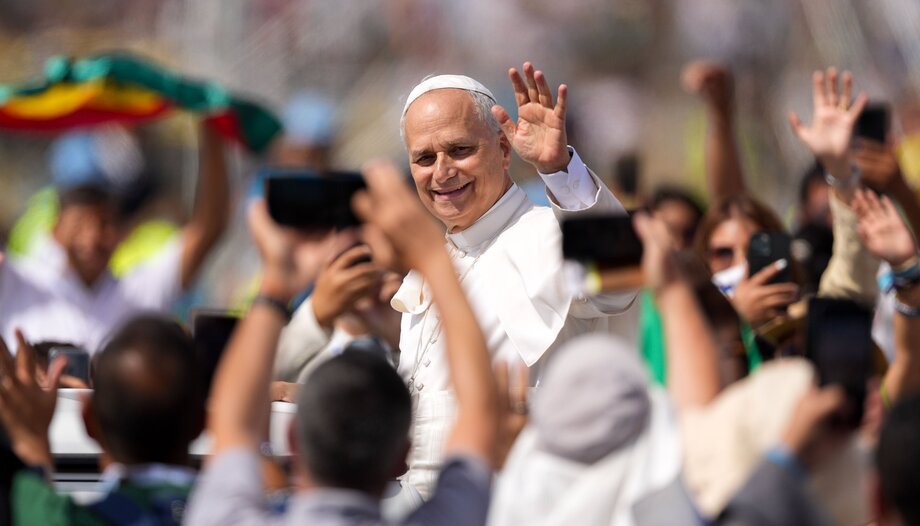
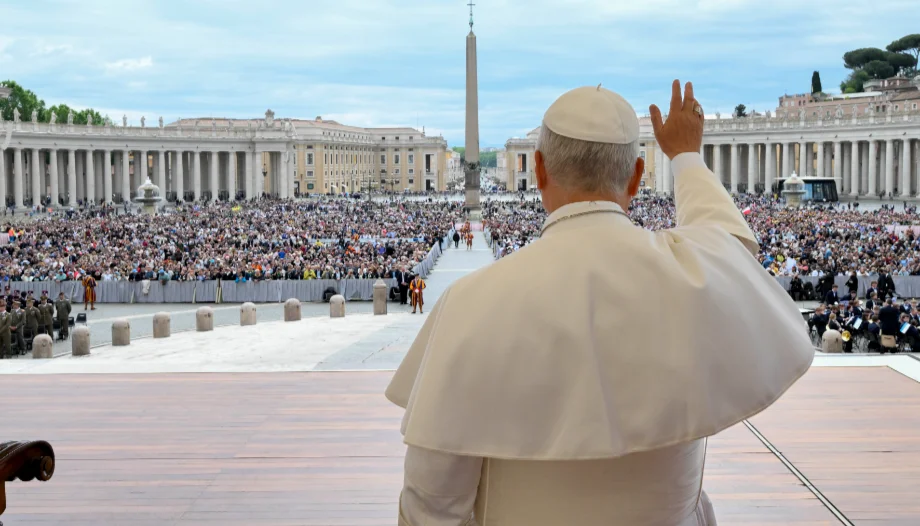
 What does Magnifica Humanitas say to Catholics today?
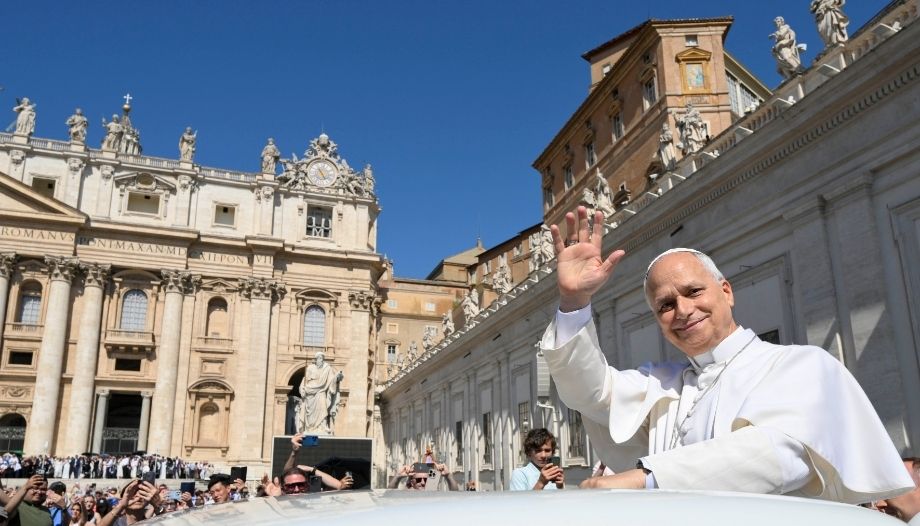
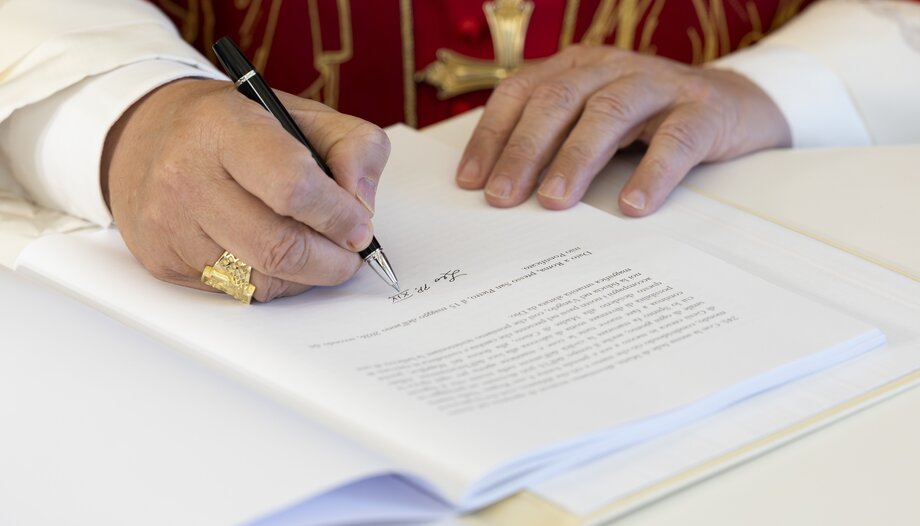


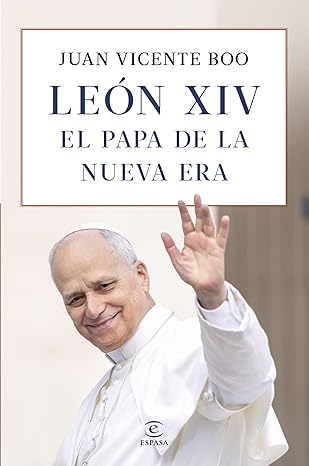
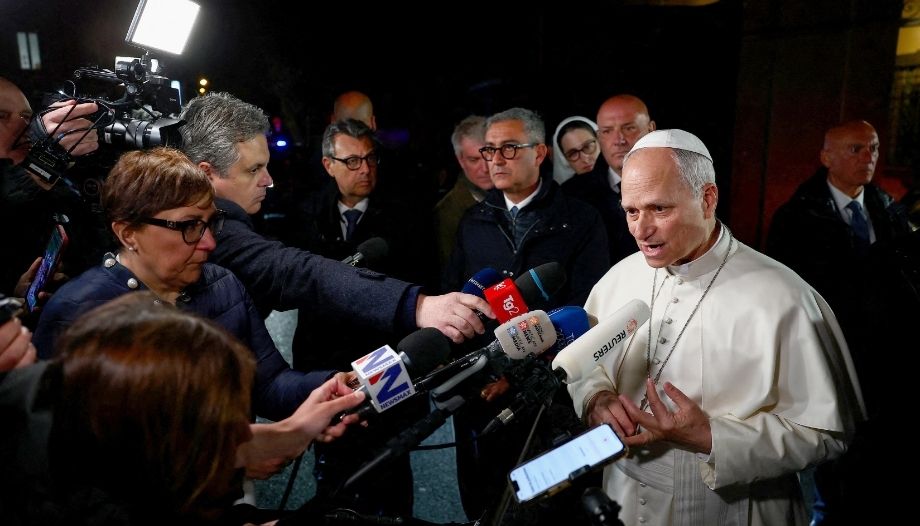
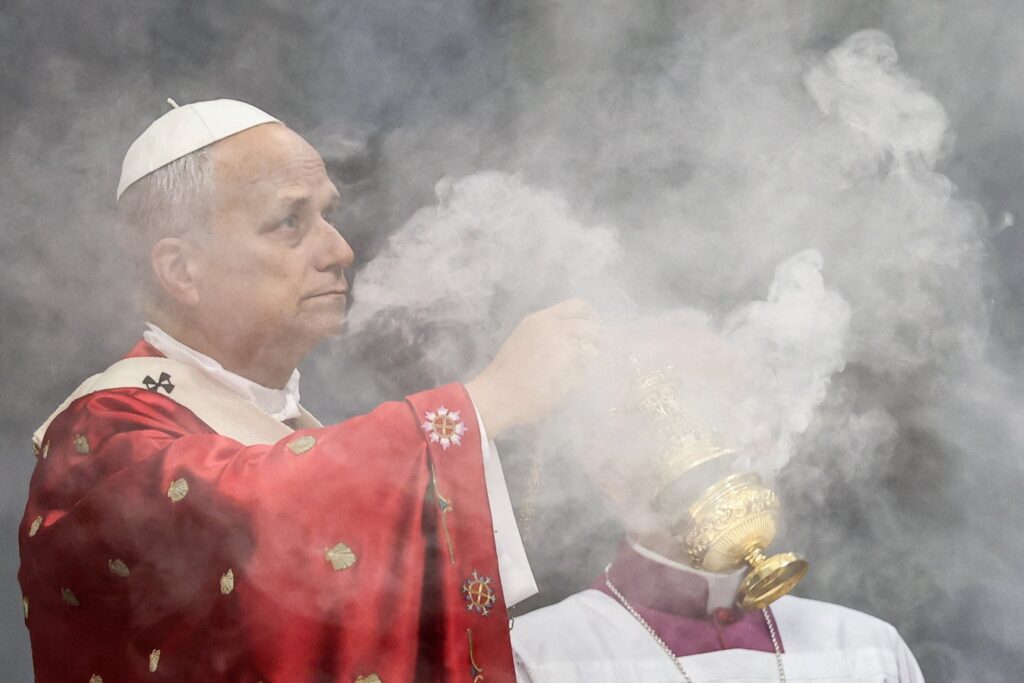
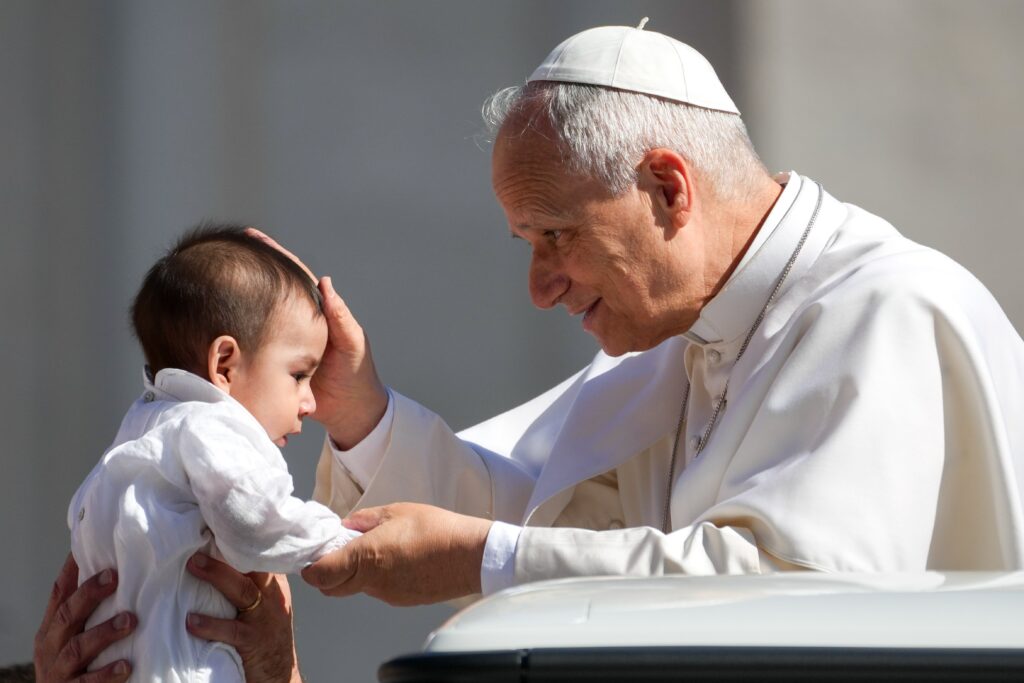




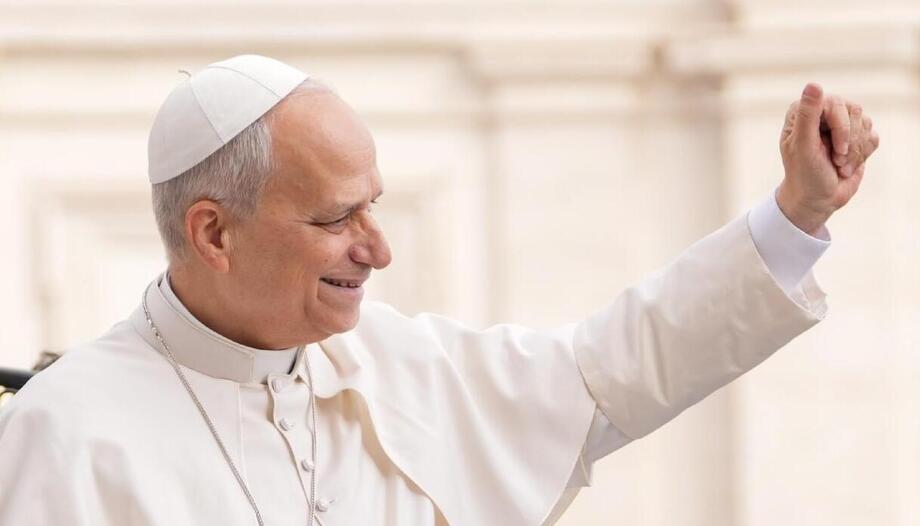


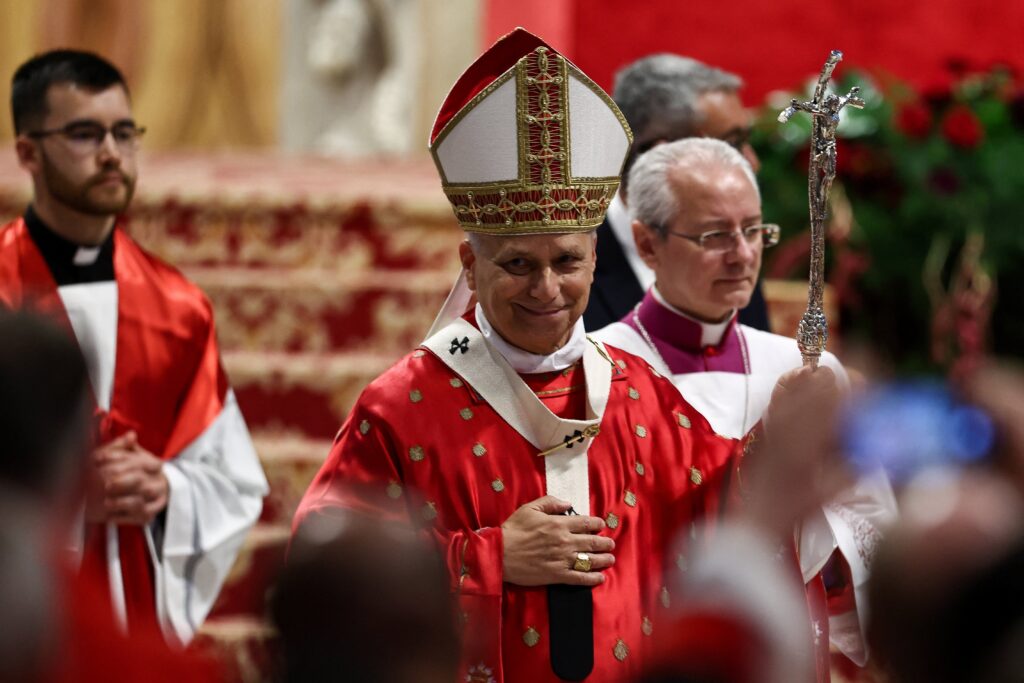
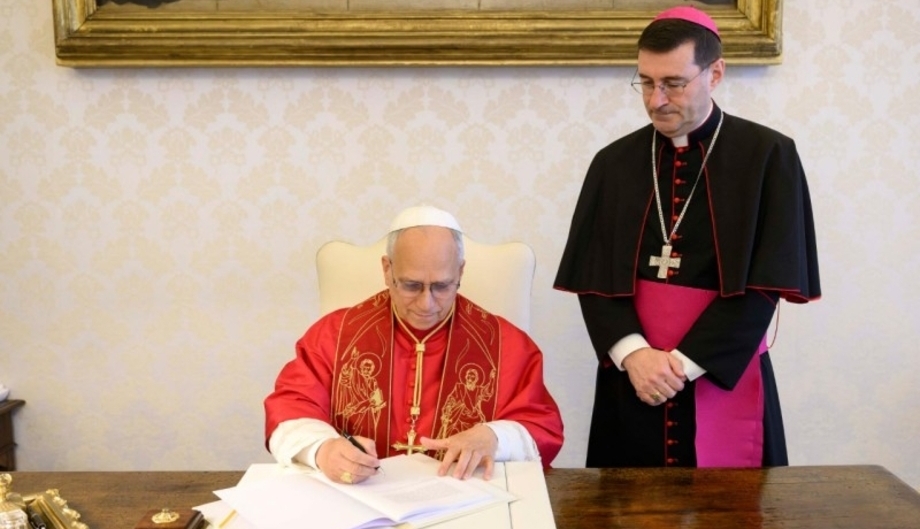

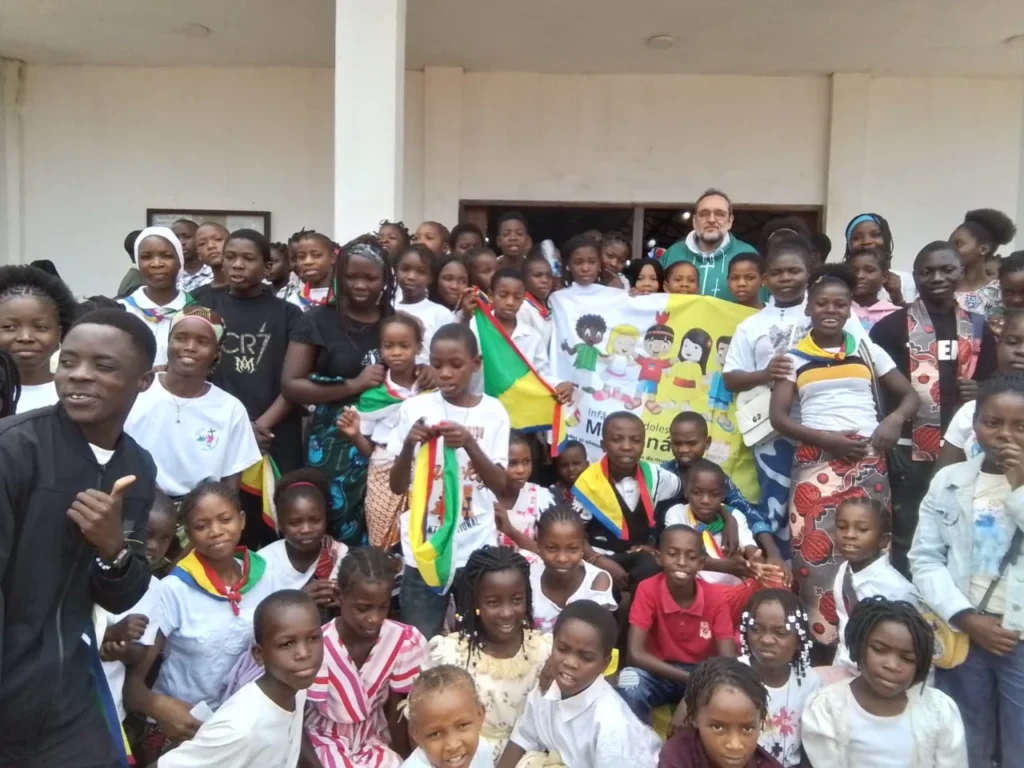



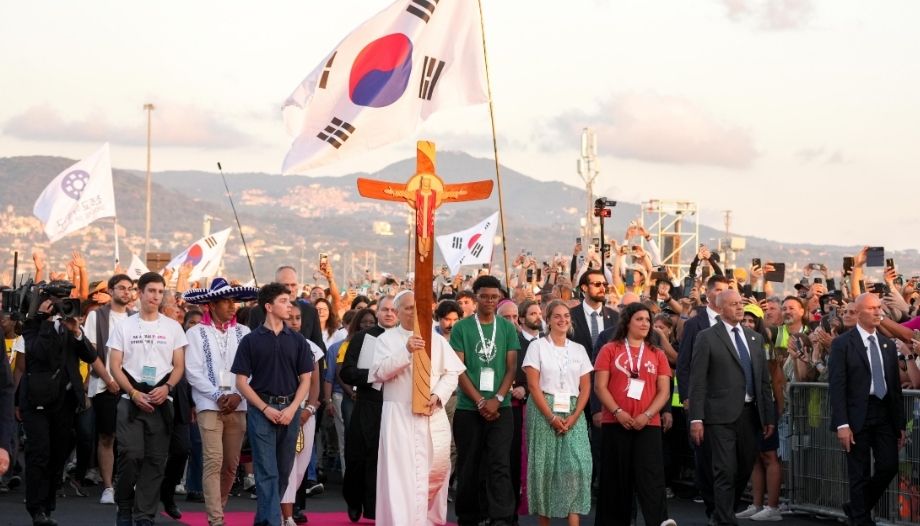
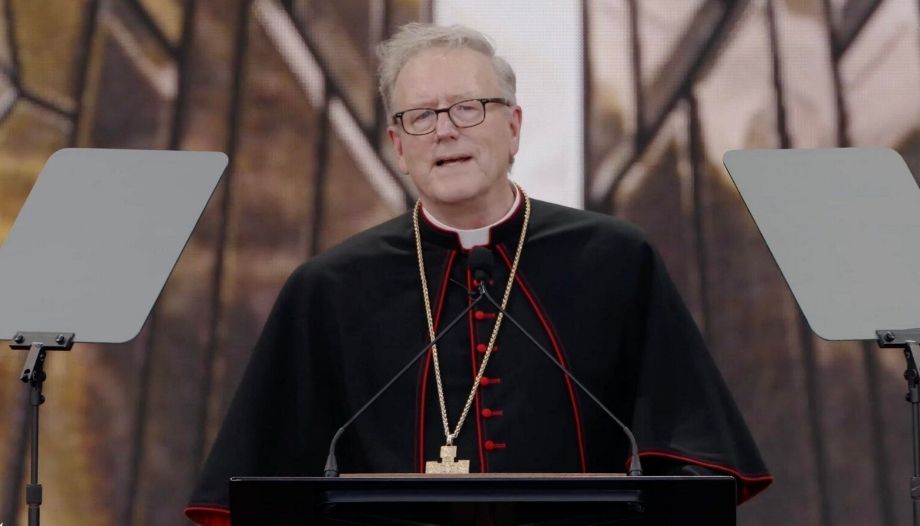


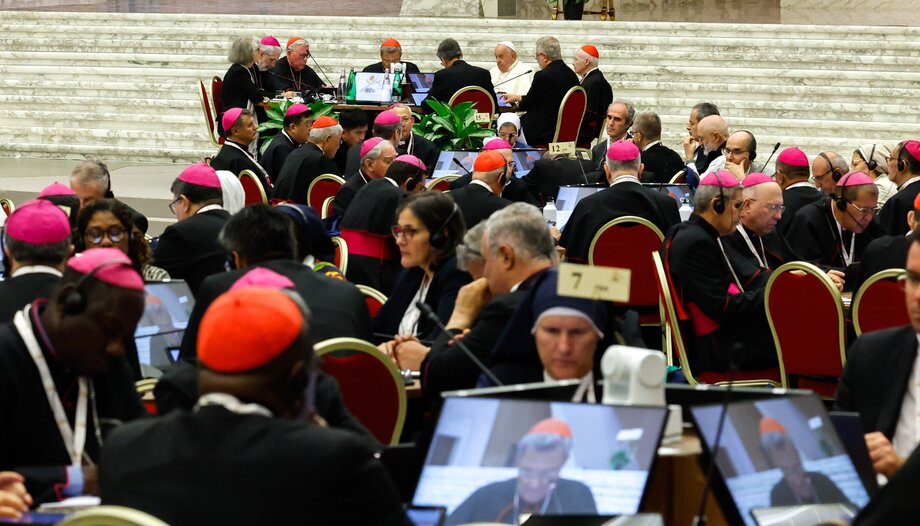
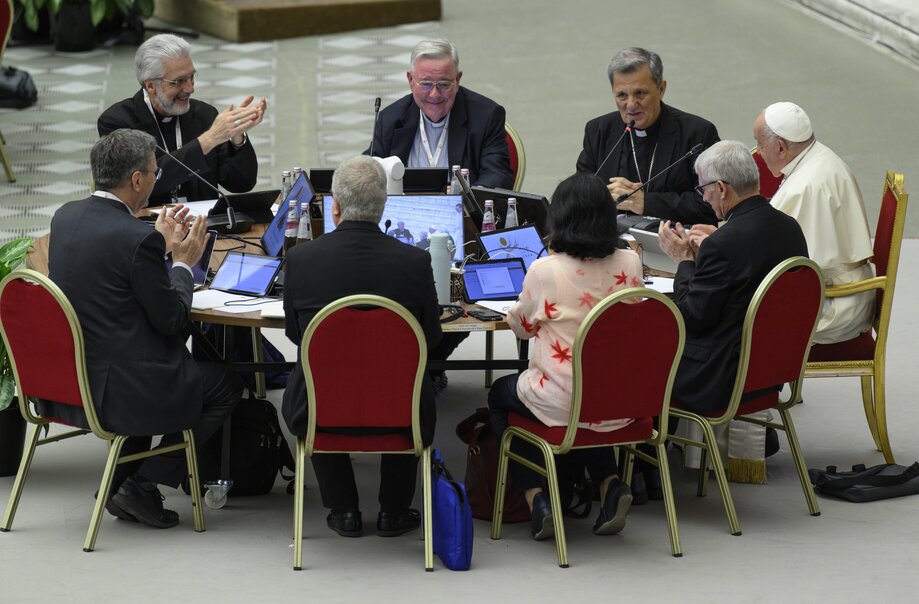
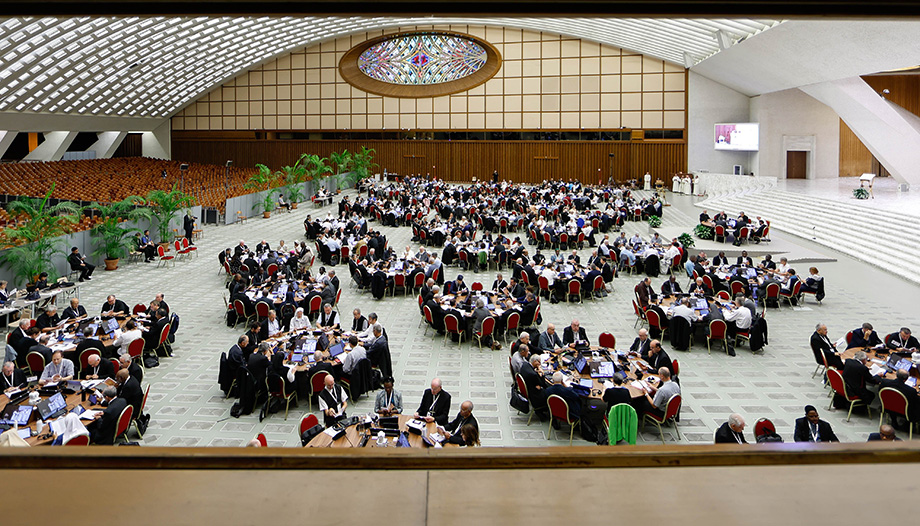
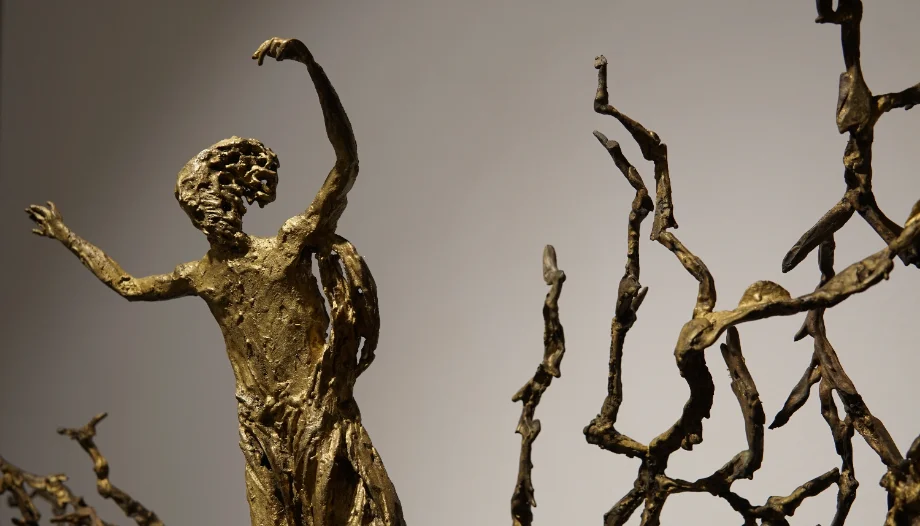


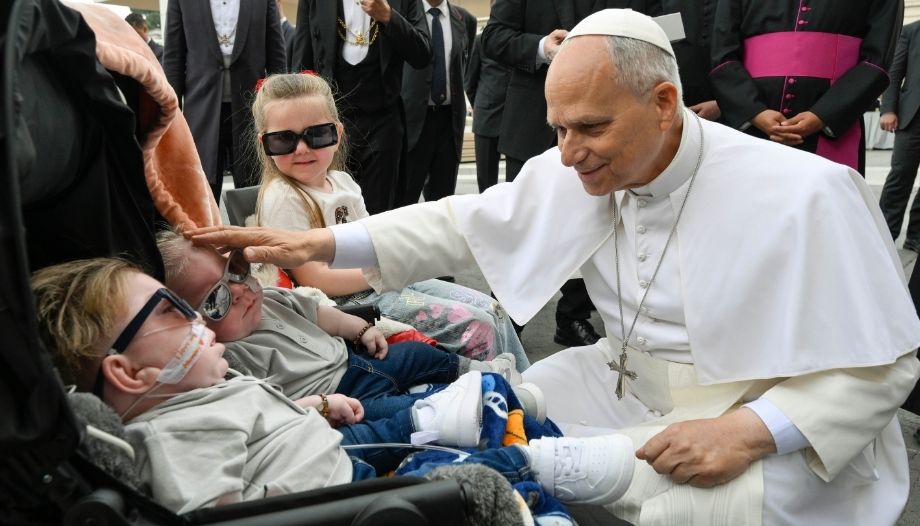


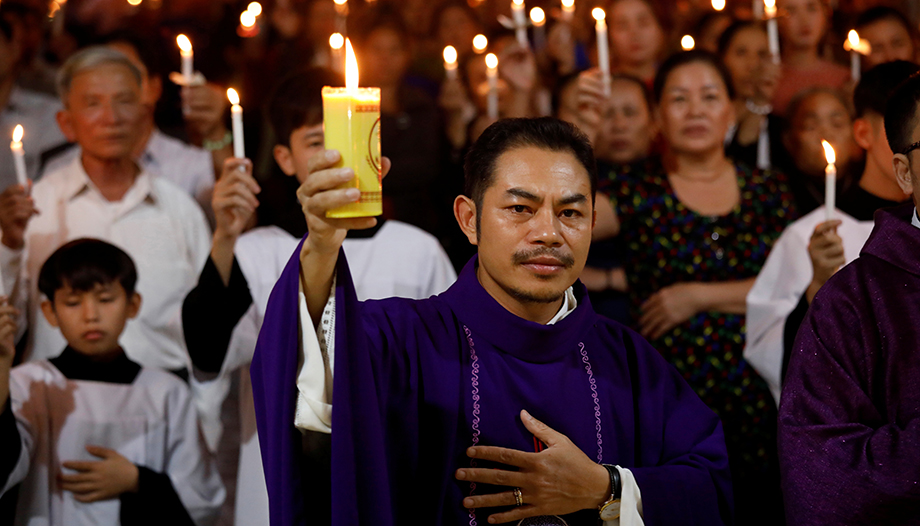
 Español
  English
  Italiano