



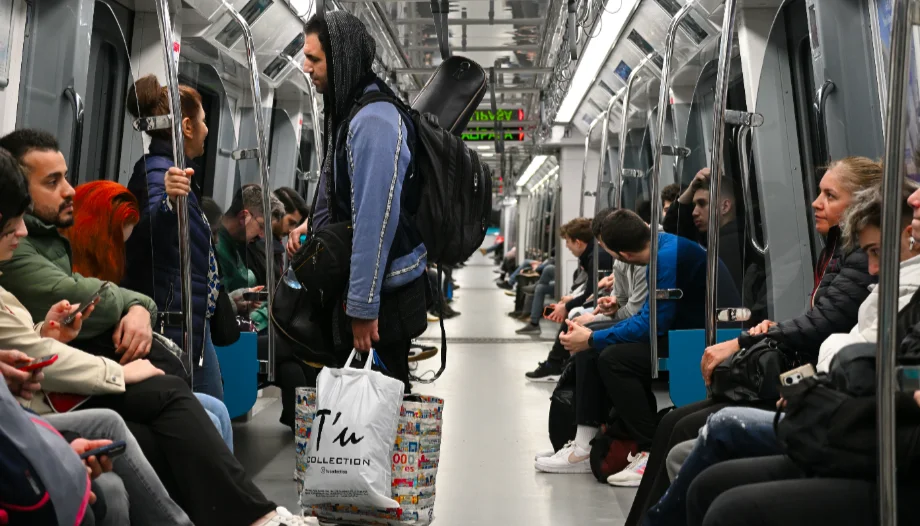
It is not uncommon to find in ecclesiastical circles a certain confusion about the nature of those Christians we could call “ordinary”, who neither belong to the clergy nor have been attracted to the consecrated life in any of its forms. For some it seems that they are something like an undifferentiated remnant -especially if they are male, since in recent times there is a great sensitivity towards the role of women in the Church- whose place in the Church is, in some way, yet to be determined.
After the Second Vatican Council, no one dares to maintain that these faithful are not called to holiness. And they often receive from their pastors valuable advice and guidance for encountering God in their daily lives. However, when it comes to taking important initiatives, which presuppose an adequate vision of their place and mission in the Church, they easily fall into decisions that ignore and neglect them, if not into simple misunderstandings.
In those who are aware of this difficulty and intend to resolve it, this disorientation sometimes leads to the need to attribute to them something added to their status as Christians, which supposedly puts them on an equal footing with clerics and religious, without realizing that this may make sense for those who receive a consecration or a special mission, but not for the Christian who is simply a Christian.
Definition and scope of secular status
Ordinary Christians is presented as a contribution to the understanding of secularity: its nature, its extent and its place in the Church. The book contains five studies, which can be read separately, but which together form a kind of fresco on some basic features of secularity and on some of its implications for the life of the Church and the world.
The first text, “Secularity”, proposes, as a novelty, to define this notion from a strictly secular point of view, so to speak. To speak of secularity would not make any sense if there were not something in the Church that distinguishes itself from it. In reality, this is identified with the spontaneous, with ordinary life, which baptismal consecration does not alter: the Christian continues to be part of human society and does not, by virtue of being a Christian, abandon his family or his work, nor does he alter his status as a citizen.
Where, then, does the need to attribute secularity to some Christians come from? The tripartite division of the faithful that became widespread around the Second Vatican Council - priests, religious and laity - could perhaps suggest that secularity distinguishes the laity from both priests and religious. However, it is not difficult to realize that this division, however useful it may be in some contexts, can be confusing because it contains two distinct criteria: the difference between the common priesthood and the ministerial priesthood, on the one hand, and the difference between those who embrace the religious life and those who do not.
Perhaps some might think that the most relevant distinction for understanding secularity is that between the clergy and the laity. After all, the cleric has received a special consecration that, it would seem, separates him from the simple faithful. But if we understand that secularity has to do with belonging to the world, to the spontaneous relationships established among human beings, is it legitimate to eliminate from them the service rendered by the ministerial priesthood? This would surely be tantamount to drawing a world that is configured on the margins of the divine.
Professional work as the axis of lay life
The fact that, in the Latin Church, priestly orders have been reserved to celibate men may have led us to think that what is characteristic of the laity and, therefore, of secularity, is marriage and that any form of celibacy is either a consecration that separates from the world or a certain frustration of the secular condition. But, in this case, are we to consider that single Christians are not fully secular or that they must shape their spiritual life along the lines of clerics or religious?
The proposal of this book consists in defining secularity from the perspective of professional work, understood as a socially recognized service. The family introduces us into life and generates the home, the place to which we return; professional work, however, puts us in relation to society as a whole, since it makes our contribution visible and is the privileged channel through which citizenship is exercised.
If making oneself present through work is proper to secularity, then this condition cannot be taken away from those priests who are simply priests and who fulfill a clear public mission in the heart of society, not only for Christians, but for all human beings. Moreover, it would be a mistake to confuse work with the labor market, since this contribution is also carried out, and sometimes in a privileged way, beyond the laws of the market.
Nor should it be forgotten that the priesthood is not the prerogative of the clergy, since all Christians are priests and carry out their work of mediation between God and men, but only in the clergy does priestly activity present itself in the form of what we could call “a professional activity”.
The distinction of the religious state and the universal call to sanctity
But then, why is it necessary to speak of secularity? Because of the existence of a phenomenon that is perhaps unforeseeable, but which the Church has recognized as inspired by the Holy Spirit: the religious state.
It may seem daring to attempt a definition of the religious. It is necessary to anticipate that it is not a question of enclosing such a rich and varied phenomenon in an idea. However, I believe that, if we consider that work is the key to society, it is possible to define the religious from this point of view. And, in this case, the religious does appear as something distinct or separate, since we can affirm that, unlike what happens in the ordinary Christian, who makes himself present in society through his professional work, the “professional work of the religious” is of such a particular nature that it separates him in some way from the society of men to place him in relation to it in a totally new way. For the work proper to the religious, his public “profession”, consists in nothing other than the pursuit of holiness.
It is not that the lay Christian or the cleric should not seek holiness. In fact, this is a requirement for them to adequately fulfill their mission in the world: in the case of the layperson, their work, their family relationships and their status as citizens; in the case of the ordained minister, their sacred function. But in neither case is this their “letter of introduction” in the world, but rather the public service they render.
Freedom, divine sonship and the dignity of labor
The consideration of secularity as a form of Christian existence runs through the remaining chapters, which develop some of its essential features, together with some of the difficulties it may face. One of these features is undoubtedly freedom. Secularity implies acting in the world not as a representative of the Church or of the transcendent, but in one's own name, and for this reason it is necessary to recognize and respect the freedom of the Christian faithful in society.
As an expression of this awareness, the second chapter discusses the place of freedom in the life of the ordinary Christian, adopting not only the ideas of St. Josemaría, but also the way in which his message was embodied in the institution of which he is the founder.
To this end, he takes as a basis a definition of the vocation to Opus Dei offered by his first successor, Alvaro del Portillo. According to him, it is characterized externally by being given in the world and internally by being rooted in the sense of divine filiation. If considered carefully, both aspects refer to freedom.
As we said before, because it is proper to being in the world, to secularity, to be free and responsible for one's own decisions, which cannot be unloaded on someone else or on an institution to which one belongs. But this importance of freedom is very coherent with the foundation of Christian life in the sense of divine filiation, from which springs the clear awareness of the freedom of the children of God, which is expressed before God, before the Church and before the world.
It is a novelty that, as the philosopher Cornelius Faber pointed out with regard to St. Josemaría, a Christian, Catholic spirituality is founded on freedom and not on obedience. But if Christian secularity is as we have described it, this seems to be the most consistent with it. As St. Josemaría used to say, “because I feel like it” is the most supernatural reason.
Without detracting one iota from the importance of obedience in the work of redemption, it is not necessary to put in first place the renunciation and emptying of self, forgetting that the obedience that God asks of us is the fruit of love and that Christian love, charity, can only spring from freedom. If this is important for all Christians, it is vital to understand it for those who live in the midst of the world without any external subjection as Christians.
On the other hand, it is not surprising that this Christian emphasis on freedom should see the light of day in the midst of what has come to be called modernity. The great theorists of modernity, such as Hegel, have not hesitated to present the progress of history as a progress in the awareness of freedom. There are many ambiguities in this desire for freedom and in the haste to translate it effectively into relations between human beings, which must be recognized and to which answers must be found. But, with all its possible shortcomings and misunderstandings, this aspiration for freedom cannot be understood without the spread of the Christian message. It would therefore be a mistake to ignore its Christian inspiration, but it would also be negligent not to develop a concept of freedom that is equal to the yearnings and challenges of our time.
The third chapter returns to work, previously mentioned as a key to the definition of secularity. Work has undergone numerous changes in recent centuries and acquired a special prominence, but the vindication of work over contemplation has often been linked to a problematic conception of its place in human life and in society, in which it clashed with the latter and ended up becoming an object of exchange. But how can we understand the place of work in Christian life? If, in the light of revelation, we accept that human nature has been in Jesus Christ a channel for God to reveal himself and that work is part of this nature, it is worth reformulating this question in this other one: what does the human need to work reveal about God and his relationship with man? Christ himself says of himself that, just as his Father always works, so does he.
For St. Josemaría, the dignity of human work is founded on Love, and it is in the light of Love that it must be understood. It is, of course, a love that is a gift, but which can be costly. The relationship between work, effort and love is illuminated in St. Josemaría's teaching by a particular discovery: his joyful but costly experience of participating in divine work at Mass.
If work is to be seen in the light of love, it cannot be separated from the love of Christ who gives himself to the Father for his brothers and sisters, mankind. The contrast between the contemporary, often short-sighted and problematic vision of human work and the joyful Christian conviction of its profound meaning makes it a privileged way to approach God.
Hegel and St. Josemaría
Seen in the light of love, the old opposition between work and contemplation acquires new nuances. If contemplation is a loving vision, work can also become contemplation. But this obliges us to face some difficult cases, which we could consider borderline cases. If contemplation implies having God in the mind, how to make it compatible with intellectual work in which the mind seems absorbed by its object? This is the subject of the fourth chapter.
This question forces us to think more deeply about the nature of work and the nature of prayer, especially contemplative prayer. With regard to work, the intellectual nature of “all” human work, when it is carried out with care and perfection, that is, when it is a true expression of the person who works. At the same time, the importance of study and training as a requirement to be up to the demands of work. When this is understood, it is easier to discover that intellectual work can also be a form of contemplation, which has its own nature and rules that derive from it.
The last chapter takes up the question of secularity and its various dimensions by presenting an imaginary dialogue between Hegel and St. Josemaría. It may seem curious to bring together two seemingly disparate characters. Hegel, on the one hand, a philosophy professor who considers himself, at the same time, a Christian philosopher and the greatest exponent of modern thought. On the other hand, a Christian priest who has renounced the academic life to open a path of holiness in the Church.
For the author of this book, the conviction that there was a profound harmony and also a profound divergence between the two comes from my years of career, when, from the hand of Professor Juan Cruz Cruz Cruz, I learned the text of the speech that, as rector of the University of Berlin, he gave on the third centenary of the Augsburg Confession.
The insistence on work well done and on ordinary life as the path to holiness has led some to attribute to St. Josemaría's teaching some Protestant overtones. Similarities and differences become clear if one compares one of St. Josemaría's most emblematic homilies with Hegel's discourse, the one he gave on the campus of the University of Navarre on October 8, 1967, which was published under the title “Passionately Loving the World. In it we find, in my opinion, an adequate response to Hegel's criticism of Catholicism and a rectification of a vision of Christian life so deeply rooted that even some Catholics, including some theologians, seem to accept it.
Hegel contrasts the Christianity known to Luther, akin to the Catholic interpretation of Luther, with the ancient world. With his usual method, he presents ancient society, with its virtues, as an indistinction between the holy and the profane. In the family, work and politics, of whose goodness no one doubts, both aspects are interwoven without it being possible to separate them.
Medieval Christianity, however, represents a split between the sacred and the profane, perverting these spontaneous dimensions of human life by virtue of the three vows. The vow of chastity condemns the family. The vow of poverty condemns productive work and protects the laziness of the clergy. And the vow of obedience, “the crown of all,” according to Hegel, condemns the political order and reduces Christians to servitude, consecrating the contempt and abandonment of human life that this vision fosters.
In this conception, Luther represents the reconciliation of the sacred and the profane on a deeper level than that of the pagans. The first negation introduced by medieval Christianity is overcome by the second, which reconciles the sacred with the mundane.
St. Josemaría does not refer directly to Hegel, but he seems to recognize the danger that accompanies an erroneous vision of Christianity. To love the world passionately is the opposite of the condemnation of the human that Hegel denounces. On the contrary, it is not Christian to consider either that the Christian life requires isolation from the world in order to insert oneself into a religious sociology alien to it, or that the only possible intervention of the Christian in the world is as a representative of the Church.
The depth of the debate only becomes clear when one realizes that both Hegel and St. Josemaría put forward two different ways of conceiving the Eucharist as the key to their conception. While the Hegelian interpretation of Luther does not admit the real presence of Christ in the Eucharist beyond the subjective reception of the sacrament, the Catholic vision accepts that presence. But this is not, as Hegel denounces, a reification of the sacred, but a manifestation that the present time is not the ultimate homeland.
On the other hand, the Eucharistic presence is not presented only as an external object of adoration, but as a symbol of Christ's presence in the world, of his company, and a requirement to carry out a task still pending: to establish all things in Christ and to bring forward his glorious coming, which will give its full meaning to the effort to convert the universe and the city of men into the kingdom of God.
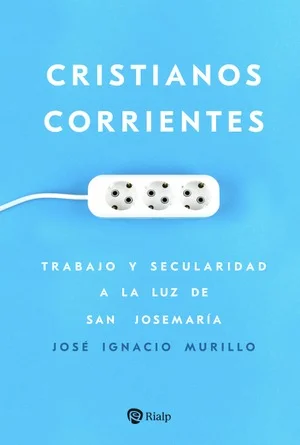
Ordinary Christians. Work and secularity in the light of St. Josemaría.
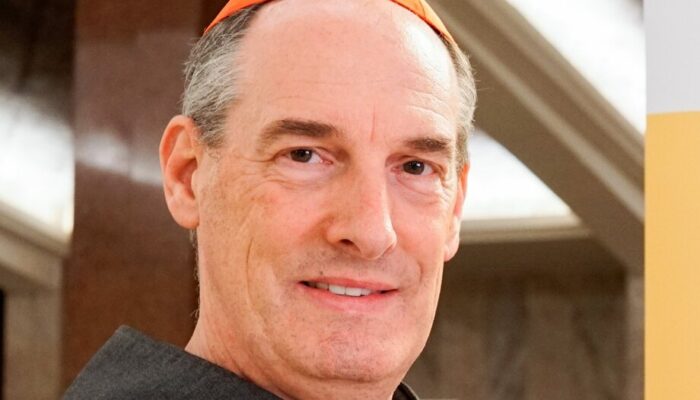
Professor of Philosophy. University of Navarra.




 Español
  English
  Italiano