


 A yes at all risks, a young married couple's adventureDon't get married youngPep Borrell: "The 100 % of education is for children to see that their father and mother love each other".
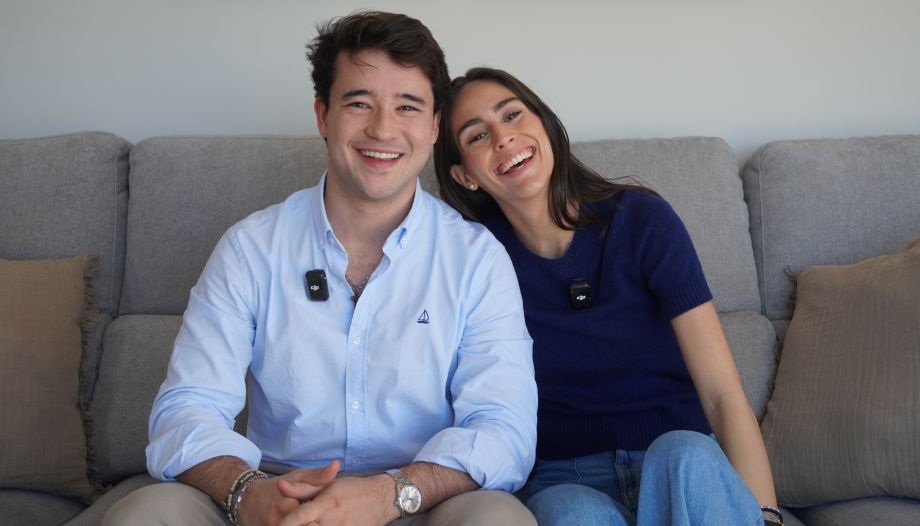
Quique Mira and his wife María Lorenzo need little introduction, as they are well known on social media. As a young married couple, they have observed that there is a lack of preparation for those who are getting married. They argue that it is paradoxical that, while a priest requires years of training, the preparation for engaged couples consists of a relatively brief course—even though they are laying the foundation for a lifelong commitment. That is why they have launched Caná Project.
Some time ago, Quique and María left their previous jobs to focus on projects related to evangelization. In November, they launched “Kaleos” in Valencia—an event featuring talks, live music, testimonies, and moments of reflection—which brought together hundreds of young people to help them discover God’s call. Now they are launching Proyecto Caná, an online academy that aims to provide a space for growing in human love in the light of the Gospel. “We want to share our experience. The courtship ”It is a time of preparation for the vocation of marriage," they say.
The course is designed for couples—regardless of how long they’ve been together—who want to deepen their relationship. The course consists of ten modules, each featuring a 15-minute video in which Quique and María share their experiences and reflections. In addition, each module includes practical materials and group activities. The course includes a group video call after three months, during which couples can share their experiences and ask questions or voice their concerns. Proyecto Caná is an online academy. The first course, already underway, is “Noviazgo de 3,” designed for dating couples. The plan is to expand the curriculum with courses tailored to other stages of life. Quique and María explain to Omnes why a project like this is necessary today.
Do you think young people today aren't prepared for marriage?
- Today, young people—and society as a whole—are experiencing a profound thirst for meaning. Amid so much information, fast-paced life, social pressure, and a world that is constantly changing, there is a growing desire to return to the essentials: who I am, where I’m going, how I want to love, how I want to be loved, and what meaning my life and the world around me hold. In particular, we note that this search for meaning and love has led so many young people into unhealthy relationships, where commitment is no longer appealing; rather, the appeal lies in following one’s passions rather than striving for a selfless love that can last a lifetime.
This sincere search is leading many to seek an authentic and humane education, based on Goodness and Truth.
That is where the idea to launch these digital courses came from; they aim to address the real needs of today’s world, guided by a spirit of true love. We want to offer human and spiritual tools to accompany those who wish to love better and deepen their calling to love.
But the Church already offers premarital courses.
– We believe there are many gaps in the preparation offered to young people as they approach marriage. In many cases, premarital classes are limited to a few hours of sessions that don’t really delve deeply into or discuss the major step they are about to take, and unless a couple is truly seeking to educate themselves and prepare well for that step, far too many enter the sacrament of marriage without truly understanding what they are promising to each other.
Priests spend years and years preparing for the priesthood, yet we engaged couples are content with that minimal training for a calling to love one another for the rest of our lives.
We believe that investing in this kind of training, support, and resources… is extremely important and can make a big difference. Young people need it; they’re asking for it.
After so many years on social media, we've come across many cases of people who reached out to us with these concerns.
Based on your experience, what are the main challenges faced by couples just starting out?
– Based on what we see, and also on our own experience, one of the main shortcomings is that many couples start out loving each other deeply, but lack the tools to sustain that love once the initial passion fades.
It's very difficult to communicate effectively, express how you feel without hurting others, manage conflicts, or learn to live with differences.
It could also be a lack of depth. Today’s society sells us everything quickly, everything superficially… It doesn’t encourage us to go deeper, and many couples have never really taken the time to talk about important issues: personal wounds, expectations, faith, marriage, children, ways of loving…
And perhaps another major shortcoming is the lack of role models. Many young people haven't seen stable marriages or healthy relationships around them, so they try to build something meaningful with hardly any role models to show them how.
That is why we believe that today, more than ever, it is necessary to provide guidance and formation for couples in their courtship.
Parents used to teach by example and through advice. Doesn't that count anymore?
- Of course it still holds true, and in fact, our parents’ example continues to be one of the things that most shapes the way we learn to love. The way a child sees his or her parents interact—how they talk to each other, how they handle conflicts, how they show their love for one another—leaves a huge impression.
But it is also true that today many families are more fragmented, and many young people have grown up without clear examples of stable or meaningful relationships. Added to this is the fact that social media, TV shows, and the internet have often taken the place once held by family conversations.
The role of parents remains essential. But perhaps today it is a good idea to supplement that role with these opportunities for training and learning.
Many parents have thanked us for initiatives like this, because they themselves recognize that there are emotional, relational, or spiritual issues that they sometimes don't know how to address with their children.
You talk about a lifelong commitment. Is that possible today?
- It’s entirely possible—it’s what we all long for deep down. Someone who loves us and with whom we can share our whole life. We’re all moved when we see an elderly couple on the street walking hand in hand, or dancing, or strolling… To think that they’ve spent their whole lives together, that they’ve been through it all, and that they still love each other after so many years. Deep down, that’s what we all want! Why shouldn’t it be possible? But it’s up to us… we’re afraid to commit because we think we’ll lose more than we’ll gain, but in our experience, it’s actually the opposite…
We need to make old-fashioned love trendy again. We need to set an example of this kind of commitment—happy couples who, even in the face of suffering and difficulties, choose to love one another and stay together.
Today, in many cases—even among young people who identify as Catholic—dating involves moving in together. When the Church does not allow premarital relationships, is it asking for the impossible?
– In our opinion, and based on our own journey, marriage as God intended it is worth it. Living with your partner, sharing intimacy, and giving yourself fully to one another have a very profound power and meaning when they arise as the fruit of a definitive decision and a total commitment.
The Church does not advocate waiting because it is afraid of love or desire, but because it believes that human love is so valuable that it deserves to be lived to the fullest and in the context of complete self-giving. The body also speaks, and physical union expresses something very profound: “I give myself totally to you.” That is why the Church understands that this self-giving finds its fullest expression within marriage.
Furthermore, waiting also teaches us to love another person beyond immediate needs, impulses, or emotions. Waiting teaches us patience, self-control, communication, and how to build a relationship on more than just living together or sexual desire.
The Church recommends abstaining from sexual relations before marriage. And no, it isn't asking for the impossible. It offers a path full of meaning for those who wish to discover it.
Demanding, yes, but full of meaning. But we have to want to understand it and not just focus on the headline. We have to stop seeing it as a ban (because no one is banning anything) and start realizing that it’s a proposal for bringing order to love.
What sets the Caná Project apart from other initiatives?
– It’s mainly about how it responds to the emotional and relational needs of today’s young people, using language that’s relatable and firmly grounded in today’s reality. From one young person to another.
It isn't just a theoretical course on dating or marriage, but rather a space to truly delve deeper into the relationship, ask important questions, and learn to love better in the midst of a culture that often teaches us exactly the opposite—or simply doesn't encourage us to do so.
I also believe there is something very unique about combining human and spiritual formation with an accessible, everyday format. Today, many engaged couples have real concerns about this stage of their lives, but they don’t always find places where they can receive guidance or talk about it. The online format makes it very accessible to everyone and allows them to go through it at their own pace.
And perhaps another new development is precisely this view of courtship as a stage that requires care and effort. We tend to put a great deal of effort into preparing for our professional or academic lives, but very little into what will later become the foundation of our entire lives: our vocation.
How important is the Christian faith in your project? Does it help you better focus on your life together, or is it a hindrance for those who do not have faith?
- Faith in Proyecto Caná and in the premarital course is a fundamental part of it. While anyone (even those who don’t practice a faith) can take the course—and we’re sure it will help them—it’s inevitable that we’ll end up talking about God and that faith will play a significant role in the course. That’s our experience; that’s what has helped us.
For us, faith is not just an “add-on” to our relationship, but the essential ingredient that teaches us the right way to love, to give of ourselves, and to forgive… We have learned that on our own we cannot love the way our hearts desire, and that it is God who teaches us and sustains us on that journey.
But that doesn’t mean it’s a handicap for those who don’t have faith. In fact, many of the issues we address are deeply human: communication, wounds, commitment, differences, conflict resolution, self-sacrifice… topics that every couple experiences. Faith adds depth and a different perspective to all of that, which has become essential to us.





 Español
  English
  Italiano