



 Circe Maia, the domestic poetIndran Amirthanayagam, a cosmopolitan poet for the timesSimone Weil, poet before philosopher
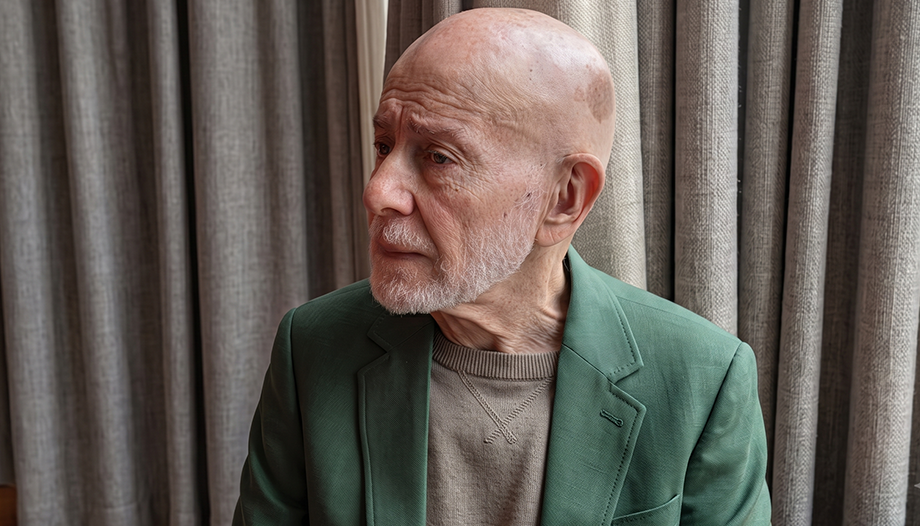
We generally follow paths laid out by others. In the case of Hugo Mujica, his life and spiritual journey is reminiscent of that of Thomas Merton: both seem to share a similar yearning for transcendence, and either could have written an autobiography like The mountain of the seven circles, Although Merton was ahead of his time, in Merton's book—a narrative of life and ascent toward the absolute—his inner conversion is presented as a moral and biographical process; in Mujica, however, that movement becomes more radical and stark. In him, the ascent ceases to be a mere inner experience and transforms into a descent toward the core of being, where living from appearances gives way to living from what we truly are.
Distinctive features of his poetry
Hugo Mujica's personal quest translates, first and foremost, into a style of writing characterized by brevity and condensation, in which poems of an almost aphoristic nature predominate—sometimes bordering on the haiku- and in which each word tends towards an essential expression.
Interestingly, this verbal economy coexists with an apparent paradox: the presence of lengthy titles in his books, often linked to nature, such as In a river all the rain, To the stars, the immense or the recent The leaves, the breeze, and the light dance the shadows, where natural elements transcend their descriptive function and acquire a symbolic and emotional value: the river becomes a space for listening and becoming; the rain, acceptance of what we are; and the stars, guidance when the self learns to be silent.
In this framework, language is not oriented toward explaining or describing, but rather toward suggesting, opening a horizon of silence that shifts the reading from the conceptual to the experiential plane. Consequently, Mujica does not construct a discursive argument, but rather a space for listening. Each poem functions as a threshold; that is, it does not transmit a truth, but rather prepares the reader to recognize it.
To this is added another very peculiar feature: he arranges the poems at the bottom of the pages of his books, as if each one acted analogously to hot air, rising to inhabit the upper void.
Poem In the middle of the night
This particular way of approaching poetic creation is clearly manifested in the poem reproduced in this article: In the middle of the night. In it, night and snow transcend their presence as elements of the landscape to become symbols of inner experience. Night frees us from reflections, empties our gaze of the superfluous, and opens access to an essential light; snow and rain, on the other hand, through their transparency, suggest a clarity that does not impose itself, but rather reveals itself.
The final verses —“What the blind man seeks with his cane / is the light, not the path”—summarizing his poetics: poetry offers no instructions or definitive answers, but rather an invitation to perceive reality beyond the obvious: an intuition he had already captured in an early poem: “like / a blind man calling light / to thunder / my saying / what silence names”In this work, he formulated the idea that silence was not equivalent to the absence of words, but rather to their condition of possibility. In this sense, poetry does not consist of saying more, but of saying just enough for reality to appear, since each poem is the place of the unique.
The Impossible Poem
This concept is expressed even more intensely in Confession, initial text of And always afterwards the wind: "The poem, the one I long for, / the one I aspire to, / is the one that can be read aloud without anything being heard…”These verses, through which Mújica expresses his aspiration for a writing that transcends sound and the immediate materiality of words, orienting itself toward experience itself. In this way, the meaningful word does not seek to describe or explain the world, but rather to open a horizon of meaning and possibility. For this reason, language does not seek to conquer reality or impose an interpretation upon it, but to create the conditions for it to reveal itself.
The same intuition reappears, from another perspective, in a poem from his latest book:“All passing is between / two shores: arriving / and departing, / and in between, in our / meanwhile, / this walking among / other blind people / begging for their / glances”In this work, the figure of the blind man ceases to be an individual and becomes a shared image of the human condition. Thus, existence is presented as a passage between birth and death, sustained by the gaze of others. Consequently, fragility is no longer understood as a lack but comes to be seen as a common condition: we move forward tentatively and need connections to orient ourselves.
Poetry as a form of listening
Taken together, Mujica's work proposes a unique form of knowledge: in contrast to the word understood as an instrument of control, his poetry reclaims it as a space for openness and listening. More than offering definitive truths or explaining the world, it invites us to inhabit it with a deeper and more conscious attention. Therein lies, undoubtedly, its most penetrating power: reminding us that understanding does not always mean dominating, but rather learning to listen until something, almost silently, begins to reveal itself to us.
Also in the middle of the night
the snow
it melts whiteand the rain
falls
without losing its transparency.It is she, the night,
the one that frees us from reflections,the one that expands us
the pupils.What he's looking for with his cane
«"In the dead of night" – Hugo Mujica
The blind man is the light, not the path.






 Español
  English
  Italiano
  Français
  Deutsch
  Polski
  简体中文
简体中文